The first thing you notice is the sound. On an ordinary Tuesday, Jaffa Road carries the grind of the light rail, the hiss of bus brakes and about nine competing shawarma radios. On the afternoon before a festival, all of that thins out over roughly ninety minutes and then simply stops, and you can hear pigeons on the Old City walls from three streets away. Nowhere else does a religious calendar take hold of a whole city so physically. Jerusalem religious holidays do not happen alongside daily life here; they replace it, for a day or a week, and then hand it back.
This page is the calendar the city actually runs on — the Jewish festivals, the Christian holy days on two rival calendars, and the Muslim months that slide eleven days earlier each year — with the practical consequences of each: what shuts, what opens only then, when the buses stop, when hotel rates double, and which days are genuinely worth crossing the world for. Dates, hours and costs were checked in September 2026; treat the money as the right order of magnitude rather than a quotation, because Jerusalem revises its festival timetables late and often. For the secular side of the year — the Light Festival, the film and wine festivals, the marathon — see our separate guide to festivals and events in Jerusalem. This page stays with the holy days.

The Year at a Glance
Dates below are for 2027, the year most people reading this will be planning. Jewish dates are the Israeli ones — festivals run a day shorter here than in the diaspora — and all of them begin at sunset the evening before. Muslim dates depend on the moon and can move a day either way.
| Holy day | 2027 dates | What it does to the city | Worth planning around? |
|---|---|---|---|
| Ramadan begins | 8 February (eve of the 7th) | Old City transformed after dark; Muslim Quarter at its liveliest | Yes — if you want atmosphere over sightseeing |
| Eid al-Fitr | ~10 March | Three days of celebration; Muslim Quarter shops shut in the mornings | Interesting, not essential |
| Western Holy Week and Easter | 21–28 March | Processions daily; Old City congested; hotels full | Yes, for pilgrims. Book eight months out |
| Purim (Shushan Purim here) | 23–24 March | City-wide fancy dress; Jerusalem celebrates a day after everyone else | Yes — genuinely joyful and uncrowded |
| Passover | 21–29 April | Seven days. Bread disappears. Transport stops on the two festival days | Only if you want the phenomenon, not the sightseeing |
| Orthodox Holy Week, Holy Fire and Pascha | 25 April – 2 May | The Holy Sepulchre effectively closed to casual visitors on Holy Saturday | Yes, once, if you accept you may not get inside |
| Yom HaZikaron and Yom HaAtzmaut | 10–12 May | Two-minute siren, national standstill, then fireworks | Powerful. Not a sightseeing day |
| Eid al-Adha | ~16 May | Four days; very large crowds at Haram al-Sharif / Temple Mount | No — site access is restricted |
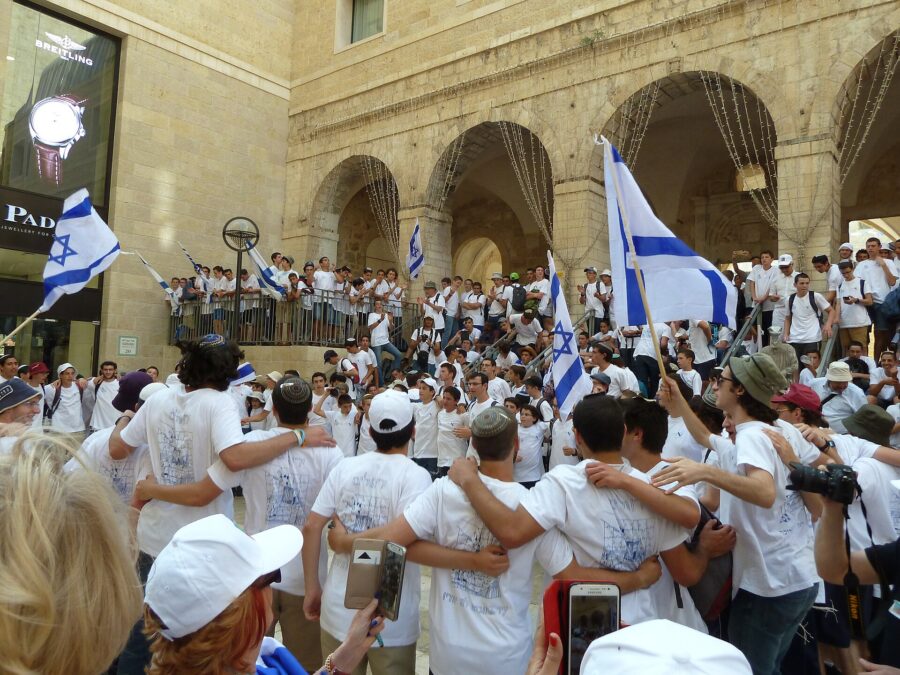
| Yom Yerushalayim | 3–4 June | Heavy police presence; the Flag March draws protest and counter-protest | No. Most visitors deliberately avoid the Old City |
| Shavuot | 10–11 June | All-night study; a dawn walk to the Kotel that has to be seen | Yes — the most underrated night in the year |
| Tisha B’Av | 11–12 August | Restaurants shut; mourning at the Western Wall through the night | Sombre, memorable, not enjoyable |
| Rosh Hashanah | 1–3 October | Two days shut, running straight into Shabbat in 2027 | Neutral. Plan around it, not for it |
| Yom Kippur | 10–11 October | Total shutdown. No cars, no flights, no shops, no broadcasts | Yes. The most extraordinary travel day in the country |
| Sukkot | 15–22 October | Booths everywhere; the busiest domestic tourism week of the year | Yes — the best all-round festival week for visitors |
| Hanukkah | 24 December – 1 January | Menorahs in every doorway; overlaps Christmas exactly in 2027 | Yes. Quietly the loveliest week to walk the city |
| Christmas (Western) | 24–25 December | Bethlehem, not Jerusalem, is the centre of gravity | Yes, with realistic expectations |
| Christmas (Orthodox, then Armenian) | 6–7 Jan, 18–19 Jan 2028 | Two more Christmases, far less crowded | Yes — the connoisseur’s choice |
Why Three Calendars Never Line Up
Almost every scheduling oddity in this city traces back to the fact that its three communities count time differently. The mechanism takes five minutes to understand and it saves a great deal of confusion when you discover that Easter is in May, Passover is in late April and Ramadan has drifted into midwinter.
The Hebrew calendar: lunisolar, with a thirteenth month
Jewish months follow the moon, but the year is corrected against the sun so that Passover always falls in spring. The correction is a whole extra month, Adar I, inserted in seven years out of every nineteen. The year 5787 — running from September 2026 to October 2027 — is one of those leap years, which is why Purim lands on 23 March 2027 rather than late February, and Passover on 21 April rather than the end of March. If you carry a vague memory that Passover falls around Easter, that is usually true and occasionally, as in 2027, spectacularly not.
Every Jewish holy day begins at sunset the evening before and ends at nightfall — roughly forty minutes after sunset — on the last day. Practically, the shutdown starts on the afternoon before the date in your diary. It is the same rhythm as the weekly cycle described in our guide to Shabbat in Jerusalem, and if you have understood Shabbat you have understood ninety per cent of what a festival does to your travel plans.
The Christian calendars: Julian time in a Gregorian city
The Catholic and Protestant churches use the Gregorian calendar. The Greek Orthodox, Armenian, Syriac, Coptic and Ethiopian churches of Jerusalem still calculate Easter on the Julian one. In 2025 the two happened to coincide, producing a single extraordinary Easter; in 2027 they diverge by five weeks — Western Easter on 28 March, Orthodox Pascha on 2 May. The Church of the Holy Sepulchre therefore performs its entire Holy Week twice.
Christmas is stranger still. The Latin church keeps 25 December. The Greek Orthodox, Syriac and Coptic churches keep 6–7 January. And the Armenian Patriarchate of Jerusalem — alone among the world’s Armenians, who moved to 6 January long ago — keeps 18–19 January, a quirk preserved by the Status Quo arrangement that has governed the shared churches since Ottoman times. Time it right and you can attend three separate Christmases in the same city inside a month. The Armenian Quarter guide explains how that community’s calendar shapes its corner of the Old City.
The Hijri calendar: eleven days earlier, every year
The Islamic calendar is purely lunar with no solar correction, so its months drift backwards through the seasons by about eleven days a year. Ramadan fell in late winter through the mid-2020s; by the mid-2030s it will be a midsummer fast, which in Jerusalem means roughly fifteen hours without water in thirty-degree heat. Dates are confirmed by moon sighting and announced by the relevant religious authorities only a day or two ahead. Any date published more than a month in advance — including the ones on this page — is an astronomical estimate, not a fixture.
The Jewish Festival Year
Rosh Hashanah and Yom Kippur: the High Holidays
The autumn cluster is the heavyweight of the Jewish year. Rosh Hashanah (1–3 October 2027) is two full festival days back to back, and in 2027 it runs straight into Shabbat, producing a three-day stretch with no buses, no light rail, almost no shops and no intercity trains. Hotels fill with Israeli families and diaspora visitors who come specifically for it; rates in the good hotels reach their annual peak and stay there through Sukkot. Book in the spring, not the summer.
Yom Kippur (sunset 10 October to nightfall 11 October 2027) is the single most remarkable day to be in this country, and it is not really a holiday at all. Ben Gurion Airport closes to all traffic. Every road in Jerusalem empties — not thins, empties. Broadcasting stops. Restaurants and cafés, including most of those in West Jerusalem that happily trade on Shabbat, close completely. What fills the vacuum is children on bicycles riding down the middle of arterial roads, and a silence that people who have experienced it tend to describe for years afterwards. There is no public transport whatsoever, so whatever you can reach on foot is your entire world for twenty-five hours: choose your hotel around that fact rather than around the view. Our page on getting around Jerusalem covers fares and networks for the other 364 days.
Sukkot: the week the city moves outdoors
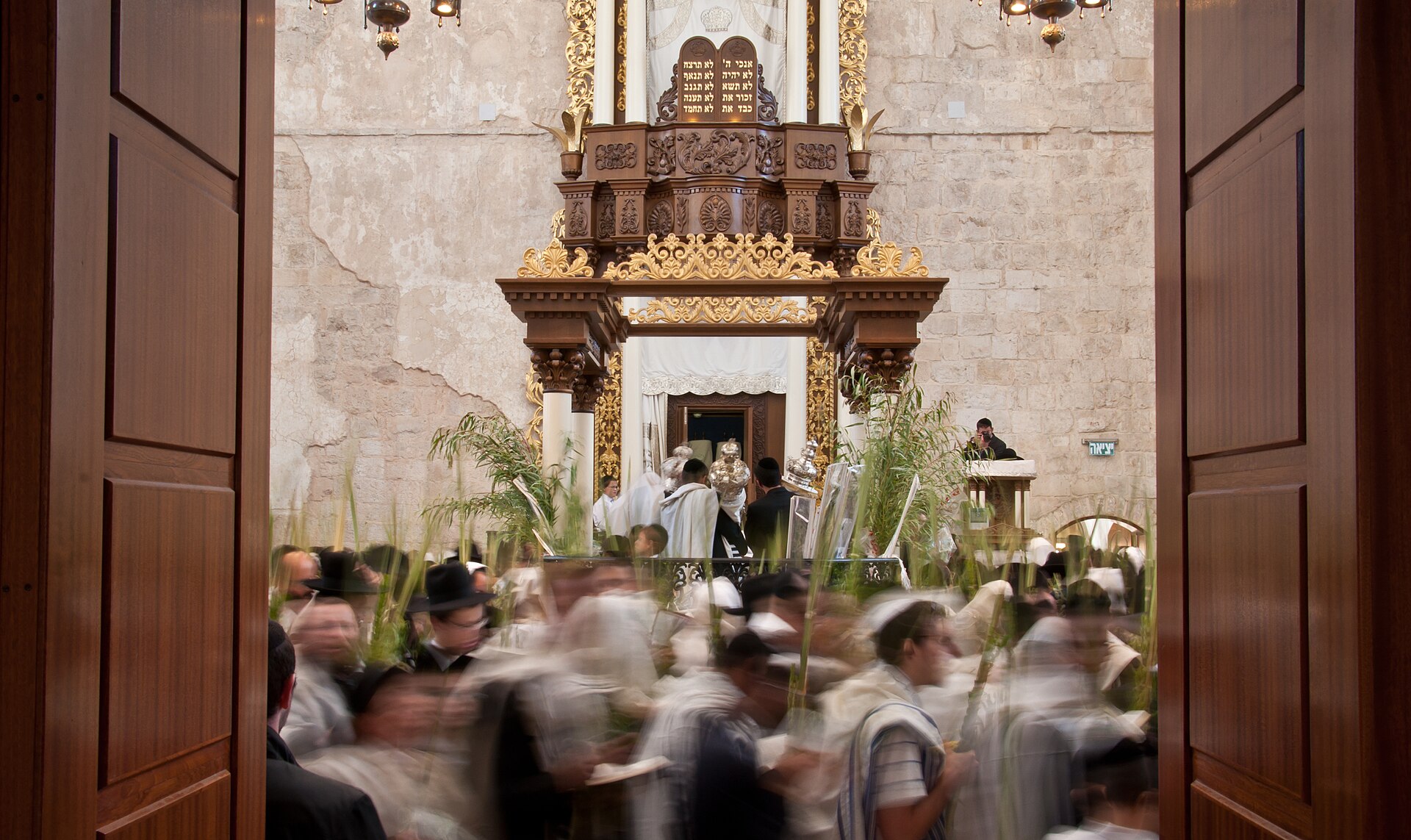
Sukkot (15–22 October 2027) is the best all-round festival week for a visitor, and the one most first-timers have never heard of. For seven days the city grows temporary booths — on balconies, in car parks, across restaurant terraces, in the courtyards of apartment blocks — roofed with palm fronds laid loose enough to see stars through. Only the first day is a full festival day with the usual closures. The intermediate days, Chol HaMoed, form a national holiday week when museums run extended hours, free events appear everywhere and every Israeli family is out at once. The Birkat Kohanim or Priestly Blessing at the Western Wall draws tens of thousands into the plaza on one Chol HaMoed morning. The trade-off is crowding: this is the busiest domestic tourism week of the year and every attraction in the country knows it.
Passover: seven days without bread
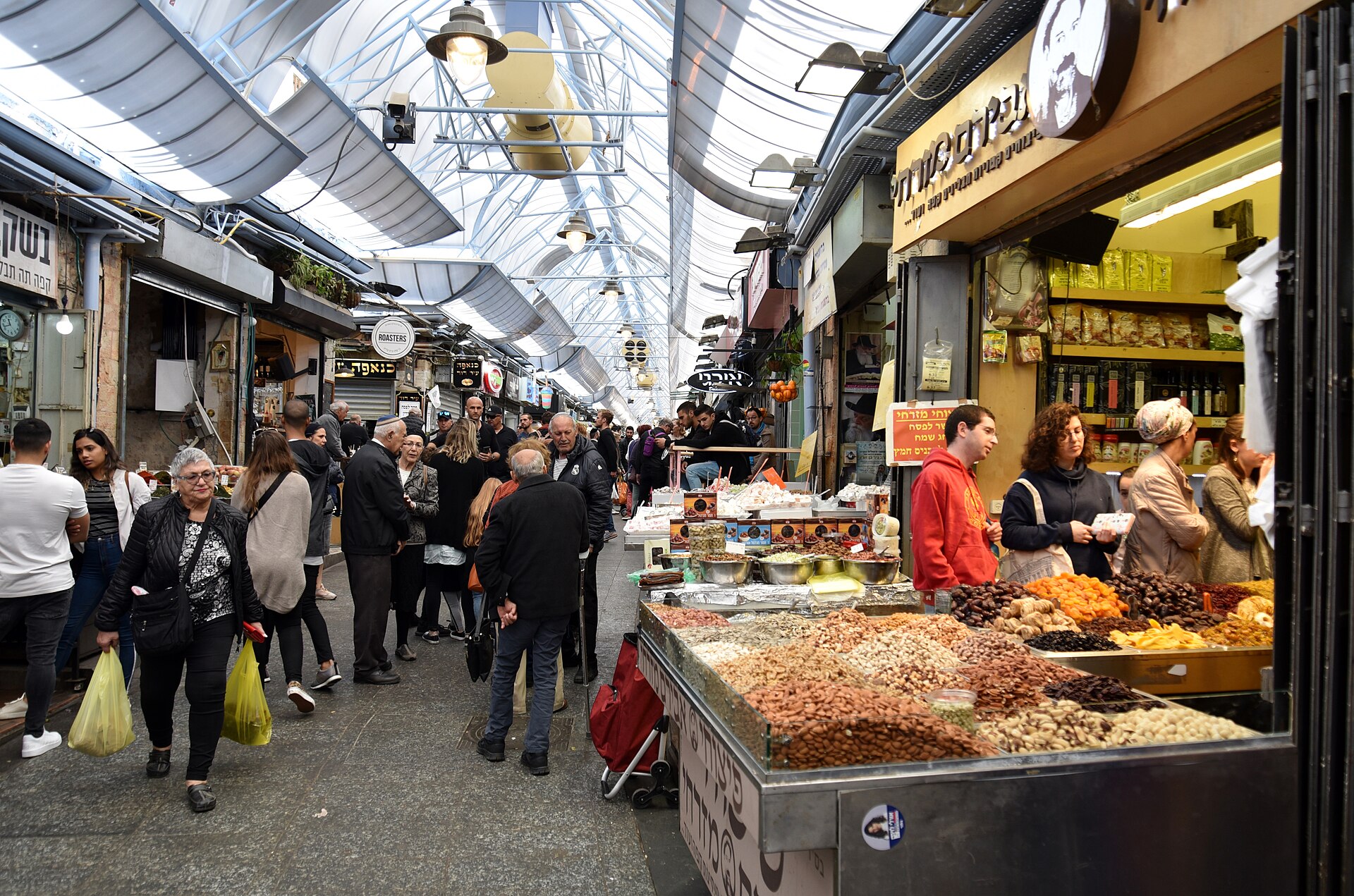
Passover (21–29 April 2027) is the festival that most visibly rewires the practical city. Leavened food — chametz — is removed from Jewish homes, hotels and most restaurants. Hotel kitchens are ritually cleaned and converted, which means no bread, no pasta, no beer and no normal breakfast pastries for the week; matzah replaces them. Supermarket aisles are physically sheeted over. Only the first and seventh days are full festival days with closures; the days between are another Chol HaMoed holiday week with heavy crowds. If bread matters to you, the Christian and Muslim quarters of the Old City and the bakeries of East Jerusalem trade entirely normally throughout.
Purim, Hanukkah and Shavuot
Purim is Jerusalem’s own. Because the city was walled in the time of Joshua, it keeps Shushan Purim a day later than the rest of Israel — 24 March in 2027, when Tel Aviv has already sobered up. Expect wholesale fancy dress in the streets, from toddlers to bus drivers, public readings of the Book of Esther, and a level of licensed silliness that visitors rarely associate with this city. It is a working day for most businesses and a genuinely uncrowded time to visit.
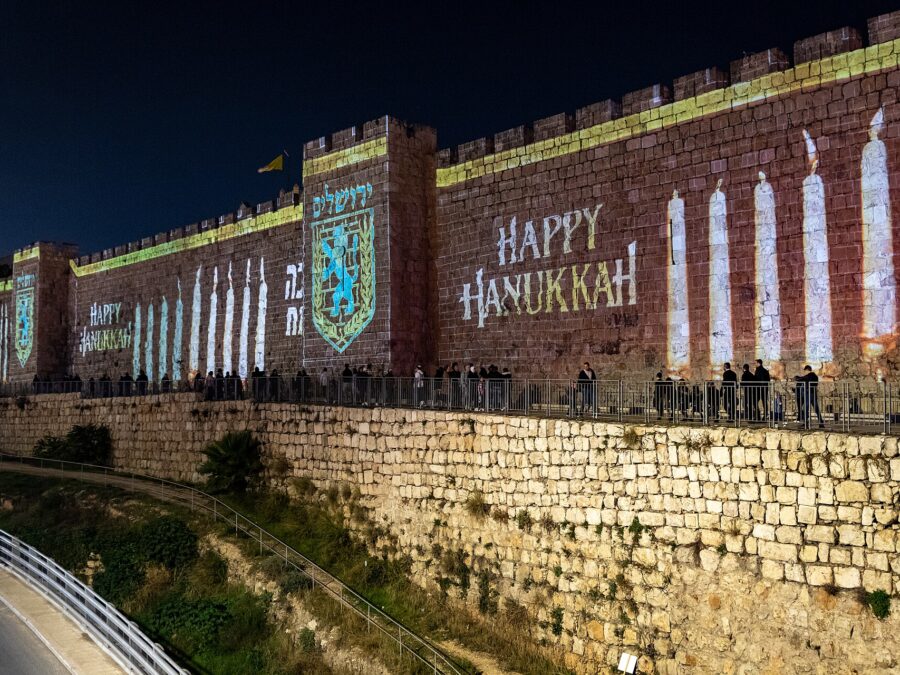
Hanukkah (24 December 2027 – 1 January 2028) runs eight nights, is not a public holiday and is unmissable for anyone who likes walking. Jerusalem families follow the old custom of placing the menorah outside the front door in a glass case, so lanes in the Jewish Quarter and the Nachlaot alleys fill with rows of live flame at nightfall. Everything stays open; you simply get a city lit by candles for a week. In 2027 it overlaps Christmas exactly, which makes that late December an unusually rich fortnight and a very hard one to find a hotel room in.
Shavuot (10–11 June 2027) lasts one day in Israel and holds the most underrated night in the calendar. Many spend it awake studying, and before dawn tens of thousands walk from every direction through the Old City down to the Western Wall for sunrise prayers. Standing on a rooftop at four in the morning watching streams of people converge through the gates is, for a lot of visitors, the image of the city they keep. It is a full festival day, so plan for closures on either side of it.
Tisha B’Av and the fast days
Tisha B’Av (11–12 August 2027) mourns the destruction of both Temples. It is a full twenty-five-hour fast; restaurants and places of entertainment across Jewish West Jerusalem close, and the Western Wall plaza fills through the night with people sitting on the ground reading Lamentations by candlelight. It is not a pleasant evening and it is a profoundly memorable one. Yom Kippur aside, it is the day most likely to catch an unprepared visitor with nowhere open for dinner. Our Jerusalem food guide and the kosher restaurant guide are both worth reading before you book anything that week.
The national days
Four modern commemorations sit inside the religious calendar and behave much like it. Yom HaShoah (3–4 May 2027) marks the Holocaust; at 10:00 a two-minute siren sounds nationwide and the country stops — traffic halts on motorways and drivers stand beside their cars. Yad Vashem holds the state ceremony. Yom HaZikaron (10–11 May) remembers fallen soldiers and victims of hostile acts, with sirens at 20:00 and 11:00 and near-total closure of entertainment; it rolls directly into Yom HaAtzmaut, Independence Day, and the switch from national mourning to fireworks and street parties inside a single evening is disorienting to watch and worth understanding before you see it.
Yom Yerushalayim (3–4 June 2027) marks Israel’s capture of East Jerusalem and the Old City in 1967, and it is the most contested date on this page. The Flag March passes through the Old City, including the Muslim Quarter; it is celebrated by many Israelis as a national festival and experienced by many Palestinian residents as a provocation, and it regularly draws protest, counter-protest and a very large police deployment. Governments, courts and residents disagree profoundly about it, and this guide is not going to tell you who is right. What it will tell you is the practical position: many visitors, and a good many Jerusalemites, simply stay out of the Old City that day, and shops in the Muslim Quarter often shutter. If you are in the city, follow your own government’s current advice and read our standing page on safety in Jerusalem.
The Christian Holy Days
Christian Jerusalem is not one calendar but a federation of them, and the Status Quo — the 1852 Ottoman settlement that froze the rights of each community inside the shared churches — governs who processes where, and at what hour, to the minute. That is why you will see a Greek Orthodox procession waiting in a side chapel while a Franciscan one finishes: the timings are not courtesy, they are law.

Holy Week and Easter
Western Holy Week in 2027 runs from Palm Sunday on 21 March to Easter Sunday on 28 March; the Julian churches keep theirs from 25 April to Pascha on 2 May. Both weeks follow broadly the same shape. Palm Sunday brings the great procession that gathers at the Church of Bethphage and walks down the Mount of Olives, past Gethsemane, to St Anne’s inside the walls — traditionally setting off mid-afternoon, with pilgrim groups, scout bands and olive branches, and a crowd that takes well over two hours to get down the hill. Good Friday fills the Via Dolorosa with processions from before dawn until late; the Franciscan walk is the best known but by no means the only one.
The honest advice for Holy Week is this: it is the most moving week of the Christian year to be here and the worst week to try to see the city. Rooms inside the Old City and around Jaffa Gate sell out six to nine months ahead and price accordingly. Entry to the Holy Sepulchre can involve queues of hours. If your priority is the archaeology, the museums and the rooftops, come literally any other week. If your priority is the liturgy, come, and accept that you will spend a great deal of the week standing still in a crowd. Our guide to Christian pilgrimage in Jerusalem covers the sites themselves in detail.
The Holy Fire
On Orthodox Holy Saturday — 1 May in 2027 — the Greek Orthodox Patriarch enters the Edicule inside the Holy Sepulchre and emerges with lit candles, and the flame is passed hand to hand through a packed church and out into the city. It is the most intense single hour in the Jerusalem calendar and it is very tightly policed: the church is full by early morning, access to the Christian Quarter is controlled by cordon and ticket, and a great many people who travel specifically for it end up watching on a screen in a courtyard. That is a real outcome, not a warning, and it is worth deciding in advance whether you are content with it.
Christmas, three times over
Jerusalem itself is comparatively quiet at Christmas. The centre of gravity is Bethlehem, nine kilometres south and across the separation barrier in the West Bank. Midnight Mass at St Catherine’s beside the Church of the Nativity is ticketed and heavily oversubscribed; applications close in mid-December, and the Mass is relayed onto large screens in Manger Square, which is free and, most years, where the atmosphere actually is. The Ministry of Tourism has run free non-stop shuttle buses between Jerusalem and Bethlehem from midday on 24 December to midday on 25 December. Our Bethlehem day trip guide covers the crossing, the transport and the sites the rest of the year.
What most visitors miss is that the quieter Christmases are the better ones. The Greek Orthodox, Syriac and Coptic celebrations on 6–7 January and the Armenian ones on 18–19 January bring the same processions into Manger Square with perhaps a tenth of the crowd and no ticket ballot at all.
The feasts worth catching
Beyond the two great cycles, the Christian year here throws up a steady run of processions that barely register in guidebooks: the Feast of the Assumption in mid-August, with the Greek Orthodox procession carrying the icon of the Dormition from the Old City to the Tomb of the Virgin at Gethsemane; Pentecost at the Cenacle on Mount Zion; the Ethiopian Orthodox ceremonies on the roof of the Holy Sepulchre at Easter, held in the little village of cells at Deir es-Sultan and, for many people, more affecting than anything happening below. None of these needs a ticket. Check the Latin Patriarchate and Greek Orthodox Patriarchate calendars in the week you arrive.
The Muslim Holy Days
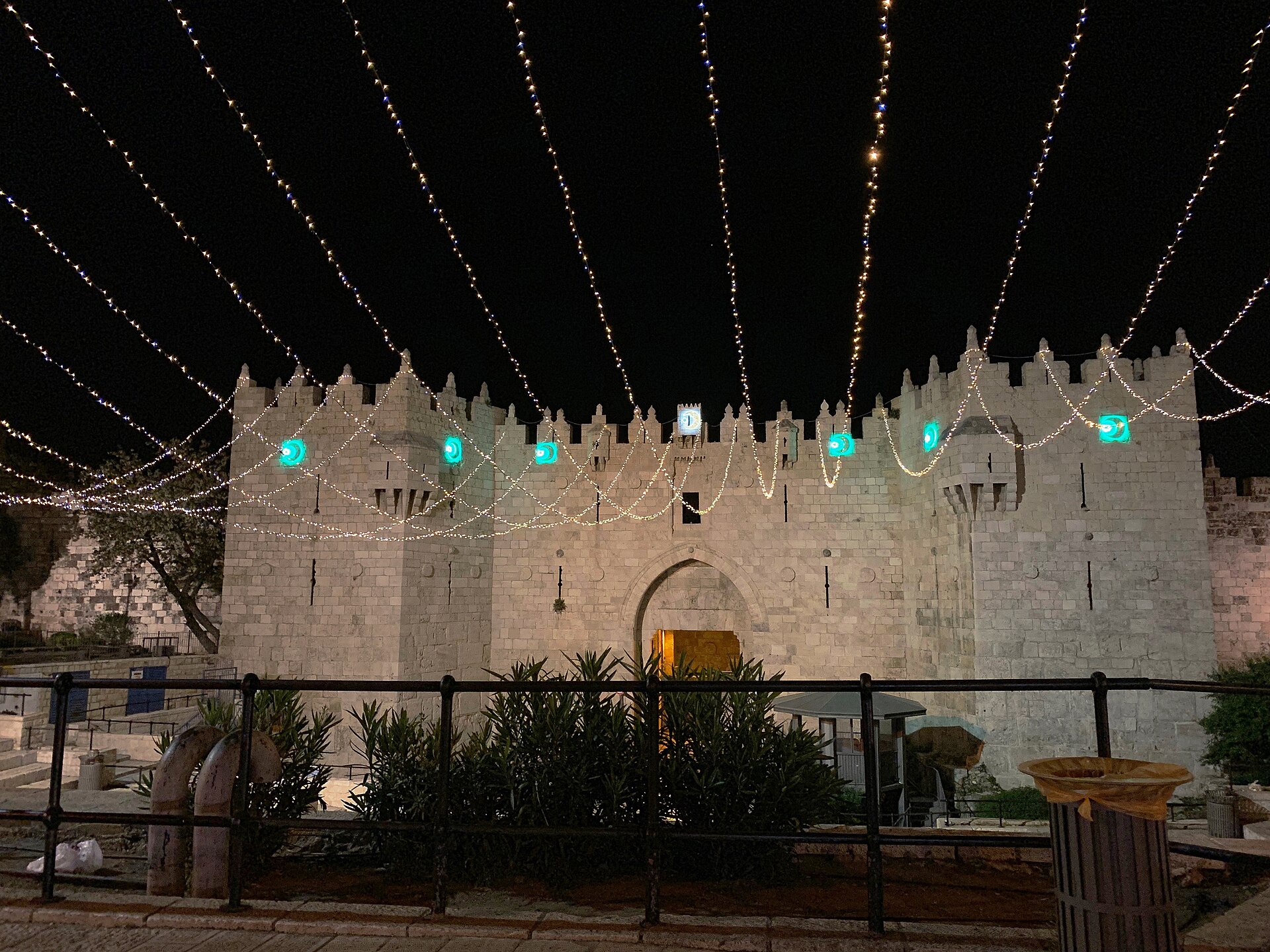
Ramadan
Ramadan (beginning 8 February 2027, ending around 9 March) turns the Old City inside out. Through daylight the Muslim Quarter is subdued, many food stalls are shut and it is courteous not to eat, drink or smoke visibly in the street. Then, in the twenty minutes before sunset, the whole quarter reorganises itself — tables appear in the lanes, the qatayef pancake sellers set up along Al-Wad Street, and the cannon and the call to prayer release several thousand people into a meal at once. From then until well past midnight, the lanes off Damascus Gate are busier and more festive than at any other time of year, with lanterns strung between the buildings and stalls trading until two in the morning.
For a visitor this is one of the most rewarding periods to be in the Old City, provided you invert your day: sleep in the afternoon, come in at dusk, and stay late. Access to Haram al-Sharif / the Temple Mount for Friday prayers during Ramadan is restricted by the Israeli police and the arrangements change year to year, sometimes week to week; non-Muslim visiting hours to the compound are often suspended entirely for the month. Do not plan a Temple Mount visit inside Ramadan. Our pages on Al-Aqsa Mosque and the Dome of the Rock explain the standing access rules and who may enter what.
Laylat al-Qadr and the last ten nights
The final third of Ramadan intensifies everything. Laylat al-Qadr, the Night of Power, is generally marked on the twenty-seventh night — around 5 or 6 March in 2027 — when very large numbers come to pray at Al-Aqsa overnight. Expect the Old City gates to be managed by police, expect long waits, and expect the lanes to be full at three in the morning.
The two Eids
Eid al-Fitr (around 10 March 2027) closes Ramadan with three days of family visiting. Morning prayers fill the compound; the souq is shut for much of the first morning and then reopens into something like a street party, with children in new clothes and the sweet shops on Khan al-Zeit doing the trade of their year. Eid al-Adha (around 16 May 2027) runs four days and is the larger of the two festivals in religious terms. Both are excellent days to be in East Jerusalem and poor days to attempt the Temple Mount.
Every Friday, all year
Even outside the festival months, Friday midday prayers reshape the Old City every single week. The Muslim Quarter lanes near the Haram gates fill from around 11:00, the compound is closed to non-Muslim visitors, and Damascus Gate is at its busiest an hour either side of noon. Combine that with Shabbat starting on Friday afternoon and you have the city’s single most congested and then most abruptly silent day. First-time visitors regularly plan their big Old City walk for a Friday and regret it; see first-time visitor advice before you fix your itinerary.
What Actually Closes
This is the table people come for. “Full festival day” below means the same closures as Shabbat: no public transport, most West Jerusalem shops and restaurants shut, museums closed.
| Service | Full Jewish festival day | Chol HaMoed / Hanukkah / Purim | Christian holy days | Muslim holy days |
|---|---|---|---|---|
| Light rail and buses | None from mid-afternoon before until nightfall | Normal, often reinforced | Normal | Normal; Old City gates may be managed |
| Trains, including the airport line | Suspended | Normal | Normal | Normal |
| Ben Gurion Airport | Open, except Yom Kippur (closed) | Open, very busy | Open | Open |
| Museums and national parks | Closed | Extended hours, extra programming | Open | Open |
| West Jerusalem restaurants | Mostly closed | Open, book ahead | Open | Open |
| Old City and East Jerusalem | Christian and Muslim quarters trade normally | Normal | Christian Quarter partly shut on the day itself | Muslim Quarter shut mornings of the Eids |
| Supermarkets | Closed | Open, chaotic | Open | Open |
| Western Wall plaza | Open, no photography or phones | Open, very busy | Open | Open |
| Haram al-Sharif / Temple Mount | Non-Muslim visiting suspended on Jewish festivals | Restricted, check daily | Unaffected | Non-Muslim visiting suspended |
The two rules that save the most trouble
- Buy food the morning before, not the afternoon before. Mahane Yehuda and the supermarkets are at their most crowded from about 11:00 on the eve of a festival and are shut by mid-afternoon. Get there early or use the Old City instead.
- Do not book intercity travel on a festival eve. The last trains and buses out of Jerusalem run several hours before sunset, not up to it, and the roads to the coast are solid from lunchtime.
Money, Rooms and Timing
Festival weeks are the only time Jerusalem behaves like an expensive city. Passover, Sukkot and the two Easters are peak; the High Holidays are close behind. As a rule of thumb, a room that costs a certain amount on a February midweek will cost something like half as much again over Hanukkah, and can double or more over Passover and Holy Week — and the cheap end of the market vanishes first, so the practical damage is worse than the percentage suggests. VAT is 18 per cent, and non-resident tourists paying by foreign card are normally exempt on hotel accommodation, which is worth confirming at booking rather than at checkout.
Book eight to nine months ahead for Holy Week, Passover and Sukkot. Three months is comfortable for Hanukkah and Purim. For the quiet windows, look at late January and early February, mid-May outside the national days, and the first three weeks of November — the weather is still good and the city is entirely yours. Our guides to the best time to visit, the weather month by month and what a trip actually costs go into the arithmetic properly, and where to stay in Jerusalem covers the areas that stay walkable when the transport stops.
Behaving Well
Almost nothing here requires special knowledge; it requires noticing. Dress modestly at every holy site — shoulders and knees covered, for men as well as women — and carry a scarf, because a great many holiday processions end inside a church or on a plaza where it matters. Our Jerusalem dress code guide is specific site by site.
- Photography. No cameras or phones at the Western Wall on Shabbat and festivals. During Ramadan, ask before photographing people eating. At processions, get out of the path of the participants — the crowd will be perfectly friendly about it, but the liturgy is not a performance laid on for you.
- Eating and drinking. In the Muslim Quarter during Ramadan daylight hours, don’t, in the street. On Yom Kippur and Tisha B’Av, be discreet about it anywhere.
- Driving. Do not drive in religious neighbourhoods on Shabbat or festivals; in Mea Shearim and similar areas, streets are closed and it causes genuine offence.
- Ultra-Orthodox neighbourhoods. During Sukkot and Passover these are at their most photogenic and their most private. Walk, look, don’t point a lens at children.
- Politics. Festivals here carry political weight for some people and none at all for others. Listening is a better use of the week than arguing.
So Which One Should You Plan Around?
If you want one recommendation: Sukkot, for a first visit. The weather in October is close to perfect, the intermediate days give you a full working city with extra programming, and the sight of the whole place camping on its own balconies is unlike anywhere else. Accept the crowds and book early.
If you want the single most extraordinary twenty-four hours: Yom Kippur, on the strict understanding that you will do no sightseeing whatsoever and eat only what you bought two days earlier.
If you are a Christian pilgrim: Holy Week, and if you can, the Orthodox one — it is very nearly as full and considerably less scrummed than the Western week, and in a year like 2027 you can do both.
And the honest counter-recommendation: skip Yom Yerushalayim, skip Eid al-Adha if the Temple Mount is why you came, and think hard before spending a short first trip in Holy Week. Jerusalem in an ordinary week in November, with the Old City half-empty and every site open, is a better introduction to the city than Jerusalem at its most spectacular and least navigable. There is no shame in coming back for the fireworks once you know the streets. Our Jerusalem itinerary planner and the round-up of holy sites in Jerusalem will both serve you better on a quiet week.
Holy Week deserves more space than a calendar entry can give it, particularly in a year like 2027 when the Western and Julian dates fall five weeks apart and the city effectively does the whole thing twice. Our dedicated guide to Easter in Jerusalem works through both weeks day by day — the Palm Sunday procession from Bethphage, the Good Friday processions, the Ethiopian ceremony on the roof of the Holy Sepulchre — and says plainly what you will and will not manage to see.
December is the month that most confuses visitors, because Jerusalem itself carries on working through 25 December while the celebration happens nine kilometres away in Bethlehem — and then does the whole thing twice more, on 6–7 January and 18–19 January. Our full guide to Christmas in Jerusalem and Bethlehem covers the Midnight Mass ballot, the free shuttle buses, the crossing home and which of the three Christmases is actually the best one to attend.
Passover is the festival that most visibly rewires the practical city, and it rewards a page of its own. Our guide to Passover in Jerusalem works through the 2027 week day by day — the burning of chametz on the morning of the seder, the two full festival days that stop the transport, the crowds of Chol HaMoed, the Priestly Blessing at the Kotel, and the Mimouna on the night it all ends.
Yom Kippur deserves its own page, because it is unlike any other day described here: the airport closes, the motorways empty, broadcasting stops, and a city of a million people voluntarily switches itself off for twenty-five hours. Our guide to Yom Kippur and the High Holidays in Jerusalem covers Rosh Hashanah, the Days of Awe, Selichot at the Kotel, and exactly how a visitor eats and moves on the day itself.
Ramadan rewards a page of its own, because it does not close the city so much as invert it: quiet mornings, subdued afternoons, and the liveliest nights of the entire Jerusalem year. Our guide to Ramadan in Jerusalem covers the 2027 dates, how to reschedule your day around iftar, where to stand at sunset, the position on Temple Mount access, and the courtesies that matter.
Sukkot is the festival we would send a first-time visitor to, and it gets a full page of its own. Our guide to Sukkot in Jerusalem covers the booths on every balcony, the Four Species market in the days beforehand, Birkat Kohanim at the Western Wall, the Jerusalem March, the all-night Simchat Beit HaShoeva celebrations, and why the weeks either side are the real bargain.
Purim has a quirk that belongs to Jerusalem alone: the city celebrates twenty-four hours after everywhere else, because the Book of Esther gives walled cities an extra day. Our guide to Purim in Jerusalem sets out Shushan Purim in full — the 2027 dates, the four obligations, where the secular and ultra-Orthodox versions of the day happen, and how to celebrate in Tel Aviv and Jerusalem on consecutive days.
Hanukkah closes nothing at all, which is exactly why it is under-rated. Our guide to Hanukkah in Jerusalem covers the eight nights in detail — the Nachlaot menorah trail and when to walk it, the public lightings at the Western Wall and Jaffa Gate, the sufganiyot at Mahane Yehuda, and the 2027 week when the festival overlaps Christmas and New Year exactly.
Final Word on Jerusalem’s Religious Holidays
Most cities put on festivals. Jerusalem is put on by them — the calendar is not decoration here, it is the operating system, and three of them run at once. That is exasperating when you have four days and a list of sites, and it is the whole reason to come when you have a week and some patience. Learn which two days in your window are full closures, buy your bread the morning before, and let the rest of it happen to you. The best hours most visitors have here are the ones they did not schedule: a procession that came round a corner, a courtyard of booths glimpsed through an open gate, a plaza that fell silent at a siren. Start with our Old City guide and the practical rundown in Jerusalem travel tips, keep Shabbat in Jerusalem open for the weekly version of all this, and if a festival week is not what you are after, the things-to-do round-up will fill an ordinary one very happily.
Photo Credits
Sukkah booths in a Jerusalem courtyard during Sukkot: Sukkot 2024 in Jerusalem by Joalbertine, CC BY-SA 4.0, via Wikimedia Commons.
Palm Sunday procession on the Mount of Olives: Palm procession 2019 in Jerusalem (03) by Bahnfrend, CC BY-SA 4.0, via Wikimedia Commons.
Hoshana Rabbah in the Hurva Synagogue, Jewish Quarter: הושענא רבה בבית הכנסת החורבה by Meir624, CC BY-SA 3.0, via Wikimedia Commons.
A nut stall with a kosher-for-Passover sign at Mahane Yehuda Market: Eitz HaChaim Street, 2019 (06) by Bahnfrend, CC BY-SA 4.0, via Wikimedia Commons.
Ramadan lights and crescent lanterns at Damascus Gate: Damascus Gate at night 001 by أمين, CC BY-SA 4.0, via Wikimedia Commons.