A Christian pilgrimage to Jerusalem follows the footsteps of Jesus through the same streets, hills, and churches that have drawn the faithful for nearly two thousand years. You can stand where the Gospels say he was crucified and buried, walk the route of his final journey, and pray on the Mount of Olives where he wept over the city. This guide covers every major site, how to plan your days, what a pilgrimage costs in 2026, and the practical details that the glossier brochures leave out.
Whatever your tradition, the experience rewards preparation. Jerusalem is compact but dense, the holy places keep their own hours, and the rhythm of Shabbat (Friday sunset to Saturday nightfall) shapes what is open and how you get around. Read on before you book.
What Is a Christian Pilgrimage to Jerusalem?
A pilgrimage is travel with a spiritual purpose. For Christians, Jerusalem is the city of the Passion, death, and resurrection of Jesus, and visiting it has been part of the faith since at least the 4th century, when Constantine’s mother Helena identified key sites and built the first churches over them. Pilgrims still pray at those locations, attend liturgy where Holy Week unfolded, and connect Scripture to the ground beneath their feet.
You do not need to join an organized group or belong to a particular denomination. Catholics, Orthodox, Anglicans, Protestants, and independent believers all make the journey, some for a week, some for a single focused day. What unites them is intention rather than itinerary. The sites cluster within the walled Old City and on the ridges just east of it, keeping walking distances short.
Essential Christian Pilgrimage Sites in Jerusalem
These are the places most pilgrims prioritize. Distances between them are small, but each deserves unhurried time. For a fuller survey of sacred places across all faiths in the city, see our overview of holy sites in Jerusalem.
1. Church of the Holy Sepulchre
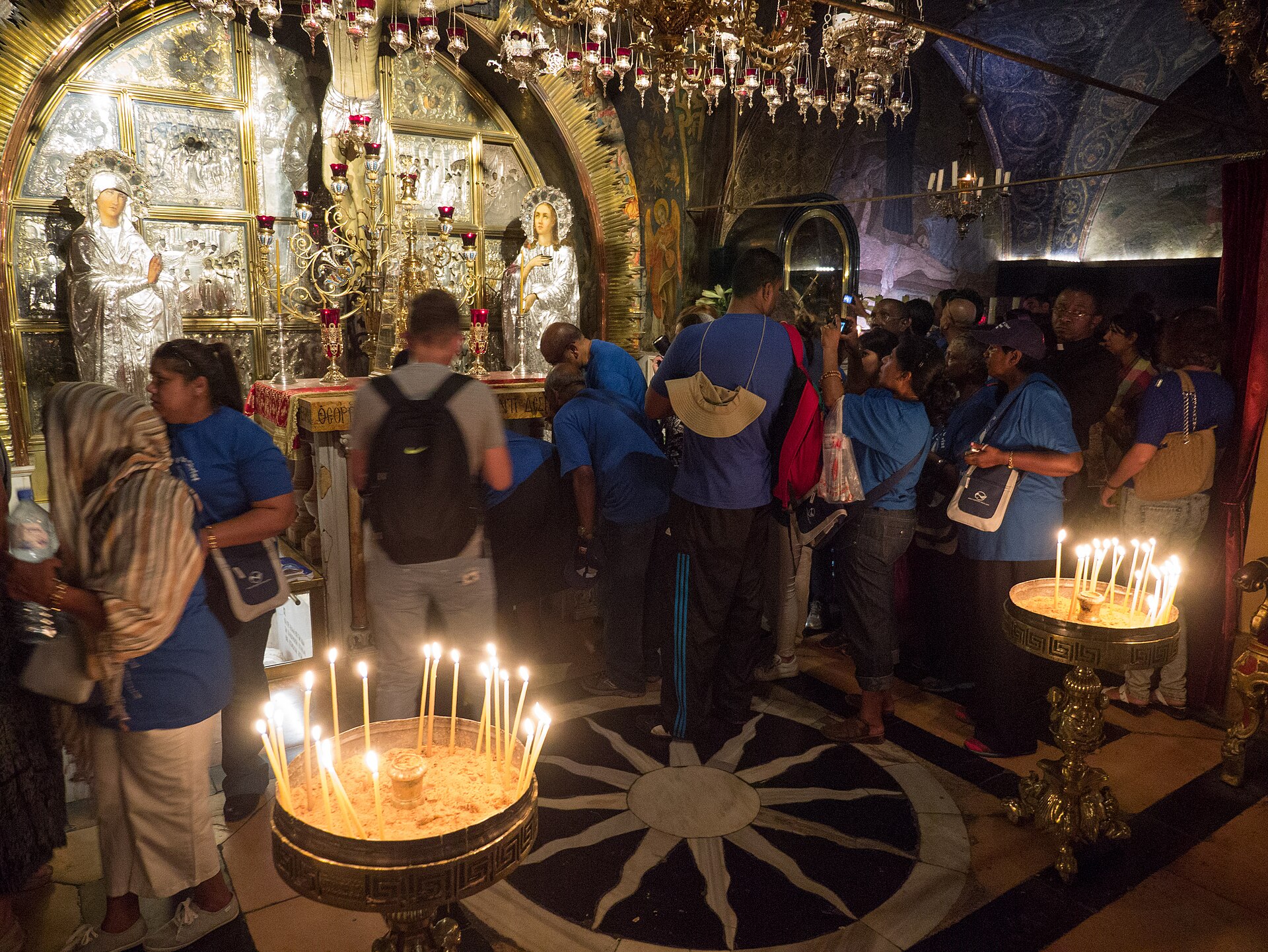
The spiritual center of any Christian pilgrimage, the Church of the Holy Sepulchre stands over the traditional sites of Calvary (Golgotha), where Jesus was crucified, and the empty tomb where he was buried and rose. Six Christian denominations share the building under a centuries-old arrangement, and the atmosphere shifts from one chapel to the next. The church sits in the Christian Quarter, a few minutes’ walk from Jaffa Gate.
Entry is free. Hours run roughly 5am to 8pm in summer, 4am to 7pm in winter, varying by season. Arrive before 8am to pray at the Edicule, the shrine enclosing the tomb, with little queue; by mid-morning the wait can exceed an hour. Dress modestly, shoulders and knees covered, and be discreet with photography during services.
2. Via Dolorosa
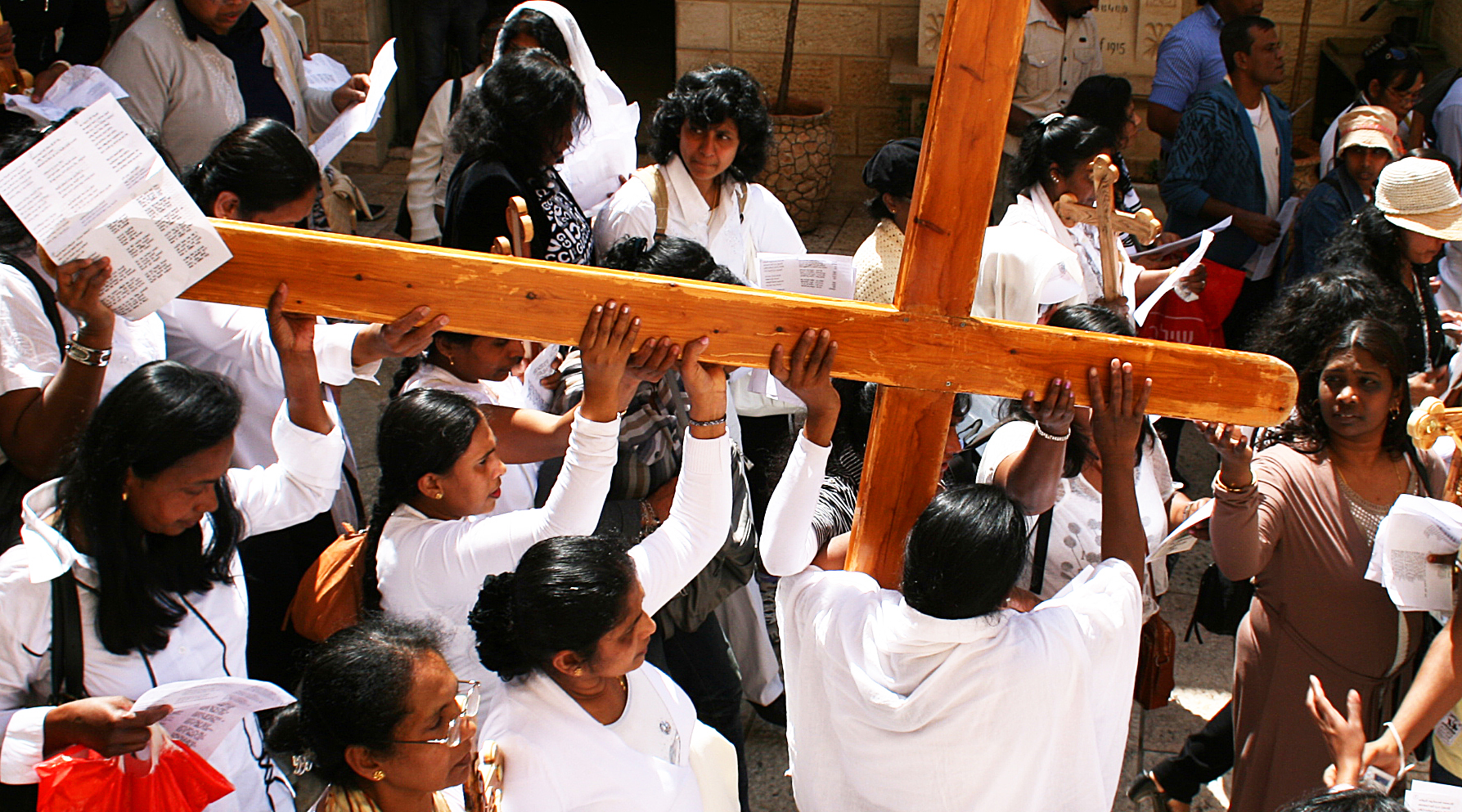
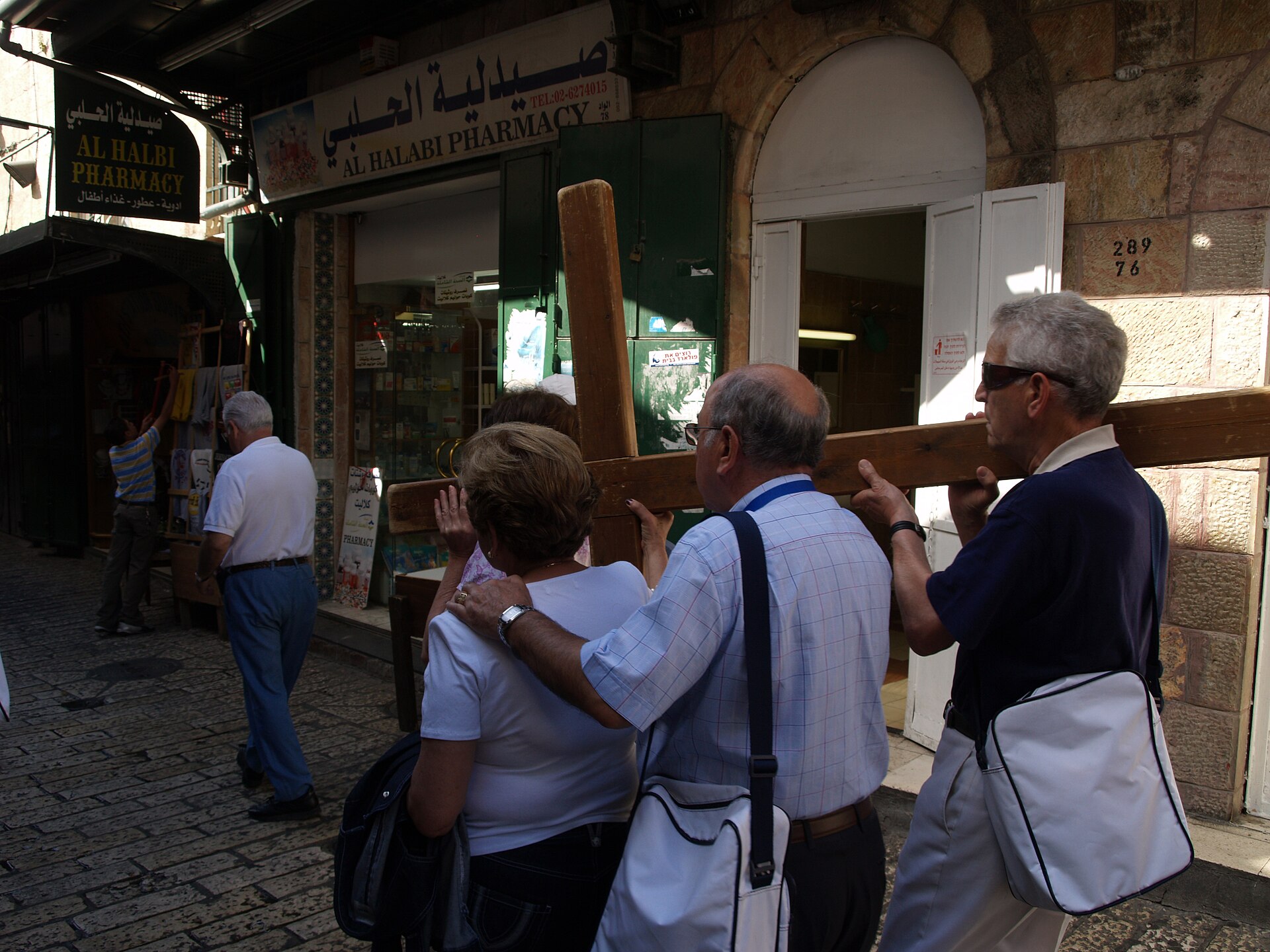
The Via Dolorosa, the “Way of Sorrows,” traces the route Jesus is believed to have walked carrying the cross, marked by fourteen Stations of the Cross. The first nine stations wind through the streets of the Muslim Quarter; the final five lie inside the Church of the Holy Sepulchre. Small plaques and Roman-numeral markers identify each station, some easy to miss above shop awnings.
Every Friday afternoon (at 3pm in winter, 4pm in summer) the Franciscan friars lead a public procession along the full route, open to anyone and conducted in several languages. It is free and moving, though crowded during Lent and Holy Week. Walking it alone, a printed station guide helps you keep the sequence in the busy market lanes.
3. Mount of Olives and Garden of Gethsemane
East of the Old City, the Mount of Olives gives the classic panorama of the walled city and the golden Dome of the Rock. The ridge holds the Church of the Pater Noster, the teardrop-shaped Dominus Flevit chapel where tradition says Jesus wept over Jerusalem, and the path of Palm Sunday. At the foot of the hill lies the Garden of Gethsemane, with ancient olive trees and the Church of All Nations marking where Jesus prayed the night before his arrest.
Begin at the top and walk down: a taxi or Arab bus from near Damascus Gate reaches the summit, and the descent past each church takes one to two gentle hours. Gethsemane and most churches open around 8am, close midday (often noon to 2pm), and reopen until about 5pm. Entry is free.
4. Mount Zion
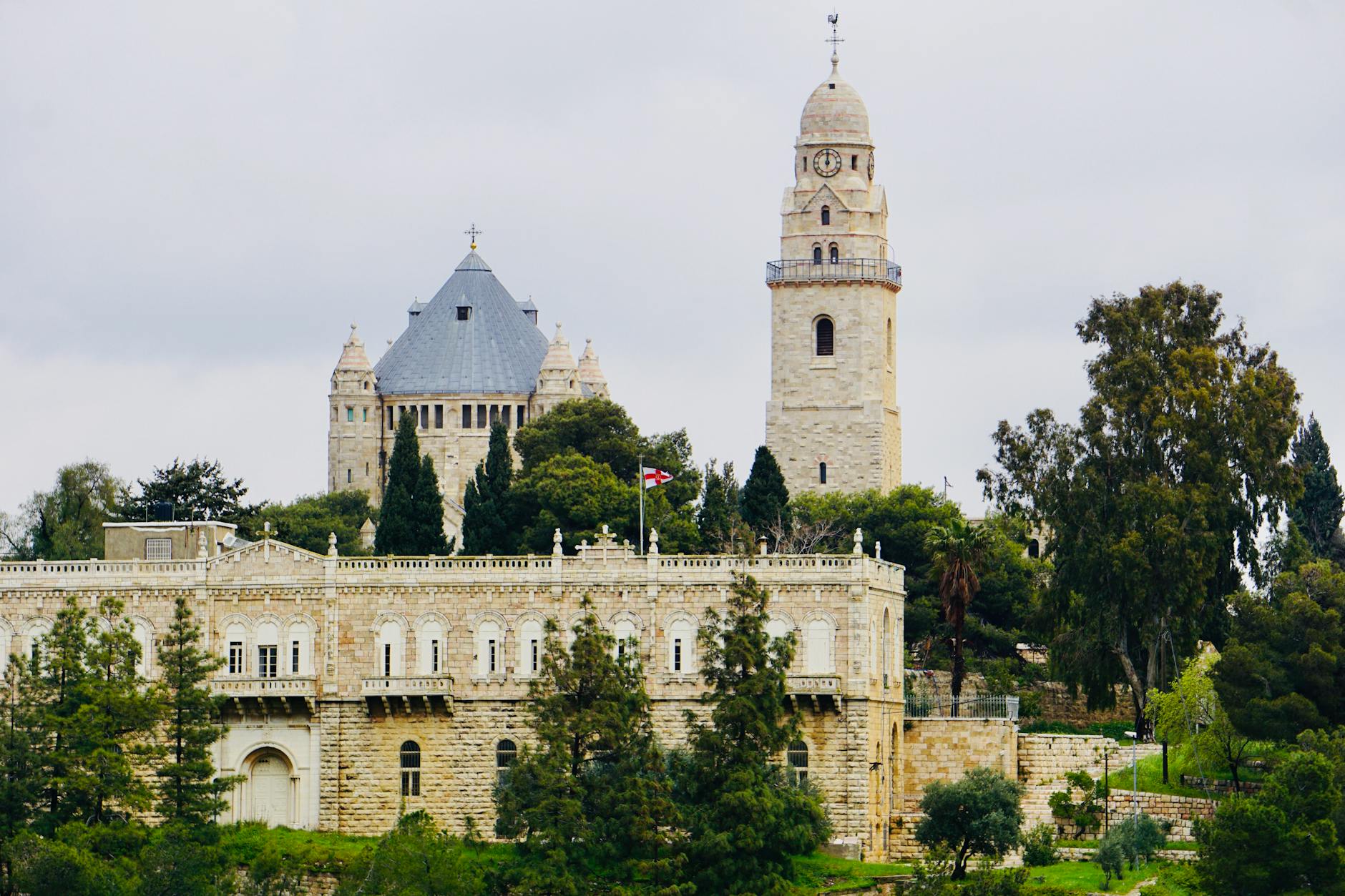
Just outside Zion Gate, Mount Zion gathers several sites within a short walk: the Cenacle (the Upper Room of the Last Supper), the Dormition Abbey, and the traditional Tomb of King David one floor below. The Upper Room is a bare Gothic hall, but its link to the Eucharist makes it a key stop. Entry is free; rooms generally open 8am to 5pm.
5. Bethlehem (Day Trip)
The birthplace of Jesus lies about 10 km south in the West Bank, under Palestinian Authority control. The Church of the Nativity, among the oldest continuously used churches in the world, marks the traditional site of the manger. Crossing is straightforward for tourists, but you pass a checkpoint, so carry your passport. A guided half-day, a taxi, or Arab bus 231 from near Damascus Gate all work. See our Bethlehem day trip guide.
6. Garden Tomb
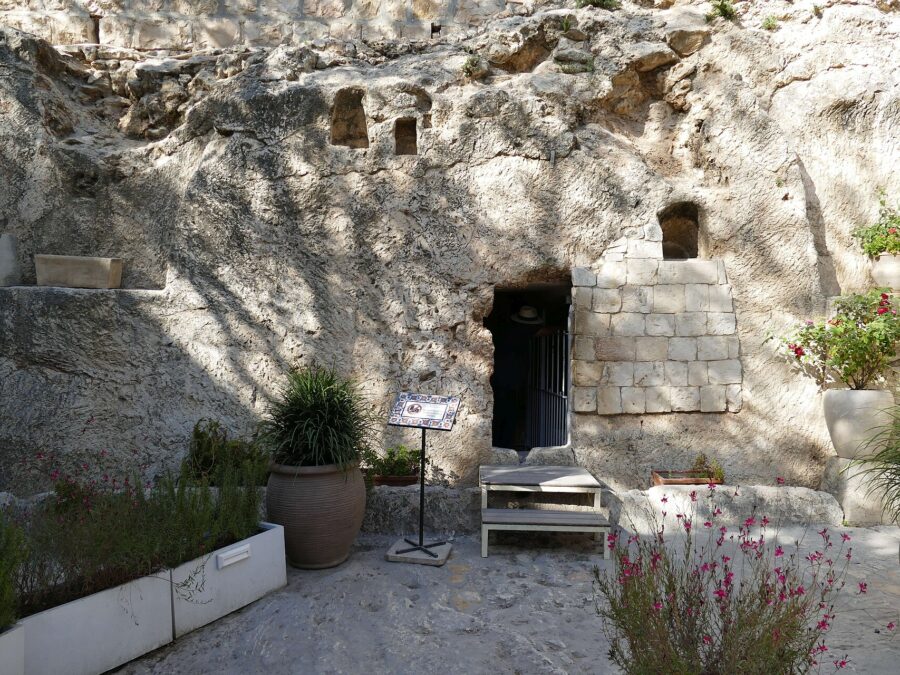
Near Damascus Gate, the Garden Tomb is a quiet, leafy alternative that many Protestant and Evangelical pilgrims find conducive to reflection. A rock-cut tomb and a skull-shaped escarpment have led some to associate it with Golgotha, though the older tradition favors the Holy Sepulchre. Run by a Christian trust that welcomes group worship, it is free and generally opens 9am to 5pm, closed Sundays.
7. Pool of Bethesda and St. Anne’s Church
Inside the Lions’ Gate (St. Stephen’s Gate), the excavated Pool of Bethesda recalls the healing miracle in John’s Gospel, and the adjacent Crusader-era Church of St. Anne is famed for its acoustics; groups often pause to sing beneath its stone vaults. A fee of around 12 shekels applies; the complex usually opens 8am to noon and 2pm to 5pm, closed Sundays.
8. Tomb of the Virgin Mary
At the base of the Mount of Olives, near Gethsemane, an underground church holds the traditional tomb of Mary. A long flight of stone steps descends into a candle-lit, incense-rich space shared mainly by Orthodox communities. Entry is free, and it pairs naturally with a Gethsemane visit. Cover shoulders and knees, as at all churches here.
Suggested 7-Day Christian Pilgrimage Itinerary
One week lets you pray at the major sites without exhaustion and still fit in Bethlehem. Adjust the order around Shabbat and your group’s liturgy schedule.
| Day | Focus |
|---|---|
| Day 1 | Arrival, settle in, evening walk to Jaffa Gate and a first prayer at the Western Wall plaza viewpoint. |
| Day 2 | Church of the Holy Sepulchre at opening, then the Via Dolorosa stations in reverse back through the Old City. |
| Day 3 | Mount of Olives from the top down: Pater Noster, Dominus Flevit, Gethsemane, Church of All Nations, Tomb of Mary. |
| Day 4 | Mount Zion (Cenacle, Dormition, Tomb of David), then Pool of Bethesda and St. Anne’s Church. |
| Day 5 | Bethlehem day trip: Church of the Nativity, Shepherds’ Field, Milk Grotto. |
| Day 6 | Garden Tomb for morning worship; afternoon free for the Israel Museum’s Holy Land model or rest before Shabbat. |
| Day 7 | Sunday liturgy at a church of your tradition; final visit to the Holy Sepulchre; departure. |
With only a few days, prioritize the Holy Sepulchre, Via Dolorosa, and Mount of Olives, and slot Bethlehem in as a half-day. Our Jerusalem itinerary guide maps out trips of one to seven days.
Best Times for a Christian Pilgrimage
Spring (March to May) and autumn (September to November) bring mild weather and are the most popular pilgrimage seasons. Easter is the emotional peak, with Holy Week processions, the Orthodox Holy Fire ceremony on Holy Saturday, and packed churches; book accommodation many months ahead and expect crowds and tightened security. Christmas centers on Bethlehem and is similarly busy.
Summer (June to August) is hot and dry, often 30 to 33 degrees Celsius; start early and rest at midday. Winter is cool and sometimes rainy, but sites are quiet. Whenever you come, Shabbat closes most Jewish-run businesses and transport from Friday afternoon to Saturday evening, while Christian sites and the Christian and Muslim Quarter markets stay open. Our best time to visit guide details each month.
Christian Pilgrim Accommodation
Jerusalem has a long tradition of pilgrim hospitality. Convents, monasteries, and church-run guesthouses offer simple, peaceful rooms at gentler prices than hotels, often beside the Old City walls. Expect roughly 200 to 450 shekels per night for a clean double, often with breakfast. Many have chapels and early curfews suited to a prayerful stay. See our guide to Christian guesthouses, or hotels in the Old City for staying inside the walls.
Group vs. Independent Pilgrimage
Group Pilgrimage
An organized pilgrimage handles logistics, guarantees a guide and often a chaplain, and reserves Mass slots at key churches, no small thing in busy seasons. You move efficiently and share the experience in community. The trade-offs are a fixed pace, less solitude, and a higher packaged price covering flights, hotels, meals, and entries.
Independent Pilgrimage
Going independently gives you freedom to linger and follow your own prayer rhythm, and it is very doable because the sites cluster tightly. You arrange your own transport and book any group Mass ahead with the church or the Christian Information Centre near Jaffa Gate. Our first-time visitor guide and Jerusalem travel tips are useful starting points.
Spiritual Preparation
The pilgrimage that stays with you is usually the one you prepared for. In the weeks before you travel, read the Passion narratives and the accounts of Holy Week, so the sites speak to a story you already hold. Consider keeping a journal for prayers at each place. Talk with your priest or community about your intentions, and if your tradition includes the sacrament of reconciliation, many pilgrims approach it before departure.
On the ground, build in silence. The most powerful moments tend to come when you stop moving: a few minutes at the Edicule before the crowds, a hymn under St. Anne’s vaults, the view from Dominus Flevit at dusk. Carry your own cross or rosary if it helps your devotion.
Practical Tips for Pilgrims
- Dress modestly everywhere. Cover shoulders and knees at all churches and holy sites; carry a light scarf for extra cover. This applies to men and women alike.
- Mind the hours. Many churches close for a midday break and on a particular day each week (often Sunday for some, the Jewish Shabbat affects transport). Confirm same-day hours when you can.
- Carry water and small change. Summer heat is real, a few sites charge 10 to 20 shekels, and coins help for candles and offerings.
- Wear sturdy shoes. The Old City’s stone lanes are uneven, polished, and sometimes stepped; comfortable closed shoes prevent slips.
- Respect services in progress. If a liturgy is underway, pause photography, lower your voice, and let worshippers pass.
- Plan around Shabbat. From Friday afternoon to Saturday night, Jewish-run shops and transport largely stop; eat ahead and lean on the Christian and Muslim Quarters, which stay open. See our Shabbat in Jerusalem guide.
- Bring your passport for Bethlehem. The crossing is routine for tourists, but you will need identification at the checkpoint.
Getting Around During Your Pilgrimage
Most pilgrimage sites are walkable from the Old City, so a central base saves time and money. For longer hops, the Light Rail Red Line links the central bus station, Jaffa Street, and the City Hall stop near Jaffa Gate for around 6 shekels. Sherut shared taxis and Egged buses cover the rest but pause for Shabbat; taxis are plentiful, so agree on the meter or a price first. For the Mount of Olives and Bethlehem, Arab buses near Damascus Gate are the local option. See our transportation guide.
Timing a pilgrimage is complicated here by the fact that Jerusalem keeps two Easters. The Catholic and Protestant churches follow the Gregorian calendar, the Greek Orthodox, Armenian, Syriac, Coptic and Ethiopian churches the Julian one, and in 2027 the two fall five weeks apart — 28 March and 2 May. Our full religious holidays calendar lays out both Holy Weeks alongside the Jewish and Muslim festivals, so you can see what else will be happening in the city while you are here.
If your pilgrimage can be timed for the Julian calendar rather than the Gregorian one, the single most extraordinary day in the Christian year here is Orthodox Holy Saturday, when the Holy Fire is brought out of the Edicule and passed hand to hand through a church packed since dawn. It is also the most difficult day to attend. Our guide to the Holy Fire ceremony explains how access actually works and what to do if you cannot get inside.
Pilgrims arriving by sea face a harder choice. A cruise call at Ashdod can include both Jerusalem and Bethlehem, but the checkpoint on the way back from Bethlehem is impossible to time, and missing the ship is an expensive way to learn that. See our guide to visiting Bethlehem from a cruise port for how to plan the day and when to leave Bethlehem for a longer trip.
Mount Zion deserves a morning of its own on any pilgrimage: the Cenacle, traditional site of the Last Supper and Pentecost; the Dormition Abbey, where Mary is said to have fallen asleep; and, on the eastern slope, St Peter in Gallicantu, where tradition places Peter’s denial. Each keeps different hours, and St Peter in Gallicantu is closed on Sundays. Our guide to Mount Zion explains how to fit them together.
Pilgrims with a free afternoon should consider the Bible Lands Museum opposite the Israel Museum. It is an archaeology museum rather than a religious one, but it brings the Bible’s world vividly to life, from Egyptian and Mesopotamian civilisations to the Persian empire, and its free guided tour in English runs most days.
Many pilgrims pair Jerusalem with the Galilee, where Nazareth, Capernaum, Tabgha and the Sea of Galilee carry the stories of Jesus’s early life and ministry. Allow at least two nights there rather than a rushed day, and plan around the midday closures at Capernaum and the Mount of Beatitudes. Our guide to a Galilee tour from Jerusalem covers the routes, the bases and a day-by-day plan.
This guide stays inside Jerusalem. If you are planning the whole journey, from Nazareth and the Sea of Galilee to Bethlehem and the Jordan River, our Holy Land pilgrimage itinerary sets out ten days in Gospel order, north to south, with the Jerusalem days linking back to the sites described here.
Before you build a morning around it, note the hours: in October 2026 the Garden Tomb was open only from 09:00 to 13:00 and closed on Fridays and Sundays. Our full guide to the Garden Tomb covers group bookings, communion services and how it compares with the Holy Sepulchre.
Photo Credits
Pilgrims carrying a wooden cross along the Via Dolorosa on Good Friday: Via Dolorosa, Jerusalem by Dr. Ondřej Havelka (cestovatel), CC BY-SA 4.0, via Wikimedia Commons.
Pilgrims carrying a wooden cross along the Via Dolorosa: Jerusalem Via Dolorosa (cross and people) by JRodSilva, CC BY-SA 4.0, via Wikimedia Commons.
A pilgrim group at Golgotha in the Church of the Holy Sepulchre: Jerusalem (19637624570) by Juozas Šalna from Vilnius, Lithuania, CC BY 2.0, via Wikimedia Commons.