By ten o’clock on the morning of the march, the metal shutters are already down along Hagai Street. A spice seller who has traded from the same doorway for thirty years stands outside with his arms folded, a Border Police jeep idles at the top of the steps below Damascus Gate, and somewhere across the city, a few hundred thousand blue-and-white flags are waiting in cardboard boxes to be handed out. Jerusalem Day is the one date in the calendar when the Old City tells you, fairly bluntly, whose day it is and whose it is not, and a visitor who has not checked the date tends to find out in the least comfortable way possible.
This page explains what Jerusalem Day commemorates and why the same event means celebration to some residents and something closer to its opposite to others. It covers what actually happens hour by hour, where crowds and tension tend to concentrate, what closes, how transport is affected, and how to plan a sightseeing day that works around it. It does not tell you what to think about the politics; there are plenty of places that will. Details were checked in September 2026 against reporting on the May 2026 march; routes and police arrangements are set afresh every year, so confirm the plan in the week itself.
Jerusalem Day at a Glance
| What | Detail |
|---|---|
| Hebrew name | Yom Yerushalayim |
| Hebrew date | 28 Iyar, beginning at sunset the evening before |
| 2027 date | Sunset Thursday 3 June to nightfall Friday 4 June |
| What it marks | Israel’s capture of East Jerusalem, including the Old City, in the June 1967 war |
| Public holiday? | No. A national observance, but an ordinary working day: offices, buses and most shops run |
| Main event | The Flag March, from West Jerusalem through the Old City gates to the Western Wall, late afternoon into evening |
| What closes | Muslim Quarter shops along the route, usually at police request; roads around the Old City and between West and East Jerusalem |
| Crowd hotspots | Damascus Gate, Hagai (El Wad) Street, the Western Wall plaza, Jaffa Gate |
| Calm alternatives | Ein Karem, the Israel Museum, the German Colony, day trips out of the city |
What Jerusalem Day Commemorates
Between 1948 and 1967 Jerusalem was a divided city. West Jerusalem was held by Israel; East Jerusalem, including the walled Old City with the Western Wall, the Church of the Holy Sepulchre and the Haram al-Sharif / Temple Mount, was held by Jordan. A line of barbed wire, concrete and no-man’s-land ran between them, and the Mandelbaum Gate was the only official crossing. Jews were unable to reach the Western Wall for those nineteen years.
On 7 June 1967, the third day of the Six-Day War, Israeli paratroopers entered the Old City through the Lions’ Gate. Israel subsequently extended its law and administration to East Jerusalem and a ring of surrounding land, and in 1980 the Knesset passed a law declaring the whole city its capital. The government declared Jerusalem Day in 1968, and the Knesset made it a national holiday by law in 1998. You can read the longer story, from the Canaanites onwards, in our history of Jerusalem.
Why the Same Day Means Different Things
This is the part a visitor most needs to understand, and it can be stated without taking a side. For many Israeli Jews, and for religious Zionists above all, 28 Iyar marks the reunification of their capital and a return to Judaism’s holiest places after two millennia of exile and nineteen years of exclusion. Some religious communities recite the festive Hallel prayer on the day.
For Palestinians, East Jerusalem is occupied territory and the intended capital of a future Palestinian state, and the day marks the start of that occupation. The United Nations and most governments do not recognise Israel’s annexation of East Jerusalem; UN Security Council Resolution 478 of 1980 called on states to withdraw their embassies from the city. The United States recognised Jerusalem as Israel’s capital in 2017 and moved its embassy there in 2018; the United Kingdom and most European states keep theirs in Tel Aviv. Both positions are held sincerely by a lot of people, and on Jerusalem Day they meet in the same few hundred metres of street.
Over the Haram al-Sharif / Temple Mount itself sits the Status Quo: an arrangement under which the Jordanian-funded Islamic Waqf administers the compound, Muslims pray there, and non-Muslims may visit at set hours but not pray. Israel states that it maintains this arrangement; Palestinian and Jordanian officials have repeatedly accused Israel of eroding it, and some Israeli groups campaign openly for Jewish prayer on the site. Jerusalem Day is typically one of the busiest mornings of the year for Jewish visitors to the compound, which is one reason it draws so much attention. Our pages on Al-Aqsa Mosque and the Dome of the Rock explain visiting arrangements in detail.
What Actually Happens on Jerusalem Day
The Evening Before
Like every Jewish date, the observance begins at sunset. Religious Zionist yeshivas hold celebrations, most famously at Mercaz HaRav in the Kiryat Moshe neighbourhood, where the tradition of the march has its roots. There are prayer services with Hallel, and in some years concerts and gatherings in West Jerusalem. For a tourist, the evening before is usually quiet: you would not know anything was happening unless you walked into one of these events.
The Morning
Official ceremonies take place during the day, including a state memorial ceremony at Ammunition Hill, the site of one of the hardest-fought battles of 1967 in northern Jerusalem, and a special session of the Knesset. Security builds steadily in the Old City from early morning. In May 2026, Times of Israel reporters found Border Police checking identity cards at Damascus Gate by 10:00.
Non-Muslim visiting hours on the Haram al-Sharif / Temple Mount usually run as normal in the morning, but crowds of Jewish visitors are heavy, police presence is intense, and access for anyone can be restricted or closed at short notice. It is not the morning for a first visit to the compound if a calm one is what you are after. Choose another day.
The Flag March
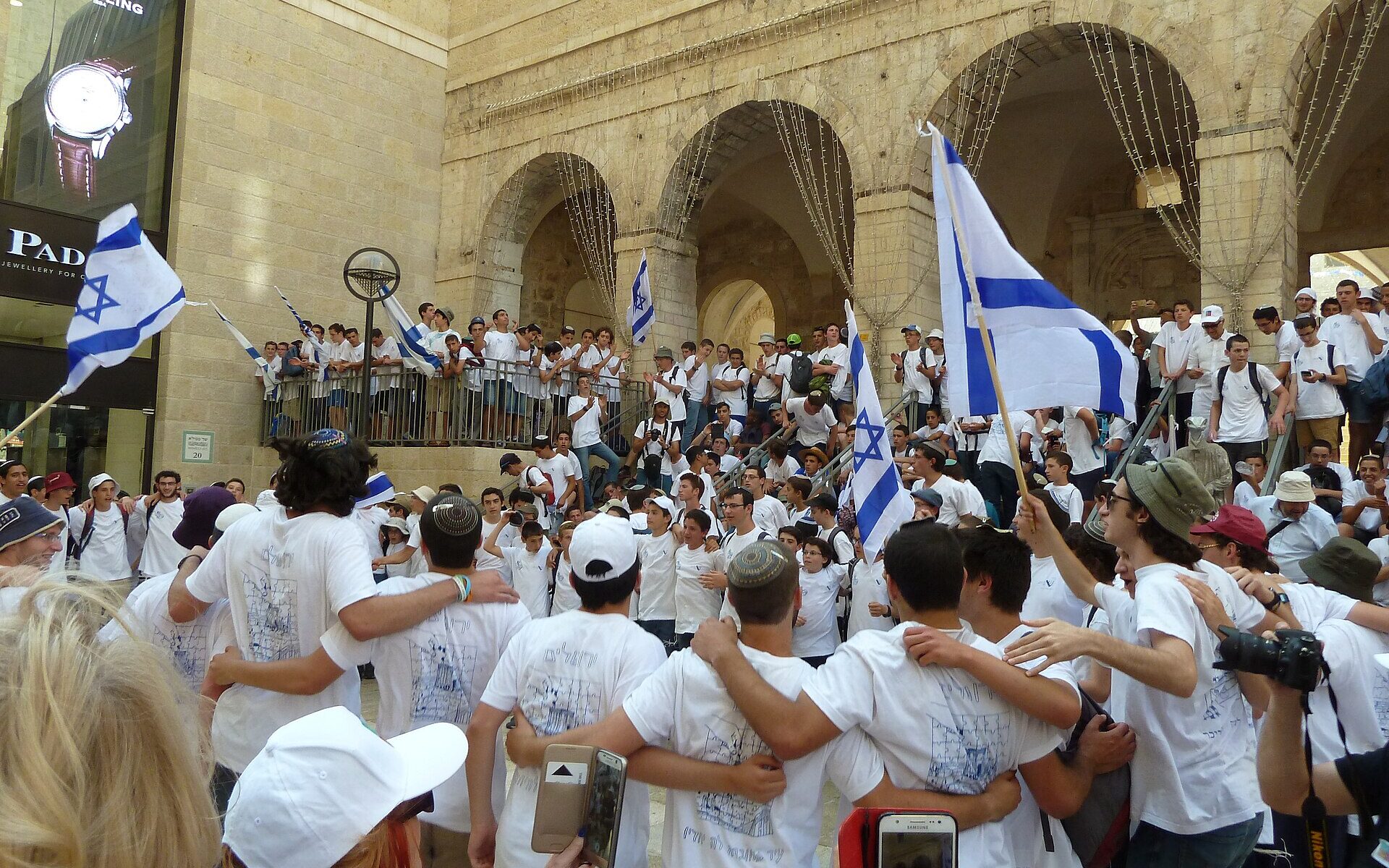
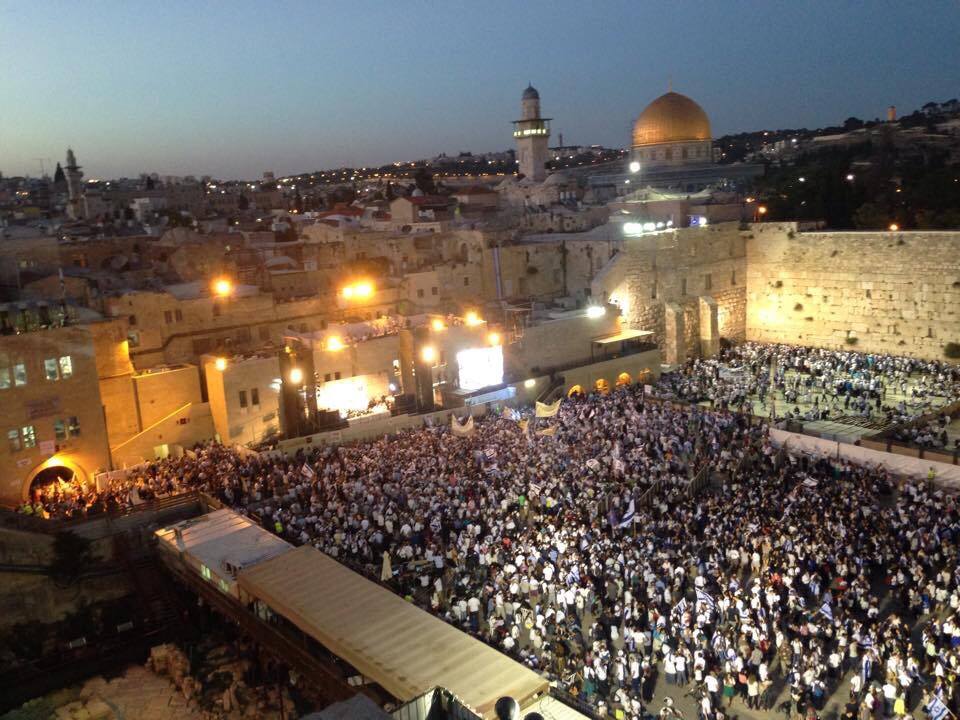
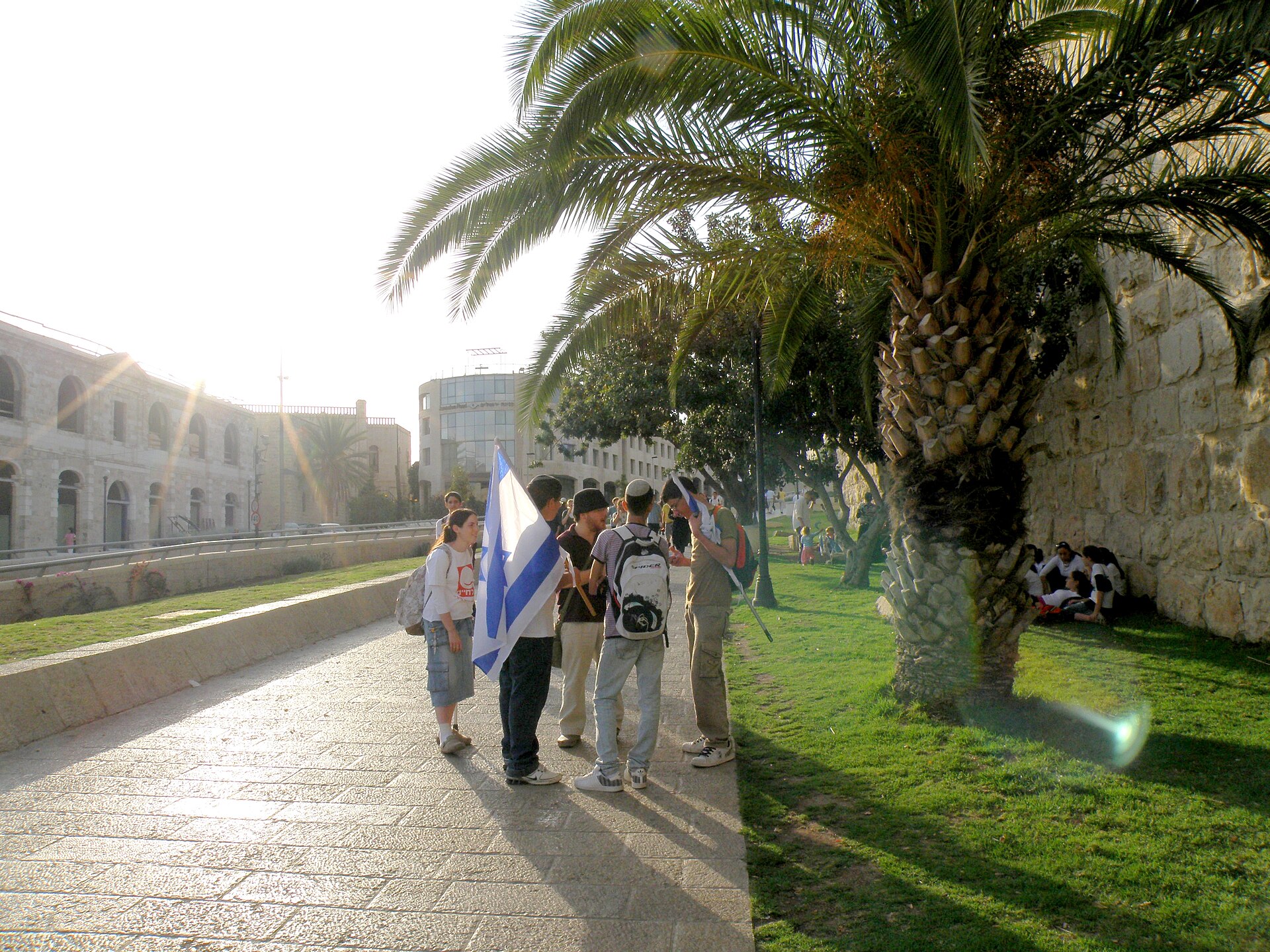
The central event, known in Hebrew as Rikud Degalim, the “dance of flags”, has run since 1968. Tens of thousands of participants, a large share of them teenagers from religious Zionist schools and youth movements bussed in from across the country, gather in West Jerusalem in the afternoon, dance and sing, and then walk to the Old City to finish in a mass gathering at the Western Wall plaza that runs past sunset.
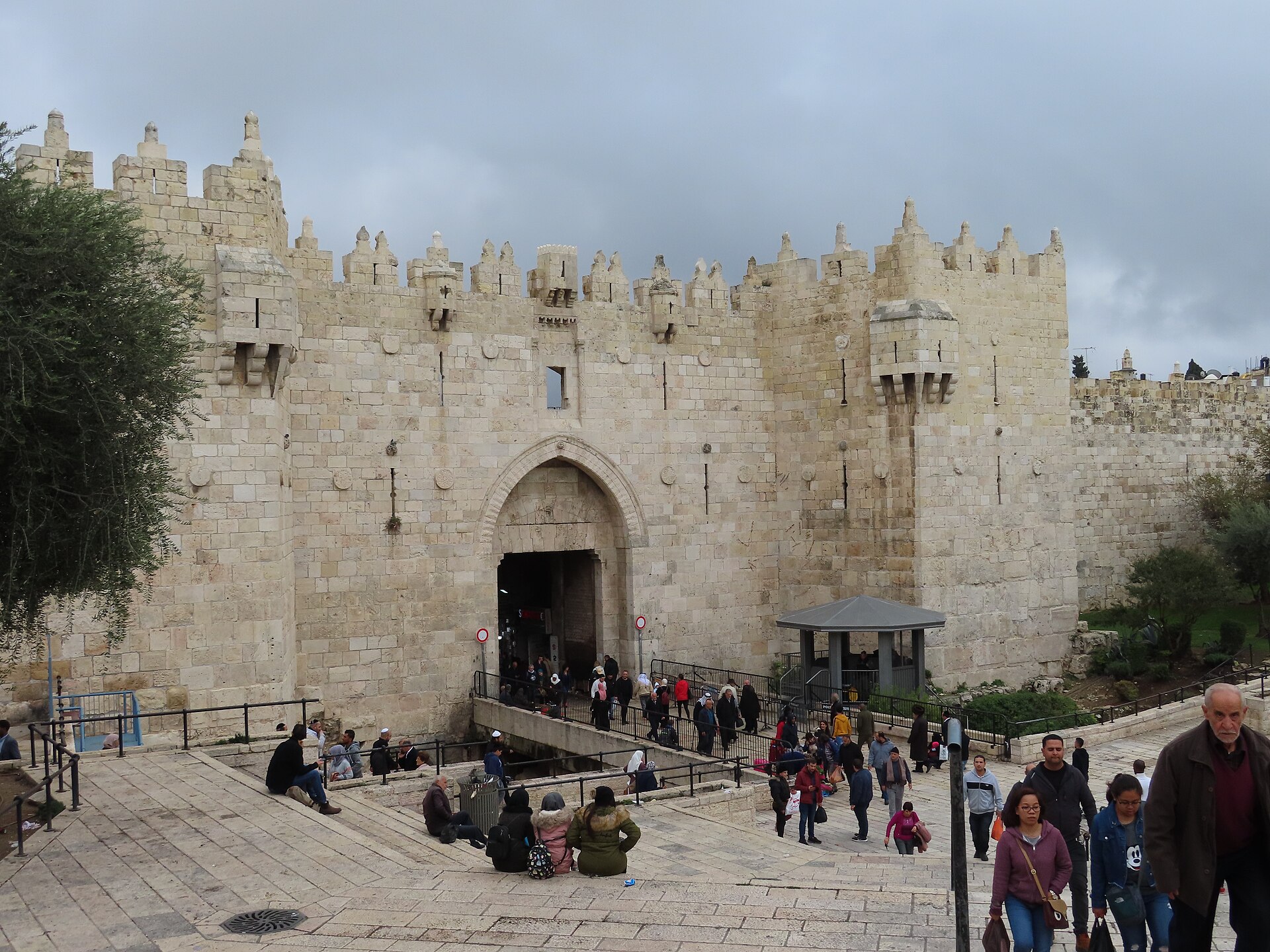
The route is the source of almost all of the controversy. In recent years police have approved the male participants entering through Damascus Gate and walking down through the Muslim Quarter along Hagai Street (El Wad), with women taking a separate route through Jaffa Gate or around the southern side of the Old City. That was the arrangement in May 2026, when the march began in the afternoon near the Great Synagogue on King George Street after being moved to Thursday because Jerusalem Day itself fell on a Friday. Thousands of police and Border Police officers were deployed, and several roads were closed, including the main route between West and East Jerusalem.
What Has Been Reported From the Route
Most participants march, sing and go home. Every year, though, Israeli and international media report incidents along the Muslim Quarter section: marchers chanting racist slogans, including “death to Arabs”, harassment of Palestinian residents and shopkeepers, and in 2024 and 2025 assaults on journalists covering the event. Police have made arrests in several years, and Palestinian youths have thrown objects at marchers in others. In 2021, as the march was assembling, Hamas fired rockets towards Jerusalem from Gaza, the start of an eleven-day war, and the route was changed at the last minute.
Israeli politicians and commentators are themselves sharply divided about the route. Supporters argue that Jews should be able to walk through any part of their capital. Critics, including some Israeli rabbis, politicians and former senior police officers, argue that sending the march through the Muslim Quarter is needlessly provocative. Civil-society groups have responded in their own ways: the Israeli organisation Tag Meir has handed out flowers to residents of the quarter, and volunteers from the Arab-Jewish movement Standing Together have stood along the route as observers. None of that changes where the route goes, which is decided by the police and the government each year.
After Dark
The Western Wall gathering, with prayers, speeches and singing, typically goes on into the evening. As it disperses, tens of thousands of people leave the Old City at the same time through Jaffa Gate, Zion Gate and the Dung Gate, which is less dangerous than it is simply very slow. The shutters in the Muslim Quarter tend to stay down for the rest of the night.
Where Crowds and Tension Concentrate
The picture below is drawn from the pattern of recent years rather than a promise about next year. Police publish the approved route only days ahead, so treat this as the shape of the day and check the details nearer the time.
| Area | What to expect in the afternoon and evening |
|---|---|
| Damascus Gate and its amphitheatre steps | The flashpoint. Barriers, heavy police presence, the densest crowds, and the place where friction has been most often reported |
| Hagai (El Wad) Street and the Muslim Quarter | Shops shuttered, residents often indoors, the march passing through narrow lanes with police lines along the way |
| Sultan Suleiman Street and HaNevi’im Street | Road closures and crowds approaching Damascus Gate from outside the walls |
| Jaffa Gate and the Mamilla approach | Very crowded, largely celebratory, as the women’s route and many families enter here |
| Jewish Quarter and Western Wall plaza | Packed from late afternoon; screening at the entrances; slow to leave |
| Christian and Armenian Quarters | Largely off the route, but with road closures and crowds on the approaches |
| City centre (King George, Jaffa Road, Safra Square) | Crowds gathering from early afternoon, road closures, light rail disruption |
| West Jerusalem away from the centre | Business as usual |
Practical Effects on a Visit
Shops, Markets and Sights
If shopping in the Old City’s souq is high on your list, Jerusalem Day afternoon is effectively lost. Muslim Quarter traders along the route close, usually at police instruction and sometimes by choice; in 2026 many did not open at all. The Old City market is a better plan for any other day of that week. Shops in the Christian Quarter and Armenian Quarter are mostly off the route, but footfall drops and some close early.
The Church of the Holy Sepulchre is not on the route and keeps its normal hours, but getting to it through closures and crowds late in the day is slow. The Tower of David sits right at Jaffa Gate, where the crush is heaviest from mid-afternoon; go in the morning if you go at all. The Western Wall itself is open, but in the evening you are one person in a crowd of tens of thousands.
Transport
Buses and the light rail run, because this is a working day. But expect road closures around the Old City walls and across the seam between West and East Jerusalem from early afternoon, and expect the Red Line to be disrupted or suspended through the city centre and past Damascus Gate while the march assembles and moves. Taxis cannot get anywhere near the walls. The municipality and the transport operators announce specific closures in the days before, mostly in Hebrew; ask your hotel reception to check for you. For how the network works the rest of the year, see our Jerusalem transport guide.
Hotels Inside or Near the Old City
If you are staying inside the walls, the practical issue is access. Guests at guesthouses along the Via Dolorosa or near Hagai Street may find their street barriered for several hours, and a taxi drop-off at the gate may be impossible. Get back before the march starts, or plan to stay out until well after it has dispersed. Hotels just outside Jaffa Gate have a crowd outside, but it is a noisy rather than an alarming one. Our guide to hotels in and near the Old City shows which properties sit where.
Safety and Official Advice
Governments update their travel advice for Israel, the West Bank and Jerusalem frequently, and it is worth reading both the US State Department and the UK Foreign, Commonwealth and Development Office pages in the week of travel, as their wording and their maps of advised areas are not identical. Both have in past years flagged large gatherings and demonstrations in Jerusalem as a risk to avoid. This site does not tell you whether to travel. Our Jerusalem safety guide explains how to read that advice and how the city works day to day.
Sensible, unexciting precautions for the day itself:
- Stay off the route itself between mid-afternoon and late evening, unless you have a specific reason to be there.
- Do not photograph residents, marchers or police at close range in the Muslim Quarter. Journalists with press credentials have been assaulted; tourists with phones are not exempt from anyone’s temper.
- Carry your passport. Identity checks at the gates have been routine.
- Obey police instructions to leave an area immediately and without debate.
- Drink water. Early June in Jerusalem is often around 28–30°C, and standing in a packed plaza is hotter still. Our weather by month guide has the averages.
How to Plan a Good Day Around It
The honest verdict: Jerusalem Day is not a sight to build a holiday around, unless the subject of your trip is the city’s politics, in which case you likely already know where you want to stand. For everyone else it is a day to rearrange rather than to fear. The morning is broadly normal, most of West Jerusalem is normal all day, and the disruption is concentrated in a small, predictable area for a few hours. Here is how to use it.
Morning: Do the Old City Early
If you only have this day for the Old City, go at opening time and be out by early afternoon. The Jewish Quarter and the Cardo, the Armenian Quarter and the Ramparts Walk all work well before the crowds build. Better still, swap your Old City day with another day in the week and spend Jerusalem Day elsewhere.
Afternoon: Go West or Leave Town
- The Israel Museum and the Shrine of the Book in Givat Ram, far from the march and unaffected. See our Israel Museum guide for how to pace it.
- Yad Vashem on Mount Herzl, which needs a full afternoon of its own and is well away from the centre.
- Ein Karem, the hillside village of churches and cafés on the city’s western edge, which could hardly feel further from the Old City that afternoon.
- A day out of the city. The Dead Sea and Masada are a long-standing choice; the day trips from Jerusalem page lists all the options. Return after dark, and check that your route back into the city avoids the Old City closures.
Evening: Watch From a Distance, or Not at All
Some visitors want to see the atmosphere at the Western Wall. If that is you, enter from the Jewish Quarter side via the Dung Gate, go early, and accept that you will be there until the crowd lets you leave. A calmer way to take in the scale of the city on this particular evening is from the Haas Promenade (Tayelet) in the south, which is one of the best viewpoints in Jerusalem and nowhere near any of the route.
Jerusalem Day Dates to Come
| Year | Jerusalem Day (28 Iyar) | Note |
|---|---|---|
| 2026 | Thu 14 May (eve) – Fri 15 May | March held Thursday afternoon, ahead of Shabbat |
| 2027 | Thu 3 June (eve) – Fri 4 June | Falls on a Friday again; expect the march to be brought forward to the Thursday as in 2026. Confirm in the week |
The date always lands about three weeks after Independence Day and a week before Shavuot, which is in any case a busy stretch of the Jewish calendar. If your trip overlaps, the religious holidays calendar shows everything else happening in the same weeks, and the best time to visit Jerusalem weighs early summer against the rest of the year. Muslim holidays follow the lunar calendar and drift through the year, so check whether Eid or a Ramadan night falls close by; they sometimes do, and when that happens the arrangements get tighter still.
Much of the official commemoration of the 1967 fighting takes place at Ammunition Hill, the fortified Jordanian position in north Jerusalem where one of the war’s hardest battles was fought on 6 June 1967. It is now an Israeli national memorial with preserved trenches and a museum. It tells the story from the Israeli side, so visitors who want the wider picture should read around it, and on Jerusalem Day itself it is a place for ceremonies rather than sightseeing.
Final Word on Jerusalem Day
Jerusalem Day shows the city at its most divided, compressed into a few streets and a few hours. It is worth understanding, because it explains a great deal about the place you are visiting, but it is rarely worth building a day around. Do the Old City in the morning or on another day entirely, spend the afternoon in the west of the city or out of it, and read the news in the week before you go. If your trip falls in the same weeks, our Old City guide, the gates of Jerusalem and our advice on Shabbat in Jerusalem, which follows directly in 2027, will help you plan the rest of the week.
Photo Credits
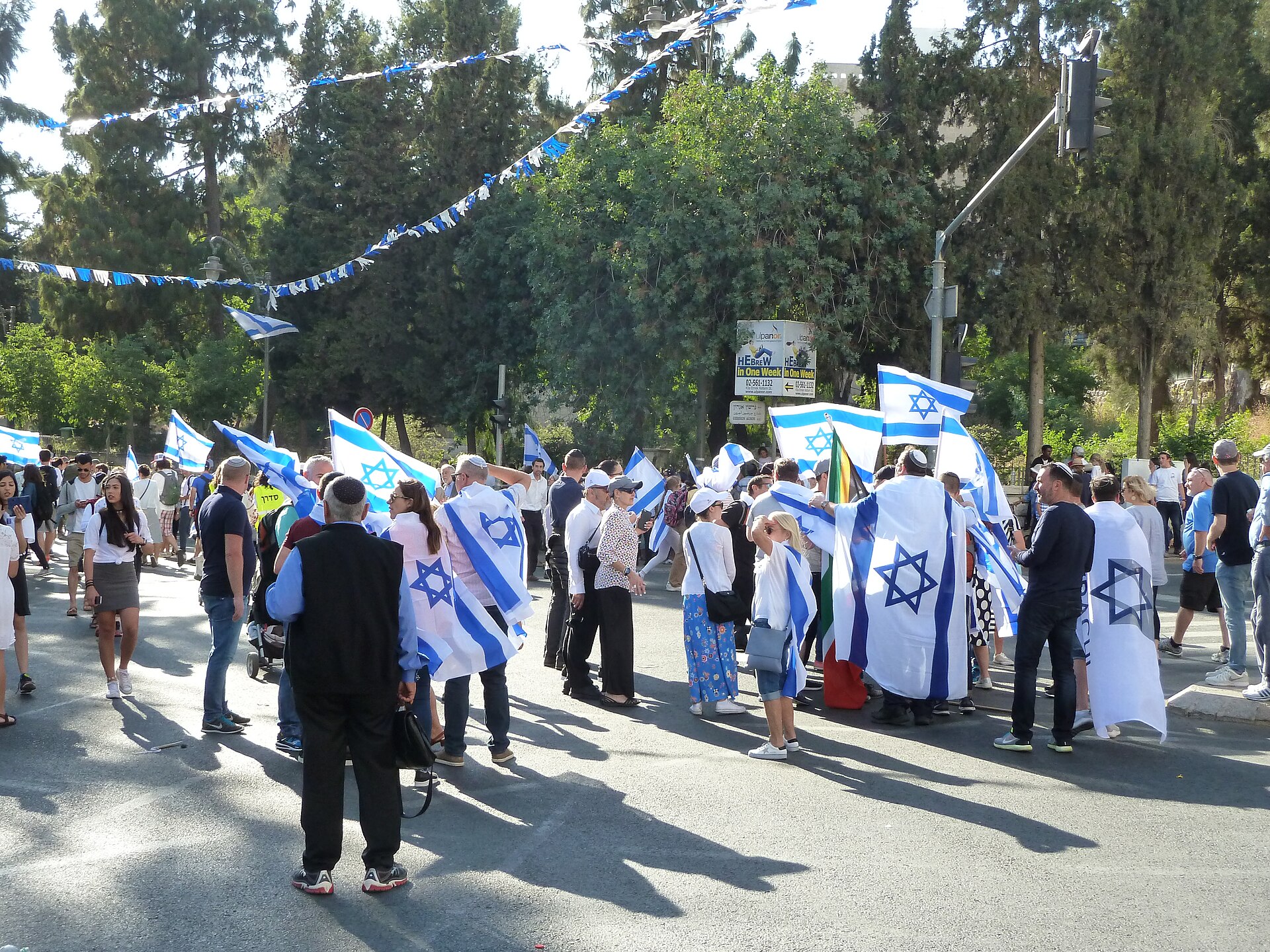
Marchers with flags gathering on a West Jerusalem street: Jerusalem Day P1050816 by Utilisateur:Djampa, CC BY-SA 4.0, via Wikimedia Commons.
The Western Wall plaza on Jerusalem Day evening: Israeli-Police-Facebook–Yom-Yerushalaim-2015-pic01 by Israel Police, CC BY-SA 3.0, via Wikimedia Commons.
Flag-carrying participants beside the Old City walls: Jerusalem Day – יום ירושלים (3557873934) by RonAlmog from Israel (ישראל), CC BY 2.0, via Wikimedia Commons.
Dancing in Mamilla on Jerusalem Day 2017: Jerusalem Day P1050795 by Utilisateur:Djampa, CC BY-SA 4.0, via Wikimedia Commons.
People sitting on the plaza steps below Damascus Gate: Holy Land 2018 (2) P064 Jerusalem Damascus Gate by Fallaner, CC BY-SA 4.0, via Wikimedia Commons.