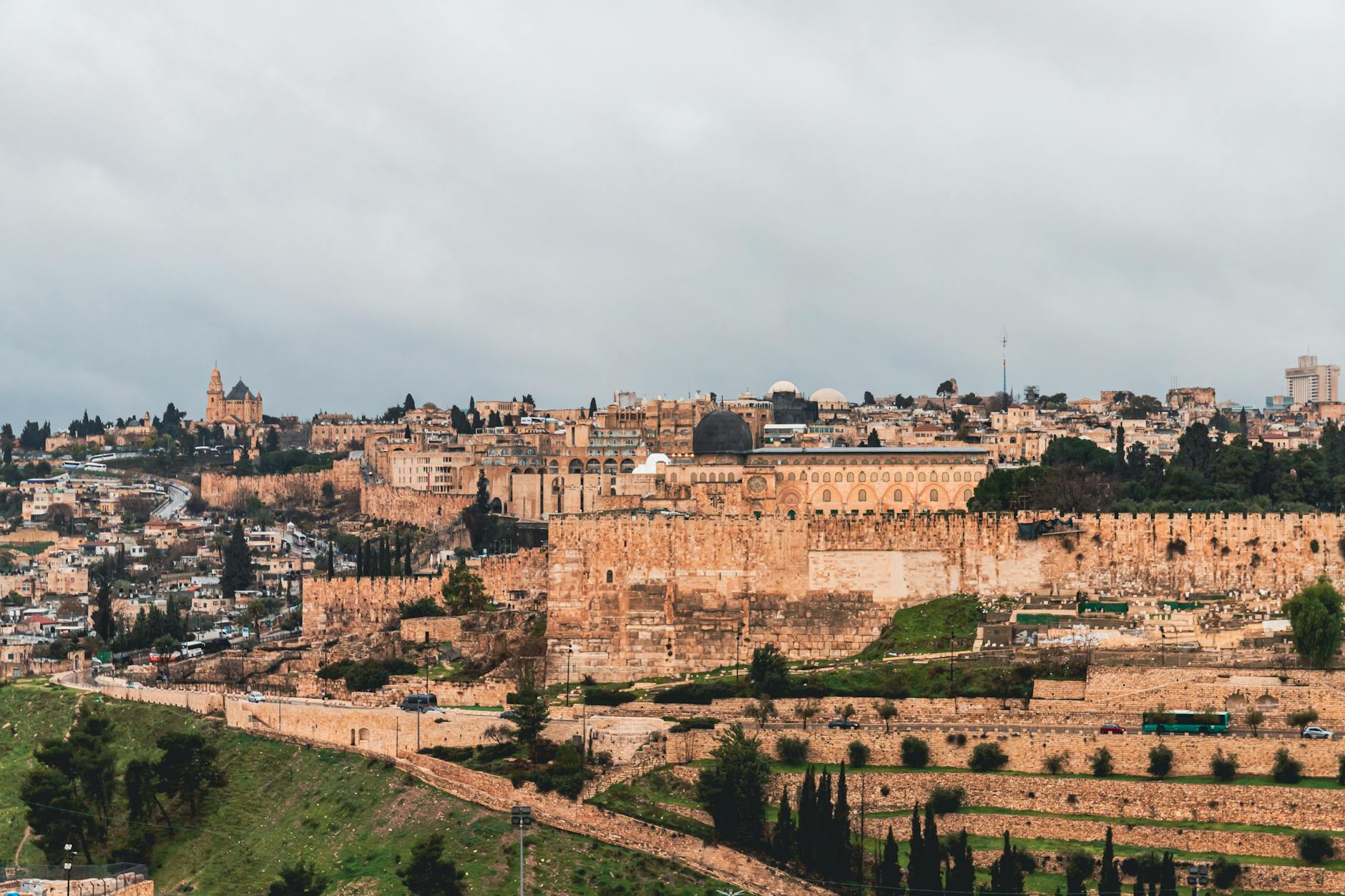
The Armenian Quarter is the smallest and quietest of the four quarters of Jerusalem’s Old City, a walled enclave of monastery courtyards, hand-painted ceramics, and one of the most beautiful cathedrals in the city. Tucked into the southwestern corner behind Jaffa Gate and Zion Gate, it functions almost as a self-contained community centered on the Armenian Patriarchate, and much of it lies behind closed gates. What you can see, though, is memorable and refreshingly calm after the markets elsewhere. This guide covers what to see in the Armenian Quarter of Jerusalem, how to visit respectfully, opening hours, prices in shekels, and where the famous ceramics come from.
It is one of the four quarters of the Old City, alongside the Christian, Jewish, and Muslim Quarters, and the least touristed of them. Its Armenian community traces its presence in Jerusalem back more than 1,500 years, making it one of the oldest diaspora communities anywhere. For the wider survey of sacred places in the city, see our guide to holy sites in Jerusalem.
A Brief Armenian History in Jerusalem
Armenia was the first nation to adopt Christianity as a state religion, in the early 4th century, and Armenian monks and pilgrims have maintained a community in Jerusalem ever since. The Armenian Patriarchate, established here in the 7th century, is one of the three major custodians of Christian holy sites in the city, sharing rights at the Church of the Holy Sepulchre and elsewhere. The quarter grew around the monastery of St. James, and over the centuries it absorbed refugees, most movingly survivors of the Armenian genocide of 1915, whose descendants still live here. The community is small today, numbering in the hundreds, which lends the quarter its hushed, close-knit feel. Within the monastery walls are a seminary, schools, and one of the world’s most important collections of Armenian illuminated manuscripts, alongside a memorial to the victims of the 1915 genocide that shaped the modern community. These are largely private, but they explain why the Armenian Quarter feels less like a tourist destination and more like a guardian of a culture and faith carried far from their homeland.
What to See in the Armenian Quarter
The quarter’s sights cluster around the monastery complex and the main street running from Jaffa Gate toward Zion Gate.
Cathedral of St. James
The Cathedral of St. James is the jewel of the quarter, a 12th-century church of breathtaking interior richness: hundreds of hanging oil lamps, blue Armenian tilework, gilded altars, and the deep scent of incense. It honors two saints named James, including James the Greater, whose head is said to be buried here. The cathedral opens only for limited hours, generally tied to the daily vespers service in the late afternoon (often around 3pm), and visitors are welcome to attend respectfully. There is no photography inside, modest dress is required, and the chanted liturgy is unforgettable. Check the day’s timing locally, as it can vary.
Edward and Helen Mardigian Museum
This museum of Armenian art and history occupies a restored 19th-century seminary building and tells the story of the community in Jerusalem, from illuminated manuscripts and religious art to the history of the genocide and the quarter itself. Hours can be limited, so check before visiting; a modest entry fee applies. It is the best place to understand the people whose neighborhood you are walking through.
Armenian Patriarchate
The Patriarchate compound is the religious and administrative heart of the quarter, and much of it, including residences, schools, a seminary, and a major manuscript library, is closed to the public. You will see its gates and walls along the main street. While you cannot wander inside, understanding that this is a living monastic community helps explain the quarter’s many closed doors and its quiet, private character.
Tower of David (Citadel)
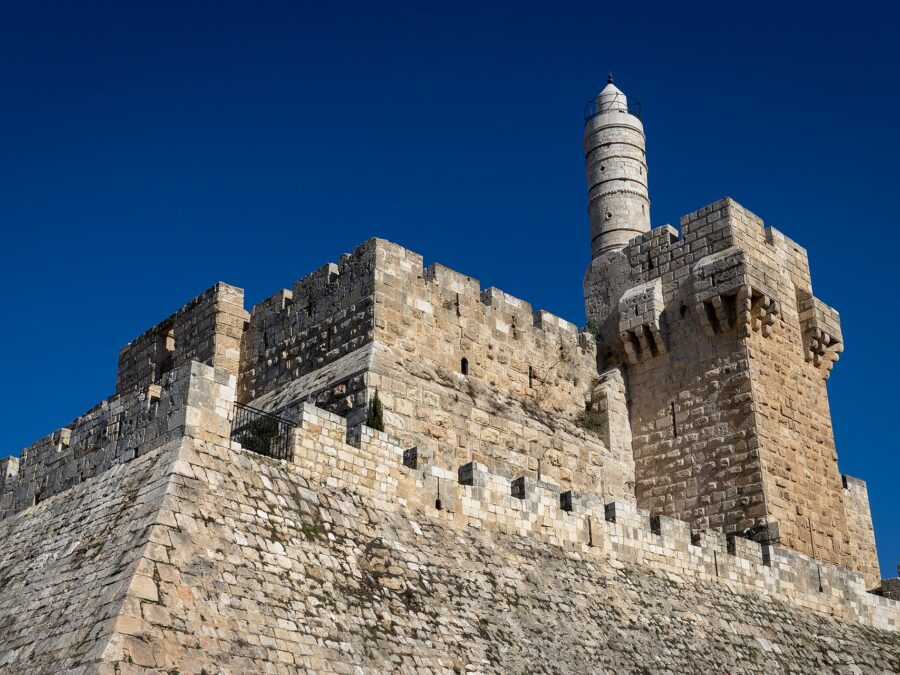
At the quarter’s northern edge by Jaffa Gate stands the citadel housing the Tower of David Museum, which tells the whole story of Jerusalem inside its medieval and ancient walls. Though it sits on the boundary, it is easily reached from the Armenian Quarter and pairs naturally with a visit. Its ramparts give superb views, and its evening sound-and-light show is a highlight of the Old City.
Armenian Ceramics Workshops
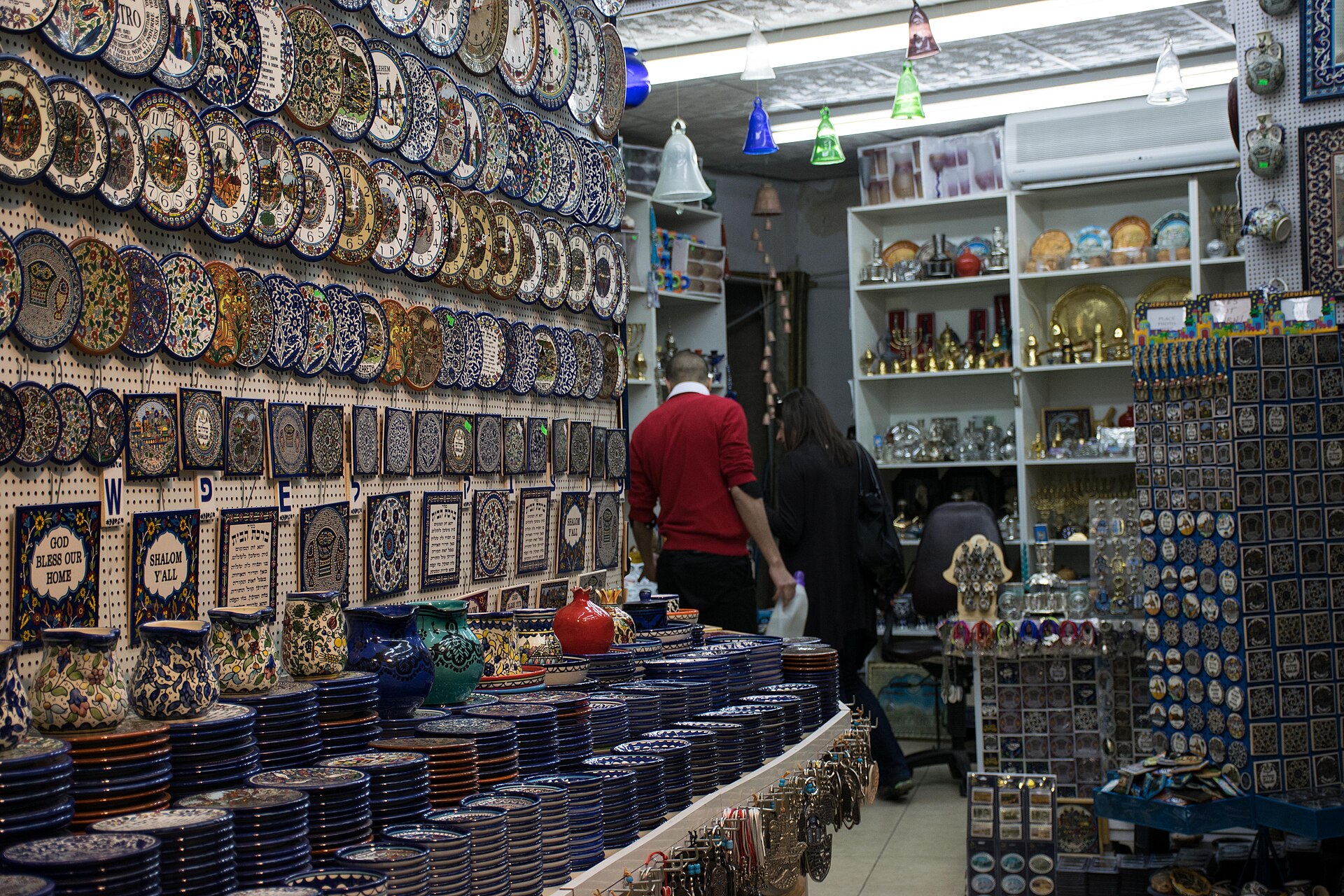
Armenian ceramics are one of Jerusalem’s signature crafts, introduced in 1919 when Armenian potters were brought to restore the tiles of the Dome of the Rock. Today a few family workshops in and near the quarter hand-paint tiles, bowls, and nameplates in distinctive blues, greens, and floral and bird motifs. You can watch artisans at work and buy directly, with small tiles starting around 40 to 60 shekels and larger pieces costing considerably more. For the full story and where to buy, see our guide to Armenian ceramics in Jerusalem.
Food in the Armenian Quarter
Dining options are limited and low-key, in keeping with the quarter’s character, but a few welcoming spots serve Armenian specialties such as lahmajoun (a thin spiced meat flatbread), soujuk and basturma (cured meats), and hearty stews, sometimes paired with Armenian arak or wine. A simple meal might run 50 to 90 shekels. These small, often family-run places are a quiet pleasure, though hours can be irregular. Armenian cuisine in Jerusalem blends Middle Eastern staples with distinctive Armenian touches of spice and cured meat, and sharing a plate of lahmajoun in one of these unassuming spots is a memorable, low-key way to connect with the community. Because the quarter is Christian, eateries generally stay open on the Jewish Shabbat, making it a useful Saturday option in the Old City. For the wider picture of what people actually eat here, see our guide to traditional Jerusalem dishes.
Notable Streets and Areas
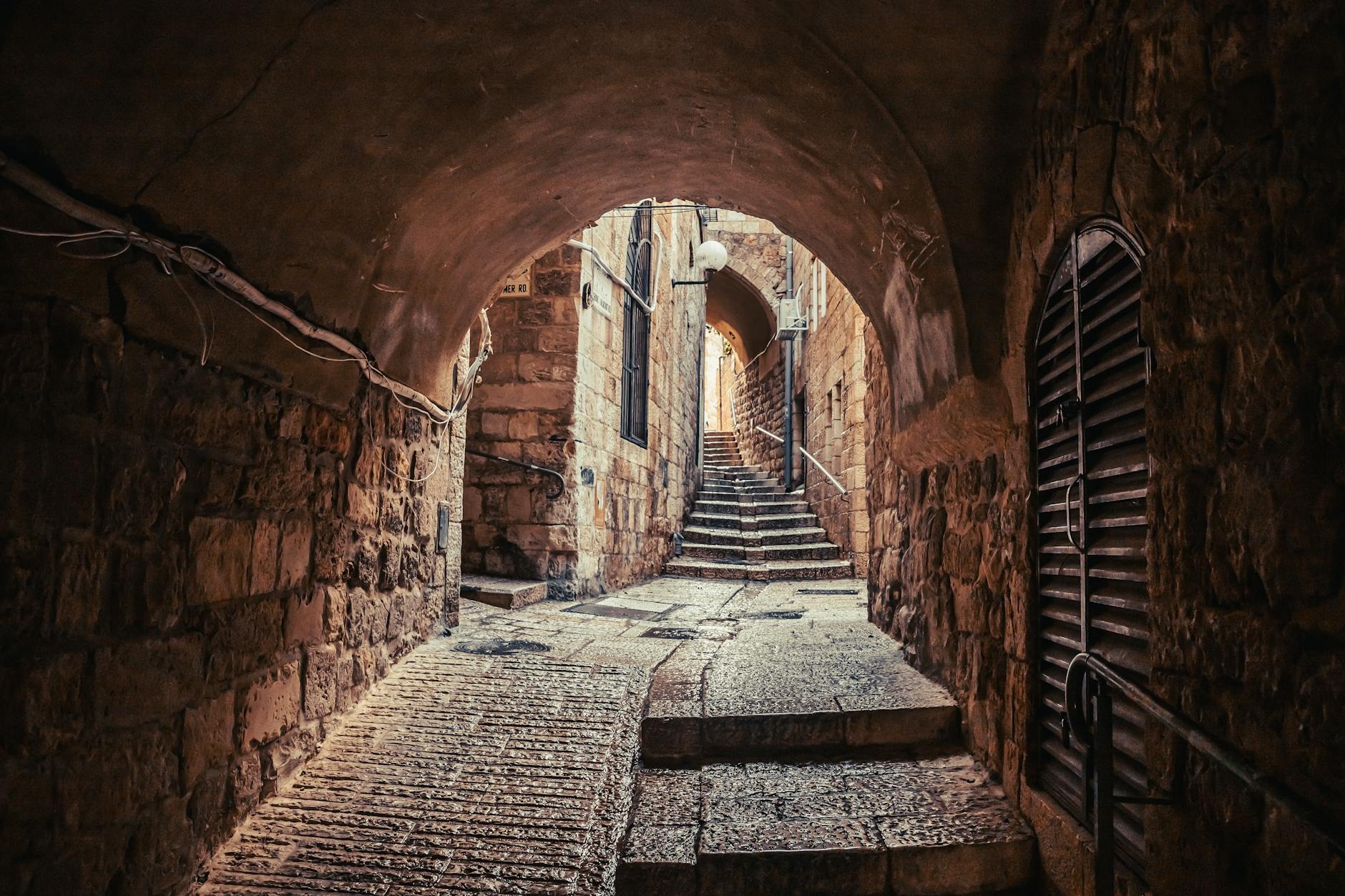
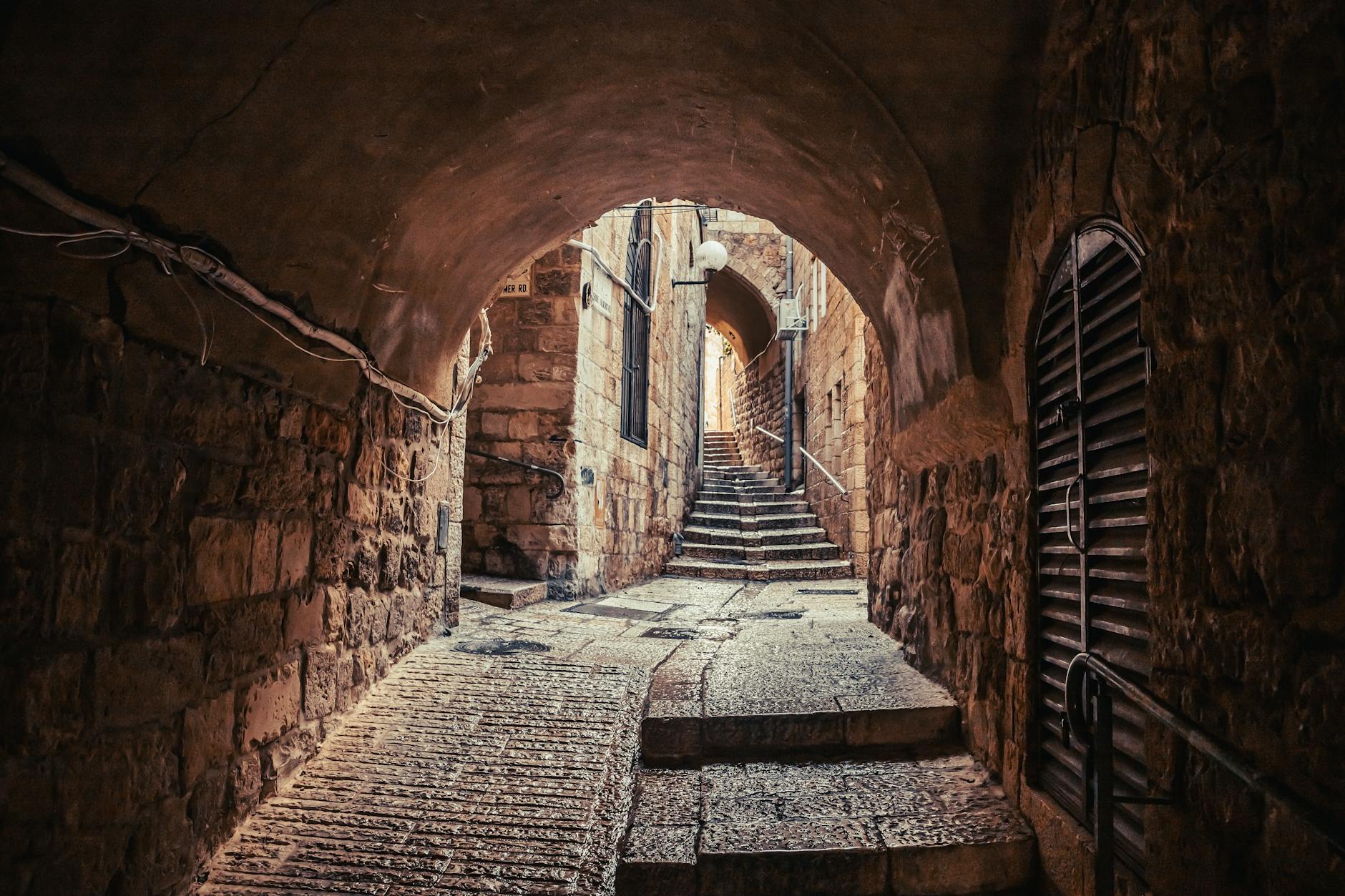
The main thoroughfare, Armenian Patriarchate Road, runs from near Jaffa Gate south toward Zion Gate, lined with the ceramics shops, the museum, and the high walls of the monastery. Side lanes are residential and notably calm. Because so much of the quarter is private, the pleasure here is less about ticking off sites and more about the atmosphere: cool stone, the occasional toll of a bell, and a sense of stepping into a community that has guarded its corner of Jerusalem for many centuries. Pause at the gateways with their Armenian inscriptions, glance through the occasional open courtyard door, and notice how the noise of the rest of the Old City fades the deeper you walk. It is the closest the walled city comes to silence. The contrast with the crowded souks of the Muslim Quarter a few minutes north could hardly be sharper.
Etiquette and What to Wear
This is a private, devout community, so a quiet and respectful manner matters more here than anywhere in the Old City. Dress modestly with shoulders and knees covered, especially for the Cathedral of St. James, where photography is not allowed inside. Keep your voice low in the residential lanes, do not enter areas marked private, and ask before photographing people. The reward for this courtesy is access to one of the most serene and authentic corners of old Jerusalem. Our guide to dressing modestly in Jerusalem explains what to wear at holy sites across the city.
Best Time to Visit the Armenian Quarter
Because the quarter is quiet year-round and its main sight, the Cathedral of St. James, opens chiefly for late-afternoon vespers, the best time to visit is built around that service rather than the season. Aim to arrive in the early-to-mid afternoon so you can browse the ceramics workshops and the museum, then step into the cathedral as the chanting begins. Spring and autumn bring the most comfortable weather for walking the Old City; summer is hot, though the quarter’s shaded stone lanes stay cool, and winter is quiet and atmospheric. Weekdays and Saturdays are equally good here, since the Christian community does not observe the Jewish Shabbat. Sundays and Armenian feast days bring fuller liturgies but can mean limited access to some areas. Our best time to visit Jerusalem guide details each month.
How to Get to the Armenian Quarter
Jaffa Gate is the main entry point, a short walk from the City Hall stop on the Light Rail Red Line (around 6 shekels; no Shabbat service). Zion Gate offers access from the south, near Mount Zion. The Jewish Quarter begins just inside that same gate, so the two are easy to combine. Taxis can drop you at either gate but cannot enter the lanes. From inside, the quarter is small and walkable in minutes, though stone surfaces are uneven, so wear comfortable shoes. See our Jerusalem transportation guide for reaching the Old City from the airport and across the city.
Suggested Visit
Enter at Jaffa Gate and consider starting at the Tower of David Museum on the citadel for the city’s overview and the ramparts view. Walk south along Armenian Patriarchate Road, stopping at a ceramics workshop to watch the painting and pick up a small tile or bowl. Visit the Mardigian Museum if its hours allow, then time your day so you can attend the late-afternoon vespers and step inside the glowing Cathedral of St. James. The whole quarter takes only an hour or two, so it pairs well with the adjacent Jewish or Christian Quarters; our Old City guide ties them together, and for more ideas see our roundup of things to do in Jerusalem.
Practical Tips for the Armenian Quarter
- Time your visit for vespers. The Cathedral of St. James opens mainly around the late-afternoon service (often about 3pm); confirm locally, as times shift.
- No photos in the cathedral. Photography is prohibited inside St. James; respect this and other posted rules.
- Respect privacy. Much of the quarter is a closed monastic community; do not enter private areas and keep noise down in residential lanes.
- Buy ceramics at the source. Workshops let you watch the painting and buy directly; small tiles start around 40 to 60 shekels.
- Open on Saturday. As a Christian quarter, it generally stays open on the Jewish Shabbat.
- Dress modestly. Shoulders and knees covered, particularly for the cathedral.
- Allow a relaxed hour or two. The quarter is small; combine it with a neighboring quarter for a fuller day.
Walk to the southern end of the Armenian Quarter and out through Zion Gate, its stone still pitted with bullet marks from 1948, and you are on Mount Zion within two minutes. King David’s Tomb, the Room of the Last Supper and the Dormition Abbey stand a short way up the lane, with Oskar Schindler’s grave on the slope below. Our guide to Mount Zion has the opening hours and a walking route.
Photo Credits
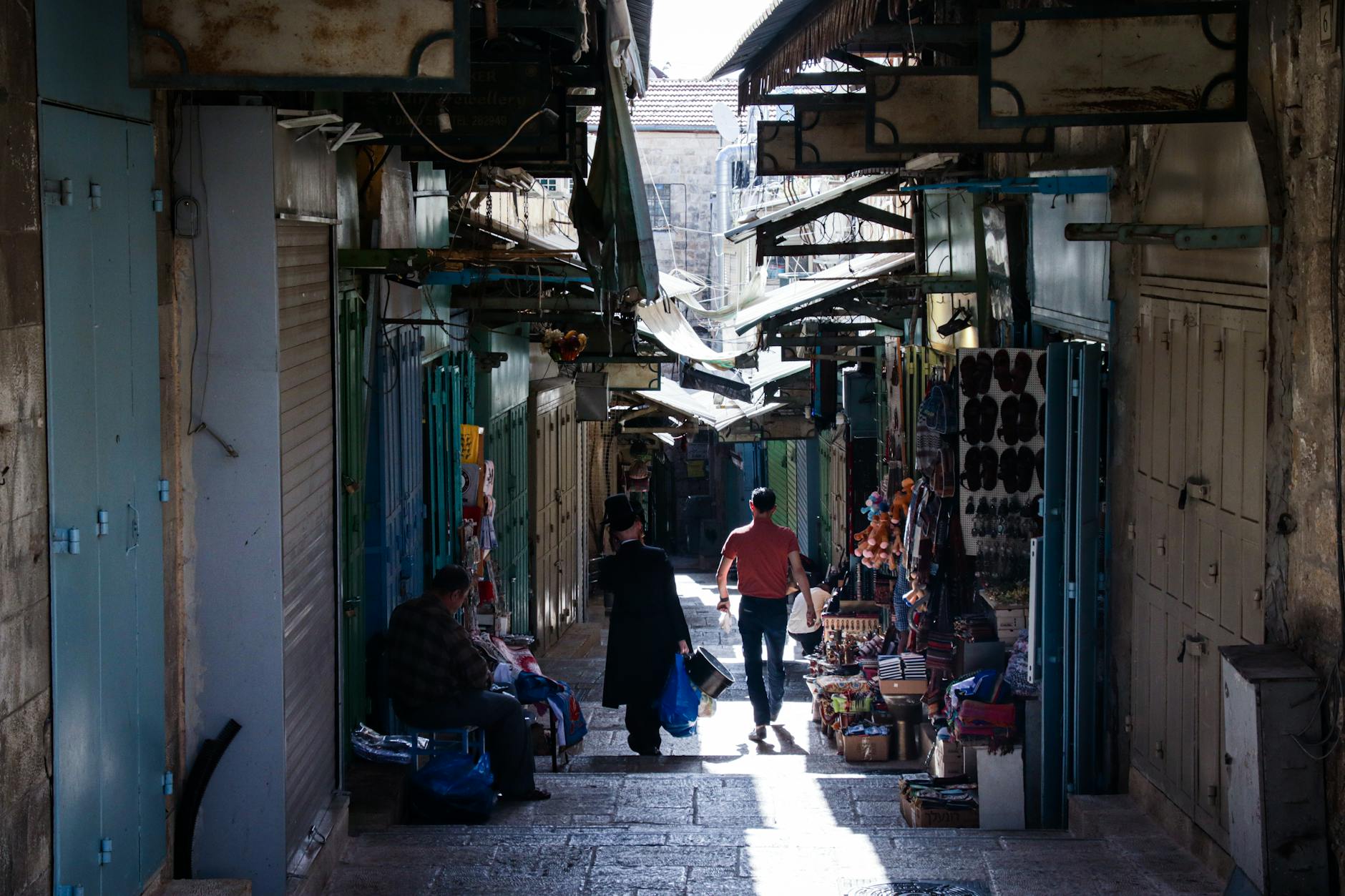
A souvenir shop in the Old City market: Jerusalem (13319227674) by Mark Nakasone from Haifa, Israel, Israel, CC BY 2.0, via Wikimedia Commons.