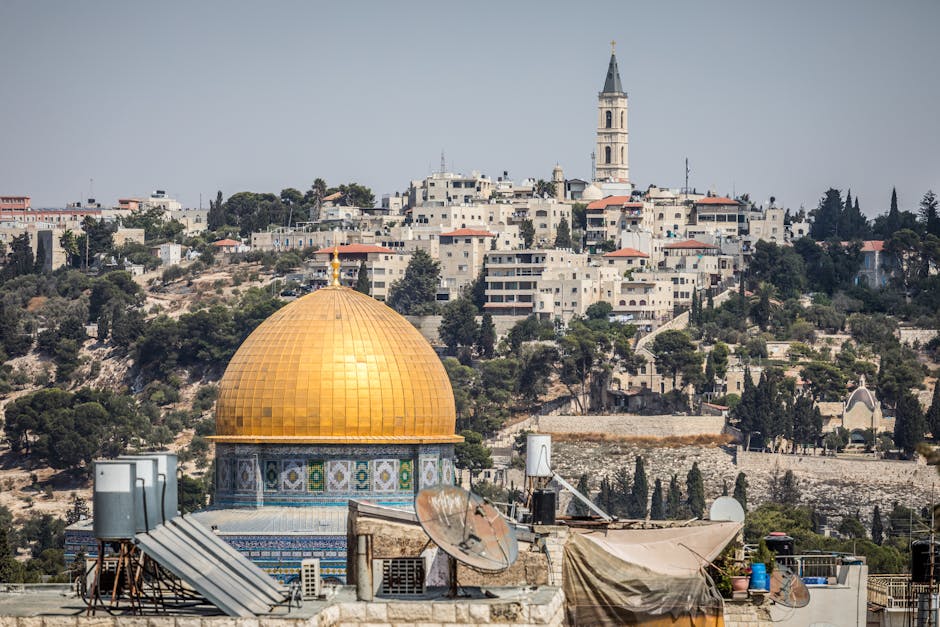
If it’s your first time visiting Jerusalem, the city can feel both bigger and smaller than you expected. Smaller because the Old City — where most attractions cluster — is barely one square kilometer. Bigger because every alley, gate, and stone carries 5,000 years of overlapping religious, cultural, and political weight. The right preparation makes the difference between an overwhelming trip and a deeply rewarding one.
This essential guide for first time visiting Jerusalem covers everything we wish we’d known on our own first trip — what to expect at holy sites, how to dress, where to stay, how transit works, how Shabbat affects your schedule, what to skip, what to splurge on, and how to be respectful in a city sacred to billions. Pair this with our Jerusalem Travel Tips guide and the Itinerary planner.
First-Time Essentials
- Plan minimum 3 days in Jerusalem. Five is better.
- Stay central — Mamilla, city center, or just outside Jaffa Gate.
- Comfortable walking shoes are non-negotiable.
- Modest dress at religious sites — shoulders and knees covered.
- Cash in shekels for small purchases.
- Plan around Shabbat — Friday sunset to Saturday sunset shuts much of Jerusalem down.
- Visit holy sites early — 7:30 AM at Temple Mount, 6 AM at Church of the Holy Sepulchre.
- Reserve fine dining ahead — Machneyuda, Rooftop Mamilla, Eucalyptus book weeks out.
When to Visit Jerusalem for the First Time
- April–May (best overall): Warm but not hot. Spring blooms. Tourist crowds increase for Easter/Passover.
- September–November: Warm days, cool nights, smaller crowds.
- December (atmospheric): Christmas in the Christian Quarter; cool rainy weather.
- June–August: Hot (30-35°C/86-95°F). Tourist peak. Plan early-morning and evening activities.
- January–February: Cool, sometimes rainy. Lowest crowds and prices.
The Altitude Catches Everyone Out
Jerusalem sits at roughly 800 meters (2,600 feet) above sea level, and that single fact explains most of the weather complaints we hear from first-timers. Tel Aviv, 45 minutes down the hill, has a humid beach climate; Jerusalem has dry mountain air. An August afternoon hits 32°C, then drops to 17–19°C after dark — lovely for rooftop dinners, miserable if you walked out in a t-shirt. Winter is properly cold: January runs 8–12°C by day and 3–6°C at night, with rain arriving in concentrated bursts and, once or twice a winter, snow that shuts the whole city down for a gleeful day.
The practical upshot: carry a layer for evenings in every season, and bring a real jacket between December and February. If your trip pairs Jerusalem with the Dead Sea — 430 meters below sea level — you can experience a 20–25°C swing in a single day, so dress for both ends. Our packing list covers this month by month.
Where to Stay on Your First Visit
For first-timers, stay centrally. The two best options:
- Mamilla — Steps from Jaffa Gate. Luxury (Mamilla Hotel, Waldorf, David Citadel) or mid-budget (YMCA, Jacob Harmony).
- City center / Nachalat Shiv’a — Pedestrian area near Mahane Yehuda Market. Boutique (Arthur, Harmony) or hostel (The Post, Abraham).
See our complete where to stay in Jerusalem guide and Neighborhoods guide.
Getting to Jerusalem
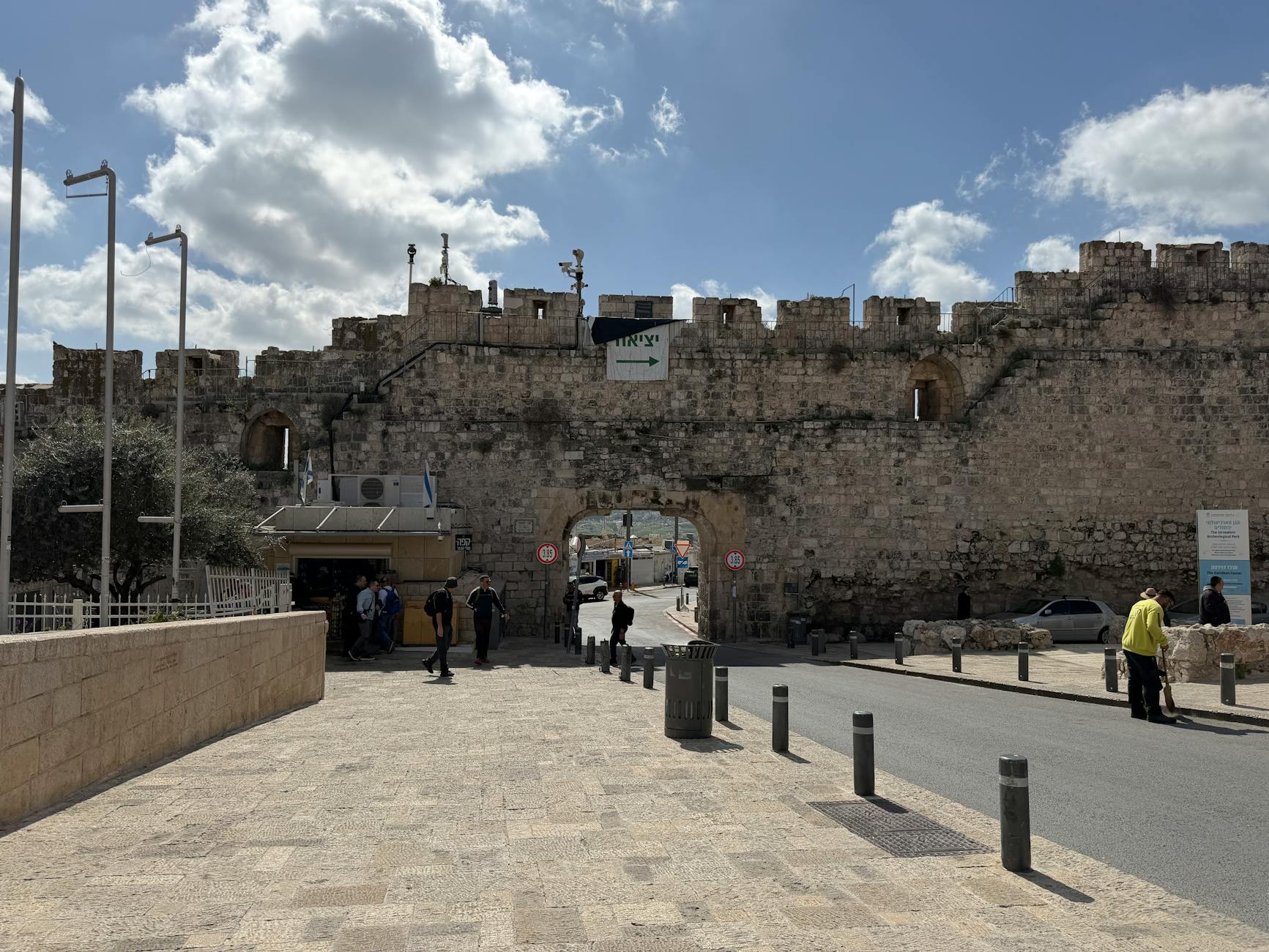
- From Ben Gurion Airport (Tel Aviv): Train to Jerusalem-Yitzhak Navon (about 20 min, ~18-21 NIS); sherut shared taxi (~$25/person); private taxi (~$80-100).
- From Tel Aviv city center: Train or intercity bus (1 hour, ~25-30 NIS).
- From Eilat: Bus (~5 hours) or domestic flight to Ben Gurion + train/taxi.
Getting Around Jerusalem
- Walking: Best for the Old City and central neighborhoods.
- Light Rail Red Line: Connects Mount Herzl/Yad Vashem to Damascus Gate via city center. Use the Rav-Kav card.
- Buses: Comprehensive network. App or sign reading helpful.
- Taxis: Gett and Yango apps. Most central rides under 30 NIS.
- Shabbat: No public transit Friday sunset to Saturday sunset. Walk or pre-book private rides.
Holy Site Etiquette
- Western Wall: Open 24/7. Modest dress. Head coverings provided free for men. No photography on Shabbat.
- Church of the Holy Sepulchre: Open ~5 AM-8:45 PM in summer, 4 AM-7 PM in winter. Modest dress. Quiet inside. No flash.
- Temple Mount / Haram al-Sharif: Non-Muslim hours typically Sun-Thu 7:30-11:00 AM, 1:30-2:30 PM. Strict modest dress. No religious texts visible. No prayer by non-Muslims. Non-Muslims cannot enter Dome of the Rock or Al-Aqsa interior.
- Christian sites generally: Quiet, no flash, hats off for men.
- Mea Shearim (ultra-Orthodox neighborhood): Strict modesty. No photography of people without permission. Avoid Shabbat.
What “Modest Dress” Actually Means, Site by Site
The etiquette list above says “modest dress” — here is what that means garment by garment, because enforcement varies enormously, and knowing the differences keeps you from being turned away at a door you crossed an ocean to reach.
- Western Wall: the most forgiving. Free cardboard kippot for men at the entrance, and attendants offer shawls to women in sleeveless tops. Prayer sections are separate for men and women. Details in our Western Wall guide.
- Temple Mount / Haram al-Sharif: the strictest. Long trousers for men — not shorts — and loose long sleeves plus a headscarf recommended for women. Guards reject anything tight or sheer, and there is nothing to borrow at the gate, so arrive dressed.
- Church of the Holy Sepulchre: knees and shoulders covered, hats off for men. The wardens at the door enforce it, politely but firmly.
- Garden of Gethsemane and the Mount of Olives churches: standard church modesty; a scarf pulled from your bag fixes most problems.
- Mea Shearim: a residential ultra-Orthodox neighborhood, not an attraction. Long skirts for women, covered arms, and no photographing residents.
The cheapest insurance is a light scarf that lives permanently in your daypack. Opening hours and entry logistics for each site are in our guide to Jerusalem’s holy sites.
First-Timer Sights That Earn Their Reputation
- Western Wall (Kotel) — free, 24/7.
- Church of the Holy Sepulchre — free.
- Mount of Olives Viewpoint — free, best at sunrise.
- Via Dolorosa — free walking route through the Old City.
- Temple Mount esplanade — free, non-Muslim hours.
- Mahane Yehuda Market — free, peak energy Friday morning.
- Yad Vashem — free, closed Saturday.
- Israel Museum + Shrine of the Book — paid, Dead Sea Scrolls.
- Western Wall Tunnels Tour — paid, book ahead.
- Tower of David Museum — paid, citadel views.
A Sensible First Morning
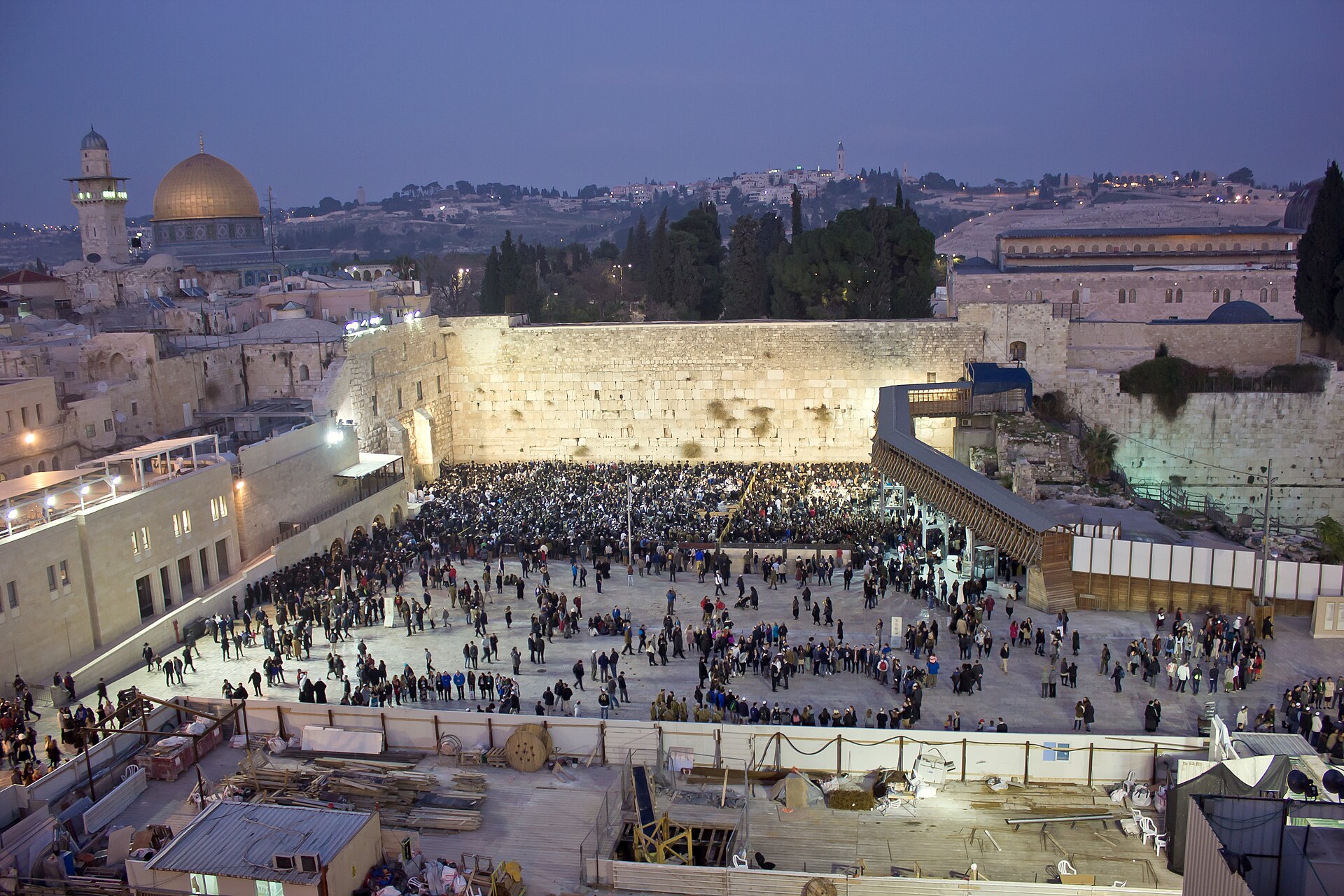
Most visitors burn their freshest hours deciding where to start. Here is the morning we would repeat: walk in at Jaffa Gate by 7:00 AM, while the souk shutters are still down and the bakeries are pulling out ka’ak — sesame bread rings, about 10 ILS. Head through the Christian Quarter to the Church of the Holy Sepulchre; at this hour the line for the Edicule takes ten minutes rather than ninety. Trace the Via Dolorosa through the waking Muslim Quarter, then finish at the Western Wall plaza before the tour groups land around 9:30.
By 10:30 you have seen three of the city’s defining sites without crowds, and the whole day is still ahead of you. Coffee and apple strudel in the Austrian Hospice garden on the Via Dolorosa is the correct reward — around 30 ILS, and the rooftop view from the building justifies the detour on its own.
Understanding Shabbat as a First-Time Visitor
Shabbat runs from sundown Friday to sundown Saturday. During this period in Jewish Jerusalem:
- Public transport shuts down.
- Most restaurants close (kosher ones).
- Mahane Yehuda Market closes.
- Most modern shops close.
- The Old City, Western Wall, Mount of Olives stay accessible.
- Christian Quarter and East Jerusalem stay open.
- Saturday-night reopening is the biggest dining night.
Friday-evening welcoming of Shabbat at the Western Wall (sunset onward) is one of the most beautiful free experiences in the city.
Safety for First-Time Visitors
Jerusalem is generally very safe for tourists in the central areas (Old City, Mamilla, Mahane Yehuda, German Colony, Yemin Moshe). As with any major city, use common urban precautions:
- Avoid large protests and demonstrations.
- Check current travel advisories from your home government before booking.
- Carry a copy of your passport; leave the original in the hotel safe.
- Stick to well-lit streets at night.
- The Old City is patrolled and safe in well-trafficked routes.
Money Tips for Jerusalem
- Currency is the Israeli Shekel (NIS, ₪).
- Most places accept cards; small vendors and the Old City often prefer cash.
- ATMs widely available; some charge foreign-card fees.
- Tipping: 10-15% at restaurants if service charge not added; small tip for taxi drivers.
- Sales tax (VAT) of 17% is typically included in prices.
What a First Trip Actually Costs
Sticker shock in Jerusalem comes almost entirely from hotels; nearly everything else costs less than first-timers expect. Realistic 2026 figures:
- Hostel dorm bed: $25–45 a night (Abraham Hostel, The Post, Citadel inside the walls).
- Guesthouse or budget hotel: $80–160. The Austrian Hospice and other Christian guesthouses put you inside the Old City for less than most chain hotels outside it.
- Mid-range boutique: $230–450 (Arthur, Harmony, Villa Brown).
- Luxury: $450–1,400 at the Mamilla Hotel, King David, or Waldorf Astoria.
- Street food meal: 20–35 ILS ($6–10) for falafel, sabich, or hummus with pita.
- Sit-down dinner: 90–160 ILS per person at mid-range restaurants; 350–450 ILS with wine at Machneyuda or Eucalyptus.
- Museum entry: Israel Museum 54 ILS, Tower of David about 50 ILS, Western Wall Tunnels 38 ILS, City of David from 35 ILS. Yad Vashem is free.
- Transit: the Rav-Kav card costs 5 ILS, rides are 6 ILS with free transfers for 90 minutes, and a day of riding caps at about 17.50 ILS.
Line-item breakdowns for every travel style are in our trip cost guide; if the numbers need to stay small, our shoestring guide to the city shows how $50–80 a day buys a genuinely good trip.
Things to Know That Surprise First-Timers
- Sunday is a workday in Israel (the work week is Sun-Thu).
- Hummus is a lunch dish, not a dip. Most hummus joints close by 4-5 PM.
- The Old City is small — you can walk from gate to gate in 20 minutes.
- Most things have multiple names — Hebrew, Arabic, English. The Western Wall is also the Kotel and the Wailing Wall.
- Security checks at major sites are normal — Western Wall, Temple Mount, Mahane Yehuda. Bring minimal bags.
- Friday afternoon is the busiest non-Shabbat time for markets, especially Mahane Yehuda.
- Air conditioning is normal but not universal in older buildings.
Final Word: Prepare, Then Surrender
First time visiting Jerusalem rewards preparation. Read this guide, build a flexible itinerary using our pillars, and then, once you’re there, let the city teach you the rest. Pair this with our complete Jerusalem itinerary guide and Travel Tips guide.
Photo Credits
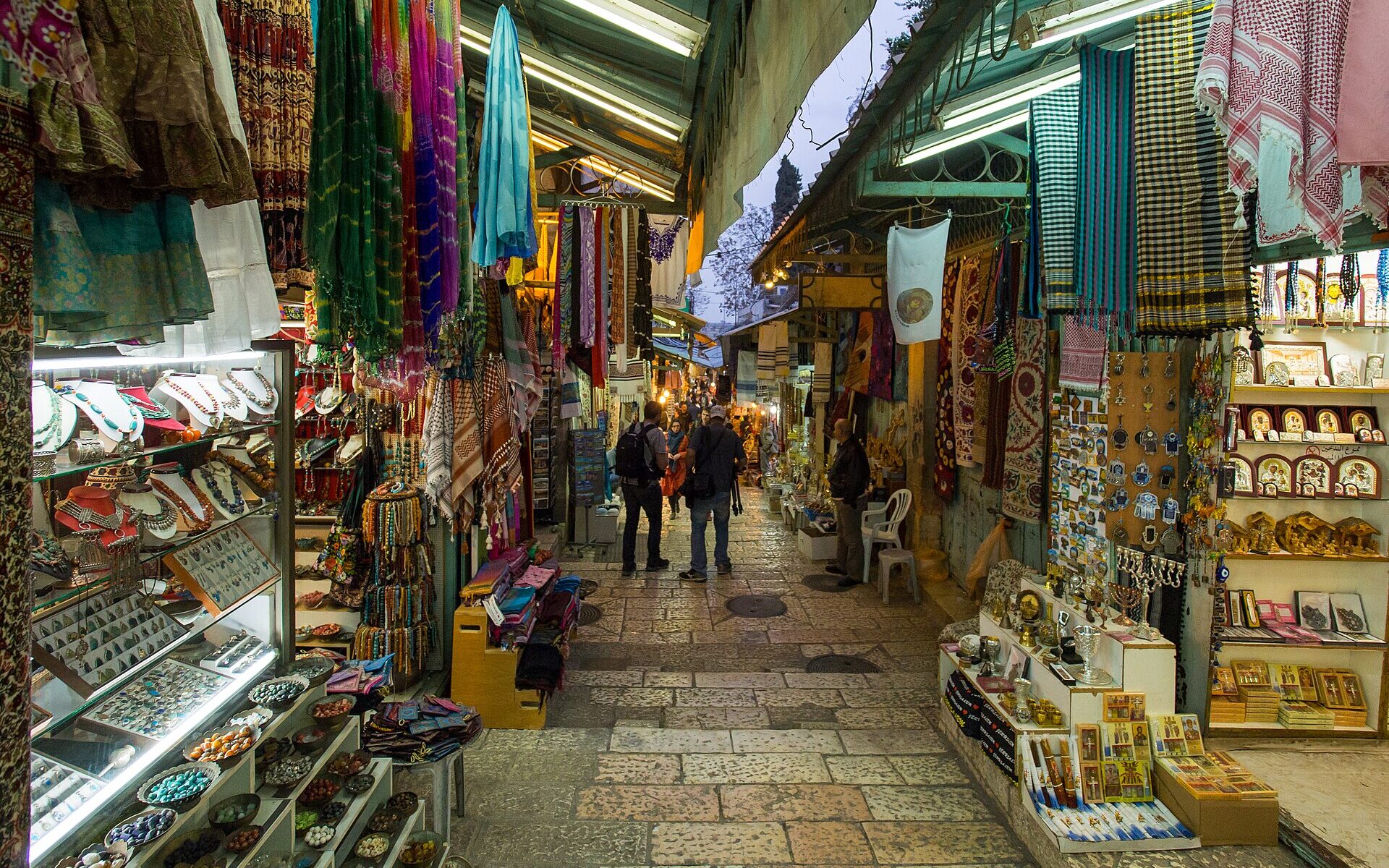
Visitors walking down the souvenir market of David Street: David Street (20047)a by Rhododendrites, CC BY-SA 4.0, via Wikimedia Commons.
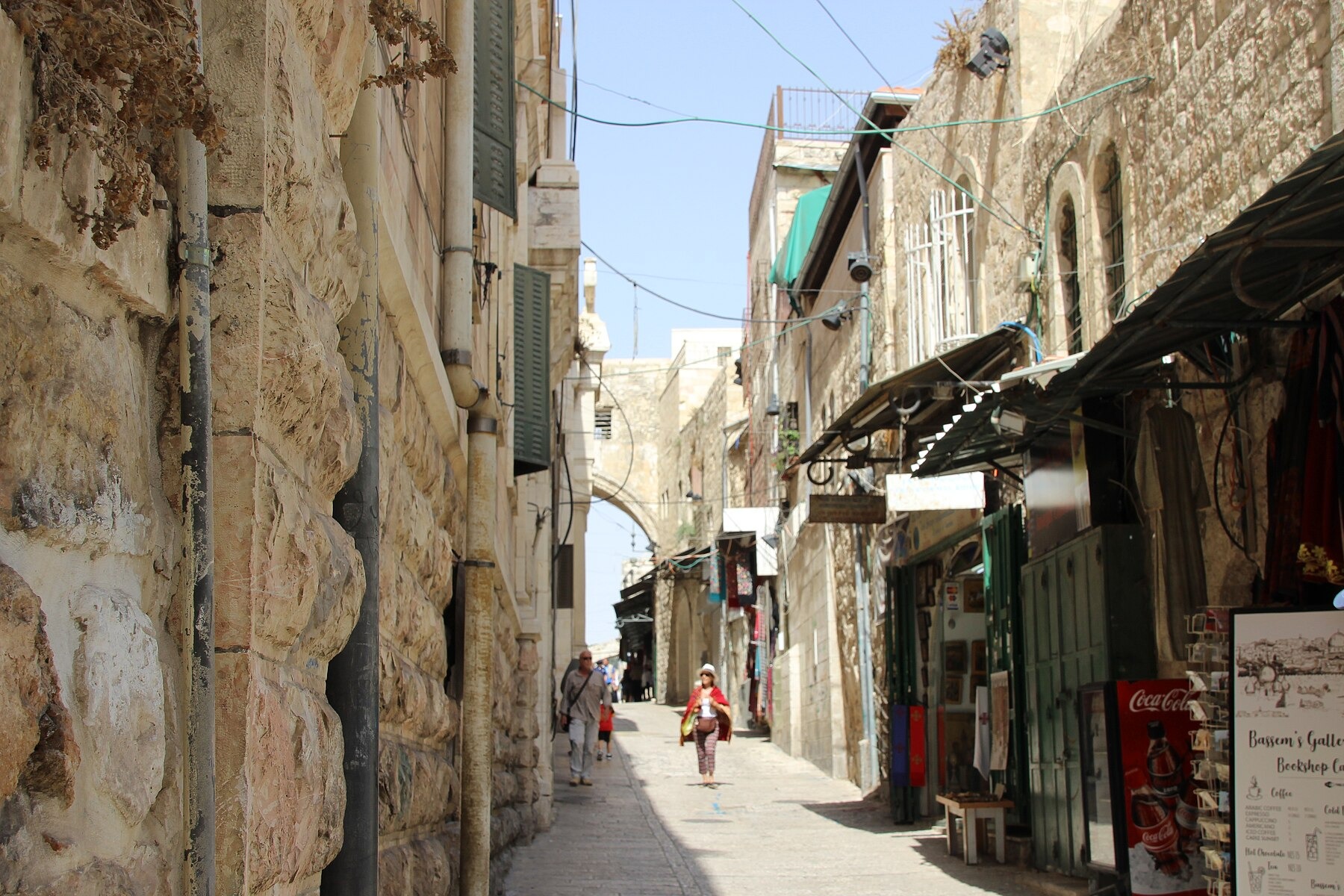
Visitors on the Via Dolorosa, with the Ecce Homo arch ahead: Jerusalem Old City Via Dolorosa (43177145621) by Gary Todd from Xinzheng, China, CC0, cropped, via Wikimedia Commons.
The Western Wall plaza on a Friday evening at dusk: Jerusalem Western Wall Friday evening 12 January 2018 by Demetrios Karatassos, CC0, via Wikimedia Commons.