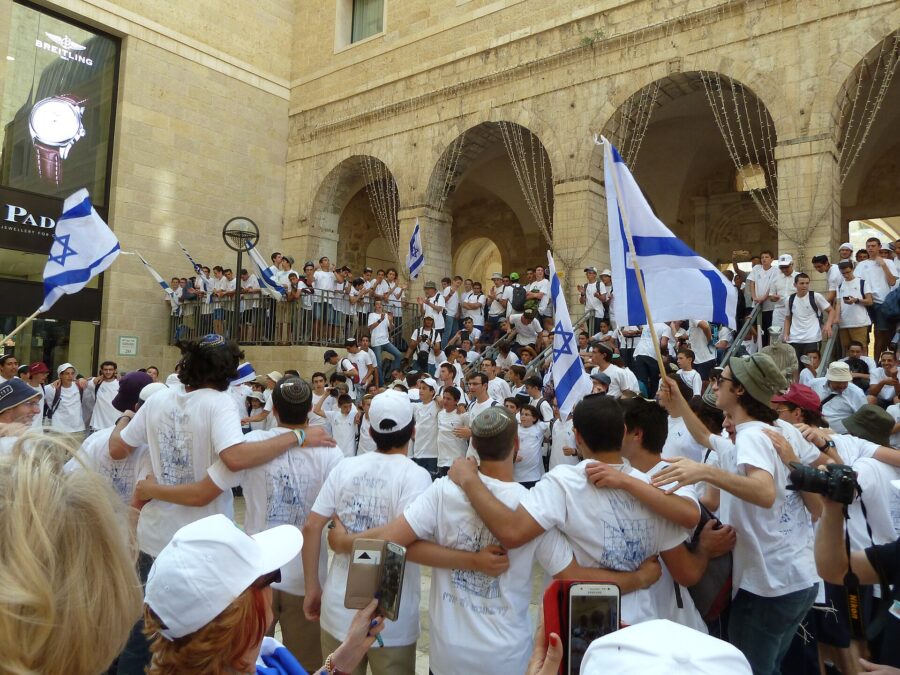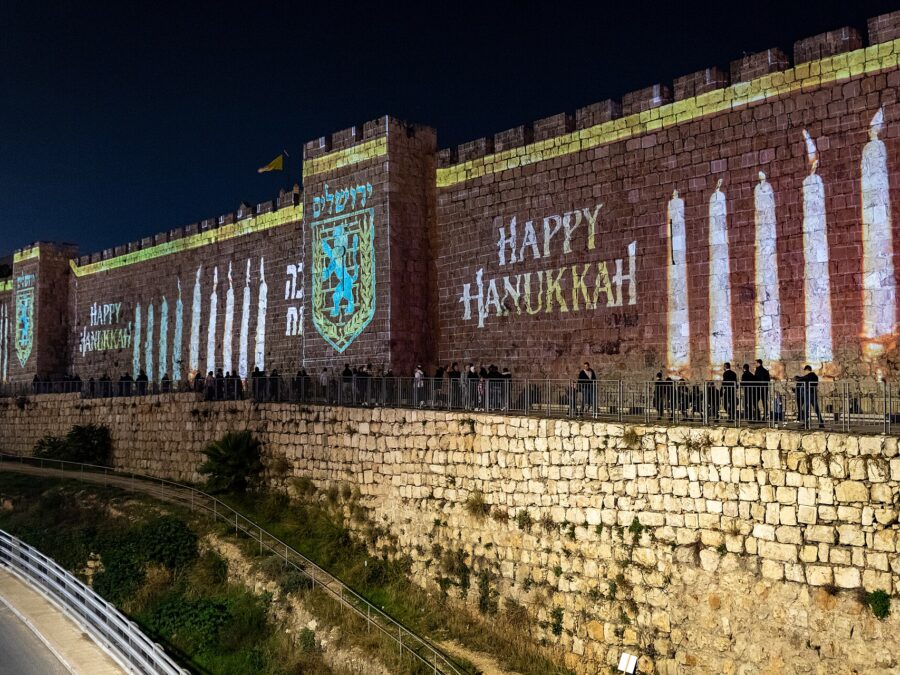
There is one morning a year when you can watch a bank teller in a full gorilla suit process a mortgage application, and it is not the same morning in Jerusalem as it is in Tel Aviv. The rest of Israel celebrates on the fourteenth of Adar; this city waits a day and does it on the fifteenth, because two and a half thousand years ago it had a wall. That single quirk of ancient town planning is why Purim in Jerusalem is both the strangest and the least crowded festival in the calendar — and, if you time it right, why you can attend two Purims in a row.
This page explains Shushan Purim, what actually happens on the day, where to be, what to avoid, and how to see both versions in one trip. Details were checked in September 2026; the municipal parade programme changes annually and is announced only a few weeks ahead.
Why Jerusalem Is a Day Late
The Book of Esther, which the festival commemorates, distinguishes between two groups. Jews in the unwalled towns of the Persian empire were delivered on the fourteenth of Adar and celebrated that day. In Shushan, the walled capital, the fighting continued a day longer and the celebration fell on the fifteenth. The rabbis extended the Shushan rule to any city that was walled in the time of Joshua — and Jerusalem qualifies.
So Jerusalem keeps Shushan Purim on 15 Adar, one day after everywhere else in Israel and everywhere else in the world. Tel Aviv, Haifa and Beersheba celebrate on the fourteenth. A handful of other ancient cities, including Safed and Tiberias, observe both days out of doubt about their walls. Jerusalem has no doubt whatsoever.
| Year | Purim (most of Israel) | Shushan Purim (Jerusalem) |
|---|---|---|
| 2027 | Mon eve 22 – Tue 23 March | Tue eve 23 – Wed 24 March |
| 2028 | ~Mon eve 13 – Tue 14 March | ~Tue eve 14 – Wed 15 March |
| 2029 | ~Wed eve 28 Feb – Thu 1 March | ~Thu eve 1 – Fri 2 March |
Note that 5787 is a Hebrew leap year, which is why Purim falls in late March in 2027 rather than the more usual late February or early March. Our full religious holidays calendar explains the leap-month mechanism.
The double-Purim trick
Because the two days are consecutive, you can do Purim in Tel Aviv on the Tuesday and Shushan Purim in Jerusalem on the Wednesday. They are completely different in character: Tel Aviv is a street party, Jerusalem is a family festival with a strong religious core and a great deal of costume. An hour on the train separates them. It is one of the more enjoyable pieces of scheduling available anywhere and almost nobody does it — see getting between Tel Aviv and Jerusalem for the connections, and check the train timetable carefully around the festival.
What Actually Happens
Purim is not a public holiday in the sense that Passover is. Nothing closes, transport runs, and shops are open. What happens instead is that the entire city puts on a costume and does its normal business slightly differently.
The four obligations
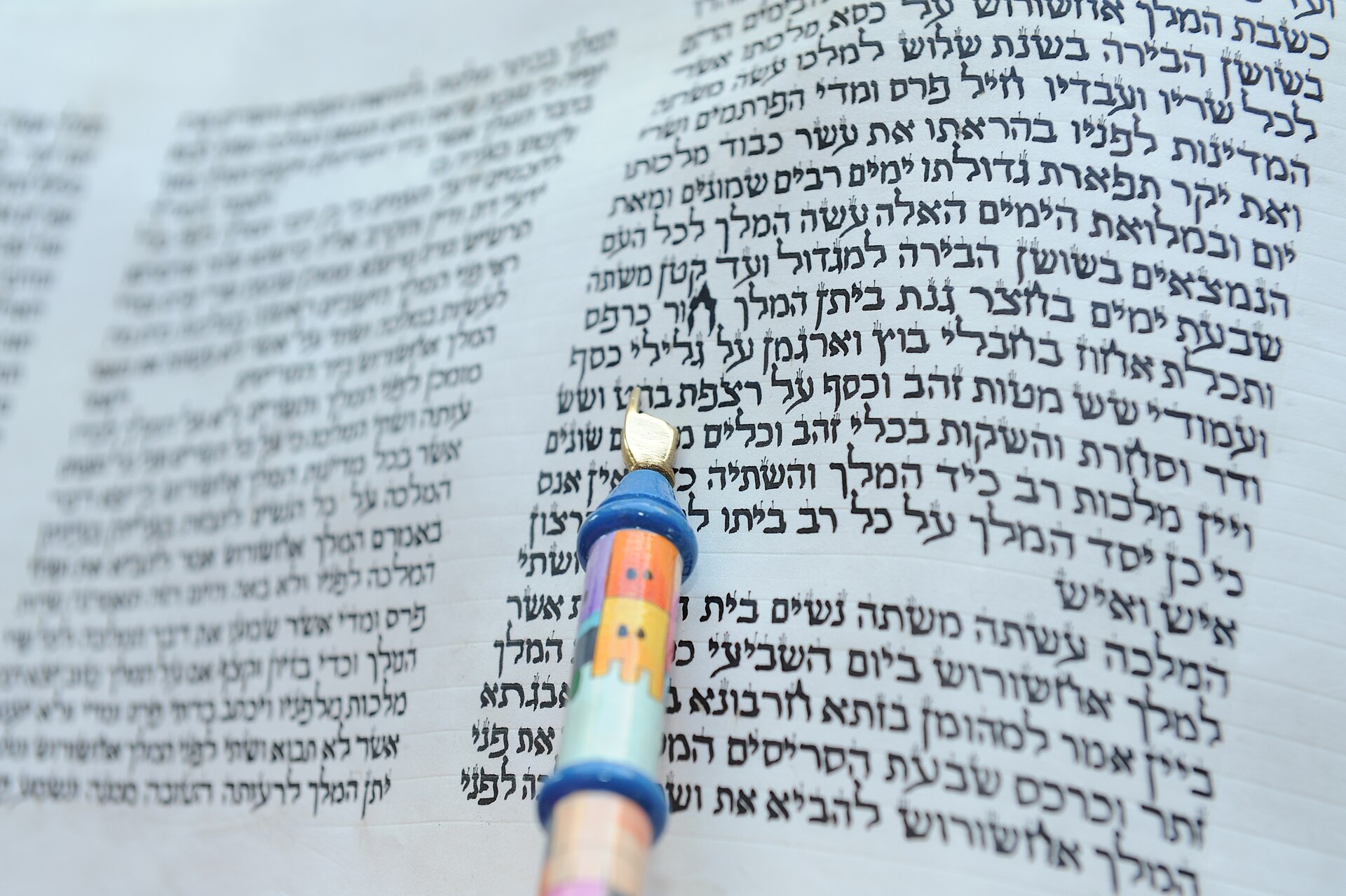
- Hearing the Megillah. The Book of Esther is read publicly twice, on the evening and again the following morning, with the congregation drowning out the name of Haman with rattles, boos and stamping. Readings happen in every synagogue and many are open to visitors; several run in English.
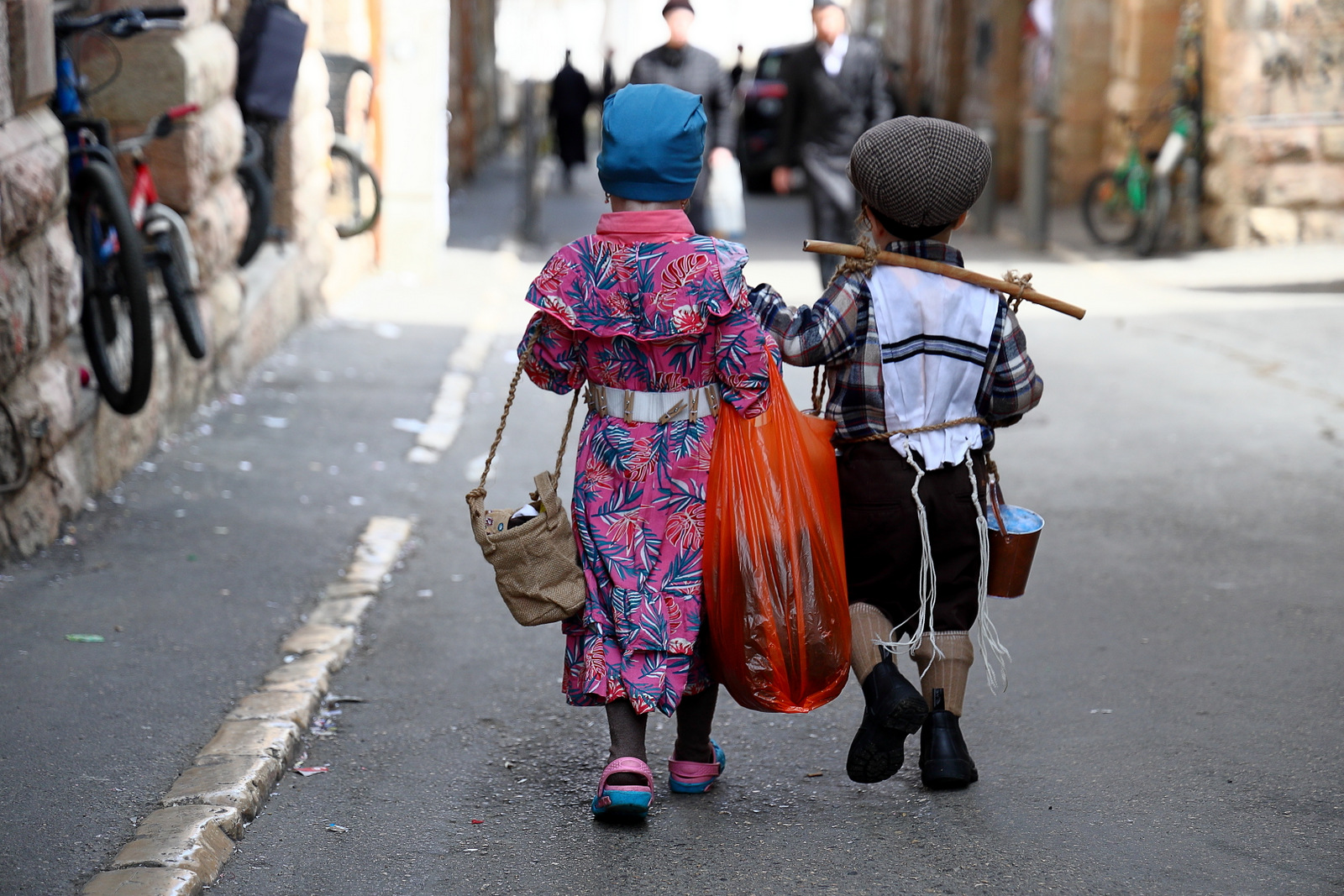
- Mishloach manot. Gifts of food, at least two items, delivered to friends. The whole city is carrying baskets of hamantaschen, wine and sweets around on the day, often in costume, often by children.
- Matanot la’evyonim. Gifts to the poor. Collectors appear everywhere and giving is expected.
- The feast. A festive meal in the afternoon, and a tradition of drinking that is taken more seriously by some than others.
Costume
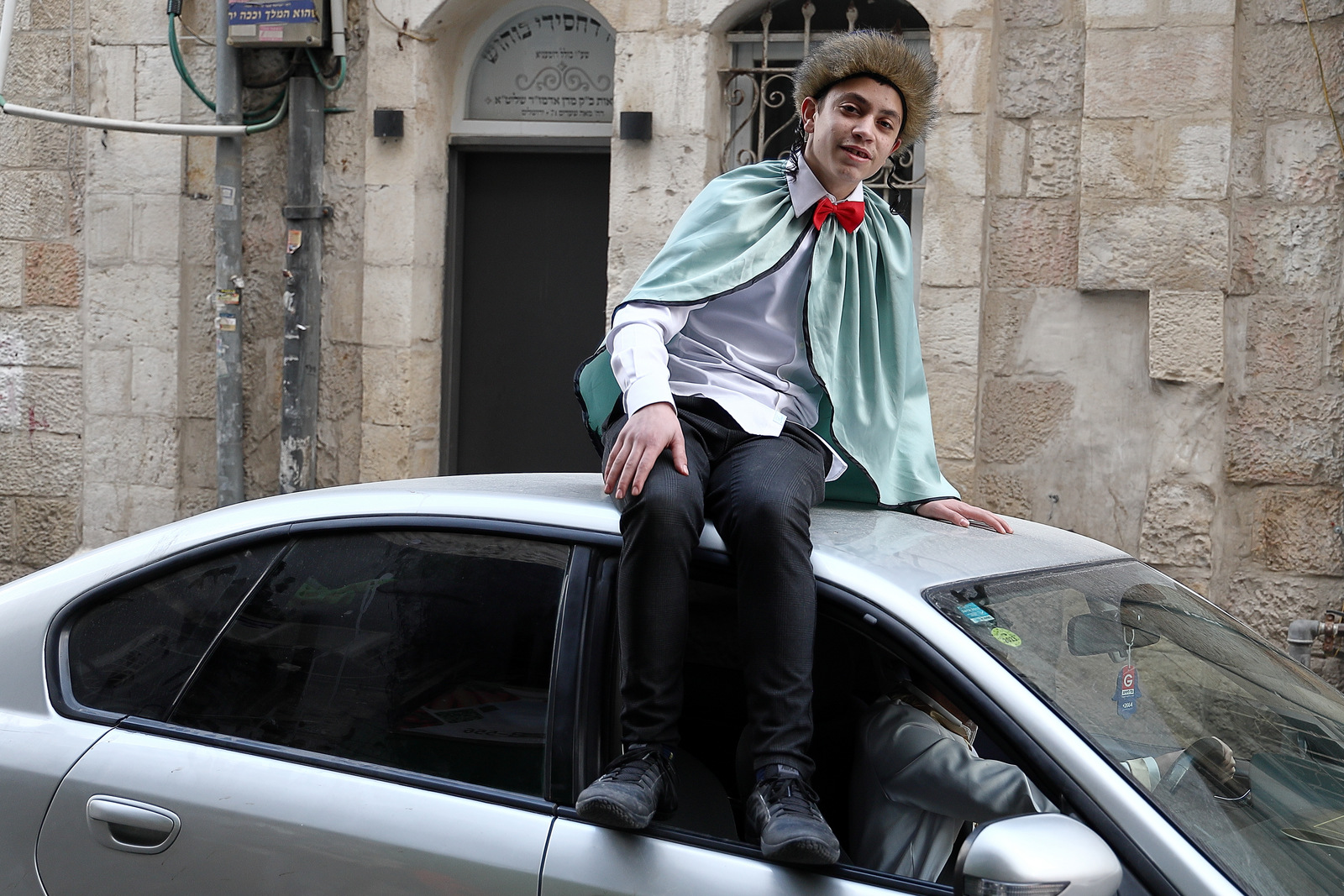
This is the part that surprises people. Everybody dresses up: not just children, but adults, shopkeepers, bus drivers, doctors, soldiers. The costumes are inventive, frequently satirical, and worn all day rather than for a party in the evening. In the ultra-Orthodox neighbourhoods you will see boys dressed as their own rabbis, and a great deal of improvised finery.
You are welcome to join in and nobody minds if you do not, but be aware that walking through Mea Shearim in ordinary clothes on Purim makes you the odd one out rather than the other way round.
The Story Behind It
Worth five minutes, because the day makes far more sense with it. The Book of Esther is set in the Persian empire under Ahasuerus — generally identified with Xerxes I — and turns on a plot by the vizier Haman to destroy the empire’s Jews, foiled by Esther, the king’s Jewish queen, and her cousin Mordechai. Lots were cast to fix the date of the massacre; pur is the Persian word for a lot, and it gives the festival its name.
Two things about the book shape how the festival is celebrated. It is the only book of the Hebrew Bible in which God is not mentioned once, and its plot turns almost entirely on reversals — the gallows built for Mordechai used for Haman, the decree of destruction becoming a decree of deliverance. That theme of things turning into their opposites is why the day is marked by masks and costumes, by a tradition of drinking until distinctions blur, and by a general licensed inversion of the usual order. It is the closest thing the Jewish calendar has to a carnival, and the resemblance is not accidental.
A note on the noise
During the reading, the congregation obliterates Haman’s name every time it occurs — fifty-four times in the text — with rattles called gragers, stamping, booing and, in some Jerusalem congregations, an impressive quantity of improvised percussion. Readings therefore take considerably longer than the text warrants. If you attend one, this is not a disruption; it is the point.
Purim Around the City, Hour by Hour
| Time | What is happening | Where |
|---|---|---|
| Evening before | First Megillah reading | Every synagogue; English readings in the city centre and German Colony |
| 07:00–09:00 | Morning readings; costumes already out | Synagogues everywhere |
| 09:00–12:00 | Children delivering mishloach manot; collectors on every corner | Residential streets, Nachlaot, Rehavia |
| 10:00–14:00 | The ultra-Orthodox celebration at full volume | Mea Shearim, Geula, the Bukharan Quarter |
| 13:00–16:00 | The festive meal. Offices shut, streets quieter | Homes and restaurants |
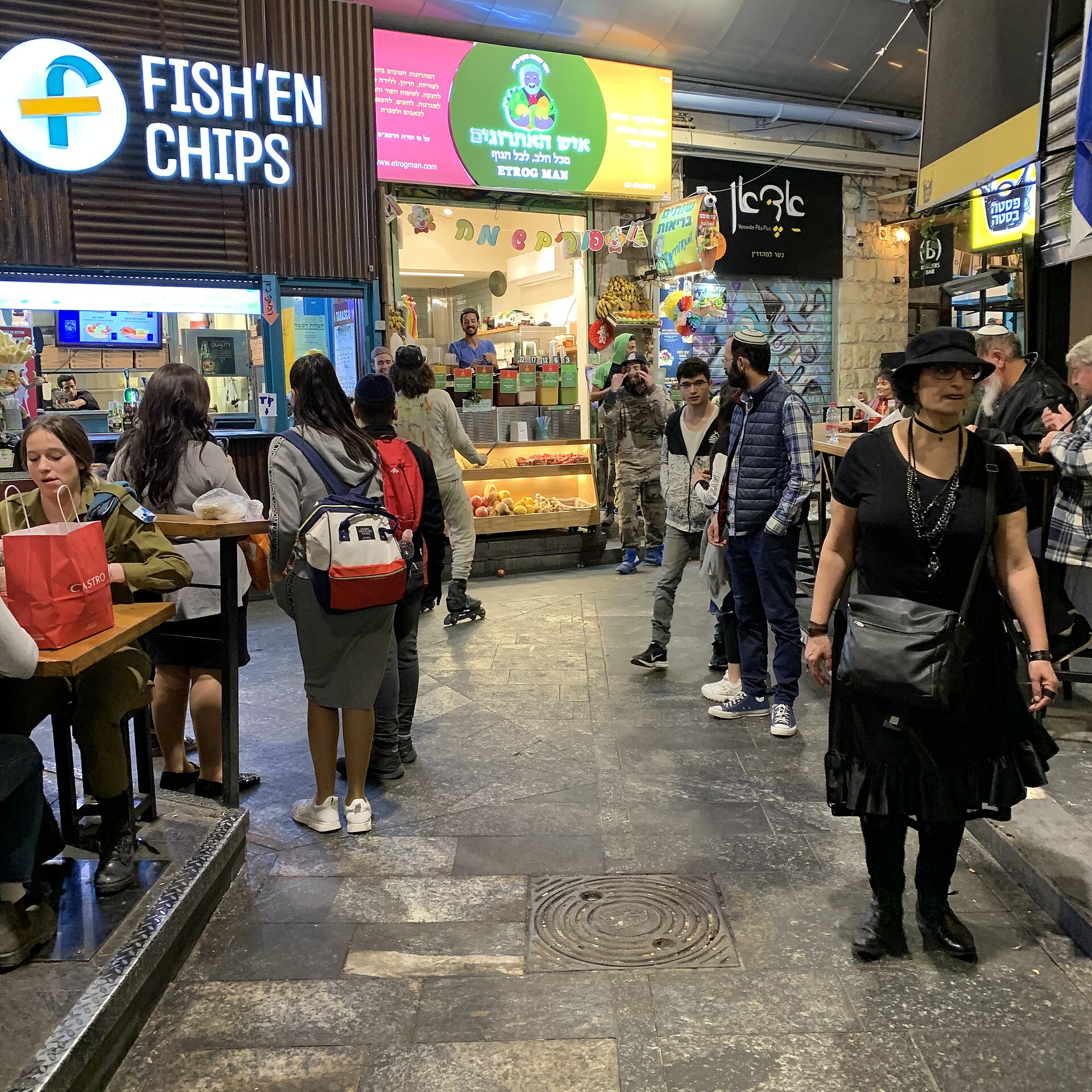
| 16:00 onwards | Street party, sound systems, costume in earnest | Mahane Yehuda and the bars around it |
| Late | Noisy, cheerful and increasingly drunk | City centre. Take children home before this |
The single best window for a visitor who wants to see everything without being in the thick of it is roughly eleven in the morning to three in the afternoon: full costume, full noise, and none of the evening’s excess. Walk from Mahane Yehuda through Nachlaot and out towards Geula, and you will pass through three quite different versions of the same festival inside an hour. Our self-guided walking tour covers that ground in an ordinary week, and the photography guide notes where cameras are and are not welcome.
Where to Be
- Mahane Yehuda. The market and the bars around it are the centre of secular Purim — costumes, sound systems, and a party that runs from the afternoon well into the night. Our market guide covers the area and Jerusalem nightlife the evening.
- Nachlaot. The alleys behind the market, where the religious and secular versions of the festival overlap and where a lot of the best street costume is.
- Mea Shearim and Geula. The ultra-Orthodox version, which is a different festival entirely: enormous quantities of costume, live music from vans, and a level of public drinking that visitors find startling. Dress very modestly, do not photograph people without asking, and go in the morning or early afternoon rather than late.
- The Old City. The Jewish Quarter has readings and children in costume through the lanes. The other quarters carry on entirely as normal, which makes for an odd and rather charming contrast.
- The municipal parade, where one runs, is family-oriented and usually in the city centre. Check the municipality’s programme; it is announced late and varies year to year. Our festivals guide covers the wider events calendar.
The Practical Notes
- Nothing closes, but many businesses work half a day and offices often shut in the afternoon. Museums generally open normally.
- Transport runs, though buses and the light rail are busy and drivers may be in costume. See getting around Jerusalem.
- Drinking. There is a religious tradition of drinking on Purim and by evening some people, including teenagers, are visibly drunk. It is good-humoured but it is worth knowing before you take small children into a crowd late in the day.
- Noise. Rattles, firecrackers and sound systems from mid-morning. If you are a light sleeper, this is not the night for a room over a main street.
- The fast beforehand. The Fast of Esther falls on the day before Purim — daylight hours only, and with little practical effect on a visitor except that some restaurants open late.
- Hamantaschen — oznei haman in Hebrew — are the triangular filled pastries sold everywhere for a fortnight beforehand. Poppy seed is traditional; the bakeries of Mahane Yehuda will sell you a dozen variations. See our traditional food guide.
Is It Worth Timing a Trip For?
Yes, and for an unusual reason: it costs you almost nothing. Purim closes nothing, so you lose no sightseeing; late March is good weather; and because it is not a closure festival, hotel rates do not spike the way they do for Passover or Sukkot. You get a city-wide spectacle for the price of an ordinary week.
In 2027 there is an additional argument. Western Holy Week begins on Palm Sunday, 21 March, and Purim in Jerusalem falls on 24 March — inside the same week. That means you could, in a single stay, see the Palm Sunday procession down the Mount of Olives, Good Friday on the Via Dolorosa, and the whole city in fancy dress in between. There is no other week in the decade quite like it. The catch is that Holy Week prices and crowds apply — see Easter in Jerusalem and book very early.
The honest caveat: Purim is a participatory festival rather than a spectator one. If you know nobody in the city you will watch other people’s celebrations rather than join them, and the megillah readings are in Hebrew. Go to a synagogue that advertises an English reading, buy hamantaschen, wear something silly, and it becomes a much better day.
Final Word on Purim in Jerusalem
Of all the festivals on this site, Purim asks the least of a visitor and gives back the most unexpected day. Nothing shuts, nothing needs booking, prices are ordinary, and you get a capital city in fancy dress on a Wednesday because of a wall that stopped existing before the Second Temple. Buy hamantaschen at the market, find an English megillah reading, walk through Nachlaot in the afternoon, and wear something absurd. Then read our religious holidays calendar for what else falls in that fortnight, Easter in Jerusalem if your 2027 dates overlap Holy Week, and things to do in Jerusalem for the days either side.
Photo Credits
Purim in the Mea Shearim neighbourhood: 94528 purim in the mea shearim neighborhood PikiWiki Israel by ליזי שאנן, CC BY 2.5, via Wikimedia Commons.
A Megillat Esther scroll: Megillat Esther (1) by Chefallen, CC BY-SA 3.0, via Wikimedia Commons.
Children in Purim costumes in Mea Shearim on Shushan Purim: 94529 purim in the mea shearim neighborhood PikiWiki Israel by ליזי שאנן, CC BY 2.5, via Wikimedia Commons.
Purim decorations in Mahane Yehuda Market on Shushan Purim: Mahane Yehuda Market IMG 0716 by י קוקי המנוח, CC BY-SA 4.0, via Wikimedia Commons.