Here is the thing nobody tells you before you book: on 25 December, Jerusalem is largely at work. Buses run, offices open, the light rail is full of commuters, and unless you go looking for it you could spend the day in West Jerusalem and never notice the date. Christmas in Jerusalem is real and it is moving, but it is concentrated — in the Christian Quarter, in a handful of churches, and above all nine kilometres south in Bethlehem, which is where the whole thing actually happens.
This page covers 24 and 25 December specifically, and the two further Christmases that follow in January: how the Midnight Mass ballot works, how to get to Manger Square and back, what happens in Jerusalem itself, and why the quieter Orthodox and Armenian celebrations are, for a lot of people, the better trip. For Bethlehem the rest of the year — the crossing, the taxis, the Church of the Nativity in ordinary weeks — see our Bethlehem day trip guide. Details were checked in September 2026; the Ministry of Tourism and the patriarchates confirm the December arrangements each November, so re-check the specifics before you travel.

Three Christmases, One City
Jerusalem and Bethlehem celebrate Christmas three times, on three calendars, and the decorations simply stay up in between.
| Date | Whose | Crowds | Worth going? |
|---|---|---|---|
| 24–25 December | Catholic, Protestant, Anglican | Very heavy. The one everyone means | Yes, with realistic expectations |
| 6–7 January | Greek Orthodox, Syriac, Coptic, Ethiopian | Moderate — perhaps a third as many | Yes. Arguably the better day |
| 18–19 January | Armenian Patriarchate of Jerusalem | Light. Mostly the community itself | Yes, if you want the quietest of the three |
The Armenian date is a genuine Jerusalem oddity. Armenians everywhere else in the world keep Christmas on 6 January; the Patriarchate here alone holds to the Julian reckoning, which puts it on 18–19 January, a right preserved by the Status Quo arrangement governing the shared holy places. Our Armenian Quarter guide covers the community and St James Cathedral, where the Jerusalem celebrations begin before the procession leaves for Bethlehem.
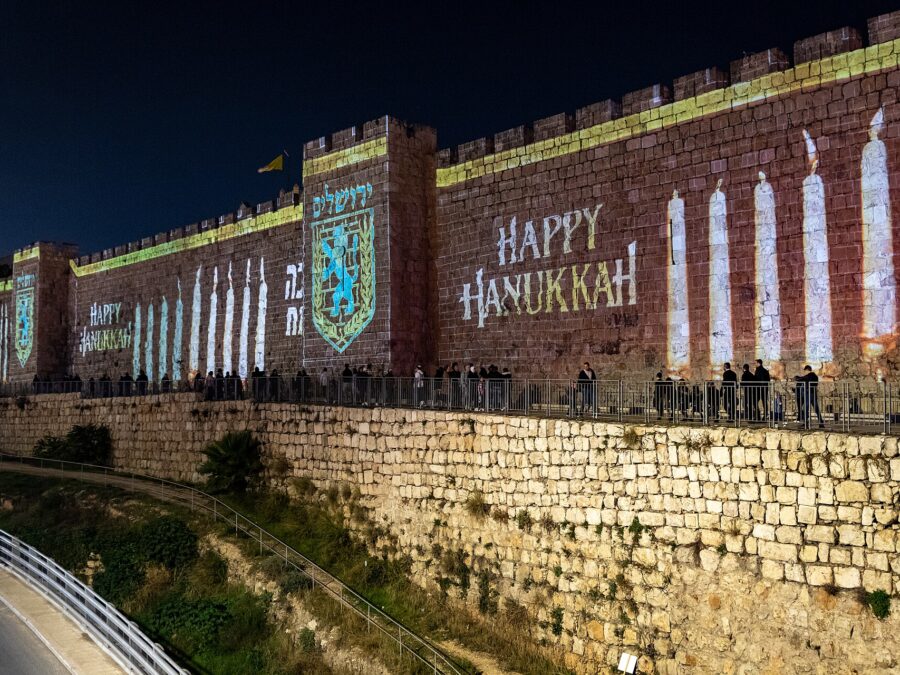
In 2027 there is an extra layer: Hanukkah runs from 24 December to 1 January, so the Christmas fortnight coincides exactly with eight nights of menorahs in doorways across the Jewish neighbourhoods. It is an extraordinary time to walk the city and an extremely difficult one to find a hotel room in.
Christmas Eve in Bethlehem
What actually happens
The day builds slowly. From late morning, scout troops and marching bands from Bethlehem, Beit Jala and Beit Sahour parade through the town and into Manger Square — genuinely the best free entertainment of the day, and something most visitors miss because they arrive in the evening. In the early afternoon the Latin Patriarch is received at the entrance to Bethlehem and processes to the Church of the Nativity, where he enters the Grotto. By dusk the square is full, the tree is lit, and the large screens go up.
Midnight Mass itself is celebrated in the Church of St Catherine, which adjoins the Church of the Nativity. It begins around midnight and runs for roughly two hours. The square outside relays it live on screens, free and open to anyone, and this is where the great majority of visitors actually spend the night.
The ticket ballot, plainly
Places inside St Catherine’s are strictly limited and are not sold. They are allocated by the Christian Information Centre in Jerusalem, on application, through a form the Centre opens online each autumn. No closing date is published, and in past years the form has closed before Christmas. In practice:
- Apply as early as you can, by the method the Centre specifies that year (in 2026, an online form). You will need passport details.
- Priority goes to parish and diocesan pilgrimage groups and to local Christians. Independent visitors do get places, but far from all who apply.
- A place is a place, not a seat, and it does not come with parking, transport or a queue-jump. You still have to be in Bethlehem hours ahead.
- Nobody sells legitimate tickets. If someone offers you one, they are selling you nothing.
The honest verdict: applying costs nothing and is worth doing, but do not build the trip around getting in. Manger Square on the screens, with several thousand people from every corner of the Christian world and the bells of the Nativity overhead, is not a consolation prize. A great many people who have done both say the square was better.
Getting there and back
Bethlehem is in the West Bank, under Palestinian Authority administration, and you cross at Checkpoint 300 south of Jerusalem. Bring your passport. Israeli citizens and rental cars with Israeli plates may not enter Area A.
- Free Ministry of Tourism shuttles. In recent years free non-stop buses have run between Jerusalem and Bethlehem continuously from midday on 24 December to midday on 25 December. Confirm they are operating in your year — the arrangement is announced in early December and is not guaranteed.
- Arab bus 231 or 234 from the station opposite Damascus Gate runs to Bethlehem year-round, but not through the small hours.
- Taxis will take you to the checkpoint on the Jerusalem side; you walk through and take a Palestinian taxi on the far side. Agree the fare first. Returning at 02:00 is the part people underestimate — have a plan before you go.
- Or stay the night in Bethlehem. Rooms sell out by September and cost several times the ordinary rate, but it removes every transport problem at a stroke.
Allow two to three hours for the return crossing on Christmas night. It is slow, it is crowded, and it is the single most common thing that spoils people’s evening.
Christmas in Jerusalem Itself
West Jerusalem does not celebrate Christmas, and there is no reason it should — it is not a Christian city in that sense, and 25 December is an ordinary working Wednesday or Thursday. What Jerusalem does have is a Christian Quarter with real parishes, and a handful of services and traditions worth knowing about.
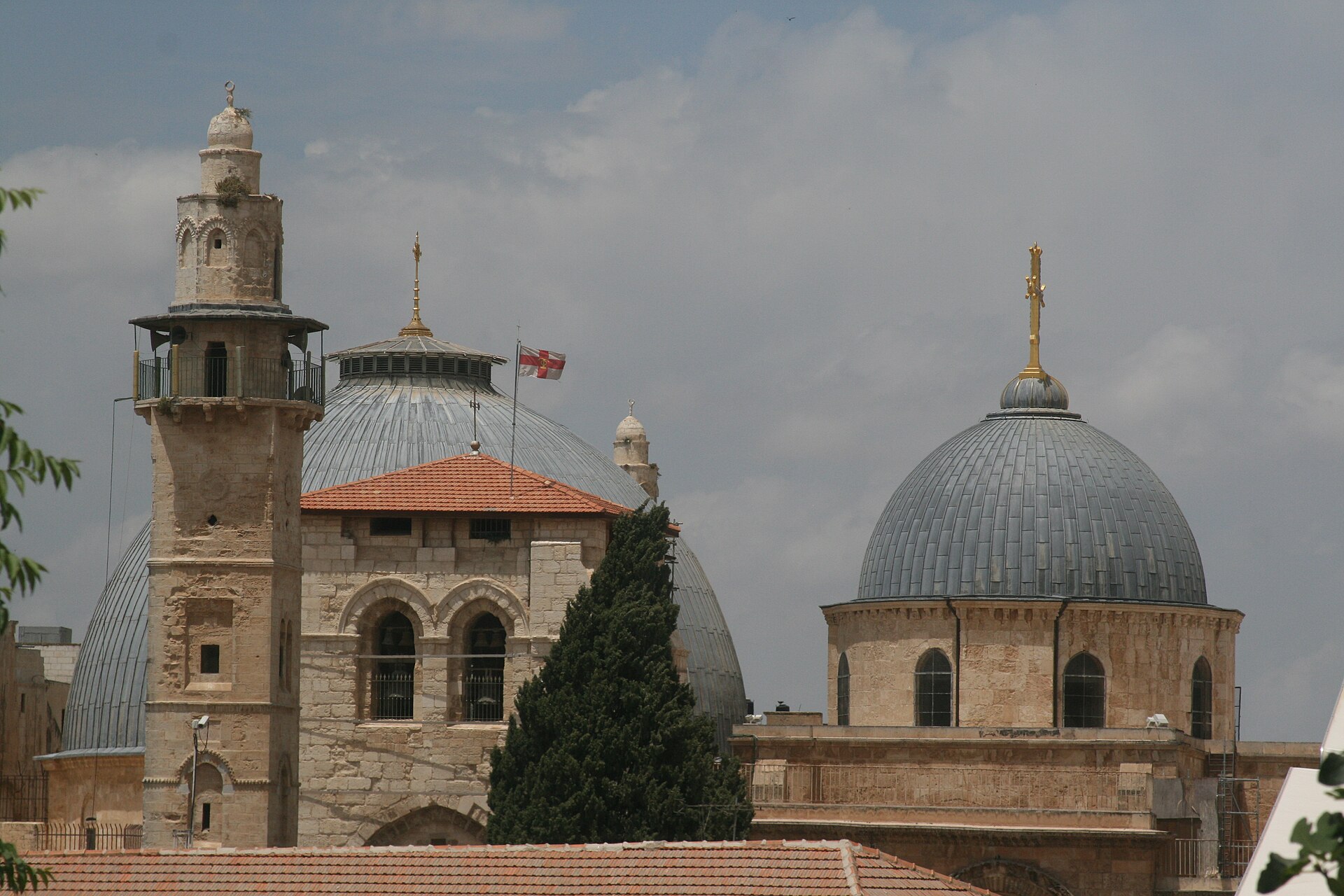
- Christmas Eve at the Holy Sepulchre. The Church of the Holy Sepulchre holds services, and the church stays open late. It is considerably quieter than Bethlehem and, for some, more affecting.
- Christ Church by Jaffa Gate and the Lutheran Church of the Redeemer hold English-language services and carol events in the days beforehand. The Redeemer’s bell tower gives the best rooftop view in the Old City if you can time a climb with a clear afternoon.
- St Saviour’s, the Franciscan parish church in the Christian Quarter, is where the Latin Patriarch’s procession assembles before leaving for Bethlehem on the afternoon of 24 December. Watching it set off from the Old City is a lovely, low-effort alternative to fighting for a place in Manger Square.
- The YMCA and the Notre Dame Centre both put on carol concerts. The church guesthouses generally hold their own services and are welcoming about visitors joining.
- Decorations appear along the Christian Quarter lanes and around Jaffa Gate, and the shops on Christian Quarter Road do a brisk trade in olive-wood nativity sets. It is modest by European standards. That is rather the point.
Christmas Eve, hour by hour
A workable shape for 24 December, assuming you are based in Jerusalem and want to see the most for the least misery:
| Time | Where | What |
|---|---|---|
| 10:00 | Christian Quarter, Jerusalem | Decorated lanes, the shops on Christian Quarter Road, coffee before it all starts |
| 12:00 | Cross to Bethlehem | Shuttle or bus. Earlier than feels necessary; the queues build all afternoon |
| 13:00–15:00 | Manger Square | Scout troops and marching bands. The best free hours of the day |
| ~14:00 | Entrance to Bethlehem | The Latin Patriarch is received and processes to the Church of the Nativity |
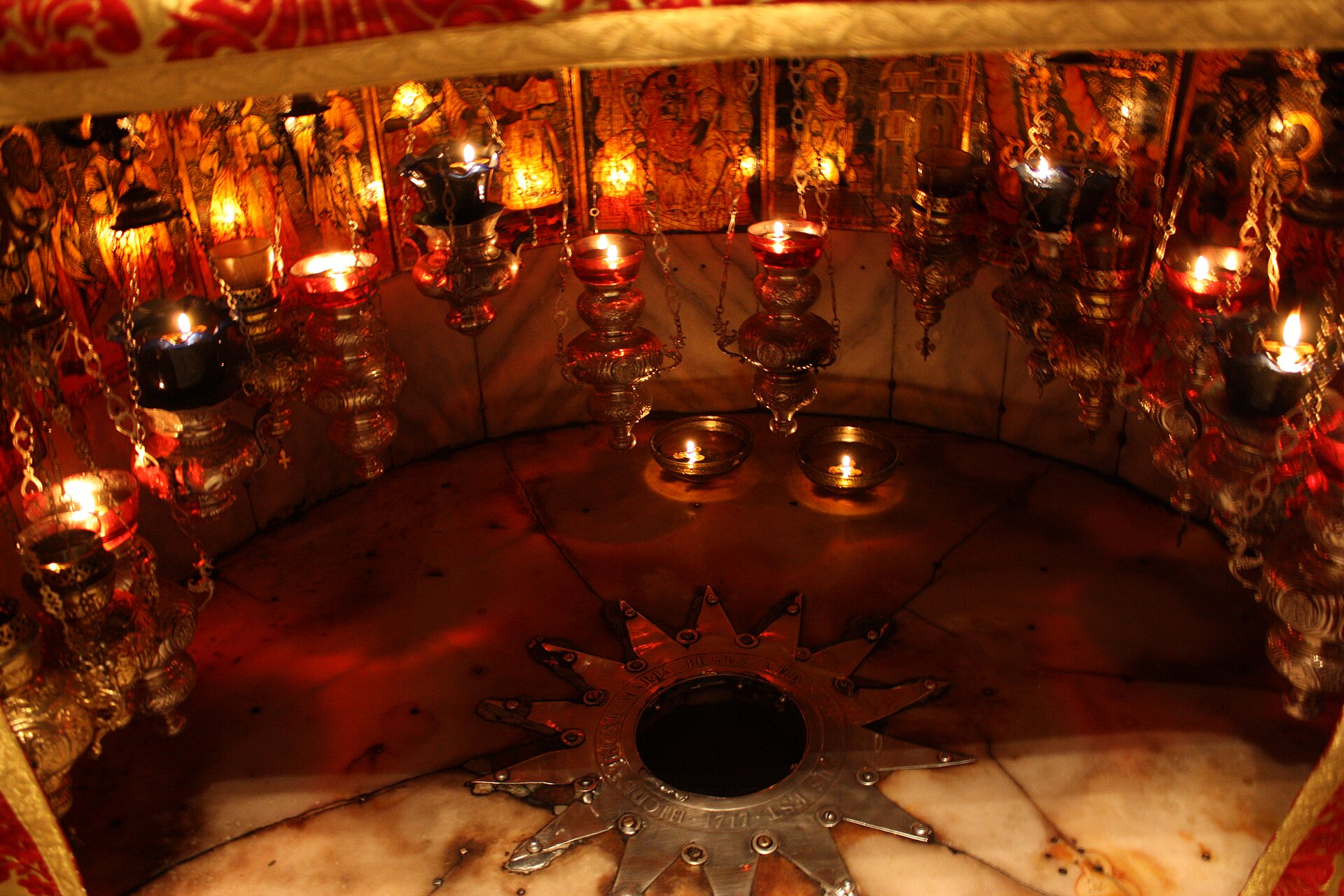
| 15:00–17:00 | Church of the Nativity | Go in now if you want the Grotto. After dark it is hopeless |
| Dusk | Manger Square | Tree lights, screens up, square filling. Claim your spot |
| 18:00–23:00 | Manger Square | Choirs, bands, several thousand people. Eat something now |
| 00:00–02:00 | St Catherine’s / the screens | Midnight Mass |
| 02:00 onwards | Checkpoint 300 | The queue home. Budget two to three hours |
If two in the morning at a checkpoint sounds like a poor end to Christmas — and for many people it is — then leave after the tree lighting and be back in Jerusalem for a late dinner. You will have seen the parades, the procession and the square at its best, and missed only the part you would have watched on a screen anyway.
The Shepherds’ Fields, which almost nobody does
Two kilometres east of Manger Square, in Beit Sahour, are the Shepherds’ Fields — the traditional site of the announcement to the shepherds, with a Franciscan chapel by Barluzzi, a Greek Orthodox site nearby, and caves you can walk into. On Christmas Eve afternoon there are open-air services here, and on an ordinary day in January there is almost nobody at all. A taxi from Manger Square takes ten minutes and costs very little. It is the single best use of a spare hour in Bethlehem, and it is the part of the Christmas story that the town itself is quietest about.
New Year in Jerusalem
Worth knowing, because it surprises people: 31 December is not a public holiday in Israel and the secular New Year, known locally as Sylvester, is a low-key affair by international standards. There are no municipal fireworks. What there is: a lively night in the bars around Mahane Yehuda and the city centre, several club nights, and a handful of hotel dinners. In 2027 it lands in the middle of Hanukkah, which will do more for the atmosphere than any countdown. Our guides to Jerusalem nightlife and the city after dark cover the ground; book anything you actually care about a fortnight ahead.
The Christmas markets question
There is no Christmas market in Jerusalem in the Central European sense, and any listing promising one is describing something considerably smaller — usually a church bazaar or a one-weekend craft fair. What you get instead is the Old City souq trading as it always does, with an additional layer of nativity sets, mother-of-pearl and rosaries. That is genuinely good shopping if you want something made locally: see Jerusalem souvenirs and Armenian ceramics for what is worth buying and what is imported tat. Bethlehem’s olive-wood workshops are the source for the carvings, and prices there are better than in Jerusalem — one more argument for going down in daylight.
The January Christmases
If you have any flexibility at all, consider going in January instead. The same square, the same church, the same processions — and perhaps a third of the people.

6–7 January belongs to the Greek Orthodox, Syriac and Coptic churches. The Greek Orthodox Patriarch processes into Bethlehem on the afternoon of the 6th with a scout escort, much as the Latin Patriarch does on the 24th, and the midnight liturgy follows. The Ethiopian Orthodox keep 7 January with their own service. Manger Square is busy but walkable; you can get near the front.
18–19 January is the Armenian Patriarchate of Jerusalem’s Christmas — the last of the three, and the quietest. The procession leaves St James Cathedral in the Armenian Quarter and travels to Bethlehem; the liturgy is sung in classical Armenian in a church that is, by that point in the month, nearly empty of tourists.
Weather is the trade-off. January in Jerusalem is genuinely cold — often 6–12°C by day, wet, occasionally with snow — and Bethlehem sits slightly higher and colder still. Dress for standing outdoors at night in winter, which is not what most people picture when they picture the Holy Land. Our month-by-month weather guide has the detail and what to pack covers the layers.
Practicalities
Where to stay
Staying in Jerusalem and travelling down is what most people do, and it is the right call for a trip of any length: Bethlehem has far less to see and do across a week. Book by September for the December dates — the Christian guesthouses and anything near Jaffa Gate fill first, and in 2027 the overlap with Hanukkah tightens the market further. Our guide to where to stay in Jerusalem maps the areas, and Old City hotels covers staying inside the walls.
What is open on 25 December
Almost everything. Museums, shops, restaurants, the light rail, the buses, the trains — all normal, because it is not a public holiday in Israel. The exceptions run the other way: some Christian-owned businesses in the Old City close, and the Church of the Nativity operates on a restricted schedule around the services. Check whether your dates run into Shabbat, which will close far more than Christmas does; Shabbat in Jerusalem explains the weekly shutdown and the full religious holidays calendar puts December in context.
Eating
Christmas dinner in the European sense is not a thing here, though several hotels and the Christian guesthouses put on a set meal that needs booking weeks ahead. Otherwise treat it as an ordinary night out — see the best restaurants in Jerusalem, and note that if you are in Manger Square until 02:00 your realistic options afterwards are falafel and a taxi.
With children
The daytime scout parades in Bethlehem are excellent for children; Midnight Mass and a 02:00 checkpoint queue are not. If you are travelling as a family, do Bethlehem on the afternoon of the 24th, see the bands and the tree lit at dusk, and be back in Jerusalem by nine. Our Jerusalem with kids guide covers the rest of the week.
Final Word on Christmas in Jerusalem
Expectations are the whole game here. If you arrive imagining a city dressed for Christmas, you will be puzzled by how briskly Jerusalem gets on with its Thursday. If you arrive knowing that the celebration is a Palestinian Christian one, held nine kilometres away in a small West Bank town with a scout band and a tree and a church built by Justinian, you will have an evening you remember for the rest of your life — screens or no screens, ticket or no ticket. Go down early, watch the parades in daylight, stay for the lights, and sort out your transport home before you leave. Then spend the rest of the week on the city itself: our Bethlehem day trip guide covers the town in ordinary weeks, the religious holidays calendar shows what else December holds, and the pilgrimage guide will fill every remaining day.
Photo Credits
Manger Square on Christmas night: Manger square on Christmas by Fjmustak, CC BY-SA 4.0, via Wikimedia Commons.
The tree and crib still standing in early January: Bethlehem-Nativity-210 by Bukvoed, CC BY 4.0, via Wikimedia Commons.
The domes and bell tower of the Church of the Holy Sepulchre above the Christian Quarter’s roofs: Jerusalem Street Scenes (9076163980) by Episcopal Diocese of Southwest Florida, CC BY 2.0, via Wikimedia Commons.
The silver star beneath the Altar of the Nativity, lit by oil lamps: Birthplace in the Grotto of the Nativity 2010 by Wknight94 talk, CC BY-SA 3.0, via Wikimedia Commons.