Yad Vashem is the world’s central memorial to the six million Jews murdered in the Holocaust, and for many visitors it is among the most affecting places they will see in Israel. Set on the Mount of Remembrance in western Jerusalem, the 45-acre campus brings together the Holocaust History Museum, the Children’s Memorial, the Hall of Names, the Garden of the Righteous Among the Nations, and an archive and research center. Entry is free. This guide to visiting Yad Vashem Jerusalem explains what you will see, how to plan and book your visit, current practical details, and how to prepare for an experience that is deliberately difficult.
This is sober subject matter, so the guidance below is plain and practical. For families weighing whether and how to bring younger visitors, our Yad Vashem with children guide goes further, and our Jerusalem history overview places the memorial in the city’s wider story.
What Yad Vashem is
Yad Vashem was established by Israeli law in 1953 as the national institution for Holocaust remembrance, documentation, research, and education. Its name, drawn from the Book of Isaiah (56:5), means roughly “a memorial and a name,” reflecting the mission to restore the individual identity of victims who were reduced to numbers. The campus receives around a million visitors a year, including world leaders and visiting dignitaries, and combines commemoration with one of the most important Holocaust archives in existence. Admission is free, and donations support its work.
The main sites to see
The campus is large and you cannot absorb all of it in one visit, so it helps to know the core elements before you arrive.
- Holocaust History Museum: the main museum, a chronological journey from the rise of Nazism to liberation and its aftermath.
- Children’s Memorial: an underground space honoring the roughly 1.5 million Jewish children who were killed.
- Hall of Names: the repository of Pages of Testimony documenting victims by name.
- Garden of the Righteous Among the Nations: an outdoor memorial to non-Jews who risked their lives to save Jews.
- Hall of Remembrance (Ohel Yizkor): a somber hall naming the major camps and killing sites.
- Museum of Holocaust Art, the synagogue, and the Visual Center: further galleries, artefacts, and filmed testimony.
Holocaust History Museum
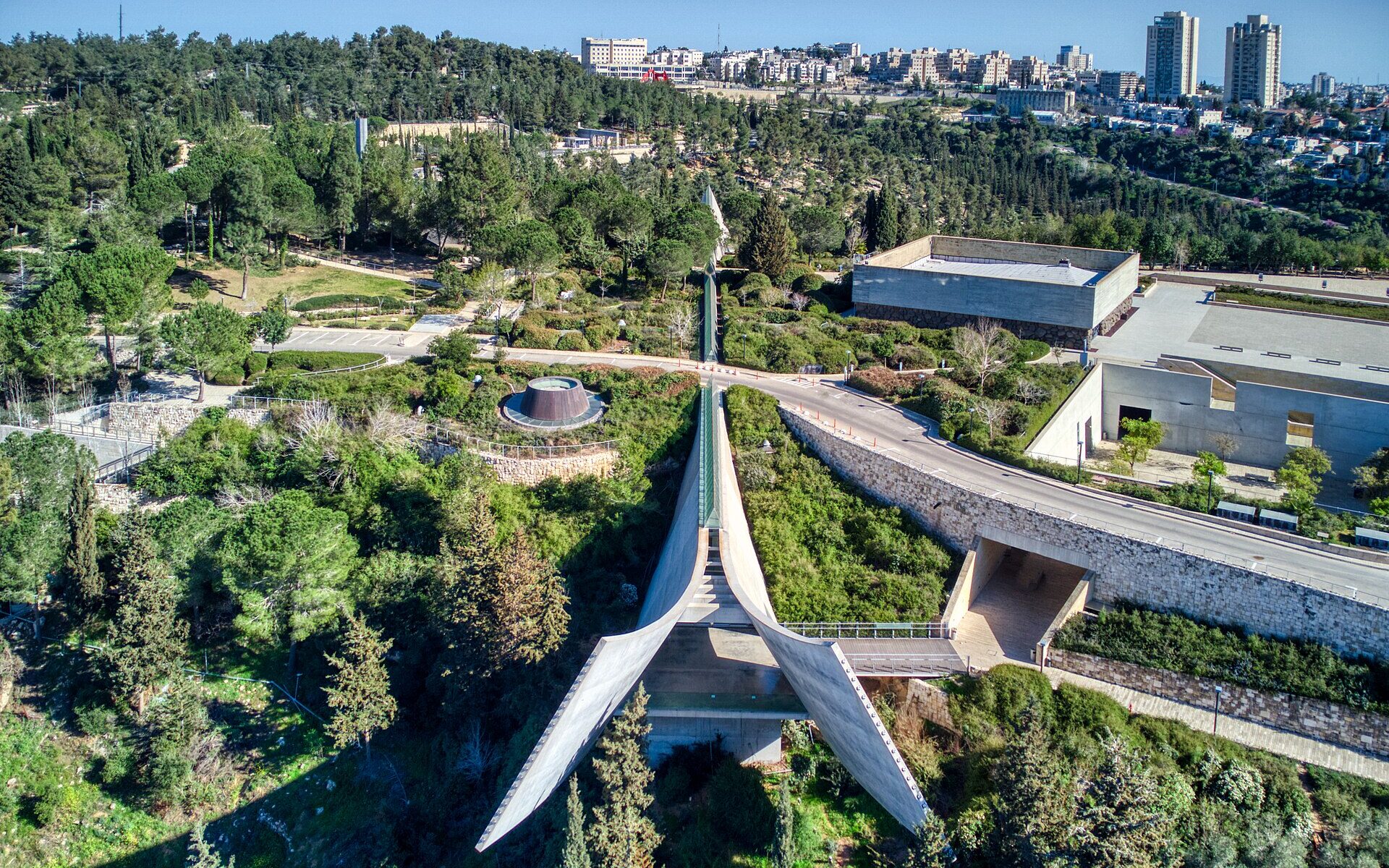
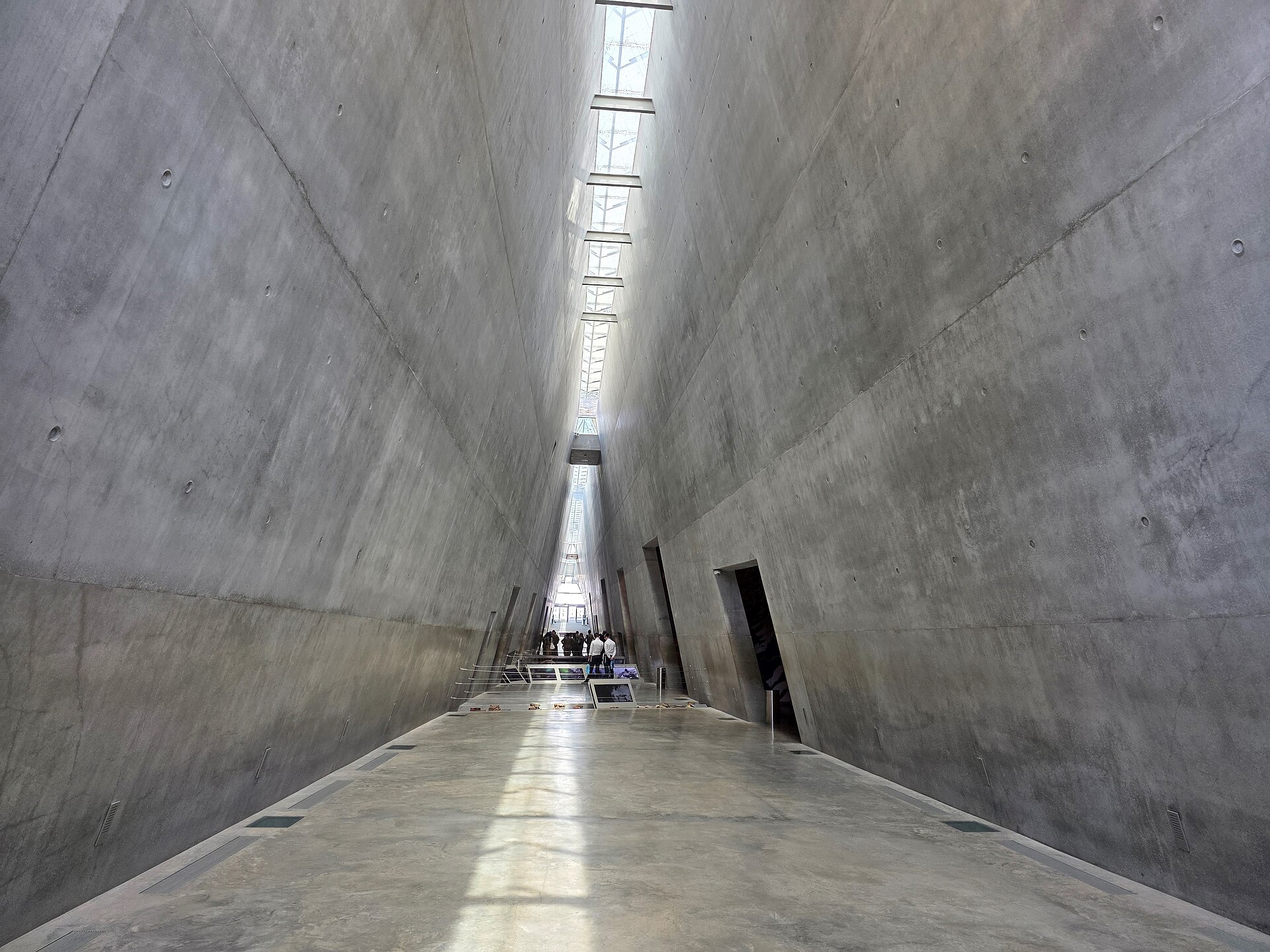
The centerpiece, opened in 2005 and designed by the architect Moshe Safdie, is a long triangular prism that cuts through the hillside. Visitors move through a sequence of underground galleries that tell the history through documents, artefacts, photographs, film, and above all personal stories, before emerging at the far end onto a balcony that opens suddenly onto a view of modern Jerusalem, a deliberate movement from darkness toward life. Plan two to three hours for the museum alone, and be prepared for content that is intentionally unflinching.
Children’s Memorial
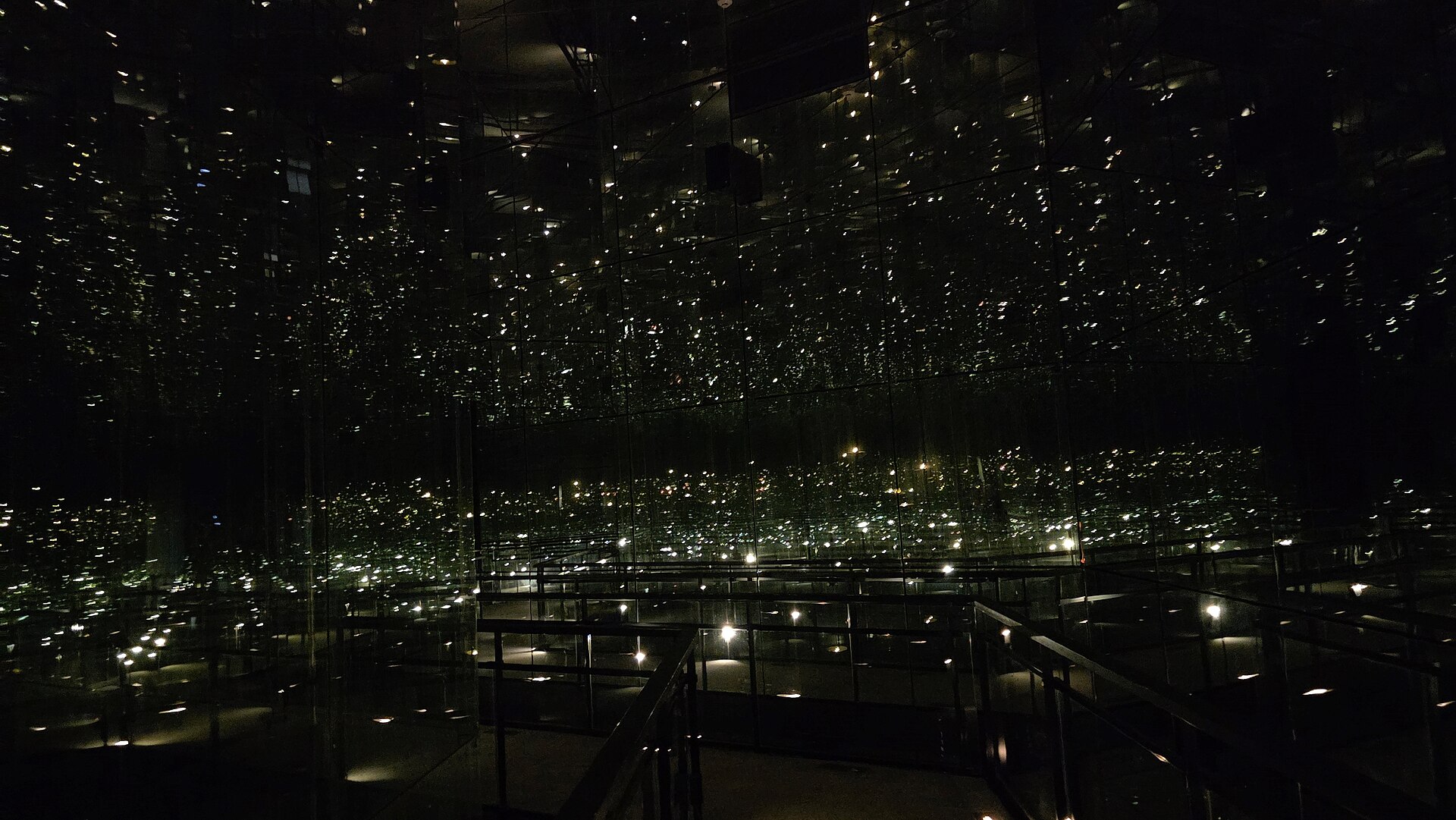
Also designed by Safdie, the Children’s Memorial is among the most powerful spaces anywhere. You walk through a darkened chamber where a handful of memorial candles are reflected endlessly by mirrors into what appears to be a galaxy of tiny lights, while a recorded voice reads the names, ages, and home countries of murdered children. It takes only a few minutes to pass through, but it stays with people for a long time afterward.
Hall of Names
At the end of the History Museum, the Hall of Names is a circular chamber lined with photographs of victims, beneath a cone of faces reflected in a pool of water below. It holds the Pages of Testimony, millions of forms recording the names and details of the murdered, gathered over decades from surviving relatives. The aim is to document every individual, and the associated database is searchable online and on site, allowing visitors to look for family members.
Garden of the Righteous Among the Nations
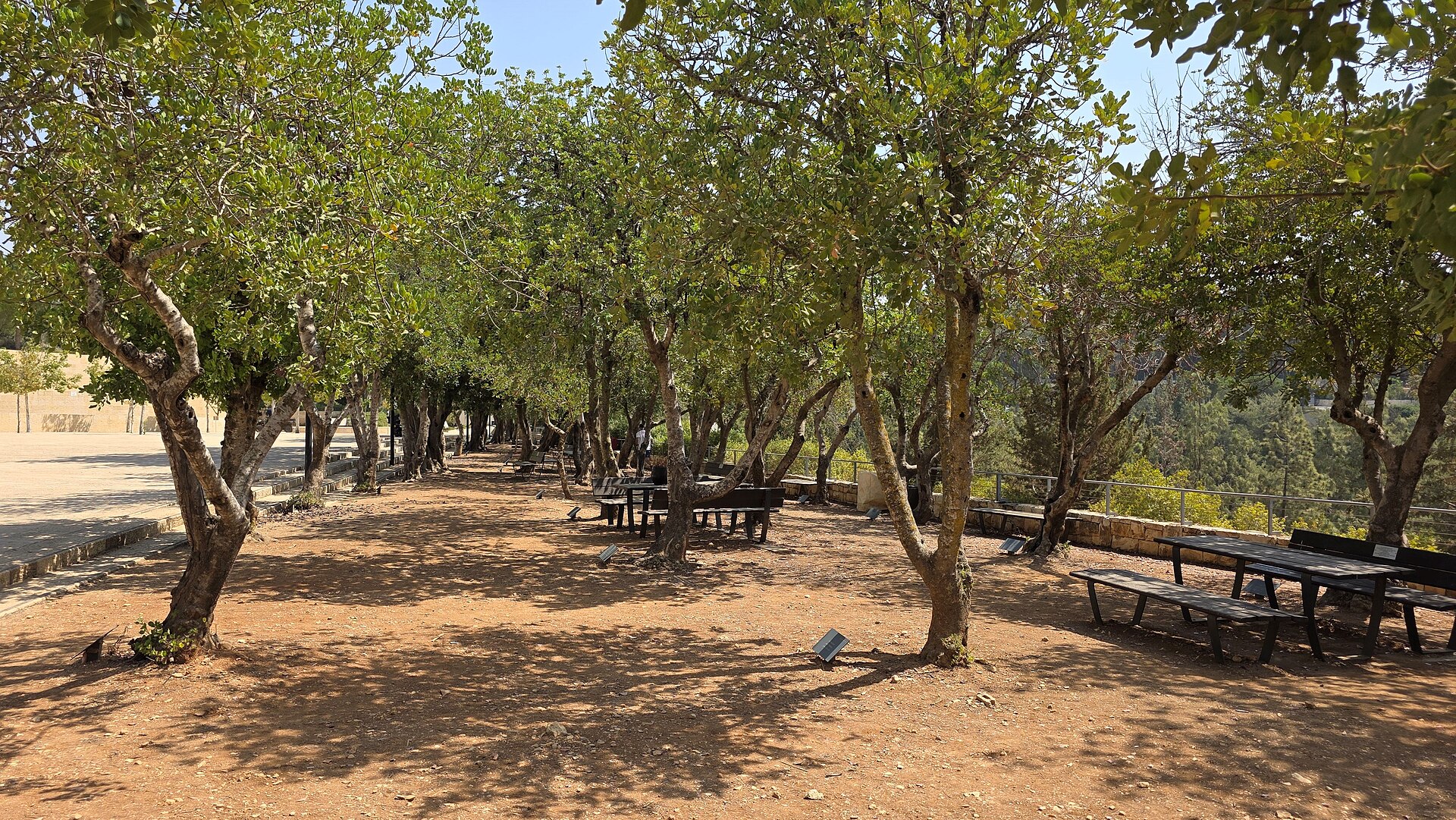
Outside, the Garden of the Righteous honors non-Jews who risked, and sometimes lost, their lives to rescue Jews during the Holocaust. Each is recognized with a name on the wall or a tree, and the honorees, numbering more than 28,000 from many countries, include figures such as Oskar Schindler, Raoul Wallenberg, and Chiune Sugihara. Amid so much loss, this part of the campus deliberately holds space for human courage.
Hours, booking, and fees
Admission is free, but the practical arrangements matter, so plan ahead. Opening hours currently run Sunday to Thursday from 9am to 5pm, and 9am to 2pm on Fridays and holiday eves; the campus is closed on Saturdays for Shabbat and on Jewish holidays. Because exact hours shift seasonally, check the official Yad Vashem website before you go.
| Detail | Information |
|---|---|
| Admission | Free; donations welcomed |
| Hours | From 9am, varying by day; earlier close Fri and holiday eves; closed Sat and Jewish holidays |
| Reservations | Advance booking is required for the Holocaust History Museum; a small non-refundable handling fee (around 10-15 ILS per person) may apply |
| Age policy | The Holocaust History Museum is not recommended for, and generally does not admit, children under 10; no strollers inside the museum |
| Audio guide | Around 30 ILS, in many languages; recommended |
| Time needed | At least 3-4 hours for the core sites |
Note the age policy in particular: the History Museum is designed for older children and adults, does not admit children under about 10, and does not allow strollers or babies in carriers inside the museum itself. Families with younger children should read our dedicated Yad Vashem with children guide before planning. Booking a timed entry in advance is the safest approach, especially in peak season and around memorial days.
Getting there
Yad Vashem sits on the Mount of Remembrance, beside Mount Herzl, on the western edge of the city. The easiest approach is the Light Rail Red Line to the Mount Herzl terminus, from which a free shuttle runs into the campus or you can walk over in roughly ten minutes. Several city buses also serve the area, and a taxi from the center is quick. Our transportation guide covers the Red Line, buses, and sherut shared taxis in detail.
Preparing for your visit
A visit to Yad Vashem is emotionally demanding by design, and it helps to go in ready for that.
- Allow plenty of time and resist rushing. Four hours is a realistic minimum for the core sites.
- Wear comfortable shoes and bring water; there is a lot of walking across the hillside campus.
- Eat lightly beforehand. Heavy content paired with a heavy meal does not sit well; there is a cafe on site.
- Plan something gentle afterward, such as quiet time, a park, or the nearby Jerusalem Botanical Gardens, to decompress.
- Mind photography rules: photography is restricted inside the History Museum, though permitted at many outdoor memorials. Follow the signage and staff guidance.
- Dress respectfully; this is a place of mourning and commemoration.
Accessibility and research
The campus is largely wheelchair accessible, with step-free routes through the main museum and memorials and accessible facilities; staff can advise on the easiest paths and on borrowing a wheelchair. For visitors tracing family history, Yad Vashem’s library and archives hold vast Holocaust collections, and its names database of Pages of Testimony can be searched online and with on-site assistance, often by advance arrangement. Our Jerusalem accessibility guide has more on step-free travel around the city.
Combining Yad Vashem with Mount Herzl
Yad Vashem sits immediately beside Mount Herzl, Israel’s national cemetery and the site of the graves of national leaders, including Theodor Herzl, and a military memorial section. The two places are often visited together because they sit a short walk apart and speak to linked themes of loss, memory, and national renewal. The adjoining Herzl Museum offers a short multimedia introduction to Herzl’s life and the early Zionist movement. If you intend to see both, give yourself most of a day and start at Yad Vashem in the morning when you are freshest, since it is the more demanding of the two.
The whole area is easy to reach at the western end of the Light Rail Red Line, which makes it simple to fold into a wider plan. Our Jerusalem itinerary guide shows where a memorial morning fits across a multi-day trip, and our roundup of things to do in Jerusalem can help you balance heavier and lighter days. If you are building a museum-heavy trip, our roundup of Jerusalem’s leading archaeology museums covers the collections at the far older end of the city’s timeline.
Why Yad Vashem stands apart
Many cities have Holocaust museums, but Yad Vashem is distinctive in scale and intent. It is at once a place of mourning, a vast research archive, an educational institution that trains teachers from around the world, and the body that confers the title of Righteous Among the Nations. The architecture is part of the message: the prism of the History Museum, the buried Children’s Memorial, and the sudden release of the view over Jerusalem at the end are designed to carry visitors through descent and return rather than simply to inform. Approached with time and attention, it is less a museum to tick off than an experience to move through.
For visitors with a particular interest in the period, the on-site Visual Center holds thousands of hours of survivor testimony and Holocaust-related film, though it has been temporarily closed to visitors — check before relying on it, and the Museum of Holocaust Art displays works created during and after the war. These quieter corners reward those who linger, though even the core route leaves most people needing space afterward. Visitors drawn to documents that survived against the odds often set aside a separate day for the Shrine of the Book and its Dead Sea Scrolls, a very different encounter with the written record.
After your visit
Because the experience is intense, it is genuinely worth planning a gentle counterweight for the rest of the day. The nearby Jerusalem Botanical Gardens and the green spaces around the city offer somewhere calm to sit and process; our Jerusalem parks guide lists options. Some visitors prefer solitude, others the company of whoever they came with; there is no wrong way to decompress. What most people find is that a short pause, a coffee, and some fresh air help the visit settle into something they are glad they did, even though it was hard.
However you spend the rest of the day, give the memorial the time it deserves rather than squeezing it between busier attractions. Yad Vashem rewards a slow, attentive visit, and the practical steps above, booking ahead, arriving early, eating lightly, and leaving room to reflect, are what let you take it in properly.
The rest of the campus, beyond the History Museum
A great many visitors arrive, walk the Holocaust History Museum, look in at the Children’s Memorial, and leave. That is understandable, because the museum is long and takes everything you have, but it means missing most of the Mount of Remembrance. The memorials scattered across the hillside are not supplementary. Several of them are where the visit finally settles for people, and each takes only a few minutes.
- The Valley of the Communities. The largest single monument on the site, and the one people most often walk past without realizing it is there. It is a labyrinth cut downward into the natural bedrock, its 107 walls engraved with the names of more than 5,000 Jewish communities destroyed in the Holocaust. The courtyards are arranged to correspond roughly to the geography of Europe and North Africa, so you walk through a map of a world that no longer exists, reading town names that have no Jewish population left. It is open to the sky and almost always quiet. Access has been affected by renovation work in recent years, so check the Valley of the Communities page before you count on seeing it.
- The Hall of Remembrance (Ohel Yizkor). A bare basalt chamber under a tent-shaped concrete roof, entered in silence. The mosaic floor carries the names of 22 of the largest camps and killing sites; an eternal flame burns beside a vault holding ashes brought to Israel from the extermination camps in Europe. This is where visiting heads of state lay wreaths. There is nothing to read and nothing to look at, which is the point. Men are asked to cover their heads.
- The Memorial to the Deportees. An original German railway freight car, of the type used to deport Jews to the death camps, set on a severed section of railway bridge that projects out over the hillside so that the track simply ends in mid-air above the valley. Moshe Safdie designed the setting. Survivor testimony about the transports is inscribed on the wall beside it. Standing next to an actual wagon does something that no photograph inside the museum manages.
- The Museum of Holocaust Art and the Exhibitions Pavilion. Work made during the Holocaust itself, drawn on scraps, in ghettos, in hiding, and in the camps at enormous risk, alongside postwar work and rotating temporary exhibitions. It is quieter than the main museum and far less crowded.
- The synagogue. A small working synagogue on the campus, holding Judaica rescued from European congregations that were destroyed: an ark, Torah ornaments, and textiles that were hidden, buried, or smuggled out and eventually found their way here.
If you have only a limited amount of time left after the History Museum, the Hall of Remembrance and the Memorial to the Deportees are both short and both close to the main route. The Valley of the Communities needs more walking and more time, and repays it. Anyone building a day around the western edge of the city can see how this fits with the rest of a trip in our day-by-day Jerusalem planner, which also helps with spacing out the heavier and lighter parts of a week.
How the History Museum is laid out, and how long it really takes
The Holocaust History Museum is not a building you can browse. Safdie’s triangular concrete prism runs straight through the hillside, and the central spine is deliberately cut across at intervals so that you cannot simply walk its length. Each barrier pushes you out into a side gallery, left and then right, and each gallery covers the next stage of the history in order: the rise of Nazism, the ghettos, the mass shootings in the east, the death camps, resistance, liberation, and the displaced-persons camps afterward.
The practical consequence matters more than the architectural theory. There is no shortcut back to the entrance, no way to skip ahead to a section you care about, and no loop that returns you to where you started. Once you begin, the only way out is forward, through the Hall of Names and onto the balcony at the far end. Know that before you walk in, rather than discovering it an hour later when you are tired.
Two to three hours is realistic for the museum alone if you read selectively and watch one or two of the testimony films. Reading thoroughly and watching more takes longer, and four hours is not unusual. Add the outdoor memorials and the rest of the campus and most people are on site for four to five hours. Attempting the whole thing in ninety minutes does not work, and anyone who tells you otherwise has walked past almost all of it.
On timing: the campus opens at 09:00, and the first hour is the calmest part of the day. School groups, army groups, and organized tours build through the mid-morning and the galleries can become genuinely congested, which is difficult in a space where you want to stand still. Late afternoon thins out again, but entry to the History Museum closes before the campus does, so a late arrival risks being moved along at the end. Fridays and holiday eves close early and feel compressed. As of August 2026 the campus runs 09:00 to 17:00 Sunday to Thursday and 09:00 to 14:00 on Fridays and holiday eves, and is closed on Saturdays and all Jewish holidays; confirm on the official opening hours page before you travel.
Reservations are not optional. Yad Vashem requires all visits to the Holocaust History Museum, individual as well as group, to be booked in advance through its online reservation system. Arriving without a slot may mean you see the outdoor memorials and nothing else. Book as early as you reasonably can around Jewish holidays, in summer, and near remembrance dates. Our general Jerusalem travel advice covers the wider habit of booking ahead in a city where opening hours move with the religious calendar.
The Righteous Among the Nations: what the title means and how it is awarded
The Garden of the Righteous is not a general tribute to good people. Righteous Among the Nations is a formal title conferred by Yad Vashem on behalf of the State of Israel and the Jewish people, awarded case by case by a public commission chaired by a justice of the Israeli Supreme Court, working to criteria set out in law. Knowing that changes how the garden reads.
Four conditions have to be met. The rescuer must have been actively involved in saving one or more Jews from death or deportation. They must have put their own life, liberty, or position at risk in doing so. Their motivation must have been to help persecuted Jews, rather than payment, the religious conversion of the person saved, or the adoption of a Jewish child. And there must be testimony from those who were helped, or documentation unambiguous enough to establish what happened. Help that was genuine but carried no risk, and there was a great deal of it, is documented by Yad Vashem but does not qualify for the title.
Those recognized receive a specially minted medal and a certificate of honor bearing their name, and their name is added to the Wall of Honor in the garden. The Yad Vashem Law also allows Israel to confer honorary citizenship on the Righteous, or commemorative citizenship if they have died. More than 28,000 men and women have been recognized since the program began, and it is still running: cases are still submitted, still investigated, and still awarded posthumously.
Yad Vashem is careful to say what those numbers are not. They are not a measure of how much rescue actually took place in any given country, only of the cases that were documented and brought forward. Many survivors never applied, or died before they could, or lived behind the Iron Curtain and had no way to. Where a rescue was discovered and everyone involved was killed, no one was left to testify at all, and the Avenue of the Righteous includes a monument to the anonymous rescuer for exactly that reason. There is also a tree for the Danish resistance as a body, planted because its members regarded the rescue of Denmark’s Jews as a collective act and asked not to be honored individually. The Righteous Among the Nations program pages set out the criteria and the reasoning in full.
The archives and the Central Database of Shoah Victims’ Names
Yad Vashem is an archive as much as a memorial, and for visitors with family caught up in the Holocaust this is the part of the institution that matters most. The Central Database of Shoah Victims’ Names is the long attempt to recover the name of every Jew murdered in the Shoah and restore an individual identity to each of them. In November 2025 Yad Vashem announced that it had reached five million names, more than 80 per cent of the roughly six million people murdered. Around a million remain unidentified, and some never will be.
The database is free, it is online, and you do not need to be in Jerusalem to use it. Behind those five million individuals sit more than 7.5 million separate personal records drawn from three kinds of source: Pages of Testimony, the one-page memorial forms filled in by survivors, relatives, and friends, of which there are roughly 2.7 million written in some 30 languages; archival documentation, including deportation lists, ghetto and camp records, and the paperwork of the Nazi bureaucracy itself; and local commemoration projects that recorded the dead of a particular town, region, or camp.
A few things make searching more productive:
- Search by sound, not spelling. The database can be searched in Hebrew, English, Spanish, German, and Russian, and its Soundex option finds records that were transliterated differently from the way you spell the name. These names changed alphabet more than once on the way into the records.
- Search places in Latin characters, and expect the map of the 1930s. Locations are recorded under the administrative divisions in use before the borders were redrawn, so a town appears where it was then rather than where it is now. Variants are linked, so a search for Lwow also returns Lvov and Lemberg.
- A blank result is not an answer. The database holds information on around two thirds of the victims, so an absence proves nothing. Try the advanced search, and try relatives’ names as well as the person you are looking for.
- You can add to it. If someone you know of is missing, you can submit a Page of Testimony, online or on paper, and it becomes part of the permanent record. New material appears in the online database four times a year.
On site, the Archives and Library Reading Room is open to the public during weekday hours without pre-registration, though booking ahead is sensible if you want staff attention. Reference services also answer queries remotely, which is often the better route: commissioned research carries a fee and can take up to two months, so start it long before you fly. The most useful preparation is to run your searches at home, print what you find, and arrive with specific questions. The database FAQ explains the sources and their limits honestly, including why a record may read “presumably murdered” rather than confirming a death. Visitors drawn to the city’s other documentary collections can find them in our guide to the city’s archaeology collections, while our overview of how Jerusalem came to look as it does places the memorial in the longer story.
Visiting with children and teenagers
Yad Vashem draws a firm line here, and it is worth understanding before planning a family day. Entrance to the Holocaust History Museum is not permitted for children under the age of 10, and babies in strollers or carriers are not admitted either. This is not a guideline that staff will bend at the door. If you arrive with a six-year-old and one adult, that adult is not going into the museum.
The rest of the campus is different. The outdoor memorials, the Valley of the Communities, and the grounds are open to all ages, so families with younger children can divide the day: one adult takes the museum while the other stays outside, then they swap. That works better than it sounds, given that the museum is a one-way route of predictable length.
For children old enough to go in, preparation does more good than anything you can do on the day. Tell them plainly what the museum is about and that it deals with the murder of six million Jews, children among them. Agree in advance that anyone can say they want to stop, and that stopping is fine. Stay together rather than letting a teenager range ahead. Expect the questions afterward rather than during, and leave room in the day to answer them.
The Children’s Memorial deserves separate thought. There is no formal age bar on it, it takes only a few minutes, and it affects people more than they expect, adults included. The recorded reading of names, ages, and countries is relentless by design. Some families find it the right place to end the visit; others decide it is too much for a particular child and skip it, which is a reasonable decision rather than a failure. Our dedicated guide to bringing children to the memorial works through the age question and the conversation in far more detail, and our roundup of family-friendly days around the city has gentler options to pair with a difficult morning.
What the visit asks of you, and how to pace the day
It is worth saying plainly: Yad Vashem is not enjoyable, and it is not built to be. It commemorates the systematic murder of six million Jews by Nazi Germany and its collaborators, and it is designed to make that unavoidable rather than manageable. Most people find the middle of the History Museum the hardest part, once the account moves from persecution to mass killing and the personal objects begin to accumulate.
Some practical things help. Eat something beforehand; there are few places to sit inside the museum and the route is long. Drink water. If you need to stop, stop. You are allowed to look away from a photograph or a film, and you are allowed to spend twenty minutes on one case and thirty seconds on the next. Reading everything is not the goal, and nobody manages it.
Go with someone if you can, but do not feel obliged to walk together the whole way. Many people prefer to move at their own pace and meet at the end, so agree a meeting point on the balcony before you go in, since there is no doubling back.
Afterward, do not schedule anything demanding. The balcony at the far end, which opens onto the Jerusalem hills, is where many people simply stand for a while, and that is a good use of ten minutes. The wooded grounds around the Mount of Remembrance are quiet, and walking for a few minutes rather than boarding a train straight away is a sensible choice. Allow travel time back into the centre, remembering that services wind down from Friday sunset until Saturday nightfall; our guide to getting around the city sets out the Red Line, the buses, and the sherut shared taxis. Be honest with yourself about whether an evening among the city’s major religious sites is what you want after this, or whether a quiet meal would serve you better.
The easiest way to get here without a taxi is the light rail: take the Red Line to the Mount Herzl stop, with its red Calder sculpture, and walk about 10 to 15 minutes. The tram runs from the Old City’s Damascus Gate and the city centre, but not on Shabbat, and the last trams on Friday leave early in the afternoon. See our Jerusalem light rail guide for stops, fares and hours.
Yad Vashem’s neighbour on the same ridge tells a different part of the national story. Mount Herzl, 10 to 15 minutes’ walk away and served by the same light rail stop, is Israel’s national cemetery: Theodor Herzl’s tomb, the graves of prime ministers from Golda Meir to Yitzhak Rabin, the military cemetery and the National Memorial Hall. Most visitors combine the two, with Yad Vashem in the morning and a slower walk on Mount Herzl afterwards.
Photo Credits
Moshe Safdie’s Holocaust History Museum at Yad Vashem from above: ExteriorHolocaustHistoryMuseumYadVashemMar112023 02 by Hagai Agmon-Snir حچاي اچمون-سنير חגי אגמון-שניר, CC BY-SA 4.0, via Wikimedia Commons.
The prism corridor inside the Holocaust History Museum at Yad Vashem: 134592 the holocaust history museum yad vashem PikiWiki Israel by ברוך ניב, CC BY 2.5, via Wikimedia Commons.
Reflected candle flames inside the Children’s Memorial at Yad Vashem: 135884 yad laeled yad vashem jerusalem PikiWiki Israel by זאב שטיין, CC BY 2.5, via Wikimedia Commons.
Memorial trees in the Garden of the Righteous Among the Nations, Yad Vashem: 136142 garden of the righteous among the nations yad vas PikiWiki Israel by זאב שטיין, CC BY 2.5, via Wikimedia Commons.
{"@context": "https://schema.org", "@type": "FAQPage", "mainEntity": [{"@type": "Question", "name": "What is Yad Vashem?", "acceptedAnswer": {"@type": "Answer", "text": "Yad Vashem is Israel's official Holocaust memorial and museum, established in 1953 on the Mount of Remembrance in Jerusalem. It is the world's central institution for Holocaust documentation, commemoration, and education."}}, {"@type": "Question", "name": "How much does it cost to visit?", "acceptedAnswer": {"@type": "Answer", "text": "Entry is free. A small non-refundable handling fee of around 10 to 15 shekels per person may apply to advance reservations, and audio guides cost about 30 shekels. Donations are welcomed."}}, {"@type": "Question", "name": "What are the opening hours, and is it open on Shabbat?", "acceptedAnswer": {"@type": "Answer", "text": "Hours currently run Sunday to Thursday 9am to 5pm, and 9am to 2pm on Fridays and holiday eves. The campus is closed on Saturday for Shabbat and on Jewish holidays, so plan a Sunday-to-Friday visit and check current times before you go."}}, {"@type": "Question", "name": "How long should I plan for a visit?", "acceptedAnswer": {"@type": "Answer", "text": "Allow at least three to four hours for the History Museum, Children's Memorial, and Hall of Names, and add an hour or two for the outdoor memorials and the Garden of the Righteous."}}, {"@type": "Question", "name": "Can children visit Yad Vashem?", "acceptedAnswer": {"@type": "Answer", "text": "The Holocaust History Museum is intended for older visitors and generally does not admit children under about 10, and strollers are not allowed inside. Families with younger children should consult our dedicated guide for age-appropriate planning."}}, {"@type": "Question", "name": "How do I get to Yad Vashem?", "acceptedAnswer": {"@type": "Answer", "text": "Take the Light Rail Red Line to the Mount Herzl stop, then use the free campus shuttle or walk about ten minutes. Several buses serve the area, and a taxi from the city center is a quick alternative."}}, {"@type": "Question", "name": "How much does it cost to visit Yad Vashem?", "acceptedAnswer": {"@type": "Answer", "text": "Entry to Yad Vashem is free, which is part of its mission of public remembrance. You should still reserve a timed entry slot in advance during busy periods, and budget a few shekels for an audio guide or printed materials if you want extra context as you move through the History Museum."}}, {"@type": "Question", "name": "Do I need to book my visit in advance?", "acceptedAnswer": {"@type": "Answer", "text": "Yes. Yad Vashem requires all visits to the Holocaust History Museum, by individuals as well as groups, to be reserved in advance through its online reservation system. Entry is free, but without a museum reservation you may find you can see only the outdoor memorials, particularly in summer and around Jewish holidays."}}, {"@type": "Question", "name": "Can I search for a relative among the victims’ names?", "acceptedAnswer": {"@type": "Answer", "text": "Yes, and you can do it before you travel. The Central Database of Shoah Victims’ Names is free and searchable online, holding five million names as of November 2025 drawn from Pages of Testimony, archival records, and local commemoration projects. Use the Soundex option for name spellings, search places in Latin characters under their 1930s names, and contact Yad Vashem’s reference services or visit the on-site Reading Room if you need help with archival material."}}, {"@type": "Question", "name": "Who decides who is recognized as Righteous Among the Nations?", "acceptedAnswer": {"@type": "Answer", "text": "A public commission chaired by a justice of the Israeli Supreme Court, applying criteria set in law: the rescuer must have actively saved Jews, must have risked their own life, liberty, or position, must have acted from the intention to help rather than for payment or other reward, and the case must be supported by testimony or firm documentation. More than 28,000 people have been recognized, and new cases are still considered."}}, {"@type": "Question", "name": "What is the Valley of the Communities?", "acceptedAnswer": {"@type": "Answer", "text": "It is the largest monument on the campus: a labyrinth cut down into the natural bedrock whose 107 walls are engraved with the names of more than 5,000 Jewish communities destroyed in the Holocaust, laid out to follow the geography of Europe and North Africa. Access has been affected by renovation work in recent years, so check the official Yad Vashem site before planning around it."}}, {"@type": "Question", "name": "Is Yad Vashem appropriate for teenagers?", "acceptedAnswer": {"@type": "Answer", "text": "The History Museum admits visitors aged 10 and over, and teenagers generally cope with it, but preparation matters more than age. Explain beforehand what the museum covers, agree that anyone can stop at any point, stay together rather than splitting up, and leave time afterward for the questions that tend to arrive later rather than on the spot."}}, {"@type": "Question", "name": "How much of the campus can I realistically see in one visit?", "acceptedAnswer": {"@type": "Answer", "text": "The History Museum plus three or four of the memorials. The museum alone takes two to three hours because its route is one-way and chronological with no shortcuts, and most visitors are on site for four to five hours in total. Trying to cover everything in one morning means seeing very little of it properly."}}]}