“Is Jerusalem safe to visit?” is the question many travelers ask before booking. The honest answer: yes, generally safe for tourists who follow standard urban precautions and stay informed. Millions visit annually without incident. That said, the city’s location and history mean a level of awareness is appropriate — not anxiety, but informed common sense. This guide gives you the practical, factual picture so you can decide for yourself and plan a smooth trip.
The short version: day-to-day risk for a tourist comes down mostly to pickpockets in crowded markets, summer heat, and the occasional traffic-snarling demonstration. Serious security incidents do happen and make headlines, but they are statistically rare and usually localized. The most useful thing you can do is check your government’s current travel advisory before you fly, watch local English-language news while here, and behave the way you would in any large unfamiliar city. Pair this with our Jerusalem Travel Tips guide.

Overall Safety Assessment
For tourists, Jerusalem is one of the safer major cities in the Middle East and broadly comparable to large European capitals for everyday personal safety. The city is heavily policed, especially around the Old City, the Western Wall, transport hubs, and central shopping streets. You will routinely see police and security guards, and bag checks at malls, the light rail, and major attractions are normal and quick. For most visitors this presence reads as reassuring rather than alarming after the first day.
When deciding whether Jerusalem is safe to visit, separate two categories of risk. The first is ordinary urban risk — petty theft, scams, traffic, heat — which affects most travelers and is entirely manageable. The second is the broader security situation, which fluctuates and is the reason advisories exist. Key facts:
- Violent crime against tourists is rare. Jerusalem’s general crime rate is low by international big-city standards.
- Petty theft (pickpocketing) is the most common issue in crowded markets and on packed light-rail carriages.
- Strong, visible security presence at major sites, transport, and shopping areas.
- Active counter-terrorism operations mean occasional, usually brief, disruptions or closures.
- Demonstrations happen periodically and can block roads; they are generally predictable by location and day.
- Government advisories typically rate central Jerusalem and standard tourist areas more favorably than border zones and parts of the West Bank.
What “Safe” Actually Means Here
Most answers to this question collapse two completely different risks into one word, which is why so much of the coverage is useless to anyone actually planning a trip.
The first is ordinary crime risk — the chance something bad happens to you because you are a tourist in a large city. On this measure Jerusalem does well. Violent crime against visitors is rare, the streets are busy and heavily policed, and the realistic worst case for most people is a wallet lifted in a crowded souk or an inflated fare. That risk is low, and it belongs to the same category you already know how to handle at home.
The second is the risk of political disruption and regional escalation — the chance something happens to your trip rather than to you. Sites close. Roads shut. Tours get canceled. Flights are grounded. A siren sounds and you spend fifteen minutes in a stairwell. This risk is far harder to predict, it moves in days rather than years, and it is why government advisories exist at all.
A concrete example beats any adjective. The Western Wall, the Al-Aqsa compound and the Church of the Holy Sepulchre were all closed to worshippers and visitors from late February 2026 and only reopened on 9 April 2026 — roughly six weeks in which the three sites most people come to Jerusalem for were not available. Nobody visiting in March was in serious personal danger; a great many people lost the trip they had booked. Those are two very different outcomes, and only one of them is what travelers usually mean when they ask whether the city is safe.
The two risks call for different responses. The first is handled by habits — front pocket, metered taxi, water bottle, eyes up in a crowd. The second is handled by planning: flexible bookings, insurance that actually covers you, a checked advisory, an alert app, and a willingness to change plans mid-trip. Most people who have a bad time here were not robbed; they built an itinerary with no slack in it. If this is your first visit, our orientation guide for first-time visitors is worth reading alongside this page.
What the UK and US Travel Advisories Currently Say
Checked on 15 August 2026. Advisories change, sometimes within hours, so treat what follows as a snapshot rather than a permanent fact, and read the live pages yourself before you book and again before you fly.
The UK’s Foreign, Commonwealth & Development Office does not advise against travel to Jerusalem. Its advise-against zones cover Gaza, a 500m strip along the Gaza border, parts of northern Israel and the occupied Golan Heights, and the Tulkarm, Jenin and Tubas governorates, with an “all but essential travel” warning over the rest of the West Bank. East Jerusalem, Bethlehem Governorate, Ramallah, Jericho and Highway 1 between Jerusalem and Tel Aviv are specifically carved out of that warning. In FCDO terms a conventional Jerusalem trip, Bethlehem day trip included, sits outside the areas it warns against. The advice was last updated on 22 July 2026 and flags possible flight cancellations, periodic airspace closures and the risk of further escalation. Read the current FCDO travel advice for Israel in full.
The US State Department is materially more cautious. Its advisory, dated 27 February 2026, places Israel and the West Bank at Level 3, “Reconsider Travel”, citing terrorism and civil unrest, with Gaza and narrow strips along the Lebanese, Syrian and Egyptian borders at Level 4, “Do Not Travel”. On the same date it authorized the voluntary departure of non-emergency US government personnel and families from Mission Israel, and it notes the embassy may restrict its own staff from parts of Israel, the Old City and the West Bank at short notice. The full State Department advisory for Israel, the West Bank and Gaza sets out the detail.
That divergence is information rather than noise. The systems differ: the FCDO draws lines on a map and leaves the rest unrestricted, while the State Department assigns a level to a whole country and then lists exceptions. If you are British, FCDO advice is what your insurer will use, so the areas matter more than the headline. If you are American, Level 3 is a serious flag — but it is not “Do Not Travel”, and Americans continue to visit in large numbers. Other governments sit at various points between the two, so check your own, and note that cover generally follows the advice of the country where your policy was issued.
Safety by Neighborhood
Jerusalem is a patchwork of distinct neighborhoods, and “how safe is it” depends on where and when. None of this is about avoiding places — it is about matching your behavior to the setting, the same way you would anywhere.
- Mamilla, German Colony, Yemin Moshe, City Center (Jaffa Street, Ben Yehuda): Very safe, day and night. Heavy resident and tourist footfall, cafes open late, good lighting.
- Old City — Christian and Jewish Quarters: Very safe and well patrolled. Comfortable to walk in the evening, though shops shutter early.
- Old City — Muslim Quarter: Safe and welcoming during the day, with the busiest souks. After dark the lanes empty and shops close; keep to the main thoroughfares rather than wandering side alleys late.
- Old City — Armenian Quarter: Very safe and notably quiet, with the fewest crowds.
- Western Wall plaza: Very safe, open and patrolled 24/7, free to enter through a security check.
- East Jerusalem (around Damascus Gate, Salah ad-Din Street, American Colony): Generally fine for tourists, especially by day. It feels less polished and more local than West Jerusalem; keep normal city awareness, particularly around Damascus Gate on Friday afternoons.
- Ultra-Orthodox neighborhoods (Mea Shearim, parts of Geula): Safe, but this is about respect more than danger. Dress modestly, do not photograph people without consent, and avoid casual sightseeing on Shabbat, when these streets close to traffic and the atmosphere is strictly observant.
- Mount of Olives: Worth visiting by day for the views and churches; the slopes are isolated, so go in daylight, ideally with a group, and arrange your taxi in advance rather than walking down alone after dark.
If you are deciding where to base yourself, our guide to the best neighborhoods to stay in Jerusalem breaks down each area for atmosphere and comfort, which overlaps with how at-ease you will feel walking back to your hotel at night.
Common Risks and How to Manage Them
These are the issues that realistically affect travelers, in rough order of likelihood.
Pickpocketing and petty theft
This is the most common problem tourists actually face, and it is preventable. Hotspots are the crowded Old City souks, the area around Damascus Gate, packed light-rail carriages, and Mahane Yehuda Market on a busy Friday. Carry your wallet in a front pocket or zipped inside layer, wear a cross-body bag in front in crowds, and do not leave phones on cafe tables facing the street. Use the hotel safe for your passport and spare cash.
Scams and overcharging
- Unmetered or inflated taxi fares. Insist on the meter, or use the Gett and Yango apps, which lock in the price. Agree a number before you get in if a driver refuses the meter.
- High-pressure souk selling. Bargaining is normal and expected; firm politeness works, and walking away is an effective negotiating move. Our bargaining in Jerusalem markets guide explains the etiquette.
- “Free” guides or helpers. Someone offering to “just show you the way” may expect a tip or steer you to a shop. Decline politely; use a licensed guide instead.
- Currency and change. Count your change, prefer card, and use bank ATMs over currency-exchange kiosks.
Heat, sun, and dehydration
The most common reason tourists need help in summer is the weather, not crime. Jerusalem sits at altitude and the summer sun is intense; long days in the Old City without water lead to real problems. Carry a refillable bottle, wear a hat, schedule heavy walking for morning and late afternoon, and pause in the shade. Our guide to Jerusalem’s heat and seasons tells you what to expect.
Demonstrations and political activity
Treat any large gathering as something to walk away from, regardless of cause; crowds can change mood quickly and police may close roads. Friday around midday can see larger crowds near the Old City and Damascus Gate connected to prayers, usually orderly but a reasonable time to keep some distance. If you come upon a protest or tense situation, leave calmly in the opposite direction and do not stop to film.
The broader security situation and terrorism risk
This is the category that generates the headlines and the advisories. Stated factually: security incidents do occur in Israel and the Jerusalem area, they are unpredictable, and Israeli authorities maintain a high level of security in response. For an individual tourist, the likelihood of being directly affected on any given day is very low, and tourist areas are heavily protected. The practical takeaways: check your government’s advisory before booking and before flying, follow local news while here, follow police and security instructions immediately, and carry comprehensive travel insurance. Only the current official advisory and live news can tell you conditions on your specific dates, so build that check into your planning.
Safety for Women Travelers
Jerusalem is generally a comfortable destination for women, including those traveling solo. Street harassment is less common than in many other regional cities, public transport is well used by women of all ages, and central neighborhoods feel relaxed in the evening. A few sensible practices make it smoother.
- Dress modestly at holy sites and in ultra-Orthodox areas — shoulders and knees covered, a scarf handy. This is about access and respect, and it also lowers unwanted attention.
- Stick to well-lit main routes in the Old City after dark, when the alleys empty out.
- Female-only hostel dorms are widely available, and hotels are used to solo women travelers.
- Use app-based taxis at night (Gett, Yango) so your route is tracked and the fare is fixed.
- Trust your instincts and step into a shop or cafe if you feel uneasy; the city is full of busy public spaces.
For more, our solo travel in Jerusalem guide covers accommodation, meeting people, and route planning.
Safety for LGBTQ+ Travelers
- Central and modern neighborhoods — Mamilla, the German Colony, and the downtown cafe district — are relaxed and welcoming.
- Be discreet at religious sites and in ultra-Orthodox areas, where conservative norms prevail; this is the same modesty expectation that applies to everyone.
- An annual Pride event takes place in Jerusalem in summer and is policed and protected; it has a different, more solemn character than Tel Aviv’s.
- Tel Aviv, an hour away, has one of the most openly LGBTQ-friendly scenes in the region — easy as a day or overnight trip via our Tel Aviv day trip transport guide.
Religious and Cultural Sensitivities
Most “trouble” tourists run into is not about safety at all — it is about inadvertently giving offense at a sacred site. Getting this right keeps your visit smooth and respectful.
- Modest dress is expected at religious sites of all three faiths. Cover shoulders and knees; men cover their heads at the Western Wall (kippot are provided); women cover hair in mosques and some churches.
- The Temple Mount / Haram al-Sharif has restricted, limited visiting hours for non-Muslims, who enter via a designated gate and cannot enter the Dome of the Rock or Al-Aqsa Mosque.
- No photography at the Western Wall on Shabbat and Jewish holidays, and no phone use; observant visitors do not carry or operate electronics then.
- On Shabbat (Friday sunset to Saturday nightfall), much of the city slows; respect closed businesses and observant neighborhoods. See our Shabbat in Jerusalem guide.
- Steer clear of political debate with strangers; it rarely goes anywhere good and is easy to avoid.
For the full breakdown of what to wear where, see our dedicated guide to dressing respectfully in Jerusalem.

High-Tension Dates and Places, and How to Plan Around Them
Risk here is not spread evenly across the calendar. Certain periods reliably bring bigger crowds, heavier security, road closures and restricted access to holy sites. Almost none are reasons to stay away — several are the most extraordinary times of year to be in the city — but they are reasons to plan the day differently.
- Ramadan. The Old City fills for a month, and Fridays in particular draw enormous crowds through Damascus Gate and towards the Al-Aqsa compound. Non-Muslim visiting hours to the Temple Mount are typically suspended for the final ten days.
- Passover, Sukkot and the High Holidays. The Western Wall plaza is packed, Temple Mount access arrangements are often tightened, and central streets close to traffic. Expect long security queues at the gates.
- Overlapping calendars. The Islamic calendar shifts roughly eleven days a year against the Hebrew calendar, so Ramadan and Passover periodically coincide. Those overlaps have historically been the tensest weeks of the year, and both police presence and access restrictions rise accordingly — the single most useful thing to check when picking dates.
- National and commemorative dates — Jerusalem Day (Yom Yerushalayim, late May or June), whose flag march closes streets through parts of the Old City, plus Land Day (30 March), Nakba Day (15 May) and Israeli Memorial and Independence Days. Demonstrations are common on all.
- Orthodox Easter and Holy Fire Saturday at the Church of the Holy Sepulchre, where the real hazard is crowd density rather than politics: access is limited and police cordon the approaches, so you need to arrive hours early or join an organized group.
The practical rules are simple. Go early — the Old City before 09:00 on almost any date is calm and half empty. Keep one flexible day so a closure costs you a rearrangement rather than the highlight of the trip. Think about which gate you use: Damascus Gate is the busiest and most symbolically charged entrance, while Jaffa Gate, Zion Gate and the Dung Gate are usually quieter, as our walkthrough of the Old City and its quarters explains. And remember the weekly closure that has nothing to do with security: much of the city shuts from Friday afternoon to Saturday night, which our guide to how the city works over Shabbat covers in detail.
Day Trips and West Bank Crossings
Several popular day trips — Bethlehem, Jericho, and Hebron — are in the West Bank and carry their own considerations. Many travelers visit Bethlehem and Jericho without difficulty, most easily on a tour or with a licensed local driver who knows the crossings. Bring your passport, expect checkpoints and screening, and note that rules differ for Israeli citizens versus foreign tourists. Advisories generally apply stronger warnings to these areas than to central Jerusalem, so check current guidance close to your dates and consider a reputable operator. Our day trips from Jerusalem overview and the Bethlehem day trip guide cover the logistics. No separate visa is needed for these crossings as a foreign tourist, and our Israel visa and ETA-IL guide explains how your entry permission works.
Reading the Situation on the Ground
Once you have arrived, day-to-day safety comes down to ordinary judgement far more than to intelligence-gathering. The best source is the people around you. Hotel front desks, licensed guides, shopkeepers and taxi drivers know within minutes when a street has closed or an area has become tense, and their advice is specific in a way no advisory can be. If your hotel suggests leaving the Old City by a different gate today, do that. If a shopkeeper starts pulling his shutters down mid-afternoon on a normal trading day, move with the people leaving rather than staying to ask why.
Signals worth noticing: a sudden increase in police, roads closed with barriers, shops shutting early, a crowd forming and moving one way. None mean danger by themselves; all mean the situation is changing and you want to be elsewhere while it does. Walk away calmly, do not stop to film, and do not drift to the edge of a gathering to see what it is.
A word on how to think about neighborhoods, because plenty of coverage gets this wrong. East Jerusalem and Palestinian neighborhoods are ordinary residential districts where people live, work, shop and raise families, and where tourists move around daily without incident. Where genuine caution applies it attaches to specific times and specific places — a demonstration, a crowded gate at Friday midday, an isolated slope after dark — not to the communities who live there. Blanket suspicion of a whole population is both wrong and useless in practice, because it tells you nothing about where the actual risk sits on any given afternoon.
Build in a two-minute morning check: your advisory page for updates, one local English-language news source, and your alert app. Then get on with the day. Travelers on their own often manage this best, since they can change plans without negotiating — our advice on exploring Jerusalem alone covers keeping a solo itinerary flexible.
Sirens, Shelters and the Home Front Command
Israel’s Home Front Command runs the civilian alert system, and knowing how it works turns an abstract fear into a short procedure. When incoming fire is detected for your area, a rising and falling siren sounds outdoors and a loud alert fires on the official app. The system has also added earlier, wider pre-warnings telling a whole region to stay near a protected space before any siren. The window between siren and impact varies by location — around a minute and a half in central Israel, including Jerusalem, and considerably less near the borders. Treat every alert as real.
What you do is the same wherever you are. Get inside the nearest solid building immediately. The best option is a purpose-built protected room — a mamad in an apartment, or a mamak or maman in a shared building — or a communal shelter. Failing that, an interior stairwell with no windows and no exterior walls, standing towards the center, away from glass. Standard guidance is to stay put for around ten minutes after the alert, because the main hazard is falling debris from interceptions rather than the missile itself. Do not go outside to look, and do not touch fragments.
Buildings differ. Newer Israeli construction includes reinforced protected rooms, so most modern hotels have a designated shelter or protected rooms on each floor. Much of the Old City is centuries old and has none, which is why the answer there is a public shelter or an interior space away from windows. Ask at reception where your shelter is on the day you check in — a fifteen-second question that is far easier to ask calmly than during an alert.
Set alerts up before you travel or as soon as you land. The official Home Front Command app is free on iOS and Android, and the US Embassy Jerusalem emergency preparedness page also lists free commercial alternatives such as Red Alert: Israel. One catch: the Home Front Command website and some app functions are restricted to devices inside Israel, so if it will not configure from home, do it on arrival. There is an information line on 104 from within Israel.
Keep it in proportion: most visitors go an entire trip without hearing a siren, and when alerts do happen the people around you will move calmly and know where to go. With children, walk through it once beforehand in the tone you would use for a fire drill — our guide to visiting Jerusalem with children covers the rest of the family logistics.
Emergency Information
Save these before you arrive. Israel’s emergency services are fast and professional, and major hospitals are excellent.
| Service | Number / Notes |
|---|---|
| Police | 100 |
| Ambulance (Magen David Adom) | 101 |
| Fire | 102 |
| Tourist information / help | Jaffa Gate Tourist Information Center (English spoken) |
| Major hospitals | Hadassah Ein Karem, Hadassah Mount Scopus, Shaare Zedek |
| Your embassy/consulate | Note the number and address before you travel |
It is worth registering with your embassy’s traveler program if offered, so you get alerts and they can reach you in an emergency.
Travel Insurance: Check Whether Your Cover Is Actually Valid
This is the step most people skip and the one most likely to cost real money. The FCDO states plainly that travel insurance can be invalidated if you travel against its advice. As of the August 2026 check above that works in your favor for a Jerusalem-based trip, because the FCDO does not advise against travel to Jerusalem, so the destination alone does not normally void a UK policy. It becomes a live problem the moment your itinerary strays into an advise-against area — the northern border zone, or West Bank governorates outside the carved-out list — and if the advice changes after you book, your position can change with it.
US-issued policies run on different logic. There is no automatic link to State Department levels, but many exclude war, terrorism, civil unrest or acts of foreign enemies from both cancellation and medical cover, and some decline Level 3 or Level 4 destinations outright. The State Department separately recommends comprehensive travel medical insurance including medical evacuation, which is not standard on every policy. Put these questions to your insurer in writing before you pay:
- Is this destination covered given my government’s current advisory — and what happens to my cover if that advisory changes after I book?
- Are cancellation and curtailment covered if an advisory changes, or only if the airline or hotel cancels first?
- Is terrorism excluded from medical cover, from cancellation, or from both — and is emergency medical evacuation included, up to what limit?
- Am I covered in the West Bank, and specifically on a day trip to Bethlehem?
- Will you pay out if I cancel simply because I no longer want to go? (Almost always no, unless you buy a “cancel for any reason” upgrade, which typically refunds a percentage rather than the full cost.)
Keep the answers in writing and carry your policy number and 24-hour assistance line somewhere you can reach without a working phone. A specialist insurer costs more than the cheapest comparison-site quote, and here that is usually money well spent — particularly if your plans include a crossing over to Bethlehem.
Flights, Airspace and Building Slack Into the Trip
Ben Gurion is the practical single point of failure for most visitors and the part of the trip most exposed to regional events. The FCDO currently advises British nationals in the region to be prepared for possible flight cancellations, periodic airspace closures and travel disruption, and notes that airports and airspace can close at short notice. That is not hypothetical — it has happened repeatedly in recent years, and in past episodes foreign airlines have generally been quicker to suspend routes than Israeli carriers.
- Pay for flexibility. A changeable or refundable fare costs more, and on this route the premium is worth it. Same for accommodation — take free-cancellation rates where the difference is small.
- Avoid separate tickets and tight connections. On two separate bookings, a missed onward connection caused by a closure is your problem and your expense; a single through-ticket puts the obligation on the airline.
- Consider a package. Under UK and EU package travel rules, an operator selling flights and accommodation together carries obligations to you — including getting you home — that separately booked components do not.
- Know your passenger rights. Under UK and EU rules an airspace closure is an extraordinary circumstance, so cash compensation would not normally apply, but you keep the right to a refund or re-routing and to care while you wait.
- Do not treat land borders as a backup. Crossings to Jordan have been used when flights stopped, but they close too, and the FCDO warns that both air and land borders can shut.
- Leave a buffer day before anything unmissable at home, and make sure someone outside the country has your itinerary.
None of this is unique to Jerusalem — it is how you would sensibly book any trip whose timetable is outside your control. The same logic applies on the ground: keep at least one of your excursions out of the city as a movable item rather than a fixed appointment, and build the rest around our general planning advice for the city.
Practical Safety Tips
- Buy travel insurance with solid medical cover; check for regional exclusions.
- Carry a copy of your passport (phone photo plus paper) and leave the original in the hotel safe.
- Check your government’s advisory before booking and again right before you fly.
- Keep some cash in shekels for small vendors, but rely on cards and bank ATMs.
- Use licensed taxis or the Gett/Yango apps over flagging unknown cars.
- Plan around Shabbat, when buses and the light rail stop running.
A note on one day that looks alarming and is not. On Yom Kippur the roads empty completely, the shops shut, broadcasting stops and the airport closes — a shutdown so total that first-time visitors sometimes assume something has gone wrong. It is entirely voluntary and entirely normal, and the streets are fuller of pedestrians than usual. Our guide to Yom Kippur in Jerusalem explains what to expect and how to prepare for it.
The Bottom Line
So, is Jerusalem safe to visit? For the typical tourist, yes — the day-to-day reality is closer to “watch your wallet and drink more water” than anything dramatic. The honest caveat is that the security situation fluctuates, so stay informed: check the advisory before you book and before you fly, follow local news, dress respectfully at holy sites, and keep good insurance. Plan your trip with our Jerusalem Travel Tips, First Time Visiting Jerusalem guide, and Jerusalem itinerary planner.
Photo Credits
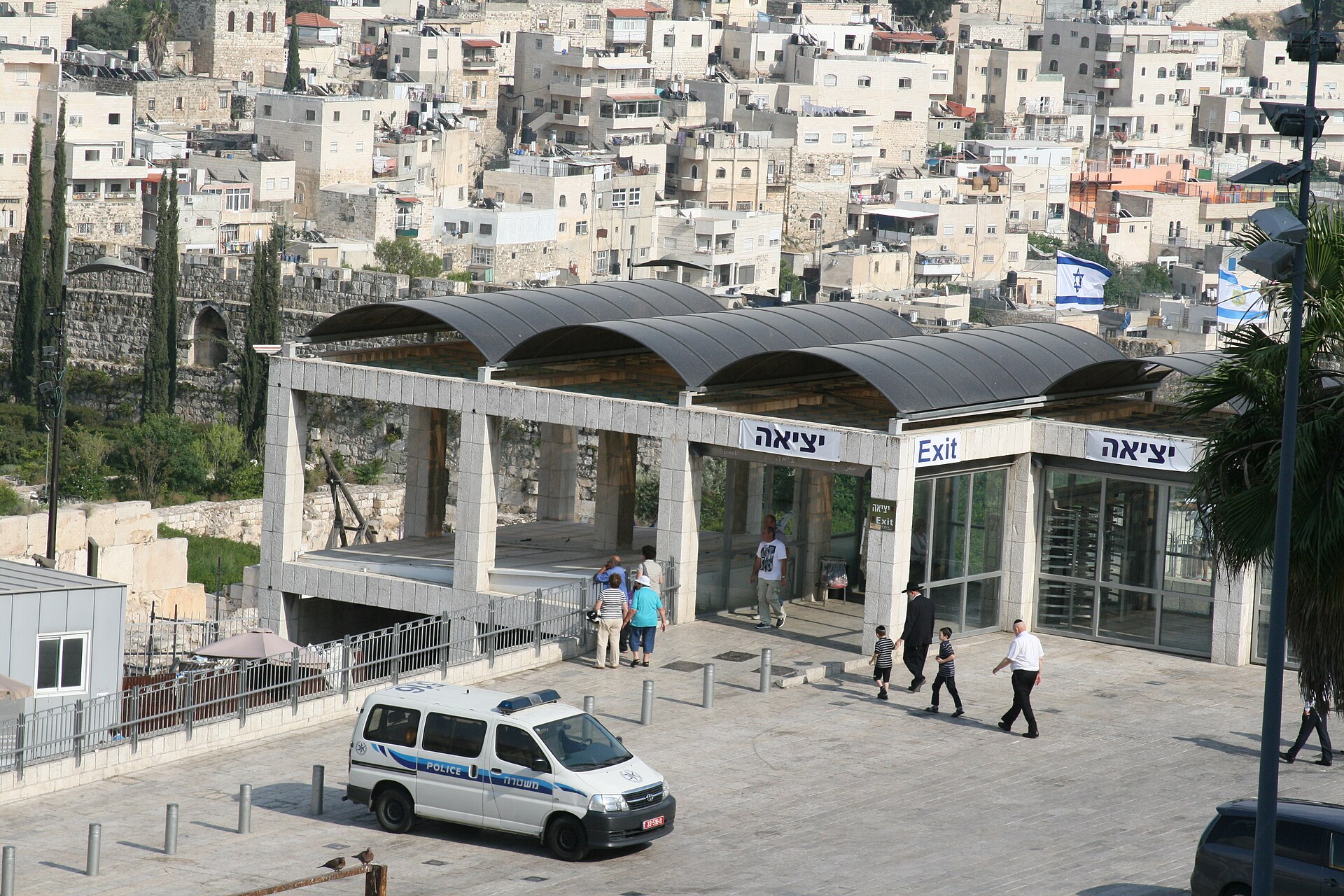
The Western Wall Gateway security entrance and a police van: Jerusalem Street Scenes (9076370692) by Episcopal Diocese of Southwest Florida, CC BY 2.0, via Wikimedia Commons.
{"@context": "https://schema.org", "@type": "FAQPage", "mainEntity": [{"@type": "Question", "name": "Is Jerusalem safe to visit in 2026?", "acceptedAnswer": {"@type": "Answer", "text": "For tourists following normal urban precautions, Jerusalem is generally safe, and millions visit each year without incident. The main everyday risks are pickpocketing, summer heat, and occasional road-blocking demonstrations. Because the broader security picture can change, read your government's current advisory before booking and before you fly, and watch local English-language news during your stay."}}, {"@type": "Question", "name": "Is Jerusalem safe for solo female travelers?", "acceptedAnswer": {"@type": "Answer", "text": "Yes, generally. Street harassment is comparatively uncommon, public transport is well used by women, and central neighborhoods feel relaxed at night. Dress modestly at holy sites and ultra-Orthodox areas, keep to well-lit main routes in the Old City after dark, and use app-based taxis at night."}}, {"@type": "Question", "name": "Is the Old City of Jerusalem safe to walk?", "acceptedAnswer": {"@type": "Answer", "text": "The Old City is very safe in the well-trafficked areas by day, and the Christian and Jewish Quarters and the Western Wall plaza are comfortable in the evening too. After dark the souks empty and shops close, so keep to the main thoroughfares rather than wandering side alleys."}}, {"@type": "Question", "name": "Are Bethlehem and other West Bank day trips safe?", "acceptedAnswer": {"@type": "Answer", "text": "Many travelers visit Bethlehem and Jericho without trouble, most easily on a tour or with a licensed local driver. Bring your passport and expect checkpoints and screening. Advisories generally apply stronger warnings to the West Bank than to central Jerusalem, so check current guidance close to your dates."}}, {"@type": "Question", "name": "How do I stay informed about current conditions?", "acceptedAnswer": {"@type": "Answer", "text": "Check your government's travel advisory page, sign up for your embassy's alert program, and read a local English-language source such as the Times of Israel or the Jerusalem Post each morning. A two-minute daily check is the most reliable way to know whether any area or event is worth avoiding that day."}}, {"@type": "Question", "name": "What should I do if there's a security incident nearby?", "acceptedAnswer": {"@type": "Answer", "text": "Follow the instructions of police and security personnel immediately, move away calmly, and do not stop to film. Once safe, contact your embassy if needed and let family know you are okay. Israeli emergency services respond very quickly."}}, {"@type": "Question", "name": "Are Jerusalem's hospitals good if I get sick or hurt?", "acceptedAnswer": {"@type": "Answer", "text": "Yes. Hadassah Ein Karem is a world-class teaching hospital, and Shaare Zedek and Hadassah Mount Scopus are excellent too. Most doctors speak English. Treatment for visitors is not free, so travel insurance with medical cover is strongly recommended."}}, {"@type": "Question", "name": "Do the UK and US governments give the same advice about Jerusalem?", "acceptedAnswer": {"@type": "Answer", "text": "No, and the difference is worth understanding. Checked on 15 August 2026, the FCDO does not advise against travel to Jerusalem — its warnings cover Gaza, parts of the northern border and specific West Bank governorates, with East Jerusalem and Bethlehem Governorate explicitly excluded. The US State Department, in its advisory dated 27 February 2026, places Israel and the West Bank at Level 3, \"Reconsider Travel\". Read both live before booking, because either can change quickly."}}, {"@type": "Question", "name": "Will my travel insurance still be valid?", "acceptedAnswer": {"@type": "Answer", "text": "Check before you pay rather than after. UK policies are usually tied to FCDO advice, which currently does not advise against travel to Jerusalem, so the destination alone does not normally void cover — though it can if your itinerary enters an advise-against area. US policies are not tied to State Department levels but frequently exclude war, terrorism or civil unrest, and some decline Level 3 destinations outright. Ask in writing about terrorism exclusions, medical evacuation, and what happens if the advisory changes after you book."}}, {"@type": "Question", "name": "What should I do if a siren sounds while I am out sightseeing?", "acceptedAnswer": {"@type": "Answer", "text": "Go inside the nearest solid building immediately and find a protected room, a communal shelter, or an interior stairwell with no windows or exterior walls, away from glass. Guidance is to stay there around ten minutes after the alert, since the main hazard is falling debris from interceptions. Install the Home Front Command app and ask your hotel where its shelter is on the day you check in."}}, {"@type": "Question", "name": "Is Jerusalem safe to visit with children?", "acceptedAnswer": {"@type": "Answer", "text": "Families visit Jerusalem constantly, and the risks you will actually deal with are heat, tired legs and crowded markets rather than crime. The honest caveats are about disruption: sites can close at short notice and plans can change, so it is worth explaining sirens and shelters to older children calmly beforehand rather than in the moment. Keep the itinerary loose, choose accommodation you would be content to spend an unexpected quiet day in, and check your advisory close to your dates."}}]}