Shabbat in Jerusalem is unlike anything most visitors have seen: for roughly 25 hours, from Friday afternoon to Saturday nightfall, the Jewish day of rest reshapes the city. Public transport halts, much of West Jerusalem shutters, and the streets of the religious neighborhoods empty of cars into a remarkable stillness. Yet plenty stays open — the Old City Muslim Quarter and East Jerusalem carry on as normal, key holy sites keep restricted hours, and the Western Wall on a Friday evening becomes one of the most moving sights in the country. This guide explains exactly what closes and what stays open, how to get around, where to eat, and how to make the most of a Jerusalem weekend rather than be caught out by it.
Understanding the rhythm of Shabbat in Jerusalem is the single most useful piece of practical knowledge for timing your trip, because it is the thing first-time visitors most often misjudge. Pair this with our Jerusalem travel tips and first time visiting Jerusalem guides.
When Shabbat Happens
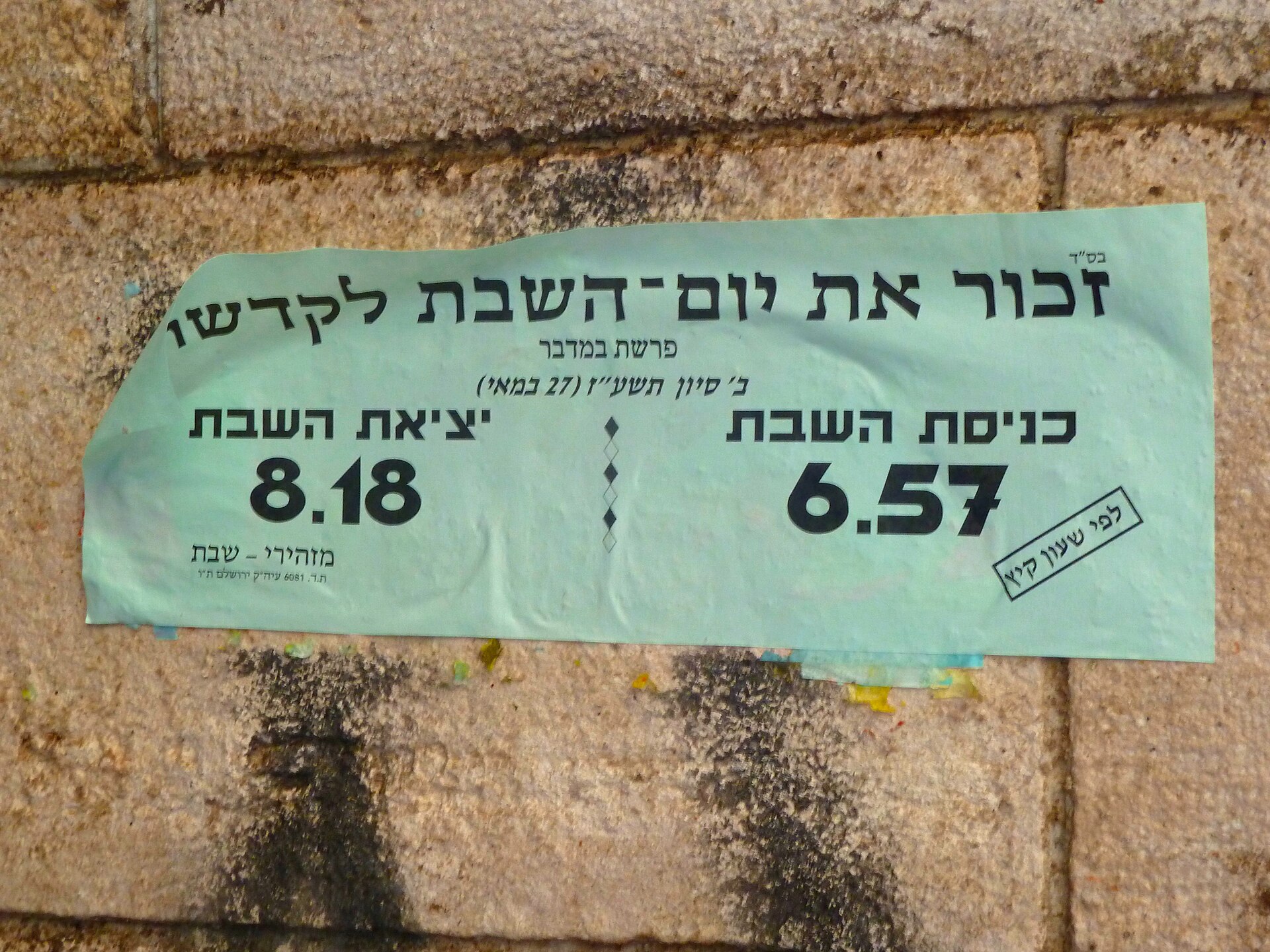
Shabbat is the Jewish Sabbath, a weekly day of rest observed from sunset on Friday to nightfall on Saturday, and in a city as religious as Jerusalem its effects are felt citywide rather than just in homes and synagogues. Because it follows the sun, its exact clock times shift with the season: in midwinter it can begin as early as around 4:30pm on Friday; in high summer not until close to 7:30pm. It ends roughly 25 hours later when three stars are visible on Saturday night, marked by the Havdalah ceremony. In practice, much of the city begins winding down well before the official start — shops close and the last buses run in the early-to-mid afternoon on Friday, so do not count on a full Friday of services. Knowing this lets you front-load errands, shopping, and any bus or train travel into Friday morning.
- Begins: Friday at sunset, but the city quiets from early afternoon.
- Ends: Saturday at nightfall, about 25 hours later, with Havdalah.
- The siren: in religious areas a siren sounds to mark Shabbat coming in on Friday.
- Sunday is a normal workday in Israel — shops, banks, transport, and offices all reopen.
Check the week’s candle-lighting time (widely posted online and in hotels) so you know when things will close on your particular Friday. The same shutdown applies on major Jewish holidays, which can extend the closures — see our best time to visit Jerusalem guide for the 2026 holiday calendar.
What Closes and What Stays Open
The key to a smooth Shabbat is knowing that Jerusalem effectively runs on two tracks: Jewish West Jerusalem largely pauses, while Arab East Jerusalem and the Old City Muslim and Christian areas continue. Here is the quick map.
| Typically closed | Typically open |
|---|---|
| Light rail and Egged buses | Sherut shared taxis, app taxis (Gett, Yango) |
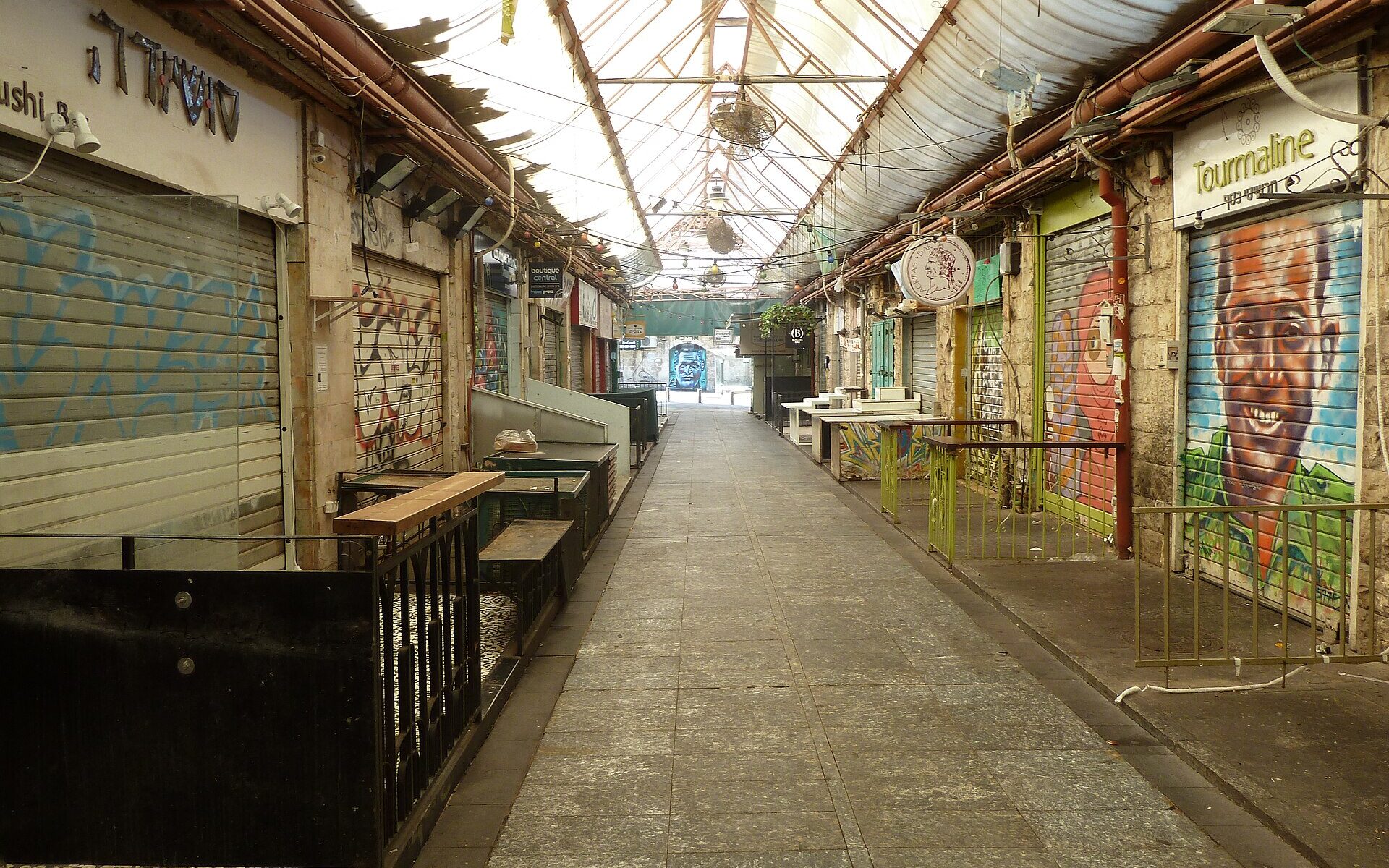
| Most Jewish-owned shops, malls, and supermarkets (Mamilla, Malha, city center) | Old City Muslim Quarter shops, markets, and eateries |
| Banks, offices, and government services | East Jerusalem (Arab) restaurants and shops |
| Many Jewish-run restaurants and cafes | Some Christian-owned cafes in West Jerusalem |
| Yad Vashem (closed Saturday; open Friday) | Church of the Holy Sepulchre; the Western Wall plaza (no photography) |
| Driving on certain ultra-Orthodox streets | Tower of David Museum and some attractions (check hours) |
Note two nuances. Some museums, including the Israel Museum, do open on Saturday, often with adjusted hours, while others such as Yad Vashem close — so verify each site’s Saturday schedule individually rather than assuming. And hotels operate normally throughout, with many offering pre-prepared kosher Shabbat meals (more on eating below).
Getting Around During Shabbat
The transport shutdown is the part that most affects your plans, and it is worth repeating because it surprises so many first-timers. From Friday afternoon, the light rail and the Egged bus network stop and do not resume until Saturday night. Your options in the meantime:
- Walking is the most reliable way to get around central Jerusalem, and the Old City is fully accessible on foot the whole time.
- App taxis (Gett, Yango) keep operating but with a Shabbat surcharge, and can be slower to arrive; book ahead for anything timed.
- Sherut shared taxis continue to run, including between cities, at slightly higher Shabbat fares — the main affordable way to reach Tel Aviv, via our guide to travelling between Jerusalem and Tel Aviv.
- A rental car faces no restriction and finds quieter roads, though you should avoid driving through ultra-Orthodox neighborhoods.
A small but charming detail you will notice in many hotels: a “Shabbat elevator” that stops automatically on every floor, so observant guests need not press a button. It is slow, but it is there if you want it; regular elevators still run too. For the full transport picture, see our Jerusalem transportation guide.
Where to Eat on Shabbat
You will not go hungry, but you do need to think ahead, because the casual habit of wandering out to find dinner does not work the way it would on other nights in West Jerusalem. The single best move is to stock up on Friday: Mahane Yehuda Market is at its frenetic, wonderful peak on Friday morning as the whole city shops for Shabbat, then shutters by mid-afternoon. After that, your reliable options are:
- Hotel restaurants, most of which serve a Friday-night Shabbat dinner and Saturday lunch (often pre-prepared kosher fare); book the Friday dinner in advance, as it is popular.
- Arab restaurants in East Jerusalem, fully open Friday and Saturday.
- The Old City Muslim Quarter, where falafel, hummus, and kebab spots keep going.
- Some Christian-owned cafes in West Jerusalem, which may stay open.
If you are self-catering, buy your Saturday food on Friday before the supermarkets close. Our Mahane Yehuda Market guide is the place to start for a Friday-morning provisioning run.
Things to Do on Shabbat
Far from a write-off, Saturday can be one of the most rewarding days of your trip if you plan it around what is open and walkable. The trick is to weight your day toward the Old City and East Jerusalem, which carry on as usual, and to keep your itinerary on foot or by pre-arranged taxi rather than relying on the buses and tram.
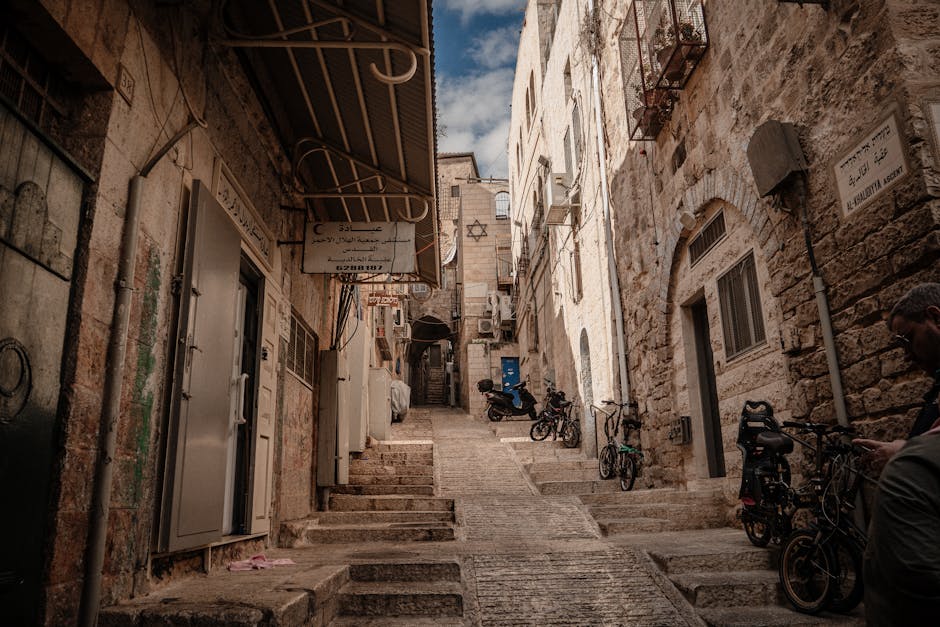
- Explore the Old City on foot. The Jewish Quarter is hushed and atmospheric, while the Muslim and Christian Quarters are lively and open for shopping and eating.
- Visit the Western Wall, at its most powerful over Shabbat, remembering that photography and phone use are not permitted.
- See the Church of the Holy Sepulchre, open as usual, and walk a stretch of the Via Dolorosa.
- Walk the Old City ramparts or up the Mount of Olives for the classic views, traffic permitting.
- Take a day trip to Bethlehem, which operates normally on Saturday; see our Bethlehem day trip guide.
- Or simply rest. Many travelers find that adopting the day’s slower pace — a long lunch, a book, a wander — is the point, not a problem.
Experiencing Shabbat Meaningfully
Beyond the logistics, Shabbat offers a genuine cultural experience that visitors of any background are welcome to share respectfully, and leaning into it rather than merely working around it is what turns a quiet day into a highlight.
A Friday-night Shabbat dinner
The heart of Shabbat is the Friday-night meal. Several programs (often marketed under names like “Shabbat of a Lifetime”) pair travelers with local families for a traditional dinner, and many hotels lay on their own Shabbat dinners featuring challah, chicken soup, fish, and slow-cooked dishes. Expect candle lighting, the Kiddush blessing over wine, the breaking of challah bread, an unhurried meal, and singing. It is warm, welcoming, and one of the most memorable evenings you can have in Jerusalem — book a family experience well ahead, as places are limited.
Kabbalat Shabbat at the Western Wall
Arriving at the Western Wall around sunset on Friday for the Kabbalat Shabbat service is, for many, the highlight of their visit. The plaza fills with worshippers welcoming Shabbat with singing, dancing, and prayer, and non-Jewish visitors are welcome to stand respectfully and observe. Remember the rules: modest dress, men cover their heads (free kippot at the entrance), and absolutely no photography or phone use from sunset. Simply being present in that atmosphere is the experience.

Shabbat Etiquette for Visitors
A little sensitivity goes a long way and keeps your visit respectful, especially in observant areas, where the day is taken seriously and small courtesies are noticed.
- Do not drive through ultra-Orthodox neighborhoods such as Mea Shearim and parts of Geula, where streets close to traffic and driving causes genuine offense.
- Do not photograph observant people praying or in their neighborhoods on Shabbat.
- Keep noise down in religious areas, and dress modestly — this matters even more on Shabbat. See our guide to modest dress in the city.
- Avoid obvious phone use and smoking in strictly observant areas, where these are not done on Shabbat.
- Visitors are welcome at synagogues to observe a service, with modest dress and no photography.
Everything on this page describes the weekly cycle. The festivals work the same way but bigger, and Passover is the extreme case: two full days when the city closes exactly as it does on Shabbat, five intermediate days when it is open and packed, and a whole week without bread in between. Our guide to Passover in Jerusalem sets out which days are which, where to find a sandwich, and how a visitor gets to a seder.
The Bottom Line
Shabbat in Jerusalem is not an obstacle to plan against so much as an experience to plan around. Stock up on Friday, base yourself somewhere walkable, line up a Friday-night dinner and the Western Wall at sunset, and fill Saturday with the Old City, holy sites, or a Bethlehem day trip. Embrace the slower pace and the city’s most distinctive weekly ritual becomes a highlight rather than a hassle. Plan the rest with our Jerusalem travel tips, our first time visiting Jerusalem guide, and our Jerusalem transportation guide.
Photo Credits
Mahane Yehuda market shuttered on a Shabbat morning: Jerusalem Mahane Yehuda Market Shabbat P1060221 by Utilisateur:Djampa, CC BY-SA 4.0, via Wikimedia Commons.
A Jerusalem street notice giving Shabbat times: Jerusalem Shabbat Times P1060206 by Utilisateur:Djampa, CC BY-SA 4.0, via Wikimedia Commons.