Jerusalem’s food scene is one of the most exciting and underrated culinary destinations in the world. This ancient city sits at the crossroads of Middle Eastern, Mediterranean, North African, and Eastern European cuisines, creating a food culture that is entirely its own. A single day of eating here can run from a plate of hummus made the same way for generations, to falafel fried to order at a market stall, to a modern Israeli tasting menu that rewrites those traditions course by course.
This comprehensive Jerusalem food guide covers everything you need to know about eating your way through the Holy City. We cover the dishes worth crossing town for, the restaurants and street food stalls that do them best, and the small family-run places locals queue at on Friday mornings – all researched and eaten through firsthand. You will also find practical advice on things to do in Jerusalem between meals and tips on navigating kosher dining and Shabbat closures.
Must-Try Traditional Dishes in Jerusalem
Jerusalem’s culinary identity is built on dishes that have been perfected over centuries. These are the foods that define the city’s taste and should be at the top of every visitor’s eating list.
Hummus: The Ultimate Jerusalem Staple
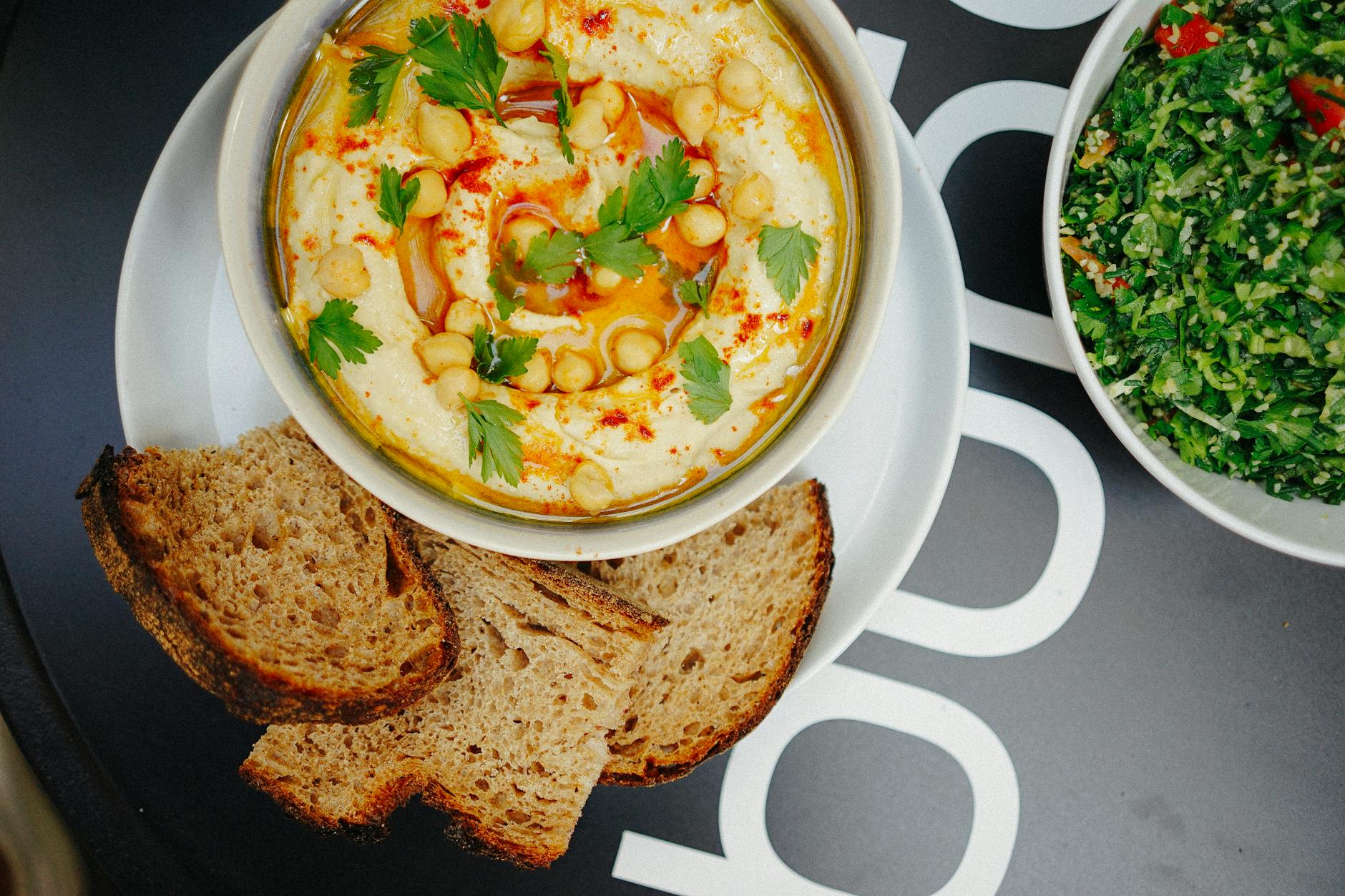
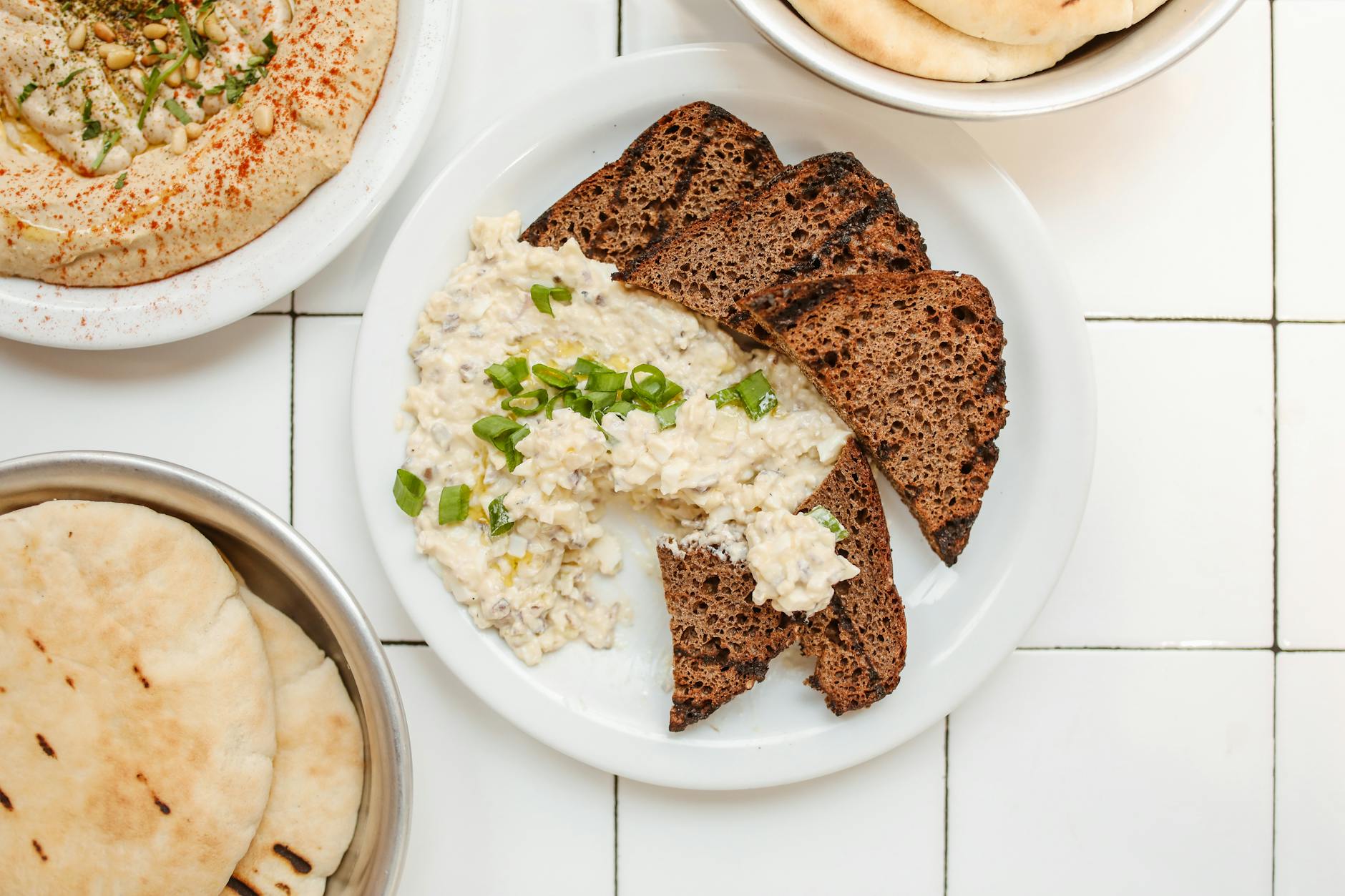
Hummus in Jerusalem is nothing like what you find in supermarket containers abroad. Here, it is a creamy, silky blend of chickpeas, tahini, lemon juice, and garlic that is served warm and eaten as a main dish, not a dip. The best hummus joints open early in the morning and close when the batch runs out, often by early afternoon. Abu Shukri in the Old City’s Via Dolorosa has been serving what many consider the finest hummus in Jerusalem for decades. Lina nearby is an equally beloved rival. In West Jerusalem, Pinati on King George Street serves hummus with a distinctive slightly chunky texture alongside masabacha, a variation where whole chickpeas float in warm tahini sauce. For the full experience, order your hummus with ful (stewed fava beans), whole chickpeas, and a drizzle of good olive oil.
Falafel: Crispy Perfection
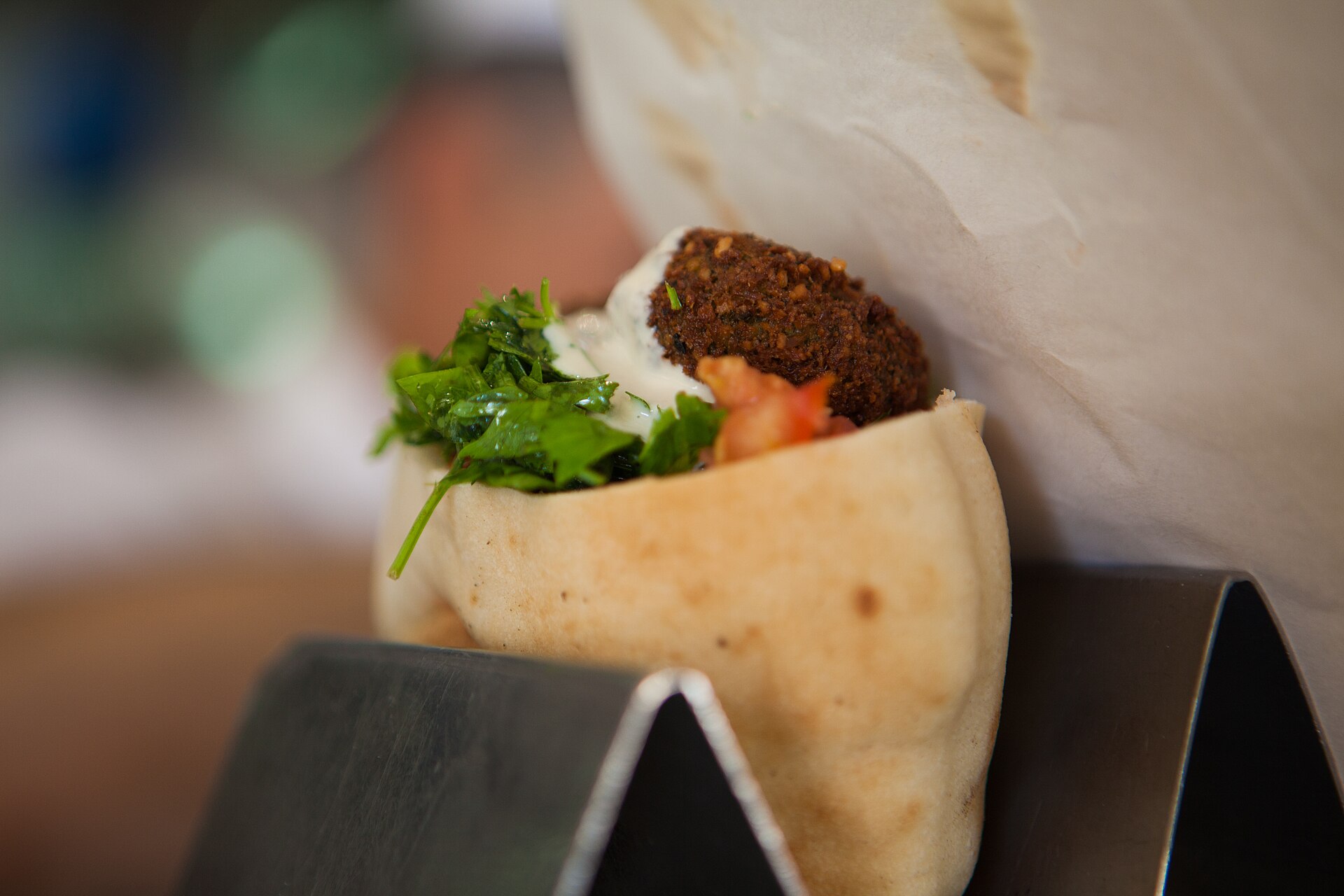
Falafel is the undisputed king of Jerusalem’s street food scene. These deep-fried balls of ground chickpeas and herbs are served stuffed into warm pita bread with an array of fresh salads, pickled vegetables, and generous lashings of tahini. The best falafel is crispy on the outside with a bright green, herb-flecked interior that is moist and flavorful. Moshiko on King George Street is often cited as one of the city’s best, with perfectly seasoned falafel and an impressive salad bar. In the Muslim Quarter of the Old City, you will find some of the most authentic versions. The key to a great falafel experience is to eat it immediately while the exterior is still crackling. Each vendor has their own spice blend and technique, so trying falafel at multiple places is not just acceptable but recommended.
Shakshouka: The Breakfast of Champions
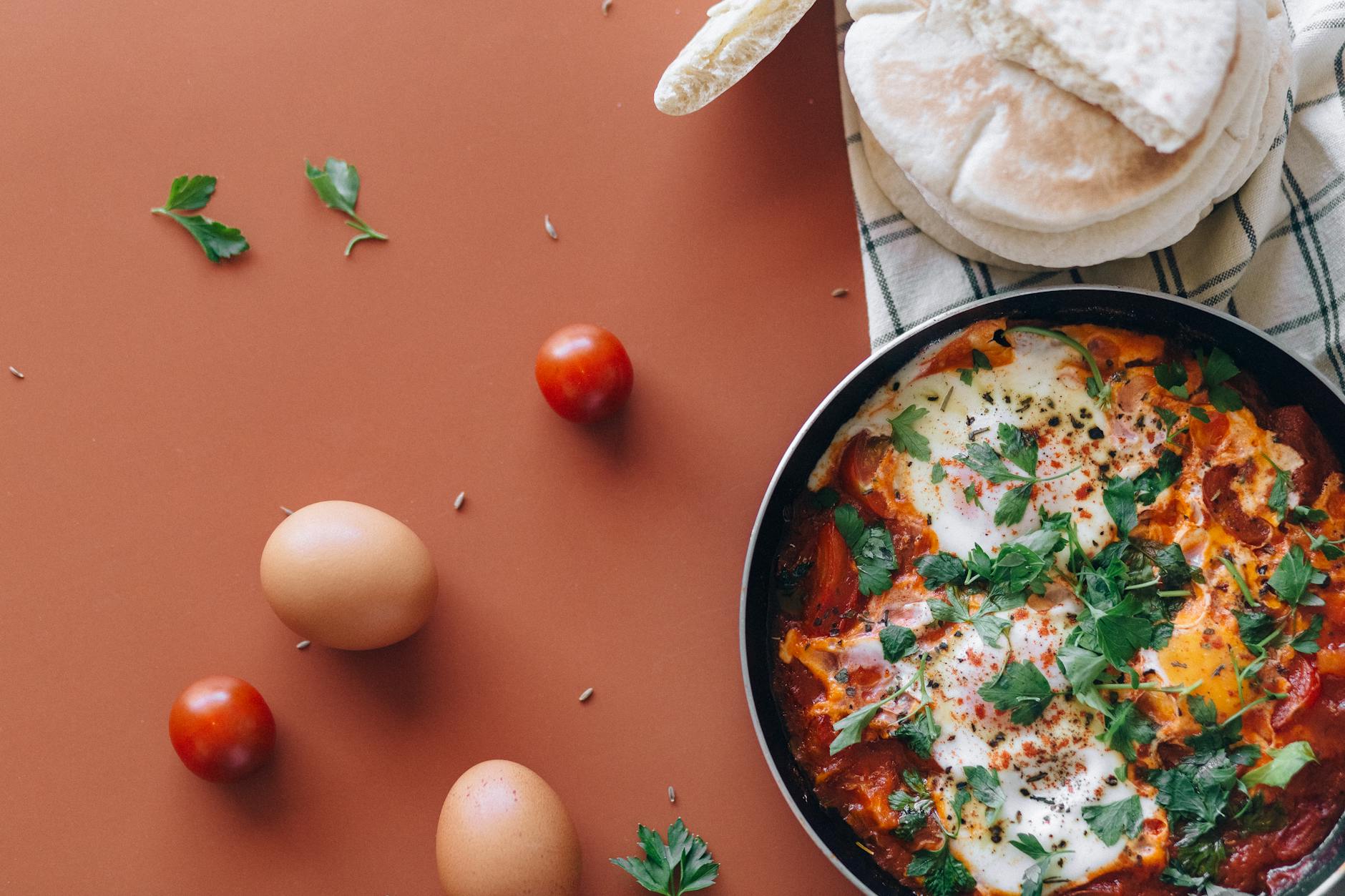
Shakshouka has conquered brunch menus worldwide, but nothing compares to eating it in Jerusalem where the dish has deep roots. Eggs are gently poached in a bubbling, spiced tomato sauce seasoned with cumin, paprika, and sometimes harissa, then served sizzling in the pan with warm crusty bread for scooping. The traditional red version is the classic, but Jerusalem has embraced green shakshouka made with spinach, Swiss chard, and other greens, as well as versions with eggplant, feta, or merguez sausage. Tmol Shilshom, a bookstore cafe in the city center, serves an excellent version in a literary atmosphere. Machneyuda restaurant offers a more refined take. For the most authentic experience, visit any neighborhood cafe early on a Friday morning when locals gather for a leisurely pre-Shabbat breakfast.
Sabich: The Underrated Champion
Sabich is Jerusalem’s best-kept street food secret. This Iraqi-Jewish sandwich features fried eggplant, hard-boiled egg, Israeli salad, hummus, tahini, and amba — a tangy mango pickle sauce that ties everything together — all stuffed into a warm pita. It originated as a Shabbat morning dish among Iraqi Jews and has become one of the most beloved street foods in the city. Sabich Tchernichovsky near the Mahane Yehuda Market is legendary, with perfectly silky eggplant and a generous hand with the amba. The combination of textures and flavors — creamy, crunchy, tangy, and savory — makes sabich a complex and deeply satisfying meal. Vegetarians particularly love it as a hearty, protein-rich option.
Jerusalem Mixed Grill (Meorav Yerushalmi)
Jerusalem Mixed Grill is the city’s signature meat dish, and it is unlike anything you will find elsewhere. This iconic street food consists of chicken hearts, spleens, and livers grilled on a flat top with onions and a generous coating of baharat spice blend, then stuffed into a pita. It sounds unusual to the uninitiated, but the result is smoky, deeply flavored, and addictive. The dish was born in the stalls around Mahane Yehuda Market in the 1960s, and the market remains the best place to try it. Hatzot Restaurant and the stalls along Agrippas Street are considered the gold standard. Do not be put off by the offal — the flavors are bold, earthy, and completely unique to Jerusalem.
Knafeh: The Sweet Finale
No Jerusalem food guide would be complete without knafeh, the beloved Middle Eastern dessert that the city does exceptionally well. This sweet consists of shredded phyllo dough (kataifi) layered with soft, stretchy nabulsi cheese, soaked in sugar syrup and often tinted orange with food coloring, then topped with crushed pistachios. The best knafeh is eaten warm when the cheese is at its most gloriously stretchy. Jaffar Sweets in the Old City’s Muslim Quarter is famous for their knafeh, which they prepare fresh throughout the day. The contrast between the crispy pastry, the warm melting cheese, and the sweet syrup is utterly irresistible. You will also find excellent knafeh at Abu Ghosh, the Arab village famous for its restaurants just outside Jerusalem.
Mahane Yehuda Market: Jerusalem’s Culinary Heart
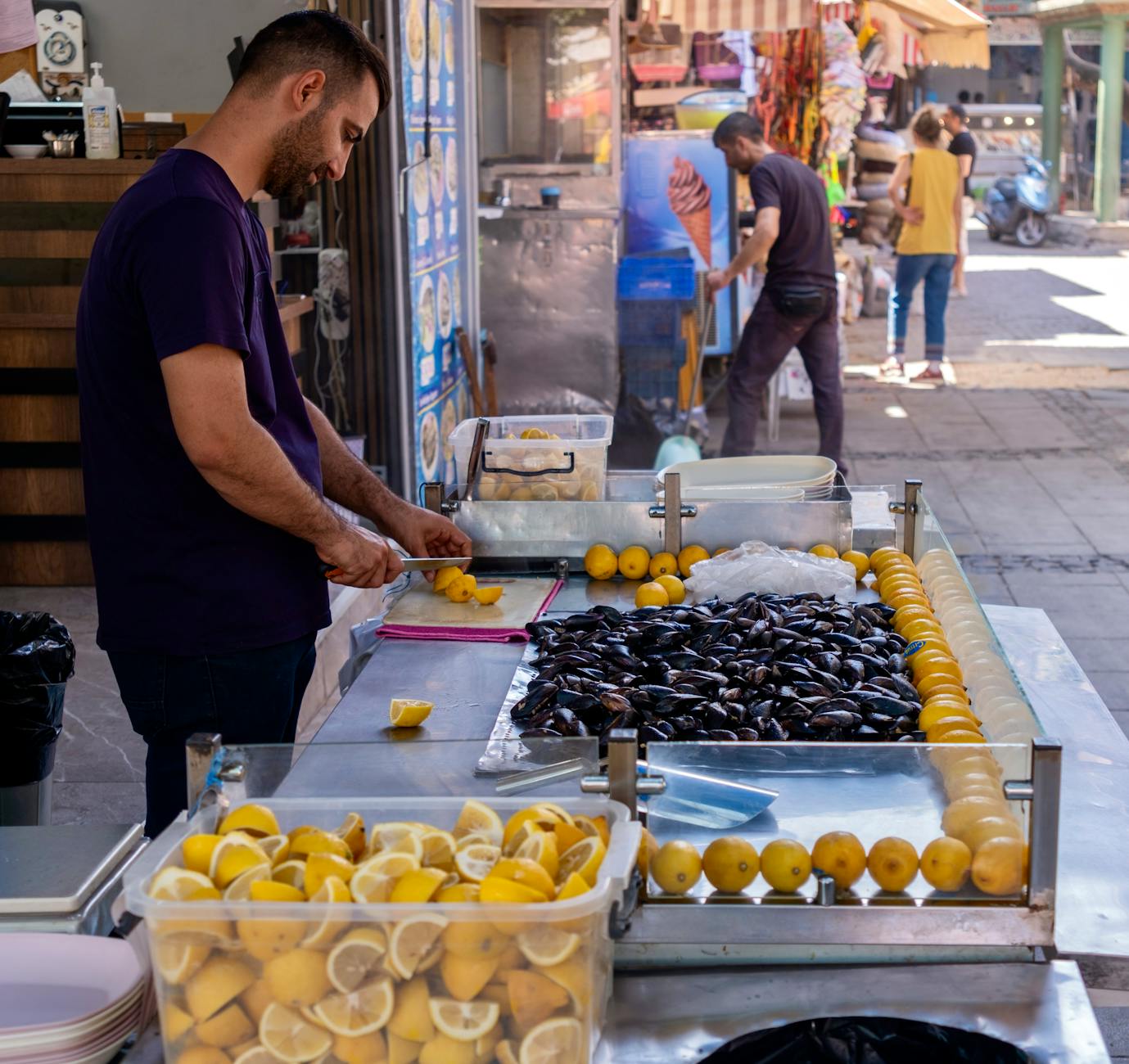
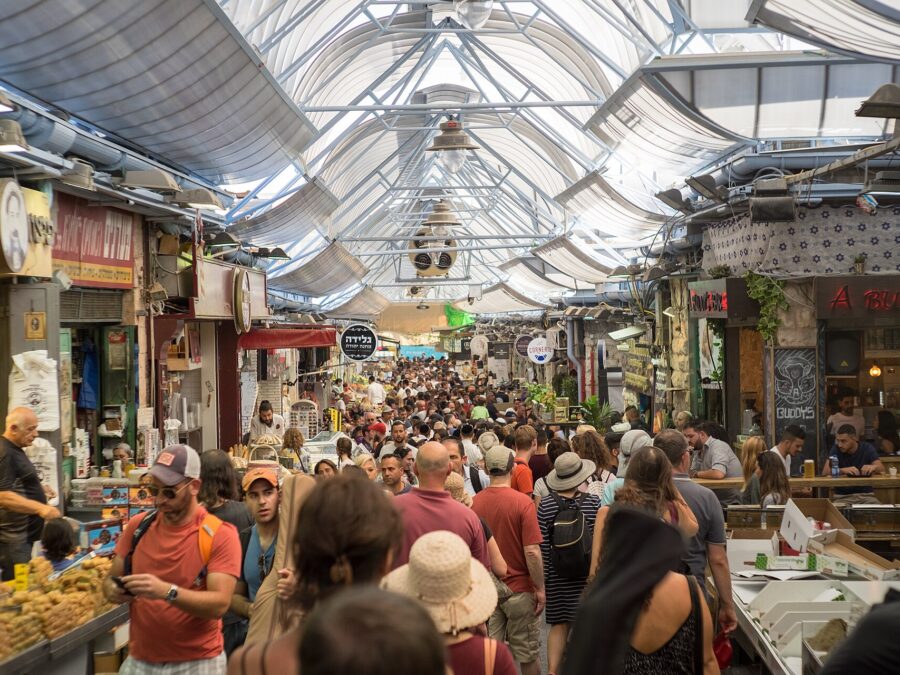
Mahane Yehuda Market, known simply as “the Shuk,” is the center of Jerusalem’s food scene – skip it and you have missed half the city’s cooking. More than 250 vendors sell everything from fresh produce, spices, and baked goods to prepared foods, wines, and specialty ingredients. During the day, the market buzzes with locals doing their weekly shopping, tourists sampling their way through the stalls, and chefs sourcing ingredients. At night, particularly on Thursday evenings, the market transforms into one of Jerusalem’s most exciting nightlife areas, with bars, restaurants, and live music spilling out into the narrow alleys.
What to Eat at the Shuk
Start your Mahane Yehuda exploration at Azura, a family-run restaurant tucked inside the market that has been serving Sephardic home cooking since 1952. Their slow-cooked kubbeh soup and stuffed vegetables are legendary. For the city’s best rugelach, the flaky rolled pastries that come in flavors from chocolate to halva, head to Marzipan Bakery where the line out the door tells you everything you need to know. Basher Fromagerie offers artisanal cheeses from across Israel alongside local wines for a perfect market lunch. For spice shopping, pick up za’atar, sumac, and baharat blends from the spice vendors who will let you smell and taste before buying. Halva Kingdom (Halva HaShuk) has an astonishing array of halva flavors from traditional tahini to pistachio and espresso. Do not miss the fresh-squeezed pomegranate and orange juice stands that dot the market — they are the perfect refreshment between tastings. Our stall-by-stall guide to eating at Mahane Yehuda Market covers twenty more vendors, with opening hours and what to order at each.
The Shuk After Dark
After sunset, Mahane Yehuda transforms into a completely different experience. The produce stalls close and their metal shutters become canvases for street art. Restaurants and bars open their doors, and the narrow aisles fill with a young, energetic crowd. Machneyuda restaurant, one of Israel’s most acclaimed dining spots, sits at the edge of the market and offers an exhilarating open-kitchen experience with creative dishes that change daily based on what’s fresh at the shuk. Beer Bazaar offers a rotating selection of Israeli craft beers on tap. Video Pub, with its quirky decor, is a local favorite for late-night drinks. The transformation from daytime market to nightlife hotspot is unique to Jerusalem and should not be missed.
Best Restaurants in Jerusalem by Cuisine
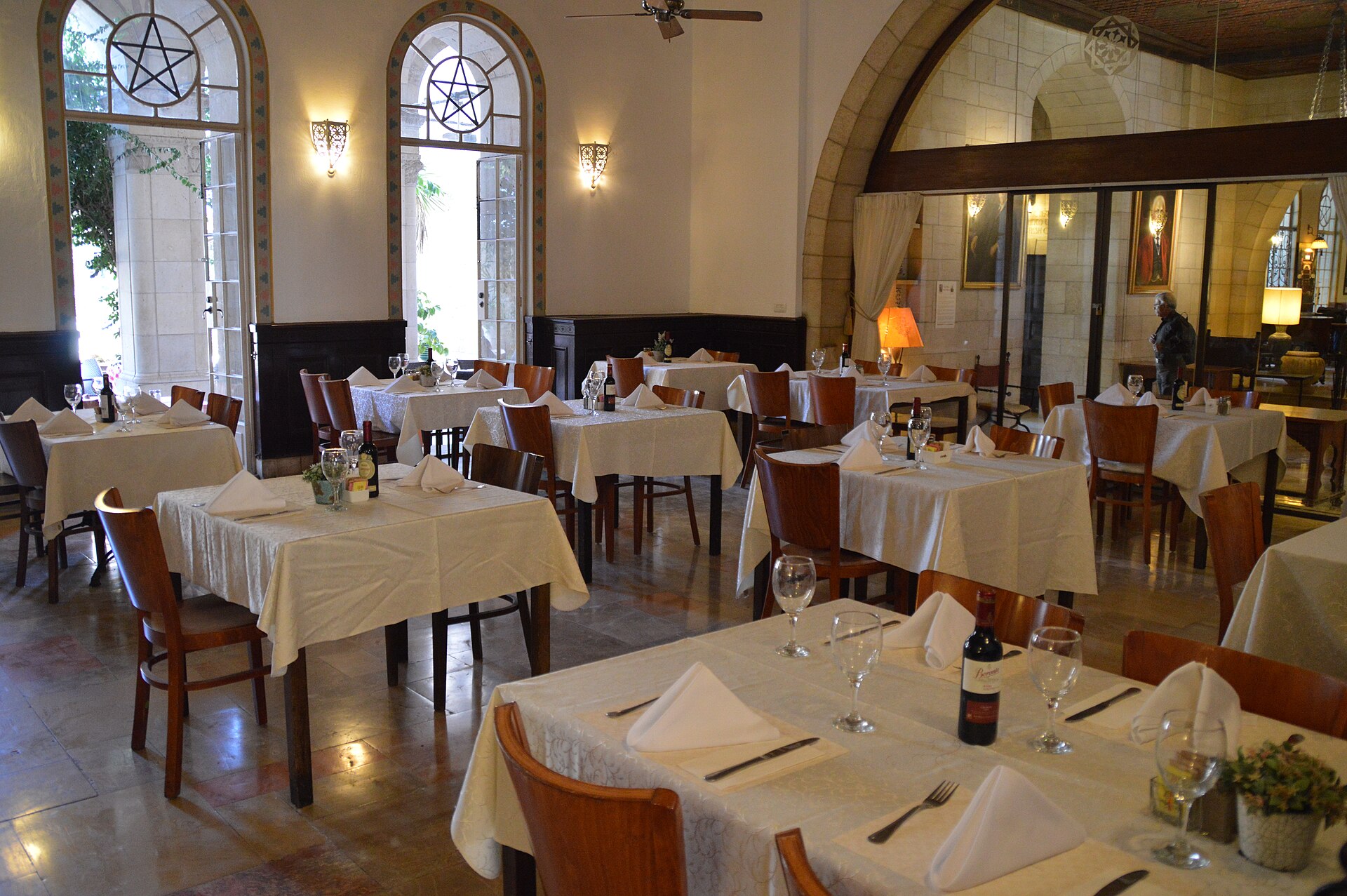
The sections below group the city’s kitchens by cuisine; for a straight ranking of the standouts across every price bracket, see our roundup of the 25 best restaurants in Jerusalem.
Fine Dining and Modern Israeli
Jerusalem’s fine dining scene has exploded in recent years, with chefs combining ancient local ingredients with modern techniques. The Eucalyptus, helmed by Chef Moshe Basson, is famous for recreating dishes mentioned in the Bible using foraged ingredients and traditional techniques in a beautiful stone setting near the Old City walls. Anna Italian Cafe and Wine Bar in Ein Karem serves exceptional Italian-Israeli fusion in a gorgeous village setting. Satya in the German Colony focuses on vegetarian cuisine that is so inventive and flavorful that even committed meat-eaters leave impressed. For a splurge-worthy meal with incomparable views, the Rooftop at the Mamilla Hotel serves Mediterranean cuisine overlooking the Old City — particularly magical at sunset. Chakra, set in a beautifully restored Ottoman-era building near Liberty Bell Park, offers Mediterranean dishes with Jerusalem influences and an excellent wine list.
Traditional Middle Eastern and Arabic Cuisine
For the most authentic Middle Eastern dining in Jerusalem, head to the Old City and East Jerusalem. The Armenian Tavern in the Armenian Quarter serves specialties like lahmajun (Armenian pizza) and grilled meats in a stunning 12th-century Crusader-era building. Azzahra Restaurant near the Damascus Gate is beloved for its slow-cooked Palestinian dishes including musakhan (roasted chicken on taboon bread with sumac and onions) and maqluba (an upside-down rice and meat dish). The American Colony Hotel’s restaurant serves refined versions of Palestinian cuisine in one of the most beautiful dining rooms in the city. In the Old City, Christ Church Cafe offers a peaceful courtyard setting with simple but well-prepared Middle Eastern dishes, and Abu Shukri’s hummus is a pilgrimage of its own.
Yemenite, Georgian, and Other Cuisines
Jerusalem’s food scene reflects the diverse origins of its residents. Yemenite cuisine has a strong presence, with restaurants serving jachnun (slow-baked rolled pastry) and malawach (flaky pan-fried bread), typically with grated tomato and schug (fiery green chili sauce). Jahnun Bar at the shuk is a great introduction. Georgian restaurants have become increasingly popular, with Hachapuria and Nanuchka bringing khachapuri (cheese-filled bread boats) and other Georgian specialties to the market area. Ethiopian restaurants like Saba Ethiopian in the city center serve communal platters of slow-cooked stews on injera bread. The culinary diversity reflects centuries of immigration and makes Jerusalem a fascinating place to explore food from cultures you might not expect.
Where to Eat by Neighborhood
Most visitors eat in two places – the shuk and the Old City – and then wonder why they keep seeing the same four dishes. Jerusalem is a city of distinct neighborhoods, and the walk between them is rarely more than twenty minutes.
City Center and Nahalat Shiva
The downtown triangle formed by Jaffa Road, King George Street and Ben Yehuda Street is where the city eats after work. Nahalat Shiva, the stone-alley quarter around Yoel Moshe Salomon Street, packs bars, pizzerias and courtyard restaurants into a few pedestrian lanes, and Shlomtzion HaMalka Street nearby is the low-key strip locals name when you ask where they actually go. This is the densest concentration of the city’s standout dining rooms outside the market. Expect most of it to be kosher and closed for Shabbat.
Nachlaot and the Streets Around the Shuk
The lanes of Nachlaot, immediately south of Mahane Yehuda, are residential rather than touristic, which is exactly why the eating is good. You are a two-minute walk from the market’s food stalls but paying neighborhood prices, and the small bars tucked between the houses fill up long after the produce vendors have gone home. Agrippas Street, on the market’s southern edge, is the traditional grill and hummus strip – unglamorous, consistently busy, cash-friendly.
German Colony, Baka and the First Station
Emek Refaim Street in the German Colony is Jerusalem’s cafe spine: leafy, stroller-heavy, built around long breakfasts rather than late dinners, with Derech Beit Lechem in neighboring Baka doing the same thing for fewer tourists. The First Station complex, in the restored Ottoman railway terminal between the two, is the one place in West Jerusalem where a run of restaurants and bars reliably trades through Friday night and Saturday – a useful fallback rather than a culinary pilgrimage.
East Jerusalem
Salah al-Din Street and the roads around Nablus Road are where you find Palestinian home cooking without the Old City markup – mansaf, maqluba, stuffed vegetables, charcoal grills, and mezze spreads that arrive faster than you can clear the table. Nothing here is kosher and nothing here closes for Shabbat, so East Jerusalem quietly becomes the city’s main dining district every Friday night. Many restaurants serve no alcohol, and during Ramadan the whole area shifts to a post-sunset schedule.
Old City Food Guide: Eating in the Four Quarters
The Old City of Jerusalem offers a food experience unlike anywhere else on earth, with centuries-old bakeries, spice-laden alleyways, and family recipes handed down through generations. Each quarter has its own distinct culinary character.
Muslim Quarter
The Muslim Quarter packs more food into its lanes than any other section of the Old City. The narrow lanes near the Damascus Gate are filled with bakeries selling ka’ak — sesame-crusted bread rings — fresh from the oven. This is where you will find some of the best hummus (Abu Shukri and Lina), the finest knafeh (Jaffar Sweets), and endless street food options including shawarma, falafel, and freshly squeezed juices. The spice shops along the main bazaar sell fragrant za’atar blends, dried fruits, and Turkish delight. Visit early in the morning for the most authentic experience, when local shopkeepers are having their breakfast and the lanes are not yet crowded with tour groups.
Jewish Quarter
The Jewish Quarter offers a more curated eating experience, with kosher restaurants and cafes lining the renovated stone streets. The Quarter Cafe near the Cardo offers good coffee and light meals with a view of the excavated Roman street. Rova Cafe is popular for its location and breakfast options. On Friday before Shabbat, the quarter has a special energy as families shop for their Shabbat meals. The restaurants here tend to close early on Friday afternoon and reopen Saturday evening, so plan accordingly.
Christian and Armenian Quarters
The Christian Quarter is home to the Armenian Tavern, one of the Old City’s finest restaurants, serving authentic Armenian cuisine in a beautifully restored medieval setting. Along the path to the Church of the Holy Sepulchre, you will find small cafes and bakeries selling lahmajun and other treats. The Armenian Quarter itself is quieter and more residential, but its ceramic shops often serve Armenian coffee, and the recently opened Armenian Pottery Cafe offers light bites alongside the quarter’s famous painted ceramics.
Coffee, Breakfast and Cafe Culture
Breakfast is the meal Jerusalem does best and visitors most often skip, usually because the hotel buffet got there first. Cafes here treat mornings as the main event rather than a warm-up for lunch.
Ordering Coffee Without Getting It Wrong
Ask for a “cafe” in Israel and you may be handed instant coffee – what locals call nes. What you almost certainly want is a cafe hafuch, literally “upside down”: espresso with steamed milk, somewhere between a flat white and a cappuccino, and the default order across the country. Expect to pay around 14 to 16 shekels in a city cafe as of August 2026. For something older, order cafe turki – Turkish coffee ground fine, boiled with cardamom and served in a small glass with the grounds settling at the bottom.
What an Israeli Breakfast Actually Is
The classic spread is two eggs cooked to order, a finely chopped salad dressed with olive oil and lemon, soft cheeses, tahini and labneh, bread or pastries, jam, a fresh juice and a coffee. It arrives as a table full of small plates rather than one composed dish, and one order comfortably feeds two moderate appetites. The other universal morning order is shakshuka, served in the pan it was cooked in – one of the dishes that define local cooking and the cheapest way to eat well before noon. Most cafes serving this are kosher dairy, which is why you find smoked salmon and cheese on the menu but never bacon.
Cafe Norms and Timing
Nobody will rush you out of a Jerusalem cafe: tables are yours for as long as you want them and the bill comes only when you ask. Friday morning is the exception in both directions – the best breakfast slot of the week, cafes full from around 09:00, ending abruptly when the same cafes close in the early afternoon for Shabbat. Long-standing addresses named by the city tourism board’s breakfast round-up include Kadosh on Shlomtzion HaMalka Street, trading since 1967, and Nocturno on Bezalel Street, a kosher vegetarian cafe that buys from the market a few minutes’ walk away.
Jerusalem’s Sweet Side: Desserts and Bakeries
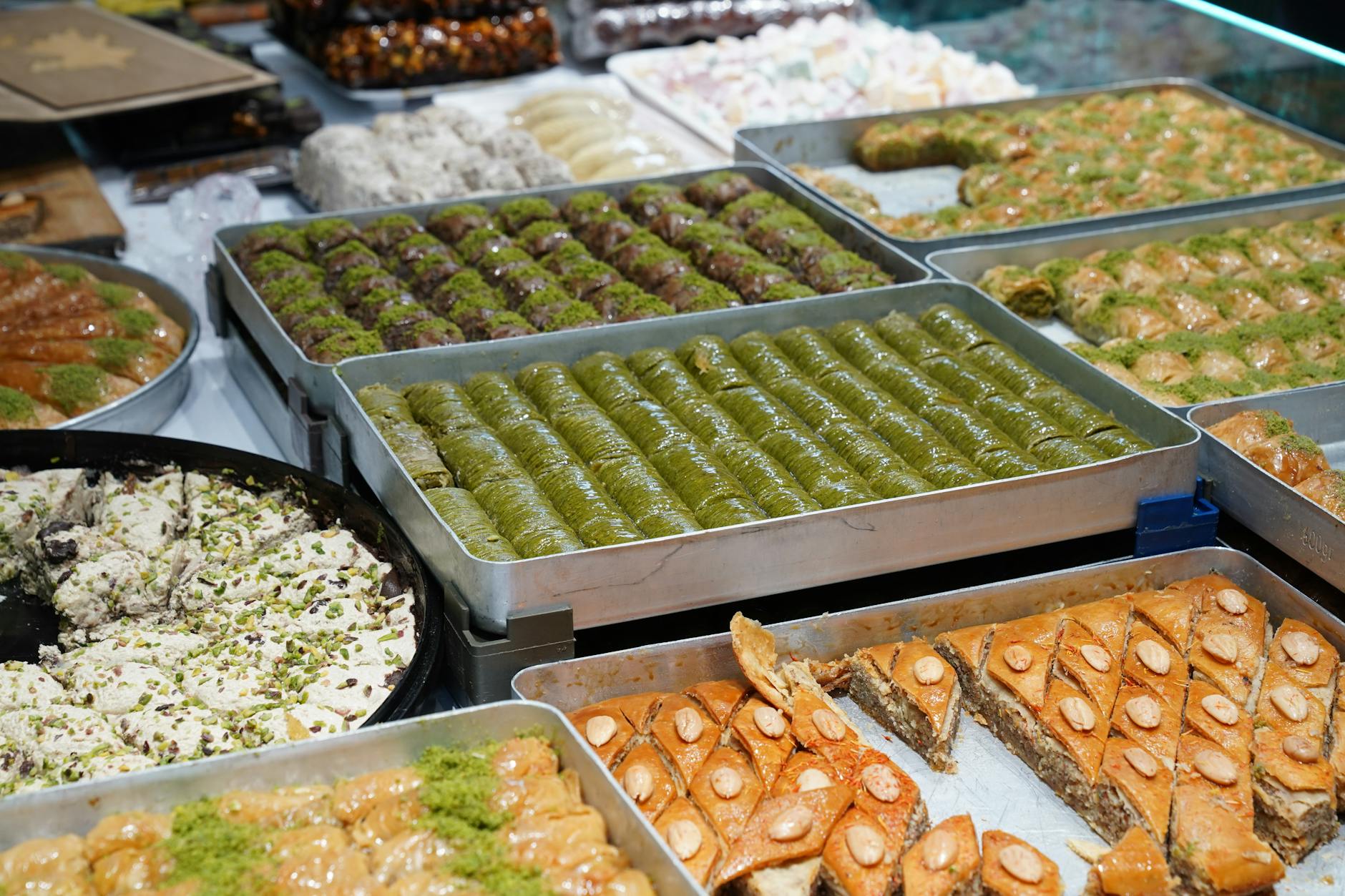
Jerusalem has an extraordinary sweet tooth, and the city’s bakeries and dessert shops are destinations in their own right. Marzipan Bakery in Mahane Yehuda Market is famous throughout Israel for their rugelach — flaky, crescent-shaped pastries stuffed with chocolate, cinnamon, or halva that emerge warm from the oven all day. The bakery sells an estimated 7,000 rugelach daily. Kadosh Cafe on Shlomzion Street is a Jerusalem institution that has been serving European-style pastries and cakes since 1967 — their cheesecake and strudel are legendary. For Middle Eastern sweets, the shops in the Old City’s Muslim Quarter offer trays of baklava, burma, and ma’amoul (date-filled cookies) that make perfect edible souvenirs. Halva Kingdom at the shuk offers dozens of halva flavors for tasting and purchasing, from classic tahini to exotic combinations like espresso and rose petal.
Freshness from the Source: Markets and Produce
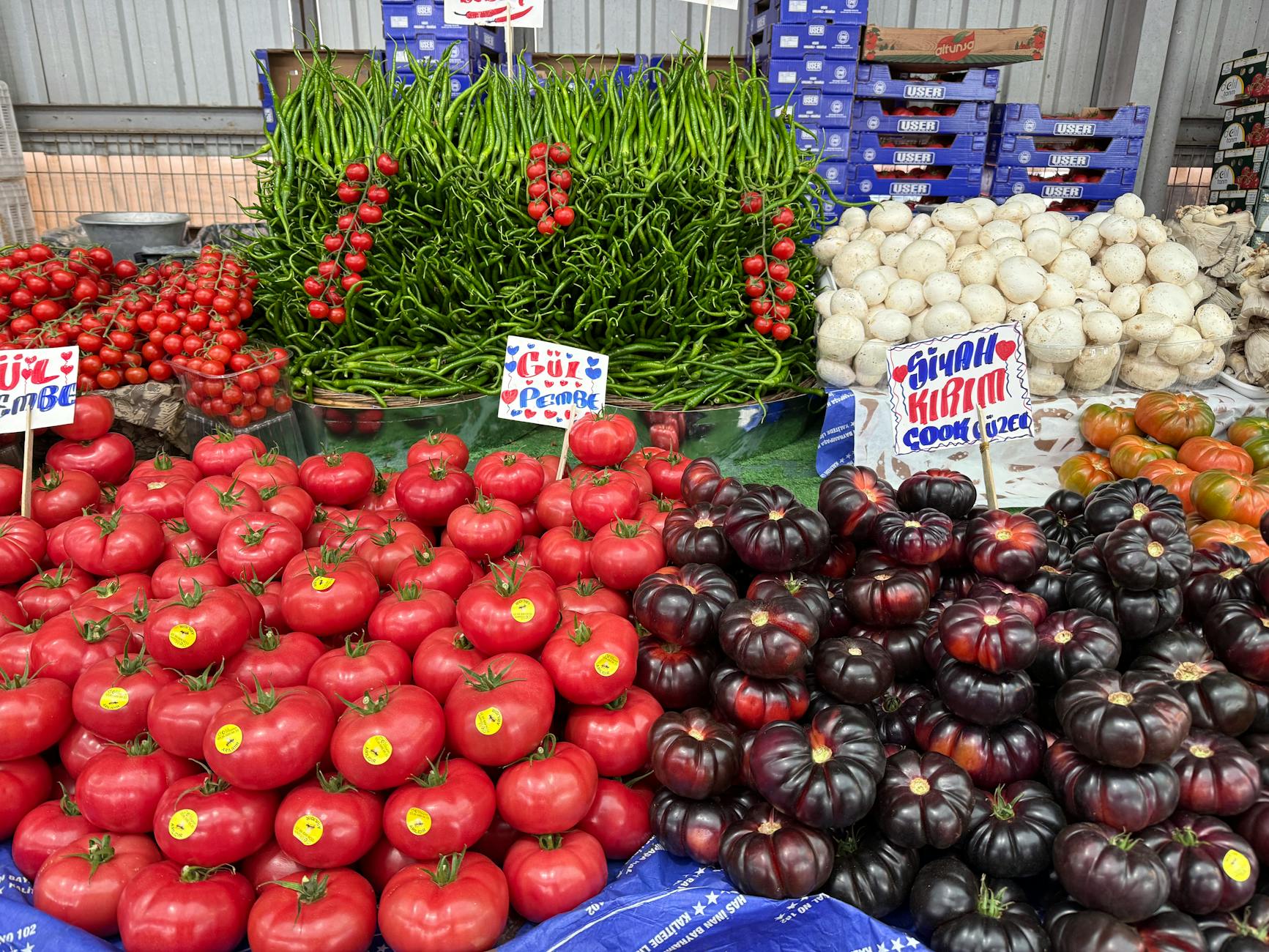
Beyond Mahane Yehuda, Jerusalem has several other markets worth exploring for food lovers. On Friday mornings, Palestinian farmers from villages around the city spread out fresh produce, herbs, cheeses, and baked goods at the Damascus Gate. It offers a more raw and authentic market experience than the tourist-friendly Shuk. The Atarot Industrial Zone north of the city has a wholesale market that supplies many of the city’s restaurants. For specialty food shopping, the German Colony neighborhood along Emek Refaim Street has excellent delicatessens, wine shops, and organic food stores. Tasting local olive oil is a must — Israeli olive oil is increasingly recognized as among the world’s finest, and several shops in the city offer tasting sessions.
Practical Food Tips for Jerusalem Visitors
Understanding Kosher Dining
Kosher dietary laws play a significant role in Jerusalem’s food scene. Most restaurants in West Jerusalem and the Jewish Quarter are kosher, meaning they do not mix meat and dairy, use only kosher-certified ingredients, and close for Shabbat (Friday evening to Saturday evening). A kosher meat restaurant will not serve cheese or cream-based dishes, while a kosher dairy restaurant will not serve meat. Pareve (neutral) items like fish, eggs, and vegetables can appear in either. Non-kosher restaurants also exist, primarily in East Jerusalem, the German Colony, and some downtown areas. Understanding this system helps you navigate menus and expectations. Check for a kosher certificate (teudat kashrut) displayed near the entrance if kosher observance matters to you.
Eating During Shabbat
Shabbat can catch visitors off guard if they are unprepared. From Friday afternoon (roughly two hours before sunset) through Saturday evening, the vast majority of restaurants, cafes, and food shops in Jewish neighborhoods close completely. Plan ahead by stocking up on food before Shabbat begins. Hotels with restaurants typically serve Shabbat meals, which can be a wonderful cultural experience — a traditional Friday night dinner often includes challah bread, wine, chicken soup, and roasted meats. On Saturday, your best options for dining out are East Jerusalem (where Arab restaurants remain open), some hotel restaurants, and a handful of secular-oriented cafes and restaurants in downtown Jerusalem, the First Station complex, and the German Colony. The Tourist Israel Shabbat guide provides updated listings of open restaurants.
Water and Drinks
Jerusalem’s tap water is safe to drink, though many visitors prefer bottled water. Israeli wine has gained international recognition, and Jerusalem has several excellent wine bars. Barood and Bardak in the city center offer curated selections of Israeli wines. Fresh juice stands are ubiquitous, with pomegranate and orange juice the most popular options — always refreshing in the warm climate. Turkish coffee and sachlav (a warm, creamy orchid root drink topped with cinnamon and coconut) are traditional hot beverages worth seeking out, especially in the Old City’s cafes. Israeli craft beer has boomed in recent years, with the Israel Ministry of Tourism promoting local breweries. Beer Bazaar at the shuk is the best place to sample them.
Tipping and Dining Etiquette
Tipping in Jerusalem restaurants is customary at 10 to 15 percent of the bill. Some restaurants add a service charge, so check your bill before adding a tip. At street food stalls and market vendors, tipping is not expected. When dining at a traditional hummus restaurant, the pace is fast — you order, eat, and leave relatively quickly, as these are not places for lingering. At upscale restaurants, the pace is more relaxed and European in style. In Arab restaurants and homes, it is polite to accept offered food and drink graciously, and complimenting the food is always appreciated. If invited to a local home for a meal, bringing sweets or pastries from a good bakery is a thoughtful gesture.
Kosher, Explained: What It Means When You Order
Kosher rules shape more of your eating day in Jerusalem than any other single factor, and almost every visitor bumps into them at the worst possible moment – usually while trying to order a coffee after a steak. The system is straightforward once you see it, and none of it requires you to be Jewish or observant to work around.
Meat, Dairy and Pareve: One Kitchen, One Category
A kosher restaurant is licensed as either meat (basari) or dairy (chalavi). It is never both. A meat restaurant has no butter, cheese, cream or milk anywhere in the building, and a dairy restaurant serves no meat or poultry at all. Fish, eggs, vegetables, grains and oils are pareve – neutral – and appear in either kitchen. The practical consequences catch people out constantly:
- There is no cheeseburger in a kosher restaurant in Jerusalem. There is no cream sauce on a steak, and no parmesan on a bolognese.
- You cannot order a cappuccino, a latte or a milky dessert at a meat restaurant. Coffee comes black or with a non-dairy creamer, and dessert will be sorbet, fruit or a pareve cake made without butter.
- Dairy restaurants are entirely meat-free, which makes them the easiest way to eat vegetarian in the city without asking a single question.
- The waiting period between eating meat and dairy – up to six hours depending on custom – is personal observance, not something a restaurant enforces on you. You simply cannot get both under one roof.
None of this restricts you to a narrow menu. Some of the city’s best kosher kitchens do extraordinary things precisely because they have to build a dairy-free meat menu or a meat-free dairy one, and the vegetable cooking that results is a large part of why modern Israeli food looks the way it does.
Certificates, Badatz and What Mehadrin Signals
A kosher restaurant displays a teudat kashrut, a certificate issued through the local rabbinate, usually framed near the till or the door. It carries the business name and an expiry date, and if it has lapsed the restaurant is not currently certified. Many places carry a second, private certificate from a badatz – a rabbinical court running its own stricter supervision. That is what mehadrin on a sign means: a higher standard, typically a permanently present supervisor, stricter meat sourcing and more rigorous checking of produce for insects. It says nothing at all about how good the food is.
Why Some Excellent Restaurants Choose Not to Certify
Non-kosher does not mean disreputable. Plenty of serious kitchens in West Jerusalem deliberately stay uncertified so they can cook lamb with yogurt, serve shellfish and – crucially – open on Friday night and Saturday, two of the most profitable slots of the week. Several restaurants at the top of the city’s high-end dining scene sit in exactly this category, so a missing certificate is not a warning sign. In East Jerusalem and the Old City’s Muslim, Christian and Armenian Quarters, kosher supervision is not part of the picture at all; those kitchens are mostly halal and open seven days a week.
The Festival Trap: Passover and Yom Kippur
Two dates in the Jewish calendar do things to Jerusalem’s food scene that no amount of improvisation can undo. For the week of Passover, in spring, kosher restaurants strip bread, pita and laffa from their menus and many close outright. On Yom Kippur, in autumn, essentially everything in Jewish Jerusalem closes for around 25 hours, including the airport. Both dates move each year, so check them against your trip before booking.
Eating on Shabbat: A Friday-to-Saturday Playbook
Shabbat runs from Friday sunset to nightfall on Saturday, and it is not a soft closure. In Jewish West Jerusalem the restaurants, cafes, bakeries and supermarkets shut, buses and the light rail stop, and a city that was frantic at noon on Friday is silent by eight. Handled well it is a memorable 24 hours. Handled badly it is a hungry evening in a hotel lobby.
Friday: The Busiest Food Day of the Week
Friday morning is when Jerusalem shops and eats hardest. Mahane Yehuda is at full volume from early morning and everything winds down through the early afternoon – market stalls start closing around midday and are finished well before sunset. Two rules follow. Do your Friday market visit in the morning, not after lunch. And if you want dinner in a restaurant on Friday night, book it several days ahead: the few places that trade through Shabbat absorb the demand of an entire city.
Friday Night: Hotel Dinners and the Alternatives
Most Jerusalem hotels serve a Shabbat dinner on Friday night, usually a set menu or a large buffet with challah and kiddush wine, and most sell seats to non-guests who book in advance. It is the easiest solution and, for a first-time visitor, a genuinely interesting one. The alternatives are East Jerusalem, where nothing closes, and the handful of non-kosher West Jerusalem restaurants that stay open.
Saturday: Where the City Still Eats
Saturday daytime is quieter than Friday night. Your reliable options are East Jerusalem and the American Colony area, the Old City, Ein Karem, the First Station complex, and a short list of restaurants licensed to trade on Saturday. The official city tourism listing of restaurants open on Saturday names places including Mona, Menza, Chakra, Talbiye, Hasadna, Satya in the German Colony, Cafe Bezalel and the Courtyard restaurant at the American Colony Hotel. Confirm directly before you set out, because Saturday hours change more often than weekday ones. Buses and the light rail do not run, but taxis do, East Jerusalem bus lines operate seven days a week, and most of the city is walkable.
Saturday Night: The City Comes Back
Roughly an hour after sundown on Saturday, Jerusalem restarts. Kitchens that closed on Friday afternoon reopen, the bars in and around Mahane Yehuda fill up, and motzei Shabbat becomes one of the best nights of the week to be out. If your itinerary is tight, plan a big Saturday night meal rather than fighting for a Saturday lunch table. Sunday is a normal working day in Israel and everything is open again.
What Food Costs in Jerusalem
Jerusalem is not a cheap city, and visitors arriving with expectations set by other parts of the region are usually surprised. The good news is that the cheapest food here is also some of the best, so eating well on a budget is a matter of choosing the right category rather than settling for less. Figures below are as of August 2026, in Israeli shekels.
- Street food: falafel, sabich or shawarma in a pita generally runs 25 to 40 shekels, with laffa wraps and loaded plates at the upper end. This is where the city’s stall and counter cooking delivers the best value of any category.
- Hummus counters: a full plate with pita, pickles and raw onion sits in a similar band and is a meal, not a starter. The queue at the serious hummus houses usually moves faster than it looks.
- Casual sit-down: a meal at an inexpensive restaurant averages around 72 shekels according to Numbeo’s Jerusalem price data, with most reported prices between 51 and 83.
- Mid-range dinner: three courses for two without drinks averages about 300 shekels, so budget roughly 150 per person before wine.
- Drinks: a cappuccino averages about 14.50 shekels, a pint of local draft beer about 24, and a small bottle of water in a cafe around 9.
- Chef restaurants: a tasting menu at a leading kitchen is a different order of magnitude again. Check the current menu on the restaurant’s own site when you reserve.
Three habits cut the bill noticeably. Weekday business lunch menus – asakim – offer two or three courses at a fraction of the same kitchen’s dinner price, Sunday to Thursday. Buying from market stalls and eating standing up costs a fraction of the table-service equivalent. And a service charge is usually not included, so a tip of 10 to 15 percent is real money on top of the printed price. Cards are accepted almost everywhere, but the smallest Old City stalls and some market vendors are cash only – and always ask for a menu with prices before ordering in the Old City tourist lanes.
Eating with Dietary Restrictions
Jerusalem handles dietary requirements better than most cities, largely by accident: a food culture built on legumes, vegetables, tahini and grilled meat, combined with kosher kitchens already segregated by category, means much of the work is done before you ask.
Vegan and Vegetarian
Israel has one of the highest rates of veganism in the world and Jerusalem menus reflect it. Hummus, falafel, tahini, msabaha, baba ganoush, tabbouleh, fattoush, majadra, stuffed vegetables and most of a mezze table are vegan as served, with no substitutions required. Kosher meat restaurants contain no dairy at all, which means their vegetable dishes, salads and sides are usually vegan by default. The useful Hebrew words are tsimchoni for vegetarian and tiv’oni for vegan, both printed on menus and understood everywhere. For dedicated kitchens rather than adapted menus, Jerusalem’s plant-based dining rooms range from the long-established Satya in the German Colony, which also trades on Saturday, to Nocturno near the market.
Gluten-Free
This is the harder one, since pita and laffa are structural to the local diet and street food is usually handed to you inside bread. The workarounds are good: order street food as a plate rather than in a pita, and the whole mezze and grill repertoire – hummus, salads, grilled meats, fish, shakshuka, rice dishes – is naturally gluten-free. Say lelo gluten, “without gluten”, and ask specifically about couscous, the bulgur in tabbouleh and the flour in kubbeh. Marked menus exist in the city center and German Colony, but cross-contamination standards vary and are worth raising directly if you are celiac.
Halal
Restaurants in East Jerusalem, the Old City’s Muslim Quarter and much of the Christian Quarter serve halal meat as a matter of course, and many serve no alcohol at all. In West Jerusalem, kosher meat is slaughtered under Jewish ritual law rather than halal certification – some Muslim visitors accept it on that basis and others do not – so kosher dairy restaurants, vegetarian kitchens and fish restaurants are the straightforward fallback.
Allergies
Sesame deserves a specific warning. Tahini is in the hummus, on the falafel, under the shawarma, in the salad dressings and in the halva, and a sesame allergy is genuinely difficult to manage here. Nuts run through the pastry repertoire and pine nuts are standard on meat and rice dishes. Staff in the city center speak good English and take allergies seriously; at busy market counters, choose something whose ingredients you can see. A guided tasting walk also hands the problem to someone who already knows which stalls can accommodate you.
Food Tours and Culinary Experiences
For visitors who want a curated introduction to Jerusalem’s food scene, guided food tours are an excellent investment. Several companies offer walking food tours through Mahane Yehuda Market, the Old City, and specific neighborhoods. These tours typically last three to four hours and include multiple tastings along with historical and cultural context. A good food tour will introduce you to vendors and dishes you might otherwise walk past. Cooking classes are another popular option — several organizations offer hands-on Palestinian and Israeli cooking workshops where you learn to make dishes like shakshuka, hummus from scratch, and stuffed grape leaves. The where to stay in Jerusalem guide can help you choose accommodation near the best food neighborhoods.
Frequently Asked Questions About Jerusalem Food
What is the most famous food in Jerusalem?
Hummus and falafel are Jerusalem’s most iconic foods. Hummus is served as a main dish with warm pita, while falafel is the city’s most popular street food. Jerusalem Mixed Grill (meorav yerushalmi) is the city’s signature meat dish, unique to this city. Knafeh is the most celebrated dessert, particularly the versions found in the Old City’s Muslim Quarter.
Where should I eat on Shabbat in Jerusalem?
During Shabbat (Friday evening to Saturday evening), most restaurants in Jewish neighborhoods close. Your options include hotel restaurants that serve Shabbat meals, restaurants in East Jerusalem which remain open, a handful of cafes and restaurants in the German Colony and First Station complex, and some downtown establishments. Hotels like the David Citadel, Mamilla, and King David offer traditional Shabbat dinner experiences.
Is the food in Jerusalem expensive?
Jerusalem offers food at every price point. Street food like falafel, sabich, and shawarma costs 20 to 40 Israeli shekels (roughly 5 to 10 US dollars). A hummus meal at a traditional restaurant is similar. Mid-range restaurant meals run 60 to 120 shekels per person, while fine dining starts at around 200 shekels. Eating at markets and street stalls is the most budget-friendly approach and arguably offers the most authentic Jerusalem food experience.
Can vegetarians eat well in Jerusalem?
Jerusalem is one of the best cities in the world for vegetarians. Hummus, falafel, sabich (without the egg if vegan), shakshuka, and countless salads and vegetable dishes are all naturally vegetarian. Many restaurants offer dedicated vegetarian and vegan menus. Satya in the German Colony is entirely vegetarian and highly acclaimed. The kosher dairy restaurant category means there are entire restaurants that serve no meat at all, focusing on fish, cheese, and vegetable dishes.
What food should I bring back from Jerusalem?
The best edible souvenirs from Jerusalem include za’atar spice blend, sumac, tahini, halva from Halva Kingdom, local olive oil, dried dates and figs, Turkish delight and baklava from the Old City, and Israeli wine. These items pack well in luggage and make wonderful gifts. The spice shops at Mahane Yehuda Market and the Old City bazaar offer the widest selection at the best prices.
Do I need to book restaurants in Jerusalem?
For street food, hummus counters and market stalls, no – you queue and eat. For anything mid-range or above you should reserve, and for Thursday night, Friday lunch, Friday night and Saturday you should reserve several days ahead, because the small number of restaurants trading over Shabbat absorbs demand from the whole city. Most take bookings through their own website or by phone, and hotel Shabbat dinners usually need confirming by Thursday.
Why can I not get a cappuccino after a meat meal?
Because kosher restaurants are licensed as either meat or dairy and never both, so a meat restaurant has no milk, butter or cheese on the premises at all. Coffee after dinner comes black or with a non-dairy creamer, and desserts are made without butter or cream. The same rule explains the absence of cheeseburgers, cream sauces on steak and parmesan on pasta in kosher kitchens – and why a kosher dairy restaurant serves no meat whatsoever.
What does mehadrin mean on a restaurant sign?
Mehadrin indicates a stricter level of kosher supervision than the basic certificate, usually granted by a private rabbinical court known as a badatz and involving a permanently present supervisor, stricter meat sourcing and more thorough checking of produce. Every kosher restaurant also displays a teudat kashrut certificate with an expiry date near the entrance. Mehadrin is a statement about supervision standards, not about the quality of the cooking.
How does Passover affect eating out in Jerusalem?
For the week of Passover in spring, kosher restaurants and bakeries remove bread, pita and laffa from their menus, many close entirely, and supermarkets cover their bread aisles. Falafel and shawarma in a pita become very difficult to find in West Jerusalem, while restaurants in East Jerusalem and the Old City are unaffected. If your trip overlaps with Passover, plan on plated food rather than anything wrapped in bread, and check the dates before booking since they shift each year.
Photo Credits
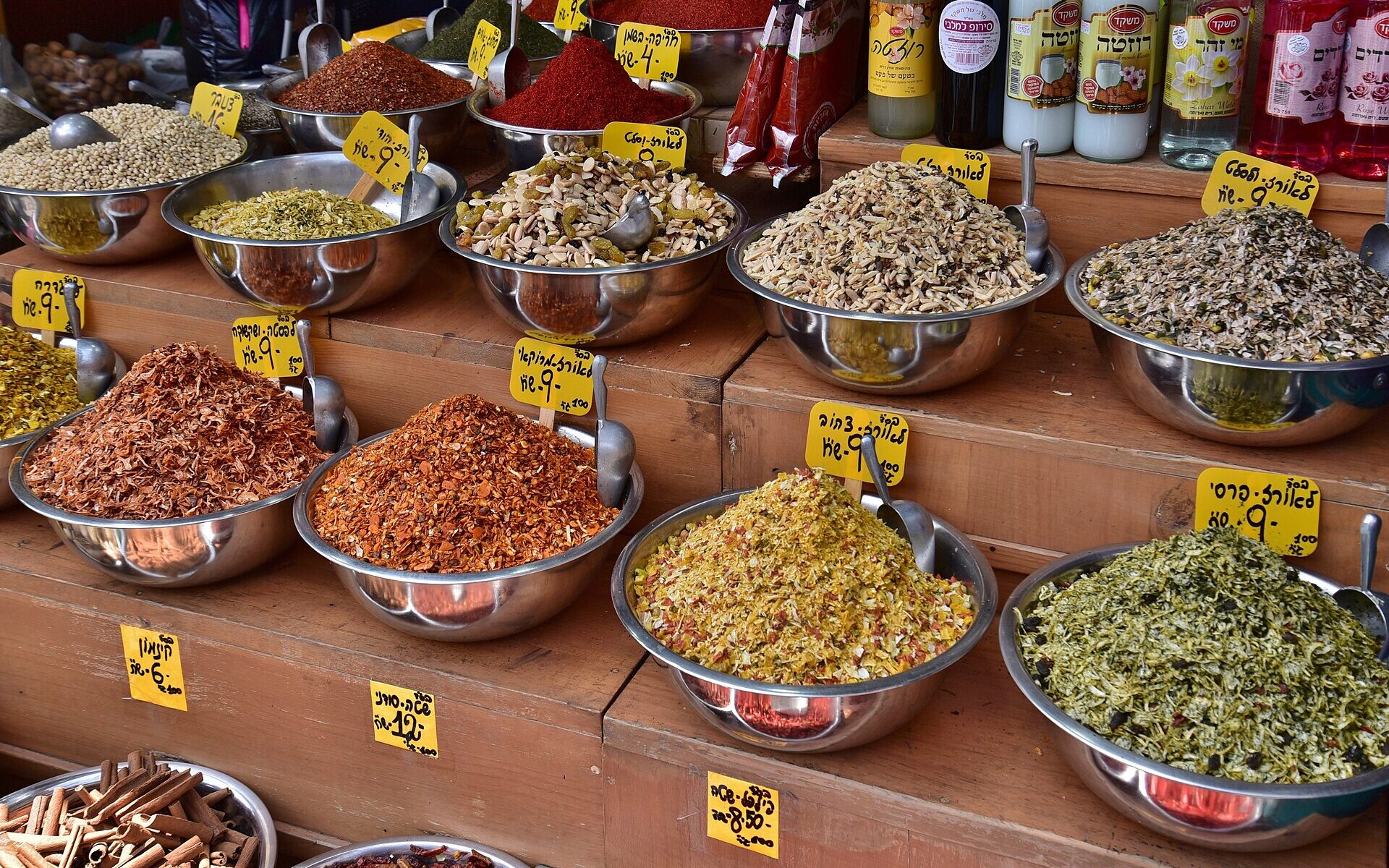
Bowls of spices and rice seasonings at Mimon Spices, Mahane Yehuda Market: Mimon Spices (Mahane Yehuda Market), 2019 (03) by Bahnfrend, CC BY-SA 4.0, via Wikimedia Commons.
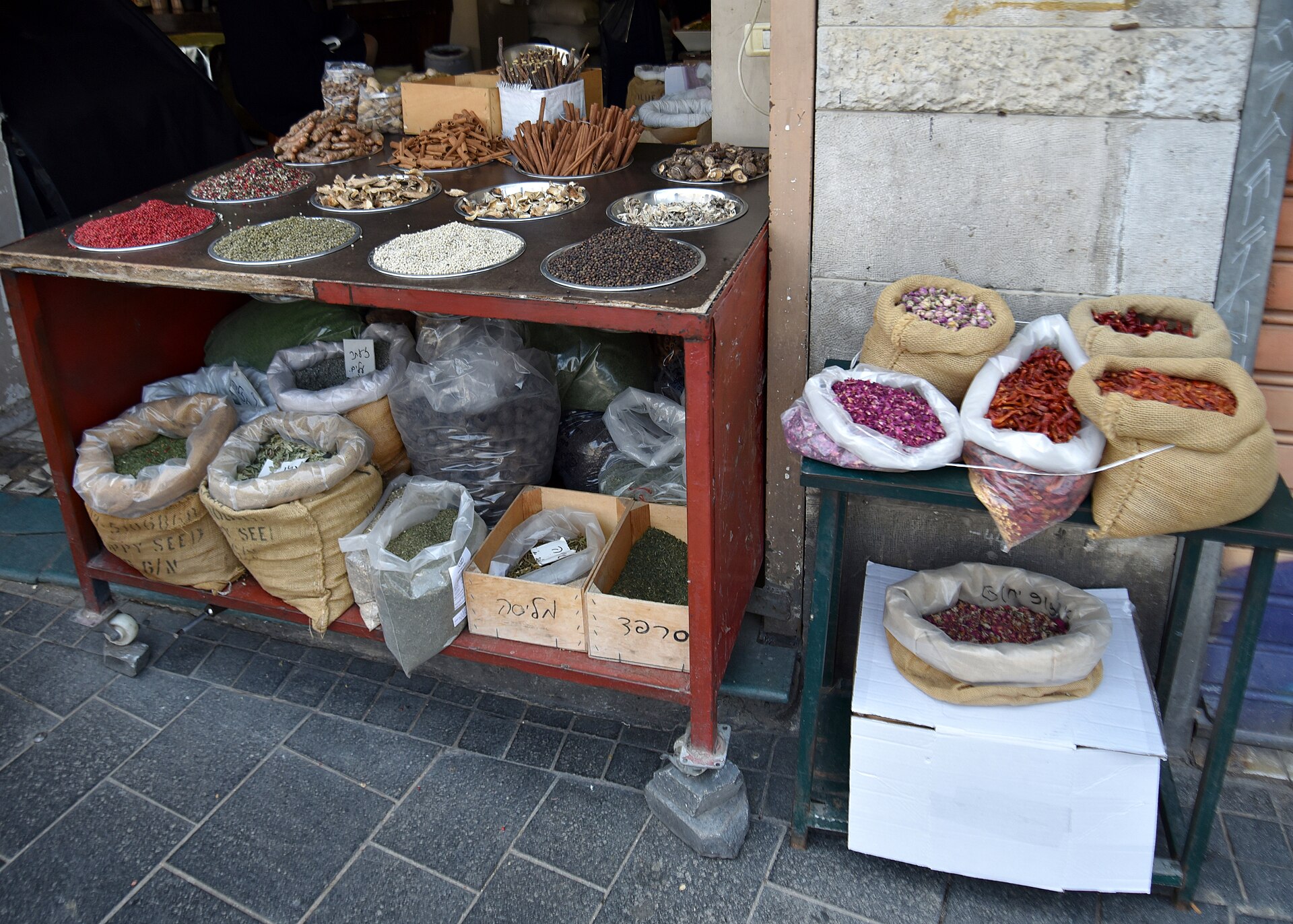
Peppercorns, cinnamon and dried herbs at Nisan’s, Mahane Yehuda Market: Nisan’s (Mahane Yehuda Market), 2019 (02) by Bahnfrend, CC BY-SA 4.0, via Wikimedia Commons.
Falafel in pita with parsley, tomato and tahini: Falafel in a pita by Dana Friedlander / Israeli Ministry of Tourism, CC BY-SA 2.0, via Wikimedia Commons.
The restaurant in the Jerusalem International YMCA: מסעדת ימק”א by Avi elispur, CC BY-SA 3.0, via Wikimedia Commons.
{"@context": "https://schema.org", "@type": "FAQPage", "mainEntity": [{"@type": "Question", "name": "What is the most famous food in Jerusalem?", "acceptedAnswer": {"@type": "Answer", "text": "Hummus and falafel are Jerusalem's most iconic foods. Hummus is served as a main dish with warm pita, while falafel is the city's most popular street food. Jerusalem Mixed Grill (meorav yerushalmi) is the city's signature meat dish, unique to this city. Knafeh is the most celebrated dessert, particularly the versions found in the Old City's Muslim Quarter."}}, {"@type": "Question", "name": "Where should I eat on Shabbat in Jerusalem?", "acceptedAnswer": {"@type": "Answer", "text": "During Shabbat (Friday evening to Saturday evening), most restaurants in Jewish neighborhoods close. Your options include hotel restaurants that serve Shabbat meals, restaurants in East Jerusalem which remain open, a handful of cafes and restaurants in the German Colony and First Station complex, and some downtown establishments. Hotels like the David Citadel, Mamilla, and King David offer traditional Shabbat dinner experiences."}}, {"@type": "Question", "name": "Is the food in Jerusalem expensive?", "acceptedAnswer": {"@type": "Answer", "text": "Jerusalem offers food at every price point. Street food like falafel, sabich, and shawarma costs 20 to 40 Israeli shekels (roughly 5 to 10 US dollars). A hummus meal at a traditional restaurant is similar. Mid-range restaurant meals run 60 to 120 shekels per person, while fine dining starts at around 200 shekels. Eating at markets and street stalls is the most budget-friendly approach and arguably offers the most authentic Jerusalem food experience."}}, {"@type": "Question", "name": "Can vegetarians eat well in Jerusalem?", "acceptedAnswer": {"@type": "Answer", "text": "Jerusalem is one of the best cities in the world for vegetarians. Hummus, falafel, sabich (without the egg if vegan), shakshuka, and countless salads and vegetable dishes are all naturally vegetarian. Many restaurants offer dedicated vegetarian and vegan menus. Satya in the German Colony is entirely vegetarian and highly acclaimed. The kosher dairy restaurant category means there are entire restaurants that serve no meat at all, focusing on fish, cheese, and vegetable dishes."}}, {"@type": "Question", "name": "What food should I bring back from Jerusalem?", "acceptedAnswer": {"@type": "Answer", "text": "The best edible souvenirs from Jerusalem include za'atar spice blend, sumac, tahini, halva from Halva Kingdom, local olive oil, dried dates and figs, Turkish delight and baklava from the Old City, and Israeli wine. These items pack well in luggage and make wonderful gifts. The spice shops at Mahane Yehuda Market and the Old City bazaar offer the widest selection at the best prices."}}, {"@type": "Question", "name": "Do I need to book restaurants in Jerusalem?", "acceptedAnswer": {"@type": "Answer", "text": "For street food, hummus counters and market stalls, no - you queue and eat. For anything mid-range or above you should reserve, and for Thursday night, Friday lunch, Friday night and Saturday you should reserve several days ahead, because the small number of restaurants trading over Shabbat absorbs demand from the whole city. Most take bookings through their own website or by phone, and hotel Shabbat dinners usually need confirming by Thursday."}}, {"@type": "Question", "name": "Why can I not get a cappuccino after a meat meal?", "acceptedAnswer": {"@type": "Answer", "text": "Because kosher restaurants are licensed as either meat or dairy and never both, so a meat restaurant has no milk, butter or cheese on the premises at all. Coffee after dinner comes black or with a non-dairy creamer, and desserts are made without butter or cream. The same rule explains the absence of cheeseburgers, cream sauces on steak and parmesan on pasta in kosher kitchens - and why a kosher dairy restaurant serves no meat whatsoever."}}, {"@type": "Question", "name": "What does mehadrin mean on a restaurant sign?", "acceptedAnswer": {"@type": "Answer", "text": "Mehadrin indicates a stricter level of kosher supervision than the basic certificate, usually granted by a private rabbinical court known as a badatz and involving a permanently present supervisor, stricter meat sourcing and more thorough checking of produce. Every kosher restaurant also displays a teudat kashrut certificate with an expiry date near the entrance. Mehadrin is a statement about supervision standards, not about the quality of the cooking."}}, {"@type": "Question", "name": "How does Passover affect eating out in Jerusalem?", "acceptedAnswer": {"@type": "Answer", "text": "For the week of Passover in spring, kosher restaurants and bakeries remove bread, pita and laffa from their menus, many close entirely, and supermarkets cover their bread aisles. Falafel and shawarma in a pita become very difficult to find in West Jerusalem, while restaurants in East Jerusalem and the Old City are unaffected. If your trip overlaps with Passover, plan on plated food rather than anything wrapped in bread, and check the dates before booking since they shift each year."}}]}