The Muslim Quarter is the largest and most densely populated of the four quarters of Jerusalem’s Old City, a place where covered markets, the scent of cardamom coffee, and the call to prayer fill streets that have carried trade and pilgrims for a thousand years. It also holds the entrances to the Temple Mount (Haram al-Sharif) and runs along most of the Via Dolorosa, making it central to both Muslim and Christian Jerusalem. This guide covers what to see in the Muslim Quarter of Jerusalem, how to navigate its souks, opening hours, prices in shekels, and the etiquette that keeps a visit respectful.
It is one of the four quarters of the Old City, alongside the Christian, Jewish, and Armenian Quarters, and the most sensory of them all. The lanes can feel busy and disorienting at first, but they reward a curious, unhurried walk. For the wider picture of sacred places across the city, see our guide to holy sites in Jerusalem.
A Brief Orientation and History
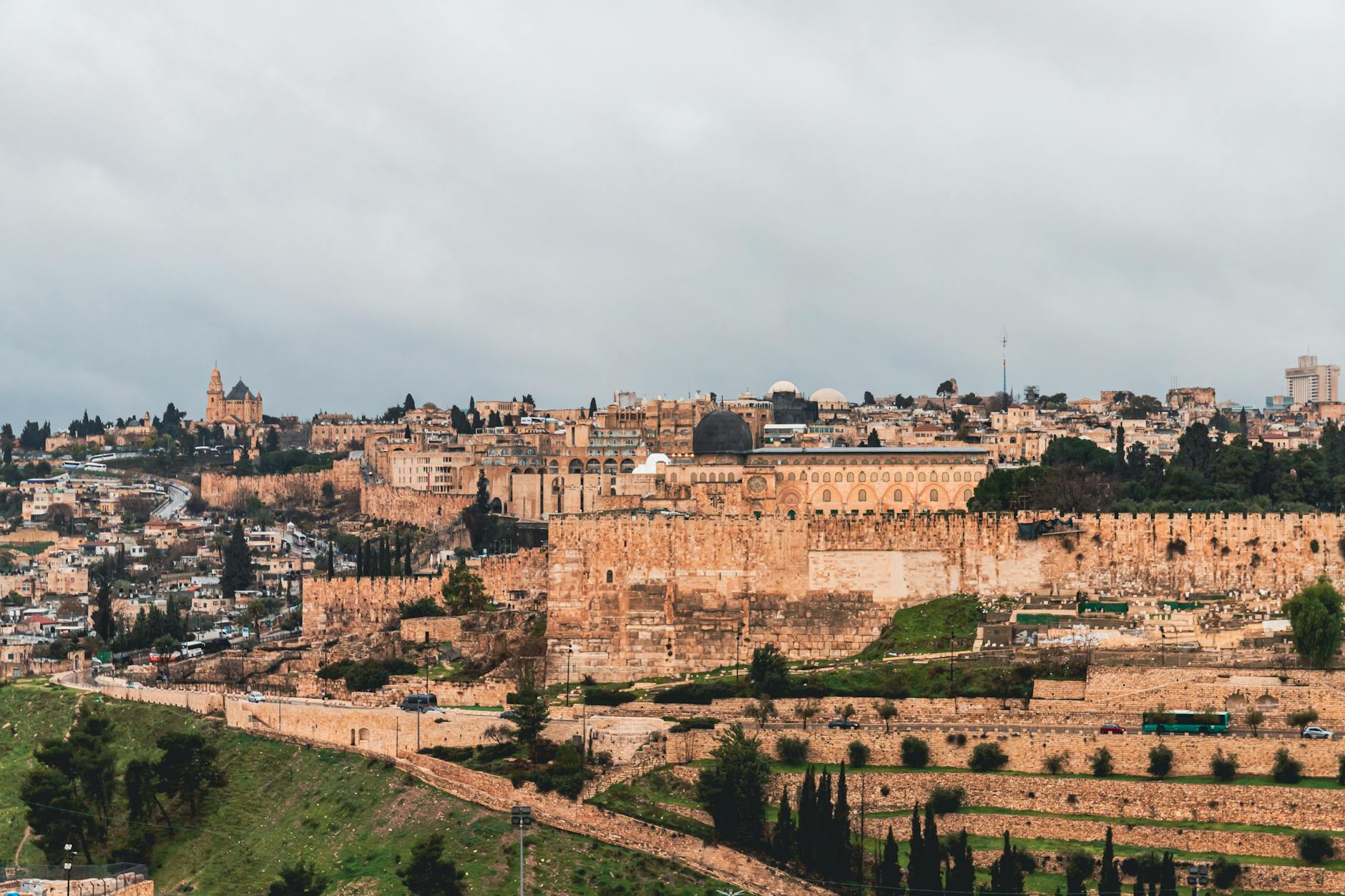
The Muslim Quarter spreads across the northeastern Old City, entered most dramatically through Damascus Gate to the north and Lions’ Gate to the east. Its character was shaped under the Mamluks (13th to 16th centuries), whose distinctive striped stonework and ornate doorways still line the streets near the Temple Mount, and under the Ottomans who followed. Today it is home to the bulk of the Old City’s residents and the busiest of its market streets. Many of the grand buildings lining the approaches to the Haram once served as religious colleges, hospices, and tomb-complexes endowed by Mamluk officials, and their carved facades remain among the city’s architectural treasures. Because it surrounds the Haram al-Sharif and threads through the route of the Via Dolorosa, the quarter is a meeting point of faiths as much as a neighborhood, where pilgrims, worshippers, traders, and residents share the same narrow streets every day.
What to See in the Muslim Quarter
The sites and streets below sit within a short walk of Damascus Gate and the Temple Mount entrances.
The Souks (Markets)
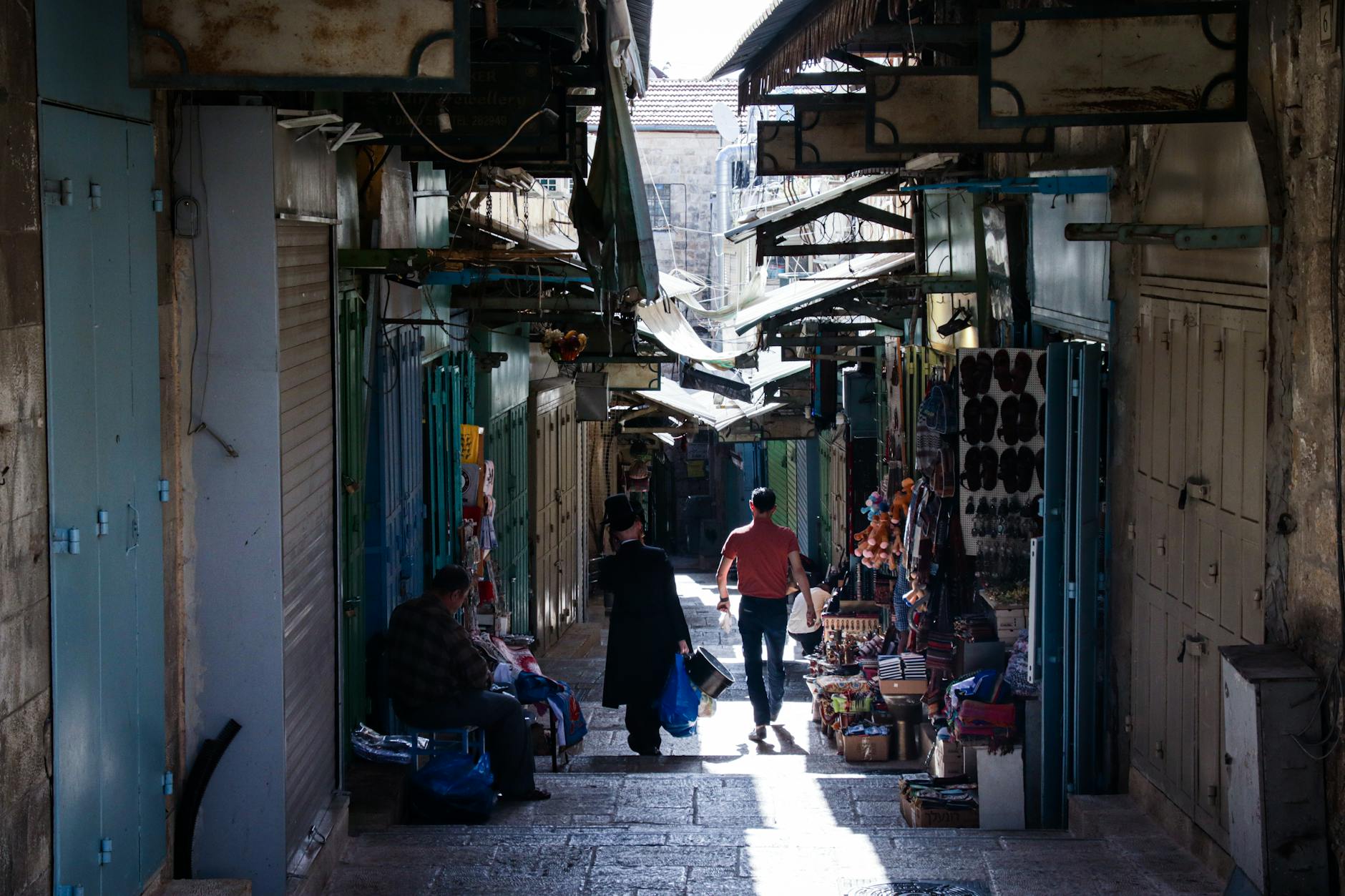
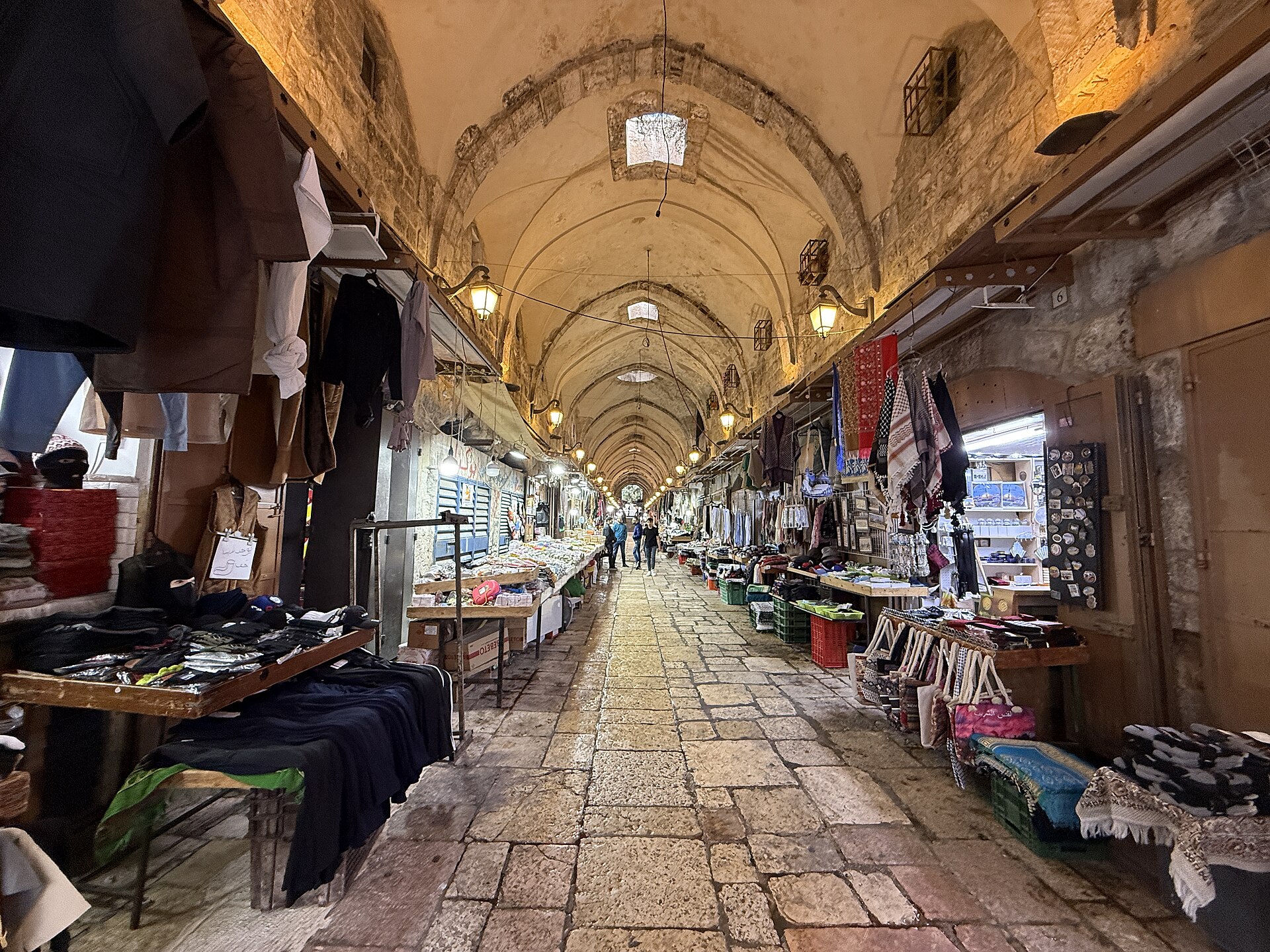
The covered markets are the beating center of the quarter. Three parallel medieval streets, the old spice, butcher, and goldsmith bazaars, run south from near Damascus Gate, lined with stalls selling spices, sweets, fresh produce, textiles, shoes, and household goods. The atmosphere is loud, fragrant, and packed, especially in the mornings. This is everyday shopping for locals as much as a sight, which is part of its appeal. For a fuller breakdown of the markets, see our Old City market guide.
Damascus Gate
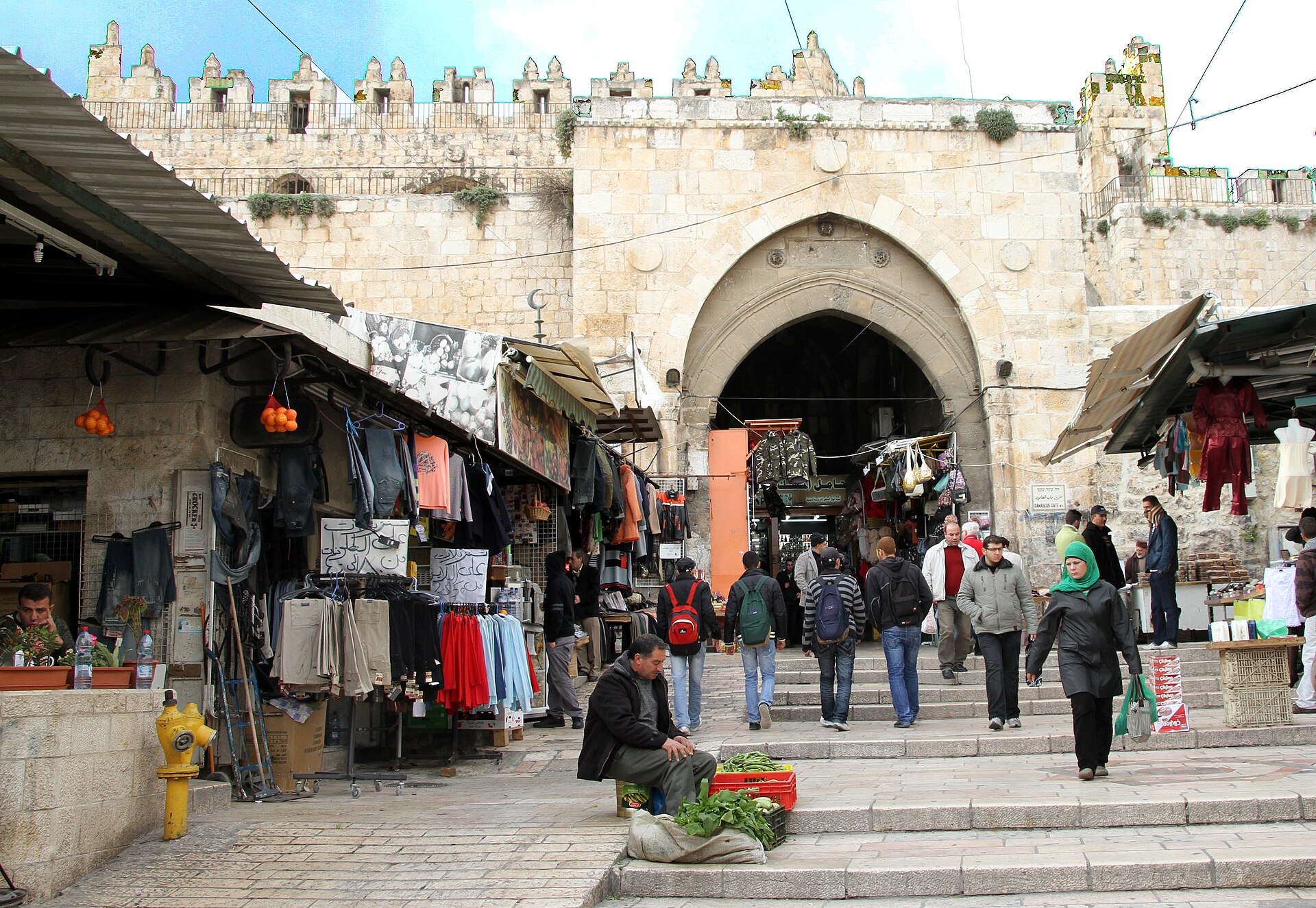
The grandest of the Old City gates, Damascus Gate (Bab al-Amud) is the monumental northern entrance to the Muslim Quarter, with a triple-arched Ottoman facade above a sunken plaza where Roman remains survive below. It is busiest in the late afternoon and a key landmark for orienting yourself. The plaza outside is a gathering place and a transport hub for Arab buses to the Mount of Olives, Bethlehem, and beyond.
Lions’ Gate (St. Stephen’s Gate)
On the eastern wall, Lions’ Gate takes its name from the carved feline figures (actually heraldic panthers) flanking it. It opens toward the Mount of Olives and marks the traditional start of the Via Dolorosa. Just inside lie some of the quarter’s quieter Christian sites, a contrast to the market bustle to the west.
Pool of Bethesda and Church of St. Anne
Inside Lions’ Gate, the excavated Pool of Bethesda recalls the Gospel healing miracle, and the adjacent Crusader-era Church of St. Anne is famous for extraordinary acoustics; visitors often pause to sing beneath its bare stone vaults. A small entry fee of around 12 shekels applies, and the complex typically opens 8am to noon and 2pm to 5pm, closed Sundays. It is one of the calmest spots in the quarter.
The Via Dolorosa
The first nine Stations of the Cross of the Via Dolorosa wind through the Muslim Quarter, marked by small plaques above the market streets. Following the route here means weaving past spice stalls and butchers, a reminder that Jerusalem’s sacred and ordinary lives have always overlapped. The Franciscan-led procession passes through every Friday afternoon. The final stations lie over the border in the Christian Quarter, inside the Church of the Holy Sepulchre.
Temple Mount Gates
Several of the gates into the Haram al-Sharif open from the Muslim Quarter, their entrances often visible at the ends of market lanes. Non-Muslims cannot enter through these gates; the only entrance for non-Muslim visitors is the Mughrabi Gate ramp beside the Western Wall, during restricted hours. Still, the ornate Mamluk gateways are striking to see from the street. For the sacred heart of the Mount, read our guide to the Dome of the Rock.
Austrian Hospice
At the corner where the Via Dolorosa crosses the main market street, the 19th-century Austrian Hospice offers a peaceful courtyard, a famous cafe serving apple strudel and Viennese coffee, and a rooftop terrace with one of the best free views over the Old City. It is a welcome pause from the crowds and open to all.
Architecture and History
The Muslim Quarter holds the finest Mamluk architecture in Jerusalem: striped masonry in alternating colors (ablaq), stalactite-like carved doorways (muqarnas), and elegant facades on the streets approaching the Temple Mount. Many were religious schools (madrasas), hospices, and tombs built by Mamluk officials. Look up as you walk the lanes near the Haram, and you will see centuries of careful stonework above the modern shopfronts.
Food in the Muslim Quarter
This is one of the best places to eat in the Old City, and most of it is street food. Look for fresh kaak (sesame bread rings) sold from carts, hot knafeh (a sweet cheese pastry in orange syrup), falafel and hummus, shawarma, fresh juices, and Arabic sweets piled in shop windows. Prices are low: a kaak or falafel runs roughly 10 to 20 shekels, a plate of hummus perhaps 25 to 35 shekels. Unlike the Jewish Quarter, eateries here stay open on Saturday, though many close or shorten hours on Friday around midday prayers. Our guide to what to eat from the city’s street stalls points you to the best bites.
Shopping in the Muslim Quarter
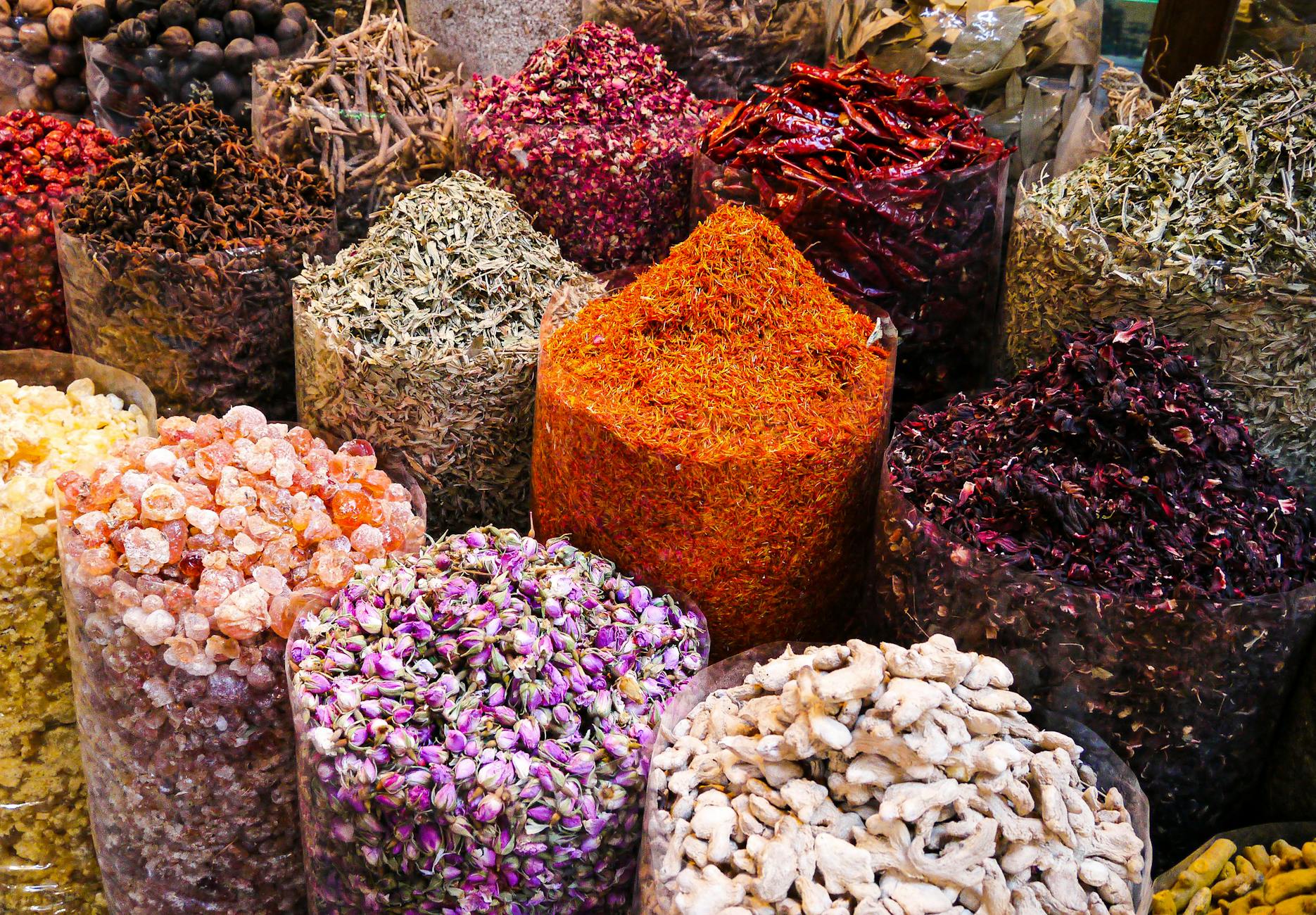
The souks sell everything from spices and sweets to textiles, ceramics, leather, jewelry, and souvenirs, usually at lower starting prices than the tourist-facing shops near Jaffa Gate, and bargaining is the norm. Take your time, compare a few stalls, and haggle politely. Spices, dried fruit, zaatar, and Arabic sweets make excellent, packable gifts. For the technique, see our guide to bargaining in Jerusalem markets, and for the city’s wider spice trade, our Jerusalem spice market guide.
Etiquette and Dress
The Muslim Quarter is a residential and religious neighborhood, so modest dress is appreciated: cover shoulders and knees, and women may feel more comfortable with a scarf to hand. Friday is the main day of prayer, when the quarter is busiest around midday and some shops close for an hour or two. Ask before photographing people, particularly women and worshippers, and be especially respectful near the Temple Mount entrances. A friendly, low-key manner goes a long way, and a little Arabic (“shukran” for thank you) is always welcome. Our guide to what to wear at Jerusalem’s holy sites covers the rules across the city.
Best Time to Visit the Muslim Quarter
The souks are at their best in the morning, when produce is fresh, bread is hot, and the crowds have not yet peaked. Late afternoons around Damascus Gate grow dense, which is atmospheric but can feel overwhelming if you dislike crowds. Spring and autumn bring comfortable walking weather; summer middays are hot, though the covered markets offer welcome shade. During the holy month of Ramadan, the quarter takes on a special evening energy after the daytime fast, with festive night markets and sweets, but daytime hours can be quieter; non-Muslim visitors are welcome but should be especially mindful of those fasting. Whenever you come, weekday and Saturday mornings tend to be the smoothest times to explore. Our best time to visit Jerusalem guide details each month, and our Jerusalem itinerary plans help you fit the quarter into a wider trip.
How to Get to the Muslim Quarter
Damascus Gate is the main northern entrance, a short walk from the Damascus Gate / City Hall area served by the Light Rail Red Line (around 6 shekels a ride; no Shabbat service). Lions’ Gate on the east connects to the Mount of Olives. Taxis and Arab buses use the Damascus Gate plaza, but vehicles cannot enter the market lanes. Inside, it is all on foot through busy, sometimes stepped streets, so wear closed, comfortable shoes and keep valuables secure in the crowds. See our Jerusalem transportation guide for reaching the Old City.
Suggested Walking Route
Enter through Damascus Gate and let the main market street pull you south into the souks, pausing for a kaak or knafeh along the way. Branch east toward the Austrian Hospice and climb to its rooftop for the view. From there, follow the Via Dolorosa eastward past the market stalls toward Lions’ Gate, stopping at the Pool of Bethesda and the soaring acoustics of St. Anne’s Church. Allow two to three hours, more if you shop or linger over food. Several counters along this route serve some of the best hummus in Jerusalem, well worth building a stop around. To continue into the neighboring quarters, use our Old City guide.
Practical Tips
- Go in the morning. The souks are liveliest and freshest early; afternoons near Damascus Gate get very crowded.
- Mind Friday prayers. Around midday Friday the quarter is busiest and some shops briefly close; plan around it.
- Open on Saturday. The Muslim Quarter stays open on the Jewish Shabbat, so it is a good Saturday destination in the Old City.
- Bargain politely. Starting prices are negotiable; compare stalls and haggle with good humor.
- Dress modestly. Cover shoulders and knees; carry a scarf, especially near the Temple Mount gates.
- Watch your belongings. The crowded lanes call for a zipped bag worn in front.
- Carry small cash. Street food and market stalls are cash-only and inexpensive.
Everything on this page describes the quarter in an ordinary month. For roughly thirty days a year it becomes something else entirely: lanterns strung under the vaults, the qatayef griddles out along Al-Wad Street, the whole quarter emptying into a meal within ninety seconds of sunset and then staying out until one in the morning. Our guide to Ramadan in Jerusalem explains how to time your day around it, and what is and is not restricted.
One afternoon a year the quarter looks nothing like the description above. On Jerusalem Day, in late May or early June, the Flag March has in recent years passed through Damascus Gate and down Hagai Street, and most shops along the route close for the afternoon, often at police request. If your only chance to browse the souq falls on that date, go in the morning or move it to another day. Our guide to Jerusalem Day explains what happens and where the crowds concentrate.
Photo Credits
The vaulted Cotton Merchants’ Market (Suq al-Qattanin): 140819 jerusalem – cotton sellers market PikiWiki Israel by שלמה רודד, CC BY 2.5, via Wikimedia Commons.
Market stalls inside Damascus Gate: Jerusalem-Damaskustor-14-Haendler-2010-gje by Gerd Eichmann, CC BY-SA 4.0, via Wikimedia Commons.