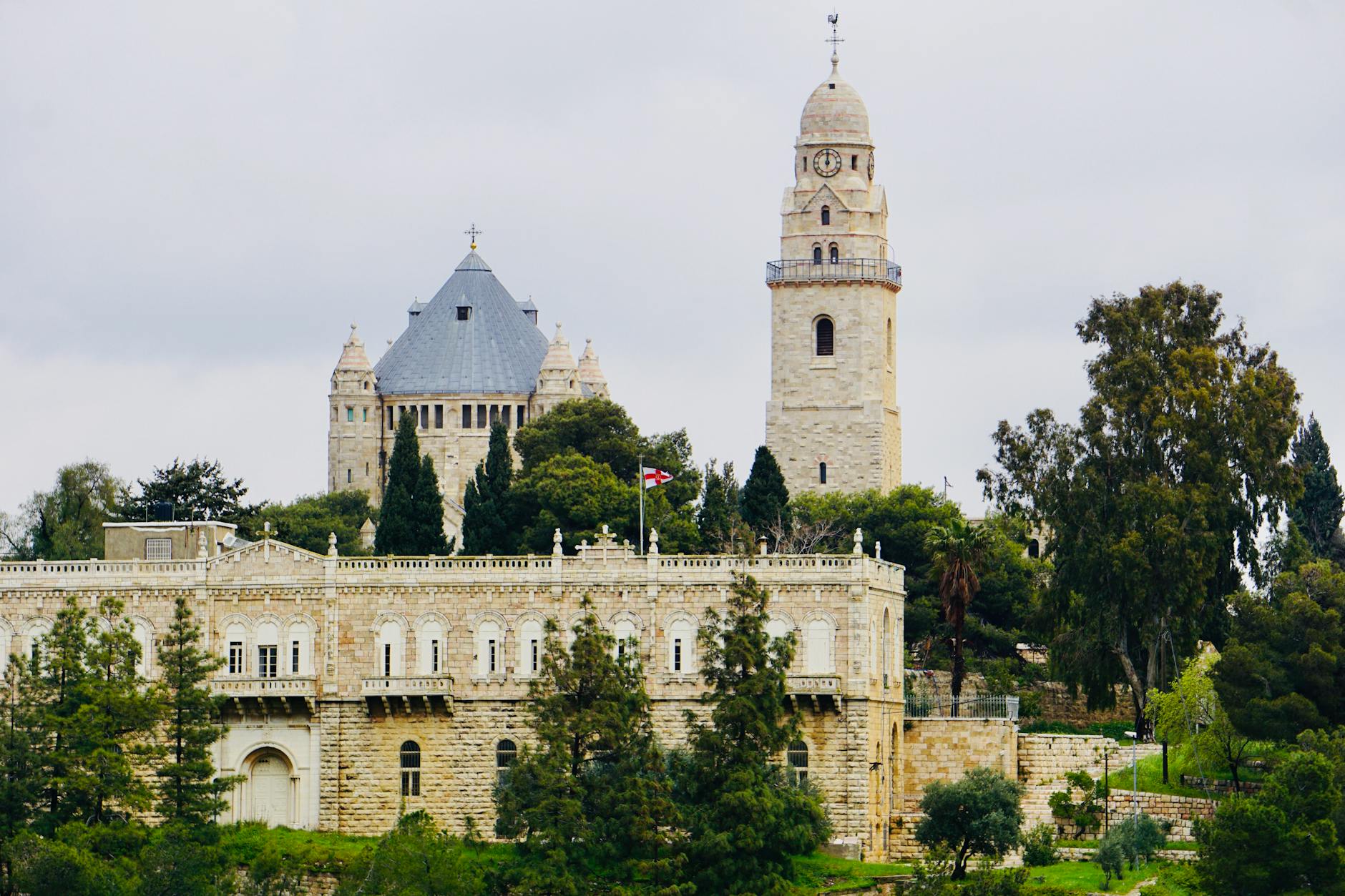
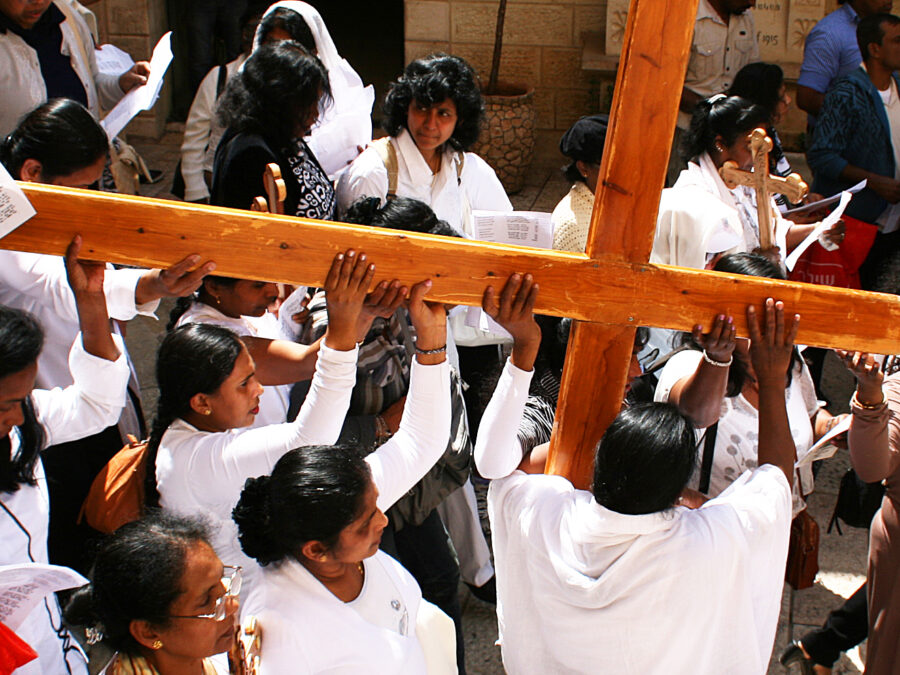
The Mount of Olives in Jerusalem is the city’s most iconic vantage point and one of its most sacred destinations. Rising 818 meters east of the Old City, the ridge offers the postcard view of Jerusalem — Old City walls, golden Dome of the Rock, Mount Zion to the south — while housing some of Christianity’s most significant sites including the Garden of Gethsemane, the Church of All Nations, and the traditional location of the Ascension. The Jewish cemetery cascading down its slopes is the oldest continuously used Jewish burial ground on earth.
This complete guide to the Mount of Olives in Jerusalem covers what to see, when to visit, the famous viewpoint, the descent through the cemetery, the major churches and shrines, religious significance across faiths, and how to plan the perfect Mount of Olives visit. Pair this with our Garden of Gethsemane guide and guide to Jerusalem holy sites.

What Is the Mount of Olives?
The Mount of Olives (Hebrew: Har HaZeitim; Arabic: Jabal al-Zaytun) is a limestone ridge to the east of the Old City, separated from it by the deep Kidron Valley. Named for the olive groves that historically covered its slopes (a few ancient trees remain at the Garden of Gethsemane), the mount holds religious significance across Judaism, Christianity, and Islam.
- In Judaism: Tradition holds that the Messiah will arrive on the Mount of Olives, leading to extraordinary demand for burial here.
- In Christianity: Site of Jesus’s Ascension (Acts 1), the Lord’s Prayer (Luke 11), and many key events of his last week.
- In Islam: Site of significant prophetic events and burial grounds.
Why One Hill Matters to Three Religions
The Mount of Olives is not sacred because anything was built on it. It is sacred because of where it stands — directly opposite the Temple Mount, across a valley narrow enough that you can pick out individual paving stones on the far platform. Every tradition that cares about that platform ends up caring about this ridge, and each one reads the same view differently.
For Jews, the ridge is where the prophets locate the beginning of the messianic age, which is why the slope below you is covered in graves rather than houses. The same expectation shapes the Kidron Valley below, where monumental tombs were cut into the bedrock in the Second Temple period — some of the oldest surviving funerary architecture in the city, and part of the same landscape covered in our overview of Jewish sites around Jerusalem.
For Christians, this is where the last week of Jesus’s life plays out almost end to end: the descent from Bethphage on Palm Sunday, the teaching on the Mount recorded in Matthew 24, the night of prayer and arrest at Gethsemane, and the Ascension forty days after the Resurrection, described in Acts 1 as taking place on the mount “a Sabbath day’s journey” from the city. Walking down the hill is the reason so many pilgrim itineraries in Jerusalem begin here rather than at a church.
For Muslims, the mount belongs to the wider sacred landscape around al-Aqsa, and tradition places the reckoning of the Day of Judgement in the valley between the two ridges. The Muslim cemetery packed against the eastern wall of the Old City, immediately below the Temple Mount, is part of that tradition — and it sits directly in your sightline from the viewpoint.
Which brings you to the blocked-up double arch in the eastern wall, low and slightly left of the Dome of the Rock. That is the Golden Gate, or the Gate of Mercy, and it has been sealed since the Ottoman rebuilding of the walls under Suleiman in 1541. Jewish tradition holds that the Messiah enters Jerusalem through this gate; other explanations for the sealing are more prosaic and structural. Either way, you get a far better look at it from up here than from anywhere along the walls themselves — our guide to the Old City gates covers the seven that are actually open.
The Mount of Olives Viewpoint
The main viewpoint sits near the Seven Arches Hotel at the top of the ridge. From here you see:
- The entire walled Old City.
- The Dome of the Rock dominating the Temple Mount.
- The Jewish Cemetery cascading down the slope.
- The Kidron Valley between you and the city.
- Beyond — the modern western city, with Mount Zion to the south.
Free and open 24/7. Best at sunrise, when the Dome of the Rock catches first light.
How to Get to the Mount of Olives
Three realistic options, not all equal. Ride up, walk down.
- Taxi (the smart move): 5-10 minutes from Jaffa Gate or Damascus Gate, around 35-50 ILS ($10-13). Insist on the meter or fix the fare on the Gett app. Ask for the “Seven Arches Hotel” — every driver knows it.
- Bus 275: the East Jerusalem bus from Sultan Suleiman Street, outside Damascus Gate, climbs to A-Tur village at the top. Around 6 ILS, every 15-20 minutes, pay the driver; the viewpoint is a five-minute walk from the stop. Cheap and usable, though the timetable loosens on Friday afternoons.
- Walking up: 30-40 minutes from Lions’ Gate, crossing the Kidron Valley and gaining roughly 100 vertical meters on grades of 25-30%. Doable, but you arrive sweaty, having spent your knees on the wrong half of the trip.
- Tour buses drop at the Seven Arches viewpoint as standard.
On accessibility: the viewpoint is reachable by vehicle and wheelchair-usable. The descent path is not — a narrow lane of 25-30% grades, smooth-worn stone, and steps. Travelers with limited mobility can be driven to the top, then around the hill to Gethsemane at the bottom, skipping the middle.
The Classic Mount of Olives Walking Descent
The single best Mount of Olives experience is to take a taxi to the top at sunrise, then walk down through the major sites. The route is roughly 2 km, mostly downhill, and takes 90 minutes to 3 hours depending on stops. It ends at Lions’ Gate, a few steps from the start of the Via Dolorosa — so the morning flows naturally into an Old City walk.
- Mount of Olives Viewpoint at sunrise.
- Pater Noster Church — Lord’s Prayer in 100+ languages on tiled walls. (Paid, around 10 NIS.)
- Chapel of the Ascension — small dome marking traditional site of Jesus’s Ascension. (Small fee.)
- Tombs of the Prophets — Jewish/Christian burial caves.
- Descend through the Jewish Cemetery on the path.
- Dominus Flevit — teardrop-shaped chapel marking where Jesus wept over Jerusalem; one of the best photo angles of the Old City through the window. (Free.)
- Tomb of the Virgin Mary — ancient underground church traditionally identified as Mary’s burial place. (Free.)
- Garden of Gethsemane with 900-year-old olive trees. (Free.)
- Church of All Nations — over the Rock of Agony, where Jesus prayed before arrest. (Free.)
- Exit via Lions’ Gate into the Old City.
Pater Noster Church (Eleona)
Run by Carmelite sisters, Pater Noster stands over a cave where early Christians remembered Jesus teaching the Lord’s Prayer. The cloister walls carry the prayer on ceramic panels in more than 140 languages — hunting for your own is half the visit. Constantine’s mother Helena built the first church here, the Eleona, in the 4th century; its excavated outline sits beside the cloister. Since June 2024 it has kept temporary hours, opening only on Tuesday and Thursday mornings, 9:00-12:00. Entry 12 ILS (10 ILS for students), cash.
Chapel of the Ascension
A small octagonal shrine near the crest marks the spot where, by tradition, Jesus ascended to heaven forty days after the Resurrection. The Crusader-era structure has been administered by an Islamic waqf since Saladin’s time in 1187 — Muslims also revere Jesus as a prophet, and Christian visitors and annual liturgies are welcome, a quiet example of Jerusalem’s layered custodianship. Inside, pilgrims venerate a stone bearing what tradition identifies as the footprint of Christ. Around 5-10 ILS; the caretaker may need a minute to unlock the gate.
Tomb of the Virgin Mary
At the foot of the hill, beside Gethsemane, a 12th-century Crusader facade opens onto a broad stone staircase descending into a dim, candle-blackened underground church where Eastern Christian tradition holds Mary was buried before her assumption. Maintained chiefly by the Greek Orthodox and Armenian churches, it is hung with dozens of oil lamps. Open early morning until about noon, then roughly 2:30-5:00 PM. Free. Give your eyes thirty seconds to adjust — this is one of the most atmospheric interiors in Jerusalem.

What the Descent Is Actually Like Underfoot
The word “path” oversells it. The top third of the walk down is a public tarmac road — the one cars and the occasional minibus use to get between A-Tur and the valley — with pavement that appears, disappears and reappears. Walk facing the traffic, keep single file on the blind bends, and expect to step onto the verge a few times. It is entirely normal and thousands of people do it every week, but nobody warns you that the “classic Mount of Olives walk” starts on a road.
The middle section, between the cemetery gates and Dominus Flevit, is the steep bit: a walled lane on grades of 25-30% with occasional steps and a drainage channel down one side. The hazard is not the gradient but the surface — centuries of feet have polished the paving to a shine, and after rain it is genuinely slippery. Jerusalem’s rain falls between November and March, so that is the window to be careful in.
Downhill walking loads the fronts of your thighs and the front of the knee far more than climbing does. Two kilometres is not far, but 150 vertical metres of continuous descent on hard surfaces is enough to leave unprepared knees complaining the next day. Trekking poles help more than they look like they should. If you know your knees are a problem, take the taxi to the viewpoint, spend your time there, then have the driver take you around the hill to Gethsemane and skip the middle.
Wear something with grip and a closed toe. Trainers or light walking shoes are right; smooth-soled sandals, flip-flops and leather-soled dress shoes are all a bad idea on polished limestone. There is also almost no shade between the viewpoint and Dominus Flevit — the slope is open, white and reflective, and in July and August it sits in the low-to-mid 30s Celsius by mid-morning. A hat, sunglasses and a litre of water each are not optional in summer.
The finish catches people out too. At the bottom you come out onto Jericho Road, which carries fast traffic between the Old City and the eastern neighbourhoods; cross at the marked crossing near the Tomb of the Virgin rather than dodging between cars, then walk up to Lions’ Gate and into the walled city. If you have had enough by then, taxis wait outside Gethsemane most of the day — see our guide to getting around Jerusalem for what a fair fare looks like.
The Jewish Cemetery
The Mount of Olives holds the world’s oldest continuously used Jewish cemetery, with burials dating back over 3,000 years and approximately 150,000 graves. Among the buried: prophets Haggai, Zechariah, and Malachi; medieval rabbis; modern figures including Israeli Prime Minister Menachem Begin.
Jewish tradition associates burial here with priority in the resurrection of the dead at the coming of the Messiah, generating enormous demand and high burial costs (~$30,000+).
The reason lies in the prophets. Zechariah 14:4 declares that “on that day his feet shall stand on the Mount of Olives,” and Jewish tradition reads this as where the Messianic age begins and the resurrection of the dead starts — those buried on this slope rise first. Many graves face the Temple Mount so the dead will stand toward it. Visitors leave small stones on tombs rather than flowers, a custom of remembrance you are welcome to follow.
The cemetery has had a hard modern history: between 1948 and 1967 thousands of headstones were broken or removed, and restoration continues — why some sections look freshly cut while others are weathered smooth. Menachem Begin chose this slope over Mount Herzl; his plain grave draws visitors of its own.
The path through the cemetery is publicly accessible and well-trodden. Respect graves and avoid stepping on tombs.
Walking Through the Cemetery Respectfully
It helps to remember that this is a working burial ground, not a monument. Funerals take place here most weekdays, and if you meet one on the path the right thing to do is simple: step off to one side, stop taking photographs, stay quiet and let the procession pass. Burials do not happen on Shabbat or Jewish festivals, so a Saturday walk will not run into one.
A few conventions are worth knowing. Men customarily cover their heads near Jewish graves — a cap is fine, and knitted kippot are usually available at the cemetery entrances. Dress as you would for a church further down the hill: shoulders and knees covered. Jews of priestly descent, the kohanim, traditionally avoid entering cemeteries at all, which is why some observant visitors stick to the road rather than the internal paths.
The most common breach of etiquette is also the most tempting one: the flat stone slabs over the tombs make excellent platforms for photographs of the Old City, and people stand or sit on them without thinking. Do not. Frame the panorama from the path instead, keep tripods off the graves, and be discreet about pointing a lens at mourners or at people praying at a specific tomb.
Dominus Flevit — “The Lord Wept”
This small teardrop-shaped Catholic chapel was built in 1955 by Italian architect Antonio Barluzzi on the site where Christians believe Jesus paused on his triumphal entry to Jerusalem and wept over the future destruction of the city. The chapel features a window framed in a metal crown of thorns through which you can see the Dome of the Rock — one of the most photographed views in the city. Free entry.
Garden of Gethsemane
At the foot of the Mount of Olives, the Garden of Gethsemane is the traditional location of Jesus’s prayer and arrest on the night before his crucifixion. The garden contains olive trees that have been radiocarbon-dated to 900+ years old, with roots possibly older.
The adjoining Church of All Nations (Basilica of the Agony) is built over the rock where, according to tradition, Jesus prayed in agony. The interior is darkened with violet stained glass to evoke night. Built 1919-1924 by Antonio Barluzzi with donations from 12 countries (hence the name).
See our complete Garden of Gethsemane guide.

How Old Are the Gethsemane Olive Trees, Really?
You will hear, usually from someone with a microphone, that these are the trees Jesus prayed under. The research says something more interesting than that, and it is worth knowing what was actually measured.
Eight ancient olives stand in the railed plot beside the Church of All Nations. In 2012 an Italian team sampled them, publishing the results in the Journal of Archaeological Science: only three of the eight could be dated at all, because the trunks of the others are hollow and the old central wood — the part you would need — has simply rotted away. The three that could be dated all began growing in the twelfth century, in the decades when the Crusader kingdom was rebuilding the Christian sites of the Holy Land. That puts the standing trunks at roughly 830 to 930 years old.
The genetic work produced the odder finding. All eight trees share an identical DNA profile: they are clones, propagated as cuttings from a single parent plant. Somebody replanted this garden deliberately, from one ancestor, at one moment in time.
What the study does not show — and does not claim — is the age of the root system. Olives regenerate from the base: cut one down or burn it and it will send new trunks up from the same roots, which is exactly what happened across these hills when ancient accounts describe Roman armies stripping the countryside of timber during the siege of 70 CE. The living wood is medieval. The stock underneath it may be far older, and there is no method that can date it.
So the honest version is this: about nine centuries of visible growth, eight trees descended from one, on ground that has grown olives for a very long time. That is a better story than the exaggeration, and it does not need help. In practice you view the trees from the paved path around the railings rather than walking among them — the detail, along with the rest of the enclosure, is in our full write-up of Gethsemane.
Inside the Church of All Nations
Step through the door and your first reaction is usually that the lights have failed. They have not. Antonio Barluzzi glazed the basilica with thinly cut alabaster in violet and blue, so that even at noon the interior reads as night — the church is staging the Thursday evening of the agony, and the gloom is the architecture doing its job. Give your eyes a full minute before you decide there is nothing to see. There is a great deal.
The centrepiece is the floor. In front of the altar, a flat outcrop of the hillside bedrock is left exposed and ringed by a wrought-iron crown of thorns with doves worked into it — the rock on which, by tradition, Jesus prayed. Pilgrims kneel at the rail and lay a hand on it, and during group masses there is often a patient queue to do so.
Above it, gold-ground mosaics fill the three apses with the events of that night, and the ceiling is divided into twelve small domes, each carrying the arms of one of the countries that paid for it — Italy, the United States, Argentina, Brazil, Chile, Mexico, Spain, France, Belgium, Canada, Germany, the United Kingdom. That is where the name comes from. The great mosaic on the facade, above the columned portico, is the one you can photograph properly, and it catches the morning sun.
The church you are standing in was finished in 1924, but it is the third on the spot: fragments of the fourth-century Byzantine church and the twelfth-century Crusader chapel survive underfoot, with sections of earlier floor mosaic visible under glass panels.
Two things about visiting. It is a sanctuary with a rota of pilgrim masses, so silence is requested and often needed — if a group is singing when you arrive, stay at the back and wait it out rather than walking the aisles. And unlike most of its neighbours on this hill, it does not close for lunch: 8:00 to 18:00 April to September, 8:00 to 17:00 October to March, last entry ten minutes before closing, no charge. If you are working through the major sanctuaries of the city, this and the Holy Sepulchre are the two Christian interiors most people remember afterwards.
Church of Mary Magdalene: The Golden Onion Domes
The seven gilded onion domes glinting halfway down the slope belong to the Russian Orthodox Church of Mary Magdalene, built in 1888 by Tsar Alexander III in memory of his mother — Muscovite architecture set down among the olive trees. Inside are two notable tombs: Grand Duchess Elizabeth Feodorovna, murdered in the Russian Revolution and later canonized, and Princess Alice of Battenberg, Prince Philip’s mother, honored at Yad Vashem for sheltering a Jewish family in occupied Athens.
The catch: the convent opens only on Tuesday and Thursday mornings, roughly 10:00 AM to noon. On other days you’ll be admiring the domes through the gate — they photograph beautifully from the Dominus Flevit terrace just above. Free when open; modest dress enforced, headscarves at the door.
Other Important Sites on the Mount of Olives
- Tombs of the Prophets — Hellenistic-era burial caves partway down; the caretaker lends candles (small tip appreciated).
- Bethphage — where, by tradition, the Palm Sunday procession began; the modern one still starts here each year.
- Yad Avshalom (Absalom’s Tomb) — striking monument carved from Kidron Valley bedrock below, beside the Tomb of Zechariah.
- Augusta Victoria — the 1910 German church-and-hospital complex whose square tower marks the ridge’s north end.
Opening Hours and the Midday Closure Problem
The one piece of planning that decides whether your morning works: most of the churches on this hill shut for a long lunch. Roughly noon to 14:00 or 14:30, doors close, and a visitor who starts at 10:00 arrives at the bottom of the slope to find everything locked. Start early and the problem disappears.
Published hours, as listed by the Christian Information Centre at Jaffa Gate and correct to the best of our knowledge as of August 2026 — treat them as a plan, not a promise, since feast days and staffing change them without notice:
- Church of All Nations (Basilica of the Agony): 8:00-18:00 April to September, 8:00-17:00 October to March. Free. No midday closure.
- Grotto of Gethsemane: 8:00-12:00 and 14:30-18:00 in summer, closing 17:00 in winter. Free.
- Tomb of the Virgin Mary: 6:00-13:00 and 14:30-18:00. Free. The earliest opening on the hill.
- Pater Noster Church: temporarily Tuesday and Thursday 9:00-12:00 only (since June 2024); closed Sunday, Christmas Day and New Year’s Day. 12 ILS, 10 ILS for students.
- Chapel of the Ascension: 8:00-17:00, 5 ILS, cash only.
- Dominus Flevit: 8:30-17:00 Monday to Thursday and Saturday; Friday and Sunday 8:30-11:50 and 14:00-17:00. Free.
- Convent of St Mary Magdalene: Tuesday and Thursday, 10:00-12:00 only; some listings add Saturday, so call if a Saturday is your only chance.
- Tombs of the Prophets: Monday to Thursday 9:00-15:00, closed Friday to Sunday. 5 ILS.
- Bethphage: 8:00-12:00 and 14:00-17:00.
- Augusta Victoria (Tower of the Ascension): 8:00-13:00, closed Sunday. 5 ILS.
- Russian Ascension Church, the tall bell tower on the summit: Monday to Saturday 9:00-12:30 and 14:00-16:00, closed Sunday. The monastery keeps its own clock and does not shift for daylight saving, so in summer it effectively runs an hour behind everyone else.
Read that list and the shape of the day writes itself. A sunrise start puts you at the top for the light, at the Ascension chapel as it opens around 8:00 (and at Pater Noster, if it is a Tuesday or Thursday), and through Dominus Flevit, Gethsemane and the Tomb of the Virgin well before the shutters come down at noon. An afternoon visit works too, but start no earlier than 14:30 and accept that the Chapel of the Ascension closes at 17:00.
Two hard constraints to build around: the Church of Mary Magdalene needs a Tuesday or Thursday morning, and the Tombs of the Prophets need a weekday. If neither fits, drop them without guilt — they are the least essential stops on the hill.
Sunrise at the Viewpoint: Timing It Right
The sun rises behind you here, which is the whole point: first light strikes the golden Dome of the Rock, then works down the limestone walls. Sunrise swings more than visitors expect — about 5:35 AM in June, 6:30 in late September, nearer 6:40 in December. Arrive 20-25 minutes early; the blue half-hour before sunrise, city lights still on, is arguably better than the sunrise itself.
At that hour you share the railing with a few photographers, not coach crowds. Descend once the light flattens, take the churches as they open from 8:00 AM, and by 9:30 be inside the Church of the Holy Sepulchre ahead of the groups.
Photographing the Jerusalem Panorama
This is the picture — walls, Dome of the Rock, cemetery falling away in the foreground — and it is not hard to take, but a few minutes of thought separates a good frame from the one everybody else gets off the coach with.
Where to stand: the railed promenade in front of the Seven Arches Hotel runs for well over a hundred metres, and the composition changes noticeably along it. Walk the whole length before you set up. Towards the southern end the graves stack up in the foreground and give the shot depth; further along, the cemetery drops out and you get walls and skyline alone. Lower down, the terrace at Dominus Flevit gives a tighter, more intimate angle with the Old City framed by cypresses, and the chapel’s window with its crown-of-thorns ironwork is the other classic frame on the hill — get there before 9:00 or you will be queueing behind a tour group.
Light: you are looking west, so at sunrise the sun is behind you and the east-facing walls and the Dome are lit straight on. That is the whole reason to be up at 5:30. By mid-morning the light goes flat and by afternoon the sun is out ahead of you, the walls fall into their own shadow and the city goes hazy — pleasant to be there, harder to photograph. Sunset happens behind the Old City, which means silhouettes rather than detail. For this particular view, sunrise wins by a wide margin, and the other high points around the city are the ones to save for evening.
Kit: on a full-frame camera the whole panorama sits at about 24-35mm, and the Dome of the Rock isolated against the walls wants 100-200mm. On a phone, resist the ultra-wide — it shrinks the city to a strip across the middle of the frame. Use the telephoto lens and take two or three overlapping frames to stitch instead. Air clarity matters more than gear here: after winter rain the view is razor-sharp, while a summer khamsin can bury the whole city in dust.
Best Time to Visit
- Sunrise (5:30-7:00 AM): Best light, quietest, magical.
- Late afternoon (3:00-5:00 PM): Second-best light, fewer tourists.
- Avoid noon-2:00 PM in summer: Hot, crowded, harsh light.
- Friday afternoon and Saturday: Generally accessible; some Jewish sites may be more crowded for Shabbat preparation/observance.
Practical Tips
- Wear walking shoes — the descent involves stone steps and uneven paths.
- Bring water.
- Modest dress for the churches.
- Time the descent so you reach the Old City for breakfast/lunch.
- Carry small cash for Pater Noster and Chapel of the Ascension entry.
- Photography is best at sunrise; bring a 24-70mm or 70-200mm zoom.
- Don’t linger after dark on isolated cemetery paths.
Safety, Hassle, and What Nobody Tells You
Safe in daylight, visited by thousands daily — but there is friction worth knowing about.
- Camel and donkey photo touts work the Seven Arches viewpoint most mornings. The pattern is consistent: a “free” photo turns into a 50 ILS demand once you’re on the camel. Agree a price first (10-20 ILS is fair) or a firm, polite “no, thank you” — repeated once — ends it.
- Persistent vendors sell postcards and olive-wood crosses along the descent — tiresome, never threatening. Don’t take anything handed over “as a gift.”
- Early morning, walk with others. At dawn the cemetery path is nearly empty. Incidents are rare, but solo travelers — women especially — are more comfortable falling in with other sunrise visitors and descending loosely together.
- After dark, skip it. The paths are unlit and isolated; take a taxi if you’ve stayed for the light.
- Pickpocketing is uncommon; the Gethsemane crush when coaches arrive warrants normal care.
None of this should put you off — it is standard pilgrimage-site friction, and at sunrise most of it hasn’t woken up yet.
Final Word: The Best Free Experience in Jerusalem
The Mount of Olives in Jerusalem at sunrise — followed by the slow descent through cemetery, chapels, and the Garden of Gethsemane — is arguably the single most rewarding free experience in the entire city. Make it Day 1 — it anchors the geography of everything you’ll see after, which is why it leads our First Time Visiting Jerusalem plan. Pair this with our Garden of Gethsemane guide, Best Viewpoints guide, and guide to Jerusalem holy sites.
{"@context": "https://schema.org", "@type": "FAQPage", "mainEntity": [{"@type": "Question", "name": "How long do I need at the Mount of Olives in Jerusalem?", "acceptedAnswer": {"@type": "Answer", "text": "Minimum 2 hours including the walk down to Lions' Gate. With proper stops at each church and shrine, plan 3-4 hours."}}, {"@type": "Question", "name": "Is the Mount of Olives safe to visit?", "acceptedAnswer": {"@type": "Answer", "text": "Yes, during daylight hours. The viewpoint, Garden of Gethsemane, and major churches are well-trafficked. Avoid the cemetery alone after dark."}}, {"@type": "Question", "name": "Are the sites free?", "acceptedAnswer": {"@type": "Answer", "text": "Most are free or donation-based. Pater Noster Church (12 NIS) and Chapel of the Ascension (small fee) have small admission charges."}}, {"@type": "Question", "name": "What's the best photography spot?", "acceptedAnswer": {"@type": "Answer", "text": "The main viewpoint at sunrise. Then Dominus Flevit for the framed window shot. See our Jerusalem Photography Spots guide."}}, {"@type": "Question", "name": "Can I visit the Russian Orthodox Mary Magdalene Church?", "acceptedAnswer": {"@type": "Answer", "text": "Yes, but with limited hours — typically Tuesday and Thursday mornings. Confirm before visiting."}}, {"@type": "Question", "name": "Is the cemetery walk respectful?", "acceptedAnswer": {"@type": "Answer", "text": "Yes — the path is publicly accessible and pilgrims and tourists have walked it for centuries. Stay on the path, don't step on graves, and respect mourners."}}, {"@type": "Question", "name": "Is the Mount of Olives wheelchair accessible?", "acceptedAnswer": {"@type": "Answer", "text": "Partially. The viewpoint and Gethsemane are both reachable by vehicle; the descent path between them (25-30% grades, steps) is not. Visit top and bottom separately by taxi."}}, {"@type": "Question", "name": "Should I take a guided tour?", "acceptedAnswer": {"@type": "Answer", "text": "The Mount of Olives is one of the best self-guided experiences in Jerusalem. A pilgrimage-focused guided tour adds depth if you want religious context. See Best Jerusalem Tours."}}, {"@type": "Question", "name": "Do the churches on the Mount of Olives close at midday?", "acceptedAnswer": {"@type": "Answer", "text": "Most of them do. The Grotto of Gethsemane, the Tomb of the Virgin Mary and Bethphage all shut for roughly two hours from noon, reopening between 14:00 and 14:30, and the Convent of St Mary Magdalene and, for now, Pater Noster open only on Tuesday and Thursday mornings — the Church of All Nations, open straight through from 8:00, is the exception rather than the rule."}}]}