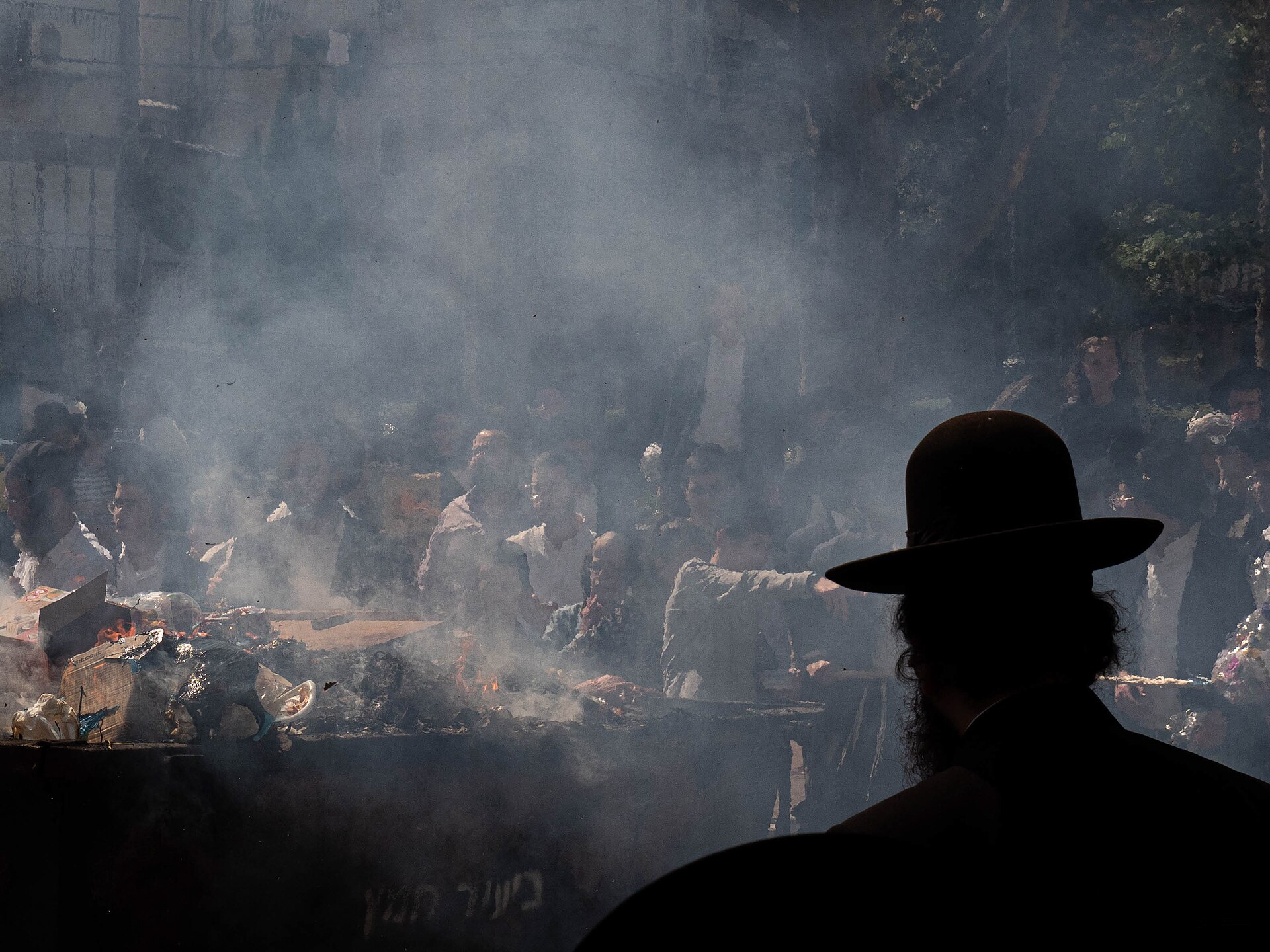
On the morning before the seder, someone in your neighbourhood will be burning bread in a skip. Municipal bins appear on street corners across West Jerusalem, marked in Hebrew for the purpose, and by ten o’clock the smoke is drifting over half the city while men in black hats and small boys with paper bags feed the last crusts of the year into the flames. It is the most photographable ninety minutes of the festival and almost no visitor knows it is happening. Passover in Jerusalem is a week of that: enormous, public, and much stranger than the guidebooks let on.
This page covers the seven days — what closes and on which days, why the bread disappears, where to eat if you want a sandwich, the Priestly Blessing at the Kotel, and whether the week is worth building a trip around. For the weekly version of the shutdown, which is the same mechanism in miniature, see Shabbat in Jerusalem. Everything here was checked in September 2026; hours and prices move, so treat them as the right order of magnitude and confirm on the day.
The 2027 Dates, and What Each Day Does
Passover 2027 runs from sunset on Wednesday 21 April to nightfall on Thursday 29 April. Crucially, only two of those days are full festival days with Shabbat-level closures. The rest are Chol HaMoed — the intermediate days — which are a working national holiday week with everything open and everybody out.
| Date (2027) | What it is | What is open |
|---|---|---|
| Wed 21 April, morning | Burning of chametz; shops close early afternoon | Everything, until roughly 14:00 |
| Wed 21 April, evening | Seder night. The city stops | Nothing. Hotel seders only, booked long ahead |
| Thu 22 April | First day — full festival day | No transport, no shops, museums closed |
| Fri 23 – Wed 28 April | Chol HaMoed, with Shabbat inside it on 23–24 April | Everything open, extended hours, very busy |
| Wed 28 April, evening – Thu 29 April | Seventh day — full festival day | No transport, no shops, museums closed |
| Thu 29 April, nightfall | Festival ends; bakeries reopen at once | Queues for fresh bread by 21:00 |
Note the trap in 2027: the first festival day is a Thursday and Shabbat begins the following afternoon. That gives you Thursday closed, Friday open until mid-afternoon, then Shabbat — three awkward days in a row at the start of the week. Plan your arrival for the Sunday if you can.
The Bread Problem
For seven days, leavened food — chametz — is removed from Jewish homes, hotels, restaurants and shops. This is not a gesture; it is thorough, and it will affect your breakfast.
- Hotels. Kitchens are ritually cleaned and converted for the week. Expect matzah instead of bread and pastries, and no beer or whisky, which are grain-based. Most hotels do this well and the food is good; it is simply not what you pictured.
- Supermarkets. Whole aisles are physically sheeted over in plastic. What remains is an entire parallel range of kosher-for-Passover products, including some genuinely peculiar substitutes.
- Restaurants. Kosher restaurants either close for the week or convert. Many of the best places in West Jerusalem simply shut. Book anything you care about weeks ahead — see kosher restaurants in Jerusalem.
- Where the bread actually is. The Christian, Muslim and Armenian quarters of the Old City and all of East Jerusalem trade completely normally. So do Arab bakeries across the city. If you want a sandwich on day four, walk through Damascus Gate. Our food guide and the Old City market guide cover what is where.
A small courtesy: eating a sandwich in the street in a religious neighbourhood during Passover is about as welcome as it sounds. Nobody will stop you. Nobody needs to.
Seder Night
The first night is a family occasion held at home, and it empties the city more completely than almost anything except Yom Kippur. Streets are silent from about six in the evening. There is nowhere to eat, no transport, and nothing open.
Visitors have three realistic options. Hotels run communal seders, in Hebrew and English, which need booking months ahead and are not cheap but do include the full meal and haggadah. Several synagogues and organisations run seders for visitors and students, some free or by donation — the Old City institutions and the Conservative and Reform congregations in the German Colony are the usual routes, and asking at your accommodation a fortnight ahead is often enough. Or, if you are invited into a home, go: Jerusalem families invite strangers to the seder as a matter of course and it is by an enormous margin the best version of the night.
If none of that appeals, eat in East Jerusalem or the Old City and treat the evening as a walk. The city under a full moon with nobody on the streets is worth an hour of anyone’s time.
The Priestly Blessing at the Kotel
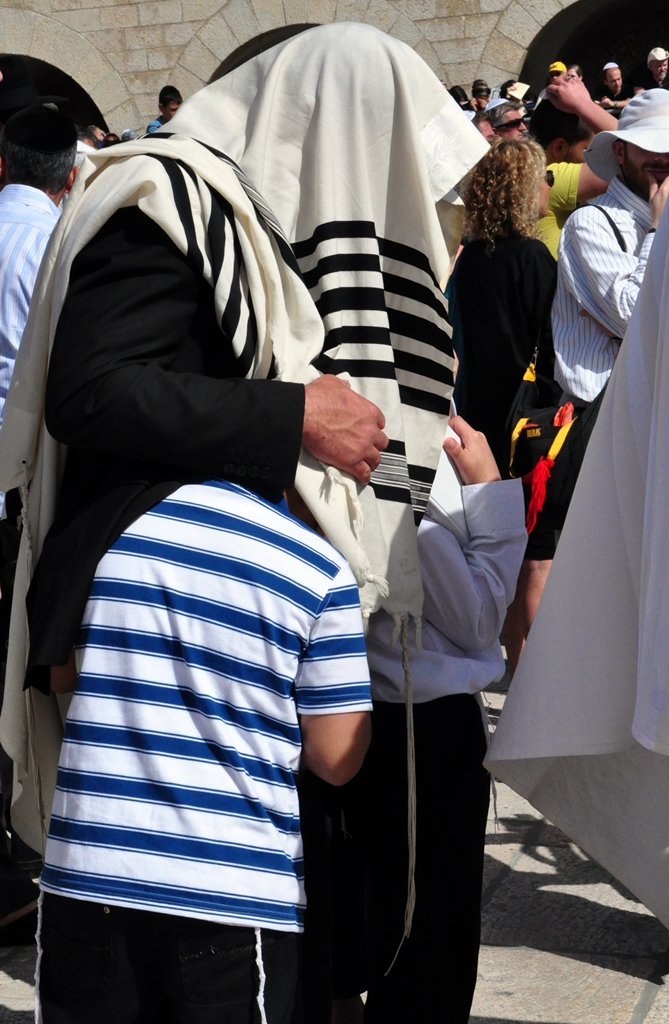
Birkat Kohanim, the mass Priestly Blessing, takes place on one Chol HaMoed morning at the Western Wall and is the single largest gathering of the Jewish year at the site — tens of thousands of people, with descendants of the priestly line blessing the crowd from the front, prayer shawls drawn over their heads and children standing underneath them.
- It happens in the morning, usually beginning around 08:45 with the main blessings around 09:15 and 10:00. Confirm the year’s exact timing with the Western Wall Heritage Foundation.
- Arrive by 07:30. The plaza is full well before the blessing and the police close approaches once capacity is reached.
- Modest dress is required and the plaza is divided into men’s and women’s sections. Photography is permitted on Chol HaMoed, unlike Shabbat and full festival days.
- The best view for a visitor who does not want to be in the crush is from the overlook above the plaza, near the entrance from the Jewish Quarter.
- The same blessing is repeated on Chol HaMoed Sukkot in the autumn, if you miss it.
Chol HaMoed: The Busiest Week in Israel
Once the first festival day is over, the country goes on holiday for a week and Jerusalem fills. Museums extend their hours and put on family programming, national parks are packed, and every attraction you had planned to see quietly is heaving. This is a genuine trade-off, not a grumble: the atmosphere is excellent and the queues are real.
- Book everything. Hezekiah’s Tunnel, the Western Wall Tunnels and the City of David all sell out days ahead during Chol HaMoed.
- Go early or go late. Israeli families start slowly; the Old City before nine is still yours.
- Use the Christian and Muslim quarters in the middle of the day. They are no busier than usual.
- Day trips are the worst hit. The Dead Sea, Masada and the Judean Hills are at capacity all week — see day trips from Jerusalem and go on the Sunday rather than midweek.
- The upside: free concerts, street performers, and museums like the Tower of David running programming they do not run the rest of the year. If you are travelling with children, this is the best week of the year — see Jerusalem with kids.
What the Week Actually Looks Like
A few things that no calendar entry conveys, and that make far more sense once you have seen them.
The days before
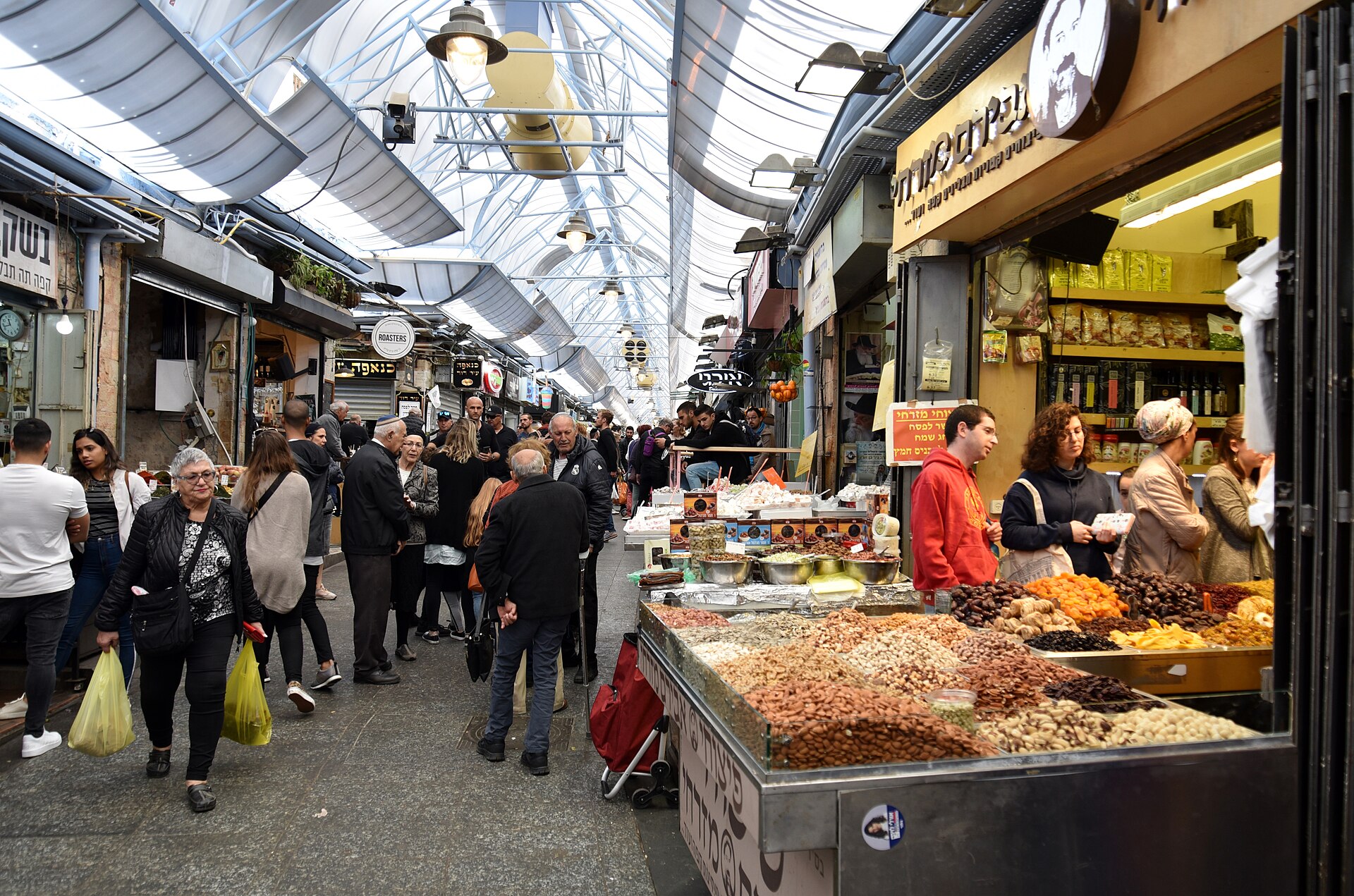
Jerusalem spends the fortnight before Passover cleaning. Not tidying — cleaning, in a way that spills onto the pavements: mattresses out of windows, sofas upended in courtyards, whole kitchens dismantled, and a brisk trade in blowtorches for scouring metal surfaces. Ovens are burned out. Cutlery is boiled in vats set up in the street by neighbourhood rabbis, which is a genuinely startling thing to walk past if you do not know what it is. Alongside all this, the shops fill: Mahane Yehuda in the last three days before the festival is the most crowded and most cheerful place in Israel, and prices for anything perishable rise noticeably. Our Mahane Yehuda guide covers the market properly, and the spice market page is worth reading before you buy anything by weight.
Selling the chametz
What cannot be burned or eaten is sold. Households formally transfer ownership of their remaining leavened goods to a non-Jew for the duration, through a rabbi acting as agent — a legal arrangement carried out on a large scale, with hotels and even the state doing the same for their stocks. It is why the sheeted-over supermarket aisles are sealed rather than emptied: the contents belong, for a week, to somebody else. Nobody expects a visitor to participate. It is simply worth knowing what the plastic sheeting means.
The Samaritan Passover
An hour and a half north of Jerusalem, on Mount Gerizim above Nablus, the Samaritan community performs the only surviving Passover sacrifice — several dozen lambs, at dusk, in front of a large crowd. It is an ancient rite, it is in the West Bank, access varies year to year and it requires a considerable amount of organising. Mentioning it here mainly so that you know it exists; it is not a casual excursion and this guide is not going to pretend otherwise.
The Mimouna
The night Passover ends, Moroccan and other North African Jewish families throw open their houses for Mimouna — tables of sweets, mufleta pancakes eaten hot with honey and butter, and an open-door tradition that genuinely extends to strangers. Public Mimouna celebrations run in parks across Jerusalem and the municipality usually lists them. If you are still in the city on the evening of 29 April 2027, go. It is the warmest night in the Jewish calendar and it exists precisely because everyone has spent a week not eating bread.
A week-by-week comparison
| Passover week | The week after | |
|---|---|---|
| Crowds at sites | Very heavy, book ahead | Light |
| Hotel prices | Annual peak | Ordinary spring rates |
| Restaurants | Many closed or converted | All open |
| Transport | Two days with none at all | Normal |
| Weather | Warm, 22–26°C | Warm, 22–26°C |
| Atmosphere | Unrepeatable | Ordinary, in a good way |
Put plainly: if the festival itself is why you are coming, come. If it is not, the week afterwards gives you the identical city for less money and no queues — see the weather guide for how April behaves and the itinerary planner for how to fill it.
Getting Around
On the two full festival days there is no light rail, no bus, no train and no intercity coach, from mid-afternoon the day before until nightfall. Taxis operate but charge a premium and are hard to find. On Chol HaMoed everything runs normally and often with extra services, though the light rail is standing-room-only. The airport train does not run on festival days, which catches out people flying on the wrong afternoon — check your flight against the calendar before you book. Full detail in getting around Jerusalem and the airport transfer guide.
Money and Rooms
Passover is peak season, on a level with Sukkot and above Christmas. Rooms cost substantially more than a February midweek and the cheap end of the market disappears entirely; many hotels sell the week as a package including seder and half board rather than as a room. Book six to eight months ahead. If your dates are flexible, the week after Passover is one of the best-value windows of the whole spring — good weather, empty sites, normal prices. Our page on trip costs and the best time to visit guide both go into it.
Is Passover a Good Week to Visit?
Honestly: it depends entirely on what you came for. If you want to witness a whole city observing something together — the skips burning, the silence on seder night, a hundred thousand people at the Kotel — it is one of the great travel weeks anywhere, and the fact that it is inconvenient is part of what makes it real. If you came to see sites efficiently and eat well, this is a poor week: two days when nothing opens, six days when everything is full, and no bread throughout.
The middle path that works: arrive after the first festival day, stay through Chol HaMoed, go to the Priestly Blessing, book your tunnels and tours before you fly, and leave before the seventh day closes everything down again. Or skip it entirely and come in the week after, which is quietly one of the best weeks in the Jerusalem year. The full religious holidays calendar shows how it sits against everything else.
Final Word on Passover in Jerusalem
Passover is the festival that shows you how the city actually works. You will notice things you would never otherwise see — the sheeting over the supermarket aisles, the skips smoking on the corners, the abrupt silence at six on seder night, a hundred thousand people at a wall on a Tuesday morning. None of it is staged and none of it is for you, which is exactly why it lands. Come for Chol HaMoed rather than the whole week, book the things that sell out, find your bread in the Old City, and go to the Priestly Blessing even if you have to get up at six. Then read Shabbat in Jerusalem for the weekly version of the same rhythm, the religious holidays calendar for what surrounds it, and the Jewish holy sites guide for where to spend the days in between.
Photo Credits
Burning of chametz on the morning before Passover: 138143 burning of chametz PikiWiki Israel by יוסי רון, CC BY 2.5, via Wikimedia Commons.
The Priestly Blessing at the Western Wall: Blessing at the western wall by Lilach Daniel, CC BY 2.0, via Wikimedia Commons.
A nut stall with a kosher-for-Passover sign at Mahane Yehuda Market: Eitz HaChaim Street, 2019 (06) by Bahnfrend, CC BY-SA 4.0, via Wikimedia Commons.