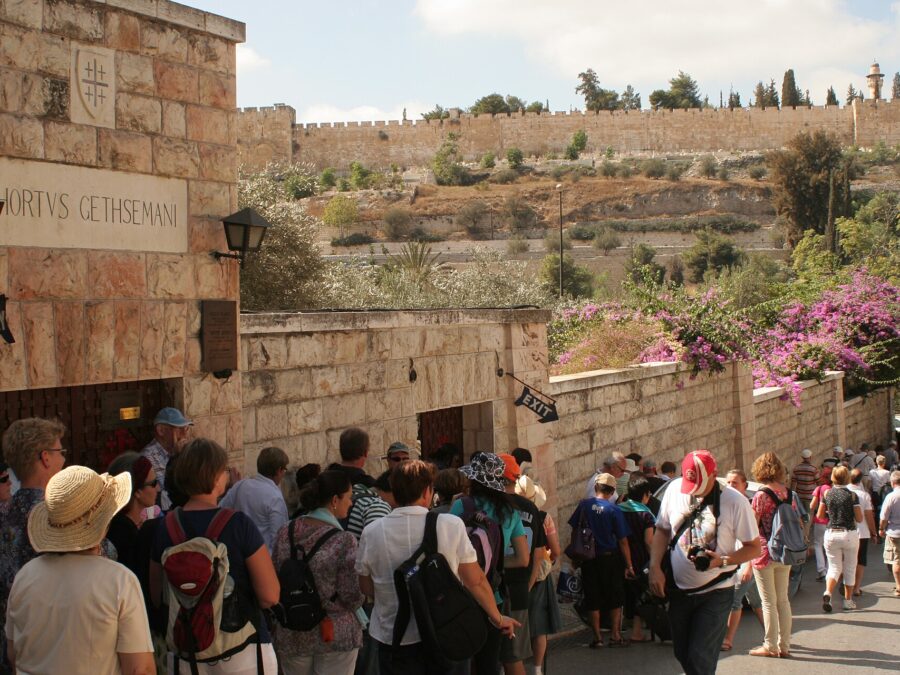
Jerusalem accessibility is a tale of two cities. The modern western half is largely barrier-free: the Light Rail is fully wheelchair accessible, the big museums are excellent, and Israeli law requires accessibility in public buildings and transport. The Old City is the opposite, a 2,000-year-old warren of cobblestones, steep stepped alleys and narrow lanes that no amount of goodwill can flatten entirely. The good news is that the single most important site, the Western Wall, has a genuinely step-free route, and with planning a wheelchair user or anyone with limited mobility can reach far more of Jerusalem than first appears. This guide is honest about the limits and specific about the workarounds, with current 2026 detail.
Read this alongside our guide for senior travelers, the Jerusalem travel tips, the Jerusalem transportation guide and the full Jerusalem itinerary planner.
Jerusalem Accessibility at a Glance
Before the detail, here is the shape of it. Modern Jerusalem works well for most disabilities. The Old City needs a plan, a route that avoids stairs, and realistic expectations. Below is the honest summary.
- Modern West Jerusalem: paved, ramped and broadly accessible.
- The Old City: challenging; cobbles and steps everywhere, with a limited set of step-free routes.
- Light Rail Red Line: fully wheelchair accessible with level boarding and lifts at stations.
- Buses: most are low-floor with ramps and a designated wheelchair space.
- Major museums: Yad Vashem and the Israel Museum are fully accessible.
- The Western Wall plaza: reached step-free and open 24/7, free of charge.
- Hotels: the larger ones have accessible rooms, but the supply is limited, so book early.
The Western Wall: Step-Free Access
The Western Wall is the most accessible of the great holy sites, which matters because it is the one most visitors most want to reach. The wide plaza is paved and flat, and there are accessible prayer areas at the front of both the men’s and women’s sections so a wheelchair user can reach the Wall itself.
The key is how you get into the plaza. Coming from the upper Old City the natural approach is down flights of steps, but there is a step-free alternative. The Dung Gate, on the southeastern side of the Old City, is the closest vehicle entrance to the plaza and the flattest way in; a taxi or accessible vehicle can drop you near it, and from there a ramp and lift system brings you down to plaza level without stairs. Use Dung Gate, not the stepped descents from the Jewish Quarter, if you are wheeling. Security screening at the plaza entrance is routine and the staff are used to assisting visitors with disabilities.
One honest caveat: the Western Wall Tunnels tour, which runs underground along the hidden length of the wall, involves narrow passages and stairs and is not wheelchair accessible, though parts have been improved. If the tunnels matter to you, contact the site in advance to ask exactly what is currently possible. Our Western Wall guide and Western Wall Tunnels guide have more.
The Old City: Which Gates and Routes Are Flattest
This is where honesty matters most. The Old City’s lanes are paved in worn, polished limestone, frequently sloped, and broken up by steps and the occasional flight of stairs, especially in the Muslim Quarter’s market streets. A manual wheelchair is hard work and often needs a strong companion to push; a powered chair handles the slopes better but can be stymied by individual steps and tight market crowds. None of the four quarters is fully step-free end to end.
- Jaffa Gate is the flattest main entrance and the best starting point. From here the route into the Christian Quarter and toward the Tower of David is comparatively manageable, and the gate connects directly to the level Mamilla promenade outside the walls.
- Dung Gate is the step-free way to the Western Wall plaza, as above.
- Damascus Gate is grand but its approach involves a stepped descent and a busy, sloping market beyond, so it is the hardest to recommend for wheels.
- The covered souks (David Street and the market lanes) are stepped, narrow and crowded; expect to detour around stairs and to move slowly.
- The Via Dolorosa includes steps and uneven sections, so following the full route by wheelchair is difficult; you can still reach parts of it from the flatter approaches.
The practical strategy is to pick a small number of reachable targets, enter through Jaffa or Dung Gate, and take a specialist accessible tour or a private guide who knows precisely where the steps and the lifts are. They will route you the long, flat way around obstacles that a map will not show. For orientation, our Jerusalem Old City guide and the guide to the gates of the Old City are useful background.
Church of the Holy Sepulchre
The Church of the Holy Sepulchre is partly accessible. There are steps at the entrance, where staff or your companions can assist, and the main ground floor around the tomb (the Aedicule) is reachable and mostly level once inside. However, the chapel of Calvary is up a steep, narrow staircase and is not wheelchair accessible, and a few side chapels also involve steps. Plan to experience the church from its ground level. Our Holy Sepulchre guide describes the layout.

Fully Accessible Sites and Museums
Outside the Old City, accessibility is genuinely good, and these sites belong at the top of an accessible itinerary.
| Site | Accessibility notes |
|---|---|
| Yad Vashem | Fully wheelchair accessible across the museum and grounds; loaner wheelchairs, audio guides and accessible restrooms. Free entry; closed Saturdays. |
| Israel Museum | Fully accessible with lifts and ramps; free wheelchair loan at the entrance and accessible bathrooms. Home to the Dead Sea Scrolls. |
| Tower of David | The main exhibition levels are accessible after a recent renovation; the ramparts walk involves stairs and is not accessible. |
| Jerusalem Biblical Zoo | Fully accessible paths, wheelchair loan and a road-train that circles the park. |
| Mamilla and the city center | Level, paved and easy to wheel, with accessible shops and cafes. |
If you are planning a family trip, our Jerusalem with kids guide flags the same accessible, stroller-friendly venues.
Accessible Transport
Getting around is one of the easier parts. The Light Rail does most of the heavy lifting, and accessible taxis fill the gaps.
- Light Rail Red Line: fully wheelchair accessible with level boarding, designated spaces and step-free stations along Jaffa Road through the center. A single ride is about 6 shekels.
- Buses: most city buses are low-floor with a ramp and a wheelchair bay; the driver can deploy the ramp.
- Taxis: standard taxis are hard to use with a wheelchair, but accessible (wheelchair-adapted) taxis can be pre-booked; ask your hotel to arrange one in advance, as they are not always available on the spot.
- Israel Railways: stations and trains are accessible, useful if you arrive from Tel Aviv or Ben Gurion Airport; staff can assist with boarding if you notify them ahead.
- Reduced fares: discounted fares apply for eligible travelers; carry documentation and a Rav-Kav card.
Accessible Hotels
Larger city-center and luxury hotels are the safest bet for accessible rooms, and staying centrally keeps you close to the rail and the flat approach to Jaffa Gate. The accessible room count is small everywhere, so reserve well ahead and confirm the specifics by phone or email rather than trusting a checkbox.
- Reliable options include the King David, David Citadel, Mamilla, Inbal and Leonardo Plaza, which list accessible rooms.
- What to confirm before booking: a roll-in or step-free shower, grab bars, a wide bathroom door, level access from the lobby, and a lower bed if you need a transfer.
- Ask about the route from the entrance, not just the room, since some heritage buildings have steps in unexpected places.
Compare neighborhoods and properties in our where to stay in Jerusalem guide.

Accessible Tours and Guides
For the Old City especially, a specialist tour pays for itself. Operators who focus on accessible travel know the step-free routes, the working lifts and which vehicles can reach which gates, and they can arrange equipment.
- Wheelchair-accessible Old City tours can be booked in advance and plan a route around the stairs.
- Private accessible tours tailor the whole day to your needs and pace.
- Audio-described tours serve blind and low-vision visitors.
- Sign language tours exist but are limited and need advance arrangement.
- Specialist operators: organizations such as Access Israel and dedicated accessible-travel companies are a good first contact for current options.
Our roundup of the best Jerusalem tours includes operators worth contacting.
Vision, Hearing and Sensory Needs
Accessibility is not only about wheels. Several measures help visitors with other needs.
- Audio guides are available at the major museums, including Yad Vashem, the Israel Museum and the Tower of David.
- Braille and tactile materials are offered at some sites, with Yad Vashem among the better provided.
- Audio-described and sign language tours can be arranged in advance for blind, low-vision and Deaf visitors.
- Quiet and sensory-friendly spaces exist at some museums for visitors who need a calmer environment.
- Service animals are generally welcome at sites; check individual policies for the holy places.
Medical Resources and Equipment
Jerusalem’s healthcare is excellent and used to international visitors. The major hospitals, Hadassah Medical Center and Shaare Zedek, have English-speaking staff, and the ambulance number is 101 for Magen David Adom. The Super-Pharm chain covers everyday pharmacy needs across the city. If a wheelchair or mobility aid breaks, your hotel can usually point you to a repair service or a rental. Two non-negotiables: comprehensive travel insurance that covers medical care and repatriation, and bringing your own medication in its original packaging with a copy of the prescription.
Practical Tips for an Accessible Trip
- Call ahead. Confirm accessibility directly with each site and hotel; details and working lifts change.
- Use the Access Israel resources for up-to-date site-by-site information.
- Allow extra time. Step-free routes are often longer and slower, especially in and around the Old City.
- Travel with a companion where possible; an extra pair of hands makes the cobbles and the occasional step far easier.
- Map your rest stops. Note accessible cafes and restrooms along your route, since public facilities inside the Old City are limited.
- Avoid the midday summer heat; plan the outdoor portions for morning or late afternoon and use the air-conditioned museums in between.
- Plan around Shabbat, when the Light Rail, buses and most West Jerusalem services stop from Friday afternoon to Saturday night; arrange accessible taxis in advance for that window.
Final Word
Jerusalem accessibility rewards preparation. Treat the modern city and the major museums as the easy, fully accessible core of your trip, reach the Western Wall step-free through Dung Gate, and approach the Old City selectively through Jaffa Gate with a specialist guide who knows the flat routes. Confirm everything by phone, build in extra time, and the city opens up further than its ancient stones suggest. Keep planning with our senior travelers guide, the Jerusalem travel tips and the Jerusalem itinerary planner.
Photo Credits
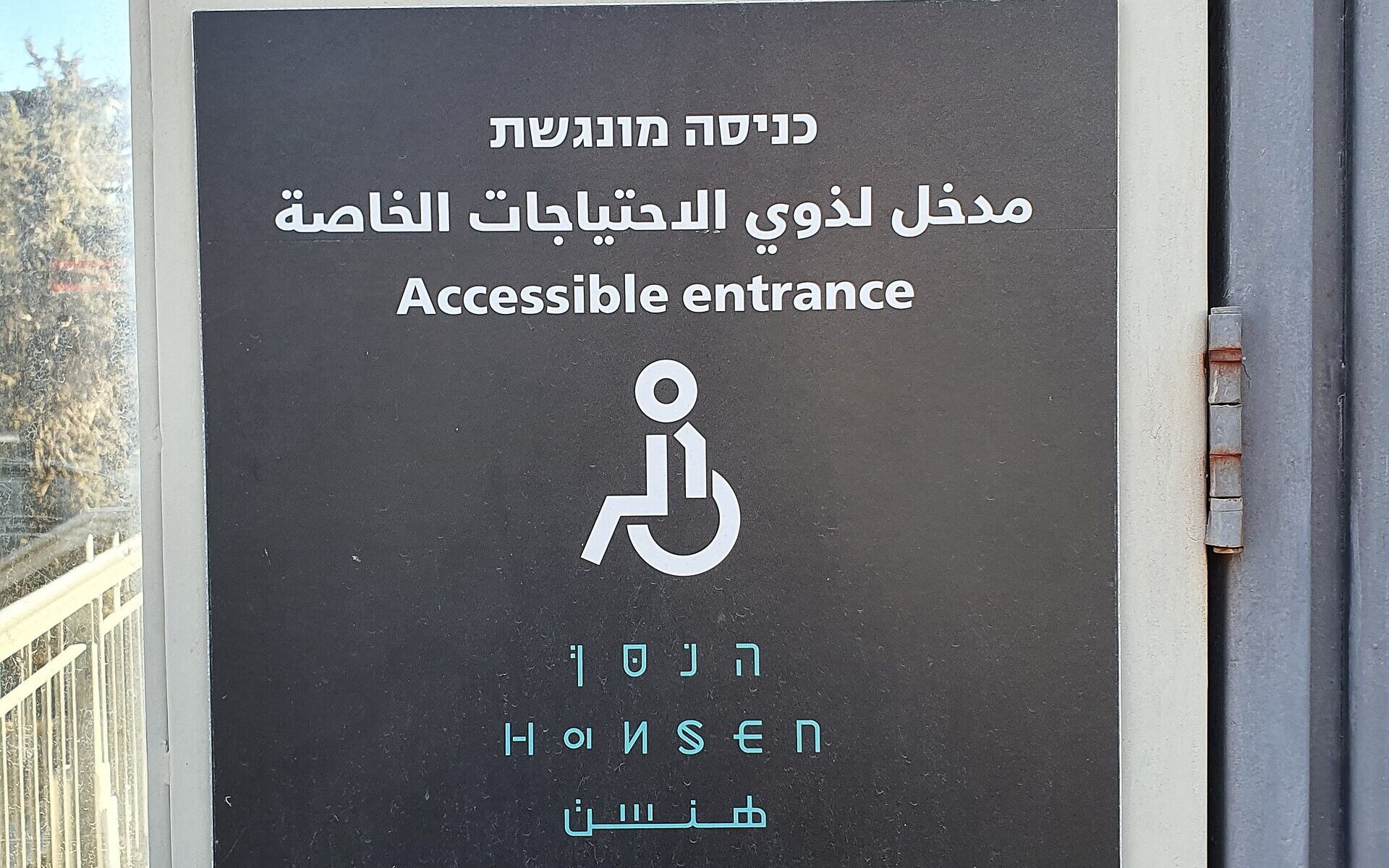
The accessible-entrance sign at Hansen House: Hansen House in Jerusalem – The northern gate – a sign for accessibility by Korenn, CC BY-SA 4.0, cropped, via Wikimedia Commons.
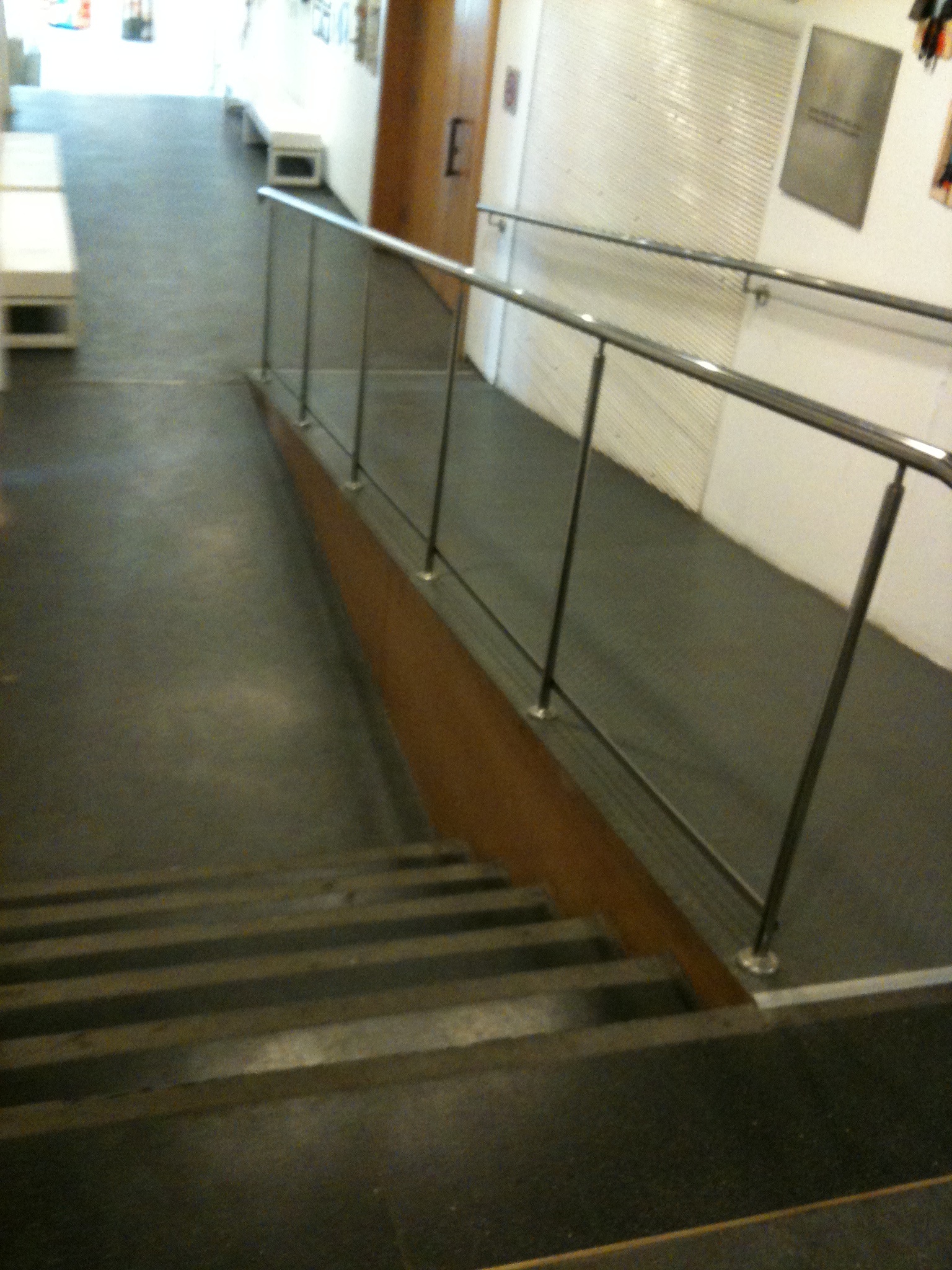
The ramp beside the stairs at the Israel Museum: Stairs and ramp at Israel Museum IMG 0402 by Eddau, CC0, via Wikimedia Commons.