In the Israel Museum’s archaeology galleries there is a broken slab of dark basalt, not much bigger than a tea tray, cut with a few lines of Aramaic. A lot of people walk straight past it on their way to the Dead Sea Scrolls. It is the Tel Dan Stele, and one short phrase on it is widely read as “House of David” — the earliest known mention of that dynasty anywhere outside the Bible. That is the quiet paradox of museums in Jerusalem: the Old City’s stones pull in the crowds, while much of the evidence that makes sense of them — from Qumran, from the City of David, from digs up and down the country — sits in galleries a few kilometres to the west, well lit, air-conditioned and barely queued for.
This guide is the map of all of it: the big national museums, the small specialist collections, the memorials that work as museums, and the parliament, court and library buildings that run free tours. It is grouped by where things are, because in this city geography decides your day far more than theme does. It covers which museums deserve half a day and which deserve an hour, how Shabbat and the Jewish holidays reshape the opening hours, how to string three together without backtracking, and which ones are honestly not worth the trip unless you have a particular reason to go. Prices and hours were checked in September 2026; treat them as the right order of magnitude rather than a quotation, and confirm on the museum’s own site before you travel, because Jerusalem museums rearrange their timetables around the holidays with very little notice. For the dig sites and archaeology collections in depth — the Wohl, the Davidson Center, the Burnt House and the rest — see our dedicated guide to archaeology museums in Jerusalem. This page stays at the level of the whole city.
Jerusalem’s Museums at a Glance
These are the twelve that most visitors should weigh up. The times are for a proper visit rather than a sprint. Prices are the standard adult ticket as checked in September 2026 (August for the Tower of David). Where a museum’s current price could not be confirmed for this page it is marked “ticketed”, so check the museum’s own site rather than trusting a figure from an old blog post.
| Museum | Where | Why go | Allow | Adult entry |
|---|---|---|---|---|
| Israel Museum | Givat Ram | Dead Sea Scrolls, the Second Temple model, the country’s best archaeology and art | 3–5 hours | ₪54 |
| Yad Vashem | Mount Herzl ridge | Israel’s national Holocaust memorial and history museum | 3–4 hours | Free |
| Tower of David Museum | Jaffa Gate | The whole story of the city, told inside the citadel, plus the ramparts | 2–3 hours | ₪55 |
| Bible Lands Museum | Givat Ram | The empires and cultures that surrounded ancient Israel | 1.5–2 hours | ₪44 |
| Bloomfield Science Museum | Givat Ram | Hands-on science; the best rainy-day answer with children | 2–3 hours | ₪65, adults and children alike; book ahead |
| Rockefeller Archaeological Museum | Outside Herod’s Gate | A superb Mandate-era building and a collection hardly anyone sees | 1 hour | Closed to walk-ins since 2023; occasional pre-booked tours |
| Museum for Islamic Art | Katamon | Ceramics, metalwork and a famous collection of clocks and watches | 1.5 hours | Ticketed |
| Mount Herzl and the Herzl Museum | Mount Herzl | The national cemetery, and the founder of political Zionism in a guided multimedia show | 1.5–2 hours | Cemetery free; museum by reservation |
| Ammunition Hill | North, on the Red Line | Trenches and museum at a 1967 battle site | 1–1.5 hours | Check before you go |
| The Knesset | Givat Ram | Parliament tour and the Chagall State Hall | 1 hour | Free tours; passport needed |
| Ticho House | City centre | Anna Ticho’s drawings in a 19th-century stone house and garden | 45 minutes | Free |
| Museum of the Underground Prisoners | Russian Compound | The British Mandate’s central prison, cells and gallows room intact | 1 hour | Ticketed |
How the City’s Museums Are Laid Out
Jerusalem’s museums sit in four loose clusters, and planning by cluster rather than by subject is the single thing that saves the most time. The distances between clusters are not huge, but the city is hilly, the traffic is slow, and a taxi from the Old City to the Israel Museum at the wrong hour can take longer than the drive from Tel Aviv suggests it should. Pick a cluster, spend the day in it, and let the rest wait.
Givat Ram: the national quarter
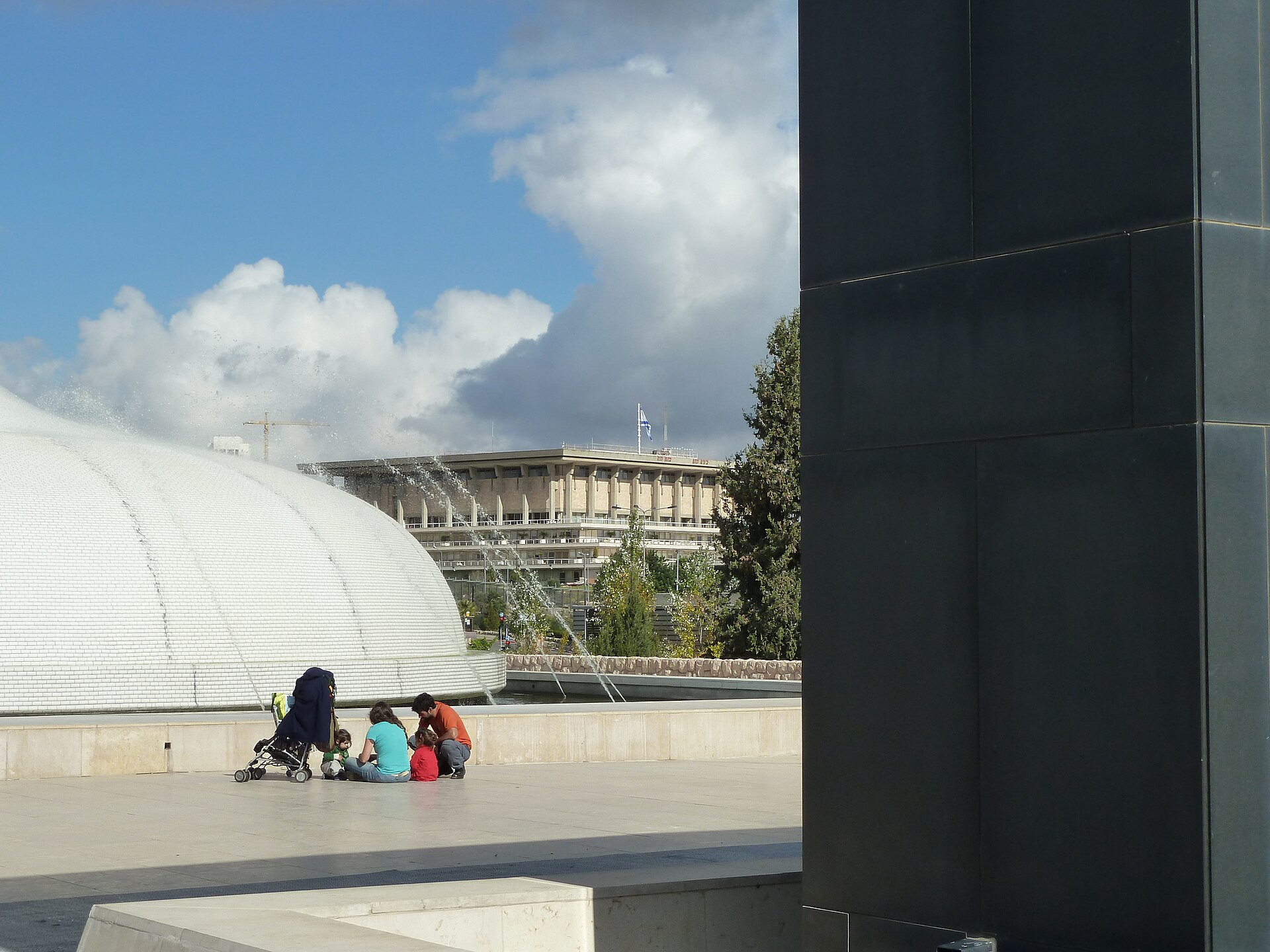
West of the city centre, on the hills around the Knesset, is the densest concentration of museums in the country. The Israel Museum and the Bible Lands Museum face each other across a road. The Bloomfield Science Museum is on the neighbouring Givat Ram campus of the Hebrew University. The Knesset, the Supreme Court and the new National Library building are all within a kilometre or so. You could spend three days here without running out of things to look at, although nobody should try.
Until August 2026 this part of the city meant a bus or a taxi. The new Green Line of the Jerusalem light rail now runs through the Givat Ram campus and the government quarter around it. Check Moovit for the stop nearest the building you want, because on these hilly streets the walk from the tram can be longer than the map suggests. For everything else about buses, taxis and fares, our getting around Jerusalem guide has the detail.
The Mount Herzl ridge
Further west, on the wooded ridge at the edge of the city, are Yad Vashem, Mount Herzl with its national and military cemeteries, and the Herzl Museum. The Red Line’s Mount Herzl stop is the gateway, with Yad Vashem about ten to fifteen minutes’ walk away. This is the heaviest cluster emotionally, and it is best treated as a day on its own, or a morning followed by nothing more demanding than lunch.
The Old City and its edge
The Tower of David Museum is at Jaffa Gate. The Wohl Archaeological Museum and the Burnt House are in the Jewish Quarter. The Franciscans’ Terra Sancta Museum is on the Via Dolorosa, the Davidson Center is by the southern wall, and the Rockefeller Museum stands just outside the walls opposite Herod’s Gate, although it has been closed to walk-in visitors since 2023. Everything here is on foot, and it combines naturally with a day in the Old City itself.
The city centre, and a few outliers
Ticho House is a short walk from Zion Square, and the Museum of the Underground Prisoners is in the Russian Compound behind Jaffa Road. The Friends of Zion Museum is in the centre, and the Italian synagogue and museum is on Hillel Street. The Museum for Islamic Art is south in Katamon, and the Begin Heritage Center overlooks the Hinnom Valley opposite Mount Zion. Two outliers are both on the Red Line: Ammunition Hill in the north, and the Chagall Windows at Hadassah Ein Kerem, the line’s south-western terminus since the 2025 extension.
The Israel Museum: Start Here
If you have time for only one museum in Jerusalem, it is this one, and the decision is not close. It opened in 1965 and was rebuilt and reorganised in a renewal completed in 2010. Israel’s national museum holds close to half a million objects across archaeology, Jewish art and life, fine art and a sculpture garden, spread over a hilltop campus of pavilions joined by long covered walkways. It is big enough that the most common mistake is trying to see all of it. Three focused hours beat five exhausted ones.
What to see if you have three hours
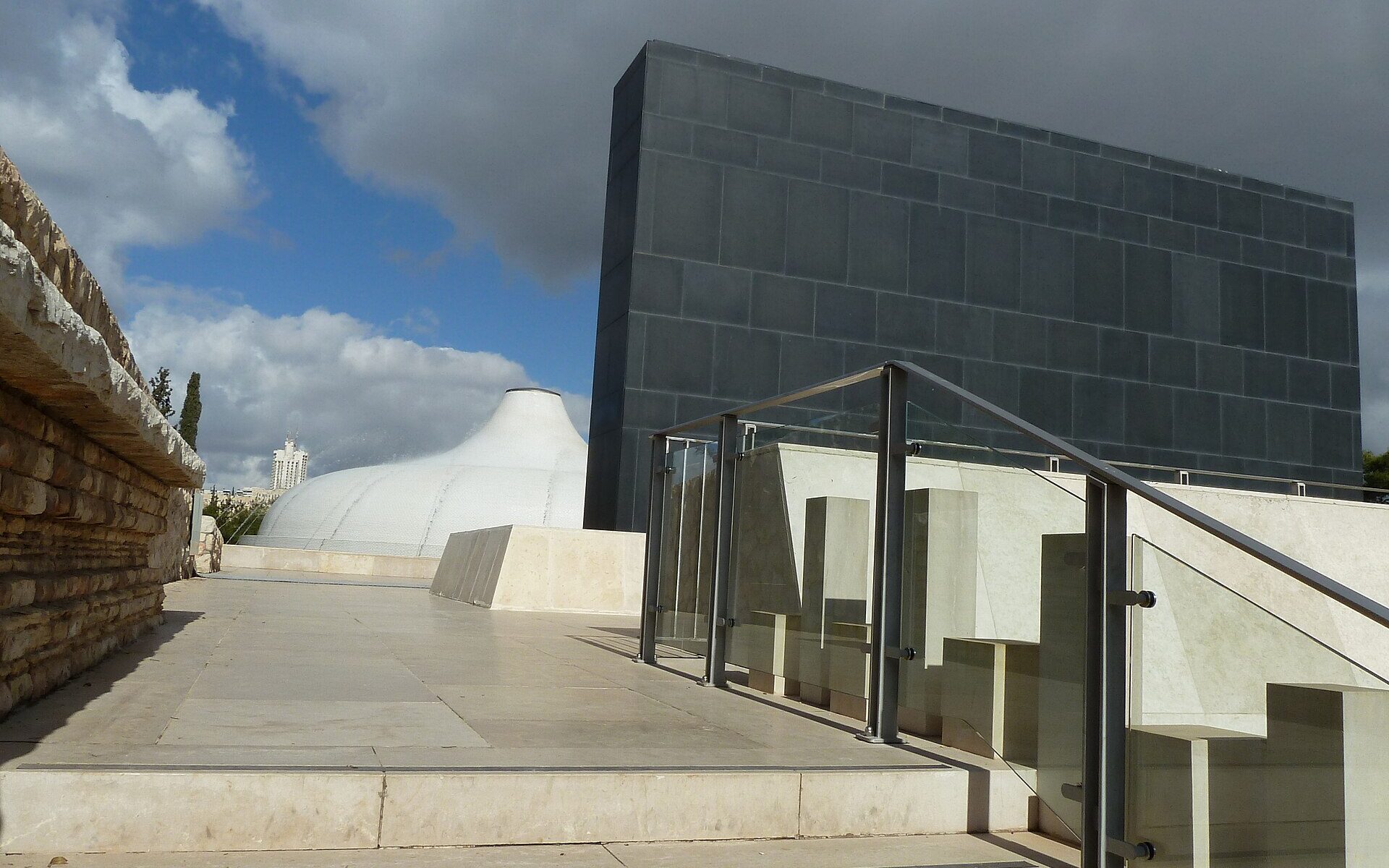
- The Shrine of the Book. The white dome is shaped after the lids of the jars in which the Dead Sea Scrolls were found, set against a black basalt wall. Inside, original fragments are shown in rotation because they cannot stay under light for long. The central showcase normally holds a facsimile of the Great Isaiah Scroll, though for the museum’s sixtieth anniversary the entire original went on show for the first time since 1968, so ask what is out when you visit. The tenth-century Aleppo Codex, one of the most important manuscripts of the Hebrew Bible, is on the lower level. Our Dead Sea Scrolls guide covers the Shrine in detail.
- The Model of Jerusalem in the Second Temple Period. An open-air, 1:50 scale reconstruction of the city as it looked in 66 CE, just before the Roman destruction, moved here from the grounds of the Holyland Hotel in 2006. Ten minutes in front of it will do more for your understanding of the Old City than any book.
- The archaeology wing. A chronological walk from prehistory to the Ottomans. Look out for the Tel Dan Stele, the inscription naming Pontius Pilate found at Caesarea, and the clay coffins from Deir el-Balah with their faintly unsettling faces.
- The Jewish Art and Life wing. Four complete synagogue interiors brought from Italy, Germany, Suriname and India. The Surinamese one keeps its floor of sand.
- The Art Garden. Isamu Noguchi designed it as a series of terraces for modern sculpture, and it has been undergoing a renovation, so check which parts are open. Nearby on the campus, Anish Kapoor’s enormous polished-steel Turning the World Upside Down hands the sky and the Jerusalem hills back to you the wrong way up.
Hours, tickets and the Tuesday trap
The museum opens at 10:00 on most days and closes at 17:00, with a short day on Fridays and holiday eves that ends around 14:00. The exception catches out more visitors than any other museum rule in the city: on Tuesdays it does not open until 16:00, and then stays open until 21:00. That is wonderful if you want an evening with the scrolls and no school groups, and useless if you arrive at ten with a taxi meter running. An adult ticket was ₪54 in September 2026, with reduced rates for children, students and seniors. Ticho House, in the city centre, is its free downtown branch. Families should read our Israel Museum with kids guide for the Youth Wing and child pricing before they go.
Memory and the Modern State
A second group of museums exists less to display objects than to tell a national story, and they are among the most visited buildings in the country. They are also heavy going. One a day is plenty, and two back to back is how people end up sitting silently in a hotel bar at four in the afternoon wondering what happened to their holiday.
Yad Vashem
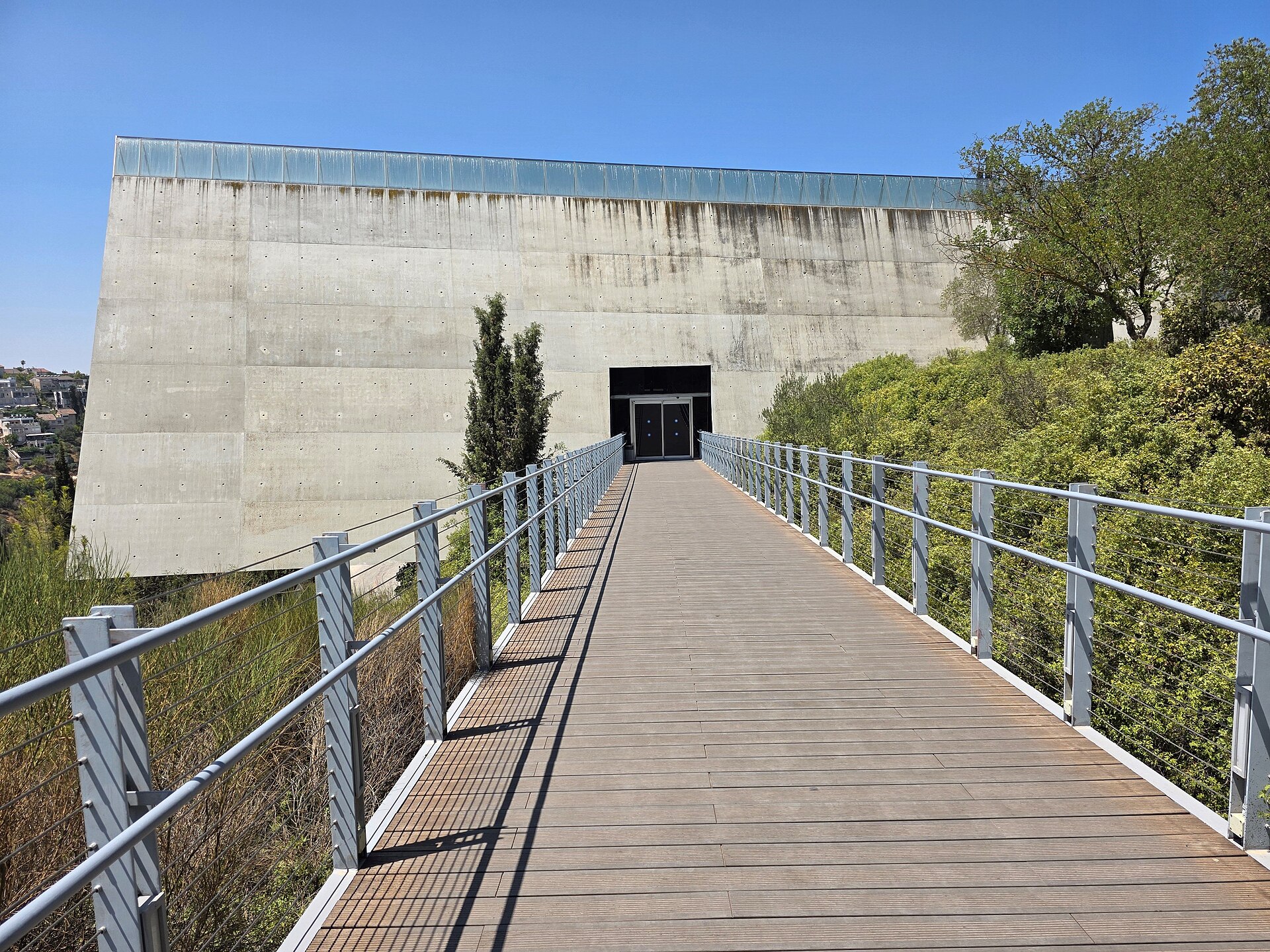
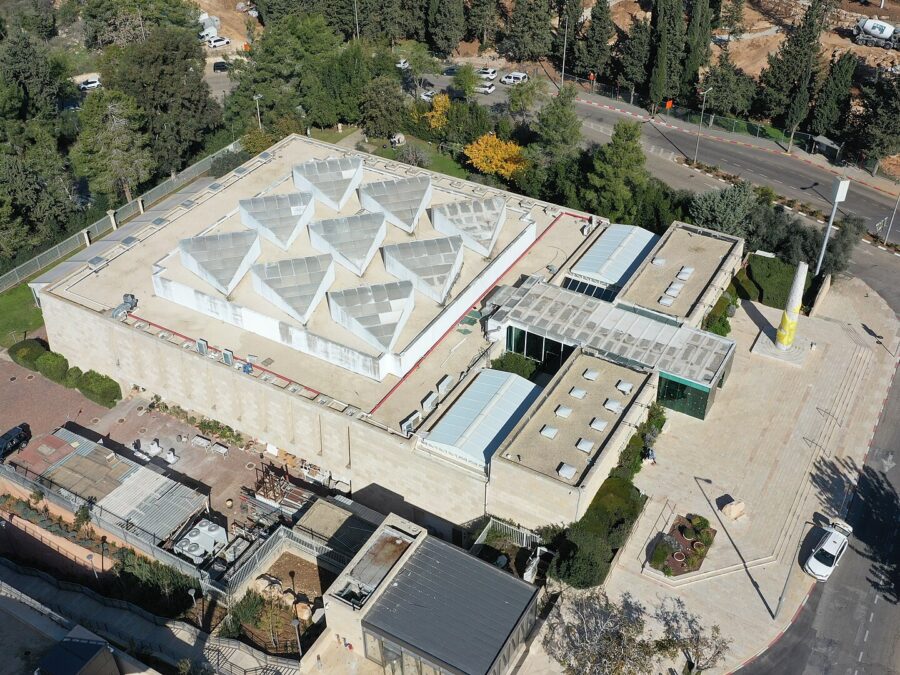
Israel’s national memorial to the six million Jews murdered in the Holocaust is less a museum than a campus of memorials, archives and gardens on the Mount of Remembrance. At its centre is Moshe Safdie’s Holocaust History Museum, opened in 2005: a long, narrowing concrete prism cut through the hillside, with the galleries branching off to either side so that you cannot simply walk straight through. It ends in the Hall of Names and then on a balcony looking out over green hills. Nearby, the Children’s Memorial reflects a handful of candles into what looks like an infinite field of lights while the names of murdered children are read aloud.
Entry is free. As of August 2026 the campus opens 09:00–17:00 Sunday to Thursday and 09:00–14:00 on Fridays and holiday eves, and is closed on Saturdays and Jewish holidays. Children under ten are not admitted to the history museum; our guide to visiting Yad Vashem with children explains what younger ones can see. Allow three hours at the very least, and do not plan anything demanding for afterwards. The full visitor guide is our Yad Vashem page.
Mount Herzl and the Herzl Museum
A short walk along the same ridge, Mount Herzl is named for Theodor Herzl, the Viennese journalist who founded political Zionism, whose remains were brought here in 1949. The hill holds Israel’s national civil cemetery, where prime ministers and presidents including Golda Meir and Yitzhak Rabin are buried, and the main military cemetery, where the rows of graves of soldiers killed in Israel’s wars go on for much longer than first-time visitors expect. The small Herzl Museum tells his life in a guided multimedia visit in timed groups, and it must be booked in advance, particularly if you want English. Most visitors find the cemetery more affecting than the museum.
Ammunition Hill
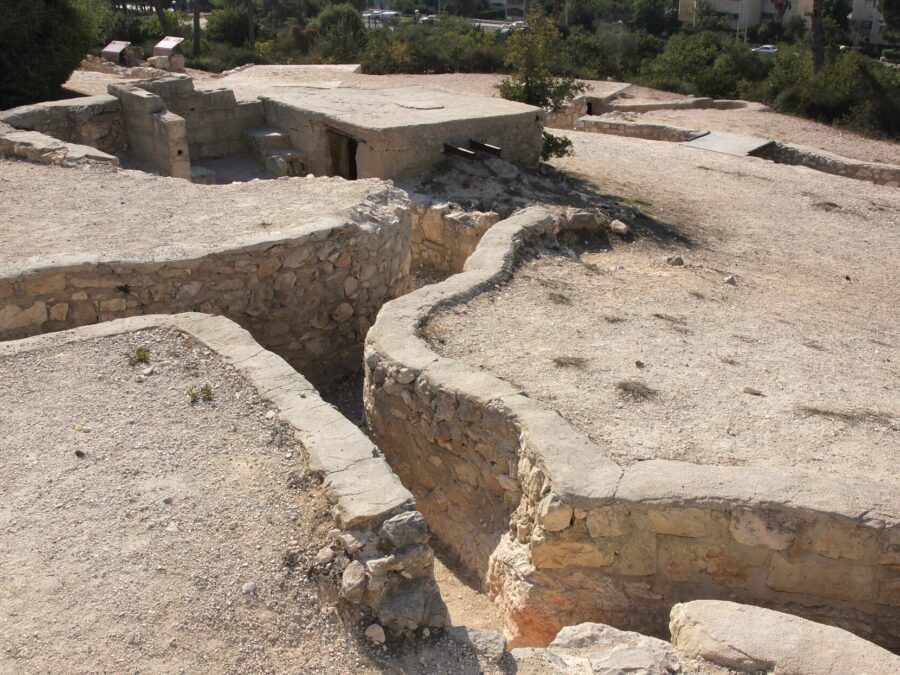
In the north of the city, beside the Red Line stop that carries its name, Ammunition Hill was a fortified Jordanian army position that stood between West Jerusalem and the Israeli enclave on Mount Scopus. On 6 June 1967 Israeli paratroopers took it in one of the hardest-fought battles of the Six-Day War, with heavy losses on both sides. The trenches and bunkers are preserved, and there is a museum and memorial wall. It is presented as an Israeli national memorial and tells the battle from that side. The war it belongs to brought East Jerusalem under Israeli control. Israel regards the whole city as its capital; most of the international community does not recognise its sovereignty over the eastern half. Our history of Jerusalem sets out both positions.
The Begin Heritage Center and the Underground Prisoners Museum
Two smaller museums tell pieces of the pre-state and early-state story. The Menachem Begin Heritage Center, on the slope above the Hinnom Valley, is a guided multimedia museum about Israel’s sixth prime minister, from commander of the Irgun underground to the leader who signed the peace treaty with Egypt after Camp David. Visits are by reservation, and the view from its terrace across to Mount Zion and the Old City walls is worth the trip on its own.
The Museum of the Underground Prisoners occupies the building in the Russian Compound that served as the British Mandate’s central prison. It honours members of the Jewish underground organisations — the Haganah, the Irgun and Lehi — who were held there, and presents their story as the founders of the museum saw it, as part of a struggle for independence. The cells, the exercise yard and the gallows room are preserved, and the building is more memorable than any of the captions.
The Museum of Tolerance
The Museum of Tolerance Jerusalem, a Simon Wiesenthal Center project on Hillel Street at the edge of Independence Park, finally opened in 2023 after two decades of delays. In 2026 it shows changing exhibitions on guided tours, currently centred on 7 October 2023 and its aftermath, with one English tour a day at 12:00. Its site beside the old Mamilla Cemetery was the subject of a long legal and public dispute before construction went ahead. Check what is on before you book.
The Ancient World: Beyond the Israel Museum
The archaeology museums have their own guide, but three of them belong in any overview of the city because they each do something the Israel Museum does not.
Tower of David Museum
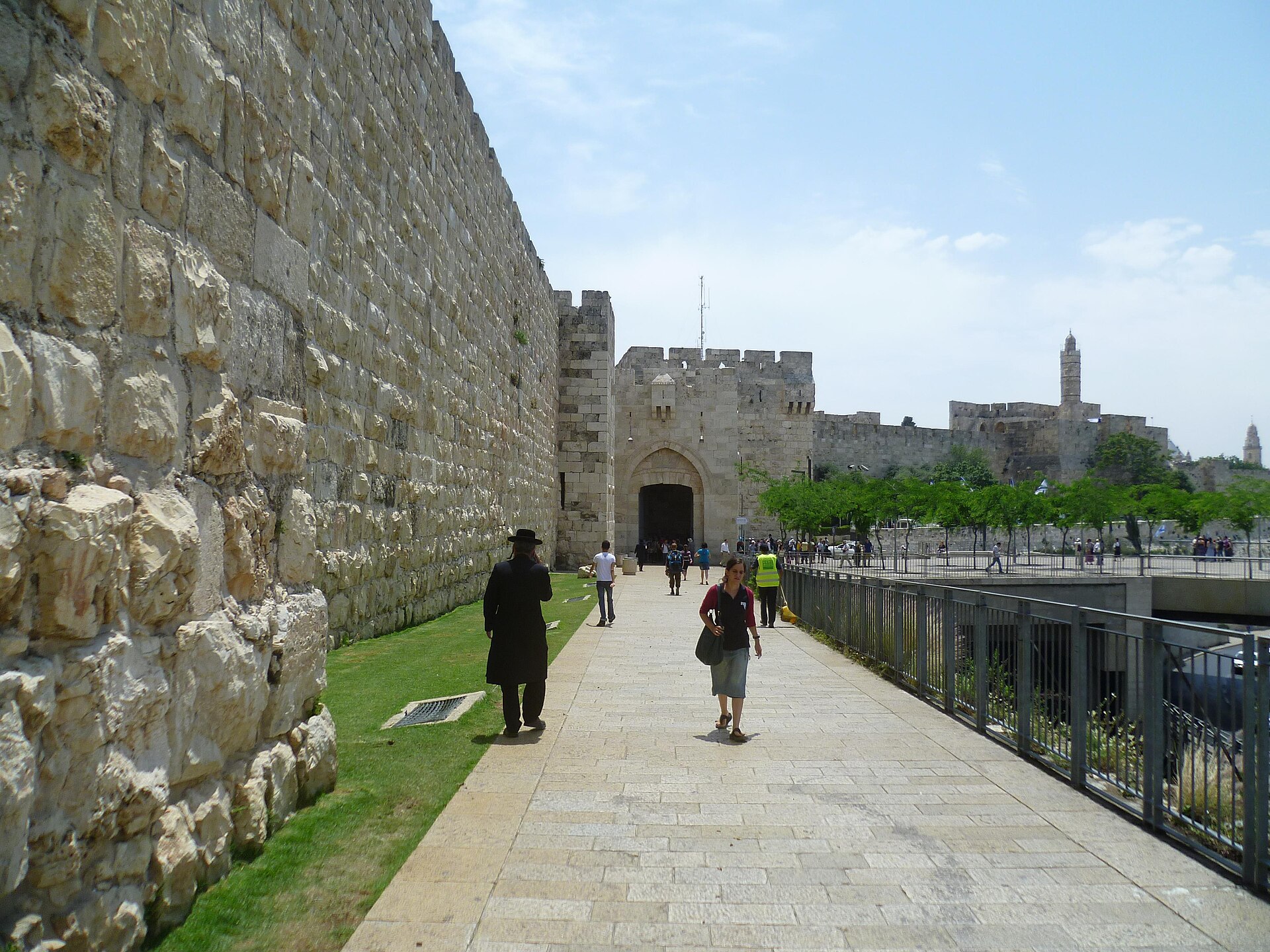
The citadel just inside Jaffa Gate is a museum and an exhibit at the same time: Hasmonean and Herodian foundations, a medieval castle and an Ottoman minaret, with galleries in the old guardrooms that tell the story of Jerusalem from its first settlement to the present. It reopened in 2023 after a long renovation, and the new galleries are far better than the tired displays many returning visitors remember. Walk the ramparts too, because the view over the Old City rooftops from up there is one of the best in the city.
As of August 2026 an adult ticket was ₪55. Hours were Sunday 12:00–18:00, Monday, Wednesday and Thursday 09:00–18:00, Tuesday 09:00–20:00, and Friday and Saturday 09:00–15:00. It is one of the few major museums open on Shabbat. The evening projection show on the citadel walls is a separate ticket (₪69 for an adult in August 2026) and is covered in our Tower of David guide and our round-up of Jerusalem at night.
Bible Lands Museum
Directly opposite the Israel Museum, the Bible Lands Museum grew from the private collection of Elie Borowski and opened in 1992. Its subject is the world around ancient Israel: Egypt, Mesopotamia, Assyria, Persia, the Hittites, Canaan. The Israel Museum explains what was found here, and the Bible Lands Museum explains who the neighbours were. For anyone who has read the Hebrew Bible and wondered what Nineveh or the Pharaoh’s court actually looked like, it is the best ninety minutes in the city. If that question has never occurred to you, you can skip it. Ask at either ticket desk about combined deals with the Israel Museum, which have come and gone over the years.
Rockefeller Archaeological Museum
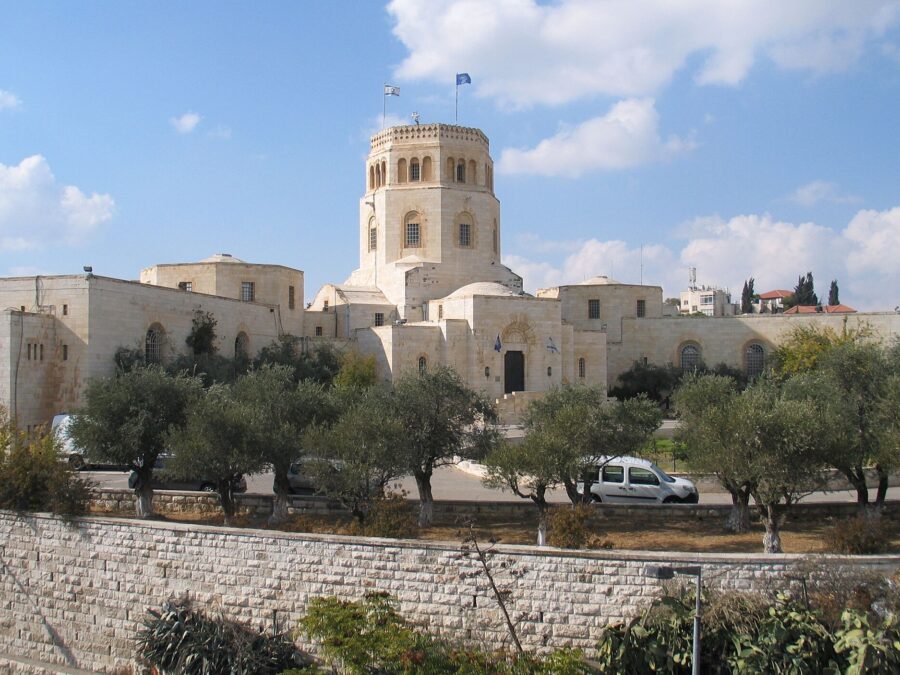
Built under the British Mandate with a gift from John D. Rockefeller Jr., the Rockefeller opened in 1938 as the Palestine Archaeological Museum. It passed to Jordanian administration in 1948 and to Israeli control in 1967, and is now run by the Israel Museum. The white limestone building has an octagonal tower, a cloister around a long pool, and carved reliefs by the sculptor Eric Gill, and it is one of the finest pieces of architecture in Jerusalem. Inside is an old-fashioned, beautifully cased collection that includes eighth-century carved wooden panels from Al-Aqsa Mosque and Crusader-era lintels from the Church of the Holy Sepulchre. The catch is that it has been closed to walk-in visitors since 2023. From summer 2025 the Tower of David Museum ran occasional pre-booked tours, and the building’s future has been debated in public. Our Rockefeller Museum guide explains the current position, and from the street by Herod’s Gate you can at least admire the tower.
For the rest of the archaeological picture — the Herodian mansions under the Jewish Quarter, the Davidson Center, the City of David and the Western Wall Tunnels — our archaeology museums guide goes site by site.
Art, Craft and Collections
Jerusalem is not an art city the way Tel Aviv likes to think it is, but it has a handful of collections that are genuinely world-class and almost comically under-visited.
Museum for Islamic Art
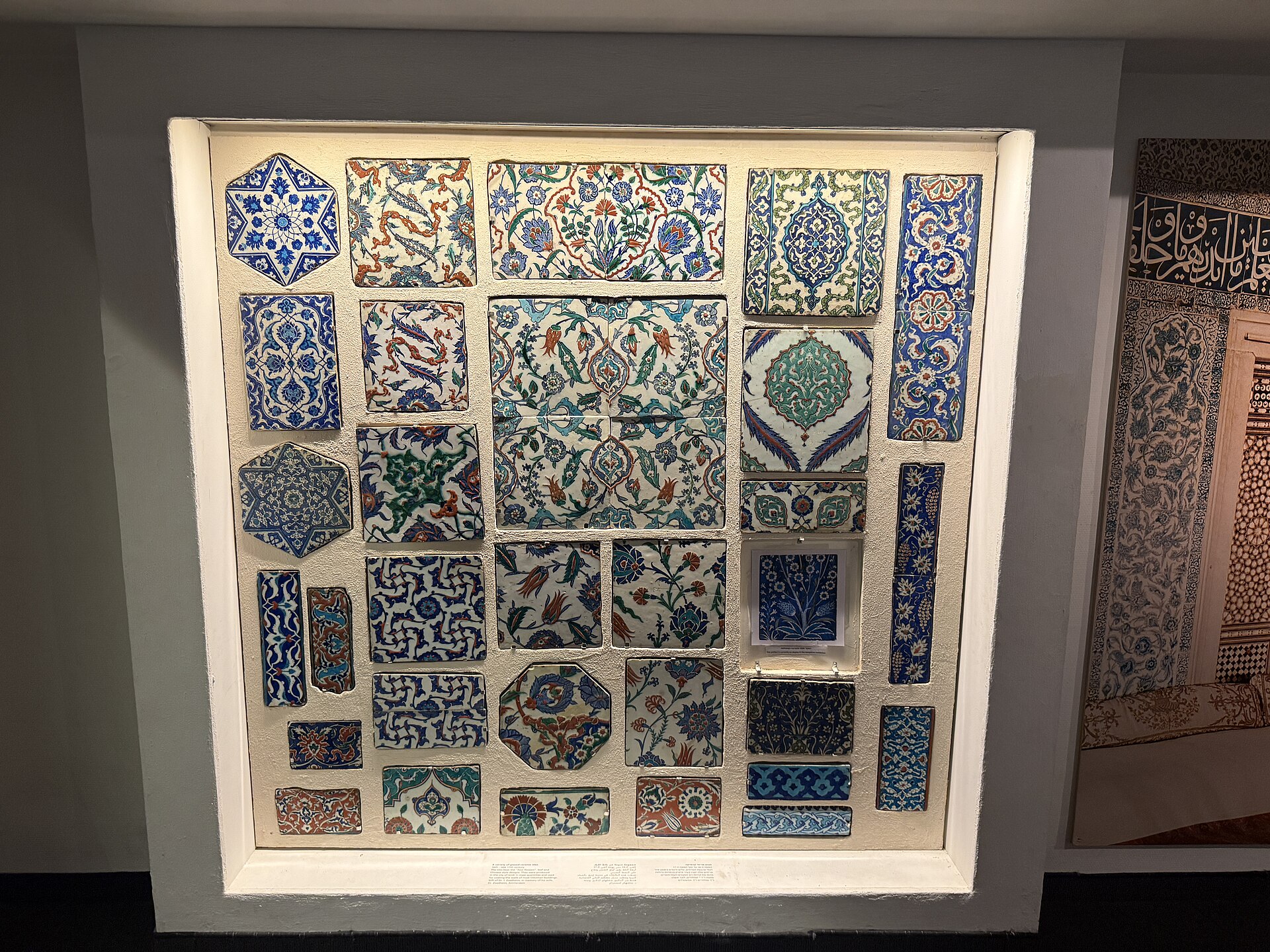
Founded by Vera Bryce Salomons and opened in 1974, the museum is named after Leo Aryeh Mayer, the Hebrew University scholar of Islamic art. It covers a thousand years and the whole Islamic world, from Spain to India, in ceramics, glass, metalwork, jewellery, textiles and manuscripts, all laid out clearly in a building in Katamon. It also holds the clock and watch collection of Sir David Lionel Salomons, which includes the Breguet watch known as the “Marie Antoinette”. That watch was stolen in a burglary in 1983 and recovered more than two decades later, a story that alone justifies the detour. It is quiet and thoughtful, one of the best small museums in the country, and it rarely has more than a handful of visitors in it.
Ticho House
A late-Ottoman stone house with a garden, a few minutes from Zion Square, it was the home of the ophthalmologist Dr Abraham Ticho and his wife Anna, whose drawings of the bare Jerusalem hills are among the best images anyone has made of this landscape. It is now the downtown branch of the Israel Museum, with Anna’s work, rotating exhibitions and Dr Ticho’s collection of Hanukkah lamps. Entry is free. It is ideal for forty-five minutes between lunch and whatever comes next.
U. Nahon Museum of Italian Jewish Art
Behind an ordinary gateway on Hillel Street stands an entire eighteenth-century synagogue from Conegliano Veneto, in northern Italy, taken apart and shipped to Jerusalem in 1952. It is still used for prayer by the city’s Italian Jewish community, and the small museum around it holds ceremonial objects from Italian communities going back centuries. Few people know it is there, and a visit is correspondingly peaceful.
The Chagall Windows
Not a museum, but on every art lover’s list: twelve stained-glass windows by Marc Chagall, one for each of the tribes of Israel, installed in 1962 in the synagogue of the Hadassah Medical Center at Ein Kerem. Take the Red Line to its south-western end, and pair them with a walk down into the village of Ein Karem. Check the synagogue’s visiting hours and entry arrangements with Hadassah before you go, as it is a working hospital. For contemporary work and the commercial galleries, see our guide to Jerusalem art galleries.
Faith and Scripture
Most of Jerusalem’s religious heritage is on show where it happened: in the churches, synagogues and mosques themselves, which our guide to the city’s holy sites covers. But two museums add something that the sites cannot.
Terra Sancta Museum
The Franciscan Custody of the Holy Land runs this museum at the Monastery of the Flagellation, beside the second Station of the Cross. It has a multimedia introduction to the Via Dolorosa and a collection of finds from the Franciscans’ own excavations. It makes a sensible first stop before you walk the Stations, which our Via Dolorosa guide covers, and it will appeal particularly to pilgrims following our Christian pilgrimage itinerary.
Friends of Zion Museum
Founded by the American evangelical author Mike Evans and opened in 2015 in the city centre, the Friends of Zion Museum tells the stories of non-Jews who supported the Zionist cause or helped Jews in danger, including rescuers during the Holocaust. It does so through a sequence of immersive, cinema-style rooms rather than a collection of objects. Its perspective is explicitly pro-Zionist and Christian, which is why evangelical groups love it. Visitors looking for a conventional museum should know that it is closer to a guided film experience. Book ahead.
Science, Families and Rainy Days
The Bloomfield Science Museum, on the Hebrew University’s Givat Ram campus, is the city’s hands-on science museum: rooms full of things to push, pull, spin and climb, and a reliably happy din. With children it is the best answer to a wet January afternoon in Jerusalem. Without children, do not bother. Note that it is closed on Sundays and Fridays, and admits visitors only with tickets booked in advance.
The Israel Museum’s Youth Wing is the other big family asset, with art workshops and exhibitions pitched at children. The Biblical Zoo is not a museum but is the city’s other great family day out. Our guides to Jerusalem with kids and kid-friendly attractions fit them into a wider plan. If you are travelling in the rainy months, our month-by-month weather guide will tell you how often you will need an indoor option.
Parliament, Courts and the National Library
The Knesset
Israel’s parliament offers free guided tours on set days of the week, and you will need your passport to get through security. The highlight for most visitors is not the chamber but the Chagall State Hall, with its three huge tapestries and its floor and wall mosaics by Chagall. The tour is pleasant, informative and a little procedural, and it makes a good hour to add to a day at the Israel Museum a few hundred metres away. Tour days and times change with the parliamentary calendar, so book ahead.
The Supreme Court
Ram Karmi and Ada Karmi-Melamede’s building, completed in 1992, is one of the most admired modern buildings in the country. It is a careful composition of Jerusalem stone, light and water, full of references to the city’s walls and gates, and there are free guided tours. Check the tour times on the court’s site, because they run on some days only.
The National Library of Israel
The library’s new building beside the Knesset, designed by Herzog & de Meuron, opened in late 2023. Its public spaces and exhibition gallery bring out treasures from one of the great collections of Jewish manuscripts, maps and archives in the world. The library’s website lists the current exhibitions and guided tours. It is a good choice for a bookish hour, and the reading room is a fine building in its own right.
Planning Around Shabbat and the Holidays
Museum hours in Jerusalem are set by the Jewish week, and that catches out more visitors than any single museum’s rules.
- Friday is a short day. Most museums that open on Friday close at 14:00 or 15:00, and everything winds down through the afternoon as the city prepares for Shabbat.
- Saturday is split. The Israel Museum, the Tower of David and the Bloomfield Science Museum open on Shabbat, and they are among the most useful places in the city to spend a Saturday. Yad Vashem, the Knesset and the government-linked sites are shut, and so is public transport, including the light rail, until Saturday night. Our guide to Shabbat in Jerusalem explains how the rest of the city behaves.
- Sunday is a working day. Museums open normally, though some, like the Tower of David, start later than on other weekdays.
- Festivals are mixed. Almost everything closes for Yom Kippur. On other festival days some museums close and others open with holiday-eve hours. During the intermediate days of Sukkot and Passover, the big museums have their busiest weeks of the year, because Israeli families have time off and head straight for them. The 2027 dates are in our Jerusalem religious holidays calendar.
- Evenings are rare, so use them. The Israel Museum’s Tuesday opening until 21:00 and the Tower of David’s late Tuesday and its night show are the only regular chances to see a major museum after dark.
Two other practicalities apply everywhere. Every museum has a security check at the entrance, with bag screening like an airport’s. Allow five minutes for it, and leave anything that looks like a knife in the hotel. Photography rules vary from room to room. The most sensitive galleries, at Yad Vashem in particular, ask you not to take pictures, so watch for the signs. Visitors with limited mobility should know that the Israel Museum’s campus is spread out and sloping, even though it is well equipped. Our accessibility guide covers what to expect.
Three Museum Days That Work
The Givat Ram day
Arrive at the Israel Museum when it opens at 10:00 (not on a Tuesday), and start with the Shrine of the Book and the Second Temple model before the groups arrive. Then do the archaeology wing, and have lunch on the campus. In the afternoon, cross the road to the Bible Lands Museum, or book the Knesset tour if its schedule suits. If you are travelling with children, go to the Bloomfield instead. That is a full day, and a good one.
The memory day
Get to Yad Vashem at 09:00 and give it the whole morning. Afterwards, walk along the ridge to Mount Herzl, and see Herzl’s grave and the national cemetery; if you booked in advance, add the Herzl Museum. Stop there. Take the Red Line back into town, and spend the evening somewhere ordinary and alive, such as Mahane Yehuda market.
The Old City day
Start at the Tower of David at opening time (09:00 on most weekdays), before the rooftops get hot. Walk the ramparts, then cut through the Jewish Quarter to the Wohl Museum. After lunch in the Old City, leave by Herod’s Gate to see the Rockefeller Museum’s tower from the street, and book one of its occasional tours if the dates line up. Come back for the Tower’s night show. It is a walking day, and our self-guided walking tour links the stops.
These days slot into any of our longer plans; the Jerusalem itinerary guide shows where a museum day fits best in a three- to five-day visit.
Which Museums Are Worth It — and Which Aren’t
An honest ranking, for a visitor with limited days:
- Unmissable: the Israel Museum, and Yad Vashem if you can give it the time and the emotional space. If you only do two museums in Jerusalem, do these.
- Excellent for a first visit: the Tower of David. It is the best single introduction to the Old City’s layers, and it is open on Saturday.
- Excellent if the subject is yours: the Bible Lands Museum (the ancient Near East) and the Museum for Islamic Art (anyone who likes beautiful objects). The Rockefeller would be here too, for architecture lovers, but it has been closed to walk-in visitors since 2023.
- A good hour, not a destination: the Knesset tour, Ticho House, the Supreme Court, the Italian synagogue and the Chagall Windows. Each is worth adding to a day you are already spending nearby.
- Only with a specific interest: the Herzl Museum and the Begin Center (Zionist and Israeli political history), and the Underground Prisoners Museum (the Mandate period, told from one side).
- Know what you are buying: the Friends of Zion Museum is a polished, emotional film experience with a clear point of view. If that point of view is why you came, go. If you want a museum, you will be disappointed.
- Children only: the Bloomfield Science Museum. With under-twelves, it is a brilliant half-day. Without them, it is a room full of other people’s children.
If you have one day for museums in Jerusalem and nothing else, spend it at the Israel Museum. If you have two, add Yad Vashem. With three, add the Tower of David. After that, follow your own interests. For how museum days sit alongside the free sights, see our lists of things to do in Jerusalem and free things to do in Jerusalem.
The Israel Museum deserves far more than the summary above. Our full Israel Museum Jerusalem visitor guide walks through every wing, from the Nahal Mishmar copper hoard to the four rebuilt synagogues, explains the ticket options and the Tuesday hours in detail, and sets out three routes for a short visit, a full day and a quiet Tuesday evening.
Mount Herzl rewards more time than a museum list suggests. Our full guide to Mount Herzl and the Herzl Museum walks the hill from Herzl’s tomb through the leaders’ graves and the military cemetery, explains how to book the museum’s guided visits, and covers the etiquette of visiting a cemetery that is still very much in use.
Before you visit the Museum of Tolerance, read our plain-spoken guide to the Museum of Tolerance Jerusalem. It sets out what is actually on show in 2026, how the single daily English tour works, the opening hours and holiday closures, and the long dispute over the building’s site beside the Mamilla Cemetery.
Families planning a Bloomfield morning should read our full guide to the Bloomfield Science Museum, which has the 2026 ticket prices and family pass, the ages it suits best, the bus lines that stop outside, its accessibility services, and how to pair it with the Botanical Garden or Gazelle Valley nearby.
The Knesset and Supreme Court tours are free, but they run to fixed timetables. Our guide to the Knesset tour and the Supreme Court sets out the English tour days and times, who needs to book and who can walk in, the passport rule, and a plan that fits both buildings into a single Sunday or Thursday morning.
If you plan to pair the two museums on Museum Row, read our full guide to the Bible Lands Museum first. It has the 2026 prices, the free English tour times, the Wednesday late opening, and a straight answer on whether a combined ticket with the Israel Museum exists, along with the ways to save that actually work.
For the full story of the 1967 battlefield in north Jerusalem, read our guide to Ammunition Hill. It covers what happened on the night of 5 to 6 June, the trenches, bunkers and museum you can see today, the 2026 hours and ₪20 ticket, how the memorial frames its story, and a half-day route that continues by tram to Mount Herzl.
Final Word on Museums in Jerusalem
It is tempting to treat Jerusalem’s museums as the thing to do when it rains, and that undersells them badly. The Old City shows you where things happened. The museums show you what happened, with the actual inscriptions, scrolls, coffins and coins in front of you, and the two make each other far better. Give at least one full day of your trip to the Israel Museum, give Yad Vashem the time it deserves, and let the smaller collections fill the gaps between everything else. Start with our things to do in Jerusalem round-up for the wider picture, read up on the city’s history before you go so the galleries make sense, and use our guide to how many days to spend in Jerusalem to decide how many museum days you can afford.
Photo Credits
The Shrine of the Book dome and basalt wall at the Israel Museum: Jerusalem Israel Museum Shrine of the Book by Utilisateur:Djampa – User:Djampa, CC BY-SA 4.0, via Wikimedia Commons.
The Shrine of the Book with the Knesset behind: Jerusalem Israel Museum Shrine of the Book Knesset by Utilisateur:Djampa – User:Djampa, CC BY-SA 4.0, via Wikimedia Commons.
Glazed tiles at the Museum for Islamic Art: 136544 jerusalem – museum of islamic art PikiWiki Israel by שלמה רודד, CC BY 2.5, via Wikimedia Commons.
Jaffa Gate and the Tower of David citadel: Jaffa Gate and Tower of David (2) by Radosław Botev, CC BY 3.0 pl, via Wikimedia Commons.
The entrance to the Holocaust History Museum at Yad Vashem: 134594 the holocaust history museum yad vashem PikiWiki Israel by ברוך ניב, CC BY 2.5, via Wikimedia Commons.