For the best part of twenty years, the plot at the end of Hillel Street was a fenced-off building site, and the long, pale, angular block that rose on it was a familiar sight to Jerusalemites long before anyone could go inside. The lettering by the door now gives its full name: the Ambassador Roland E. Arnall Museum of Tolerance Jerusalem. It has been open since 2023, and it is one of the most talked-about buildings in the city. That is partly for what it shows and partly for where it stands.
This guide sets out plainly what the museum is, what is actually on show in 2026, how the guided tours and opening hours work, how to get there, and why its site beside the old Mamilla Cemetery was fought over for years. Details were checked on the museum’s own website in September 2026. Its exhibitions change, so confirm what is on before you plan a morning around it. For the city’s other collections, see our overview of museums in Jerusalem.
The Museum of Tolerance at a Glance
| Address | 32 Hillel Street, between the city centre and Independence Park |
| What is open | Changing exhibitions, seen on guided tours, plus a busy programme of talks and performances |
| Opening hours | Sunday–Thursday 09:30–18:00 (last admission 16:30) · Friday 09:30–14:00 (last admission 13:00) · closed Saturday |
| English tours | Sunday to Friday at 12:00 |
| Tickets | Sold through the museum’s online ticket site; the price was not listed on its visitor page when we checked, so confirm when you book |
| Holiday closures | Closed on some Jewish holidays and their eves; the museum posts them on its home page |
| Getting there | Light rail to City Hall or Jaffa Center, then about six minutes’ walk; paid car park next door |
| Phone | *5548 from an Israeli phone |
| Time needed | An hour to an hour and a half |
What Is the Museum of Tolerance Jerusalem?
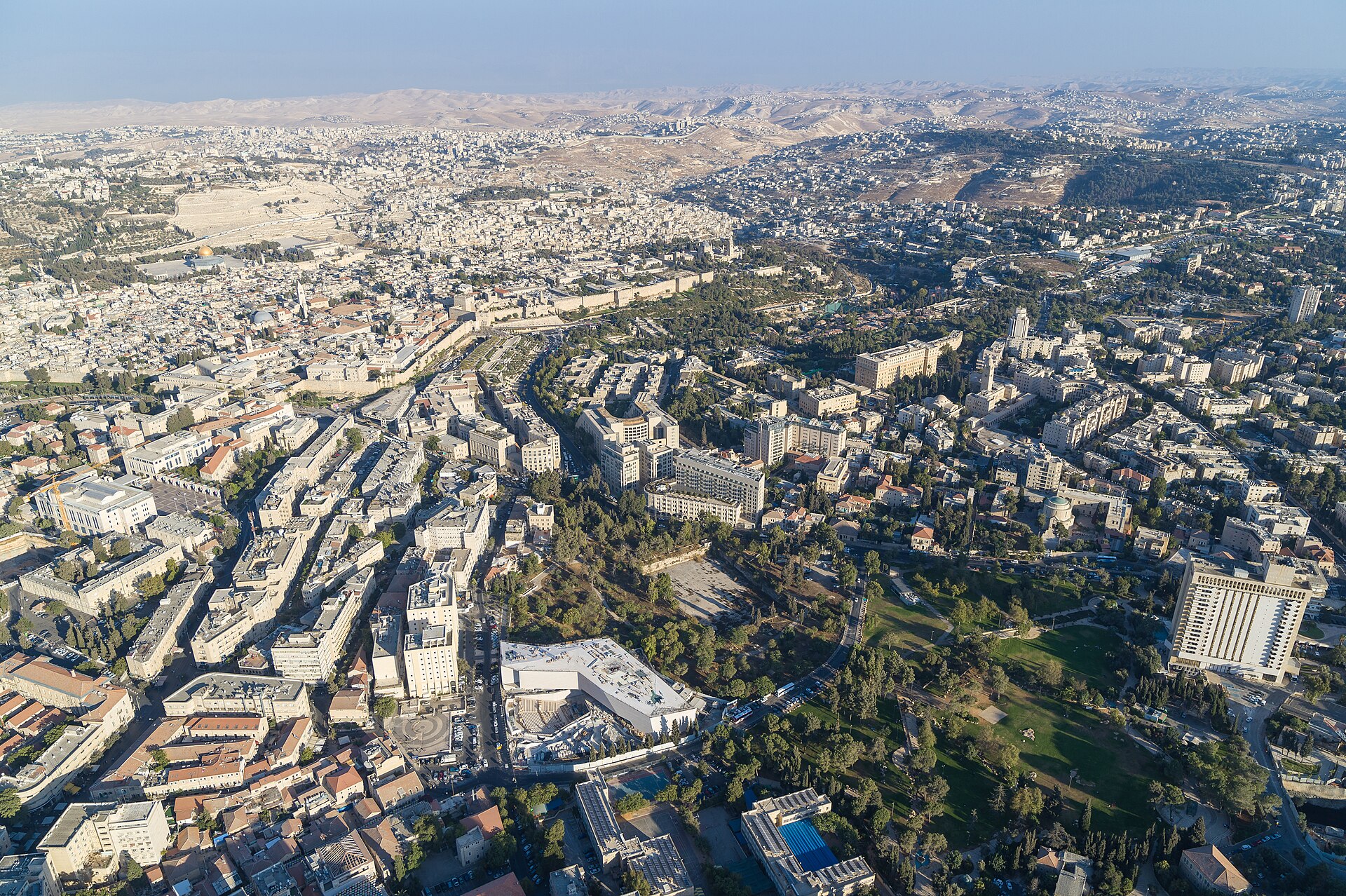
The museum is a project of the Simon Wiesenthal Center, the Los Angeles-based Jewish human rights organisation that also runs the Museum of Tolerance in Los Angeles. It was announced in the early 2000s, with a building by Frank Gehry, and a cornerstone was laid in 2004. Then the project stalled. Gehry’s design was dropped around 2010, the Israeli practice Chyutin Architects produced a new and more modest scheme, and construction dragged on through legal challenges and funding problems for more than a decade. The doors finally opened in 2023.
The museum describes its mission as being “a lighthouse of human dignity in the heart of Jerusalem”, fostering unity through exhibitions, cultural programmes and dialogue, rooted in what it calls universal values inspired by Judaism. In practice it is as much a cultural and conference centre as a museum. The complex includes a theatre, an outdoor amphitheatre, a large hall, classrooms and a beit midrash (a study hall), and much of its calendar is talks, panels, performances and events for delegations and schools.
The Building
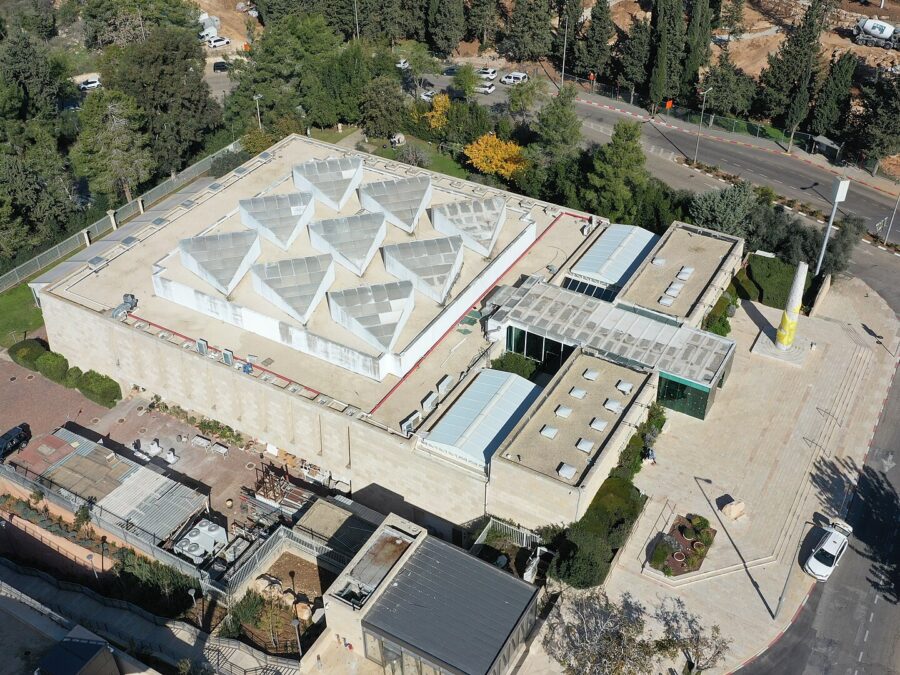
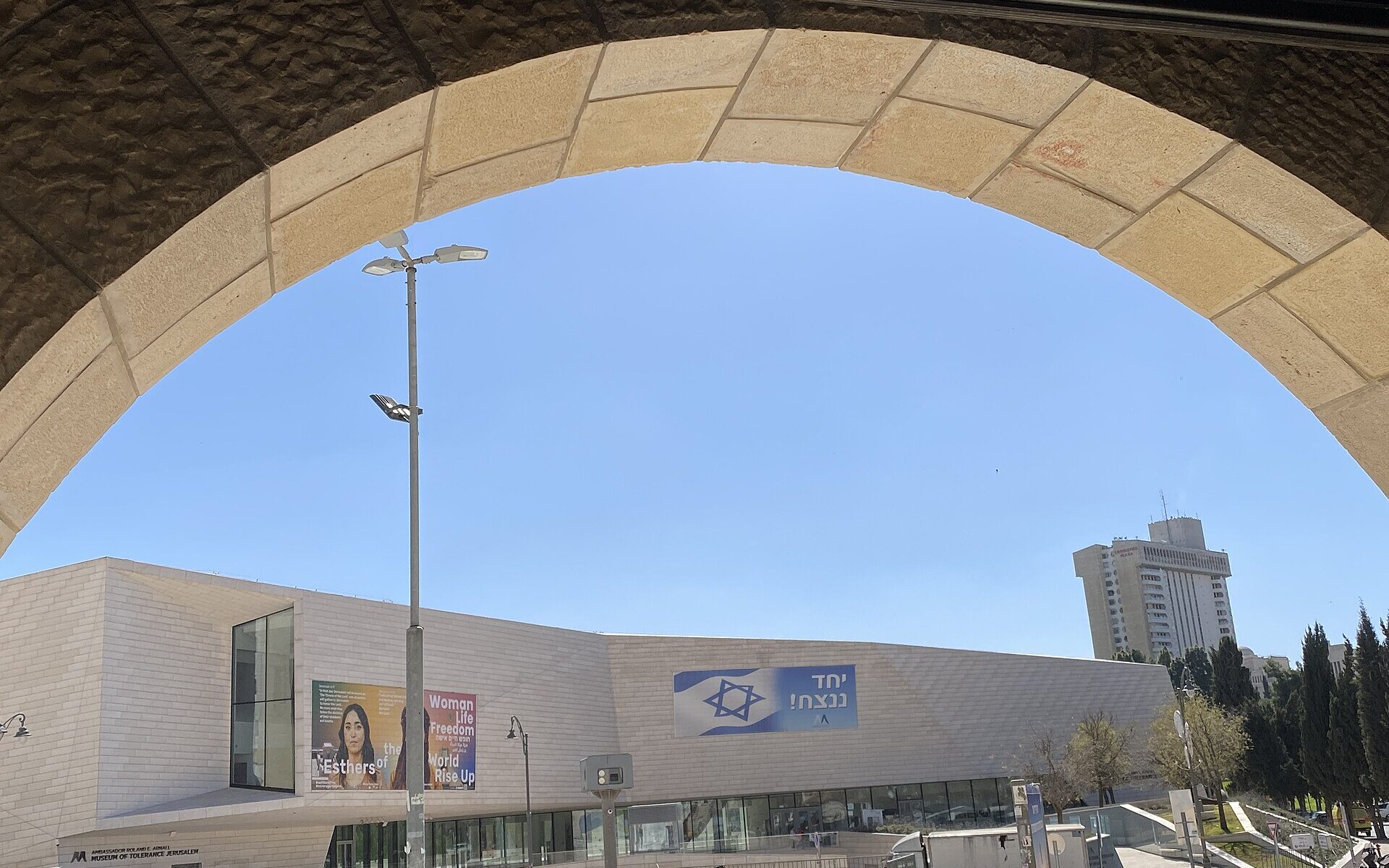
Whatever you make of its exhibitions, the building is worth a look in its own right. Chyutin Architects clad it in the pale Jerusalem stone that the city’s planning rules require, but broke it into long, angled planes that lean and fold rather than stacking up in the usual blocks. The street front is a tall, almost blank wall of stone above a band of glass. Inside, the ground-floor galleries and lobby are bright, open spaces with floor-to-ceiling windows onto the terraces, which is why the hanging exhibitions of recent years have worked so well there.
Behind the building, the terraces step down towards Independence Park, with an outdoor amphitheatre cut into the slope for summer performances. Seen from the park, it looks less like a fortress than it does from Hillel Street. It is one of the few large public buildings put up in central Jerusalem in recent decades. Opinions differ on whether it sits comfortably with the older stone streets around it. It is worth walking round the outside even if you do not go in.
The Site and the Mamilla Cemetery Dispute
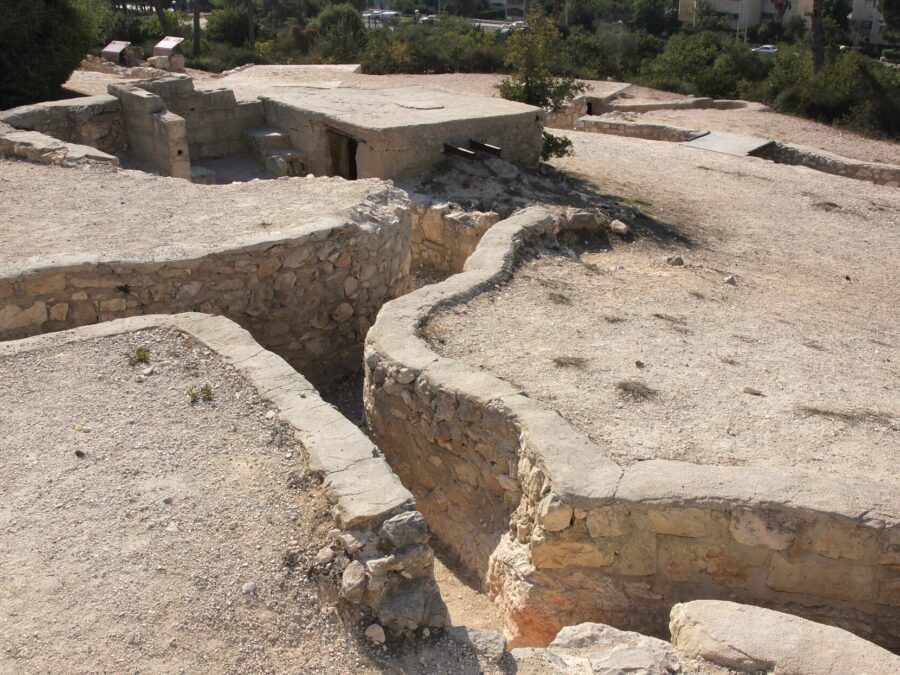
You cannot write honestly about this museum without its site. The building stands on land that served for decades as a municipal car park. That land lies at the edge of the Mamilla Cemetery, one of the oldest Muslim cemeteries in Jerusalem, with graves going back many centuries around the ancient Mamilla Pool. Part of the historic cemetery had already disappeared under Independence Park and other development in the decades after 1948.
When the museum was announced, Muslim organisations petitioned against it, and they were joined by some archaeologists and human rights groups. They argued that the land was part of a historic cemetery and that graves would be disturbed; human remains were indeed uncovered during excavation work, and how they were handled became part of the dispute. The museum’s backers pointed out that the plot had been a car park since the 1960s. In 2008 Israel’s Supreme Court ruled that construction could go ahead. The building is now open, and for its opponents the argument has not gone away. Visitors will meet both views in Jerusalem, and this guide does not try to settle between them. Our history of Jerusalem gives the wider context of how the city has been built over and argued over.
What You Can Actually See in 2026
Here is the plain answer the question deserves. What the museum offers visitors in 2026 is a programme of changing exhibitions, shown on guided tours. When we checked in September 2026, three exhibitions were listed:
- 06:29 – From Darkness to Light. An interactive experience about the Hamas-led attack on southern Israel on 7 October 2023; the title is the time the attack began that morning. The museum describes it as examining October 7 and Israeli resilience. It is the most substantial of the three, and some visitors find its content very distressing. If you are bringing children, ask the museum about age suitability when you book.
- Documenting Israel: 75 Years of Vision. Historic photographs of the country’s people and places, chosen to show the diversity of Israeli society since 1948.
- Love in the Shadow of War. Portraits of eight couples from the war that followed in Gaza, which Israel calls the Swords of Iron war.
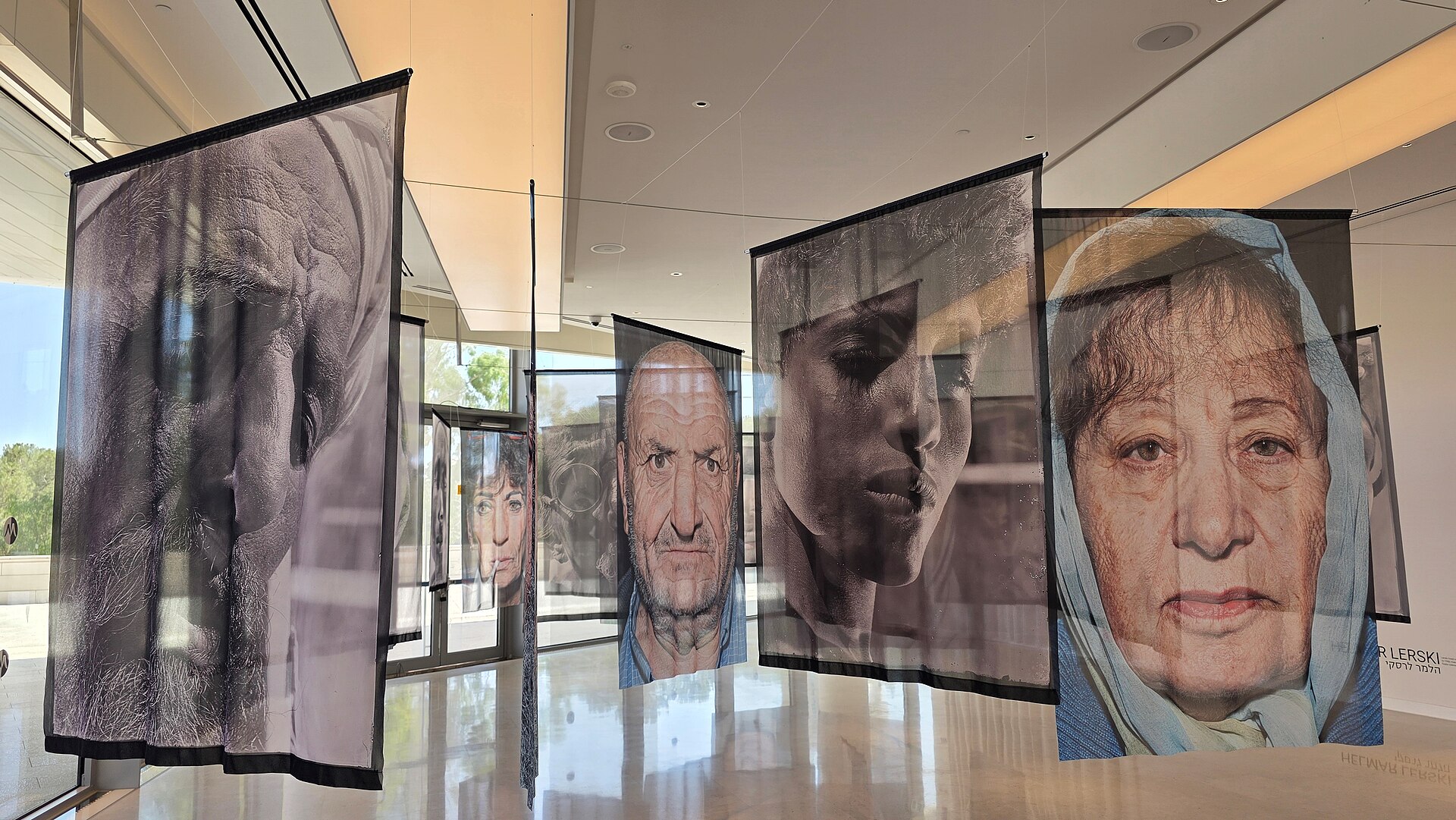
The programme changes through the year; in 2025, for example, the galleries showed the portrait photography of Helmar Lerski. Check the exhibitions page on the museum’s website before you go, so you know what you are booking.
It is worth being clear about expectations. If you were expecting a large permanent museum of tolerance on the model of the Los Angeles original, with a broad historical exhibition on prejudice and human rights, that is not what is on show in 2026. The current exhibitions concentrate closely on Israeli experience since 7 October 2023, inside a large building that is also a working cultural centre. Some visitors find that exactly what they came for, and others are surprised by it. Either way, it is better to know before you arrive.
The terrace and the Nobel wall
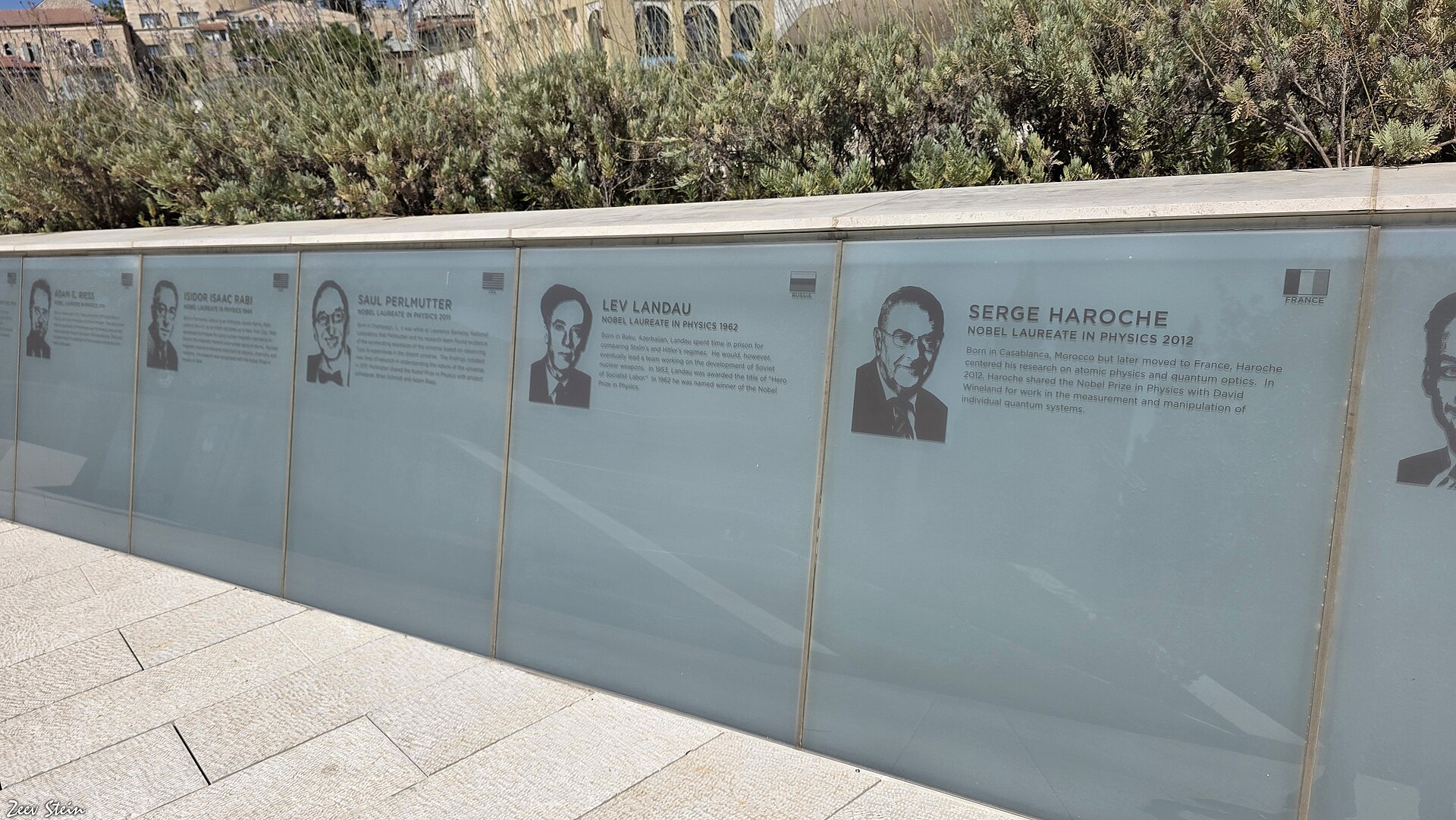
Outside the galleries, the terraces are pleasant to walk. A long glass wall carries etched portraits and short biographies of Nobel laureates, among them the physicists Lev Landau, Saul Perlmutter and Serge Haroche, and it makes an interesting ten minutes even if you are not taking a tour.
Hours, Tours and Tickets
As of September 2026, the museum opens Sunday to Thursday from 09:30 to 18:00, with last admission at 16:30, and on Friday from 09:30 to 14:00, with last admission at 13:00. It is closed on Saturday. It also closes on some Jewish holidays and their eves. In autumn 2026 the list included the eve and day of Yom Kippur, the eve of Sukkot and the eve of Simchat Torah, and the museum posts these on its home page. Our calendar of Jerusalem religious holidays has the 2027 dates, and our Shabbat guide covers what else is open on a Saturday.
The museum invites visitors to see the exhibitions on a guided tour during opening hours, and the English tour runs once a day, Sunday to Friday, at 12:00. That single English slot is the most important fact on this page. If you arrive at ten expecting to wander round on your own in English, you may find the only English tour is two hours away. Book the 12:00 tour through the museum’s online ticketing, where the current price is shown; the visitor page did not list it when we checked. The museum has an accessibility page on its website, and it is worth reading before you book if anyone in your group has access needs.
Getting There
The museum is at 32 Hillel Street, on the edge of downtown, where the city centre meets Independence Park. It is one of the easiest museums in Jerusalem to reach:
- Light rail. Get off at City Hall or Jaffa Center, then walk about six minutes. Our light rail guide explains fares and routes.
- On foot. It is five minutes from the Ben Yehuda pedestrian mall and about fifteen minutes from Jaffa Gate, walking up through the Mamilla area.
- Car. There is a paid car park next to the museum.
- Buses and taxis. Plenty of both pass nearby; our getting around Jerusalem guide has the details.
Around the Museum: A Short Downtown Walk
Because it is so central, the museum fits easily into a morning in the city centre, and several of Jerusalem’s smaller museums are within ten minutes’ walk:
- The U. Nahon Museum of Italian Jewish Art, a few doors along Hillel Street, where an entire eighteenth-century synagogue from Conegliano Veneto stands behind an ordinary gateway, still in use for prayer.
- Independence Park, right behind the museum, one of the largest green spaces in central Jerusalem, with the ancient Mamilla Pool at its edge. Our guide to Jerusalem’s parks covers it.
- Ticho House, the Israel Museum’s free downtown branch, with Anna Ticho’s drawings of the Jerusalem hills, around ten minutes away near Zion Square.
- The Museum of the Underground Prisoners in the Russian Compound, the British Mandate’s central prison, a similar distance in the other direction.
- The Old City, fifteen minutes downhill through Mamilla to Jaffa Gate and the Tower of David.
Our self-guided walking tour strings the city centre and the Old City together, and the museum sits neatly on the way.
Planning Your Visit
- Book the tour first, then plan the day around it. With one English tour a day at 12:00, the museum sets the shape of your morning. Put the Old City or the Tower of David before it and lunch downtown after it.
- Arrive ten to fifteen minutes early. As at every public building in the city, there is a security check with a bag screening at the entrance.
- Allow an hour to an hour and a half, including a walk round the terraces and the Nobel wall.
- Fridays are short. Last admission is at 13:00, so the noon tour is effectively the last English option of the week before Shabbat.
- Check the holiday list. The museum closes on several Jewish holidays and their eves, and it posts the dates on its home page.
- Eat nearby. You are a few minutes from the cafés of the city centre, and Mahane Yehuda market is a short tram ride away. Our best restaurants in Jerusalem guide has recommendations for every budget.
Is It Worth Visiting?
It depends on what you are looking for, and it is better to be clear about that than to be disappointed at the door.
- Go if you want to understand how Israelis are telling the story of 7 October 2023 and the war that followed, while that story is still being shaped. The 06:29 exhibition is the museum’s centrepiece, and it is powerful. Go too if you are interested in contemporary architecture and the long, contested history of the building itself.
- Go elsewhere if you want Jewish or Israeli history in depth: the Israel Museum and the Tower of David do that far better. For the Holocaust, the essential visit is Yad Vashem. For the national memorial to Israel’s fallen, see Mount Herzl.
- Know what you are getting if you are looking for a museum that sets out several perspectives on the conflict. The current exhibitions tell an Israeli story, and they do not claim to do anything else.
At an hour or so, with an English tour at a fixed time, it is easy to fit into a day in the city centre. Book the tour, arrive ten minutes early for security, and pair it with a walk through Independence Park and lunch downtown. For current official travel advice about visiting Israel, see our guide to whether Jerusalem is safe to visit.
Final Word on the Museum of Tolerance
After twenty years of delays, lawsuits and scaffolding, the Museum of Tolerance Jerusalem is open. What it offers is not the grand Gehry-designed museum announced in 2004 but a set of changing exhibitions, currently focused on how Israel has lived through the time since 7 October 2023, in a striking building on a disputed site. Go knowing that, book the 12:00 English tour, and it is an absorbing hour. Then walk on through Independence Park to the rest of downtown. For a wider museum day, see our guide to museums in Jerusalem, and our things to do in Jerusalem for everything else, and head down to the Old City when you are done.
Photo Credits
The Museum of Tolerance Jerusalem on Hillel Street: 107076 museum of tolerance in jerusalem PikiWiki Israel by שלמה רודד, CC BY 2.5, via Wikimedia Commons.
Aerial view of the site in 2019: MOTJ Aerial Shot by Dchaseb, CC BY-SA 4.0, via Wikimedia Commons.
Helmar Lerski portraits in a 2025 exhibition: 135281 museum of tolerance jerusalem PikiWiki Israel by זאב שטיין, CC BY 2.5, via Wikimedia Commons.
The glass wall of Nobel laureates on the terrace: 135285 museum of tolerance jerusalem PikiWiki Israel by זאב שטיין, CC BY 2.5, via Wikimedia Commons.