Jerusalem might not be the first destination that comes to mind for a family vacation, but it should be. This ancient city offers a remarkable blend of interactive history, outdoor adventure, and cultural experiences that captivate children just as much as adults. From exploring underground tunnels that date back 3,000 years to watching animals at one of the world’s most unique zoos, Jerusalem delivers the kind of hands-on learning experiences that no classroom can match.
This comprehensive family guide covers everything you need to plan an unforgettable Jerusalem trip with children of all ages. Whether you are traveling with toddlers, school-age kids, or teenagers, you will find age-appropriate activities, practical logistics advice, and insider tips that make the difference between a stressful trip and a magical one. Jerusalem is also a wonderful base for exploring other parts of Israel — check our day trips from Jerusalem guide for family-friendly excursions.
Top Family-Friendly Attractions in Jerusalem
The four attractions below are the ones families come back to again and again, and our wider roundup of kid-friendly things to do in Jerusalem covers another two dozen options sorted by age group and energy level.
Jerusalem Biblical Zoo (Tisch Family Zoological Gardens)

The Jerusalem Biblical Zoo is consistently rated as one of the top family attractions in all of Israel, and for good reason. Spread across 62 acres with a lake at its center, this beautifully designed zoo features animals mentioned in the Bible alongside exotic species from around the world. Children love riding the zoo train, visiting the petting area, and climbing the colorful Niki de Saint Phalle sculptures scattered throughout the grounds.
The zoo is fully stroller-accessible with shaded rest areas, clean facilities, and plenty of food options. Plan to spend at least 3-4 hours here. The zoo is open Sunday through Thursday from 9am to 5pm (7pm in summer), Friday 9am to 4pm, and Saturday 9am to 6pm. Admission was 79 NIS for adults and 64 NIS for children aged 3-18 as of August 2026; check the zoo’s site before you go, as prices change.
City of David: Underground Adventure
For older children and teenagers, the City of David is an absolute highlight. This archaeological site just south of the Old City walls offers an immersive journey through 3,000 years of Jerusalem’s history. The star attraction is Hezekiah’s Tunnel — a 533-meter underground water channel carved in 701 BCE that you wade through in knee-deep water with flashlights. It is an unforgettable adventure that kids talk about for years.
The site also features the newer Pilgrimage Road tunnel, an ancient street dating to the Second Temple period discovered beneath layers of history. Virtual reality experiences bring ancient Jerusalem to life. The City of David is best suited for children aged 6 and up. Guided tours are highly recommended and available in multiple languages.
Tower of David Museum
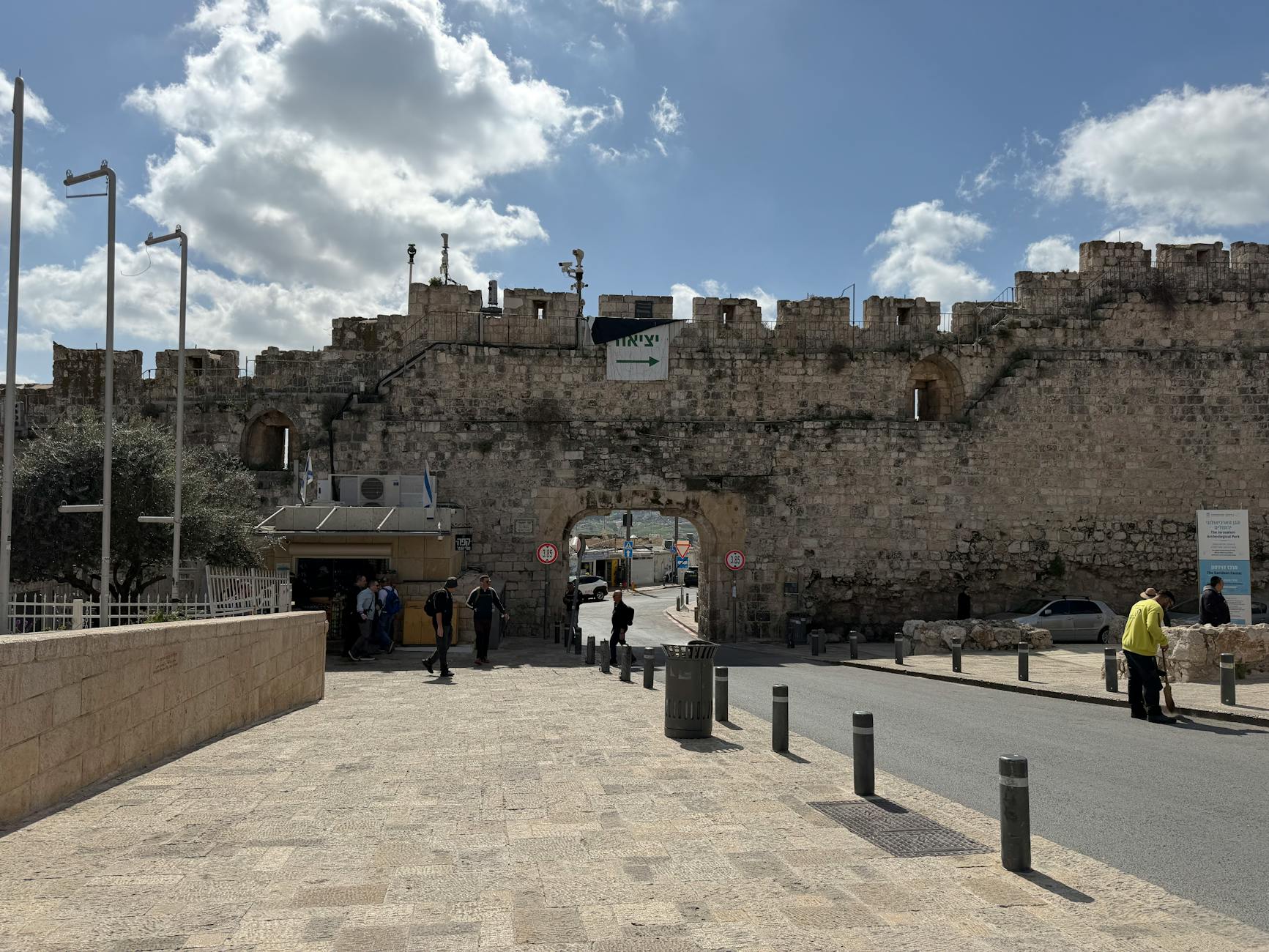
The Tower of David Museum, located in the ancient citadel near Jaffa Gate, is one of Jerusalem’s most family-friendly cultural attractions. The museum tells the story of Jerusalem through interactive exhibits, models, and multimedia presentations that engage children far better than traditional displays. Kids can explore the ancient towers, walk along the ramparts with panoramic views, and discover hidden courtyards.
The museum also hosts the famous Night Spectacular — a stunning sound and light show projected onto the citadel walls. This 45-minute experience mesmerizes children and adults alike with massive projected images telling the story of Jerusalem. For more on the Old City and its gates, see our Jerusalem Old City guide.
Israel Museum and Youth Wing
The Israel Museum is Israel’s largest cultural institution and home to several spaces designed specifically for young visitors. The Ruth Youth Wing offers hands-on art workshops, interactive galleries, and rotating exhibitions tailored to different age groups. Children can create art, explore tactile exhibits, and participate in guided activities that connect them with both ancient and contemporary culture.
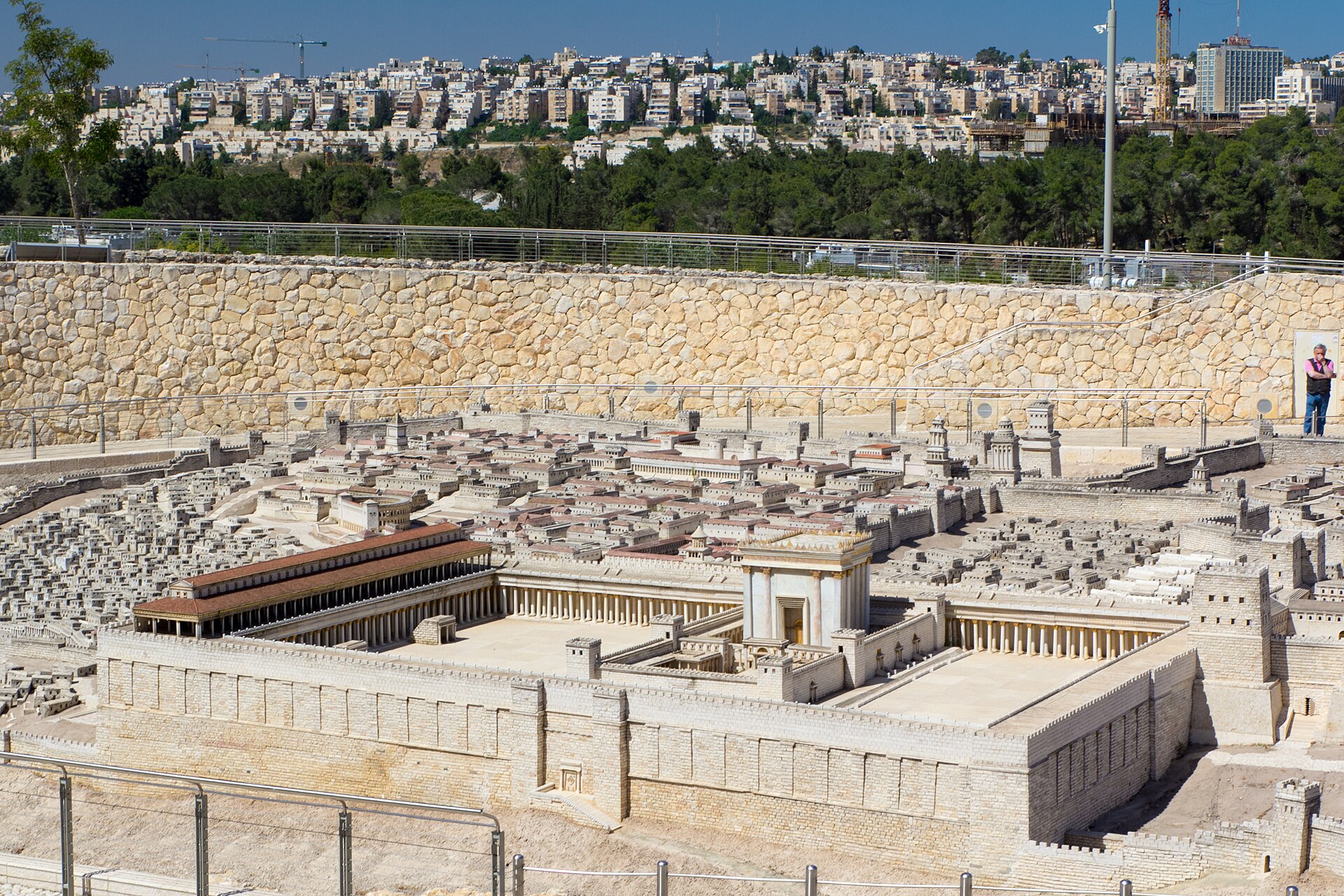
Don’t miss the outdoor model of Second Temple-era Jerusalem — a 1:50 scale model spanning nearly 1,000 square meters that gives the entire family a vivid sense of what the city looked like 2,000 years ago. The Shrine of the Book, housing the Dead Sea Scrolls, fascinates older children and teenagers interested in history and archaeology.
What the Main Family Attractions Cost and When They Open
Prices and opening hours shift more here than in most cities. Summer and winter timetables are different, Friday is a short day almost everywhere, and Jewish festivals rearrange the whole calendar at a few weeks’ notice. The figures below were checked in August 2026 and are meant as a planning baseline rather than a promise — confirm on the official site in the week you actually travel.
- Jerusalem Biblical Zoo — 79 NIS for adults, 64 NIS for children aged 3 to 18, 39 NIS for visitors with disabilities. Open Sunday to Thursday 09:00–19:00, Friday and festival eves 09:00–16:00, Saturday and festivals 09:00–18:00. Last entry is an hour before closing and the ticket desk stops selling two hours before, which catches out families who arrive after a slow lunch. Check the zoo’s own hours page before you set off.
- Bloomfield Science Museum — 65 NIS for adults and children alike, free under the age of five, or 235 NIS for a family pass covering up to ten people (two adults plus children aged 5 to 18). Open Sunday 12:00–19:00, Monday to Thursday 09:00–19:00, Friday 09:00–14:00 and Saturday 10:00–16:00. Entry is by advance booking only, and that includes the under-fives who get in free — you still have to reserve them a slot. Book through the Bloomfield Science Museum site.
- Time Elevator — 58 NIS at the door for adults and children, or 49 NIS booked online, with pre-booking required. Entry is from age five only, so a four-year-old sibling cannot simply tag along. In August the Time Elevator runs Sunday to Thursday 10:40–20:00 and Friday 10:40–14:00.
- Yad Vashem — the Holocaust History Museum opens Sunday to Thursday 09:00–17:00 and Friday and festival eves 09:00–14:00, and closes on Saturdays and all Jewish holidays. Children under ten are not admitted to the History Museum at all, and babies in strollers or carriers cannot be brought in either. Yad Vashem’s visitor information is explicit about both rules.
- Israel Museum — admission varies with the exhibition program, so treat any figure you read on a blog with suspicion. One quirk worth knowing: full-price tickets are sold online, but the discounted children’s, youth and student rates are handled at the box office, so bring ID for anyone claiming one. the museum’s ticket page has the current rates.
Do the arithmetic before you commit to a day. Two adults and two school-age children at the Biblical Zoo comes to 286 NIS in entry alone, before the train ride, ice creams and parking — which is why so many local families buy an annual membership instead. At Bloomfield, the 235 NIS family pass beats four individual tickets by a small margin, and by a much larger one if you are three adults and two children. Our separate write-up on planning a day at the Biblical Zoo goes into the practicalities of the train, the feeding times and where to park.
Exploring the Old City with Kids
The Old City is manageable with children if you plan wisely. The key is to break your visit into focused segments rather than trying to see everything in one day. Start early in the morning when it is cooler and less crowded. The Muslim Quarter bazaar is an adventure in itself — kids love the sights, sounds, and smells of the ancient market, and vendors are generally friendly and welcoming to families.
Western Wall (Kotel)
Visiting the Western Wall with children is a meaningful experience. There is no age restriction, and the atmosphere is generally welcoming to families. Explain to children beforehand about the tradition of placing written prayers in the cracks of the wall. Note that the plaza is fully accessible, but the Western Wall Tunnels tour involves stairs and narrow passages — strollers must be left at the entrance. The tunnel tour is best for ages 5 and up.
Ramparts Walk
The Old City Ramparts Walk offers a unique perspective that children love. You can walk along the top of the 16th-century Ottoman walls, looking down into the city on one side and out across the surrounding area on the other. The walk is divided into two sections: the southern route (Jaffa Gate to Dung Gate) and the northern route (Jaffa Gate to Lions’ Gate). The views are spectacular, and kids enjoy the sense of adventure. Not suitable for strollers, and there are some steep sections.
Outdoor Adventures and Nature
Sacher Park and Liberty Bell Park
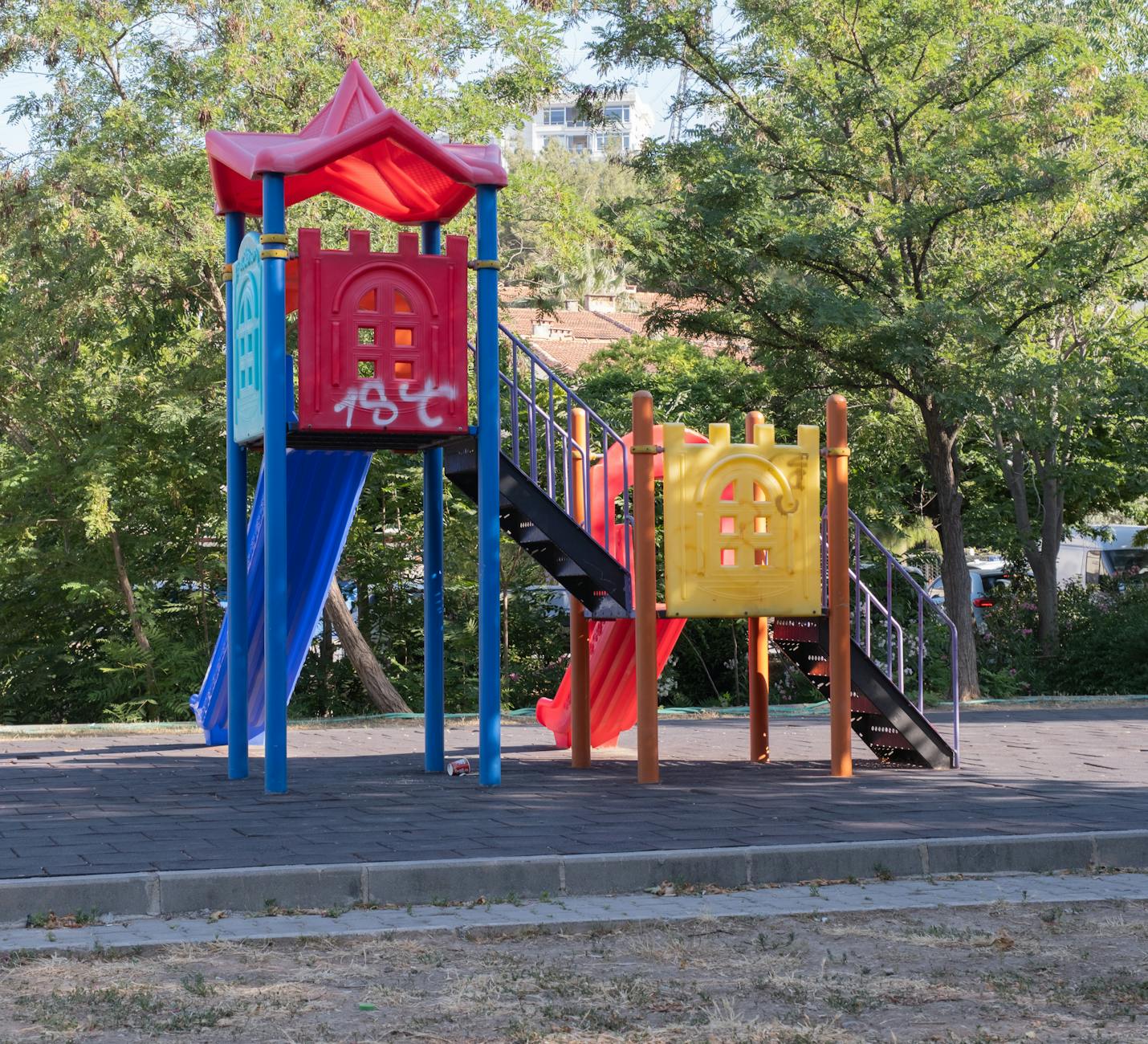
Jerusalem has several excellent parks for when the kids need to burn off energy. Sacher Park, the city’s largest park, features open green spaces, a playground, walking paths, and picnic areas. Adjacent Liberty Bell Park has a monster playground that kids adore, along with a basketball court and grassy areas perfect for an afternoon break. Both parks are in central Jerusalem, making them easy to reach between activities.
Ein Yael Living Museum
Just outside the city, Ein Yael offers a hands-on archaeological and historical experience where children can grind grain, press olives, create mosaics, and make pottery using ancient techniques. It is essentially a working reconstruction of an ancient farming community, and kids get to be the workers. This is an exceptional educational experience for ages 4-14, and it runs especially well-organized programs during school holidays.
Sataf Nature Reserve
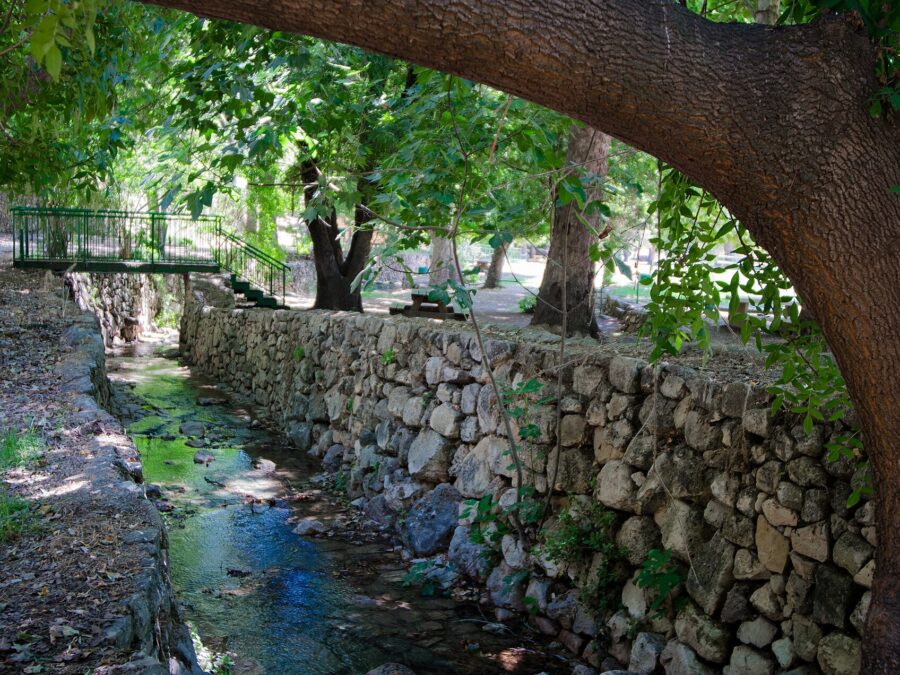
Sataf, in the Jerusalem Hills, offers easy, family-friendly hiking trails through ancient agricultural terraces with natural springs where children can splash and play. The trails are relatively short and manageable for young hikers, with beautiful views of the surrounding forested hills. Pack a picnic and spend a relaxing morning exploring. The reserve is about a 20-minute drive from the city center.
Indoor Activities for Rainy Days or Hot Afternoons
Bloomfield Science Museum
The Bloomfield Science Museum is a paradise for curious kids. With interactive exhibits covering physics, biology, engineering, and technology, children can spend hours experimenting, building, and discovering. The museum is designed for hands-on learning, so kids don’t just look — they touch, build, test, and play. Suitable for ages 3 and up, with different areas tailored to different age groups.
Time Elevator Jerusalem
This multisensory theater takes the family on a 30-minute journey through 3,000 years of Jerusalem’s history using moving seats, surround sound, and special effects. It is an entertaining way to get an overview of the city’s history before exploring the real sites. Suitable for ages 5 and up.
Mini Israel
Located between Jerusalem and Tel Aviv near Latrun, Mini Israel features over 385 miniature replicas of Israel’s most significant landmarks at 1:25 scale. Children are fascinated by the tiny buildings, working trains, and miniature figures. It provides a wonderful overview of the whole country and makes a great half-day outing.
Age by Age: What Actually Works in Jerusalem
Jerusalem is not equally rewarding at every age, and pretending otherwise is how families end up with a five-year-old in tears inside an archaeological tunnel. The honest picture is that the city gets steadily better as children get older — the payoff for a twelve-year-old is enormous, while a toddler is mostly here for the animals, the playgrounds and the fruit juice. That is fine. Plan for the child you actually have.
Toddlers and Under-Fives
Under-fives will not remember the Second Temple, and they will remember the zoo train. Build the day around one anchor activity in the morning, a proper nap or hotel break in the middle, and something low-stakes in the late afternoon. The Biblical Zoo, Sacher Park, Liberty Bell Park and the Light Rail are the reliable wins; the Old City is manageable in small doses if the child is in a carrier rather than a stroller.
The biggest constraint at this age is shade. Much of the Old City has none between about 11:00 and 15:00 in summer, and the stone reflects heat upward into a stroller at exactly toddler height, so aim to be indoors or under trees by late morning. Look for places where a small child can move freely without hearing “don’t touch” every thirty seconds — the zoo’s petting area and the Israel Museum’s art garden both qualify, and that matters more at this age than any exhibit.
Ages Five to Eight
This is the age when Jerusalem starts to click, because five-to-eights can follow a story. They will not absorb chronology, but they will absorb characters and drama — a king who dug a tunnel, a wall people write notes to, a market where you can buy a pomegranate juice the color of blood. Lean into narrative and skip anything that depends on reading placards.
Practically, five is a threshold age at several venues. The Time Elevator admits from five, the Western Wall Tunnels tour works from about five, and Bloomfield’s free-entry cut-off ends at five. Hezekiah’s Tunnel is generally recommended from six and is genuinely dark, wet and narrow — a confident six-year-old loves it, an anxious eight-year-old may not, and the dry Canaanite tunnel alongside it exists precisely for that reason. Hands-on venues are the sweet spot here: Ein Yael, Bloomfield and the Ruth Youth Wing workshops at the Israel Museum all reward a child who wants to do rather than look.
Ages Nine to Twelve
Nine to twelve is the golden window. Children this age have the stamina for a full Old City morning, the reading ability to engage with a museum, and enough grasp of history to find it genuinely astonishing that the street under their feet was walked on two thousand years ago. This is the age at which the Pilgrimage Road, the Ramparts Walk and the Tower of David all land properly.
It is also the age at which the harder subjects become answerable. Yad Vashem’s Holocaust History Museum admits children from ten, and a ten-to-twelve-year-old who has covered the Second World War at school can handle it with a parent alongside — our guide to taking children to Yad Vashem covers what to prepare them for and which parts to skip. Outside the city, the terraced trails at Sataf and the springs in the Jerusalem hills suit this age perfectly; the easier walks in the hills around Jerusalem are mostly one to three kilometers with something to splash in at the end.
Teenagers
Teenagers do well in Jerusalem for an unexpected reason: it is a city where the news they have half-absorbed at home turns into something they can see. Give them the archaeology, the politics and the food, and give them some autonomy — an hour to wander Mahane Yehuda with a set meeting point does more for a fifteen-year-old’s mood than any guided tour.
Concretely: the City of David with the Pilgrimage Road, the Mount of Olives walk down to Gethsemane, a food tour of the market, the Israel Museum’s archaeology wing and the bar-lined lanes of Mahane Yehuda after dark all work. So does letting them navigate. Our rundown of what older kids find worth their time here has more, including the evening options that keep them off their phones.
Family-Friendly Food in Jerusalem
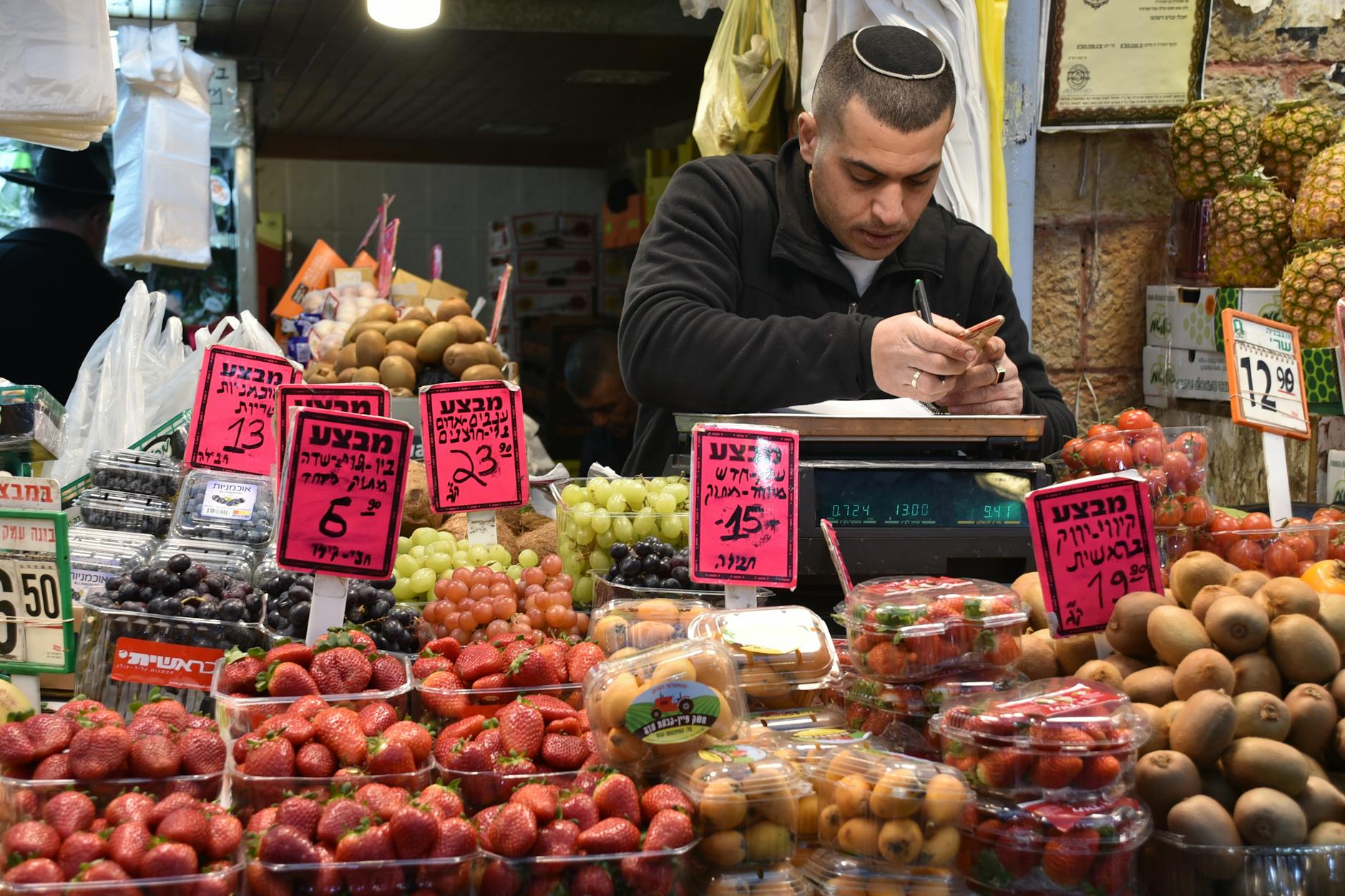
The good news for parents: Jerusalem food is generally kid-friendly. Falafel, hummus, pita bread, schnitzel, and fresh fruit juices are staples that most children enjoy. Mahane Yehuda Market is a sensory adventure for the whole family — children can sample fresh fruits, pastries, and freshly squeezed pomegranate juice while soaking in the vibrant atmosphere.
For sit-down meals, many restaurants in the German Colony, First Station, and Emek Refaim neighborhoods are family-friendly with high chairs and children’s menus. Pizza and pasta options are widely available throughout the city. Note that many restaurants close for Shabbat (Friday evening to Saturday evening), so plan ahead. Hotel restaurants and Arab restaurants in East Jerusalem typically remain open. Our neighbourhood-by-neighbourhood guide to eating out in Jerusalem with children names the specific places worth booking ahead.
Explaining Jerusalem to Children
No other family destination asks quite this much of a parent. Within a single morning your children may see people weeping at a wall, soldiers with rifles on a street corner, a church built over a tomb and a market that has been trading for centuries. Children notice all of it, and they ask. Having thought about your answers beforehand makes the difference between a rich conversation and a flustered one.
Talking About the Holy Sites Before You Go
The most useful preparation is simple framing: this is one small city that three religions consider precious, and people have been coming here to pray for thousands of years. Children accept that easily. What confuses them is the behavior — why that man is rocking back and forth, why those women have covered their hair, why someone is kissing a stone. Explaining a few of these in advance turns a potentially awkward stare into recognition.
Practical courtesy matters more than theology. Shoulders and knees covered at every religious site, boys and men with heads covered at the Western Wall (paper kippot are provided free), no photography at the Kotel on Shabbat, and quiet voices inside churches and mosque courtyards. Children below bar or bat mitzvah age can go with either parent to the men’s or the women’s side of the Western Wall plaza, which solves the problem of splitting a family up.
Yad Vashem and the Age Question
Yad Vashem sets a hard floor: children under ten are not admitted to the Holocaust History Museum, and babies in carriers or strollers are not permitted either. This is not a soft recommendation and staff enforce it. If you are traveling with a mixed-age family, one parent will need to stay outside with the younger ones — the grounds, the Avenue of the Righteous and the view over the valley are open, and there is space to wait.
Even at ten and above, judge your own child rather than the number. The museum is a linear route that becomes progressively harder, and the Children’s Memorial in particular — a darkened space of candlelight and read-out names — affects adults strongly. A good approach is to tell your child in advance that they can say “I want to leave” at any point and you will leave immediately, without discussion. Knowing the exit exists is often what makes the visit possible.
Soldiers, Security and the Questions That Follow
Your children will see armed soldiers and police, and bag checks are routine at the entrances to the Old City, malls, the market and most museums. This is ordinary here rather than a sign that something is happening, and the honest framing for a child is close to that: a lot of people come to this city, so there are a lot of guards, and the guards are part of why it feels calm. Israeli conscription also means many of those soldiers are eighteen or nineteen, which older children notice.
Younger children mostly want reassurance and move on within a minute. Older ones may want the actual history of the conflict, and that conversation is better had sitting down with a drink than on a street corner. It is entirely reasonable to say “that is a long story and I want to tell it properly — ask me again at dinner”. If the security picture itself is what is worrying you before booking, our overview of how safe Jerusalem is for visitors is more useful than a news cycle.
Keeping It Honest Without Frightening Them
Children hold complexity better than we expect, provided the adult delivering it seems calm. Two framings do a lot of work: people disagree about this city because they all love it, not because they are strange; and you are allowed to find it confusing, because grown-ups do too. Resist handing a child a tidy verdict on who is right — a parent who says “I don’t fully know” is more trustworthy than one who does.
Practical Tips for Traveling Jerusalem with Children
Best Time to Visit with Kids
Spring (March-May) and autumn (September-November) offer the most comfortable temperatures for exploring with children. Summer (June-August) is extremely hot — temperatures regularly exceed 35°C — so if you visit then, plan outdoor activities for early morning and late afternoon, reserving the midday heat for indoor attractions, pool time, or rest.
Stroller Strategy
A stroller is essential for young children in modern Jerusalem — sidewalks and parks are generally accessible. However, the Old City is a different story. Cobblestone streets, stairs, narrow alleys, and crowds make strollers impractical in most areas. The recommended approach is to bring a lightweight stroller for modern Jerusalem and a high-quality baby carrier (such as an Ergobaby or similar) for Old City exploration. For more practical advice, see our Jerusalem travel tips guide.
Getting Around with Kids
The Jerusalem Light Rail is an easy, air-conditioned way to travel with children along the main north-south corridor. Strollers fold easily onto the train. Taxis and ride-hailing apps (Gett is the main one in Israel) are convenient for families. Renting a car gives maximum flexibility but parking in central Jerusalem can be challenging. Many family attractions outside the center require a car or organized transport.
Safety and Health
Jerusalem is a safe city for families. Tap water is drinkable throughout the city. Sun protection is essential — bring hats, high-SPF sunscreen, and reusable water bottles. Israeli pharmacies are well-stocked if you forget anything. Medical care is excellent, with several major hospitals in the city. Travel insurance covering Israel is strongly recommended.
Diapers, Feeding and the Logistics Nobody Writes Down
The gap between a good family trip and a grim one is rarely about attractions. It is about whether you know where to change a diaper, whether the taxi has a car seat, and what to do at 22:00 when a child spikes a fever in a foreign city. Here is the ground truth.
Where a Stroller Works, and Where It Genuinely Does Not
West Jerusalem is fine. Pavements in the German Colony, Rehavia, Baka and along the Light Rail corridor are wide and mostly smooth, the parks are stroller-friendly, and the Light Rail is step-free with room for a buggy. The Biblical Zoo is fully stroller-accessible, and the big museums have lifts.
The Old City is a different proposition, and the honest answer is that a stroller is a liability there. The lanes are polished limestone that turns slippery in the wet, long stretches are stepped, the descent from Damascus Gate is effectively a staircase, and the crowds in the Muslim Quarter bazaar leave no room to turn. Jaffa Gate and the Armenian Quarter are the flattest approach if you must, and the Western Wall plaza itself is accessible. Everything else is best done with a soft carrier or a hip seat — a good carrier is the single most useful thing you can pack for Jerusalem.
Changing and Feeding on the Go
Baby-changing facilities are common in the big attractions — the zoo, Bloomfield, the Israel Museum, the larger malls at Malha and Mamilla — and rare to non-existent in the Old City, where you should expect to improvise in a cafe or on a bench. Carry a portable changing mat and more diapers than you think you need, because the small shops in the bazaar do not stock them.
Breastfeeding in public is generally accepted in Israel and you will see it in parks and cafes, though in the religious quarters of the Old City and in Mea Shearim discretion is expected, and a cover or a quiet corner avoids awkwardness. Formula, diapers and baby food are stocked in the SuperPharm and Be pharmacy chains and in any large supermarket; kosher supermarkets shut for Shabbat, so buy on Friday morning. Tap water is safe to drink and to make up bottles with throughout the city.
Car Seats, Taxis and Driving
Israeli law requires children to travel in an appropriate child restraint, but ordinary street taxis do not carry car seats and will happily take you without one. If you want the law and your own standards observed, either book a taxi in advance and ask specifically for a car seat, or bring a lightweight travel seat or booster from home — plenty of families do exactly that. Ride-hailing through Gett is easy to use but does not solve the car seat problem by itself.
Pharmacies, Doctors and the Small Emergencies
Pharmacies are plentiful and well stocked, and pharmacists speak good English. SuperPharm branches keep long hours and some run late; on Shabbat, pharmacies in East Jerusalem and your hotel front desk are the fallback. Israeli pharmacies sell pediatric paracetamol and ibuprofen over the counter under the brand names Acamol and Nurofen, which covers most of what goes wrong on a trip.
For anything more serious, private walk-in clinics such as Terem operate in Jerusalem and treat tourists, and the major hospitals — Hadassah Ein Kerem, Hadassah Mount Scopus and Shaare Zedek — have pediatric emergency departments. The national emergency ambulance number is 101. Care is good and expensive: travel insurance that explicitly covers Israel is not optional, and keep every receipt, because you pay up front and claim later.
Shabbat With Children: What Closes, What Opens
Shabbat runs from Friday sunset to Saturday nightfall, and it is the single scheduling fact that most catches out first-time families. Buses and the Light Rail stop, most Jewish-owned shops and restaurants close, and by mid-afternoon on Friday the city is visibly winding down. Handled badly this eats a day of your trip. Handled well it becomes one of the parts your children remember.
What still works on Saturday is more than people expect. The Biblical Zoo opens 09:00–18:00 and the Bloomfield Science Museum opens 10:00–16:00, both of them full of local families and all the better for it. Christian sites in the Old City are open, East Jerusalem runs a normal day with buses and restaurants trading as usual, and hotel dining rooms serve throughout. Taxis keep running, though fares rise.
The underrated Shabbat activity with children is the simplest one: go to a playground. Israeli parks on Saturday are full of families, and they are welcoming in a way that surprises visitors — your kids will be folded into a game within ten minutes without sharing a language. Sacher Park, Liberty Bell Park and the Railway Park promenade along the old track bed are all busy and easy to reach on foot. Friday evening is worth experiencing rather than avoiding: the Western Wall plaza as Shabbat comes in, with singing and dancing, holds the attention of children with no religious background at all.
Two practicalities. Buy food on Friday morning, because supermarkets close early and do not reopen until Saturday night. And if your hotel runs a Shabbat lift that stops automatically at every floor, explain it to the children before they press a button and collect a lecture — our fuller account of how the city changes from Friday evening covers the etiquette. Plan the day around walking distance and you will barely notice the transport gap.
Suggested Family Itineraries
3-Day Family Itinerary
Day 1 — Old City Discovery: Start at Jaffa Gate and the Tower of David Museum (2 hours). Walk through the Christian Quarter to the Church of the Holy Sepulchre. Explore the Muslim Quarter bazaar. Visit the Western Wall. Lunch at a falafel stand near the Jewish Quarter. Afternoon at the Ramparts Walk. For a comprehensive multi-day plan, see our Jerusalem itinerary guide.
Day 2 — Adventure Day: Morning at the City of David, including Hezekiah’s Tunnel (book in advance). Lunch in the German Colony. Afternoon at the Israel Museum Youth Wing. Evening at the Tower of David Night Spectacular (seasonal).
Day 3 — Zoo and Nature: Morning at the Jerusalem Biblical Zoo (3-4 hours). Afternoon at Sacher Park playground. Visit Mahane Yehuda Market for afternoon snacks and the vibrant atmosphere.
Families with more time can stretch this outline into our detailed 3, 4 and 5-day plans for visiting Jerusalem with children, which build in rest afternoons and a workable Shabbat.
Activities by Age Group
Toddlers (0-3): Biblical Zoo, Sacher Park, Liberty Bell Park playground, Light Rail rides, Mahane Yehuda Market (in stroller), hotel pool time.
Young Kids (4-7): All of the above plus Tower of David Museum, Ein Yael Living Museum, Bloomfield Science Museum, Mini Israel, Old City walking tour (short version).
Older Kids (8-12): City of David tunnels, Western Wall Tunnels, Ramparts Walk, Israel Museum, full Old City exploration, Sataf hiking.
Teenagers (13+): City of David with Pilgrimage Road, Yad Vashem (recommended age 10+), Mount of Olives walking route, Mahane Yehuda food tour, night markets. Older teens who want a bit of independence will find plenty more in our rundown of the best things to do in Jerusalem for teenagers.
Weather Days: Heat, Rain and the Jerusalem Cold
Jerusalem sits at around 750 meters, which makes it cooler than Tel Aviv, drier in summer and genuinely cold in winter. The practical consequence for families is that you need a plan for two different kinds of difficult weather, not one.
From June to early September the enemy is sun rather than humidity. Temperatures routinely top 32–35°C, and the open sections of the Old City offer almost no shade — the Ramparts Walk, the Western Wall plaza and the Mount of Olives ridge are all fully exposed. The workable rhythm is out early from about 07:30 to 11:00, indoors or back at the pool from midday to 16:00, then out again from 16:30 until dark. Carry more water than you think you need, refill everywhere, and put hats on children before they complain rather than after. Evenings cool noticeably, which is why so much family life here happens after 18:00.
From December to March, rain arrives in short heavy bursts and the stone streets turn slippery. Jerusalem sees occasional snow, which shuts the city down for a day and delights every child in it. Buildings are often less well heated than northern European visitors expect, so pack layers and proper shoes rather than sandals. The compensation is that the Old City is quiet, queues disappear and the light is extraordinary.
Wet-weather fallbacks that reliably absorb three hours: the Bloomfield Science Museum, the Israel Museum, the Tower of David, the Time Elevator and, at a pinch, the Malha and Mamilla malls, both of which have indoor space and food. If you are choosing travel dates around the weather, the month-by-month temperature and rainfall picture makes the trade-offs clear — April, May, October and November are the comfortable months with children.
Where to Stay with Kids in Jerusalem
Choosing the right neighborhood makes a big difference when traveling with children. The German Colony is the most family-friendly area, with tree-lined streets, playgrounds, restaurants, and a relaxed atmosphere. The Mamilla area offers upscale family hotels with pools within walking distance of the Old City. For budget-friendly options, the Baka and Talpiot neighborhoods offer apartment-style accommodation with kitchens — essential for families trying to manage costs and picky eaters.
Several hotels cater specifically to families: the Inbal Hotel features a large pool and is walking distance to parks; the David Citadel offers family rooms and a kids’ club; and Airbnb apartments throughout the city provide the space and kitchen facilities families need. Book accommodation with breakfast included when possible — Israeli hotel breakfasts are legendary spreads that keep the whole family fueled until lunch.
Budget Tips for Families
Jerusalem can be visited on a range of budgets. Save money by purchasing the Jerusalem City Pass, which includes entry to multiple attractions at a discount. Many parks, the Western Wall, and walking through the Old City are completely free. Pack picnic lunches from the supermarket or Mahane Yehuda Market rather than eating at restaurants for every meal. Visit attractions on free admission days — several museums offer these periodically. Consider traveling during the shoulder seasons when accommodation prices drop significantly. Our roundup of free things to do in Jerusalem is a useful companion for stretching a family budget further.
Planning your first family trip to Jerusalem? Start with our complete guide to things to do in Jerusalem for an overview of everything the city has to offer, then use this guide to filter for the best family-friendly options. Jerusalem rewards families who come prepared — and the memories your children create here will last a lifetime.
If you can choose your dates, aim for the intermediate days of Sukkot in October. It is the single best week of the Jerusalem year for children: every museum runs extended hours and special programming, there are free concerts and street performers across the city, and the whole place is full of Israeli families doing exactly what you are doing. Our guide to Sukkot in Jerusalem covers the week, and warns you about the queues.
For a rainy day, or any day when the children have had enough of old stones, the Bloomfield Science Museum in Givat Ram is the city’s best hands-on option, with galleries of illusions, machines and engineering built to be touched. Two things to know before you go: it is closed on Sundays and Fridays, and tickets must be booked in advance.
Frequently Asked Questions About Visiting Jerusalem With Kids
Is Jerusalem safe to visit with children?
For ordinary tourism, yes — the areas families visit are heavily policed, violent crime is low, and Israeli society is conspicuously child-friendly in a way that shows in restaurants, on buses and in parks. Bag checks and armed personnel are routine rather than a warning sign. Check your government’s current travel advice before booking, keep to the main visitor areas, and read our fuller assessment of safety for visitors to the city if you want the detail.
What is the minimum age for Yad Vashem?
Children under ten are not admitted to the Holocaust History Museum at Yad Vashem, and babies in strollers or carriers are not permitted either. The rule is enforced at the entrance rather than advisory. The wider campus, including the outdoor memorials and the Avenue of the Righteous, is open to all ages, so one parent can wait outside with younger siblings.
How many days do we need in Jerusalem with kids?
Three full days covers the essentials at a pace children can sustain, four is comfortable, and five lets you add Ein Yael, Sataf or a Dead Sea trip without cutting anything. Fewer than three and you will be rushing the Old City, which is exactly when young children fall apart. Our day-by-day plans for families set out how to sequence it.
Do we need a stroller in Jerusalem?
Bring a lightweight stroller for West Jerusalem, the parks, the zoo and the Light Rail, but plan on a carrier for the Old City, where steps, polished stone and narrow crowded lanes make wheels impractical. Many families with one small child skip the stroller altogether and use a carrier plus whatever the hotel can lend for park days.
Are Jerusalem restaurants child-friendly?
Very. High chairs are standard, children are welcome at almost every hour, and the staple foods — hummus, pita, falafel, schnitzel, rice and fresh juice — suit cautious eaters well. The German Colony, Emek Refaim and First Station are the easiest areas for a sit-down meal with children, and our list of places that handle families well names the specific ones worth booking.
What happens on Shabbat if we have young children?
Public transport stops and most Jewish-owned businesses close from Friday sunset to Saturday nightfall, but the Biblical Zoo, the Bloomfield Science Museum, Christian sites, East Jerusalem and hotel restaurants all operate. Israeli playgrounds are at their busiest and friendliest on Saturday, so a park morning followed by a walkable lunch is the standard family solution.
How much does a family day out cost in Jerusalem?
As of August 2026, two adults and two children pay 286 NIS in entry at the Biblical Zoo, and a family pass at the Bloomfield Science Museum is 235 NIS, while the Western Wall, the Old City streets, the parks and most viewpoints cost nothing at all. Budget roughly 250–400 NIS a day for a family of four on paid attractions plus casual food, and less if you picnic.
What is the best age to bring children to Jerusalem?
Nine to twelve is the sweet spot — old enough for the tunnels, the walls and the museums, young enough to be enthusiastic about all of it. That said, the city works from toddlerhood upward if you match the activities to the age, and teenagers get more out of it than they do from most family destinations.
Can we visit the Western Wall with young children?
Yes. There is no minimum age, the plaza is accessible and the atmosphere is welcoming to families. Children below bar or bat mitzvah age may go to either the men’s or the women’s section with a parent, so you do not have to split up. Dress modestly, cover boys’ heads with the free paper kippot provided at the entrance, and avoid photography on Shabbat and festivals.
Which attractions need booking in advance?
The Bloomfield Science Museum requires an advance slot for every visitor, including under-fives who enter free. Hezekiah’s Tunnel at the City of David sells timed tickets that go in high season, the Western Wall Tunnels tour books out days ahead, and the Time Elevator asks for pre-booking. Almost everything else you can turn up to. For a broader shortlist of what to reserve, see our roundup of family attractions across the city.
Photo Credits
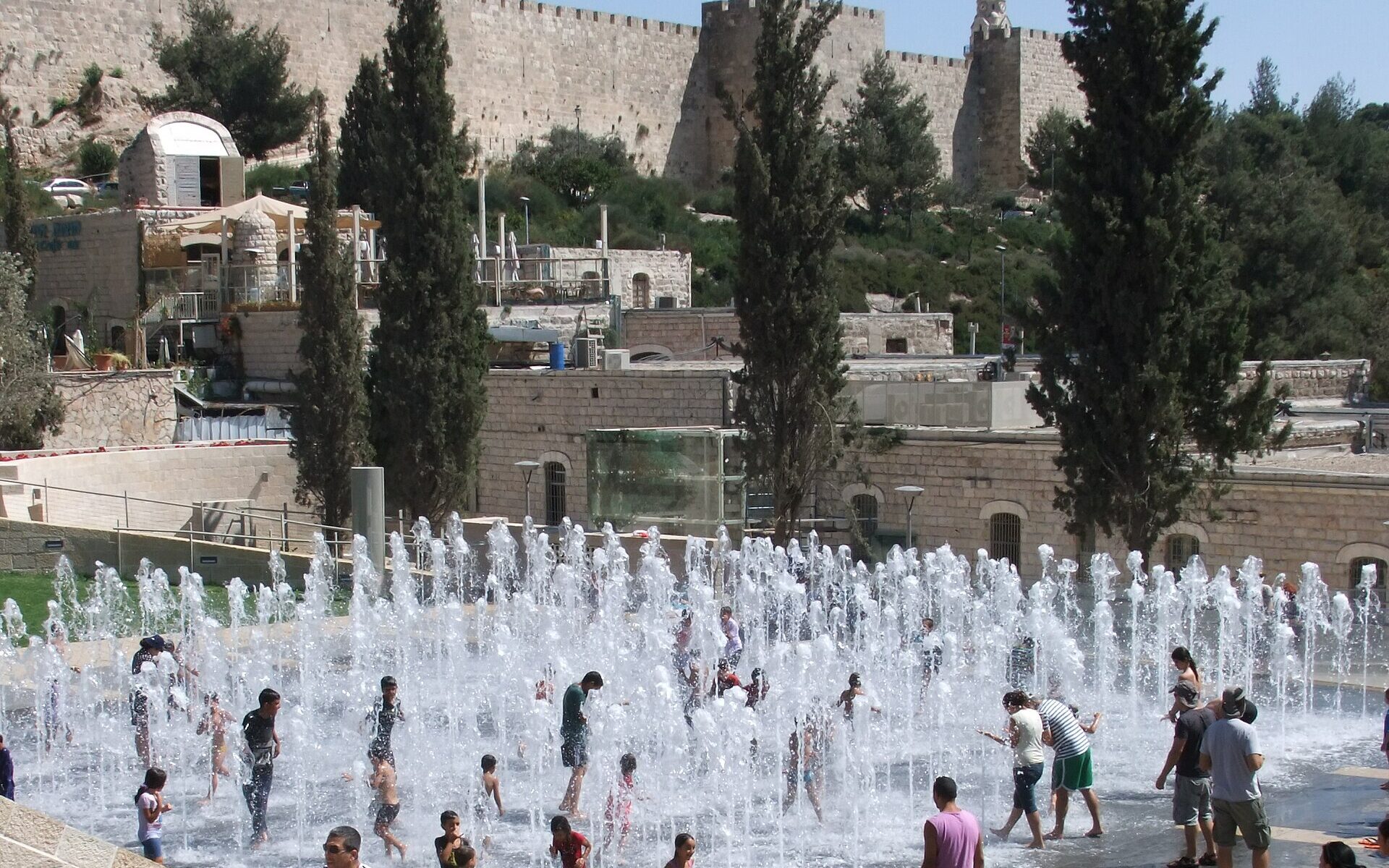
Children playing in the Teddy Park fountain below the Old City walls: PikiWiki Israel 33022 Fountain in Jerusalem by Dror Feitelson, CC BY 2.5, via Wikimedia Commons.
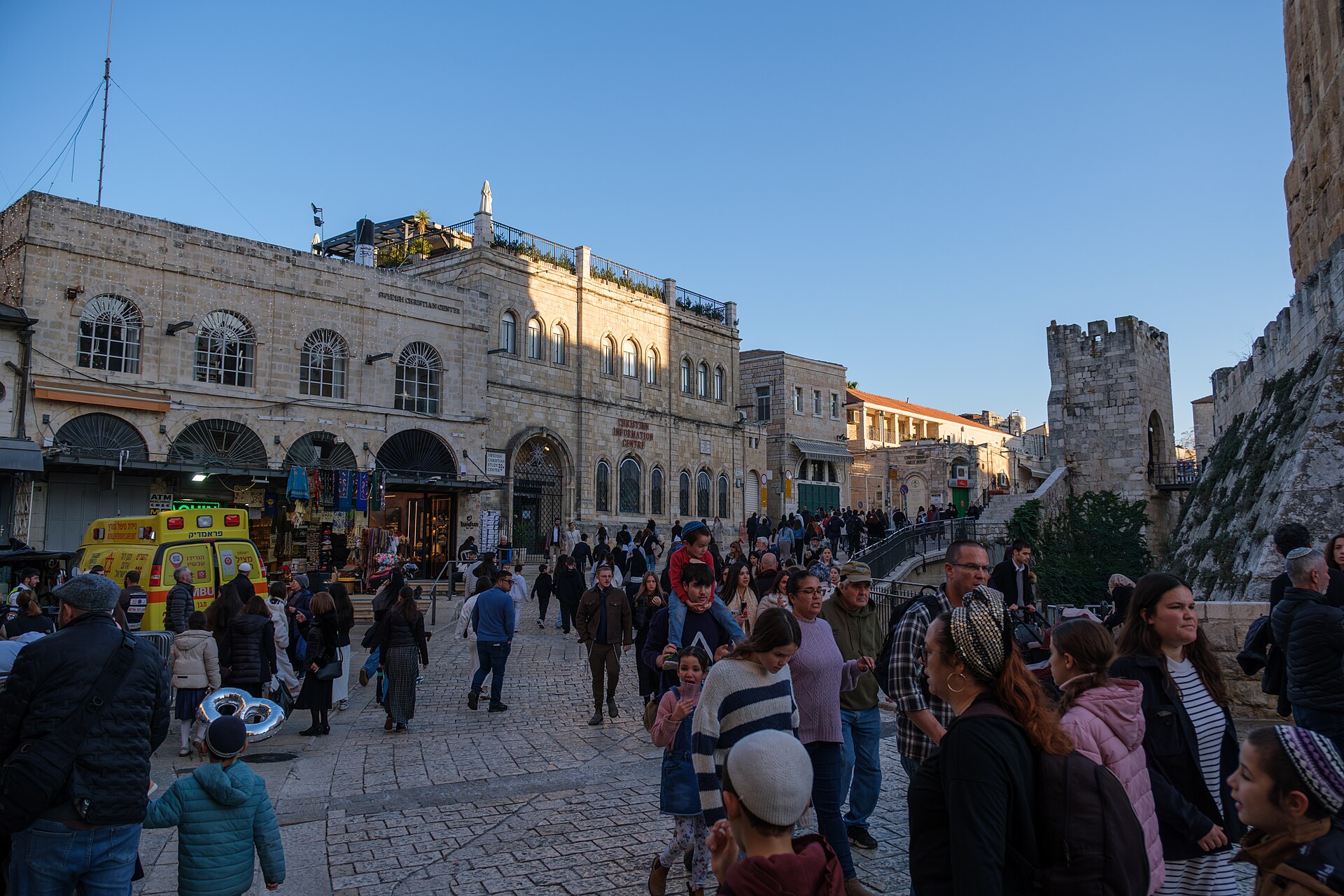
Families in the square just inside Jaffa Gate: Jerusalem, 21 December 2025 268 by מקף־עברי, CC BY-SA 4.0, via Wikimedia Commons.
The Second Temple model at the Israel Museum: Israel Museum 290416 Model of Jerusalem 01 by Oren Rozen, CC BY-SA 4.0, via Wikimedia Commons.
{"@context": "https://schema.org", "@type": "FAQPage", "mainEntity": [{"@type": "Question", "name": "Is Jerusalem safe to visit with children?", "acceptedAnswer": {"@type": "Answer", "text": "For ordinary tourism, yes — the areas families visit are heavily policed, violent crime is low, and Israeli society is conspicuously child-friendly in a way that shows in restaurants, on buses and in parks. Bag checks and armed personnel are routine rather than a warning sign. Check your government’s current travel advice before booking, keep to the main visitor areas, and read our fuller assessment of safety for visitors to the city if you want the detail."}}, {"@type": "Question", "name": "What is the minimum age for Yad Vashem?", "acceptedAnswer": {"@type": "Answer", "text": "Children under ten are not admitted to the Holocaust History Museum at Yad Vashem, and babies in strollers or carriers are not permitted either. The rule is enforced at the entrance rather than advisory. The wider campus, including the outdoor memorials and the Avenue of the Righteous, is open to all ages, so one parent can wait outside with younger siblings."}}, {"@type": "Question", "name": "How many days do we need in Jerusalem with kids?", "acceptedAnswer": {"@type": "Answer", "text": "Three full days covers the essentials at a pace children can sustain, four is comfortable, and five lets you add Ein Yael, Sataf or a Dead Sea trip without cutting anything. Fewer than three and you will be rushing the Old City, which is exactly when young children fall apart. Our day-by-day plans for families set out how to sequence it."}}, {"@type": "Question", "name": "Do we need a stroller in Jerusalem?", "acceptedAnswer": {"@type": "Answer", "text": "Bring a lightweight stroller for West Jerusalem, the parks, the zoo and the Light Rail, but plan on a carrier for the Old City, where steps, polished stone and narrow crowded lanes make wheels impractical. Many families with one small child skip the stroller altogether and use a carrier plus whatever the hotel can lend for park days."}}, {"@type": "Question", "name": "Are Jerusalem restaurants child-friendly?", "acceptedAnswer": {"@type": "Answer", "text": "Very. High chairs are standard, children are welcome at almost every hour, and the staple foods — hummus, pita, falafel, schnitzel, rice and fresh juice — suit cautious eaters well. The German Colony, Emek Refaim and First Station are the easiest areas for a sit-down meal with children, and our list of places that handle families well names the specific ones worth booking."}}, {"@type": "Question", "name": "What happens on Shabbat if we have young children?", "acceptedAnswer": {"@type": "Answer", "text": "Public transport stops and most Jewish-owned businesses close from Friday sunset to Saturday nightfall, but the Biblical Zoo, the Bloomfield Science Museum, Christian sites, East Jerusalem and hotel restaurants all operate. Israeli playgrounds are at their busiest and friendliest on Saturday, so a park morning followed by a walkable lunch is the standard family solution."}}, {"@type": "Question", "name": "How much does a family day out cost in Jerusalem?", "acceptedAnswer": {"@type": "Answer", "text": "As of August 2026, two adults and two children pay 286 NIS in entry at the Biblical Zoo, and a family pass at the Bloomfield Science Museum is 235 NIS, while the Western Wall, the Old City streets, the parks and most viewpoints cost nothing at all. Budget roughly 250–400 NIS a day for a family of four on paid attractions plus casual food, and less if you picnic."}}, {"@type": "Question", "name": "What is the best age to bring children to Jerusalem?", "acceptedAnswer": {"@type": "Answer", "text": "Nine to twelve is the sweet spot — old enough for the tunnels, the walls and the museums, young enough to be enthusiastic about all of it. That said, the city works from toddlerhood upward if you match the activities to the age, and teenagers get more out of it than they do from most family destinations."}}, {"@type": "Question", "name": "Can we visit the Western Wall with young children?", "acceptedAnswer": {"@type": "Answer", "text": "Yes. There is no minimum age, the plaza is accessible and the atmosphere is welcoming to families. Children below bar or bat mitzvah age may go to either the men’s or the women’s section with a parent, so you do not have to split up. Dress modestly, cover boys’ heads with the free paper kippot provided at the entrance, and avoid photography on Shabbat and festivals."}}, {"@type": "Question", "name": "Which attractions need booking in advance?", "acceptedAnswer": {"@type": "Answer", "text": "The Bloomfield Science Museum requires an advance slot for every visitor, including under-fives who enter free. Hezekiah’s Tunnel at the City of David sells timed tickets that go in high season, the Western Wall Tunnels tour books out days ahead, and the Time Elevator asks for pre-booking. Almost everything else you can turn up to. For a broader shortlist of what to reserve, see our roundup of family attractions across the city."}}]}