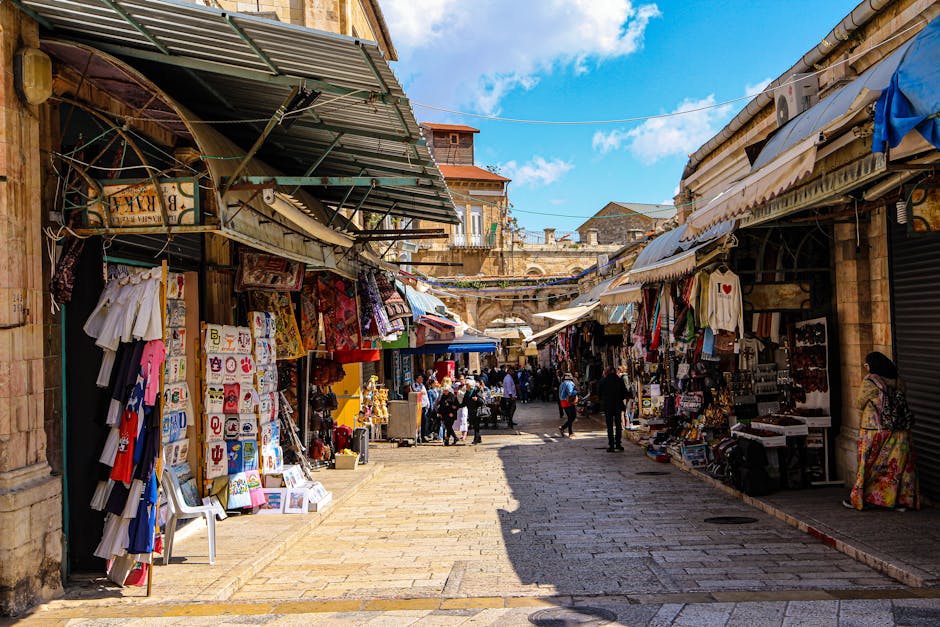
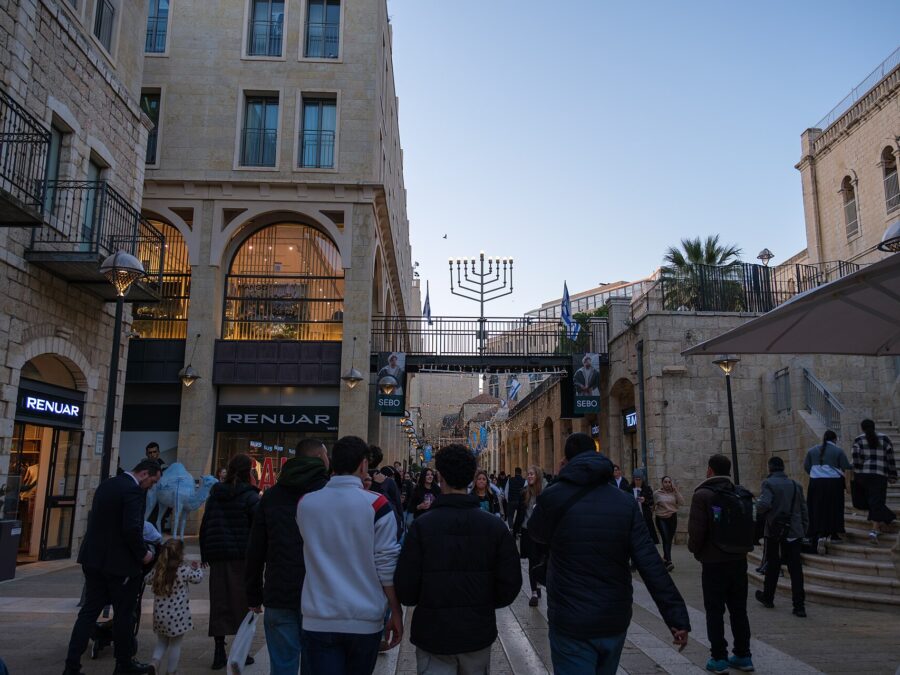
This Mahane Yehuda Market guide gets you ready for Jerusalem’s busiest food market, where more than 250 vendors sell fresh produce, spices, halva, bread, cheese, olives, dried fruit, and ready-to-eat meals along two parallel lanes off Jaffa Street. The market runs Sunday to Friday and closes on Saturday for Shabbat, shifting from a daytime shopping bazaar into an evening scene of small restaurants, wine bars, and live music. Below you will find what to buy, realistic shekel prices, when to go, how to navigate the lanes, and the closures and cash habits that trip up first-time visitors.
Locals call it “the Shuk,” and it remains a working neighborhood market rather than a tourist set piece. Use this Mahane Yehuda Market guide alongside our guide to shopping across Jerusalem for the wider picture, and our stall-by-stall food guide if eating is your main goal.

What Mahane Yehuda Is, and How It Grew
The market sits on Jaffa Street between Agrippas Street and Etz Chaim Street, a short walk from the city center. It started in the late Ottoman period as an informal cluster of stalls and expanded under the British Mandate into the covered and open lanes you see today. Two main streets run roughly parallel: the open-air Etz Chaim lane, traditionally the produce side, and the covered HaShuk lane, where you find more prepared food, sweets, and small bars. A web of cross-alleys connects them, and the side street HaEgoz and nearby HaShikma have become anchors for the evening dining scene.
What makes the place worth your time is the density. In a few hundred meters you can taste warm rugelach, buy a kilo of fresh dates, pick up za’atar measured into a paper bag, drink a pomegranate juice pressed in front of you, and sit down to a plate of hummus, all without backtracking. Vendors call out prices, regulars argue good-naturedly over the ripeness of a melon, and the smell of fresh bread carries down the lanes. It is loud, a little chaotic, and entirely genuine.
Opening Hours and Shabbat Closures
Timing matters more here than at almost any other Jerusalem attraction, because the market follows the Jewish week. Food vendors and shops generally run Sunday through Thursday from about 8 AM to 7 PM, with some staying later in summer. On Friday the market opens early and winds down by roughly 2 to 3 PM as everyone prepares for Shabbat; Friday late morning is actually one of the most energetic times, packed with Israelis stocking up for the weekend. The market is closed all day Saturday. The important exception is the evening scene: many bars and restaurants stay open Thursday and Saturday nights and into the small hours, even when the produce stalls are shuttered.
| Day | Vendors and shops | Bars and restaurants |
|---|---|---|
| Sunday–Thursday | ~8 AM to 7 PM (later in summer) | Open into the evening; busiest Thursday night |
| Friday | ~8 AM to 2–3 PM (closes for Shabbat) | Close by mid-afternoon |
| Saturday (Shabbat) | Closed | Many reopen Saturday night after sundown |
Plan around this. If you only have a Saturday in Jerusalem, you will find the stalls closed and should aim for the Saturday-night reopening instead, or pair your day with our guide to what is open on Shabbat in Jerusalem. Jewish holidays follow the same pattern, with early closures the afternoon before and full closure on the holiday itself.
What to Eat and Buy, with Prices
You could eat your way through the Shuk for a week and not repeat yourself. Prices below are typical 2026 ranges in shekels (ILS); roughly 3.6–3.8 shekels make a US dollar, so a 20-shekel snack runs about 5–6 dollars. Vendors set fixed prices on prepared food and most packaged goods, though produce sellers will sometimes round down if you buy in quantity late in the day.
Sweets, bread, and pastry
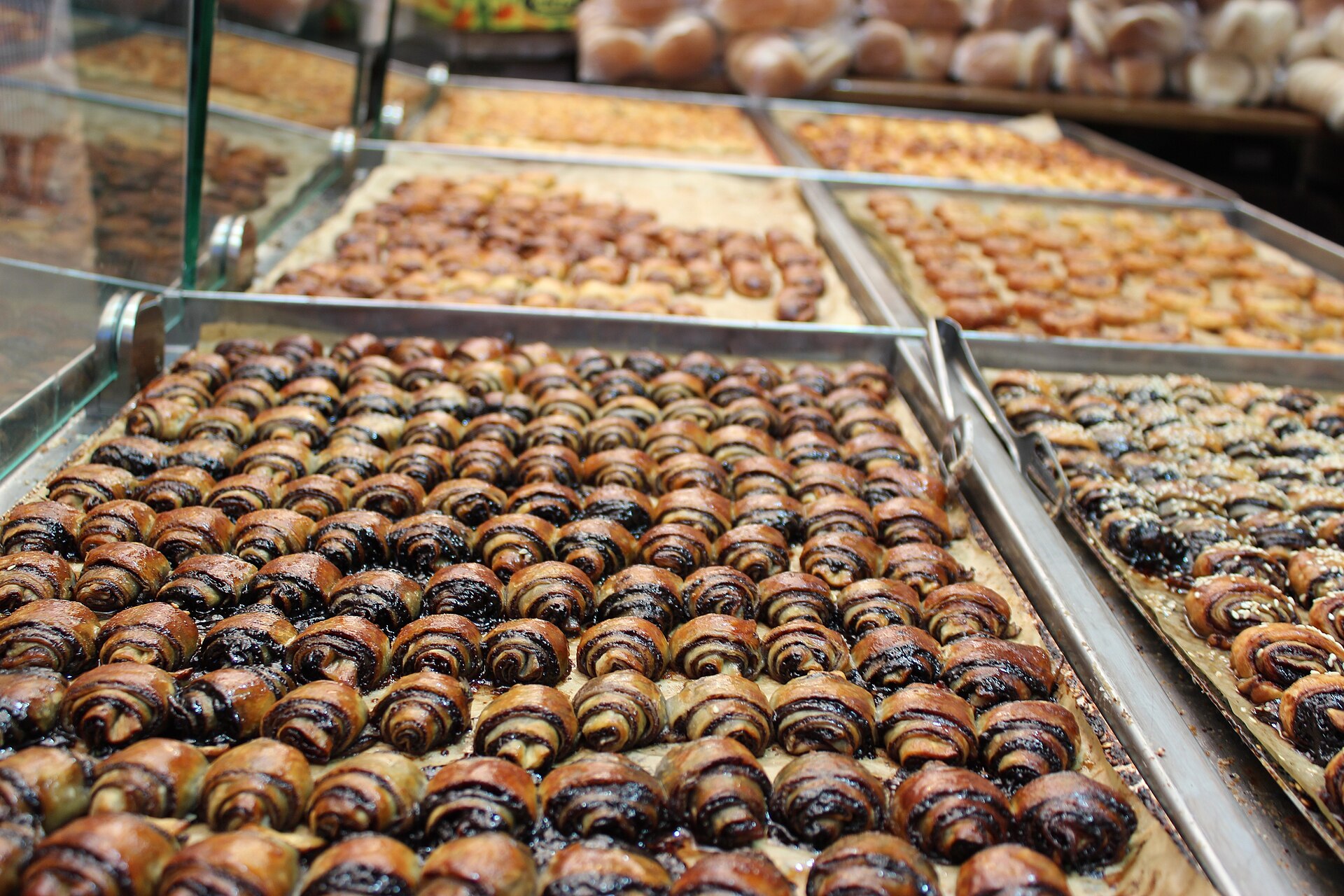
Marzipan Bakery, open since the 1980s, is the market’s most famous sweet stop, known for warm chocolate rugelach sold by weight; expect roughly 40–60 shekels for a generous bag, and go in the morning when trays come out of the oven. Halva, the dense sesame confection, is sold from open blocks in dozens of flavors (pistachio, chocolate, coffee, halva with cardamom) for around 60–90 shekels per kilo, and good vendors will cut you a sliver to taste before you commit. Fresh pita, challah on Fridays, and Iraqi sambusak are a few shekels each.
Savory and street food
Sabich, the Iraqi-Jewish pita stuffed with fried eggplant, hard-boiled egg, salad, and amba, is a market signature and usually runs about 25–35 shekels. Falafel and shawarma sit in a similar range, hummus plates around 30–45 shekels, and a build-your-own pasta dish from one of the fresh-pasta counters lands near 45–60 shekels. For something distinctly Jerusalemite, look for the mixed grill (me’orav yerushalmi), a hearty plate of grilled meats and onions in pita. Juice bars press pomegranate, citrus, and seasonal watermelon to order for roughly 15–30 shekels depending on the fruit.
Pantry items worth carrying home
This is one of the best places in the city to buy spices, and the dedicated stalls will scoop za’atar, sumac, baharat, and ras el hanout into bags for a few shekels per 100 grams. Dried fruit and nuts (Medjool dates, dried figs, salted pistachios) make easy, sealed gifts and travel well. Sealed olive oil, date honey (silan), and tahini are also sturdy choices. For more on building a spice haul and getting it home, see our Jerusalem spice market guide.

The Daytime Market
Daytime is when the Shuk does what it has always done: feed the neighborhood. The best window is mid-morning to early afternoon, when every stall is open and the produce is freshest. Walk both main lanes once before buying anything so you can compare prices and quality, then circle back to whatever caught your eye. Tuesday through Friday mornings bring the fullest energy; Sunday tends to be a touch quieter after the weekend.
A few daytime habits make the visit smoother. Bring a reusable bag for anything you buy, carry small-denomination cash, and pace your tasting so you are not full after the first lane. Photography is welcome, but ask a quick nod-and-point before photographing a vendor or their faces up close; most are happy to oblige, especially if you have just bought something. Guided food tours, covered below, usually launch in the morning for the same reason.
The Evening Market
After the produce stalls roll down their shutters, the same lanes change character. Cleaning crews sweep through, the metal shutters become a canvas for street-art portraits, and small bars and restaurants switch on their lights. The crowd skews younger and the mood is sociable, with a mix of locals and visitors. Several spots feature live music, and on warm nights the cross-alleys fill with people standing around with a drink.
Beer Bazaar, at 3 Etz Chaim Street, is a reliable craft-beer anchor with a long list of Israeli brews on tap and by the bottle. Casino de Paris and Hatch are among the other well-known bars, and a glass of beer or house wine typically runs 25–40 shekels. The evening winds down naturally on Thursday and Saturday nights, the two liveliest, while Friday evening is quiet because of Shabbat. If wine is your focus, our roundup of Jerusalem wine bars covers options here and across the city.
Sit-Down Restaurants In and Around the Market
Beyond the stalls, the market has become a genuine dining destination. Machneyuda is the best known, an acclaimed modern Israeli kitchen where reservations are essential and a full dinner with drinks easily reaches 250–400 shekels per person. Its more casual sister spots and a cluster of small Mediterranean and Italian kitchens around HaEgoz and HaShikma streets offer mezze, fresh pasta, and grilled dishes at a lower spend. For a wider survey of where to eat, see our best restaurants in Jerusalem guide, and for the full eating-and-drinking context, the Jerusalem food guide.
Getting There and Parking
The easiest way to arrive is the Light Rail Red Line, which has a stop named Mahane Yehuda right at the market’s Jaffa Street edge; a single ride costs around 6–7 shekels. On foot, the market is roughly 10 minutes from Mamilla and the city center and about 20–25 minutes from the Old City’s Jaffa Gate. Many Egged bus lines also run along Jaffa Street. Driving is the worst option: street parking is scarce, the surrounding lanes are pedestrian-heavy, and paid garages nearby fill quickly. Take the tram and explore on foot.
| From | Best option | Approx. time |
|---|---|---|
| City center / Mamilla | Walk or Light Rail | 10 minutes |
| Old City (Jaffa Gate) | Walk or Light Rail | 20–25 minutes |
| Anywhere on Jaffa St. | Light Rail Red Line | Varies; ~6–7 ILS |
Practical Tips
Cash is king for the stalls. Many small vendors still prefer shekels even though card readers have spread, so carry small bills and coins. Sit-down restaurants and bars take cards normally. Bargaining is limited and not really part of the culture here the way it is in the Old City souk; prices on prepared food and packaged goods are fixed, and the most you will get is a friendly rounding-down on produce bought in bulk near closing. If you do want to practice negotiation, save it for the Old City and read our bargaining guide for Jerusalem markets.
Wear comfortable shoes for the uneven lanes and the crowds, keep your bag zipped and in front of you in the densest stretches, and be aware that public restrooms inside the market are limited, so use the facilities at a restaurant if you stop to eat. Bring an appetite but pace it, and don’t try to taste everything in one pass.
Seasonal Highlights
Part of the pleasure of a working produce market is that it changes through the year. Spring brings strawberries, artichokes, fresh almonds, and bundles of herbs. Summer is the season of watermelon, peaches, grapes, and the first figs. Autumn is dominated by pomegranates, especially in the run-up to Rosh Hashanah, alongside fresh dates and persimmons. Winter fills the stalls with citrus and leafy greens. Jewish holidays add their own specialties: jam-filled sufganiyot doughnuts around Hanukkah and triangular hamantaschen pastries around Purim. Coming around a holiday means bigger crowds but the best seasonal selection.
Mahane Yehuda Food Tours
If you would rather have someone introduce you to the vendors and explain what you are eating, a guided food tour is a good use of a morning. Standard walks last about three hours, cost roughly 220–330 shekels per person (about 60–90 dollars), and include tastings at seven to ten stalls along with the market’s history and a few vendor introductions you would not get on your own. They are especially worthwhile on a first visit. Compare options in our Jerusalem food tour roundup.
A Half-Day Plan
Here is a simple way to do the market well in a half day. Arrive mid-morning by Light Rail and walk both main lanes end to end without buying, getting a feel for prices and the layout. On your second pass, eat: start with a sabich or hummus, then a slice of halva and warm rugelach from Marzipan, washed down with a fresh pomegranate juice. Buy sealed pantry gifts, spices, and dried fruit to carry home. If you are staying for the evening, find a bar on Etz Chaim or HaEgoz, have a craft beer, and book a table at one of the market restaurants for dinner. Otherwise, stroll back down Jaffa Street toward the city center, or detour into the maze of the adjacent Nachlaot quarter, one of Jerusalem’s oldest neighborhoods.
The market has one day a year that beats every other. On Shushan Purim — Jerusalem’s Purim, a day after the rest of the country — Mahane Yehuda and the bars around it become the centre of the secular celebration, in full costume, from mid-afternoon until very late. For a fortnight beforehand every bakery in the lanes is selling hamantaschen. See our guide to Purim in Jerusalem for the dates and where else to go.
Getting here is easier than ever. The Red Line light rail stops right at the market, and since August 2026 the new Green Line starts at HaTurim on Jaffa Road, a few minutes’ walk away, running south through Givat Ram to Malha. One fare covers a transfer between the two within the time window. Our Jerusalem light rail guide explains both lines and how to pay.
Making the Most of Your Visit
Mahane Yehuda rewards a little planning: go when the stalls are open, carry cash, walk before you buy, and decide whether you are coming for the daytime market or the evening scene. Tie it into the rest of your trip with our guide to the city’s markets, our food tour recommendations, and the broader restaurant guide for dinner ideas after a day in the Shuk.
Photo Credits
Trays of chocolate rugelach at a Mahane Yehuda bakery: 9674765093 August 2013 in Jerusalem by blipsman, CC BY 2.0, via Wikimedia Commons.