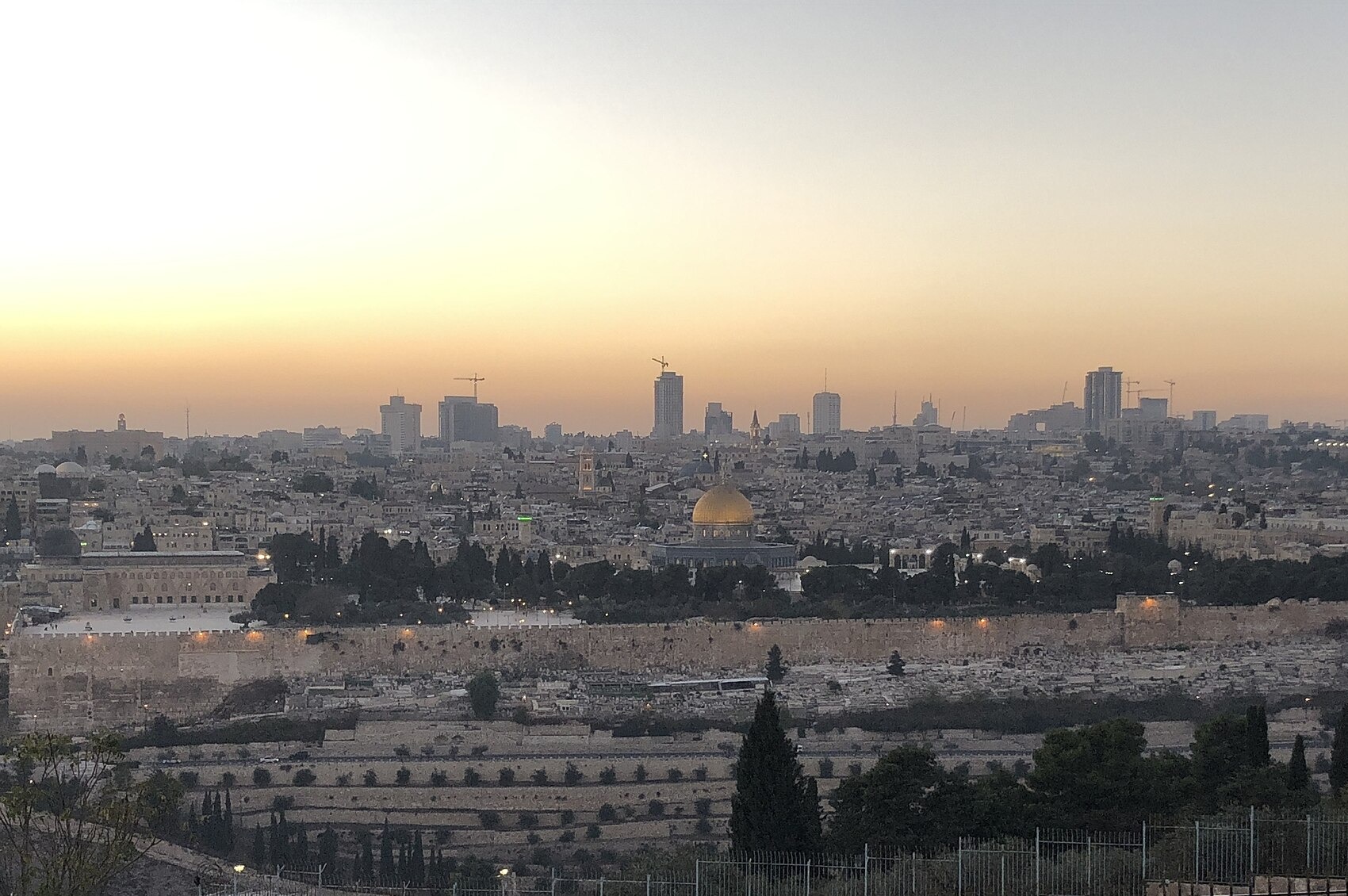
Jerusalem may have a reputation as a destination where every shrine, museum, and tour costs money, but the truth is the opposite: this is one of the most rewarding cities on earth to explore on a shoestring budget. Some of its most powerful, photogenic, and historically significant experiences cost nothing at all. From praying at the 2,000-year-old Western Wall to standing inside the Church of the Holy Sepulchre, from sampling free fruit at Mahane Yehuda Market to walking the panoramic Haas Promenade at sunset, the best free things to do in Jerusalem rival anything you would pay for elsewhere.
This guide is built from years of local knowledge and research, and is updated for 2026. We have walked every route, double-checked every opening time, and confirmed which attractions still offer free entry. Whether you are a backpacker, a family of five, a pilgrim, or simply a traveler who refuses to overpay, you will find more than enough below to fill several full days without spending a single shekel on admission.
Why Jerusalem Is Surprisingly Free-Friendly
Jerusalem is one of the holiest cities in three major world religions, and that single fact shapes the entire economics of tourism here. Holy sites are, almost without exception, free to enter. Churches, mosques (where access is permitted), synagogues, and shrines are houses of worship first and tourist attractions second. On top of that, the city government, the Israel Antiquities Authority, and various religious foundations operate dozens of parks, museums, and archaeological sites that have been deliberately kept open to the public at no cost.
That doesn’t mean Jerusalem is cheap overall. Hotels, restaurants, and paid attractions like the Tower of David Museum or the City of David tunnels can stretch a budget. But by stacking the free experiences below into your itinerary, you can offset those costs and actually see more of the city than the average paying tourist. For broader context, our complete Things to Do in Jerusalem guide covers paid options too, but the list below is exclusively free.
1. Pray or Reflect at the Western Wall (Kotel)
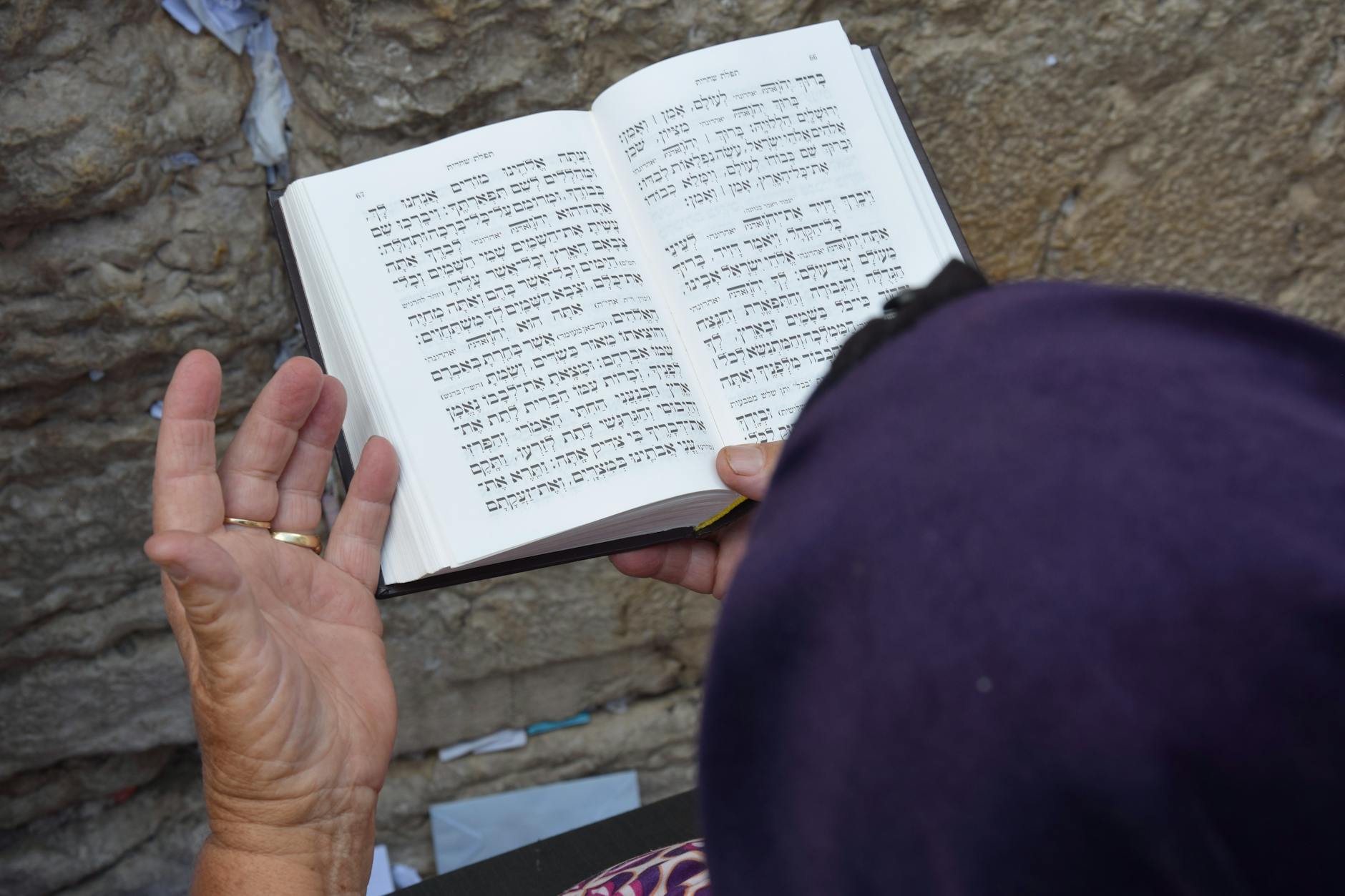
The Western Wall, known in Hebrew as the Kotel, is the most sacred prayer site in Judaism and the single most photographed spot in Jerusalem. The plaza is open 24 hours a day, 365 days a year, and admission is completely free. Modest dress is required, with separate prayer sections for men and women, and head coverings are provided at the entrance for free if you don’t have one.
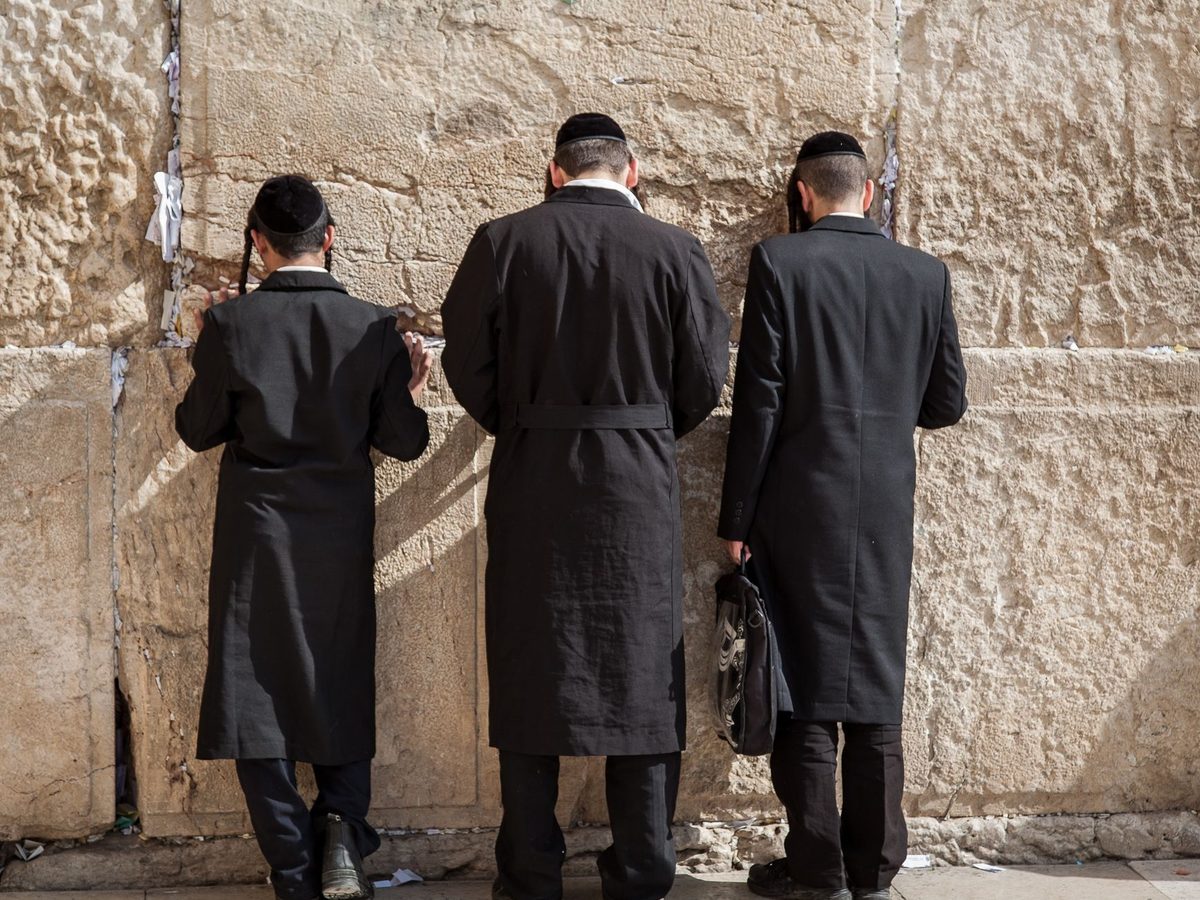
Tradition holds that prayers slipped between the wall’s massive Herodian stones have a direct line to heaven. Whether you write a note or simply stand and absorb the atmosphere, this is an experience that costs nothing but rewards endlessly. Visit at dawn for the quietest, most contemplative experience, or on a Friday evening just before Shabbat begins to witness the spontaneous singing, dancing, and welcoming of the Sabbath, often called the most uplifting free spectacle in the city.
Insider tip: The free guided tour of the Western Wall plaza in English runs Sunday through Thursday at 11:00 AM and 2:00 PM, departing from the Kotel Heritage Foundation entrance. The deep underground tunnels do require a paid ticket, but the surface plaza, the open-air section, and the men’s and women’s prayer areas are all free.
2. Step Inside the Church of the Holy Sepulchre
For Christians, the Church of the Holy Sepulchre is the ultimate destination: the church marks the traditional sites of both the Crucifixion (Golgotha) and the Resurrection. Built originally in the 4th century by Constantine and rebuilt repeatedly through the Crusader era, the current structure is shared by six Christian denominations under a delicate Status Quo agreement that has held since 1757.
Entry is completely free. The church is generally open from 5:00 AM to 9:00 PM in summer (shorter winter hours), and visitors can enter the Aedicule (the small shrine over the empty tomb), climb the steps to Golgotha, descend to the Chapel of Saint Helena, and witness the daily incense-burning processions of the Greek Orthodox, Armenian, and Franciscan monks. Modest dress is required; shoulders and knees must be covered.
Insider tip: Arrive at opening time to avoid the crushing midday crowds and the long queue to enter the tomb itself. The ladders, the keys held by a Muslim family since 1187, and the stone of anointing just inside the entrance are all part of the church’s lore and worth a long look.
3. Wander the Four Quarters of the Old City
You don’t need a guide, a ticket, or an itinerary to explore the Old City of Jerusalem. The walled city, only about one square kilometer in size, is divided into four quarters: the Christian Quarter, Muslim Quarter, Jewish Quarter, and Armenian Quarter. Each has its own personality, smells, and soundtrack, and walking between them is one of the most layered cultural experiences anywhere in the world.
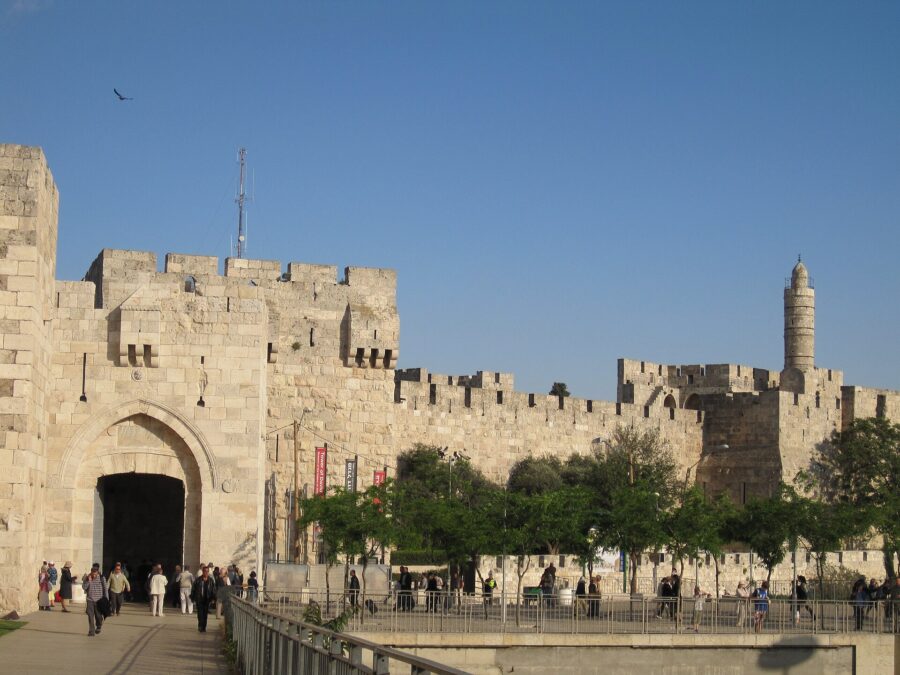
Start at Jaffa Gate, the most popular entrance, and let yourself get lost in the narrow lanes. Look for the spice mountains in the Muslim Quarter’s souk, the colorful Armenian ceramics workshops, the rebuilt Hurva Synagogue in the Jewish Quarter, and the courtyards of the Christian Quarter. Window-shopping costs nothing, and most shopkeepers are perfectly happy to chat even if you don’t buy.
If you’d rather follow a structured route, our deep dive into the four quarters of the Old City walks you through the highlights in each. Allow at least 3 to 4 hours to do the quarters justice, and bring water — the lanes are sheltered but the climbs are steep.
4. Watch Sunrise from the Mount of Olives
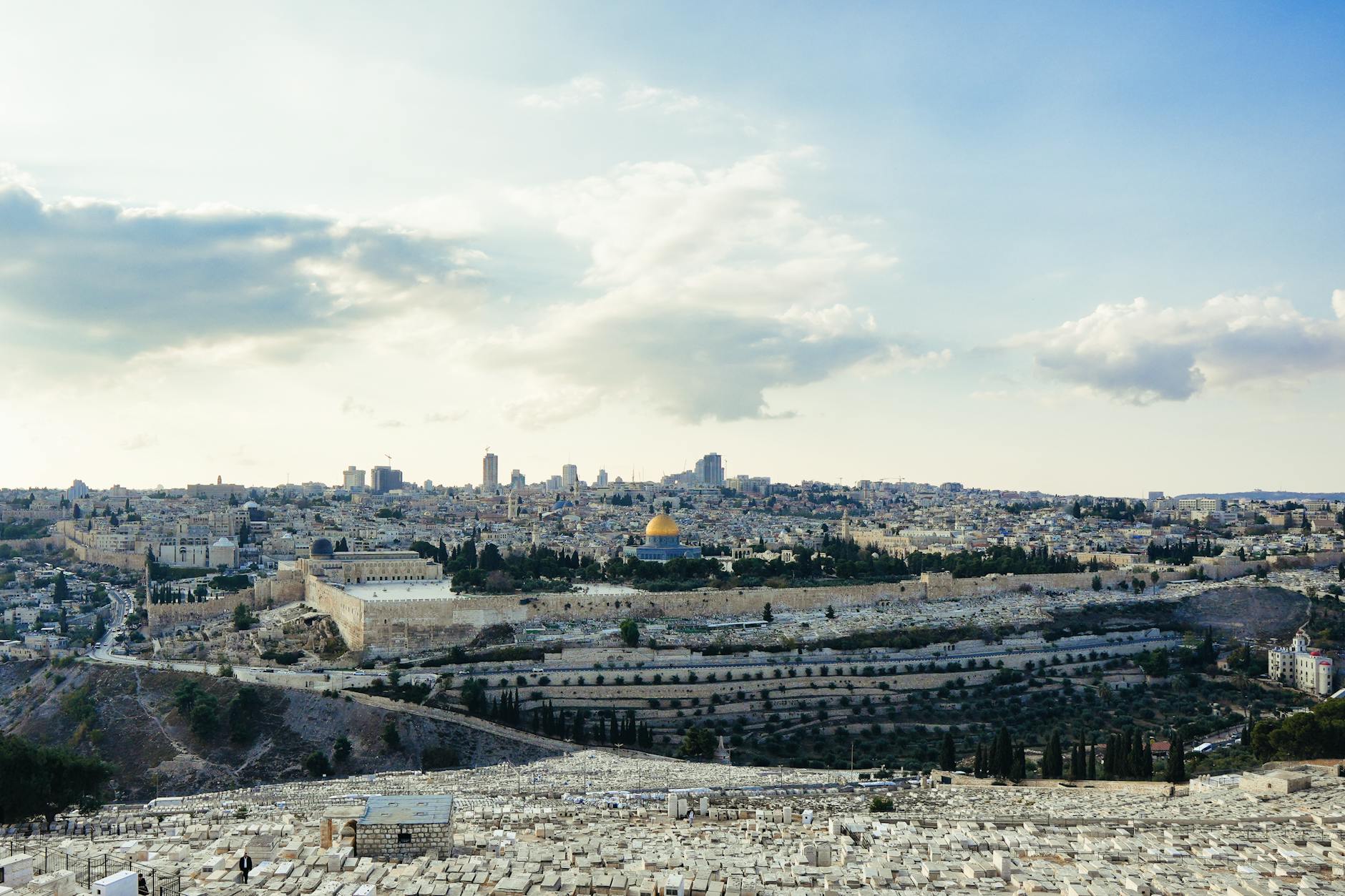
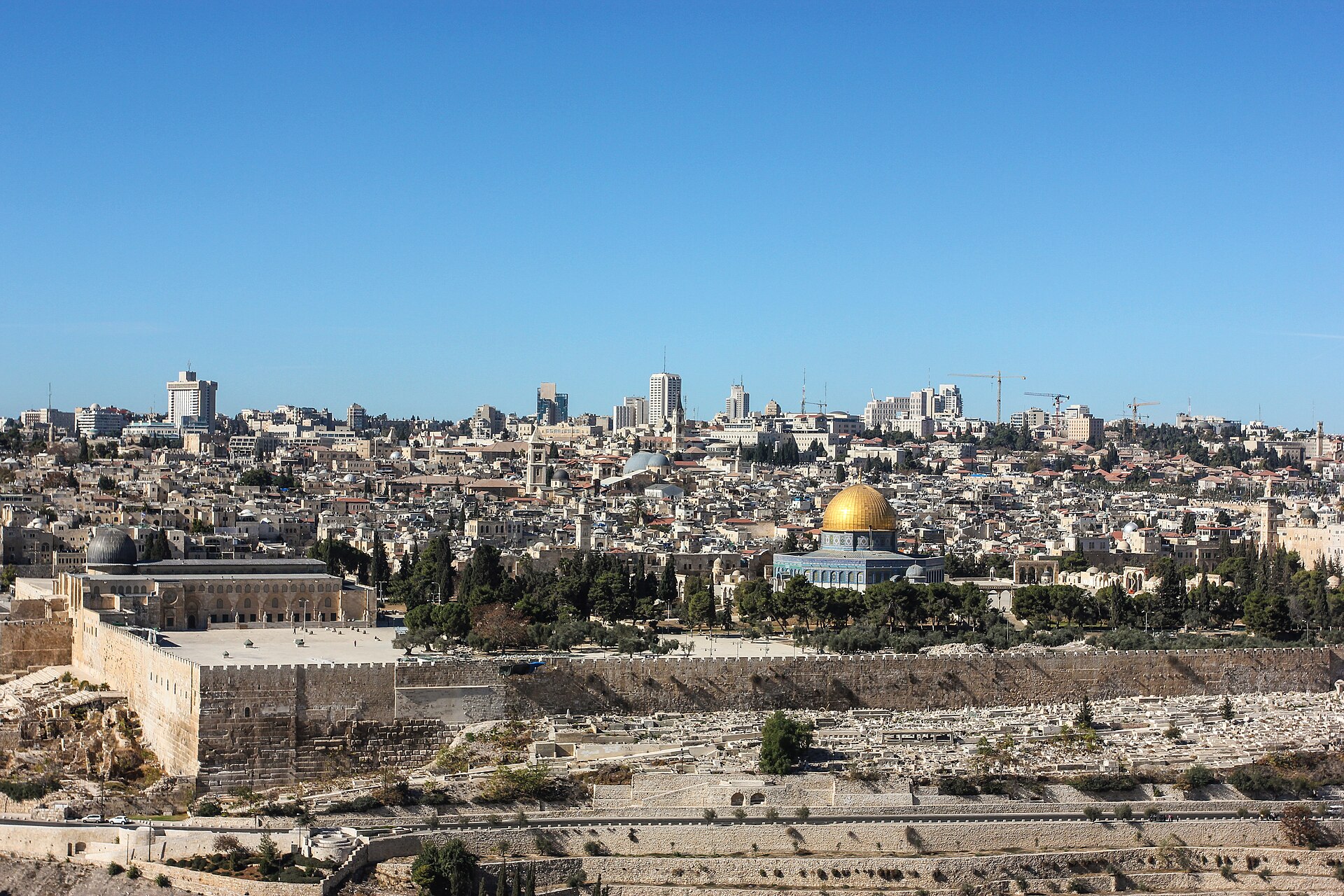
The Mount of Olives offers the single most iconic panorama of the Old City: the entire walled city, the golden Dome of the Rock, and the densely packed Jewish cemetery cascading down the slope toward the Kidron Valley. The viewpoint at the top, near the Seven Arches Hotel, is completely free, and it costs nothing to walk down through the cemetery, past the Garden of Gethsemane (also free, donations welcome at the Church of All Nations), and back into the Old City through the Lions’ Gate.
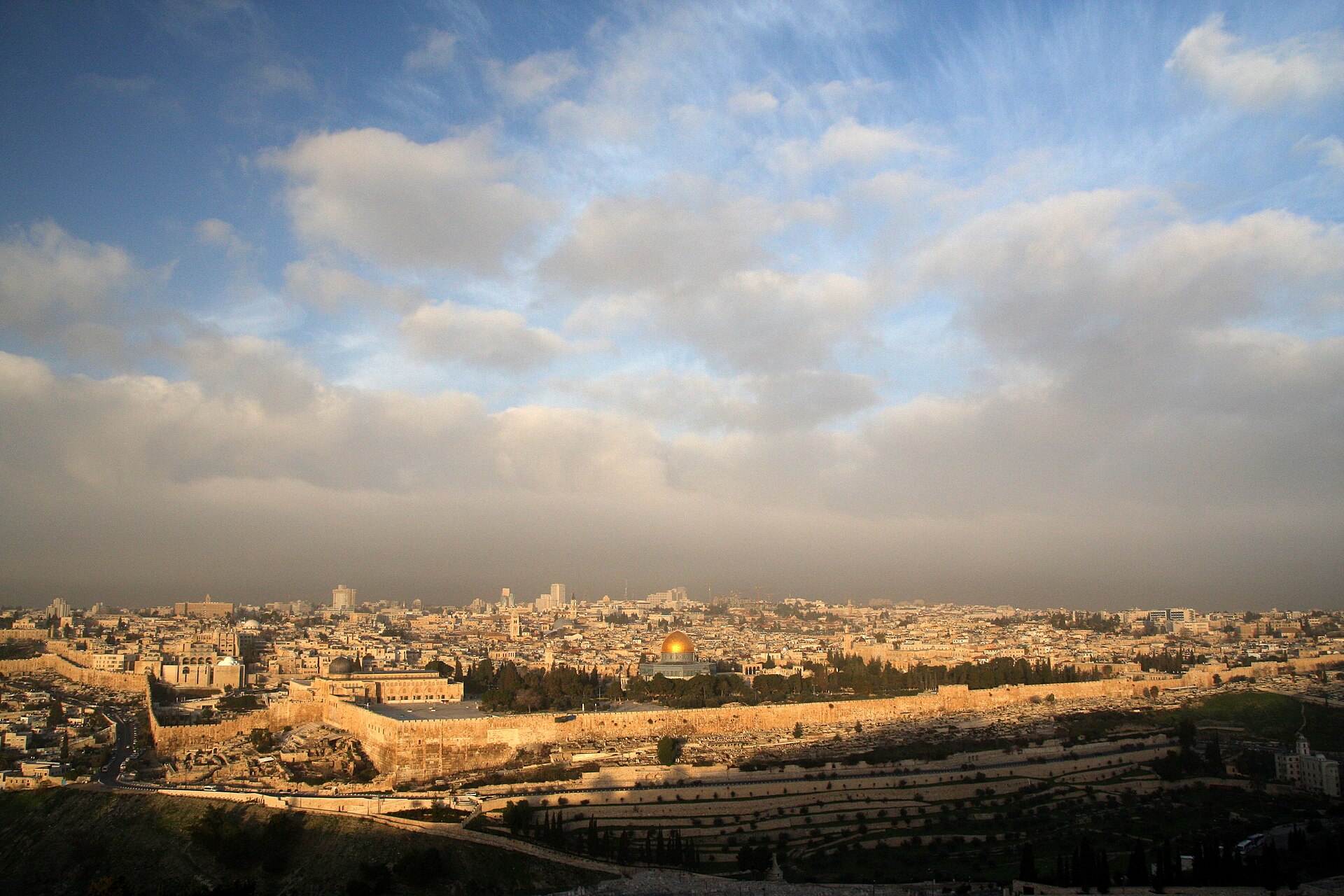
For photographers, this is the ultimate free attraction. Sunrise turns the Dome of the Rock into a literal golden orb, and the early light minimizes the crowds. The walk down takes about 30 to 45 minutes at a relaxed pace, and you’ll pass several lesser-known churches like the Pater Noster (small fee for the cloister but the courtyard is free) and Dominus Flevit. It also opens our rundown of the best places to photograph Jerusalem, which lists lens and timing notes for each location.
5. Eat Your Way Through Mahane Yehuda Market (For Free)
Mahane Yehuda Market, affectionately known as “the Shuk,” is the city’s beating culinary heart. Wandering through the covered and open-air alleys is free, and so is the entertainment: vendors shouting the day’s prices, tour guides translating slang, musicians busking by the entrance, and the smell of fresh bread, roasting nuts, and za’atar everywhere.
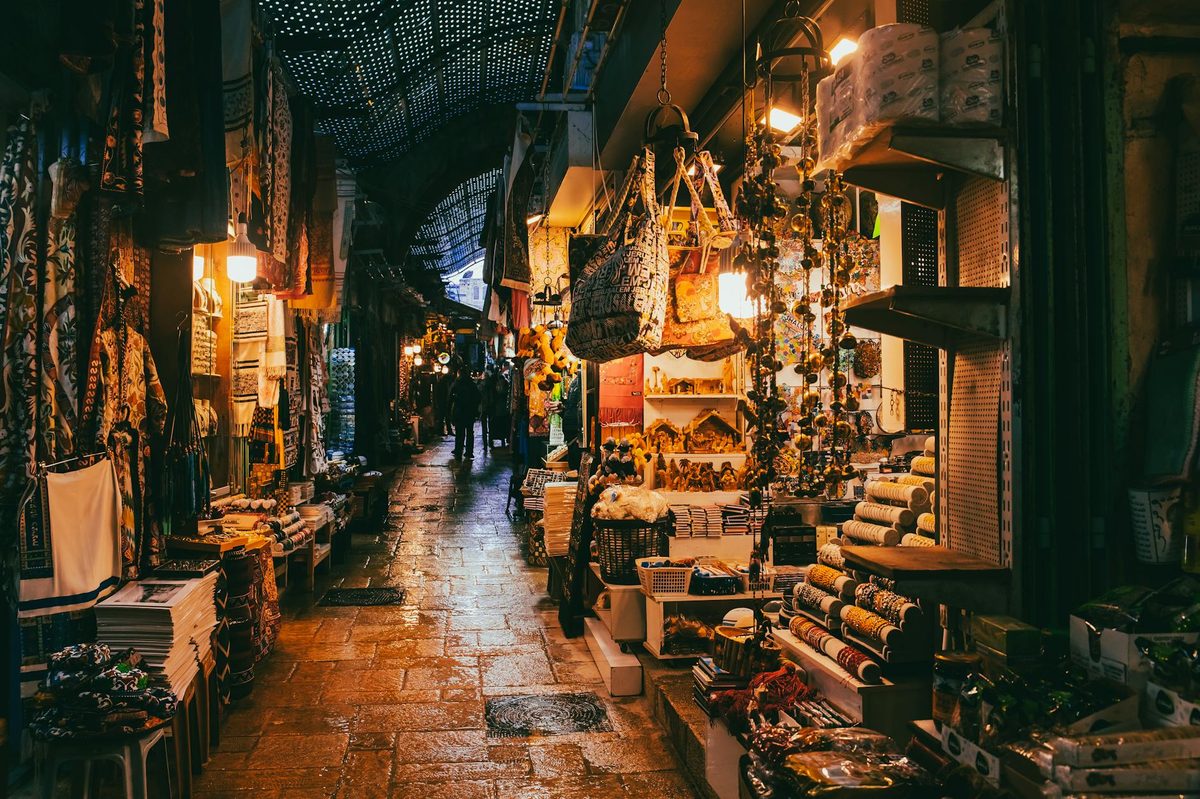
Most stalls offer free samples: olives, halva, dried fruit, dates, cheese, hummus, fresh bread. Be polite — don’t graze your way through the entire market — but trying small tastes is genuinely encouraged and a great way to pick the freshest products. By Friday afternoon the energy reaches a fever pitch as locals stock up for Shabbat. After dark, the market reinvents itself as a bar district covered in over 150 street-art portraits by artist Solomon Souza, also free to admire.
For a deeper culinary tour, our Jerusalem food guide breaks down the must-try dishes and where to find them.
6. Pay Respects at Yad Vashem
Yad Vashem, the World Holocaust Remembrance Center, is one of the most important museums on earth and admission is completely free. The campus on Mount Herzl is enormous and includes the haunting Children’s Memorial (illuminated by candles reflected in mirrors to evoke 1.5 million stars), the Hall of Names, the Avenue of the Righteous Among the Nations, and the central Holocaust History Museum designed by Moshe Safdie.
Plan a minimum of 3 hours; many visitors stay 5 or more. Children under 10 are not admitted to the main museum out of respect for the difficult content. Yad Vashem is closed on Saturdays and Jewish holidays. Free guided tours in English are offered Sunday through Thursday — check the website for current schedules.
7. Reflect at the Garden Tomb
The Garden Tomb, just outside the Old City’s Damascus Gate, is an alternative site that some Protestant Christians believe to be the actual location of Jesus’s burial and resurrection. Whether or not you accept the identification, the garden itself is a beautiful, peaceful refuge from the chaos of the surrounding streets, and entry is free (a donation is appreciated).
Open Monday to Saturday from 8:30 AM to noon and 2:00 PM to 5:30 PM, the site features manicured gardens, a hewn rock tomb, an ancient cistern, and quiet seating areas perfect for reflection. Free guided tours in English are offered throughout the day with no booking required.
8. Visit the Israel Museum on Free Days
While the Israel Museum normally charges admission, the museum runs periodic free entry days several times a year, typically on Israeli holidays like Independence Day and during certain cultural events. The museum’s vast campus includes the iconic Shrine of the Book (housing the Dead Sea Scrolls), the 1:50 scale Second Temple Model of Jerusalem, and the outdoor Billy Rose Sculpture Garden designed by Isamu Noguchi.
Even on regular paid days, the outdoor sculpture garden can sometimes be enjoyed from outside the entry gates, and children under 5 always enter free. Children’s admission is heavily discounted (currently 27 NIS), making this the closest thing to free for families.
9. Stroll Yemin Moshe and Bloomfield Garden
Just opposite the Old City walls, the Yemin Moshe neighborhood is one of Jerusalem’s most photogenic. Built in the 1860s as the first Jewish neighborhood outside the walls, its restored stone houses, cascading gardens, and signature Montefiore Windmill are entirely free to wander. Continue uphill to Bloomfield Garden for sweeping views back toward Jaffa Gate, and downhill to the small but excellent Hutzot HaYotzer Artists Colony where you can window-shop without obligation.
This is also a top spot for sunset photography: the late golden light hits the Old City walls and the windmill in a way that few other vantage points match.
10. Climb Mount Zion
Mount Zion sits just outside Zion Gate and packs an outsized number of free holy sites into a small footprint. The Tomb of King David is venerated by Jews, Christians, and Muslims and is open free of charge. Directly above it, the Room of the Last Supper (the Cenacle) is also free; this Crusader-era hall is traditionally identified as the location of Jesus’s final meal with his disciples.
Nearby, the Dormition Abbey offers free entry to its Romanesque sanctuary, and the small Schindler’s Grave in the Catholic Cemetery is a moving free stop where Oskar Schindler, the Holocaust rescuer, is buried under a pile of stones left by visitors.
11. Walk the Haas Promenade (Tayelet)
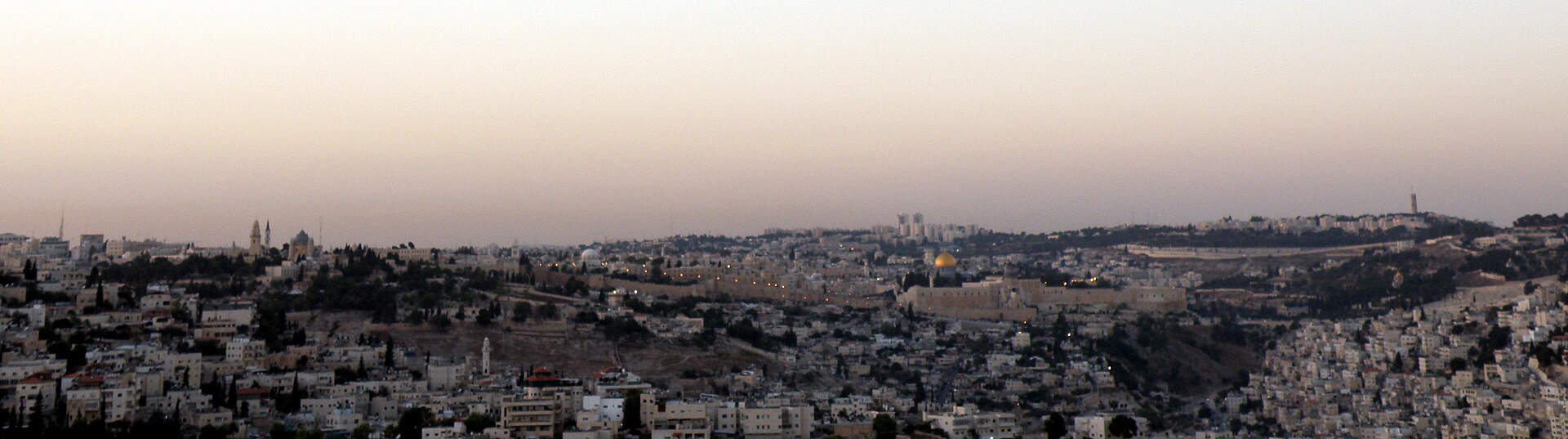
For a different kind of panorama, head south to the Haas Promenade, locally called the Tayelet. This 2-kilometer landscaped walkway runs along a ridge in the Armon HaNetziv neighborhood and offers a sweeping, almost cinematic view of the Old City, the Temple Mount, and the Judean Desert beyond. It is entirely free, open 24/7, and especially magical at sunset. We rate it the finest sunset stop among the city’s panoramic viewpoints.
You’ll often see Jerusalemites jogging, picnicking with extended family, or hosting small impromptu music sessions. Bus 78 from the city center drops you within walking distance, or it is a short and inexpensive taxi ride.
12. Escape to Ein Kerem
On the western edge of the city, Ein Kerem is a picturesque village traditionally identified as the birthplace of John the Baptist. The historic core, with its narrow stone lanes, fragrant gardens, and several beautiful churches (most free or donation-only), feels worlds away from the urban center even though it is only a 20-minute bus ride away. Mary’s Spring, where the Virgin Mary is said to have drawn water during her visit to Elizabeth, is free to visit.
Bring a picnic, walk the village circuit, then linger at one of the cafés if budget allows. Ein Kerem is also the trailhead for several free hiking paths into the Jerusalem Forest.
13. Tour the Knesset (Israeli Parliament)
The Knesset, Israel’s parliament, offers free guided tours on Sunday and Thursday in multiple languages including English. Tours typically run at 8:30 AM, noon, and 2:00 PM and last about an hour. You’ll see the Chagall Hall, where Marc Chagall’s famous tapestries and floor mosaics are displayed, the plenum chamber, and exhibits on Israeli democracy and history.
Bring your passport for security, dress modestly, and arrive at least 30 minutes early. When parliament is in session you can sometimes watch debates from the public gallery, also free.
14. Visit the Supreme Court of Israel
Architecturally one of the most celebrated buildings in the country, the Supreme Court offers free guided tours in English Sunday through Thursday at noon. The building, designed by Ada Karmi-Melamede and Ram Karmi, masterfully blends modern lines with biblical and Jerusalem-stone references. Even if you have zero interest in law, the architecture alone is worth the visit.
The Supreme Court, Knesset, Israel Museum, and Bank of Israel sit close enough together that you can comfortably combine them into a single free or near-free morning.
15. Stop at the Bank of Israel Visitor Center
The Bank of Israel Visitor Center is a small but engaging free museum showing the history of Israeli currency, ancient coins from the Land of Israel, and interactive exhibits on monetary policy. Entry is free with a passport (advance booking recommended). Kids enjoy the hands-on currency design exhibits, making it a quick but worthwhile family stop.
16. Walk Through Mea Shearim
Mea Shearim is one of the oldest Jewish neighborhoods outside the Old City walls, founded in 1874, and today is one of the world’s most prominent ultra-Orthodox (Haredi) communities. Walking the streets is free, fascinating, and a window into a way of life that has changed little in over a century.
Modesty is non-negotiable: long sleeves, long skirts or pants, no photography of people without permission, and avoid the area on Shabbat. Look for the multilingual signs at the entrances, which spell out the local dress code clearly. Visit on a weekday morning or early afternoon for the best experience.
17. Explore the City of David Outer Areas
While the main archaeological sites at the City of David require paid tickets, the surrounding area, including Givati Parking Lot overlooks and the walking path along the Kidron Valley, are free. You can take in the topography of biblical Jerusalem, see the entrance to Hezekiah’s Tunnel from outside, and look up at the Old City walls from the very angle that Babylonian, Roman, and Crusader armies once approached.
From here, the path continues down to the Pool of Siloam excavations, with significant new public access added in 2024 and 2025.
18. Glimpse the Ramparts Walk Without Paying
The official Ramparts Walk on top of the Old City walls is a paid attraction, but you can walk along the outside base of the walls for free, all the way around the Old City. This 4-kilometer perimeter circuit takes 1 to 2 hours and offers fantastic photo angles of the gates and towers, plus access to lesser-visited gates like the New Gate and Herod’s Gate.
19. Browse the Bible Lands Museum’s Free Programs
The Bible Lands Museum charges admission, but it runs free family workshops, lectures, and seasonal events throughout the year, especially on Wednesdays and during Israeli school holidays. Check the museum’s website before your visit for a current schedule.
20. Hike the Sataf Springs
Sataf is a Jewish National Fund nature park about 8 km west of Jerusalem in the Judean Hills. Free to enter, Sataf preserves ancient terraced agriculture, two natural springs, and a beautiful network of marked hiking trails ranging from 30 minutes to 3 hours. The trail past the upper spring (Ein Sataf) and lower spring (Ein Bikura) is a Jerusalem family favorite.
To get there without a car, bus 185 from the central bus station drops you at the entrance, or a short taxi ride from Ein Kerem will do the same. Bring a hat, water, and sturdy shoes; the trails are unshaded in places.
21. Picnic in the Jerusalem Forest
Wrapping the western edge of the city, the Jerusalem Forest is a vast, free-to-enter pine and oak woodland with picnic areas, marked trails, and natural springs. Ein Lavan, a year-round spring with a small swimming pool, is a beloved local hideout. The trail from Sataf into the forest can be linked into a half-day hike. Look for the wooden picnic shelters with grilling spots — bring your own food and you have a free open-air lunch.
22. Visit the Jerusalem Bird Observatory
Tucked between the Knesset and the Supreme Court, the Jerusalem Bird Observatory is a tiny, completely free nature reserve and ringing station. Israel sits on one of the world’s busiest bird migration flyways, and on a good morning you can spot dozens of species from the small wooden hide overlooking the pond. Volunteer ornithologists are usually happy to chat with curious visitors. It is exactly the sort of low-key discovery that fills our list of unusual things to do in Jerusalem.
23. Catch a Free Concert, Festival, or Cultural Event
Jerusalem hosts an astonishing number of free public events, especially in spring and summer:
- Light in Jerusalem Festival (Festival of Light, late June): the Old City alleys are transformed into outdoor light installations, all free.
- Jerusalem International Book Forum events: many talks are open to the public.
- Israel Festival fringe events at the First Station.
- Friday morning live music at Mahane Yehuda’s bars (you only pay if you order something).
- Hanukkah candle-lighting ceremonies in December at the Western Wall and Mamilla Mall.
- Sukkot open-air markets and street performances.
For seasonal listings, check the official Visit Jerusalem website or the Time Out Jerusalem free events calendar.
24. Experience Shabbat for Free
From Friday at sunset to Saturday at sunset, Jerusalem transforms. Many neighborhoods empty of cars, the Western Wall fills with families welcoming the Sabbath, and the air takes on a quietness that is itself an experience. Several organizations like Shabbat of a Lifetime arrange free or donation-based Shabbat dinners with Jerusalem families — a moving cross-cultural experience that costs nothing and reveals the city’s soul.
Just be aware that public transit, most restaurants, and most shops shut down for those 25 hours; plan groceries and itinerary accordingly. For more on adapting your itinerary to the Sabbath, our Jerusalem travel tips guide covers it in detail.
25. Walk the Roman Cardo
In the Jewish Quarter of the Old City, the Cardo is the partially excavated and reconstructed main street of Roman and Byzantine Jerusalem. Walking through it is free, and you can see the original Hadrian-era column bases, a hologram reconstruction of how the avenue once looked, and a Crusader market gallery. Bonus: you’ll exit near the rebuilt Hurva Synagogue, also free to enter (modest dress required).
Tips for Maximizing Your Free Day in Jerusalem
- Bring a refillable water bottle. Jerusalem tap water is safe, and free fountains are dotted around major sites.
- Wear modest clothing: shoulders and knees covered, especially for holy sites. Carry a light scarf or shawl.
- Sturdy walking shoes are non-negotiable. The Old City is uneven stone and your feet will thank you.
- Use public transit. The light rail and city buses are cheap, and a single Rav Kav card will cover your day.
- Avoid Friday afternoons for any non-Old City sightseeing — many sites close early before Shabbat.
- Check holiday calendars. Many free attractions close on Shabbat, Yom Kippur, and major Jewish holidays.
- Carry a small backpack with snacks; food at the major sites is overpriced.
- Combine clusters. The Knesset/Israel Museum/Supreme Court area is one zone; the Old City another; Mount of Olives a third.
Sample Free Day Itinerary
Here’s a one-day itinerary using only free attractions to give you a sense of what’s possible:
- 6:30 AM — Sunrise at the Mount of Olives viewpoint.
- 7:30 AM — Walk down through the Garden of Gethsemane area to Lions’ Gate.
- 8:30 AM — Enter the Old City; explore the Muslim Quarter market.
- 9:30 AM — Western Wall plaza for prayers and people-watching.
- 10:30 AM — Church of the Holy Sepulchre and Christian Quarter.
- 12:30 PM — Lunch at Mahane Yehuda Market (free samples + cheap eats).
- 2:00 PM — Yad Vashem (free shuttle from Mount Herzl Light Rail station).
- 5:00 PM — Sunset stroll on Haas Promenade.
- 7:00 PM — Friday-evening Shabbat singing at the Western Wall (if Friday).
One of the most moving free visits in the city is on its western edge. Mount Herzl, Israel’s national cemetery, costs nothing to walk. It holds Theodor Herzl’s tomb, the graves of prime ministers including Golda Meir and Yitzhak Rabin, the military cemetery and the striking National Memorial Hall, all on a pine-shaded hill served by the light rail. Only the small Herzl Museum charges, and it must be booked ahead.
Two of the best free visits in the city are in its government quarter. A guided Knesset tour takes you into Israel’s parliament and its Chagall State Hall on Sundays and Thursdays, and the Supreme Court next door runs a free English tour at noon from Sunday to Thursday. Both are free; you just need your passport and a little planning.
The Garden Tomb is free, but it keeps short hours and closes on Fridays and Sundays, so check before you walk up from Damascus Gate. Our Garden Tomb guide has the details, along with the history of Skull Hill and an even-handed look at the two-tombs question.
Final Word: Jerusalem Rewards the Curious, Not the Wealthy
Of all the cities we have written guides for, Jerusalem may be the most generous to the budget-conscious traveler. The richness here is in the layered history, the holy spaces, the views, the markets, and the people — and almost none of those things charge admission. Spend a week, follow the list above, and you’ll come home with stories that no tour bus, paid ticket, or luxury experience could match.
Once you’ve ticked off the free experiences, our complete things to do in Jerusalem guide will help you decide which paid attractions are worth splurging on, while the Jerusalem itinerary planner will help you build the perfect mix.
Photo Credits
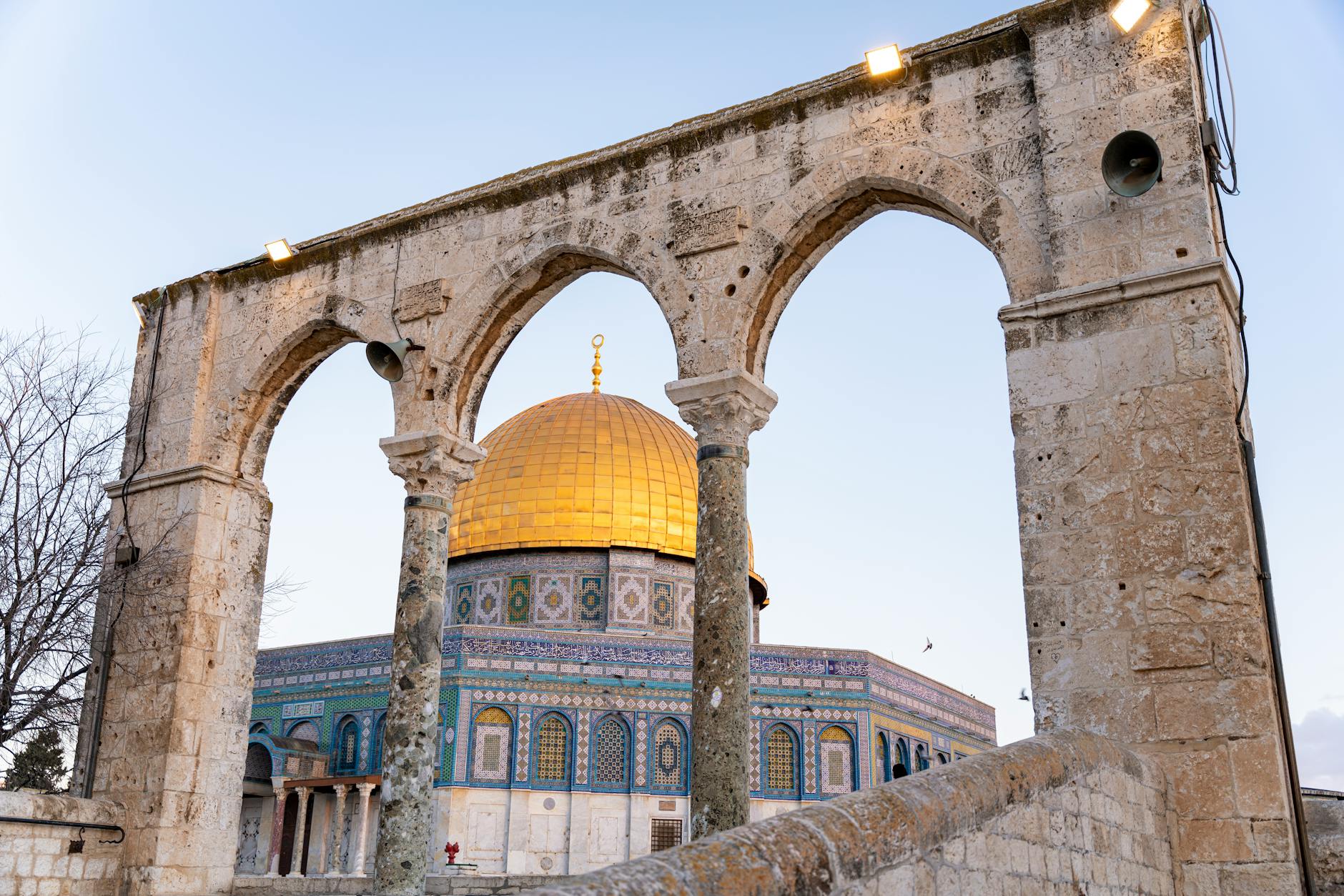
The Old City walls and the Dome of the Rock in late-afternoon light: The Old City of Jerusalem 1 by Ray in Manila, CC BY 2.0, via Wikimedia Commons.
Sunset over the Old City from the Mount of Olives lookout: Sunset over Jerusalem from the Mount of Olives 01 by Davide Mauro, CC BY-SA 4.0, cropped, via Wikimedia Commons.
The Temple Mount and the Old City from the Mount of Olives: View of the Temple Mount from the Mount of Olives by Askii, CC BY-SA 3.0, via Wikimedia Commons.
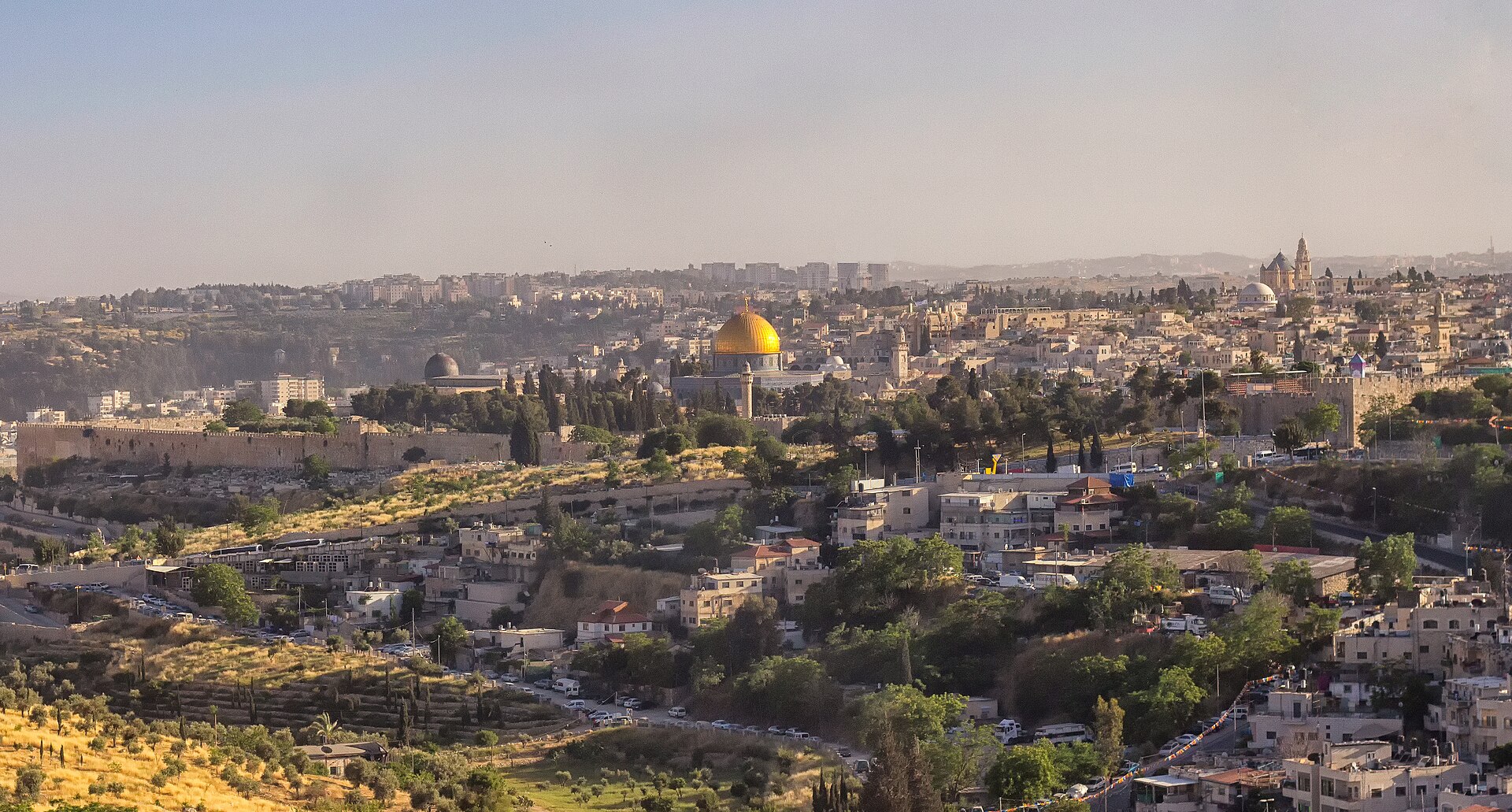
Early-morning light on the Old City from the Mount of Olives: Jerusalem Old City from the Mount of Olives, Israel (16036383010) by yeowatzup, CC BY 2.0, via Wikimedia Commons.
The Old City at sunset from the Haas Promenade: Jerusalem – ירושלים (4223415310) by RonAlmog from Israel (ישראל), CC BY 2.0, via Wikimedia Commons.