The City of David is Jerusalem’s oldest neighborhood and its most active archaeological dig, spread across the ridge just south of the Old City walls. This is where Jerusalem actually began: the original settlement that King David is described as capturing around 1000 BCE, perched above the only reliable spring in the area. Today you can walk its ancient streets, climb down into water tunnels carved nearly 2,700 years ago, and wade the length of Hezekiah’s Tunnel by flashlight to the Pool of Siloam. This guide to city David Jerusalem covers what you actually see on site, current hours and shekel fees, the wet-versus-dry tunnel choice, accessibility, and how to fit it into a wider Old City day.
Because excavation here is ongoing and some interpretations are debated among archaeologists, it helps to arrive curious rather than dogmatic. What is not in doubt is that this compact site packs in more layered history per square meter than almost anywhere in the city. Read it alongside our Jerusalem history overview and our guide to biblical sites in Jerusalem to place what you see in context.
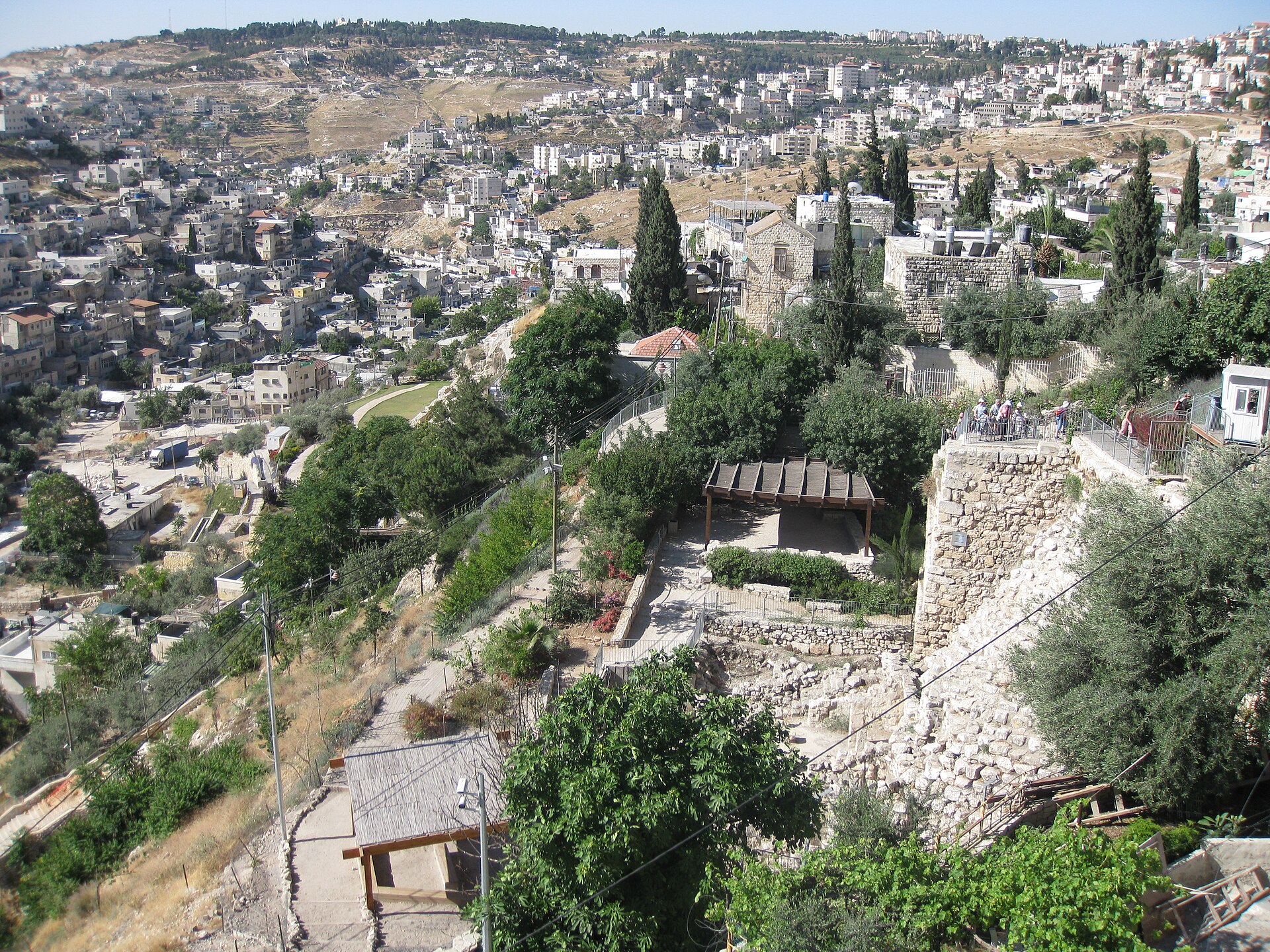
Why the City of David matters
Long before the Old City walls you see today existed, this narrow spur of land between the Kidron and Tyropoeon valleys was settled by Canaanite and Jebusite peoples, drawn by the Gihon Spring at its base. The biblical account describes David taking the Jebusite stronghold and making it his capital, with Solomon later expanding northward toward the Temple Mount. Over the centuries the city grew, shrank, was destroyed by the Babylonians in 586 BCE, rebuilt, and buried under later construction.
What makes the City of David unusual among Jerusalem attractions is that you descend below the modern surface to reach genuinely ancient layers. The excavations sit within and beneath the Palestinian neighborhood of Silwan, and the site is operated as a national park with an admission charge. Approached as a visitor, the practical draw is simple: nowhere else can you walk through a functioning Iron Age water tunnel, stand on a Second Temple-era pilgrimage street, and look out over the valley where so much of the early biblical narrative is set.
What you actually see on the ground
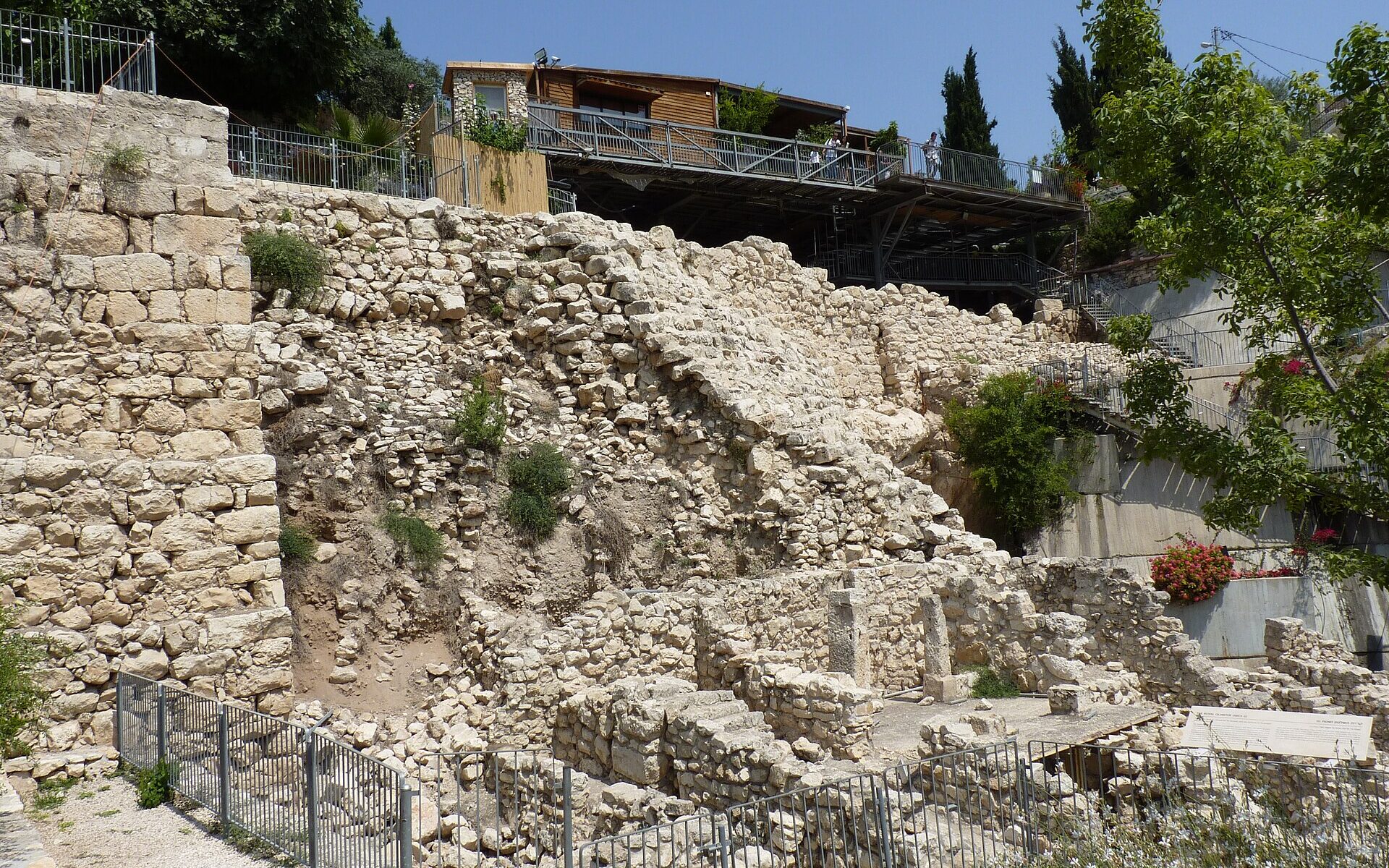
Set your expectations before you arrive, because this is the single thing visitors get wrong. There is no ancient city standing here. What you walk through is a working excavation on a narrow ridge, where the surviving evidence is stone foundations a knee or a shoulder high, cut rock, terraces, cisterns and a set of tunnels beneath your feet. People who picture something like the restored streets of the walled Old City above often spend the first twenty minutes quietly recalibrating.
Above ground you get a viewing platform looking east across the Kidron Valley toward the Mount of Olives, an introductory film in a small theater, and an open excavation area of walls, floors and rock-cut installations. Panels explain some of it. Much of the rest looks like undifferentiated limestone unless someone tells you what it is, which is the honest argument for taking a guide rather than wandering with a map.
The other thing worth knowing in advance is where you are standing. The ridge lies inside the Palestinian neighborhood of Silwan, immediately below the Old City walls, and the excavation areas are threaded between and beneath houses, alleys and parked cars. You walk past ordinary residential streets to get between parts of the site. Digs here have been carried out by the Israel Antiquities Authority, at times in partnership with Tel Aviv University, with the visitor operation run by the City of David Foundation alongside the Israel Nature and Parks Authority.
Because the dig is live, the site changes. Sections open, close and reopen as work proceeds, and a route that was accessible last season may be fenced this one. Treat any itinerary you read, including this one, as a starting point and confirm the day’s layout at the ticket desk.
Hezekiah’s Tunnel: the main event
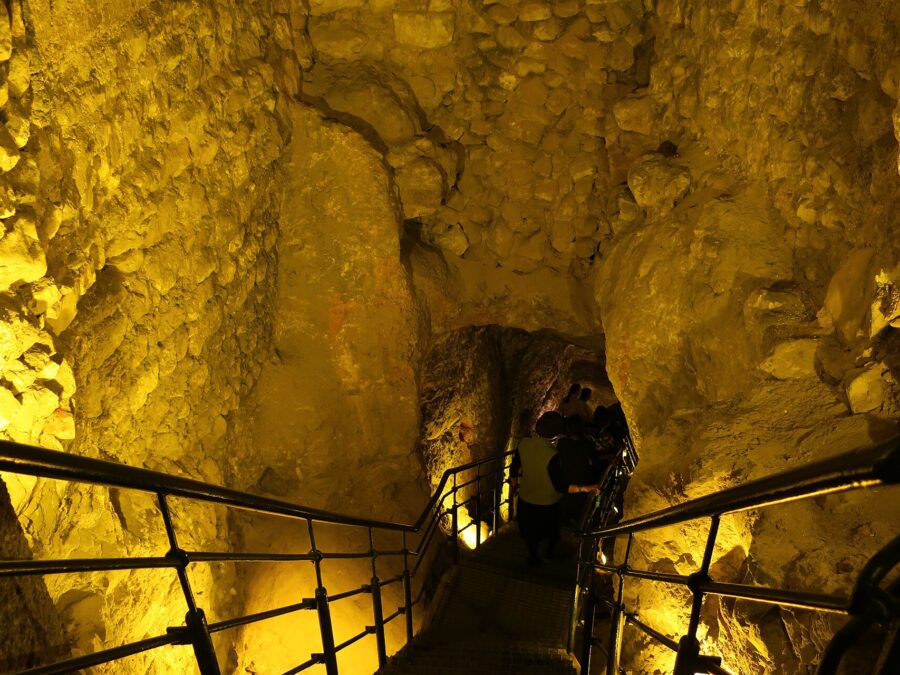
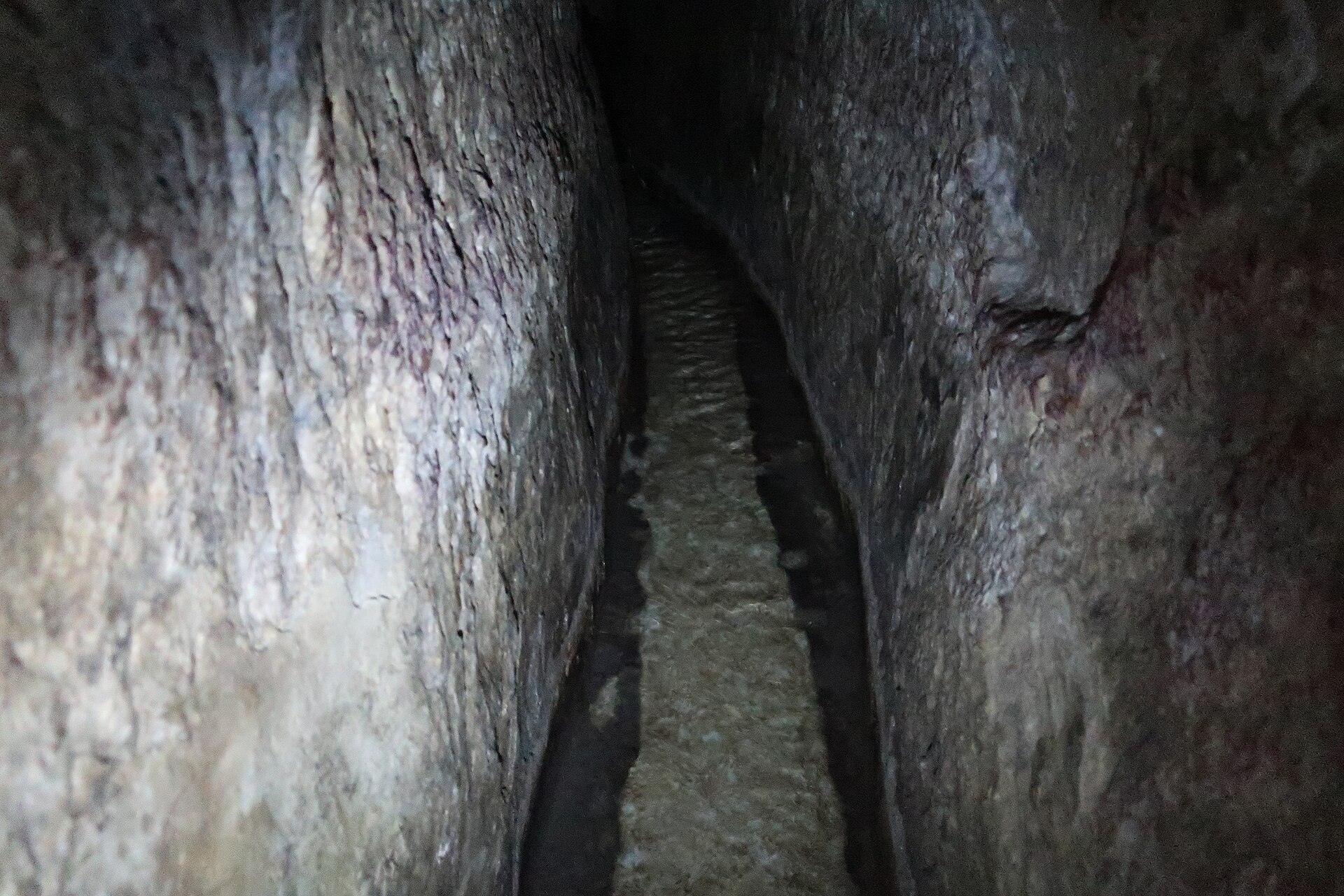
The headline experience is Hezekiah’s Tunnel, a 533-meter channel cut through solid bedrock to carry water from the Gihon Spring to the Pool of Siloam inside the city’s defenses. The Bible (2 Kings 20, 2 Chronicles 32) credits King Hezekiah with the project, undertaken to secure the water supply ahead of the Assyrian siege around 701 BCE. The engineering still impresses: two teams dug from opposite ends and met in the middle, sloping the floor by only about a third of a meter over the whole length so the water would flow.
Walking it, you are ankle- to (in a few stretches) thigh-deep in cool spring water, in pitch darkness, following an S-shaped passage just wide enough for one person. The water is genuinely cold but bearable; the walk takes roughly 30 to 40 minutes at an unhurried pace. There is no lighting inside, so a flashlight or headlamp is essential. It is a memorable, slightly adventurous experience and perfectly safe for most reasonably mobile visitors, though the low ceiling in places and the total dark can unsettle anyone prone to claustrophobia.
The dry alternative: the Canaanite Tunnel
If wading through dark water is not for you, the parallel Canaanite Tunnel (sometimes called the dry tunnel) runs alongside and is lit and dry underfoot. It is shorter and brings you out near the same area, so you do not miss the underground experience entirely. Families with young children, anyone with mobility concerns, or visitors who simply do not want wet shoes routinely take the dry route. You can decide at the entrance to the tunnels, and staff will point you the right way.
Before you step into the wet tunnel
The wade is the reason most people come, so it is worth understanding exactly what you are committing to. Once you enter, you are in a single-file rock channel with no side exits and no way to turn a group around comfortably. You walk the whole 533 meters to the far end. That is the part nobody mentions until you are already in the water.
The operators state on their site’s own questions and answers page that the water in the Siloam Tunnel reaches a maximum of 70 centimeters, or about 27.5 inches. For most adults that is mid-thigh at the deepest points and ankle-deep for long stretches, but for a child of 120 centimeters it is close to waist height. The floor is uneven rock, the ceiling dips low enough in places that taller visitors walk bent forward, and the passage narrows to roughly shoulder width.
- It is genuinely dark. There is no lighting of any kind. If everyone in your group switches off at once you cannot see your own hand. Carry one light per person, not one per family, and treat a headlamp as better than a phone torch.
- There is no phone reception underground. Tell anyone waiting for you that you will be out of contact for the better part of an hour, and do not plan to meet someone by text at the far end.
- Your phone will get wet. A sealed bag is cheap insurance. Dropped phones in a dark tunnel are not usually recovered quickly.
- Last admission is early. The official City of David National Park page gives last entry to the water system as an hour and a half before closing, which in practice means around 15:30 Sunday to Thursday and around 12:30 on Friday. Arriving at 16:00 means no tunnel.
- Babies go in a carrier or not at all. The operators say infants may enter the tunnel in a front-facing baby carrier only. Strollers cannot be used anywhere on the site and there is nowhere to leave one.
If you have ever had to leave a lift or an MRI scanner early, take the dry route without embarrassment. Panicking 300 meters in, in the dark, in water, with a queue of strangers behind you is a bad afternoon for everyone. The same applies to anyone unsteady on their feet, since the floor is slick and there is nothing to hold. Our dedicated guide to walking Hezekiah’s Tunnel goes further into the engineering and the two-team excavation story, and our overview of how the ancient city got its water explains why the channel was cut where it was.
The Pilgrimage Road and Pool of Siloam
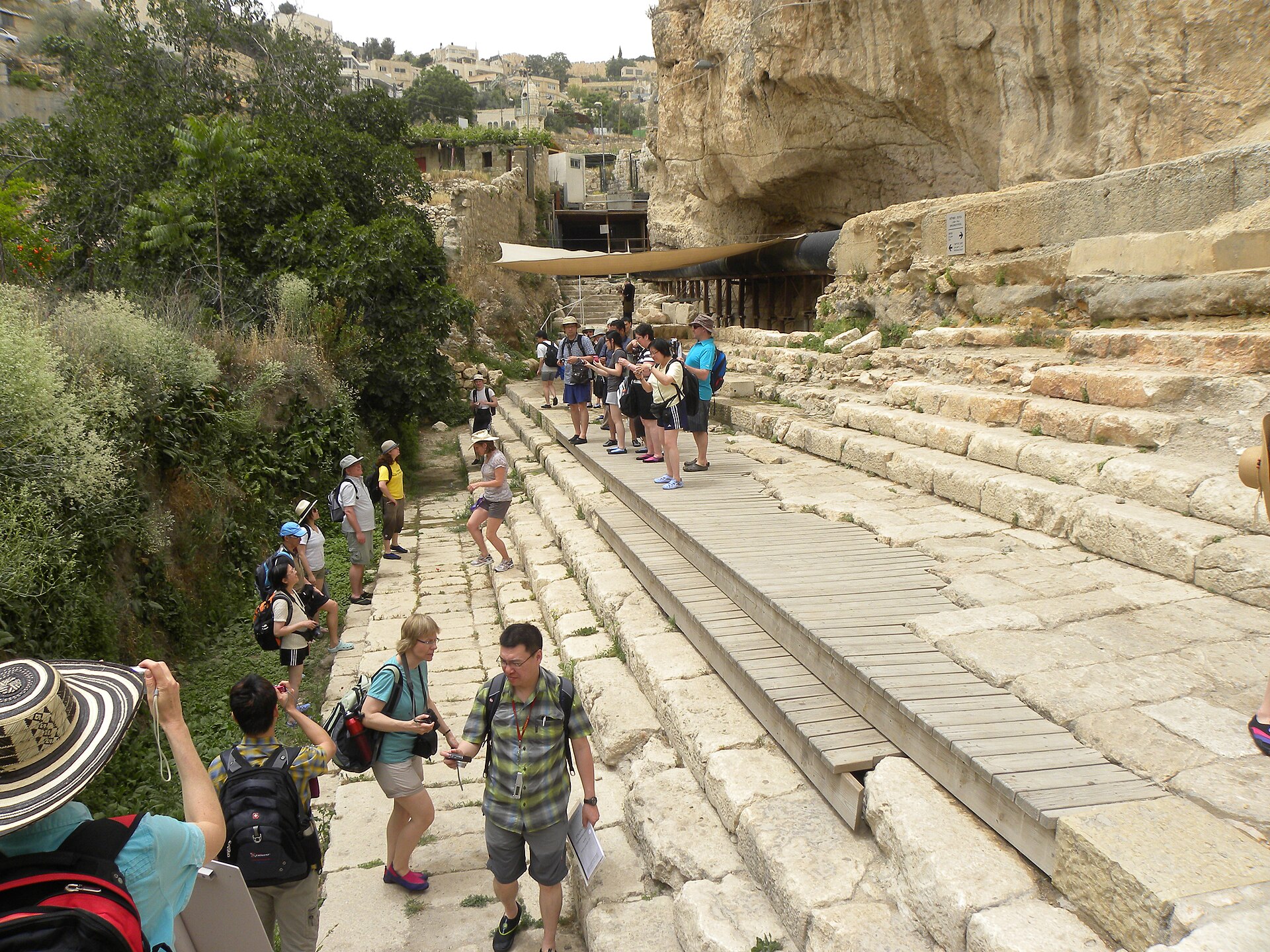
The wet or dry tunnel deposits you near the Pool of Siloam, a stepped pool from the Second Temple period where Jewish pilgrims would immerse before ascending to the Temple. In the Christian tradition it is identified as the pool where Jesus told a blind man to wash and recover his sight (John 9). Excavation has revealed substantial stone steps; work to expose the full pool has continued in recent years, so the visible extent keeps growing.
From there, the recently excavated Pilgrimage Road (the Pilgrim’s Path) runs roughly 600 meters underground back toward the Temple Mount, following the actual stepped street that pilgrims used 2,000 years ago. You walk beneath the modern neighborhood on the original paving, past drainage channels and the remains of shops. Sections continue to open as digging proceeds, and an ascending walk along this road is one of the most atmospheric parts of any visit. Check at the ticket desk which segments are open on the day, as access can change.
Other discoveries worth seeking out
- Warren’s Shaft: Part of the older Canaanite-era water system, named for the British engineer Charles Warren who explored it in 1867. It shows how the early city reached the spring from inside its walls.
- The Large Stone Structure: A monumental building some archaeologists have proposed as part of a royal palace from the 10th century BCE. The interpretation is debated, which is worth knowing before a guide presents it as settled fact.
- Royal seal impressions (bullae): Tiny clay seals recovered here include names connected to figures mentioned in the Book of Jeremiah, offering a tangible link between the dirt and the text.
- Ritual baths (mikvaot) and the stepped street: Evidence of the Jewish pilgrim economy that funneled visitors up toward the Temple.
- City walls from several periods: Layers of fortification that trace the settlement’s repeated destruction and rebuilding.
The Gihon Spring itself, the reason the city exists, sits at the base of the ridge and can be viewed as part of the water-systems route. For a fuller picture of how Jerusalem solved the problem of survival without a river, see our guide to Jerusalem’s ancient water systems.
Hours, fees, and tickets
The site generally opens Sunday to Thursday from 8am, closing around 5pm in summer and earlier in winter. Fridays and the eves of Jewish holidays close early, typically around 2pm, and the park is closed on Saturday for Shabbat. As with most Jerusalem attractions, do not plan a Saturday visit. Hours shift seasonally, so confirm on the official City of David site before you go.
Admission is tiered by which route and extras you choose. As a rough guide for 2026, basic self-guided entry starts from around 16 shekels for adults and the Pilgrimage Road from around 28 shekels, with reduced rates for children, while combined tickets adding the Pilgrimage Road or a guided tour cost more. Audio guides in multiple languages are available for a small fee. Prices change and promotions come and go, so treat these as ballpark figures (roughly 8 to 15 US dollars for basic entry) and check current rates when booking.
| Option | Approx. 2026 price (adult) | Notes |
|---|---|---|
| Self-guided entry | ~30-50 ILS | Site, viewpoints, tunnels; audio guide extra |
| Combined / Pilgrimage Road ticket | Higher tier | Adds the underground pilgrimage street where open |
| Guided tour | ~50-90 ILS | Strongly worth it for archaeology and context |
| Audio guide | Small add-on fee | Available in many languages |
| Evening sound-and-light show | Separate ticket | Seasonal; book ahead |
Booking online in advance is wise in peak season (spring and autumn, around major holidays) because tunnel slots and tour times fill up. A knowledgeable guide genuinely transforms the visit, since much of what you walk past looks like undifferentiated stone without explanation.
Choosing between the ticket options
Tickets are sold as separate experiences rather than one all-inclusive entry, which is the main source of confusion at the desk. As of August 2026 the official tours and tickets listing quotes the following starting rates. These are published “from” prices, and the operators note that what you pay varies by ticket type and any discount applied, so the adult walk-up figure can be higher.
- Self-guided park entry — from 16 NIS, allow about an hour and a half. Covers the excavation area, the viewpoints, the shafts and the Gihon Spring.
- Pilgrimage Road, independent entry — from 28 NIS, about two hours, walking the ancient street without a guide.
- Pilgrimage Road, guided tour — from 45 NIS, about two hours.
- Biblical City of David guided tour — from 45 NIS, about three hours, and this is the one that includes wading Hezekiah’s Tunnel by flashlight.
- Western Wall Cornerstone guided tour — from 42 NIS, about two hours, run by the same operator at the adjacent excavations.
- Hallelujah night show — from 51 NIS, projected onto the antiquities with fire and water effects.
Two practical notes. Holders of a Matmon membership from the Israel Nature and Parks Authority enter the national park free, including the Siloam Tunnel and the self-guided route, but the operators still ask you to reserve a zero-shekel ticket online and present the membership at the gate. And the night show runs a free shuttle from the First Station area, which solves the evening transport problem neatly, as walking back through the area after dark is not most visitors’ preference.
The published cancellation terms are reasonable: the night show can be cancelled at no cost until 15:00 the day before, tours and private activities until the day before, and group bookings up to three business days ahead. Book online for spring and autumn weekdays and around Passover and Sukkot, when Israeli families fill the tunnel slots. Reservations go through the operator’s call center on *6033.
Getting there
The entrance sits just outside the Dung Gate, the closest Old City gate to the Western Wall. From the Western Wall plaza it is about a five-minute walk. If you are coming from elsewhere in the city, the Light Rail Red Line does not reach the gate directly; most visitors take a taxi or a city bus toward the Dung Gate area, or simply walk down through the Jewish Quarter. Coming from the New City, budget extra time, as the final approach is on foot. For the wider picture of getting around, our Jerusalem transportation guide lays out the Red Line, buses, and sherut options.
What to bring and wear
- Footwear you can soak: sturdy water sandals or old sneakers for Hezekiah’s Tunnel. Flip-flops can slip on the uneven floor, so something with a strap is better.
- A flashlight or headlamp: there is no light in the wet tunnel. Simple lights are usually sold on site if you forget.
- Quick-dry clothing: you can get wet to the thigh in places. Shorts work well in warm months.
- A small towel and a change of socks: optional but appreciated afterward.
- Sun protection and water: much of the above-ground site is exposed, and Jerusalem summers are hot.
- A bag you do not mind getting damp, or a dry bag for phones and cameras inside the tunnel.
Modest, comfortable clothing is sensible given the surrounding residential neighborhood and the likelihood of pairing the visit with the Old City. See our Jerusalem dress code guide if you are heading on to holy sites afterward.
Facilities on site: toilets, lockers, food and Wi-Fi
For an archaeological park the practical provision is better than you might expect, and knowing what is there changes what you need to carry. The operators list toilets including wheelchair-accessible ones, cleaned on a half-hourly cycle, and an ATM on site that takes major credit cards. There is free Wi-Fi at the reservation center, though not underground.
Lockers are available to rent, which is the detail that matters most if you are doing the wet tunnel. Dry clothes, a towel and anything you would rather not carry through 533 meters of water can go in one rather than in a soggy daypack. Note again that strollers cannot be used on the site and there is no stroller storage, so a carrier is the only workable option with a baby.
Food on site is a snack shop rather than a restaurant. It handles cold drinks, coffee and something to keep children going, but plan a proper meal elsewhere. The Jewish Quarter is a ten-minute uphill walk and has the nearest reliable choice of cafes and bakeries, with more again toward Jaffa Gate. The souvenir and jewelry shop keeps the same rhythm as the park, opening Sunday to Thursday from 08:00 to 17:00 and Friday from 08:00 to 14:30.
Accessibility
Be realistic: the City of David is built into a steep slope and much of its interest lies underground via stairs and narrow passages, so it is challenging for wheelchair users and anyone with significant mobility limits. Hezekiah’s Tunnel is not accessible, and even the dry Canaanite Tunnel and the Pilgrimage Road involve steps and uneven ground. That said, parts of the upper site and certain viewpoints can be reached more easily, and staff can advise on the most manageable route on the day. For a broader rundown of step-free options across the city, see our Jerusalem accessibility guide.
The route through the site, and the climb back up
The geography is the thing to plan around. The entrance sits at the top of the ridge near the Dung Gate, and the site falls away steeply from there. Everything interesting is downhill, which is delightful for the first hour and becomes the afternoon’s main physical challenge on the way back.
The standard sequence runs: viewing platform and film at the top, then the excavation area, then a long flight of stairs down to Warren’s Shaft and the Gihon Spring, then the choice of wet or dry tunnel, and finally the Pool of Siloam at the bottom of the valley. By the time you reach the pool you are a substantial descent below where you parked your bag, in a different part of the neighborhood, with no obvious way back except your own legs.
There are three ways back up, and the best of them is underground. If your ticket includes the Pilgrimage Road, the ascending walk along the ancient stepped street takes you north from the Pool of Siloam toward the Temple Mount area on a shaded, gradual, entirely indoor gradient, and it is by far the most comfortable return as well as the most interesting. Without that ticket you walk back up the road through Silwan in the open, which is steep and, in July, unpleasant. Shuttle arrangements have existed at various times but are not guaranteed, so ask at the ticket desk on arrival rather than assuming one will be waiting.
Two consequences for your planning. First, if you are arriving after lunchtime, do the tunnel first and the surface archaeology afterward, because the water system closes an hour and a half before the park does. Second, if anyone in your group will struggle with a sustained uphill walk in heat, buy the Pilgrimage Road ticket specifically for the return, or accept that you will be turning around at the tunnel exit. Emerging near the Western Wall plaza at the end of the ascent also sets you up nicely for the rest of an Old City afternoon.
How much time to allow
- Short visit (1.5-2 hours): the above-ground site and viewpoints, skipping the wet tunnel.
- Standard visit (2.5-3 hours): includes Hezekiah’s or the Canaanite Tunnel and the Pool of Siloam.
- Full experience (3.5-4 hours): add the Pilgrimage Road walk back toward the Temple Mount.
- With a guide: add 30 to 60 minutes; well spent here.
When to go: time of day and time of year
The park runs Sunday to Thursday from 08:00 to 17:00 and Friday from 08:00 to 14:00, with the water system closing to new entries ninety minutes before the park itself. It is shut on Saturday. That leaves a narrower usable window than the headline hours suggest, particularly on Friday, when a tunnel walk realistically needs you through the gate by about noon.
Go early. The first hour after opening gives you cooler air on an exposed ridge, thinner crowds in a tunnel where passing is awkward, and the best light across the Kidron Valley. By late morning in summer the surface areas offer very little shade, and the queue for the wet tunnel can back up behind school groups.
Season changes the calculation more than at most sites. In summer the cold water is the reward rather than the ordeal, and you dry off in minutes. In winter, Jerusalem is genuinely cold and often wet, and coming out soaked to the thigh into a grey afternoon is miserable without a full change of clothes waiting in a locker. Spring and autumn are the sweet spot for weather and the worst for crowds, since the intermediate days of Passover and Sukkot bring domestic visitors in volume.
Watch for one-off closures. The park occasionally shuts early for its own archaeological conferences and for holiday eves, and those are announced on the operator’s homepage rather than anywhere obvious. Checking the day before takes a minute and has saved plenty of people a wasted trip across the city.
Going with children
This can be one of the best days a child has in Jerusalem, or a two-hour negotiation, and the difference is mostly preparation. The wet tunnel is the draw: dark, cold, adventurous, and unlike anything at home. Children who are confident in the dark and steady on their feet, roughly seven and up, tend to love it. Younger ones vary enormously, and the honest test is whether they are happy in a dark room at home.
- One light per child. Sharing does not work. A headlamp keeps their hands free for balance, which matters on a slick, uneven floor.
- Consider the water depth against their height. A maximum of 70 centimeters is mid-thigh on an adult and waist-deep on a small child, and the current is nil but the footing is not level.
- No strollers, anywhere. The operators are explicit that the site is unsuitable for strollers and that there is nowhere to store one. A baby carrier, worn front-facing, is the only option for infants in the tunnel.
- Have the dry tunnel as your declared fallback. Deciding at the entrance, rather than 200 meters into the dark, avoids a scene.
- The night show suits ages five and up according to the operators, with headphone translation into English, Spanish, French, Chinese and Russian.
If your children want to touch archaeology rather than look at it, the same operator runs a sifting project at Emek Tzurim National Park where visitors work through excavated material and regularly turn up pottery and the occasional coin. Be aware that reaching it involves a long staircase and is also not stroller-friendly. Our guide to keeping children happy in Jerusalem has more on pacing a family day around the Old City, and the city’s archaeology museums make a good indoor backup when the weather turns.
What archaeologists agree on, and what they argue about
You will hear confident claims on this ridge, from guides, from signage and from other visitors, and it is worth knowing which parts of the story are settled and which are actively contested. Nobody disputes the basics: this spur is the oldest continuously settled part of Jerusalem, it was chosen because of the Gihon Spring, it holds substantial Iron Age fortifications and water works, and a Second Temple period stepped street runs beneath it. The arguments are about identification and date, not about whether the stones are there.
The clearest example is the Large Stone Structure. The late Eilat Mazar, who excavated it from 2005, identified it as a monumental building of around 1000 BCE and proposed it might be the palace of David described in the Book of Samuel. Israel Finkelstein and colleagues at Tel Aviv University have argued that the pottery in the associated fills was mixed and that parts of the walls could belong to much later phases, possibly Hellenistic or Hasmonean. Avraham Faust has taken a middle position, arguing the structure was probably built before David’s time and could have been reused. When a guide says “David’s palace”, you are hearing one reading of a contested set of walls, not a consensus.
The Pilgrimage Road is on firmer chronological ground. The Israel Antiquities Authority excavators, among them Nahshon Szanton and Joe Uziel, dated the street using more than a hundred coins recovered from the fill beneath the paving, placing its completion in the 30s CE — during or immediately after the prefecture of Pontius Pilate. That dating has been widely accepted, though whether Pilate personally commissioned the project, and why, remains interpretation rather than fact.
There is a second layer to the debate that has nothing to do with pottery. The excavations sit under and around a living Palestinian neighborhood, and the relationship between the dig, the visitor operation and Silwan’s residents is contested by residents, by advocacy organizations and by some archaeologists, while the operators and the Antiquities Authority defend the work and its methods. This guide does not attempt to settle any of that. What it will say is that you should expect to encounter strongly held positions, and that the useful listening skill is noticing the difference between “this is a wall from the tenth century BCE” and “the excavators identify this as”. Reading the site alongside our account of the city’s history and our survey of sites tied to the biblical narrative will give you the background to hear that distinction, and the wider network of religious sites across Jerusalem shows how often the same ground carries several competing readings.
Combining with nearby sites
The City of David slots naturally into an Old City day. The Western Wall is five minutes uphill, and the Western Wall Tunnels make a fitting underground pairing. The Mount of Olives rises across the Kidron Valley, a short taxi or a steeper walk away. History-minded visitors often continue to the Tower of David museum near Jaffa Gate for the citywide story, or build the whole day from our Old City guide.
Photo Credits
The Stepped Stone Structure in Area G of the City of David: City of David, Jerusalem P1110577 (5922241604) by Ricardo Tulio Gandelman from Rio de Janeiro, Brazil, CC BY 2.0, via Wikimedia Commons.
View over the City of David archaeological park from the top of the site: City of David IMG 4875 by Deror avi, CC BY-SA 3.0, via Wikimedia Commons.
The rock-cut water channel of Hezekiah’s Tunnel: Conduit of water in Hezekiah’s tunnel by Davidbena, CC BY-SA 4.0, via Wikimedia Commons.
Visitors on the steps of the Pool of Siloam: Picture Time at the Pool of Siloam (6403660001) by Ian Scott, CC BY-SA 2.0, via Wikimedia Commons.
{"@context": "https://schema.org", "@type": "FAQPage", "mainEntity": [{"@type": "Question", "name": "What is the City of David in Jerusalem?", "acceptedAnswer": {"@type": "Answer", "text": "It is the original core of ancient Jerusalem, a ridge just south of the Old City walls where the earliest settlement grew up around the Gihon Spring and where King David is described as establishing his capital. Today it is an active archaeological park you can tour."}}, {"@type": "Question", "name": "How long is Hezekiah's Tunnel and what is it like to walk?", "acceptedAnswer": {"@type": "Answer", "text": "The tunnel runs 533 meters and takes about 30 to 40 minutes to wade through. You walk in cool spring water that ranges from ankle- to thigh-deep, in complete darkness, so a flashlight or headlamp is essential."}}, {"@type": "Question", "name": "Is there a dry option if I do not want to get wet?", "acceptedAnswer": {"@type": "Answer", "text": "Yes. The parallel Canaanite (dry) Tunnel is lit and dry underfoot and exits near the same area, so you still get an underground experience without wading. You choose at the tunnel entrance."}}, {"@type": "Question", "name": "How much does the City of David cost in 2026?", "acceptedAnswer": {"@type": "Answer", "text": "Basic self-guided entry starts from around 16 shekels for adults, with reduced rates for children. Combined tickets that add the Pilgrimage Road or a guided tour cost more. Prices change, so confirm current rates when you book."}}, {"@type": "Question", "name": "Is the City of David open on Shabbat?", "acceptedAnswer": {"@type": "Answer", "text": "No. It is closed on Saturday and on Jewish holidays, and Fridays and holiday eves close early, usually around 2pm. Plan your visit for Sunday through Thursday."}}, {"@type": "Question", "name": "Is it suitable for young children or people with claustrophobia?", "acceptedAnswer": {"@type": "Answer", "text": "Most children of around 7 and up enjoy the wet tunnel, but the dark and narrow sections can unsettle younger kids or anyone claustrophobic. The dry Canaanite Tunnel is a gentler alternative, and much of the open-air site suits all ages."}}, {"@type": "Question", "name": "How deep is the water in Hezekiah's Tunnel?", "acceptedAnswer": {"@type": "Answer", "text": "The operators state the water in the Siloam Tunnel reaches a maximum of 70 centimeters, about 27.5 inches. Much of the walk is ankle-deep, with a few deeper stretches that sit around mid-thigh on an adult and closer to waist height on a small child."}}, {"@type": "Question", "name": "Is the Pilgrimage Road open, and does it need a separate ticket?", "acceptedAnswer": {"@type": "Answer", "text": "Yes. The ancient stepped street running up from the Pool of Siloam is open, and it is sold as its own ticket rather than being included in basic park entry. As of August 2026 the official listing shows independent entry from 28 NIS and a guided version from 45 NIS, each taking about two hours."}}, {"@type": "Question", "name": "Is the City of David wheelchair accessible?", "acceptedAnswer": {"@type": "Answer", "text": "No. The operators say plainly that because of the archaeological nature of the site the park is not accessible and is not suitable for people with mobility limitations. Accessible toilets exist at the entrance area, but the routes themselves involve stairs, steep gradients and narrow underground passages."}}]}