The Tower of David stands guard over Jaffa Gate, and inside its ancient citadel is one of the best places in the city to understand all 3,000 years of Jerusalem’s story in a single visit. Despite the name, it has nothing to do with King David; it is a fortress whose stones span the Hasmonean, Herodian, Roman, Crusader, Mamluk, and Ottoman eras, now home to a beautifully renovated museum and a celebrated after-dark sound-and-light show. This guide to the Tower of David in Jerusalem covers what to see, hours, ticket prices in shekels, the night shows, accessibility, and how to fit it into your time in the Old City.
The citadel sits at the western edge of the Old City by Jaffa Gate, making it the ideal first stop to get your bearings before exploring the quarters and the great religious sites covered in our guide to holy sites in Jerusalem. Few attractions pack so much history, and such good views, into one place.
What Is the Tower of David?
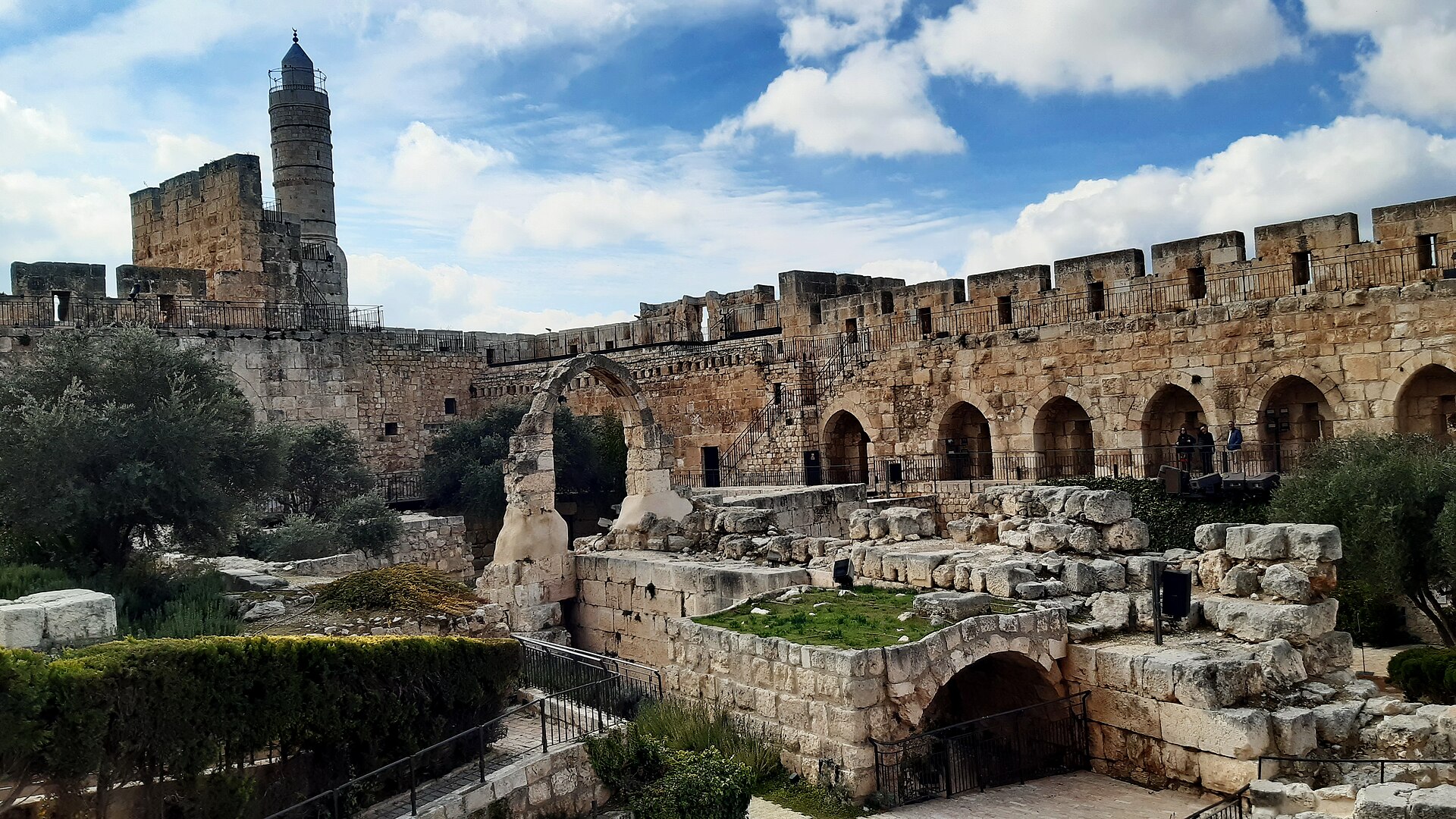
The Tower of David is a medieval citadel built on the site of fortifications dating back more than two thousand years. King Herod the Great raised three great towers here in the 1st century BCE to protect his palace, and one massive Herodian base still survives at the foundation of the structure misnamed the “Tower of David.” Over the centuries Romans, Byzantines, Crusaders, Mamluks, and Ottomans rebuilt and reinforced the fortress; the prominent minaret that defines its skyline was added in the Ottoman period. The name itself comes from a much later Christian and Muslim tradition that mistakenly linked the site to King David. Today the citadel is a national heritage site and museum, and its walls and courtyards are an attraction in their own right. Standing in the courtyard, you can see the seams where one civilization’s stonework gives way to another’s, a vivid reminder that Jerusalem has been conquered, rebuilt, and reimagined dozens of times. Few single buildings anywhere carry so many chapters of history in their walls.
The Tower of David Museum
The museum reopened in 2023 after a major renovation, and it now tells the story of Jerusalem across the ages through modern, immersive galleries set within the historic halls. Exhibits trace the city from its earliest days through the biblical periods, the Second Temple, the rise of Christianity and Islam, the Crusades, and into modern times, using artefacts, models, and digital displays. A new entrance, accessible routes, and restored archaeology make it far easier and richer to visit than before. The galleries are arranged chronologically, so you move forward through time as you move through the citadel, with touchscreens, scale models, and short films supplementing the genuine artefacts on display. Information is presented in multiple languages, and free or paid audio options help you go deeper. Because the route winds through restored Crusader and Ottoman halls, the building itself is part of the exhibition. Plan to spend two to three hours inside, more if you climb the towers and linger on the ramparts.
Hours and Tickets
Details below are typical; confirm current times and prices on arrival or before your visit, as they change seasonally and around holidays.
| Detail | Information |
|---|---|
| Day hours | Sunday 12pm to 6pm; Monday, Wednesday and Thursday 9am to 6pm; Tuesday 9am to 8pm; Friday and Saturday 9am to 3pm. Open on Shabbat. Box office closes an hour before. Hours as of August 2026 — check tod.org.il. |
| Day ticket | Around 60 shekels for adults, with reduced rates for children, students, and seniors. |
| Night show | Separate ticket, typically 55 to 70 shekels; reserve in advance. |
| Location | At Jaffa Gate, inside the citadel just within the Old City wall. |
Combined day-and-night tickets are sometimes available at a small saving. Booking online ahead is wise, especially for the evening shows and in peak season.
The Night Shows
After dark, the citadel walls become a giant canvas for projected light-and-sound experiences that are among the highlights of Jerusalem at night.
The Night Spectacular
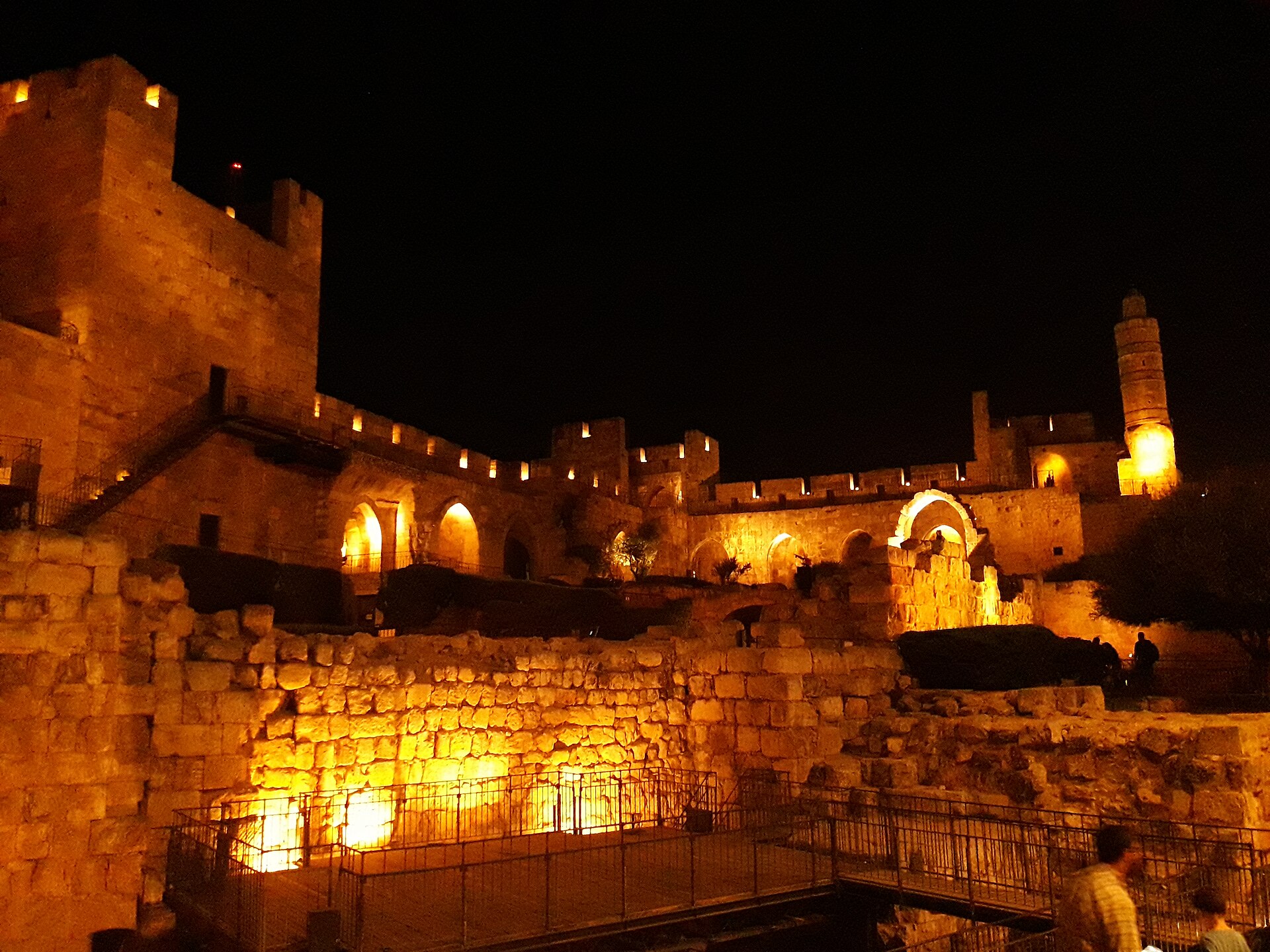
The long-running Night Spectacular uses vivid projections across the ancient stone to tell the story of Jerusalem without narration, set to music, wrapping the audience in light as the history of the city unfolds on the walls. It runs on select evenings, lasts around 45 minutes, and is suitable for all ages and languages since it relies on imagery rather than words. Bring a light layer, as evenings can be cool even in summer, and arrive a little early to find a good spot, as seating is on benches in the open courtyard. Combined with the night air and the floodlit walls, it is one of the most atmospheric hours you can spend in the Old City.
King David Immersive Show
A newer night experience uses cutting-edge projection and storytelling to bring the figure of King David and the founding of Jerusalem to life across the citadel. Check which shows are running during your visit, as the program varies by season; both make memorable evenings and pair well with dinner near Jaffa Gate.
What an Evening at the Citadel Actually Involves
Both shows run about 40 minutes, outdoors, projected straight onto the citadel walls with the excavated courtyard as the stage set. Neither has narration, and that is the point — the story is carried by image and score, so the language you speak makes no difference, and children old enough to sit through 40 minutes tend to stay with it. Seating is open and unreserved. The museum’s own guidance is that there are enough seats for everyone and that the full projection is visible from every one of them, so turning up an hour early to claim a front bench achieves nothing; ten or fifteen minutes ahead is plenty.
As of August 2026 the museum lists a night show at 69 shekels for adults, 59 for children aged 3 to 18, and 64 for students and Israeli senior citizens, with a combined ticket covering daytime entry plus one evening show at 108 shekels for an adult — a small saving over buying the two separately. Children from the age of three need their own ticket for the evening. Performances run on selected nights only and the schedule shifts with the season and around festivals, so check the current night show listings and book online rather than turning up hopefully.
Two practical warnings. The courtyard is open stone with no cover, so carry a layer even in July and assume the show is off in bad weather. And the evening is genuinely accessible: both performances work for visitors with limited mobility, and the Night Spectacular carries an audio description track. If a light show on ancient walls appeals, our guide to evening culture and entertainment in Jerusalem covers what else the city offers after dark.
What to See Inside
Beyond the galleries, the citadel itself rewards exploration. Climb the towers and walk the ramparts for sweeping views over the Old City rooftops, the Tower of David’s own courtyard archaeology, and out toward the New City. The excavated courtyard reveals layers from the Hasmonean and Herodian periods, and information points explain what you are seeing. The combination of indoor museum and open-air fortress means you move between cool exhibition halls and sunlit battlements throughout the visit. The highest observation point looks out over the entire Old City, with the Dome of the Rock, church domes, and the Mount of Olives all visible, and it is one of the few places where you can take in the whole walled city at a glance. The views from the top rank among the best in the city; our best viewpoints in Jerusalem guide has more high places to seek out.
Inside the Ten Galleries: What the Museum Actually Covers
The permanent exhibition installed in the 2023 renewal runs to ten galleries, and it helps to know the shape of it before you start, because the route is chronological in places and thematic in others. Entry to all ten is included in the museum ticket, which the museum’s official visitor information page prices at 55 shekels for an adult as of August 2026, with 35 shekels for children aged 5 to 18, 44 for students, and 28 for Israeli senior citizens and visitors with disabilities.
Gallery 1 sets the frame with a 12-metre interactive timeline, a topographical map and an illuminated globe — you can skim 4,000 years in five minutes or drill into one period. Galleries 2, 3 and 4 take the three faiths in turn. The Jewish gallery is built around a 3D-printed model of the Second Temple and the Temple Mount; the Christian gallery centres on a model of the original Byzantine Church of the Holy Sepulchre and concentrates on the final week of Jesus’s life; the Islamic gallery holds a cutaway model of the Dome of the Rock with a section of facade removed so you can see inside, alongside a medieval minbar and mihrab that survive because the room itself served as a mosque.
Gallery 5 is the one people remember: a video-art fresco across the whole vaulted ceiling, animated by illustrator David Polonsky with a score by Amit Hai-Cohen, cycling through a year of Jewish, Christian and Muslim festivals. Gallery 6 turns to the citadel itself and its finds. Gallery 7 holds changing exhibitions, so the content varies by season.
Gallery 8 justifies the ticket on its own. It houses the Illés model, a 4 by 4.5 metre scale model of Jerusalem as it stood in 1873, built by Stephan Illés, a Hungarian bookbinder at the Franciscan printing press. It was shown at the Vienna International Exhibition of 1873, sold to Geneva in 1878, forgotten in an attic, rediscovered in 1983 and returned to Jerusalem on permanent loan. A short film is projected onto it every fifteen minutes. For anyone interested in what the city looked like before it burst its walls, it is the single most useful object in Jerusalem — our round-up of archaeology collections around the city places it in context.
Galleries 9 and 10 bring the story to the present: two centuries of photographs, film and documents, and a small reading library with windows over the city. Full gallery-by-gallery detail is on the museum’s permanent exhibition page.
The Citadel Beneath the Museum: Moat, Round Tower and Minaret
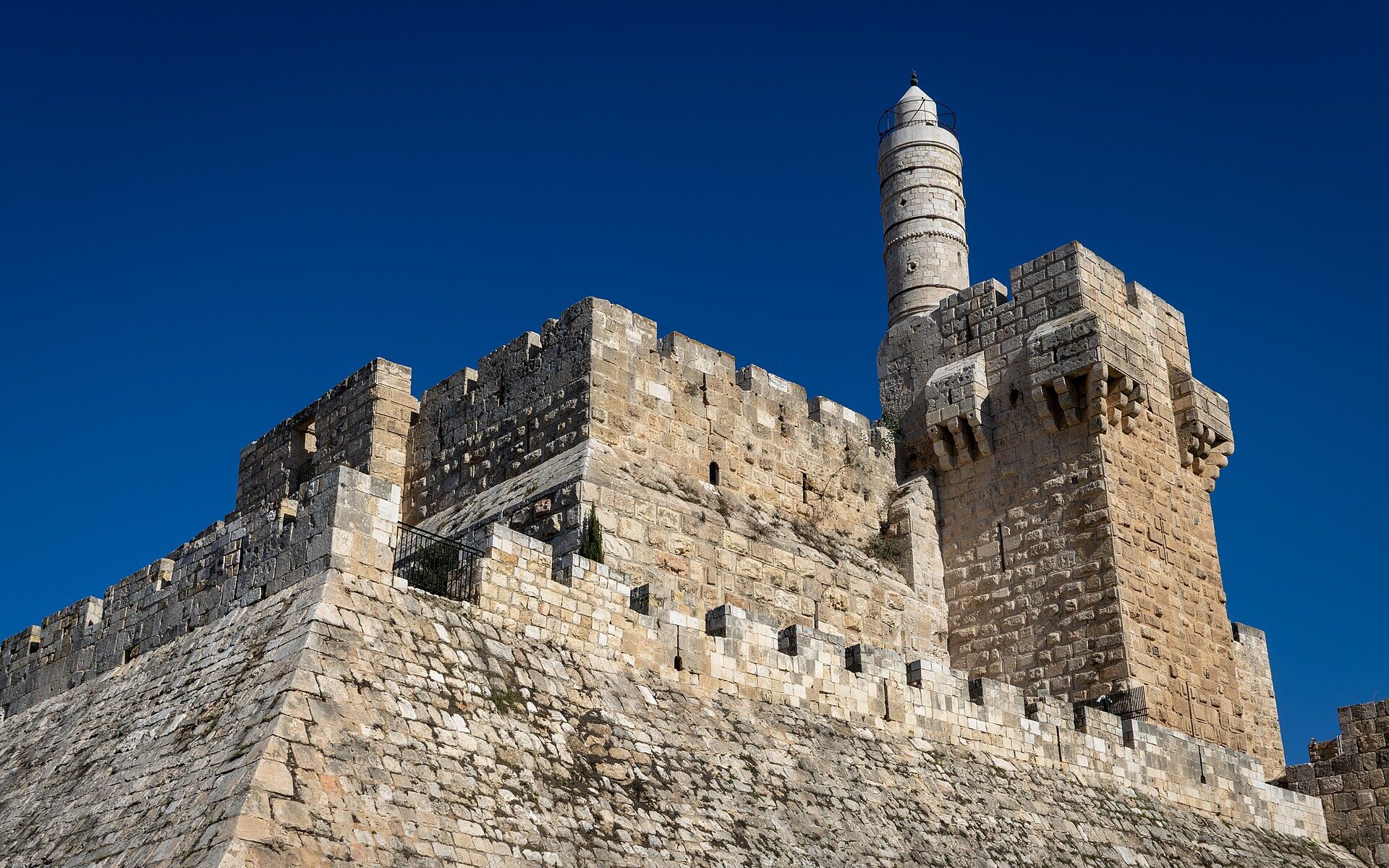
Walk the archaeological garden slowly and you can read the citadel as a stratigraphy of everyone who has held Jerusalem. The oldest visible fortification lines go back to the Hasmonean city wall. Herod the Great then raised three great towers beside his palace here, of which the base of Phasael survives — the enormous ashlar courses at the heart of the structure. In the middle of the courtyard stands a round tower roughly ten metres across, built in the Early Muslim period. The Crusaders put a royal palace inside the walls and cut the dry moat you cross on the way in. The Mamluks thickened the defences and added the hexagonal tower grafted onto Phasael, and the Ottomans contributed the monumental eastern gate, the stone bridge, the open-air mosque, the cannon yard, and the minaret — restored in the recent works and still the shape most people picture when they think of this building. Our guide to the Ottoman centuries in Jerusalem explains that last layer.
The building kept working long after it stopped being a palace. The British turned its rooms into exhibition halls in the Mandate period, the first time the citadel was used for culture rather than defence. The Jordanian Legion held it as a fortress after 1948, it passed to Israel in 1967, and the museum opened in 1989 before the ten-year planning and three-year building project that produced the current site.
The name is the one thing here that is not authentic. The museum’s own account traces it to a misreading of the historian Josephus during the Byzantine period, reinforced by the Muslim designation of the citadel as the prayer niche of the Prophet David; Western pilgrims later transferred the label to the Ottoman minaret, and it stuck. Nothing you can see was built by King David, and the museum is refreshingly straightforward about saying so. For the sequence of rulers behind those stones, see our overview of Jerusalem through the ages.
Phasael Tower and the 360-Degree Panorama
The climb to the top of Phasael Tower is included in the entrance ticket and is the natural end of the route. From the roof you get an unobstructed circle: east over the Old City rooftops to the Dome of the Rock, the Holy Sepulchre and the Mount of Olives beyond; west over Mamilla and the modern centre; south towards Mount Zion. It is one of the few viewpoints that shows you both Jerusalems at once, which is exactly the museum’s argument about where the citadel sits.
The stairs are steep and there is no lift to the deck — the tower could not be adapted without damaging the fabric. Instead the museum offers a 360-degree descriptive panorama you can open on your own phone and scroll through, with the same landmarks labelled. It is not the same as standing up there, but it means nobody has to leave without the view.
Go up early in the day for clear light over the Old City, or in the last hour before closing for warm stone and long shadows. On a hazy summer afternoon the distance flattens out and the Judean hills disappear entirely.
Best Time to Visit
Mornings are quietest for the museum, before tour groups arrive, and the ramparts are pleasant before the midday heat. If you want the night show, plan a late-afternoon museum visit followed by dinner and the evening performance, making a full half-day of it. Unlike many attractions in the city, the Tower of David is generally open on Saturday, which makes it a valuable option during Shabbat when much else is closed; it closes earlier on Fridays. Spring and autumn bring the most comfortable weather; our best time to visit Jerusalem guide breaks down the seasons.
How to Get to the Tower of David
The citadel is impossible to miss: it rises immediately to your right as you enter the Old City through Jaffa Gate. Jaffa Gate is a short, level walk from the City Hall stop on the Light Rail Red Line, which costs around 6 shekels a ride and connects to the central bus station and Jaffa Street; note the Light Rail does not run on Shabbat. Taxis and sherut shared taxis can drop you at the Jaffa Gate plaza, but vehicles cannot pass through the gate into the Old City lanes. If you are walking from the New City, the Mamilla promenade leads pedestrians straight to Jaffa Gate past shops and cafes. Jaffa Gate is the busiest of the eight gates set into the Old City walls, and the simplest one to aim for on a first visit. For full details on reaching the Old City from the airport, Tel Aviv, and around town, see our Jerusalem transportation guide.
Accessibility at the Citadel
This is worth stating clearly, because a good deal of what is written online about the Tower of David is out of date: since the 2023 renewal the museum is genuinely accessible. Two glass lifts, installed so as not to disturb the ancient fabric, plus ramps and widened passageways, reach every gallery across the multi-level citadel. The new sunken entrance pavilion — to the right of the Jaffa Gate courtyard as you come up from Mamilla, marked by three red flags — is step-free from the street.
The provision goes beyond ramps. There are digital visual guides in Israeli and International sign language, audio description of the permanent exhibition and of the Night Spectacular for visually impaired visitors, an audio guide in simplified language, and a sensory map for visitors who need to plan around noise and crowding. All of it is included in the price of admission.
The one exception is the Phasael observation deck, which cannot be made physically accessible for conservation reasons; the digital panorama stands in for it. Older guidebooks and travel pages that describe the whole citadel as unsuitable for wheelchair users are simply describing the pre-2023 building. The museum asks that you call its reservation centre ahead so arrangements can be made, and publishes the detail on its accessibility page. Our wider guide to accessible travel in Jerusalem covers the Old City lanes, which are a harder problem than the museum.
Practical Tips
- Book the night show ahead. Evening performances run on select nights and sell out; reserve online and check the current schedule.
- Allow two to three hours for the museum and ramparts; more if you add a night show.
- Open on Shabbat. A useful choice for Saturday, when many sites and shops close; note shorter Friday hours.
- Wear sturdy shoes. The ramparts and tower stairs are steep and uneven, with some climbing.
- Bring a layer at night. Evenings on the open ramparts can be cool, even in summer.
- Start here. Visiting early in your trip gives you context for the rest of the Old City.
- Check for combined tickets covering both the day museum and the night show.
Combine With Nearby Sites
The Tower of David sits at Jaffa Gate, the gateway to the Christian and Armenian Quarters, so it pairs naturally with a walk into the Old City. The Ramparts Walk begins right here in the citadel courtyard, letting you continue straight onto the walls afterward. Families will find the citadel engaging for older children; our Jerusalem with kids guide has more ideas. From here it is a short walk to the markets, the Holy Sepulchre, and the Western Wall. Step south out of the citadel and you are two minutes from the ceramics workshops and monastery lanes of the Armenian Quarter.
Fitting the Tower of David Into an Old City Day
The museum was redesigned around a specific idea: that you should understand the city before you walk into it. The new visitor flow enters from the pavilion at Jaffa Gate, runs through the galleries and up Phasael Tower, and puts you out into the Old City proper. Treat it as your first stop and the rest of the day reads differently, because you have already met the models, the maps and the layers you are about to walk over.
A workable full day: arrive at opening, give the galleries and the tower two and a half to three hours, then leave through the citadel into the quiet lanes of the Armenian Quarter for the ceramics workshops and the cathedral of St James. Carry on to the Jewish Quarter and the Western Wall by early afternoon, loop north through the markets to the Church of the Holy Sepulchre, and come back out at Jaffa Gate for dinner in Mamilla — then return for the night show. Our full walking guide to the Old City maps the quarters, and the guide to the city gates helps if you want to exit somewhere other than where you came in.
Two timing traps. As of August 2026 the museum opens at noon on Sundays, not in the morning, which ruins an early Sunday plan if you have not checked. And on Friday and Saturday it closes at 15:00 — still the most useful major attraction to have open on Shabbat, but only if you go in the morning. Ticket desks shut an hour before closing throughout the week.
With children, the citadel does the work that galleries elsewhere cannot: arrow slits to peer through, ramparts to climb, digital games in the exhibition rooms, and a night show that needs no reading. Jerusalem residents under 18 have had free entry in recent years, so ask at the desk if that applies to you. Our family itinerary for Jerusalem pairs it with the other stops that hold young attention.
A Brief History in Highlights
The fortress began under the Hasmoneans in the 2nd century BCE, was monumentally rebuilt by Herod the Great, who added three great towers beside his palace, and was later held by Romans and Byzantines. Crusaders fortified it in the 12th century, and the Mamluks and Ottomans rebuilt it again, with the Ottomans adding the minaret in the 17th century. Used as a garrison for centuries, it opened as a museum in 1989 and was comprehensively renovated and reopened in 2023. Each layer is visible in the stonework, which is why a visit doubles as a primer on the whole history of Jerusalem. The citadel has served as a Roman garrison, a Crusader stronghold, an Ottoman barracks, and a British headquarters, and it watched over nearly every chapter of the city’s long and contested past. For the deeper story, see our Jerusalem history guide.
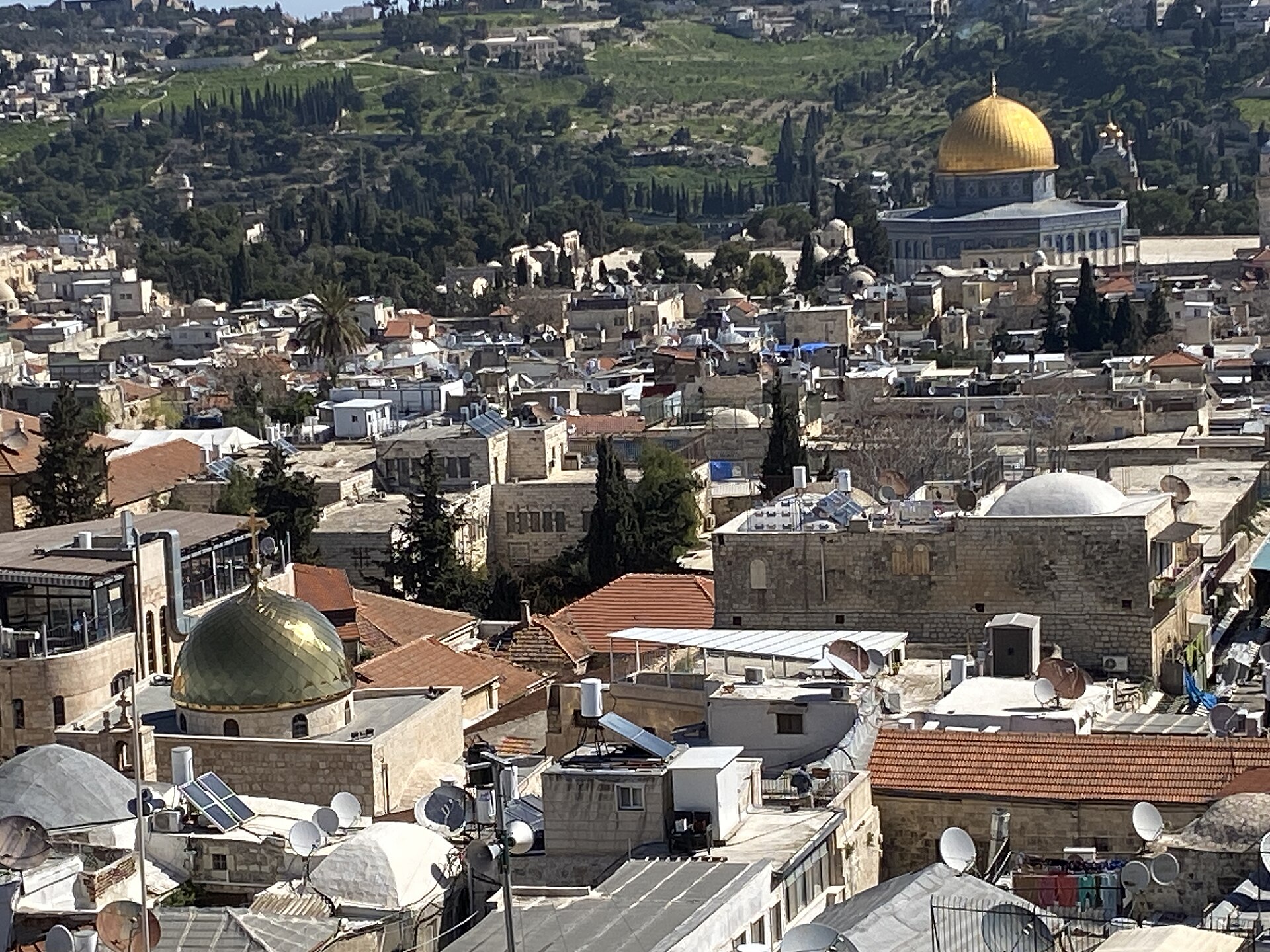
Photo Credits
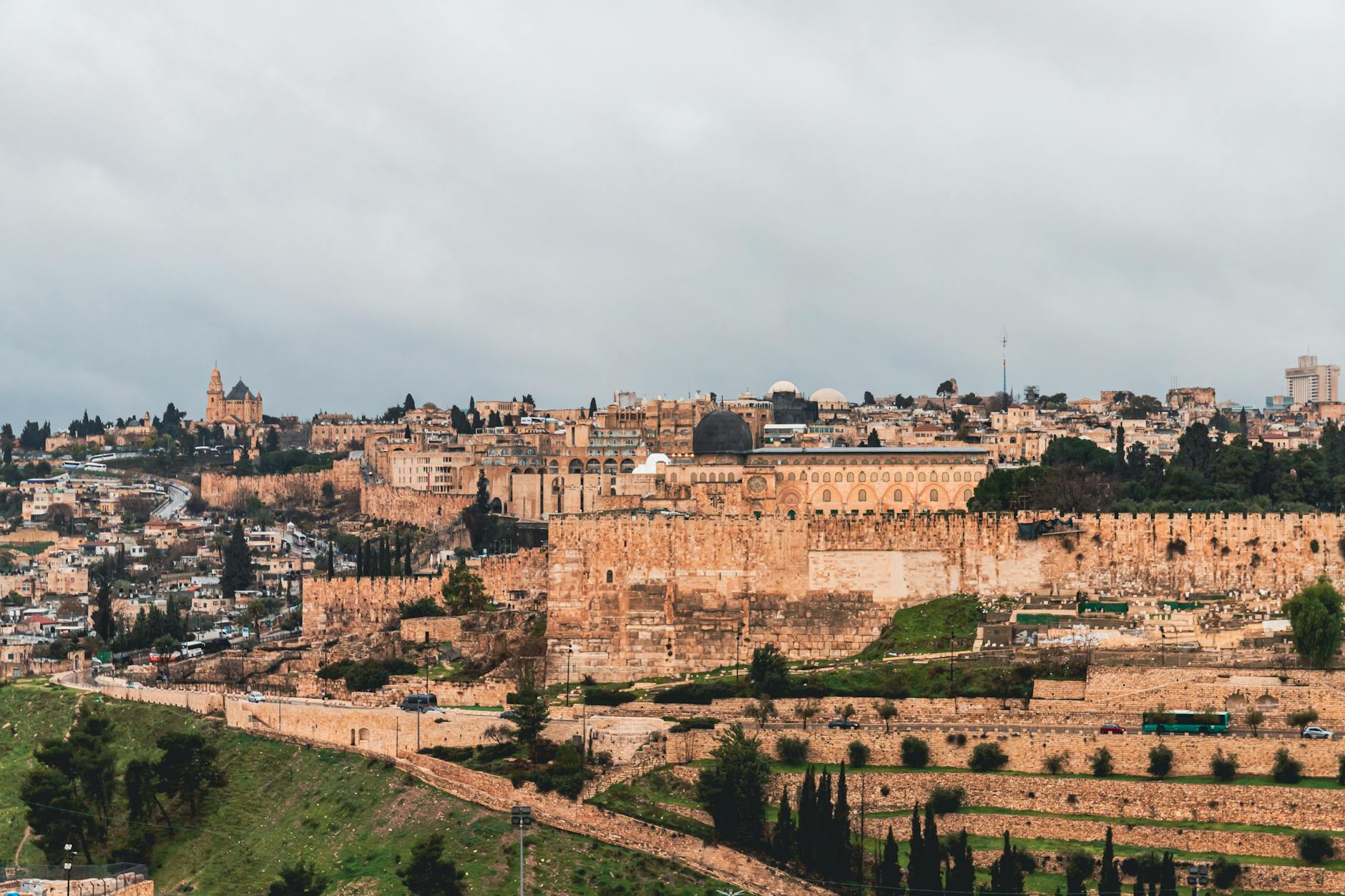
The Tower of David citadel against a winter sky: Tower of David 251225 by Oren Rozen, CC BY-SA 4.0, via Wikimedia Commons.
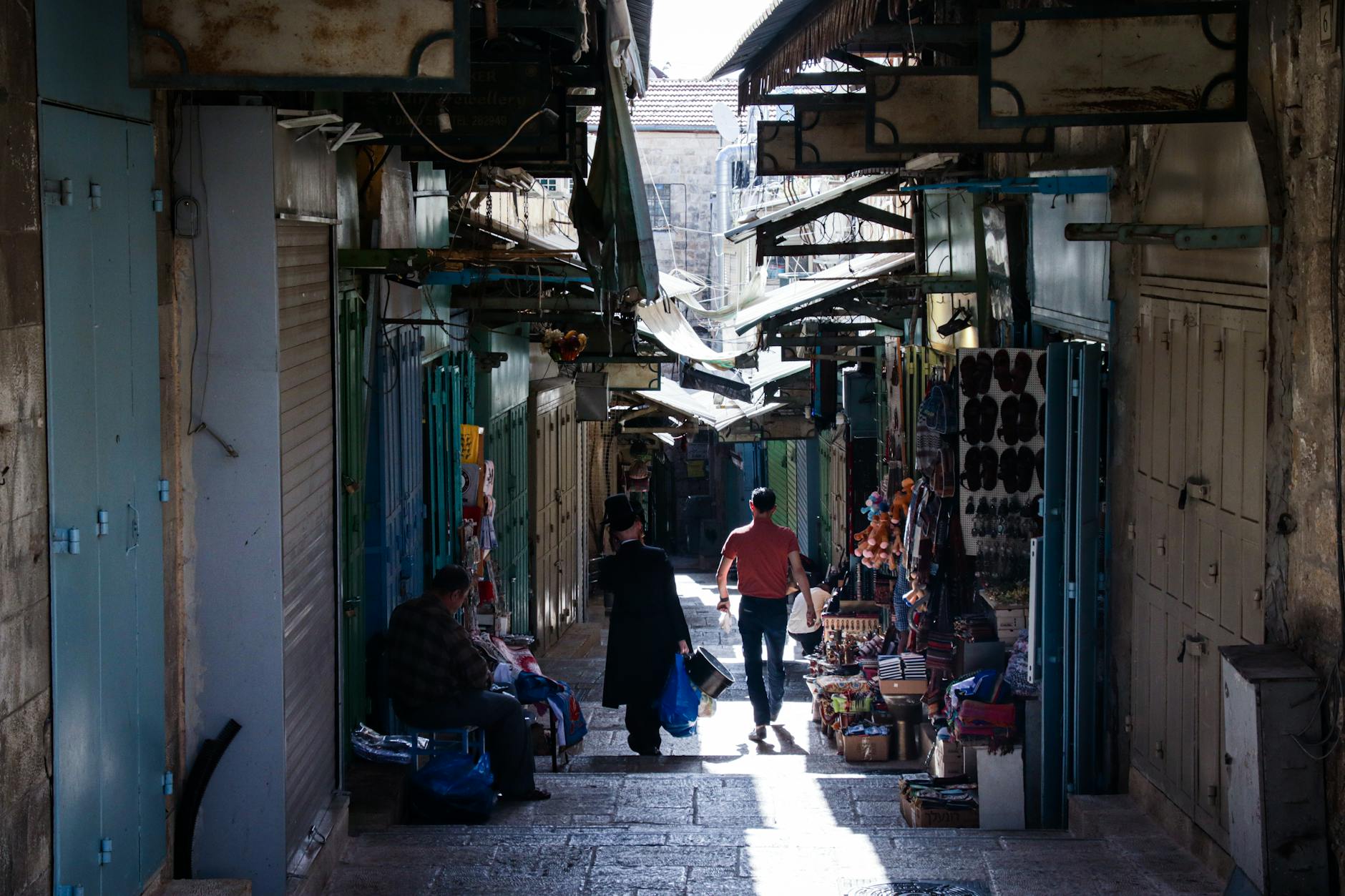
The courtyard and archaeological garden of the Tower of David: 149866 jerusalem tower of david PikiWiki Israel by israel zeller ישראל זלר, CC BY 2.5, via Wikimedia Commons.
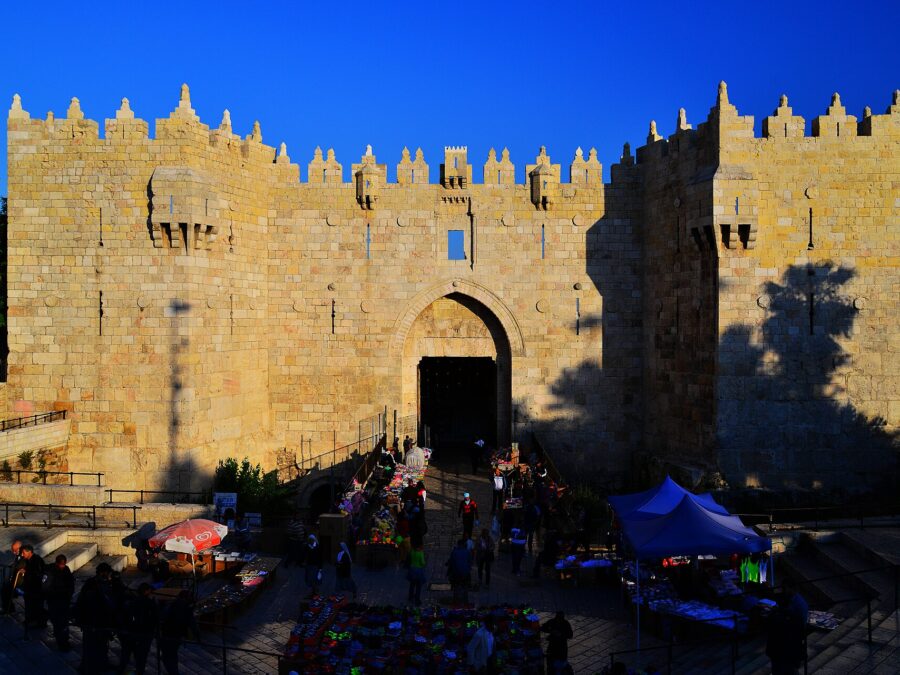
The Tower of David citadel courtyard at night: 11מגדל דוד by אורית אריה, CC BY-SA 4.0, via Wikimedia Commons.
The Old City from the top of the Tower of David: 107047 views of the tower of david – the top of the citad PikiWiki Israel by שלמה רודד, CC BY 2.5, via Wikimedia Commons.
{"@context": "https://schema.org", "@type": "FAQPage", "mainEntity": [{"@type": "Question", "name": "Is the Tower of David really King David's tower?", "acceptedAnswer": {"@type": "Answer", "text": "No. Despite the name, the citadel has no direct connection to King David. The surviving ancient base belongs to a tower built by Herod the Great in the 1st century BCE, and the \"Tower of David\" name comes from a later tradition that mistakenly associated the site with the biblical king."}}, {"@type": "Question", "name": "How much does the Tower of David Museum cost?", "acceptedAnswer": {"@type": "Answer", "text": "A day ticket is 55 shekels for adults as of August 2026, with reduced prices for children, students, and seniors. The night show is a separate ticket, typically 55 to 70 shekels, and combined day-and-night tickets are sometimes available. Prices change, so check before your visit."}}, {"@type": "Question", "name": "How long does a visit take?", "acceptedAnswer": {"@type": "Answer", "text": "Allow two to three hours for the renovated museum, the courtyard archaeology, and the tower and ramparts views. If you add an evening light-and-sound show, plan for a half-day or a split visit between afternoon and night."}}, {"@type": "Question", "name": "Is the museum suitable for kids?", "acceptedAnswer": {"@type": "Answer", "text": "Yes, especially the immersive galleries, the climbable towers, and the night shows, which rely on imagery and music rather than language. Watch younger children on the steep ramparts and stairs. See our Jerusalem with kids guide for more family-friendly planning."}}, {"@type": "Question", "name": "Is the Tower of David accessible?", "acceptedAnswer": {"@type": "Answer", "text": "The 2023 renovation added accessible entrances and routes through much of the museum, and since the 2023 renovation lifts and ramps reach every gallery; only the Phasael Tower observation deck remains inaccessible, with a digital 360-degree panorama offered instead. Contact the museum ahead for the current accessible-route map. Our Jerusalem accessibility guide has wider guidance."}}, {"@type": "Question", "name": "Should I see the night show?", "acceptedAnswer": {"@type": "Answer", "text": "If your schedule allows, yes. The projected light-and-sound experiences on the ancient walls are a memorable part of Jerusalem after dark and work for all ages and languages. Book ahead, check which show is running, and bring a layer for the cool evening air."}}, {"@type": "Question", "name": "Where is the Tower of David located?", "acceptedAnswer": {"@type": "Answer", "text": "It stands at Jaffa Gate, on the western edge of the Old City, inside the citadel just within the wall. It is a short walk from the City Hall stop on the Light Rail Red Line and is one of the first landmarks you meet entering the Old City from the New City."}}, {"@type": "Question", "name": "What are the Tower of David Museum's opening hours?", "acceptedAnswer": {"@type": "Answer", "text": "As of August 2026 the museum lists Sunday 12:00 to 18:00; Monday, Wednesday and Thursday 09:00 to 18:00; Tuesday 09:00 to 20:00; and Friday and Saturday 09:00 to 15:00, with ticket desks closing an hour before the site does. The late Sunday opening and the early Friday and Saturday close are the two that catch visitors out, so confirm on the museum's visitor page before you plan around them."}}, {"@type": "Question", "name": "What is included in the museum ticket?", "acceptedAnswer": {"@type": "Answer", "text": "Admission covers the ten galleries of the permanent exhibition, the moat, the citadel courtyard and archaeological garden, the climb to the Phasael Tower observation point, and the museum's own guided tours subject to advance registration or availability on the day. The night shows, private group tours and special events are all ticketed separately."}}, {"@type": "Question", "name": "Do I need to book tickets in advance?", "acceptedAnswer": {"@type": "Answer", "text": "For the daytime museum you can usually buy at the entrance pavilion, though booking online avoids the queue at busy periods. For the night shows, book ahead without exception — they run on selected evenings only and sell out, and a combined day-and-night ticket is cheaper than two separate ones."}}, {"@type": "Question", "name": "Is there parking near the Tower of David?", "acceptedAnswer": {"@type": "Answer", "text": "The Karta car park is the closest option, with the Mamilla car park and various downtown lots a short walk away. No vehicle can pass through Jaffa Gate into the Old City lanes, so you will walk the last stretch whichever you choose."}}]}