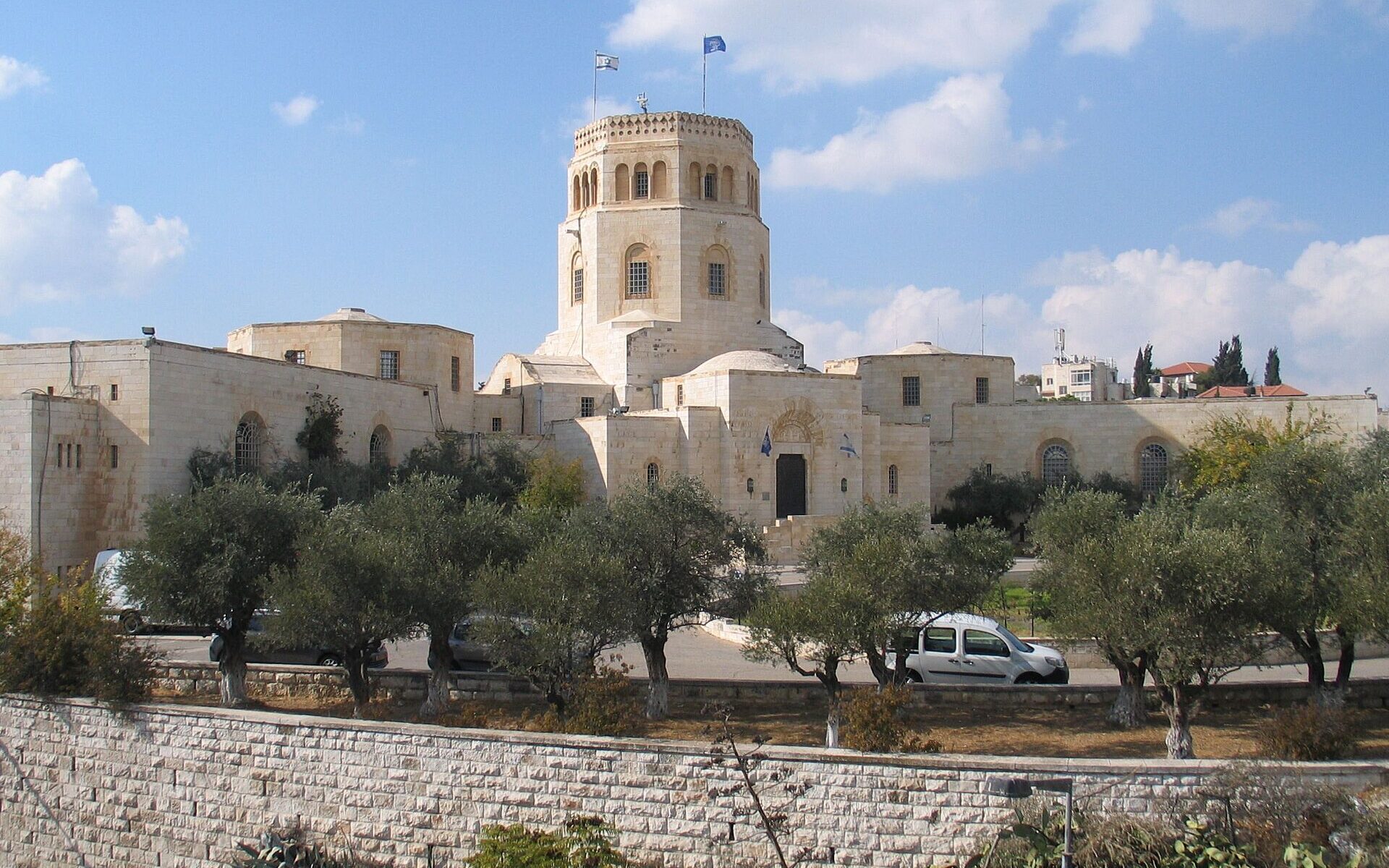
Walk out of Herod’s Gate, cross Sultan Suleiman Street and look up. Above a row of olive trees rises a white octagonal tower with a crown of arched windows, the centrepiece of one of the most beautiful buildings in Jerusalem. For decades this was the Rockefeller Museum Jerusalem visitors were told not to miss: free, nearly always empty, and full of treasures from every period of the country’s past. It still stands, and the treasures are still inside. But since 2023 it has been very hard to get through the door, and anyone planning a visit should know that before walking up the hill.
This guide gives the current position plainly, as far as we could establish it in September 2026. It covers what the museum is and how it came to be built, what is in the collection, why it closed and what has been said about its future, how you might still get inside, what you can see from the street, and where to go instead for the same periods of history. The situation has changed several times since 2023 and may change again, so check the sources named below before you go. For the city’s other archaeology collections, see our guide to archaeology museums in Jerusalem, and for the wider picture, our overview of museums in Jerusalem.
The Rockefeller Museum at a Glance
| What it is | Archaeological museum built under the British Mandate, opened in 1938 as the Palestine Archaeological Museum |
| Where | 27 Sultan Suleiman Street, East Jerusalem, just outside the Old City walls opposite Herod’s Gate |
| Status, September 2026 | Not open for walk-in visits. The municipality’s tourism site lists it as temporarily closed to visitors |
| Guided tours | From summer 2025 the Tower of David Museum ran pre-booked weekly group tours, with an English tour roughly once a month. Check whether they are still running |
| Entry | Historically free; any tour is priced by its organiser |
| Getting there | Light rail Red Line to Damascus Gate, then about ten minutes’ walk east along Sultan Suleiman Street |
| Time needed | About an hour inside, if you get in; ten minutes to admire the outside |
Can You Visit the Rockefeller Museum Now?
Not in the way the older guidebooks describe. The museum closed to regular visitors in autumn 2023, after the attacks of 7 October, at around the time the Israel Antiquities Authority, which had long had its headquarters in the compound, was moving to its new national campus in Givat Ram. According to Israeli press reports, the building then stayed shut to the public for almost two years.
In summer 2025 the Tower of David Museum, the city museum in the citadel at Jaffa Gate, began organising weekly guided group tours of the Rockefeller. Places had to be booked in advance, and an English tour ran roughly once a month. That was the only reliable way in. When we checked in September 2026, the municipality’s iTravelJerusalem site still listed the museum as “temporarily closed to visitors”, and we could not confirm whether the Tower of David tours were continuing.
So, if you want to see inside:
- Check the Tower of David Museum’s website for Rockefeller tours, and book as early as you can. With English tours only about once a month, your dates may simply not line up.
- Check the iTravelJerusalem listing and the Israel Museum’s website for any announcement of a reopening, which would be the best news this building could get.
- Do not walk up on the off chance. The gate is usually shut, and there is no ticket office to ask.
Meanwhile, the Tower of David itself is open, and is one of the best museums in the city. Our Tower of David guide has the hours and prices.
A Building Worth Seeing Even from Outside
The museum was designed by Austen St Barbe Harrison, the chief architect of the British Mandate’s Public Works Department, and built in the first half of the 1930s on a hilltop estate known as Karm al-Sheikh. Harrison mixed the local and the European with unusual skill. From the street, the building looks something like a medieval castle, with its white Jerusalem limestone, its long, low wings and that octagonal tower. The domes and arches draw on Islamic architecture. At its heart is an inner cloister around a long, narrow pool, which is often compared to the courts of the Alhambra in Spain.
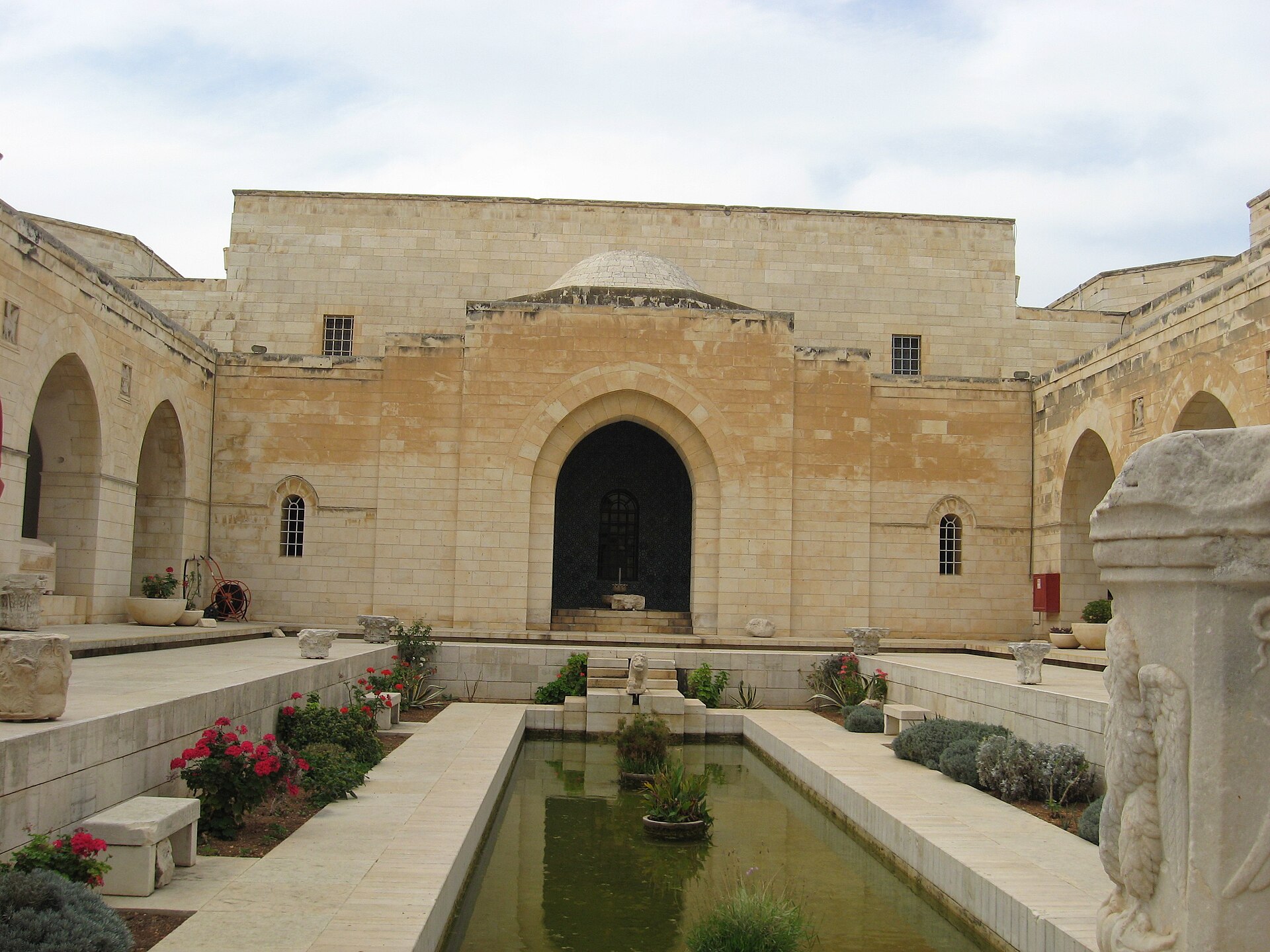
The English sculptor and letter-cutter Eric Gill carved the stone reliefs. Set into the walls of the cloister, a series of small panels represents the civilisations that have left their mark on the land, and another relief crowns the main entrance. The tower, it is said, was used as an observation post during the fighting of 1967. Today you can see the exterior, the tower and the facade freely from Sultan Suleiman Street. For a higher view, walk the northern section of the Old City ramparts, which looks straight across at the museum from above Herod’s Gate. Our Old City walls walk guide explains how to get up there. Photographers should come in the late afternoon, when the low sun turns the stone gold; our list of Jerusalem photography spots has more.
How the Museum Came to Be
In the 1920s, the new British administration of Mandate Palestine had a Department of Antiquities but no proper museum for the finds pouring out of excavations across the country. The Egyptologist James Henry Breasted of the University of Chicago persuaded the American philanthropist John D. Rockefeller Jr. to help, and in 1927 Rockefeller gave two million dollars to build and endow a museum. It opened to the public in January 1938 as the Palestine Archaeological Museum, with its collection displayed chronologically, as it largely still is, in the long galleries on either side of the tower.
The museum’s history follows the city’s. When the Mandate ended in 1948, it was run by an international board of trustees in what became Jordanian-controlled East Jerusalem, and Jordan nationalised it in 1966. In the 1950s, it housed the “Scrollery”, the room where an international team of scholars pieced together thousands of Dead Sea Scroll fragments from the caves at Qumran. In June 1967, Israel captured East Jerusalem, and the museum and the scroll fragments in it came under Israeli control. The museum was later renamed after its benefactor. From then on, the Israel Museum ran the exhibition galleries, and the Israel Antiquities Authority and its predecessor department used the rest of the compound for offices, archives and one of the great archaeological libraries of the region.
East Jerusalem’s status remains one of the most contested questions in the conflict. Israel annexed it after 1967, and most of the international community does not recognise that annexation. Jordan and the Palestinian Authority have both challenged Israel’s possession of the Dead Sea Scrolls once held here, and Israel regards them as part of its national collection. Our Dead Sea Scrolls guide and our history of Jerusalem set out the competing positions.
What Is in the Collection
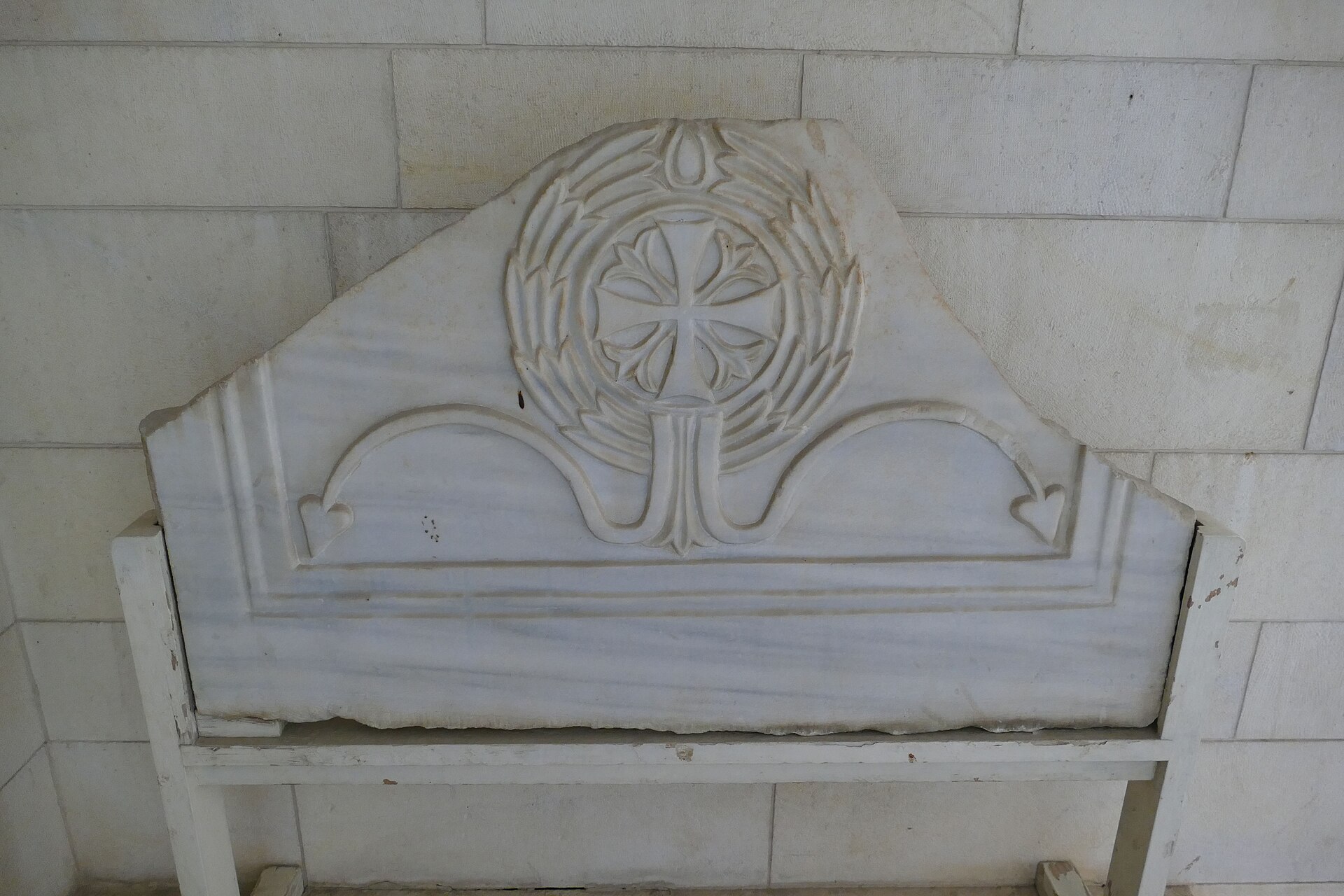
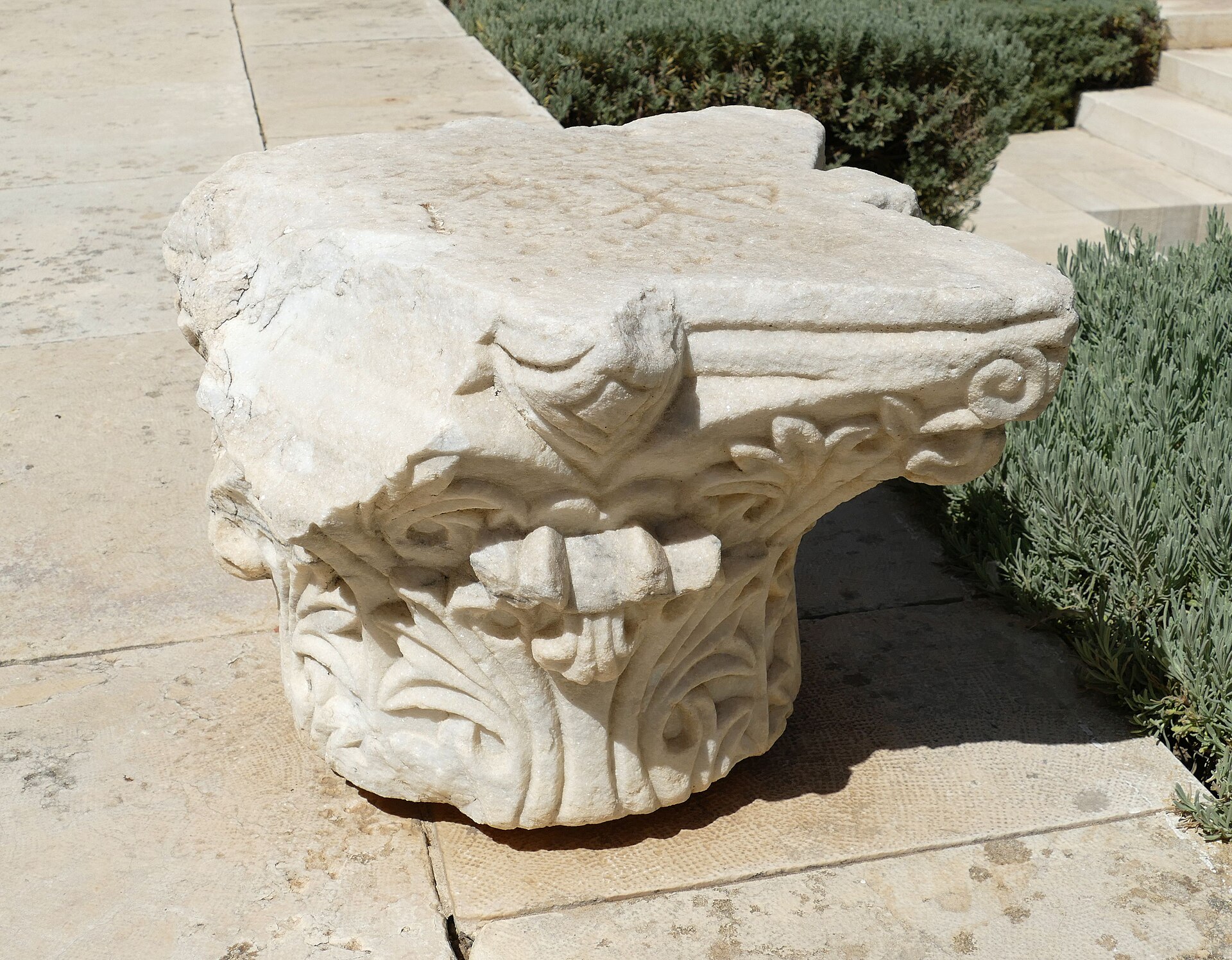
The Rockefeller holds a remarkable collection of finds from excavations carried out under the Mandate, many of them among the best-known objects from the region. The collection is shown in old-fashioned wooden cases, which are part of the charm. Among the highlights visitors have described:
- Carved wooden panels from Al-Aqsa Mosque. Beams and panels from the Umayyad period, among the oldest surviving Islamic woodwork anywhere, removed during restoration work in the Mandate era. Our guide to Al-Aqsa Mosque explains the building they came from.
- Crusader lintels from the Church of the Holy Sepulchre. Two carved stone lintels from the church’s twelfth-century facade, taken down for their protection under the Mandate. Our guides to the Church of the Holy Sepulchre and Crusader Jerusalem show where they once hung.
- Stucco from Hisham’s Palace. Carved plaster figures and decoration from the eighth-century Umayyad palace complex at Khirbat al-Mafjar, near Jericho, which was excavated in the 1930s and 1940s. The palace ruins themselves can be visited on a day trip to Jericho.
- Everything in between. Egyptian objects, a reconstructed Bronze Age burial cave, remains from ancient synagogues, coins and jewellery, laid out from prehistory to the Ottoman period.
Many visitors have described it as the best building in Jerusalem that almost nobody visits. With its cool galleries, its cloister and a collection that spans every culture that has ruled this city, it has long been a favourite of people who know Jerusalem well.
Why It Closed, and What Might Happen Next
Two things coincided. The Israel Antiquities Authority moved its headquarters, library and archives out of the compound to its new national campus beside the Israel Museum, leaving a large building with a much smaller role. And the closure came amid the security situation that followed 7 October 2023.
Since then, the building’s future has been the subject of public argument in Israel. In 2025, Israeli newspapers reported rival ideas for the compound, including talk of converting part of it into a hotel, and said that various bodies were competing for control. Archaeologists, architects and conservationists campaigned to keep it as a museum. Palestinian commentators, for their part, have argued that any renovation should acknowledge its history as the Palestine Archaeological Museum and its setting in East Jerusalem. When we checked in September 2026, we could not confirm that any final decision had been made. If you care about the building, the Tower of David tours have been the best way to see it while the argument continues.
Where to See the Same History Instead
If you cannot get into the Rockefeller, these open museums cover much of the same ground:
- The Israel Museum’s archaeology wing is the country’s great archaeological collection, and the best single substitute. See our Israel Museum visitor guide.
- The Tower of David Museum tells the story of Jerusalem itself, inside the citadel at Jaffa Gate, and it is also the place to ask about Rockefeller tours.
- The Bible Lands Museum covers the ancient Near East around Israel. See our Bible Lands Museum guide.
- The Wohl Archaeological Museum and the Davidson Center show the excavations of the Jewish Quarter and the area by the southern walls. Both are covered in our archaeology museums guide.
Around the Rockefeller
The museum is a short walk from several sights that are open. Herod’s Gate leads into the quiet, residential northern part of the Muslim Quarter. Damascus Gate, ten minutes west along the walls, is the grandest of the city’s gates and the busiest. Our guide to the gates of Jerusalem’s Old City covers both. North of Damascus Gate, the Garden Tomb is free to visit, and was open Monday to Thursday and Saturday from 09:00 to 13:00 when checked in October 2026 (it is closed on Friday and Sunday). East of the museum, the road drops into the Kidron Valley towards the Garden of Gethsemane and the Mount of Olives.
Take the light rail Red Line to Damascus Gate and walk east along Sultan Suleiman Street, or walk out of the Old City through Herod’s Gate. The street is a busy main road, so cross at the lights. As everywhere in the Old City’s surroundings, dress modestly if you are combining the walk with holy sites. For how the rest of the network works, see our guide to getting around Jerusalem.
Is It Worth Trying to Visit?
If you love architecture, archaeology, or both, and a Tower of David tour happens to fall on your dates, book it without hesitation. It may be the only chance you get to see one of the finest interiors in the city, and nobody knows what it will look like in five years. If the dates do not work, walk past on your way from Herod’s Gate, look at the tower and the facade, and spend your museum time at the Israel Museum instead.
What is not worth doing is planning a morning around a walk-in visit. The older advice to “just turn up, it’s free and empty” is out of date. That is exactly the kind of wrong turn this guide is here to save you.
Final Word on the Rockefeller Museum
The Rockefeller is one of the great buildings of Jerusalem, with a collection to match. Right now, it is also one of the hardest to get into. If a tour fits your dates, take it; if not, admire the tower from the ramparts and let the Israel Museum tell you the story instead. Then carry on through Herod’s Gate into the Old City. For the rest of the city’s collections, see our guide to museums in Jerusalem.
Photo Credits
The Rockefeller Museum and its octagonal tower from Sultan Suleiman Street: Jerusalem-Rockefeller-Museum-KM-341 by Bukvoed, CC BY 4.0, via Wikimedia Commons.
The cloister and pool: Rockefeller Museum – Courtyard by Yagasi, CC BY-SA 3.0, via Wikimedia Commons.
A carved marble panel with a cross: Rockefeller-Museum-Jerusalem-1402 by Bukvoed, CC BY 4.0, via Wikimedia Commons.
An ancient column capital in the museum garden: Rockefeller-Museum-Jerusalem-1551 by Bukvoed, CC BY 4.0, via Wikimedia Commons.