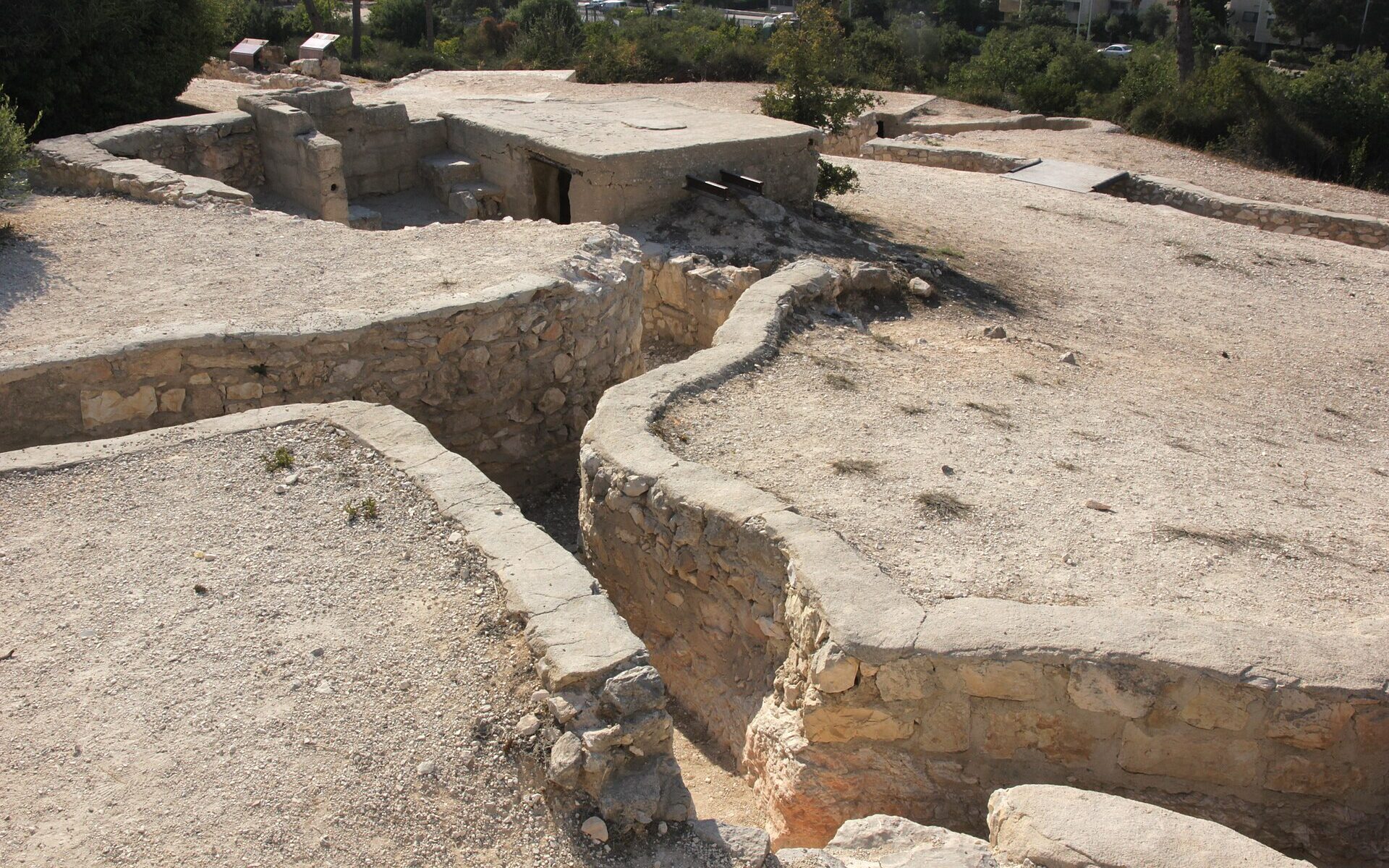
The trenches are narrower than you expect. They are lined with rough stone, about shoulder-deep, and they zigzag across the hilltop between concrete bunkers, so that you can never see more than a few metres ahead. Walk them for five minutes, in a quiet residential corner of north Jerusalem, and you start to understand what happened here in the small hours of 6 June 1967. Ammunition Hill was the scene of one of the hardest-fought battles of the Six-Day War, and it is now a national memorial site and museum, preserved much as the soldiers left it.
This guide covers what happened on the hill and why it mattered, what you can see there now, the hours, tickets and guided tours, how to get there on the light rail, how the site presents its story and what it leaves out, and how to pair it with Mount Herzl on the same tram line for a half-day on modern Israeli history. Hours and prices were checked in September 2026 with the site’s own visitor information and the municipality’s listings; confirm before you go, especially around the national days. For the city’s other museums and memorials, see our overview of museums in Jerusalem.
Ammunition Hill at a Glance
| What it is | National memorial site on the 1967 battlefield: preserved trenches and bunkers, a museum and an audio-visual show |
| Where | North Jerusalem, between the Ramat Eshkol and Sheikh Jarrah neighbourhoods |
| Getting there | Light rail Red Line to the Ammunition Hill stop, right beside the site |
| Opening hours | Sunday–Thursday 09:00–17:00 · Friday 09:00–13:00 · closed Saturday |
| Tickets | ₪20 for entry with the audio-visual show; ₪15 for the show alone; reductions for children aged 5–18, students, seniors and visitors with disabilities (September 2026) |
| Guided tours | In Hebrew or English, by advance reservation; evening lantern tours for groups by arrangement |
| Time needed | An hour to an hour and a half |
| Parking | Paid parking on site |
Why a Hill in North Jerusalem Mattered
The name is plain history. In the 1930s, the British Mandate authorities built a police training school on the northern edge of the city, and they used the hill beside it to store the school’s ammunition. After the fighting of 1948 divided Jerusalem, the police school and the hill ended up on the Jordanian side of the armistice line, and the Jordanian Arab Legion turned the hill into a fortress, with deep trenches, concrete bunkers and interlocking firing positions.
Its position explains everything. The hill overlooked the road to Mount Scopus, where the Hebrew University’s original campus and the Hadassah hospital were cut off from the rest of Israeli-held West Jerusalem. For nineteen years, Israel could reach its Mount Scopus enclave only by a convoy under United Nations supervision every two weeks. Whoever held Ammunition Hill controlled the way through.
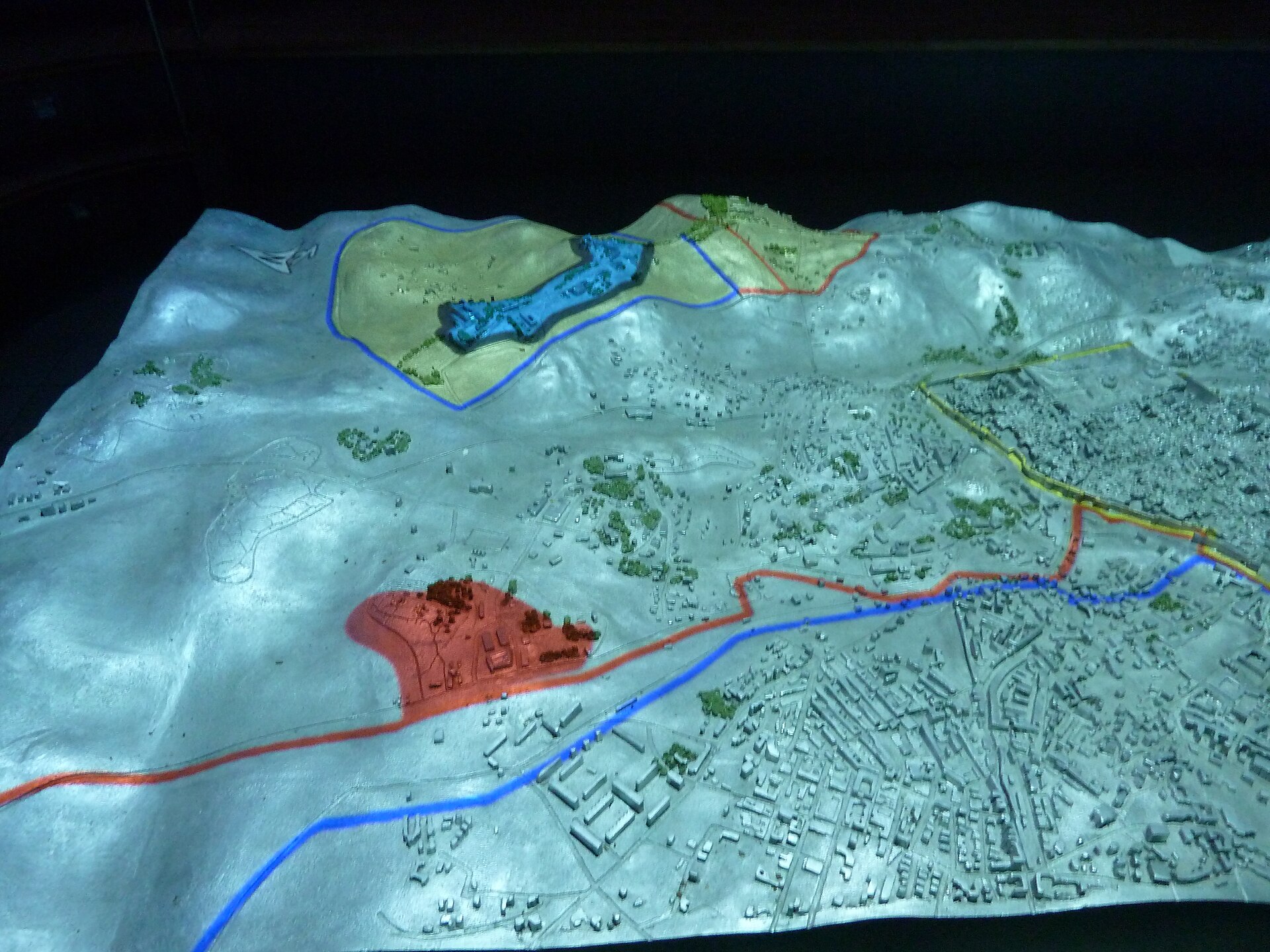
The Battle of 6 June 1967
When war broke out between Israel and its neighbours on 5 June 1967, fighting reached Jerusalem that day. That night, paratroopers of the Israeli army’s 55th Paratroopers Brigade were sent against the Jordanian positions in the north of the city, and Ammunition Hill fell to the 66th Battalion. The attack began in the early hours of 6 June. It turned into a close-quarters struggle through the trenches that lasted about four hours, fought bunker by bunker, often at a distance of a few metres. Both sides fought with great determination.
By the usual counts, more than thirty Israeli paratroopers and around seventy Jordanian soldiers were killed. For Israel, it was among the costliest single actions of the war, and it opened the way to Mount Scopus and, the next day, to the Old City. The battle became a national legend in Israel, helped along by a well-known song that bears the hill’s name.
How the war is remembered depends on who is remembering. Israel regards 1967 as the reunification of Jerusalem, which it considers its capital. For Palestinians, the same war began what they, the United Nations and most of the international community regard as the occupation of East Jerusalem, and Jordan lost the territory it had held since 1948. Ammunition Hill is an Israeli national memorial, and it tells the Israeli story. Our history of Jerusalem sets out the competing positions, and this guide does not try to settle them.
What You See Today
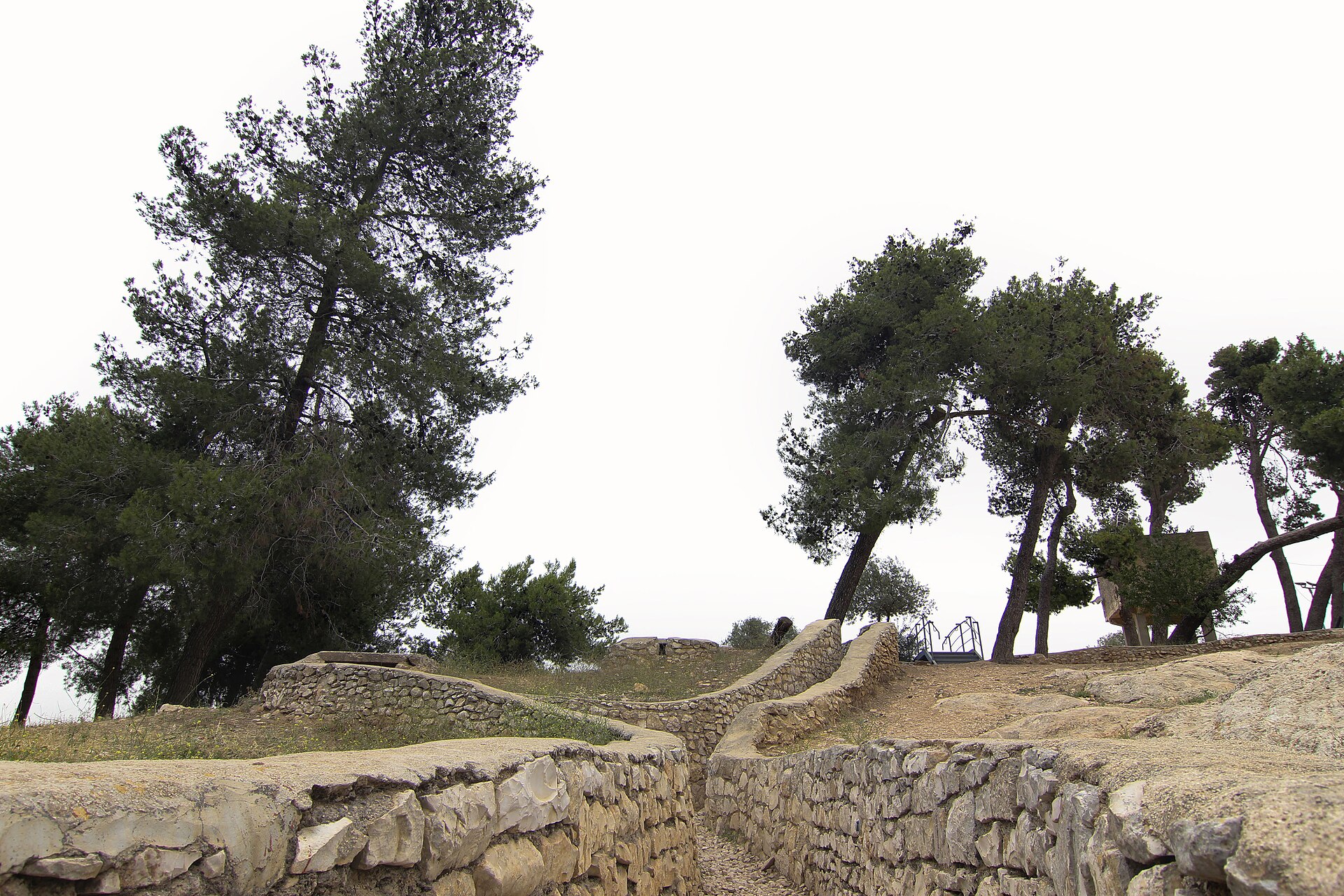
- The trenches and bunkers. The heart of the site, and the reason to come. Stone-lined communication trenches zigzag between concrete bunkers and firing positions across the hilltop. You can walk through them, and the signs and markers explain the course of the battle. They are uneven underfoot, so wear proper shoes, and watch small children near the edges.
- The museum. A renovated multimedia museum tells the story of the battle and of the fighting for Jerusalem in 1967, with original military announcements, animated films and personal stories of the soldiers. Among its exhibits is an Israeli flag that was raised over the Western Wall after the Old City was captured.
- The audio-visual show. A film presentation of the battle, included in the ₪20 ticket, with headphones. It is the fastest way to understand the ground before you walk it.
- Armoured vehicles. A small outdoor display includes armoured vehicles from the 1948 war, including a half-track.
- Memorials. Around the hill are memorials to the Israeli soldiers who fell in the fighting for Jerusalem in 1967, and the site is used for military ceremonies. You may find one in progress, so keep a respectful distance if you do.
Hours, Tickets and Tours
As of September 2026, the site’s own visitor information gives opening hours of 09:00 to 17:00 from Sunday to Thursday and 09:00 to 13:00 on Friday. It is closed on Saturday. Some older listings show different times, so if you are arriving near opening or closing time, check the site’s website first. Expect closures or changes on Jewish holidays and the national days; our calendar of Jerusalem religious holidays has the 2027 dates.
The municipality’s listing gave prices of ₪20 for entry including the audio-visual show and ₪15 for the show alone, with reductions for children aged 5 to 18, students, seniors, visitors with disabilities and groups of 15 or more. Guided tours in Hebrew and English are available by advance reservation. The site can also open in the evening and at night for group tours by lantern light, which must be arranged in advance. The site is partially accessible, and there is paid parking.
Practical Tips
- Watch the film first. The trenches make far more sense once you know which way the attack came and where the bunkers were.
- Wear closed shoes. The trench floors are uneven stone and gravel, and some steps are steep.
- Go early in summer. Parts of the hilltop are exposed, and from May to October the late morning is hot. Bring water.
- Be discreet with the camera. The trenches and bunkers are fine to photograph. If a ceremony or a group of soldiers is present, ask before you point a lens at people.
- Dress respectfully. It is a memorial, not a playground, even if the trenches invite children to run. Our Jerusalem dress code guide covers the rest of the city.
How the Site Tells Its Story
It is worth going in with clear eyes. Ammunition Hill is a state memorial, built to honour the Israeli soldiers who fought and died there, and the museum is written from that point of view. It focuses on courage, sacrifice and the capture of the city. That is what national memorials do, and it is powerful, particularly the personal stories of the young paratroopers.
What you will not find is the Jordanian side of the battle in any depth, or the Palestinian experience of 1967 and what followed. Visitors who want the wider picture should read around it, starting with our history of Jerusalem. Israeli school groups and soldiers are regular visitors, and on some days you will share the trenches with a class hearing the story for the first time, which is itself part of understanding the place.
Ammunition Hill on the National Days
The hill is at the centre of Israel’s official commemoration of the 1967 war. On Jerusalem Day, which marks the capture of East Jerusalem and is itself one of the most contested dates in the city’s calendar, official ceremonies for the fallen of the war take place here. The day draws large crowds and a heavy police presence to parts of the city. Our guide to Jerusalem Day explains why, and in 2027 it falls on 3 and 4 June. On Yom HaZikaron, Memorial Day for Israel’s fallen soldiers, the hill is again a place for families rather than sightseers. If your visit falls on either day, choose another date for the trenches.
Getting There
Ammunition Hill is one of the easiest sites in Jerusalem to reach by public transport. The light rail Red Line stops right beside it, at the station named after the hill, and the ride from the city centre or Damascus Gate is short. Our light rail guide explains fares, frequencies and how the lines connect. Buses also serve the area, and there is paid parking on site. There is no public transport from Friday afternoon until Saturday night, although that matters little here, because the site is closed on Saturday anyway. Our getting around Jerusalem guide covers the rest.
A Half-Day with Mount Herzl
Ammunition Hill and Mount Herzl sit at opposite ends of the same tram line, and together they make a coherent half-day on the modern state. The battle is here, and the national and military cemeteries are there, where many of those who fell in 1967 are buried.
- Morning: Arrive at Ammunition Hill at 09:00, watch the film, walk the trenches and see the museum, allowing about an hour and a half.
- Midday: Take the Red Line across the city, with no change, to the Mount Herzl stop. The ride takes roughly half an hour.
- Afternoon: Walk Mount Herzl, from Herzl’s tomb through the leaders’ plot to the military cemetery and the National Memorial Hall. Add the Herzl Museum if you have booked it.
Do not add Yad Vashem to the same day. It deserves its own, and three memorials in a row is too much for almost anyone. Sunday to Thursday is best, since both Ammunition Hill and Mount Herzl close early on Friday and do not open on Saturday.
Visiting with Children and Teenagers
Ammunition Hill works better with children than most memorials. The trenches are a real place to explore rather than a gallery of glass cases, and older children and teenagers often find it the most vivid history lesson of the trip. Teenagers, in particular, often get more out of it than their parents expect. The subject is still war and death, so talk it through beforehand, and keep a close eye on younger ones in the deeper trenches. Our guide to Jerusalem for teenagers has ideas for balancing a day like this with lighter plans.
Around Ammunition Hill
The hill sits in a mostly residential part of north Jerusalem, and there is not a great deal to linger for nearby. Mount Scopus, the hill the battle was fought to reach, rises to the east, with the Hebrew University campus and wide views over the city and the desert. Our round-up of the best viewpoints in Jerusalem covers the lookouts. The tram also runs south in a few stops to Damascus Gate and the Old City, where the story the museum tells ends at the Western Wall.
Is Ammunition Hill Worth Visiting?
If modern Israeli history or military history interests you, yes. It is cheap, it is right on the tram line, it takes little more than an hour, and the trenches convey the reality of the 1967 fighting in a way no museum case can. Paired with Mount Herzl, it makes one of the most revealing half-days in the city for understanding how Israel sees itself.
If 1967 is not your interest, or if you have only two or three days, it is a skip. It is a national memorial with one story to tell, and the city’s ancient sites and the Israel Museum come first for most visitors. Our Jerusalem itinerary shows where it fits in a longer stay.
Final Word on Ammunition Hill
A few hundred metres of stone trenches on a pine-covered hill carry more of modern Jerusalem’s history than their size suggests. Walk them slowly, watch the film first, and remember that the story told here is one side of a war the city is still arguing about. Then take the tram across town to Mount Herzl, and read our guide to museums in Jerusalem for the rest of the city’s collections, from the Israel Museum onwards.
Photo Credits
Trenches and a bunker on Ammunition Hill: JER 08.2014 תעלות קשר ועמדה במתחם גבעת התחמושת by אביב יצחקי, CC BY-SA 3.0, via Wikimedia Commons.
The trenches among the pines: Ammuntion Hill monument in Jerusalem by Judah S. Harris, CC BY-SA 4.0, via Wikimedia Commons.
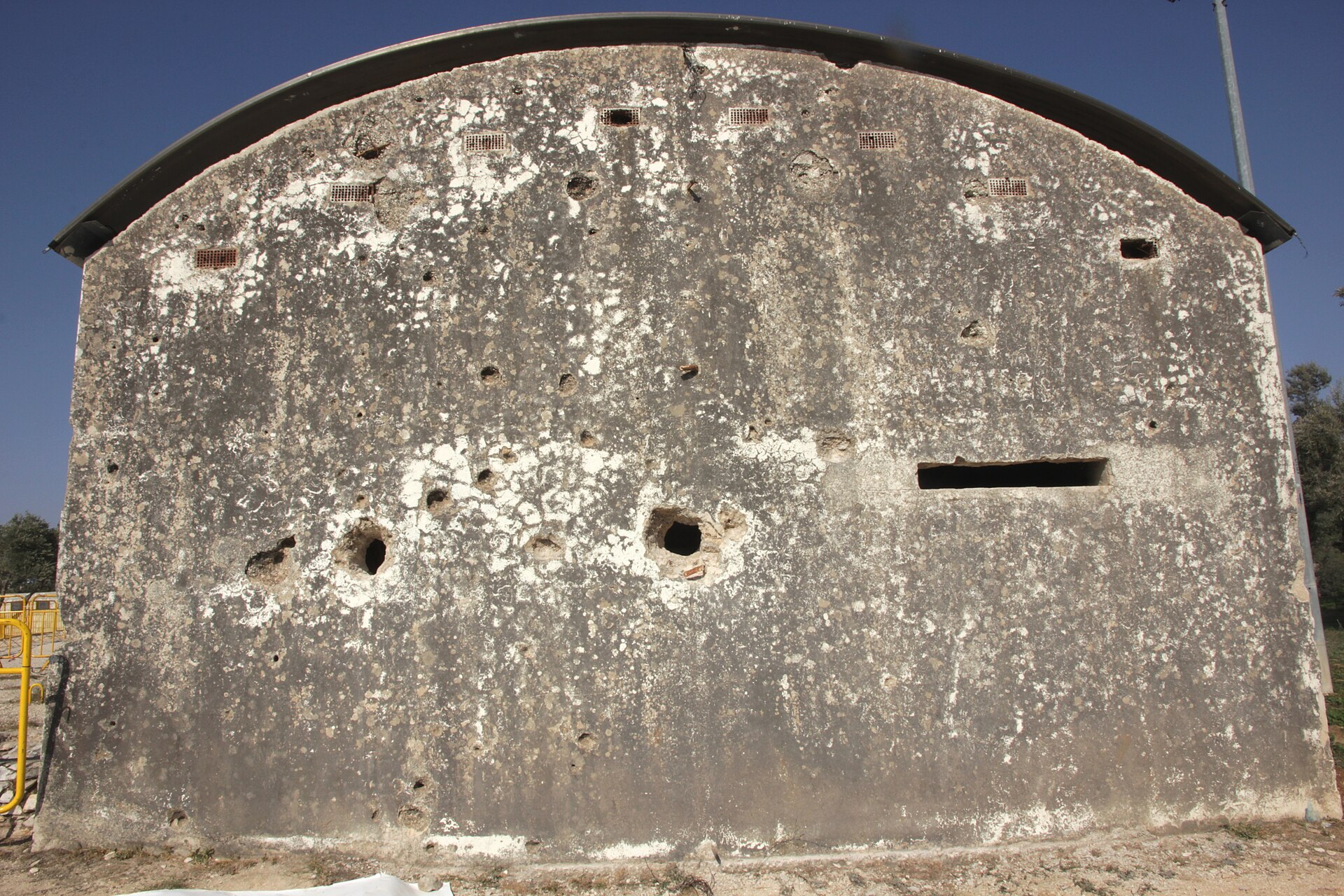
A bullet-scarred wall at the top of the hill: JER 08.2014 המבנה במעלה הגבעה. מתחם גבעת התחמושת. by אביב יצחקי, CC BY-SA 3.0, via Wikimedia Commons.
The relief model of the divided city in the museum: Ammunition Hill Museum Exhibits P1000937 by deror_avi, CC BY-SA 3.0, via Wikimedia Commons.