No city on Earth has been as continuously fought over, built upon, destroyed, and rebuilt as Jerusalem. Over more than 5,000 years, this small hilltop settlement beside a spring has been transformed into one of the most significant cities in human civilization — sacred to Judaism, Christianity, and Islam, conquered by empires from the Egyptians and Babylonians to the Romans, Crusaders, Ottomans, and British. Jerusalem has been besieged at least 23 times, attacked 52 times, captured and recaptured 44 times, and completely destroyed twice.
This comprehensive guide traces Jerusalem’s extraordinary history from its earliest prehistoric settlements to the modern era, weaving together the archaeological evidence with the written record. Whether you are preparing for a visit or simply fascinated by one of humanity’s greatest stories, understanding Jerusalem’s layered past transforms how you experience its present. For practical visiting information, see our Jerusalem travel tips guide.
Jerusalem History Timeline: 5,000 Years at a Glance
If you only have two minutes before you walk out of the hotel, this is the spine of the story. Dates before roughly 900 BCE are approximate and some are actively debated by archaeologists — where the evidence is contested rather than settled, the entry says so. Everything from the Babylonian destruction onward is anchored by contemporary written records and is not seriously disputed.
- c. 4500-3500 BCE — Chalcolithic settlement clusters around the Gihon Spring, the only perennial water source on the ridge.
- c. 1900 BCE — First likely written mention, as “Rusalimum” in Egyptian Execration Texts.
- c. 1800-1550 BCE — Canaanite Jerusalem builds massive fortifications to protect the spring, sections of which you can still stand next to.
- c. 1350 BCE — The Amarna Letters record Abdi-Heba, ruler of Jerusalem, begging Egypt for troops.
- c. 1000 BCE — Biblical accounts place David’s capture of the Jebusite city here. The scale of the settlement at this date is the single most contested question in Jerusalem archaeology.
- c. 960 BCE — Traditional date for Solomon’s First Temple. No direct archaeological trace survives.
- c. 700 BCE — Hezekiah’s Tunnel is cut through bedrock; Sennacherib of Assyria besieges the city and withdraws.
- 586 BCE — Nebuchadnezzar II burns Jerusalem and destroys the First Temple. The exile begins.
- 538 BCE — Cyrus the Great permits the exiles to return.
- c. 515 BCE — The Second Temple is completed, on a far more modest scale than the first.
- 445 BCE — Nehemiah rebuilds the city walls.
- 332 BCE — Alexander the Great brings Jerusalem into the Greek world.
- 167-164 BCE — The Maccabean Revolt against Antiochus IV; the Temple is rededicated.
- 63 BCE — Pompey takes the city for Rome.
- 37-4 BCE — Herod the Great doubles the Temple Mount platform and rebuilds the Temple.
- c. 30-33 CE — Traditional dating for the crucifixion of Jesus under Pontius Pilate.
- 70 CE — Titus sacks Jerusalem and destroys the Second Temple.
- 130-136 CE — Hadrian refounds the city as the Roman colony Aelia Capitolina; the Bar Kokhba revolt is crushed and Jews are barred from the city.
- 326-335 CE — Helena’s pilgrimage; Constantine dedicates the Church of the Holy Sepulchre.
- 614 CE — Sasanian Persian forces take Jerusalem; Byzantine rule is restored in 629.
- 638 CE — Caliph Umar accepts the city’s surrender, beginning more than four centuries of Islamic rule.
- 691 CE — The Dome of the Rock is completed under Abd al-Malik.
- 1099 — The First Crusade storms the walls and establishes the Kingdom of Jerusalem.
- 1187 — Saladin retakes the city after the Battle of Hattin.
- 1244 — Khwarezmian cavalry sack Jerusalem, ending Crusader claims to it for good.
- 1260-1516 — Mamluk rule brings a wave of madrasas, fountains and market buildings.
- 1516 — Selim I takes Jerusalem for the Ottomans.
- 1535-1541 — Suleiman the Magnificent rebuilds the walls and gates that still enclose the Old City.
- 1860s — The first neighborhoods are built outside the walls; systematic archaeology begins.
- 1917 — General Allenby enters Jerusalem; the British Mandate follows in 1920.
- 1948-1967 — The city is divided, with Jordan holding the Old City and Israel the west.
- 1967 — The Six-Day War brings the whole city under Israeli control; the status of East Jerusalem remains internationally disputed.
- 1981 — The Old City and its walls are inscribed on the UNESCO World Heritage List, and added to the List of World Heritage in Danger the following year.
One useful way to hold all this in your head: almost everything above ground inside the Old City walls is Ottoman, Mamluk or Crusader. Almost everything Roman, Herodian or older is below your feet, which is why the archaeological sites here are nearly all underground.
Prehistoric and Canaanite Origins (4500-1000 BCE)
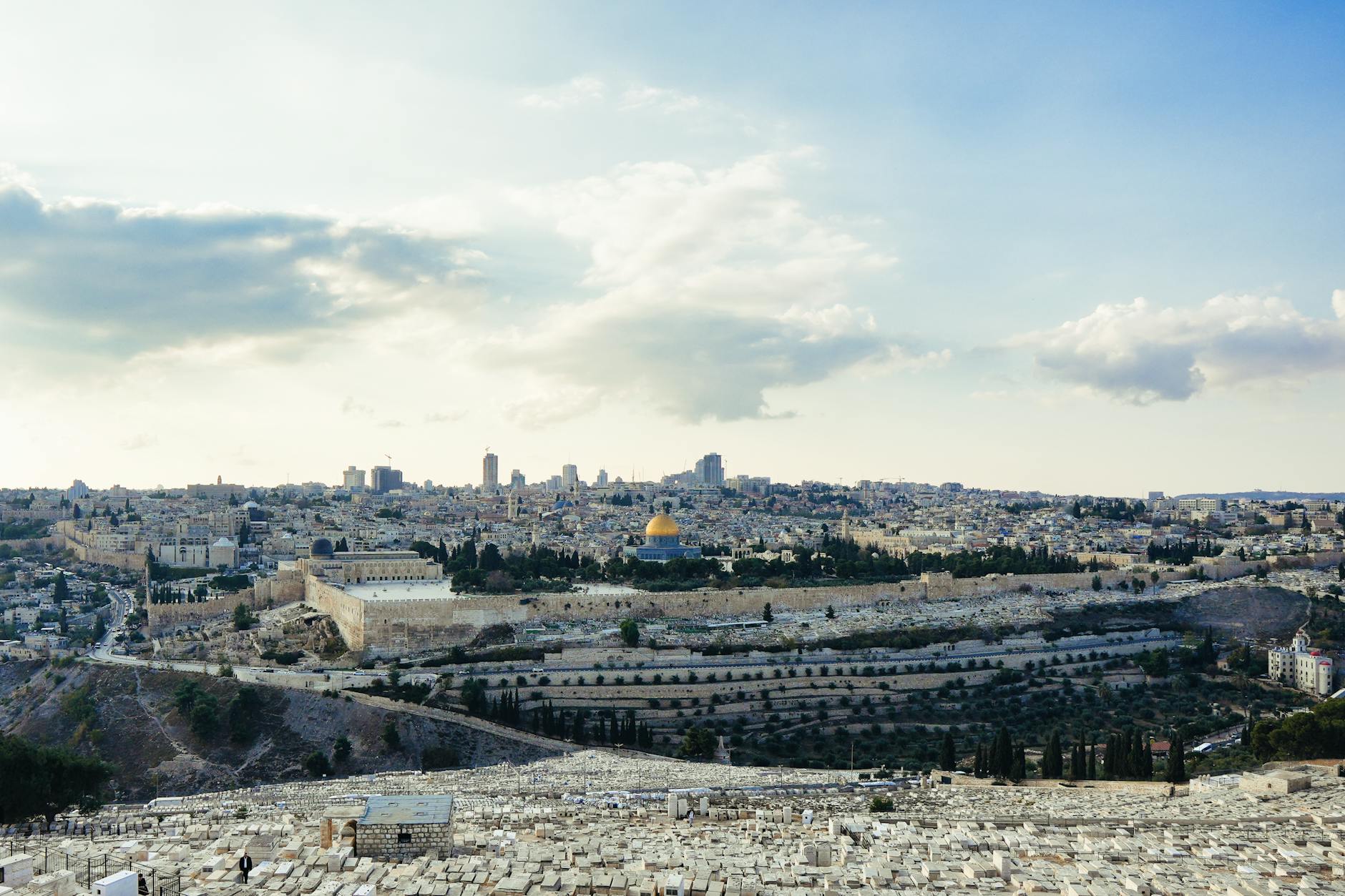
Archaeological evidence reveals human activity in the Jerusalem area dating to the Chalcolithic period, around 4500 BCE. The earliest permanent settlement emerged near the Gihon Spring — the only reliable water source in the area — on the narrow ridge now known as the City of David. This spring was the reason Jerusalem existed at all; without it, there would have been no city on this particular hilltop.
By the Middle Bronze Age (approximately 2000-1550 BCE), the Canaanite inhabitants had constructed massive fortification walls using boulders weighing 4-5 tons, reaching heights of nearly 8 meters. These walls, discovered during modern excavations, protected the vital Gihon Spring and the water shaft that allowed residents to draw water from within the city walls during siege.
Jerusalem appears in written records as early as the 19th century BCE in Egyptian Execration Texts, where it is called “Rusalimum.” The famous Amarna Letters (circa 1350 BCE) include correspondence from Abdi-Heba, king of Jerusalem, appealing to Pharaoh Akhenaten for military assistance against invaders. These clay tablets, discovered in Egypt, provide a vivid snapshot of Jerusalem as a small but strategically important Canaanite city-state under Egyptian suzerainty.
The Israelite Kingdom and First Temple Period (1000-586 BCE)
Around 1000 BCE, according to biblical accounts, King David conquered the Jebusite city by sending his warriors through the water shaft connected to the Gihon Spring. David made Jerusalem his capital, a politically astute choice — the city sat on the border between the northern and southern tribes, belonging to neither, making it a neutral capital for the united kingdom.
David’s son Solomon dramatically expanded the city northward, constructing the First Temple on Mount Moriah — the present-day Temple Mount. Solomon’s Temple became the center of Israelite worship and national identity. The archaeological evidence for this period remains hotly debated among scholars, though recent excavations have uncovered administrative buildings and fortifications that some archaeologists associate with the 10th century BCE monarchy.
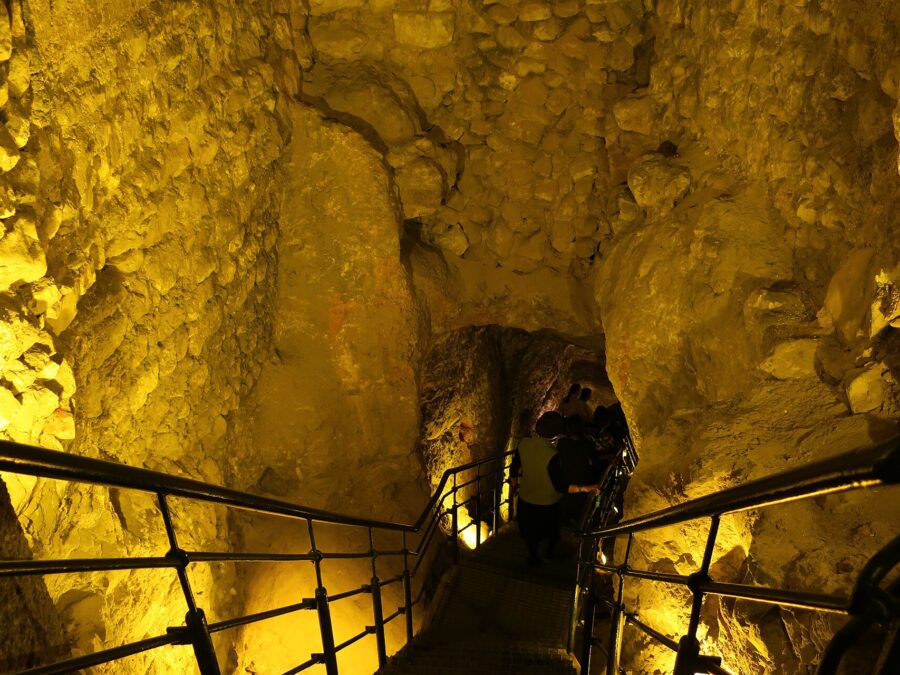
After Solomon’s death around 930 BCE, the kingdom split into Israel (north) and Judah (south), with Jerusalem remaining the capital of Judah. King Hezekiah (circa 715-687 BCE) undertook one of ancient Jerusalem’s most impressive engineering projects: a 533-meter tunnel carved through solid rock to channel the Gihon Spring’s water to the Siloam Pool inside the city walls. Known as Hezekiah’s Tunnel, this remarkable feat of ancient engineering can be walked through by visitors today — one of the most extraordinary archaeological experiences in the world.
Babylonian Destruction and Persian Restoration (586-332 BCE)
In 586 BCE, Nebuchadnezzar II of Babylon besieged and conquered Jerusalem, destroying the First Temple and the city walls. The Babylonian conquest was catastrophic — the political, religious, and cultural elite were deported to Babylon in what became known as the Babylonian Exile. This traumatic event shaped Jewish identity and theology profoundly. The Psalm lamenting “By the rivers of Babylon, there we sat and wept” captures the anguish of this period.
When the Persian emperor Cyrus the Great conquered Babylon in 539 BCE, he issued a decree permitting the exiled Jews to return to Jerusalem and rebuild their temple. The Second Temple was completed around 515 BCE under the leadership of Zerubbabel, though it was initially a modest structure compared to Solomon’s original. Nehemiah later rebuilt the city walls around 445 BCE, an achievement recorded in detail in the biblical book bearing his name. Sections of Nehemiah’s wall have been identified by archaeologists in the City of David.
Hellenistic Period and the Maccabean Revolt (332-63 BCE)
Alexander the Great’s conquest in 332 BCE brought Jerusalem under Greek influence for the first time. The Hellenistic period was marked by increasing tension between traditional Jewish practice and Greek cultural influence. This tension erupted in 167 BCE when the Seleucid king Antiochus IV Epiphanes desecrated the Temple and attempted to suppress Jewish worship.
The resulting Maccabean Revolt (167-160 BCE), led by Judah Maccabee and his family, succeeded against extraordinary odds. The rededication of the Temple in 164 BCE is commemorated annually in the festival of Hanukkah. The Hasmonean dynasty that followed expanded Jerusalem significantly, and archaeological evidence of their construction projects — including portions of the city wall — can still be seen.
Roman Jerusalem and the Second Temple (63 BCE – 70 CE)
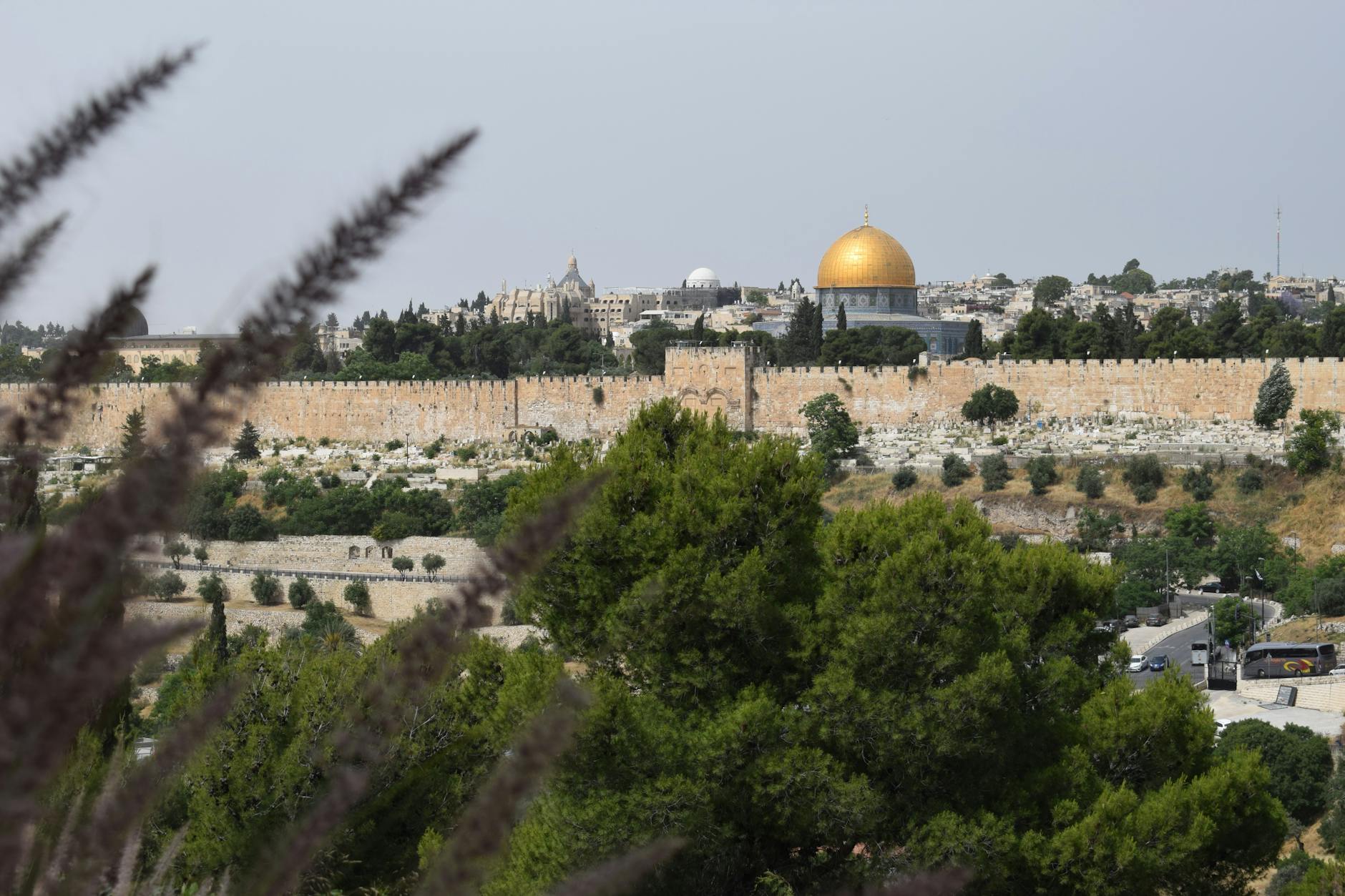
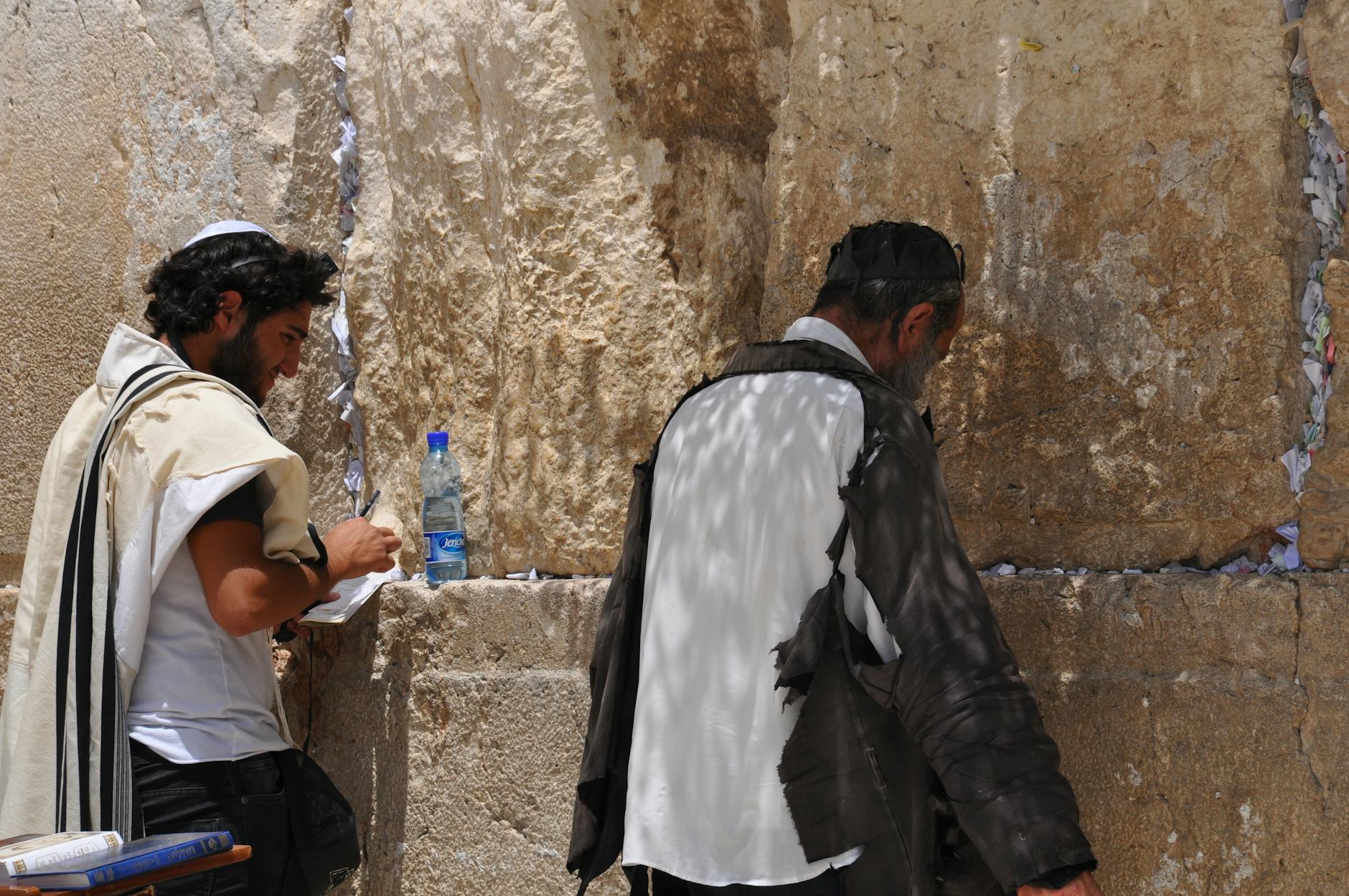
Rome’s general Pompey conquered Jerusalem in 63 BCE, beginning the Roman period that would shape the city’s physical and spiritual landscape permanently. The most transformative figure was Herod the Great (37-4 BCE), one of history’s most ambitious builders. Herod completely rebuilt and expanded the Second Temple into a complex of staggering grandeur, doubling the size of the Temple Mount platform by constructing massive retaining walls — the western section of which still stands today as the Western Wall, Judaism’s holiest prayer site.
Herod’s Jerusalem was a cosmopolitan metropolis with a population estimated at 80,000-100,000 people. His construction projects included the Antonia Fortress, a royal palace on the western hill, a theater, a hippodrome, and elaborate water systems. The Herodian stones visible at the base of the Western Wall — some weighing over 500 tons — testify to the scale of his engineering achievements. Visitors can walk along the Western Wall Tunnels to see these massive original stones up close.
The crucifixion of Jesus of Nazareth, traditionally dated to approximately 30-33 CE, occurred under Roman governor Pontius Pilate. This event transformed Jerusalem into the most sacred city in Christianity. The Via Dolorosa, tracing Jesus’s path to crucifixion, and the Church of the Holy Sepulchre, built over the traditional sites of crucifixion and resurrection, remain among the most visited pilgrimage destinations on Earth. Our guide to the city’s Old and New Testament locations maps these places alongside the scriptures that made them famous.
Growing Jewish resistance to Roman rule culminated in the Great Revolt of 66 CE. After a devastating four-year war, Roman legions under Titus breached Jerusalem’s walls and destroyed the Second Temple in 70 CE. The event was catastrophic for Judaism, ending the sacrificial cult that had been central to Jewish religious life for a millennium. The Arch of Titus in Rome still depicts Roman soldiers carrying the Temple’s sacred menorah in triumph.
Byzantine Jerusalem: The Christian Holy City (324-638 CE)
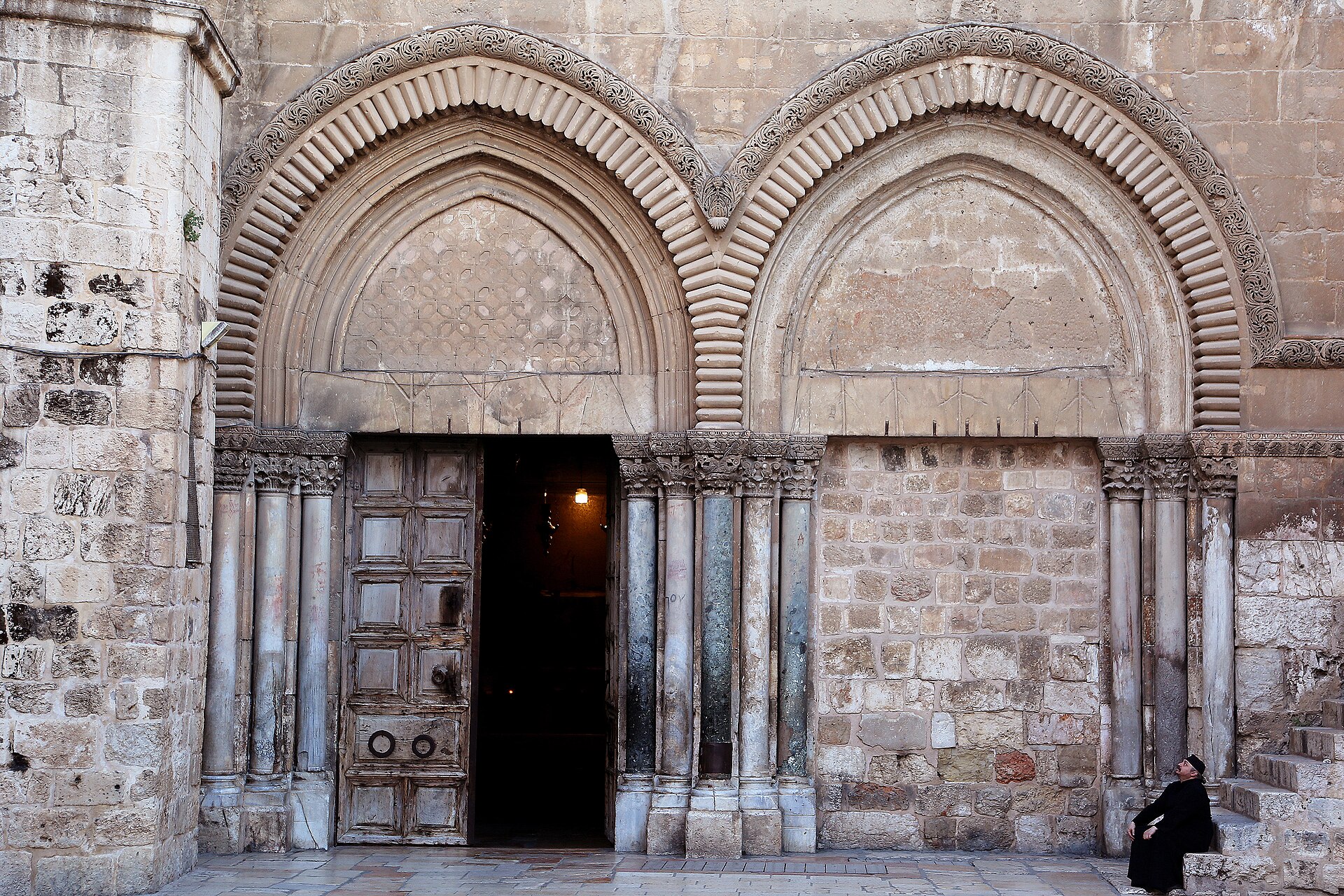
When Emperor Constantine legalized Christianity in 313 CE and his mother Helena made a pilgrimage to Jerusalem around 326 CE, the city was transformed. Helena identified sites associated with Jesus’s life, and Constantine ordered the construction of magnificent churches, most notably the Church of the Holy Sepulchre (dedicated in 335 CE), built over the traditional sites of Jesus’s crucifixion, burial, and resurrection.
The Byzantine period saw Jerusalem become a major Christian pilgrimage center. The Madaba Map, a 6th-century mosaic floor map discovered in Jordan, shows Byzantine Jerusalem with its colonnaded main street (the Cardo), churches, and city walls. Sections of the original Cardo have been excavated and are visible in the Jewish Quarter of the Old City today.
Early Islamic Period (638-1099 CE)
In 638 CE, Caliph Umar ibn al-Khattab accepted Jerusalem’s surrender from the Byzantine patriarch. Islamic tradition holds that Umar personally came to the Temple Mount, which had been left in ruins by the Romans and deliberately neglected by Byzantine Christians. The Dome of the Rock, completed in 691 CE by Caliph Abd al-Malik, is one of the oldest extant works of Islamic architecture and remains one of the most visually striking buildings on Earth.
The Al-Aqsa Mosque, built on the southern end of the Temple Mount, became the third holiest site in Islam, associated with Muhammad’s Night Journey (Isra and Mi’raj). During this period, Jerusalem was known in Arabic as al-Quds (“The Holy”), a name still used today. Jews were permitted to return to the city, and a Jewish community reestablished itself near the Western Wall.
Crusader Kingdom and Saladin (1099-1291)
The First Crusade reached Jerusalem on June 7, 1099. After a five-week siege, the Crusaders breached the walls on July 15, 1099, and their conquest was accompanied by a notorious massacre. The Crusaders established the Kingdom of Jerusalem and transformed the Dome of the Rock into a church (the Templum Domini) while using the Al-Aqsa Mosque as the headquarters for the Knights Templar.
Crusader Jerusalem was a period of intense architectural activity. The current form of the Church of the Holy Sepulchre, with its Romanesque facade and united structure bringing the major holy sites under one roof, dates largely to Crusader reconstruction completed in 1149. St. Anne’s Church, considered the finest Crusader church in Jerusalem, showcases the remarkable acoustics and architectural skill of the period.
In 1187, the Kurdish Muslim general Saladin (Salah ad-Din) defeated the Crusader army at the Battle of Hattin and recaptured Jerusalem. Unlike the Crusader conquest, Saladin’s entry was largely bloodless. He restored the Islamic character of the Temple Mount, allowed Jews to resettle in the city, and permitted Christian pilgrims to visit their holy sites — an act of tolerance remarkable for its era.
Mamluk and Ottoman Jerusalem (1260-1917)
The Mamluks, who ruled from 1260 to 1516, contributed some of Jerusalem’s most elegant architecture, particularly around the Temple Mount. Their madrasas (religious schools), fountains, and minarets represent some of the finest medieval Islamic architecture in the region. Many of these structures are visible along the streets approaching the Old City’s Haram al-Sharif.
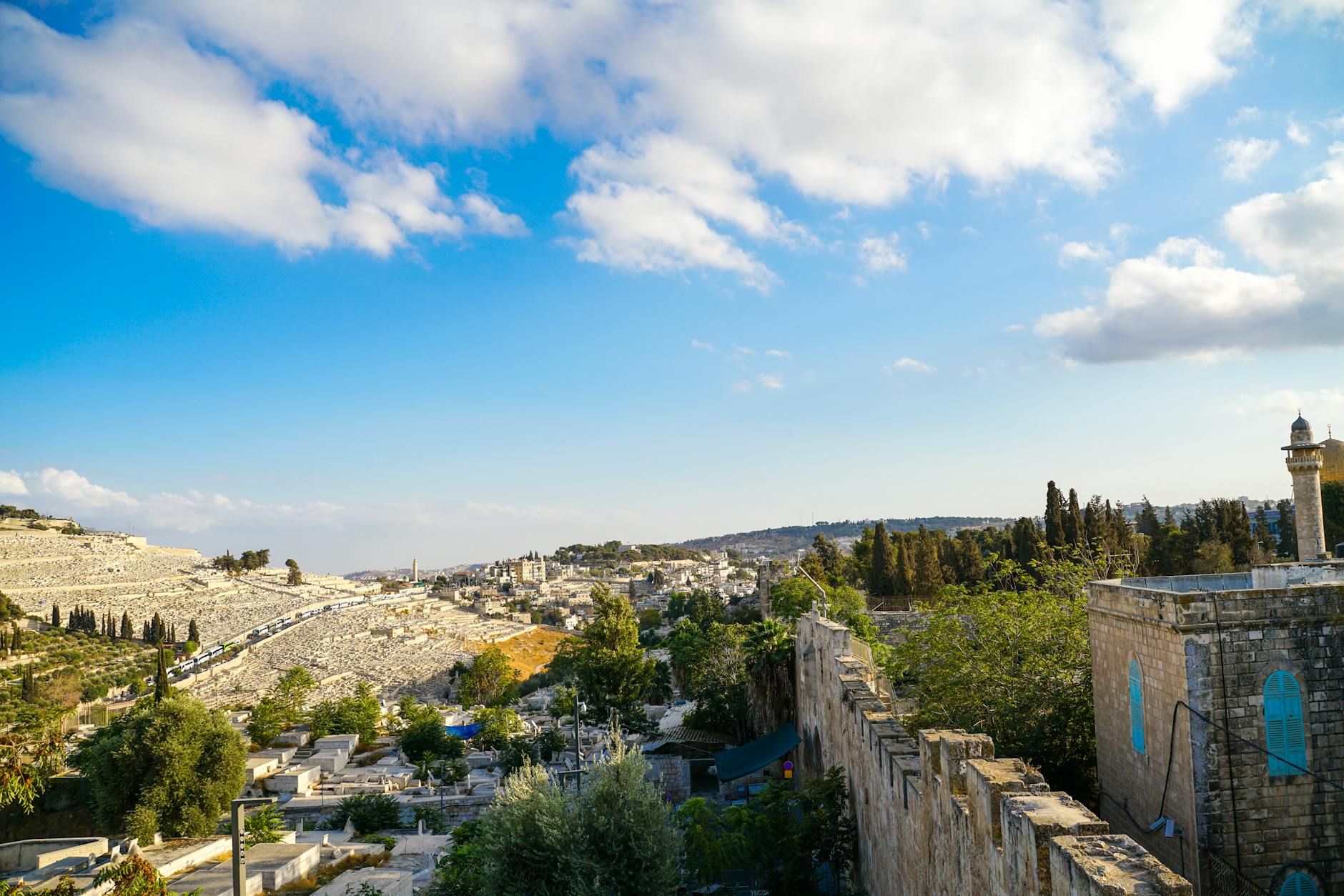
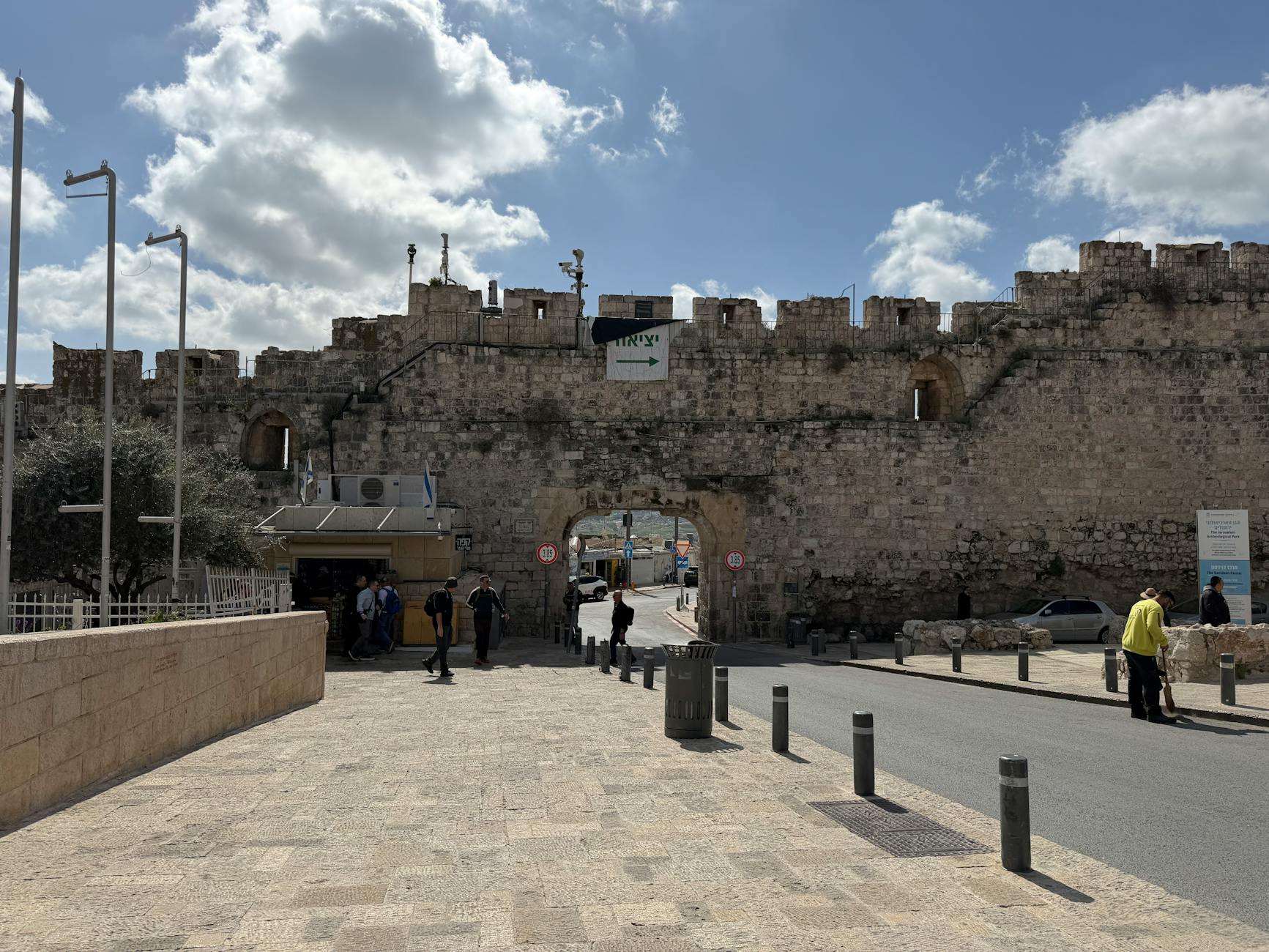
The Ottoman conquest in 1516 under Sultan Selim I brought Jerusalem into one of history’s great empires. Selim’s son, Suleiman the Magnificent (r. 1520-1566), undertook the most visible transformation of the city since Herod: he rebuilt Jerusalem’s city walls and gates between 1535 and 1541. These walls, with their distinctive crenellations, gates, and towers, still define the Old City today and are among the best-preserved Ottoman fortifications in the world.
By the 19th century, Jerusalem began to expand beyond its walls for the first time in centuries. European powers established consulates, churches, and charitable institutions. Russian, German, Italian, and French architectural influences appeared in new neighborhoods outside the walls. Archaeological exploration began in earnest — the Palestine Exploration Fund, founded in 1865, sponsored Charles Warren’s pioneering excavations around the Temple Mount.
British Mandate and Modern Jerusalem (1917-Present)
British General Edmund Allenby entered Jerusalem on foot through Jaffa Gate on December 11, 1917, ending 400 years of Ottoman rule. The British Mandate period (1917-1948) saw significant archaeological activity, urban development, and increasing tension between Jewish and Arab communities. The Hebrew University was established on Mount Scopus in 1925.
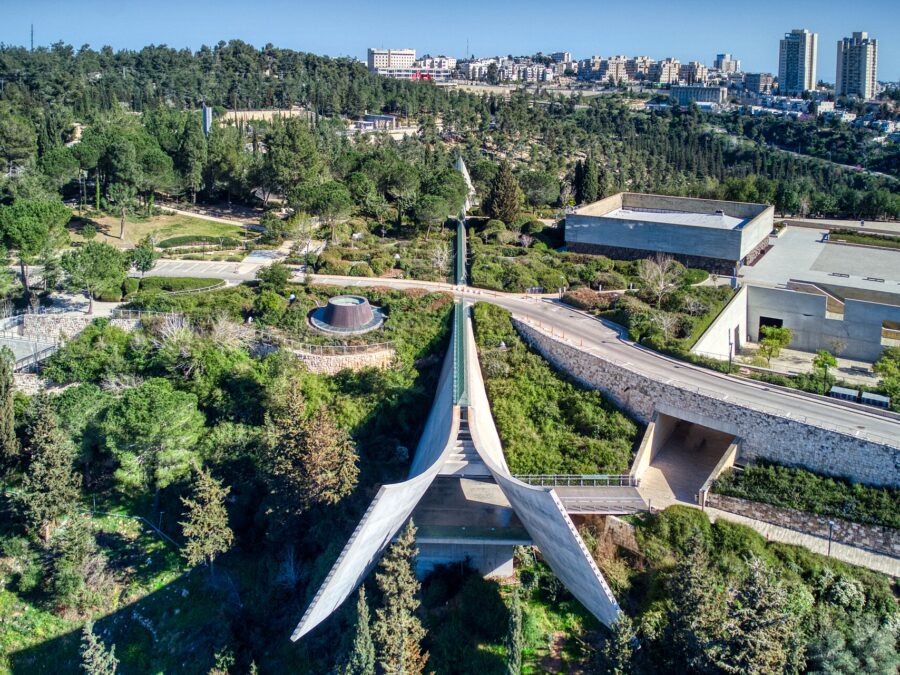
The 1947 UN Partition Plan designated Jerusalem as an international city (corpus separatum), but the 1948 Arab-Israeli War resulted in the city’s division. Jordan controlled the Old City and East Jerusalem, while Israel held the western part of the city, establishing it as its capital. For 19 years, the city was divided by walls, barbed wire, and minefields. It was in these years, in 1953, that Israel established Yad Vashem on the Mount of Remembrance as its national memorial to the six million Jews murdered in the Holocaust.
The Six-Day War of June 1967 resulted in Israel capturing the Old City and East Jerusalem. Israeli paratroopers reaching the Western Wall was one of the most iconic moments in modern Israeli history. The reunification of Jerusalem remains one of the most sensitive and contested aspects of the Israeli-Palestinian conflict, with profound implications for any future peace agreement.
Who Has Ruled Jerusalem, and How Often It Changed Hands
“How many times has Jerusalem been conquered?” is one of the most common questions asked about the city, and the most widely cited answer comes from the archaeologist and historian Eric H. Cline, whose book Jerusalem Besieged counts at least 118 separate conflicts over roughly four millennia. By his tally, Jerusalem has been completely destroyed at least twice, besieged 23 times, attacked a further 52 times, and captured and recaptured 44 times. He also notes that it has changed hands entirely peacefully only twice in 4,000 years. Other historians count differently depending on what qualifies as a siege, so treat the numbers as a well-argued estimate rather than a fixed figure.
The list of ruling powers is easier to pin down. In rough order, sovereignty over Jerusalem has passed through:
- Canaanite and Jebusite city-state rulers, under Egyptian influence (to c. 1000 BCE)
- The united Israelite monarchy, then the Kingdom of Judah (c. 1000-586 BCE)
- Neo-Babylonian Empire (586-539 BCE)
- Achaemenid Persia (539-332 BCE)
- Alexander the Great, then the Ptolemies and Seleucids (332-164 BCE)
- The Hasmonean dynasty (164-63 BCE)
- Rome, including the client kingship of Herod and his heirs (63 BCE-324 CE)
- The Byzantine Empire, interrupted by Sasanian Persian occupation in 614-629 (324-638 CE)
- The Rashidun, Umayyad, Abbasid and Fatimid caliphates, with a period of Seljuk control (638-1099)
- The Crusader Kingdom of Jerusalem (1099-1187, with a brief return 1229-1244)
- Ayyubids under Saladin and his successors (1187-1260)
- The Mamluk Sultanate of Egypt (1260-1516)
- The Ottoman Empire (1516-1917)
- British military administration and then the British Mandate for Palestine (1917-1948)
- Division between Jordan and Israel (1948-1967), and Israeli control of the whole city since 1967, with East Jerusalem regarded by most of the international community as occupied territory and by Israel as part of its capital
The two complete destructions are the ones that changed the city’s DNA: 586 BCE, when the Babylonians burned it, and 70 CE, when Titus’s legions leveled it. Hadrian’s refounding as Aelia Capitolina after 135 CE was a third rupture in all but name — he laid out a Roman grid whose main north-south street still determines where you walk in the walled city today. When you stand in the Cardo in the Jewish Quarter, you are standing in Hadrian’s urban plan, later widened by the Byzantines.
Six People Who Shaped the Jerusalem You Walk Through
Jerusalem’s physical fabric is unusually traceable to individuals. Six names account for a startling proportion of what you will actually see.
David (c. 1000 BCE)
The biblical account credits David with taking the Jebusite stronghold and making it his capital, a shrewd choice because the ridge belonged to no tribe. What archaeology can and cannot confirm about him is covered further down, but his lasting contribution is locational rather than architectural: he fixed the political center of a kingdom onto the narrow spur above the Gihon Spring, and every later ruler had to build around that decision.
Hezekiah (c. 715-687 BCE)
Hezekiah is the reason Jerusalem survived the Assyrian threat of 701 BCE, and the reason you can wade through ankle-to-knee-deep water under the city. His engineers cut a 533-meter tunnel through solid rock from two directions and met in the middle — a feat commemorated in the Siloam Inscription, one of the oldest substantial Hebrew inscriptions known. The wider network of shafts, channels and pools that supported the ancient city is worth reading about before you go, because how Jerusalem got its water explains almost every decision about where people built.
Herod the Great (37-4 BCE)
No single person changed Jerusalem more. Herod doubled the Temple Mount platform with retaining walls whose lower courses are still the largest worked stones in the city, rebuilt the Temple on a scale that astonished Roman visitors, and added a palace, a fortress, a theater and aqueducts. The Western Wall is not a wall of the Temple — it is a surviving section of Herod’s retaining wall for the platform the Temple stood on. Nearly everything you look at at eye level in the Second Temple archaeological sites is his.
Hadrian (117-138 CE)
Hadrian is the least loved and most underestimated of the six. After the Bar Kokhba revolt he rebuilt the ruined city as a Roman colony, Aelia Capitolina, barred Jews from entering it, and imposed a standard Roman street grid with a colonnaded main street and a forum. That grid is why the Old City’s four quarters meet where they do, and why Damascus Gate sits above a Roman gate whose arch you can still walk under.
Saladin (1187)
Saladin’s recapture of Jerusalem after the Battle of Hattin is remembered as much for its restraint as its strategy — the surrender was negotiated, and the mass killing that accompanied the Crusader conquest of 1099 was not repeated. He restored the Islamic character of the Haram al-Sharif, permitted Jewish resettlement and allowed Christian pilgrimage to continue. Much of what survives of the Crusader city survives because he chose to convert buildings rather than destroy them.
Suleiman the Magnificent (1535-1541)
Suleiman gave Jerusalem its silhouette. The walls, the crenellations, the gates and most of the towers you photograph date to a single six-year building program in the 1530s, laid on top of earlier foundations. He also rebuilt the water supply and the tiling of the Dome of the Rock. If you want to understand why the Old City looks sixteenth-century from the outside and two thousand years older underneath, the Ottoman centuries are where to start.
Why Three Religions Claim the Same Hilltop
The short answer is that all three traditions locate foundational events on or beside the same rocky outcrop, and each built on what the previous one left. The longer answer is worth knowing before you visit, because it explains the intensity you will feel in places that look, physically, quite ordinary.
For Judaism, the Temple Mount is the site of the First and Second Temples and, in tradition, of the binding of Isaac on Mount Moriah. It is the holiest place in Judaism. Because the exact former location of the Holy of Holies is unknown, many observant Jews do not enter the platform at all and pray instead at the Western Wall, the closest accessible point to it.
For Christianity, Jerusalem is where the crucifixion, burial and resurrection of Jesus are placed, along with the Last Supper and much of the final week of his life. The Church of the Holy Sepulchre covers the traditional sites of Golgotha and the tomb; the Mount of Olives, the Garden of Gethsemane and the Via Dolorosa complete the map that our guide to the city’s scriptural locations sets out in order.
For Islam, the same platform is the Haram al-Sharif, the Noble Sanctuary, the third holiest site after Mecca and Medina. It is identified with the Night Journey of the Prophet Muhammad, and Jerusalem was the first qibla, the direction of prayer, before it was changed to Mecca. The Dome of the Rock, completed in 691 CE, encloses the rock at the center of that tradition.
These claims overlap on a compound of roughly 14 hectares. Access to it is governed by long-standing arrangements between the Israeli authorities and the Jordanian-appointed Waqf, and those arrangements are politically contested. As a visitor your practical concern is narrower: non-Muslim entry is limited to specific morning hours, the Mughrabi Bridge beside the Western Wall plaza is the only non-Muslim entrance, and hours shift during Ramadan and Jewish festivals. Check on the day rather than trusting any published schedule, including ours.
Archaeological Jerusalem Today
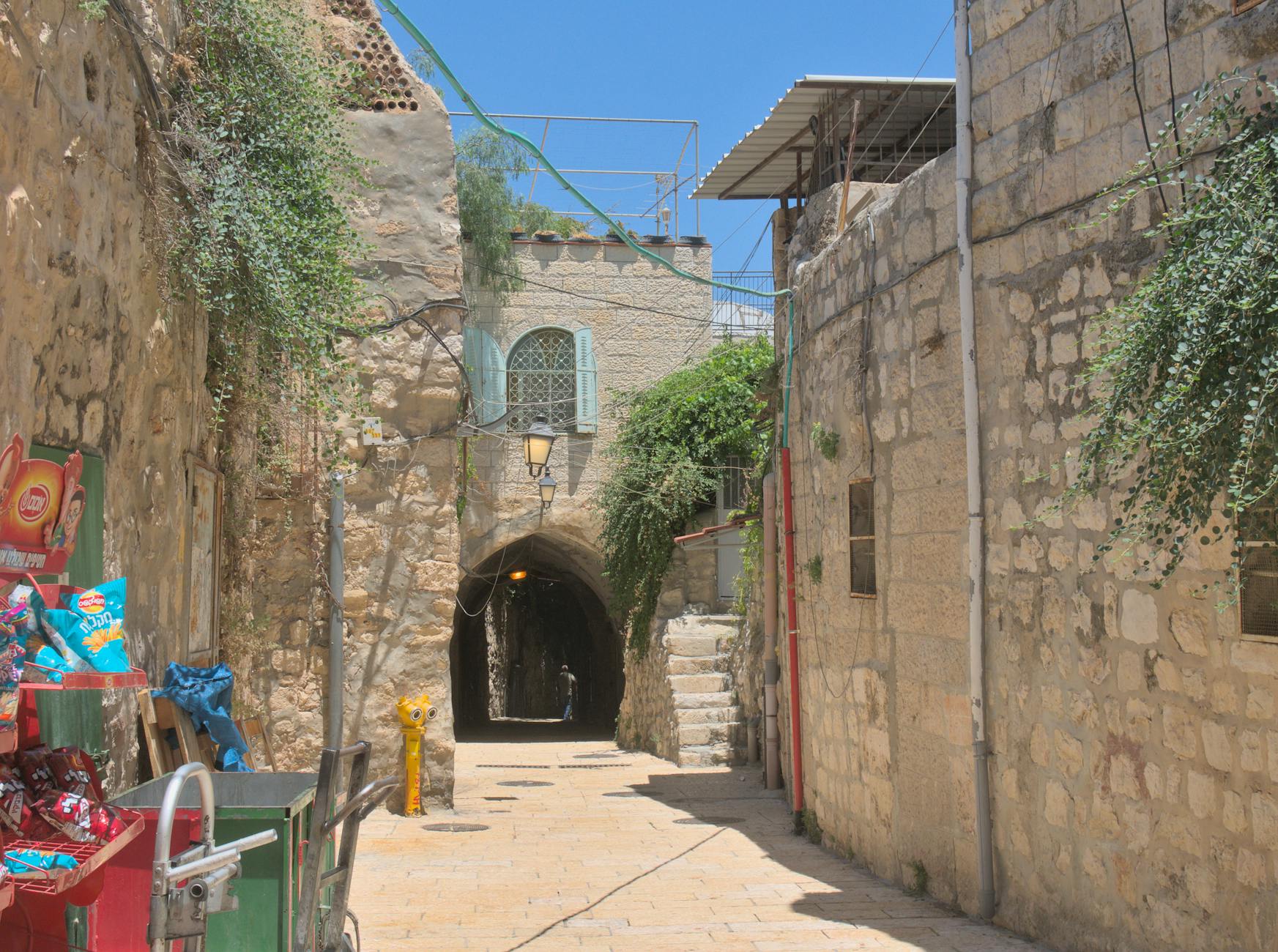
Modern Jerusalem is one of the most actively excavated cities in the world. Major ongoing archaeological projects include the City of David excavations, which continue to reveal remarkable finds including the recent discovery of a monumental moat that split the ancient city in two. The Givati Parking Lot excavation has uncovered layers spanning from the Iron Age to the Ottoman period in a single location.
The Temple Mount Sifting Project, which systematically examines earth removed from the Temple Mount during construction work, has recovered thousands of artifacts spanning Jerusalem’s entire history — from First Temple period seal impressions to Crusader arrowheads and Ottoman coins. Visitors can take part in the sifting themselves; the project moved in 2019 and now operates from the Masu’ot Lookout, near the junction of Mount Scopus and the Mount of Olives.
The Israel Antiquities Authority oversees dozens of excavations across the city at any given time, and new discoveries regularly make international headlines. The recently excavated Pilgrimage Road beneath the City of David — a monumental 600-meter stepped street from the Second Temple period — allows visitors to walk the same path that ancient pilgrims took to reach the Temple. Finds from these digs end up in collections across the city, and our roundup of the seven best museums for biblical history lovers explains which ones deserve your time. For a guide to visiting Jerusalem’s top attractions including its major archaeological sites, see our comprehensive guide.
What Archaeologists Agree On, and What They Still Argue About
Jerusalem is one of the most excavated cities on Earth and also one of the most argued over. Guides and signage sometimes present contested interpretations as settled fact, in both directions, so it is worth knowing which is which. Broadly, the physical remains are not in dispute; the labels attached to them often are.
What is effectively settled
Continuous settlement around the Gihon Spring from at least the Chalcolithic period; the Middle Bronze Age fortifications protecting the spring; the existence and route of the Iron Age tunnel and the authenticity of the Siloam Inscription; the Herodian date and construction of the Temple Mount retaining walls; the 70 CE destruction layer, visible as a burnt horizon in multiple excavations; the Byzantine Cardo; the Crusader rebuilding of the Church of the Holy Sepulchre; and the sixteenth-century date of the Ottoman walls. On all of these the evidence is direct and the disagreement is minor.
The size of Jerusalem in the tenth century BCE
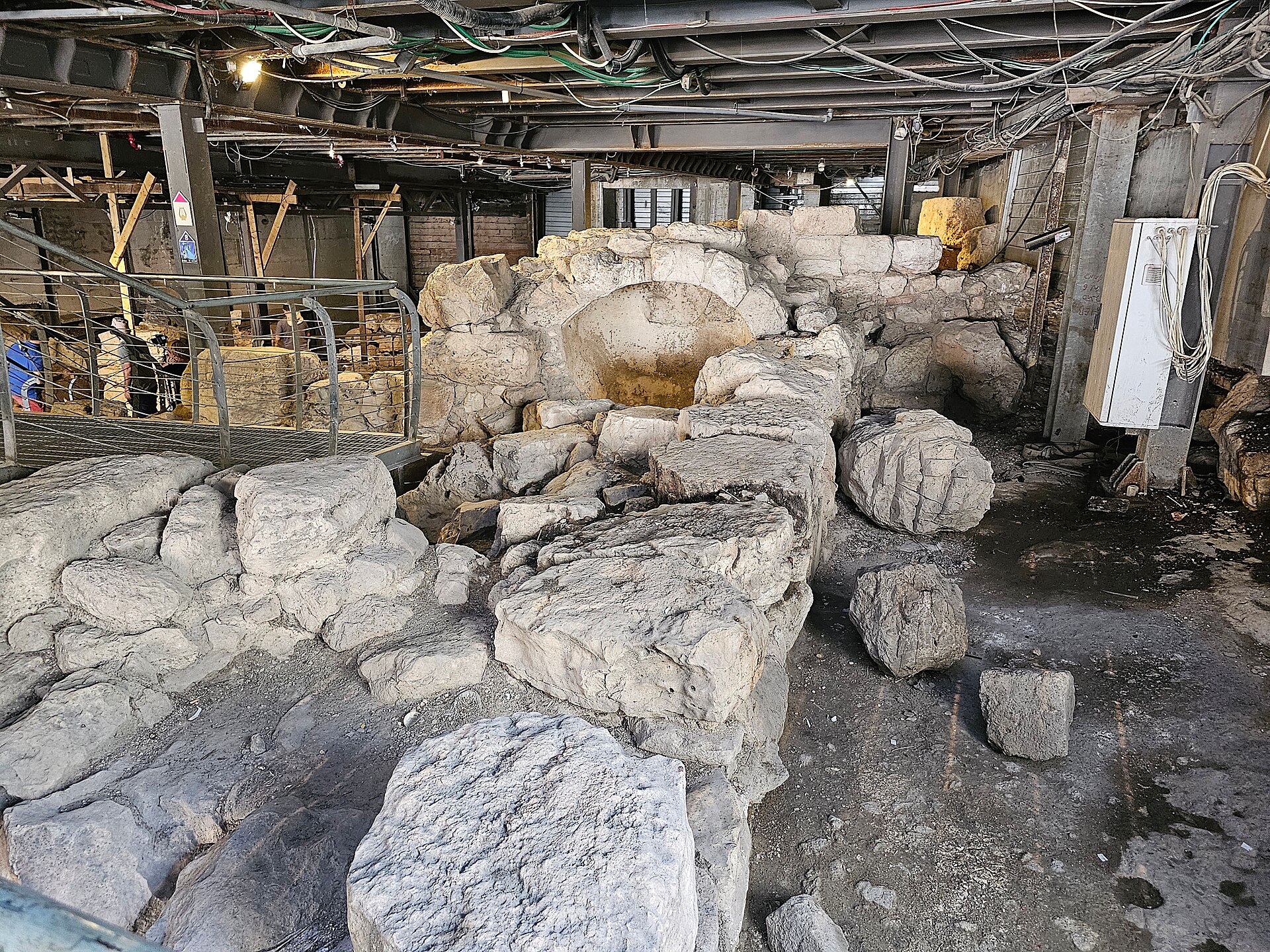
This is the central controversy. One position, associated with the late Eilat Mazar and with scholars such as Avraham Faust, holds that monumental structures on the eastern ridge — the so-called Large Stone Structure and the Stepped Stone Structure below it — represent a substantial tenth-century administrative complex consistent with the biblical account of David’s capital. Mazar suggested publicly in 2005 that the Large Stone Structure might be David’s palace.
The opposing position, argued most prominently by Israel Finkelstein and colleagues at Tel Aviv University, is that the remains are not a single building, that significant parts of them are Hellenistic rather than Iron Age, and that tenth-century Jerusalem was a modest highland town rather than an imperial capital. A third reading treats the same walls as a late Jebusite structure. The dispute turns on stratigraphy and on ceramic dating in fills, not on whether the stones exist. There is no consensus, and any guide who tells you flatly that you are looking at David’s palace is overstating the evidence.
Whether King David existed at all
This is often conflated with the previous question, and it should not be. Since the 1993 discovery of the Tel Dan Stele, an Aramaic victory inscription referring to the “House of David,” most archaeologists accept that a dynasty of that name was recognized in the ninth century BCE. What remains genuinely disputed is the scale and reach of the kingdom that dynasty ruled, not the existence of a founder behind the name.
The date of Hezekiah’s Tunnel
Radiocarbon work published in 2003 supported a construction date of roughly 700 BCE, matching the traditional attribution to Hezekiah. A 2011 reassessment of pottery from fills beneath a house built over the Rock-Cut Pool argued for a date decades earlier, in the early eighth century, which would credit a different king. Broader radiocarbon programs on Iron Age Jerusalem published in 2024 have tended to support the traditional late eighth-century picture. Most scholars still call it Hezekiah’s Tunnel; a minority regard the name as convenient shorthand. Either way, the tunnel you can wade through is unambiguously Iron Age.
Who built the Pilgrimage Road
The monumental stepped street running up from the Siloam Pool was long attributed to Herod. Excavators reported in 2019 that of more than a hundred coins recovered from sealed fills beneath the paving, none post-dated the late 30s CE, which would place completion within or close to the governorship of Pontius Pilate. The coin argument is widely accepted, but it rests partly on the absence of later coins, which is a weaker form of evidence than a positive find, and some specialists remain cautious.
Where Golgotha was
The scholarly consensus favors the area now covered by the Church of the Holy Sepulchre, which excavation has shown was a disused quarry with rock-cut tombs lying outside the city wall in the first century — exactly the setting the Gospels describe. The main alternative, the Garden Tomb near Damascus Gate, is a quiet and moving place to visit but is not accepted by critical scholars: Gabriel Barkay showed in 1986 that the tomb itself is Iron Age, centuries too early for a tomb described as newly cut.
The politics of digging
Two further constraints shape what can be known. The Temple Mount itself has never been systematically excavated and almost certainly never will be, so the most important site in the story is the least directly investigated. And excavation in East Jerusalem is politically contested: Israeli authorities and excavators present the work as ordinary salvage and research archaeology, while Palestinian officials and some Israeli archaeologists — the organization Emek Shaveh is the most vocal — argue that digs beneath inhabited neighborhoods in Silwan serve a political narrative and damage homes. Qualified people make both the criticism and the defense in good faith, and a visitor is not obliged to settle the argument.
None of this makes the sites less worth seeing. It makes them more interesting, because you are looking at evidence rather than at conclusions. Several of the city’s archaeology collections are candid about this, and the better guides will tell you where the interpretation stops and the speculation starts.
Walking Jerusalem’s History in Chronological Order
Most visitors see Jerusalem’s history scrambled — a Crusader church, then an Iron Age tunnel, then an Ottoman gate — and leave with an impressive blur. It is entirely possible to walk the periods in order instead, and it makes far more sense of the place. Two days does it comfortably. Avoid starting on a Friday afternoon, when most sites close early, and note that almost everything Israeli-run is shut on Saturday while the Christian and Muslim sites in the Old City stay open.
Day one: the spring to the destruction (c. 1800 BCE to 70 CE)
Start at the City of David at opening time, generally 08:00 Sunday to Thursday with an early close on Fridays and Jewish holiday eves. Check current hours and ticket combinations on the official City of David site before you go, because the price varies with whether you add the Pilgrimage Road or a guide. The route is chronological by accident of geology: Canaanite fortifications around the spring, then the Iron Age water systems, then the tunnel. Bring water shoes or sandals you do not mind soaking, and a head torch. There is a dry alternative passage if you do not fancy the water.
From the bottom of the tunnel, walk up the Pilgrimage Road to the Davidson Center and the Southern Wall excavations — the monumental staircase pilgrims climbed to the Temple, and the pile of Herodian stones that Roman soldiers toppled in 70 CE, left where they fell. Then the Western Wall plaza and, if you have booked ahead, the Western Wall Tunnels, where the Herodian courses continue underground for hundreds of meters. Finish in the Jewish Quarter at the Burnt House and the Herodian Quarter mansions, which preserve the domestic side of the same century.
Day two: Rome to the present (135 CE onward)
Begin early at the Church of the Holy Sepulchre, before the tour groups, then walk the Cardo in the Jewish Quarter to see Hadrian’s and the Byzantines’ street plan at its original level. The Via Dolorosa takes you back east through the Muslim Quarter, where the Mamluk facades — striped stone, honeycombed doorways, inscribed lintels — are the finest medieval Islamic architecture in the city and are almost entirely ignored by visitors hurrying past them.
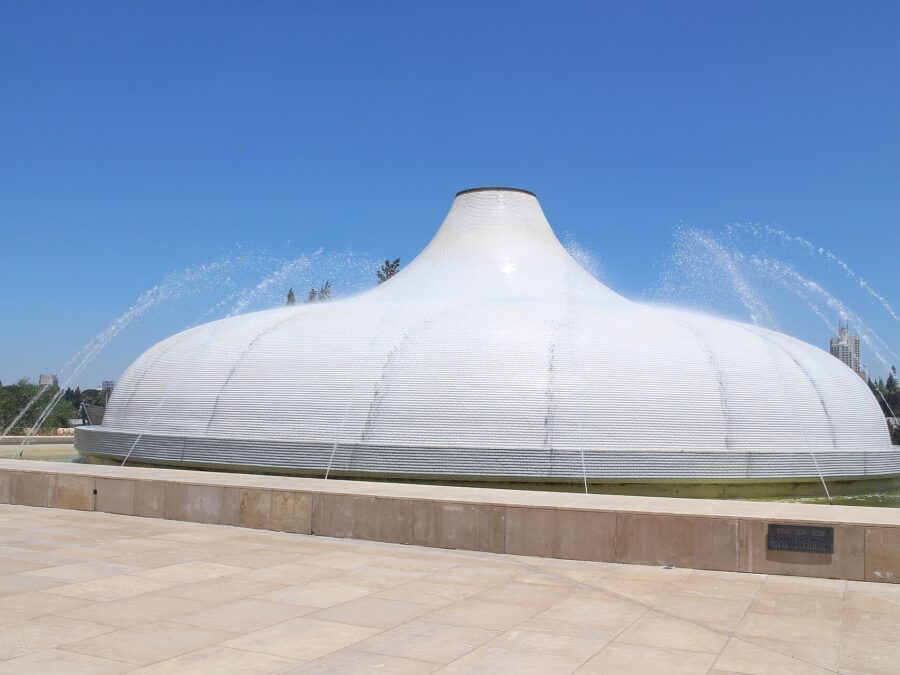
For the Ottoman layer, do the ramparts walk on top of Suleiman’s walls, then the Tower of David Museum in the Citadel, which sits on Herodian foundations and lays out the whole chronology in one building. If you have a third day, the modern chapters are outside the walls: the Israel Museum for the archaeological sequence and the Shrine of the Book manuscripts, and the national Holocaust memorial on the Mount of Remembrance, which needs half a day and some emotional room afterward.
A note on pacing. The Old City is about one square kilometer, but it is built on hills and paved with polished limestone that is genuinely slippery in rain. Two hours of underground archaeology in the morning and two hours above ground in the afternoon is a realistic pace. Trying to do the City of David and the Israel Museum on the same day is not.
Visiting Jerusalem’s Historical Sites
City of David: Open Sunday-Thursday 8am-5pm (7pm summer), Friday 8am-2pm. Guided tours in multiple languages. Allow 2-3 hours. Hezekiah’s Tunnel requires walking through knee-deep water — bring water shoes and a flashlight.
Israel Museum: Open Sunday, Monday, Wednesday, Thursday 10am-5pm; Tuesday 4pm-9pm; Friday 10am-2pm; Saturday 10am-5pm. The Shrine of the Book (Dead Sea Scrolls) and archaeological wing are highlights.
Tower of David Museum: Open Sunday-Thursday and Saturday 9am-5pm (9pm in summer), Friday 9am-2pm. Night Spectacular show is seasonal — check schedules and book in advance.
Temple Mount Sifting Project: Open Sunday-Thursday. Reservation required. Located at the Masu’ot Lookout, near the Mount Scopus and Mount of Olives junction. A unique hands-on archaeological experience. For the most comprehensive experience of Jerusalem’s holy sites, combine historical knowledge with our visiting guide.
One period on this timeline still has an annual festival attached to it. The Maccabean revolt against Seleucid rule and the rededication of the Temple in 164 BCE is what Hanukkah commemorates, and the Hasmonean dynasty that followed left walls and water systems you can still walk through. Our guide to Hanukkah in Jerusalem connects the history to the eight nights of lamps in the doorways each December.
Frequently Asked Questions About Jerusalem’s History
How old is Jerusalem?
Archaeological evidence places human activity near the Gihon Spring from around 4500 BCE and permanent settlement from roughly 3500-3000 BCE, which makes Jerusalem one of the oldest continuously inhabited cities in the world at somewhere between 5,000 and 6,000 years. The first probable written mention is in Egyptian Execration Texts of about the nineteenth century BCE, so the city has been named in documents for nearly 4,000 years.
How many times has Jerusalem been destroyed?
Completely destroyed, twice: by the Babylonians in 586 BCE and by the Romans in 70 CE. Hadrian’s demolition and refounding after 135 CE is sometimes counted as a third. Beyond those, the historian Eric H. Cline counts 23 sieges, 52 further attacks and 44 changes of hands across roughly four millennia, with only two entirely peaceful transfers of control. Different historians reach different totals depending on what they classify as a siege.
Who built the walls around Jerusalem’s Old City?
The walls you see today were built between 1535 and 1541 by the Ottoman sultan Suleiman the Magnificent, on top of earlier Crusader, Byzantine and Roman foundations that themselves followed older lines. They enclose roughly one square kilometer and have seven working gates plus the sealed Golden Gate. They are not the walls of the biblical city, which sat further south along the ridge and enclosed a smaller area.
Is there archaeological evidence for King David?
There is inscriptional evidence for a dynasty called the House of David — the Tel Dan Stele, found in 1993 and dated to the ninth century BCE, refers to it — and most archaeologists accept on that basis that a historical founder stands behind the name. What is genuinely disputed is the scale of his kingdom and whether any excavated building in Jerusalem can be attributed to him. Claims that a particular structure is “David’s palace” go well beyond what the evidence establishes.
Why is Jerusalem holy to Judaism, Christianity and Islam?
Because all three traditions place foundational events on or beside the same platform. For Judaism it is the site of the two Temples and, by tradition, of the binding of Isaac. For Christianity the city is where the crucifixion, burial and resurrection of Jesus are located. For Islam it is the Noble Sanctuary associated with the Prophet Muhammad’s Night Journey, and the first direction of prayer. Each faith also built physically on what its predecessors left, which is why the layers are stacked rather than separate.
What is the oldest thing you can actually see in Jerusalem?
The Middle Bronze Age fortifications around the Gihon Spring, dating to roughly 1800 BCE, are the oldest substantial built structures open to visitors, and they are genuinely enormous — boulders of four to five tons. The spring itself and the rock-cut shafts beside it are older still as features of the landscape. Everything Iron Age and later sits above them on the same narrow ridge.
Can archaeologists excavate the Temple Mount?
No. The compound has never been systematically excavated and, given its religious and political sensitivity, almost certainly never will be. What is known about it comes from excavation around its edges, from historical sources, and from the Temple Mount Sifting Project, which sorts through soil removed from the platform during construction work in 1999. The project runs visitor sessions by reservation — book through tmsifting.org rather than turning up.
How many empires have ruled Jerusalem?
Depending on how you group the dynasties, between 12 and 16: Egyptian-influenced Canaanite rulers, the Israelite monarchy and Kingdom of Judah, Babylonians, Persians, Greeks under Alexander and his successors, the Hasmoneans, Romans, Byzantines, four successive Islamic caliphates plus the Seljuks, Crusaders, Ayyubids, Mamluks, Ottomans, the British, and since 1948 Jordan and Israel. Very few cities have a comparable list.
Where should I go if I only have one day for Jerusalem’s history?
The City of David and the Iron Age tunnel in the morning, walking up the Pilgrimage Road to the Southern Wall excavations and the Western Wall, then the Jewish Quarter and the Church of the Holy Sepulchre in the afternoon. That single route takes you from roughly 1800 BCE to the Crusades on foot in about seven hours. If you would rather see the objects than the sites, spend the day at the Israel Museum instead — current hours and admission are listed at imj.org.il, with adult entry in the region of ₪54 as of August 2026.
Photo Credits
Remains of the Large Stone Structure in the City of David: Large stone structure ruins by Jprg1966, CC BY-SA 4.0, via Wikimedia Commons.
The 12th-century Crusader entrance of the Church of the Holy Sepulchre: TheHolySepulchre32 by Marwan hamad, CC BY-SA 4.0, via Wikimedia Commons.
{"@context": "https://schema.org", "@type": "FAQPage", "mainEntity": [{"@type": "Question", "name": "How old is Jerusalem?", "acceptedAnswer": {"@type": "Answer", "text": "Archaeological evidence places human activity near the Gihon Spring from around 4500 BCE and permanent settlement from roughly 3500-3000 BCE, which makes Jerusalem one of the oldest continuously inhabited cities in the world at somewhere between 5,000 and 6,000 years. The first probable written mention is in Egyptian Execration Texts of about the nineteenth century BCE, so the city has been named in documents for nearly 4,000 years."}}, {"@type": "Question", "name": "How many times has Jerusalem been destroyed?", "acceptedAnswer": {"@type": "Answer", "text": "Completely destroyed, twice: by the Babylonians in 586 BCE and by the Romans in 70 CE. Hadrian’s demolition and refounding after 135 CE is sometimes counted as a third. Beyond those, the historian Eric H. Cline counts 23 sieges, 52 further attacks and 44 changes of hands across roughly four millennia, with only two entirely peaceful transfers of control. Different historians reach different totals depending on what they classify as a siege."}}, {"@type": "Question", "name": "Who built the walls around Jerusalem’s Old City?", "acceptedAnswer": {"@type": "Answer", "text": "The walls you see today were built between 1535 and 1541 by the Ottoman sultan Suleiman the Magnificent, on top of earlier Crusader, Byzantine and Roman foundations that themselves followed older lines. They enclose roughly one square kilometer and have seven working gates plus the sealed Golden Gate. They are not the walls of the biblical city, which sat further south along the ridge and enclosed a smaller area."}}, {"@type": "Question", "name": "Is there archaeological evidence for King David?", "acceptedAnswer": {"@type": "Answer", "text": "There is inscriptional evidence for a dynasty called the House of David — the Tel Dan Stele, found in 1993 and dated to the ninth century BCE, refers to it — and most archaeologists accept on that basis that a historical founder stands behind the name. What is genuinely disputed is the scale of his kingdom and whether any excavated building in Jerusalem can be attributed to him. Claims that a particular structure is “David’s palace” go well beyond what the evidence establishes."}}, {"@type": "Question", "name": "Why is Jerusalem holy to Judaism, Christianity and Islam?", "acceptedAnswer": {"@type": "Answer", "text": "Because all three traditions place foundational events on or beside the same platform. For Judaism it is the site of the two Temples and, by tradition, of the binding of Isaac. For Christianity the city is where the crucifixion, burial and resurrection of Jesus are located. For Islam it is the Noble Sanctuary associated with the Prophet Muhammad’s Night Journey, and the first direction of prayer. Each faith also built physically on what its predecessors left, which is why the layers are stacked rather than separate."}}, {"@type": "Question", "name": "What is the oldest thing you can actually see in Jerusalem?", "acceptedAnswer": {"@type": "Answer", "text": "The Middle Bronze Age fortifications around the Gihon Spring, dating to roughly 1800 BCE, are the oldest substantial built structures open to visitors, and they are genuinely enormous — boulders of four to five tons. The spring itself and the rock-cut shafts beside it are older still as features of the landscape. Everything Iron Age and later sits above them on the same narrow ridge."}}, {"@type": "Question", "name": "Can archaeologists excavate the Temple Mount?", "acceptedAnswer": {"@type": "Answer", "text": "No. The compound has never been systematically excavated and, given its religious and political sensitivity, almost certainly never will be. What is known about it comes from excavation around its edges, from historical sources, and from the Temple Mount Sifting Project, which sorts through soil removed from the platform during construction work in 1999. The project runs visitor sessions by reservation — book through tmsifting.org rather than turning up."}}, {"@type": "Question", "name": "How many empires have ruled Jerusalem?", "acceptedAnswer": {"@type": "Answer", "text": "Depending on how you group the dynasties, between 12 and 16: Egyptian-influenced Canaanite rulers, the Israelite monarchy and Kingdom of Judah, Babylonians, Persians, Greeks under Alexander and his successors, the Hasmoneans, Romans, Byzantines, four successive Islamic caliphates plus the Seljuks, Crusaders, Ayyubids, Mamluks, Ottomans, the British, and since 1948 Jordan and Israel. Very few cities have a comparable list."}}, {"@type": "Question", "name": "Where should I go if I only have one day for Jerusalem’s history?", "acceptedAnswer": {"@type": "Answer", "text": "The City of David and the Iron Age tunnel in the morning, walking up the Pilgrimage Road to the Southern Wall excavations and the Western Wall, then the Jewish Quarter and the Church of the Holy Sepulchre in the afternoon. That single route takes you from roughly 1800 BCE to the Crusades on foot in about seven hours. If you would rather see the objects than the sites, spend the day at the Israel Museum instead — current hours and admission are listed at imj.org.il, with adult entry in the region of ₪54 as of August 2026."}}]}