Ein Karem sits in a green valley about 7 km southwest of central Jerusalem, far enough from the Old City crowds to feel like a different country. The neighborhood keeps its old stone houses, narrow lanes, and terraced hillsides, and it draws two very different kinds of visitor: Christian pilgrims, because tradition names this as the birthplace of John the Baptist and the place where Mary visited Elizabeth, and day-trippers who simply want a quiet walk, a long lunch, and a few church courtyards with a view. This guide to Ein Karem Jerusalem covers the churches, Mary’s Spring, the Chagall windows at nearby Hadassah, the walking and hiking options, where to eat, and exactly how to get here and plan your day.
You can see the highlights of Ein Karem in a focused half day, but the valley rewards a slower pace. If you are building a wider outdoor plan around the city, this page pairs well with our guide to hiking and outdoor activities near Jerusalem, our gentle hikes suited to families, and our biblical sites guide.
Where Ein Karem Is and Why It Feels Different
Ein Karem Jerusalem sits in the hills on the western edge of the city, roughly a 15 to 20 minute drive from the center. It was an Arab village until 1948, and the old houses, stone walls, and surviving spring still shape the place. From the mid-twentieth century onward, artists moved in, and today its population of a few thousand mixes secular and observant Jewish residents, a small Christian community, and the orders that run the churches and convents. The result trades the noise of the Old City for birdsong, cypress trees, and the smell of coffee from a handful of cafes.
The name Ein Karem means “spring of the vineyard,” and water is central to the story here. A natural spring at the foot of the valley supplied the village for centuries and gave rise to the Christian tradition of Mary’s Spring. The churches sit on the slopes above, so a visit involves climbing stone steps and steep lanes. Wear shoes with grip, and remember the same hills that make Ein Karem beautiful make it a workout in the August heat.
The Churches and Main Sights
Church of the Visitation
The Church of the Visitation, a Franciscan church on the southern hillside, marks the spot where, in the Gospel of Luke, Mary visited her cousin Elizabeth and recited the prayer known as the Magnificat. The most photographed feature is the courtyard wall, where the Magnificat is reproduced on ceramic plaques in dozens of languages. Reaching the church means climbing a long flight of stone steps up the slope, and the reward at the top is one of the best views over the valley. Frescoes and mosaics decorate the upper church. Entry is free, though donations are welcome, and the church usually keeps split morning and afternoon hours with a midday closure, so it is worth arriving before lunch.
Church of St. John the Baptist
Down in the village center, the Church of St. John the Baptist (also Franciscan) sits over a grotto that tradition identifies as the saint’s birthplace. The current building dates mainly from the seventeenth century, on foundations going back to the Byzantine and Crusader periods, and you can step down into the grotto beneath the main altar. The interior is calmer and more ornate than the Visitation, with tilework and paintings worth a slow look. Entry is free. Plan on 30 to 45 minutes, and pair it with the Visitation since the two churches together tell the John the Baptist story.
Mary’s Spring
Mary’s Spring sits at the heart of the village, where the old spring water once collected. Christian tradition holds that Mary drank here during her visit, and the spot draws pilgrims who come to fill bottles or simply pause. The water is not treated for drinking, so treat it as a site to see rather than a place to refill your hydration. The small plaza around the spring, shaded and ringed by cafes and shops, is the natural meeting point of any Ein Karem walk and a good place to regroup between churches.
Russian Orthodox Convent (Gorny)
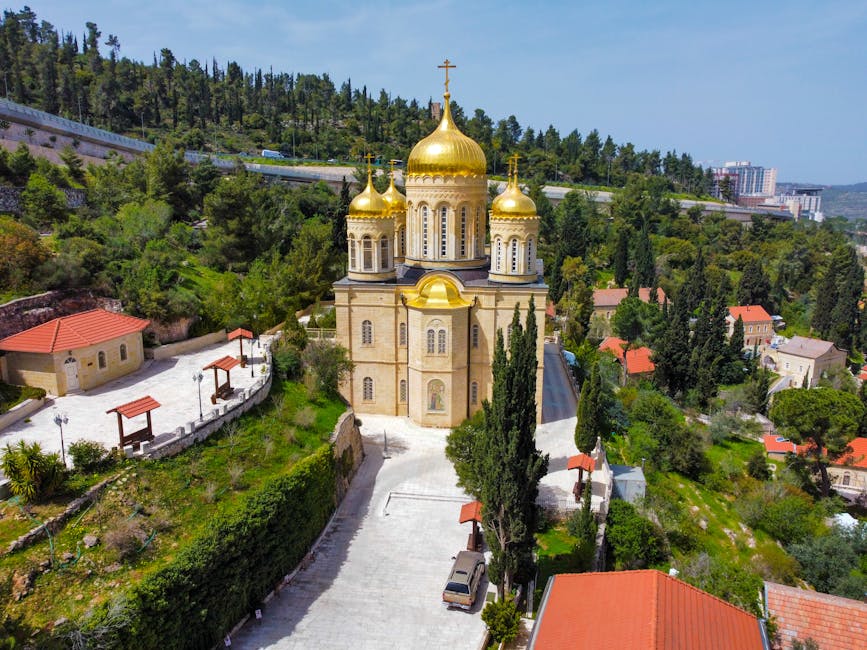
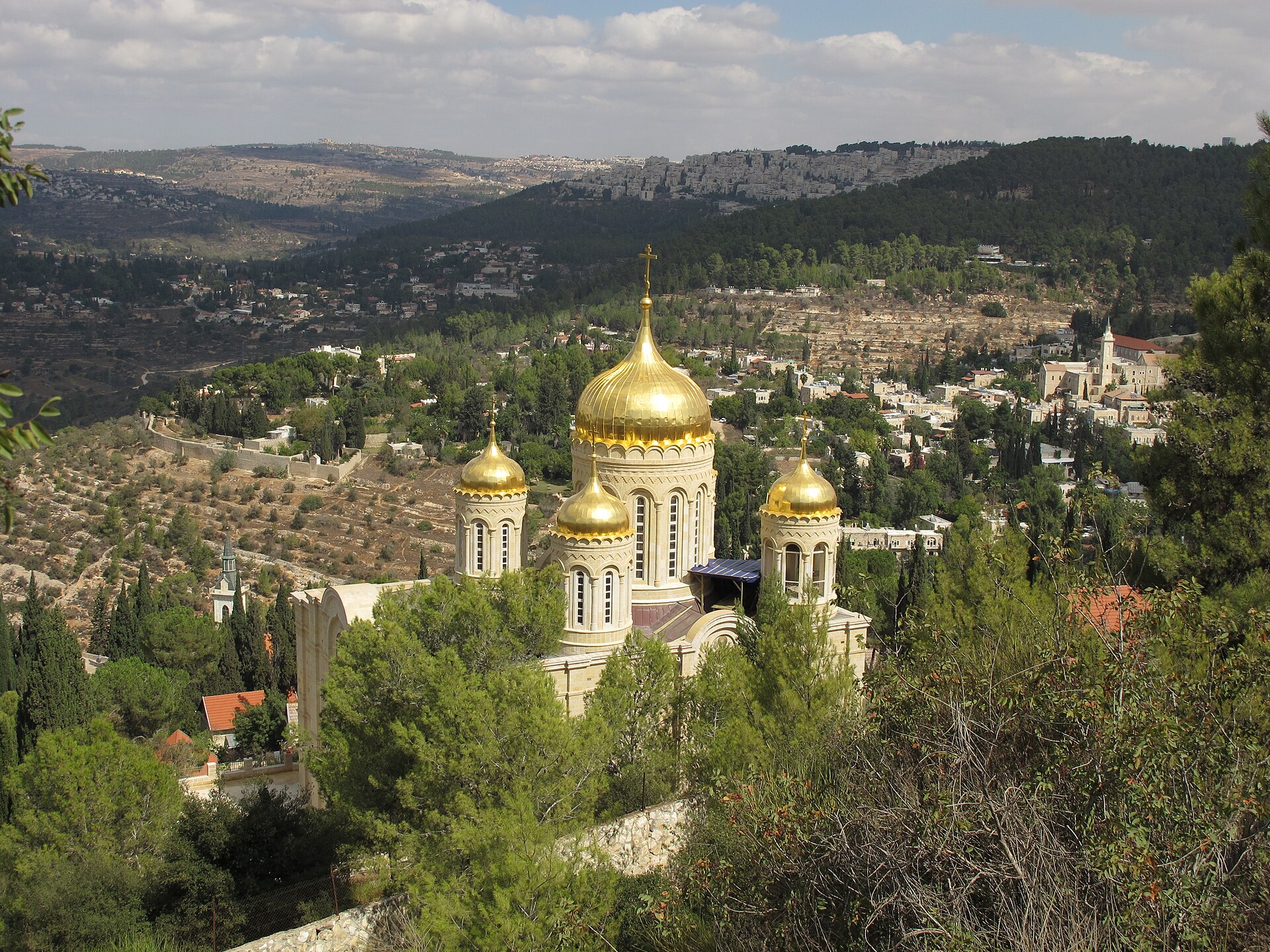
On the slopes above the village stands the Gorny (Moscow) Convent, an active Russian Orthodox community recognizable from across the valley by its gold onion domes. The grounds and gardens are peaceful, but because this is a working convent, visiting hours are limited and sometimes restricted to specific times or with permission, so check before you climb up. Modest dress is required: shoulders and knees covered for everyone, and head coverings for women are expected inside the church.
The Chagall Windows at Hadassah
About a kilometer uphill from the village, the Hadassah Ein Kerem Medical Center holds one of the city’s quieter artistic highlights: the twelve stained-glass windows that Marc Chagall designed for the Abbell Synagogue, each representing one of the twelve tribes of Israel. The colors are extraordinary in morning light. The synagogue is typically open to visitors Sunday to Thursday during set morning and afternoon windows, with an audio guide available, and entry is usually free or by small donation. Because it is inside a working hospital, you pass through the main entrance and follow signs; allow time for security and walking. Confirm the day’s hours before you go, since medical-center schedules can change around Jewish holidays.
Walking and Hiking Around Ein Karem
Ein Karem is one of the easiest places to combine sightseeing with a real walk, because trails run straight out of the village into the surrounding hills. The simplest option is the loop that links the spring, the two main churches, and the back lanes; it is short, mostly paved or cobbled, and steep in places. For something longer, paths lead west toward the wooded slopes and the bird-watching areas in the valley, where spring mornings bring migrating species.
Serious hikers will notice that long-distance routes pass nearby. The Israel National Trail, the country’s flagship cross-country path, runs through the Jerusalem hills in this area; its trail blazes use a three-stripe orange-white-blue marker that you will see painted on rocks and trees. The Sataf agricultural terraces and natural springs are only a short drive or a moderate hike west of Ein Karem, which makes the two an easy pairing for a full outdoor day. For the trail details, see our dedicated Sataf trail guide and the wider Jerusalem Trail loop guide.
Heat and Water in Summer
August in the Jerusalem hills is hot and dry, often mid-30s Celsius (mid-90s Fahrenheit) by early afternoon. Even on a short village circuit you will be climbing in full sun, so carry water rather than relying on the spring, which is not for drinking. Start in the morning, wear a hat and sunscreen, and treat midday as cafe time. If you push on to Sataf or other hill trails, bring more water than you think you need; running out in the afternoon is the most common mistake on these slopes.
Where to Eat in Ein Karem
Ein Karem has a reputation for relaxed dining out of proportion to its size, and the restaurants and cafes around the spring and along the main lane are why many locals come for the day. You will find Mediterranean and Middle Eastern menus, garden seating under old trees, and a few refined kitchens that fill up for weekend lunch. Some places are dairy or vegetarian, others serve meat, and the mix changes over time, so check current menus and reserve ahead for Friday and Saturday.
On timing: Friday afternoons wind down as the city prepares for Shabbat, and some places close from Friday afternoon through Saturday evening while others stay open for the Saturday day-trip crowd. If a long lazy lunch is the point of your visit, aim for midweek or a Saturday, and call ahead. Our wider Jerusalem travel tips cover Shabbat timing across the city.
The Artist Village
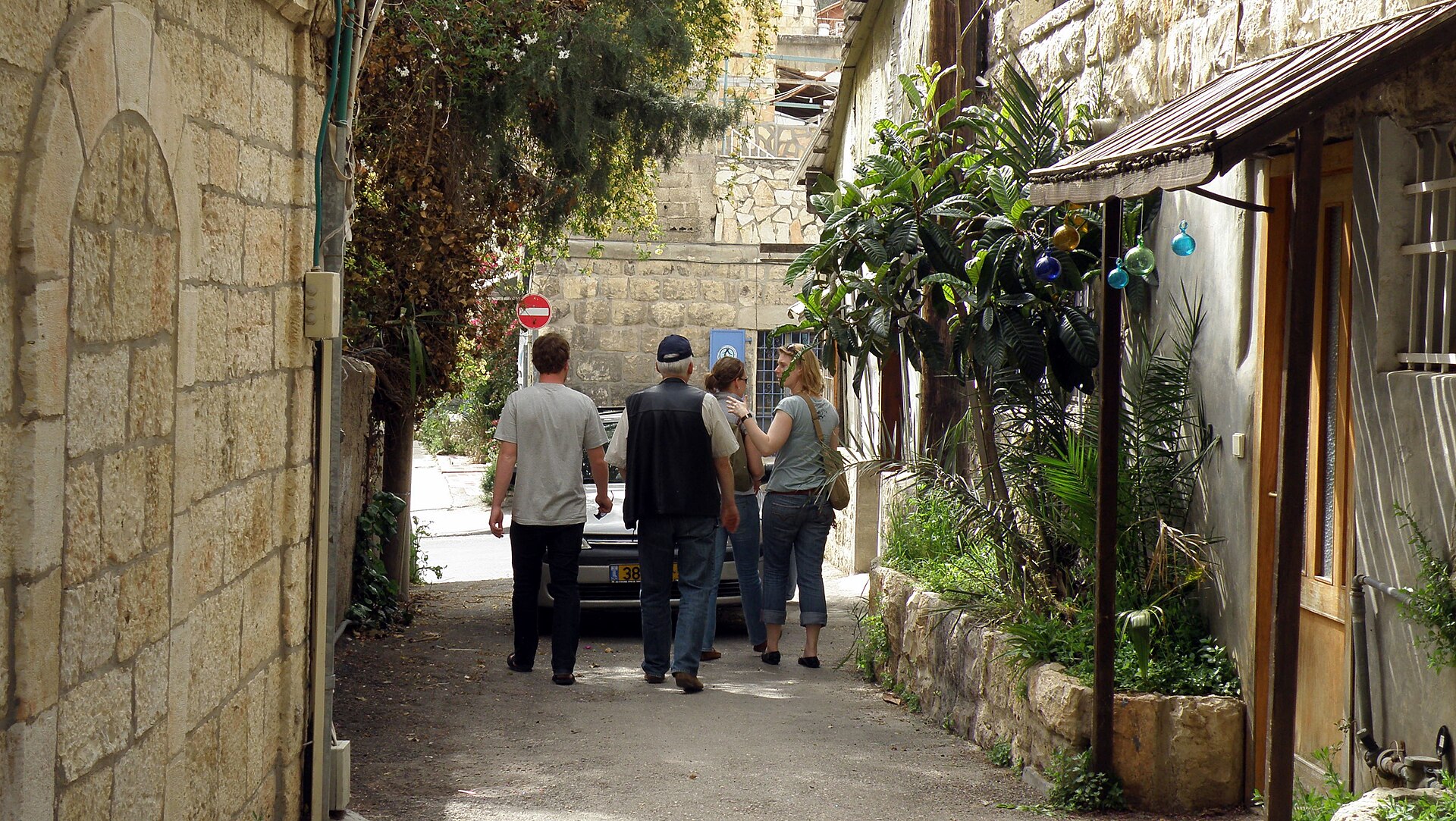
Part of Ein Karem’s appeal is the small creative scene that grew up alongside the churches. Painters, ceramicists, and jewelers keep studios in the old stone houses, and a few galleries open onto the lanes. Hours are irregular and many are one-person operations, so opening is hit or miss outside weekends and open-studio events. Even if every door is shut, the streets are the draw: warm stone, iron gates, climbing plants, and long views make this one of the most photogenic corners of Jerusalem, especially in early morning and late afternoon light. See our overview of Jerusalem art galleries for more.
How to Get to Ein Karem
Ein Karem is not on the Light Rail, but it is straightforward to reach. The most common public option is a city bus into the valley; routes connect from the center and the Mount Herzl area, so check the Moovit or official transit app for the current line and stop, since route numbers change. A practical car-free approach is to ride the Light Rail Red Line to Mount Herzl, then take a connecting bus down or walk the roughly 30 minutes downhill, keeping in mind the climb back at the end of the day.
| Option | Notes | Approx. cost |
|---|---|---|
| City bus | From center / Mount Herzl; check app for current line | Single fare on Rav-Kav / app, a few shekels |
| Light Rail + walk | Red Line to Mount Herzl, ~30 min downhill | Single Light Rail fare |
| Taxi | 15-20 min from center; meter or agreed fare | Roughly 40-60 shekels (about 11-17 USD) |
| Car | 15-20 min; village parking is very limited | Fuel + parking |
If you drive, note that parking inside the village is tight and the lanes are narrow; arrive early or park on the approach roads and walk in. Taxis and rideshare are easy outbound from the center but harder to flag for the return, so arrange a pickup or use an app.
A Half-Day Plan for Ein Karem
A half day, roughly four to five hours, is enough for the core of Ein Karem. Start in the morning before the heat, climbing first to the Church of the Visitation for the views and the Magnificat courtyard while you still have energy for the steps. Walk back down to Mary’s Spring, then over to the Church of St. John the Baptist and its grotto. By then it is time for an unhurried lunch at one of the spring-side cafes. If the Russian convent’s hours allow, finish with the walk up to its gardens, then coffee before heading back. This sequence keeps the steepest climbs in the cooler part of the day.
A Full-Day Plan
To fill a full day, add the Chagall windows at Hadassah in the late morning, then return for lunch in the village. In the afternoon, walk or drive the short distance to the Sataf terraces for a moderate hike past the springs, saving time for the climb back. Return for a coffee, and time the end of the day for sunset from a hillside viewpoint near the churches. In August, keep the Sataf hiking to late afternoon when the slopes shade, and carry plenty of water.
Practical Tips
- Dress for the churches: shoulders and knees covered; women should carry a scarf for the convent.
- Footwear: cobblestones, steps, and steep lanes make sturdy walking shoes worthwhile.
- Carry water: the spring is not for drinking, and the hills are exposed; this matters most in summer.
- Time it around Shabbat: Friday afternoon quiets down and some places close into Saturday evening; reserve for weekend lunch.
- Photography: usually fine in church courtyards; ask before shooting interiors and never during services.
- Cash: handy for small studios and stalls that may not take cards.
- Best season: spring for wildflowers, autumn for comfortable hiking; midsummer means early starts.
Planning Your Visit
Ein Karem works best when you let it be slow: a couple of churches, a climb for the view, a long lunch by the spring, and a wander through the lanes. Build it into a wider outdoor day using our hiking and outdoor guide, combine it with the Sataf springs trail or the family hikes nearby, and check our biblical sites guide if the John the Baptist connection is what brought you here in the first place.
Photo Credits
The Gorny Convent and the village of Ein Karem: Russian Church, Ein Kerem – photo Ron Havilio by Ron Havilio, CC BY-SA 3.0, via Wikimedia Commons.
A lane in the village of Ein Karem: עין כרם – Ein Kerem (3842712090) by RonAlmog from Israel (ישראל), CC BY 2.0, via Wikimedia Commons.