The single best way to understand Jerusalem is on foot. The Old City alone, only about one square kilometer, contains over 30 of the world’s most significant religious and historical sites — and they all sit within a 15-minute walk of each other. Add the surrounding 19th- and 20th-century neighborhoods, and almost every layer of the city’s 5,000-year history becomes accessible to a curious visitor with sturdy shoes and a printed map. The challenge isn’t where to walk; it’s which routes to choose, in what order, and at what time of day.
This is the most complete self-guided walking tour of Jerusalem for 2026. Below you’ll find seven detailed routes — three inside the Old City covering all four quarters, plus four routes through the modern city’s most rewarding neighborhoods. Each route includes a turn-by-turn description, distance and timing, the must-see stops, food and rest breaks, and a printable summary you can save offline. Whether you have 90 minutes or three days, you’ll find a walk here that fits.
Why Walk Jerusalem Yourself
Guided tours have their place — see our best Jerusalem tours guide for our top picks — but a self-guided walk gives you something a guided tour cannot: your own pace, your own pauses, and your own rabbit holes. Stop in a courtyard for 20 minutes if you feel like it. Skip the parts that bore you. Sit on the steps of the Holy Sepulchre for an hour. Detour into a tea shop you’ve never heard of. The Old City rewards this kind of unhurried curiosity.
Self-guided also means completely free: no booking fees, no tip pressure, no guide schedule. Pair the routes below with our Jerusalem attractions map for a deeper layer of background on each stop, and you’ll have an experience as rich as any paid tour.
Before You Walk: Practical Setup
- Sturdy walking shoes are non-negotiable. The Old City is uneven Ottoman stone with steps, slopes, and slick worn paving.
- Wear modest clothing — shoulders and knees covered for holy sites. Carry a light scarf or shawl.
- Refillable water bottle. Tap water is safe and free fountains exist at major sites.
- Cash in shekels for snacks, small fees, and emergency taxis.
- Download offline maps. Google Maps works alley-level in the Old City, but maps.me with a Jerusalem region download is your backup.
- Phone fully charged + battery pack. You’ll be using GPS and the camera all day.
- Start early. The Old City is dramatically cooler and less crowded before 9 AM. Holy sites are most peaceful at opening time.
- Avoid Friday afternoon for any non-Old City walking — most modern-city sites close before Shabbat.
Route 1: Old City Highlights — All Four Quarters in 3 Hours
Distance: ~2.8 km (1.75 miles)
Time: 3 hours minimum, plan 4–5 with proper stops
Difficulty: Easy walking, some stairs
Best time: Start at 8:00 AM

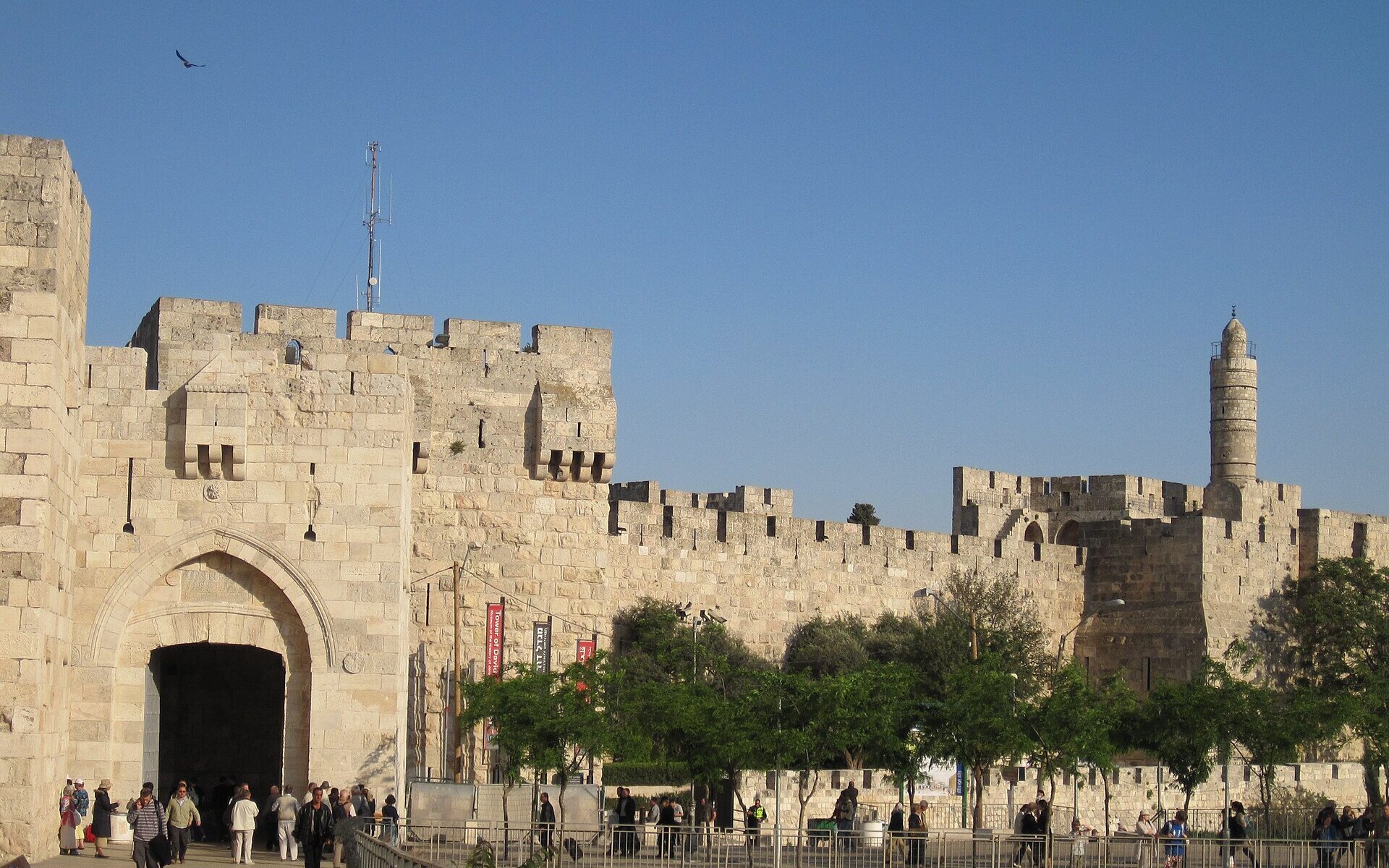
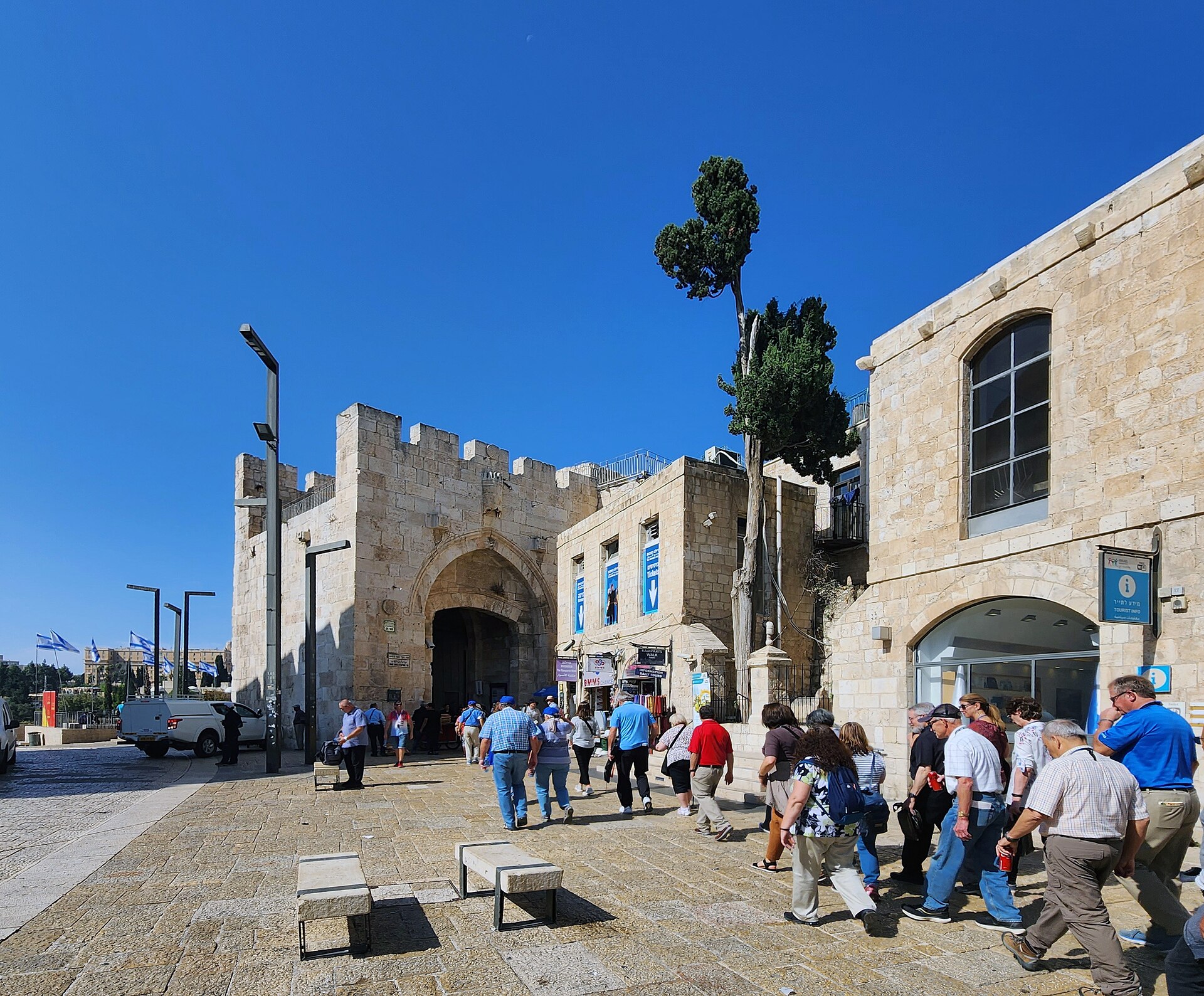
This is the classic introduction. Start at Jaffa Gate (the most popular tourist entrance, with a free Tourist Information Center for paper maps).
- Jaffa Gate — pick up paper map at info center.
- Tower of David citadel — exterior walk past the moat.
- Walk straight east on David Street, the main souk artery.
- At the Cardo intersection, turn right (south) into the Cardo — the Roman-Byzantine main street, partially excavated.
- Continue south to the Hurva Synagogue in the Jewish Quarter — climb the staircase to the rebuilt synagogue plaza for elevated views.
- Descend through the Jewish Quarter, taking the staircase to the Western Wall plaza (free, 24/7). Pause at the photo viewpoint halfway down.
- Spend 20–30 minutes at the Wall.
- From the Wall plaza, climb up via the Mughrabi Bridge to the Temple Mount esplanade (only during non-Muslim hours; verify timing).
- Exit Temple Mount via the Cotton Merchants’ Market gate into the Muslim Quarter.
- Walk through the Muslim Quarter souk — spice stacks, sweet shops, fabrics.
- Stop at the Austrian Hospice rooftop café for strudel and Old City views.
- Continue west to the Holy Sepulchre Church, the central site of the Christian Quarter.
- Spend 30+ minutes at the Sepulchre. Climb to Golgotha; descend to Helena’s chapel.
- Exit through Christian Quarter Road back to Jaffa Gate, looping past the small Lutheran Church of the Redeemer (climb the bell tower if you have energy — 15 NIS, 178 steps, panoramic 360 view).
- Finish at Jaffa Gate.
Food stops on this route: Hummus Lina (Christian Quarter), Abu Shukri (Khan al-Zeit Street), Austrian Hospice café, multiple shawarma stalls along David Street.
Route 2: Via Dolorosa — Religious Pilgrim Route (90 minutes)
Distance: 600 meters (the actual Via Dolorosa is short, but you’ll want time at each station)
Time: 90 minutes – 2 hours
Best time: Friday afternoon (3:00 PM in winter, 4:00 PM in summer) joins the public Franciscan procession.
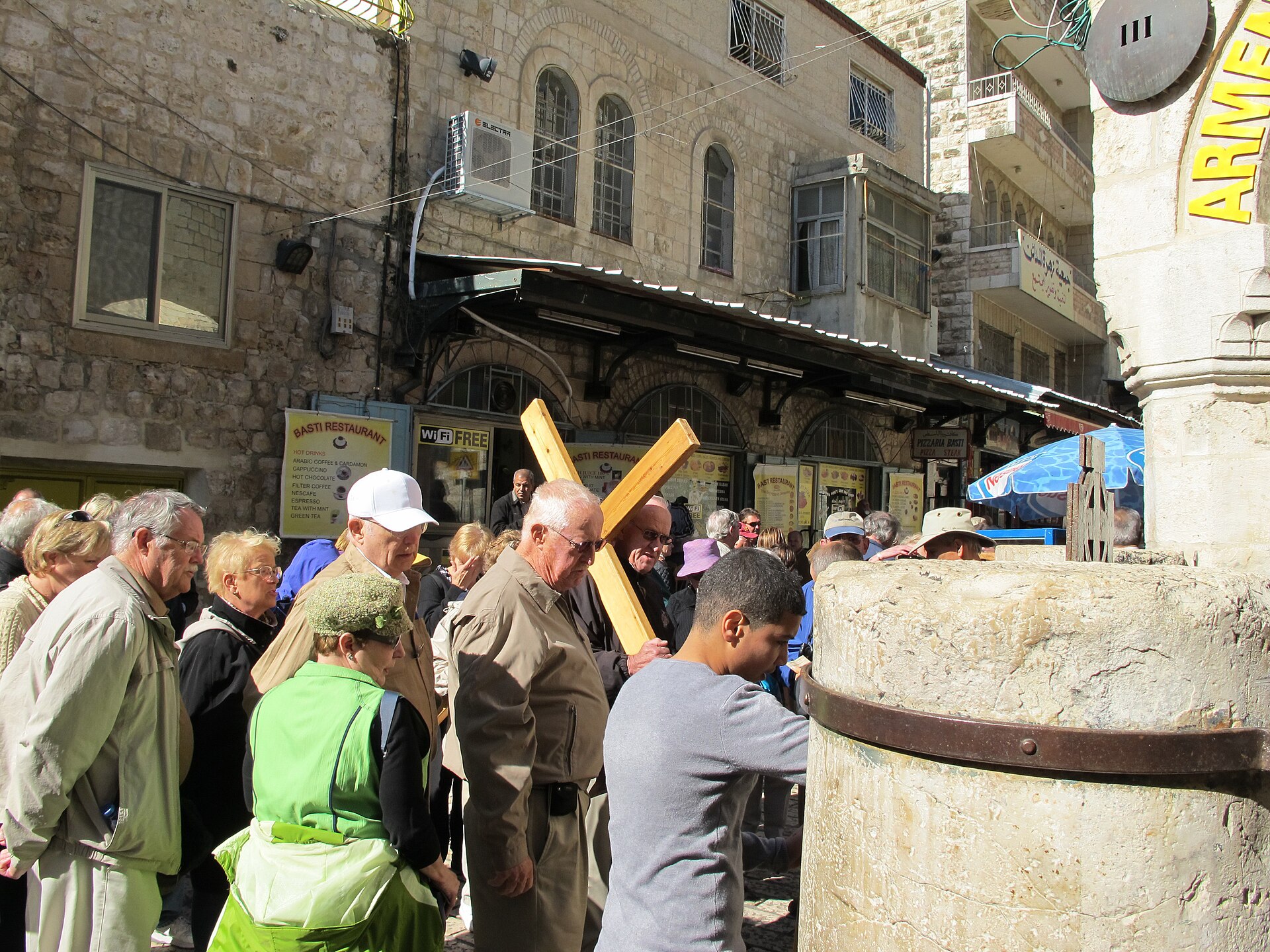
The Via Dolorosa (“Way of Sorrows”) is the traditional 14-station route that Christians believe Jesus walked carrying the cross. Each station is marked with a Roman numeral plaque.
- Station I — El-Omariyeh School (former Antonia Fortress courtyard).
- Station II — Church of the Flagellation, beautiful Crusader-era chapel.
- Station III — Polish Catholic Chapel (Jesus falls first time).
- Station IV — Armenian Catholic Chapel (Jesus meets Mary).
- Station V — Simon of Cyrene helps carry the cross.
- Station VI — Veronica wipes Jesus’s face.
- Station VII — Jesus falls a second time.
- Station VIII — Jesus speaks to the daughters of Jerusalem.
- Station IX — Jesus falls a third time (small Coptic chapel).
- Stations X–XIV — All inside the Church of the Holy Sepulchre (Crucifixion, death, anointing, burial, Resurrection).
The Franciscan procession every Friday afternoon (3:00 PM in winter, 4:00 PM in summer) is the traditional public observance — the friars walk the route in their brown habits, leading prayers in multiple languages. Open to all, regardless of denomination or religion.
Route 3: Mount of Olives Sunrise Descent (2 hours)
Distance: ~2.1 km, mostly downhill
Time: 2 hours including stops
Best time: Start 30 minutes before sunrise
One of the most cinematic walks in the city. Take a taxi to the top.
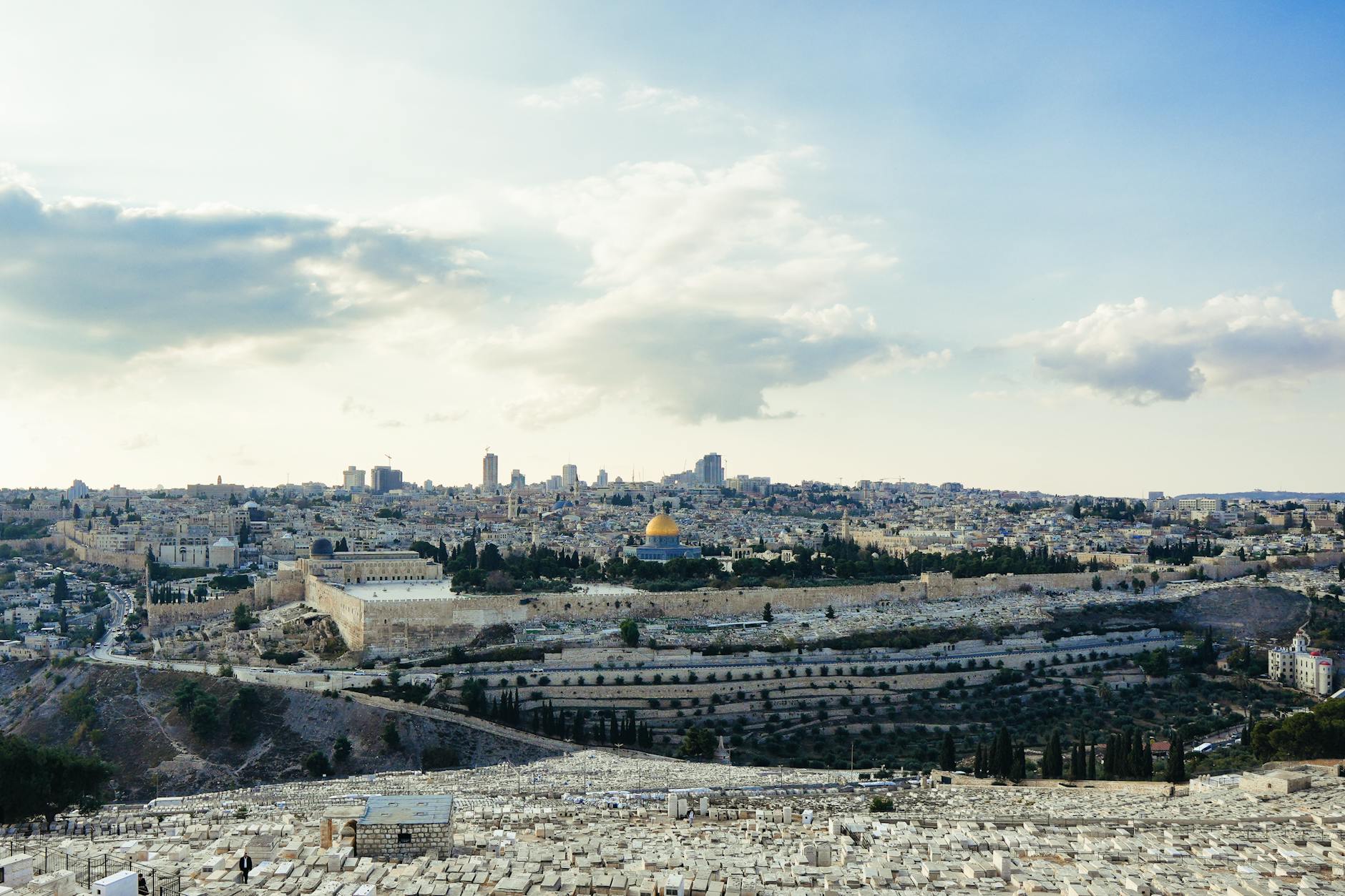
- Taxi to Mount of Olives Viewpoint (near Seven Arches Hotel).
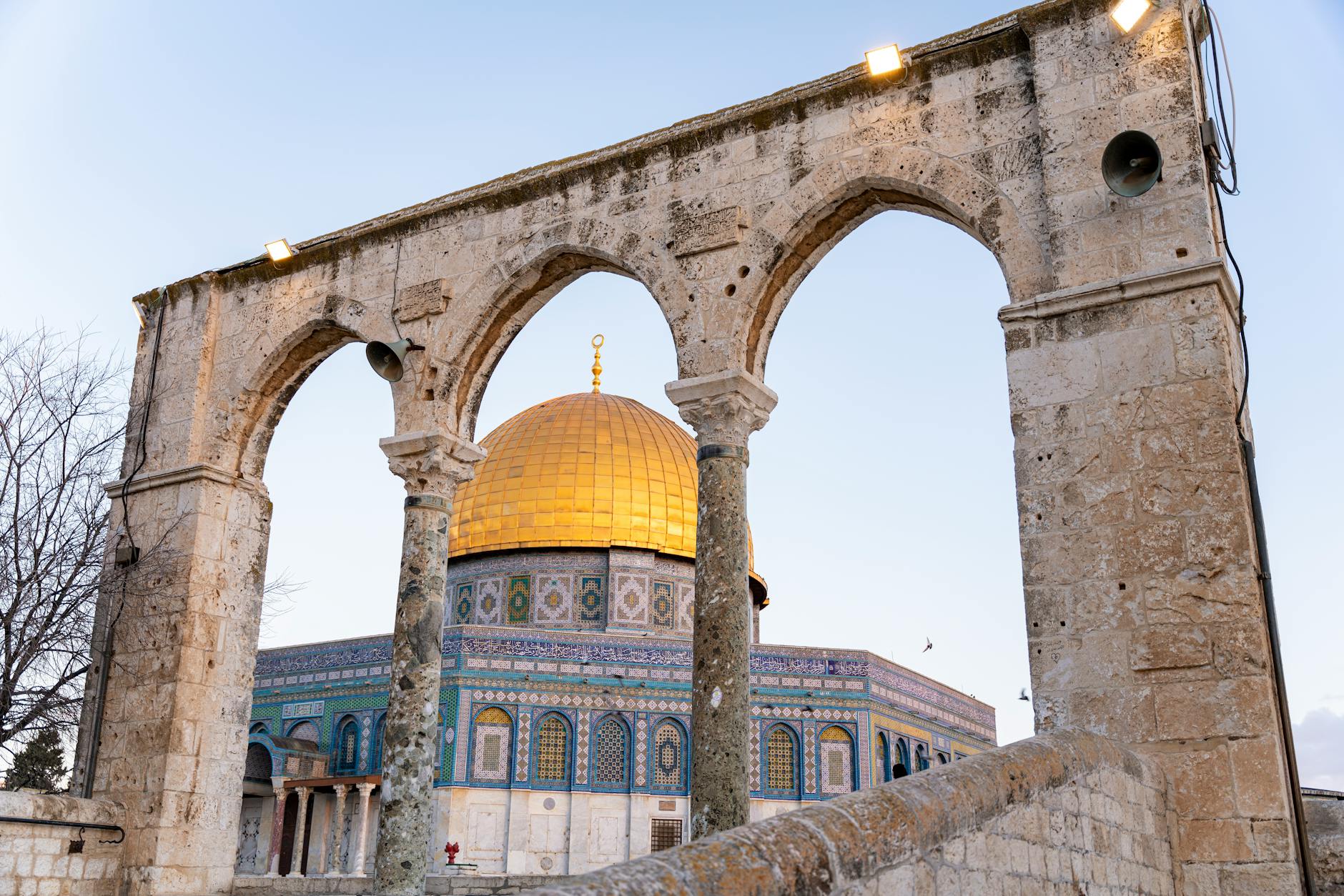
- Wait for sunrise. Take photos of the Old City and Dome of the Rock.
- Walk south along the ridge to Pater Noster Church (Lord’s Prayer in 100+ languages).
- Descend on the public path through the Jewish Cemetery (oldest in continuous use).
- Stop at Dominus Flevit (“The Lord wept”) — small chapel framing a postcard view of the Dome.
- Garden of Gethsemane with 900-year-old olive trees.
- Church of All Nations over the Rock of Agony.
- Tomb of the Virgin Mary (free, donations welcomed).
- Exit via Lions’ Gate back into the Old City.
- Walk to the Pool of Bethesda and St. Anne’s Church (some of the best acoustics in Jerusalem — try humming a single note).
Route 4: Mount Zion + Yemin Moshe + Mamilla (2.5 hours)
Distance: ~2.5 km
Time: 2.5–3 hours
- Start at Zion Gate.
- King David’s Tomb (free, modest dress).
- Room of the Last Supper directly upstairs (free).
- Dormition Abbey (free entry).
- Schindler’s Grave in the Catholic Cemetery — covered in stones from grateful visitors.
- Descend the path back toward the city via Mount Zion outer walls.
- Cross the road into Yemin Moshe — Jerusalem’s prettiest neighborhood.
- Photograph the Montefiore Windmill.
- Cross Bloomfield Garden.
- Walk through Mamilla Mall‘s open-air pedestrian street back to Jaffa Gate.
Route 5: Mahane Yehuda + City Center + Nachalat Shiv’a (3 hours)
Distance: ~3 km
Time: 3 hours, lots of food stops
Best time: 10:00 AM start
- Light Rail to Mahane Yehuda Market.
- Wander the produce stalls. Sample halva, olives, fresh bread, nuts.
- Lunch at one of the market’s stalls — try Azura, Pinati, or Hamarakia.
- Walk southeast on Jaffa Road.
- Detour into Nachalat Shiv’a — boutique galleries and cafés in a 19th-century alley.
- Zion Square and the city center.
- Walk down Ben Yehuda pedestrian mall.
- Continue to King David Street.
- Stop at the lobby of the King David Hotel (historic British Mandate decor).
- End at Mamilla Mall for shopping and Old City views.
Route 6: German Colony + First Station + Cinematheque (2 hours)
Distance: ~2 km
Time: 2 hours
- Start on Emek Refaim Street in the German Colony.
- Walk south past the restored Templer houses.
- Stop at Café Kadosh for the city’s best pastries.
- Continue south to Liberty Bell Park.
- Reach the First Station — converted Ottoman railway terminal with restaurants and live music.
- Walk west along the Hinnom Valley to the Jerusalem Cinematheque rooftop café.
- End at the Old City walls or return through Yemin Moshe.
Route 7: Ein Kerem Village (3 hours)
Distance: ~3 km mostly slopes
Time: 3–4 hours including lunch
Best time: 10:00 AM start; lunch in village
- Bus 28 from city center to Ein Kerem.
- Start at Mary’s Spring — traditional site where Mary drew water during her visit to Elizabeth.
- Walk uphill to Church of the Visitation.
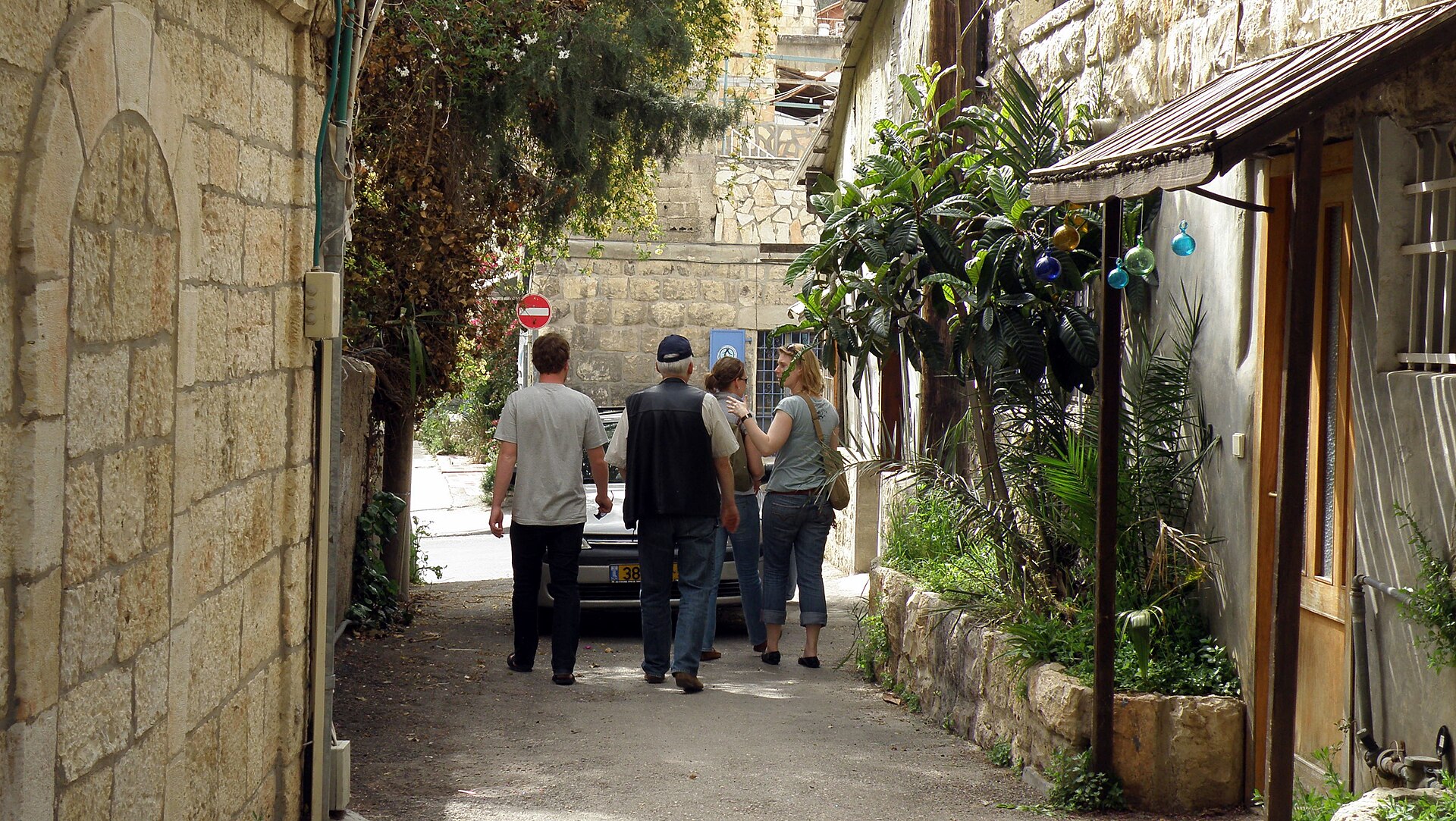
- Down through the village’s narrow lanes.
- Church of St. John the Baptist (traditional birthplace).
- Lunch at Karma, Mala, or Tisch.
- Optional: continue on the marked Sataf trail into the Jerusalem Forest.
- Return by bus 28.
Multi-Day Walking Plan
If you have 1 day
Route 1 (Old City Highlights, 3 hours) → Lunch at Mahane Yehuda → Route 4 (Mount Zion + Yemin Moshe, ~2.5 hours).
If you have 2 days
Day 1: Route 1 + Route 4. Day 2: Route 3 (Mount of Olives sunrise descent) + Route 5 (Mahane Yehuda + city center).
If you have 3 days
Add Route 2 (Via Dolorosa), Route 6 (German Colony + First Station), and Route 7 (Ein Kerem) for the full picture.
For a fuller, attraction-by-attraction itinerary planner, see our Jerusalem itinerary planner.
Printable Route Summaries
Each route’s quick-reference details for printing or screenshotting:
- Route 1 (Old City highlights): Jaffa Gate → David St → Cardo → Hurva → Western Wall → Temple Mount → Holy Sepulchre → Lutheran tower → Jaffa Gate. 2.8 km / 3 hr.
- Route 2 (Via Dolorosa): Stations I–IX through Muslim/Christian Quarters → Stations X–XIV inside Holy Sepulchre. 600 m / 90 min.
- Route 3 (Mount of Olives descent): Top viewpoint → Pater Noster → Dominus Flevit → Garden of Gethsemane → Lions’ Gate → Pool of Bethesda. 2.1 km / 2 hr.
- Route 4 (Mount Zion + Yemin Moshe): Zion Gate → David’s Tomb → Last Supper Room → Dormition Abbey → Schindler’s Grave → Yemin Moshe → Windmill → Mamilla Mall. 2.5 km / 2.5 hr.
- Route 5 (Mahane Yehuda + center): Light rail → Market → Jaffa Rd → Nachalat Shiv’a → Ben Yehuda → King David Hotel → Mamilla. 3 km / 3 hr.
- Route 6 (German Colony): Emek Refaim → Café Kadosh → First Station → Cinematheque rooftop. 2 km / 2 hr.
- Route 7 (Ein Kerem): Mary’s Spring → Visitation → village lanes → St. John → lunch. 3 km / 3 hr.
Free and Paid Audio Tour Options
- Free Tours by Foot — free downloadable Old City self-guided tour.
- VoiceMap — paid GPS-triggered audio tours (~$8 each).
- GPSmyCity — free Old City app with offline maps.
- Rick Steves Audio Europe — free Jerusalem podcast tour.
- Tower of David app — free augmented reality at the citadel.
Final Word: The Best Tour Guide Is Your Own Curiosity
Jerusalem is a city that rewards slow, attentive walking more than any other we know. The seven routes above will take you through every essential layer of the city, but the best moments will probably happen in the gaps — the courtyard you ducked into, the bakery whose smell stopped you, the beggar’s cat that followed you for two blocks. Use this guide as scaffolding, then let your own curiosity fill in the rest.
For more orientation, see our Jerusalem attractions map, the Old City Quarters guide, and the main Things to Do in Jerusalem guide.
Photo Credits
Jaffa Gate and the Tower of David citadel: Jaffa Gate and Tower of David by Yoninah, CC BY-SA 3.0, via Wikimedia Commons.
A tour group in the square inside Jaffa Gate: 91271 jaffa gate in jerusalem PikiWiki Israel by ישראל פרקר Israel Preker, CC BY 2.5, via Wikimedia Commons.
A pilgrim group with a wooden cross at the Third Station of the Via Dolorosa: Jerusalem (108852) by IrinaUzv, CC0, via Wikimedia Commons.
A lane in the village of Ein Karem: עין כרם – Ein Kerem (3842712090) by RonAlmog from Israel (ישראל), CC BY 2.0, via Wikimedia Commons.