The walls of Jerusalem’s Old City have eight gates, and each one tells a different story. Built by the Ottoman sultan Suleiman the Magnificent in the 1530s along the line of far older fortifications, they are the doorways through which armies, pilgrims, merchants, and now millions of visitors have passed for centuries. Seven of the gates of Jerusalem’s Old City are open and in daily use; one, the Golden Gate, has been sealed for some 500 years. This guide walks you through all eight, with their history, which quarter each leads to, how to use them, and the practical details that make finding your way around the walls easy.
Knowing the gates is the single best way to navigate the Old City. Its lanes are a maze, but the gates are fixed points, and choosing the right one saves you time and steps. If you want to see the great holy sites within, our guide to holy sites in Jerusalem maps them by quarter. Here is everything you need to know about the doorways in the wall.
Quick Overview of the Eight Gates
The table below sums up each gate, the wall it sits on, the quarter it serves, and what it is best for.
| Gate | Side | Leads to | Best for |
|---|---|---|---|
| Damascus Gate | North | Muslim Quarter | Markets, atmosphere, Arab buses |
| Herod’s Gate | North | Muslim Quarter | Quiet local entry |
| Lions’ Gate | East | Muslim Quarter | Via Dolorosa start, Mount of Olives |
| Golden Gate | East | Temple Mount (sealed) | Viewing only, from outside |
| Dung Gate | South | Jewish Quarter | Western Wall, City of David |
| Zion Gate | South | Armenian / Jewish Quarter | Mount Zion, quiet access |
| Jaffa Gate | West | Christian / Armenian Quarter | Main tourist entry, citadel |
| New Gate | Northwest | Christian Quarter | Direct Christian Quarter access |
The Eight Gates, One by One
1. Damascus Gate (Bab al-Amud)
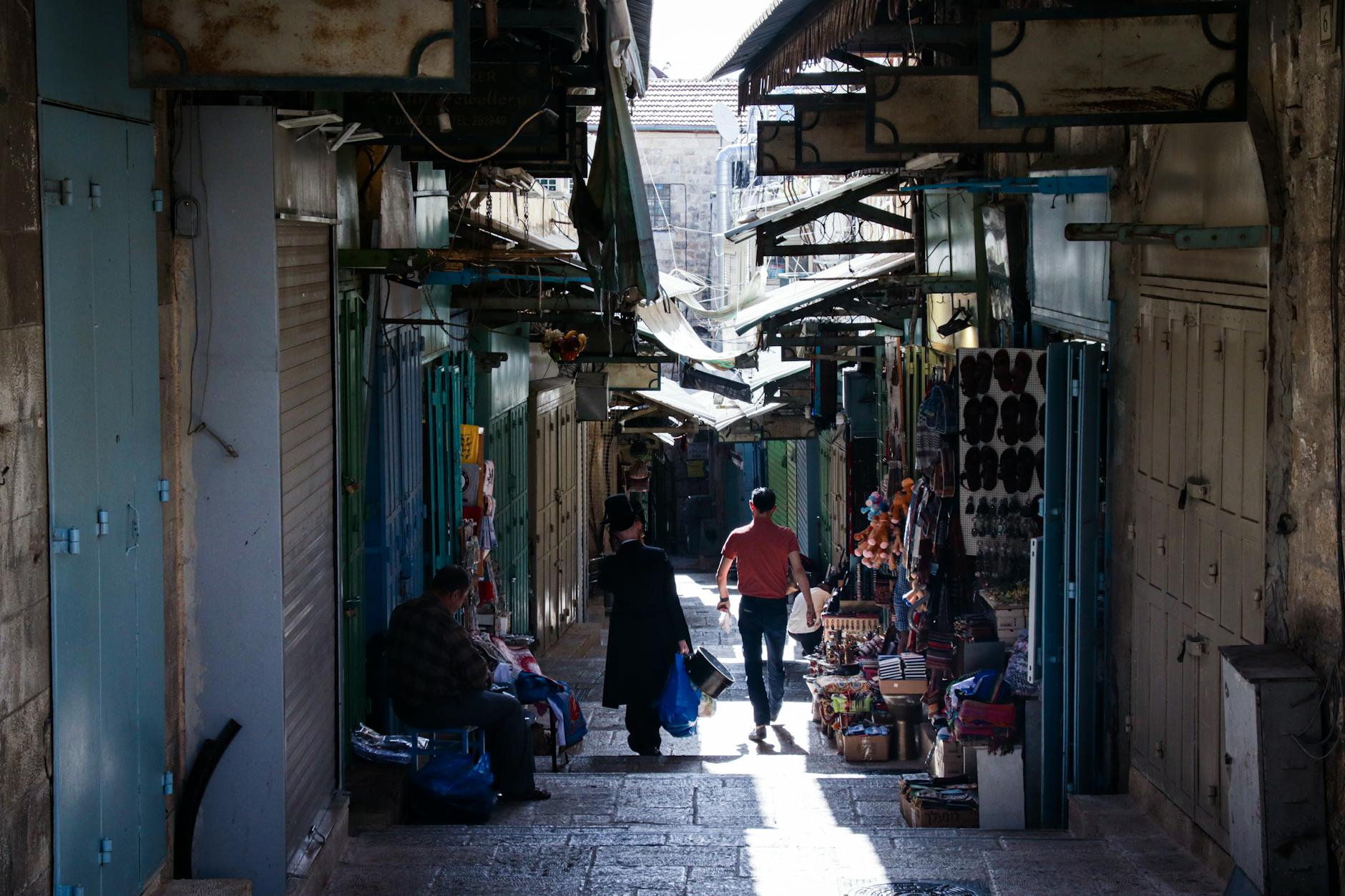
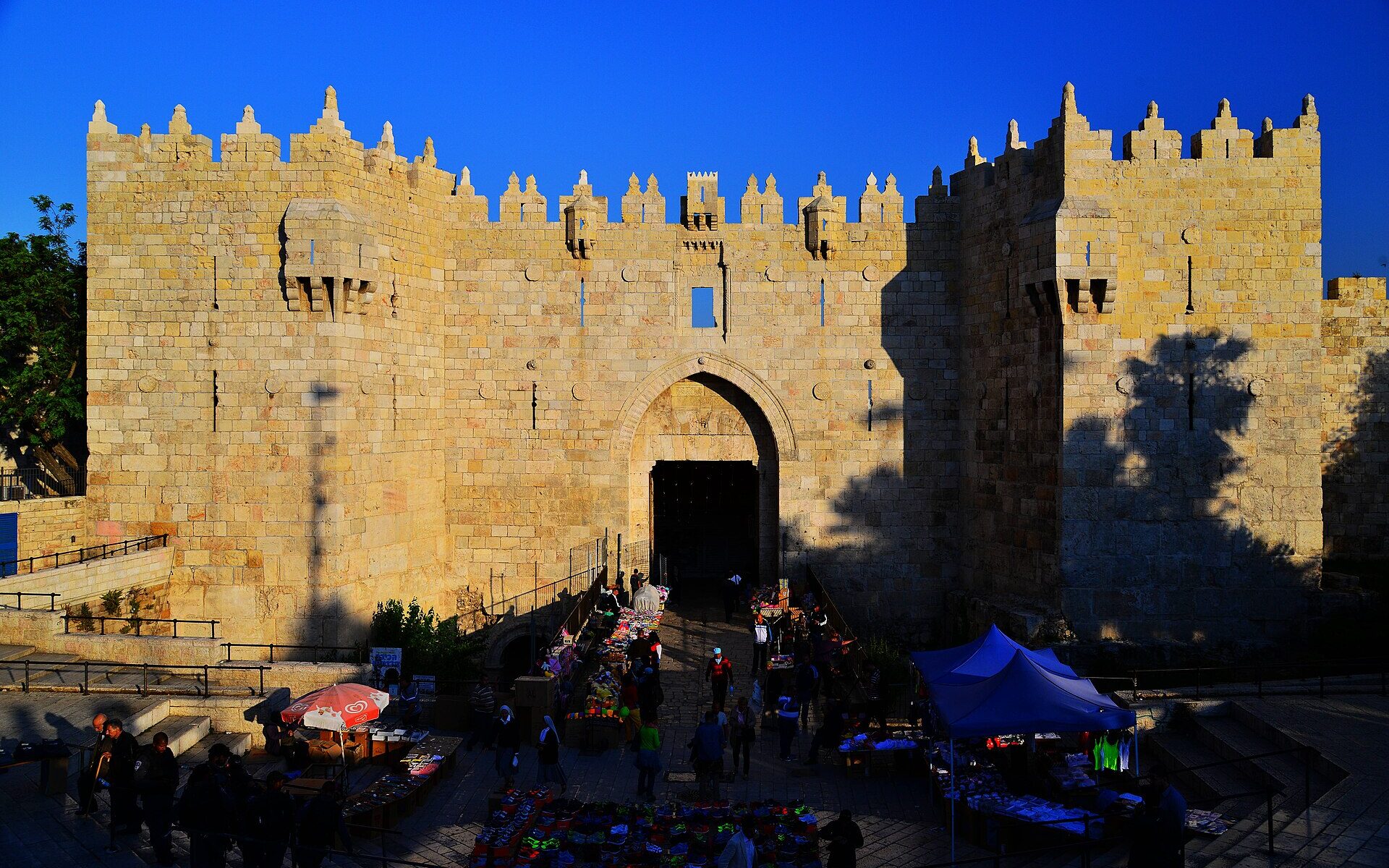
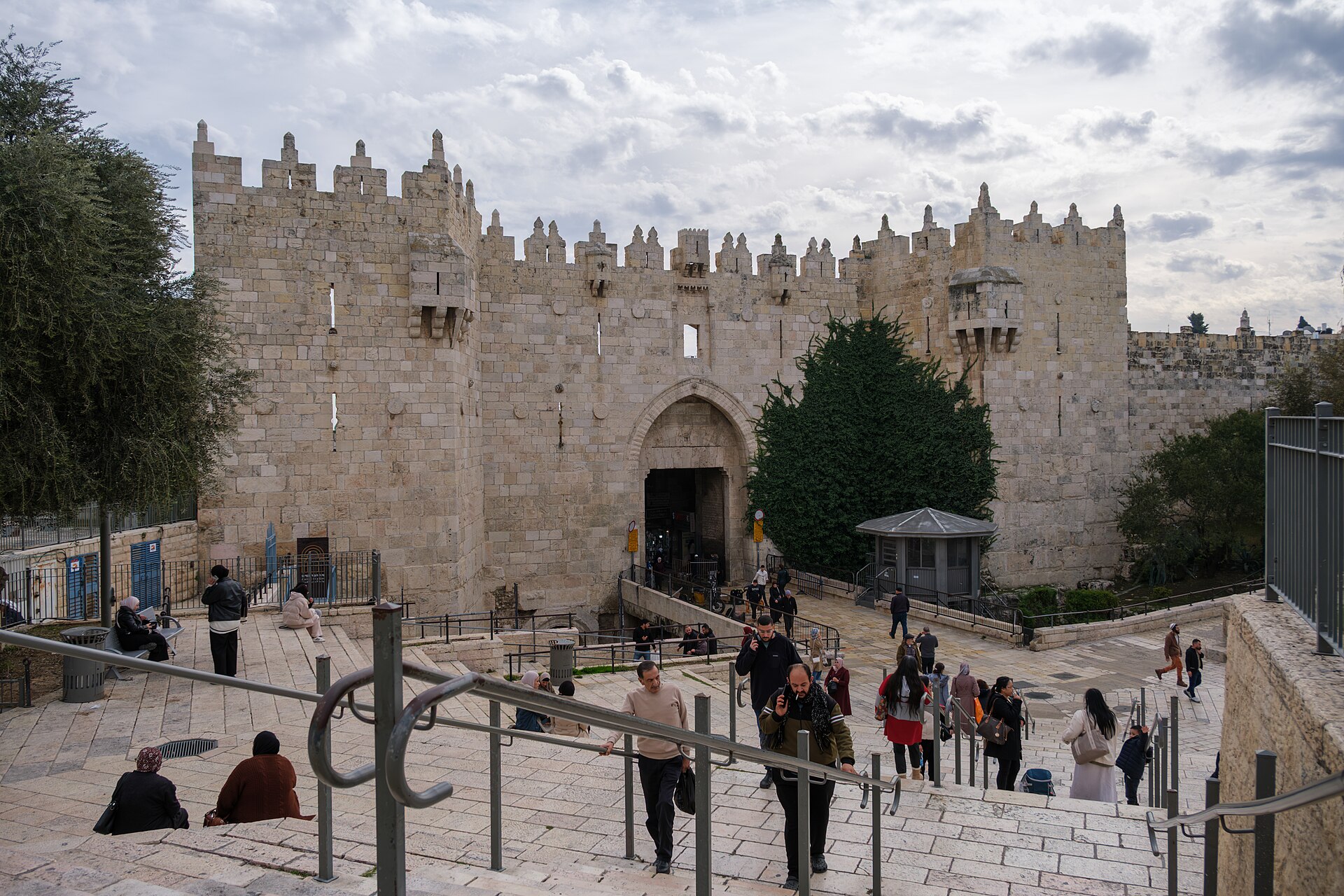
The grandest and busiest of the gates, Damascus Gate anchors the northern wall with a triple-arched Ottoman facade and crenellated towers above a sunken plaza. Its Arabic name, Bab al-Amud (“Gate of the Column”), recalls a Roman victory column that once stood inside; you can see excavated Roman-era remains and an older gate below today. It opens into the heart of the Muslim Quarter and its markets, and the plaza outside is a transport hub for Arab buses to Bethlehem, the Mount of Olives, and the West Bank. It is at its liveliest in the late afternoon.
2. Herod’s Gate (Bab al-Zahra)
A short walk east of Damascus Gate, Herod’s Gate is a quieter northern entrance leading into the Muslim Quarter near residential lanes. Its English name comes from a mistaken medieval association with Herod’s palace; the Arabic name, Bab al-Zahra, references nearby flowers or a cemetery. Used mostly by locals, it is a calm alternative when Damascus Gate is overwhelming.
3. Lions’ Gate (Bab al-Asbat / St. Stephen’s Gate)
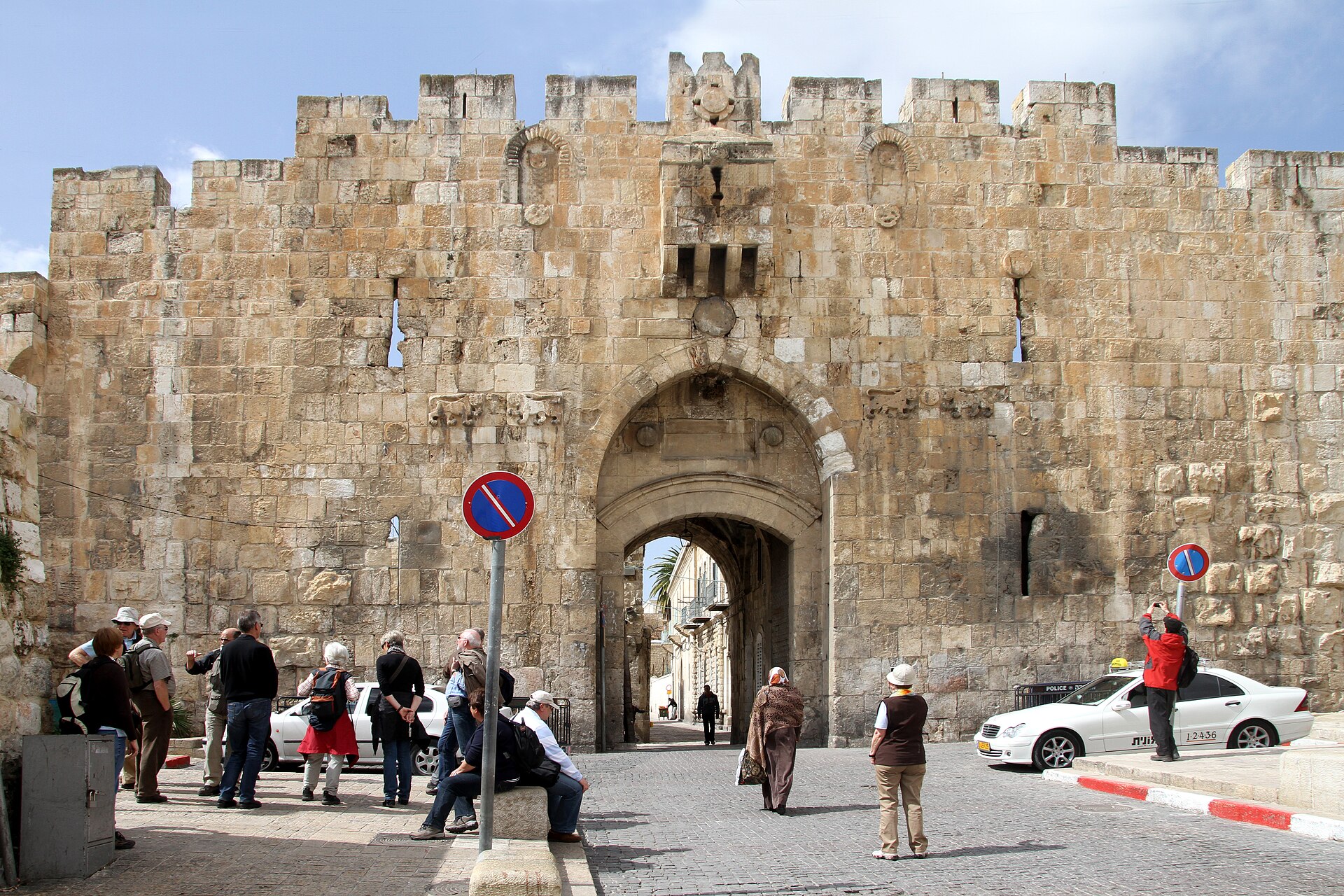
On the eastern wall, Lions’ Gate is named for the four carved feline figures (heraldic panthers) flanking its outer face, placed by Suleiman. Christians know it as St. Stephen’s Gate, after the first martyr, traditionally stoned nearby. It opens toward the Mount of Olives and Garden of Gethsemane and marks the traditional start of the Via Dolorosa, so many pilgrims enter here to walk the Way of the Cross westward through the city.
4. Golden Gate (Bab al-Dhahabi)
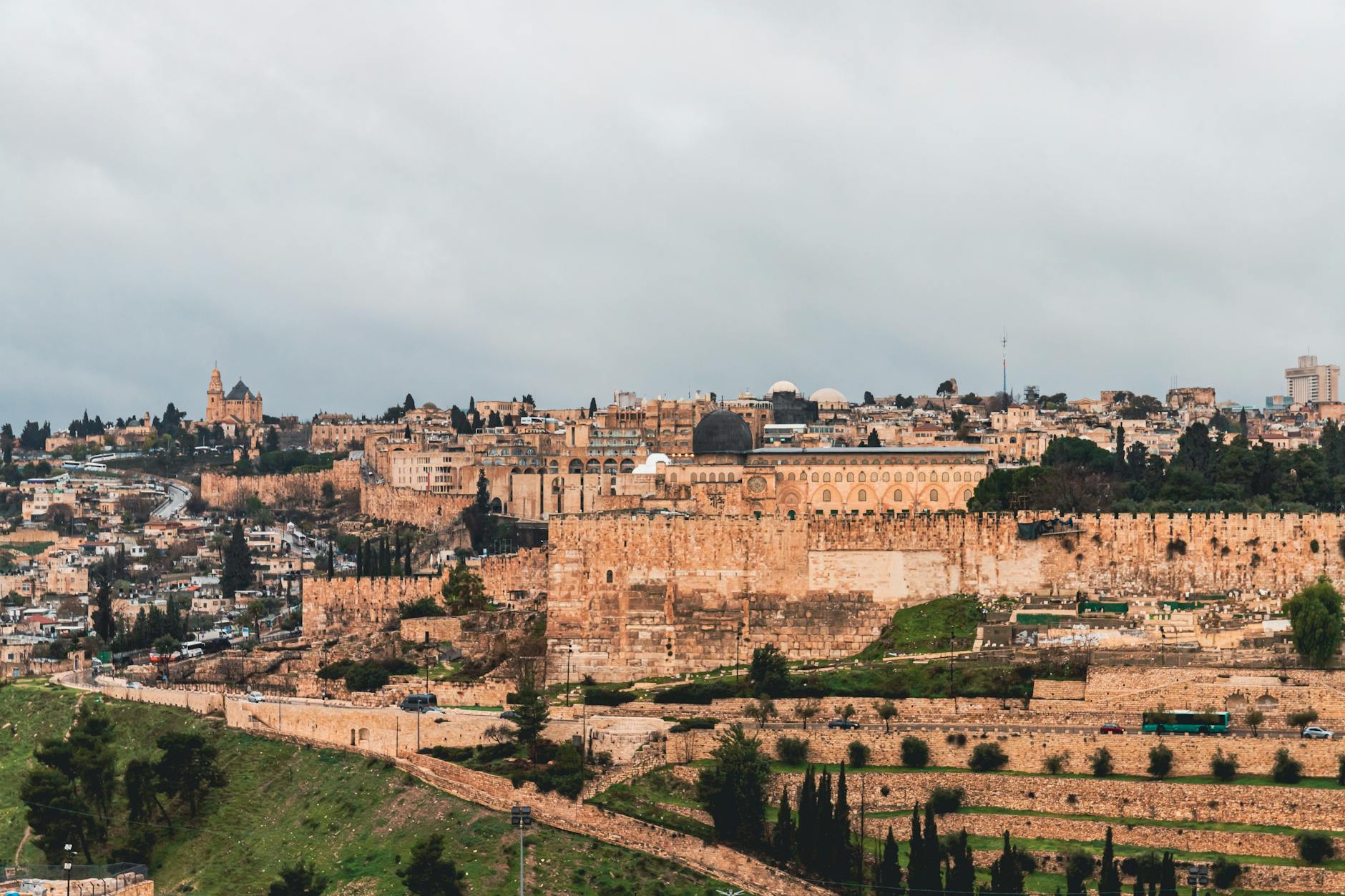
The most mysterious of the gates, the Golden Gate on the eastern wall has been sealed with stone for around five centuries. It opens directly onto the Temple Mount, and it carries deep significance in Jewish, Christian, and Muslim tradition concerning the end of days and the coming of the messiah. It was walled up in the Ottoman period; popular accounts link the sealing to these messianic expectations, though the precise reasons are debated. You cannot pass through it, but you can view it clearly from the Mount of Olives or the road below, with an old cemetery spread before it.
5. Dung Gate (Bab al-Maghariba)
The closest gate to the Western Wall, Dung Gate sits on the southern wall and is the main entrance for visitors heading to the Western Wall plaza, the Jewish Quarter, and the City of David just outside. Its unflattering name likely dates to ancient times when refuse was carried out this way. It is one of the few gates wide enough for vehicles and is heavily used by tour groups; expect security screening near the Western Wall.
6. Zion Gate (Bab al-Nabi Daoud)
On the southern wall, Zion Gate opens toward Mount Zion (with the Tomb of David and the Cenacle) and leads into the Armenian and Jewish Quarters. Its stonework is famously pocked with bullet holes from the fighting of 1948, which has earned it the nickname the “Wounded Gate.” The Arabic name, Bab al-Nabi Daoud (“Gate of the Prophet David”), reflects the nearby tomb. It is a quieter, atmospheric entrance.
7. Jaffa Gate (Bab al-Khalil)
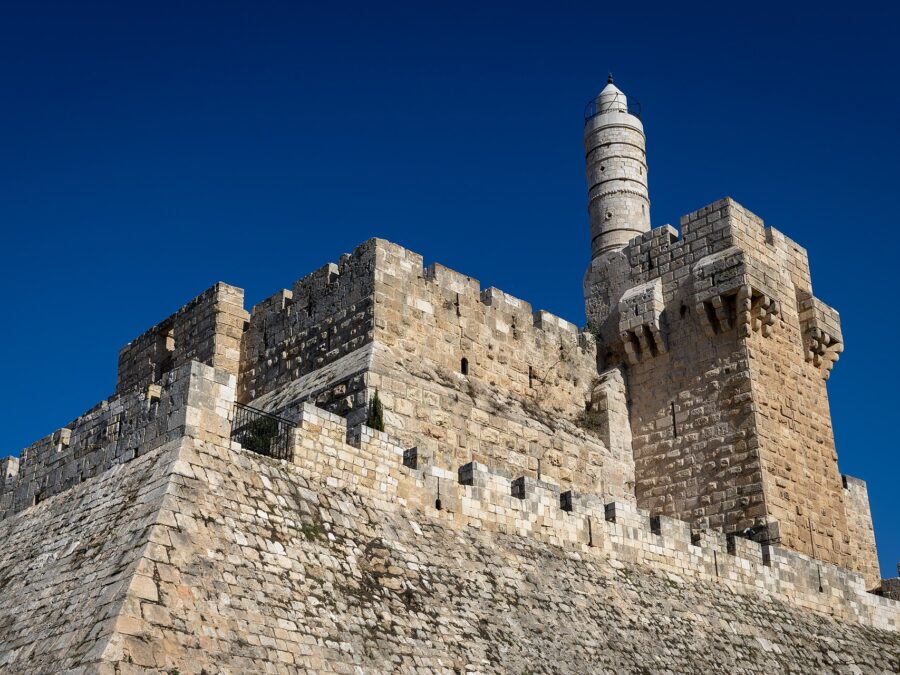
The main gate for most visitors, Jaffa Gate on the western wall faces the New City and the road that once led to the port of Jaffa. Beside it stands the citadel housing the Tower of David Museum. A breach in the wall next to the original gate was opened in 1898 to allow the German Kaiser to enter by carriage, and it is now the vehicle and pedestrian thoroughfare you will likely use. Jaffa Gate leads into both the Christian and Armenian Quarters and is the closest gate to the Light Rail.
8. New Gate (Bab al-Jadid)
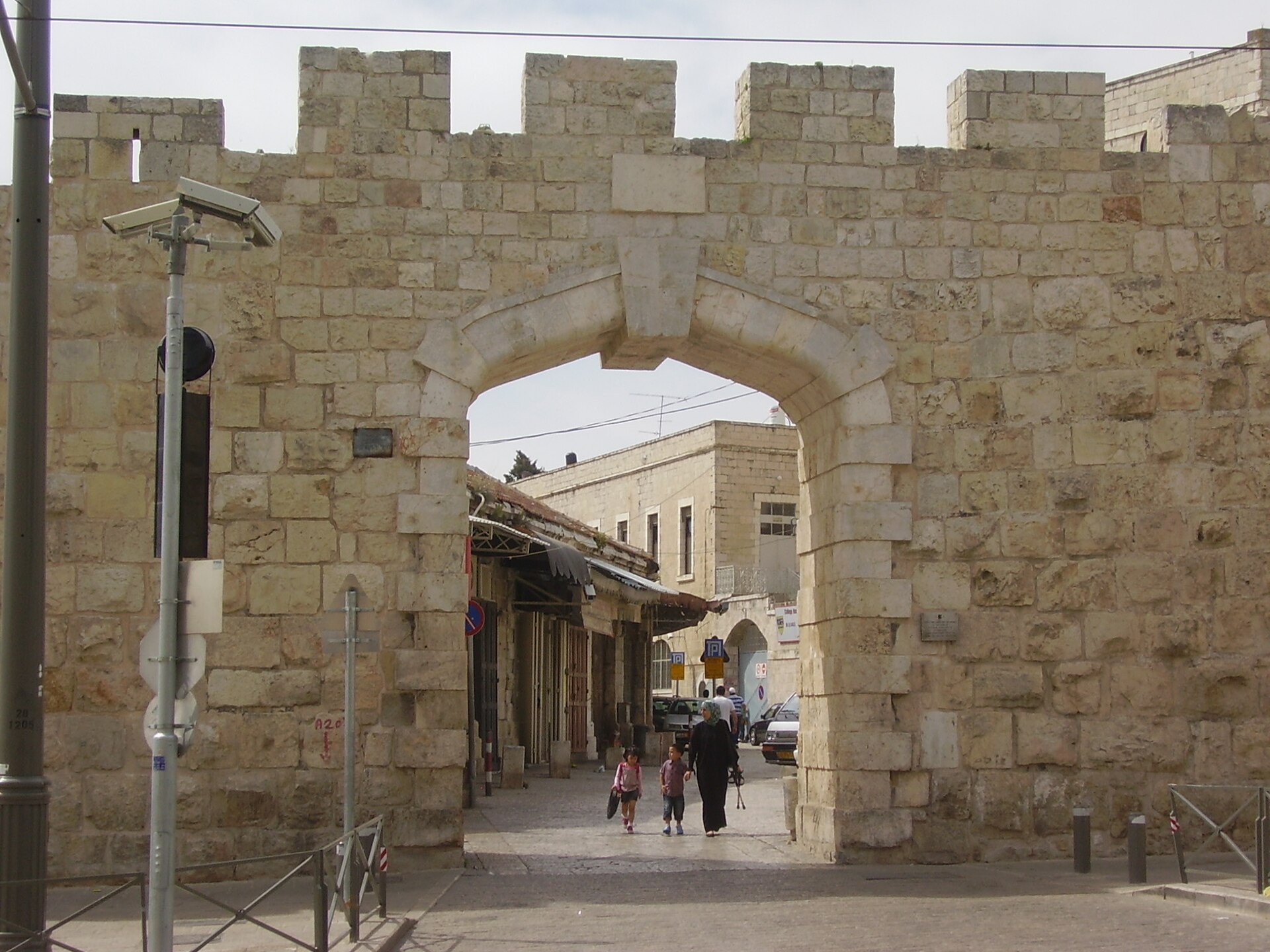
The newest gate, opened in 1889 to give Christian pilgrims direct access to their institutions, New Gate pierces the northwestern wall and leads straight into the Christian Quarter. It is a simple, functional gate without the monumental Ottoman drama of Damascus or Jaffa, but it is the most convenient entrance if the Holy Sepulchre and the Christian Quarter are your goal.
A Short History of the Walls and Gates
The gates you see today were built between 1535 and 1542 by the Ottoman sultan Suleiman the Magnificent, who rebuilt Jerusalem’s defenses on the foundations of earlier Crusader, Roman, and even older walls. The layout, however, is far more ancient: gates have pierced the city’s walls in roughly these positions for thousands of years, and several carry layers of history beneath the Ottoman stone, as the excavations under Damascus Gate vividly show. Because the walls were a working military structure, each gate was designed with a defensive bend or a flanking tower, which is why several entrances still require you to turn sharply as you pass through. For the wider story of this era, see our guide to Ottoman Jerusalem, and for the city’s full sweep, our Jerusalem history guide.
The Walls Themselves
The walls connecting the gates run for about four kilometres and stand up to twelve metres high, with 34 watchtowers along their length. You can walk along the top of much of them on the Ramparts Walk, a memorable way to see the gates from above and look down into the quarters and out over the modern city. For the full experience, see our guide to the Old City walls walk. The ramparts also deliver some of the best photo angles in Jerusalem; our best viewpoints guide has more.
Which Gate Should You Use?
Pick your gate by your destination. For the Western Wall and Jewish Quarter, use Dung Gate. For the Church of the Holy Sepulchre and the Christian Quarter, New Gate or Jaffa Gate are most direct. For the markets and the Muslim Quarter, Damascus Gate puts you straight into the action. To walk the Via Dolorosa from its start or to reach the Mount of Olives, enter (or exit) at Lions’ Gate. For Mount Zion and a quiet entrance, choose Zion Gate. If you are arriving by Light Rail or taxi from the New City, Jaffa Gate is usually the simplest. To plan a route through the whole walled city, our Old City guide ties the quarters together.
How to Get to the Gates
Most visitors reach the Old City at Jaffa Gate, a short walk from the City Hall stop on the Light Rail Red Line (around 6 shekels a ride; no service on Shabbat). Damascus Gate is served by Arab buses and is walkable from the same area. Taxis can drop you at any gate, but cannot enter the pedestrian lanes inside. The gates are spread around a roughly four-kilometre circuit, so it is worth choosing the nearest gate to where you want to be rather than walking the whole perimeter. See our Jerusalem transportation guide for reaching the Old City from the airport and across the city.
Photography Tips for the Gates
The gates are among the most photogenic spots in Jerusalem. Damascus Gate looks its best in late-afternoon light, when the western sun warms the limestone and the plaza fills with life. Jaffa Gate and the citadel glow at sunset. The sealed Golden Gate is best shot from the Mount of Olives in the morning, with the Old City wall lit from the east. For the gates from above, the Ramparts Walk gives unmatched angles. Be discreet photographing people, especially near the busier gates, and avoid photography at holy sites on Shabbat and Jewish holidays.
Practical Tips
- Choose by destination. Dung Gate for the Western Wall, New or Jaffa Gate for the Christian Quarter, Damascus Gate for the markets.
- Most gates stay open day and night, but a few smaller ones (such as New Gate or Herod’s Gate) may close overnight; the main gates are reliably open.
- Expect security near the Western Wall. Bags are screened at the approaches by Dung Gate.
- Damascus Gate peaks in the late afternoon and can be very crowded; mornings are calmer.
- Wear good shoes. Approaches and the lanes beyond are stepped and uneven.
- The Golden Gate is view-only. See it from the Mount of Olives or the eastern road; you cannot enter.
- Combine with the Ramparts Walk to see the gates from above and understand the layout.
Damascus Gate has one date that changes it completely. On Jerusalem Day the Flag March enters the Old City here, and the steps below the gate become the most heavily policed spot in the city from mid-afternoon, with identity checks, barriers and road closures on Sultan Suleiman Street. Jaffa Gate is very crowded the same evening. See Jerusalem Day: what happens and whether to visit before you plan a walk around the gates that week.
Directly across Sultan Suleiman Street from Herod’s Gate stands the white octagonal tower of the Rockefeller Museum, one of the finest buildings of the British Mandate. It has been closed to walk-in visitors since 2023, though the Tower of David Museum has run occasional pre-booked tours, so admire it from the gate or from the ramparts above and check our guide before planning a visit.
Photo Credits
Damascus Gate in late-afternoon sun: Damascus gate in sunset by Zxc0505, CC BY-SA 3.0, via Wikimedia Commons.
Damascus Gate from the top of its stepped plaza: Jerusalem, 21 December 2025 85 by מקף־עברי, CC BY-SA 4.0, via Wikimedia Commons.
Lions’ Gate in the eastern Old City wall: Jerusalem-Loewentor-02-2010-gje by Gerd Eichmann, CC BY-SA 4.0, via Wikimedia Commons.
New Gate in the north-western Old City wall: PikiWiki Israel 13144 New Gate of Jerusalems Old City wall by ד”ר אבישי טייכר, CC BY 2.5, via Wikimedia Commons.