Few parliaments in the world have a Marc Chagall in the reception hall. Israel’s has three of them: vast tapestries that cover an entire wall of the Knesset’s state hall, above floor mosaics by the same artist. You can see them for nothing. A Knesset tour is free, takes about an hour, and runs in English on set days of the week, and the guided tour of the Supreme Court a few minutes’ walk away is free too. The catch is that neither works on the spur of the moment. The days, the times, the passport and the security check are the whole game, and that is what this guide is for.
It covers how the Knesset tours work, who needs to book and who can simply turn up, what to bring, what you will see inside, the Knesset Menorah and the rose garden outside, the Supreme Court’s tours and hearings, and how to fit both buildings into one morning with the Israel Museum in the afternoon. Tour times were checked in September 2026 from current visitor listings. Both institutions can cancel tours at short notice for state events, special sessions or security reasons, so confirm on their websites the day before you go. For the rest of the city’s museums and institutions, see our overview of museums in Jerusalem.
Knesset and Supreme Court Tours at a Glance
| The Knesset | The Supreme Court | |
|---|---|---|
| What it is | Israel’s parliament, in session since 1966 in this building | Israel’s highest court, in a celebrated 1992 building |
| English tours | Sunday and Thursday at 08:30, 12:00 and 14:00 | Sunday to Thursday at 12:00 (Hebrew at 11:00) |
| Cost | Free | Free |
| Booking | Not needed for individuals; groups of 10 or more must book | Not needed for individuals on the public tour |
| Bring | Your passport; arrive about 30 minutes early | Photo ID; allow time for security |
| Highlight | Chagall’s tapestries and mosaics in the State Hall | The architecture, and the chance to sit in on a hearing |
| Allow | About 1.5 hours including security | About an hour |
How the Knesset Tours Work
This is the part that matters, so here it is step by step.
1. Pick a Sunday or a Thursday
Free guided tours in English run on Sundays and Thursdays, at 08:30, 12:00 and 14:00. If you are in Jerusalem only from Monday to Wednesday, or on a Friday or Saturday, there is no public English tour to join, and no amount of charm at the gate will change that. Plan the rest of your week around the tour, not the other way round. Much of the city winds down from Friday afternoon in any case, and our guide to Shabbat in Jerusalem explains what stays open. Before you set out, check the Knesset website for cancellations. State ceremonies, special sessions and security alerts can all cancel tours at short notice, and the Knesset does not always announce them far ahead.
2. Individuals: just turn up, early
Individual visitors do not need to reserve. Arrive at the visitors’ entrance about half an hour before the tour starts, tell the guard you are there for the English tour, and go through security. Tours take a maximum of 50 people, so on a busy day in the high season, arriving early is the difference between getting on the 12:00 and waiting for the 14:00.
3. Groups of ten or more: book
Groups of ten or more must reserve in advance through the Knesset Visitors Center, on +972 2 675 3337. That applies to school and church groups, extended families and tour parties. If your group is anywhere near ten, ring ahead rather than risk it.
4. Bring your passport, and not much else
You must show your passport to get into the building, and you will walk through airport-style security, with bags X-rayed. Bring the original passport, not a photocopy or a picture on your phone. Travel light: large bags slow everything down, and anything that could be used as a weapon, from a pocket knife to a souvenir letter-opener from the Old City, will be taken away. Dress smart-casual. It is a working parliament, and shorts, vests and flip-flops may be refused. Our Jerusalem dress code guide covers what to wear around the rest of the city.
5. Allow an hour and a half
With the early arrival, the security check and the tour itself, a Knesset visit takes about an hour and a half. That is why it pairs so well with the Supreme Court’s 12:00 English tour, as long as you take the 08:30 Knesset tour first.
What You See on a Knesset Tour
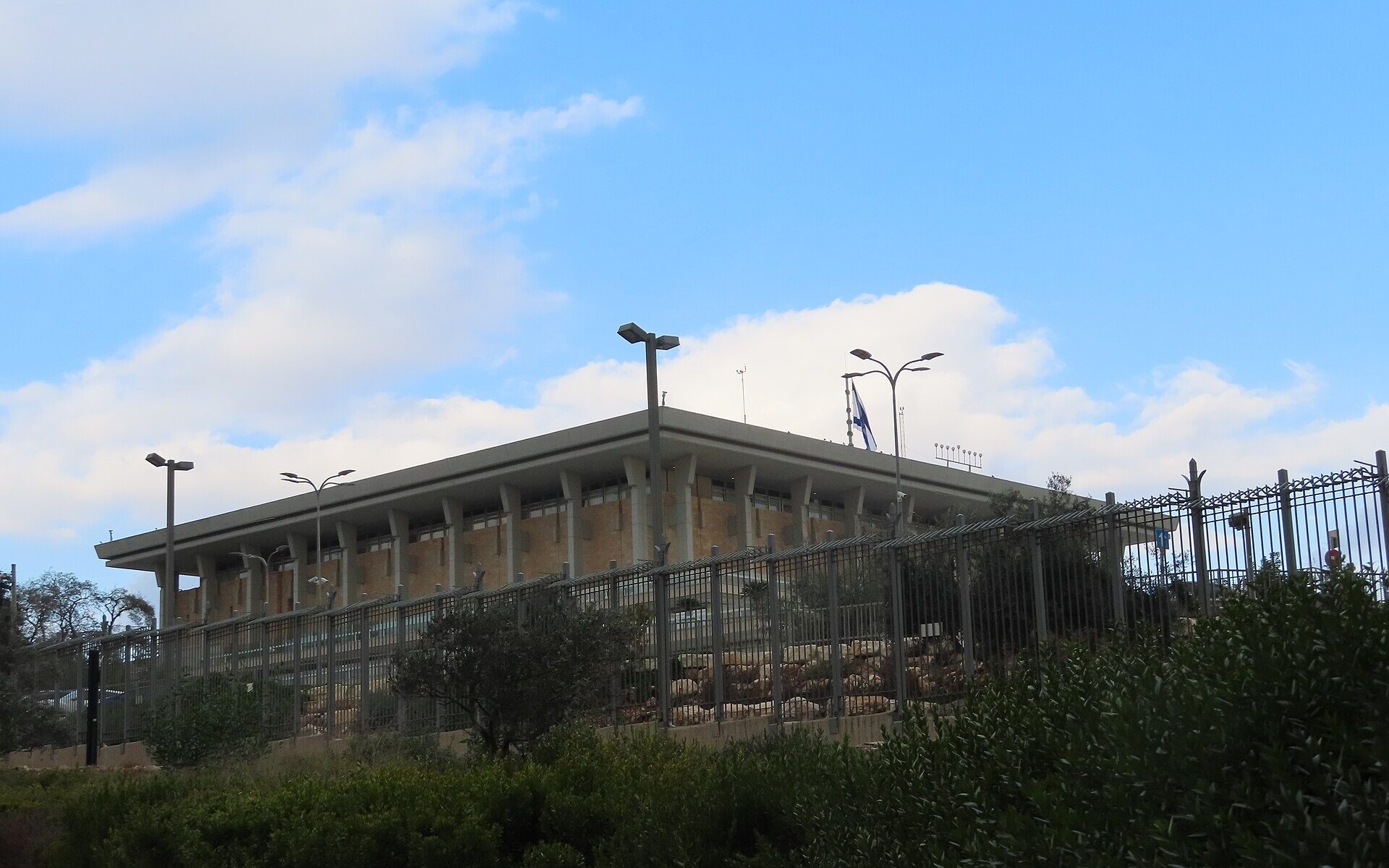
The Knesset building, designed chiefly by Joseph Klarwein and opened in 1966, sits on a hill in Givat Ram. It is a flat-roofed block of Jerusalem stone ringed by tall, square columns, facing the Israel Museum on the next hill. Tours follow the parliamentary calendar and security needs, so the exact route varies, but they usually include:
- The Chagall State Hall. The reason most visitors come. Marc Chagall designed three enormous tapestries for the hall, drawing on the Creation, the Exodus and the Entry into Jerusalem, together with floor mosaics and a wall mosaic. The colours are extraordinary, and the guides are good at explaining the symbolism.
- The plenary hall. The chamber where the 120 members of the Knesset sit, usually seen from the visitors’ gallery above. Plenary sessions usually take place from Monday to Wednesday. If you want to watch one, ask the Visitors Center what is possible, because Sunday and Thursday tours will normally see the chamber empty.
- The story of the institution. How the Knesset works, how its members are elected, and how it came to sit in Jerusalem. Expect a civics lesson as well as an art tour. For some visitors that is the most interesting part, and for others it is the part to endure until the next Chagall.
A little context helps. Israel’s parliament, supreme court and most government ministries are in Jerusalem, which Israel regards as its capital. Most countries keep their embassies in Tel Aviv. The United States moved its embassy to Jerusalem in 2018, and a handful of others have followed. Our history of Jerusalem explains how the city came to be divided in 1948 and why its status remains disputed.
Outside the Knesset: the Menorah and the Rose Garden
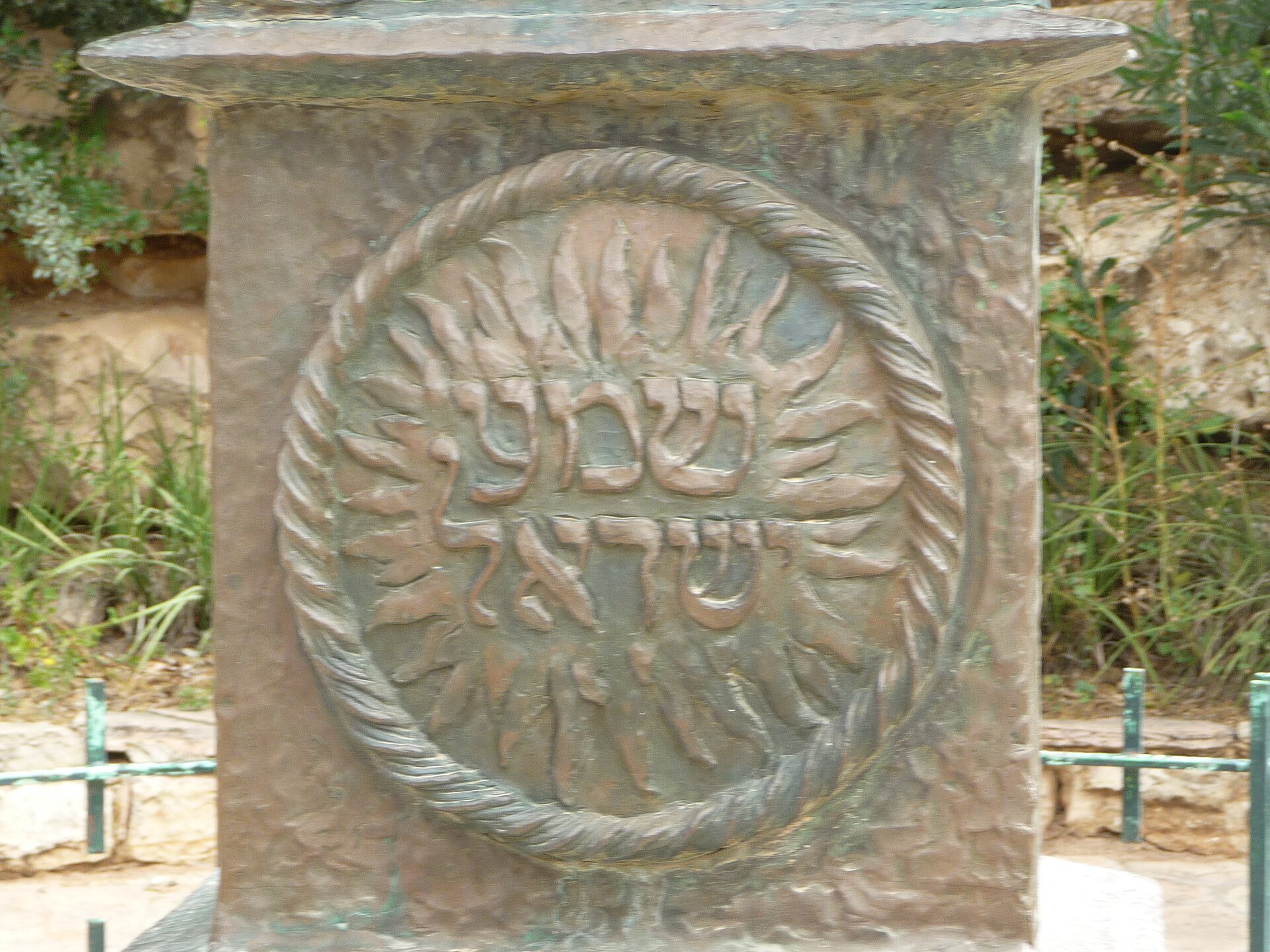
Two free sights outside the building are worth time whether or not you take the tour. Opposite the Knesset stands the Knesset Menorah, a bronze candelabrum about five metres tall by the sculptor Benno Elkan, presented by the British Parliament in 1956. Its branches carry some thirty relief panels showing episodes and figures from Jewish history, from the Bible to the modern era, and it rewards a slow walk round with a guidebook or a phone in hand. It is freely accessible at any time.
Beside it is the Wohl Rose Garden, which stretches between the Knesset and the Supreme Court. It is at its best in spring, and it makes the natural walking route between the two buildings. Below the Knesset, Sacher Park is one of the city’s largest parks. Our guide to Jerusalem’s parks covers both.
The Supreme Court Tour
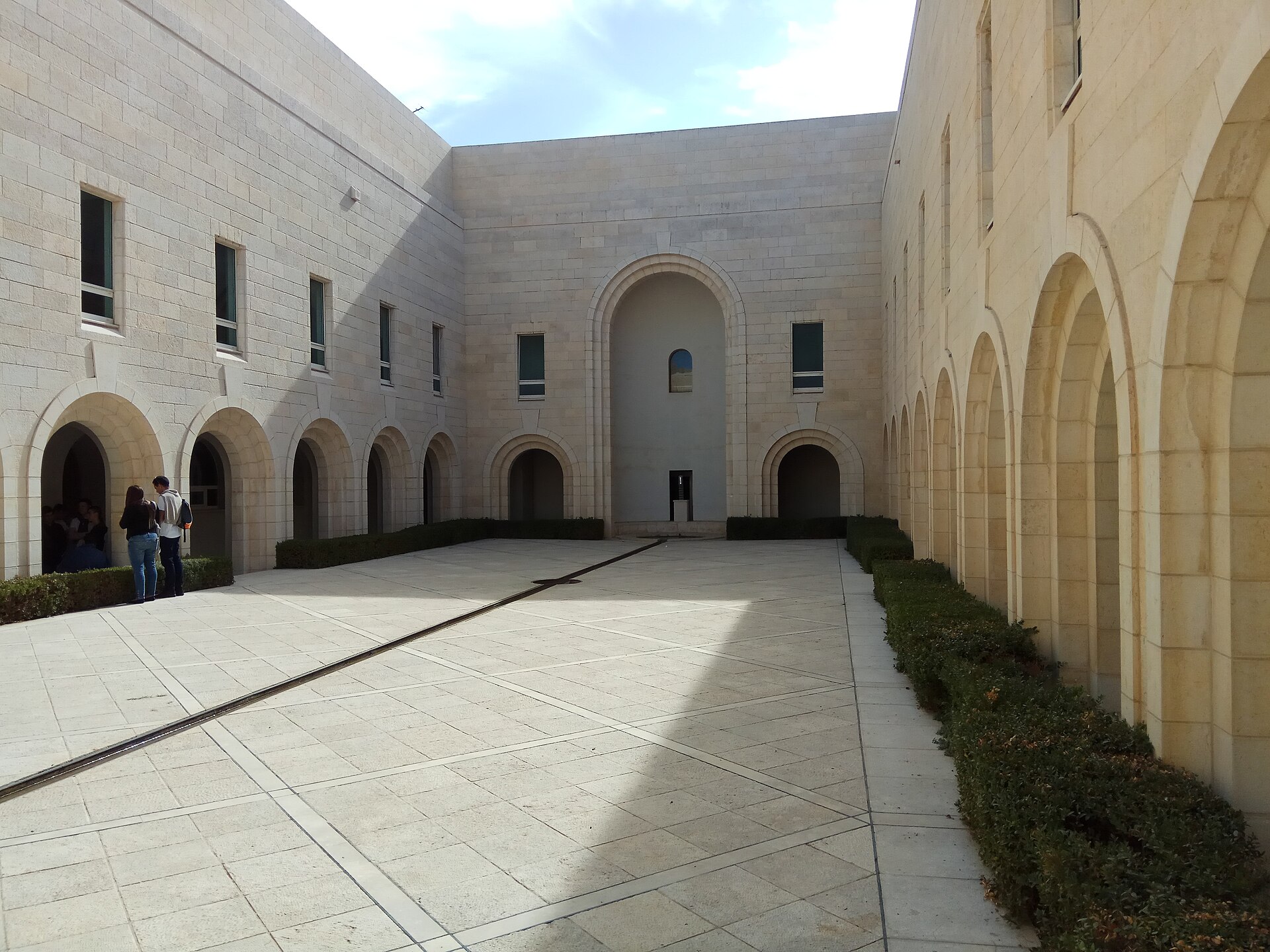
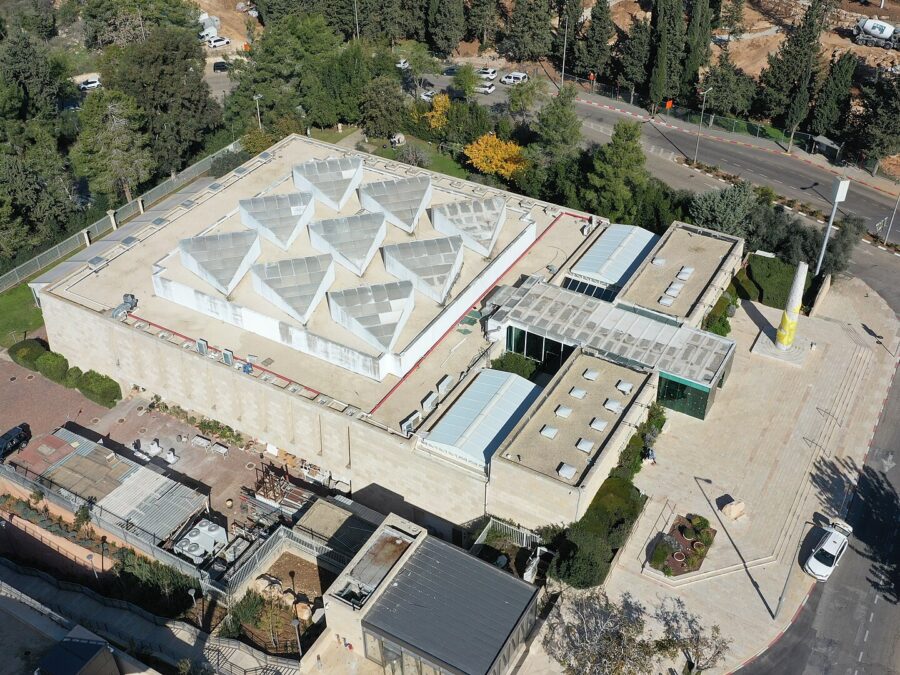
If the Knesset is the more famous building, the Supreme Court is the better one. It was designed by the brother and sister Ram Karmi and Ada Karmi-Melamede, given to the state by the Rothschild family, and completed in 1992. It is widely regarded as one of the finest modern buildings in Israel. It is a careful composition of Jerusalem stone, light and water, full of quiet references to the city. You climb to the court between high stone walls, as pilgrims once climbed to the Old City. The guides point out the play of straight lines, standing for the law, against curves, standing for justice, and a thin water channel in the courtyard that recalls the psalm verse about truth springing from the earth.
How the Supreme Court tours work
The building is open to the public from Sunday to Thursday, and entry is free. Free guided tours for the general public run daily at 11:00 in Hebrew and at 12:00 in English. They cover the court itself, the architecture of the building, and the history and structure of the Israeli legal system. Individuals can join the public tour. Groups should arrange a visit in advance through the court’s website. Bring photo ID, and allow a few minutes for the security check at the entrance.
Watching a hearing
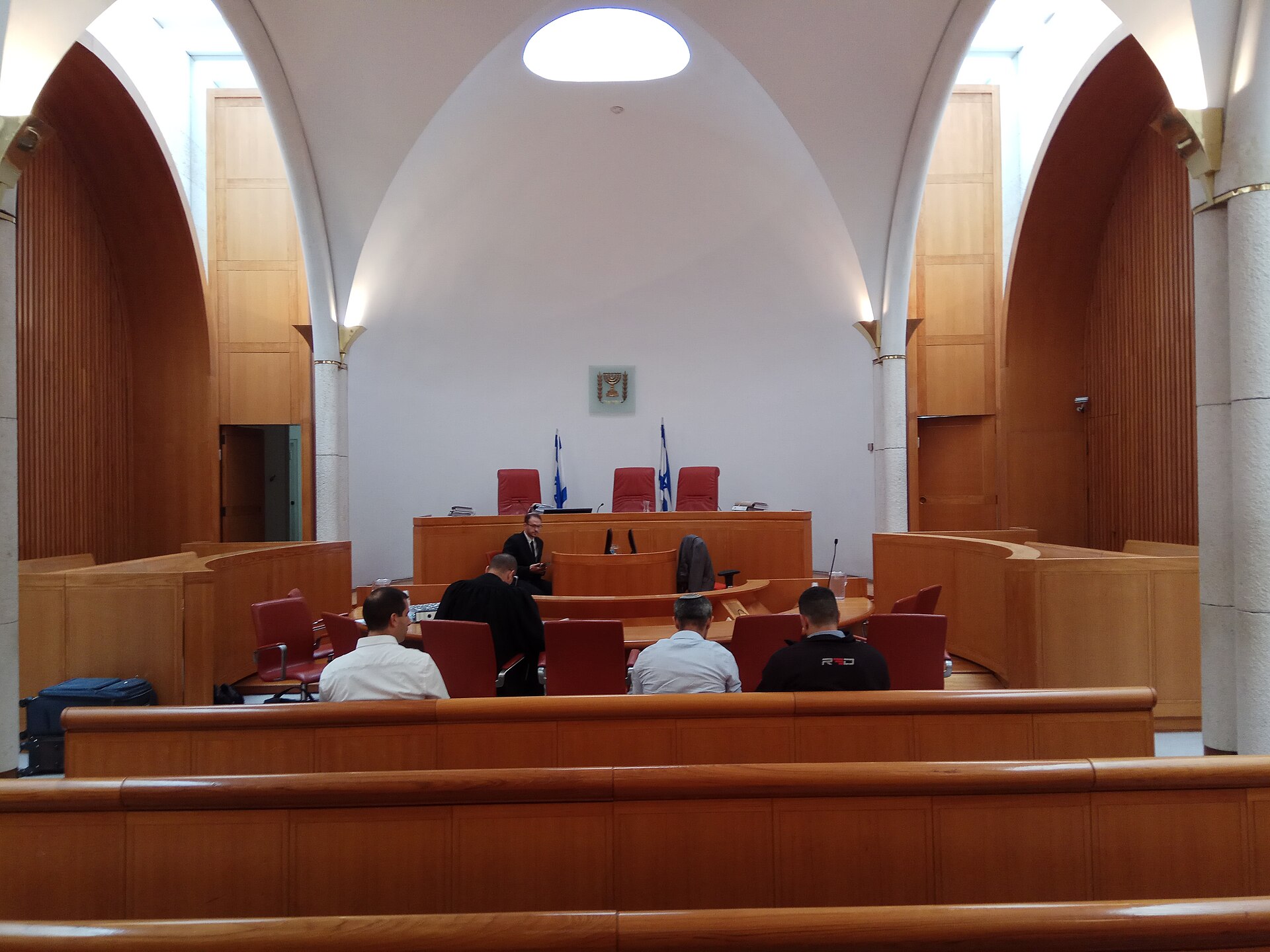
In the morning, visitors can also sit in on court sessions, which is something few tourists think to do. You will not follow the Hebrew arguments, but watching a panel of justices at work in one of these halls gives the building a life that no tour can. Keep your phone silent, follow the ushers’ instructions, and slip out quietly if you need to.
The court has been at the centre of Israeli public life in recent years. In 2023 it was the focus of a fierce national argument over the government’s plans to reshape the judiciary, which brought some of the largest demonstrations in the country’s history, with protests and counter-protests on both sides. The guides are used to questions about it and tend to answer with care.
Accessibility is good. The court lists accessible parking, an accessible entrance and toilets, a voice-guidance system, audio assistance at reception, and audio systems in the courtrooms. Our accessibility guide covers the rest of the city.
Doing Both in One Morning
The two buildings are a few minutes apart through the Rose Garden, and the tour times fit together neatly on a Sunday or a Thursday:
| Time | Plan |
|---|---|
| 08:00 | Arrive at the Knesset visitors’ entrance with your passport |
| 08:30–09:45 | English tour of the Knesset, including the Chagall State Hall |
| 09:45–11:30 | The Knesset Menorah, the Wohl Rose Garden, and a coffee |
| 11:30–12:00 | Walk to the Supreme Court and go through security; if you arrive before noon on a weekday morning, look in on a hearing |
| 12:00–13:00 | English tour of the Supreme Court |
| Afternoon | Lunch, then the Israel Museum, a short taxi or walk away |
That makes a full and varied day in Givat Ram, and because it falls on a Sunday or Thursday, it avoids the Israel Museum’s Tuesday trap, when the museum does not open until 16:00. On a Thursday with children, you could swap the museum for the Bloomfield Science Museum next door. It is closed on Sundays, so on a Sunday it is the Israel Museum or nothing.
Getting There
The Knesset and the Supreme Court are in Givat Ram, in the government quarter west of the city centre.
- Light rail. The Green Line, opened in August 2026, runs through the Givat Ram campus and the government quarter. Check Moovit for the nearest stop and the walk. Our light rail guide has the details.
- Bus and taxi. Several city buses serve the government quarter, and a taxi from the centre is quick outside the rush hours. Our getting around Jerusalem guide covers both.
- On foot. From the city centre, the walk through Rehavia and across Sacher Park takes about half an hour, uphill at the end. It is a pleasant way to arrive on a cool morning.
Are the Tours Worth It?
The Knesset tour is worth it if you are in Jerusalem on a Sunday or Thursday, have more than three days, and are curious about how Israel governs itself or about Chagall. It is free, the State Hall is spectacular, and it slots neatly into a Givat Ram day. It is not worth rearranging a short trip around. If you have only two or three days, the Old City, the Israel Museum and Yad Vashem come first, and our Jerusalem itinerary shows how to fit them in. If you are still deciding how long to stay, see how many days in Jerusalem you really need.
The Supreme Court is the one to prioritise if you can only do one. The tour is shorter, the building is better, and on a weekday morning you can watch justice being done in real time. Architecture lovers should not miss it. Both are among the best free things to do in Jerusalem, and they suit anyone travelling on a budget.
Final Word on the Knesset and Supreme Court Tours
Israel lets visitors walk into its parliament and its highest court for free, look at the art, ask the awkward questions and, on a good morning, watch a hearing. You only have to get the logistics right: a Sunday or Thursday, your passport, and time for security. Do that, and a Givat Ram morning of Chagall, Rothschild stone and Benno Elkan’s bronze makes a welcome change from ancient walls. Then spend the afternoon at the Israel Museum next door. See our guide to museums in Jerusalem for more of the city’s collections, and things to do in Jerusalem for everything else.
Photo Credits
The Knesset building: Holy Land 2018 (2) P146 Jerusalem Knesset building by Fallaner, CC BY-SA 4.0, via Wikimedia Commons.
The Shema Yisrael relief on the Knesset Menorah: Knesset Menorah 01 by Immanuel Giel, CC BY-SA 4.0, via Wikimedia Commons.
The Supreme Court’s inner courtyard: Inner courtyard of Israel supreme court building (2) by Avi1111 dr. avishai teicher, CC BY-SA 4.0, via Wikimedia Commons.
A hearing hall in the Supreme Court: Hearing hall in Israel supreme court by Avi1111 dr. avishai teicher, CC BY-SA 4.0, via Wikimedia Commons.