Across the road from the Israel Museum, and far quieter, is a building full of the world the Bible’s authors actually lived in. There are Egyptian statuettes, Assyrian reliefs, Mesopotamian cylinder seals and ancient silver from all the civilisations that ancient Israel traded with, fought, feared and wrote about. The Bible Lands Museum is the answer to a question most visitors never think to ask: who were the neighbours? If you have ever read about Pharaoh, Nineveh or Nebuchadnezzar and wondered what their world looked like, this is where you find out.
This guide covers the practical side first, then what to see. The hours include a late Wednesday opening, there is a free English tour most days, and the museum sits right opposite the Israel Museum. People often ask whether there is a combined ticket for the two museums. We checked in September 2026 and found no current joint ticket, which is why this guide sets out the real ways to save instead. Prices and hours were checked on the museum’s own website in September 2026; treat them as the right order of magnitude and confirm before you go. For the city’s other collections, start with our overview of museums in Jerusalem.
The Bible Lands Museum at a Glance
| Address | 21 Shmuel Stefan Wise Street, Museum Row, Givat Ram, opposite the Israel Museum |
| Opening hours | Sunday–Tuesday and Thursday 10:00–17:00 · Wednesday 10:00–21:00 · Friday and Saturday 10:00–14:00 |
| Adult ticket | ₪44 (September 2026) |
| Reduced | Children 5–18, students and visitors with disabilities ₪22 · seniors with an international senior ID ₪35 |
| Free | A return visit within a month on a full-price ticket; serving soldiers; licensed guides |
| English tour | Included in the ticket: Sunday–Friday 11:30, plus Wednesday 17:30; no booking needed |
| Audio guide | Free, in English and Hebrew |
| Parking | Free, in front of the entrance |
| Buses | 7, 9, 14, 35, 66 and 90 |
| Time needed | One and a half to two hours |
The Combined Ticket Question
Because the Bible Lands Museum and the Israel Museum face each other across the road, almost everyone plans to do both on the same day, and almost everyone asks whether one ticket covers both. The short answer, as of September 2026, is no. Neither museum’s website listed a joint ticket when we checked, and neither did the ticketing platforms. Combined deals have come and gone over the years, so ask at the desk, but do not plan your budget around one.
There are still sensible ways to cut the cost of doing both:
- Buy the Israel Museum ticket online. At the time of checking, the municipality’s iTravelJerusalem site sold Israel Museum tickets at ₪49 for adults and ₪24 for children, against ₪54 and ₪27 at the door.
- Use the Bible Lands Museum’s return policy. A full-price ticket earns you a free second visit within a month. Show your original ticket at the admission desk. If the Israel Museum eats your whole day, you can come back.
- Bring the right ID. Children aged 5 to 18, students and visitors with disabilities pay half price at ₪22. Seniors with an international senior ID pay ₪35. Bring the card, not a story.
- Take the free tour and audio guide. Both are included in the ticket, and together they turn a pleasant hour into a far better one.
For an adult, doing both museums at door prices costs ₪98 in total, or ₪93 with the Israel Museum ticket bought online. For a family of two adults and two children, it comes to about ₪229 at the door. It is not cheap, but it is two of the best museums in the country on one day, with one taxi ride. For full Israel Museum details, including its unusual Tuesday hours, see our Israel Museum visitor guide.
What the Museum Is About
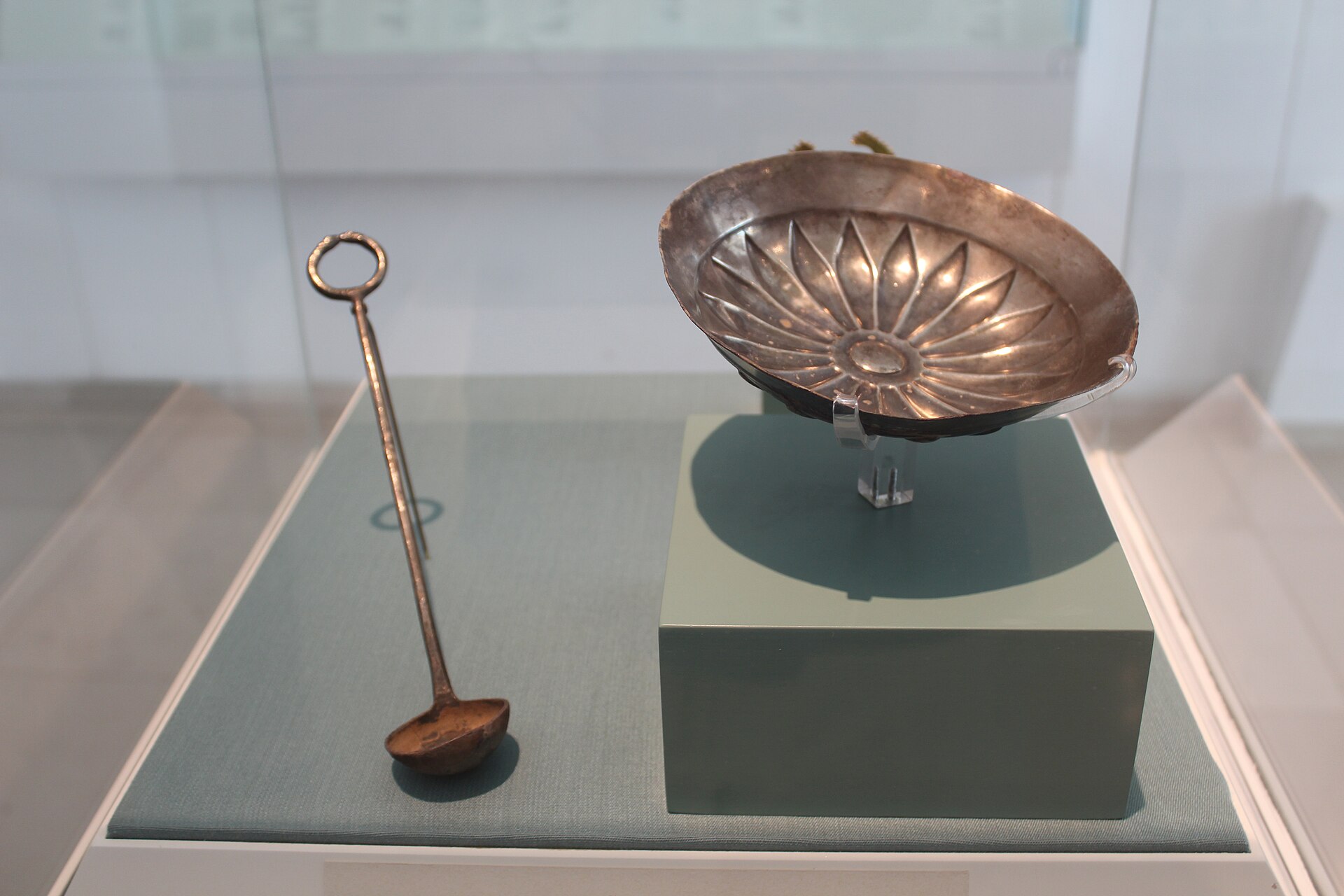
The museum grew out of the private collection of Dr Elie Borowski, a scholar and collector of ancient Near Eastern art, and opened in 1992. Its aim was, and is, to show the Bible in its setting: the civilisations of Egypt, Mesopotamia, Anatolia, Persia, Canaan and the eastern Mediterranean, arranged roughly in the order in which they appear in the biblical story. It is not a museum of the Bible as a book, and it is not a religious institution. It is an archaeology museum of the ancient Near East, organised around the one text most visitors already know.
That makes it the natural partner to the Israel Museum. The Israel Museum shows you what has been dug up in this country. The Bible Lands Museum shows you the empires on its borders, the ones whose armies came and went, whose gods the prophets railed against, and whose writing systems ancient Hebrew scribes knew. Visit the two on the same day and each makes more sense.
What to See
A two-minute timeline before you go in
The museum makes far more sense if you arrive knowing roughly who came when. This is the sequence the galleries follow, with the biblical connection that makes each one matter:
| Civilisation | Roughly | Why it matters to the biblical story |
|---|---|---|
| Sumer and Akkad | 3000–2000 BCE | The first cities and the invention of writing; Abraham’s tradition begins in “Ur of the Chaldees” |
| Egypt | 2700–1070 BCE (its great age) | The setting of the Joseph and Exodus stories, and the power to the south for most of ancient history |
| Canaan and Phoenicia | 2000–500 BCE | The land’s earlier peoples, and the Phoenician alphabet from which Hebrew writing descends |
| Assyria | 900–612 BCE | Conquered the northern kingdom of Israel in 722 BCE and besieged Jerusalem in 701 BCE |
| Babylon | 626–539 BCE | Nebuchadnezzar destroyed Jerusalem and the First Temple in 586 BCE, and carried Judah into exile |
| Persia | 539–332 BCE | Cyrus allowed the exiles to return, and the Second Temple was built |
| Greece and Rome | 332 BCE onwards | Alexander, the Hasmoneans, Herod, and the Roman destruction of the Temple in 70 CE |
For how the same story played out on the ground in Jerusalem itself, see our history of Jerusalem.
The galleries run broadly chronologically, from the earliest cities and the invention of writing to the Persian, Greek and Roman worlds. Displays change and objects travel on loan, so treat these as types of thing to look for rather than a guaranteed list:
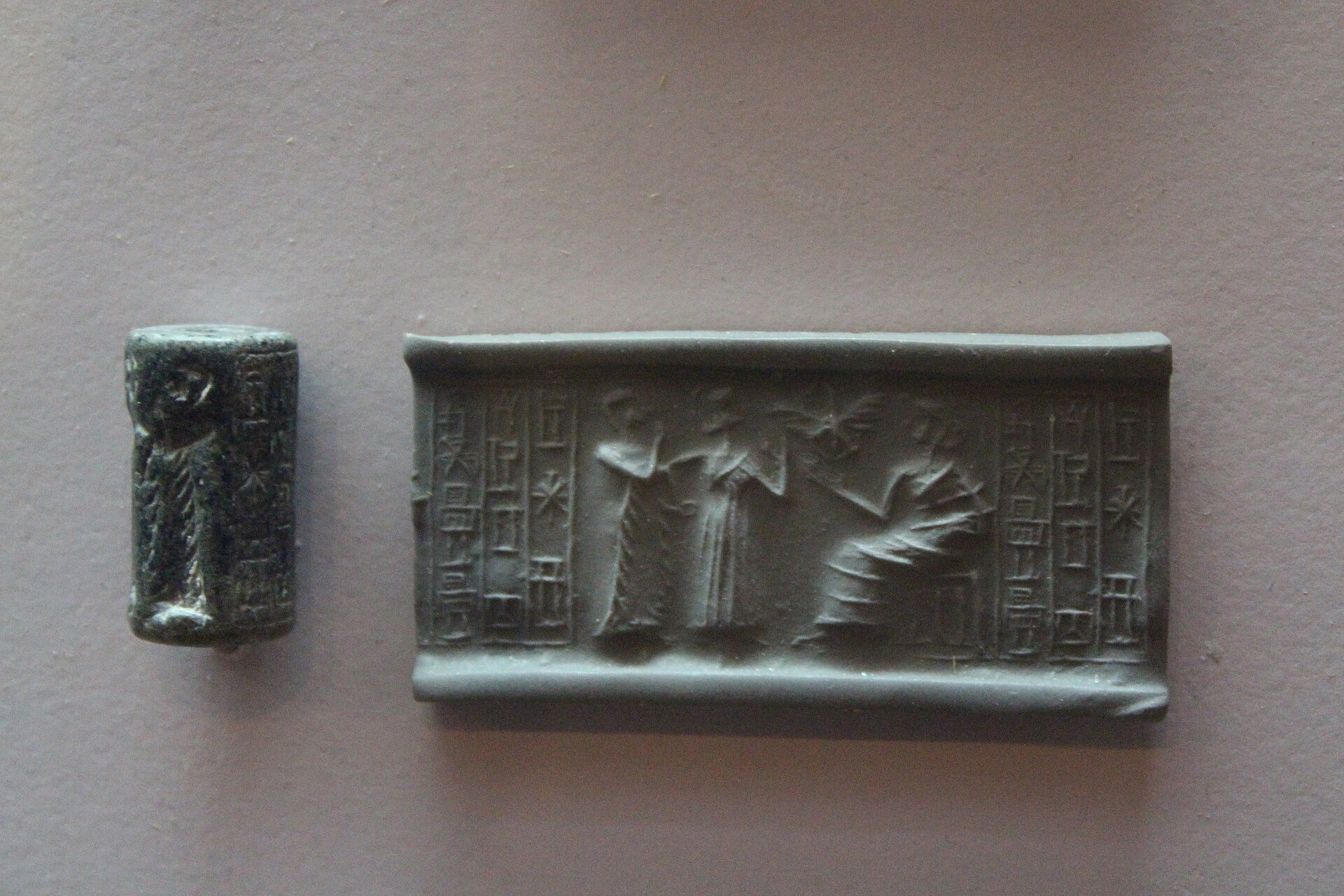
- Cylinder seals. Small stone cylinders carved in reverse, which were rolled across wet clay to leave a picture and an inscription. They were the signatures and passwords of ancient Mesopotamia. The museum’s collection is one of the best places to see them up close, and it is a good test of anyone who claims to have no interest in tiny objects.
- Egypt. Funerary objects, amulets, statuettes and everyday things from the world of the Pharaohs, the place of the Exodus story, and for long periods the power next door.
- Assyria and Babylon. The empires that destroyed the kingdom of Israel in the eighth century BCE and Judah in the sixth. Reliefs and inscriptions give the prophets’ warnings a face.
- Persia and beyond. The empire that allowed the exiles to return from Babylon, and the worlds of the Greeks and Romans that followed.
- Everyday life. Pottery, jewellery, tools and figurines from across the region, which tell you more about how ancient people lived than any king’s inscription.
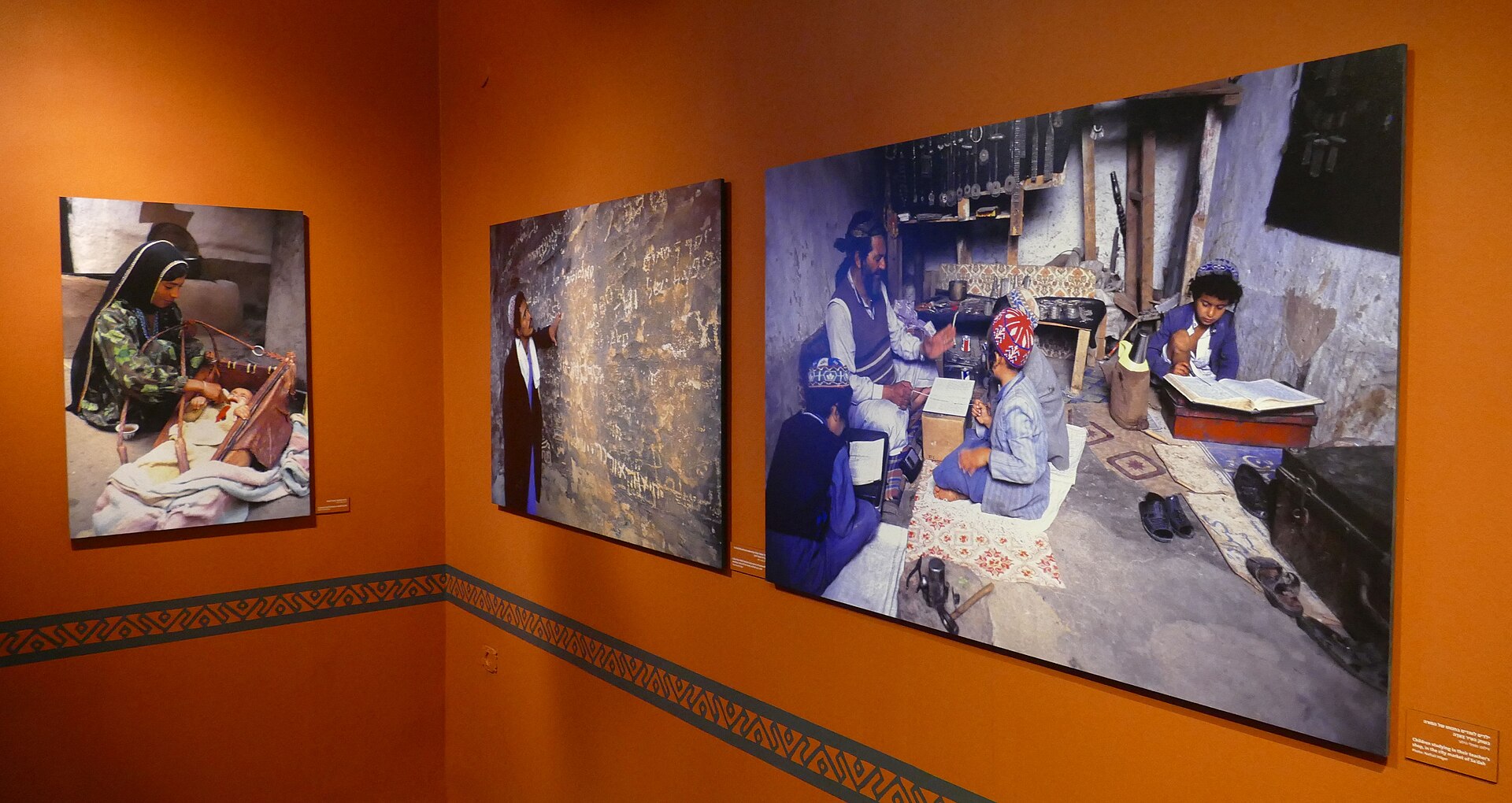
The museum also runs temporary exhibitions. When we checked in September 2026, they included Archaeology in the Shadow of War, alongside family programmes for the holiday period. Check the website for what is on during your visit.
Tours, Audio Guide and Hours
The museum’s own free guided tour is the best way in, and it is included in the ticket. As of September 2026, the English tour runs from Sunday to Friday at 11:30, with an extra evening tour on Wednesday at 17:30. There is no need to book, but places depend on availability. The tour times can change around holidays; during Sukkot 2026, for example, the English tour moved to 12:00, Sunday to Thursday. If the tour times do not suit you, the free audio guide, in English and Hebrew, covers the main galleries well.
Regular opening hours are 10:00 to 17:00 from Sunday to Tuesday and on Thursday, 10:00 to 21:00 on Wednesday, and 10:00 to 14:00 on Friday and Saturday. It is one of the few museums in the city open on Shabbat, although you will need a taxi or your feet, as public transport stops. The museum changes its hours around the Jewish holidays and closes on some festival days, and it posts the details on its website. Our calendar of Jerusalem religious holidays and our Shabbat guide will help you plan around them.
Timing a Day on Museum Row
The two museums have different quirks, and the best day works around both of them:
- Avoid Tuesday morning. The Israel Museum does not open until 16:00 on Tuesday, so Tuesday is a Bible Lands day, perhaps followed by the Israel Museum’s evening opening.
- Use Wednesday evening. The Bible Lands Museum stays open until 21:00 on Wednesday, with an English tour at 17:30. An Israel Museum day that ends with the late tour across the road is an excellent plan.
- Pick your order. Some visitors prefer the Bible Lands Museum first, for the wider context, then the Israel Museum’s archaeology. Others prefer the reverse. Both work. Tired legs are the real limit, so plan a long lunch in between.
- Friday and Saturday are short. Both museums are open, but the Bible Lands Museum closes at 14:00, so a Friday or Saturday double means an early start.
A sample Wednesday could run like this: the Israel Museum from 10:00, with the Shrine of the Book and the model first; lunch; the Israel Museum’s archaeology wing until mid-afternoon; then across the road for the 17:30 English tour of the Bible Lands Museum, and dinner in town. If you are travelling with children, the Bloomfield Science Museum is also on Museum Row; it is closed on Sundays and Fridays and must be booked ahead. The Knesset tour is a short walk away on Sundays and Thursdays.
Getting There
The museum is at 21 Shmuel Stefan Wise Street, on Museum Row in Givat Ram, directly opposite the Israel Museum.
- Bus. The museum lists lines 7, 9, 14, 35, 66 and 90.
- Light rail. The Green Line, opened in August 2026, runs through the Givat Ram campus and the government quarter. Check Moovit for the nearest stop. Our light rail guide has the details.
- Car. Free parking in front of the museum entrance, a rarity in Jerusalem.
- Taxi. A short ride from the city centre outside the rush hours, and the only option on Shabbat besides walking. See our getting around Jerusalem guide.
Accessibility
The museum lists dedicated accessible parking, accessible galleries with lifts and ramps, free wheelchairs, accessible toilets and folding chairs to carry round the galleries. The free audio guide also helps visitors who prefer not to stand through a tour. It has an accessibility coordinator, and it is worth contacting the museum in advance with specific needs. Our Jerusalem accessibility guide covers the rest of the city.
Who Will Love It, and Who Can Skip It
This museum divides visitors more than most, and it is better to know which side you are on before you go.
- You will love it if you know the Bible, whether as a believer, a student or a reader, and have always wanted to picture its world. Christian pilgrims following our Christian pilgrimage itinerary, Jewish visitors interested in their deep history, and anyone who liked the ancient-world galleries of a big national museum at home will all get a great deal from it.
- You will like it if you enjoy archaeology in general. Combine it with our guide to archaeology museums in Jerusalem and the biblical sites themselves.
- You can skip it if ancient history leaves you cold, or if you have only two or three days. The Israel Museum across the road covers the essential ground, and the Old City comes first.
Is the Bible Lands Museum Worth It?
For the right visitor, yes. It is a well-organised, uncrowded collection that fills a gap no other museum in Jerusalem fills, at ₪44 for an adult with a free tour and a free audio guide thrown in, and a free return visit if you run out of time. The main reason to go is that it sits opposite the Israel Museum and makes that museum better. There is no combined ticket, but the Wednesday late opening, the online discount for the Israel Museum and the return policy make a two-museum day perfectly manageable.
For a visitor with limited time and no particular interest in the ancient Near East, it is a strong second choice, not a must. Take the Israel Museum first, and if you still have energy and curiosity at three o’clock, cross the road.
Final Word on the Bible Lands Museum
The Bible Lands Museum is the neighbour that makes the Israel Museum make sense. Go on a Wednesday if you can, catch the English tour, keep your ticket for the free return, and let the seals, coffins and silver fill in the world around the stories. There is no combined ticket, but the two museums still make one of the best days in Jerusalem. Then walk the real ground: the City of David, the Old City and the rest of our guide to museums in Jerusalem.
Photo Credits
Photographs of Jewish life in Yemen in a 2020 temporary exhibition: Bible-Lands-Museum-Yemen-3087 by Bukvoed, CC BY 4.0, via Wikimedia Commons.
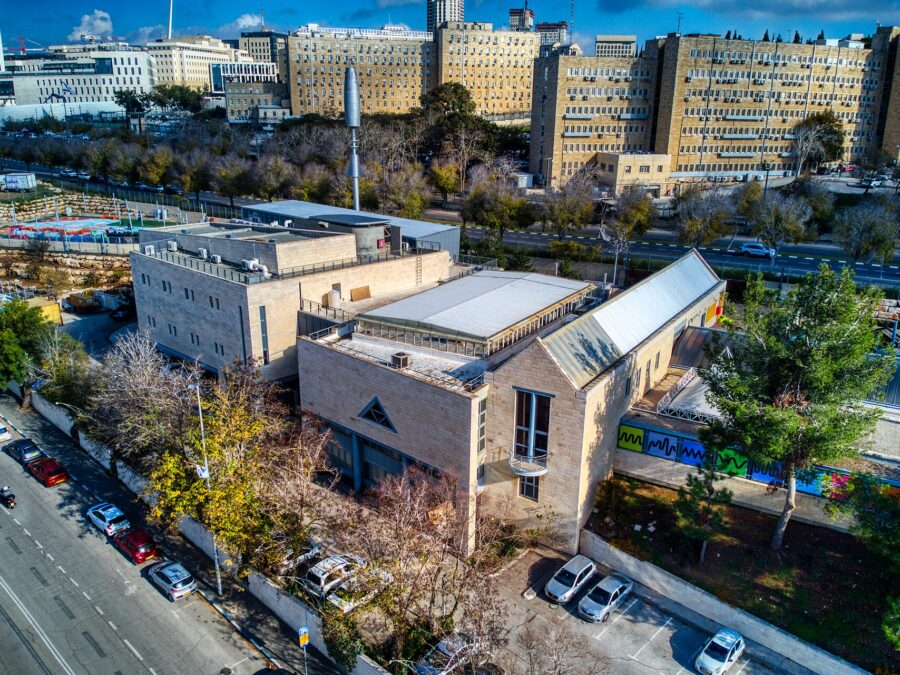
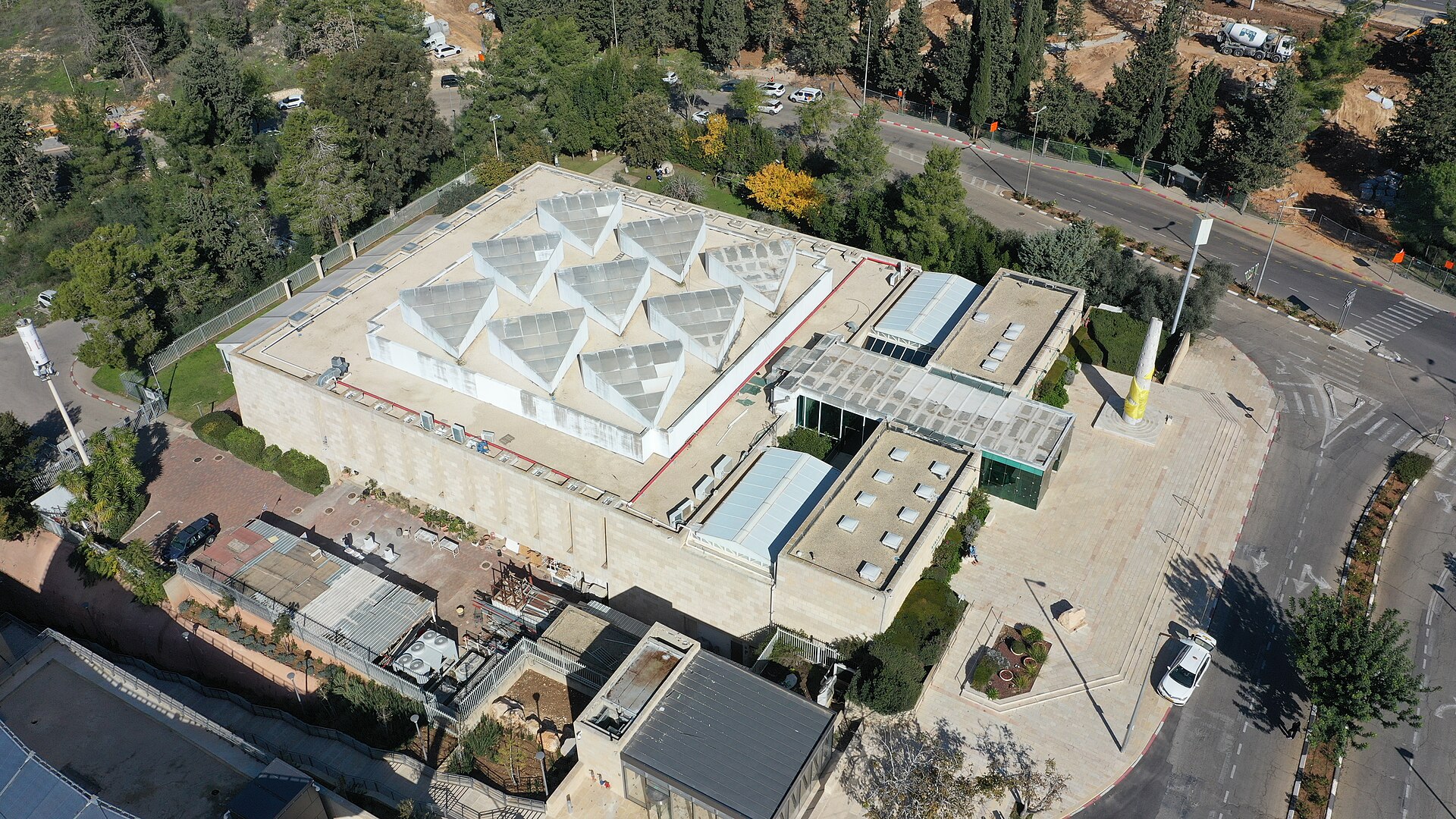
The museum from the air: Bible Lands Museum 1 by Chezki Mozes, CC BY-SA 4.0, via Wikimedia Commons.
A cylinder seal and its impression: Bible Lands Museum Jerusalem IMG 6520 by Deror_avi, CC BY-SA 4.0, via Wikimedia Commons.
A silver bowl and ladle: Bible Lands Museum Jerusalem IMG 6504 by Deror_avi, CC BY-SA 4.0, via Wikimedia Commons.