Many pilgrims land at Ben Gurion, go straight up to Jerusalem and meet the end of the story first: the Via Dolorosa, Golgotha and the empty tomb, all in the first two days. Then they head north and work backwards to the Annunciation and the lake where the ministry began. It works, but it reads the Gospels in reverse. Turn the trip around, starting in Nazareth and ending in Jerusalem, and the journey follows the story, with Holy Week waiting at the end rather than at the start. That is the principle behind this Holy Land pilgrimage itinerary: ten days, north to south, from Nazareth to the empty tomb.
It sets out a day-by-day route, with three nights in the Galilee and six in Jerusalem, including days out to Bethlehem and the Jordan River. Each day lists the sites, the order that works with their opening hours, and the Jerusalem pages on this site that cover each stop in depth. It also covers what has changed in 2026, which is more than usual, and how to adapt the plan for Holy Week, Christmas, Protestant and Orthodox pilgrims, or a few days in Jordan. Opening hours and fees come from the Christian Information Centre’s August 2026 lists and the sites themselves, checked in October 2026. Many holy places change their hours with the seasons and the liturgical calendar, so check before each day.
The Ten Days at a Glance
| Day | Base | Theme | Main sites |
|---|---|---|---|
| 1 | Galilee | Arrival | Transfer north from Ben Gurion; evening by the lake |
| 2 | Galilee | The hidden years | Nazareth: the Annunciation, St Joseph’s, Mary’s Well; Cana |
| 3 | Galilee | The ministry by the lake | Mount of Beatitudes, Tabgha, Capernaum, a boat, Magdala |
| 4 | Jerusalem | Up to Jerusalem | Mount Tabor, then the drive south |
| 5 | Jerusalem | The births | Ein Karem; Bethlehem: the Church of the Nativity, Shepherds’ Field |
| 6 | Jerusalem | The Jordan and the desert | Qasr al-Yahud baptism site, the Good Samaritan Inn, Wadi Qelt |
| 7 | Jerusalem | The Mount of Olives | Ascension, Dominus Flevit, Gethsemane, St Anne’s and Bethesda |
| 8 | Jerusalem | The Upper Room and the city of David | Mount Zion, St Peter in Gallicantu, the Pool of Siloam |
| 9 | Jerusalem | The Way of the Cross | Via Dolorosa, the Holy Sepulchre, the Western Wall |
| 10 | Departure | The empty tomb and Emmaus | A final Mass or service, Emmaus on the way to the airport |
How This Itinerary Is Built
A few principles shape the route, and knowing them makes it easier to adapt.
- North to south, Gospel order. Nazareth and the lake first, Jerusalem last. Ben Gurion Airport is much closer to Jerusalem than to the Galilee, but the trip covers the same roads whichever way round you go, so it costs nothing to start in the north.
- Few hotel changes. Three nights in one Galilee base and six in one Jerusalem base. Bethlehem, the Jordan River and Ein Karem are day trips from the city.
- Mornings for the holy places. Many churches close at midday, so the key sites come first and the walking, the boat and the museums fill the middle of the day.
- Sunday is a day for worship, not sightseeing. Several sites close or open late on Sundays, so the plan puts the lightest day there. Shift the days so that your Sunday falls on day 4, the travel day. That also puts the Way of the Cross on a Friday, when the Franciscans lead their weekly procession, and a Saturday in the Galilee, where the Christian sites stay open on Shabbat. The catch is a Saturday departure, when the airport trains do not run, so book a taxi or transfer for day 10.
- Shabbat is manageable. Israeli trains and most buses stop from Friday afternoon until Saturday night, but Christian sites, Nazareth and Bethlehem stay open. A group with its own coach barely notices it.
This page covers the whole journey. For the Jerusalem sites in more detail, and for pilgrims who are staying only in the city, our Christian pilgrimage guide to Jerusalem goes deeper into the holy places inside the walls.
What Has Changed in 2026
Pilgrims who travelled before 2023, or who are working from an older guidebook, should know about several changes.
- The Grotto of the Nativity in Bethlehem was closed for maintenance and construction until further notice in August 2026, with visits allowed only on a restricted basis. The basilica above it remains open. Check the current arrangements before your Bethlehem day.
- Yardenit, the popular baptismal site at the southern end of the Sea of Galilee, was temporarily closed in 2026. This itinerary uses Qasr al-Yahud, near Jericho, instead.
- The Pater Noster church on the Mount of Olives has kept reduced temporary hours since June 2024, opening only on Tuesday and Thursday mornings.
- Fewer large groups. Many big pilgrimage groups paused after October 2023, and in 2026 more visitors were travelling in small private groups. The upside is shorter queues at sites that once had hour-long waits.
- Travel advice. Official advice for parts of Israel and the West Bank has changed several times since 2023. This itinerary avoids the areas under the strictest warnings, but read the travel advice section below and your own government’s current advice before you book.
Before You Go
- Entry. Visitors from visa-exempt countries need an approved ETA-IL before they fly. Our guide to Israel visa requirements explains the system.
- Group, private or independent. A pilgrimage operator handles the coach, the guide, Masses at the holy places and hotels. A private driver-guide gives more flexibility for a small group. Independent travel works well with a hire car for the Galilee and on foot in Jerusalem. Our guide to the best Jerusalem tours explains how to choose.
- Masses and services. Groups who want to celebrate Mass at a holy place need to book it in advance, usually through the Franciscan Pilgrims’ Office or their operator. Protestant groups can book times at the Garden Tomb and at several outdoor sites in the Galilee.
- Dress. Shoulders and knees covered at every church, and at some sites a head covering for women. Our Jerusalem dress code guide covers the details.
- Accommodation. Many pilgrims stay in religious guesthouses run by churches and orders, which are often in excellent locations. Our guide to Christian guesthouses in Jerusalem lists the options in the city.
- Pace. This is a full itinerary with a lot of walking, much of it on uneven stone and steep slopes. Pilgrims with limited mobility should read our guides to Jerusalem for senior travellers and accessibility in Jerusalem, and plan a rest day.
Day 1: Arrival and the Road North
Land at Ben Gurion and head straight to the Galilee. By car or coach, the Sea of Galilee is roughly two hours from the airport. Base yourself in Tiberias, Nazareth or a guesthouse around the lake for three nights. If you arrive in daylight, walk down to the water in the evening and watch the light fade over the hills on the far shore. It is a gentle start, and after a long flight that is what you need.
If you land late, or on a Friday afternoon when the trains and buses are stopping for Shabbat, arrange a transfer in advance.
Day 2: Nazareth and Cana
Begin where Luke’s account of Jesus begins. Nazareth, now a busy Arab city of Muslims and Christians, is about 40 minutes from the lake.
- The Basilica of the Annunciation. Built over the grotto venerated as Mary’s home and consecrated in 1969, it is one of the largest churches in the Middle East. The courtyard and upper church are lined with images of Mary given by Catholic communities around the world. In 2026 the Christian Information Centre listed the basilica and grotto as open from 08:00 to 18:00, with free entry.
- St Joseph’s Church, next door, over the traditional site of Joseph’s workshop.
- The Church of St Gabriel at Mary’s Well. The Greek Orthodox tradition places the Annunciation at the spring, and the church is built over it.
- The old market, for lunch. Nazareth has some of the best food in the north.
In the afternoon, drive the short distance north-east to Cana, the traditional site of the wedding feast and Jesus’s first miracle. The Franciscan Wedding Church opens Monday to Saturday from 08:00 to 12:00 and 14:00 to 17:00, and on Sunday afternoons from October 2026. Many married couples renew their vows here. Return to the lake for the evening.
Our Nazareth guide covers the city in more detail.
Day 3: The Ministry by the Lake
This is the day pilgrims remember most, and it needs an early start, because the two most important sites close at lunchtime.
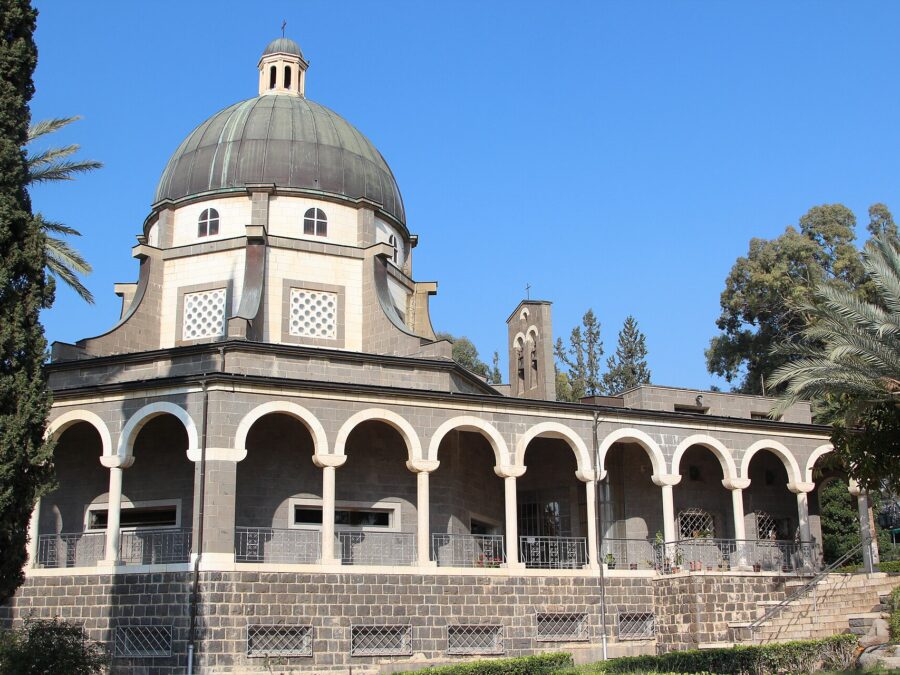
- 08:00 The Mount of Beatitudes. The octagonal church and its gardens look down over the lake from the traditional site of the Sermon on the Mount. Open 08:00 to 11:30 and 14:00 to 16:30 in 2026, with a parking charge. Read the Beatitudes in the garden before the coaches arrive.
- 09:00 Tabgha. The Church of the Multiplication, run by the Benedictines, shelters the famous fifth-century mosaic of the loaves and fishes; in 2026 it kept temporary hours, Monday to Saturday 09:00 to 15:00, and closed on Sundays. A short walk away, the Franciscan Church of the Primacy of St Peter stands on the shore where tradition places the risen Jesus’s breakfast with the disciples and his charge to Peter. It is open 08:00 to 17:00.
- 10:30 Capernaum. The fishing town where Jesus based his ministry, with the white limestone synagogue and the modern church raised over the house of St Peter. Last entry before the midday closure is 11:45; it reopens at 14:00. Entry was ₪10 in 2026.
- Midday: the lake. While the churches are closed, take a boat out onto the Sea of Galilee from Tiberias or Ginosar. Many groups hold a short service on board.
- Afternoon: Magdala. The home town of Mary Magdalene, where a first-century synagogue was discovered in 2009. The modern Duc in Altum centre beside it is open 08:00 to 18:00.
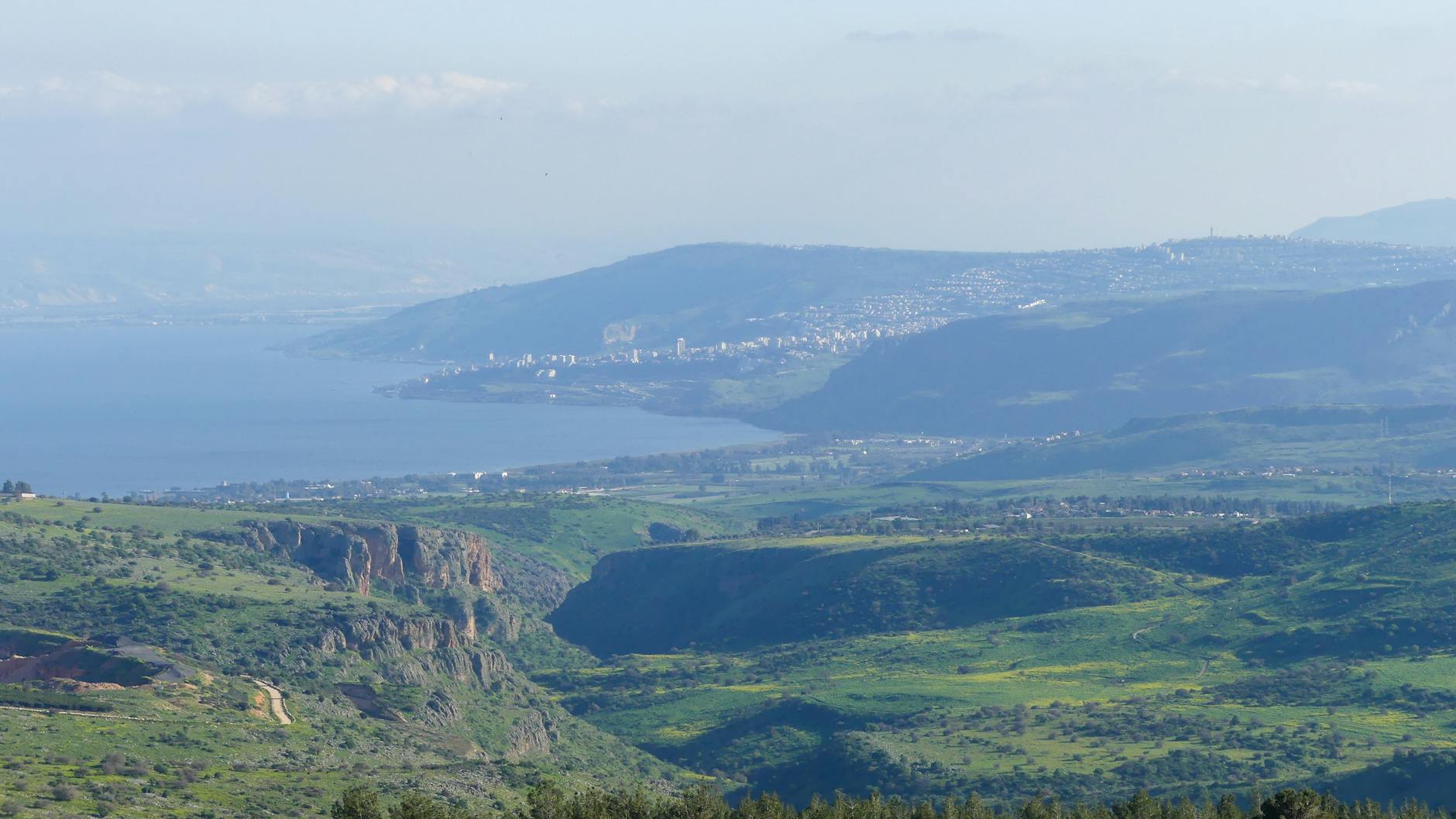
Our guide to a Galilee tour from Jerusalem has the full site list, with hours, the alternatives if you only have a day, and the Shabbat and dress rules for each town.
Day 4: Mount Tabor and the Road to Jerusalem
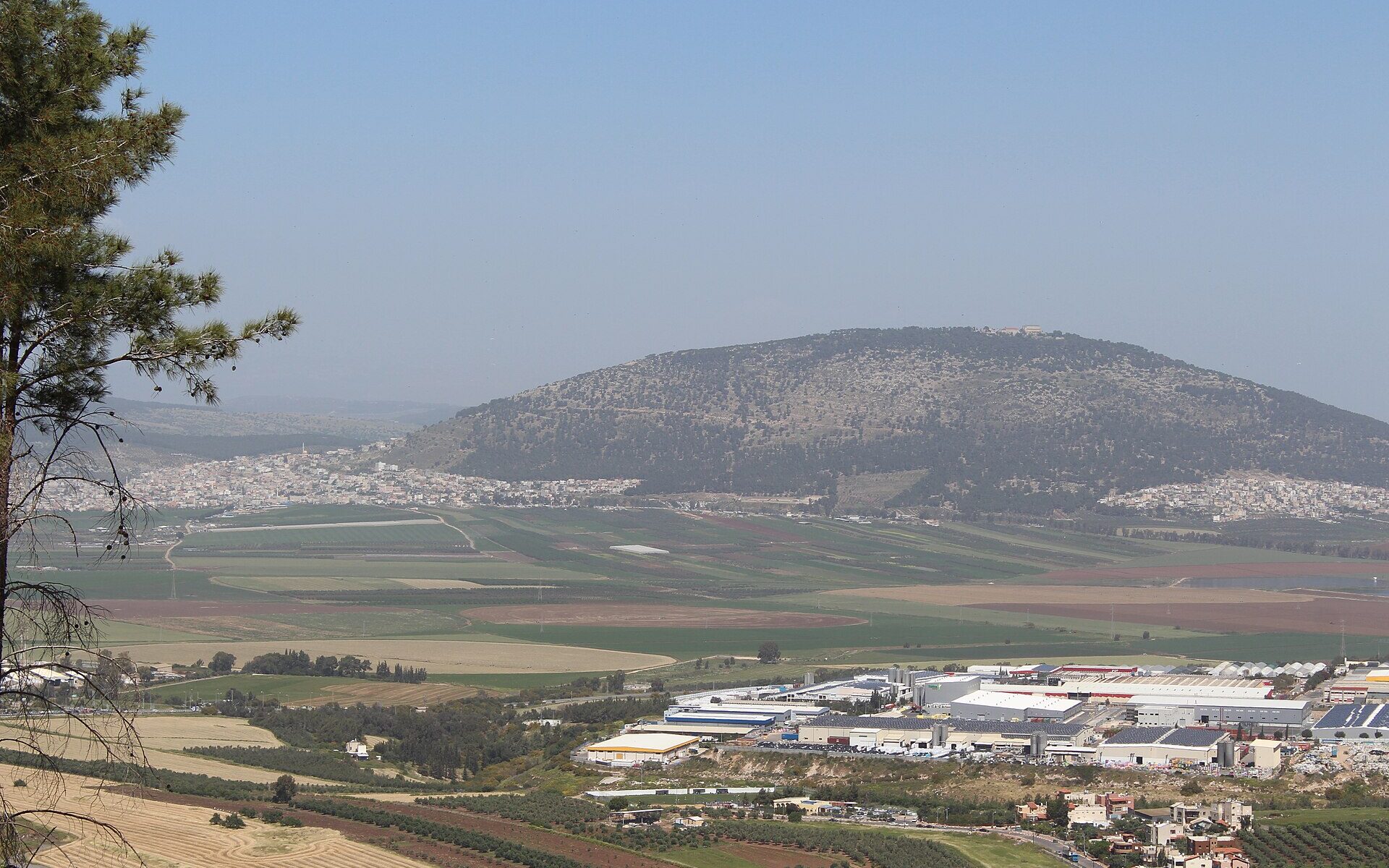
Leave the lake after breakfast and drive to Mount Tabor, the rounded hill rising from the Jezreel Valley that tradition identifies as the mountain of the Transfiguration. The Franciscan Basilica of the Transfiguration on the summit, completed in 1924 to designs by Antonio Barluzzi, has a golden apse mosaic of the transfigured Christ between Moses and Elijah, and the view from the terrace takes in Nazareth, the Jezreel Valley and the hills of Samaria. Check the opening hours before you go, and allow for the steep, winding road up.
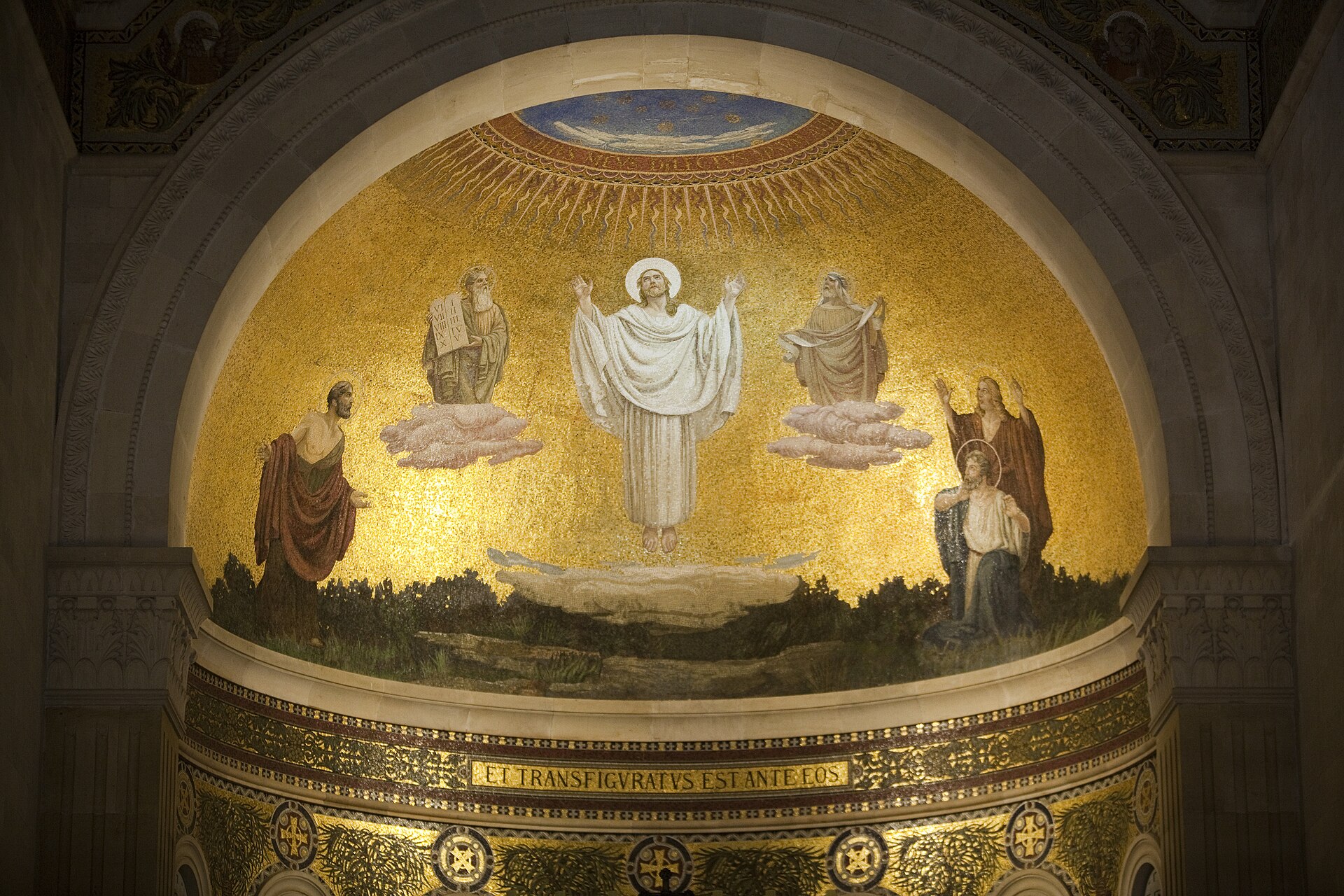
From Tabor, drive south to Jerusalem on Route 6, about two hours. The Transfiguration is where the Gospels turn towards Jerusalem, so it is a fitting last stop in the north.
Check in to your Jerusalem base for six nights. If you arrive with energy to spare, walk to the Jaffa Gate at sunset and look in on the Old City.
Day 5: Ein Karem and Bethlehem
The Jerusalem days begin where the Gospel story begins, with the births of John and Jesus.
Start the morning in Ein Karem, a village of stone houses and terraced gardens on the western edge of Jerusalem, the traditional birthplace of John the Baptist. The Church of St John the Baptist stands over the grotto of his birth, and across the valley the Church of the Visitation commemorates Mary’s visit to Elizabeth, with the Magnificat on tiled panels in dozens of languages. Both close for a midday break and on Yom Kippur. Our Ein Karem guide covers the village.
In the late morning, drive on to Bethlehem for lunch and the afternoon.
Bethlehem, in the West Bank, is about 10 kilometres south of the Old City. Most visitors cross the checkpoint with a driver or on foot, and are met by a Palestinian guide on the other side. Israeli citizens are barred under Israeli rules from entering Area A, which includes central Bethlehem; foreign visitors can enter. Allow extra time at the checkpoint on the way back.
- The Church of the Nativity, one of the oldest churches in the world in continuous use, with its low Door of Humility, its rows of ancient columns and its restored mosaics. In winter in 2026 the basilica was listed as open from 05:30 to 18:00. The Grotto of the Nativity below, with the silver star marking the traditional birthplace, was closed for maintenance and construction until further notice in August 2026, with visits allowed only on a restricted basis. Ask your guide what is possible on the day.
- St Catherine’s Church, the Catholic church beside the basilica, from which the Christmas Midnight Mass is broadcast around the world.
- The Milk Grotto, a small chapel of white rock a short walk away.
- Shepherds’ Field, in neighbouring Beit Sahour, where the Franciscan chapel and caves recall the angels’ announcement to the shepherds. Open Monday to Saturday from 08:00 to 17:00, with a midday break on Sunday.
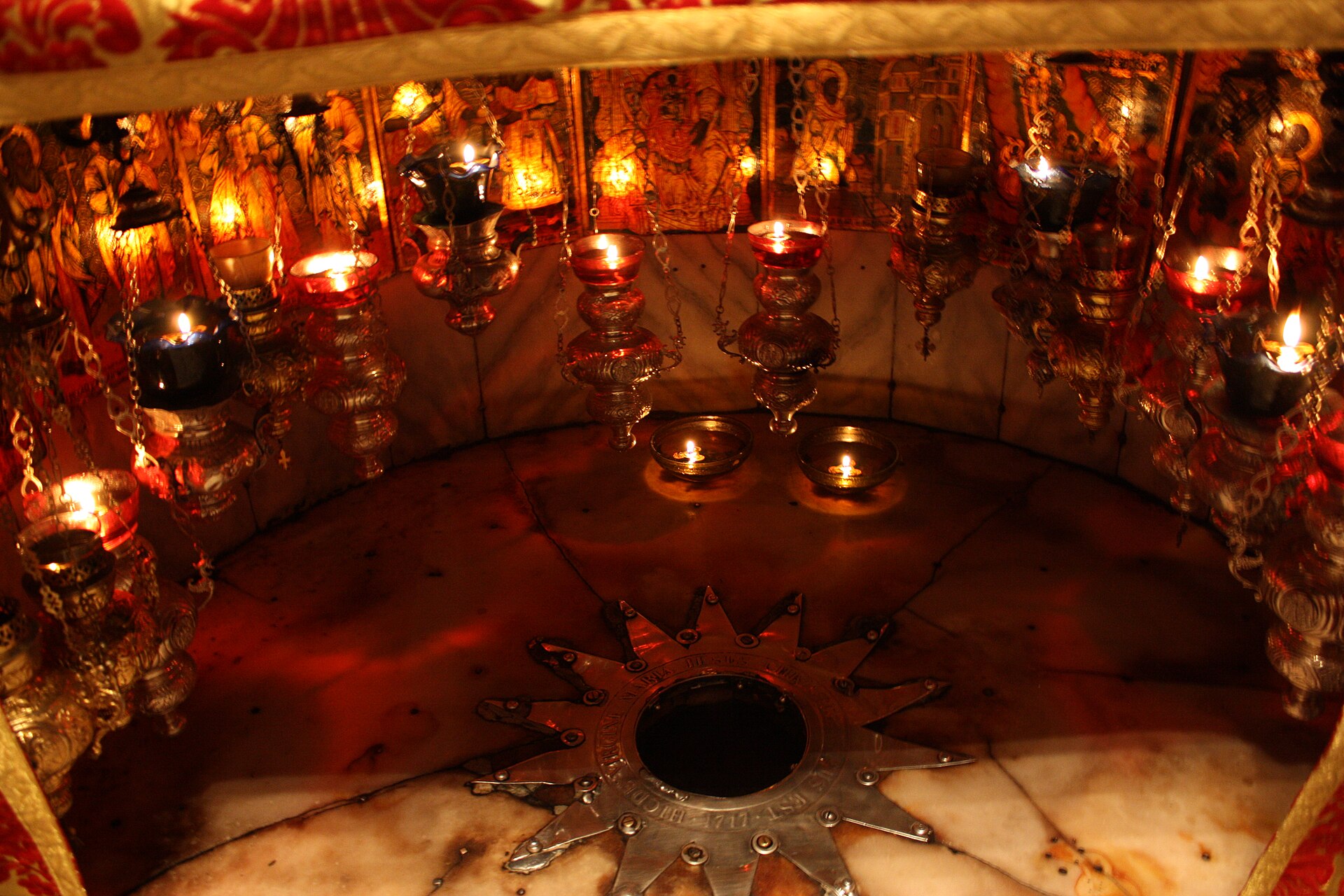
Bethlehem’s economy depends heavily on visitors, and buying olive-wood carvings or eating lunch in the town makes a real difference. Our Bethlehem day trip guide covers the logistics in full.
Day 6: The Jordan River and the Desert
Next comes the baptism, and the forty days in the wilderness that the Gospels place after it.
Drive east from Jerusalem down through the Judean Desert towards Jericho, the road of the parable of the Good Samaritan.
- The Good Samaritan Inn, on Route 1, a museum of mosaics from synagogues and churches across the region, set around the remains of an ancient roadside inn.
- Wadi Qelt. A viewpoint above the gorge looks across to St George’s Monastery, clinging to the cliff face. Our Wadi Qelt hike guide covers the walk down for the fit.
- Qasr al-Yahud, on the Jordan River east of Jericho, the site where tradition places the baptism of Jesus by John. It is run by the Israel Nature and Parks Authority and in winter was open Sunday to Thursday and Saturday from 08:00 to 16:00 and Friday from 08:00 to 15:00, with last entry an hour before closing. Steps lead down to the water, and many pilgrims renew their baptismal vows here. The river is narrow, and the Jordanian baptism site at Bethany Beyond the Jordan is visible on the far bank, a few metres away.
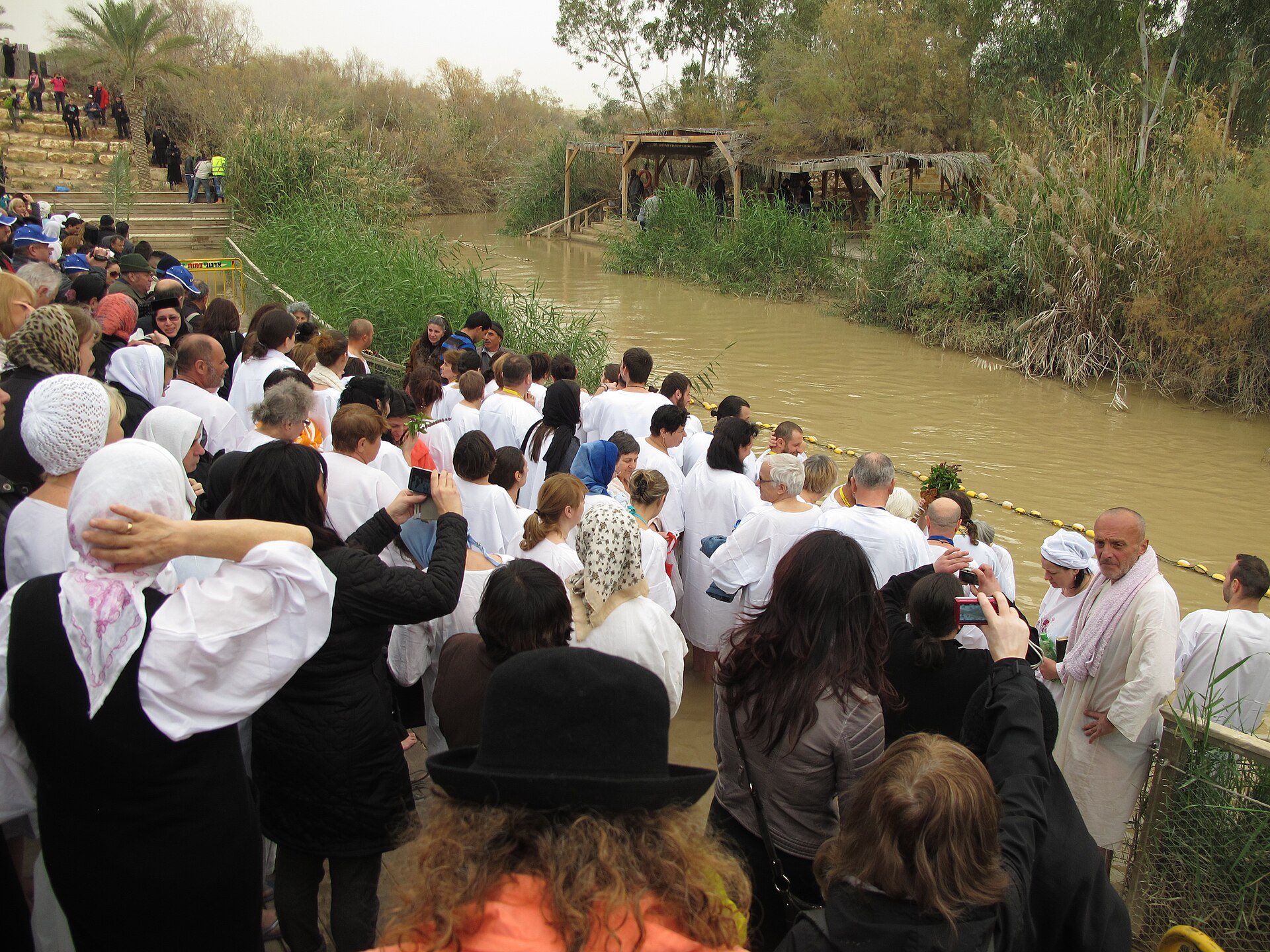
Groups who want more time in Jericho itself can visit the Mount of Temptation and the ancient tell; see our Jericho day trip guide for how that works, since central Jericho is in Area A. Return to Jerusalem by late afternoon.
Day 7: The Mount of Olives
Holy Week begins here, on the hill where the Palm Sunday procession starts.
Spend the morning walking down the Mount of Olives from top to bottom, the route of the Palm Sunday procession, with the whole of the Old City laid out in front of you.
- The Chapel of the Ascension, at the summit, a small domed shrine around the rock venerated as the place of the Ascension. It is a mosque property, open daily with a small entry fee.
- The Pater Noster church, where the Lord’s Prayer is displayed on tiled panels in more than a hundred languages. In 2026 it opened only on Tuesday and Thursday mornings, so fit it in if your day falls right.
- Dominus Flevit, the teardrop-shaped Franciscan chapel halfway down, marking the place where Jesus wept over Jerusalem. Its window frames the Dome of the Rock and the Old City.
- Gethsemane and the Church of All Nations, at the foot of the hill, with its ancient olive trees and the rock of the Agony before the altar. In winter it was open from 07:30 to 17:00 in 2026. The Tomb of Mary, in a deep crypt across the road, is worth the steps down.
After lunch, enter the Old City through the Lions’ Gate to the Church of St Anne and the Pools of Bethesda, where the Gospel of John sets the healing of the paralysed man. St Anne’s, a Crusader church famous for its acoustics, is a lovely place for a group to sing. It closes for a midday break, closes on Sundays, and charged ₪12 in 2026.
Our guides to the Mount of Olives and the Garden of Gethsemane cover these sites in depth.
Day 8: The Upper Room and the City of David
Mount Zion, just outside the walls by the Zion Gate, carries the events of Holy Thursday and Pentecost.
- The Cenacle, the Gothic upper room venerated as the site of the Last Supper and the descent of the Holy Spirit. The Christian Information Centre listed it as open from 08:00 to 18:00 in 2026, closed on Yom Kippur. King David’s Tomb, a Jewish holy site, is in the same building below.
- The Dormition Abbey, the Benedictine church marking the tradition of Mary’s falling asleep, with its crypt and golden mosaics. Open Monday to Saturday from 08:00 to 17:00 and on Sunday afternoons.
- St Peter in Gallicantu, on the slope below, over the traditional site of Caiaphas’s house and Peter’s denial. Its terraces look over the ancient stepped street that may have led down to Gethsemane. Closed on Sundays.
In the afternoon, go down into the City of David, the oldest part of Jerusalem, and walk to the Pool of Siloam, where the Gospel of John sets the healing of the man born blind. The adventurous can wade through Hezekiah’s Tunnel to reach it. Protestant pilgrims may prefer to spend part of this day at the Garden Tomb, north of the Damascus Gate, a quiet garden that many Protestants regard as a possible site of the burial. It currently opens only from 09:00 to 13:00 and is closed on Fridays and Sundays, so check before you go.
Our guides to Mount Zion, the City of David and Hezekiah’s Tunnel have the details.
Day 9: The Way of the Cross
The story reaches its centre: the walk from the place of condemnation to Calvary and the tomb.
Walk the Via Dolorosa early, before the Muslim Quarter lanes fill with shoppers. The traditional route starts near the Lions’ Gate, passes the Franciscan chapels of the Condemnation and the Flagellation and the Ecce Homo arch, and winds through the market lanes to the Church of the Holy Sepulchre, where the last five Stations are inside the church. On Fridays, the Franciscans lead a procession along the route in the afternoon, which many groups join.
The Church of the Holy Sepulchre, shared by several Christian communities under the long-standing Status Quo arrangement, contains both Calvary and the Edicule over the tomb. It opens very early: in 2026 the Christian Information Centre listed it as open from 05:00 to 20:00 in October and from 04:00 to 19:00 in winter. Queues for the Edicule are shortest first thing in the morning and in the evening. Allow plenty of time to see the side chapels too, from the Armenian Chapel of St Helena to the Ethiopian monastery on the roof.
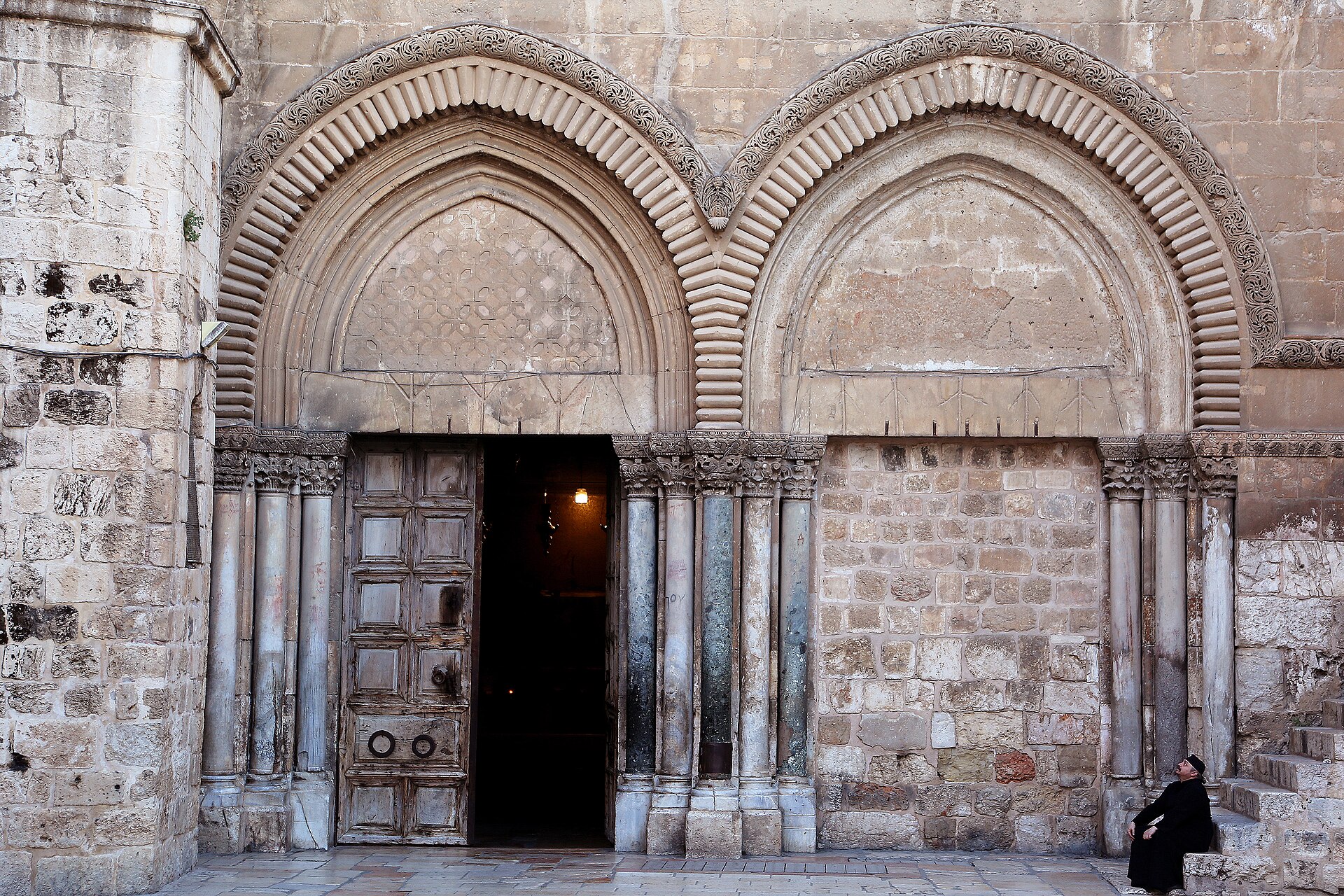
In the afternoon, walk through the Jewish Quarter to the Western Wall, the retaining wall of the Temple Mount, or Haram al-Sharif, which the Gospels describe Jesus visiting and teaching beside. Our guides to the Via Dolorosa, the Church of the Holy Sepulchre and the Western Wall cover each in detail, and our Christian Quarter guide explains the neighbourhood around the church.
Day 10: The Empty Tomb and Emmaus
Begin the last day early at the Church of the Holy Sepulchre, before the crowds, for a final Mass or a quiet moment at the Edicule. Protestant groups may prefer an early service at the Garden Tomb, if your day falls when it is open.
Then, on the road out to the airport, stop at Emmaus. Route 1 to Ben Gurion passes Latrun, where the ruined basilica of Emmaus-Nicopolis marks one of several places that claim to be the Emmaus of Luke’s Gospel. Others are at Abu Ghosh and al-Qubeibeh, and nobody knows for certain which is right. Ending a pilgrimage where the two disciples recognised the risen Christ in the breaking of bread is a fitting farewell. Emmaus-Nicopolis charged ₪7 entry in 2026, closes for a midday break on weekdays and opens on Sundays for prayer only, by reservation.
Leave plenty of time for the airport, where security for international departures is thorough. The train from Jerusalem Yitzhak Navon reaches Ben Gurion in about 20 minutes, but it does not run from Friday afternoon until Saturday night. Our airport transfer guide covers the options.
Adapting the Itinerary
For Holy Week and Easter
The Jerusalem days already run in Holy Week order, so for Easter simply stretch them to the calendar: the Mount of Olives on Palm Sunday, Bethlehem, the Jordan and Ein Karem on the Monday to Wednesday, the Upper Room on Holy Thursday, the Via Dolorosa on Good Friday, and the Holy Sepulchre on Easter morning. In 2027 the Western churches keep Palm Sunday on 21 March and Easter on 28 March. The Orthodox, Armenian and other churches that follow the Julian calendar keep Palm Sunday on 25 April, the Holy Fire on 1 May and Easter on 2 May. Book months ahead, expect crowds and closures in the Old City, and read our guides to Easter in Jerusalem and the Holy Fire ceremony.
For Christmas
Put Bethlehem on 24 December. Midnight Mass at St Catherine’s is ticketed, with applications made online through the Christian Information Centre, but the service is shown on screens in Manger Square for everyone. Our Christmas in Jerusalem guide has the details.
For Protestant groups
Give more time to the outdoor sites, where the landscape speaks for itself: the Mount of Beatitudes, the lakeshore, the Arbel cliffs, the Southern Steps of the Temple Mount and the Garden Tomb, which suits a quiet service. Our guide to the biblical sites of Jerusalem focuses on the archaeology behind the texts.
For Orthodox pilgrims
Add the Greek Orthodox sites that the Catholic-focused lists often skip: St Gabriel’s at Mary’s Well in Nazareth, the Monastery of the Shepherds in Beit Sahour, St George’s in Wadi Qelt, and the Greek Orthodox church at Capernaum with its red domes.
Adding Jordan
Jordan holds several sites that complete the story: Mount Nebo, where Moses saw the Promised Land, the Byzantine mosaic map at Madaba, and Bethany Beyond the Jordan, the baptism site on the eastern bank. Add three or four days at the end, crossing at Allenby / King Hussein Bridge with a Jordanian visa arranged in advance, and include Petra if you can. Our guides to the Jerusalem to Jordan border crossing and Petra from Jerusalem explain the logistics, and our page on trips from Jerusalem covers the wider options.
With only seven days
Cut the Galilee to two nights (days 2 and 3 above), drop Mount Tabor, Ein Karem and Emmaus, and combine the Upper Room with the Mount of Olives day. It is tight, but it still follows the Gospel order.
Travel Advice
The US State Department and the UK Foreign, Commonwealth & Development Office each publish their own advice for Israel and the West Bank, with their own maps, and they do not always agree. In 2026 the UK advised against travel to parts of the far north near the Lebanese border and to much of the West Bank, but its warnings excluded the Sea of Galilee, Nazareth, East Jerusalem, Bethlehem, and Jericho and the area south of it, which covers the main stops on this itinerary. That is why this route reaches Jerusalem from the Galilee by Route 6 rather than through the Jordan Valley. Advice can change quickly, so read your own government’s current advice before you book, check that your insurance covers every area on your route, and follow local instructions while you are there. This guide describes the journey; it does not tell you whether to make it. Our guide to whether Jerusalem is safe to visit covers the city itself.
When to Go
Spring, from March to May, is the classic pilgrimage season, with green hills in the Galilee and comfortable days in Jerusalem, and it includes Easter. Autumn, from October to November, is the other good window. Summer is hot, especially around the lake and at the Jordan River, which lie well below sea level. Winter brings rain and chilly evenings in Jerusalem, and fewer visitors. The Jewish holidays, especially Passover and Sukkot, fill hotels and close some sites; our religious holidays calendar has the dates.
Groups hoping to celebrate Mass in the Upper Room should know that the Custody of the Holy Land says it cannot normally be done there; the Franciscan chapel next door is the place to ask. Our guide to the Room of the Last Supper in Jerusalem covers the rules, the hours and the 2027 dates for Holy Thursday and Pentecost.
Final Word on a Holy Land Pilgrimage Itinerary
Start in Nazareth, end at the empty tomb, and let the land tell the story in order. Keep the mornings for the holy places, use the midday closures for the lake and the walking, make Sunday a day of worship, and check each site’s hours the evening before, because in 2026 they changed more than usual. For the Jerusalem days in depth, use our guide to the holy sites in Jerusalem; to budget for the trip, see what a trip to Jerusalem costs; and for the city’s rhythms, read our guide to Shabbat in Jerusalem.
Photo Credits
Mount Tabor rising from the Jezreel Valley: Givat HaMore View IMG 1020 by Deror_avi, CC BY-SA 3.0, via Wikimedia Commons.
The Transfiguration mosaic on Mount Tabor: CHURCH OF TRANSFIGURATION – MOSAIC (7723782958) by israeltourism from Israel, CC BY-SA 2.0, via Wikimedia Commons.
The 12th-century Crusader entrance of the Church of the Holy Sepulchre: TheHolySepulchre32 by Marwan hamad, CC BY-SA 4.0, via Wikimedia Commons.
The silver star beneath the Altar of the Nativity, lit by oil lamps: Birthplace in the Grotto of the Nativity 2010 by Wknight94 talk, CC BY-SA 3.0, via Wikimedia Commons.
Pilgrims at Qasr al-Yahud at Epiphany: Epiphany Qasr el Yahud by Ratoncito Perez, CC0, via Wikimedia Commons.