The Christian Quarter packs more sacred ground into a few hundred metres than almost anywhere on earth. In the northwestern corner of Jerusalem’s Old City, its lanes converge on the Church of the Holy Sepulchre, built over the traditional sites of the crucifixion and resurrection, and radiate outward past more than forty churches, monasteries, and hospices belonging to a remarkable range of Christian traditions. This guide covers what to see in the Christian Quarter of Jerusalem, how to find your way through its layered streets, opening hours, prices in shekels, and the etiquette that makes a visit respectful.
It is one of the four quarters of the Old City, alongside the Jewish, Muslim, and Armenian Quarters, and the natural focus of any Christian visit to the city. Compact but dense, it rewards an unhurried morning of walking, pausing, and looking up at the bell towers and domes that crowd its skyline. For the wider survey of sacred places across faiths, see our guide to holy sites in Jerusalem.
A Brief Orientation
The Christian Quarter occupies the area inside Jaffa Gate and New Gate, spreading east toward the Holy Sepulchre and bordering the Muslim Quarter along the line of the Via Dolorosa and the markets. Its presence dates back to the 4th century, when Emperor Constantine built the first church over Golgotha, and it grew through the Byzantine, Crusader, and Ottoman eras into the dense ecclesiastical patchwork you see today. Greek Orthodox, Roman Catholic (Latin), Armenian, Coptic, Ethiopian, Syriac, and Protestant communities all maintain a foothold here, which is why a short walk can take you past half a dozen architectural and liturgical worlds. The relationships among these communities are governed by a Status Quo, an Ottoman-era arrangement that fixes rights and responsibilities at shared sites down to the smallest detail, which is why you may notice an unmoved ladder on a ledge of the Holy Sepulchre or carefully apportioned cleaning duties. Understanding this helps make sense of the quarter’s layered, sometimes surprising sights.
What to See in the Christian Quarter
The sites below cluster within easy walking distance of Jaffa Gate and the Holy Sepulchre.
Church of the Holy Sepulchre
The Church of the Holy Sepulchre is the spiritual heart of the quarter and of Christian Jerusalem, enclosing both Calvary (Golgotha), where Jesus is believed to have been crucified, and the empty tomb of the resurrection. Six denominations share the building under a centuries-old status quo, and the layering of chapels, lamps, and incense is unforgettable. Entry is free; hours run roughly 5am to 8pm in summer and 4am to 7pm in winter. Arrive before 8am to reach the Edicule, the shrine over the tomb, with little queue; mid-morning waits can exceed an hour. Cover shoulders and knees and stay quiet during services.
Lutheran Church of the Redeemer
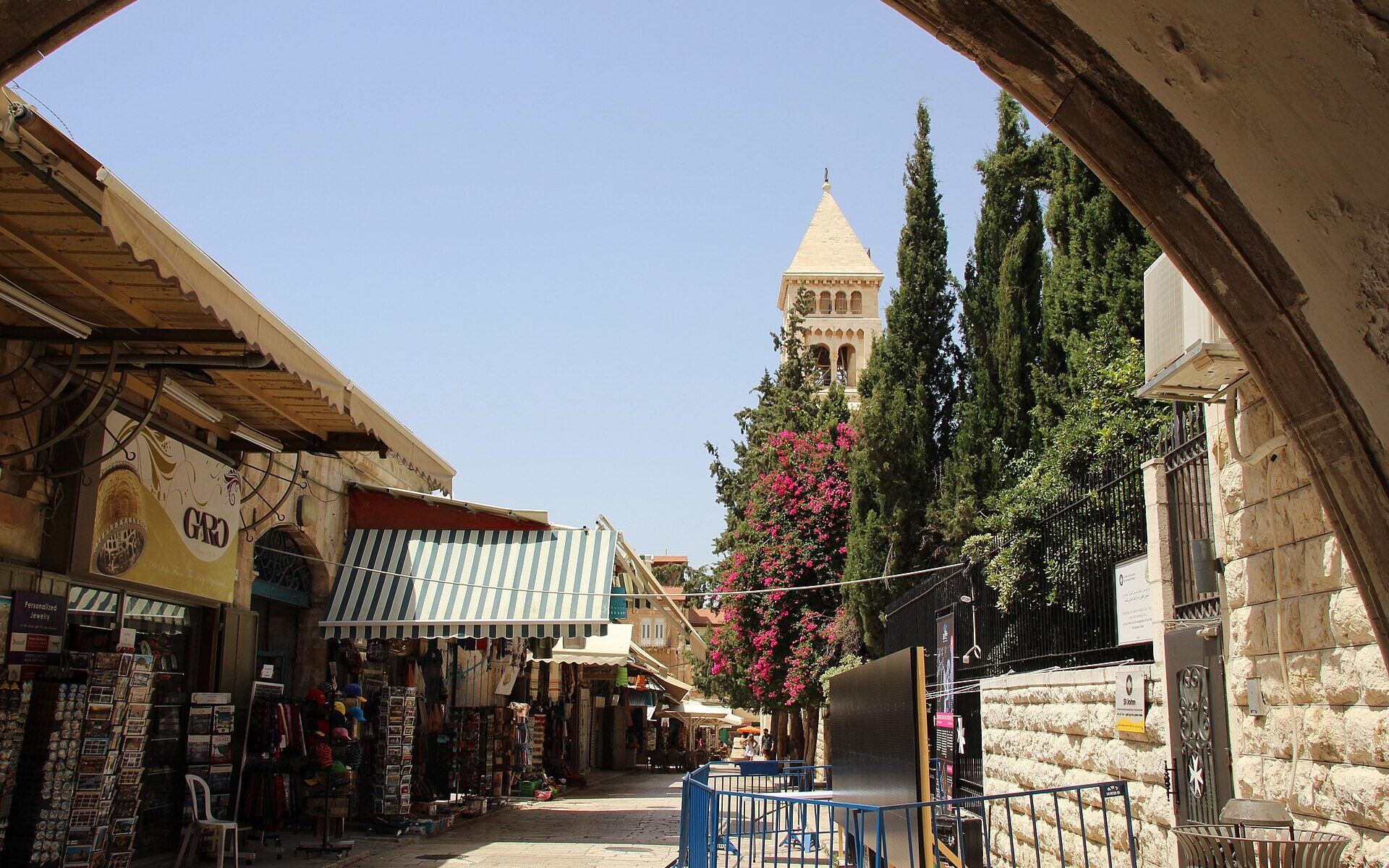
A short walk from the Holy Sepulchre, this 19th-century German Lutheran church offers one of the best views in the Old City: a climb of 177 steps up its bell tower rewards you with a 360-degree panorama over the rooftops, domes, and the Temple Mount. The tower entry costs a few shekels, and the church generally opens Monday to Saturday, closed Sunday morning for services. It is a fine, less-crowded vantage point for photographs.
Ethiopian Monastery (Deir es-Sultan)
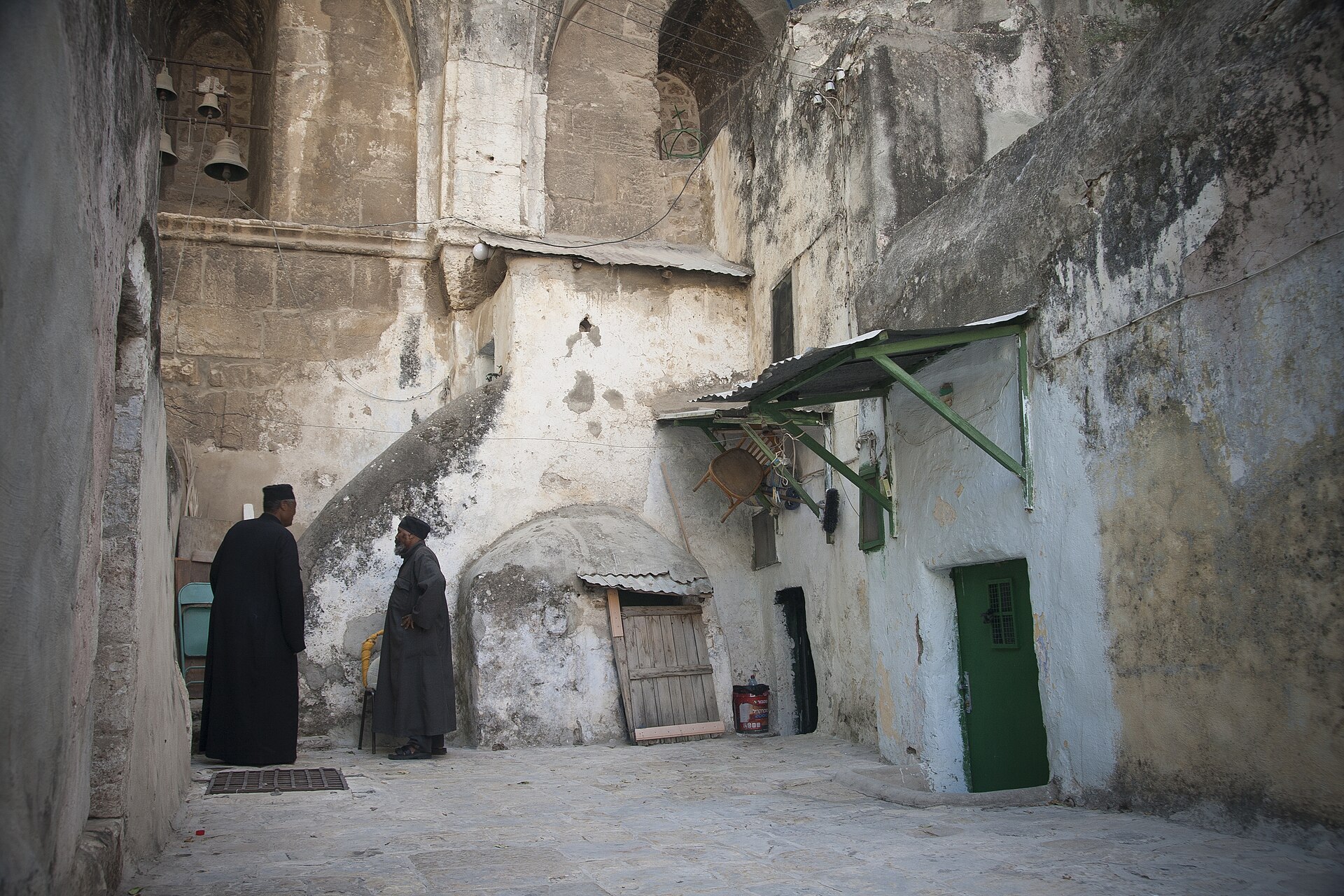
On the rooftop of the Holy Sepulchre complex, the Ethiopian Orthodox community keeps a cluster of simple monastic cells and a small chapel known as Deir es-Sultan. Reached by an easy-to-miss staircase, it is one of the quietest and most atmospheric corners of the quarter, a village of mud-colored domes perched above the great church. Entry is free; visit respectfully, as monks live here.
St. Mark’s Syrian Orthodox Monastery
This small monastery, on the edge of the quarter toward the Armenian side, is venerated by the Syriac Orthodox as the site of the Last Supper and the house of Mary, mother of John Mark. It holds an ancient icon traditionally attributed to St. Luke. A resident may show you around and explain the Aramaic liturgy still used here. There is no fixed fee; a donation is appreciated. It stands right on the boundary with the Armenian Quarter, so the two are easy to see in a single loop.
Christ Church (Anglican)
Just inside Jaffa Gate, Christ Church is the oldest Protestant church in the Middle East, consecrated in 1849. Its plain, light-filled interior contrasts with the incense-rich Orthodox and Catholic spaces nearby, and it runs a guesthouse, cafe, and heritage center. It welcomes visitors warmly and is a calm place to pause near the gate.
Notre Dame of Jerusalem Center
Just outside New Gate, the grand Notre Dame complex is a Catholic pilgrim center with a chapel, rooftop restaurant, and accommodation. While technically at the quarter’s edge, it is a useful landmark and a peaceful spot, and its rooftop terrace gives sweeping views back over the Old City walls.
Notable Streets and Corners
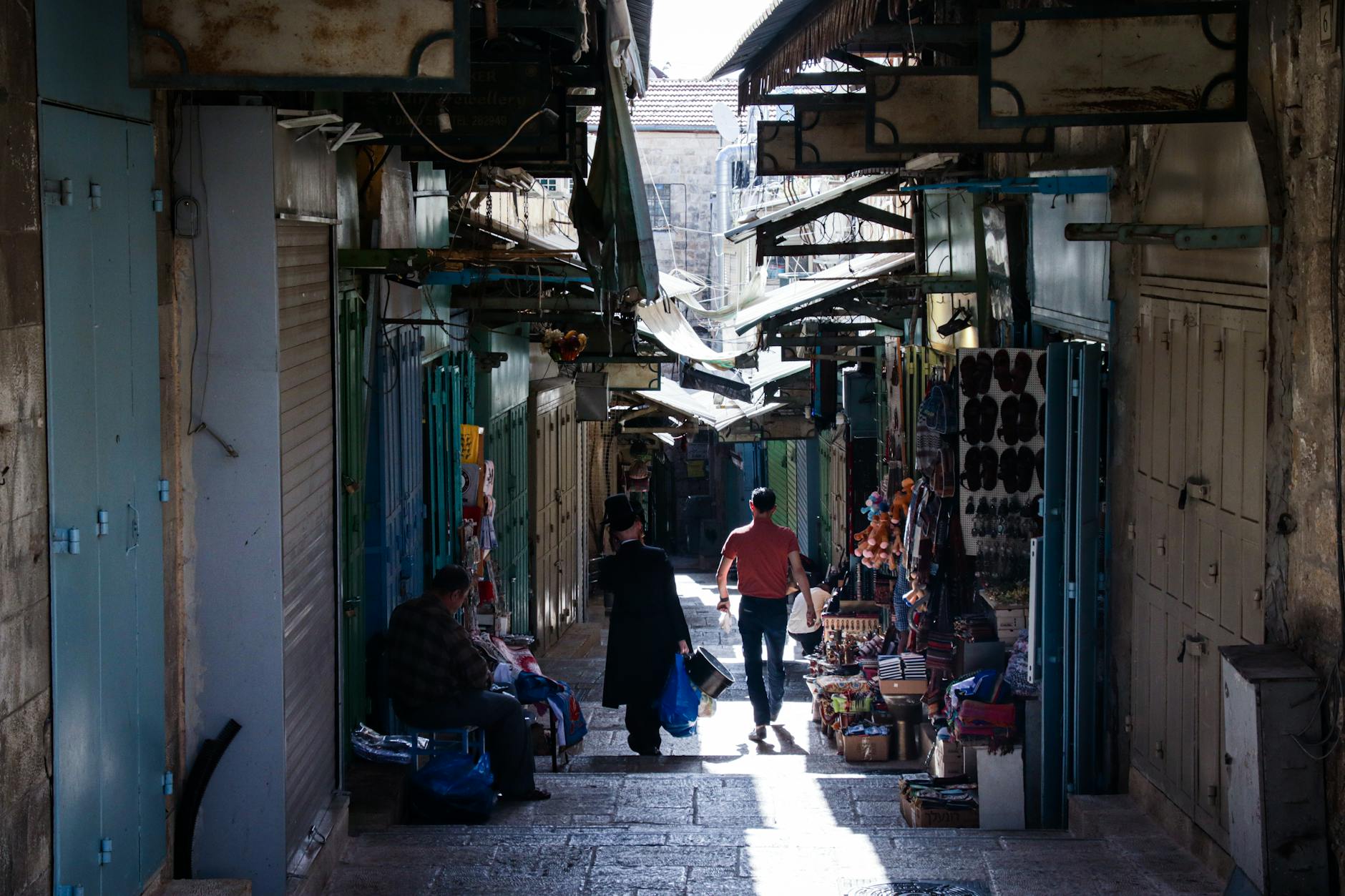
The quarter’s main artery runs from Jaffa Gate toward the Holy Sepulchre, and Christian Quarter Road and St. Helena Street are lined with souvenir shops, bakeries, and small churches tucked between storefronts. The final stretch of the Via Dolorosa enters the quarter on its way to the last stations inside the Holy Sepulchre, so you may find yourself crossing the route of the Way of the Cross more than once. Look up often: bell towers, carved lintels, and crusader stonework reward the wandering eye.
Food in the Christian Quarter
Eating here is more relaxed than the Jewish Quarter’s strict kosher scene, and crucially, most places stay open on Saturday, since the Christian Quarter does not observe the Jewish Shabbat. You will find Arab bakeries selling fresh kaak (sesame bread rings) and zaatar pastries, hummus and falafel counters, and a few sit-down restaurants near Jaffa Gate and on the way to the Holy Sepulchre. Expect to pay roughly 15 to 30 shekels for street food and 50 to 90 shekels for a sit-down meal. The famous Austrian Hospice on the Via Dolorosa serves apple strudel and coffee on a quiet terrace, a beloved pause for visitors. If you are planning meals beyond the walls, our guide to what to eat in Jerusalem and where is the place to start. For the wider picture, browse our Old City market and food guide.
Shopping in the Christian Quarter
The quarter’s shops lean toward religious souvenirs: olive-wood carvings, mother-of-pearl from Bethlehem, icons, crosses, rosaries, and Holy Land keepsakes, alongside the usual ceramics and textiles. Prices are negotiable in the open-fronted shops, so polite bargaining is expected; fixed-price boutiques sit nearer Jaffa Gate. For the art of the haggle, see our guide to bargaining in Jerusalem markets, and for keepsakes with meaning, our Jerusalem souvenirs guide.
Best Time to Visit the Christian Quarter
The quarter is open year-round, but the experience changes with the calendar. Spring and autumn bring the mildest weather and the most pleasant walking; summer is hot, so start early and seek the shade of the covered lanes around midday. Easter is the emotional and visual peak, when processions fill the streets and the Holy Sepulchre overflows for the Holy Fire ceremony on Orthodox Holy Saturday; it is extraordinary but extremely crowded, so book accommodation far ahead. Christmas brings a quieter glow to the quarter, with the main festivities centered on nearby Bethlehem. For a calm visit any time of year, weekday mornings are best, before tour groups reach the Holy Sepulchre. Our best time to visit Jerusalem guide breaks down each month, and our Jerusalem itinerary plans help you slot the quarter into a wider trip.
Etiquette and What to Wear
Modesty is expected in every church and monastery here: cover shoulders and knees, remove hats inside (men), and carry a light scarf for extra cover. Keep your voice low, silence your phone, and pause photography during services, which run throughout the day across the different denominations. Some chapels prohibit photos entirely, so look for signs. A respectful, quiet manner is the single most important thing you can bring. Our full guide to how to dress for Jerusalem’s churches and holy sites details what to wear at each kind of site.
How to Get to the Christian Quarter
Jaffa Gate is the main entrance, a short walk from the City Hall stop on the Light Rail Red Line (about 6 shekels a ride; no service on Shabbat). New Gate offers another entry on the quarter’s northern side. Taxis can drop you at either gate but cannot enter the pedestrian lanes, and luggage means a walk over cobbles. From inside, everything is on foot through stepped, sometimes steep alleys, so wear grippy closed shoes. Our Jerusalem transportation guide covers reaching the Old City from the airport, Tel Aviv, and across the city.
Suggested Walking Itinerary
Enter at Jaffa Gate and step into Christ Church for a calm start. Follow Christian Quarter Road toward the Holy Sepulchre, arriving early to pray or look around the tomb before the crowds. Climb to the Ethiopian rooftop monastery for quiet and views, then walk to the Lutheran Church of the Redeemer and ascend its tower for the best panorama in the area. Pause for strudel at the Austrian Hospice, then wander the souvenir lanes back toward Jaffa Gate, crossing the final stretch of the Via Dolorosa on the way. Allow three to four hours; history enthusiasts could easily spend a full day. To link this with the other quarters, use our Old City guide.
Practical Tips
- Go early for the Holy Sepulchre. Before 8am means short or no queues at the Edicule; by late morning the wait can be an hour or more.
- Open on Saturday. Unlike the Jewish Quarter, the Christian Quarter largely stays open on Shabbat, making Saturday a good day to visit here.
- Dress modestly. Shoulders and knees covered for every church; carry a scarf and remove hats inside.
- Carry small change. Many churches are free, but tower climbs and a few sites charge a handful of shekels; donations are welcome at monasteries.
- Wear sturdy shoes. The lanes are uneven, polished, and stepped.
- Mind service times. Liturgies run all day; pause photography and lower your voice when worship is underway.
- Stay aware in crowds. The lanes near the Holy Sepulchre get busy; keep valuables secure.
Photo Credits
Muristan Road and the bell tower of the Church of the Redeemer: Jerusalem Old City (43177603871) by Gary Todd from Xinzheng, China, CC0, via Wikimedia Commons.
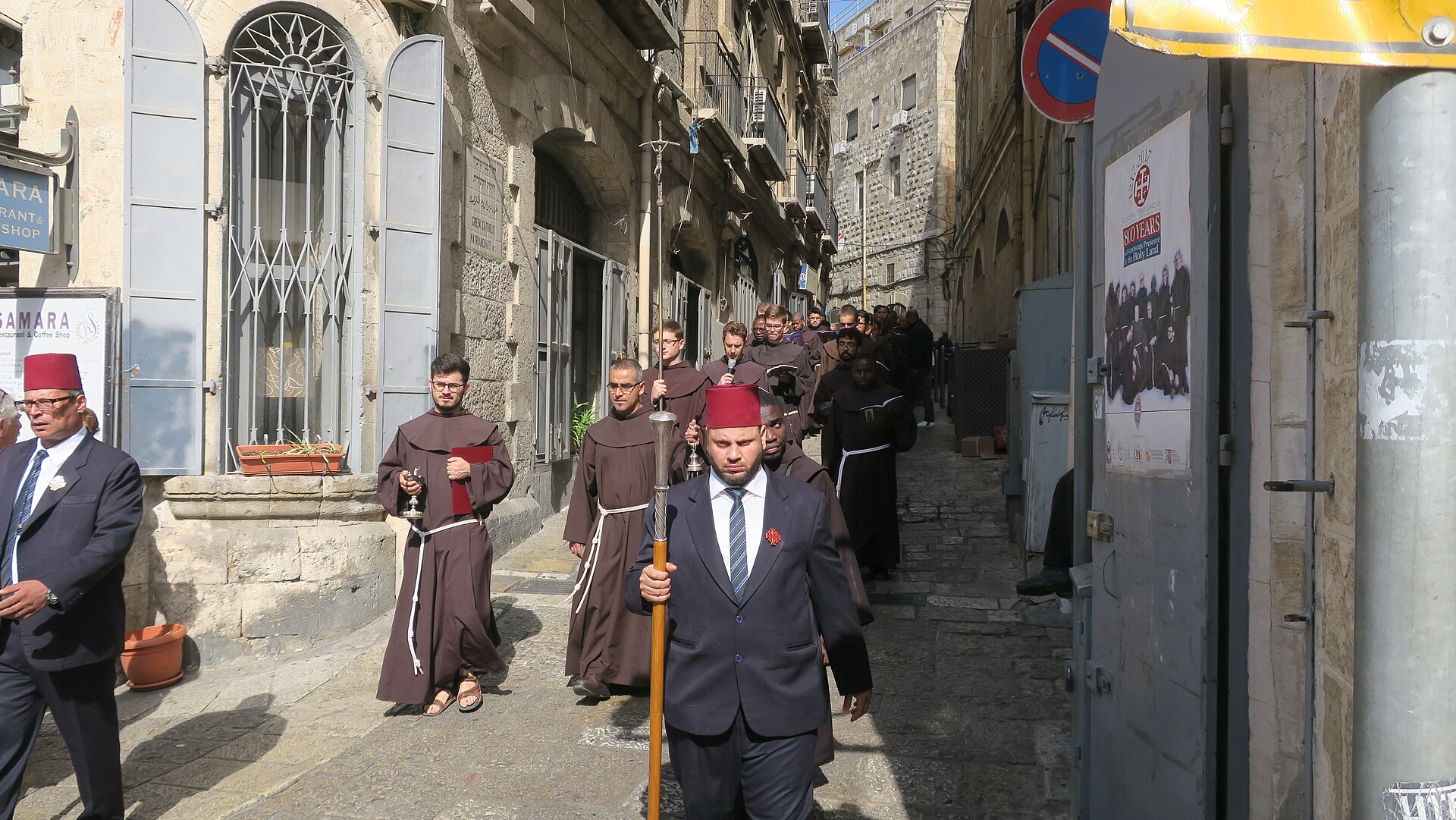
A Franciscan procession on Greek Catholic Patriarchate Road: Terrazzo, Franciscan Monks in Old Jerusalem by Terrazzo, CC BY 2.0, via Wikimedia Commons.
A courtyard of Deir es-Sultan, the Ethiopian monastery on the roof of the Holy Sepulchre: Ethiopian Church – הכנסייה האתיופית by ZeevRo, CC BY-SA 4.0, via Wikimedia Commons.
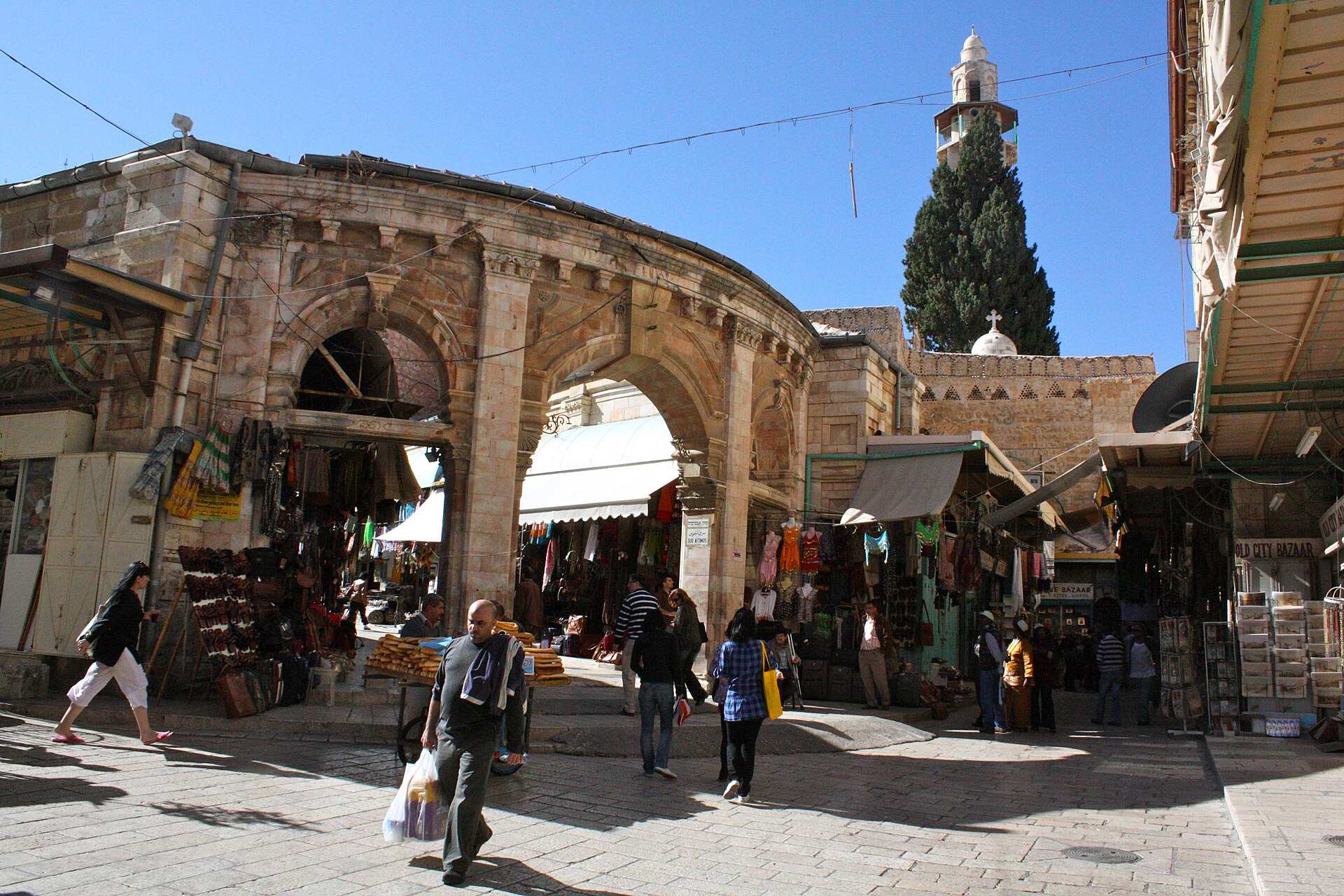
Shops at the Souq Aftimos gateway in the Muristan: East Jerusalem – The Old City – 123 (4260910801) by Kyle Taylor from London, 84 Countries, CC BY 2.0, via Wikimedia Commons.