Most people who ask about Petra from a Jerusalem hotel room have already looked at a map and decided it must be easy. The two cities are about the same distance apart as London and Birmingham, and on a clear day you can see the mountains of Jordan from the Mount of Olives. Then they look at the actual routes, the border, the opening hours of the crossings and the length of the walk once you get there, and the picture changes. Seeing Petra from Jerusalem is entirely doable, and for many visitors it becomes the best two days of the whole trip. Doing it well just takes more time, and more planning, than the map suggests.
This guide covers the two ways across the border, what a one-day tour really involves in 2026, why the overnight is the better trip, how to do it independently, what you will pay in tickets and fees, and how to spend your time once you are inside the site. Prices, border hours and tour schedules were checked in September and October 2026. Treat them as the right order of magnitude rather than a quote, and check the crossing, the tour operator and your government’s travel advice in the week before you go.
Petra from Jerusalem at a Glance
| Question | Short answer |
|---|---|
| Day trip or overnight? | Overnight. A day trip is possible but brutal. |
| Which crossing? | Allenby / King Hussein Bridge for the northern route (visa in advance); Yitzhak Rabin / Wadi Araba near Eilat for the southern route (visa on arrival for many nationalities, with conditions; confirm before you go). |
| Time on the road | At least five hours each way including the border, and far more if you go overland via Eilat. |
| Petra ticket | 50 JD for one day if you spend a night in Jordan; 90 JD if you do not. |
| Other fees | Israeli exit fee, Jordanian departure tax (10 JD), and a Jordanian visa unless your tour or Jordan Pass covers it. |
| Minimum sensible trip | Two days and one night, with the night in Wadi Musa beside the site. |
| Best months | March to May and October to November. |
| Hire car? | No. Israeli rental cars cannot cross into Jordan. |
The Short Answer: Make It an Overnight
If you remember one thing from this page, make it this: Petra rewards the people who sleep near it. Three separate reasons point the same way, and any one of them would be enough.
Time. Whichever route you take, you will spend at least ten hours of a one-day trip in a vehicle or a border hall. That leaves somewhere between three and four hours at a site that covers more than 250 square kilometres and has a two-kilometre walk just to reach the first famous building. On a day trip you see the Siq and the Treasury, walk a little further, and turn round. The Monastery, the High Place of Sacrifice and the quieter trails are out of reach.
Money. Jordan charges a far higher Petra entry fee to visitors who do not spend a night in the country. In 2026 that meant 90 JD for a same-day visitor against 50 JD for someone staying over. The difference of 40 JD, roughly US$56, goes a long way towards a simple room in Wadi Musa. The day trip is not the budget option it looks like.
Light and crowds. Petra is at its best early in the morning and in the last hour or two before closing, when the sandstone turns from pink to deep orange and the tour groups have gone back to their coaches. Day-trippers arrive in the middle of the day, when the light is flat and the Siq is at its busiest. Stay overnight and you can be at the gate when it opens.
Operators still sell the one-day tour, and at least one lists it as a guaranteed daily departure from Jerusalem, but its hotel pick-up is at 03:15. The rest of this page assumes you want to do it properly, but it also explains the day trip honestly, because for a small number of travellers it is still the only option.
How Far Is Petra from Jerusalem?
There are two practical routes, and they are very different trips. The straight-line distance is misleading, because the road has to go around the Dead Sea and the Jordan Valley border runs north to south.
| Northern route via Allenby | Southern route via Eilat | |
|---|---|---|
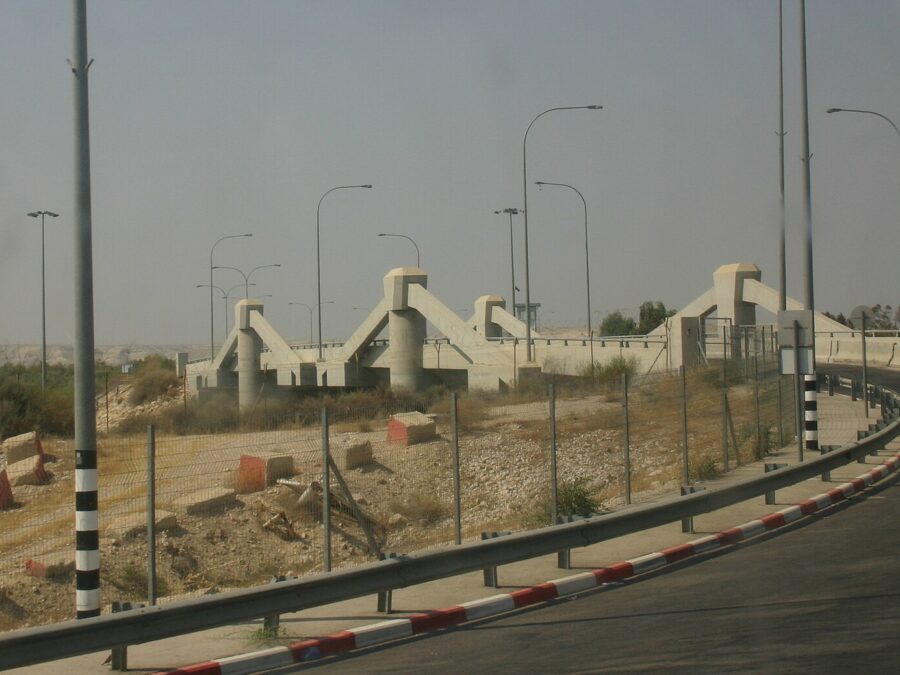
| Crossing | Allenby / King Hussein Bridge, east of Jericho | Yitzhak Rabin / Wadi Araba, just north of Eilat and Aqaba |
| Jerusalem to the border | About an hour by road | About four hours by road to Eilat |
| Border to Petra | Roughly three hours on Jordanian roads | Roughly two hours |
| Jordanian visa | Must be arranged in advance | Available on arrival for many nationalities, with conditions; confirm before you go |
| Weekend hours | Shorter hours on Friday; closed on Saturday | Open daily, with shorter weekend hours reported |
| Natural add-ons | Mount Nebo, Madaba, the King’s Highway | Wadi Rum, Aqaba, the Red Sea |
| Best for | Two-day tours and the quickest overland trip | Independent travellers, a southern loop, and combining Petra with Eilat |
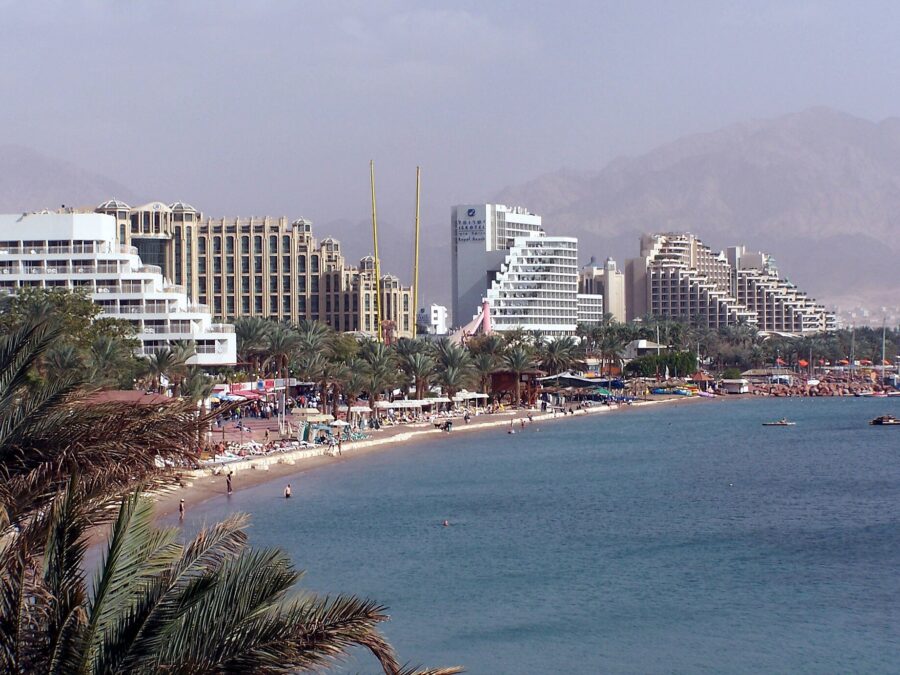
Add to those driving times an hour or more at the border in each direction, sometimes much more, and you can see why the trip does not fit into a day. The northern route is the faster of the two overland. The southern route is longer from Jerusalem, but it makes sense if you are already heading for Eilat, or if you want to add a night in Wadi Rum.
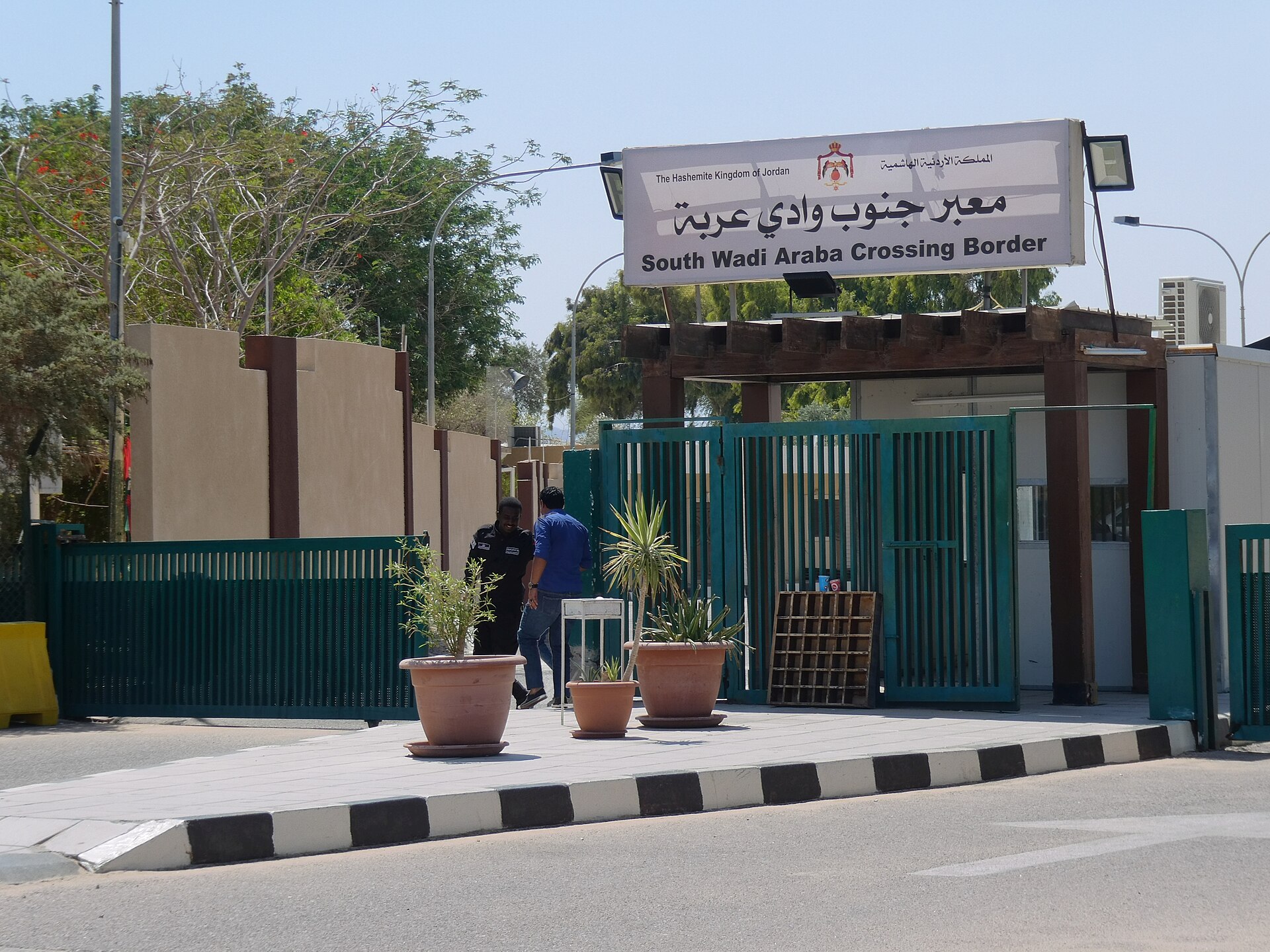
The border itself is a sequence rather than a single checkpoint: Israeli passport control and the exit fee, a short stretch of no-man’s-land, Jordanian passport control and the visa, then customs and a new vehicle on the far side. Tours handle the change of vehicles for you. Independent travellers walk across or take a shuttle and find a Jordanian taxi on the other side.
The One-Day Tour: What It Really Involves
Here is the honest shape of a day trip from Jerusalem, whichever company sells it to you.
- Before 05:00: hotel pick-up in Jerusalem, in the dark.
- Early morning: the drive to the border, then Israeli exit formalities, Jordanian entry and the change to a Jordanian vehicle and guide.
- Late morning to midday: the drive to Wadi Musa, arriving at the Petra visitor centre in the hottest, busiest part of the day.
- Three to four hours on site: a guided walk down the Siq to the Treasury, usually continuing to the Street of Facades and the Theatre, and perhaps the Royal Tombs or the start of the Colonnaded Street, with a lunch stop.
- Mid-afternoon: back up the long, gentle climb to the gate, which takes longer than the walk down.
- Evening: the drive back to the border, which you need to reach before it closes, then the same formalities in reverse.
- Close to midnight: drop-off back in Jerusalem.
That is a nineteen-hour day for a few hours at the site. If anything slows the border, the guide has to cut the time inside Petra to make the closing time, because missing it means a night in Jordan you have not planned for. Some one-day tours shorten the overland legs by flying between Tel Aviv and Eilat. That saves hours of driving, but it adds airport time and cost, and you still have the border and the road to Petra.
In 2026 at least one Jerusalem operator listed it as a guaranteed daily departure; private versions cost more, especially for couples and solo travellers. Check exactly what you are buying: whether the Jordanian visa, the 90 JD same-day Petra ticket, the exit fee and departure tax, the guide inside the site and lunch are included, or added on the day.
Who the day trip does suit. Travellers with exactly one free day, a strong wish to stand in front of the Treasury, and no expectation of seeing much else. If that is you, go with open eyes, sleep well the night before and take water, snacks and a book for the road. If you have any flexibility at all, find one more day.
The Two-Day Tour: The Sensible Minimum
A two-day tour gives you one travelling day and one full day at the site. That is the version most Jerusalem operators sell, and it comes in two main shapes.
Via Allenby, with Mount Nebo and Madaba
The northern version leaves Jerusalem in the morning, crosses at Allenby / King Hussein Bridge and stops on the way south at Mount Nebo, where tradition says Moses saw the Promised Land, and at Madaba, known for the sixth-century mosaic map of the Holy Land in the Church of St George. It reaches Wadi Musa in the late afternoon for a night near the site, and spends the whole of the second day in Petra before driving back to the border.
This is the most popular version for pilgrims, because Mount Nebo looks back across the Jordan Valley towards Jericho and the hills of Jerusalem, and it closes a biblical loop. Our Christian pilgrimage guide shows how the Jerusalem end of that story fits together. The catch is the visa: Jordan does not issue visas on arrival at Allenby, so you need to arrange one in advance, or book with an operator that arranges it for you. Allenby also closes early on Friday and stays shut on Saturday, which can rule out a weekend return.
Via Eilat, with Wadi Rum
The southern version crosses at Wadi Araba, usually after a flight or a long drive to Eilat, and often turns into three days rather than two, with a night in a Bedouin camp in Wadi Rum. That is a much bigger trip from Jerusalem, but it is the one people tend to remember longest. It suits anyone combining Petra with a few days on the Red Sea, and it avoids the Allenby visa problem.
What to check before you book
- Guaranteed departure. Some departures run only with a minimum number of passengers. Ask whether yours runs with your numbers.
- The visa. Who arranges it, how long it takes, and whether it is included in the price.
- The Petra ticket. Included, or paid on the day? If you stay overnight it should be the lower accommodated-visitor price.
- Border fees. The Israeli exit fee and Jordan’s 10 JD departure tax are often excluded. Budget for both.
- Time inside Petra. A real full day means starting near opening time, not arriving at 11:00.
- The guide. Tours use a licensed Jordanian guide on the Jordanian side, and your Jerusalem guide will usually hand you over at the border. A good handover is part of what you are paying for.
- The hotel. Wadi Musa has everything from backpacker hostels to comfortable four-star hotels. Ask which one, and how far it is from the gate.
- The return time. Some tours get you back to Jerusalem late in the evening of day two. Do not book an early flight the next morning.
Our overview of the best Jerusalem tours explains how to judge an operator, and the same questions apply here, with a border in the middle.
Doing It Independently
Petra is one of the easier border trips to do on your own, especially via the south. It takes more effort than a tour and will not necessarily save money for two people once taxis are added up, but it gives you control over your time, which is the whole point.
The southern route, step by step
- Jerusalem to Eilat. Direct intercity buses run from Jerusalem’s Central Bus Station to Eilat, a journey of more than four hours. Book ahead in busy periods, because seats sell out. Check the current timetable on Moovit or the operator’s site, and remember that there is no service from Friday afternoon until Saturday night. Our guide to getting around Jerusalem explains the Central Bus Station.
- A night in Eilat. Arriving in the evening and crossing first thing the next morning is far more relaxed than trying to do the whole journey in one go.
- Eilat to the border. The Yitzhak Rabin crossing is a short taxi ride north of the city.
- Across the border. Pay the Israeli exit fee, walk through, and get your Jordanian visa on arrival if your nationality qualifies.
- To Petra. Taxis wait on the Jordanian side. The drive to Wadi Musa takes about two hours. Agree the fare before you get in, or pre-book a transfer through your Wadi Musa hotel, which many do routinely.
- Two nights in Wadi Musa. One full day in Petra, ideally two, and then back the same way, or on to Wadi Rum and Aqaba.
The northern route
Independent travellers can also cross at Allenby, provided they hold a Jordanian visa in advance. Shared taxis and private cars run from Jerusalem to the bridge, and there is a compulsory shuttle bus across. On the Jordanian side you need a taxi or pre-arranged driver for the long drive south. This route works best as part of a longer Jordan trip with a night or two in Amman. Allenby is near Jericho, so if you are curious about the town on the way, see our Jericho day trip guide, though be aware that Jericho itself is in the West Bank and has its own rules for visitors.
Why you cannot simply drive
Israeli rental companies do not allow their cars into Jordan, and a private Israeli-plated car would face its own paperwork. Everyone crosses on foot or by shuttle and picks up Jordanian transport on the other side. Hire a car in Jordan if you want one; Jordanian roads are generally good, and the drive along the King’s Highway is a pleasure in its own right.
Visas, Tickets and Fees
Fees are the part of this trip that catches people out, because they arrive in three currencies at three different points. Here is what to expect.
| Item | Cost (2026) | Notes |
|---|---|---|
| Petra, one day, staying overnight in Jordan | 50 JD | Two days 55 JD, three days 60 JD |
| Petra, same-day visitor | 90 JD | Applies if you do not spend a night in Jordan |
| Jordan Pass: Wanderer / Explorer / Expert | 70 / 75 / 80 JD | One, two or three days in Petra, plus the visa fee if you meet the minimum stay |
| Jordanian visa on arrival | 40 JD | Single entry, at Sheikh Hussein and Jordan’s airports; Wadi Araba has its own rules; not available at Allenby |
| Jordanian departure tax | 10 JD | Charged when you leave by land |
| Israeli exit fee | Varies by crossing | Paid in shekels when you leave Israel; check the current amount before you travel |
| Petra by Night | Separate ticket | Several evenings a week; see below |
The Jordan Pass is bought online before you travel. It bundles Petra entry with dozens of other sites and waives the Jordanian visa fee, but only if you stay in Jordan for at least two nights. Leave sooner and you pay the visa fee at departure. For a two-day Petra tour it rarely makes sense on its own; for a four or five-day Jordan trip it is excellent value. Do not rely on it as a visa at Allenby, which officially requires the visa to be arranged beforehand.
The Jordanian dinar is pegged to the US dollar at roughly US$1.41. Shekels are not much use on the Jordanian side, so change a little money at the border or use the ATMs in Wadi Musa. Carry shekels for the Israeli exit fee on the way out.
Entering Israel again on the way back is straightforward for most visitors. An approved ETA-IL is valid for multiple entries for up to two years, so the one you arrived on should cover your return, but check its expiry date before you leave. Our guide to Israel visa requirements explains how the system works.
What to See in Petra
Petra was the capital of the Nabataeans, Arab traders who grew rich on the incense and spice routes and carved their tombs and temples straight into the sandstone between roughly the third century BC and the first century AD. The Romans annexed it in 106 AD, earthquakes and shifting trade routes emptied it, and it was largely forgotten by the outside world until the Swiss traveller Johann Ludwig Burckhardt reached it in disguise in 1812. It has been a UNESCO World Heritage Site since 1985.
The scale is the first surprise. Most visitors imagine a single canyon with a famous facade at the end. In fact the Treasury is only the beginning, and the city spreads out beyond it into a wide valley ringed by tombs, with trails climbing in every direction.
The Siq and the Treasury
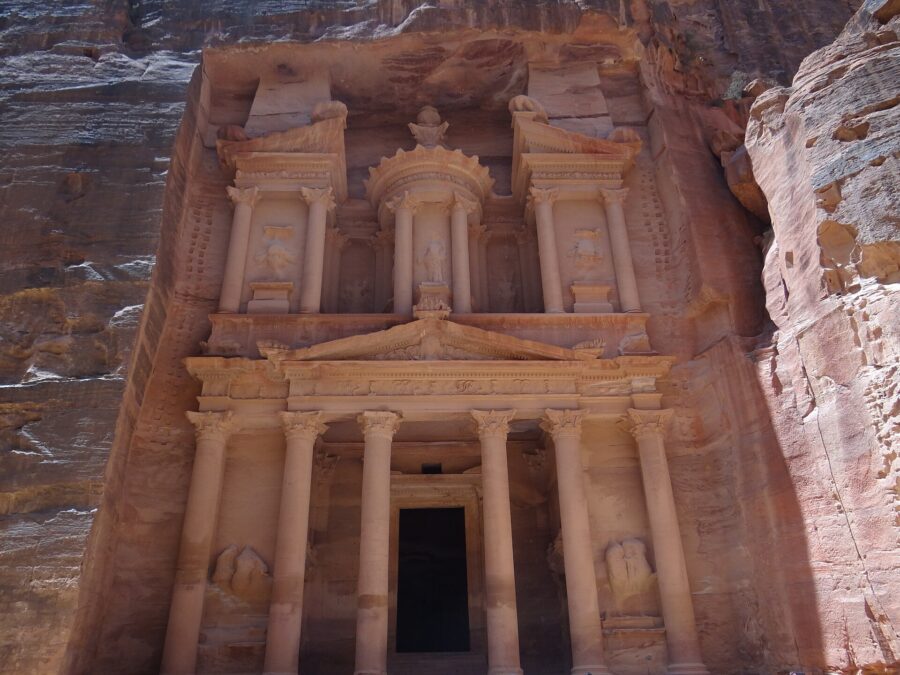
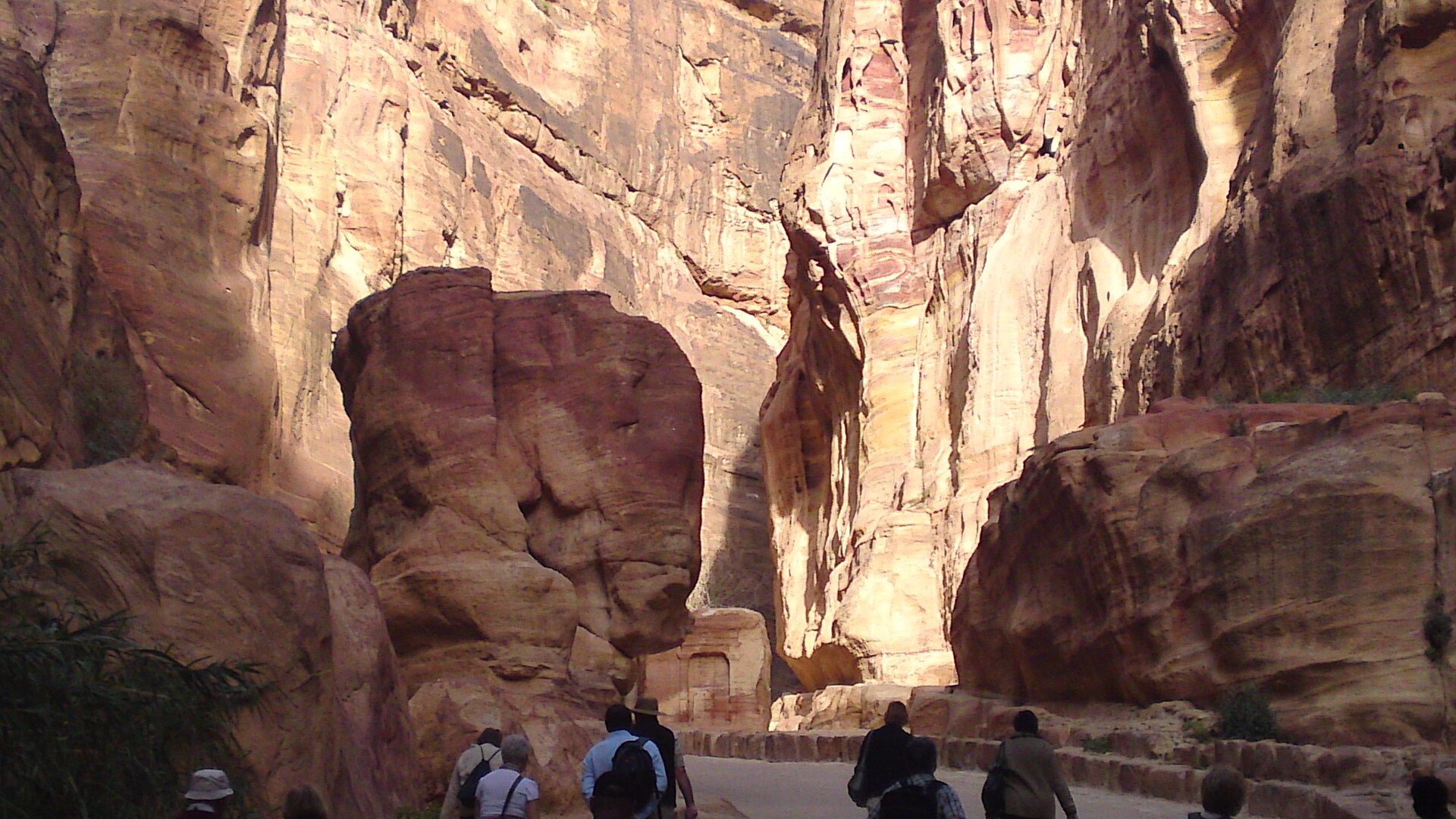
From the visitor centre a broad path runs downhill for about a kilometre past the Djinn Blocks and the Obelisk Tomb to the start of the Siq, a narrow gorge more than a kilometre long. Its sheer walls tower over the path, and in places they nearly touch overhead. Look for the water channels the Nabataeans cut along the sides, and the worn remains of a carved camel caravan. Then the gorge narrows one last time and the facade of Al-Khazneh, the Treasury, appears through the gap. It is one of the great arrivals in world travel, and it lives up to its reputation.
Horse rides are offered for the first stretch to the Siq, and horse-drawn carts run through it. Animal welfare at Petra has been a long-running concern, and many visitors prefer to walk. The path is easy, if long.
The Street of Facades, the Theatre and the Royal Tombs
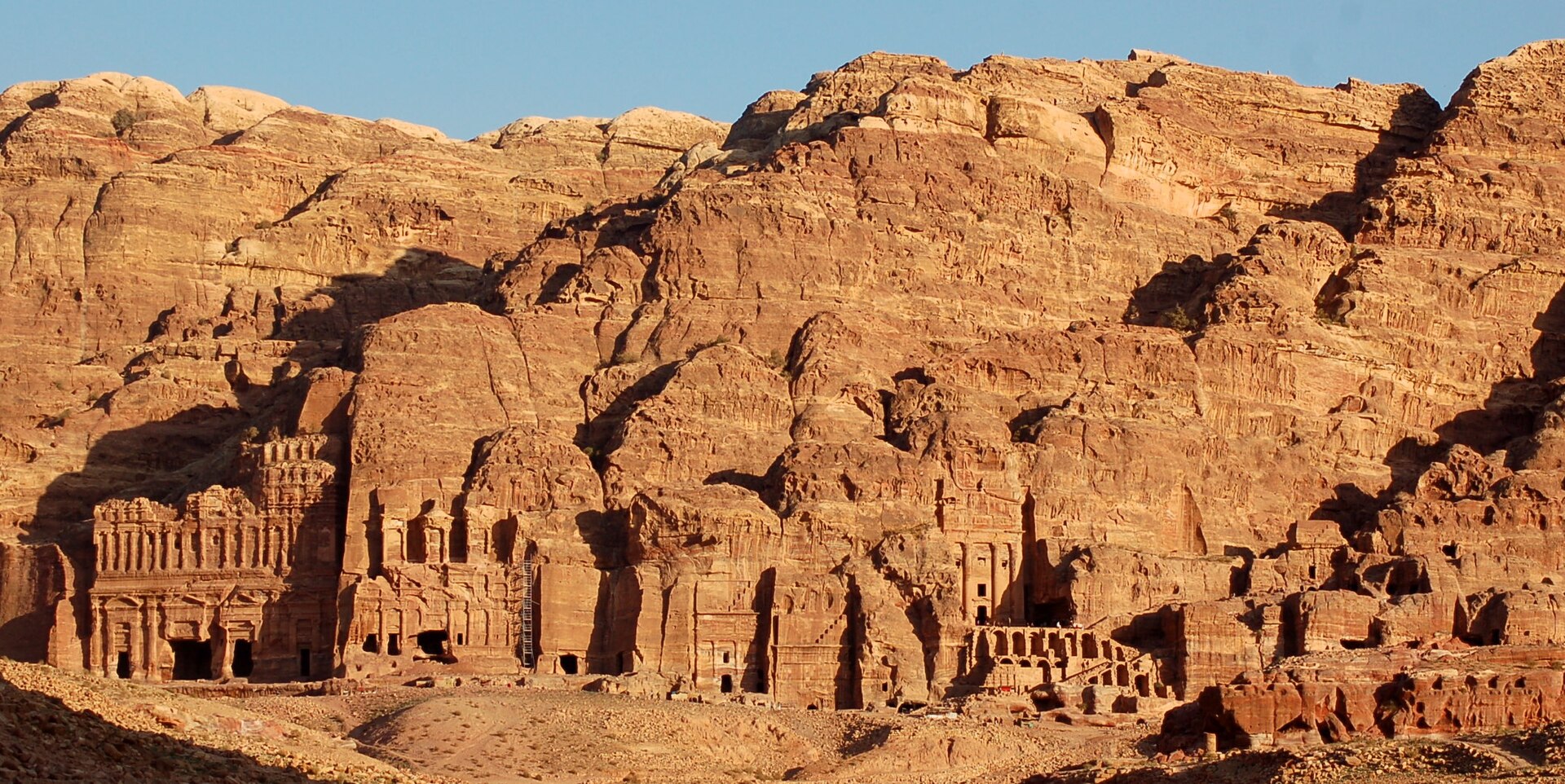
Beyond the Treasury the gorge opens out past rows of carved tomb fronts to the Theatre, cut into the hillside, and then into the main valley. On the right, high on the cliff, stand the Royal Tombs: the Urn Tomb, the Silk Tomb, with its rippling bands of coloured stone, the Corinthian Tomb and the Palace Tomb. Climb up to them for the view back over the valley. This is about as far as most day-trippers get.
The Colonnaded Street and Qasr al-Bint
The Roman-era Colonnaded Street runs along the valley floor past the Great Temple and the remains of markets and fountains to Qasr al-Bint, one of the few free-standing buildings in Petra. There are cafés and restaurants at this end of the site, and it is the natural place to rest before the big climb.
The Monastery
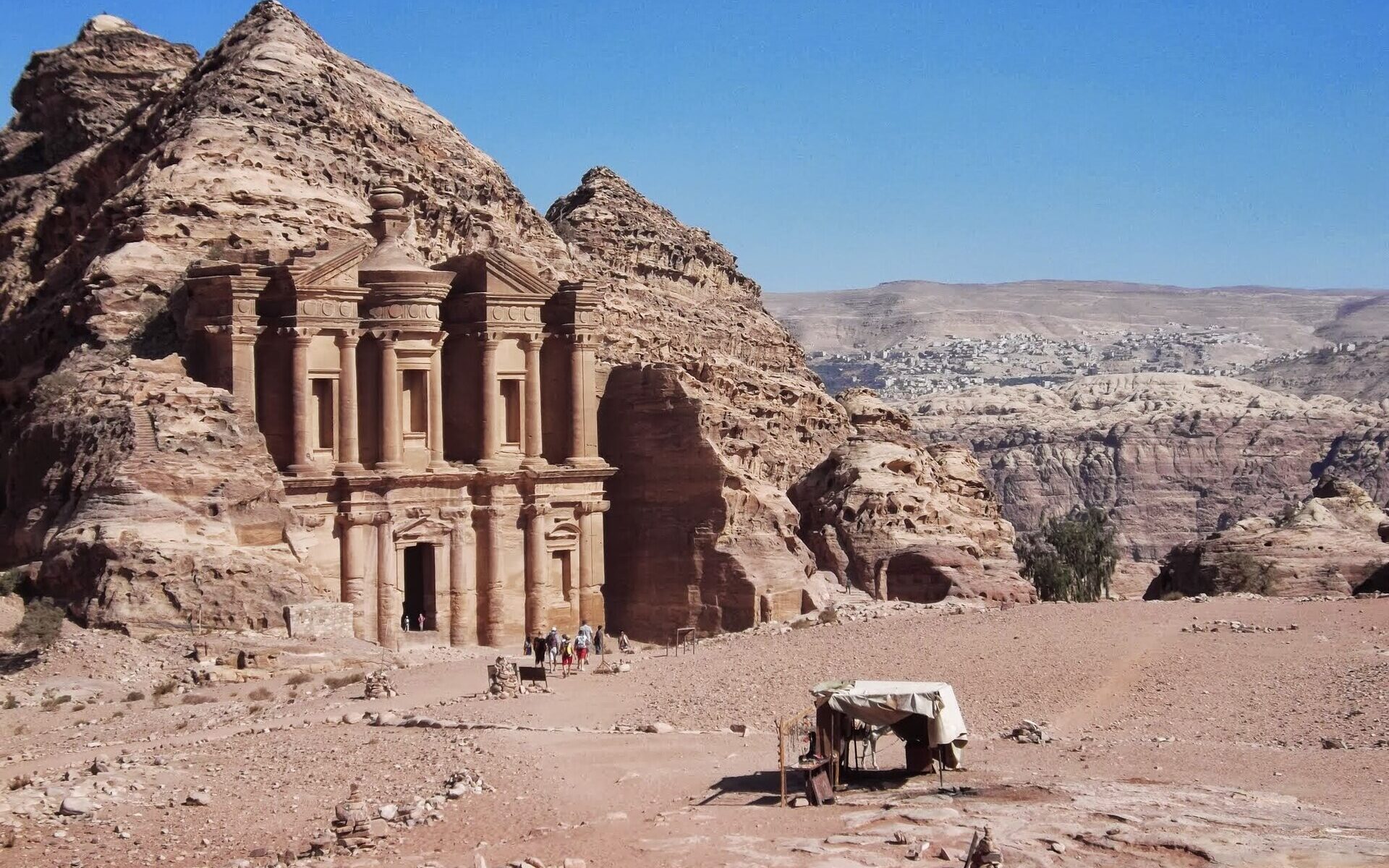
Ad-Deir, the Monastery, is the reason to have a full day. From the end of the Colonnaded Street a path of around 800 rock-cut steps winds up through a gorge to a high plateau, and the facade, larger than the Treasury, appears suddenly across an open space. The climb takes most people 40 minutes to an hour. Go in the afternoon, when the sun is on the facade, and walk on a few minutes to the viewpoints beyond it, which look west over Wadi Araba towards Israel. Donkeys are offered for the climb; the same welfare concerns apply.
The High Place of Sacrifice and the Treasury viewpoint
With a second day, two quieter trails are worth the effort. The path to the High Place of Sacrifice climbs from near the Theatre to a ridge-top altar with wide views, then descends past rarely visited tombs through Wadi Farasa. The Al-Khubtha trail, which starts near the Royal Tombs, leads to a viewpoint high above the Treasury, the angle from which many of the best-known photographs are taken. Both are steep and unshaded. Start early.
Little Petra
Siq al-Barid, known as Little Petra, lies a short drive north of Wadi Musa. It is a small, narrow canyon of carved buildings, thought to have been a suburb for caravans, and it is far less crowded. It makes a good half-day on the morning you leave. Fit walkers can also follow a trail from Little Petra to the Monastery, arriving at the top of the steps rather than the bottom.
Petra by Night
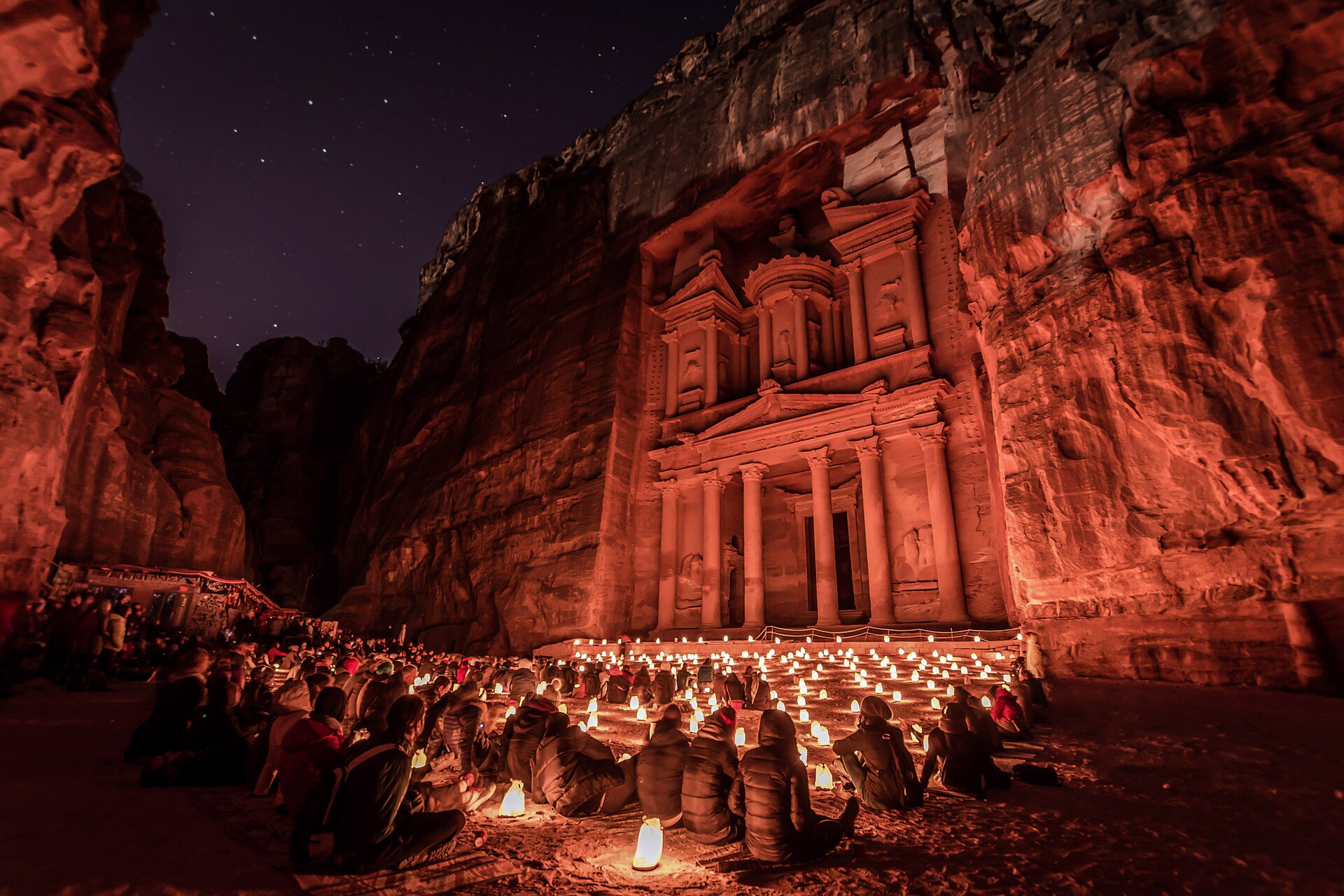
On several evenings a week, the Siq and the square in front of the Treasury are lit with hundreds of candles for Petra by Night. Visitors walk down in silence and sit in front of the facade for music and a short programme. The official Petra site lists it on Monday, Wednesday and Thursday, starting at 20:30 and lasting around two hours; tickets are 17 JD, sold separately, and you also need a valid day ticket. Check the current nights on the official site. It is atmospheric, often crowded and occasionally noisy, and opinions on it are split. If you are staying overnight anyway, it is worth seeing once. It is not worth arranging a trip around.
A Day-by-Day Plan for Two Days
Here is one way to use a two-day trip via the southern route, starting from Eilat after a night there. The northern version simply swaps the morning drive for Allenby, Mount Nebo and Madaba.
Day one
- Cross at Wadi Araba as soon as it opens, then drive to Wadi Musa.
- Check in, eat, and enter Petra in the early afternoon.
- Walk the Siq to the Treasury, continue to the Street of Facades and climb to the Royal Tombs as the light softens.
- Walk back up to the gate before closing. Petra by Night, if it is running.
Day two
- Be at the gate when it opens. The Siq at opening time is a different place.
- Walk straight through to the Colonnaded Street and climb to the Monastery while it is cool, or save it for the afternoon sun.
- Take the High Place of Sacrifice trail or the Al-Khubtha viewpoint in the middle of the day if you still have the legs.
- Leave mid-afternoon for the border, or stay a second night and visit Little Petra in the morning.
Two full days in Petra itself, with a third night, is better still. Petra’s three-day ticket costs only 10 JD more than the one-day ticket, which tells you how much the Jordanians think there is to see.
Wadi Musa: Sleeping Beside the Site
Wadi Musa is the town that has grown up around the Petra visitor centre. It is not beautiful, but it is practical, with hotels at every level from simple guesthouses to large resort-style properties, plenty of restaurants, ATMs and pharmacies. The hotels closest to the gate cost more and save you a walk at the end of a long day, which by the second evening feels like money well spent. Those up the hill in the town centre are cheaper, and most offer a shuttle down to the gate.
Several Bedouin-run camps around Little Petra offer a different kind of night, with dinner around a fire and a dark sky. They are further from the main gate, so you will need transport in the morning.
Adding Wadi Rum or Aqaba
Wadi Rum, about two hours south of Petra, is a protected desert of red sand and sheer sandstone mountains, and a night in one of its camps, with a jeep tour in the afternoon and a sky full of stars, is the highlight of many trips to Jordan. It slots naturally into the southern route: Eilat, Wadi Rum, Petra, and back. Aqaba, Jordan’s Red Sea port, sits right next to the Wadi Araba crossing and makes an easy first or last night if you would rather not go back to Eilat. Both are covered in our broader guide to trips from Jerusalem that need a night or a border.
When to Go
| Season | What to expect at Petra |
|---|---|
| March to May | The best weather of the year: warm days, cool mornings, wildflowers. Also the busiest, especially around Easter. |
| June to August | Very hot in the middle of the day. Start at opening time, rest at midday, and go back in the late afternoon. |
| September to November | Excellent once the heat breaks, usually from October. A good balance of weather and crowds. |
| December to February | Cold mornings, occasional rain and even snow, and short days. Flash floods can close the Siq at short notice. |
The Israeli calendar matters as much as the weather. Buses to Eilat stop on Shabbat, Allenby closes early on Friday and all day Saturday, and border queues grow around the Jewish holidays, when many Israelis head for the Red Sea and the Sinai. Our religious holidays calendar lists the 2027 dates, and our guide to Shabbat in Jerusalem explains how the weekly shutdown works. On the Jordanian side, Ramadan brings shorter working hours and fewer places open for lunch during the day, though Petra itself stays open. For conditions back in Jerusalem, see Jerusalem weather by month.
Practical Tips for the Trip
- Read the travel advice first. The US State Department and the UK Foreign, Commonwealth & Development Office publish separate advice for Israel and for Jordan, and their positions and border-area guidance do not always match. Read your own government’s current advice for both countries, and check that your travel insurance covers Jordan. This guide describes how the trip works; it does not tell you whether to go. For the picture in Jerusalem itself, see whether Jerusalem is safe to visit.
- Passport. Check that it has enough validity and blank pages. Jordan stamps passports unless you ask the officer not to before handing yours over; Israel issues a separate entry slip instead. A Jordanian stamp from a crossing with Israel shows where you entered, which can matter if you plan to visit countries that refuse entry to travellers who have been to Israel.
- Shoes. You will walk at least 8 to 10 kilometres on a full day, much of it on sand and uneven rock. Proper walking shoes, not sandals.
- Water and sun. Most of Petra is unshaded. Carry plenty of water, a hat and sunscreen. Water and snacks are sold inside, at a premium.
- Dress. Jordan is more conservative than Tel Aviv. Shoulders and knees covered is a sensible default, and it also keeps the sun off.
- Cash. Shekels for the Israeli side, dinars for Jordan. Cards are widely accepted in hotels, less so at small cafés and with taxi drivers.
- Your Jerusalem hotel. If you are coming back, ask whether you can leave a bag. Travel light for the two days. Our packing list covers the basics for the region.
Is Petra Worth It from Jerusalem?
Yes, with the right amount of time. Petra is one of the most extraordinary places in the region, and from Jerusalem it is close enough to fit into a week-long trip without much sacrifice. Two days and a night is the minimum to do it justice; three days with Wadi Rum is better. If you are planning your week, our one week in Jerusalem itinerary shows how to leave room for it.
The day trip is a different question. It is possible, and some people come back delighted simply to have stood in front of the Treasury. But it costs more than it looks, it spends most of the day on the road, and it shows you a small corner of a vast site at the worst time of day. If you only have one spare day in Jerusalem, our guide to day trips from Jerusalem has better options, from the Dead Sea to Bethlehem, which give you far more time on the ground than you spend getting there. Save Petra for a trip that can give it two days.
If you are taking the southern route on your own, the first leg is the longest. Our guide to getting from Jerusalem to Eilat compares the direct bus, the flight from Ben Gurion and the drive down the Arava, and explains why most independent travellers spend a night in Eilat before they cross into Jordan.
The border is the part of this trip with the most moving parts, and the rules differ at each crossing: the exit fee at Allenby is higher than at the other two, Allenby issues no visas on arrival, and only the southern crossing was listed as open on Saturdays in October 2026. Our guide to the Jerusalem to Jordan border crossing compares all three in detail.
Final Word on Petra from Jerusalem
Petra is the trip from Jerusalem that people talk about for years, and the one they most often regret rushing. Give it two days, sleep in Wadi Musa, be at the gate when it opens, and climb to the Monastery in the afternoon light. Sort the visa and the border fees before you leave, read the travel advice, and plan the crossing around Shabbat. Then come back to Jerusalem with the rest of the week mapped out: our how many days in Jerusalem guide helps you split the time, our trip cost guide helps you budget for it, and our Jerusalem travel tips cover everything else.
Photo Credits
The Monastery, Ad-Deir, at Petra: 37 Petra Monastery Trail – The Monastery – panoramio by hikinginjordan, CC BY-SA 3.0, via Wikimedia Commons.
Walkers in the Siq: Jordan – Petra – Siq – Elephant 1 by Harry Van den Bulck, CC BY-SA 4.0, via Wikimedia Commons.
The South Wadi Araba crossing: 0760 2019 Israel Jordanien 0799 South Wadi Araba Crossing Border by Steffen 962, CC BY-SA 4.0, via Wikimedia Commons.
The Royal Tombs in late light: Nabataean Royal Tombs, Petra by twiga-swala, CC BY-SA 2.0, via Wikimedia Commons.
Petra by Night at the Treasury: Petra Al-Kaznah by Night by Mustafa Waad Saeed, CC BY-SA 4.0, via Wikimedia Commons.