Few cities let you read scripture with your feet the way Jerusalem does. The biblical sites in Jerusalem run from the original City of David, where the story of King David’s capital begins, to the Church of the Holy Sepulchre, where Christian tradition places the crucifixion and resurrection. In between lie the Western Wall, the Mount of Olives, the Garden of Gethsemane, the Via Dolorosa, the Pool of Siloam, and Mount Zion. This guide groups the major biblical sites Jerusalem visitors come for by Old and New Testament, tells you what survives to see at each, and gives the practical detail (hours, fees in shekels, dress, and Shabbat closures) you need to plan a Bible-focused visit.
A word on tone before you go: many of these places carry traditions that are deeply held but not always archaeologically settled, and several are sacred to more than one faith. It pays to visit with respect and an open mind. For deeper dives, pair this with our guide to the City of David excavations and our Christian pilgrimage guide.
The major biblical sites at a glance
If your time is limited, these are the sites most Bible-focused visitors prioritize. Most cluster in or just outside the Old City, so you can link several on foot in a day.
- Western Wall (Kotel): the surviving retaining wall of the Second Temple complex and the holiest accessible Jewish prayer site.
- Temple Mount / Haram al-Sharif: the site of the First and Second Temples, today home to the Dome of the Rock and Al-Aqsa Mosque.
- Mount of Olives: the ridge east of the Old City associated with Jesus’s ascension and sweeping Temple Mount views.
- Garden of Gethsemane: where the Gospels place Jesus’s prayer the night before the crucifixion.
- Via Dolorosa: the traditional route of Jesus to Golgotha, marked by 14 Stations of the Cross.
- Church of the Holy Sepulchre: the church built over the traditional sites of the crucifixion, burial, and resurrection.
- City of David, Hezekiah’s Tunnel, and the Pool of Siloam: the oldest layer of Jerusalem and its biblical water systems.
- Mount Zion (Tomb of David and the Upper Room): traditional sites of David’s tomb and the Last Supper.
- Pool of Bethesda: the pools near St. Anne’s Church linked to a Gospel healing.
Old Testament sites
City of David
This ridge just south of the Dung Gate is the original Jerusalem, the Jebusite stronghold the Bible describes David taking (2 Samuel 5) and making his capital. Today it is an active archaeological park where you can see early fortifications, walk down to the Gihon Spring, and connect the dots between the biblical text and the dirt. It is also the gateway to Hezekiah’s Tunnel and the Pool of Siloam, so most Old Testament itineraries start here.
Western Wall (Kotel)
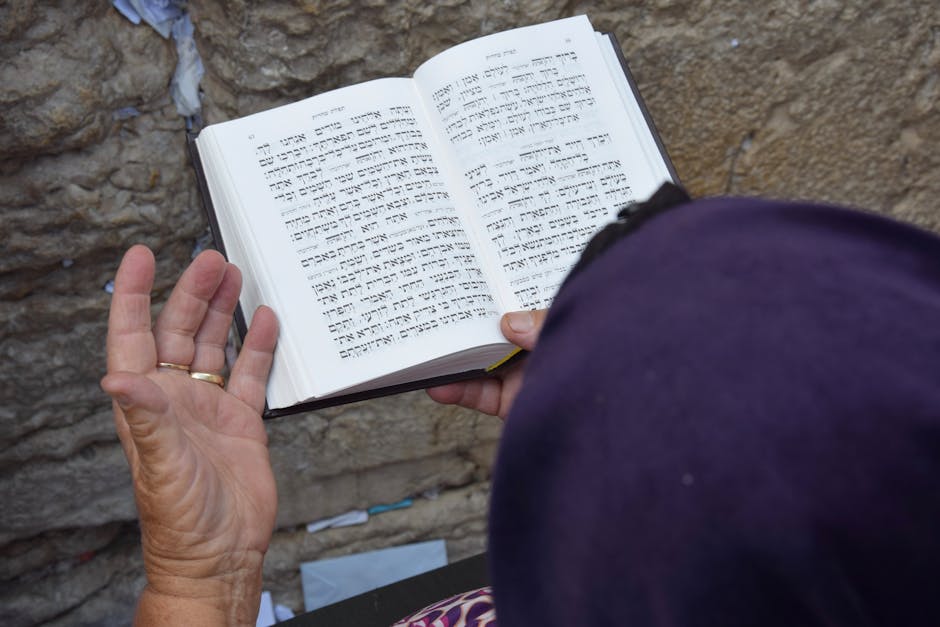
The Western Wall is the exposed section of the great retaining wall Herod the Great built to expand the Temple platform in the late first century BCE. While the wall postdates most of the Hebrew Bible, the Temple it supported sits at the center of the Old Testament narrative, which is why it is the focus of Jewish prayer. The plaza is open 24 hours a day and free; men and women pray in separate sections, and modest dress and head covering for men (paper kippot are provided) are expected. Our Western Wall guide covers etiquette and the best times to visit.
Hezekiah’s Tunnel and the Pool of Siloam
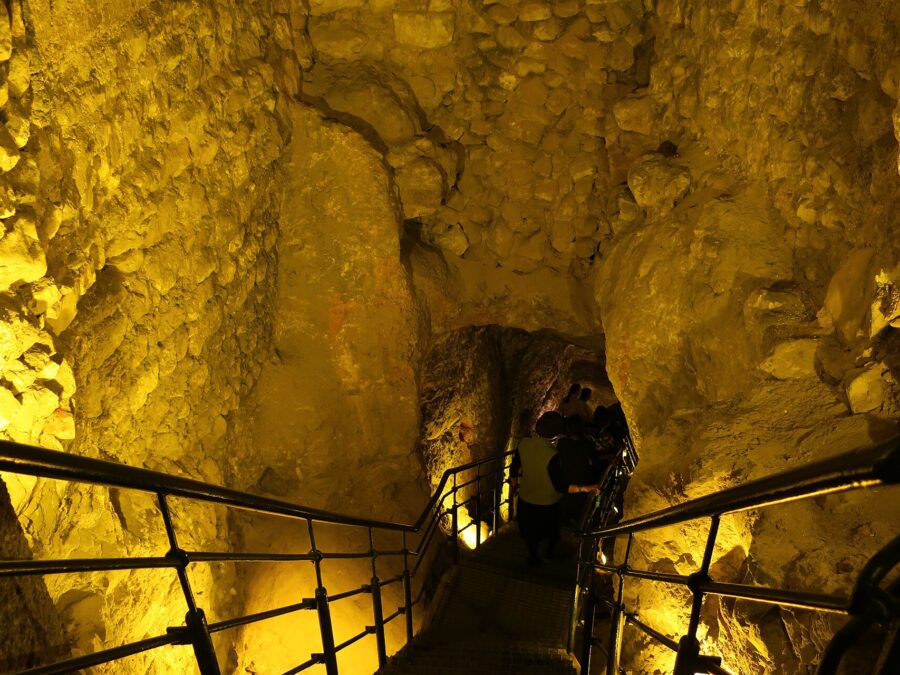
Cut around 701 BCE to protect Jerusalem’s water during the Assyrian siege (2 Kings 20:20; 2 Chronicles 32:30), Hezekiah’s Tunnel still carries spring water 533 meters to the Pool of Siloam. You can wade its full length by flashlight or take the dry parallel tunnel. Full details are in our Hezekiah’s Tunnel guide, and the broader engineering story is in our ancient water systems guide.
Mount Zion: Tomb of David and the Upper Room
Just outside the Zion Gate, Mount Zion holds two traditions stacked in one building: the Tomb of David on the lower level (a venerated site, though scholars debate whether David is actually buried here) and the Upper Room, or Cenacle, above it, identified in tradition as the place of the Last Supper and Pentecost. Both are free to enter; the Tomb of David is a working prayer space, so dress modestly and expect separate men’s and women’s sections.
Pool of Bethesda
Beside the Crusader-era St. Anne’s Church inside the Lions’ Gate, the excavated Pool of Bethesda is linked to the Gospel account of Jesus healing a paralyzed man (John 5). You can walk among the ruins of the twin pools and the later Byzantine church. St. Anne’s, famous for its acoustics, is worth stepping into for the architecture and the singing pilgrim groups. Our guide to Crusader-era Jerusalem covers St. Anne’s and the other medieval churches and fortifications in more depth.
New Testament sites
Mount of Olives
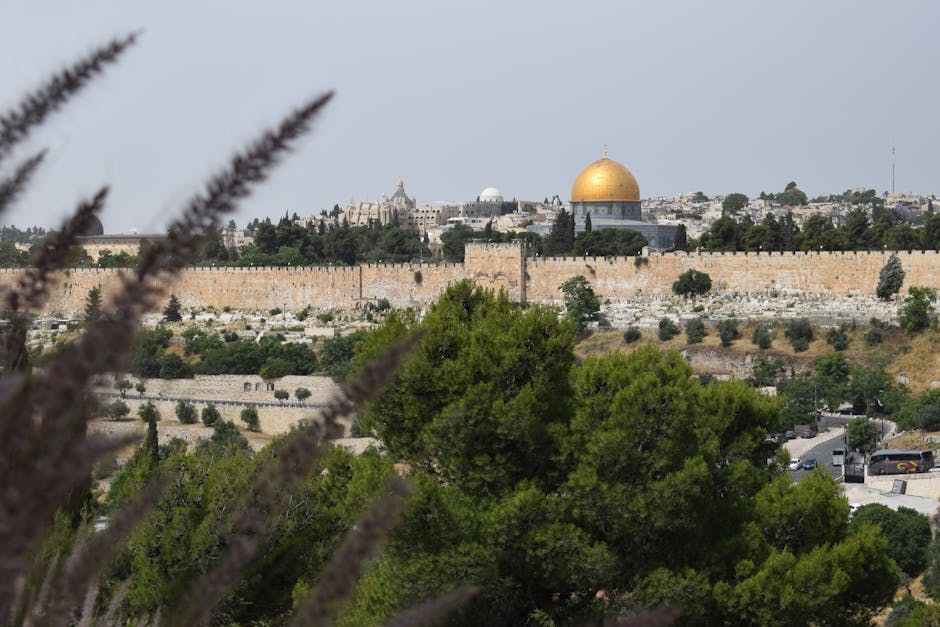
The Mount of Olives rises directly east of the Old City and offers the classic panorama across the Kidron Valley to the Temple Mount. In the Gospels and Acts it is the place of Jesus’s ascension, and its slopes hold a cluster of churches and the Garden of Gethsemane. Many visitors start at the top for the view and walk down past the sites; our Mount of Olives guide maps the descent.
Garden of Gethsemane
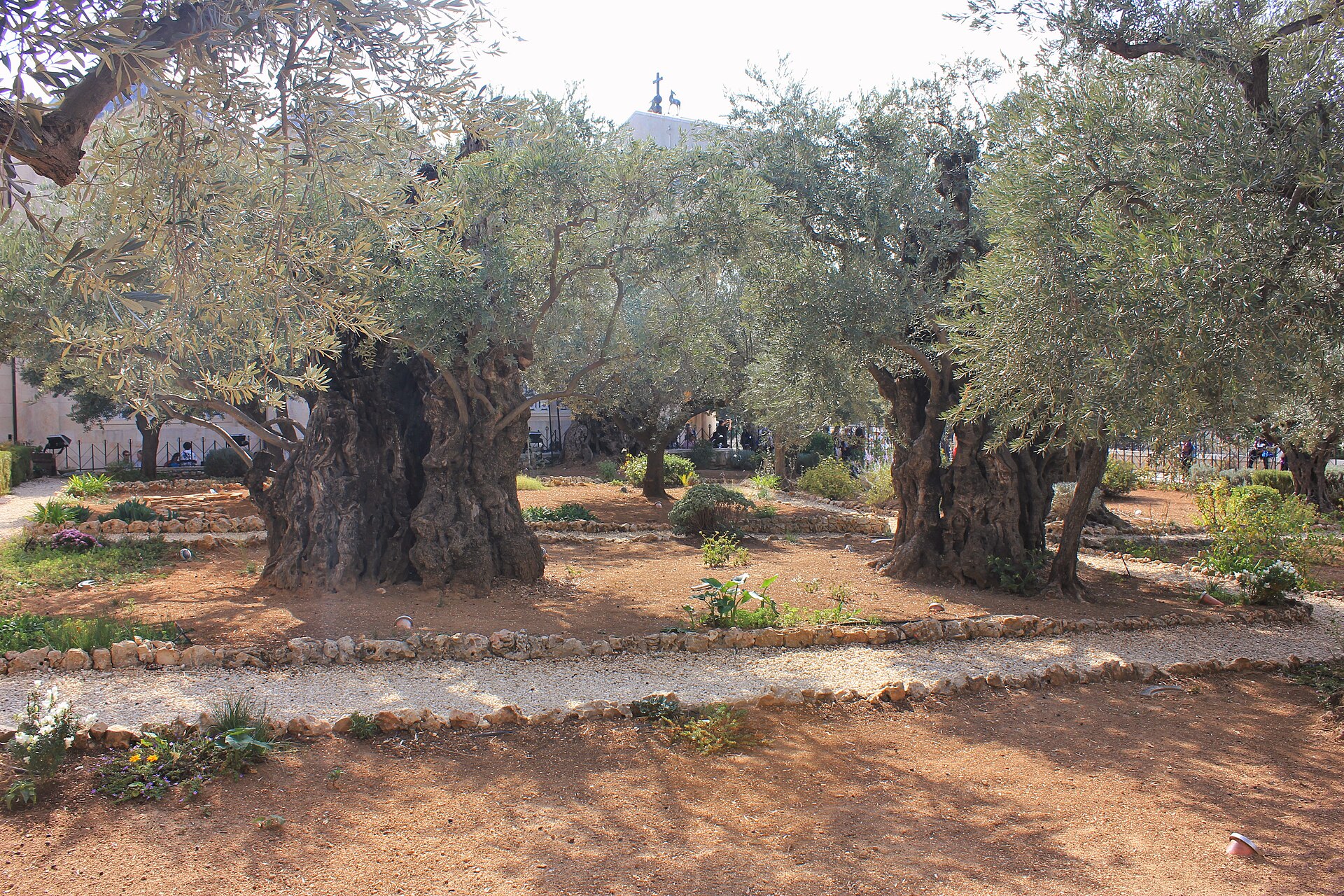
At the foot of the Mount of Olives, the Garden of Gethsemane is where the Gospels describe Jesus praying before his arrest (Matthew 26; Mark 14; Luke 22). A grove of gnarled olive trees, some very old, stands beside the Church of All Nations, built over the rock where tradition holds Jesus prayed. The garden is free and quietly moving; see our Gethsemane guide for visiting hours and etiquette.
Via Dolorosa
The Via Dolorosa threads through the Muslim and Christian Quarters as the traditional route Jesus walked to Golgotha, marked by 14 Stations of the Cross, the last five inside the Holy Sepulchre. On Fridays, Franciscan friars lead a procession along the route (timing shifts with the season). It is free to walk anytime; a guide or our Via Dolorosa guide helps you find the stations, which are easy to miss among the market stalls.
Church of the Holy Sepulchre
The Holy Sepulchre is built over the traditional sites of the crucifixion (Golgotha), the anointing, and the empty tomb. It is shared, sometimes tensely, among six Christian communities, and the mix of Greek Orthodox, Catholic, Armenian, Coptic, Syriac, and Ethiopian spaces is part of the experience. Entry is free; lines for the tomb (the Edicule) can be long, so go early. Modest dress is required. Our Holy Sepulchre guide explains the layout.
Pool of Siloam and the Upper Room
The Pool of Siloam, at the exit of Hezekiah’s Tunnel, is identified in John 9 as where Jesus healed a man born blind; recent excavation has exposed more of the Second Temple-era steps. The Upper Room on Mount Zion completes the New Testament circuit as the traditional site of the Last Supper. Both reward a slower visit if your schedule allows.
Practical planning for biblical sites
A few realities shape any Bible itinerary in Jerusalem. Plan around them and the days flow smoothly.
| Practical point | What to know |
|---|---|
| Cost | Most churches and the Western Wall are free; the City of David and some sites charge (roughly 30-50 ILS at City of David) |
| Shabbat | The City of David and many Jewish-run sites close Friday afternoon through Saturday; Christian sites generally stay open |
| Dress | Cover shoulders and knees at all holy sites; carry a scarf. Men cover heads at the Western Wall |
| Temple Mount | Open to non-Muslims only during limited hours and never on Fridays, Saturdays, or Muslim holidays; non-Muslims cannot enter the Dome of the Rock or Al-Aqsa |
| Security | Bag screening at major sites; allow extra time, especially near the Western Wall and Temple Mount entrance |
The Temple Mount deserves particular attention. Non-Muslim visitors enter only through the Mughrabi Bridge by the Western Wall, only during restricted morning (and sometimes early afternoon) windows on non-holy days, and may not enter the Muslim shrines. Modest dress is strictly enforced and religious items may be restricted. Check current access on the day, as hours change with the calendar and security situation.
A three-day Bible itinerary
Day 1: Old Testament Jerusalem
Start early at the City of David and walk Hezekiah’s Tunnel down to the Pool of Siloam, then climb back via the Pilgrimage Road. After lunch, head to Mount Zion for the Tomb of David and the Upper Room, and finish at the Western Wall as the afternoon light softens.
Day 2: In the footsteps of Jesus
Begin atop the Mount of Olives for the view, then descend to the Garden of Gethsemane. In the afternoon, walk the Via Dolorosa through the Old City and end at the Church of the Holy Sepulchre, ideally before the late-day crowds.
Day 3: Beyond the walls
Add a day trip to nearby biblical territory. Bethlehem and the Church of the Nativity are a short ride away (bring your passport for the crossing); see our Bethlehem day trip guide. Galilee and Nazareth are a fuller day north for those following the Gospels further.
Getting around the sites
Most of these sites sit within walking distance inside the Old City, so comfortable shoes matter more than transport. For the Mount of Olives and Mount Zion, a short taxi spares you the climb, and the Light Rail Red Line plus a walk covers approaches from the New City. Our transportation guide details buses, the Red Line, and sherut shared taxis, and our holy sites guide rounds up sacred places across all three faiths.
Guided tours and the best time to go
You can absolutely explore the biblical sites Jerusalem holds on your own, map in hand, but a knowledgeable guide pays off here more than at most destinations. So much of the meaning is layered and contested that having someone connect a heap of stones to the right verse, and to be honest about what is tradition versus what is excavated fact, deepens the day considerably. Half-day and full-day Bible-focused tours are widely available, including dedicated City of David and Holy Sepulchre walks, and many run in English, Spanish, French, and other languages. Reading up on the city’s layered past beforehand helps too, and our 5,000-year history of Jerusalem sets out the empires and eras behind each site.
On timing, spring (around March to May) and autumn (September to November) bring the most comfortable weather for long days on foot, though they also coincide with major Jewish and Christian holidays when sites are busiest and some Jewish-run venues close. Summer is hot and crowded; carry water and start early. Whenever you come, mornings are the calmest hours at the Holy Sepulchre and the Western Wall, and the soft late-afternoon light over the Old City from the Mount of Olives is hard to beat. For help slotting these visits into a wider plan, see our Jerusalem itinerary guide.
Several of these sites come alive once a year in a way no ordinary visit conveys. Bethphage and the Mount of Olives road carry the Palm Sunday procession; Gethsemane holds a candlelit vigil on Holy Thursday night; the Via Dolorosa fills from before dawn on Good Friday. If your trip can flex, our guide to Easter and Holy Week in Jerusalem covers what happens where, and when to arrive to stand a chance of seeing it.
To see the wider world these sites belonged to, spend an afternoon at the Bible Lands Museum in Givat Ram. Its galleries show the empires that surrounded ancient Israel, from the Egypt of the Pharaohs to the Assyrian and Babylonian armies that the prophets warned against, and its free English tour ties them to the biblical story.
Jerusalem holds only part of the story. Jesus grew up in Nazareth and spent much of his ministry around the Sea of Galilee, and many visitors combine the two. Our Holy Land pilgrimage itinerary links the Galilee, Bethlehem, the Jordan River and Jerusalem into a ten-day route.
The Upper Room itself is a medieval hall that has served as church, friary and mosque, with a synagogue around the tomb downstairs. Our guide to the Room of the Last Supper explains what the tradition claims, what the stonework shows, and how to visit both floors.
Photo Credits
Ancient olive trees in the Garden of Gethsemane: Оld Olive trees in the Garden of Gethsemane, 01 by Beko, CC BY-SA 4.0, via Wikimedia Commons.