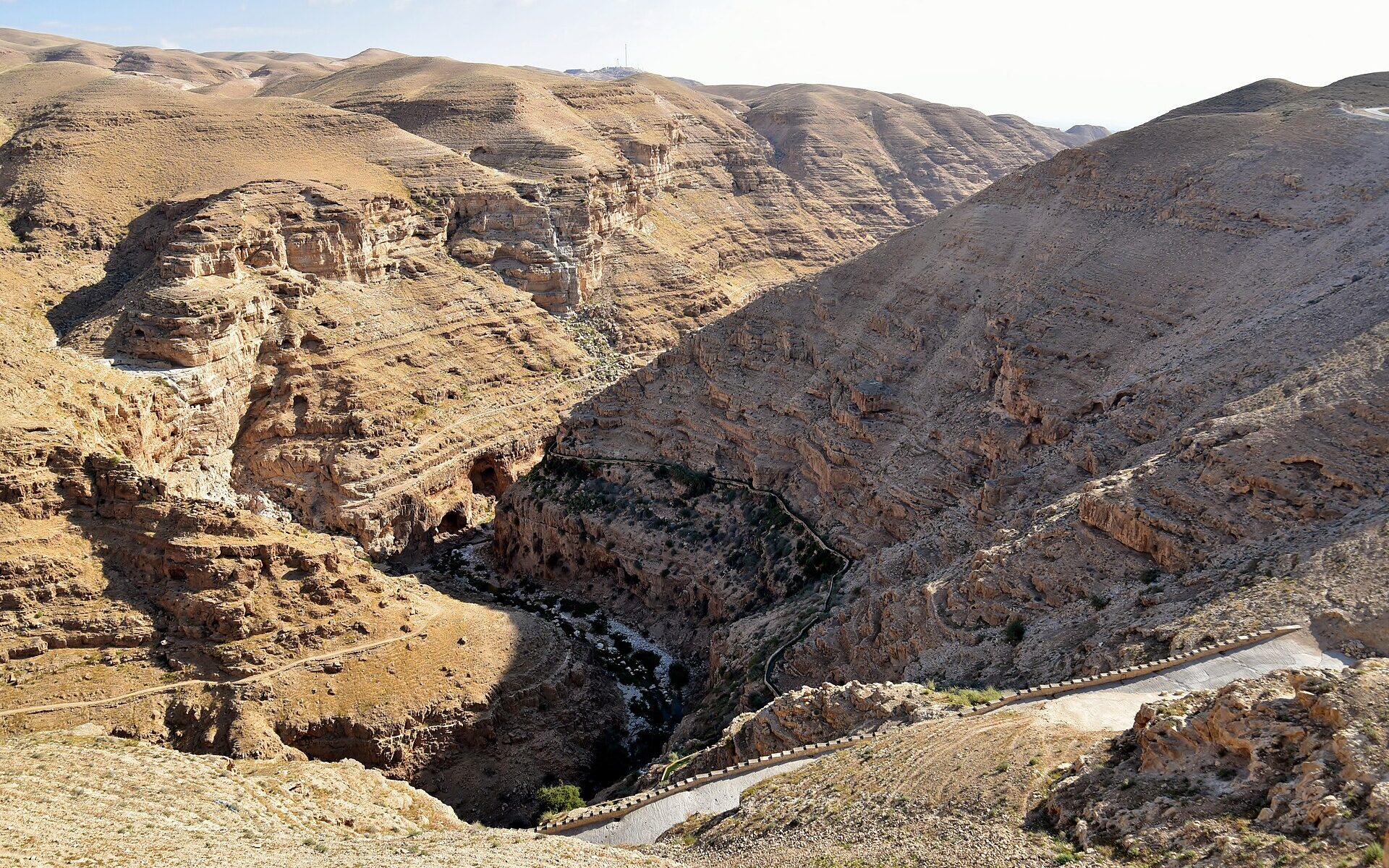
The Wadi Qelt hike follows a deep desert canyon east of Jerusalem, dropping from the Judean hills toward Jericho past sheer cliffs, year-round springs, and the cliff-clinging Greek Orthodox monastery of St. George. The full route runs about 15 kilometers and is demanding; most visitors instead walk one of the shorter, spectacular sections, such as the viewpoint and trail down to the monastery, or the easy spring pools higher up. This guide to the Wadi Qelt hike covers the route options, the monastery, the springs, and, above all, how to do it safely, because this is real desert terrain where summer heat and winter flash floods are genuine hazards.
One important practical note up front: Wadi Qelt and Jericho lie in the West Bank. For many travelers a guided tour is the simplest way to visit, handling transport, navigation, and access; independent hikers should plan carefully and check current conditions. We cover this neutrally below. For the wider region, this page pairs with our hiking and outdoor activities guide, our Judean Desert tours guide, and our roundup of hikes that work with kids.
Wadi Qelt at a Glance
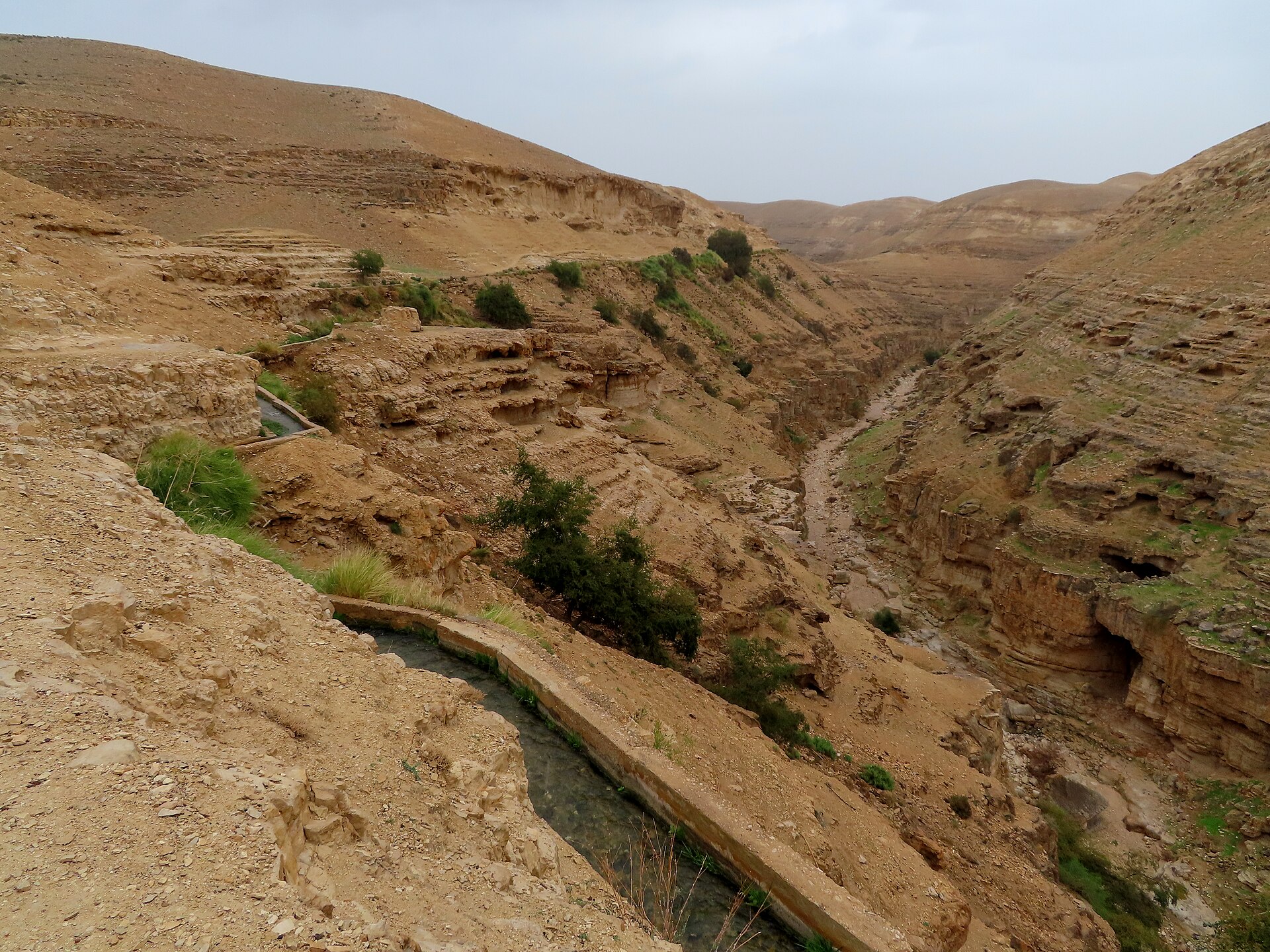
Wadi Qelt is a perennial stream that has carved a steep canyon through the desert between the Jerusalem area and Jericho. It is one of the few places this close to the city where water flows year-round in the desert, which is why springs, an aqueduct, and a monastery all cluster along its course. The land drops dramatically: from the hills around 800 meters above sea level down toward Jericho, which sits about 260 meters below sea level, so a full traverse loses roughly a kilometer of elevation. That descent, combined with desert exposure, is what makes the full route challenging and the heat so significant.
| Detail | Information |
|---|---|
| Setting | Desert canyon between Jerusalem and Jericho (West Bank) |
| Full length | About 15 km; shorter sections available |
| Difficulty | Moderate to challenging by section |
| Elevation | From ~800 m to about -260 m near Jericho |
| Time, full traverse | Roughly 5-7 hours |
| Key sights | St. George’s Monastery, springs, aqueduct, cliffs |
| Best seasons | Late autumn to early spring; avoid summer |
| Access | By car or guided tour; limited public transport |
Route Options
There is no single Wadi Qelt route; the canyon offers everything from a short family stroll to springs to a long, committing traverse. Match the section to your fitness, the season, and how you plan to handle transport at the far end.
Full Traverse (about 15 km, advanced)
The complete walk runs roughly 15 kilometers from the upper canyon near the Mitzpe Yericho area down to Jericho, taking five to seven hours and losing close to 1,000 meters of elevation. It passes the springs, the aqueduct channel, and the monastery on the way. This is a serious undertaking that needs an early start, a lot of water, and arranged transport to collect you at the bottom, since you finish far from where you started. Most independent hikers who attempt it do so in the cool months, and many choose a guide.
St. George’s Monastery Section (about 3-5 km, moderate)
The most popular option descends from a roadside viewpoint to the monastery and back, roughly 3 to 5 kilometers round trip over two to three hours, with a steep climb on the return. The reward is the astonishing sight of the monastery built into the cliff and the green ribbon of the canyon below. It suits reasonably fit walkers and families with older children, around age 10 and up, who can handle the climb back out.
Ein Qelt Spring Loop (about 2 km, easy to moderate)
The gentlest option is a short walk of around 2 kilometers, one to one and a half hours, to the Ein Qelt spring and its pools higher in the system. It is the most family-friendly section and the one where cooling off in the water is part of the appeal. If you want spring pools without the desert exposure, the terraced springs at Sataf west of Jerusalem offer a gentler equivalent. Even here, the surroundings are desert, so the same heat and water rules apply.
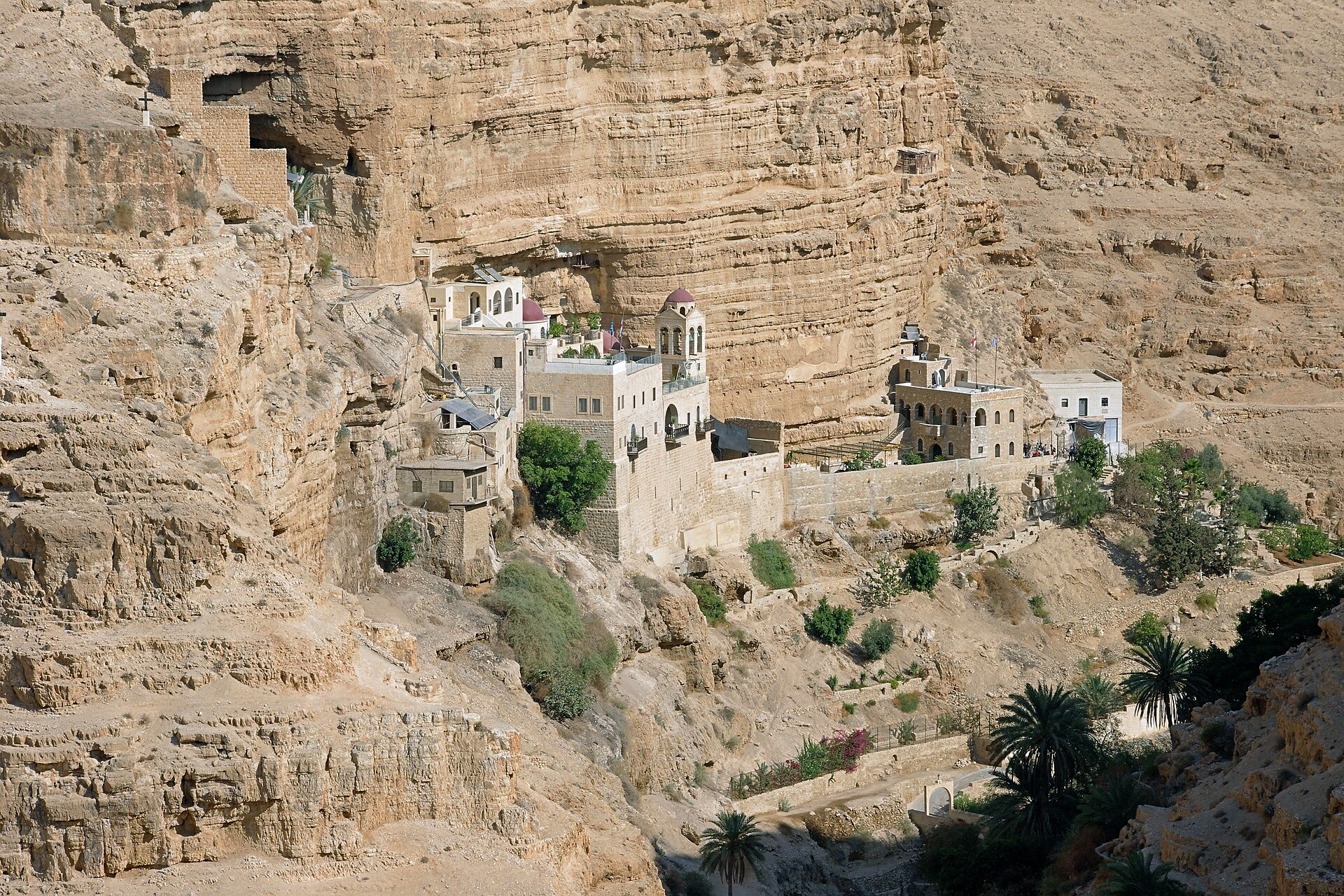
St. George’s Monastery
The monastery of St. George of Choziba is the visual centerpiece of the canyon, a Greek Orthodox community whose buildings are fixed against the rock face above the streambed. Its origins reach back to around the fifth century, and the complex grew around earlier hermit caves in the cliffs. Inside you will find frescoes, old mosaics, and the quiet of a working religious house; tradition connects the site to the prophet Elijah. Visiting hours are limited and can be cut short on feast days, entry is free, and modest dress, shoulders and knees covered, is required. Photography is generally fine outside; ask before shooting interiors. Reaching the monastery on foot always involves a steep section, so save energy and water for the climb back up.
The Springs and Water
What makes Wadi Qelt remarkable is that water runs through it all year. The main springs, including Ein Qelt and Ein Fawwar (Fara), feed the stream and the old aqueduct that channels water down the canyon. The pools offer a cool dip that is a world away from the warm, salty Dead Sea nearby, and a swimsuit is worth packing if you plan to use them. Do not, however, treat the spring or stream as drinking water; it is not treated, so carry everything you need to drink. You may also encounter Bedouin shepherds moving flocks along the wadi, a normal part of the landscape here.
Safety: Heat, Flash Floods, and the Desert
This is the most important section on the page. Wadi Qelt is a desert canyon, and two hazards deserve real respect.
Summer heat. From roughly June through August, daytime temperatures in this part of the desert are extreme, and the lower canyon toward Jericho is hotter still because it sits below sea level. Hiking here in high summer is genuinely dangerous: heatstroke and dehydration are real risks, and there is little shade. The honest advice is to avoid the longer routes in summer entirely. If you go in the warm shoulder seasons, start at first light, aim to be off the trail by early afternoon, and carry far more water than you think you need, on the order of three to four liters per person for a longer section, plus electrolytes and salty snacks. Wear a wide-brimmed hat, sunglasses, high-SPF sunscreen, and light long sleeves, and turn back if anyone shows signs of heat illness.
Flash floods. The flip side of the desert is sudden water. In the rainy season, roughly November through April, rain falling on the hills, sometimes many kilometers away under a clear sky overhead, can send a wall of water down the canyon with little warning. Never enter Wadi Qelt when rain is falling or forecast anywhere in the catchment, and do not rely on the weather where you are standing. Check flood warnings before you go, and if the sky looks threatening or water levels are rising, get out of the streambed and onto high ground immediately.
Beyond those two, the usual desert rules apply: cellular coverage is patchy in the canyon, so tell someone your route and expected finish time, carry a basic first-aid kit, and wear closed, sturdy hiking shoes rather than sandals on the rocky, sometimes slippery ground. For first-timers, and especially for the full traverse, a guided hike removes much of the navigation, transport, and safety guesswork.
What to Bring
- Water: 3-4 liters per person for longer sections; the springs are not for drinking.
- Sun protection: wide-brimmed hat, sunglasses, high-SPF sunscreen, light long sleeves.
- Food: energy snacks and something salty to replace what you sweat out.
- Footwear: closed, sturdy hiking shoes with grip.
- Navigation and comms: offline map or GPS, charged phone; coverage is limited.
- First-aid kit and any personal medication.
- Modest clothing to enter the monastery; a swimsuit if you will use the spring pools.
- Passport: useful when traveling in the West Bank.
When to Go
Autumn, especially October and November, is the prime time, with cooler, dry, stable weather. Spring, around March and April, is also excellent and brings desert wildflowers after the winter rains. Winter days can be pleasant and cool, but this is precisely when flash-flood risk is highest, so only hike in clear, settled conditions and never with rain in the forecast for the area. Summer, June through August, should be avoided for anything beyond the shortest, shaded spring visit, and even then only with extreme caution. In those months the forest routes covered in our guide to hiking near Jerusalem are a far safer way to get outdoors. Whatever the season, start early and plan to finish the exposed parts by early afternoon.
How to Get There
By car, the upper canyon is roughly a 30 to 40 minute drive from Jerusalem heading east on Route 1 toward the Jordan Valley, with access points around the Mitzpe Yericho area and a viewpoint above the monastery. Public transport into the canyon is limited and not practical for most visitors. Because Wadi Qelt is in the West Bank and the full traverse needs a vehicle waiting at the Jericho end, the simplest approach for many travelers is an organized hike: numerous operators run guided Wadi Qelt trips from Jerusalem, typically in the region of 80 to 150 US dollars per person depending on length and group size, including transport and a guide. Carry your passport when traveling in the West Bank. For a fuller rundown of desert excursions, see our Judean Desert tours guide and our Jericho day-trip guide.
Combining With Other Sites
The canyon sits in the heart of a region full of desert and biblical sites, so it combines well into a longer day. Jericho, one of the world’s oldest continuously inhabited towns, lies at the foot of the route. The Dead Sea is around half an hour south for a float and the mineral beaches, and the shrine of Nabi Musa stands out in the desert nearby. Bedouin-run camel rides are sometimes available in the area. Many visitors fold Wadi Qelt into a wider Judean Desert itinerary; our Dead Sea day-trip guide and day trips from Jerusalem overview help you build one.
Planning Your Wadi Qelt Hike
The Wadi Qelt hike rewards you with desert canyon, flowing springs, and one of the most striking monasteries in the region, but it asks for respect: pick the right season, carry serious water, watch the sky for flood risk, and consider a guide, especially for the full traverse or a West Bank visit. Build it into your plans with our hiking and outdoor guide, our Judean Desert tours guide, and our easier family trail suggestions.
Photo Credits
Wadi Qelt gorge in the Judean Desert: Wadi Qelt, 2019 (01) by Bahnfrend, CC BY-SA 4.0, via Wikimedia Commons.
The aqueduct channel in Wadi Qelt: Wadi Qelt IMG 1734 by بدارين, CC BY-SA 4.0, via Wikimedia Commons.
St George’s Monastery in Wadi Qelt: Izrael, imgp0042 (2017-10) by Jiří Bubeníček, CC BY-SA 4.0, via Wikimedia Commons.
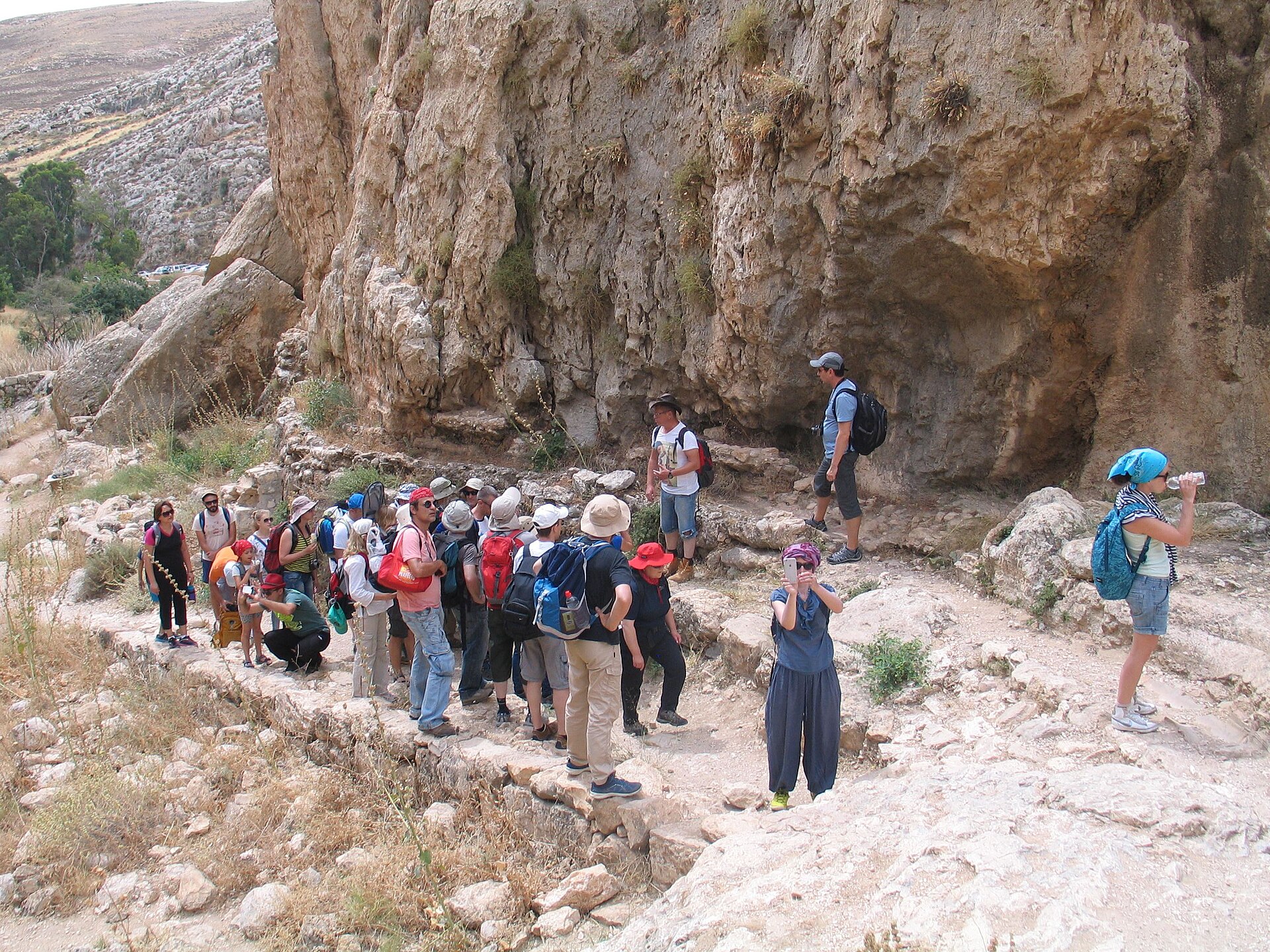
Hikers in Nahal Prat (upper Wadi Qelt): Ein-Prat-to-Ein-Mabua-670 by Bukvoed, CC BY 4.0, via Wikimedia Commons.