A Nazareth day trip from Jerusalem reaches the town where, in Christian tradition, Jesus grew up, and opens the door to the green hills and lakeside sites of the Galilee, the most fertile and biblically rich part of Israel. It is a long way north, roughly 150 kilometres and around two and a half hours each way, so almost everyone treats it as a full-day excursion, pairing Nazareth with the Sea of Galilee, Capernaum, and the Mount of Beatitudes. For Christian pilgrims it is one of the most meaningful days of a trip, and for other travellers it is the most efficient way to see the Galilee without staying overnight.
This guide to a Nazareth day trip from Jerusalem covers the main Galilee sites, opening hours and entry, how to get there by tour, car, or bus, a realistic full-day itinerary, what to bring, and the best time to go. Pair it with our Day Trips from Jerusalem guide and our Christian pilgrimage to Jerusalem guide.
Nazareth Day Trip at a Glance
| Distance from Jerusalem | About 150 km north |
| Drive time | Around 2.5 hours each way |
| Full-day excursion | Typically 10–12 hours |
| Best for | Christian pilgrims and travellers who want to see the Galilee in a day |
| Typical tour | Roughly 350–650 ILS per person |
| Basilica of the Annunciation | Free entry; modest dress required |
Sites in Nazareth
Basilica of the Annunciation
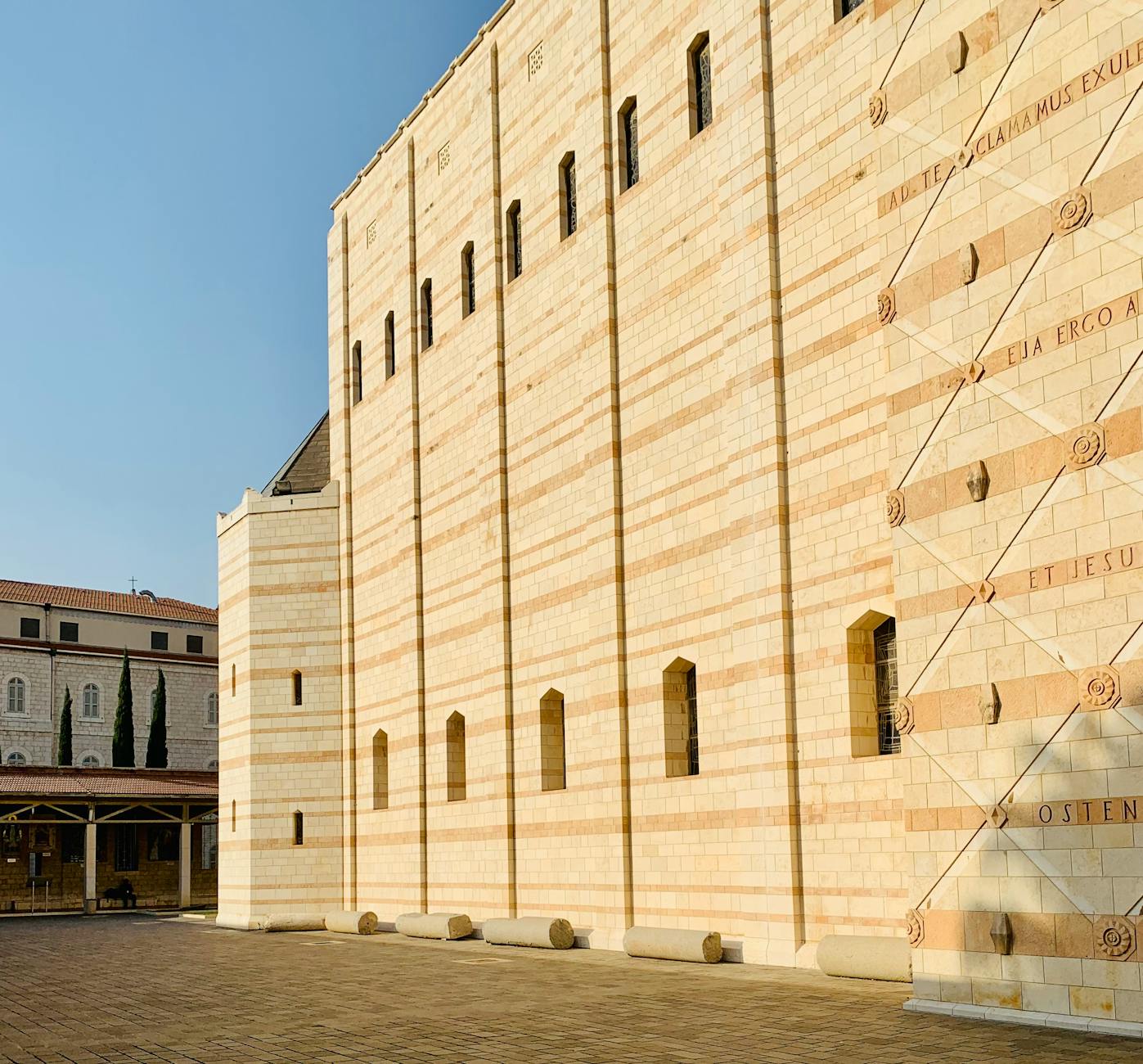
The Basilica of the Annunciation is the largest Christian church in the Middle East, completed in 1969 over a series of earlier churches and, at its heart, the cave dwelling traditionally identified as Mary’s home, where Christian tradition holds the angel Gabriel announced that she would bear Jesus. The lower level encloses the grotto, while the soaring upper church is ringed by mosaics and artworks donated by Catholic communities around the world, each depicting the Madonna in its own national style. It is generally open daily, with free entry, and modest dress is required. Allow at least an hour.
St. Joseph’s Church and Mary’s Well
A short walk from the basilica, St. Joseph’s Church stands over a site traditionally associated with Joseph’s carpentry workshop, with an atmospheric crypt below. Nearby, Mary’s Well marks the town’s historic spring, the place where, by tradition, Mary would have drawn water; the adjacent Greek Orthodox Church of St. Gabriel is built over the source. Together these make a natural extension to a visit to the basilica, and they give a sense of the old town beyond its grandest church.
The Old City and Market
Nazareth’s old city is a maze of stone lanes with a lively Arab market, churches, and old merchant houses, and it is a good place to pause for lunch. The town today is a largely Arab city, both Christian and Muslim, and its food scene, from fresh hummus and falafel to knafeh and strong coffee, is one of the pleasures of a visit.
Sites around the Sea of Galilee
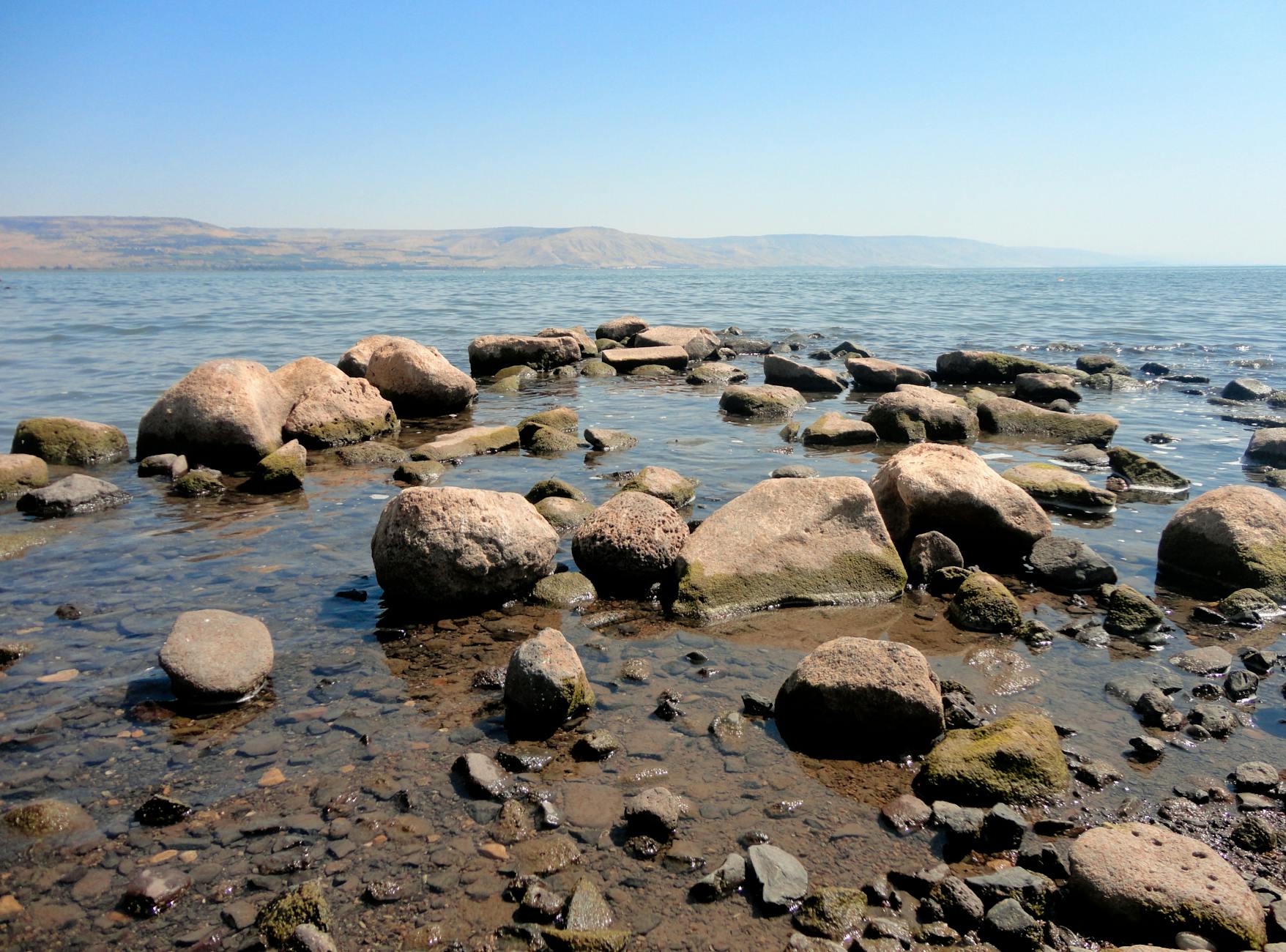
About 45 minutes east of Nazareth, the Sea of Galilee, a large freshwater lake, is where much of Jesus’s ministry is set in the Gospels. Its outflow, the Jordan River, runs south to the Dead Sea far below sea level, the salty counterpart most visitors see on a separate day. Its northern shore holds a cluster of important sites within easy reach of one another.
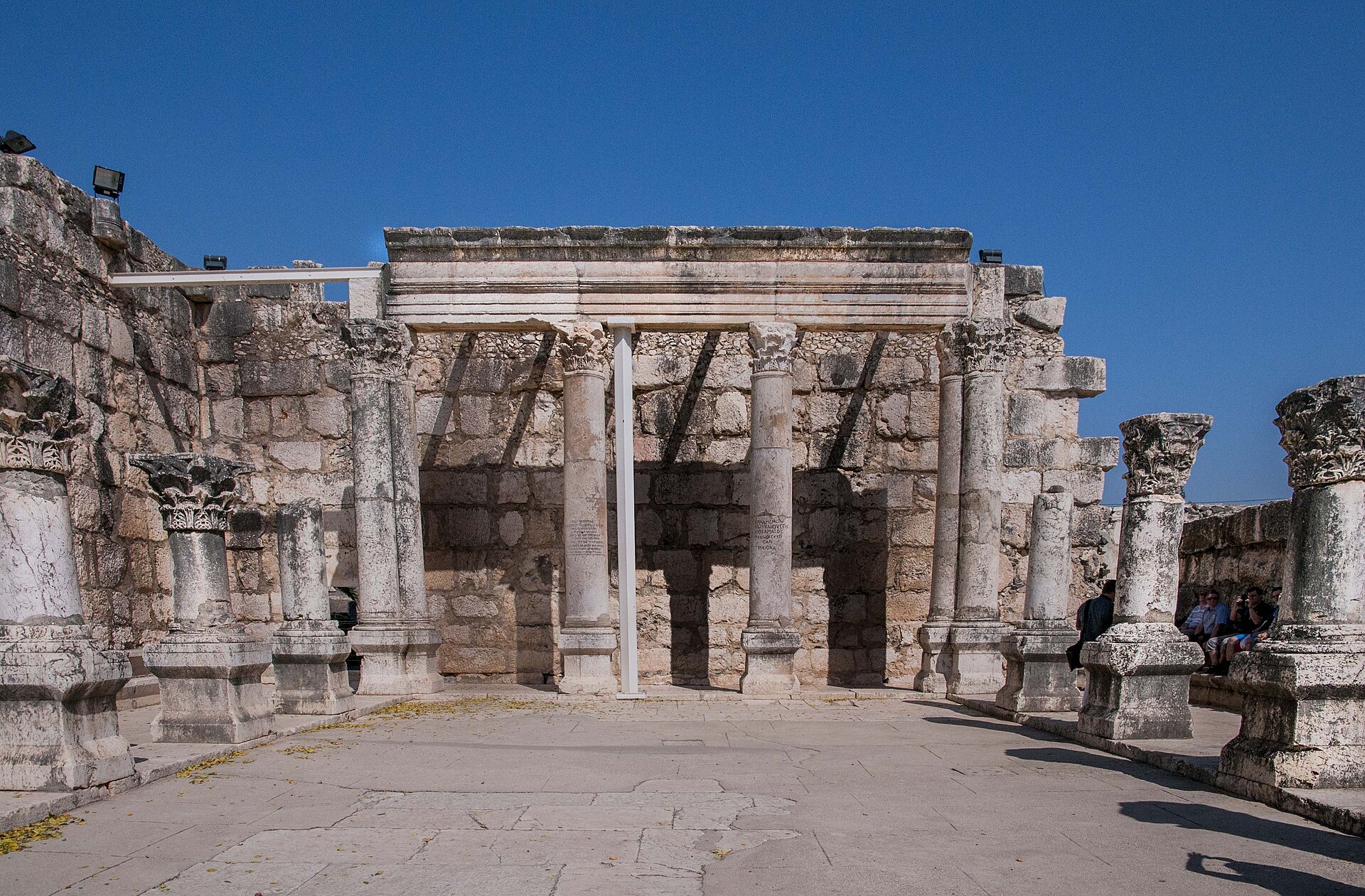
- Capernaum — the lakeside village where Jesus is said to have based his Galilean ministry, with the remains of a grand later synagogue built over an earlier one, and the so-called House of Peter preserved beneath a modern church.
- Mount of Beatitudes — the gentle hillside, by tradition the setting of the Sermon on the Mount, crowned by an elegant octagonal church of 1938 and surrounded by gardens with sweeping lake views.
- Tabgha — traditionally the place of the feeding of the five thousand, with a church preserving a famous early mosaic of loaves and fishes, and the nearby Church of the Primacy of Peter on the shore.
- Yardenit — a designated baptism site on the Jordan River as it leaves the lake, where many pilgrims choose to be baptised; robes and facilities are available. It was temporarily closed in 2026, so check that it has reopened.
A boat trip on the lake is a popular and gentle addition, and lunch by the shore traditionally features locally caught fish, often served whole and known as St. Peter’s fish.
How to Get to Nazareth from Jerusalem
Guided Tour
Given the distance and the number of scattered sites, a guided tour is the most efficient way to do this trip in a single day, and it spares you the long drive. Full-day Nazareth and Galilee tours generally cost in the region of 350–650 ILS per person and hit the headline stops, often with a guide who provides the scriptural and historical context. Operators include Bein Harim, Tourist Israel, and Abraham Tours. Because these are long days, an early departure is standard.
Rental Car
Driving gives you the most freedom to set your own pace and choose which sites to linger at. The route runs north from Jerusalem, most directly on Highway 6, the tolled motorway, which keeps the drive to around two and a half hours. A slower alternative drops east into the Jordan Valley and runs north past the oasis of Jericho before climbing into the Galilee. A rental costs roughly 150–300 ILS a day before fuel and tolls. With a car you could, for instance, spend longer at the lake or add a stop such as the hilltop town of Tzfat (Safed) on a different routing, though that lengthens an already full day.
Public Bus
It is possible to reach Nazareth by bus, but seeing the lakeside sites by public transport in a single day is difficult. A direct Egged bus runs from Jerusalem’s Central Bus Station to Nazareth in around an hour and forty minutes, a few times a day, for roughly 25 to 35 ILS; alternatively you can change at Afula, the transport hub for the north, using a service such as bus 953 and connecting onward. This works for visiting Nazareth itself, but for the full Galilee circuit a tour or car is far more practical. As always, there is no service from Friday afternoon to Saturday evening because of Shabbat.
A Sample Full-Day Itinerary
- Around 7:00 — leave Jerusalem for the drive north.
- Mid-morning — arrive in Nazareth and visit the Basilica of the Annunciation.
- Late morning — St. Joseph’s Church and Mary’s Well, with a wander through the old city.
- Around midday — drive to the Sea of Galilee, about 45 minutes.
- Lunch — a fish lunch by the shore.
- Early afternoon — Capernaum and its ancient synagogue.
- Mid-afternoon — the Mount of Beatitudes and Tabgha.
- Late afternoon — optionally Yardenit for the baptism site, if it has reopened, then begin the drive back.
- Evening — arrive back in Jerusalem.
Because the day is long, it is wise to choose three or four stops to enjoy properly rather than racing to tick off every site. Our Jerusalem itinerary guide can help you decide where a Galilee day best fits within a longer trip.
What to Bring and Practical Tips
- Modest clothing — shoulders and knees covered for all the churches.
- Comfortable shoes — for Nazareth’s old city lanes and the lakeside sites.
- Water and sun protection — the Galilee is warm, especially in summer.
- Your passport — handy to have on organised tours and for identification.
- An early start — essential for a comfortable pace on such a long day.
- A swimsuit and towel — if you plan to take part at a baptism site or swim in the lake where permitted.
For more on appropriate dress at religious sites and other practicalities, see our dress code guide and Jerusalem travel tips guides.
Best Time to Visit
The Galilee is at its most beautiful in spring, when the hills are green and wildflowers are out, and again in the mild autumn. Summer is hot, particularly down by the lake, though the long daylight hours suit an early start and a full programme. Winter is cooler and greener and can bring rain, but it also means fewer crowds at the major churches. Whatever the season, set off early to make the most of the daylight and to allow for the long drive in both directions. Because the trip relies on a tour or a car, the Shabbat closure of public transport from Friday afternoon to Saturday evening is less of an obstacle here than for shorter day trips, but it is worth bearing in mind if you intend to travel independently.
History and Religious Significance
In the first century Nazareth was a small Jewish village in the hills of the Lower Galilee, and it is as the home of Jesus’s childhood that it became central to Christian tradition. Many pilgrims pair it with a visit to Bethlehem, the traditional birthplace just south of Jerusalem, to see both ends of the story. Over the centuries churches rose and fell over its holy places, and the present Basilica of the Annunciation is only the latest in a long line built on the same spot. The Galilee around it carries even more of the Gospel story: the lakeside towns, the hillsides, and the river crossings are the settings for much of Jesus’s ministry as the Gospels describe it, which is why pilgrims have walked this landscape for many centuries. Today Nazareth is the largest Arab city in Israel, home to a mixed Christian and Muslim community, and a lively place in its own right rather than only a site of pilgrimage. For the wider sweep of the region’s past, our Jerusalem history guide gives helpful background.
Visiting these sites, it helps to keep in mind that many are identified by long-standing tradition rather than firm archaeological proof, and that they are venerated by living communities. Approaching them with that in mind, and with a respectful manner in the churches, makes for a richer and more considerate visit.
Where to Eat and What to Expect
Food is a real highlight of a Galilee day. Nazareth has a strong reputation for its cooking, and the old city is full of places serving hummus, falafel, grilled meats, fresh salads, and the syrupy cheese pastry knafeh for which the town is well known. By the Sea of Galilee, the traditional choice is a whole grilled or fried fish, often called St. Peter’s fish, eaten at one of the lakeside restaurants with a view over the water. Either makes a welcome break in the middle of a long day. Travellers who have already eaten their way through Tel Aviv on a day trip often rate Nazareth’s kitchens just as highly.
Set your expectations for a day that is as much about the landscape and the journey as about any single monument. The drive north climbs out of the Judean Hills and into the gentler, greener country of the Galilee, and part of the reward is simply seeing how different this part of the country feels from Jerusalem. Plan the timing around the season, as covered in our best time to visit Jerusalem guide, and you will get the most out of the long but memorable excursion.
Arriving in Israel by cruise ship at Haifa? Nazareth is about forty minutes from the port, and the Sea of Galilee around an hour and a quarter, which makes this day far easier from Haifa than from Jerusalem. Our guide to getting from Haifa to Jerusalem explains why, for most cruise passengers, the north is the better use of a Haifa call.
A day trip to Nazareth works, but the Galilee rewards more time. With two nights in Tiberias or Nazareth itself, you can add the lakeside sites of Capernaum and Tabgha, the hike along the Arbel cliffs and the old synagogues of Safed without spending half the day on the road. Our guide to overnight trips from Jerusalem sets out how to plan the Galilee, and how to combine it with Jordan via the northern border crossing.
If you find yourself trying to fit Capernaum, the Mount of Beatitudes and a boat on the lake into the same day as Nazareth, stop and add a night. Capernaum and the Mount of Beatitudes both close for two hours or more at midday, and a day trip tends to reach the lake just as the gates shut. Our guide to a Galilee tour from Jerusalem sets out a two-day plan that works around the closures.
Photo Credits
The white synagogue at Capernaum, on the Sea of Galilee: 0016עתיקות כפר נחום by עמוס גל, CC BY-SA 4.0, via Wikimedia Commons.