On a clear morning from the top of the Mount of Olives, look east past the Judean Desert and you will see a long blue wall of mountains on the far side of the Dead Sea. That is Jordan, the old land of Moab, and it looks close enough to reach by lunchtime. In one sense it is, because the nearest border crossing is under an hour’s drive away. Getting across, seeing something worthwhile and getting back to your Jerusalem hotel the same night is another matter entirely. That is the problem this page solves. It covers trips from Jerusalem that need at least one night away or a border crossing: Petra and the rest of Jordan, Egypt’s Sinai, the Galilee, the Negev, the Red Sea, and the overnights that turn a rushed day trip into something you will actually enjoy.
Here is the rule this site follows, stated plainly. If you will be back in your Jerusalem bed tonight, the trip belongs in our guide to day trips from Jerusalem, which covers the Dead Sea, Masada, Bethlehem, Tel Aviv and more than a dozen other same-day excursions. If you need to sleep somewhere else, or cross an international border, it belongs here. Border rules, fees and tour schedules were checked in September 2026, and some of them move quickly. Treat the figures as the right order of magnitude, and check the crossing, the operator and your government’s travel advice in the week before you go.
Trips Beyond Jerusalem at a Glance
| Destination | Where | Nights | How | Best for |
|---|---|---|---|---|
| Petra | Jordan | 1–2 | Two-day organised tour, or border plus Jordanian transport | The Treasury, the Monastery, one of the wonders of the world |
| Petra and Wadi Rum | Jordan | 2 | Two- or three-day tour | Desert camp under the stars |
| Amman, Jerash, Madaba | Jordan | 2–4 | Allenby or Sheikh Hussein crossing, then a driver or tour | Roman ruins, Byzantine mosaics |
| Sinai: Dahab and St Catherine’s | Egypt | 3+ | To Eilat, then the Taba crossing | Reefs, Mount Sinai at dawn (check travel advice first) |
| The Galilee | Northern Israel | 2–3 | Car, or bus and taxi | Nazareth, the Sea of Galilee, Safed |
| Haifa and Akko | Northern coast | 1–2 | Train via Tel Aviv | Bahá’í Gardens, Crusader Akko |
| Mitzpe Ramon and the Negev | Southern Israel | 1–2 | Car, or bus via Beersheba | The crater, desert silence, stars |
| Dead Sea and Masada sunrise | Dead Sea | 1 | Bus or car | A dawn climb and a float without the rush |
| Eilat and the Red Sea | Far south | 2–4 | Bus, car or domestic flight | Snorkelling, diving, winter sun |
| Bethlehem at Christmas | West Bank | 1 | Checkpoint crossing | Christmas Eve in Manger Square |
Day Trip or Overnight? How to Decide
Almost everything in this small country can technically be done as a day trip from Jerusalem. That is exactly why so many visitors end up doing things badly. A few rules of thumb:
- More than about two and a half hours each way means an overnight. Five hours on the road for three hours on the ground is a bad trade, and it is the trade most “Galilee in a day” and “Petra in a day” tours ask you to make.
- A border adds hours, not minutes. Security checks, passport control on both sides, fees, a change of vehicle and the possibility of queues mean that crossing into Jordan or Egypt rarely takes less than an hour and can take much longer. Build that in twice, once going and once coming back.
- Dawn and dusk are the reason to stay. Masada at sunrise, the stars over Makhtesh Ramon, the light on Petra’s rock in the late afternoon and the silence of Wadi Rum at night are all out of reach on a day trip.
- Shabbat changes everything. Israeli public transport stops from Friday afternoon until Saturday night, and some border crossings run shorter hours on Friday and Saturday. Our guide to Shabbat in Jerusalem explains how the weekly shutdown works. The cheapest way to handle it is often to be somewhere else, with a hire car or on a tour, from Friday to Saturday.
Travel Advice Comes First
Several of the trips on this page cross borders into countries, or regions, where official travel advice is more restrictive than for Jerusalem itself, and where that advice has changed several times since 2023. The US State Department and the UK Foreign, Commonwealth & Development Office publish separate advice for Israel, the West Bank, Jordan and Egypt, including the Sinai Peninsula. Their positions do not always match, and they are updated at short notice. Read your own government’s current advice for every country you will enter, check that your travel insurance covers it, and register with your embassy if that is offered. This guide describes what is possible and how it works. It does not tell you whether to go. For the picture in Jerusalem itself, see our guide to whether Jerusalem is safe to visit.
Petra and Jordan
Jordan is the most rewarding cross-border trip from Jerusalem, and the most popular. Petra alone justifies it, and with two or three more days you can add the red desert of Wadi Rum, the Roman city of Jerash, the mosaics of Madaba and the view from Mount Nebo back across to where you started.
The three crossings
| Crossing | Where | Jordanian visa on arrival? | Best for |
|---|---|---|---|
| Allenby / King Hussein Bridge | Jordan Valley, east of Jericho; the closest to Jerusalem | No: arrange your visa in advance | Amman, Madaba, Mount Nebo, and Petra via the King’s Highway |
| Sheikh Hussein / Jordan River | Northern Jordan Valley, near Beit She’an | Yes, for most nationalities | Combining the Galilee with Jerash and Amman |
| Yitzhak Rabin / Wadi Araba | Just north of Eilat and Aqaba | With conditions; confirm before you go | Petra, Wadi Rum and Aqaba from the south |
Allenby / King Hussein Bridge is the obvious choice from Jerusalem, and it was reported fully open on regular hours in August 2026. It has two catches. Jordan does not issue visas on arrival here, so you need a Jordanian visa before you arrive, from an embassy, a consulate or the online system. And it closes early on Friday and all day Saturday. In October 2026 the Israel Airports Authority listed Sunday to Thursday 08:00–18:30 and Friday 08:00–15:30, but check on the day, because the bridge has closed at short notice after security incidents in the past, including after a shooting there in 2024. Allenby is also a sensitive crossing politically: it is the main gateway between the West Bank and Jordan, and Israeli control of it is part of the wider dispute over the territory.
Sheikh Hussein, in the north, is the easier crossing for visas and the natural choice if you are combining the Galilee with Jordan. It is about 90 km from Amman. Yitzhak Rabin / Wadi Araba, at the southern tip of the country, is the one to use if you are coming from Eilat, and it is the standard route for Petra tours that go via the south.
Visas, the Jordan Pass and fees
- Visa on arrival at Sheikh Hussein, in the north, cost 40 Jordanian dinars (JD) for a single entry for eligible nationalities in 2026. At Wadi Araba, in the south, a visa comes with conditions and official sources disagree on the rules, so confirm them before you go. Check whether your nationality qualifies.
- The Jordan Pass, bought online before you travel, bundles the visa fee with entry to Petra and many other sites, as long as you meet its minimum-stay conditions. It is excellent value if you are staying a few nights. Do not rely on it as a visa at Allenby, which officially requires a visa arranged in advance, even though some travellers report getting through with the pass.
- Departure tax. Jordan charges a departure tax of 10 JD when you leave by a land border.
- Israeli exit fee. Israel also charges a fee to leave at its land crossings. Budget for it in shekels, and check the current amount for your crossing.
- Petra’s two prices. Jordan has long charged visitors who do not spend a night in the country a much higher Petra entry fee than those who stay over. That is one more reason to make Petra an overnight trip. Check the current fees on the Jordan Pass or Petra websites.
- Hire cars do not cross. Israeli rental companies do not allow their cars into Jordan. You cross on foot or by shuttle and pick up Jordanian transport on the other side, which is why most visitors book a tour.
Petra: two days, not one
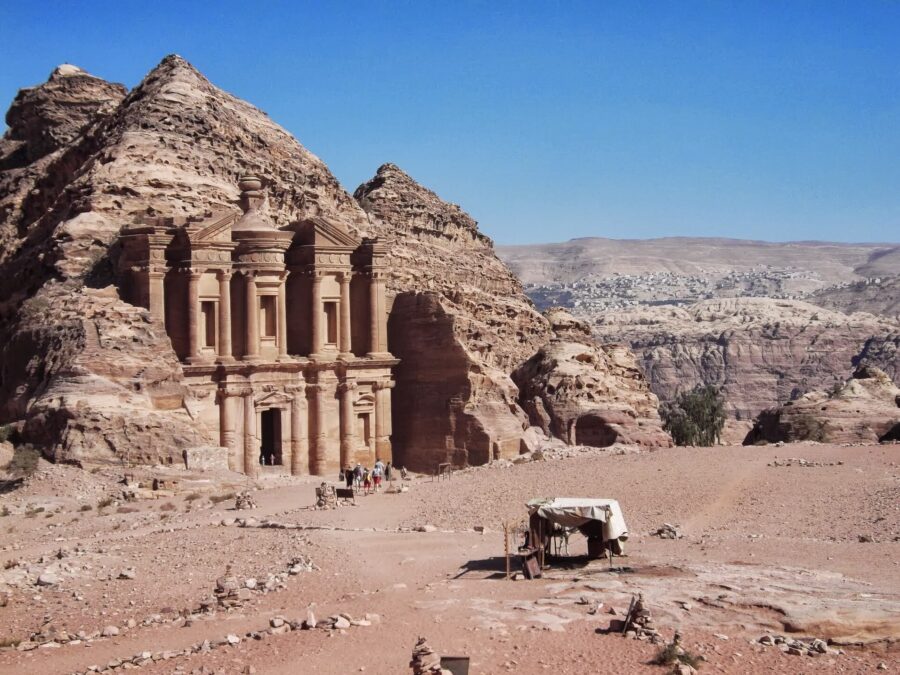
Petra, the rock-cut capital of the Nabataeans in southern Jordan, is the best-known trip beyond Jerusalem and the one most often done badly. You can see it from Jerusalem in a single day, but only just. The route runs south to Eilat, crosses at Wadi Araba and continues north to Petra, which on the operators’ own timings takes seven hours or more each way including the border. A day trip means a hotel pick-up in the small hours and a late return, for a few hours at the site in the middle of the day. Operators still sell it, and at least one lists a guaranteed daily departure from Jerusalem with a 03:15 pick-up, but most of them recommend an overnight in Wadi Musa, the town beside the site.
The two-day tour is the sensible minimum, and it is what most operators sell. One version crosses at Allenby, visits Mount Nebo and Madaba on the way south and spends the night in a camp or hotel near Petra, before a full day at the site. Another goes via Eilat and adds Wadi Rum. Book with an established Jerusalem operator, and check exactly what is included: the Jordanian visa, the Petra ticket, meals, the border fees and who carries your passport through the crossing. Our overview of the best Jerusalem tours explains how to judge an operator.
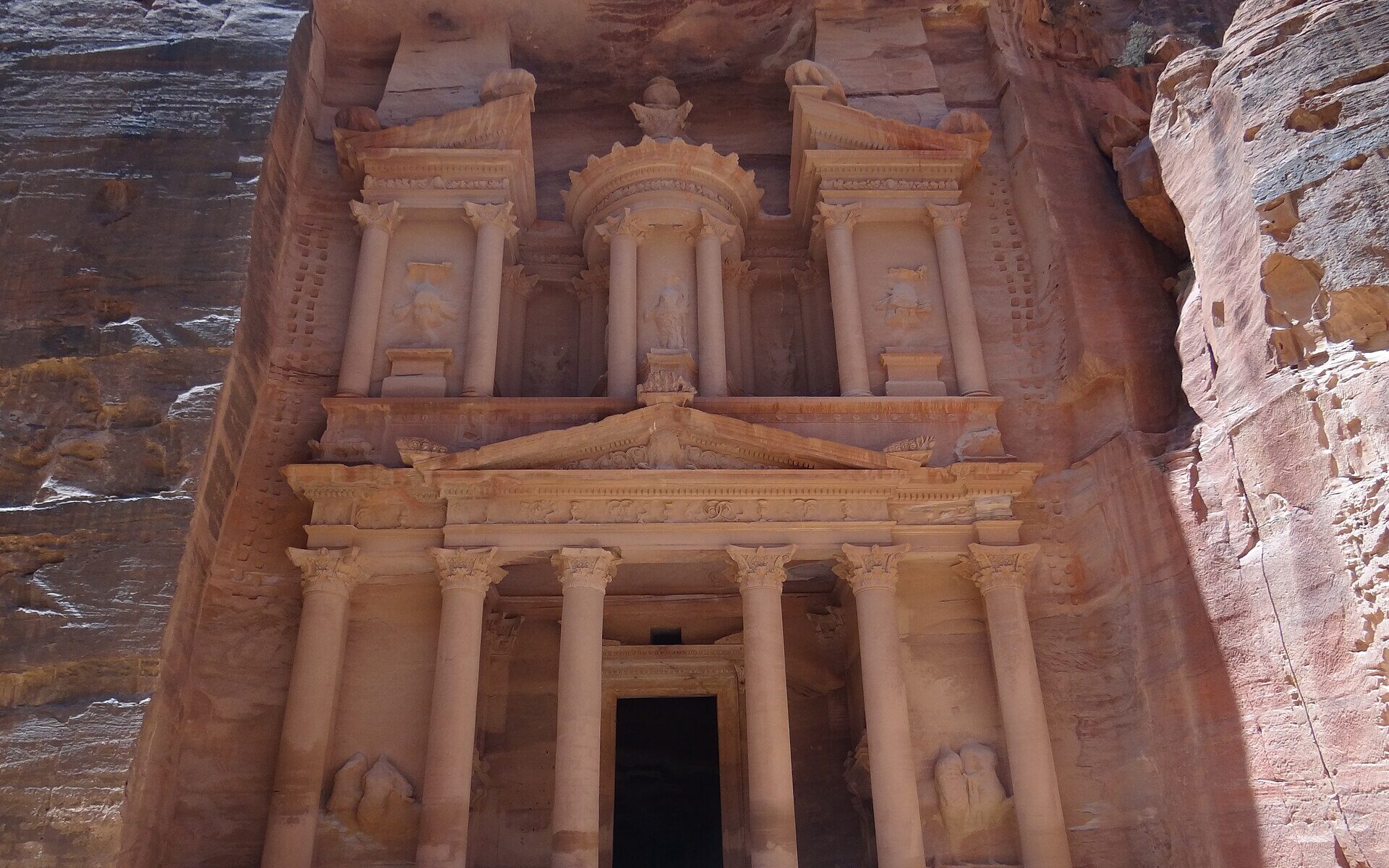
At Petra itself, the walk begins through the Siq, a narrow sandstone gorge more than a kilometre long, and ends with the first view of the Treasury. That is where most day-trippers turn round. With a full day, you can continue past the Street of Facades and the Royal Tombs, and climb the long rock-cut stairway to the Monastery, Ad-Deir, which is larger than the Treasury and far quieter. Wear proper shoes, carry water, and start early; the site is huge, and most of it is unshaded.
Wadi Rum, Aqaba and the King’s Highway
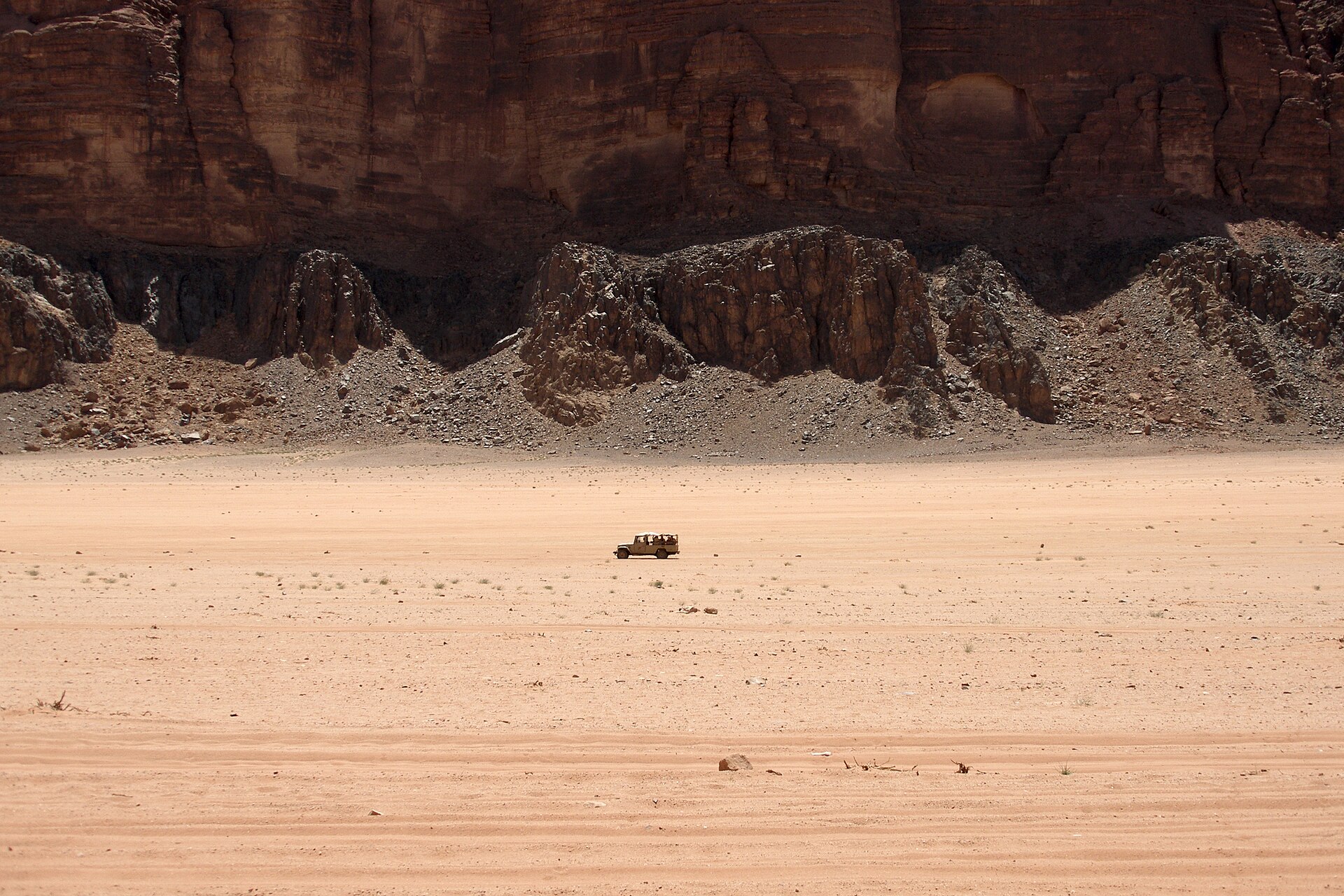
Wadi Rum, about two hours south of Petra, is a protected desert of red sand and sheer sandstone mountains, familiar from a long list of films. A night in one of its Bedouin-run camps, with a jeep tour in the afternoon and a sky full of stars, is the highlight of many Jordan trips. Aqaba, Jordan’s Red Sea port, sits on the Wadi Araba crossing and makes a natural first or last night. Travellers with more time and a driver can take the ancient King’s Highway north from Petra, past the Crusader castle at Karak, to Madaba and Mount Nebo, where tradition says Moses saw the Promised Land. From the top, on a clear day, you can see the Dead Sea, and sometimes Jerusalem itself.
Amman, Jerash and the north
From Allenby or Sheikh Hussein, Amman is the obvious base for two or three nights. Its Roman theatre and citadel are worth a morning, and Jerash, an hour north, is one of the best-preserved Roman provincial cities anywhere, with a colonnaded street, theatres and a great oval plaza. Madaba, south of Amman, is known for its Byzantine mosaics, above all the sixth-century mosaic map of the Holy Land in the Church of St George, which shows Jerusalem with its gates and churches. Combined with the Galilee on the Israeli side via Sheikh Hussein, this makes a strong week for anyone interested in the Roman and Byzantine world.
Egypt’s Sinai via Taba
Egypt’s Sinai Peninsula begins at Taba, just south of Eilat, and its southern coast and mountains have drawn Israeli and foreign travellers for decades. There is diving and snorkelling off Dahab and Nuweiba, a sunrise climb of Mount Sinai (Jebel Musa), and St Catherine’s Monastery at its foot, one of the oldest continuously inhabited Christian monasteries in the world. From Jerusalem it is a long way: Eilat alone is about four hours by road. The Sinai is a trip for a week, not a weekend.
The Taba crossing was operating in 2026, and travel guides described it as open around the clock. Several things matter before you consider it:
- Official advice is the deciding factor. The US Embassy in Cairo issued a security alert in March 2026 about the Taba crossing and safety in Sinai. The UK and US publish their own, differing advice for different parts of the peninsula, and Israel’s National Security Council has long warned Israeli citizens against travel to Sinai. Read the current advice from your own government before planning anything.
- The Sinai-only entry stamp. Many nationalities can enter at Taba on a free stamp valid for about two weeks, which covers South Sinai, including Dahab, Nuweiba, St Catherine’s and Sharm el-Sheikh. Travelling beyond that area, to Cairo for example, needs a full Egyptian visa, and Egyptian fees at the crossing are payable in US dollars in cash.
- Israeli exit fee. Leaving Israel at Taba costs ₪120 per person in 2026, plus a ₪7 commission if you pay at the terminal counter rather than in advance.
- Transport on the Egyptian side is by taxi or pre-arranged transfer, because Israeli hire cars cannot cross. Most visitors arrange a transfer with their accommodation.
Overnight in the West Bank
Bethlehem, Jericho and Hebron are all covered as day trips elsewhere on this site, because most visitors return to Jerusalem the same day. One overnight stands out: Christmas Eve in Bethlehem. Midnight Mass at St Catherine’s Church, beside the Church of the Nativity, is ticketed, and applications usually close in mid-December. The Mass is also shown on screens in Manger Square for everyone else. In recent years free buses have run between Jerusalem and Bethlehem from noon on 24 December to noon on 25 December, so staying over is a choice rather than a necessity. Our guides to Christmas in Jerusalem and the Bethlehem day trip have the details.
Two things apply to any West Bank trip. Israeli citizens are barred under Israeli rules from entering Area A, the parts of the West Bank under full Palestinian Authority control, which include central Bethlehem, Jericho and Ramallah; the red signs at the entrances say so. Foreign visitors can enter, and most crossings are straightforward, but official advice on the West Bank differs between governments and changes often. For the same-day trips, see our guides to Jericho and Hebron.
The Galilee: Two or Three Nights Up North
The Galilee is the trip most often squeezed into a single long day from Jerusalem, and the one that suffers most from it. The Sea of Galilee is roughly two to two and a half hours away by car and longer by bus. A day trip that tries to take in Nazareth, Capernaum and Tabgha, a boat on the lake and the Jordan River baptism site spends more time on Route 90 than at any of them. Two nights changes the experience completely.
- Where to base yourself. Tiberias, on the lakeshore, is the practical hub, with the most accommodation and restaurants. Nazareth suits pilgrims and anyone who wants an Arab city with a lively old market. A kibbutz guesthouse around the lake suits drivers who want quiet.
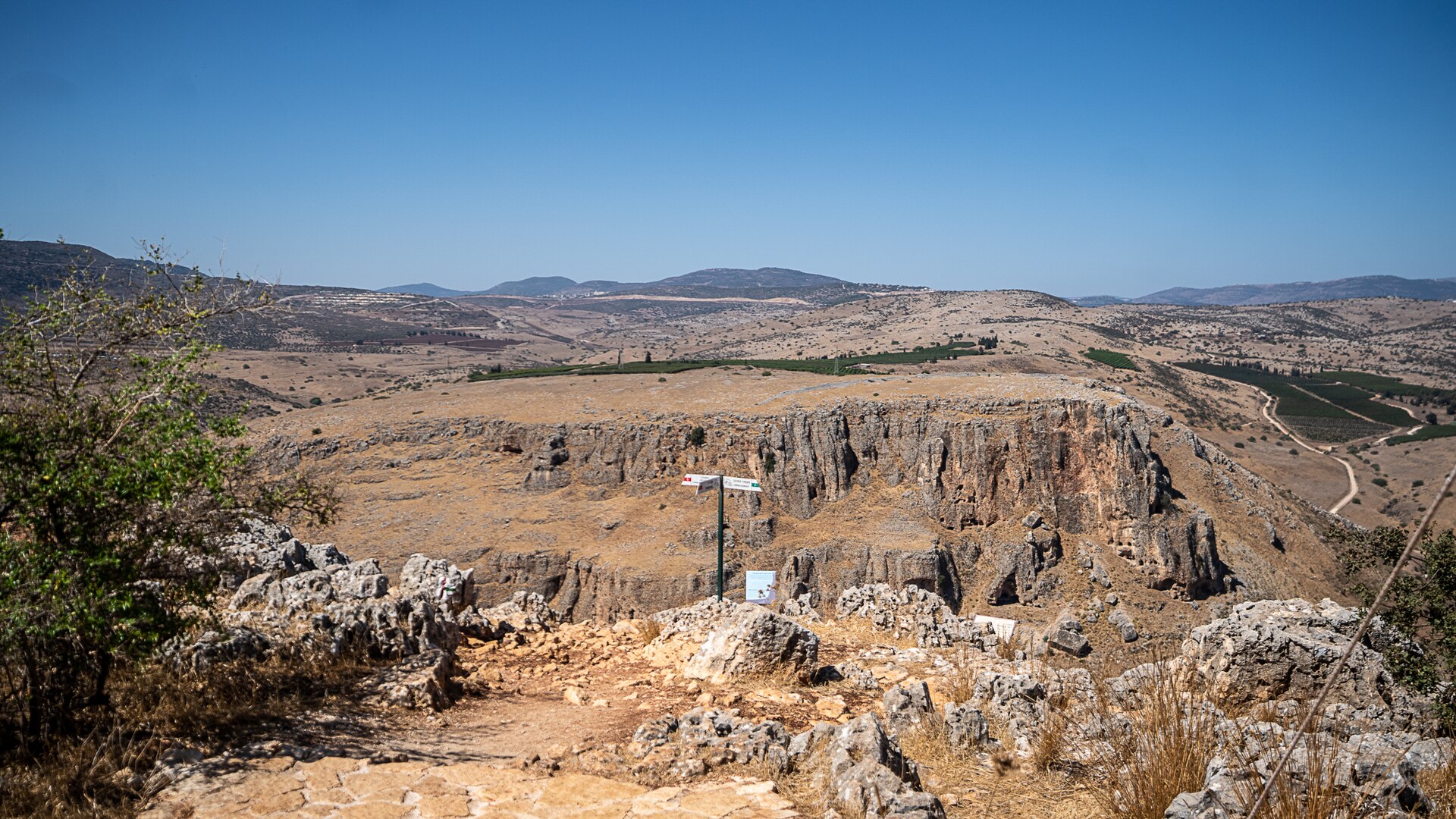
- What to see. Nazareth’s Basilica of the Annunciation and old market; the lakeside sites of Capernaum, Tabgha and the Mount of Beatitudes; the hike along the Arbel cliffs; and Safed (Tzfat), the hilltop centre of Jewish mysticism, with its old synagogues and artists’ quarter.
- Getting there. A hire car makes the Galilee far easier, as the sites are spread out and some bus services are sparse. Direct buses run from Jerusalem’s Central Bus Station to Tiberias and Nazareth; check Moovit for the current routes and times.
- The Golan Heights. Above the lake to the east, the Golan was captured from Syria in 1967 and annexed by Israel in 1981. The United States has recognised Israeli sovereignty there since 2019; most other countries do not. It is popular for hiking, wineries and views.
- The far north. Official travel advice for areas near the Lebanese border has changed repeatedly since 2023. Check it before planning anything north of the lake.
If you only have one day, our Nazareth day trip guide shows how to make it work. Pilgrims should read our Christian pilgrimage guide for how the Galilee fits a wider Holy Land itinerary.
Haifa and Akko
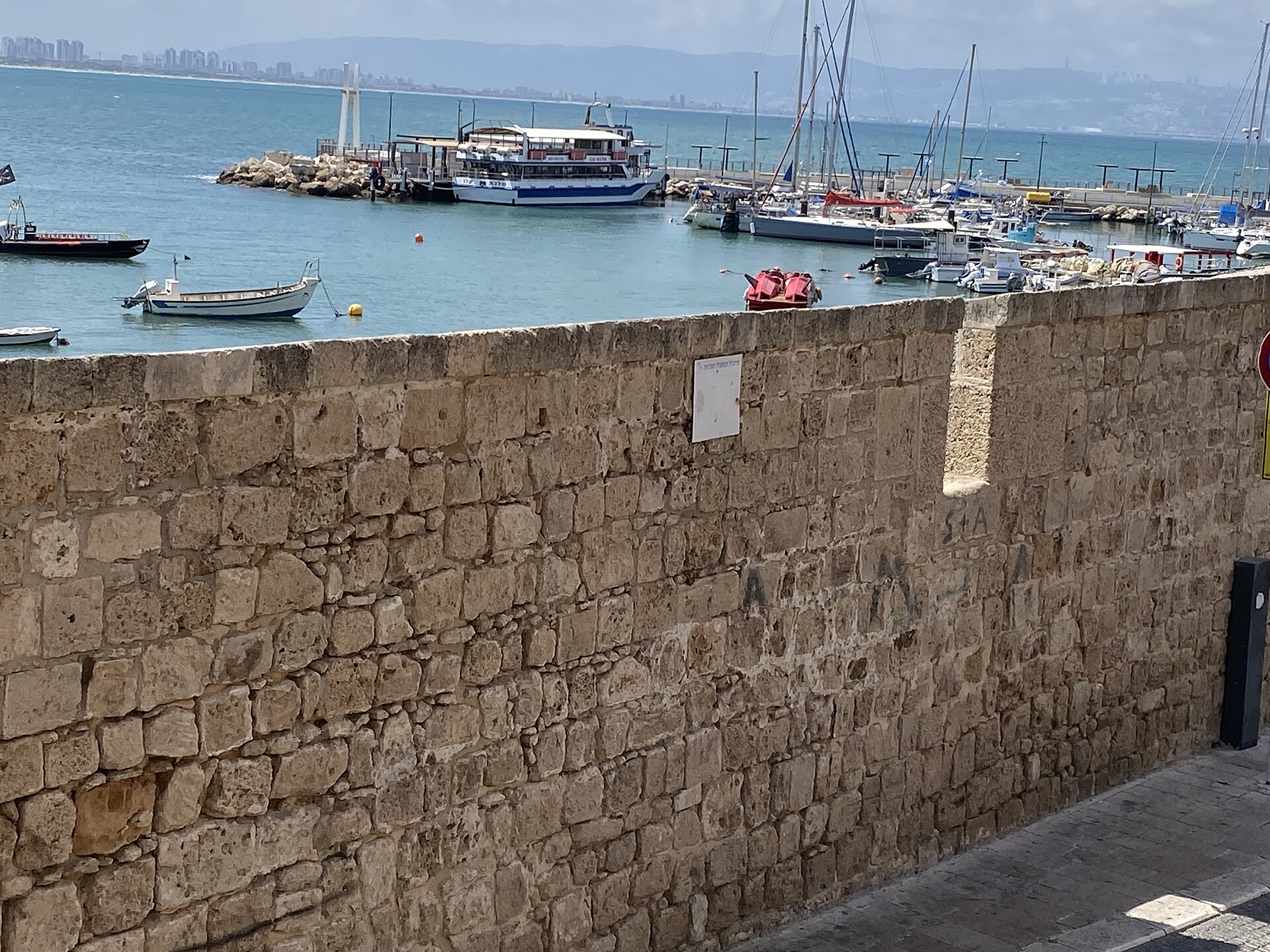
Haifa, Israel’s great port city, climbs Mount Carmel above the Mediterranean, and its Bahá’í Gardens are one of the most photographed sights in the country. Akko (Acre), across the bay, is one of the most atmospheric old towns in the Middle East. Its Ottoman walls enclose Crusader halls, underground passages, caravanserais, a fishing harbour and a living Arab town, and it is a UNESCO World Heritage Site.
Both can be reached by train from Jerusalem, changing in Tel Aviv. Jerusalem to Haifa takes around two hours, and the line continues north to Akko. That makes them tempting as a day trip, and Haifa is covered as one on our day trips page. A night in Haifa or Akko, however, lets you walk Akko’s walls at sunset, eat fish by the harbour, and add Caesarea, the Roman and Crusader port on the coast, on the way back. Remember that trains stop from Friday afternoon until Saturday night. Cruise passengers arriving in Haifa should see our guide to getting from Haifa port to Jerusalem.
The Negev: Mitzpe Ramon and the Desert
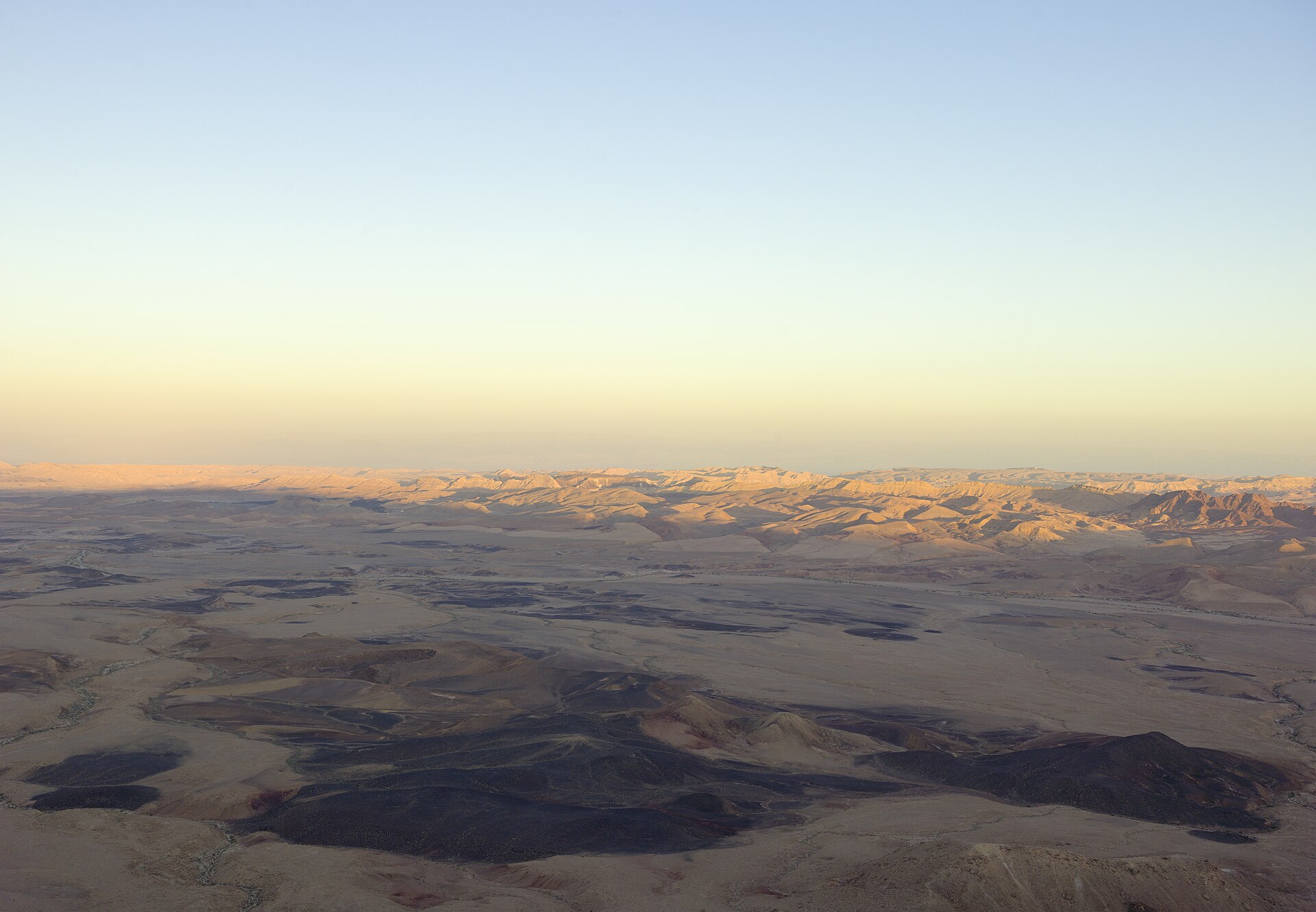
South of Beersheba, the Negev opens into one of the great desert landscapes of the region, and its centrepiece is Makhtesh Ramon, a vast erosion crater about 40 kilometres long, with walls that drop several hundred metres. The small town of Mitzpe Ramon sits right on its rim. It is roughly two and a half to three hours from Jerusalem by car, or longer by bus via Beersheba, which makes it a poor day trip and a wonderful overnight.
- Dawn and dusk on the rim. The crater changes colour through the day, and the edge promenade in Mitzpe Ramon is the place to watch it.
- Stars. Far from city lights, the Negev skies are among the darkest in Israel, and local operators run stargazing evenings.
- Sde Boker and Avdat. On the road from Beersheba, David Ben-Gurion’s grave at Sde Boker looks out over the Zin Valley, and the Nabataean city of Avdat, part of the UNESCO-listed Incense Route, stands on a hill nearby. The spring-fed Ein Avdat canyon is a short, spectacular walk.
- Heat and water. Desert hiking is serious. The Israel Nature and Parks Authority advises carrying around 5 litres of water per person in summer, and you should start walking at dawn. Our guide to hiking near Jerusalem covers desert safety.
The Dead Sea and Masada, Overnight
The Dead Sea and Masada are classic day trips, and our Dead Sea day trip and Masada day trip guides cover them in full. The overnight version exists for one reason: sunrise. The Snake Path up Masada opens before dawn for walkers who want to watch the sun come up over the Dead Sea and the mountains of Jordan, and that is only practical if you have slept nearby. Base yourself at Ein Bokek’s hotel strip at the southern end of the sea, or near Ein Gedi. Check the national park’s current opening time for the Snake Path, climb in the dark, float in the afternoon and drive back to Jerusalem at dusk. Two current cautions: the Mineral Beach and Ein Gedi Beach are closed to bathers, so use Ein Bokek or Kalia, and in summer carry far more water than you think you need. Our Ein Gedi guide covers the oasis and its waterfalls.
Eilat and the Red Sea
Eilat, at the southern tip of Israel between Jordan and Egypt, is a beach resort on the Red Sea with coral reefs close to shore. It is Israel’s winter-sun destination, and it is the gateway to Wadi Araba for Petra and to Taba for the Sinai. It is also a long way from Jerusalem, about four hours or more by road. Buses run from the Central Bus Station, and domestic flights reach Ramon Airport north of the city from Israel’s other airports. Give it at least two nights, ideally as part of a southern loop that adds Mitzpe Ramon on the way down, or Petra across the border. If beaches and reefs are not your thing, Eilat is hard to justify from Jerusalem. If they are, the Coral Beach reserve alone rewards the trip.
Tel Aviv for a Night
Tel Aviv is under an hour away by train, and our Tel Aviv day trip guide shows how to see the highlights and be back by evening. A night there is worth it for one thing Jerusalem does not do: a late, loud, secular evening by the sea, particularly on a Friday, when Jerusalem goes quiet for Shabbat. The catch is that trains stop from Friday afternoon, so a Friday-night stay means coming back on Saturday night or by taxi. Our Tel Aviv to Jerusalem guide covers every way between the two cities.
Border Crossing Checklist
- Passport validity. Check the validity requirements for Jordan and Egypt, as well as for your return to Israel.
- ETA-IL for your return. Visitors from visa-exempt countries need an approved ETA-IL to enter Israel. It is valid for up to two years and for multiple visits, so your existing approval should cover your return, but check its validity before you leave. Our Israel visa requirements guide explains the system.
- Visa in advance for Allenby. Jordan does not issue visas on arrival there.
- Cash. Carry shekels for Israeli exit fees, Jordanian dinars for the departure tax, and US dollars for Egyptian fees.
- Timing. Avoid Friday afternoons, Saturdays and Jewish holidays for Israeli-side crossings where you can, and check the hours on the day. Our religious holidays calendar has the 2027 closures.
- No hire cars across borders. Plan transport on the far side before you go.
- Stamps. Israel does not stamp passports, but Jordanian border officials stamp yours unless you ask them not to, and Egyptian entry stamps from these crossings show that you came from Israel. That can matter if you plan to visit countries that refuse entry to people who have been there.
- Insurance and advice. Check that your policy covers every country and region on your route, and read your government’s advice for each.
Three Trip Plans That Work
Jerusalem and Petra in six days
Spend four nights in Jerusalem, following our three-day itinerary with a spare day, then take a two-day Petra tour with a night near the site. Arrange your Jordanian visa before you leave home if the tour crosses at Allenby, or choose the southern route via Eilat if it does not.
The Holy Land in ten days
Spend five nights in Jerusalem, including day trips to Bethlehem and the Dead Sea, then two nights in the Galilee, one night in Haifa or Akko, and a final night in Tel Aviv before your flight. This is the classic pilgrim loop, done at a humane pace. Our one week in Jerusalem plan covers the Jerusalem half in detail.
Desert and Red Sea in a week
Spend three nights in Jerusalem, one at the Dead Sea for Masada at sunrise, one in Mitzpe Ramon for the crater and the stars, then two in Eilat, with the option of crossing to Petra from there. This is best between October and April, when the desert is bearable; our best time to visit Jerusalem guide has the seasons.
Which Trips Are Worth the Night?
- Petra: always. Two days minimum. A single day is possible, but it is an ordeal, and it is the most common regret among visitors who try it.
- The Galilee: yes. Two nights turn a blur of coach stops into one of the best parts of a trip.
- Mitzpe Ramon: yes, if you like deserts. The crater and the night sky are the point, and neither works as a day trip.
- Masada sunrise: yes, once. Otherwise, the day trip is fine.
- Akko: yes, for a night. Haifa alone works as a day trip.
- Eilat: only for beaches and reefs, or as a base for Petra or the Sinai.
- The Sinai: only with time, and only after reading the official advice. It is spectacular, but it is not a short trip from Jerusalem.
- Tel Aviv: optional. A Friday night there is a pleasure; the rest works as a day trip.
For how any of these fit your overall budget, see how much a trip to Jerusalem costs, and for where to sleep on the Jerusalem nights, our where to stay in Jerusalem guide.
Petra gets the most questions of any trip on this page, so it now has a guide of its own. Our page on Petra from Jerusalem compares the Allenby and Wadi Araba routes, explains what the one-day tour really involves in 2026, sets out the tickets, visas and border fees, and gives a two-day plan for the site itself.
Eilat is the hinge for most trips south, whether you are heading for the reefs, Petra or the Sinai. Our guide to travelling from Jerusalem to Eilat compares the bus, the plane and the two driving routes door to door, with the stops worth making on the way.
Final Word on Trips Beyond Jerusalem
Jerusalem is the best base in the region, and the temptation is to use it for everything, rushing out at dawn and back at midnight. Resist it for the big ones. Petra, the Galilee and the desert all deserve a night, and a border deserves your full attention. Get the paperwork right, read the advice, and let the trip breathe. Start with our day trips from Jerusalem for everything closer, use our Jerusalem travel tips for the practicalities, and decide how many days in Jerusalem to keep for the city itself before you plan what lies beyond it.
Photo Credits
Al-Khazneh, the Treasury, at Petra: Al-Khazneh (Treasury) Petra by Kfoulk, CC BY-SA 3.0, via Wikimedia Commons.
A jeep crossing Wadi Rum: Jordan, Wadi Rum Desert, Car by Vyacheslav Argenberg, CC BY 4.0, via Wikimedia Commons.
The Arbel cliffs in the Galilee: 148870 mount arbel PikiWiki Israel by רוני קניגסברג, CC BY 2.5, via Wikimedia Commons.
Akko’s sea wall and harbour: 111135 acre – a view of the sea and the fishing port PikiWiki Israel by שלמה רודד, CC BY 2.5, via Wikimedia Commons.
Makhtesh Ramon at dawn: Israel-2013-Makhtesh Ramon 01 by Godot13, CC BY-SA 4.0, via Wikimedia Commons.