A Jericho day trip from Jerusalem leads to one of the oldest inhabited places on Earth, where archaeologists have traced settlement back many thousands of years. About 40 kilometres east of Jerusalem, down in the Jordan Valley and some 250 metres below sea level, Jericho combines the ancient mound of Tel es-Sultan, the cliff-hanging Mount of Temptation monastery, an exquisite Umayyad palace mosaic, and palm-shaded springs. It is a place where the famous biblical story of Joshua and the walls meets a deep and well-studied archaeological record, in a town that has been administered by the Palestinian Authority since the 1990s.
This guide to a Jericho day trip from Jerusalem covers the main sites, opening hours and fees in shekels, how to get there, what to bring, the crossing and passport basics, the best time to go, and how to combine Jericho with nearby Jordan Valley stops, all in neutral, practical terms. Pair it with our Day Trips from Jerusalem guide.
Jericho Day Trip at a Glance
| Distance from Jerusalem | About 40 km east |
| Drive time | 45–60 minutes via Highway 1 toward the Jordan Valley |
| Elevation | Around 250 m below sea level, one of the lowest towns on Earth |
| Time on site | 4–6 hours for the main sites |
| Typical tour | Roughly 220–450 ILS per person, often with the baptism site or Qumran |
| Best months | October–April; very hot in summer because of the low elevation |
What to See in Jericho
Tel es-Sultan (Ancient Jericho)
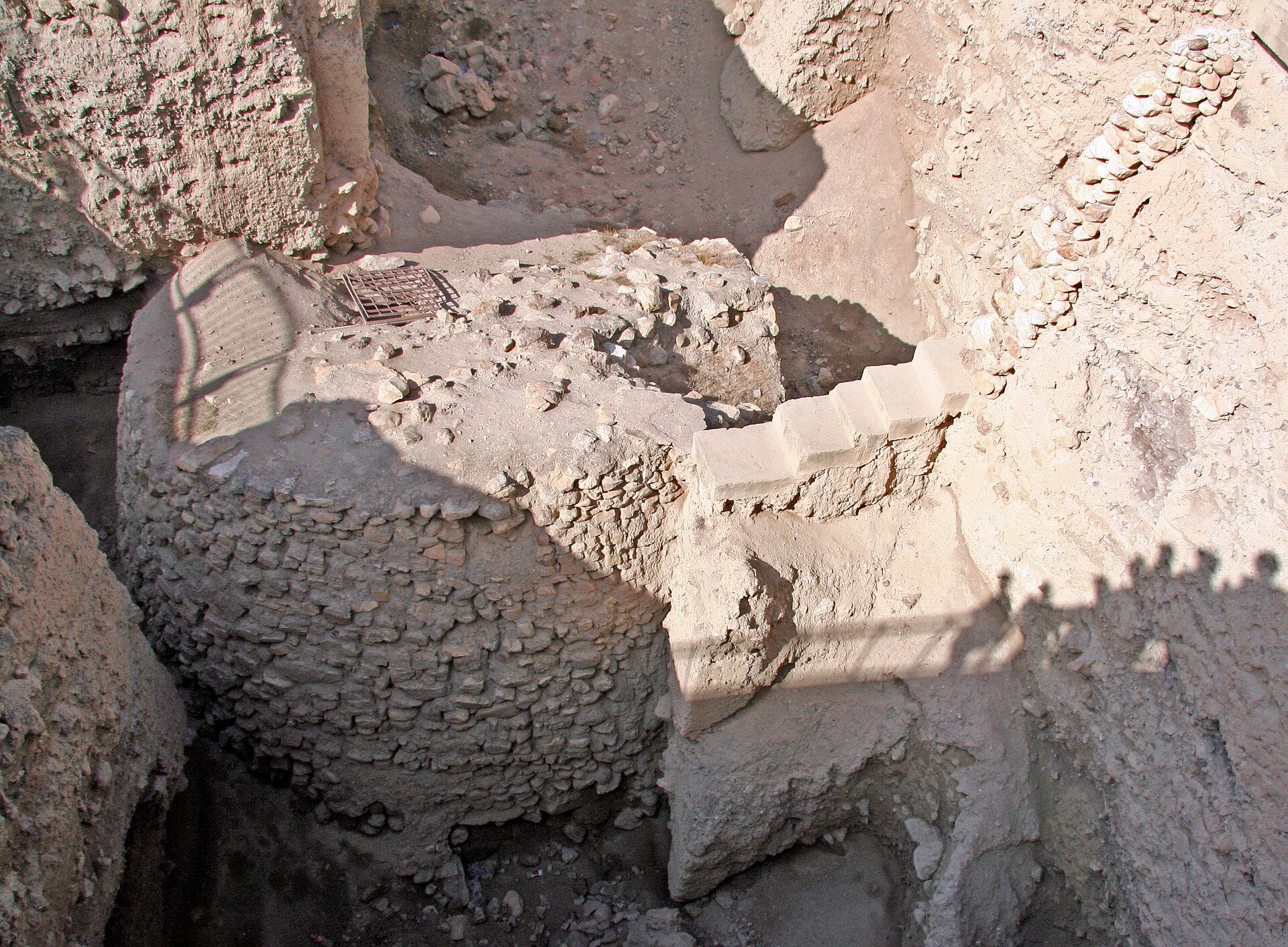
The archaeological mound of Tel es-Sultan is the heart of ancient Jericho, a layered tell holding the remains of one of the world’s earliest towns, with structures including a Neolithic stone tower thousands of years old. Excavations have revealed walls, dwellings, and defences from many periods stacked on top of one another. The biblical account of Joshua and the falling walls has made the site famous, though scholars continue to debate which archaeological layer, if any, corresponds to that narrative, so it is best understood as a place where history and tradition sit side by side. The site is generally open from around 8:00 to the late afternoon, with entry of roughly 15 to 20 ILS.
The Mount of Temptation Monastery
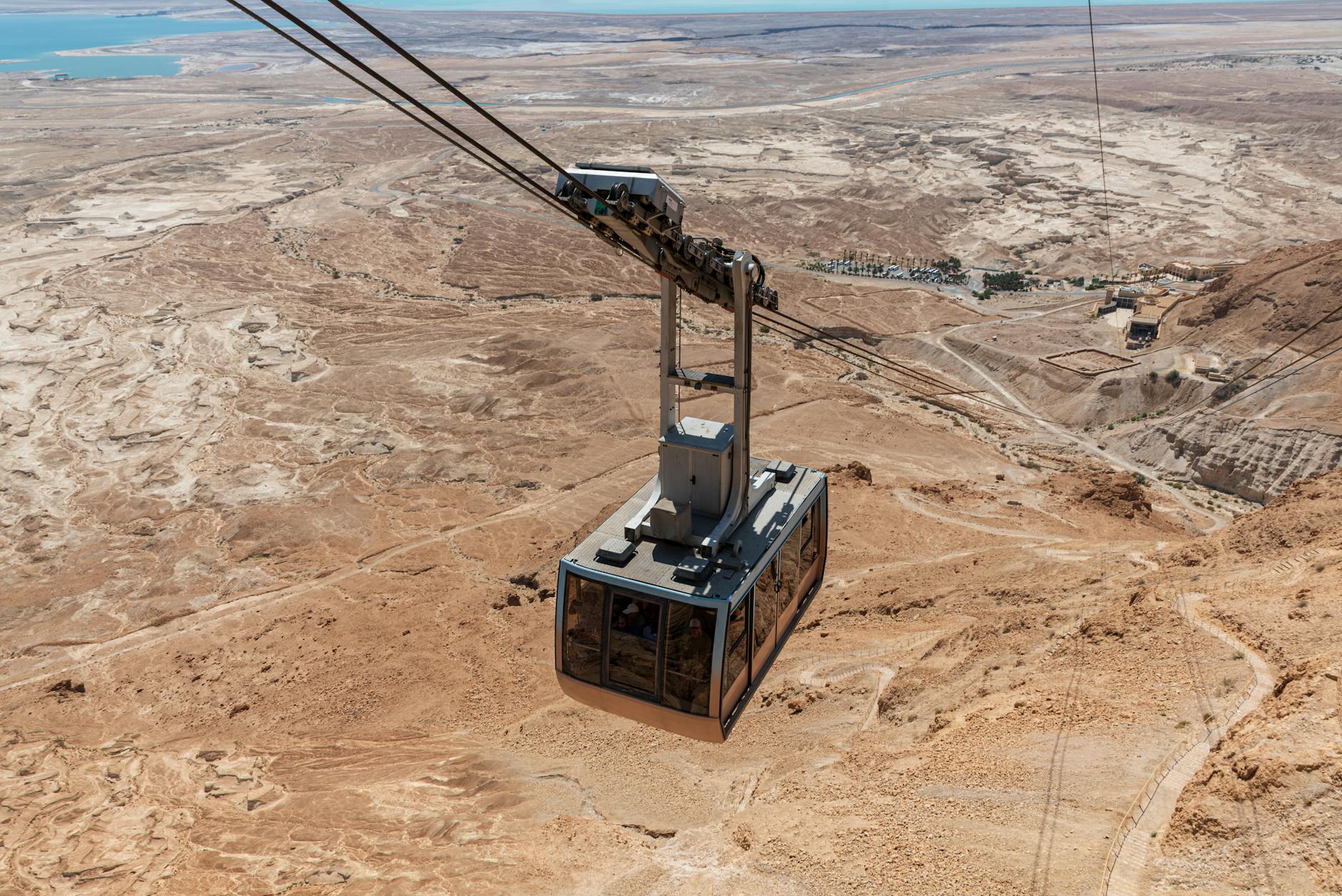
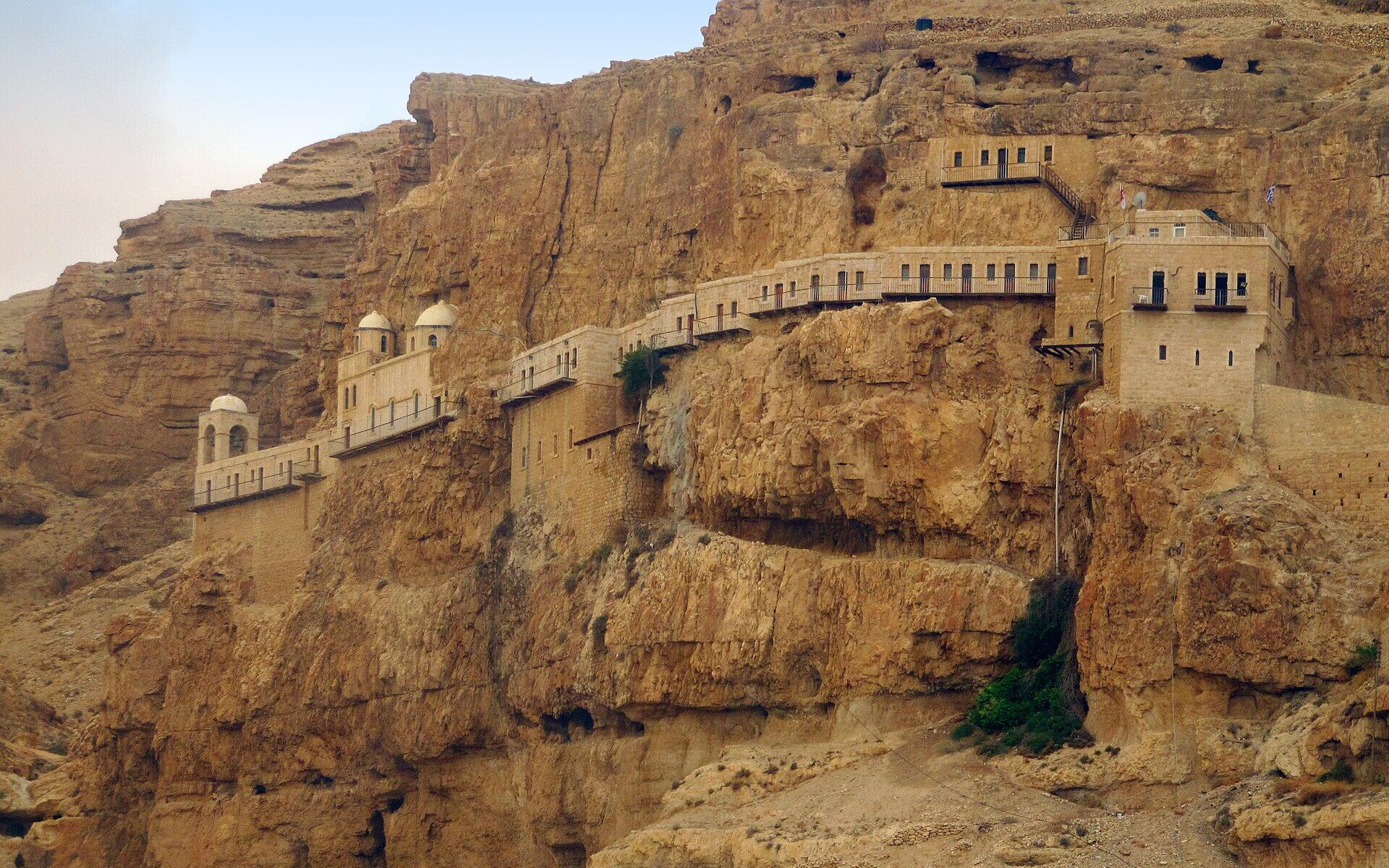
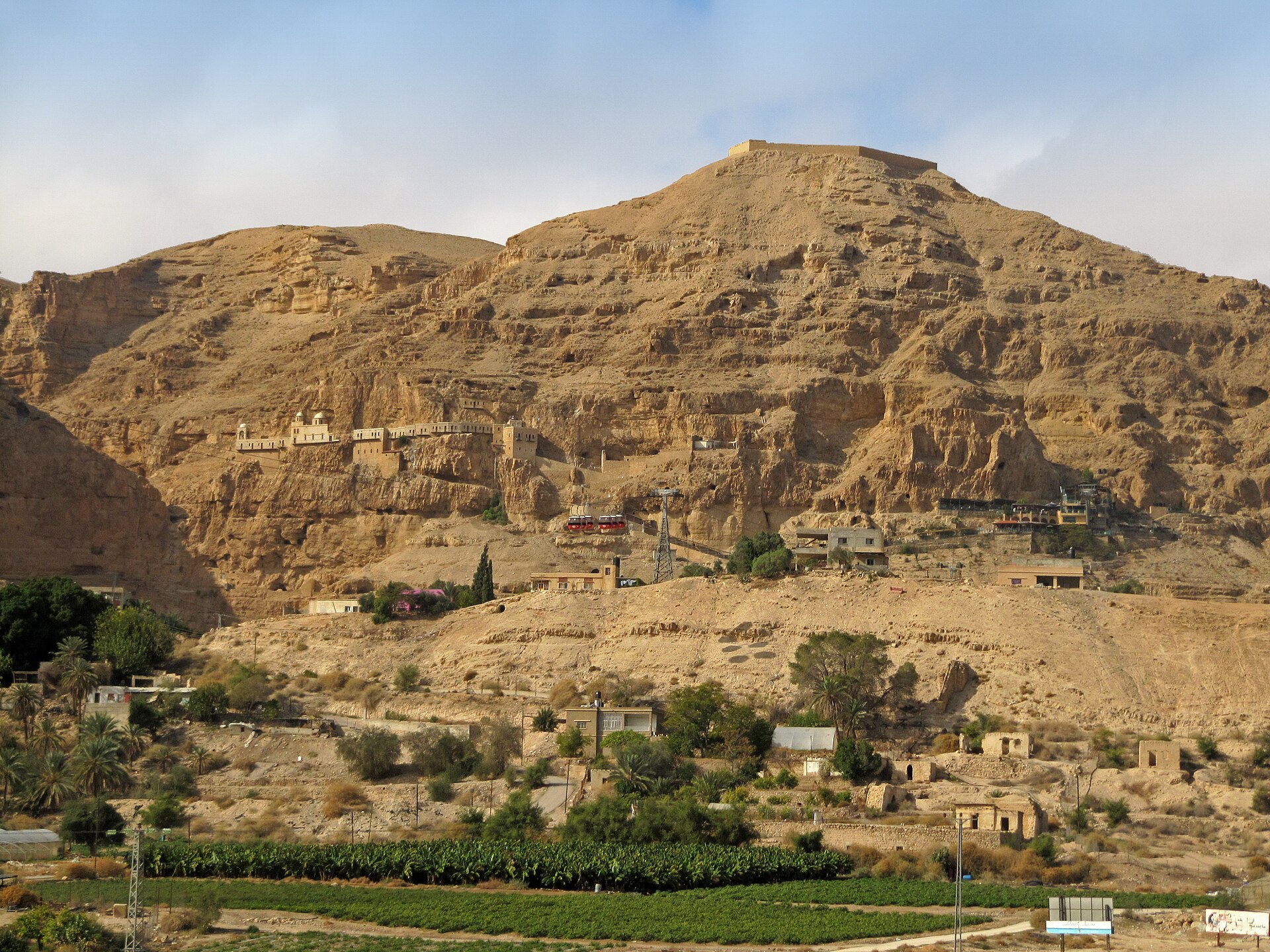
Clinging dramatically to the cliff face above the town, the Greek Orthodox Monastery of the Temptation marks the place where, in Christian tradition, Jesus fasted for forty days and was tempted in the wilderness. You can reach it by a cable car that climbs from near Tel es-Sultan, or on foot by a path that takes around 30 to 40 minutes uphill. The monastery is usually open to visitors during the week, often with reduced access or closure on Sundays, and modest dress is required. The views over the oasis and the Jordan Valley from the terrace are superb.
Hisham’s Palace (Khirbat al-Mafjar)
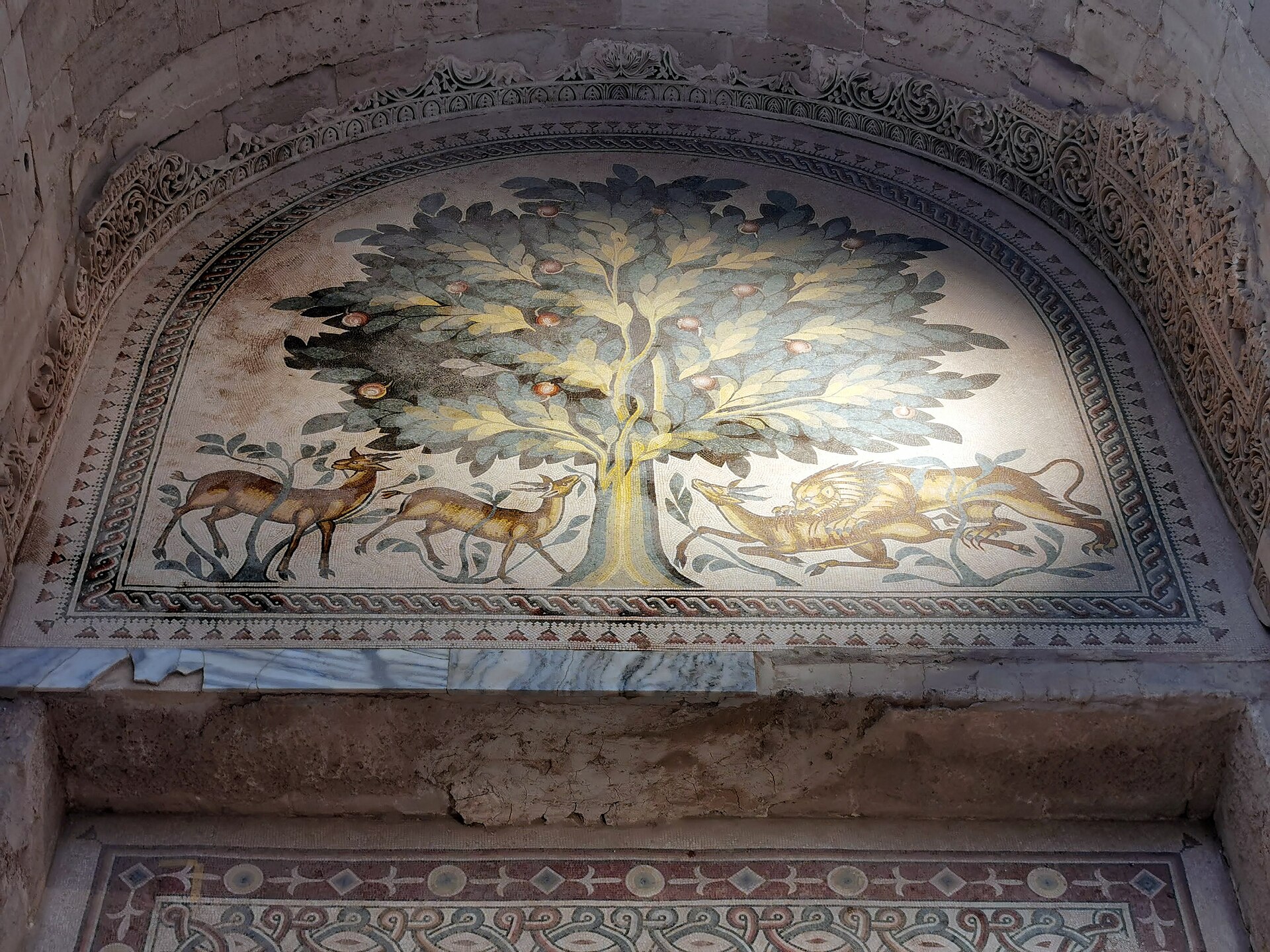
A short distance north of the town centre, Hisham’s Palace is an eighth-century Umayyad-era complex famous for its mosaics, above all the beautifully preserved Tree of Life panel, often described as one of the finest mosaics in the region. A protective shelter now covers the great mosaic floor, making it easier to appreciate. The site is typically open from around 8:00 to 17:00, with entry of roughly 10 to 15 ILS.
Elisha’s Spring (Ein al-Sultan)
Beside Tel es-Sultan, this perennial spring is the reason a town grew here at all, watering the surrounding oasis of palms and citrus. In the biblical account it is associated with the prophet Elisha, who is said to have purified its waters. Today it flows as a public spring, an easy and pleasant stop alongside the archaeological site.
Qasr al-Yahud (Jordan River Baptism Site)
About 30 minutes from the town, on the bank of the Jordan River, Qasr al-Yahud is the traditional site where, in Christian tradition, Jesus was baptised by John the Baptist. It is an active pilgrimage site with steps down to the water, where many visitors choose to be baptised or to wade in. Entry is free, white robes are sold on site, and modest behaviour is expected at what is both a religious site and a sensitive border location, so follow the posted rules and staff guidance.
The Sycamore Tree of Zacchaeus
In the town, an old sycamore is associated with the Gospel story of Zacchaeus, the tax collector who climbed a tree to see Jesus pass. It is a brief, atmospheric stop for those following the biblical trail.
How to Get to Jericho from Jerusalem
Guided Tour
A guided tour is the most efficient way to see Jericho, since it removes any complication around the crossing and the spread-out sites, and a guide adds the biblical and archaeological background that brings the place to life. Tours typically cost in the region of 220–450 ILS per person and often combine Jericho with the nearby baptism site at Qasr al-Yahud, and sometimes with Qumran or the Dead Sea, making for an efficient Jordan Valley day. The jeep and camel outfits running Judean Desert tours from Jerusalem also pass this way. Check the itinerary to see exactly which sites are included.
Independent Travel and the Crossing
Jericho sits in Area A of the West Bank, under Palestinian Authority administration, so a few practical points apply. Israeli rental cars are not permitted into Area A, and their insurance does not cover it, which is why independent visitors typically arrive by Palestinian taxi or shared transport rather than a hired car. It is straightforward to take a taxi or shared service from the Jerusalem area, and you should carry your passport, as you may pass through a checkpoint. The rules are the same for a Bethlehem day trip, so once you have made one West Bank crossing the next feels routine. The drive itself, descending through the desert toward the Jordan Valley, is short and scenic. As with other West Bank destinations, it is sensible to check current travel advice before you go.
Combining Jericho with Nearby Sites
Jericho sits on the way down to the Dead Sea, so it pairs naturally with several other stops for a fuller day.
- Qasr al-Yahud baptism site — only a short drive away on the Jordan River, and an easy addition.
- Qumran — where the Dead Sea Scrolls were discovered, on the road between Jerusalem and the Dead Sea; see our Dead Sea Scrolls guide.
- The Dead Sea — a float at a northern beach makes a relaxing end to the day; see our Dead Sea day trip guide.
- The Wadi Qelt hike — a desert canyon trail that descends toward Jericho past the cliffside St. George’s Monastery; our Wadi Qelt hike guide has the details.
Best Time to Visit
Because Jericho lies far below sea level, it is hot for much of the year and genuinely punishing at midday in summer, so the cooler months from October to April are by far the most comfortable for exploring the sites and climbing to the monastery. Even in winter the daytime warmth is pleasant, which is part of Jericho’s long appeal as a winter oasis. Aim for the morning to beat the heat, and bear in mind that the Mount of Temptation monastery often has reduced hours or closes on Sundays, so plan your visit for another day if it is a priority. Allowing for the cooler hours also makes the walk around the exposed archaeological mound much more enjoyable.
What to Bring and Practical Tips
- Passport — carry it for the crossing.
- Plenty of water — Jericho is hot, and there is little shade at the archaeological sites.
- Sun protection — a hat, sunglasses, and sunscreen are essential.
- Modest clothing — for the monastery, the baptism site, and other religious places.
- Comfortable shoes — for the uneven ground of the tell and the climb to the monastery.
- Cash — shekels are standard and US dollars are often accepted; small notes help for entry fees, the cable car, and the market.
For broader background, our Jerusalem history guide sets Jericho in the wider story of the region, our Christian pilgrimage guide places it within the Holy Land’s sacred sites, and our Jerusalem travel tips cover the everyday practicalities of getting around.
History and Biblical Significance
Few places pack as much history into a small area as Jericho. The spring at Ein al-Sultan supported human settlement here in the Neolithic period, long before the invention of writing, and the great stone tower uncovered at Tel es-Sultan is among the oldest monumental structures known anywhere. Through the Bronze Age and into the biblical era the town rose and fell repeatedly, and its strategic position guarding the Jordan Valley routes kept it occupied through Roman, Byzantine, early Islamic, and later periods. In the Christian tradition Jericho features in the accounts of Jesus passing through the town, healing the blind, and meeting Zacchaeus, and the surrounding desert is linked to the temptation narrative. For visitors, this means a single day can move from a 10,000-year-old tower to an eighth-century palace mosaic and a riverside baptism site, which is exactly what makes the place so compelling.
The oasis setting is part of the story too. Fed by its spring, Jericho has been a green refuge in the desert for millennia, famous for dates and balsam in antiquity and still shaded by palms today. The Judean Desert’s other great oasis, the waterfalls and springs of Ein Gedi, lies about an hour further south along the Dead Sea shore. The contrast between the lush gardens of the town and the bare desert hills that rise immediately around it is one of the lasting impressions of a visit. Standing on the tell with the cliffs of the Mount of Temptation rising on one side and the date palms stretching out on the other, it is easy to see why people have chosen to live here for so many thousands of years.
A Suggested Half-Day Plan
With an early start you can see the main sites comfortably before the afternoon heat builds.
- Leave Jerusalem in the morning — the drive down to the valley takes under an hour.
- Start at Tel es-Sultan — explore the archaeological mound and the adjacent Elisha’s Spring.
- Ride the cable car to the Mount of Temptation — for the monastery and the valley views.
- Visit Hisham’s Palace — to see the Tree of Life mosaic under its shelter.
- Add Qasr al-Yahud — a short drive to the Jordan River baptism site if time allows.
- Lunch in town — Jericho has restaurants serving fresh local food and, in season, its famous dates.
- Return to Jerusalem — or continue to the Dead Sea for an afternoon float.
The road to Jericho is also the road to Jordan. The Allenby / King Hussein Bridge, the border crossing closest to Jerusalem, lies a few kilometres east of the town, and you will see the signs for it on the way in. It does not issue Jordanian visas on arrival and is closed on Saturdays, so read our guide to the Jerusalem to Jordan border crossing before you plan to continue east.
Photo Credits
The Monastery of the Temptation on its cliff above Jericho: Jericho – Quarantal Monastery7 by Tamar Hayardeni ( Tamarah ), CC BY 3.0, via Wikimedia Commons.
The Mount of Temptation and its monastery above Jericho: Jericho – Quarantal2 by Tamar Hayardeni ( Tamarah ), CC BY 3.0, via Wikimedia Commons.
The Neolithic tower at Tel es-Sultan (Tel Jericho): Jericho – Tel Es-Sultan3 by Tamar Hayardeni ( Tamarah ), CC BY 3.0, via Wikimedia Commons.
The Tree of Life mosaic at Hisham’s Palace (Khirbat al-Mafjar), Jericho: Khirbat al Mafjar FotoThalerTamas5 by Thaler Tamas, CC BY-SA 4.0, via Wikimedia Commons.