Israel visa requirements are simple for most travelers, with one new step that trips people up: as of 2025, even visa-exempt visitors must get an online travel authorization before they fly. Citizens of the United States, the UK, the EU, Canada, Australia, and roughly ninety other countries still enter for up to 90 days without a traditional visa, but they now need an approved ETA-IL linked to their passport first. This guide walks through exactly what you need to enter Israel for a Jerusalem trip — the ETA-IL, who needs a full visa, your documents at the border, length of stay, and the special cases around West Bank crossings and land borders.
Because entry rules and fees change and depend on your nationality, treat this as a current-2026 overview and always confirm the specifics for your own passport on the official Israeli government channels before you book. Pair this with our Jerusalem travel tips and first time visiting Jerusalem guides.
Before You Book: How to Check the Rules for Yourself
Entry rules for Israel change, sometimes at short notice, and they are set and enforced by the Israeli authorities — not by your airline, not by your own government, and not by a travel guide. Everything here was checked against official government sources on 15 August 2026. Treat it as general orientation rather than immigration advice, and before you travel confirm the requirements for your own passport on the official portal and with your airline, which is the party that decides whether you board.
These are the sources worth opening yourself rather than trusting a summary of them:
- ETA-IL and entry information, Israel Population and Immigration Authority — the only official place to apply, and the authority on eligibility, fee and validity.
- UK Foreign, Commonwealth & Development Office entry requirements for Israel — updated 22 July 2026, checked 15 August 2026. Detailed on border checks and refusals.
- US State Department country information for Israel, the West Bank and Gaza — checked 15 August 2026. Passport validity, denial of entry, dual nationality.
- Israeli government rules for foreign nationals entering the West Bank — the document to read if you plan to work, study, volunteer or stay with family there.
If your trip is anything other than a straightforward tourist visit — a second nationality, family in the region, work, study or volunteering, or a previous refusal — put your circumstances in writing to the Israeli embassy or consulate for your country before you book anything non-refundable. For everything that happens after the border, our orientation guide for a first visit covers the ground rules.
Who Enters Visa-Free
Citizens of roughly ninety to a hundred countries receive a free tourist entry of up to 90 days, granted at the border rather than arranged at an embassy in advance. The list covers most of the destinations from which travelers to Jerusalem typically come. As of 2026, all of these visa-exempt nationalities must nonetheless hold an approved ETA-IL before traveling (covered in the next section). Major passports with visa-free entry include:
- United States, Canada, and Mexico
- All EU member states, plus the UK, Ireland, Switzerland, Norway, and Iceland
- Australia and New Zealand
- Japan, South Korea, Taiwan, and Singapore
- Most South American countries, including Brazil, Argentina, and Chile
- Many others — the exact list is long and changes, so verify your specific passport
Visa-free entry is for tourism, family visits, and business meetings. It does not permit paid work or study, which require the appropriate visa arranged in advance. If your reason for visiting is anything other than ordinary tourism or a short business trip, check whether a specific visa category applies to you well before you travel.
The ETA-IL: What It Is and How to Get It
This is the single most important change to Israel’s entry rules in years. Since January 1, 2025, citizens of visa-exempt countries must obtain an ETA-IL (Electronic Travel Authorization) before traveling. It is the same concept as the US ESTA or the EU’s ETIAS: a quick online pre-screening tied electronically to your passport. There is no stamp or printout to collect — once approved, your authorization is linked to the passport you applied with, and that is the passport you must travel on.
| ETA-IL detail | What to know |
|---|---|
| Who needs it | Citizens of visa-exempt countries (US, UK, EU, Canada, Australia, and others) |
| Where to apply | The official Israeli government ETA-IL website only — avoid look-alike third-party sites |
| Cost | A modest government fee of around 25 shekels (roughly US$7–8); third-party sites charge more |
| Validity | Two years (or until your passport expires), with multiple entries, each stay up to 90 days |
| Processing | Often quick, but apply well ahead; authorities advise allowing at least 72 hours |
| You’ll need | Your passport, basic travel and contact details, and a payment card |
Two practical warnings. First, apply only through the official government site; numerous third-party “assistance” services charge several times the real fee for the same authorization. Second, do not leave it to the last minute — while many approvals come through quickly, some take longer or require follow-up, and airlines may check for it before boarding. Apply as soon as your trip is confirmed. If your dates are not fixed yet, our guide to the best months for a Jerusalem trip is worth reading before you book flights.
It is worth being clear on what the ETA-IL is and is not. It is a pre-travel authorization, not a visa, and it does not guarantee entry on its own: the final decision still rests with the border officer when you arrive, exactly as with the US ESTA. It also does not replace a passport, change your permitted length of stay, or grant permission to work or study. For the great majority of visitors it is a five-minute online formality, but skipping it can mean being turned away at check-in, so it belongs at the top of your pre-trip checklist alongside booking flights and a hotel.
Who Needs a Visa in Advance
Travelers whose nationality is not on the visa-exempt list must apply for a tourist visa at an Israeli embassy or consulate before traveling, rather than using the ETA-IL. This generally includes many African and Asian countries not named above, among others. Requirements, processing times, and supporting documents vary by location, so if your passport falls into this category, contact your nearest Israeli mission early and allow ample time. Visa policy shifts periodically, so always confirm the current rule for your specific passport before booking anything.
Separately, citizens of a number of states that do not have relations with Israel are generally not admitted. If there is any question about your nationality’s status, check the official guidance or with an Israeli mission before making plans.

What to Have Ready at the Border
Most visitors arrive at Ben Gurion Airport, where immigration is generally efficient. Have the following ready, ideally in both digital and paper form:
- A passport valid for at least 90 days beyond your arrival date, which is the officially published requirement. Many airlines apply a stricter six-month rule of their own, so confirm with your carrier.
- Your approved ETA-IL, if you are entering visa-free (keep the confirmation accessible).
- Proof of onward or return travel, such as your flight out.
- Proof of accommodation, like a hotel booking or host’s address.
- Evidence of sufficient funds for your stay, which may be asked for longer visits.
Rather than stamping passports, Israel now issues most arriving visitors a small blue entry card (a paper slip). Keep this slip safe for the duration of your trip: you may be asked for it at hotels or checkpoints, and you hand it over or show it again on departure. Because there is no Israeli stamp in your passport, a visit to Israel does not automatically create problems for later travel to countries that restrict entry to those who have been to Israel. Once you are through, the onward leg is simple: our guide to the run between the coast and Jerusalem compares the train, bus and sherut if you are stopping in Tel Aviv first.
Immigration Questions and How to Handle Them
Israeli border officers are thorough, and a few brief questions are routine, not a cause for worry. You may be asked the purpose of your visit, where you are staying and for how long, where else you plan to travel, whether you have contacts in the country, and about recent travel to certain other Middle Eastern countries. Answer honestly and concisely. Prior travel to Arab or other regional countries does not by itself bar entry; transparency is what matters. If you are planning West Bank day trips or have professional reasons for visiting, it is fine to say so plainly. If the thoroughness of the process leaves you uneasy about conditions on the ground, our honest look at safety in Jerusalem sets out what daily life is actually like for visitors.
Special Cases to Know
Dual nationals
Israeli citizens, including dual nationals and many who are eligible for citizenship, are generally required by Israeli law to enter and exit Israel on an Israeli passport. If this might apply to you, clarify your status before you travel to avoid complications at the border.
West Bank crossings (Bethlehem, Jericho, Hebron)
Foreign tourists can cross from Israel into Palestinian-administered areas such as Bethlehem, Jericho, and Hebron for day trips without any separate visa — your Israeli entry covers it. Bring your passport, as you pass through checkpoints with security screening. Note that the rules are different for Israeli citizens, who are generally not permitted to enter Area A. For the logistics, see our day trips from Jerusalem overview and the Bethlehem day trip guide.
Arriving by land from Jordan or Egypt
Israel has several land crossings, and procedures, hours, and fees differ at each, so check the current details for your route in advance:
- Allenby / King Hussein Bridge — between Jordan and the West Bank near Jericho; commonly used by those coming from Amman.
- Yitzhak Rabin / Wadi Araba Crossing — between Eilat and Aqaba, Jordan.
- Taba Crossing — between Eilat and Egypt’s Sinai.
Whether the ETA-IL or a different procedure applies can depend on the crossing and your nationality, and rules at these borders can change, so confirm before you go rather than assuming the airport process applies everywhere.

Extending Your Stay
The standard tourist entry allows up to 90 days. If you want to stay longer, you can apply for an extension at Israel’s Population and Immigration Authority (Ministry of Interior) offices while you are in the country, before your current permission runs out.
- What you typically need: your passport, passport photos, a completed form, the applicable fee, and a reason for the extension.
- Fee: expect a modest government charge (in the region of a couple of hundred shekels); confirm the current amount when you apply.
- Limits: extensions are discretionary, and total tourist stays are generally capped over a 12-month period, so do not assume an automatic right to remain.
If you are planning a long trip, factor visa timing into your budget and itinerary — our how many days in Jerusalem guide can help you right-size the visit in the first place. A longer stay also changes what you carry, which our Jerusalem packing list accounts for season by season.
The Entry Card Israel Gives You Instead of a Passport Stamp
Visitors arriving at Tel Aviv Ben Gurion Airport are given an entry card rather than an entry stamp in the passport. At other entry points you may receive an entry card or you may receive a stamp, according to FCDO entry guidance checked on 15 August 2026. The card is a small printed slip handed over at the counter or produced by the automated kiosk, and it records your permitted stay.
Keep it with your passport until you leave the country. It is your evidence that you entered legally, and the FCDO singles out crossing into Palestinian-administered areas as the moment you are most likely to need it — worth knowing before you set off on a half day in Bethlehem. Photograph it as a backup, but carry the paper: the same guidance says you must show a passport and Israeli immigration slip to cross between Israel and Palestinian-administered territory.
Two related points from the same source, because they surprise people. If you are refused entry, your passport may be stamped with an entry stamp with two red lines drawn across it to record the refusal. And the FCDO reports that stamps reading Palestinian Authority only or Judea and Samaria only have been issued to some travelers at the Allenby Bridge crossing and at Ben Gurion. If you are handed a stamp with wording you do not understand, ask the officer what it permits before you leave the desk.
Passport Validity, Onward Tickets and Funds: Formal Rules Versus Common Questions
The published requirements are shorter than the folklore around them. The FCDO states that to enter Israel or Palestine your passport must have an expiry date at least 90 days after the date you arrive. The US State Department puts the same requirement for American travelers as a passport valid for 90 days at the time of entry, with one blank page — while noting that passports are normally not stamped on entry. Both were checked on 15 August 2026.
That is the government position. Airlines often apply their own stricter checks and can refuse to board you on their own rules, so if your passport is inside six months of expiry, confirm with the carrier rather than argue at the gate.
Onward tickets, hotel bookings and proof of funds sit in a different category. We could not find them published as formal conditions of entry by the Israeli authorities, so we are not going to claim they are. What is documented is that the decision rests with the officer in front of you: the US Embassy in Jerusalem states in its briefing on the ETA-IL program that the authorization only allows a visitor to reach the border crossing, and that a border control officer then determines whether the visitor is authorized to enter. Being able to say where you are staying, for how long and how you are leaving is practical preparation rather than a formal checklist — have the address of your first night and your plan for getting into the city from Ben Gurion ready to say out loud.
One rule that is formal and easy to trip over is money. You must declare 50,000 shekels or more, or the equivalent, when entering or exiting Israel by air, and 12,000 shekels or more by land. The Israeli Tax Authority publishes the reporting requirement in full.
How the Land Crossings Work in Practice
Israel administers immigration and security controls at its international land crossings with Jordan — into both the West Bank and Israel — and with Egypt at the Taba crossing near Eilat, as well as at its airports and seaports. That is the State Department’s description, checked on 15 August 2026, and it matters because arriving overland is not simply the airport process on a different day.
The ETA-IL requirement follows your nationality rather than your route, but the shortcuts do not travel with it. The automated kiosk and e-gate route described by the US Embassy applies to travelers landing at Ben Gurion with an approved ETA-IL; at a land crossing you deal with an officer, and the authorization by itself does not grant entry. Check your eligibility and your specific crossing on the official ETA-IL portal before you commit to an overland route.
- Allenby / King Hussein Bridge — connects Jordan with the West Bank. Israeli citizens are prohibited from using this crossing, per the US State Department.
- Jordan River / Sheikh Hussein — the northern crossing with Jordan.
- Yitzhak Rabin / Wadi Araba — the southern crossing, between Eilat and Aqaba.
- Taba — the crossing with Egypt near Eilat, listed by the FCDO as open 24 hours, though opening times are subject to change.
Crossings to Jordan may be restricted or close at short notice, including because of trade union strikes, and the Israel Airports Authority publishes notifications for the Allenby crossing. Continuing into Egypt at Taba brings its own Egyptian border taxes and visa costs, payable in cash; the FCDO advises carrying at least US$170 per person and warns that the charges have risen at short notice since early March 2026. If a border day is more logistics than you want, our round-up of trips out of the city sticks to routes you can do and undo in an afternoon.
If You Are Held for Questioning or Refused Entry
Everyone entering or leaving Israel, the West Bank or Gaza is subject to immigration and security screening, which the State Department says can include prolonged questioning and physical searches. Most visitors get a few minutes of questions; some do not, and it is better to know the shape of that in advance.
The FCDO says some travelers face longer searches and questioning, including those with Palestinian or Arab ancestry, or ancestry of a country that is predominantly Muslim; those with evidence of previous travel that may be considered suspicious; and those considered to have publicly criticized the state of Israel. It notes that travelers may be held at border control for further checks, sometimes for several hours and including in detention facilities, that Israeli security has sometimes requested access to personal email or social media accounts as a condition of entry, and that baggage and digital devices may be searched and withheld.
Both the FCDO and the State Department list the same categories on which foreign nationals may lawfully be refused entry: having publicly called for a boycott of Israel or Israeli settlements, or belonging to an organization that has; having publicly denied the Holocaust or the 7 October 2023 attack; and having publicly supported the prosecution of Israeli citizens in a foreign country or an international court for actions taken during Israeli military or security service.
If you are refused, the FCDO describes what follows: you are booked onto the next available flight back to where you flew in from, on the same airline. Depending on the schedule you may be taken to the immigration detention centre a few minutes’ drive from the airport, where there is access to a telephone, information in English and medical assistance if needed. Your luggage stays at the airport, so say straight away if you need medication from it. You can contact your embassy from the detention centre, but an embassy cannot intervene in an immigration decision.
The State Department puts the same principle in blunter terms: the decision to admit or deny a traveler is made entirely by the State of Israel. It adds that those denied entry should receive a written explanation, and that a person refused entry has the right to an immigration court hearing to contest the denial but will be detained for the duration of those proceedings. None of this is a reason to stay away — the overwhelming majority of tourists are through in minutes — and our honest read on conditions in Jerusalem covers what the trip is actually like once you are past the desk.
Second Passports, Israeli Citizenship and Palestinian Family Ties
This is the area where general guidance is least useful and official confirmation matters most. What follows is the published position of the authorities named, checked on 15 August 2026. It is not a prediction about your case, and anyone in these categories should write to the relevant authority before booking.
- Israeli citizens, including dual nationals. The State Department states that anyone with Israeli citizenship, regardless of any other nationality, must enter and depart Israel on their Israeli passport in accordance with Israeli law. It adds that US-Israeli citizens do not need an ETA-IL, and should leave the United States on the US passport and enter Israel on the Israeli one, provided they checked in for the flight with the Israeli passport.
- Children with an Israeli parent. The FCDO states that children with at least one Israeli parent are considered Israeli nationals and must enter and leave Israel on an Israeli passport.
- Where Israeli citizens cannot go. Per the State Department, they are prohibited from using the Allenby / King Hussein Bridge crossing and from entering Gaza, and are generally prohibited from parts of the West Bank under Palestinian Authority control, including Bethlehem and Jericho.
- Travelers of Palestinian origin. The FCDO states that a British national on the Palestinian Population Register, or holding a Palestinian ID number, must have a Palestinian passport or travel document to leave Gaza or the West Bank; that those with a Palestinian name or place of birth but no Palestinian ID number may face problems; and that British nationals of Palestinian origin, or married to Palestinians, have been refused entry to Israel. It adds that British-Palestinian dual nationals living in the West Bank and Gaza may only exit via the Allenby crossing into Jordan or Rafah into Egypt, and must return by the same route.
- US citizens on the Gaza registry. The State Department states they may use their US passport to apply for entry to Israel for business or tourism for up to 90 days, including transiting Israel to and from the West Bank, but not to transit to Gaza. The Israeli government sets out the procedure on its page for entry of Palestinian-American tourists into Israel.
- Other regional nationalities and family ties. The FCDO states that dual nationals holding Iranian, Iraqi, Syrian or Lebanese citizenship have previously been heavily questioned, denied entry and deported, and that the Israeli authorities advise citizens of those countries — or those with associations such as close family ties — to check with their nearest Israeli embassy before travel to obtain pre-approval.
If you intend to study, teach, research, work or volunteer in the West Bank, or you are engaged or married to a West Bank resident, the applicable rules are the Israeli government’s regulations on entry to Judea and Samaria, administered by the Coordinator of Government Activities in the Territories. Read them directly rather than any secondhand account, including this one. For everything that is not about status at the border, our practical notes for the trip itself will be more use to you.
Evidence of a Trip to Israel and Your Onward Travel
Travelers ask this in both directions, so here is what the official guidance says. On arrival, the FCDO states that evidence of previous travel to another country in the region, such as entry or exit stamps, does not normally stop you entering Israel, although you may face extra questioning at the border. If you have a specific concern it advises contacting the Israeli embassy in your country first.
On leaving, the situation is more nuanced than the popular shorthand. Because Ben Gurion normally issues an entry card rather than a stamp, many passports come home with no Israeli entry stamp in them at all. That is a description of Israeli practice, not a guarantee about anyone else’s rules. Entry policy in every other country is set by that country, some ask directly about previous travel regardless of what is in the passport, and a stamp may still be issued at a land crossing. We deliberately do not list countries here, because those policies change and a stale list is worse than none — check with the authority of wherever you are going next. If Israel is one stop on a longer trip, our comparison of the routes between the coast and Jerusalem will help you fit the city in around your flights.
If you are crossing into Jordan and coming back, your ETA-IL should cover the return, since it allows multiple entries while it is valid. The Jordanian side is where the paperwork gets complicated: the crossing nearest Jerusalem issues no visas on arrival, and Allenby charges a higher Israeli exit fee than the other two. Our guide to the Jerusalem to Jordan border crossing sets out the rules for all three.
The Bottom Line
For most travelers, Israel visa requirements come down to three things: secure your ETA-IL online before you fly, carry a passport valid for at least six months, and arrive ready to answer a few routine questions at the border for a 90-day tourist entry. Apply for the ETA-IL early and only on the official site, keep your blue entry slip safe, and verify the rules for your own passport before booking. Then turn to our Jerusalem travel tips, our first time visiting Jerusalem guide, and our guide to Ben Gurion transfer options to plan the arrival itself.
Photo Credits
Border control at Ben Gurion Airport: DSC-0949-ben-gurin-airport-2017 by Rakoon, CC0, via Wikimedia Commons.
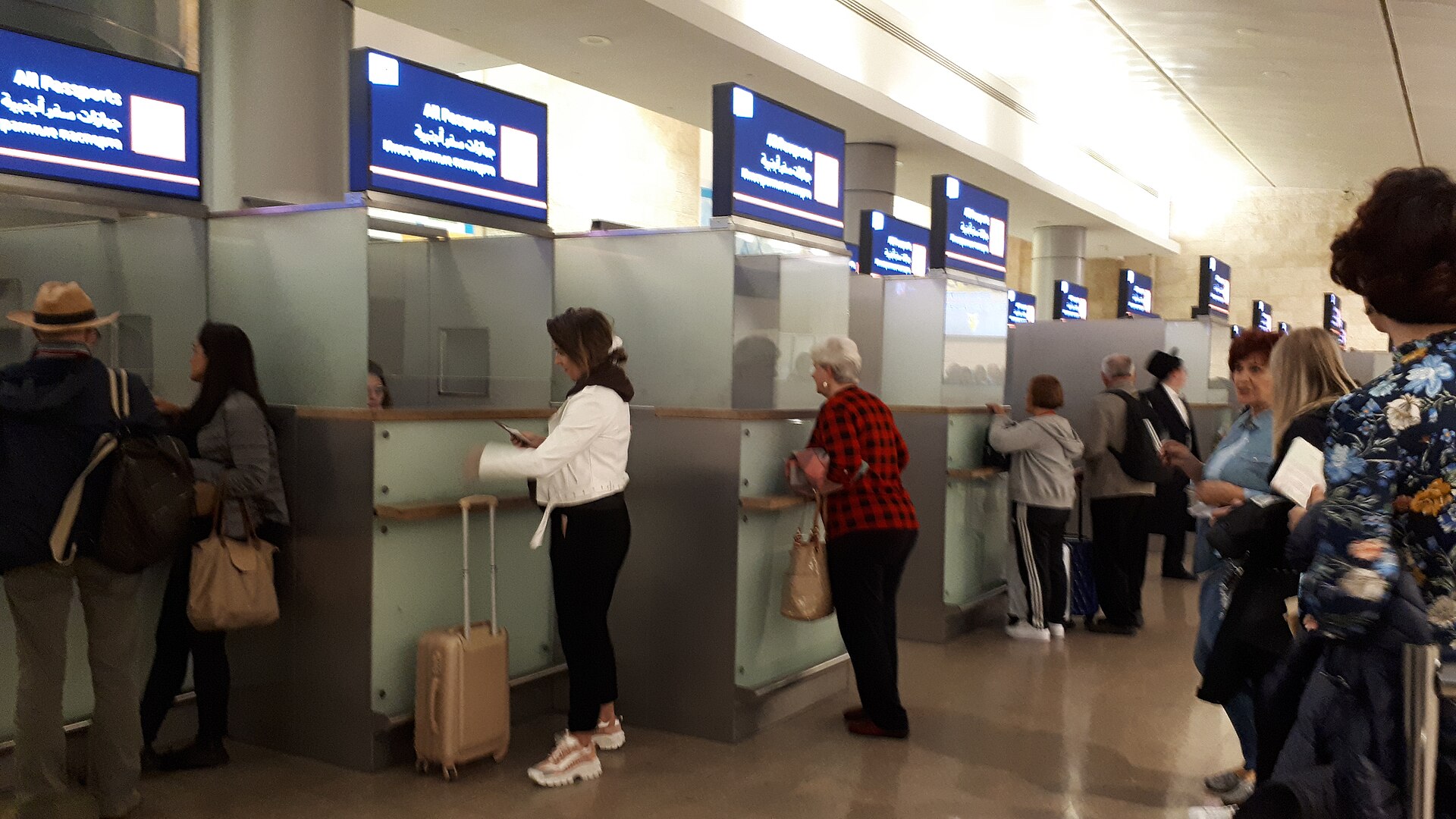
Passport control booths at Ben Gurion Airport: 20190407 passport control ben gurion airport april 2019 by Rakoon, CC0, via Wikimedia Commons.
The arrivals greeting hall of Ben Gurion Airport’s Terminal 3: Ben Gurion Airport terminal 3 reception hall by GeorgeDement, CC BY-SA 2.0, via Wikimedia Commons.
{"@context": "https://schema.org", "@type": "FAQPage", "mainEntity": [{"@type": "Question", "name": "What are the Israel visa requirements for US citizens?", "acceptedAnswer": {"@type": "Answer", "text": "US citizens do not need a traditional visa for tourism and receive up to 90 days on entry. However, since January 2025 they must obtain an approved ETA-IL online before traveling and present a passport valid for at least 90 days beyond arrival, though airlines often ask for six months. The ETA-IL is the key step many first-time visitors overlook, so apply as soon as your trip is booked."}}, {"@type": "Question", "name": "How much does the ETA-IL cost and when should I apply?", "acceptedAnswer": {"@type": "Answer", "text": "The official government fee is small — around 25 shekels (roughly US$7–8) — and you should apply only through the official Israeli site, since third-party services charge much more. Apply well in advance; authorities advise allowing at least 72 hours, and a week or two is safer in case of follow-up checks before your airline lets you board."}}, {"@type": "Question", "name": "How long can I stay in Israel as a tourist?", "acceptedAnswer": {"@type": "Answer", "text": "Up to 90 days per visit for visa-exempt travelers. You can apply for an extension at the Population and Immigration Authority while in the country, though approval is discretionary and there are limits on total tourist time within a 12-month period. Always keep an eye on the date your current entry expires."}}, {"@type": "Question", "name": "Do I need a visa to visit Bethlehem or Jericho?", "acceptedAnswer": {"@type": "Answer", "text": "No. As a foreign tourist, your Israeli entry covers day trips into Palestinian-administered areas such as Bethlehem, Jericho, and Hebron — there is no separate visa. Carry your passport for the checkpoints and security screening. The rules differ for Israeli citizens, who are generally not allowed into Area A."}}, {"@type": "Question", "name": "Will visiting Israel stop me entering Arab countries later?", "acceptedAnswer": {"@type": "Answer", "text": "Usually not, because Israel issues a separate blue entry slip instead of stamping your passport. Without an Israeli stamp, many countries that restrict travelers who have visited Israel are still accessible. If you are concerned about a specific country, check that country's own entry rules, as policies vary and can change."}}, {"@type": "Question", "name": "Can I enter Israel overland from Jordan or Egypt?", "acceptedAnswer": {"@type": "Answer", "text": "Yes, via crossings such as the Allenby / King Hussein Bridge from Jordan into the West Bank, the Yitzhak Rabin crossing between Eilat and Aqaba, or the Taba crossing into Sinai. Procedures, opening hours, fees, and whether the ETA-IL applies can differ by crossing and nationality, so confirm the current details for your route before you travel."}}, {"@type": "Question", "name": "Is the ETA-IL a visa, and does it guarantee I will be let in?", "acceptedAnswer": {"@type": "Answer", "text": "No. The US Embassy in Jerusalem, describing the Israeli program, states that ETA-IL authorization only allows a visitor to reach the border crossing into Israel and does not grant permission to enter or reside there — on arrival a border control officer decides whether you are authorized to enter. Apply only through the official Population and Immigration Authority portal, which is also where the current fee and validity are published (checked 15 August 2026)."}}, {"@type": "Question", "name": "Does the ETA-IL apply if I arrive overland from Jordan or Egypt?", "acceptedAnswer": {"@type": "Answer", "text": "The requirement follows your nationality rather than your route, and Israel administers immigration control at its land crossings with Jordan and at Taba with Egypt as well as at its airports. What does not carry over is the airport process — the automated kiosk and e-gate route applies to arrivals at Ben Gurion, so at a land crossing expect to deal with an officer. Confirm your eligibility and your specific crossing on the official ETA-IL site before you set out (checked 15 August 2026)."}}, {"@type": "Question", "name": "What actually happens if I am refused entry at Ben Gurion?", "acceptedAnswer": {"@type": "Answer", "text": "According to FCDO guidance checked on 15 August 2026, you are booked onto the next available flight back to where you flew in from, on the same airline, and depending on the schedule you may wait at the immigration detention centre a few minutes from the airport, with access to a telephone, information in English and medical assistance if needed. Your luggage stays at the airport, so say immediately if you need medication from it. You can contact your embassy, which can help where possible but cannot intervene in an immigration decision — that decision rests with the Israeli authorities."}}]}