Hezekiah’s Tunnel is a 533-meter water channel carved through solid bedrock beneath Jerusalem around 701 BCE, and walking its full length in the dark by flashlight is one of the most memorable things you can do in the city. The tunnel was an emergency engineering project: faced with an Assyrian army marching on Jerusalem, King Hezekiah had workers cut a hidden conduit to bring the Gihon Spring’s water inside the walls so the city could withstand a siege. Visiting Hezekiah’s Tunnel Jerusalem today means wading through cool spring water, single file, from the spring to the Pool of Siloam. This guide covers the history, exactly what the walk is like, the dry alternative, current hours and fees, and how to plan it.
The tunnel sits inside the City of David archaeological park, so a visit here pairs naturally with the rest of that site. Read this alongside our guide to the surrounding City of David park and our overview of biblical sites in Jerusalem for the wider context.
The history behind the tunnel
In the late 8th century BCE, the Assyrian king Sennacherib was sweeping through the kingdom of Judah, and Jerusalem was next. The city’s water came from the Gihon Spring, which lay outside the walls and would have been the obvious target for any besieging army. The biblical account in 2 Kings 20:20 and 2 Chronicles 32:30 credits Hezekiah with stopping the spring’s exposed outflow and channeling the water through rock to a pool inside the fortified city.
What turns a practical waterworks into something remarkable is the method. Two teams of workers began at opposite ends and tunneled toward each other through the limestone, correcting course as they went, until they met in the middle. The floor drops only about a third of a meter across the entire 533 meters, a remarkably gentle gradient that keeps the water flowing without draining too fast. For a project carried out with hand tools under the pressure of an approaching army, the accuracy is striking. To see how this fits into the city’s wider engineering story, our guide to Jerusalem’s ancient water systems traces the springs, shafts, and aqueducts that kept the city alive.
The Siloam Inscription
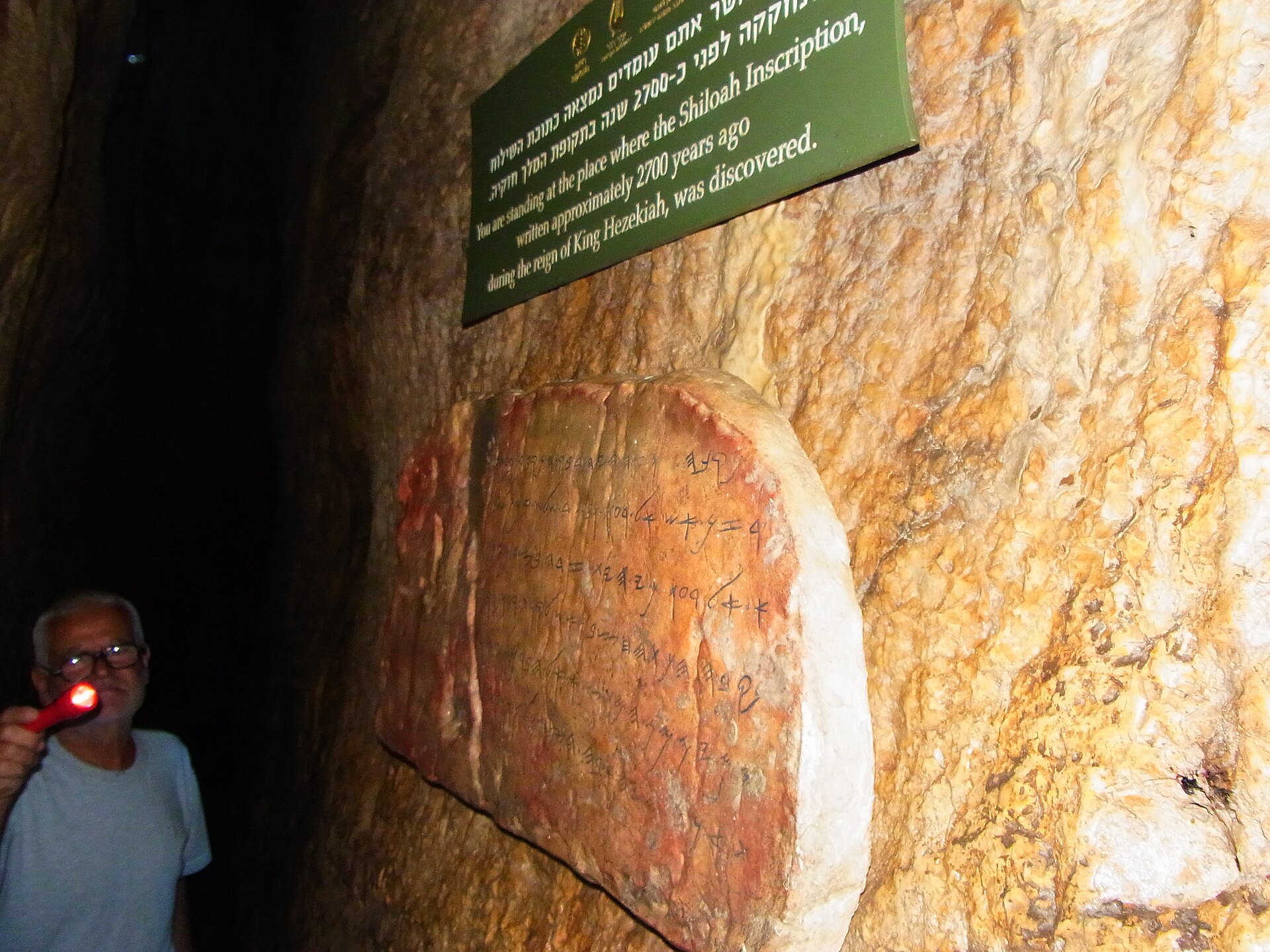
The most famous discovery from inside the tunnel is the Siloam Inscription, a few lines of ancient Hebrew carved into the rock near the meeting point, describing the dramatic moment when the two digging teams broke through to each other and the water flowed. It was found in 1880 and is one of the oldest substantial Hebrew inscriptions known. The original was removed during the Ottoman period and is held in the Istanbul Archaeology Museums; what you may see referenced on site or in Jerusalem museums is a reproduction. It remains a rare case where an ancient text and the structure it describes can be matched so directly.
What the walk is actually like
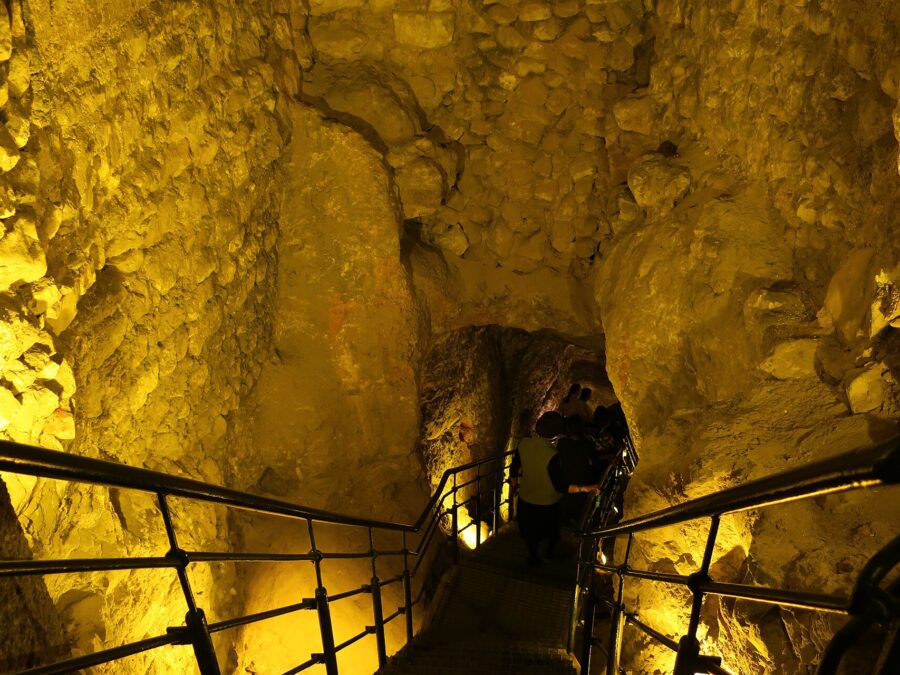
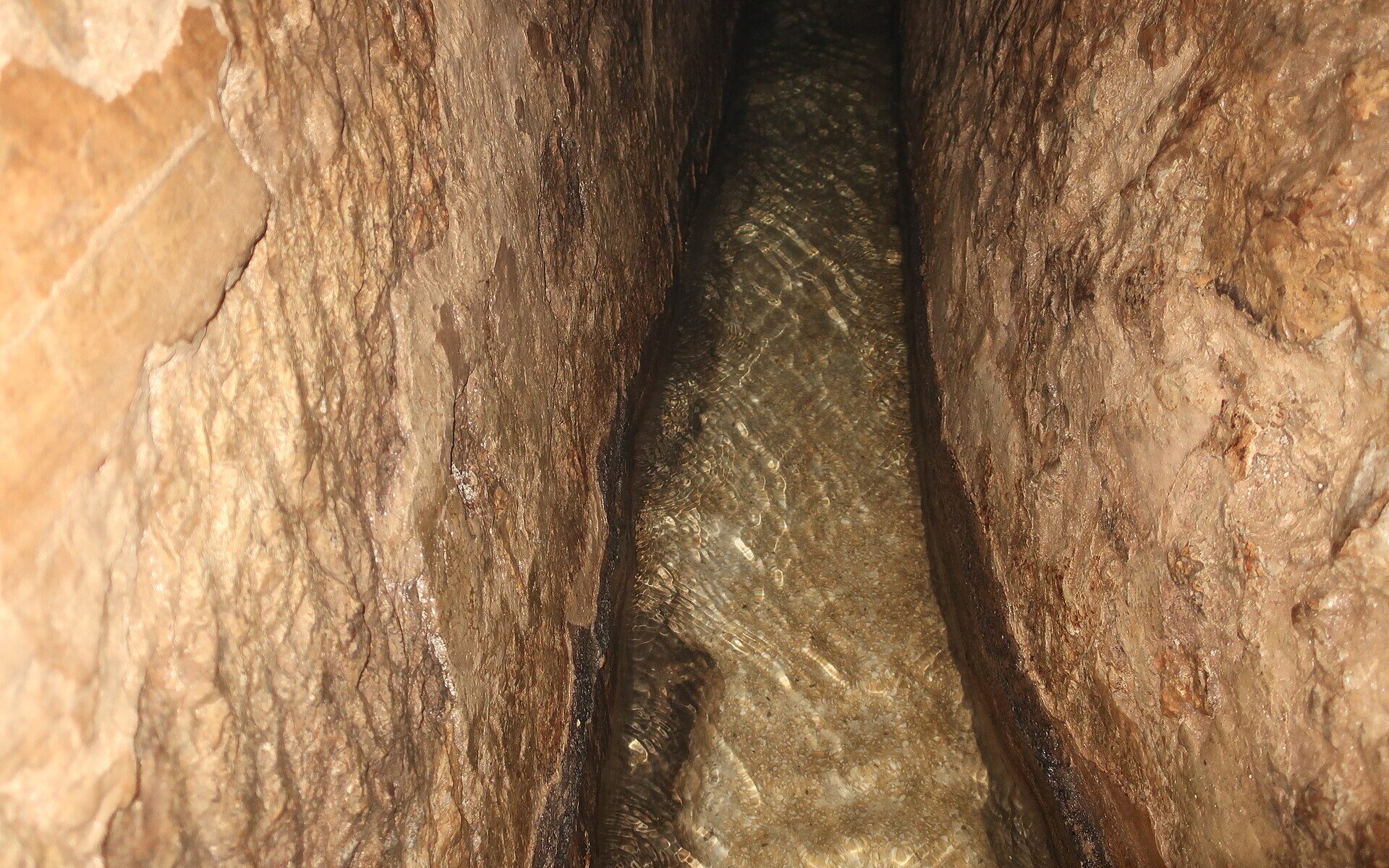
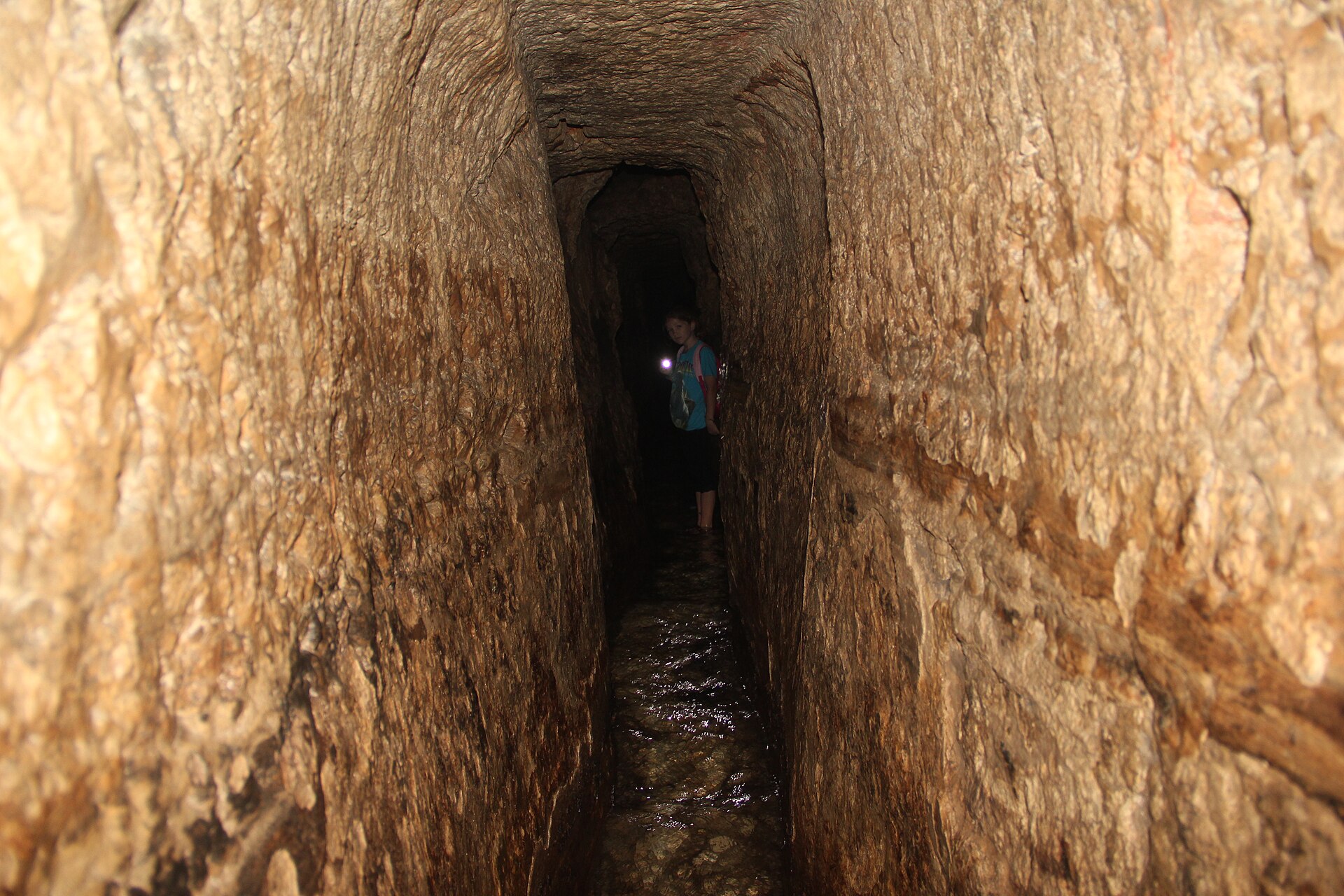
From the start near the Gihon Spring, you step down into the water and follow the passage. Early on it is wider and shallower; further in it narrows to roughly shoulder width and the water deepens. For most of the route the water sits somewhere between ankle- and knee-deep, and shorter visitors may find it reaching mid-thigh in a few low stretches. The spring water is cool year-round, refreshing in the summer heat and a touch bracing in winter.
- Length: 533 meters, one-way, from the spring to the Pool of Siloam.
- Time: about 30 to 40 minutes at a relaxed pace.
- Lighting: none at all. A flashlight or headlamp is essential; phone torches work but tie up a hand you may want for balance.
- Headroom: mostly fine, but tall visitors will need to duck in places where the ceiling drops.
- Width: single file in much of the tunnel, so you move at the pace of the group ahead.
The S-shaped curves near the midpoint mark where the two teams met and adjusted to find each other. It is a genuinely atmospheric stretch, with the sound of water and your own light the only references in the dark. The tunnel is well maintained and safe for most reasonably fit visitors.
From the spring to the Pool of Siloam
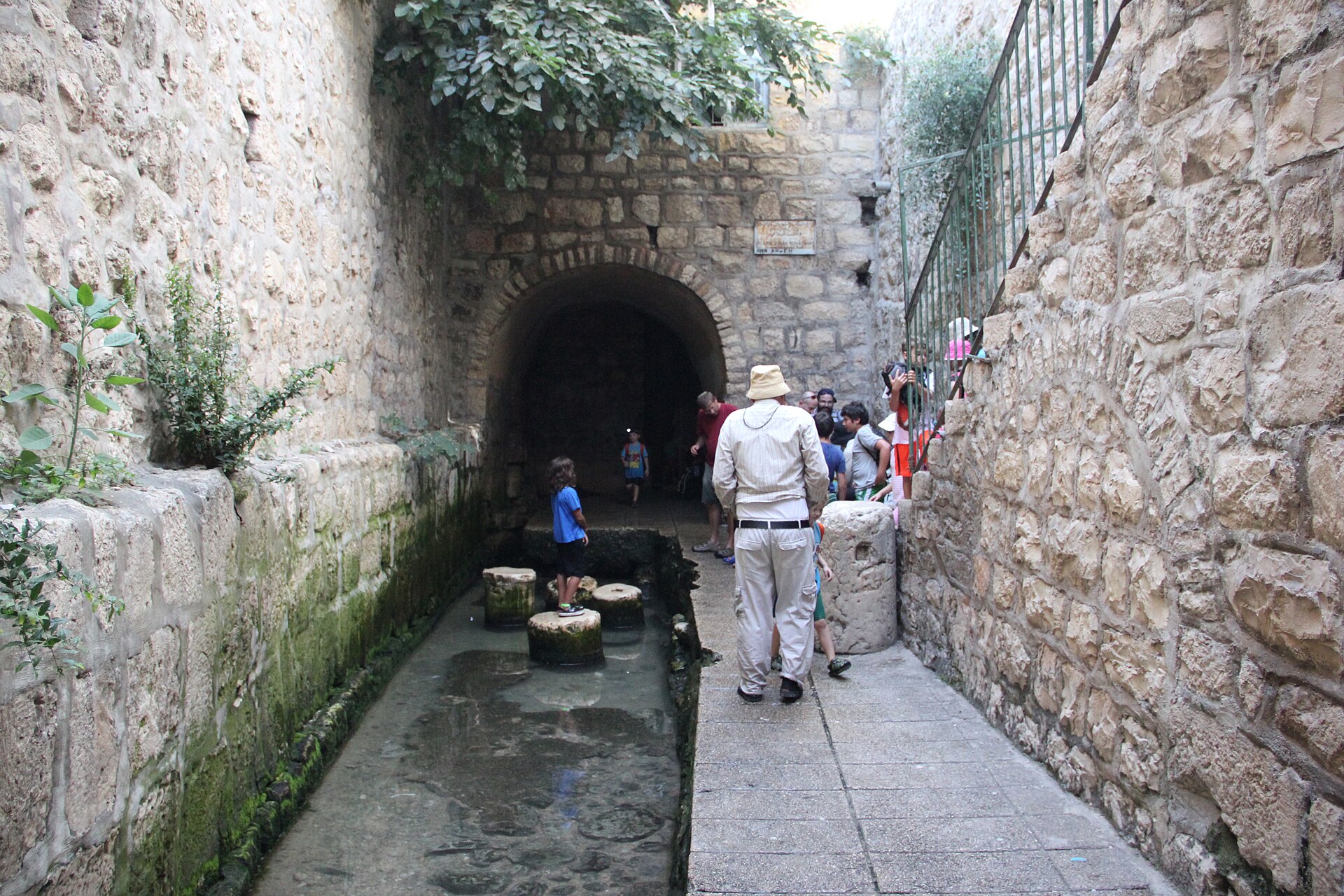
The tunnel emerges at the Pool of Siloam, the stepped pool where Second Temple-era pilgrims immersed and which the Gospel of John (chapter 9) identifies as the place Jesus sent a blind man to wash. From the pool, most visitors walk back uphill toward the Old City along the excavated Pilgrimage Road, the original stepped street that ran up toward the Temple Mount, rather than retracing the tunnel.
The dry alternative: the Canaanite Tunnel
If the idea of wading through dark water does not appeal, there is a well-established alternative. The Canaanite Tunnel runs parallel and predates Hezekiah’s work, part of the older water system. It is dry underfoot, lit, and shorter, and it shares the same starting area before exiting at a different point. This is the route to choose with young children, with anyone who is claustrophobic, or simply on a day when you would rather not change your shoes and socks afterward. You decide which tunnel to take at the entrance, so you can keep your options open until you see the conditions.
What to bring and wear
- Footwear you can soak: water sandals with a heel strap, or old trainers. Plain flip-flops can slip off in the current and on the uneven floor.
- A flashlight or headlamp: bring your own if you can. Simple lights are usually available to buy on site if you forget.
- Quick-dry shorts or trousers: you will be wet to at least the knee.
- A dry bag or zip-lock bag for your phone, camera, and anything that must stay dry.
- A small towel and spare socks for afterward, plus water and sun protection for the open-air parts of the City of David.
Age, fitness, and accessibility
Children of around 7 and up generally manage and enjoy the wet tunnel, while the dry Canaanite Tunnel suits younger ones better. The walk asks for moderate fitness: 30-odd minutes on your feet, some ducking, and uneven footing underwater. Anyone with significant claustrophobia should take the dry route, since the narrow, lightless sections can feel intense. The tunnel is not wheelchair accessible, and the approach involves steps and slopes; our Jerusalem accessibility guide covers gentler options around the city. Pregnant visitors and anyone unsure of their footing may prefer to watch from the dry tunnel or skip the wade.
Tickets, hours, and timing
Hezekiah’s Tunnel is reached through the City of David, so a single park admission generally covers it; some combined tickets that also include the Pilgrimage Road cost more. As a rough 2026 guide, basic City of David entry runs in the region of 30 to 50 shekels for adults with reduced rates for children, roughly 8 to 15 US dollars. Treat that as a ballpark and confirm current prices when you book, as rates change.
| Detail | Information |
|---|---|
| Access | Via City of David national park, near the Dung Gate |
| Approx. adult entry (2026) | ~30-50 ILS; combined tickets cost more |
| Hours (summer) | Sun-Thu from 8am, closing around 5pm |
| Friday / holiday eves | Early close, typically around 2pm |
| Saturday | Closed for Shabbat |
| Last tunnel entry | Usually 1-2 hours before closing |
Plan for a Sunday-to-Thursday visit and avoid Friday afternoons, when the site shuts early for Shabbat. In peak season (spring and autumn, and around Jewish holidays) the tunnel can get a queue, so early morning is the calmest time to walk it. Booking online ahead of busy periods saves waiting. For getting to the entrance, see our Jerusalem transportation guide; the closest Old City gate is the Dung Gate, a five-minute walk from the Western Wall.
Best time to go
- Spring (March to May): mild weather above ground and comfortable for the walk.
- Summer: the cool tunnel is a welcome break from Jerusalem’s heat, though it is the busiest season.
- Autumn (September to November): warm, settled, and excellent.
- Winter: the water feels colder and you will want dry clothes afterward, but it operates and crowds thin out.
- Time of day: arrive early to walk the tunnel before tour groups fill it.
Combining your visit
Because the tunnel is part of the City of David, plan to spend a half-day exploring the whole park, including the Pool of Siloam and the Pilgrimage Road. From there the rest of the Old City is on your doorstep: the Western Wall Tunnels make a fitting second underground experience, the Mount of Olives sits just across the Kidron Valley, and the Old City guide helps you build the rest of the day. History enthusiasts can round things off at the city’s archaeology museums.
A simple half-day plan
To get the most from a visit to Hezekiah’s Tunnel Jerusalem-bound travelers usually fold it into a wider City of David morning. Here is a workable sequence that keeps you ahead of the crowds and finishes near the Old City for lunch.
- 8:00am: Arrive at the City of David entrance near the Dung Gate, buy your ticket, and watch the short orientation film if it is running.
- 8:30am: Walk the upper site and viewpoints over the Kidron Valley, then descend toward the Gihon Spring.
- 9:00am: Take the wet tunnel (or the dry Canaanite Tunnel) down to the Pool of Siloam. Allow 30 to 40 minutes inside.
- 9:45am: Explore the Pool of Siloam and head back uphill along the Pilgrimage Road toward the Temple Mount area.
- 10:45am: Surface near the Old City, dry off, and continue to the Western Wall or a cafe in the Jewish Quarter.
If you are short on time, you can do just the tunnel and the pool in about 90 minutes, but giving the whole park a half-day lets the history settle into place.
Why it still matters
Beyond the adventure, the tunnel is one of those rare sites where text, archaeology, and engineering line up. The biblical writers recorded that Hezekiah secured the city’s water; the Siloam Inscription records the diggers’ triumph in their own words; and the tunnel itself is still there to walk, water flowing as it has for some 2,700 years. Whatever your background, moving through a space built under the threat of conquest, by people whose names are lost but whose work survives, lands differently than reading about it. That tangible link to the deep past is exactly what brings most visitors to the City of David in the first place, and the tunnel is its beating heart. For the full sweep of that past, our complete guide to Jerusalem’s history follows the city from its Canaanite beginnings to the present day.
Photo Credits
Water flowing through the rock-cut channel of Hezekiah’s Tunnel: Hezekiah’s Tunnel enlightened by Davidbena, CC BY-SA 4.0, via Wikimedia Commons.
Replica of the Siloam Inscription on the wall of Hezekiah’s Tunnel: Hezekiah’s tunnel by 9old9, CC BY-SA 3.0, via Wikimedia Commons.
A young visitor with a torch wading through Hezekiah’s Tunnel: נקבת השילוח, עיר דוד 2 by Omerm, CC BY-SA 4.0, via Wikimedia Commons.
The later pool at the exit of Hezekiah’s Tunnel: נקבת השילוח, עיר דוד 5 by Omerm, CC BY-SA 4.0, via Wikimedia Commons.