Sleeping inside Jerusalem’s Old City walls is one of the most distinctive experiences in world travel. You wake to the church bells of the Holy Sepulchre, the Muslim call to prayer drifting through the alleys, and the soft chant of morning prayers at the Western Wall — all from a stone-walled room that has likely existed in some form for centuries. But finding the right place to stay inside those walls is unusually difficult: there are very few options, prices are uneven, and most online searches return hotels in modern Jerusalem that are merely near the Old City rather than inside it.
This guide is the most complete and current resource on the best hotels in Jerusalem’s Old City, updated for 2026. We cover every guesthouse, hospice, and hostel inside the walls, plus a small number of properties just outside the gates that put you within a 5-minute walk of the action. Each listing includes who it’s best for, current price ranges, the unique features that distinguish it, and the practical considerations (accessibility, dining, dress codes) you need before booking. Pair this with our Where to Stay in Jerusalem guide for a full neighborhood picture.
Why Stay Inside the Old City Walls
Five reasons travelers consistently choose Old City accommodation:
- Atmosphere. The early-morning Old City — before tour groups arrive and after they leave at sunset — is one of the most extraordinary atmospheres in the world. Staying inside means you live this twice a day.
- Walking distance to everything. Western Wall, Holy Sepulchre, Via Dolorosa, the four quarter souks — all within a 5-minute stumble in pajamas.
- The character of the buildings themselves. Most Old City accommodation is in 19th-century stone hospices, Crusader vaulted ceilings, or restored Ottoman courtyard houses.
- Quiet at night. By 9 PM, the souks shut, and the alleys are profoundly quiet. The Old City after dark is one of the most contemplative places to sleep in any city.
- The price/value ratio. Old City rooms are often cheaper per night than comparable rooms in modern Jerusalem hotels.
The trade-offs to know up front: rooms are mostly basic, even in the better properties. Many do not have elevators or air conditioning. Most are religiously affiliated and may have curfews or quiet hours — our guide to the city’s church-run pilgrim guesthouses explains how those house rules work in practice. And on Friday-Saturday Shabbat or major Christian holidays, parts of the Old City effectively shut down. Read the descriptions carefully.
The Rhythm of a Day Inside the Walls
The Old City runs to a schedule that has nothing to do with hotel life, and it takes a night or two to adjust. The souks start shutting in the late afternoon, and by around 20:00 the alleys have emptied almost completely. What is left is one of the quietest places you will ever sleep in a city — stone, no traffic, the occasional set of footsteps, and very little else.
The other end of the day is louder. The first call to prayer comes well before dawn, and inside the walls you are close enough to the mosques that it is not a distant sound. The bells of the Holy Sepulchre start early too, and on Sundays and through Holy Week you can add processions passing under your window. If you are a light sleeper, bring earplugs. If you are not, this is the single best argument for being inside the walls rather than five minutes outside them.
The corollary is that evenings are thin. There is effectively no nightlife inside the walls, few restaurants stay open late, and most guesthouses run a curfew somewhere between 23:00 and midnight. If you want dinner and a drink afterwards you will be walking out to Mamilla, the German Colony or Mahane Yehuda and walking back in through a very quiet gate. That is entirely doable, but it should be a deliberate choice — and if it sounds wrong for your trip, our comparison of the best neighborhoods to base yourself in is the place to start instead.
Vehicle Access, the Gates, and Getting Your Luggage In
The first thing to understand about staying inside the walls is that you cannot drive to your hotel door. Jaffa Gate is the only gate a vehicle can pass through at all, and even there private cars are barred through the working day. The checkpoint operates roughly 09:00 to 18:00 Sunday to Thursday and 09:00 to 13:00 on Fridays and holiday eves, and during those hours access is limited to Old City residents, registered merchants, drivers with disability permits and public transport. Taxis are the practical exception. Everyone else stops outside and walks.
So arrival means a taxi to Jaffa Gate or round to the Dung Gate side, or the Light Rail to City Hall and a few minutes on foot. From the gate to your room is where it gets real. The lanes are Ottoman stone polished slick by several million feet, and across much of the Muslim and Christian Quarters they are stepped rather than sloped. There are no elevators, no ramps and no vehicle that can follow you in.
Two rules follow from that. Bring a bag you can carry rather than one you can only roll — wheeled cases bounce down stone stairs and shed wheels doing it. And ask the property in advance about porter service. Most of the guesthouses can arrange for someone to meet you at the gate and carry your bags in for a modest fee, and it is one of the better ways to spend $10 in this city. Ask which gate they want you to arrive at, too: the walk from Jaffa Gate to a Muslim Quarter address can be twice as long as the walk from Damascus Gate, and our guide to which gate opens onto which quarter will save you a wrong turn with luggage.
How Few Beds There Really Are
It is worth saying plainly, because the search results hide it: the Old City has almost no hotel capacity. Inside the walls the stock comes down to three categories — church-run pilgrim hospices and guesthouses, a handful of small family-run hotels, and a couple of long-established backpacker hostels. There is nothing resembling a chain property, and there is no scale anywhere in this market.
The largest single operator inside the walls is the Austrian Hospice of the Holy Family on the Via Dolorosa, which offers around 124 beds across private rooms and dormitories and takes bookings through its own website. Almost everything else is counted in tens of rooms rather than hundreds, and several houses are run by religious communities as a service to pilgrims rather than as a business, which is why they answer emails slowly and rarely appear on the big booking sites at all.
That supply has also contracted sharply. Israeli hotel occupancy averaged 44% in the first half of 2026 against 62% in 2024, and Jerusalem was the weakest major city at around 31%, according to Israel Hotel Association figures reported in August 2026. Several hotels and guesthouses in and around the Old City have closed partly or entirely, and others now open on demand with skeleton staff. The practical consequence for you is simple: confirm by phone or email that the property is taking guests on your specific dates, and do not trust an aggregator listing that has not been updated in a year. The network of church-run guesthouses is the steadiest part of this market and the part most likely to reply.
1. Austrian Hospice of the Holy Family
Best for: Travelers seeking a quiet, deeply atmospheric, mid-budget stay inside the walls.
Quarter: Muslim Quarter, on the Via Dolorosa.
Price: ~$110–$220/night.
What makes it special: Built in 1857 as a guesthouse for Austrian pilgrims, this is genuinely the most evocative Old City stay. Vienna-style café with apple strudel and Sacher torte. Public rooftop terrace with views of the Christian Quarter rooftops, the Dome of the Rock, and Al-Aqsa. Stone vaulted hallways. A small chapel. Quiet courtyards.
Rooms: Modest but well-kept; private en-suite available, also dorm options.
Note: No alcohol in the building outside the public café.
Booking: Direct via the hospice’s official website is reliable.
2. Lutheran Guesthouse
Best for: Couples and solo travelers seeking historic charm with views.
Quarter: Armenian Quarter.
Price: ~$130–$220/night.
What makes it special: Run by the German Lutheran community, this hospice has a beautiful flower-filled rooftop terrace with views of the Dome of the Rock and the Holy Sepulchre dome. Stone walls, warm hospitality. Genuinely tranquil.
Rooms: Modest, immaculately clean. Private en-suite. Shared lounges.
Booking: Direct via the Lutheran community’s website or the major aggregators.
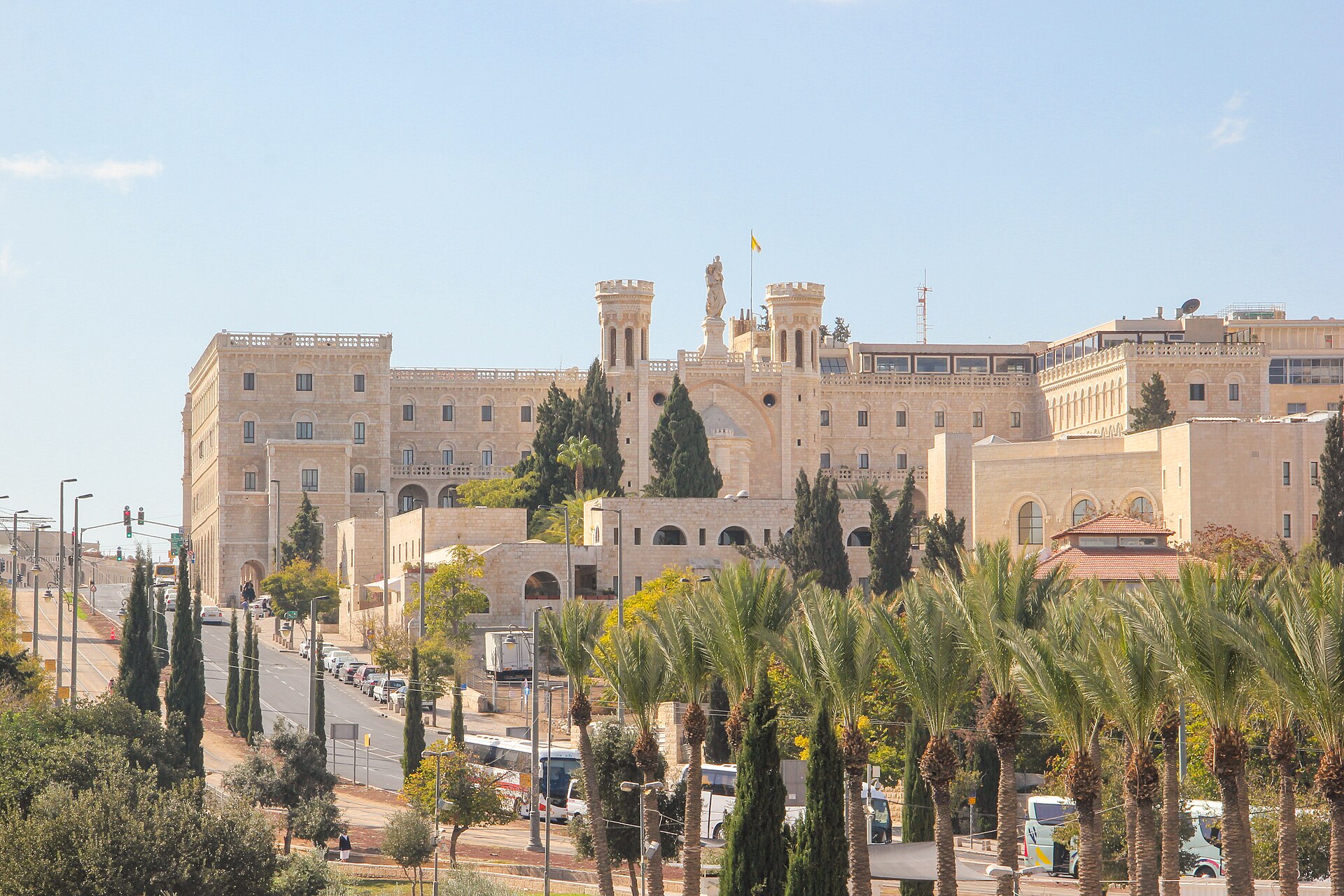
3. Notre Dame of Jerusalem Center
Best for: Catholic pilgrims, larger groups, families wanting full-service amenities.
Location: Just outside New Gate (essentially adjacent to the Old City).
Price: ~$140–$260/night.
What makes it special: A grand 19th-century Vatican-affiliated property with full hotel amenities — multiple restaurants, a famous wine bar (Notre Dame’s Cheese & Wine Restaurant is one of the city’s best), a historic chapel, and large comfortable rooms. The location is perfect: literally across the street from the Old City’s New Gate.
Rooms: Comfortable, larger than typical Old City rooms.
Note: Catholic-affiliated but welcomes guests of all backgrounds.
4. Hashimi Hotel
Best for: Mid-budget travelers wanting an authentic Muslim Quarter stay.
Quarter: Muslim Quarter, on Khan al-Zeit Street.
Price: ~$80–$140/night.
What makes it special: An Arab-owned hotel with a spectacular rooftop terrace overlooking the Old City rooftops. The terrace alone — accessible 24/7 — is worth the booking. Friendly staff who can guide you through the Old City.
Rooms: Basic but adequate; some have AC. Light sleepers may want earplugs (souk noise during the day).
5. Ecce Homo Convent Pilgrim House
Best for: Christian pilgrims, single travelers, peaceful solo retreats.
Quarter: Muslim Quarter / Via Dolorosa Station II.
Price: ~$70–$130/night.
What makes it special: Built into the convent next to the Roman-era Lithostrotos pavement, this guesthouse has rooftop views and a quiet contemplative atmosphere. The on-site chapel and the archaeological remains beneath the building add depth.
Rooms: Simple, clean, mostly singles and twins.
Note: Curfew at 11 PM most nights. Catholic-affiliated.
6. Petra Hostel
Best for: Backpackers, very budget travelers, the rooftop tour experience.
Quarter: Christian Quarter, just inside Jaffa Gate.
Price: ~$25–$60 dorm; ~$70–$120 private.
What makes it special: A historic 19th-century building with one of the most spectacular rooftops in the entire Old City — sweeping views of all four quarters. The hostel runs daily rooftop tours that anyone can join.
Rooms: Bare-bones but legendary location.
Note: Old building; very basic facilities. The rooftop alone makes up for the room conditions. If your ceiling is $100 a night, weigh it against the wider list of cheap places to sleep in Jerusalem.
7. Abraham Hostel Jerusalem
Best for: Backpackers and budget solo travelers (just outside the walls).
Location: Davidka Square, ~10 min walk from Damascus Gate / Jaffa Gate.
Price: ~$30–$60 dorm; ~$90–$150 private.
What makes it special: The largest international backpacker hub in Jerusalem, with private rooms and dorms, a popular bar, communal kitchen, and the operator of the Abraham Tours network — useful if you want guided day trips bundled.
8. Sephardic House (Sefardi)
Best for: Couples wanting a small boutique experience inside the Jewish Quarter.
Quarter: Jewish Quarter.
Price: ~$240–$420/night.
What makes it special: A boutique property in a restored Ottoman-era building near the Cardo. Larger and more comfortable rooms than most Old City stays. Easy walk to the Western Wall, Hurva Synagogue, and Davidson Center — see how it compares with other hotels within walking distance of the Kotel.
Rooms: Stylishly designed, modern bathrooms, some with views.
9. Christ Church Guest House
Best for: Christian visitors interested in the city’s Anglican heritage.
Quarter: Christian Quarter, immediately inside Jaffa Gate.
Price: ~$130–$220/night.
What makes it special: Affiliated with the oldest Protestant church in the Middle East (1849). Lovely garden courtyard, on-site coffee shop, comfortable rooms, and unbeatable location seconds from Jaffa Gate.
10. Armenian Tavern Guest Rooms
Best for: Travelers seeking an Armenian Quarter experience.
Quarter: Armenian Quarter.
Price: ~$80–$150/night.
What makes it special: A small, family-run option associated with the legendary Armenian Tavern restaurant. Authentic, intimate, and one of the few accommodation options in the Armenian Quarter.
Properties Just Outside the Walls (5 Minutes Away)
If the inside-the-walls options don’t fit your style or budget, several excellent hotels sit immediately outside the gates:
King David Hotel
Jerusalem’s most legendary address. 5-star, $400–$900+/night. Built in 1931, it has hosted prime ministers, royalty, and celebrities. The lobby and gardens alone are worth a coffee visit even if you don’t stay. ~5 minute walk to Jaffa Gate.
Mamilla Hotel
Modern 5-star, ~$450–$900/night. Iconic rooftop bar/restaurant with Old City wall views. Spa, indoor pool, design-forward rooms. Adjacent to Mamilla Mall and 3 minutes from Jaffa Gate; our close-up review of the Mamilla Hotel covers room categories and the best-value seasons.
Waldorf Astoria Jerusalem
5-star, ~$600–$1,200/night. Lavish, elegantly restored historic building near Mamilla Mall. The Terrace garden is one of the best date-night spots in the city.
YMCA Three Arches Hotel
Mid-budget, ~$150–$280/night. Beautiful Art Deco building. Rooms vary in age but the location (5 min walk from Jaffa Gate) and the bell tower view are excellent.
How to Check a Listing Is Really Inside the Walls
A large share of the properties marketed as “Old City hotels” are not in the Old City. The label gets stretched over anything in the general vicinity — Mamilla, Jaffa Road, Salah al-Din Street, Sheikh Jarrah, the Mount of Olives slope — and the difference matters, because “ten minutes from the Old City” and “inside the Old City” are completely different products at similar prices.
Three checks, a minute each:
- Find the address on a map, not in the description. If the pin sits outside the ring of the walls, it is outside, whatever the headline says. The walls are unmistakable on any map.
- Look for a quarter, not a district. Genuine inside-the-walls properties name the quarter — Christian, Muslim, Armenian or Jewish — and usually a named lane or the nearest gate. Vague phrasing like “Old City area” or “steps from the Old City” almost always means outside.
- Check the photos for a street. Inside the walls there are no car-width streets, no forecourts and no parking. A hotel entrance photographed with a road and parked cars in front of it is not inside the walls.
Being outside is not a mark against a hotel in itself. Several of the best-placed properties in Jerusalem sit a few minutes from a gate with elevators, reliable air conditioning and somewhere to put a car, and our rundown of places to stay within walking distance of the Kotel covers them. The point is to know which one you have booked before you turn up at a gate with a suitcase and a flight of stairs in front of you.
How to Choose the Right Old City Hotel
By Travel Style
- Christian pilgrim: Notre Dame, Christ Church Guest House, Ecce Homo, Austrian Hospice.
- Jewish heritage focus: Sephardic House (inside Jewish Quarter), Mamilla Hotel just outside Jaffa Gate.
- Boutique romantic: Sephardic House, Mamilla Hotel.
- Backpacker / budget: Petra Hostel, Hashimi Hotel, Abraham Hostel.
- Family-friendly: Notre Dame, Lutheran Guesthouse.
- Atmospheric mid-budget: Austrian Hospice, Lutheran Guesthouse.
- Luxury (just outside): King David, Mamilla, Waldorf Astoria.
Practical Considerations
- Most Old City hotels do NOT have elevators. Climbing stairs with luggage is the norm.
- Air conditioning is increasingly common but still not universal in older buildings. Verify before booking in summer.
- Most have curfews (typically 11 PM–midnight). If you plan late nights at Mahane Yehuda, ask about late access or stay outside.
- Religious affiliations rarely affect non-affiliated guests but may impact alcohol service, dress codes in common areas, and Friday/Sunday quiet hours.
- Wi-Fi is universal but speeds vary; thick stone walls block signal.
- Parking inside the Old City is essentially nonexistent. Use a nearby paid lot or ride-share.
- Luggage delivery from the gate to your hotel is a common service ($5–$15) — extremely helpful given the alley layouts.
Getting to and Around Old City Hotels
- From the airport: Sherut shared taxis (~$25/person) or private taxi (~$80–$100). Sherut drops at major Jerusalem hotels; for inside-the-walls properties, you’ll walk the last few minutes from a drop-off near Jaffa Gate.
- From Tel Aviv: Train to Jerusalem-Yitzhak Navon, then Light Rail to Jaffa Gate stop or taxi.
- Inside the Old City: Walk. The four quarters are tiny. Ask hotel staff for the best route from your gate of arrival, and check which of the eight gates of the Old City sits closest before you book.
- Best gate to enter for each hotel:
– Austrian Hospice → Damascus Gate, then Via Dolorosa.
– Lutheran Guesthouse → Jaffa Gate, walk south.
– Notre Dame → New Gate (literally adjacent).
– Hashimi Hotel → Damascus Gate.
– Petra Hostel → Jaffa Gate.
– Christ Church → Jaffa Gate.
Who Should Stay Inside the Walls, and Who Should Not
This is a stay that suits some travelers extremely well and makes other people quietly miserable, and the split is fairly predictable. Be honest with yourself about which side you fall on before you book a week of it.
Stay inside if:
- You want the Old City at dawn and after dark, when the tour groups have gone and the alleys belong to the people who live in them. That is the entire point, and nothing else in Jerusalem reproduces it.
- You are here for the holy sites and expect to be at the Western Wall or the Holy Sepulchre early. Being a five-minute walk away changes the shape of every day.
- You travel light, are comfortable on uneven stone and stairs, and can live without an elevator, a pool and a 24-hour front desk.
- You are on a mid-range budget. Rooms inside are often cheaper than comparable modern rooms outside, and the cheaper end of the Jerusalem market stretches the range further still.
Stay outside if:
- You have heavy luggage, or more than one large case per person. This is the single most common regret.
- Anyone in your party has limited mobility, uses a wheelchair, or finds stairs and uneven ground hard work. The Old City is genuinely difficult, and our guide to accessibility across the city sets out what is realistically manageable.
- You want restaurants and bars after 21:00, or you need dependable air conditioning in July and August, an elevator, or same-day laundry.
- You are arriving late at night or leaving before dawn. Navigating unlit alleys with bags at 04:30 for an airport run is nobody’s favorite memory of Jerusalem.
Plenty of people split the difference: two nights inside for the atmosphere, then out to a modern hotel for the rest of the trip. Our overview of where to base yourself across Jerusalem lays out the alternatives if you go that way.
Booking Tips for Old City Hotels
- Book direct. Most Old City properties are independent and offer better rates and cancellation terms direct than via Booking/Expedia.
- Reserve early. The good Old City accommodations have very limited inventory. 3–6 months ahead is recommended for spring (March-May) and Christmas/Easter.
- Read recent reviews. Old City conditions vary year to year as buildings age and ownership changes.
- Confirm AC, Wi-Fi, and elevator in writing if any are essential.
- Ask about Sabbath operations. Some properties limit check-in/out from Friday afternoon to Saturday evening.
- Verify cancellation terms — some Old City properties have stricter no-show policies.
Festivals, Holy Weeks, and the Nights the Old City Fills
That tiny stock of rooms has to absorb the entire pilgrimage calendar, and when a major festival lands the inside-the-walls properties go first and go completely.
The dates to plan around:
- Easter — Holy Week generally, and specifically Good Friday on the Via Dolorosa and Holy Saturday at the Holy Sepulchre. Western and Orthodox Easter sometimes fall weeks apart, and the Old City fills for both.
- Passover — the Jewish Quarter and the Western Wall plaza, with the priestly blessing drawing very large crowds into a small area.
- Christmas — Bethlehem takes the focus, but Christian Quarter guesthouses fill anyway, and the pattern repeats in early January for the Orthodox and Armenian calendars.
- Ramadan — evenings in the Muslim Quarter are busy and memorable, with the souks trading late and the whole rhythm of the quarter shifting after sunset.
- Sukkot and the autumn High Holidays — the busiest sustained stretch of the Jewish calendar inside the walls.
If your dates overlap with any of those, book months rather than weeks ahead and expect minimum stays and non-refundable rates. If they do not, the opposite holds: outside the festival peaks, and with demand as soft as it has been, you can often get a room inside the walls at short notice and negotiate directly with the owner. It is worth asking about your exact dates rather than the season — a house can be full for four days over Holy Week and half empty the week on either side.
Check what the festival does to the building as well as to availability. Church-run houses may close common rooms or shift breakfast around a service schedule, properties in the Jewish Quarter observe Shabbat and will not check you in between Friday afternoon and Saturday night, and the four quarters of the Old City behave quite differently from one another on any given holy day.
Final Word: Sleep Inside the Story
If you can manage one night inside the Old City walls of Jerusalem, take it. The 6 AM call to prayer at the nearby mosque, the 5 AM bells of the Holy Sepulchre, the early-morning church chants from the Ethiopian monks on the rooftop, the smell of bread in the souk before opening — these are experiences that no luxury hotel outside the gates can match. Pick the property that fits your style and book early. Jerusalem has hosted pilgrims and wanderers for thousands of years, and the present Ottoman walls have stood since the 1530s. There is still room inside them for you.
Pair this with our guide to Where to Stay in Jerusalem, the Old City Quarters guide, and our Jerusalem attractions map to plan a trip built around your Old City stay.
Photo Credits
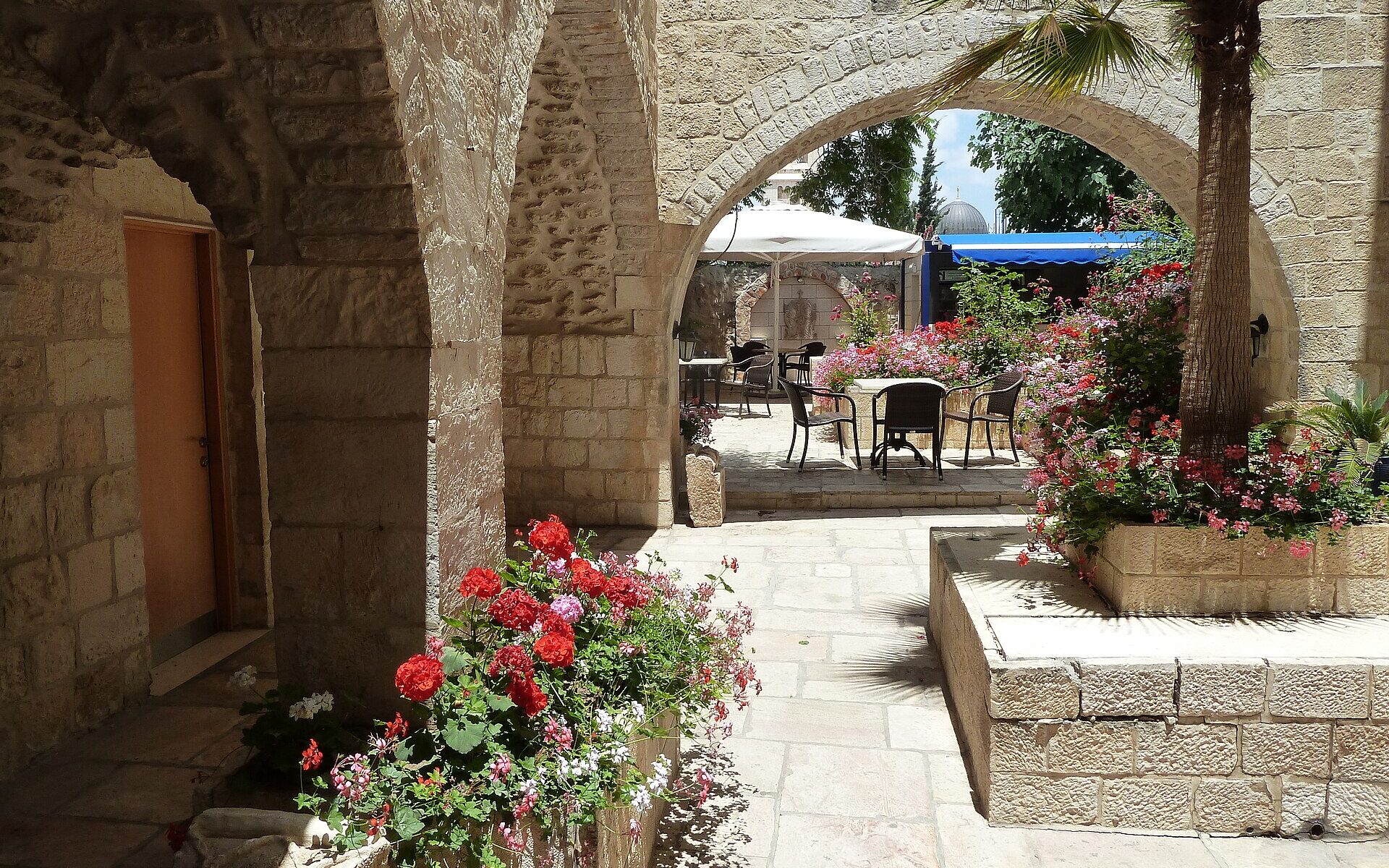
The arched courtyard of the Lutheran Guesthouse in Jerusalem’s Old City: Old Jerusalem Lutheran Hostel P1050652 by Utilisateur:Djampa, CC BY-SA 4.0, via Wikimedia Commons.
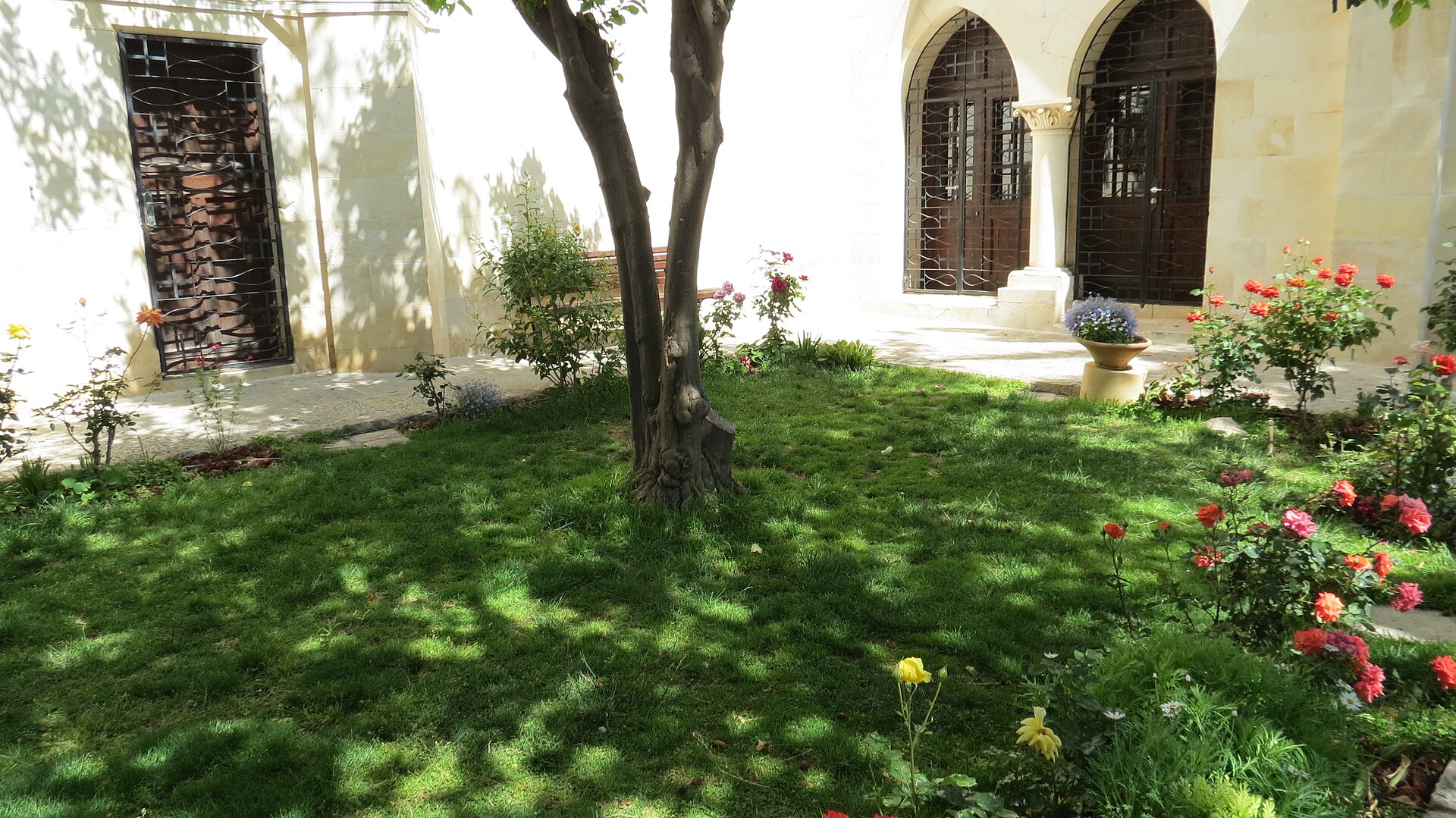
The garden courtyard of Christ Church, inside Jaffa Gate: Christ Church Jerusalem 03 by Hoshvilim, CC BY-SA 4.0, via Wikimedia Commons.
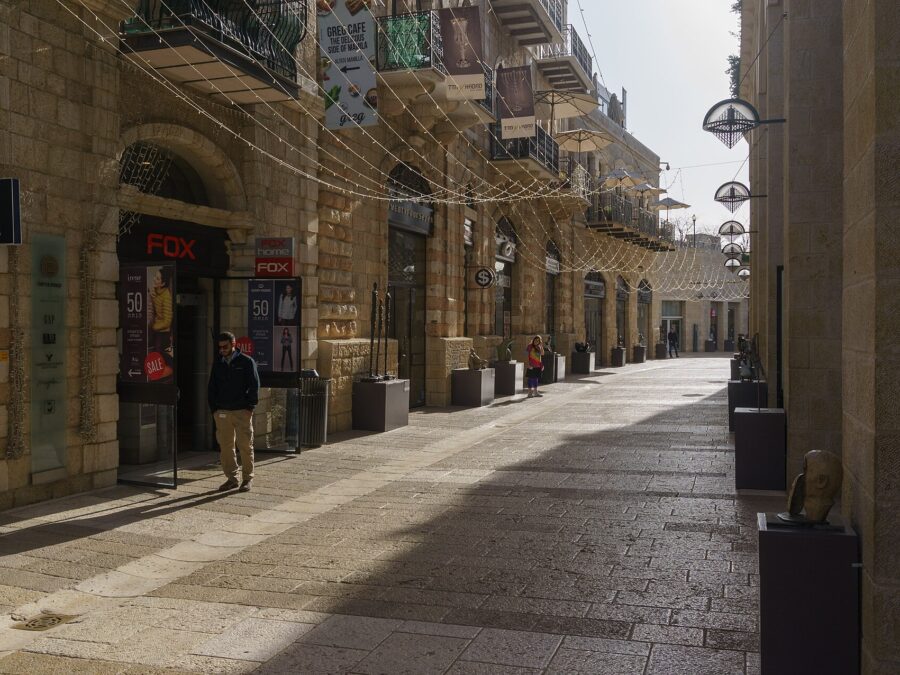
The Notre Dame of Jerusalem Center, opposite New Gate: PikiWiki Israel 75635 jerusalem walls by עומר מרקובסקי, CC BY 2.5, via Wikimedia Commons.
{"@context": "https://schema.org", "@type": "FAQPage", "mainEntity": [{"@type": "Question", "name": "Is it safe to stay inside the Old City?", "acceptedAnswer": {"@type": "Answer", "text": "Yes. The Old City is generally very safe, day and night. The Christian and Jewish Quarters in particular are well-patrolled. Stick to well-lit alleys at night, lock your room, and use standard urban precautions; our first-timer's guide to visiting Jerusalem covers the rest of the practical groundwork."}}, {"@type": "Question", "name": "Is the Old City accessible for travelers with mobility issues?", "acceptedAnswer": {"@type": "Answer", "text": "Limited. The Old City has uneven Ottoman stone, steps, and slopes. Most hotels lack elevators. Notre Dame just outside New Gate is the most accessible nearby option with elevator and ramped entry. The Mamilla Hotel and King David are fully accessible."}}, {"@type": "Question", "name": "Are there luxury hotels inside the Old City walls?", "acceptedAnswer": {"@type": "Answer", "text": "No, true 5-star luxury doesn't exist inside the walls. The character of inside-the-walls accommodations is historic, atmospheric, mid-budget. For luxury, look at Mamilla, King David, or Waldorf Astoria just outside the gates, all of which appear in our ranking of Jerusalem's five-star properties."}}, {"@type": "Question", "name": "How early should I book Old City hotels?", "acceptedAnswer": {"@type": "Answer", "text": "For peak seasons (Easter, Passover, Christmas, Jewish High Holidays in fall): 4–6 months ahead. For shoulder seasons (May, June, October): 2 months. Off-season (January–February, July–August): often available 2 weeks ahead."}}, {"@type": "Question", "name": "Can families with kids stay inside the Old City?", "acceptedAnswer": {"@type": "Answer", "text": "Yes — Notre Dame, Lutheran Guesthouse, and Christ Church Guest House are all family-friendly. Older hospices like the Austrian have rooms suitable for families, and our roundup of Jerusalem's most family-friendly hotels covers larger rooms and pools outside the walls. Petra Hostel can work for older teens. See our Jerusalem with Kids guide for more."}}, {"@type": "Question", "name": "What about kosher dining at Old City hotels?", "acceptedAnswer": {"@type": "Answer", "text": "Most Old City hospices serve continental breakfast, not kosher-certified. Notre Dame has both kosher and non-kosher restaurants. Sephardic House in the Jewish Quarter offers kosher options. Just outside the walls, King David and Mamilla are fully kosher."}}, {"@type": "Question", "name": "Is there parking near Old City hotels?", "acceptedAnswer": {"@type": "Answer", "text": "Limited. Use the public lots near Jaffa Gate (Karta), Mamilla, or Damascus Gate. Daily rates are roughly 50–80 NIS. Most travelers don't bring a car."}}, {"@type": "Question", "name": "Can you drive to your hotel inside the Old City?", "acceptedAnswer": {"@type": "Answer", "text": "No. Jaffa Gate is the only gate a vehicle can enter through, and private cars are excluded during the day — the checkpoint runs roughly 09:00 to 18:00 Sunday to Thursday and 09:00 to 13:00 on Fridays and holiday eves, with access limited to residents, merchants, permit holders and public transport. Taxis can generally pass. In practice you arrive at a gate and walk the last few minutes over stone, so pack a bag you can carry and ask your property about a porter."}}, {"@type": "Question", "name": "Is it noisy staying inside the Old City walls?", "acceptedAnswer": {"@type": "Answer", "text": "It is very quiet at night and quite loud at dawn. The souks shut in the late afternoon and by 20:00 the alleys are near-silent, but the first call to prayer comes before sunrise and the church bells follow soon after, and inside the walls you are close to both. Light sleepers should bring earplugs; for many guests the early-morning soundtrack is the reason they booked."}}]}