Jerusalem’s central location in Israel makes it the perfect base for incredible day trips to some of the country’s most remarkable destinations. From floating in the Dead Sea — the lowest point on land — to exploring ancient fortresses, biblical cities, and vibrant coastal towns, the diversity of experiences within a short drive of Jerusalem is extraordinary. These day trips from Jerusalem allow you to experience a completely different landscape and atmosphere before returning to the Holy City for the evening.
This guide covers the best day trips from Jerusalem with detailed information on how to get there, what to see, how much time you need, and practical tips that will help you make the most of each excursion. Whether you prefer organized tours or independent travel, there is a perfect day trip for every type of traveler. Many of these destinations pair well together, so we have included suggestions for combining stops into efficient itineraries.
Day Trips from Jerusalem at a Glance
It helps to see the whole map on one page before you book anything. Travel times below are one-way by road, outside the morning rush — add 20 to 30 minutes if you set off between 07:30 and 09:00 on a weekday, and add unpredictable time at any West Bank checkpoint.
| Destination | Travel time each way | Easiest way to get there | Time to allow | Best for |
|---|---|---|---|---|
| Dead Sea (Kalia, northern shore) | About 40 minutes | Egged bus 486, tour, or car | Half day | First-timers, short trips |
| Dead Sea (Ein Bokek, southern shore) | About 1 hour 30 minutes | Egged bus 486 or 444, tour, or car | Full day | Free beach, hotel facilities |
| Masada | About 1 hour 30 minutes | Bus 486, tour, or car | Full day, or half if you skip the hike | History, sunrise hikers |
| Ein Gedi | About 1 hour 20 minutes | Bus 486, tour, or car | 3 to 5 hours on site | Walkers, wildlife, families |
| Qumran | About 40 minutes | Bus 486, tour, or car | 1.5 to 2 hours on site | Dead Sea Scrolls interest |
| Bethlehem | About 30 minutes plus checkpoint | Bus 231 or 234 from East Jerusalem | Half day | Pilgrims, budget travelers |
| Herodium | About 30 minutes | Car or tour only | 2 to 3 hours | Archaeology, quiet sites |
| Jericho | About 45 minutes | Tour, or bus via Bethlehem or Ramallah | Full day | Ancient history, warm winters |
| Hebron | About 1 hour | Guided tour strongly advised | Full day | Serious history and politics |
| Ramallah | About 45 minutes | Bus 218 or 219 from Damascus Gate area | Half to full day | Contemporary Palestinian life |
| Mar Saba Monastery | About 45 minutes | Car or tour only | 2 to 3 hours | Desert monasticism, men only inside |
| St George of Koziba, Wadi Qelt | About 40 minutes | Car or tour only | 3 to 4 hours with the walk | Hikers, photographers |
| Ein Karem | About 20 to 30 minutes | City bus, or light rail plus bus | Half day | Churches, cafes, easy pace |
| Abu Ghosh | About 25 minutes | Bus 185 or car | Half day | Crusader churches and hummus |
| Beit Guvrin-Maresha | About 1 hour | Car or tour | Half day | Caves, families, digs |
| Tel Aviv | About 35 to 45 minutes by train | Train from Yitzhak Navon station | Full day | Beaches, food, modern Israel |
| Caesarea | About 1 hour 30 minutes | Car or tour, awkward by bus | Half day on site | Roman ruins, coastline |
| Haifa | About 1 hour 45 minutes | Train via Tel Aviv, or car | Full day | Gardens, views, coexistence |
| Nazareth | About 2 hours | Bus 955 or tour | Full day | Christian sites, Galilee food |
Two patterns come out of that table. Everything east of Jerusalem sits within about 90 minutes and drops between 400 and 1,400 meters as you drive, so you are trading cool hill air for genuine desert heat. Everything north and west is a longer haul on faster roads, which means Caesarea, Haifa and Nazareth eat most of the day in transit.
With one free day, the honest answer for most visitors is the combined Masada and Dead Sea itinerary. With two, add either the short hop to Bethlehem or a beach day on the Mediterranean, depending on whether you want more history or a complete change of pace.
Dead Sea: The Lowest Point on Land
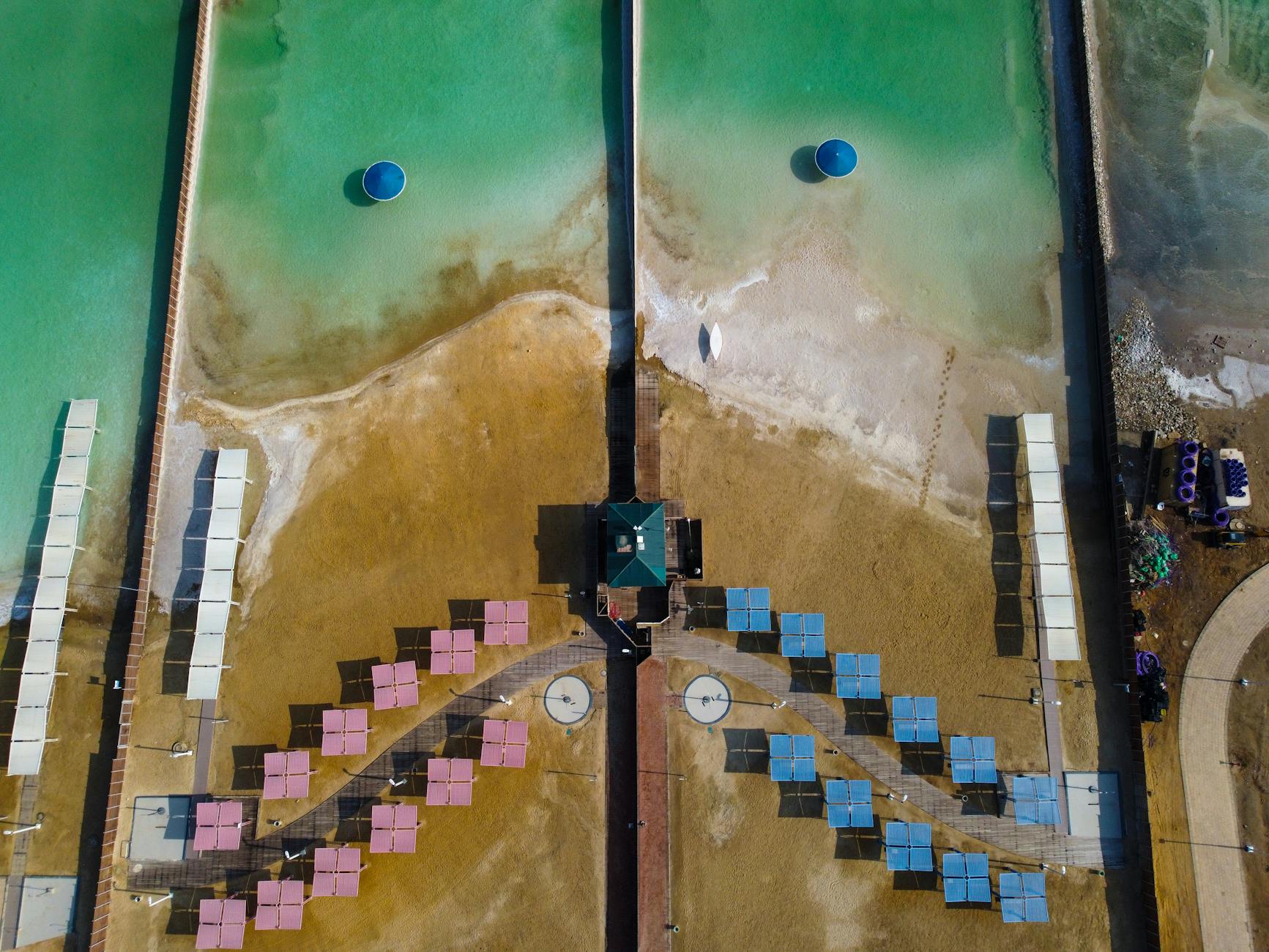
The Dead Sea is the most popular day trip from Jerusalem, and for good reason. Located just 45 minutes east of the city, this remarkable body of water sits at 430 meters (1,412 feet) below sea level, making it the lowest point on land. The water’s extreme salinity — roughly ten times saltier than the ocean — creates the famous floating effect that draws millions of visitors annually. The mineral-rich mud and water have been prized for their therapeutic properties since ancient times, and the experience of smearing yourself with black Dead Sea mud and bobbing effortlessly in the warm water is unlike anything else.
The best public beaches for visitors include Ein Bokek, which offers free access, showers, changing facilities, and nearby restaurants. Kalia Beach, at the northern end of the sea, is a paid beach that tends to be less crowded. Mineral Beach, long a popular alternative, has been closed for years after sinkhole damage, so ignore older guides that still list it. Both sit within a short drive of Jericho, so a morning at the world’s oldest walled town pairs easily with an afternoon float. Be aware that the Dead Sea is receding rapidly — about one meter per year — so the landscape continues to change. Swimming tips: do not shave on the day of your visit (the salt stings intensely on any cuts), bring waterproof sandals for the rocky entry, avoid splashing or submerging your face, and limit your time in the water to about 20 minutes per session. The extra atmosphere at this depth filters some UVB, which is why the sun feels gentler here — but you can still burn, and the heat can be extreme, so bring plenty of water and sunscreen.
Masada: Fortress of Heroism
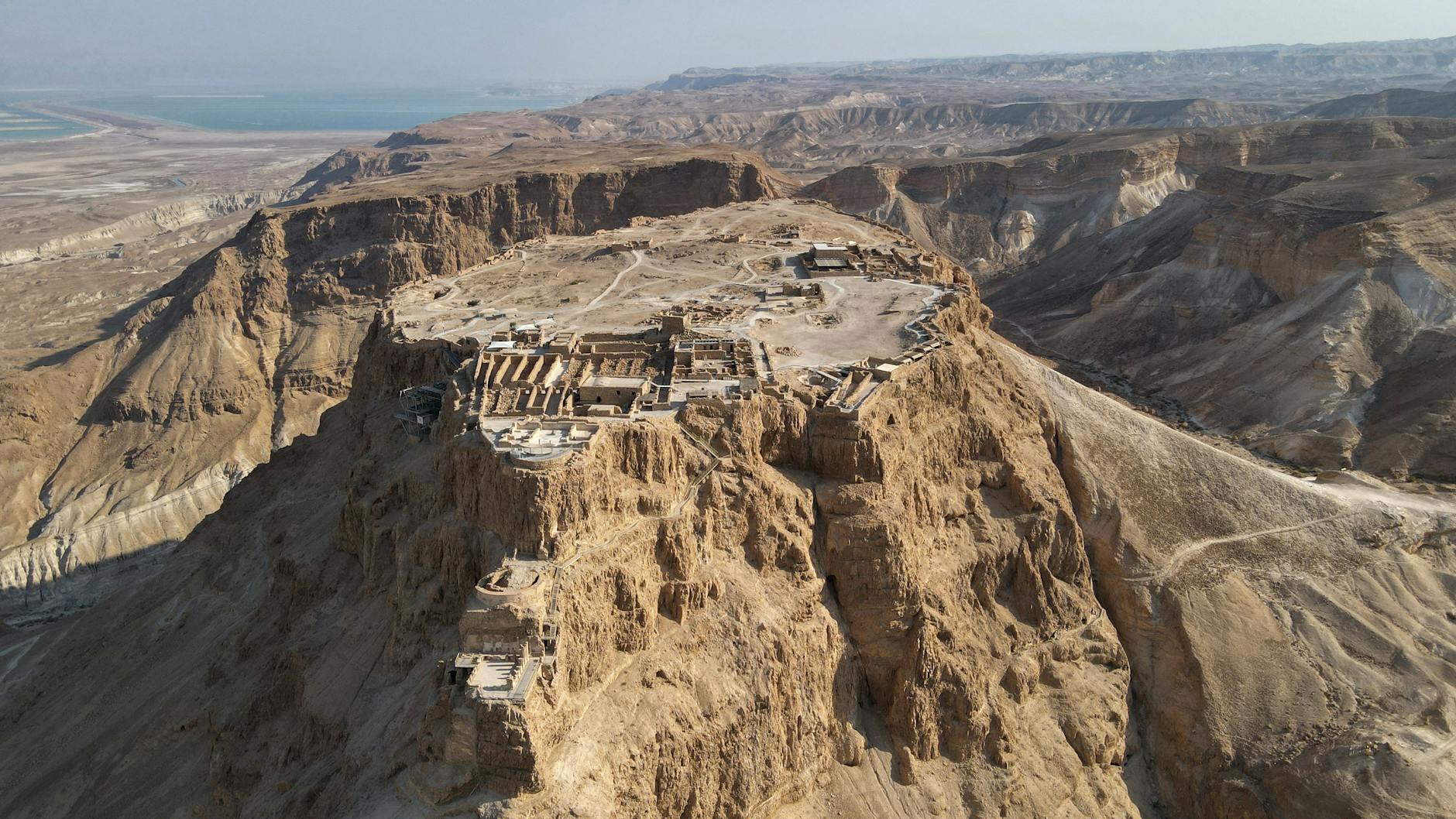
Masada is one of Israel’s most iconic historical sites and a UNESCO World Heritage Site. This ancient fortress sits atop a dramatic plateau overlooking the Dead Sea, about 90 minutes from Jerusalem. Built by King Herod as a lavish palace complex, Masada is best known as the site where nearly a thousand Jewish rebels held out against the Roman siege in 73 CE, ultimately choosing death over enslavement. The story of Masada has become a powerful symbol of courage and resistance in Jewish history.
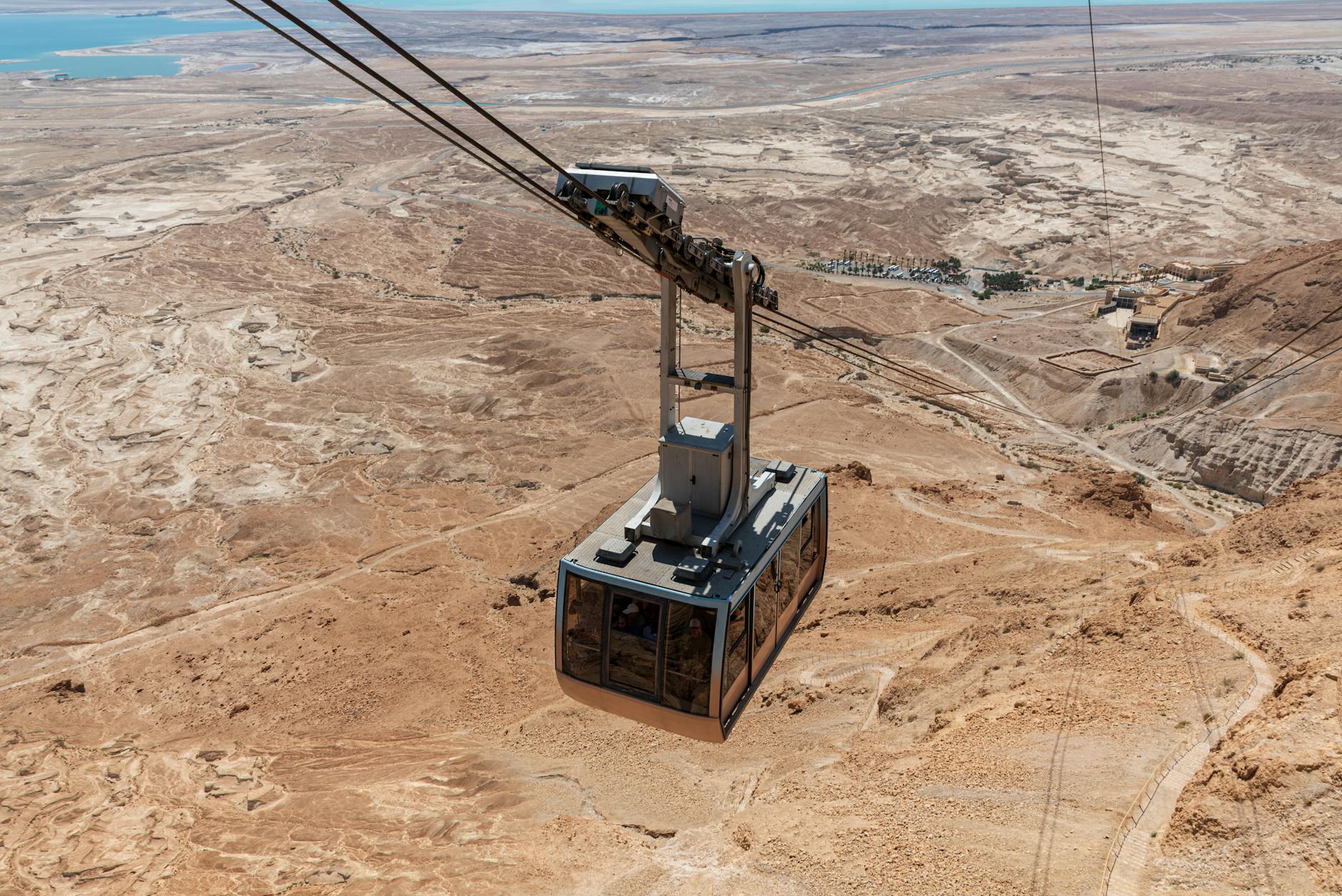
You can reach the top via the cable car (about three minutes) or by hiking the Snake Path, a winding trail that takes 30 to 60 minutes depending on your fitness level. The sunrise hike is legendary — departing in the pre-dawn darkness and reaching the summit as the sun illuminates the Dead Sea and Jordanian mountains in shades of gold and purple. Once at the top, you can explore Herod’s Northern Palace with its three terraces, the ancient synagogue, elaborate bathhouse with original mosaic floors, storerooms, and the Roman siege ramp visible from the western edge. Allow two to three hours to explore the ruins thoroughly. Most visitors combine Masada with a Dead Sea stop, making it one of the best full-day excursions from Jerusalem.
Bethlehem: Birthplace of Jesus
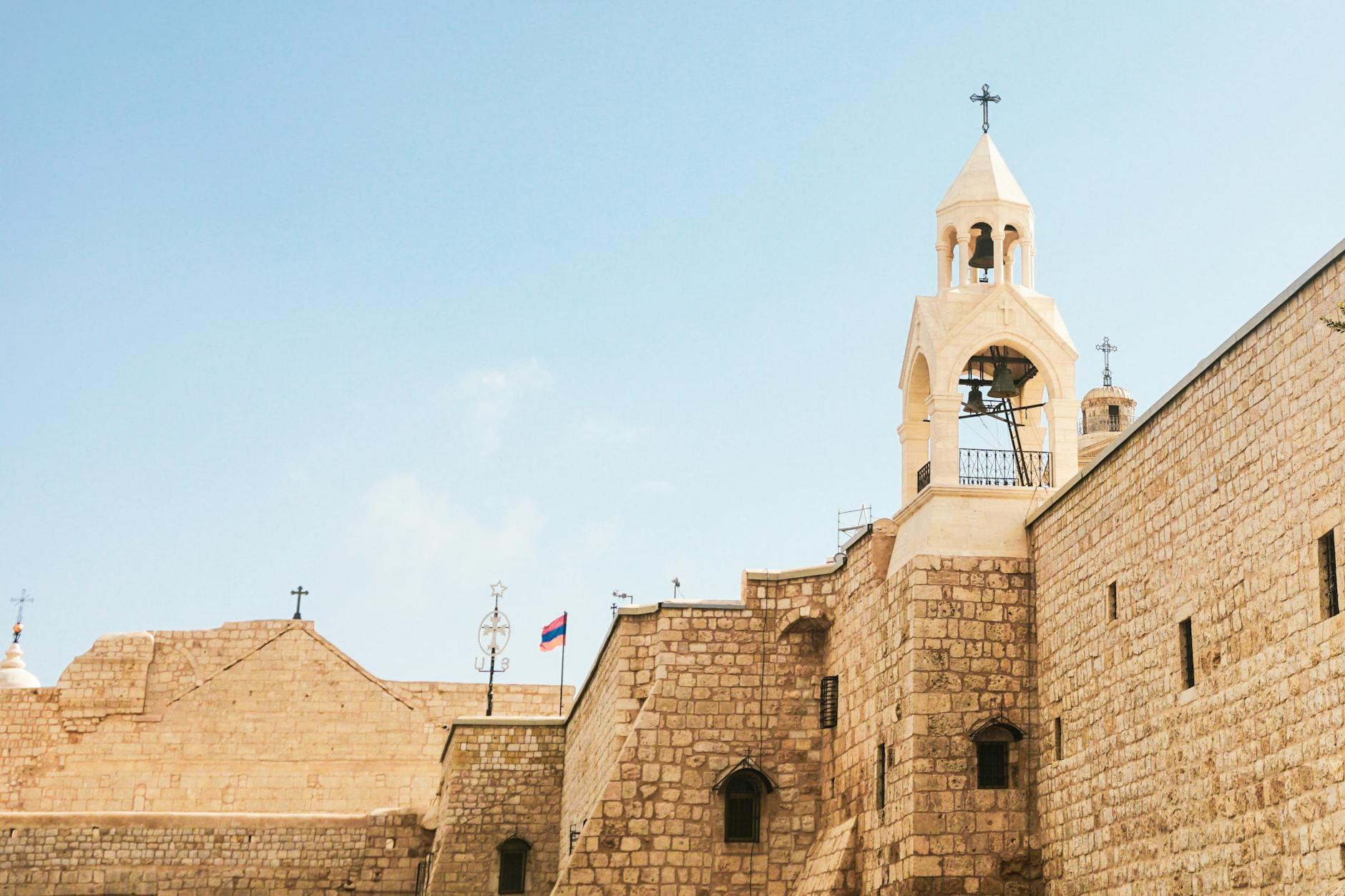
Bethlehem lies just 10 kilometers south of Jerusalem and is one of the easiest and most meaningful day trips you can make. This small city holds enormous significance for Christians worldwide as the traditional birthplace of Jesus, and its centerpiece — the Church of the Nativity — is one of the oldest churches in continuous use anywhere in the world, dating back to 326 CE when it was built by Emperor Constantine. The church was designated a UNESCO World Heritage Site in 2012.
Inside the Church of the Nativity, the Grotto of the Nativity marks the exact spot where tradition says Jesus was born, indicated by a fourteen-pointed silver star. In August 2026 the grotto was closed for works until further notice, with only restricted visits, so check before you go; when it is open, expect to queue in peak season. Adjacent to the church, the Church of St. Catherine is where the Catholic midnight mass is broadcast worldwide on Christmas Eve. Manger Square, the central plaza, is lively with shops and cafes.
Beyond the Church, Bethlehem offers several other worthwhile sites including the Milk Grotto, the Shepherds’ Fields in nearby Beit Sahour, and the bustling old souk. Bethlehem is also known for its vibrant street art scene, with works by Banksy and other artists adorning walls throughout the city. Getting to Bethlehem from Jerusalem is straightforward — buses run frequently from the Damascus Gate area, and the journey takes about 30 minutes. Note that Bethlehem is in the Palestinian Authority, so you will pass through a checkpoint, though the process for tourists is typically quick and smooth. Many travellers carry on another 20 kilometers south to the Cave of the Patriarchs on a Hebron day trip, which pairs naturally with Bethlehem.
Tel Aviv: Mediterranean Vibes
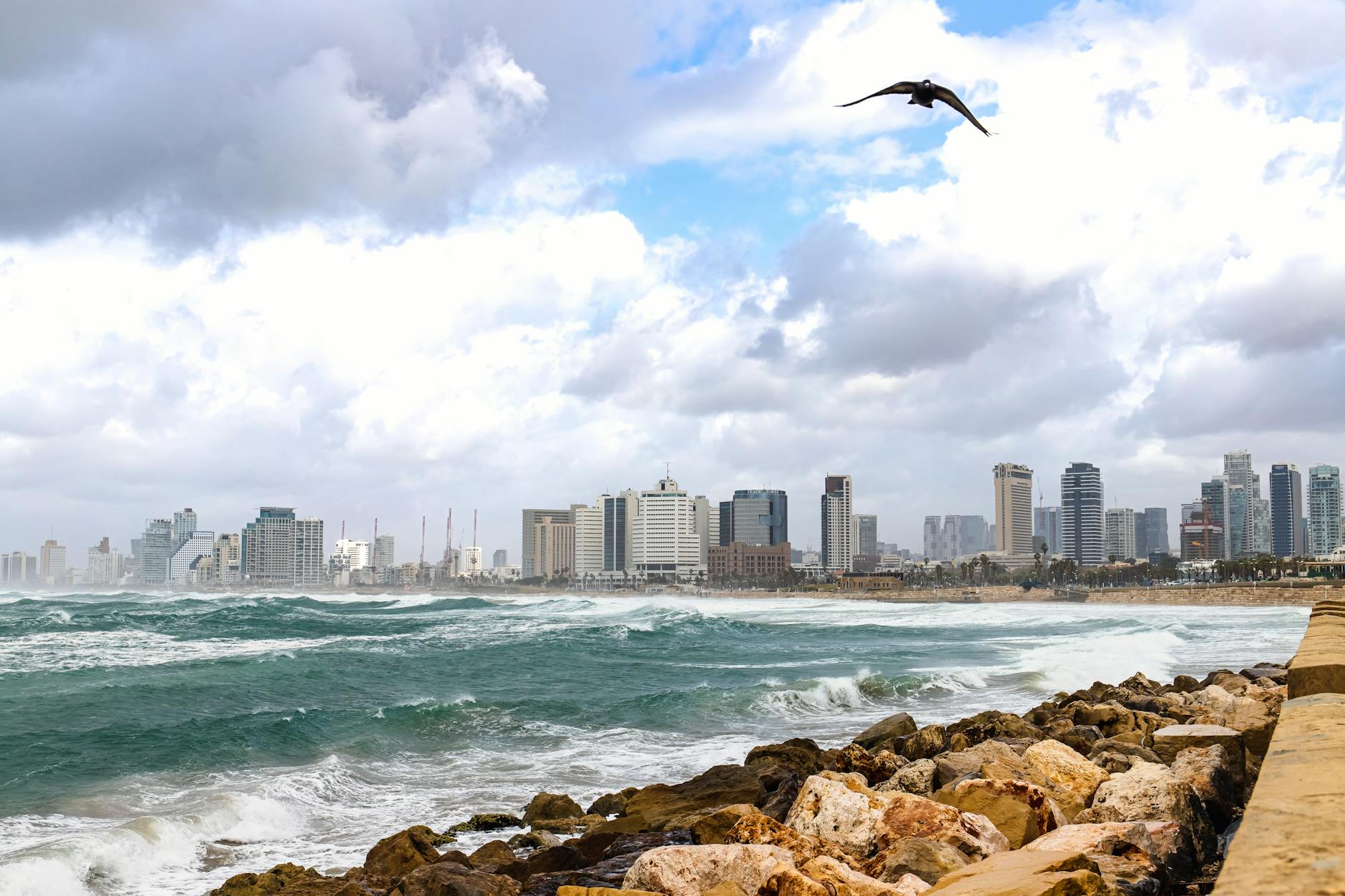
Tel Aviv is less than an hour from Jerusalem by car or bus, and visiting it feels like traveling to a different country entirely. Where Jerusalem is ancient and sacred, Tel Aviv is modern, secular, and oriented toward the Mediterranean Sea. A day trip here offers a refreshing contrast — strolling along the beautiful beachfront promenade, exploring the UNESCO-listed White City Bauhaus architecture, browsing the incredible Carmel Market (Shuk HaCarmel), and wandering the atmospheric streets of old Jaffa.
If you enjoy food, Tel Aviv is a paradise. The Carmel Market is packed with fresh produce, spices, street food stalls, and small restaurants serving everything from shakshuka to sabich to fresh-squeezed pomegranate juice. Old Jaffa, perched on a hill overlooking the Mediterranean, has been transformed into a charming district of galleries, restaurants, and boutiques while retaining its ancient character. The flea market in Jaffa is excellent for vintage finds and local crafts. For those interested in history, the Palmach Museum and the Independence Hall where Israel’s declaration of independence was signed in 1948 are both worth visiting.
Ein Gedi: Desert Oasis
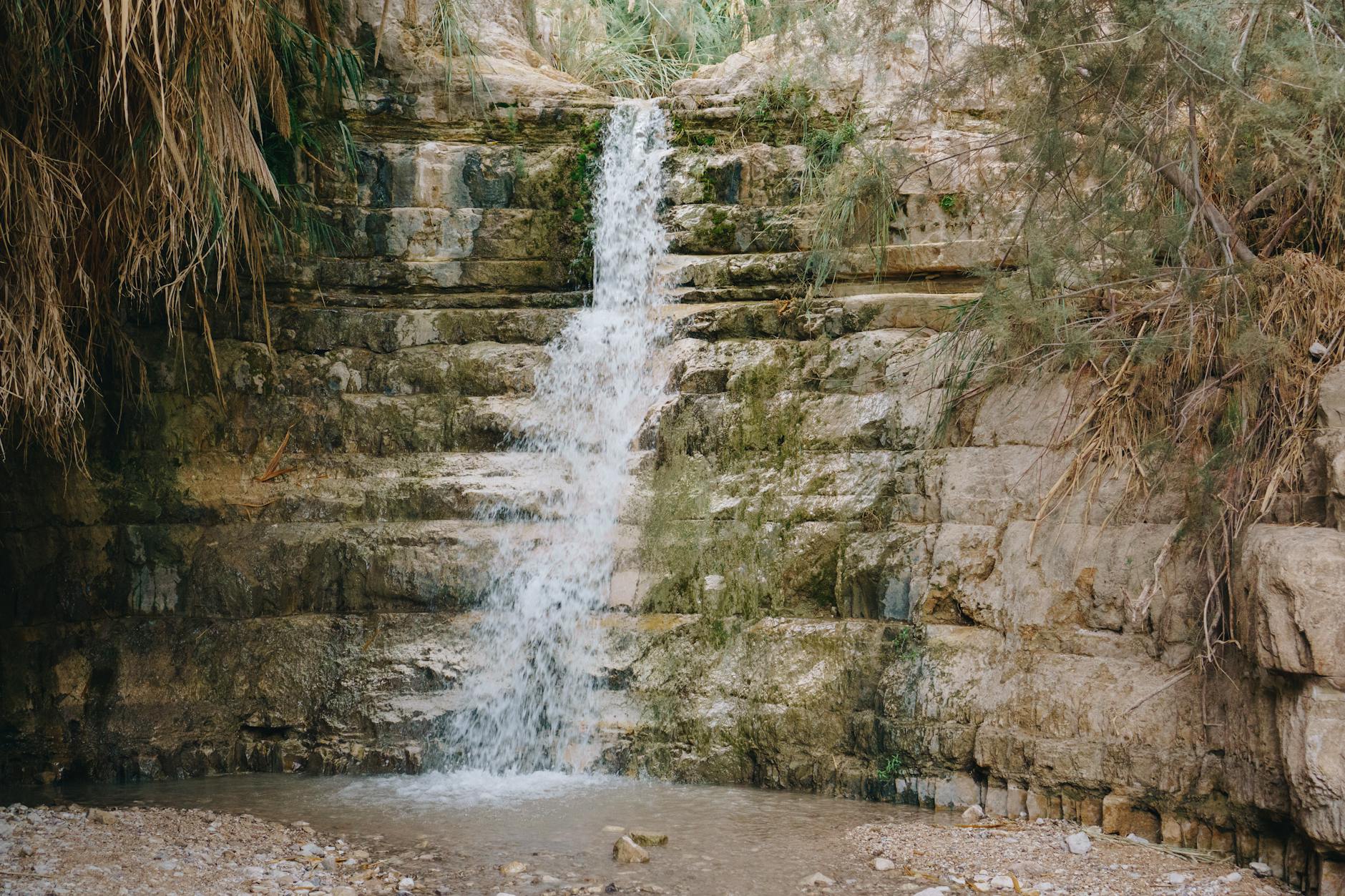
Ein Gedi is a stunning nature reserve located on the western shore of the Dead Sea, about 80 minutes from Jerusalem. This lush oasis in the midst of the barren Judean Desert has been famous since biblical times — it is mentioned in the Song of Solomon and was where David hid from King Saul. The reserve features two main canyons with year-round streams, waterfalls, and natural pools surrounded by tropical vegetation, creating an almost surreal contrast with the surrounding desert landscape.
The two main hiking trails are Nahal David and Nahal Arugot. Nahal David is the more popular and accessible, with an easy 30-minute walk to the beautiful David Waterfall. More adventurous hikers can continue to the upper falls and the ancient Chalcolithic Temple. Nahal Arugot is longer and quieter, leading to the Hidden Waterfall — a rewarding hike of about two hours each way. Keep an eye out for the Nubian ibex (wild mountain goats) and rock hyraxes that inhabit the reserve. Ein Gedi combines perfectly with a Dead Sea visit or a Masada excursion.
Caesarea: Roman Splendor on the Coast
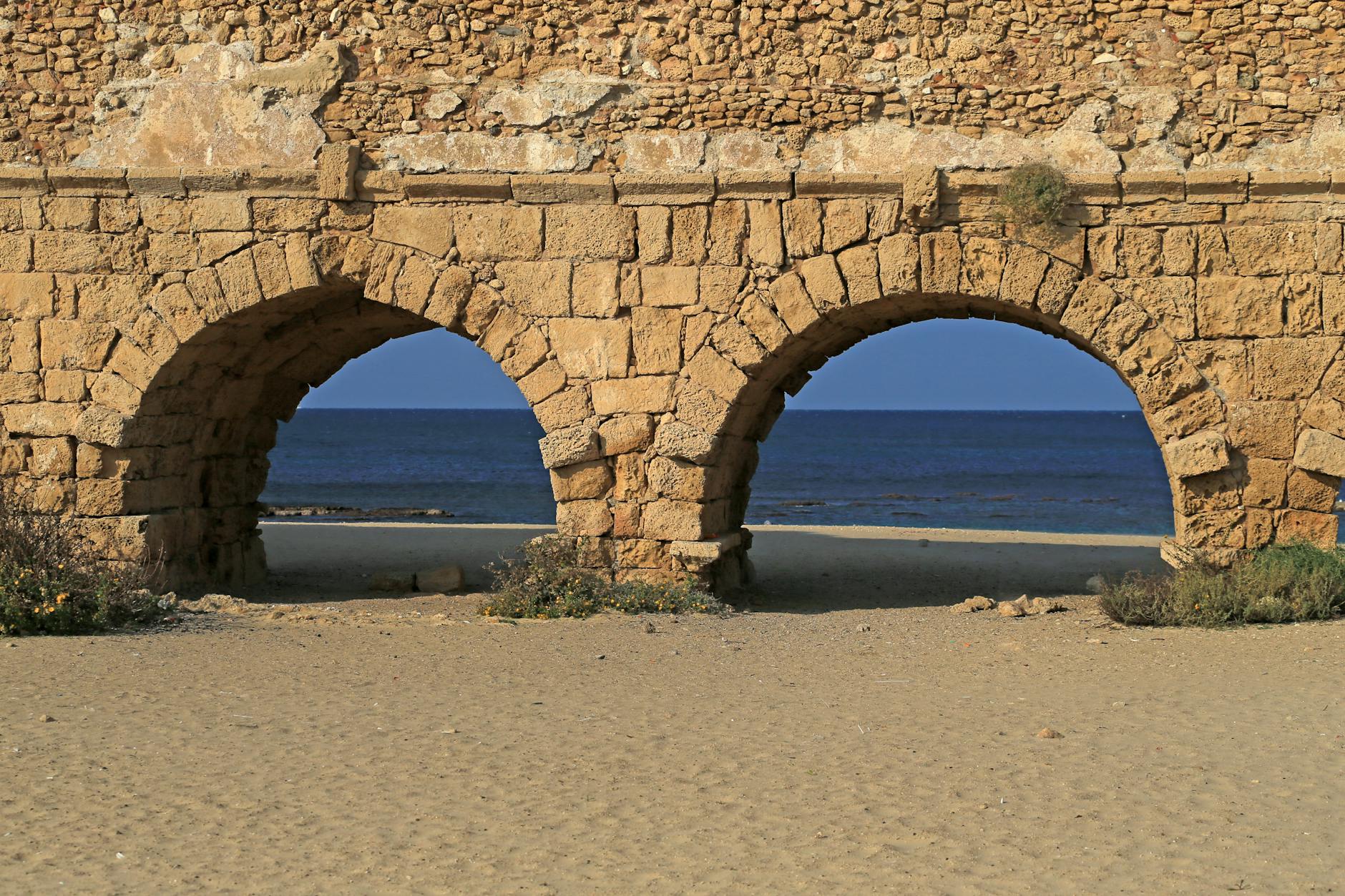
Caesarea Maritima, located on the Mediterranean coast about 90 minutes northwest of Jerusalem, was once the grandest Roman city in the Eastern Mediterranean. Built by King Herod the Great in honor of Augustus Caesar, the city served as the Roman capital of Judea and features remarkably well-preserved ruins including a Roman amphitheater still used for concerts, a hippodrome, an elaborate palace built on a promontory overlooking the sea, and the famous aqueduct that stretches along the beach.
The Caesarea National Park is well organized with clear walking paths, informative signs, and a short film that brings the ancient city to life. The Crusader-era fortifications and moat are also impressive, and the small harbor area has been converted into a pleasant dining district. Caesarea pairs well with a visit to Haifa and the stunning Baha’i Gardens for a full north-coast day trip.
Nazareth: Cradle of Christianity
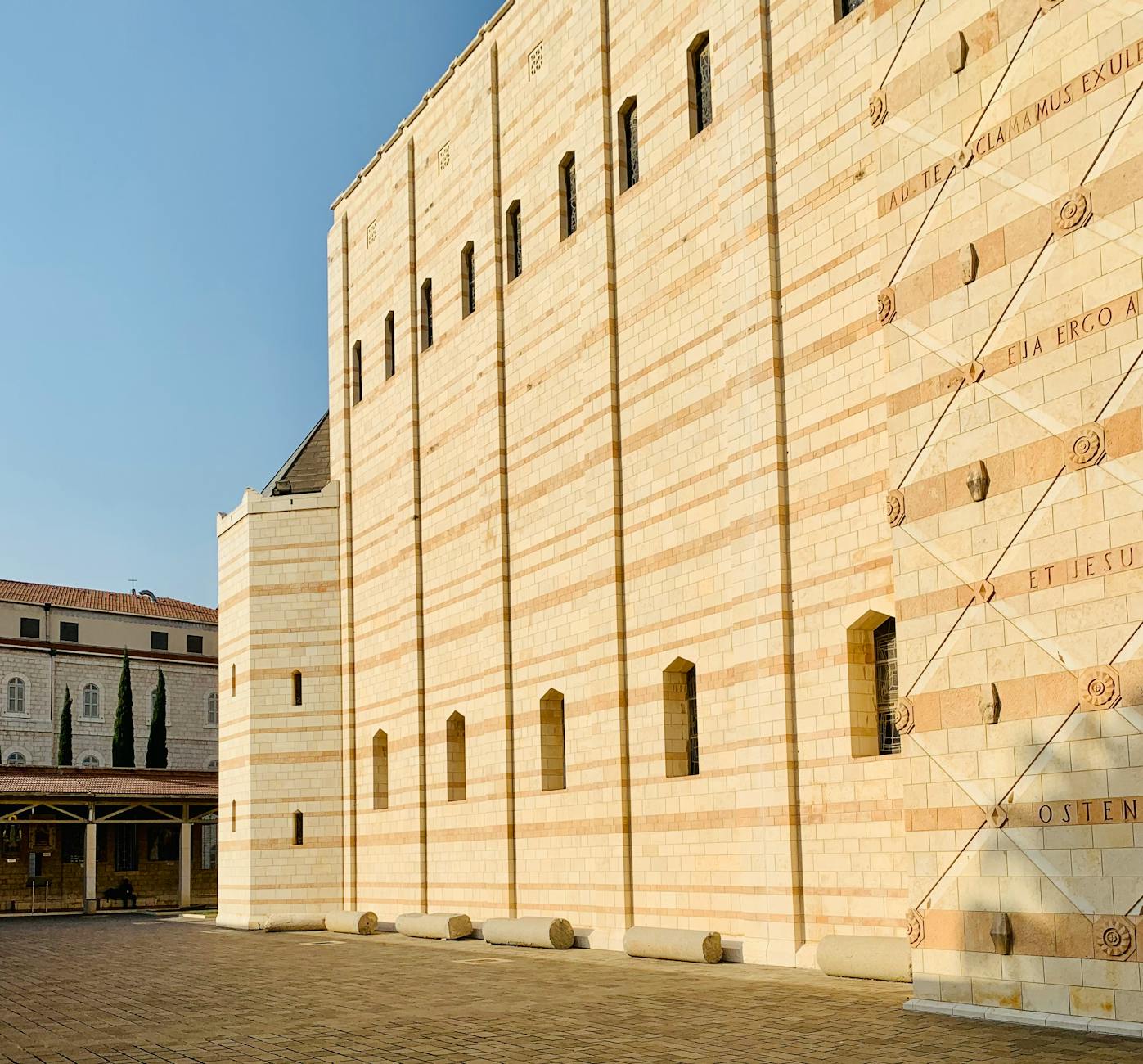
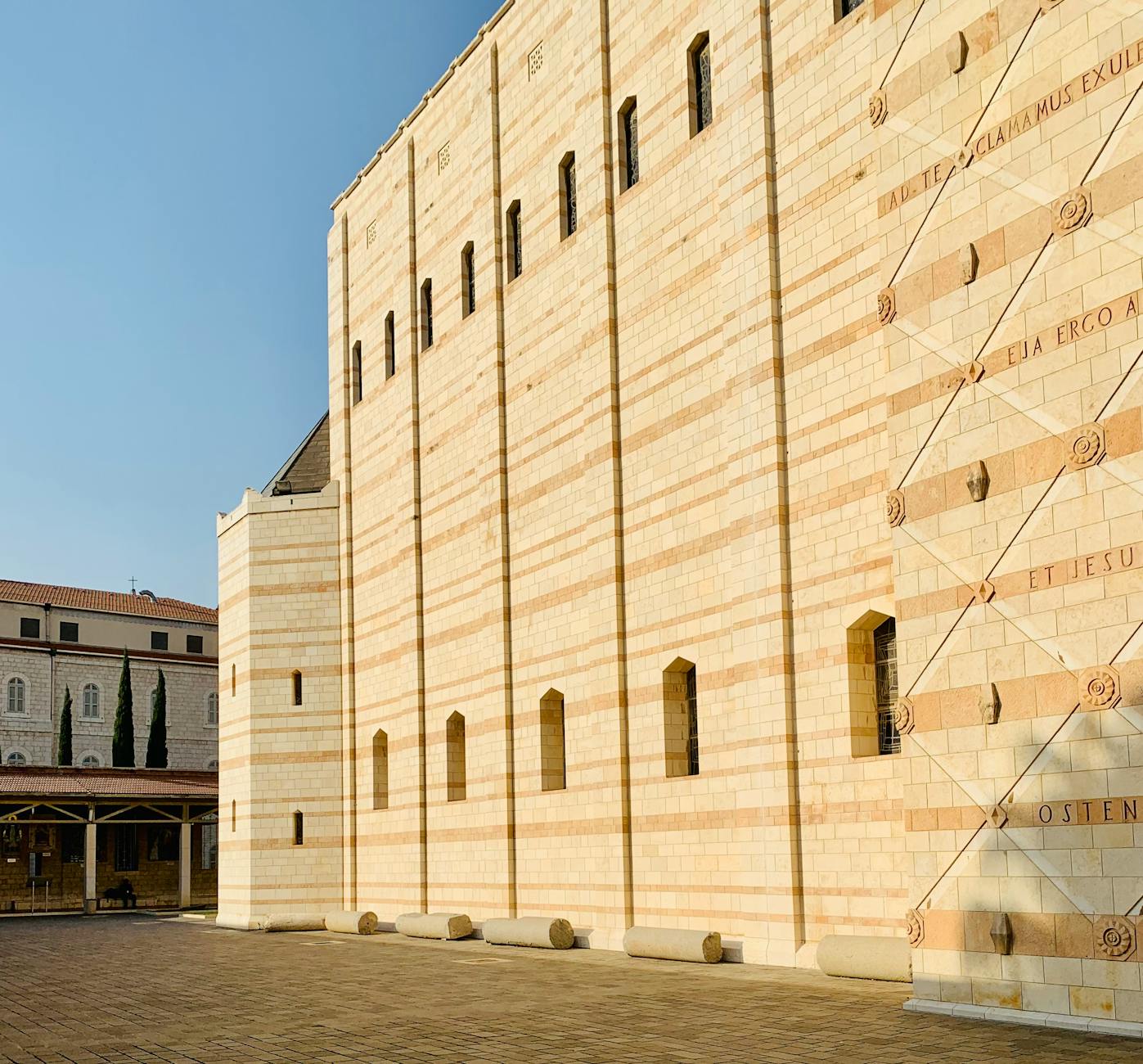
Nazareth, located about two hours north of Jerusalem, is revered as the childhood home of Jesus and the site where the angel Gabriel announced to Mary that she would bear the Son of God. The Church of the Annunciation, built over the traditional site of Mary’s home, is the largest church in the Middle East and a masterpiece of modern religious architecture, its walls adorned with stunning mosaic and painting donations from Catholic communities worldwide.
Beyond its Christian significance, Nazareth is a thriving Arab-Israeli city with a fantastic food scene that rivals Tel Aviv. The old market offers incredible falafel, knafeh (a sweet cheese pastry), and traditional Arabic coffee. The Mary’s Well area and the nearby town of Cana (associated with Jesus’s first miracle of turning water into wine) round out a meaningful visit. Nazareth is typically combined with a visit to the Sea of Galilee for a full northern Israel day trip.
Haifa and the Baha’i Gardens
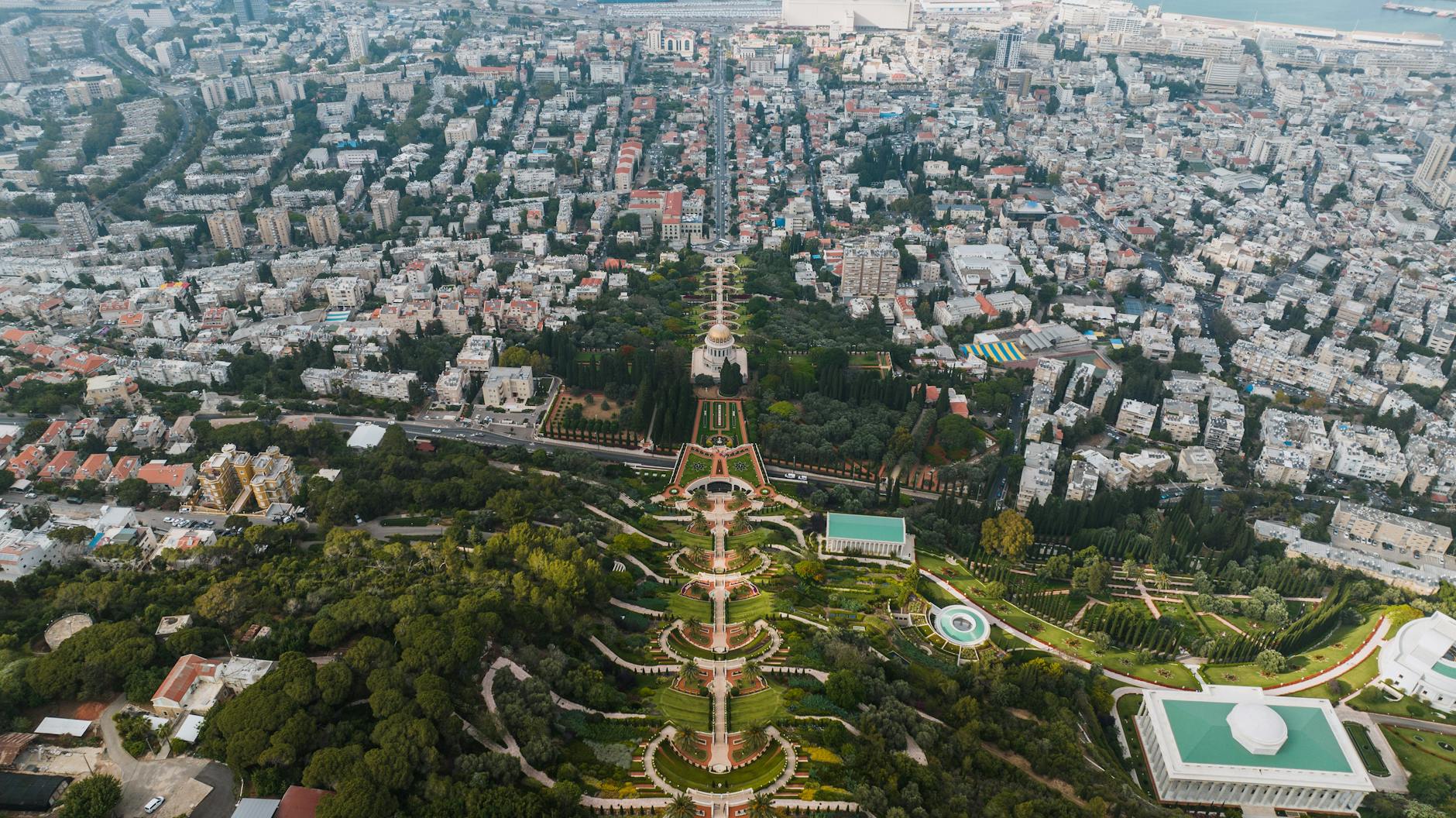
Haifa, Israel’s third-largest city, is about two hours from Jerusalem and best known for the breathtaking Baha’i Gardens, a UNESCO World Heritage Site that cascades down the slope of Mount Carmel in 19 perfectly manicured terraces. The gardens are a masterpiece of landscape architecture, and the golden-domed Shrine of the Báb at their center is one of the most photographed sites in Israel. Free guided tours are available and highly recommended.
Beyond the Baha’i Gardens, Haifa’s German Colony neighborhood offers excellent restaurants and cafes along its tree-lined boulevard. The Stella Maris Carmelite Monastery on the peak of Mount Carmel provides panoramic views and a beautiful church. Haifa is also a notably diverse and coexistent city, where Jewish, Arab, Druze, and Baha’i communities live side by side. Combining Haifa with Caesarea and the dramatic grottos at Rosh Hanikra on the Lebanese border makes for an outstanding full-day northern excursion.
Qumran: Where the Dead Sea Scrolls Were Found
Qumran is the easiest add-on in this guide: about 40 minutes from Jerusalem on Routes 1 and 90, and a visit of 90 minutes to two hours. This is where a Bedouin shepherd stumbled on the first of the Dead Sea Scrolls in the winter of 1946 to 1947, and where archaeologists eventually recovered fragments from eleven caves in the cliffs behind.
The national park is modest — a short film, the excavated settlement associated with the Essene sect, a ritual bath system, a probable scriptorium, and a viewpoint facing Cave 4, the dark rectangle in the marl terrace that produced the largest haul of manuscripts. Allow an hour for the ruins and the film.
Manage expectations on two fronts. The scrolls are not here — the manuscripts are displayed at the Israel Museum in the Shrine of the Book, so ideally you see both. And there is almost no shade, with summer afternoons regularly passing 40C, so come early. Kalia Beach is five minutes further south, which makes a comfortable half day out of the city.
Jericho and the Jordan Valley
Jericho has a strong claim to being the oldest continuously inhabited town on Earth. The mound at Tell es-Sultan, a UNESCO World Heritage Site since 2023, holds deposits going back roughly 10,500 BCE, including a Neolithic tower and wall that predate the pyramids by millennia. It is not visually spectacular — a brown mound with a deep trench cut through it — but standing in that trench and grasping that you are looking at twenty-nine stacked phases of occupation is another matter.
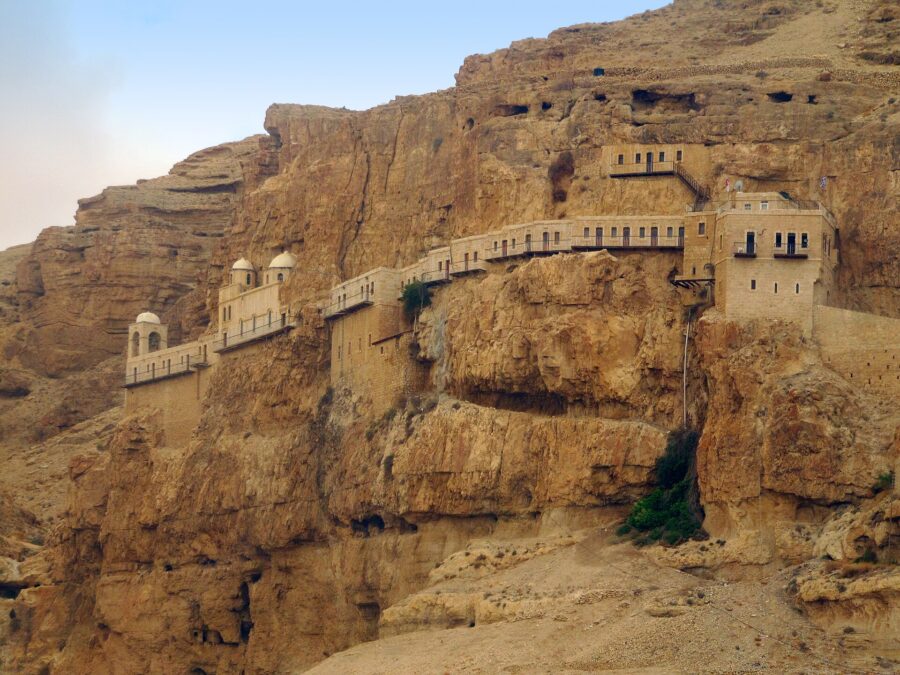
The other sites land harder. Hisham’s Palace, an early Islamic winter estate north of town, holds the Tree of Life mosaic, one of the finest floor mosaics in the region. The Mount of Temptation, where tradition places Jesus’s forty days in the wilderness, carries a Greek Orthodox monastery built into the cliff; a cable car saves a steep 30-minute climb. The spring of Ain es-Sultan still feeds the oasis that made the town possible.
Jericho sits about 260 meters below sea level, which makes it glorious in January and punishing in August. It is in Area A, so Israeli hire cars cannot go there and most visitors arrive on a tour or by shared taxi from Bethlehem. Our guide to planning a day in Jericho covers routes, fees and the order that wastes the least time.
Herodium: Herod’s Man-Made Mountain
On a clear day you can see Herodium from parts of Jerusalem — a truncated cone on the southern horizon that looks like a volcano and is partly artificial. Herod the Great had the hill raised and shaped, then sank a fortified palace into its crown: round towers, a bathhouse, a colonnaded courtyard, and tunnels later widened by rebels during the Bar Kokhba revolt. It is 30 minutes from the city and startlingly under-visited next to Masada.
The site made headlines in 2007 when the archaeologist Ehud Netzer announced he had located Herod’s tomb on the northeastern slope. Below the mound, the lower complex includes a large pool, a bathhouse and a small theater with a private box in painted plaster, a rare survival of Roman-style wall painting here. Allow two to three hours; the climb is short but steep and the summit wind is fierce.
Herodium is in Area C, administered by Israel and run by the parks authority, so it is reachable by Israeli-plated car or on a desert excursion out of the city. There is no useful public bus, and access here is more sensitive to security conditions than sites inside the Green Line, so check before setting out.
Beit Guvrin-Maresha: The Land of a Thousand Caves
An hour southwest of Jerusalem, in the soft chalk of the Judean lowlands, sit roughly 3,500 man-made underground chambers carved over two millennia — quarries that became oil presses, dovecotes, cisterns, baths, tombs and hiding places. The site was inscribed by UNESCO in 2014 as a microcosm of what the nomination called the land of the caves.
The highlights are the bell caves, vast pear-shaped chambers with light shafts and a cathedral acoustic; the Sidonian burial caves with their painted animal frieze; the columbaria lined with thousands of niches; and a Roman amphitheater by the entrance. Because almost everything is underground, this is a rare site that works in high summer and in the rain.
It is also home to Dig for a Day, in which visitors excavate an untouched cave under supervision, sift the spoil and handle genuine Hellenistic pottery. Families tend to rate it above anything else on this list — see our round-up of outdoor days that work with children. Book the dig ahead; the park is on the multi-site tourist cards and is described on the Bet Guvrin National Park page.
Ein Karem and Abu Ghosh: Two Trips You Can Do in Half a Day
Not every day trip needs to be a whole day. Two destinations on Jerusalem’s western edge give you a complete change of scene within half an hour, which makes them ideal for an arrival day or a departure morning.
Ein Karem is technically a Jerusalem neighborhood but feels like a Galilean village that wandered south: stone houses on a wooded hillside, cypresses, and churches marking the traditional birthplace of John the Baptist. The Church of the Visitation, up a steep flight of steps, has a courtyard wall carrying the Magnificat in dozens of languages; the Church of St John sits lower down beside Mary’s Spring; and Chagall’s twelve stained-glass windows are a short walk away at the Hadassah Medical Center. Our guide to an afternoon in Ein Karem maps a walking route.
Fifteen kilometers west along Route 1, Abu Ghosh has an unusually layered religious landscape. The Crusader Church of the Resurrection, now a Benedictine monastery, is among the best-preserved Crusader buildings in the country, with faded twelfth-century frescoes and a spring in the crypt. On the hill above, the Church of Our Lady of the Ark of the Covenant marks a site identified with biblical Kiriath-Jearim. The town is also nationally famous for hummus, worth comparing against the best plates in Jerusalem itself. Bus 185 runs from the city.
The Judean Desert Monasteries: Mar Saba and St George
Christian monastics have occupied this desert since the fourth century, and two surviving monasteries are close enough to Jerusalem for a half-day visit. Both are extraordinary, and both come with conditions.
Mar Saba, the Great Laura of Saint Sabbas, was founded in 483 CE and has been inhabited ever since, making it one of the oldest working monasteries in the world. It clings to the cliffs of the Kidron Valley, a blue-domed complex the colour of the rock behind it. The rule still excludes women from the buildings; women can view the complex from the Women’s Tower opposite, a fine viewpoint but not the same experience. Hours depend on the monks, so treat any published times as approximate.
St George of Koziba, in Wadi Qelt, welcomes all visitors. Founded in the fifth century around the caves of earlier hermits and restored in the nineteenth, it hangs off the north wall of a gorge on the old Jerusalem-to-Jericho road. Drive to the parking area and walk down a paved path in about 20 minutes, or approach along the wadi itself — see our notes on the Wadi Qelt route before committing to that in summer.
For both: cover shoulders and knees, carry far more water than feels necessary, and do not assume a taxi will be waiting for the return leg. Neither is served by public transport, which is why most visitors go with a driver or on a guided desert trip.
Hebron and Ramallah: Two Very Different West Bank Cities
Bethlehem and Jericho are the West Bank destinations most visitors reach. Hebron and Ramallah are the ones that most change how people understand the place, and both need more thought.
Hebron
Hebron is the largest city in the West Bank and the site of the Cave of the Patriarchs, known to Muslims as the Ibrahimi Mosque, where Abraham, Isaac, Jacob and their wives are traditionally buried. The Herodian enclosure above the caves is one of the oldest intact religious structures anywhere, and it is physically divided, with separate synagogue and mosque entrances and separate screening for each. The city is split into H1 under Palestinian Authority control and H2 under Israeli military control, and the contrast between the busy souk in one and the shuttered streets of the other is why many people come.
Read the official advice first. The FCDO specifically flags the H2 area around Ash-Shuhada Street and the Ibrahimi Mosque as a closed military zone with a risk of hostile reaction, and urges particular caution about visiting Hebron at all. Dual-narrative tours, pairing a Palestinian guide in H1 with an Israeli guide in H2, are the standard way visitors see the city; our guide to how a Hebron visit is usually organised explains what those days involve. Going independently is not advisable.
Ramallah
Ramallah is the de facto administrative capital of the Palestinian Authority and the least biblical destination in this guide, which is precisely its interest — a working modern city of ministries, universities, cafes and bars, with the Yasser Arafat Museum and mausoleum at the Muqata’a and the excellent Palestinian Museum a short drive away at Birzeit. Buses 218 and 219 run from the East Jerusalem station near Damascus Gate in about 45 minutes. Note that the FCDO advises weighing the difficulties and risks of the Jerusalem-Ramallah journey via the Qalandiya checkpoint, and separately advises against using taxis and local buses within the West Bank.
How to Actually Get There: Buses, Trains, Cars and Tours
The biggest planning mistake is assuming every destination is reachable the same way. They split into three groups: places served properly by Israeli public transport, places served by East Jerusalem buses, and places that realistically need a car or a tour.
Egged buses and the Rav-Kav
The Dead Sea corridor is covered by Egged line 486 from Jerusalem Central Bus Station, running south along Route 90 and stopping at Kalia, Qumran, Ein Gedi, Masada and Ein Bokek. Lines 444 and 487 supplement it, and 444 often needs an advance reservation. Buses run several times a day, not hourly, and the last northbound service back leaves earlier than most people expect — check the return time before you get off. Fares sit in the region of ₪20 to ₪45 each way as of August 2026 depending on distance; confirm on the Egged site. Pay with a Rav-Kav card or the Rav-Kav Online, Moovit or HopOn apps, not cash.
The train to Tel Aviv and the coast
The fast line from Jerusalem-Yitzhak Navon is the one genuinely effortless piece of transport here: Tel Aviv in roughly 35 to 45 minutes, several times an hour at peak, for around ₪30 each way as of August 2026 — check Israel Railways for current fares. The station is deep underground beside the bus station, so allow ten minutes for the lifts. Haifa means changing at Tel Aviv. Caesarea has a station several kilometers from the ruins, which is why most people drive.
East Jerusalem buses
Bethlehem, Ramallah and the northern West Bank are served by the Palestinian bus network from the stations on Sultan Suleiman Street and Nablus Road near Damascus Gate — a separate system from Egged, with fares paid in cash on board. Bus 231 runs into central Bethlehem via Beit Jala; bus 234 goes to the Checkpoint 300 area near Rachel’s Tomb. Both take 30 to 45 minutes before any checkpoint delay and cost around ₪8. Crucially, these lines run seven days a week, including Saturday.
Hire cars, taxis and shared taxis
A car transforms the awkward destinations — Herodium, Beit Guvrin, Caesarea, the desert monasteries — and is wasted on Tel Aviv, where parking is expensive and the train is faster. Roads are good, signs are trilingual, and Waze is the local default. The critical caveat is the West Bank: Israeli rental agreements almost always prohibit taking the vehicle into Area A, which includes Bethlehem, Jericho, Ramallah and central Hebron, and your insurance will not cover you there. Read the contract rather than assuming. Shared taxis, called sherut or service, run fixed routes for a little more than the bus and keep going when buses stop — our page on moving around the city and beyond covers typical costs.
Crossing Into the West Bank: What a Day Trip Involves
Bethlehem, Jericho, Ramallah and Hebron are in the West Bank, and the mechanics of visiting cause more anxiety than the paperwork deserves. Here is what actually happens, and what the official advisories say.
For a day visit you need no permit, visa or extra application. Your standard Israeli entry — in practice the blue slip issued at Ben Gurion, which you should keep with your passport throughout your trip — is what you show. Heading south, buses from East Jerusalem drive through the vehicle checkpoint and are often waved past. Returning on foot through Checkpoint 300, you walk a corridor of turnstiles, put your bag through a scanner and hold your passport up at a window; most days that takes ten to twenty minutes, though early mornings are slower. Entry rules are covered in our guide to documents and entry conditions.
Governments frame the risk differently and both are worth reading. The UK FCDO advises against all travel to Gaza and to the refugee camps in Jenin and Nablus, but applies no blanket warning to Bethlehem, Ramallah or Jericho — it notes on the FCDO’s regional risks page that these cities see large numbers of tourists including on organised tours, while advising care anywhere in the West Bank, singling out the H2 area of Hebron, and recommending against using taxis or local buses there. The US State Department advisory is more restrictive, currently advising Americans to reconsider travel to Israel and the West Bank and prohibiting US government employees from Area A, including Bethlehem and Jericho. That prohibition is an internal staff rule rather than a ban on citizens, but it is a signal.
In practice: carry your passport, expect checkpoints and occasional road closures, avoid demonstrations and settlements, and do not travel West Bank roads after dark. Checkpoints can close during Israeli public holidays and Jewish high holidays, which rarely affects foreign passport holders but can strand a driver. See also our overview of the safety questions visitors ask most often.
Planning Around Shabbat, Friday and Sunday
Israeli public transport — Egged buses, the train, the Jerusalem light rail — stops from roughly mid-afternoon Friday until after nightfall on Saturday. That single fact reshapes the week, and it catches out more visitors than anything else on this page.
What does not work on Saturday: Masada, Ein Gedi, Qumran, Ein Bokek, Caesarea, Haifa and Nazareth by public transport, because line 486 and the trains are not running. The parks themselves are open — the Israel Nature and Parks Authority lists the same Saturday hours as midweek — so the sites are available if you have a car, a driver or a tour. Most organized day tours run on Saturday precisely because demand is high.
What does work on Saturday: anything reached from East Jerusalem. Buses to Bethlehem, Ramallah and the north run seven days a week. Shared taxis keep running between Jerusalem and Tel Aviv at higher fares than the bus, and Tel Aviv is at its busiest on Shabbat. Friday is its own case — buses thin out from early afternoon, shops shut by mid-afternoon, and West Bank towns go quiet around midday prayers, so treat it as a half day. Sunday is a normal working day and a good one for the desert. Our guide to how the city changes from Friday evening covers what stays open here.
Choosing and Booking a Group Day Tour
For roughly half the destinations here a tour is not laziness, it is the only sensible way to fit the site into a day. A standard group trip runs a large coach with multiple hotel pickups, a licensed guide and a fixed route; expect collection between 06:00 and 07:30 for Masada, and an opening hour spent circulating around Jerusalem picking up other passengers.
Before you pay, check these six things:
- What is included. Park entry and the Masada cable car are frequently extra. Masada entry is ₪37 for an adult with the cable car priced separately at ₪45 as of August 2026, so the gap between an inclusive and an exclusive tour can be ₪80 a head.
- Where and when the pickup is. A 06:15 hotel pickup is not the same as a 06:15 departure from a central meeting point.
- Group size and vehicle. A 50-seat coach behaves very differently from a 12-seat minibus at a crowded site.
- Whether the guide is licensed. Israel licenses guides after a lengthy course; a driver-guide on a cheap tour may not be one.
- Whether the route crosses into Area A, in which case bring your passport and expect a vehicle change or a walking crossing.
- The cancellation window, which matters more here than elsewhere because sites close at short notice for weather or security.
Compare two or three operators for the same itinerary rather than booking the first result. Private drivers and small-group operators cost more but let you start at dawn and skip the pickup circuit — our round-up of guided options based in the city compares the formats, and our cost breakdown puts tour prices in the context of a whole trip budget.
Practical Tips for Day Trips from Jerusalem
Getting Around: Organized tours are the easiest option and include transport, a guide, and often lunch. Companies like Abraham Tours, Tourist Israel, and Bein Harim offer reliable group tours at reasonable prices. For independent travelers, Egged buses connect Jerusalem to most destinations, the train reaches Tel Aviv and Haifa efficiently, and rental cars provide maximum flexibility. Note that driving in Israel is on the right side of the road, and GPS navigation works well.
Combining Destinations: The most popular combination is Masada plus the Dead Sea (full day). Other efficient pairings include Caesarea plus Haifa, Bethlehem plus Hebron, and Nazareth plus the Sea of Galilee. Do not try to squeeze too many stops into one day — it is better to enjoy two or three places properly than to rush through five.
Budget Tips: National park passes (available from the Israel Nature and Parks Authority) offer significant savings if you plan to visit multiple sites like Masada, Ein Gedi, and Caesarea. Group bus tours are generally the most affordable option, typically ranging from $50-100 USD per person for a full-day excursion. Public buses are the cheapest transport option but require more planning and flexibility with schedules.
For help planning how to fit these day trips into your visit, check our Jerusalem itinerary guide. Make sure to read our Jerusalem travel tips for essential practical information, and explore our guide to things to do in Jerusalem for when you are back in the city. For accommodation recommendations between trips, see our where to stay in Jerusalem guide.
Many visitors meet these same destinations from the other direction, as shore excursions from a cruise ship berthed at Ashdod or Haifa. The distances are the same, but the clock is not: a port day is built backwards from the all-aboard time, and some combinations that work from a Jerusalem hotel do not work from a ship. Our guide to Jerusalem cruise ports and shore excursions explains which do.
A note on what this page covers. Every trip here is one you can do and be back in Jerusalem the same night. Anything that needs a night away or an international border, including Petra and the rest of Jordan, Egypt’s Sinai, two or three nights in the Galilee, Mitzpe Ramon and the Negev, and Eilat, is covered in our separate guide to trips from Jerusalem beyond a day, with the 2026 border rules, visas and fees.
You will see Petra advertised as a day trip from Jerusalem, and you will not find it in the list above. That is deliberate. The day tour means a pick-up before 05:00, a return near midnight and a few hours at the site, and it costs more than it looks because same-day visitors pay a higher Petra ticket. Our guide to Petra from Jerusalem explains the routes and makes the case for staying the night.
Frequently Asked Questions About Day Trips from Jerusalem
What is the best day trip from Jerusalem if I only have one day?
Masada combined with the Dead Sea. It gives you a UNESCO World Heritage site, a desert sunrise if you want one, and the float, all within 90 minutes of the city. If ruins do not appeal, the half-day run to Bethlehem is the cheapest and easiest alternative, and you can be back in Jerusalem for lunch.
Can you really visit Masada and the Dead Sea in the same day?
Yes, and it is the most common itinerary sold from Jerusalem. The standard order is Masada first while it is cool, then Ein Gedi or a Dead Sea beach in the afternoon. Allow two to three hours on the plateau and at least two hours at the water, and remember that the last cable car up leaves an hour before the park closes.
Do I need a tour, or can I do these trips independently?
The Dead Sea, Masada, Ein Gedi, Qumran, Tel Aviv, Nazareth and Bethlehem are all doable independently by public transport. Herodium, Beit Guvrin, Caesarea, Mar Saba and St George in Wadi Qelt effectively need a car or a tour, and Hebron is best done with a guide. The Ein Gedi reserve is a good first independent trip because the bus stops at the gate.
Do I need a visa or permit to visit Bethlehem or Jericho?
No. A day visit to Palestinian Authority areas requires no additional permit or fee if you hold a standard Israeli tourist entry. Carry your passport and entry slip, since you will show them returning to Jerusalem. Israeli hire cars are not permitted into Area A, so you will need a bus, a taxi from the crossing, or a tour.
Which day trips are possible on Shabbat?
Anything reached by East Jerusalem bus — Bethlehem, Ramallah and points north — runs normally on Saturday. National parks are open, but Egged buses and trains are not, so Masada, Ein Gedi and Caesarea need a car, a shared taxi or an organized tour that day. Tel Aviv is reachable by sherut and is at its liveliest.
How much should a day trip from Jerusalem cost?
Independently, a Dead Sea and Masada day comes to roughly ₪150 to ₪250 per person once you add the bus, park entry at ₪37 and the cable car at ₪45 as of August 2026. Bethlehem by bus costs under ₪20 in transport, with free entry to the Church of the Nativity. Group tours generally land between about 50 and 110 US dollars depending on inclusions.
Is it safe to take day trips from Jerusalem at the moment?
Conditions change, so check your own government’s current advice rather than any travel guide. As of August 2026 the UK FCDO does not advise against travel to Bethlehem, Jericho or Ramallah while urging care across the West Bank, whereas the US State Department advises Americans to reconsider travel to Israel and the West Bank. Sites inside Israel such as Masada and Caesarea carry no specific advisory.
When is the best time of year for the desert trips?
October to April. Summer temperatures at the Dead Sea and Masada routinely exceed 40C, and the Snake Path at Masada closes to climbers as early as 07:00 or 08:00 on extreme-heat days. Winter is comfortable for walking but brings flash-flood risk in the wadis after rain. Our guide to seasons and weather has the month-by-month detail.
Can I combine a day trip with a visit to Galilee?
You can, but be realistic about distance. Reaching Nazareth from Jerusalem takes about two hours each way, leaving four or five useful hours on the ground. If Galilee matters to you, an overnight in Nazareth or Tiberias buys far more than a very long day and costs little more.
{"@context": "https://schema.org", "@type": "FAQPage", "mainEntity": [{"@type": "Question", "name": "What is the best day trip from Jerusalem if I only have one day?", "acceptedAnswer": {"@type": "Answer", "text": "Masada combined with the Dead Sea. It gives you a UNESCO World Heritage site, a desert sunrise if you want one, and the float, all within 90 minutes of the city. If ruins do not appeal, the half-day run to Bethlehem is the cheapest and easiest alternative, and you can be back in Jerusalem for lunch."}}, {"@type": "Question", "name": "Can you really visit Masada and the Dead Sea in the same day?", "acceptedAnswer": {"@type": "Answer", "text": "Yes, and it is the most common itinerary sold from Jerusalem. The standard order is Masada first while it is cool, then Ein Gedi or a Dead Sea beach in the afternoon. Allow two to three hours on the plateau and at least two hours at the water, and remember that the last cable car up leaves an hour before the park closes."}}, {"@type": "Question", "name": "Do I need a tour, or can I do these trips independently?", "acceptedAnswer": {"@type": "Answer", "text": "The Dead Sea, Masada, Ein Gedi, Qumran, Tel Aviv, Nazareth and Bethlehem are all doable independently by public transport. Herodium, Beit Guvrin, Caesarea, Mar Saba and St George in Wadi Qelt effectively need a car or a tour, and Hebron is best done with a guide. The Ein Gedi reserve is a good first independent trip because the bus stops at the gate."}}, {"@type": "Question", "name": "Do I need a visa or permit to visit Bethlehem or Jericho?", "acceptedAnswer": {"@type": "Answer", "text": "No. A day visit to Palestinian Authority areas requires no additional permit or fee if you hold a standard Israeli tourist entry. Carry your passport and entry slip, since you will show them returning to Jerusalem. Israeli hire cars are not permitted into Area A, so you will need a bus, a taxi from the crossing, or a tour."}}, {"@type": "Question", "name": "Which day trips are possible on Shabbat?", "acceptedAnswer": {"@type": "Answer", "text": "Anything reached by East Jerusalem bus — Bethlehem, Ramallah and points north — runs normally on Saturday. National parks are open, but Egged buses and trains are not, so Masada, Ein Gedi and Caesarea need a car, a shared taxi or an organized tour that day. Tel Aviv is reachable by sherut and is at its liveliest."}}, {"@type": "Question", "name": "How much should a day trip from Jerusalem cost?", "acceptedAnswer": {"@type": "Answer", "text": "Independently, a Dead Sea and Masada day comes to roughly ₪150 to ₪250 per person once you add the bus, park entry at ₪37 and the cable car at ₪45 as of August 2026. Bethlehem by bus costs under ₪20 in transport, with free entry to the Church of the Nativity. Group tours generally land between about 50 and 110 US dollars depending on inclusions."}}, {"@type": "Question", "name": "Is it safe to take day trips from Jerusalem at the moment?", "acceptedAnswer": {"@type": "Answer", "text": "Conditions change, so check your own government's current advice rather than any travel guide. As of August 2026 the UK FCDO does not advise against travel to Bethlehem, Jericho or Ramallah while urging care across the West Bank, whereas the US State Department advises Americans to reconsider travel to Israel and the West Bank. Sites inside Israel such as Masada and Caesarea carry no specific advisory."}}, {"@type": "Question", "name": "When is the best time of year for the desert trips?", "acceptedAnswer": {"@type": "Answer", "text": "October to April. Summer temperatures at the Dead Sea and Masada routinely exceed 40C, and the Snake Path at Masada closes to climbers as early as 07:00 or 08:00 on extreme-heat days. Winter is comfortable for walking but brings flash-flood risk in the wadis after rain. Our guide to seasons and weather has the month-by-month detail."}}, {"@type": "Question", "name": "Can I combine a day trip with a visit to Galilee?", "acceptedAnswer": {"@type": "Answer", "text": "You can, but be realistic about distance. Reaching Nazareth from Jerusalem takes about two hours each way, leaving four or five useful hours on the ground. If Galilee matters to you, an overnight in Nazareth or Tiberias buys far more than a very long day and costs little more."}}]}