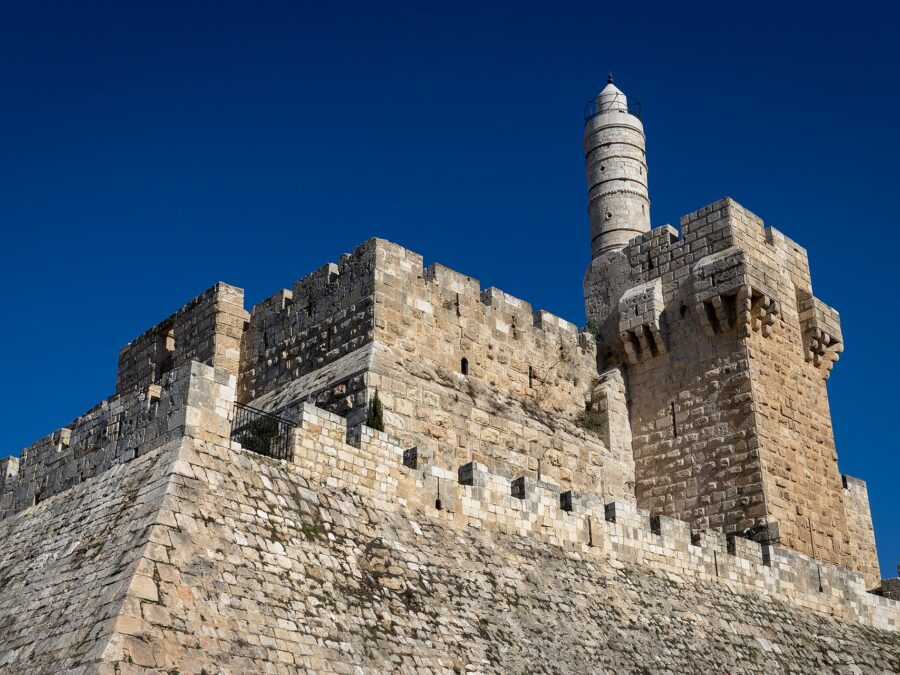
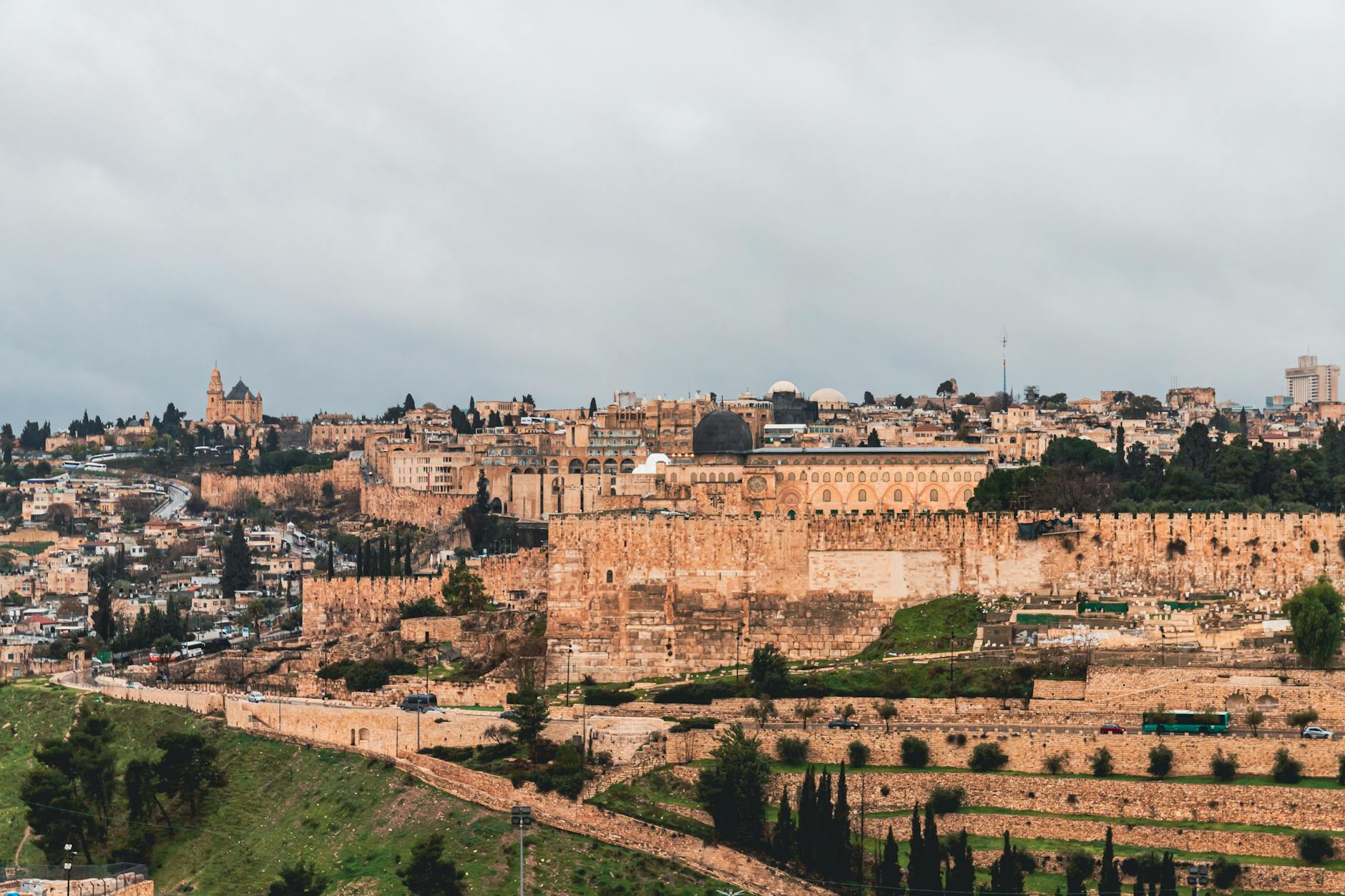
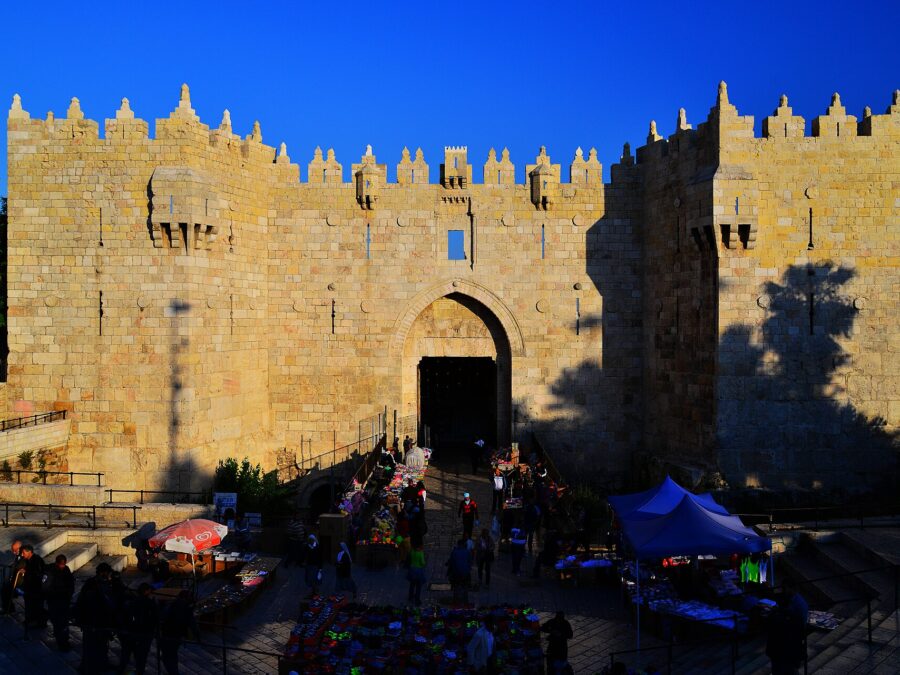
The Jerusalem Old City market is a thousand-year-old maze of covered lanes where spice mountains, hanging lamps, fresh bread, and stacks of textiles spill into streets barely wide enough for two people to pass. The souks fill much of the walled city, especially the Muslim and Christian Quarters, and they remain a working marketplace for residents as much as a draw for visitors. This guide covers the main market streets, what to buy, how to bargain, opening hours, prices in shekels, and how to find your way through one of the oldest continuously trading bazaars on earth.
The markets thread through the Old City between its great gates and holy places, so a stroll through the souks naturally connects to the sacred sites mapped in our guide to holy sites in Jerusalem. Come with curiosity, a little cash, and time to wander, and the souks reward you richly.
A Brief History of the Markets
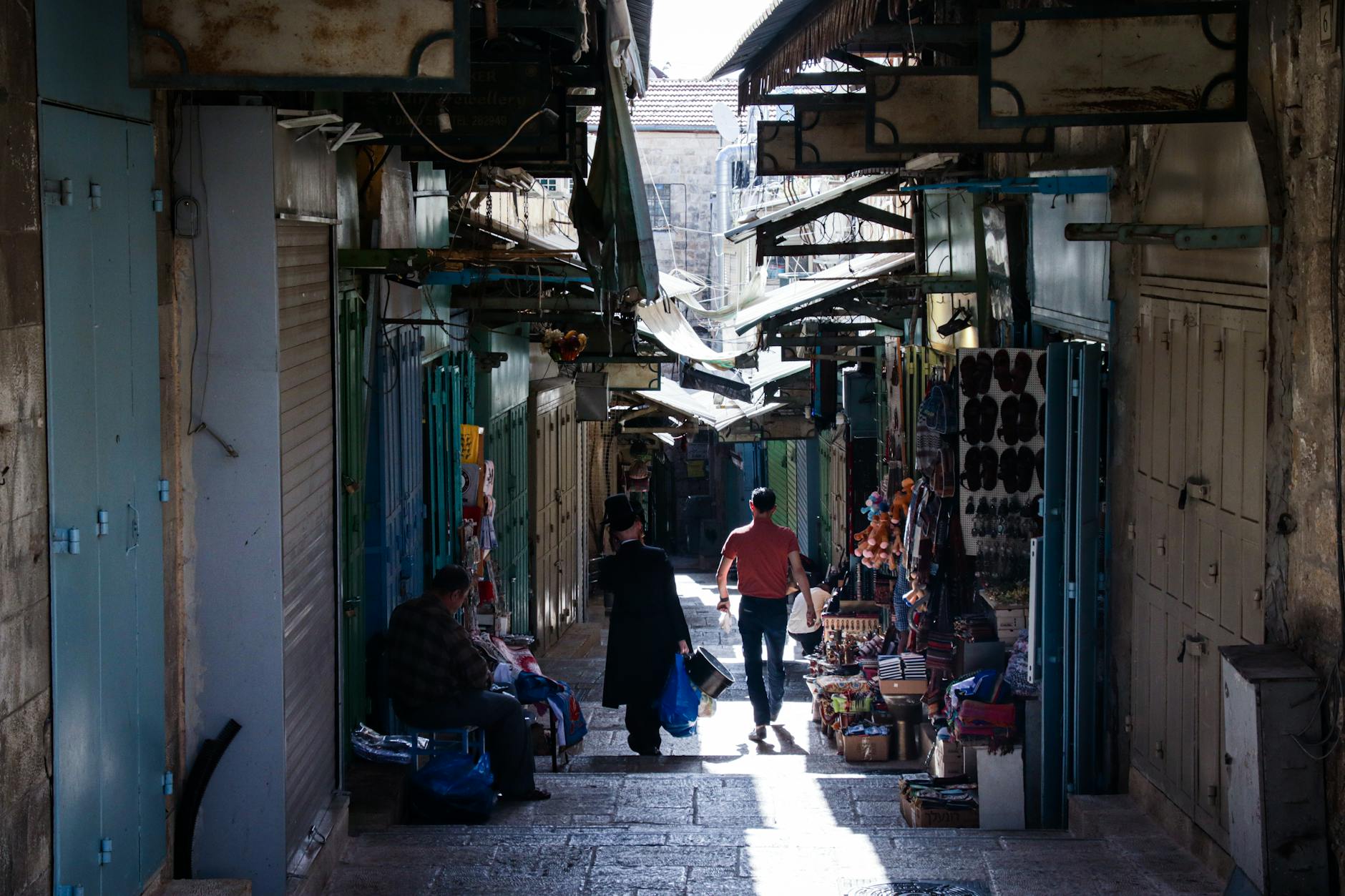
Jerusalem has been a trading city for millennia, and the basic layout of its markets is remarkably old. The three parallel streets at the heart of the souk follow the line of the Roman Cardo Maximus, the colonnaded main avenue of the city in the 2nd century, and many of the vaulted ceilings date to the Crusader and Mamluk periods between the 12th and 15th centuries. Goods that once arrived by camel caravan from Damascus, Cairo, and the spice routes of Arabia were sold here, and the streets still carry the names of the trades that filled them, the butchers, the goldsmiths, the cotton merchants. Walking the souk is, in a real sense, walking a medieval shopping street that never stopped trading.
The Main Souks
The Old City’s markets are not one bazaar but several historic streets, each with its own character. Here are the ones worth knowing.
David Street (Souk el-Bazaar)
The busiest tourist artery, David Street runs steeply down from just inside Jaffa Gate into the heart of the markets. It is lined wall-to-wall with souvenir shops selling scarves, T-shirts, ceramics, jewelry, and religious items, and it is where most visitors first meet the souk. Prices here are tourist-facing and very negotiable, so treat the asking price as an opening bid.
Khan al-Zeit Street (Spice Market)
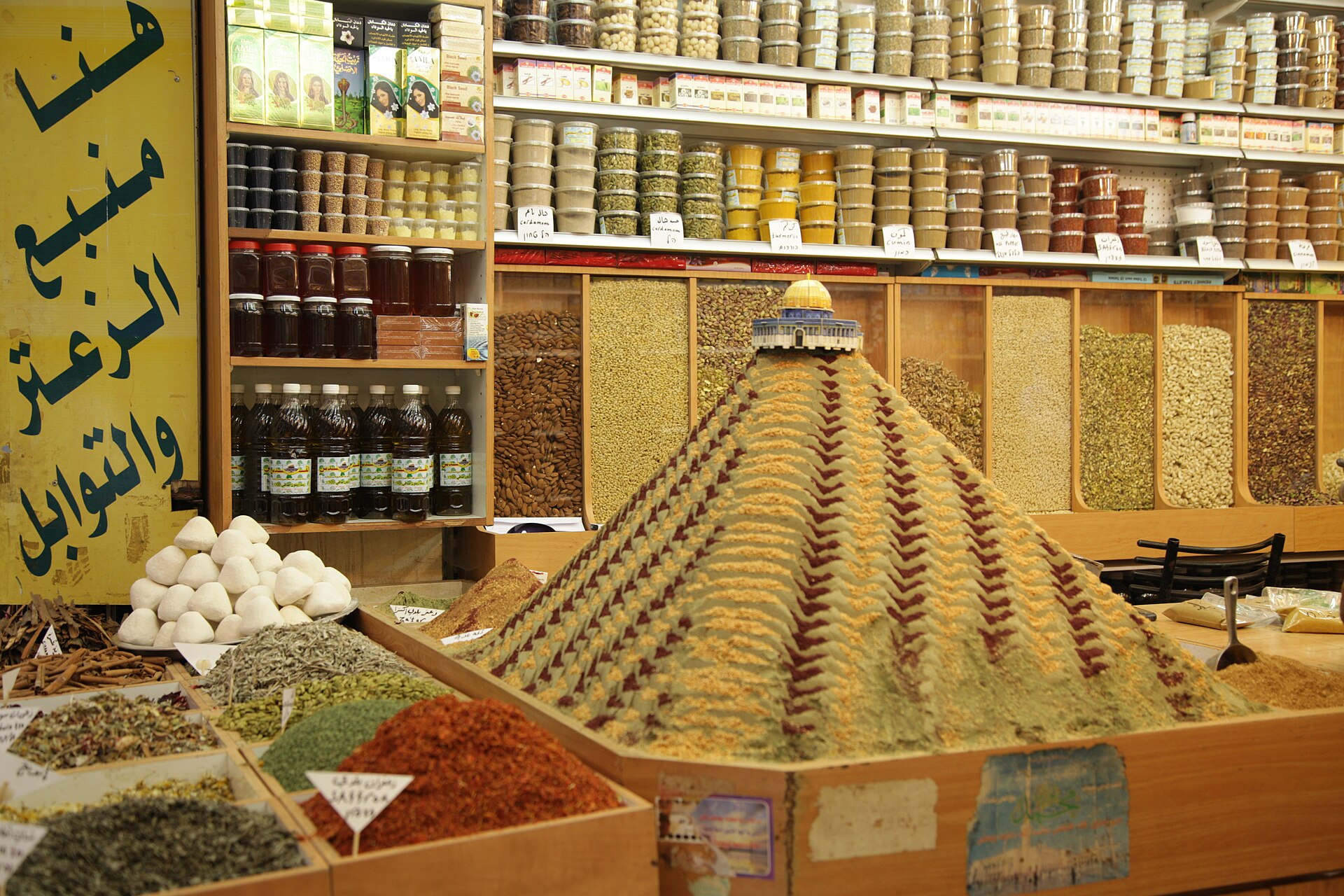
One of the oldest and most atmospheric market streets, Khan al-Zeit runs south from Damascus Gate through the Muslim Quarter. This is where you will find the great cones of spices, dried fruit and nuts, sweets, fresh produce, bread, and butcher stalls serving local shoppers. The smells alone make it worth the walk. For the city’s wider spice trade, see our Jerusalem spice market guide.
Cotton Merchants’ Market (Suq al-Qattanin)
A magnificent vaulted Mamluk-era street from the 14th century, the Cotton Merchants’ Market runs toward a gate of the Temple Mount. Its high stone ceiling and rhythmic arches make it one of the most beautiful covered streets in the Old City, quieter than the main souks and a favorite for photographers. It is sometimes less commercially busy, which only adds to its atmosphere.
The Cardo (Jewish Quarter)
In the Jewish Quarter, a restored section of the Roman-era Cardo now holds upscale Judaica shops and galleries under reconstructed columns. This is fixed-price, boutique shopping rather than haggling, with quality silver, art, and ceramics. It is a calm contrast to the bustle of the Muslim Quarter souks nearby.
Christian Quarter Road
Running from near Jaffa Gate toward the Church of the Holy Sepulchre, this street in the Christian Quarter specializes in religious souvenirs: olive-wood carvings, mother-of-pearl, icons, crosses, and rosaries, alongside ceramics and textiles. Bargaining is expected in the open-fronted shops.
Three Markets at the Junction (Triple Souk)
Near the center of the Old City, three parallel covered streets, the old butchers’, goldsmiths’, and spice bazaars, run side by side where the Muslim and Jewish Quarters meet. This medieval triple market is the historic commercial core, and walking all three gives a sense of how the city’s trades were once organized street by street.
What to Buy in the Old City Market
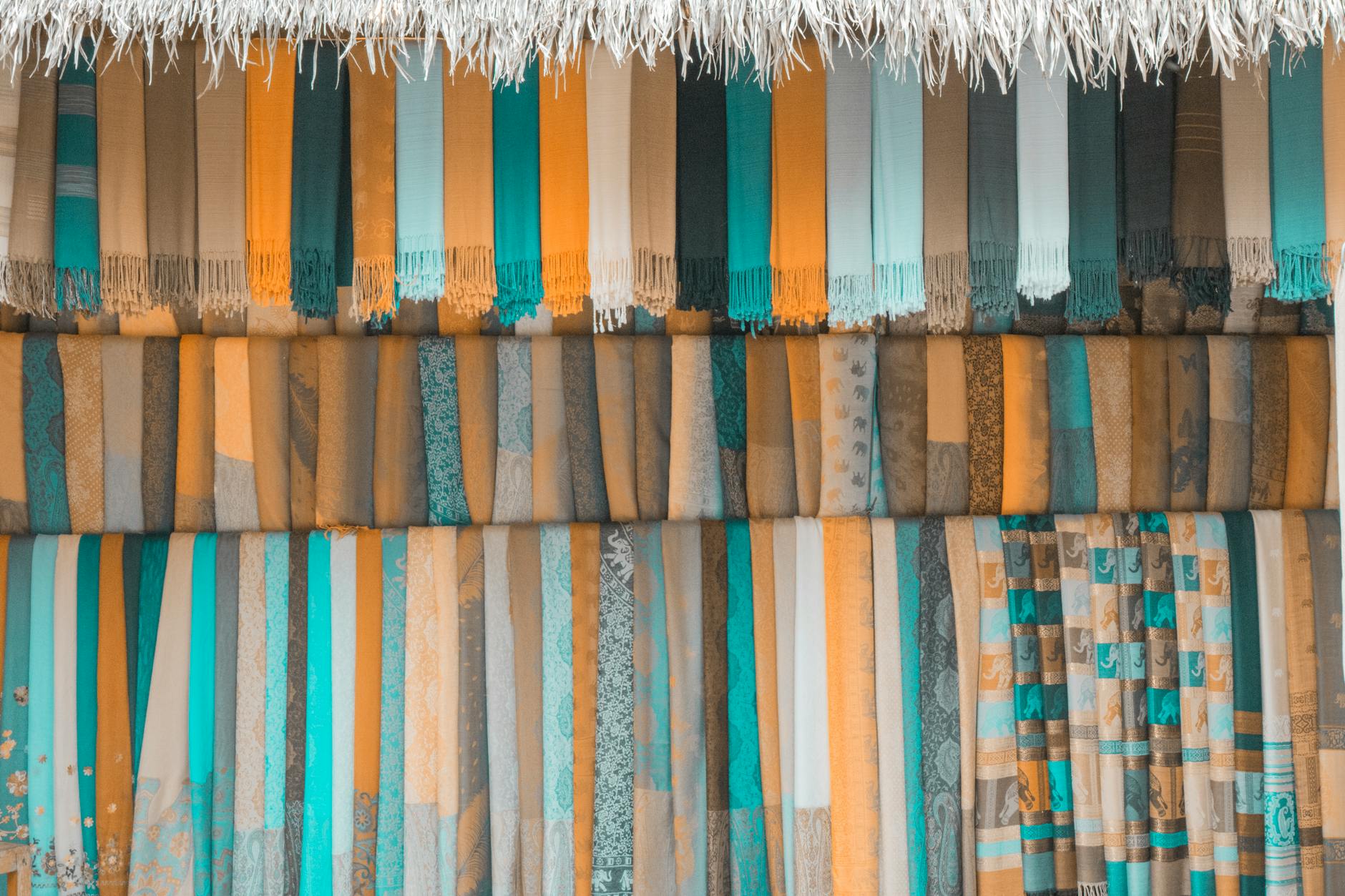
The souks sell a great range, but some buys are particularly worthwhile. Spices, zaatar, sumac, and dried fruit are excellent, packable, and authentically local. Olive-wood carvings and mother-of-pearl from the Bethlehem area make meaningful keepsakes. Hand-painted Armenian ceramics, tiles, bowls, and nameplates are a Jerusalem signature; our Armenian ceramics guide explains where to find the real thing. Other good buys include textiles and scarves, Dead Sea cosmetics and mud products, brass and copperware, embroidered fabrics, inlaid wooden boxes, and Arabic sweets like baklava and halva that travel well in a tin. If you want something genuinely local rather than mass-produced, ask where an item was made and look for the workshops tucked behind the storefronts. For a broader shopping overview across the city, see our Jerusalem shopping guide.
Eating in the Old City Market
The souk is one of the best and cheapest places to eat in Jerusalem, and much of the food is street food eaten on the move. Look for fresh kaak (sesame bread rings) sold from carts, hot knafeh (sweet cheese pastry soaked in syrup), falafel and hummus, shawarma carved to order, fresh pomegranate and orange juice, and Arabic sweets piled high in shop windows. Prices are low: a kaak or falafel runs roughly 10 to 20 shekels, a plate of hummus around 25 to 35 shekels, and a slice of knafeh about 15 to 25 shekels. A few sit-down spots and rooftop terraces, like the cafe at the Austrian Hospice, offer a place to rest with a coffee. For more on what to eat, see our Jerusalem street food guide.
Bargaining Etiquette
Haggling is part of the experience in the open-fronted souk shops (though not in the fixed-price boutiques of the Cardo or the malls outside the walls). A few principles help. Decide what an item is worth to you before you start. Expect the first price to be high, often double or more what the seller will accept, and counter low but politely. Be friendly, smile, and treat it as a conversation rather than a contest; walking away often brings the price down, but do not bargain hard for something you do not intend to buy. Buying several items from one stall gives you leverage. For the full technique, see our guide to bargaining in Jerusalem markets.
When to Visit the Souks
Timing shapes the experience. Mornings are best for fresh produce and a calmer browse; late afternoons near Damascus Gate grow crowded and lively. Crucially, the markets follow the rhythms of their quarters: the Muslim and Christian Quarter souks largely stay open on Saturday (the Jewish Shabbat) but quieten on Friday around midday prayers and on Sunday mornings for church services. The Cardo and Jewish Quarter shops close for Shabbat, from Friday afternoon to Saturday night. Spring and autumn offer the most comfortable walking weather; summer middays are hot, though the covered lanes provide welcome shade. Our Shabbat in Jerusalem guide explains exactly what is open when.
Navigating the Souks
The market lanes are a genuine maze, and getting briefly lost is part of the fun. To orient yourself, remember that David Street runs downhill from Jaffa Gate, Khan al-Zeit runs south from Damascus Gate, and the great holy sites, the Western Wall, the Holy Sepulchre, and the Temple Mount entrances, anchor the edges. Follow the flow of people toward the major sites if you need a bearing, and do not worry about a wrong turn; the Old City is small, and you are never far from a gate. A paper map or an offline phone map helps, since signage is limited and lanes twist constantly.
A Suggested Market Walk
For a satisfying loop, enter at Jaffa Gate and head down David Street, resisting the first souvenir stalls so you can compare prices deeper in. Where the lanes branch, bear toward the spice-rich streets of the Muslim Quarter and walk north along Khan al-Zeit, pausing for a kaak or a slice of knafeh and breathing in the spice cones. Detour into the vaulted Cotton Merchants’ Market for its quiet beauty and a few photographs, then loop back through the triple souk where the old butchers’, goldsmiths’, and spice streets run together. Finish in the calmer Cardo in the Jewish Quarter if you want fixed-price ceramics and silver, or carry on toward the Western Wall to end at one of the city’s holiest sites. The whole wander takes two to three hours at an easy pace, longer if you shop and eat. To weave the souk into a full day in the walled city, use our Old City guide.
How to Get to the Old City Market
Most visitors enter at Jaffa Gate, a short walk from the City Hall stop on the Light Rail Red Line (around 6 shekels a ride; no service on Shabbat), which drops you straight onto David Street and into the souk. Damascus Gate, served by Arab buses, leads directly to the spice market along Khan al-Zeit. Taxis can drop you at any gate but cannot enter the lanes. Wear comfortable, closed shoes for the uneven, sometimes slippery stone, and keep bags zipped and worn in front in the crowds. See our Jerusalem transportation guide for reaching the Old City.
Practical Tips
- Carry small cash. Most stalls are cash-only and prefer shekels; have small notes for bargaining and street food.
- Bargain in the souks, not the boutiques. Haggle in open-fronted shops; the Cardo and malls are fixed-price.
- Go in the morning for fresh food and fewer crowds; late afternoon for atmosphere.
- Mind the quarter rhythms. Muslim and Christian souks open Saturday; Jewish Quarter shops close for Shabbat.
- Watch your belongings. The crowded lanes call for a zipped, front-worn bag.
- Wear sturdy shoes. The stone is uneven, stepped, and polished smooth.
- Sample before you buy spices and sweets where offered, and buy a little extra to take home.
Photo Credits
A spice pyramid in a Suq Khan al-Zeit spice shop in the Old City: Jerusalem 07-2012 (7550265920) by Xavier Gillet, Bordeaux, France ( xavier33300 on flickr), CC BY-SA 2.0, via Wikimedia Commons.