Every guide who meets cruise ships has a version of the same moment. It is about half past two, the group is spread across a spice shop in the Christian Quarter, someone has just found the perfect olive-wood nativity set and is halfway through haggling, and the guide looks at a watch and says, with great politeness, that the coach leaves in eleven minutes. A good Jerusalem shore excursion is designed so that this moment never comes as a surprise, and the only way to do that is to plan the day from the end, not the beginning.
This guide does exactly that. It sets out how much of Jerusalem you can realistically see between the gangway and all aboard, gives timed walking routes for different interests and different call lengths, and ends with an honest list of what to cut, including a few things that are famous and still not worth it on a port day. If you are staying overnight in the city, our one day in Jerusalem itinerary is the better model; this page assumes a ship to catch. For choosing between ports and transport options, start with our guide to Jerusalem from a cruise ship. Opening hours were checked in September 2026 and change with the seasons and religious calendar, so confirm them before the day.
How Much Jerusalem Fits in a Port Day
| Port and all-aboard time | Realistic time in Jerusalem | What fits |
|---|---|---|
| Ashdod, all aboard 16:00 or earlier | 3 to 4 hours | One viewpoint, the Church of the Holy Sepulchre, the Western Wall |
| Ashdod, all aboard around 18:00–19:00 | 5 to 6 hours | The classic route: Mount of Olives, Gethsemane, Via Dolorosa, Holy Sepulchre, lunch, Jewish Quarter, Western Wall, a little shopping |
| Ashdod, all aboard 21:00 or later | 7 to 8 hours | The classic route plus one of: the Western Wall Tunnels, the Tower of David, the City of David, or the ramparts at sunset |
| Haifa, standard call | 3 to 4 hours | The short route, and very little shopping |
| Ashdod, overnight in port | A full day and an evening | Use our one-day itinerary; you have time for almost everything |
Plan Backwards: The Arithmetic of a Port Day
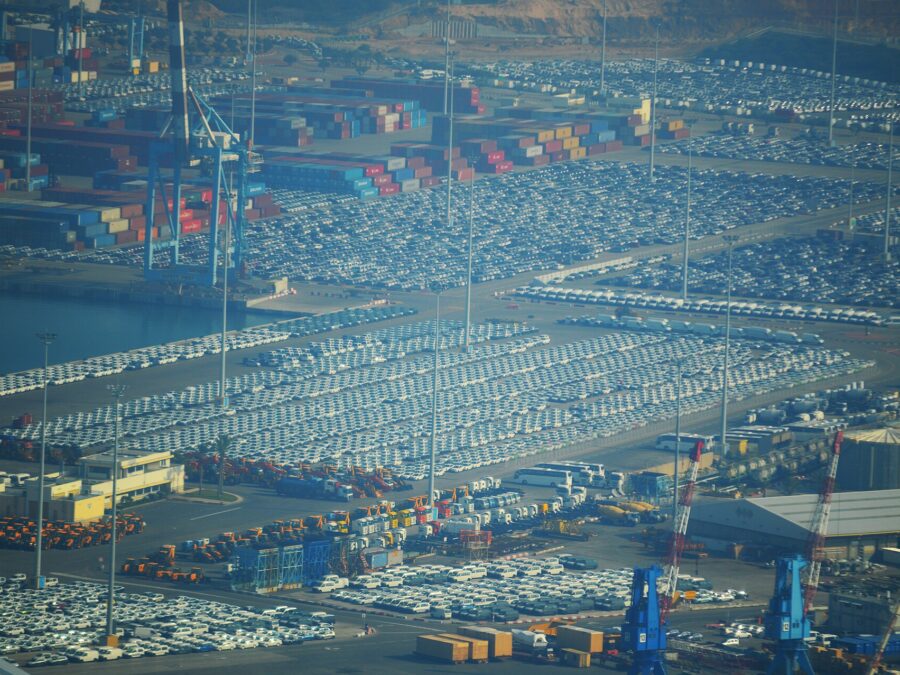
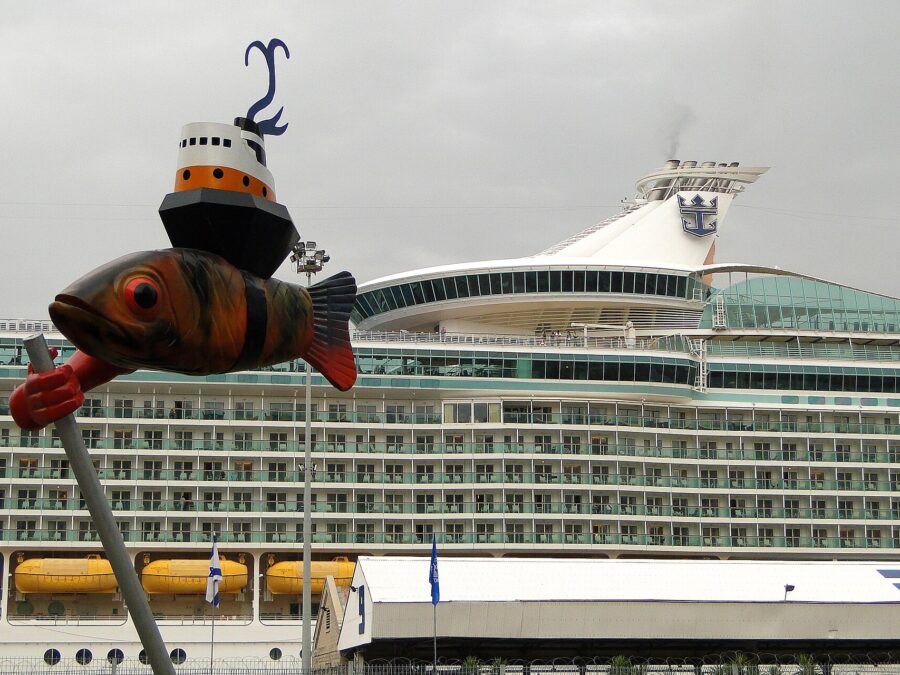
Start with the all-aboard time printed in the ship’s programme, then subtract the fixed costs. For a typical Ashdod call with all aboard at 18:30, the sum looks like this.
| Fixed cost | Minutes | Clock |
|---|---|---|
| All aboard | — | 18:30 |
| Security and walking to the ship on return | 30 | 18:00 |
| Safety buffer for traffic or a closure | 60 | 17:00 |
| Drive from Jerusalem back to Ashdod | 75 | 15:45 |
| Getting from the Old City to the vehicle | 15 | 15:30 — leave the Old City |
Then do the same from the morning end. A 07:00 arrival, immigration and disembarkation typically put you on the road around 08:00, and in Jerusalem around 09:15. So the day in the city runs from about 09:15 to 15:30: just over six hours, of which lunch takes forty minutes and walking between sights takes another hour. That leaves roughly four and a half hours of actual looking. Everything that follows is built on that budget.
The buffer is the part people want to cut. Don’t. An accident on Route 1, a demonstration closing a road near the Old City, a security incident, a coach that takes twenty minutes to find its passengers: any one of these can eat an hour, and none of them can be predicted. Our guide to getting from Ashdod port to Jerusalem explains the road and the traffic in detail.
Route 1: The Classic Highlights (Five to Six Hours)
This is the route that most good guides use for a first visit, for a simple reason: it runs downhill. It starts at the top of the Mount of Olives, drops into the Kidron Valley, climbs once to the Lions’ Gate, and then descends through the Old City to the Western Wall and out through the Dung Gate, where the vehicle collects you. You walk about four kilometres over the day, with one real climb.
| Time | Stop | How long |
|---|---|---|
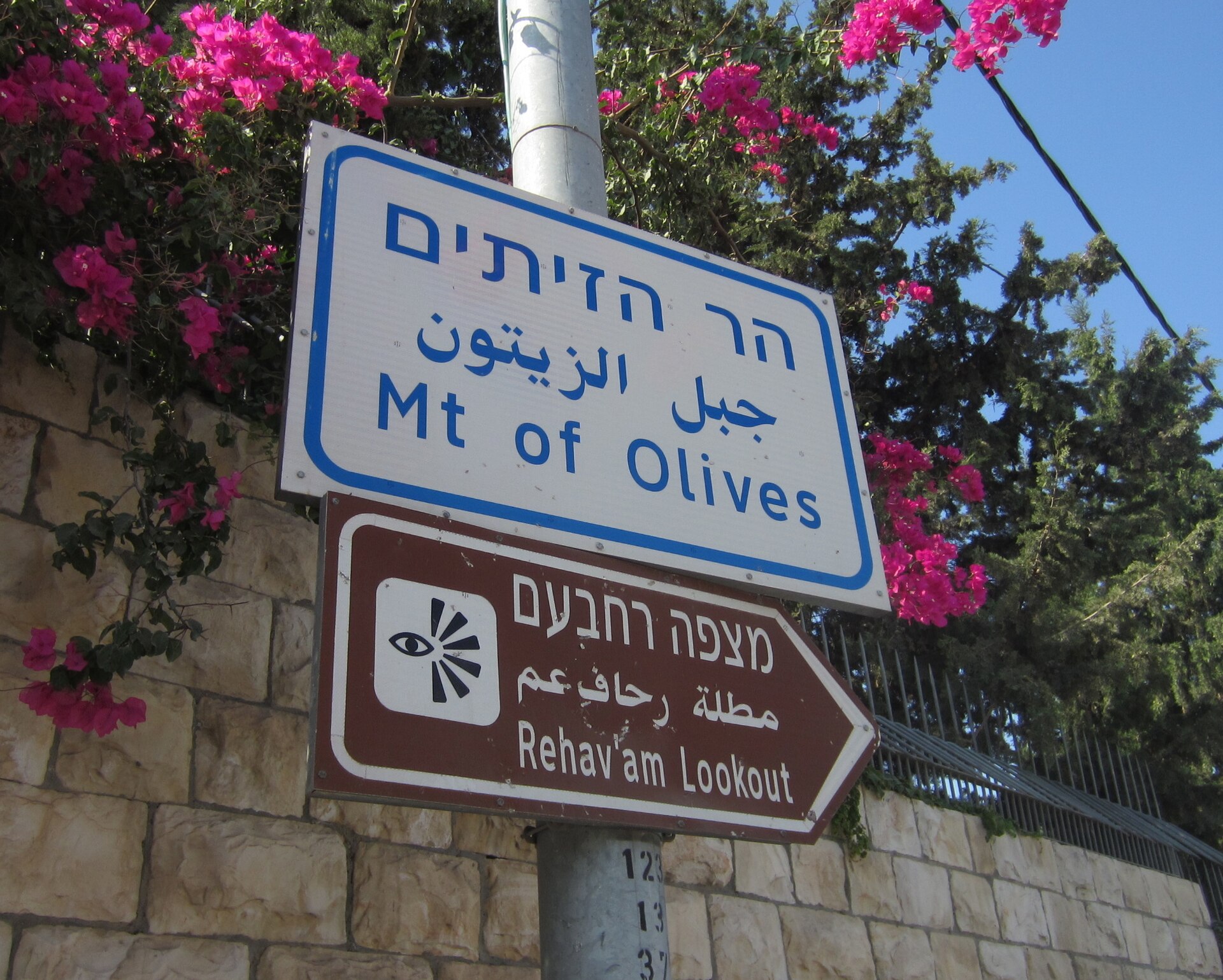
| 09:15 | Mount of Olives lookout: the view over the Old City, the Dome of the Rock and the Jewish cemetery | 25 minutes |
| 09:40 | Walk down the steep Palm Sunday road past Dominus Flevit | 20 minutes |
| 10:00 | Garden of Gethsemane and the Church of All Nations | 25 minutes |
| 10:25 | Cross the Kidron Valley and climb to the Lions’ Gate | 15 minutes |
| 10:40 | The Via Dolorosa through the Muslim Quarter to the Christian Quarter | 45 minutes with stops |
| 11:25 | Church of the Holy Sepulchre | 45 minutes |
| 12:10 | Lunch in the Christian Quarter or the Muristan | 40 minutes |
| 12:50 | Shopping on Christian Quarter Road and David Street | 30 minutes |
| 13:20 | The Cardo and the Jewish Quarter, with the view from the steps over the Western Wall plaza | 30 minutes |
| 13:50 | The Western Wall | 40 minutes, including security |
| 14:30 | Spare time: absorb a late start, a long queue, or buy the thing you walked past | 45 minutes |
| 15:15 | Exit via the Dung Gate to the vehicle | 15 minutes |
Notes on Each Stop
The Mount of Olives. The panorama here is the single best orientation in the city, and the first photograph most visitors take is the best one of the day. Morning light comes from behind you, which is exactly right. Do not walk up; get driven to the top and walk down.
The Garden of Gethsemane. Ancient olive trees and the Church of All Nations, with its glowing mosaic facade. Quick, calm and free. Shoulders and knees must be covered.
The Via Dolorosa. The traditional route of the Stations of the Cross, marked with small numbered plaques as it winds through the souq. Walking it on an ordinary morning, with deliveries being pushed past you on handcarts, is part of its power. On a port day, do not attempt to stop at every station; a guide will pick out four or five.
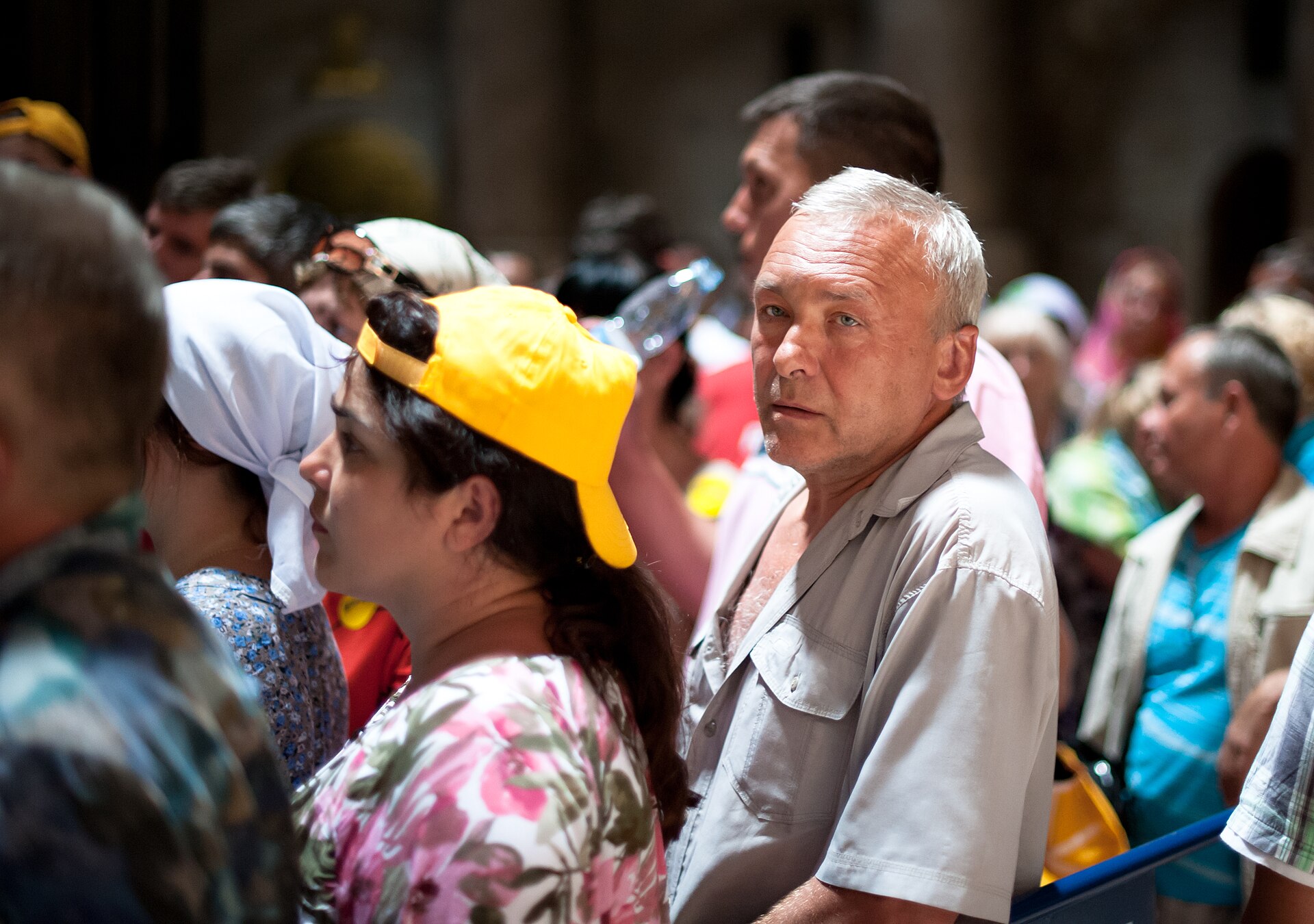
The Church of the Holy Sepulchre. Free, and open every day from early morning to evening, currently around 05:00 to 19:00 or 20:00 depending on the season. Inside are Calvary, the Stone of Anointing and the Edicule over the tomb. The queue for the Edicule itself can run from twenty minutes to well over an hour. On a cruise day, look from outside unless the queue is short; the rest of the church rewards the time far better.
The Jewish Quarter. Rebuilt after 1967, with the excavated Roman Cardo running through it. The steps down to the Western Wall plaza give the view that every guidebook uses, and they are on the way.
The Western Wall. Open at all hours and free, with separate sections for men and women. Allow time for the security check at the plaza entrance, and bring something to write a note on if you want to leave one in the stones. There are public toilets by the plaza.
Route 2: The Christian Pilgrim’s Day
For groups whose main interest is the life of Jesus, the classic route already covers most of what matters. These swaps turn it into a pilgrimage.
- Add Dominus Flevit, the tear-shaped church on the way down the Mount of Olives, where tradition says Jesus wept over Jerusalem. Ten minutes.
- Add St Anne’s Church and the Pools of Bethesda, just inside the Lions’ Gate, with remarkable acoustics; groups often sing. There is a small entry fee. Twenty-five minutes.
- Add the Chapel of the Flagellation and the Ecce Homo arch near the start of the Via Dolorosa.
- Give the Holy Sepulchre an hour and join the Edicule queue if it is under half an hour.
- Consider the Garden Tomb, the Protestant alternative site for the burial and resurrection, a peaceful garden north of Damascus Gate. It is free, open Monday to Saturday from 08:30 to 12:00 and 14:00 to 17:30, and closed on Sundays. The midday closure makes it hard to fit in; it works best first thing in the morning.
- Drop the Jewish Quarter walk and the shopping time to pay for the extra stops.
Bethlehem is the obvious addition for pilgrims and the most difficult one to fit. It is covered below. Our guide to Christian pilgrimage in Jerusalem has more on every site.
Route 3: Jewish Heritage
For visitors whose focus is Jewish Jerusalem, the day centres on the Western Wall and the ground beneath and around it.
| Time | Stop |
|---|---|
| 09:15 | Mount of Olives lookout, including the view over the ancient Jewish cemetery |
| 10:00 | The Jerusalem Archaeological Park and Southern Wall excavations, entering by the Dung Gate |
| 11:15 | The Western Wall |
| 12:00 | Western Wall Tunnels tour (booked in advance) |
| 13:30 | Lunch in the Jewish Quarter |
| 14:15 | The Cardo, the Hurva Synagogue square, and the Jewish Quarter lanes |
| 15:15 | Exit and return to the vehicle |
The Western Wall Tunnels tour must be booked ahead, often weeks ahead in busy seasons, and runs to a fixed slot; build the day around it rather than the other way round. King David’s Tomb and the Room of the Last Supper on Mount Zion are a short walk from the Jewish Quarter through Zion Gate: the tomb is open daily from 08:00 to 17:00 (to 14:00 on Fridays) and the room above it from 08:00 to 18:00. The Mount Zion compound is an easy substitute if tunnel slots are sold out. Our page on Jewish holy sites in Jerusalem covers each.
Route 4: The Short Call (Three to Four Hours)
For an early all-aboard time or a Haifa call, cut the day to its bones and enter from the west, where the drive from the coast arrives.
- A quick panorama. Either the Mount of Olives, if the driver can reach it fast, or the Haas Promenade (Tayelet) in the south of the city. 20 minutes.
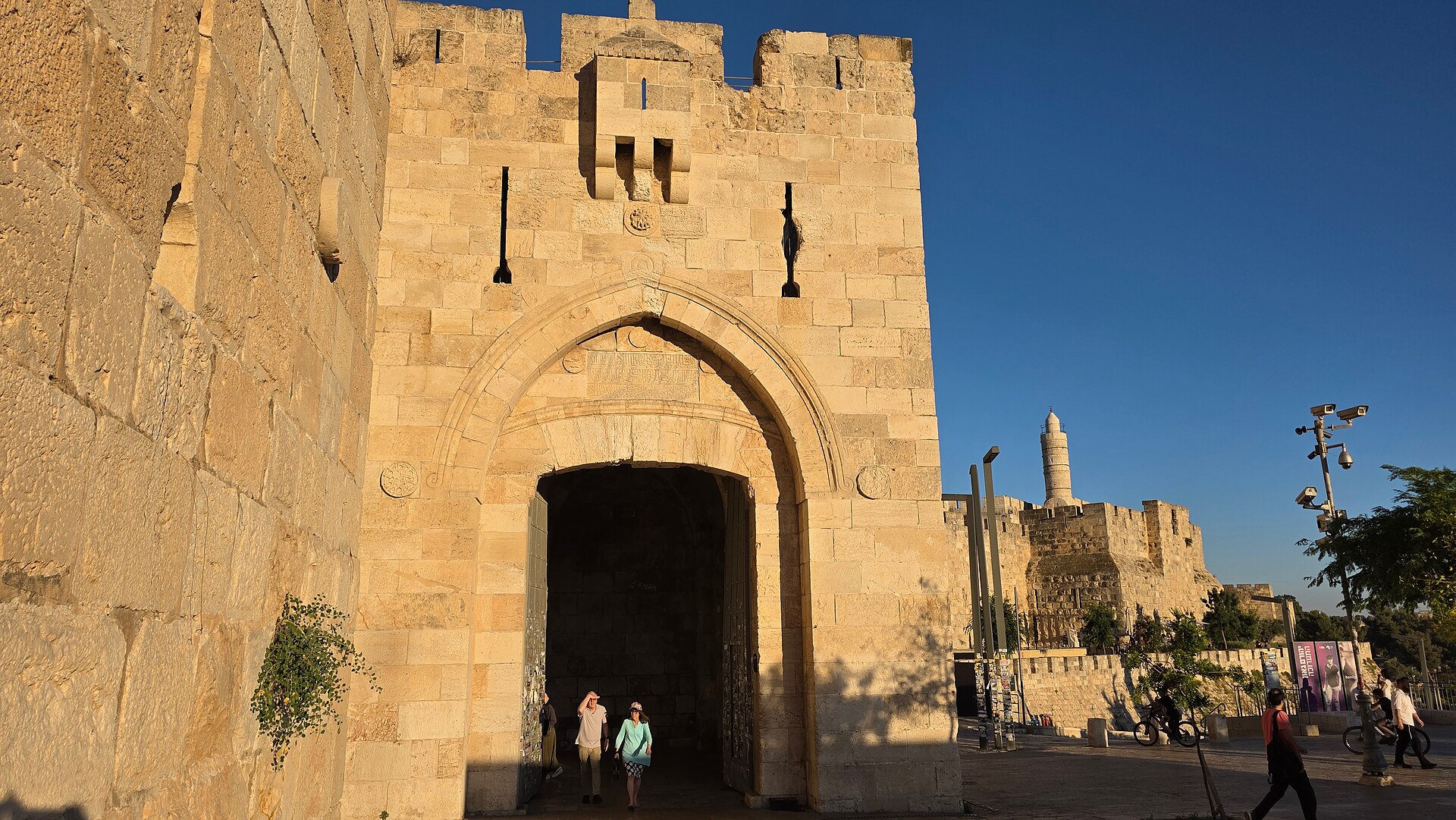
- Jaffa Gate, then down David Street through the souq. 15 minutes.
- The Church of the Holy Sepulchre. 30 minutes.
- Through the Muslim or Jewish Quarter to the Western Wall. 45 minutes including security.
- A snack on the move and one shop on the way back to Jaffa Gate. 30 minutes.
- Leave.
It is a sprint, and it will feel like one. But it covers the two places that most people come for, and it is a far better use of three hours than a coach tour that spends one of them on photo stops.
Route 5: The Late All-Aboard (Seven Hours or More)
When the ship does not sail until evening, the extra hours are best spent going deeper rather than wider. Add one of these to the classic route, not all of them.
- The Tower of David, the citadel by Jaffa Gate, whose museum tells the whole history of the city in order. 90 minutes.
- The City of David and Hezekiah’s Tunnel, a wade through a 2,700-year-old water channel. Two hours, and you will get wet up to the knees.
- The Ramparts Walk along the top of the Ottoman walls, best in the late afternoon. An hour for one section.
- A proper lunch rather than a sandwich. It is not a waste of time; an hour sitting down in the middle of the day makes the afternoon better.
The Honest Cut List
These are the places that appear on excursion menus and wish lists and that, on most port days, should be left for another visit. The verdicts are blunt on purpose.
| Site | Time it really needs | Verdict on a port day |
|---|---|---|
| Yad Vashem | 3 hours, plus travel across the city | Cut. It deserves an unhurried visit, and rushing it is worse than missing it. Closed on Saturdays |
| Israel Museum and the Dead Sea Scrolls | 3 hours or more | Cut, unless it is the only thing you want to see |
| Temple Mount / Haram al-Sharif | 90 minutes including the security queue | Usually cut. Short morning visiting windows for non-Muslims, Sunday to Thursday only, and long queues. See our Al-Aqsa guide |
| Bethlehem | 2 to 3 hours including the checkpoint | Only with the ship’s excursion or a very well-organised private tour, and only at the cost of half the Old City |
| The Dead Sea as an add-on | Half a day | Cut. Jerusalem and the Dead Sea in one port day means a rushed version of both |
| Mahane Yehuda market | 1 hour, plus travel | Cut, unless food is your thing. It is in West Jerusalem, away from the Old City, and the Old City souq is on your route anyway |
| Western Wall Tunnels | 75 minutes, pre-booked | Keep only on the Jewish heritage route or a late all-aboard |
| The Edicule queue | 20 minutes to 2 hours | Join only if short. Nobody else in your group should wait with you |
| Garden Tomb | 45 minutes | Keep for Protestant pilgrims in the morning; otherwise cut |
| Ein Karem | 2 hours, plus travel | Cut. Beautiful and entirely the wrong direction |
Lunch in Forty Minutes
The Old City’s best food is quick food, which suits a cruise day perfectly. Hummus and falafel, eaten sitting down at a plastic table, take twenty minutes. Sesame-crusted ka’ak bread from a street cart, eaten with za’atar, takes five. Fresh orange and pomegranate juice is squeezed to order on almost every corner in summer.
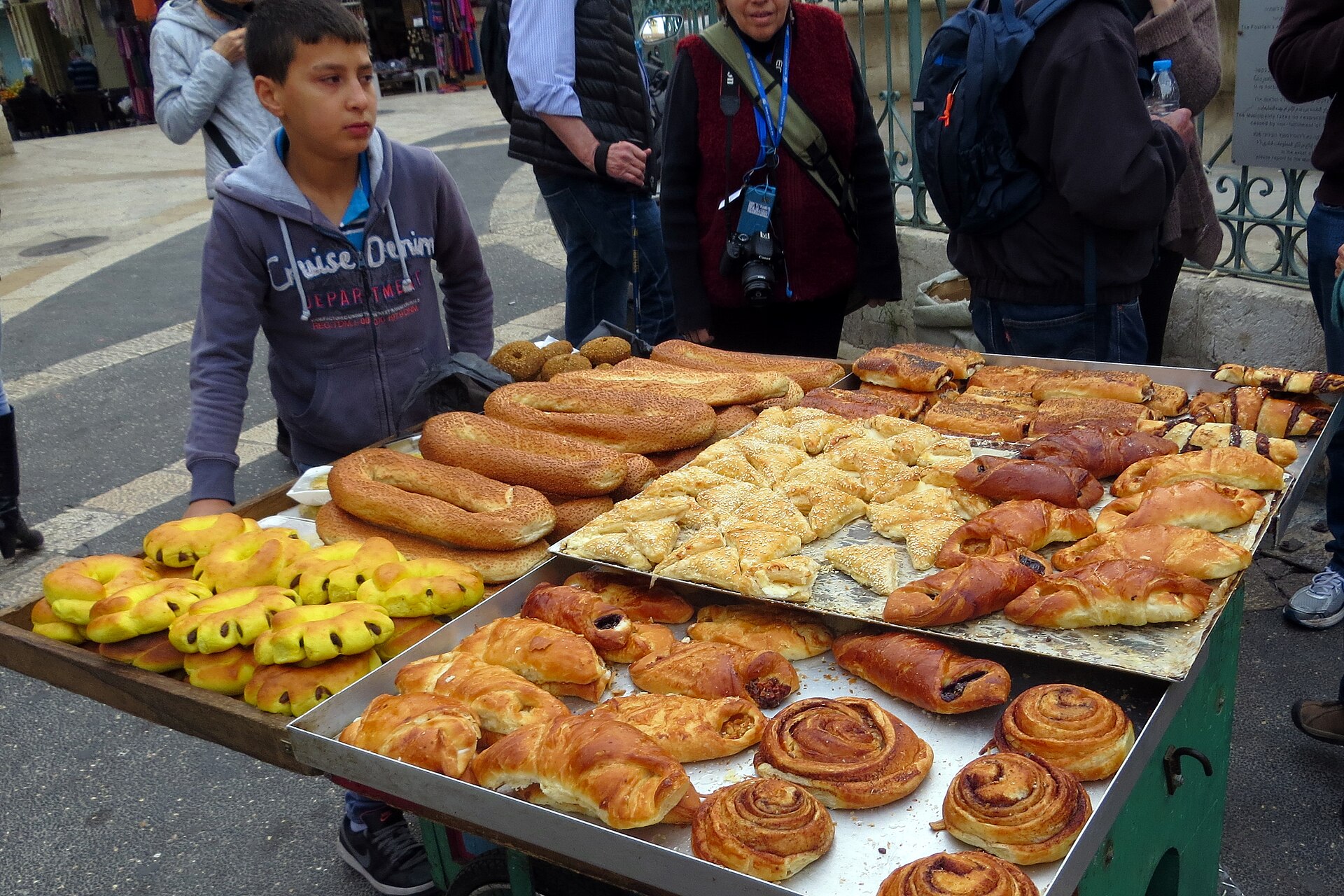
- Christian Quarter and Muristan: cafés and juice stalls around the Muristan fountain, a two-minute walk from the Holy Sepulchre.
- Muslim Quarter: hummus places along El Wad Street and near the Via Dolorosa. See our guide to the best hummus in Jerusalem for names.
- Jewish Quarter: kosher cafés and falafel around Hurva Square, which close on Friday afternoons and Saturdays.
- Just outside Jaffa Gate: Mamilla Mall has chain cafés and clean toilets, useful at either end of the day.
More ideas are in our guide to Jerusalem street food. Whatever you choose, eat before you are hungry. Lunch at 12:10 feels early; lunch at 13:30 on a hot day with three hours of walking behind you is how people end up flagging at the Western Wall.
Shopping in Thirty Minutes
Decide what you want before you step off the ship, and buy it in the middle of the day rather than at the end. The Christian Quarter and David Street, running down from Jaffa Gate, have the widest range of olive wood, Armenian ceramics, embroidery, icons and spices. Our guides to the Old City market and to Jerusalem souvenirs explain what is genuinely local and what fair prices look like.
- Bargain, politely. Opening prices in the souq assume you will.
- Know about commission stops. Some coach tours stop at a large shop where the guide earns commission. There is nothing wrong with buying there, but compare prices first.
- Pay by card for larger items, and keep receipts.
If Things Start Running Late
Every cruise day needs decision points. Set them at the start, with the whole group, so that nobody has to argue in the souq at half past two.
- 11:30: if you have not yet reached the Holy Sepulchre, drop the Jewish Quarter walk and go from the church straight to the Western Wall after lunch.
- 13:30: if you have not yet reached the Western Wall, drop the shopping.
- 15:00: whatever you are doing, start walking towards the vehicle.
- 15:30: leave. No exceptions for one more shop.
If you are separated from a group, go to the pre-agreed meeting point, usually the vehicle at the Dung Gate or Jaffa Gate, and stay put. Save the guide’s and the port agent’s numbers before the day starts.
Adjusting for the Day of the Week
On Fridays, Muslim midday prayers at Al-Aqsa bring large crowds through the Muslim Quarter and Damascus Gate, and Jewish Quarter cafés close from early afternoon; walk the Via Dolorosa early. On Saturdays, the Jewish Quarter is quiet and closed, the Western Wall is open but photography is not permitted, and the Christian and Muslim Quarters trade normally; our guide to Shabbat in Jerusalem explains more. On Sundays, the Garden Tomb is closed and some churches limit visits during morning services. Check holy days on the calendar too: a Muslim or Jewish holiday can close sites or fill the streets.
What to Wear and Bring
- Clothes that cover shoulders and knees, for everyone. See our Jerusalem dress code.
- Walking shoes with grip. The limestone is polished smooth by centuries of feet.
- Water, a hat and sunscreen from April to October.
- Passport, the Israeli entry slip and the ship’s card.
- Small shekel notes, and a card.
- A light bag. Security checks at the Western Wall are quicker without a rucksack.
Pilgrims often ask whether Bethlehem can be added to this route. From Ashdod it can, at the cost of roughly half the Old City time, and with one unpredictable step: the return checkpoint into Jerusalem, which can take a few minutes or an hour. Our guide to Bethlehem from a cruise port explains how the crossing works and why the ship’s own excursion is usually the right way to do it.
Final Word on a Jerusalem Shore Excursion
The best cruise days in Jerusalem are the ones that feel unhurried, and that only happens when the hard decisions have been made in advance. Work backwards from all aboard, start high and walk downhill, eat early, shop in the middle of the day, and leave on time even when you would rather not. You will not see everything, and nobody does. If the city stays with you, the Old City guide and the longer Jerusalem itineraries are there for the trip you take next time, and our self-guided walking tour is a good model for a day without a coach.
Photo Credits
The Mount of Olives street sign and Rehav’am Lookout pointer: Jerusalem Mount of Olives — heading to the lookout point (6036443146) by brionv from San Francisco, United States, CC BY-SA 2.0, via Wikimedia Commons.
Pilgrims queuing for the Edicule in the Church of the Holy Sepulchre: Awaiting entrance to the Edicule by Almonroth, CC BY-SA 3.0, via Wikimedia Commons.
A bread cart near the Muristan fountain: Alan Kotok, Bread vendor near Muristan Fountain, Old Jerusalem by Alan Kotok, CC BY 4.0, via Wikimedia Commons.
Jaffa Gate in evening sun: Jaffa Gate and Tower of David- by Yair-haklai, CC BY-SA 4.0, via Wikimedia Commons.
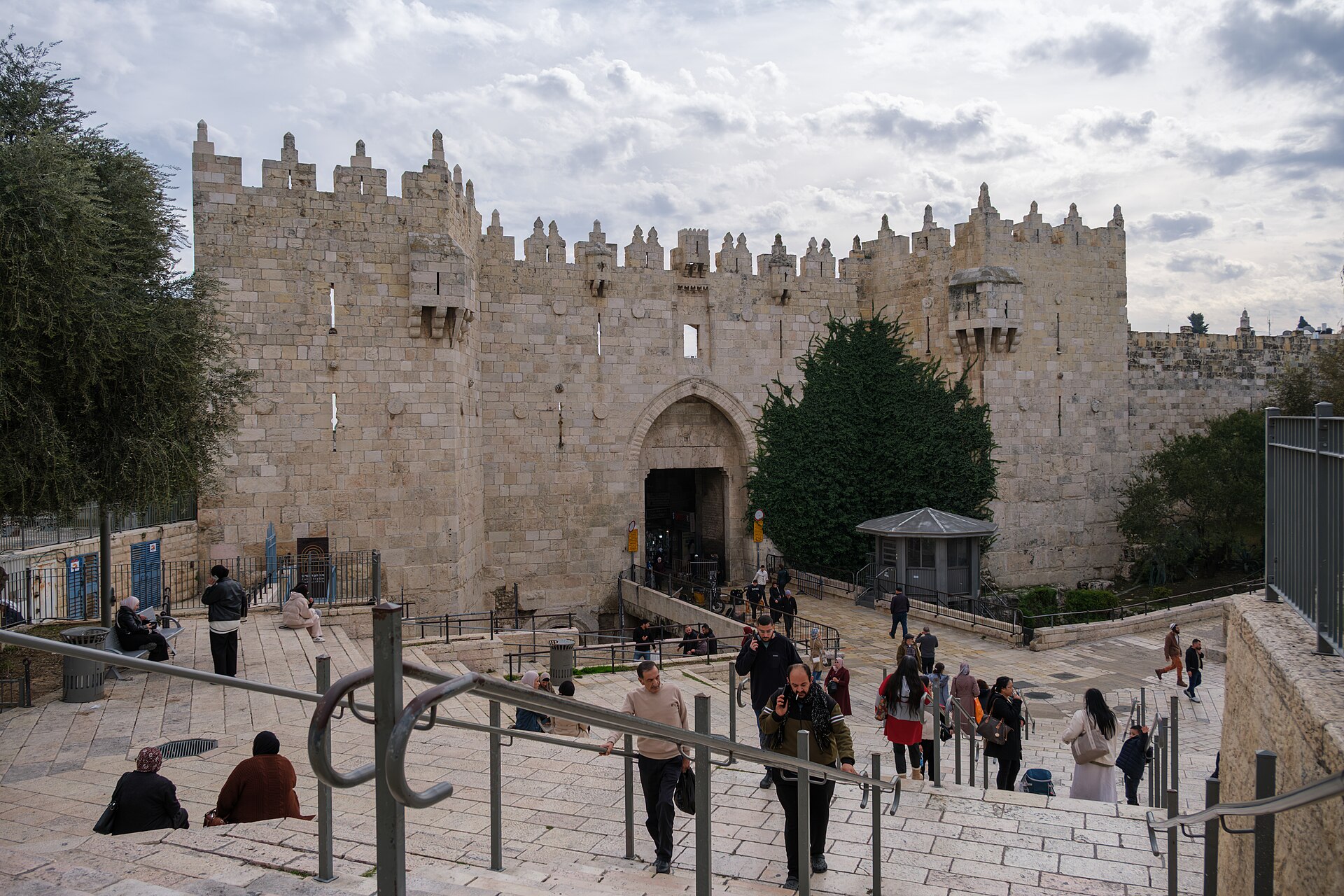
Damascus Gate from the top of its stepped plaza: Jerusalem, 21 December 2025 85 by מקף־עברי, CC BY-SA 4.0, via Wikimedia Commons.