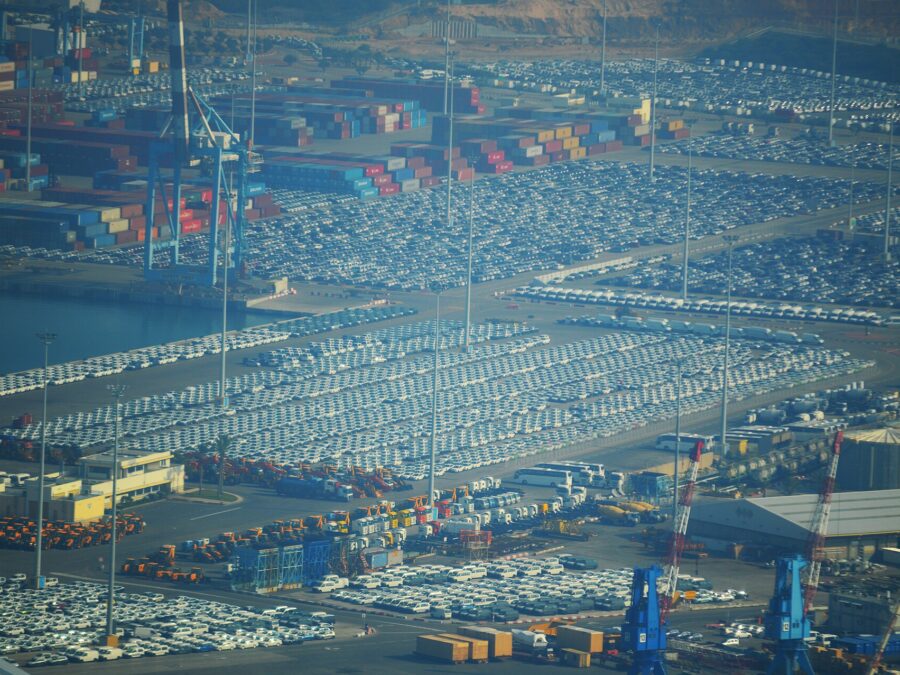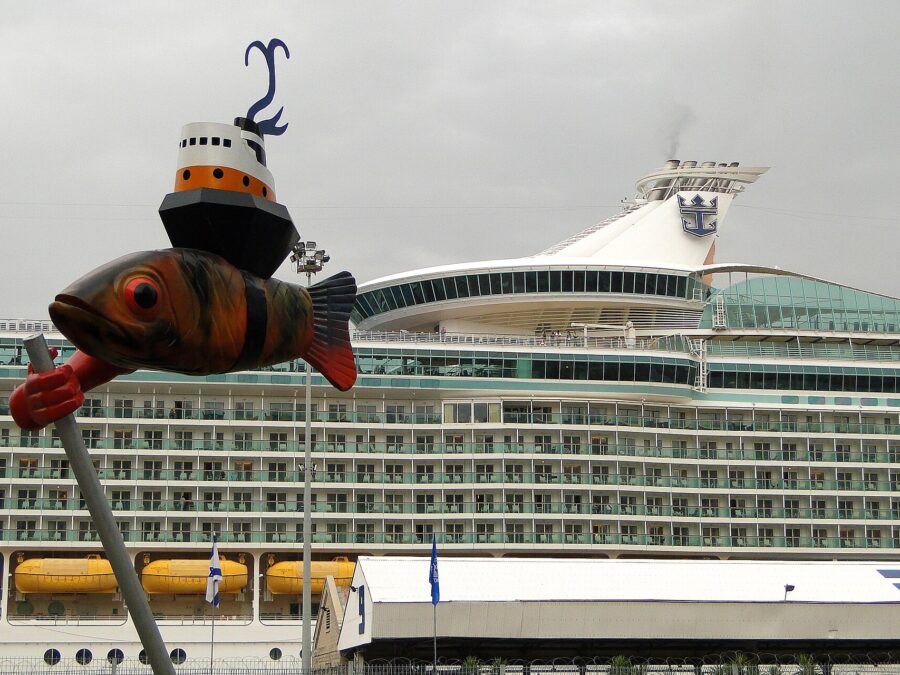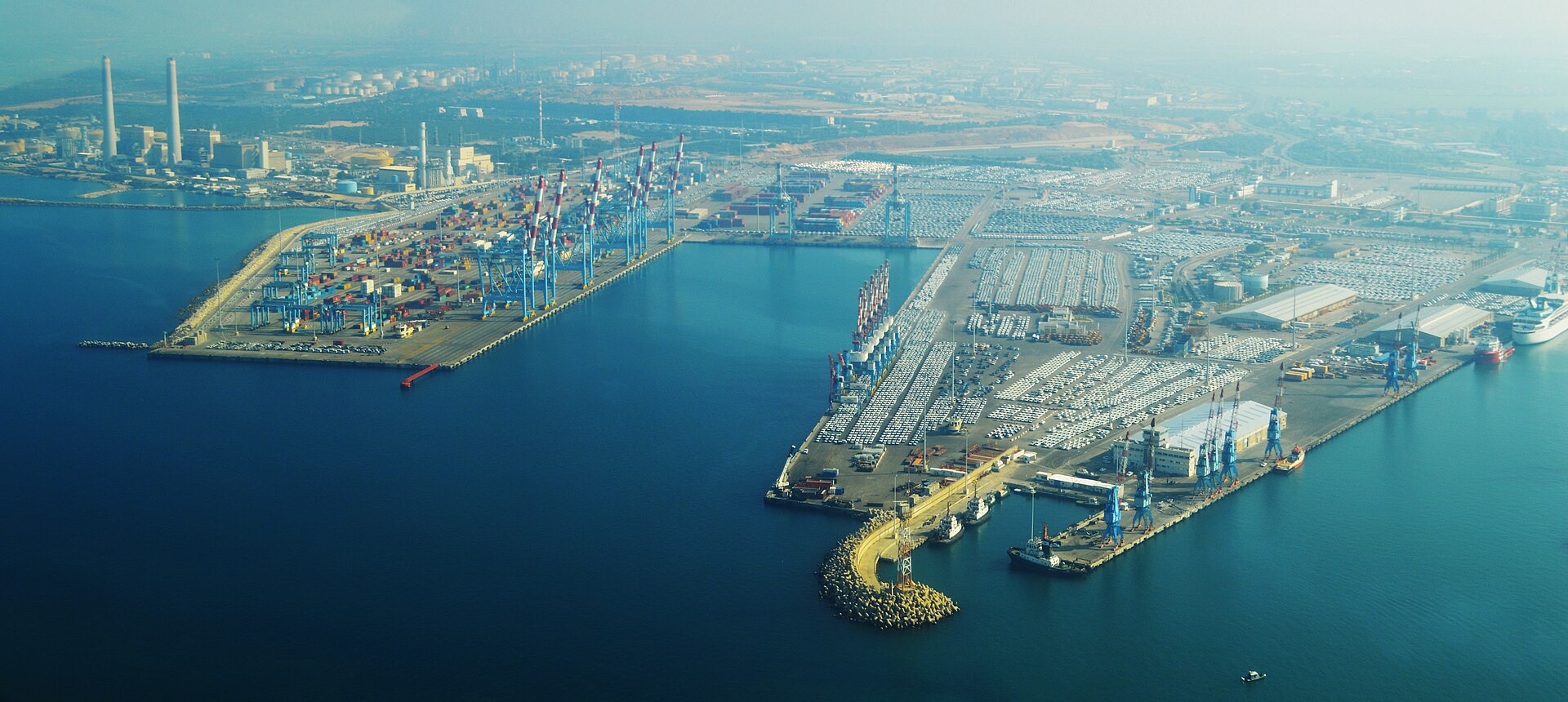
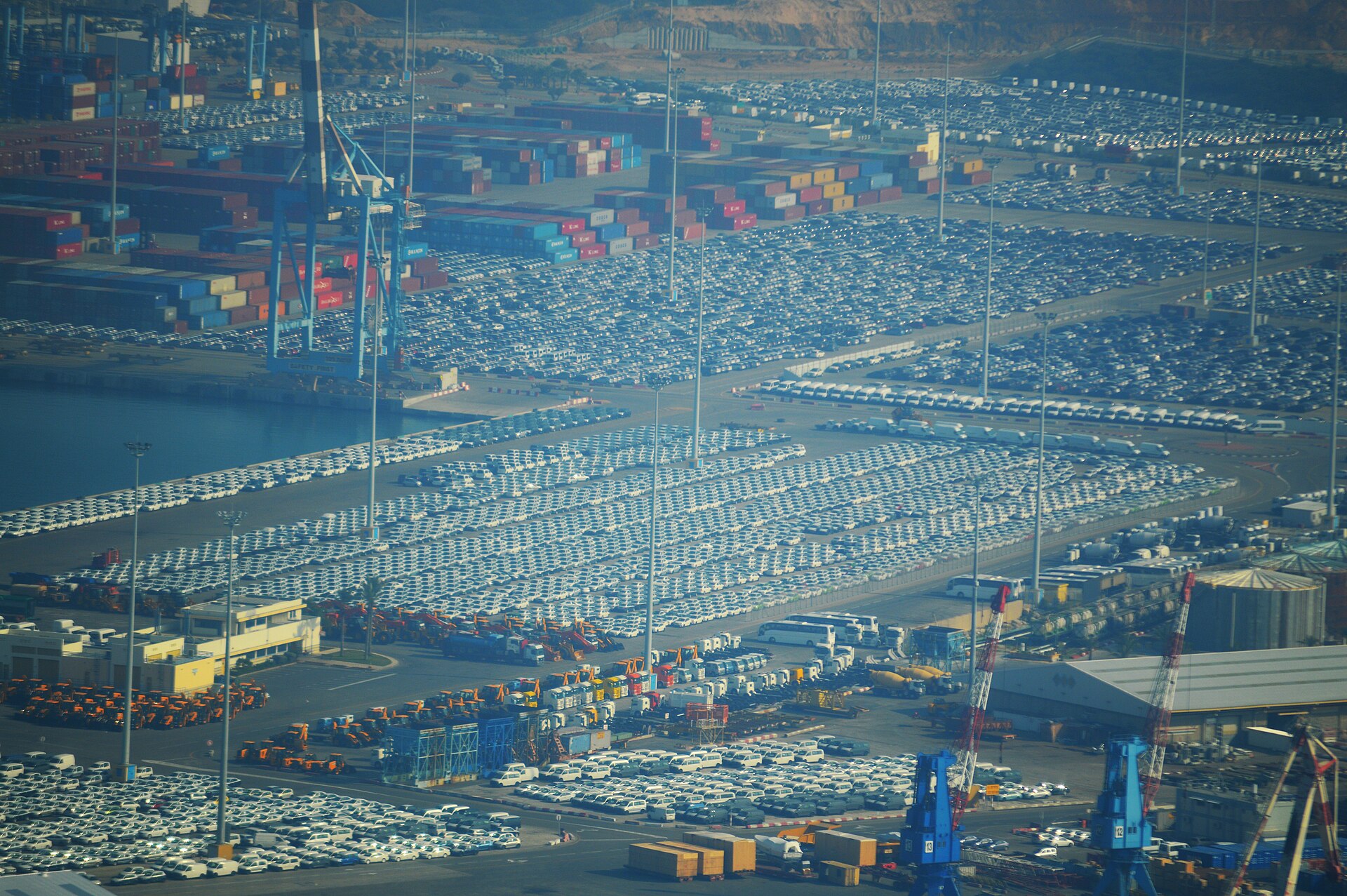
The first thing most passengers see from the rail when their ship docks at Ashdod is not the Holy Land but a car park: row after row of new Toyotas and Hyundais, thousands of them, waiting on the quay for their buyers, with container cranes beyond and a power station chimney on the horizon. It is not romantic, but it is instructive, because it tells you exactly what kind of place you have arrived in and why the next hour will be spent in a vehicle. This is a guide to getting from Ashdod port to Jerusalem and back again, before the ship sails without you.
It covers the port itself and why you cannot walk out of it, every way of making the 70-kilometre trip, how long each really takes, where you will be dropped in Jerusalem, what to budget and how to get back with time to spare. The wider question of how to plan a cruise day in Israel, including Haifa and Bethlehem, is covered in our guide to Jerusalem from a cruise ship. Details were checked in September 2026. Taxi prices in particular move, so treat any figure here as the right order of magnitude and confirm before you set off.
Ashdod Port to Jerusalem at a Glance
| Option | Door-to-door time, one way | What you need to know |
|---|---|---|
| Ship’s excursion coach | 1 hour 15 minutes to 1 hour 45 minutes | Leaves from the pier. The ship waits if the tour is late |
| Private tour or transfer | 1 hour 10 minutes to 1 hour 30 minutes | Driver and guide meet you at the pier or at the terminal exit |
| Taxi from the port gate | 1 hour 15 minutes to 1 hour 45 minutes, including the shuttle | Agree the fare and return plan before leaving. Guides have quoted around ₪250 each way |
| Train | 2 hours 30 minutes or more | No direct train; change in Tel Aviv. No service on Shabbat |
| Intercity bus | 2 hours or more | From Ashdod’s central bus station. Slow and awkward on a port day |
| Walking out of the port | Not possible | Pedestrians are not allowed through the working harbour |
Why You Cannot Walk Out of Ashdod Port
Ashdod is one of Israel’s two main cargo ports, the other being Haifa, and it handles containers, bulk goods and vehicles for the whole south and centre of the country. It was not built for cruise tourism, and cruise ships berth wherever there is a suitable quay, which usually means in the middle of the working harbour. Between the ship and the port gate are container stacks, straddle carriers, lorries, railway sidings and those famous car parks, and the whole area operates under international maritime security rules.
The result is simple: pedestrians are not permitted to walk through the port. Everyone leaves by vehicle, whether a ship’s tour coach driving from the quayside, a pre-arranged private vehicle cleared by security to meet the ship, or a shuttle bus to the gate. This matters for three reasons:
- You cannot nip out for half an hour. There is no café, market or beach within walking distance of the ship.
- Independent travellers depend on the shuttle at both ends of the day. Find out on board where it goes, how often it runs and when the last one returns.
- A taxi generally cannot bring you back to the ship. Taxis wait outside the gate, and on the return you are normally dropped at the gate or at the shuttle stop and ride the last stretch on the shuttle.
Arrangements differ from ship to ship and from year to year. The port agent’s details, printed in the ship’s daily programme, are the authority on your particular call.
Before You Leave the Ship
- Passport and entry slip. Israel does not stamp passports; it issues a small slip on entry. Carry both all day. Our Israel visa and ETA-IL guide explains the entry rules, and your cruise line can tell you how they apply to your call.
- The ship’s card, which security will want to see on the way back in.
- The port agent’s phone number and the ship’s emergency contact, saved in your phone and written on paper.
- Clothes for churches. Shoulders and knees covered, and walking shoes with grip. The Jerusalem dress code is not optional at the Church of the Holy Sepulchre or the Western Wall.
- Shekels. Cards are widely accepted, but small notes help for taxis, drinks and the souq.
- A charged phone with data, and the Moovit or Google Maps app, which both handle Israeli public transport well.
- Water, especially between April and October.
The Route: What the Drive Is Like
Whichever vehicle you choose, the road is the same. From Ashdod you head inland across the flat coastal plain, past citrus groves, towns and industrial estates, to Latrun, where the road joins Route 1, the main motorway between Tel Aviv and Jerusalem. From there it climbs.
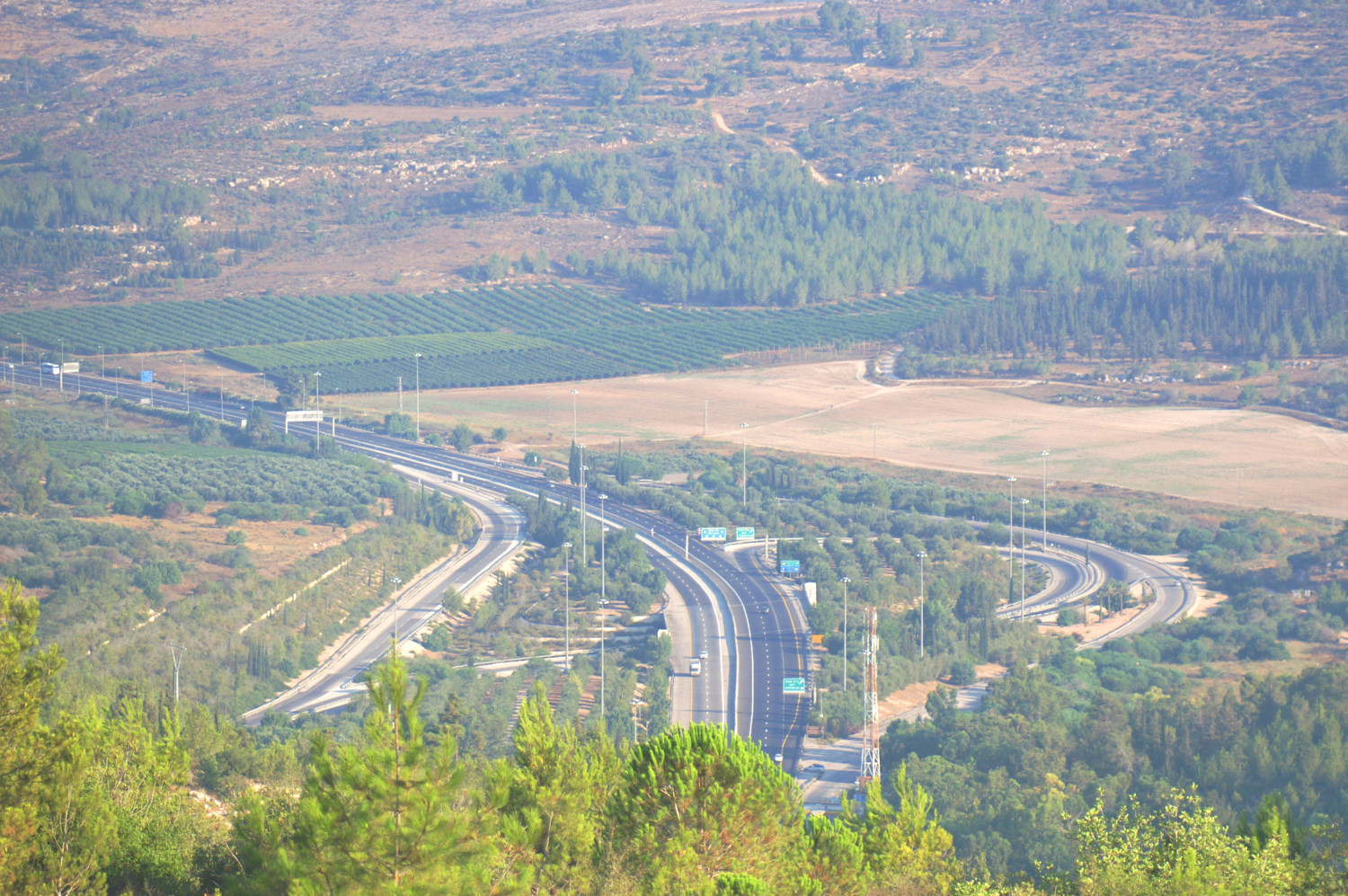
The stretch through the Sha’ar HaGai gorge, known in Arabic as Bab al-Wad, is the start of the ascent into the Judean Hills. You climb around 600 metres in half an hour, through pine forest planted over the last century, and the temperature drops noticeably. On the roadside near Sha’ar HaGai are the rusted shells of armoured vehicles left as memorials to the convoys that fought to supply the Jewish population of Jerusalem during the 1948 war. A guide will usually explain them; they are also a reminder that the city’s history begins before you arrive.
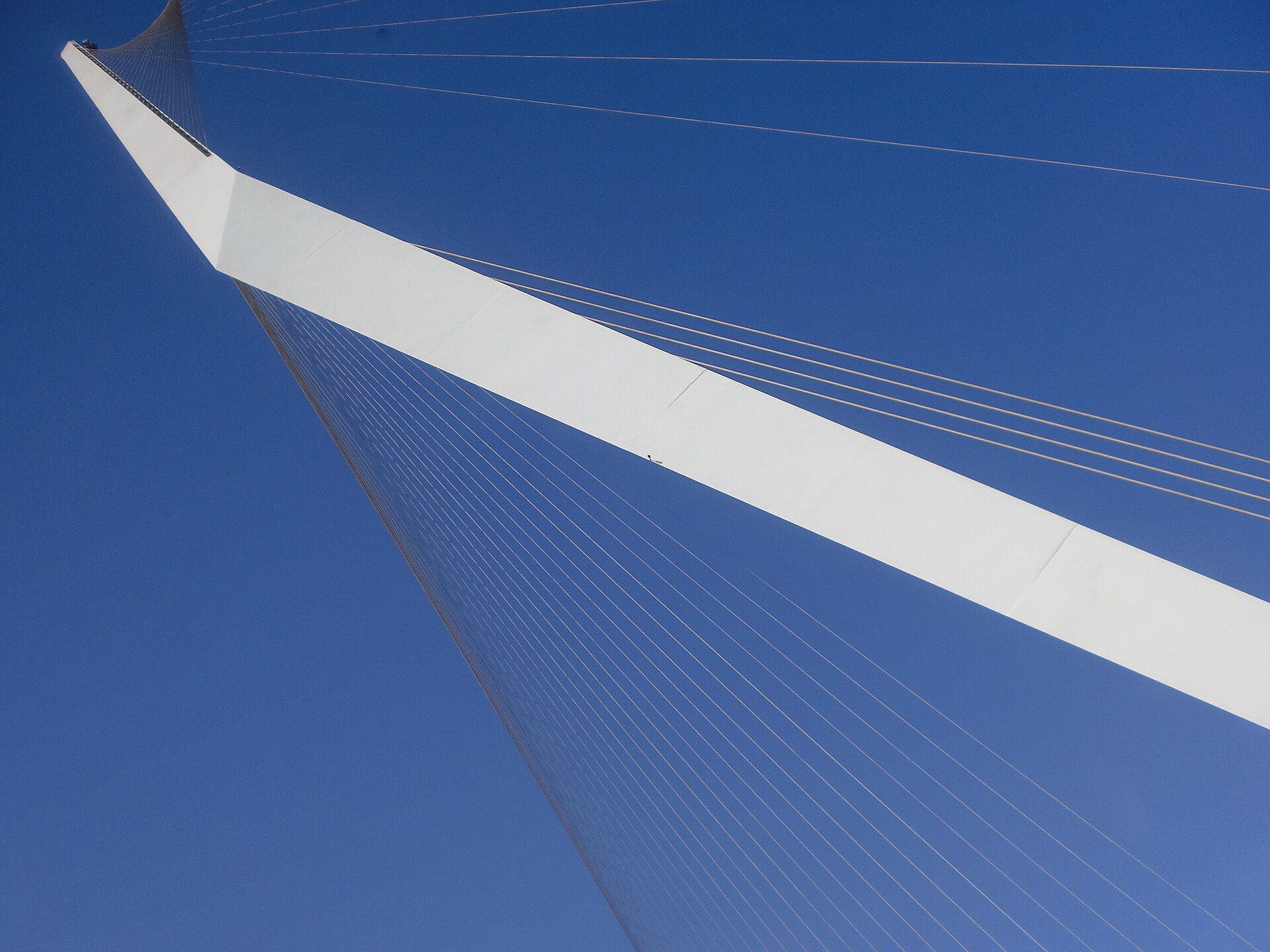
Route 1 enters Jerusalem at its western edge, beside the white Chords Bridge, which carries the light rail, and close to the Central Bus Station and Yitzhak Navon railway station. From there, depending on your destination, it is 10 to 25 minutes through the city to the Old City gates or the Mount of Olives.
Traffic
Route 1 is one of the busiest roads in Israel. Commuter traffic into Jerusalem is heaviest on weekday mornings from about 07:00 to 09:30, and traffic out of the city builds from mid-afternoon, especially on Thursdays. Roadworks and accidents are frequent, and the road climbs through a narrow corridor with few alternatives. The practical rule, followed by every competent shore-excursion guide, is to allow an hour and a half for the return journey even when the outward trip took an hour. On Friday afternoons and Saturdays the roads are much quieter.
Option 1: The Ship’s Excursion
Most passengers take the ship’s own tour, and there are good reasons. The coach boards on the quay, there is no shuttle to deal with, and a licensed guide handles everything from the Mount of Olives to the souq. Above all, if the coach is late back because of traffic or a closure, the ship waits. On a 70-kilometre trip up a busy motorway, that is a real benefit.
Some cruise lines also sell a transfer-only product, sometimes called “Jerusalem on your own”: a coach drops you in the city in the morning and collects you at a fixed point and time in the afternoon. It combines the guarantee on the road with freedom in the city, and for confident travellers who want to explore the Old City at their own pace, it is often the best option of all. Ask whether the ship’s guarantee covers the return transfer; it usually does, because the coach is the ship’s own.
The drawbacks are the obvious ones: large groups, time lost at every stop, and an itinerary that suits the average passenger rather than you.
Option 2: A Private Tour or Transfer
Israeli companies specialising in shore excursions meet ships at Ashdod on every call. A private tour typically collects you at the terminal or quayside, drives you to Jerusalem, and returns you to the ship, with a licensed guide for the day. Small-group shore tours, with perhaps ten to fifteen passengers from several ships, sit between the two.
What to check before you book:
- Pier pickup. Can the vehicle meet you at the ship, or do you have to take the shuttle to the gate first? This makes a surprising difference to the morning.
- Licensed guide. In Israel, a guide leading tourists must be licensed by the Ministry of Tourism. Ask for the name.
- Return time in writing. A good operator will commit to having you back at the port a set time before all aboard, usually an hour or more.
- Their own guarantee. Some companies promise to pay for you to reach the next port if they get you back late. Read the terms.
- Cancellation. Given how often Israeli calls have been cancelled since 2023, a full refund if the ship does not call is essential.
- Bethlehem. An Israeli guide cannot enter Bethlehem. Ask how the company handles the hand-over to a Palestinian guide at the checkpoint.
For families and groups of four or more, a private tour is often comparable in cost per head to the ship’s excursion and gets much more done. Our guide to the best Jerusalem tours explains what to look for in a guide.
Option 3: A Taxi From the Port Gate
This is the most flexible independent option and the one with the most ways to go wrong. The sequence runs like this.
- Take the ship’s or port’s shuttle to the port gate or passenger terminal exit.
- Find the taxi rank. On cruise days, taxis gather outside the gate. Many drivers speak good English and know the drill.
- Agree the whole day, not just the ride. Settle the fare for the return trip, the waiting time or the pickup time, the pickup point in Jerusalem and whether you pay at the end. Put it in writing: a text message will do.
- Take the driver’s name, number and plate. Photograph the car.
- Set a pickup time that leaves at least 90 minutes before the last shuttle into the port.
Port guides have quoted a taxi fare of around ₪250 each way between Ashdod port and Jerusalem, with higher tariffs at night and on Shabbat and holidays. Treat that as a floor rather than a promise, since fares have risen and drivers will quote a day rate for waiting. A driver who waits for you all day and drives you back will reasonably charge for their time. It is worth comparing a quote with the cost of a transfer-only ship coach or a private transfer company, which is often similar and comes with better guarantees.
The hazards are real but manageable. A driver who has promised to be at Jaffa Gate at 15:00 may be stuck in traffic or may have taken another fare. Have a backup number, know that licensed taxis in Jerusalem can be hailed or booked through the Gett app, and do not leave the return to chance. Our Jerusalem transport guide covers taxis in the city.
Option 4: Train
It is possible, and on a port day it is rarely sensible. There is no direct train between Ashdod and Jerusalem. The route goes from Ashdod Ad Halom station, on the southern edge of the city, north to Tel Aviv HaHagana, where you change for the high-speed line to Jerusalem Yitzhak Navon station. The rail journey alone takes around one hour and 45 minutes or more, depending on the connection, and you still have to get from the port to Ad Halom station by taxi and from Navon to the Old City by light rail.
Total door to door, allow two and a half hours each way. Trains are clean, comfortable and cheap, you pay with a Rav-Kav card or a contactless bank card, and reservations are not needed. But there is no service from Friday afternoon until Saturday night, or on Jewish holidays, and a missed connection is the kind of problem that turns into a missed ship. Choose the train only if your all-aboard time is late in the evening, you have travelled in Israel before and you have a taxi plan in reserve.
Option 5: Intercity Bus
Intercity buses run between Ashdod’s central bus station and Jerusalem Central Bus Station, and journey planners such as Moovit show current routes and times. The trip takes longer than a taxi, you must first reach the bus station from the port, and buses do not run on Shabbat. It is cheap, and on a port day it is the option we would recommend least.
Where You Will Arrive in Jerusalem
The drop-off point shapes the whole day, and it is worth knowing the options before you agree anything with a driver.
| Drop-off point | Good for | Notes |
|---|---|---|
| Mount of Olives viewpoint | Starting with the classic panorama, then walking down past Gethsemane | Where most tour coaches start. Steep walk down; do not walk up |
| Jaffa Gate | The Christian Quarter, the Church of the Holy Sepulchre, the souq, the Tower of David | The easiest meeting point for taxis. Mamilla Mall is next door for toilets and coffee |
| Dung Gate | The Western Wall and Jewish Quarter | Security screening; closest vehicle access to the Western Wall plaza |
| Damascus Gate | The Muslim Quarter and the Via Dolorosa | Busy and atmospheric; very crowded on Fridays around midday prayers |
| Jerusalem Central Bus Station or Navon railway station | Arriving by bus or train | Take the Red Line light rail to City Hall or Damascus Gate |
For a first visit, Jaffa Gate is the most practical meeting point in both directions. It is on a main road, taxis can stop close by, and everyone knows it. Our guide to the gates of Jerusalem’s Old City explains which gate leads where, and the Old City guide explains how the four quarters fit together.
Time Budgets: How Much Jerusalem Do You Get?
Work backwards from the all-aboard time. This table assumes a ship arriving at 07:00 and all aboard at 18:30, which is fairly typical; subtract or add as your own times dictate.
| Ship coach | Private tour | Taxi | Train | |
|---|---|---|---|---|
| Leave the ship | 08:00 | 07:45 | 08:00 | 08:00 |
| Arrive in Jerusalem | 09:30 | 09:00 | 09:30 | 10:30 |
| Leave Jerusalem | 15:30 | 15:45 | 15:15 | 14:15 |
| Back at the ship | 17:00 | 17:15 | 17:00 | 17:00 |
| Time in the city | About 6 hours | About 6 hours 45 minutes | About 5 hours 45 minutes | About 3 hours 45 minutes |
Six hours is enough for the Mount of Olives, the Church of the Holy Sepulchre, part of the Via Dolorosa, the Western Wall, lunch and some shopping. It is not enough to add Bethlehem, Yad Vashem or the Dead Sea as well. For how to spend those hours, our one day in Jerusalem guide is a useful model, though it assumes a full day and a hotel bed, so trim accordingly.
Getting Back to the Ship
The return is where days go wrong, so it deserves a section of its own.
- Leave Jerusalem earlier than feels necessary. Afternoon traffic on Route 1 is unpredictable, and a single accident on the descent can add an hour.
- Know the last shuttle time. If you are coming back by taxi, you will normally be dropped at the port gate and need the shuttle to reach the ship. The last shuttle, not the all-aboard time, is your real deadline.
- Keep the port agent’s number handy. If you are going to be late, call the agent immediately. They can sometimes help, and at the very least the ship will know.
- Carry your ship’s card and passport for security on the way back in.
- Allow for security. Screening at the terminal can take time when several coaches arrive together.
If you do miss the ship on an independent trip, the cost of reaching the next port, and of any flights and hotels involved, is yours. The next port may be in another country. That is the whole argument for the ship’s guarantee in a single sentence.
Shabbat, Holidays and Your Call Day
If your ship calls on a Saturday, or on a Jewish holiday, trains and most intercity buses do not run and many Jewish-owned businesses are closed. Taxis operate, at a higher tariff, and ship coaches and private tours run normally. The Old City’s Christian and Muslim Quarters are open, and the Western Wall is open, although photography there is not permitted on Shabbat. Our guide to Shabbat in Jerusalem explains what closes and when.
On Fridays, Jewish businesses close from early afternoon, trains stop running in the afternoon, and midday prayers at Al-Aqsa bring large crowds and a heavy police presence around Damascus Gate. Plan your route through the Old City accordingly.
Alternatives From Ashdod
Not every passenger wants Jerusalem, and for some it will not be the best use of the day. Tel Aviv and Jaffa are about 40 kilometres north, with beaches, food and old Jaffa’s alleys; see our Tel Aviv day trip guide for the highlights. The Dead Sea is a longer drive and a very different day, and is best on a second Israel visit; our Dead Sea day trip guide covers the beaches that are open. And Bethlehem is possible, combined with Jerusalem, but the return checkpoint makes it the part of the day most worth booking through the ship.
Accessibility
Ask the cruise line in advance about accessible shuttles and tender arrangements, and tell any private operator exactly what you need. Adapted vehicles are available in Israel but must be booked ahead. In Jerusalem, vehicle access to the Western Wall plaza through the Dung Gate and to Jaffa Gate helps a great deal; the Old City lanes themselves are stepped and uneven. See our Jerusalem accessibility guide for routes that avoid the worst of the steps.
With five to six hours in the city, the order in which you see things matters as much as what you see. Our guide to Jerusalem in one day from a cruise ship sets out a route that starts at the Mount of Olives and runs downhill to the Western Wall, with decision points for when the day starts running late.
Final Word on Getting From Ashdod Port to Jerusalem
The journey from Ashdod to Jerusalem is not the hard part of the day; the return is. Choose the ship’s coach, a transfer-only coach or a reputable private operator if you want certainty, take a taxi if you are confident and have a written plan, and leave the train and bus to people with a late all-aboard time and nerves of steel. Then use the hours well. Our guide to Jerusalem cruise ports and shore excursions covers the bigger picture, the Mount of Olives is the place to start, and our first-timer’s guide explains how the city works before you arrive.
Photo Credits
Imported cars and tour coaches on the quays at Ashdod Port: Cars in Ashdod Port, Aerial View by Amos Meron, CC BY-SA 3.0, via Wikimedia Commons.
Route 1 at the Sha’ar HaGai interchange: PikiWiki Israel 4228 Shaar HaGai interchange by אורן פלס, CC BY 2.5, via Wikimedia Commons.
The Chords Bridge at the entrance to Jerusalem: Chords Bridge Jerusalem (Bridge of Strings, גשר המיתרים) by ASI ROKSAR, CC BY-SA 4.0, via Wikimedia Commons.
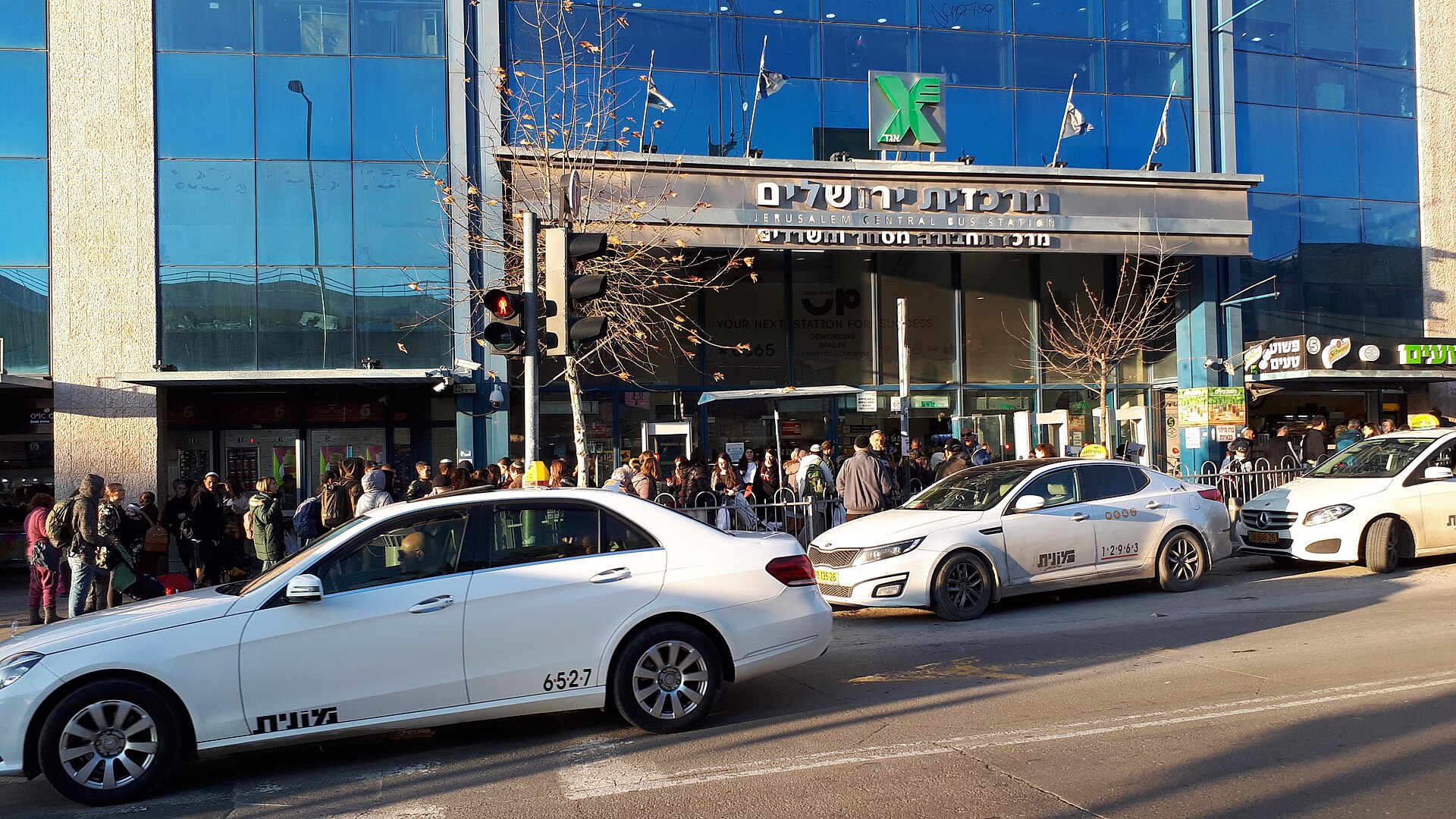
Taxis outside the Jerusalem Central Bus Station: 20200212 154140 February 2020 in Jerusalem by Rakoon, CC0, via Wikimedia Commons.