Getting from Tel Aviv to Jerusalem is fast, frequent, and cheap, and for most travelers the choice is easy: take the train. The electrified high-speed line links the two cities in around 30 to 35 minutes for roughly the price of a sandwich, running from Tel Aviv’s central stations straight to Jerusalem’s underground Yitzhak Navon station in the heart of town. If the train does not suit your timing, intercity buses, shared sherut taxis, private cabs, and rental cars all cover the 60-or-so-kilometer hop. This guide compares every option by time, cost, and convenience, and explains what changes on Shabbat, when the trains and buses stop. If you are based in Jerusalem and want to see the coast in a single day, our Tel Aviv day trip guide sets out a realistic timetable for the return journey.
Whether you are based in Tel Aviv and visiting Jerusalem for the day, or moving between the two, here is how to make the Tel Aviv to Jerusalem trip painlessly. Fares are approximate 2026 figures in shekels (ILS) and shift periodically, so treat them as a close guide. Pair this with our Ben Gurion to Jerusalem transfer guide and our Jerusalem transportation guide.
The Options at a Glance
| Option | Time | Approx. cost (one way) | Best for |
|---|---|---|---|
| High-speed train | ~30–35 min | About 23.50 shekels | Almost everyone: fastest and cheapest |
| Intercity bus (e.g. 405 / 480) | 45–60 min | Similar to the train under distance-based fares | Budget travelers, city-center to bus station |
| Sherut (shared taxi) | 60–75 min | Around 35 shekels (more on Shabbat) | Limited — see the shared-taxi section below |
| Private taxi / app (Gett, Yango) | 45–60 min | Roughly 250–350 shekels | Luggage, groups, late nights |
| Rental car | 45–60 min driving | ~150–250 shekels/day + fuel | Onward day trips from Jerusalem |
The High-Speed Train (Your Best Bet)
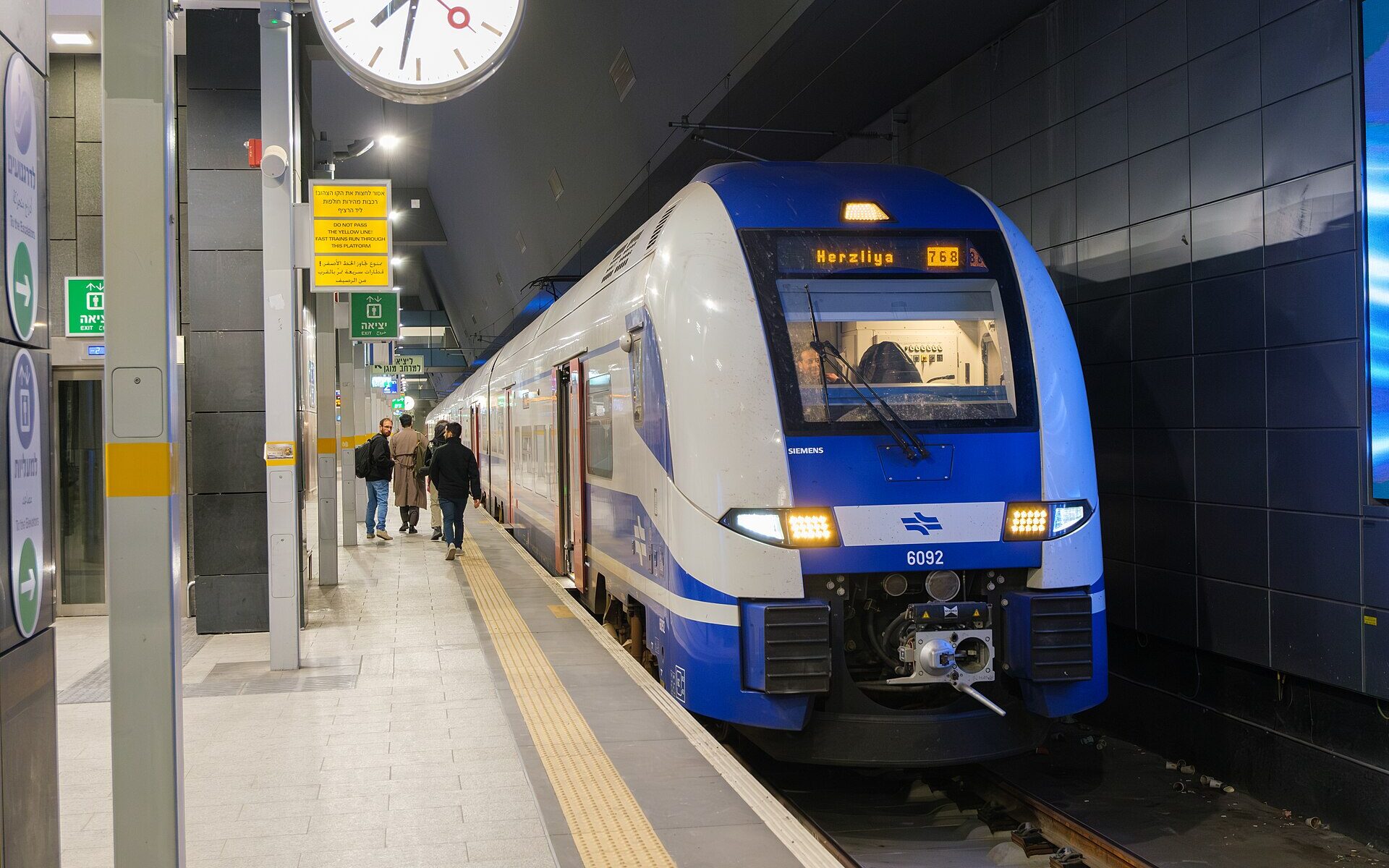
The train is the standout choice. The fully electrified line runs through tunnels and over tall viaducts to cover the distance in roughly 30 to 35 minutes, and it deposits you at Jerusalem–Yitzhak Navon, a modern station deep under the city center beside the Central Bus Station — not on the outskirts. You can board in Tel Aviv at several stations, including Savidor Center (the main hub by the Arlozorov terminal), HaShalom (by the Azrieli towers), HaHagana (south, near the old central station), and University in the north.
- Travel time: about 30–35 minutes, Tel Aviv to Jerusalem–Yitzhak Navon.
- Cost: 23.50 shekels one way as of August 2026; pay with a Rav-Kav card or a contactless bank card.
- Frequency: generally around every 30 minutes through the day, thinner late at night.
- First and last: first departures around 5:30am on weekdays; the last leaves Tel Aviv late in the evening, close to midnight.
- Shabbat: no service from Friday afternoon until Saturday night, or on Jewish holidays.
- Tickets: buy at station machines, the Israel Railways app, or a counter — no seat reservation needed, just board.
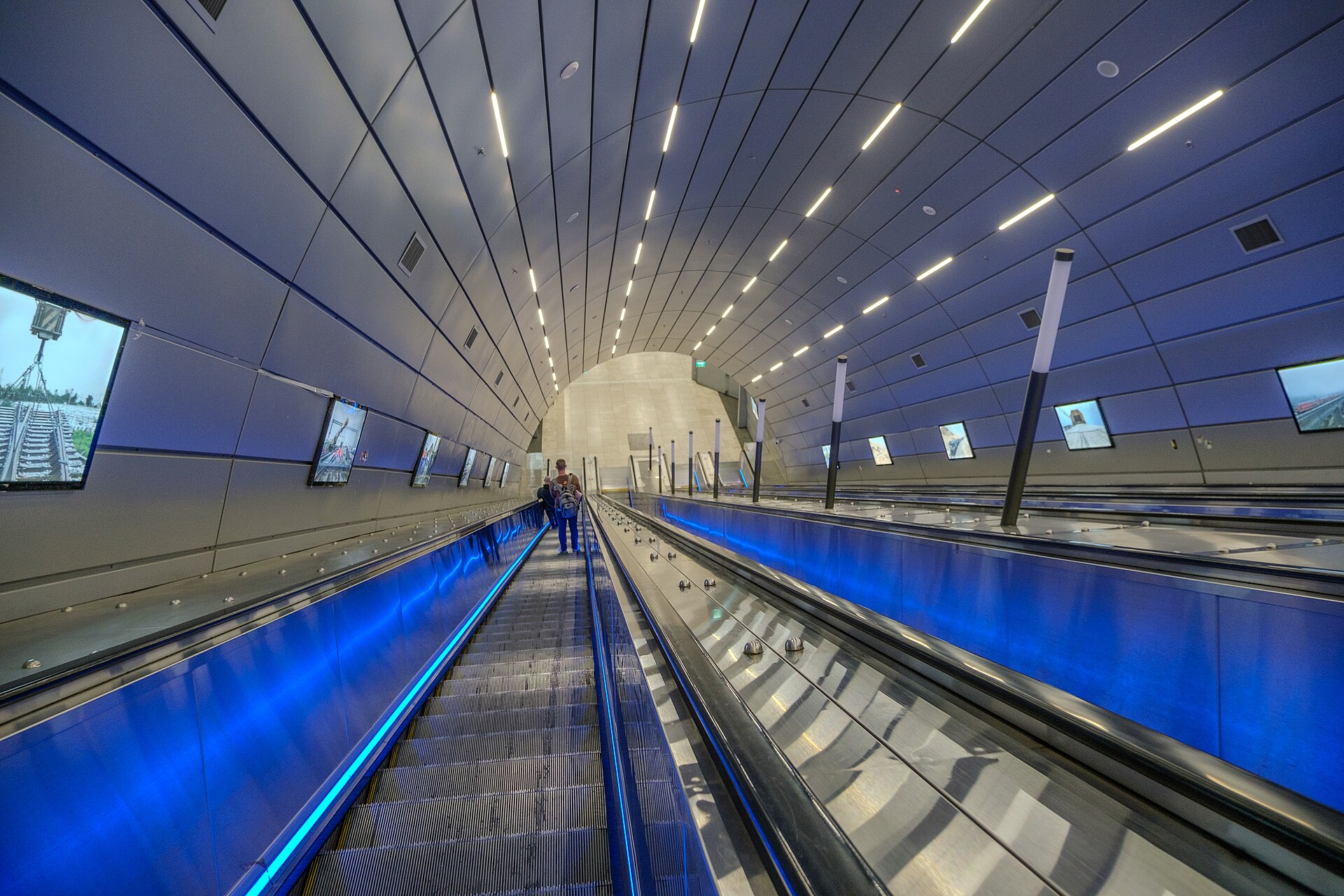
One thing to know about the Jerusalem end: Yitzhak Navon is one of the deepest train stations in the world, built far below the surface, so allow a few minutes for the long banks of escalators down to and up from the platforms. At street level you step straight onto the light rail and city buses to reach your hotel, and Mahane Yehuda Market is only a stop or two away on foot or by tram.
Intercity Buses
Buses are the budget alternative and connect bus station to bus station. The long-standing direct routes between Tel Aviv and Jerusalem (commonly numbered in the 400s, such as the 405 from Tel Aviv’s Central Bus Station and the 480 from the Arlozorov terminal) run very frequently — often every 10 to 20 minutes at peak — and take 45 to 60 minutes depending on traffic, which can be heavy on the approach to Jerusalem.
- Cost: fares are distance-based and operator-agnostic, so expect something close to the train fare rather than a large saving; check the app before you travel.
- Frequency: very frequent by day, less so late evening.
- Shabbat: like the train, no service from Friday afternoon to Saturday night.
- Arrival: Jerusalem Central Bus Station, on the light rail Red Line for onward travel.
The bus is slightly cheaper than the train but slower and more exposed to traffic on the climb into the hills, so most visitors prefer the train unless they are starting right by a bus terminal. Route numbers occasionally change, so confirm the current one in a journey app such as Moovit before you set off.
The Sherut (Shared Taxi)
A sherut is a shared minibus-taxi, typically a yellow van seating up to ten, that follows a fixed route and leaves when it fills up rather than to a timetable. The Tel Aviv–Jerusalem sherut runs from near the Central Bus Station and costs around 35 shekels per person, a little more on Shabbat. The journey takes 60 to 75 minutes, since it waits to fill and may make stops.
The sherut’s great advantage is that it keeps running through Shabbat, when the trains and Egged buses stop, making it the main affordable public option between the cities on a Friday night or Saturday. Pay the driver in cash and tell them where you want to get off.
Private Taxis and Ride Apps
A private taxi door to door takes 45 to 60 minutes and is the most comfortable option with luggage, a group, or a late arrival — at a price, typically somewhere in the region of 250 to 350 shekels, with surcharges late at night and on Shabbat. The apps to use are Gett and Yango, both of which show the fare up front and spare you any negotiation; Uber operates only in a limited form here. If you hail a cab on the street instead, insist on the meter (ask for the “moneh”) or agree a fixed price before setting off.
Renting a Car
Driving between the cities is straightforward on Highway 1, a modern freeway, and takes about 45 to 60 minutes outside the rush. But a car earns its keep only if you plan onward independent trips from Jerusalem — to the Dead Sea, Masada, or the Galilee — because in Jerusalem itself parking is scarce and pricey (street parking and garages run from a few shekels an hour up), and the historic center is largely off-limits to cars. For the city alone, the train plus walking and the light rail beats driving comfortably.
- Cost: roughly 150–250 shekels a day for a compact, plus fuel; international and Israeli firms operate at the airport and in both cities.
- West Bank note: standard Israeli rental cars are generally not insured to enter Palestinian Area A (Bethlehem, Jericho, Hebron), so plan those by tour or local driver.
- Driving: traffic is on the right, and motorway signs appear in Hebrew, Arabic, and English.
Traveling Between the Cities on Shabbat
This is the detail that catches people out. From roughly Friday afternoon until Saturday nightfall, and on major Jewish holidays, both the train and the Egged intercity buses stop entirely. If you need to move between Tel Aviv and Jerusalem during that window, your realistic choices are:
- Sherut shared taxis, which keep running and are the main affordable option (fares a little higher than on weekdays).
- Private taxis and the Gett/Yango apps, which operate with Shabbat surcharges, so expect to pay more.
- A rental car, with the bonus that the roads are noticeably quieter.
If your plans depend on crossing between the cities on a Friday evening or Saturday, decide your method in advance rather than turning up at a closed station. For what the day itself is like in Jerusalem, see our Shabbat in Jerusalem guide.
Making It a Day Trip
The short, frequent train makes Tel Aviv an easy day trip from Jerusalem, or vice versa. With a 30-minute hop each way, you can spend a full day at the beach, in the markets of Jaffa, or among Tel Aviv’s Bauhaus streets and still be back for dinner — just remember the Shabbat timetable if your day touches a Friday or Saturday. In the other direction, day-trippers from Tel Aviv can comfortably see the Old City highlights; our one day in Jerusalem itinerary maps out a tight, rewarding single day. For more ideas beyond the two cities, see our day trips from Jerusalem guide.
A Note on Ben Gurion Airport
Ben Gurion Airport sits between the two cities, on the same rail network. If you are flying in or out, the train connects the airport to both Tel Aviv and Jerusalem–Yitzhak Navon directly, the cheapest and often fastest option, though it does not run on Shabbat. Shared and private taxis cover the airport run at other times. The full breakdown, including current fares and the Shabbat workaround, is in our dedicated guide to the airport run. Before any of that, make sure your entry paperwork is sorted: our Israel visa requirements guide covers the ETA-IL that visa-exempt travelers now need.
Which Tel Aviv Station to Use
Tel Aviv has four railway stations and no single “main” terminus in the European sense. From north to south they are Tel Aviv University–Expo, Savidor Center, HaShalom, and HaHagana. All four sit on the same spine built down the middle of the Ayalon Highway, and Jerusalem trains call at every one of them, so the only question is which is nearest to where you are sleeping.
- Savidor Center — the busiest and best connected, attached to the Arlozorov terminal and its taxi ranks. Best for the north of the city center and around Dizengoff.
- HaShalom — under the Azrieli towers, walkable from Sarona, Rothschild, and most of the business hotels.
- HaHagana — the southernmost stop, closest to Jaffa, Florentin, and the Central Bus Station, and the reference point the fare tables use for Jerusalem.
- University–Expo — north of the Yarkon, useful only if you are staying up that way.
Every Israeli railway station has a security check at the entrance, usually a bag X-ray and a metal detector, so build in five minutes even though the queue is normally short. You then tap through automatic gates, and there is a wider one on the side for suitcases and strollers. No seat is reserved and none can be, so pick any carriage.
Arriving at Yitzhak Navon, 80 Meters Down
Jerusalem–Yitzhak Navon is the world’s deepest heavy-rail passenger station. Its platforms sit 80 meters (about 260 feet) below street level, at the end of the tunnel that carries the line in under the city. That is not trivia when you step off the train: it means a real journey upward before you are outside.
From the platforms, banks of escalators plus high-speed lifts and stairs carry you to the surface vestibule 60 meters above, where the ticket offices, a café, and the exits are. Allow five to eight minutes from carriage door to street, and more at the end of a rush-hour train when everyone funnels onto the same escalators. The temperature down there is constant year-round, a mercy in August, and the complex doubles as a public shelter for 5,000 people.
At street level you come out on Shazar Avenue, opposite Binyanei HaUma and directly across from the Central Bus Station. The light rail Red Line stop is right there, and it is the thing to use:
- Mahane Yehuda market — two stops, or about a 12-minute walk down Jaffa Road.
- City Hall / Safra Square — roughly six stops, then an eight to ten-minute walk downhill to Jaffa Gate and the Old City.
- Damascus Gate — one stop beyond City Hall, for the Muslim Quarter and East Jerusalem.
There is a taxi rank at the exit too, and a cab to a hotel near Jaffa Gate is a 10 to 15-minute ride depending on traffic. For the full picture of trams, buses, and fares in the city, our guide to getting around Jerusalem picks up where this one leaves off.
Paying for the Trip: Rav-Kav, Apps, and Contactless
Ticketing is the single most common stumbling block for first-time visitors. Israel has no paper ticket in the old sense: everything runs through the Rav-Kav smartcard system, and since the Derech Shava fare reform the price of a single ride is set by the distance you travel rather than by which company runs the vehicle.
Single-ride rail fares by distance band, as of August 2026, per the Israel Railways fare table:
- Up to 15 km — ₪11.50 (day pass ₪23)
- 15–40 km — ₪17.50 (day pass ₪31)
- 40–75 km — ₪23.50 (day pass ₪37), the Tel Aviv–Jerusalem band
- 75–120 km — ₪27 (day pass ₪42)
- Over 120 km — ₪30.50 (day pass ₪47)
So a one-way ticket is ₪23.50, and on a day return the ₪37 daily pass beats two singles by ₪10 while covering any extra rides in the same band. There is no return ticket on Israel Railways — a return is two singles unless you buy the pass.
Anonymous versus personal Rav-Kav
An anonymous Rav-Kav is the one to get. Buy it at any station office or machine, load it with stored value, and it works on trains, intercity and city buses, and the Jerusalem light rail alike. It carries no name, but it cannot hold discount profiles and cannot be replaced if lost — the credit goes with the card. A personal Rav-Kav needs ID and a photo and exists so residents, students, seniors, and soldiers can attach a discount. Visitors almost never need one.
Cards, phones, and the cash problem
Contactless Visa and Mastercard now work at the rail gates and on many bus lines: tap the card or a phone wallet and the fare is charged automatically. American Express, Diners, Isracard, JCB, and UnionPay are not supported, nor is any card demanding a PIN for small amounts, so treat contactless as a convenience rather than a plan. The thing to know is that Israeli buses have not accepted cash since 2019. A driver cannot sell you a ticket for banknotes, so turning up with only shekels means not travelling. Station machines do take cash as well as cards, which is the reason to sort out a Rav-Kav before your first bus ride. Install the Israel Railways app for timetables, Rav-Kav Online for topping up by phone, and Moovit for door-to-door routing across every operator; our practical tips for Jerusalem cover the rest of the small stuff.
What the Ride Is Actually Like, and the Door-to-Door Math
The fast line opened in September 2018 and has run direct from central Tel Aviv since December 2019. Fully electrified and built for 160 km/h, it goes straight at the Judean Hills rather than around them — long tunnels broken by bridges across the valleys, including the tall viaduct over Emeq HaArazim on the final approach. The scenery, honestly, is mostly tunnel wall. Trains are air-conditioned with power sockets and Wi-Fi, and your ears will adjust on the climb, because Jerusalem sits some 800 meters above the coastal plain.
Now the part the comparison tables hide. Station to station the train is a 32-minute journey. Door to door it is not, because the stations are peripheral at both ends. A realistic reckoning from a hotel near Rothschild Boulevard to one near Jaffa Gate: 10 minutes to HaShalom, 5 for security and the gates, up to 15 waiting for the next departure, 32 on the train, 6 up from the platforms, then 20 on the light rail and on foot. That is about 90 minutes, not 32.
That does not make the train a bad choice — it is still the cheapest option and it is immune to the traffic that clogs Highway 1 every afternoon. But a taxi that runs 50 minutes door to door is competitive on time if not on price. Plan on 75 to 105 minutes door to door by train and you will not be caught out.
Luggage, Strollers, and Step-Free Routes
If you are moving hotels rather than day-tripping, the calculation changes. The train handles luggage better than its reputation suggests. There is space at the carriage ends, the gates have a wide luggage lane, and Yitzhak Navon is step-free from platform to street via lifts that run alongside the escalators. Those lifts are the detail to remember: with a large case or a stroller you need not wrestle the escalator banks at all, though they are the bottleneck when a full train empties. Savidor and HaShalom have lifts to their platforms too.
Buses are the worst option with heavy bags: luggage goes in the hold, the aisles are narrow, Jerusalem’s Central Bus Station puts departures on an upper floor, and you still need onward transport at the far end.
A taxi or ride app is the pick if you are arriving late, travelling with small children, carrying more than one case each, or living with limited mobility. It costs roughly ten times the train fare, though split between four people that stops looking outrageous.
Reduced mobility is well provided for on the rail network, with step-free access and assistance if you call ahead. The Old City itself is another matter — steps, cobbles, and steep alleys. If that applies to you, read our notes for anyone visiting Jerusalem for the first time before booking a hotel inside the walls.
The Shared-Taxi Picture Has Changed
One important update, because a great deal of the advice online is out of date on this point. The intercity sherut network visitors were once told to rely on has shrunk drastically. Nesher, the operator that ran the Jerusalem shared-taxi service for decades, has stopped operating, and as of 2026 there is no regular scheduled shared taxi from Ben Gurion Airport to Jerusalem. Reporting through 2026 also indicates the Tel Aviv–Jerusalem intercity sherut is no longer running dependably from the Central Bus Station, and that most surviving sherut routes are urban ones inside Tel Aviv.
The practical upshot: do not build a Friday-evening or Saturday plan around finding a sherut, and do not assume the fare figures in older guides still apply. Check on the day and keep a taxi app as your fallback. This matters most for arrivals — our guide to the run in from Ben Gurion sets out what is actually available now, including on Shabbat.
Which Option Wins, Scenario by Scenario
Strip away the tables and the choice comes down to circumstances rather than to any option being best in the abstract.
- Day trip, no bags, weekday — the train, without hesitation, on the ₪37 daily pass rather than two singles.
- Moving hotels with suitcases — the train still works, thanks to the lifts, but take a taxi if you have more than one case each.
- Arriving after about 23:45 — a taxi or ride app. The last trains have gone and you do not want to be improvising at midnight.
- Friday afternoon through Saturday nightfall — a private taxi or a rental car, and budget for the Shabbat surcharge. Do not count on a sherut.
- Tightest possible budget — the train, and skip the taxi at the Jerusalem end by using the light rail on the same Rav-Kav.
- With young children — the train beats the bus for toilets, space, and the absence of a winding mountain road; use the lifts at Navon with a stroller.
- Group of three or four — run the numbers. Four train tickets is ₪94 each way, and a taxi split four ways is often within reach, door to door.
- Onward travel to the Dead Sea or Galilee — the rental car, collected on your way out of Jerusalem rather than driven into it.
If your trip takes in more than the two cities, our roundup of excursions within easy reach of the city shows which destinations reward a car and which are better done by bus or organised tour.
Getting Back to Tel Aviv
The return leg is where plans come unstuck: people check the outbound timetable and assume the evening mirrors it. It roughly does, but the tail end is thinner than you expect.
On a weekday the last train from Jerusalem–Yitzhak Navon to Tel Aviv leaves shortly before midnight, in the region of 23:30 to 23:45 as of August 2026, with the last in the other direction at a similar hour. Sunday to Thursday nights a limited night service continues north beyond Tel Aviv toward Binyamina. Frequencies thin to roughly hourly late in the evening rather than the daytime half-hourly, so a 20-minute wait becomes a 55-minute one. Check the departure in the Israel Railways app on the day, or on the station page — timetables shift with the seasons and with engineering work.
Friday is the exception that ruins itineraries. Trains stop in the early afternoon, hours before sunset, and do not resume until Saturday night. If you are day-tripping on a Friday, check the exact final departure that morning and plan to be on a train well before it; our explainer on how Shabbat works in the city covers what else stays open and what does not.
Missed the last train? Your options in descending order of sense: a ride app, which will still find a car outside Yitzhak Navon well after midnight; a street taxi from the rank there, with the meter running or a price agreed first; or a hotel room in Jerusalem and the first train out around 05:30. If you are travelling the other way and want a proper day at the coast, our day plan for the coast builds the return timings in from the start.
Coming from further south? Cruise passengers docking at Ashdod use the same Route 1 climb through Sha’ar HaGai, but without a direct train: the rail route runs via Tel Aviv HaHagana, which makes a taxi, a private transfer or a ship’s coach the realistic choices on a port day. Our guide to Ashdod port to Jerusalem compares them.
Coming from further north? There is still no direct train from Haifa to Jerusalem: services change in Tel Aviv or at Ben Gurion Airport and take about two hours in total, while Egged’s long-standing 960 express runs from Haifa Merkazit HaMifratz to Jerusalem Central Bus Station. Our guide to travelling from Haifa to Jerusalem compares every option.
The Bottom Line
For nearly every Tel Aviv to Jerusalem trip, take the train: around 30 minutes, roughly 20 to 24 shekels, frequent, and arriving right in the center. Buses are a slightly cheaper, slower backup; sheruts and taxis are your friends on Shabbat when the rail line sleeps. Whichever you choose, mind the Friday-to-Saturday shutdown and you will glide between the two cities. Plan onward with our Jerusalem transportation guide, our guide to getting in from the airport, and our Jerusalem travel tips.
Photo Credits
An Israel Railways electric train at Jerusalem–Yitzhak Navon station: קרונוע חשמלי Siemens Desiro HC בתחנת הרכבת ירושלים – יצחק נבון, ינואר 2024 by מקף־עברי, CC BY-SA 4.0, via Wikimedia Commons.
The escalators of Jerusalem–Yitzhak Navon station: תחנת הרכבת ירושלים – יצחק נבון, ינואר 2024 05 by מקף־עברי, CC BY-SA 4.0, via Wikimedia Commons.
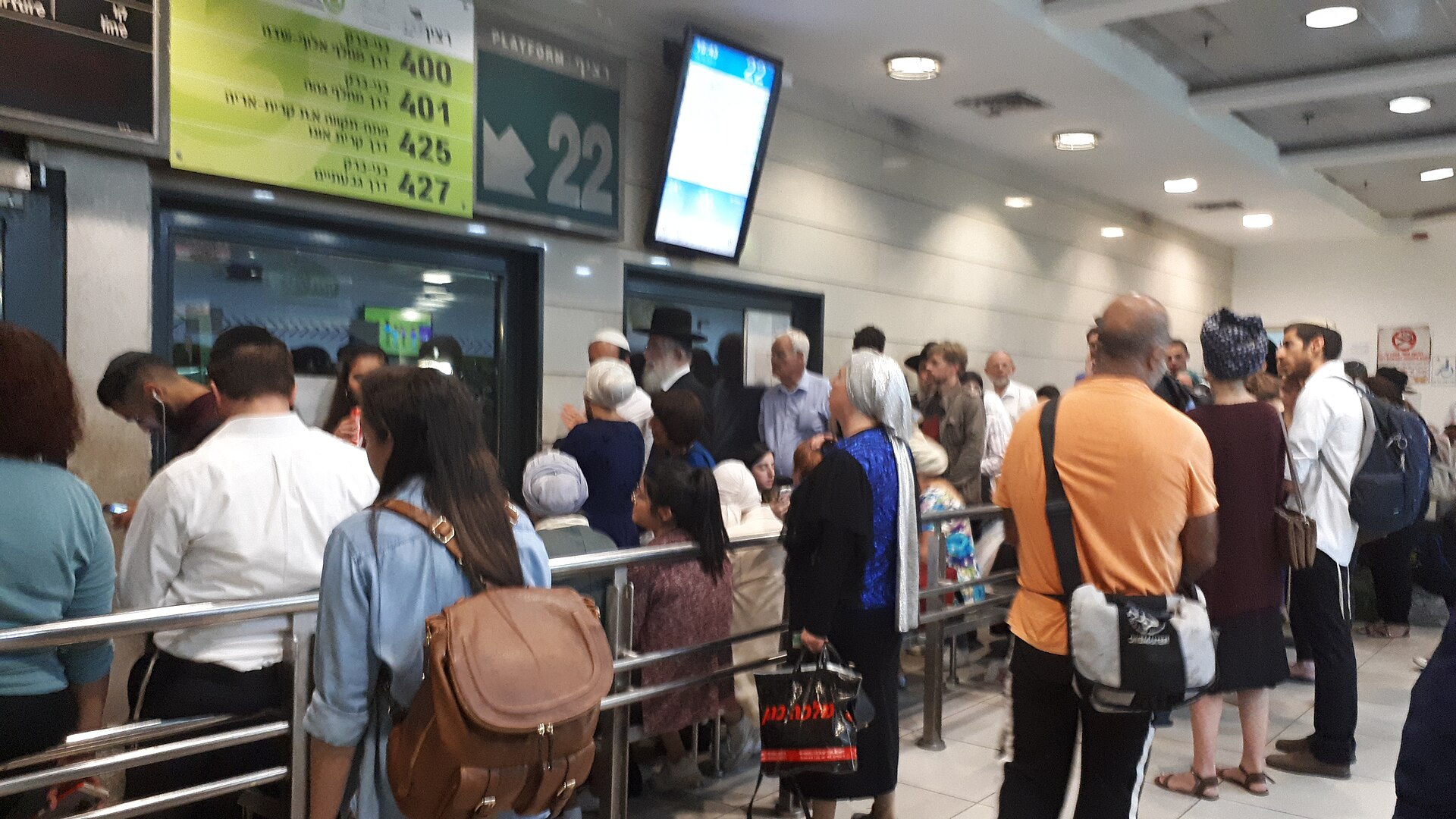
Queueing for intercity buses at Jerusalem Central Bus Station: 20171019-184355-jerusalem-central-bus-station-october-2017 by Rakoon, CC0, via Wikimedia Commons.
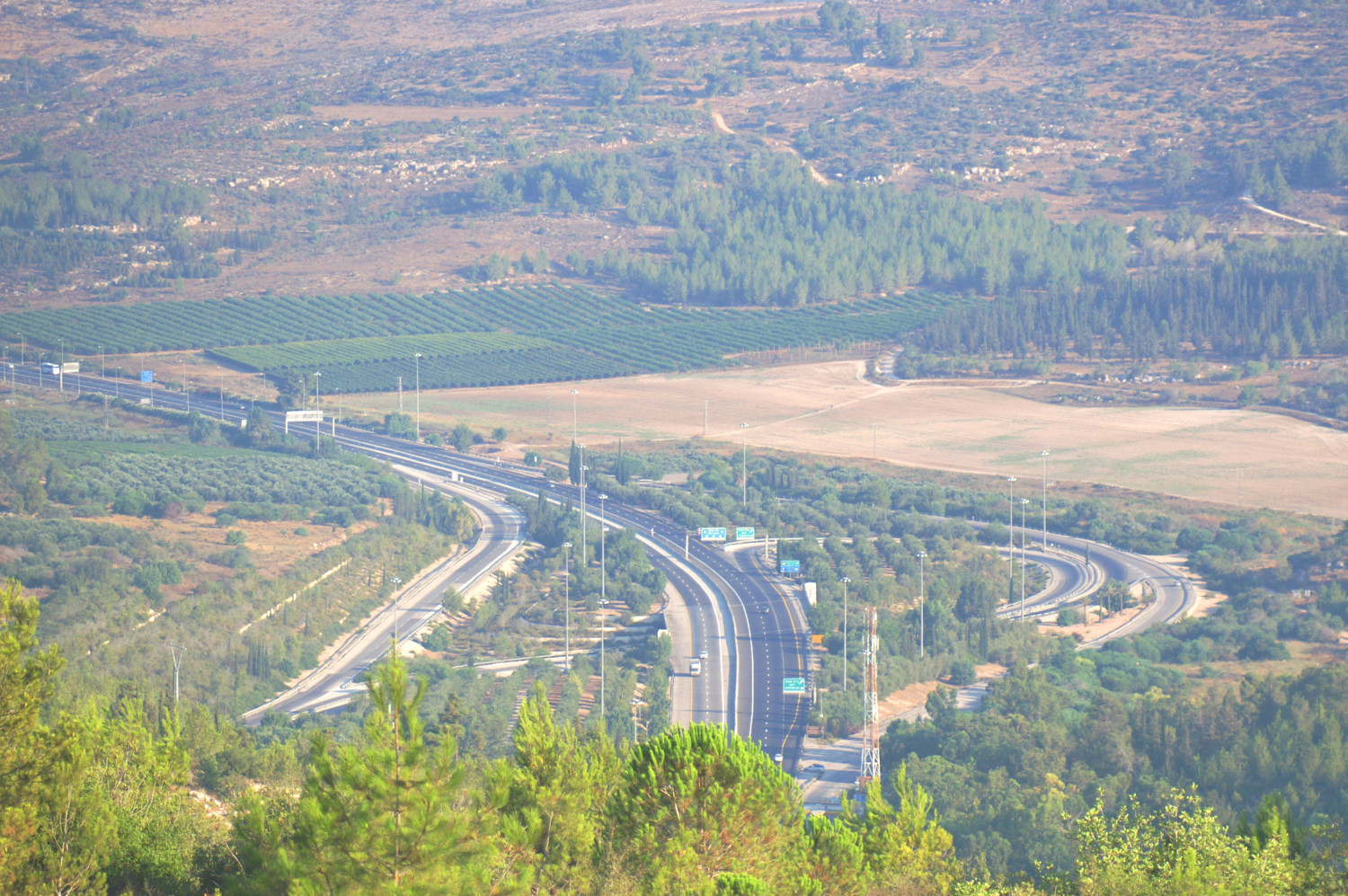
Route 1 at the Sha’ar HaGai interchange: PikiWiki Israel 4228 Shaar HaGai interchange by אורן פלס, CC BY 2.5, via Wikimedia Commons.
{"@context": "https://schema.org", "@type": "FAQPage", "mainEntity": [{"@type": "Question", "name": "How long does it take to get from Tel Aviv to Jerusalem?", "acceptedAnswer": {"@type": "Answer", "text": "The high-speed train takes about 30 to 35 minutes city center to city center. Intercity buses take 45 to 60 minutes, and driving or a taxi is also roughly 45 to 60 minutes outside peak traffic, longer when the approach to Jerusalem is busy. The train is consistently the fastest and most reliable because it bypasses road congestion entirely."}}, {"@type": "Question", "name": "How much does the train from Tel Aviv to Jerusalem cost?", "acceptedAnswer": {"@type": "Answer", "text": "A single ride is roughly 20 to 24 shekels (around US$6), paid with a Rav-Kav card or a contactless bank card at the gates. Buy from station machines, the Israel Railways app, or a ticket counter; no seat reservation is required. Fares are adjusted from time to time, so treat that as an approximate figure."}}, {"@type": "Question", "name": "Is there a direct bus between the two cities?", "acceptedAnswer": {"@type": "Answer", "text": "Yes. Direct intercity buses (commonly the 405 from Tel Aviv's Central Bus Station and the 480 from Arlozorov) link to Jerusalem's Central Bus Station very frequently through the day, taking 45 to 60 minutes. They are slightly cheaper than the train but slower and subject to traffic. Confirm the current route number in a transit app before you go."}}, {"@type": "Question", "name": "How do I travel between Tel Aviv and Jerusalem on Shabbat?", "acceptedAnswer": {"@type": "Answer", "text": "From Friday afternoon to Saturday night the train and Egged buses do not run. Your options are shared sherut taxis, which keep going and are the main affordable choice, or a private taxi or ride app with a Shabbat surcharge. A rental car works too, with quieter roads. Plan your method ahead rather than relying on a station that will be closed."}}, {"@type": "Question", "name": "What is the cheapest way from Tel Aviv to Jerusalem?", "acceptedAnswer": {"@type": "Answer", "text": "The bus is marginally the cheapest, at around 16 to 20 shekels, but the train is only a little more and much faster, which is why most travelers pick it. Either way, paying with a Rav-Kav or contactless card is cheaper and simpler than buying single paper tickets. The sherut and taxis cost more but solve the Shabbat problem."}}, {"@type": "Question", "name": "How far apart are Tel Aviv and Jerusalem?", "acceptedAnswer": {"@type": "Answer", "text": "Roughly 60 to 70 kilometers (about 40 to 45 miles) by road on Highway 1, climbing from the coastal plain up into the Judean Hills, which is why Jerusalem is noticeably cooler. The short distance and frequent train make day trips between the two cities genuinely easy in either direction."}}, {"@type": "Question", "name": "Where does the train arrive in Jerusalem?", "acceptedAnswer": {"@type": "Answer", "text": "At Jerusalem–Yitzhak Navon, a deep underground station in the city center next to the Central Bus Station. From street level the light rail Red Line and city buses connect onward to all the main neighborhoods, and Mahane Yehuda Market is within easy reach. Allow a few minutes for the long escalators up from the platforms."}}, {"@type": "Question", "name": "Do I need a Rav-Kav card to travel from Tel Aviv to Jerusalem?", "acceptedAnswer": {"@type": "Answer", "text": "For the bus, effectively yes — Israeli buses have not accepted cash since 2019, so you need a Rav-Kav, a supported contactless card, or a ticketing app. For the train you can also tap a contactless Visa or Mastercard at the gates. An anonymous Rav-Kav from any station ticket machine is the simplest solution: it works on trains, intercity and city buses, and the Jerusalem light rail, and you can top it up with cash."}}, {"@type": "Question", "name": "Is Jerusalem’s train station accessible with luggage or a wheelchair?", "acceptedAnswer": {"@type": "Answer", "text": "Yes. Yitzhak Navon’s platforms are 80 meters below street level, but lifts run the full height alongside the escalator banks, making the route step-free from carriage to street. Allow five to eight minutes for the ascent, and more at busy times when the lifts queue. The ticket gates have a wide lane for suitcases and strollers, and Israel Railways provides assistance if you arrange it in advance."}}]}