Reaching Ein Gedi from Jerusalem is one of the easiest and most rewarding day trips in the country: a green oasis in the Judean Desert with spring-fed waterfalls, shady canyon trails, and wild ibex and rock hyrax that wander close enough to photograph. It sits about 90 minutes southeast of the city on the western shore of the Dead Sea, and the contrast with Jerusalem’s stone streets could hardly be sharper. It is also a place of deep biblical resonance, traditionally the refuge where David hid from King Saul, described in the Book of Samuel.
This guide to Ein Gedi from Jerusalem covers the main trails, opening hours and fees in shekels, how to get there by tour, bus, or car, what to pack, the best time to go, and how to fold the reserve into a bigger day with Masada and the Dead Sea. Read it alongside our Dead Sea day trip guide and the wider Day Trips from Jerusalem pillar.

Ein Gedi at a Glance
| Distance from Jerusalem | About 85 km southeast |
| Drive time | Around 90 minutes via Highway 1 and Route 90 |
| Best for | Easy hiking, waterfalls, wildlife, biblical history |
| Time on site | 2–5 hours depending on the trail |
| Entry | Around 28 ILS adult; children about half |
| Best months | October–April; go early in summer before trails close |
The Main Trails at Ein Gedi
The reserve is split into two main canyons, Wadi David and Wadi Arugot, plus higher and longer routes for stronger walkers. Trails are clearly marked and graded, and you choose your route at the entrance depending on how much time and energy you have. Note that flooding can occasionally damage sections of trail and lead to temporary closures, so it is worth checking current access with the Israel Nature and Parks Authority before you set out.
Wadi David (easy, about 1 to 2 hours)
This is the most popular walk, a well-made path that leads up the canyon to David’s Waterfall, a year-round cascade fed by springs with a pool at its base. The lower section is gentle and suits families and casual walkers, and ibex are very often grazing nearby. A round trip to the falls and back takes most people one to two hours, longer if you linger.
Wadi Arugot (moderate, about 2 to 3 hours)
The neighbouring Wadi Arugot is quieter and reaches deeper into the desert, following a stream past a series of springs and pools, including the Hidden Waterfall, in a more rugged and dramatic landscape. It involves more uneven ground and some scrambling, so it suits walkers who are reasonably fit and want a fuller half-day in the canyon.
Springs, the ancient synagogue, and Tel Goren (easy to moderate)
Beyond the canyons, the wider Ein Gedi area includes the Ein Gedi Spring, the mound of Tel Goren, and the remains of an ancient synagogue with a notable mosaic floor dating to the Byzantine period, set in a separate antiquities site. These add a layer of history to the natural setting and make for a gentler outing if long hikes are not your aim.
Mount Yishai and the longer routes (hard, half a day or more)
For experienced hikers, longer circuits climb out of the canyons to high ridgelines with sweeping views over the Dead Sea and across to the hills of Jordan. These involve significant ascent, exposure to the sun, and a serious water requirement, so they are best attempted in cool weather with an early start and proper preparation. If you enjoy desert walking, our guide to hiking near Jerusalem has more routes in this region.

Wildlife at Ein Gedi
Part of the joy of Ein Gedi is how close you come to its animals. Nubian ibex, with their long curved horns, graze around the pools and pick their way along the cliffs, often unbothered by visitors. Rock hyrax, small furry mammals that are surprisingly the ibex’s distant relatives, bask on the warm rocks in groups. The oasis also draws a variety of desert birds. Early morning is the best time for sightings, when the animals are most active and the canyon is cool. Watch but do not feed them, and keep your food packed away, as the ibex and hyrax are quick to investigate an open bag.
Hours, Tickets, and Passes
| Entry | Around 28 ILS adult; children roughly half; student discounts available |
| Opening hours | Generally from 8:00, with last entry in the mid-afternoon (around 15:00–16:00) and the reserve closing about an hour later; shorter in winter |
| Trail closures | Higher and longer trails may close earlier in summer heat or after flooding |
| Israel Pass | Ein Gedi is included; a 3-site card is about 90 ILS, 6-site about 130 ILS, unlimited about 175 ILS (two weeks) |
Prices and hours can change with the season, so confirm current details on the parks authority website before travelling. If you are also visiting Masada or other parks, the Israel Pass quickly pays for itself.
How to Get to Ein Gedi from Jerusalem
Guided Tour
Ein Gedi is most often visited as part of a combined tour with Masada and the Dead Sea, with prices generally in the 350–550 ILS range per person. A tour removes the driving and handles timing, dropping you at the reserve for a set walk before moving on. If you specifically want the Ein Gedi hike rather than a whirlwind of stops, check the itinerary, as some tours allow only a short window here.
Rental Car
Driving is the most flexible choice and lets you arrive early for the cool of the morning. The route runs east from Jerusalem on Highway 1, then south on Route 90 along the shore to the clearly signed reserve entrances. A small rental costs roughly 150–300 ILS a day before fuel. Fill up in Jerusalem, carry plenty of water, and use the reserve car park.
Public Bus
Egged buses on the Dead Sea corridor, mainly line 486 (and line 444, which usually needs an advance reservation), stop at Ein Gedi on the run down Route 90 from Jerusalem’s Central Bus Station. The fare is roughly 19 ILS each way and the trip takes about two hours, but departures are limited, so check times on the Moovit app and plan your return. As across the whole region, there is no service from Friday afternoon to Saturday evening because of Shabbat.

Combining Ein Gedi with Masada, the Dead Sea, and Qumran
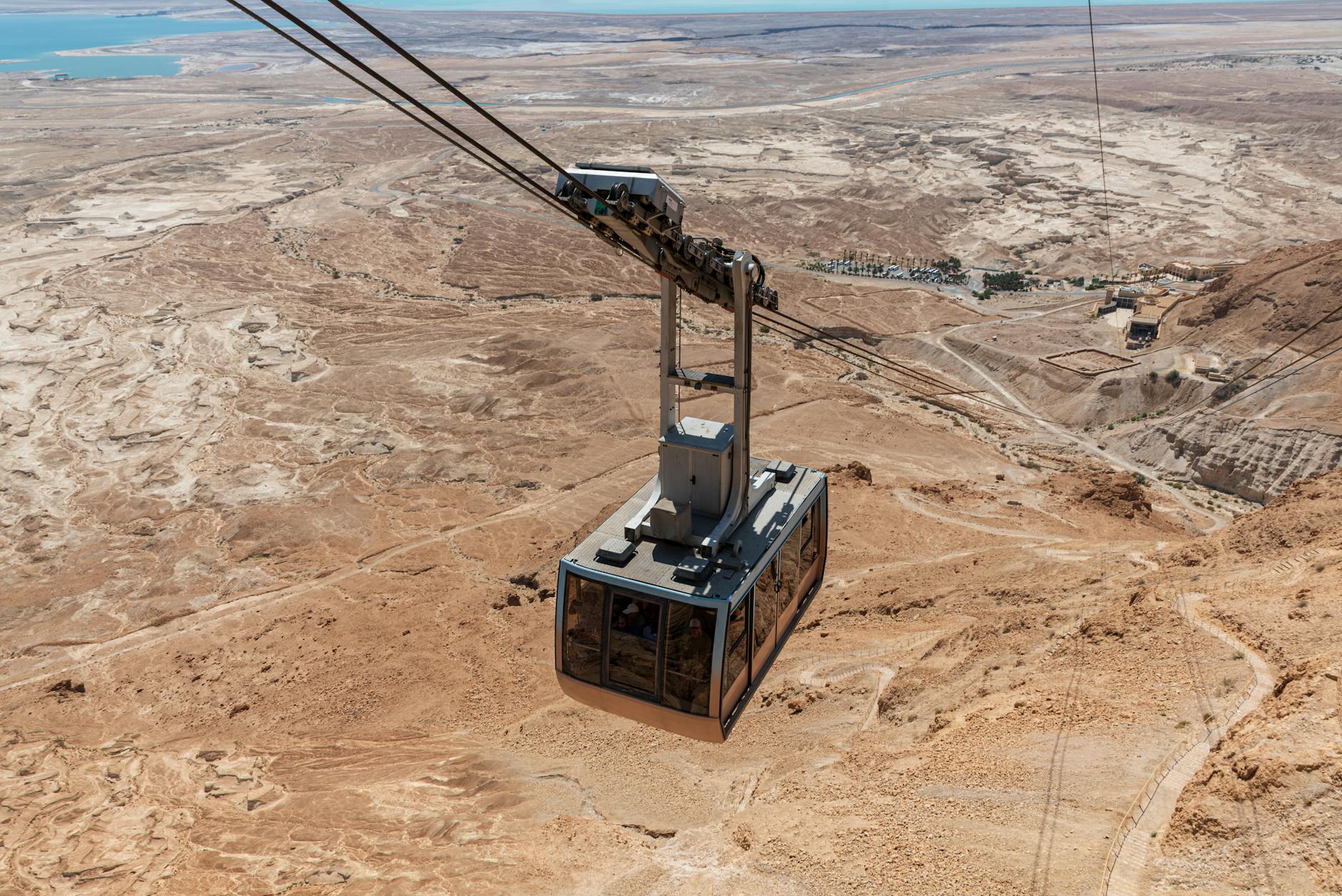
Ein Gedi sits right in the middle of the Dead Sea corridor, so it pairs effortlessly with the other big draws nearby. Walkers with an extra day often add the Wadi Qelt canyon hike, further north on the same road.
- Masada — climb or ride up at sunrise first thing, then drive a short way north to Ein Gedi; see our Masada day trip guide.
- The Dead Sea — finish the day with an afternoon float and a mud session at a nearby beach.
- Qumran — the site where the Dead Sea Scrolls were found lies on the way down from Jerusalem; our Dead Sea Scrolls guide covers their story and where to see them.
The classic Masada, Ein Gedi, and Dead Sea loop is the most popular full day out from Jerusalem, and our Dead Sea and Masada combined tour guide compares the main operators if you would rather have it organised.
What to Pack
- Walking shoes — sturdy trainers or hiking shoes for the rocky paths.
- A swimsuit and water shoes — for the pools beneath the waterfalls.
- Plenty of water — at least 2 to 3 litres per person, more in summer.
- Sun protection — hat, sunglasses, and sunscreen; the desert sun is strong.
- Snacks — there is no food for sale on the trails.
- A light layer — the shaded canyon can feel cool, especially early.
- A towel — if you plan to swim.
Best Time to Visit
The cooler months from October to April are the sweet spot, with mild, sunny days that make hiking comfortable. Whatever the season, the early morning is the best part of the day: the temperature is lower, the light is lovely, and the wildlife is most active. In high summer the heat by midday is intense and the longer trails often close for safety, so an early start is essential. Fridays, Saturdays, and Israeli school holidays bring the most local visitors, so a weekday morning is quietest. Remember, too, that public transport pauses for Shabbat, so a car or tour is needed for a Saturday visit.
For pacing this within a wider trip, see our Jerusalem itinerary guide, and travelling families will find more ideas in our Jerusalem with kids guide, since the short Wadi David walk and the ibex are a hit with children.
History and Biblical Significance
Ein Gedi has drawn people for thousands of years, for the simple reason that fresh water in the desert is precious. In the Hebrew Bible it appears as the rocky wilderness where David took refuge from King Saul, and the same springs supported an ancient settlement known for its dates and for a secret perfume-making process referenced in later sources. The mosaic floor of the Byzantine-era synagogue, with its inscriptions and zodiac design, is one of the most evocative survivals from that community. Walking the canyon today, with its palms, reeds, and tumbling water, it is easy to understand why this green slot in the cliffs has been a destination for so long. For more on the region’s deep past, our Jerusalem history guide sets the wider scene.
Accessibility and Facilities
The reserve has a visitor centre at the entrance with toilets, a small shop, and water points, and the lowest part of the Wadi David path is relatively smooth, though the route soon becomes rocky and stepped as it climbs toward the waterfall. That makes the upper trails unsuitable for wheelchairs and pushchairs, but the entrance area and the first stretch can still be enjoyed by those who prefer a short, flat walk. There is no shade for long sections, so timing your visit for the cooler hours matters as much as choosing the right trail. If you are combining Ein Gedi with the Dead Sea, the nearby beaches and spa offer changing rooms and freshwater showers to rinse off afterwards. Lockers are not always available, so it is best to travel light and keep valuables with you rather than leaving anything in the car park.
Frequently Asked Questions
How long does an Ein Gedi visit take?
The popular Wadi David walk to the waterfall and back takes about one to two hours. Wadi Arugot is more like two to three. Allow at least three hours overall to enjoy the falls, the wildlife, and a swim without rushing.
Can I swim at Ein Gedi?
Yes, in the natural pools beneath David’s Waterfall and along Wadi Arugot, where conditions allow. Bring a swimsuit and water shoes, and check any posted signs, since water levels and access can vary.
Are the trails suitable for children?
The lower Wadi David trail suits children from around age five with supervision, and the ibex make it exciting for them. The steeper parts of Wadi Arugot are better for older children. See our Jerusalem with kids guide for more.
What wildlife will I see?
Nubian ibex are common and often seen near the falls and on the cliffs, and rock hyrax bask on the rocks in groups. You may also spot a range of desert birds. Please do not feed any of the animals.
Can I visit Ein Gedi without Masada?
Yes. Ein Gedi works well on its own as a half-day trip, and combined with an afternoon Dead Sea float it fills a full day. You do not have to add Masada unless you want to.
Is there a beach or spa nearby?
Yes. The Ein Gedi area has Dead Sea access and a spa with mineral and sulphur pools, separate from the nature reserve, which makes a relaxing end to a morning on the trails.