A Hebron day trip from Jerusalem reaches one of the oldest and most layered cities in the region. About 30 kilometres south of Jerusalem, in the West Bank, Hebron is built around the Tomb of the Patriarchs, also known as the Cave of Machpelah, traditionally the burial place of Abraham, Isaac, Jacob, and the matriarchs Sarah, Rebekah, and Leah. The site is sacred to Judaism, Islam, and Christianity. Visiting Hebron also means understanding how the old city is divided between Israeli- and Palestinian-administered areas, which shapes the practical experience of the day.
This guide to a Hebron day trip from Jerusalem covers the Tomb of the Patriarchs, the religious significance to all three faiths, how the city is divided, how to get there, what to wear, safety and passport considerations, and what to expect, all in neutral and practical terms. Pair it with our Day Trips from Jerusalem guide.
Hebron Day Trip at a Glance
| Distance from Jerusalem | About 30 km south |
| Drive time | 40–60 minutes, depending on the route and crossings |
| Best for | Pilgrims and visitors interested in patriarchal heritage and the city’s history |
| Time on site | 4–6 hours for a half-day; 8–10 for a full dual-narrative tour |
| Typical tour | Roughly 280–550 ILS per person |
| Tomb of the Patriarchs | Free entry; modest dress and security screening |
The Tomb of the Patriarchs (Cave of Machpelah)
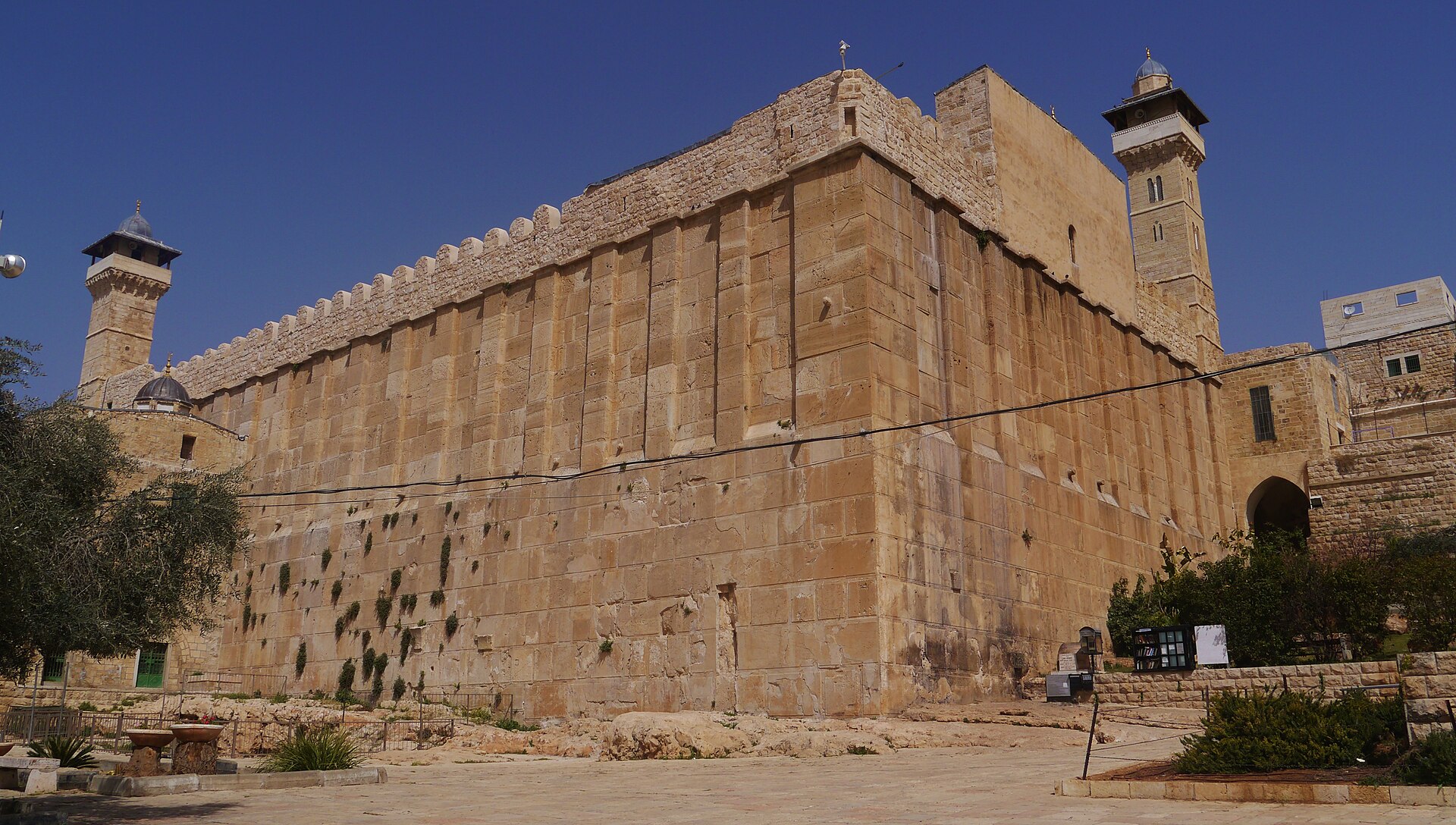
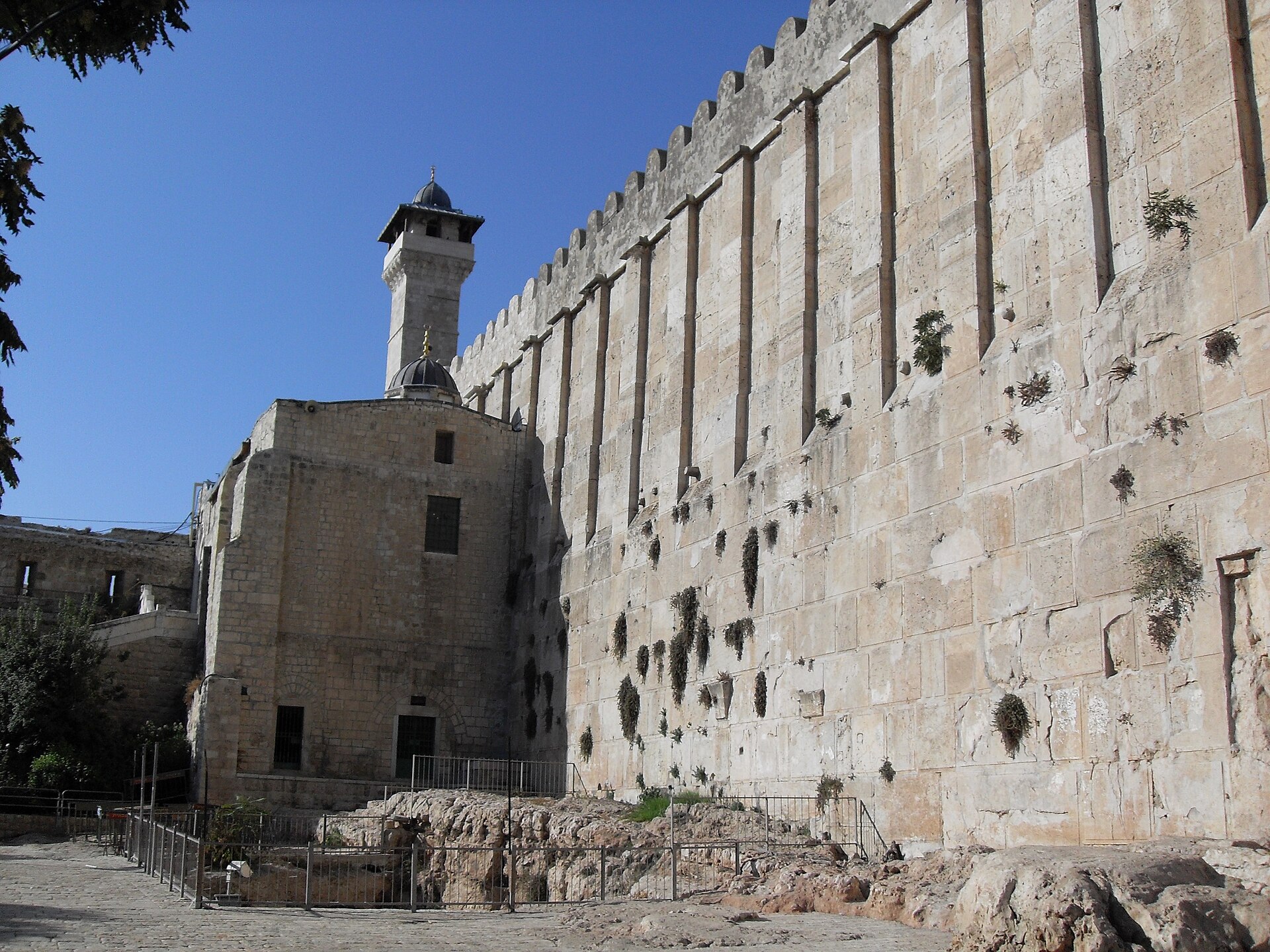
According to the Book of Genesis, Abraham bought the cave of Machpelah as a burial place for his family. The grand stone enclosure that stands over the caves today was built by Herod the Great around the same period as the Temple Mount platform in Jerusalem, and its massive ashlar walls are among the best-preserved Herodian structures anywhere. Over the centuries the building has served as a church, a mosque, and a synagogue, and traces of each period remain.
Inside, the space is shared between two areas of worship, reflecting the site’s importance to two faiths.
- A Jewish prayer hall and synagogue, with cenotaphs traditionally associated with Abraham, Sarah, and Jacob.
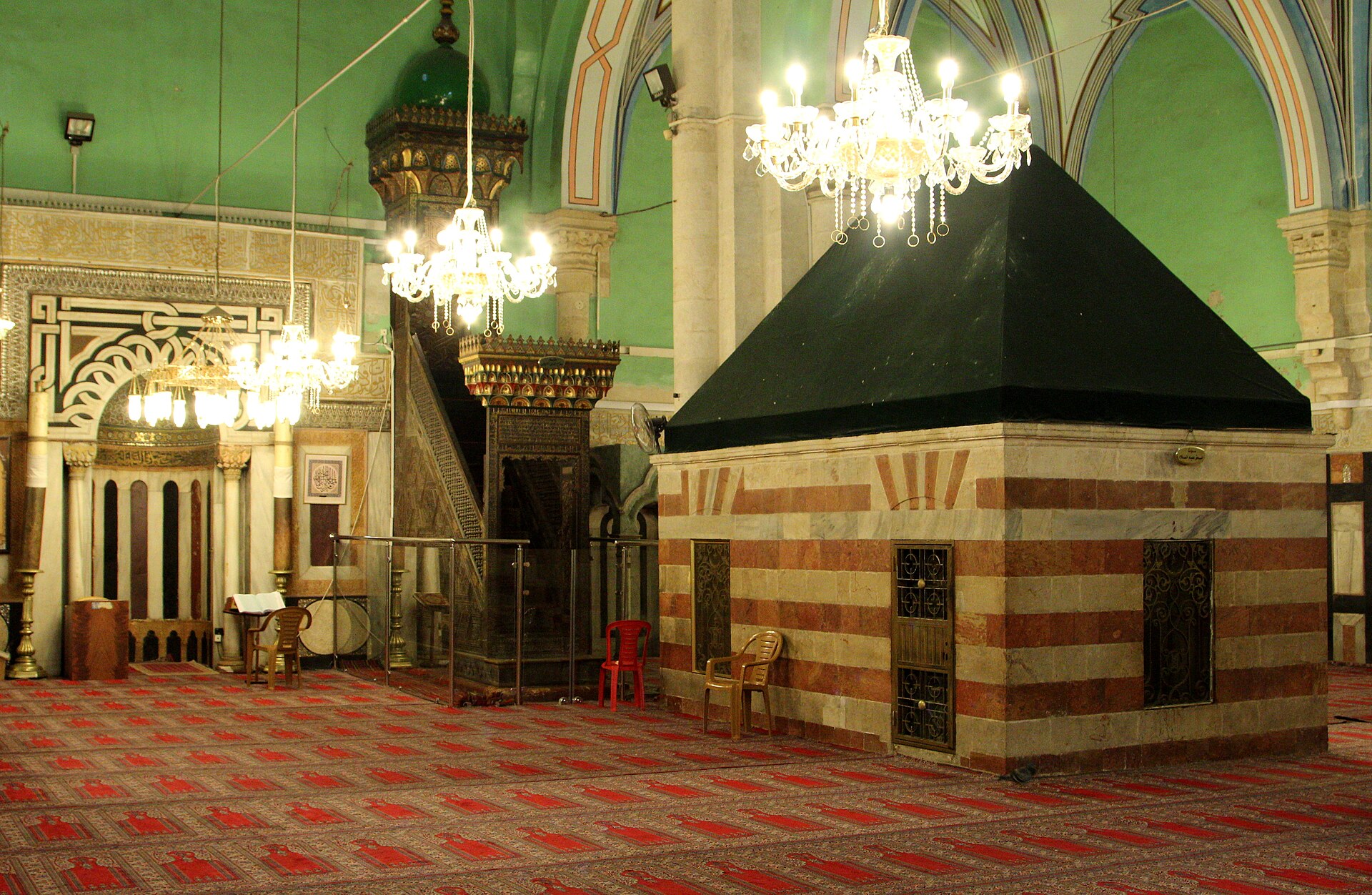
- The Ibrahimi Mosque, with cenotaphs traditionally associated with Isaac and Rebekah.
- Shared access on certain days — for most of the year each community uses its own side, but on a number of days tied to major Jewish and Muslim holidays the whole building is opened to one community at a time.
The cenotaphs are markers above the actual caves, which are not open to the public. Entry to the prayer areas is free, with bag checks and security screening at the entrance.
Religious Significance
In Judaism
The Tomb of the Patriarchs is widely regarded as the second-holiest site in Judaism after the Temple Mount, as the burial place of the patriarchs and matriarchs and a place of prayer and pilgrimage.
In Islam
Known as the Ibrahimi Mosque, the Mosque of Abraham, the site is deeply venerated in Islam, with Abraham (Ibrahim) honoured as a prophet and patriarch, and it has long been an important place of Muslim worship.
In Christianity
For Christians, Hebron is significant as the burial place of the biblical patriarchs, figures honoured in Christian tradition, which is why it features on some pilgrimage routes through the Holy Land. Those itineraries often run north as well, to Nazareth and the Galilee, where the Gospel story begins.

Understanding the Divided City
Under the 1997 Hebron Protocol, the city was divided into two administrative zones, and knowing the basics helps you understand what you will see on a visit.
- H1 covers the large majority of the city and is under Palestinian Authority administration. This is where most of Hebron’s roughly 200,000 residents live, and where the main markets and commercial life are concentrated.
- H2 is a smaller area that includes the Tomb of the Patriarchs and parts of the old city, and it remains under Israeli military control. A small Jewish community lives here alongside a Palestinian population, and there is a visible security presence.
Because the two sides of the city tell their histories differently, many tours are designed as dual-narrative experiences, pairing an Israeli or Jewish guide with a Palestinian guide so visitors hear more than one perspective. This guide does not take a political position; the aim here is simply to explain the layout so you can plan a respectful visit and know what to expect.
How to Get to Hebron from Jerusalem
Organised Tour
For most visitors a guided tour is by far the most practical way to see Hebron, because a guide handles the logistics of moving around a divided city and provides essential context. Tours generally cost in the region of 280–550 ILS per person and come in several forms: dual-narrative tours that present both perspectives, Jewish heritage tours focused on the H2 sites, and tours that concentrate on the old city and its markets. Operators include Abraham Tours and various specialist companies. Choose the style that matches your interest, and read the description carefully so you know which parts of the city it covers.
Public Bus
Egged bus line 160 runs from Jerusalem to Kiryat Arba, the Israeli town adjoining Hebron, from where it is a walk to the Tomb of the Patriarchs in the H2 area. This reaches the religious site but not the wider Palestinian city. Separately, Palestinian buses and shared taxis serve H1 from the Arab bus station near Damascus Gate, the same terminal used for a Bethlehem day trip, which many visitors combine with Hebron on one southbound run. Combining these independently is possible but involves navigating the divided city, which is why first-time visitors are usually advised to take a tour.
Car and Taxi
Israeli rental cars are not permitted into the Palestinian-administered H1 area, and the practicalities of driving in a divided city are complex, so private transport is less straightforward here than for other day trips. Most independent travellers who do not take a tour rely on a combination of buses and local taxis. Whatever the mode, carry your passport, as you may pass through checks.
What to See in Hebron
- The Tomb of the Patriarchs / Ibrahimi Mosque — the centrepiece of any visit, with its Herodian walls and shared prayer areas.
- The old city of Hebron — historic Mamluk and Ottoman architecture, vaulted lanes, and the covered market, mostly in H1.
- Hebron’s glass and ceramics workshops — the city has a centuries-old tradition of glass-blowing and hand-painted pottery, and you can watch artisans at work.
- Tel Hebron (Tel Rumeida) — an archaeological mound with remains spanning thousands of years, in the H2 area.
- The market streets — parts of the old souk remain active, with spices, textiles, and local produce.
If you are interested in the craft traditions, our guides to Jerusalem shopping and Armenian ceramics in Jerusalem give useful background on the region’s pottery and glasswork.
Dress Code and Etiquette
- Dress modestly. Shoulders and knees should be covered for everyone; this is required at the holy site and respectful throughout the city.
- Head covering. Men cover their heads in the Jewish prayer area, and women cover their heads (and sometimes more) in the mosque area; coverings are usually available to borrow.
- Keep a quiet, respectful manner in the prayer halls, which are active places of worship.
- Photography. Follow posted rules and your guide’s guidance, and avoid photographing people, soldiers, or worshippers without permission.
- Security screening. Expect bag checks at the entrance to the Tomb of the Patriarchs.
For more on appropriate clothing across the region’s religious sites, see our modest dress guide for the region’s holy places.
Safety and Practical Considerations
Hebron is a politically sensitive city with a visible security presence, and conditions can change, so a few sensible steps make for a smoother visit.
- Check current travel advice from your government before booking, and again close to your trip.
- Go with a reputable guide on a first visit; independent exploration of the divided city is not generally recommended.
- Carry your passport and keep valuables to a minimum.
- Be aware that access rules can vary, including for Israeli citizens, so confirm the current situation when you book.
- Follow your guide’s instructions about where to walk and when to move on.
Our broader Jerusalem safety guide explains how to stay informed about current conditions, and our Jerusalem travel tips cover the practical basics of travelling in the region.
A Brief History of Hebron
Hebron is one of the longest continuously inhabited places in the region, with roots reaching back thousands of years. Only the ancient mound at Jericho, down in the Jordan Valley, has a stronger claim to being the oldest inhabited town on Earth. It appears repeatedly in the Hebrew Bible, notably as the place where Abraham settled and bought the cave of Machpelah, and later as the city where David reigned as king before moving his capital to Jerusalem. Over the centuries it passed through Byzantine, early Islamic, Crusader, Ayyubid, Mamluk, and Ottoman hands, each leaving a mark on its architecture, from the great enclosure over the tombs to the vaulted stone lanes of the old city. The Mamluk period in particular shaped much of what survives in the historic core, with its arched passages, fountains, and merchant houses. Understanding this long sweep of history helps make sense of why so many communities hold the city dear, and our Jerusalem history guide sets Hebron in the wider story of the region.
For visitors drawn to the patriarchal heritage that connects Hebron and Jerusalem, our guide to Jewish holy sites in Jerusalem covers the related places of pilgrimage in the city, while the Christian pilgrimage guide places Hebron within the broader network of Holy Land sites.
Best Time to Visit and What to Expect
Hebron can be visited year-round, and its climate is similar to Jerusalem’s, with warm summers and cool, sometimes wet winters; spring and autumn are the most comfortable for walking the old city. Most tours run on weekdays and Sundays, and timing can be affected by Friday prayers at the mosque and by the Jewish Shabbat, so check your operator’s schedule. Around the major Jewish and Muslim holidays, when access arrangements at the Tomb of the Patriarchs change, the atmosphere is especially charged and crowds are larger.
Set your expectations for a thoughtful, sometimes sombre day rather than a light sightseeing outing. You will likely pass through checkpoints, see closed sections of the old city, and encounter a strong security presence around H2, alongside the living markets and workshops of H1. Many visitors find it one of the most memorable and thought-provoking days of their trip, precisely because it brings together ancient heritage and present-day reality in a single place. Going with an open mind, a respectful manner, and a good guide makes all the difference.
Photo Credits
The Cave of the Patriarchs (Ibrahimi Mosque) in Hebron: Hebron Grab der Patriarchen (Synagoge) C by Zairon, CC BY-SA 4.0, via Wikimedia Commons.
The Herodian wall of the Cave of the Patriarchs (Ibrahimi Mosque), Hebron: Western Wall of Hebron (Cave of the Patriarchs) SDC10426 by Utilisateur:Djampa – User:Djampa, CC BY-SA 4.0, via Wikimedia Commons.
The cenotaph of Isaac in the Ibrahimi Mosque at the Cave of the Patriarchs, Hebron: Tomb of the Patriarchs, Hebron (16199406906) by Grant Barclay, CC BY 2.0, via Wikimedia Commons.