Somewhere south of the Dead Sea, on the long straight road through the Arava, the last of the hotels and date palms fall away and there is nothing on either side but gravel plains and bare mountains, pink on the Jordanian side and brown on the Israeli. That emptiness is the point of the journey for some people and the price of it for others. Either way, it is a long way. Getting from Jerusalem to Eilat means crossing the whole of southern Israel, from the Judean hills to the Red Sea, and the choice between bus, plane and car makes more difference to your day than it does on almost any other route in Israel.
This guide compares the three properly: how long each really takes door to door, what each costs in time and effort, which suits whom, and what to see if you drive. It also covers Eilat as the gateway to Petra and the Sinai, because for many visitors the Red Sea is a stepping stone rather than the destination. Timetables, crossing hours and fares were checked in October 2026. Treat them as the right order of magnitude, and check the operator’s site before you travel, especially around Shabbat and the Jewish holidays.
Jerusalem to Eilat at a Glance
| Bus | Plane | Car | |
|---|---|---|---|
| Route | Direct intercity bus from Jerusalem Central Bus Station | Train to Ben Gurion Airport, then a domestic flight to Ramon Airport | Route 90 via the Dead Sea, or Route 40 via Mitzpe Ramon |
| Time on the move | Roughly four and a quarter to five hours | About an hour in the air | About four hours without stops |
| Door to door | Five hours or so | Three and a half to four hours, once the airport is counted | Four to six hours, depending on stops |
| Book ahead? | Yes, seats are reserved | Yes | Hire car in advance in busy periods |
| Shabbat | No departures from Jerusalem from mid-afternoon Friday to Saturday night | Limited; check the airline | Drive any day |
| Best for | Most travellers, especially solo | A tight schedule, or flying on from Tel Aviv | Two or more people, and anyone who wants to stop on the way |
How Far Is Eilat from Jerusalem?
By road it is a little over 300 kilometres, and the drive takes around four hours without stops. Eilat is at the far southern tip of the country. The road drops from roughly 800 metres above sea level in Jerusalem to the lowest point on land at the Dead Sea, then runs south for more than 150 kilometres through the Arava valley, with Jordan just a few kilometres to the east, before it reaches the Gulf of Aqaba.
That distance is the single most important thing to understand about Eilat. It is not a day trip from Jerusalem, whatever the tour leaflets imply. Eight hours of travelling for a few hours by the sea is a poor trade. Plan for at least two nights, and think of the journey itself as part of the trip, especially if you are driving.
By Bus: The Default Option
For most visitors the bus is the best way to make the journey. It is direct, comfortable enough, cheap compared with flying, and it drops you in the middle of Eilat rather than at an airport outside town.
How it works
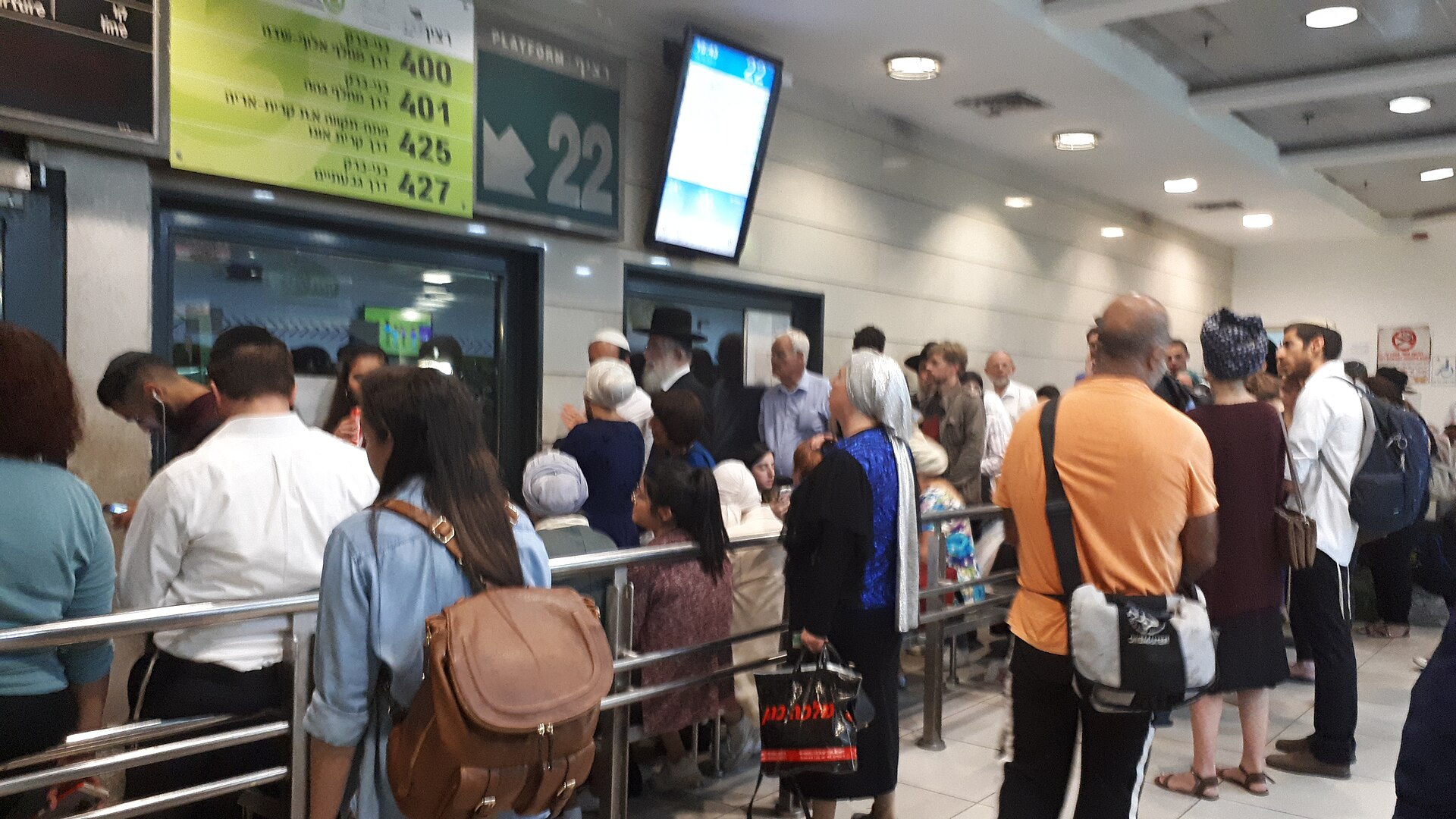
- Where it leaves from. Jerusalem Central Bus Station on Jaffa Road, a short walk from the Jerusalem Yitzhak Navon railway station and on the light rail. Intercity platforms are on the upper floor. Our guide to getting around Jerusalem explains how to reach it.
- The route. Egged runs a direct service, route 444, which goes down to the Dead Sea and south along Route 90, with a rest stop on the way.
- How often. A handful of departures a day, roughly every few hours from early morning, not a turn-up-and-go service.
- Journey time. Roughly four and a quarter to five hours, depending on traffic and stops.
- Arrival. Eilat Central Bus Station, in the town centre, within walking distance or a short taxi ride of most hotels.
Book your seat
Eilat buses run with reserved seats, and they sell out on Thursday afternoons, Sunday mornings, school holidays and the days around the Jewish festivals, when half the country seems to be heading for the Red Sea. Book on the Egged website or app as soon as your dates are fixed. Fares change, so check the current price when you book rather than relying on an old figure. If you are travelling on a weekday outside the holidays, you may well get a seat on the day, but it is not worth the risk.
Shabbat and the holidays
Like almost all Israeli public transport, the Eilat buses from Jerusalem stop on Shabbat. The last departures on Friday leave by mid-afternoon, and services resume on Saturday evening after dark. The same applies to Jewish festivals. If you plan to leave Jerusalem on a Friday, go early, or leave on Thursday. Our guide to Shabbat in Jerusalem explains the weekly shutdown, and our religious holidays calendar lists the festival dates.
What the journey is like
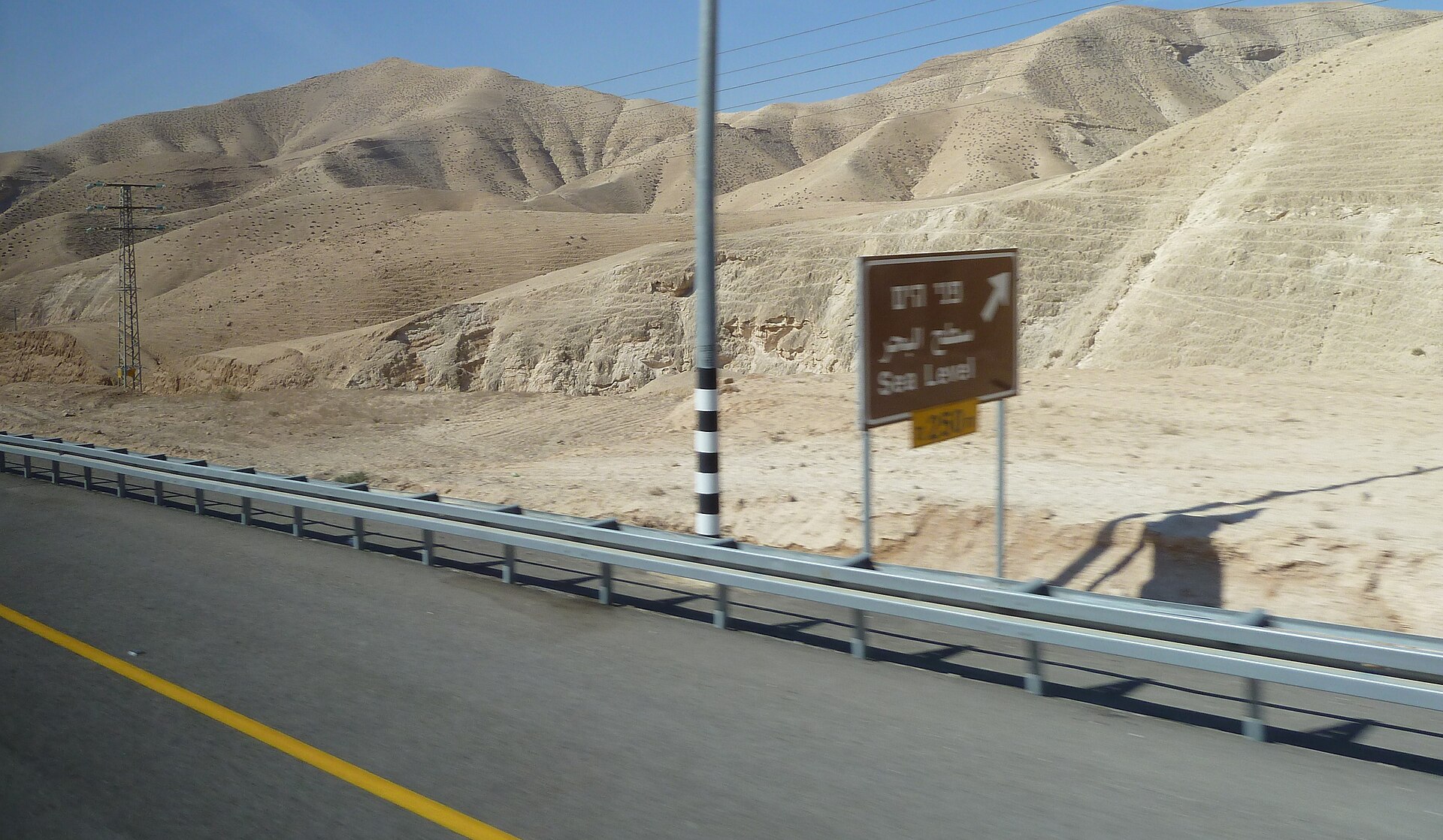
The first hour is the best of it: the descent from Jerusalem through the Judean Desert, the sea-level sign, and the first view of the Dead Sea. After that, the bus follows the western shore past Ein Gedi and Masada and the hotel strip at Ein Bokek, then turns into the Arava, where the scenery becomes beautiful in a stark, repetitive way. Take water, a snack and something to read. Sit on the left-hand side going south if you want the Dead Sea views, although by midday the sun will be on the right.
The bus is the right choice for solo travellers, for anyone on a budget, and for anyone who does not want to drive. It is also the least stressful way to arrive in Eilat, because it puts you down in the town rather than 18 kilometres away.
By Plane: Faster Than It Looks, Slower Than It Sounds
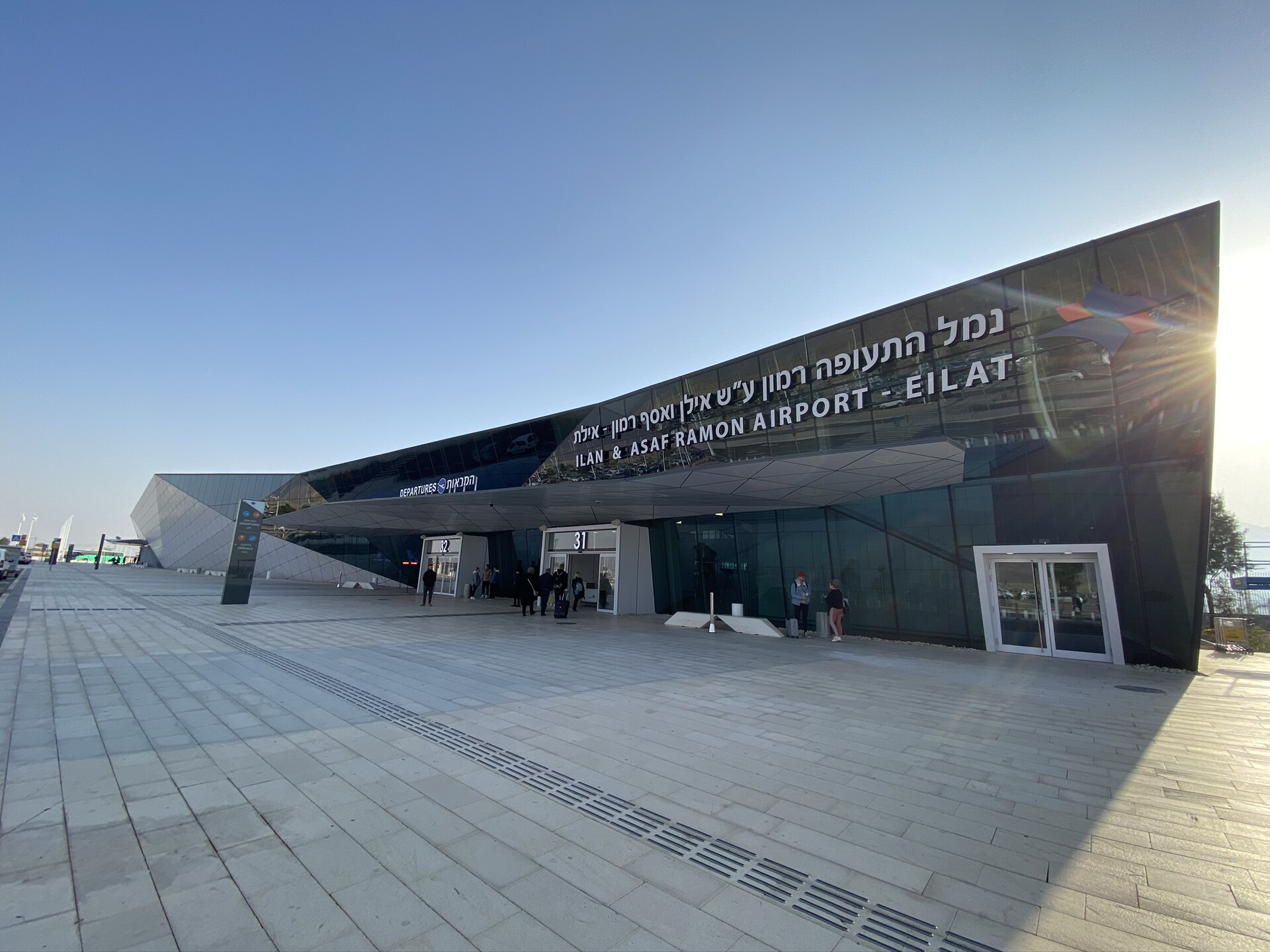
Jerusalem has no airport of its own with scheduled flights, so flying to Eilat means getting to Ben Gurion Airport first. From there, domestic flights go to Ramon Airport, which opened in 2019 in the desert about 18 kilometres north of Eilat and replaced the old airport in the middle of town.
How it works
- Jerusalem to Ben Gurion. The fast train from Jerusalem Yitzhak Navon takes about 20 minutes. Trains do not run from Friday afternoon until Saturday night. Our airport transfer guide has the details.
- The flight. Several Israeli airlines fly between Ben Gurion and Ramon, usually several times a day, with around an hour in the air. Schedules and carriers change from season to season, so check the airlines directly.
- Ramon Airport to Eilat. Buses link the terminal with the town in about 40 minutes, and taxis are quicker.
Is it worth flying?
From Jerusalem, usually not. Add up the train, the time you need at the airport for security, the flight and the transfer at the other end, and you are looking at three and a half to four hours door to door, against five or so on the bus. You save an hour and a half at most, often less, and you pay several times the price. Flying makes more sense if you are coming from Tel Aviv, if you are flying straight from an international arrival at Ben Gurion, or if you want to save a long day on the way back.
The real argument for flying is the return. If you are coming back from Petra or a long day of diving, a short flight north in the evening is a lot more appealing than five hours on a bus. Many visitors take the bus down, enjoying the Dead Sea views, and fly back.
By Car: The Best Way to See the Road
Driving takes about the same time as the bus, and for two or more people, sharing the cost of a short hire narrows the gap with the bus fares. More importantly, it turns the journey into a sightseeing day. There are two main routes.
Route 90: the Dead Sea and the Arava
The faster and more popular route runs east from Jerusalem on Route 1, down through the Judean Desert to the Dead Sea, then south along the shore on Route 90 and through the length of the Arava to Eilat. It takes about four hours without stops, and it passes most of the classic sights of southern Israel.
The first stretch, down Route 1 and along the northern shore of the Dead Sea, runs through the West Bank. It is a main highway used every day by Israeli and foreign drivers, with an Israeli checkpoint on the road back up towards Jerusalem. Check your hire company’s terms and your government’s travel advice before you set out.
Worthwhile stops on the way, roughly north to south:
- Ein Gedi, a spring-fed oasis with short trails to waterfalls. Our Ein Gedi guide covers the reserve.
- Masada, Herod’s clifftop fortress, which you can climb on foot or reach by cable car. See our Masada guide for timings.
- Ein Bokek, the hotel strip at the southern end of the Dead Sea, with public beaches for a float. The Mineral Beach and Ein Gedi Beach further north are closed to bathers, so Ein Bokek is the place to swim.
- The Arava. A long, quiet valley of kibbutzim, date plantations and desert. There are fuel stations and roadside cafés at intervals, but fill up and buy water when you can.
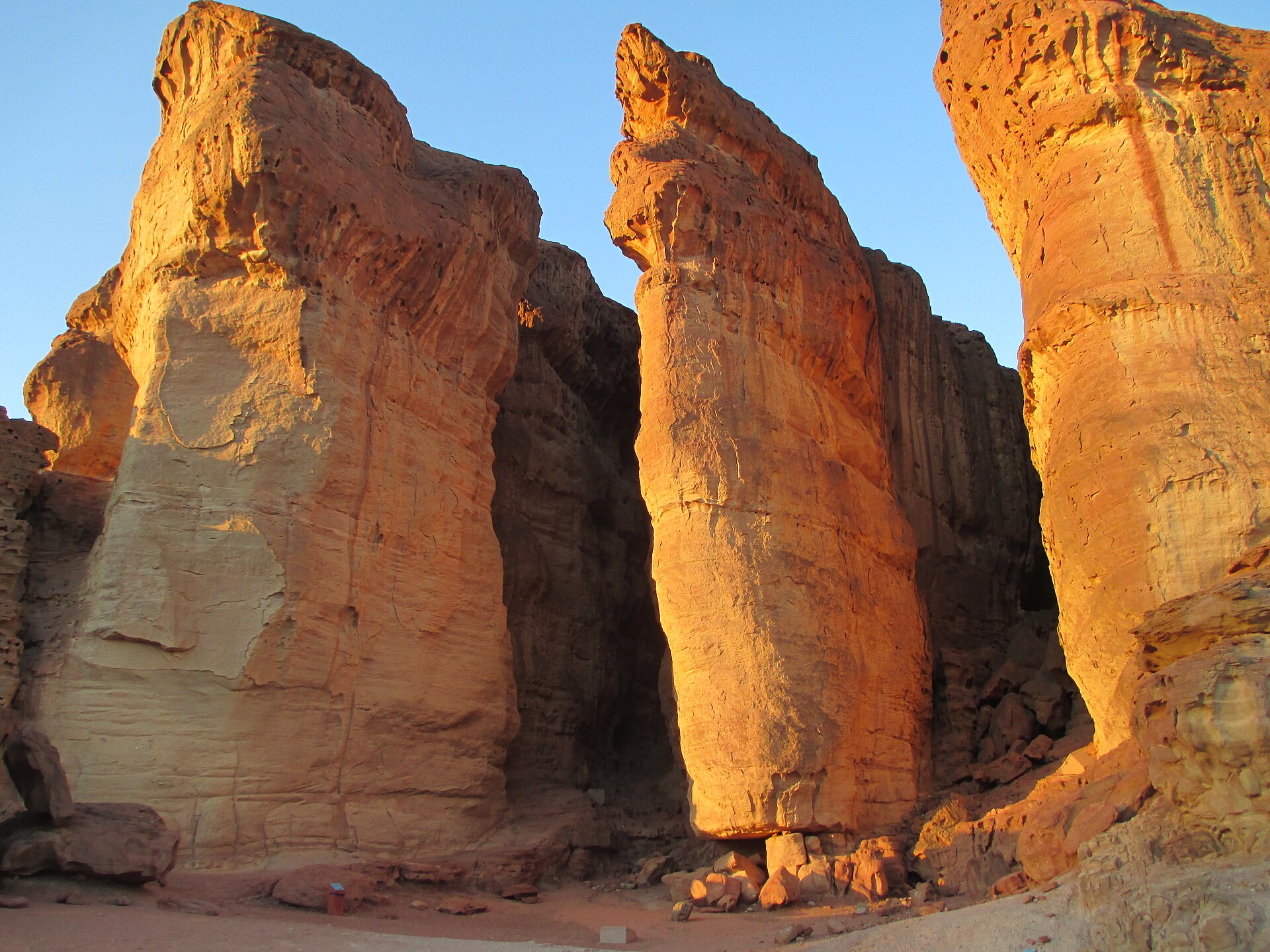
- Timna Park, about half an hour north of Eilat, a desert park of red sandstone formations and ancient copper mines. Its best-known sight is the giant natural columns known as Solomon’s Pillars.
If you only have time for one stop, make it Masada in the morning or a float at Ein Bokek around lunchtime. Trying to fit in everything turns a four-hour drive into a ten-hour one, which is fine if that is the plan, but leaves you arriving in Eilat after dark.
Route 40: the desert way through Mitzpe Ramon
The alternative heads south-west towards Beersheba, then follows Route 40 through the heart of the Negev, past David Ben-Gurion’s grave at Sde Boker, the Nabataean ruins of Avdat and the town of Mitzpe Ramon on the rim of Makhtesh Ramon, before dropping down through the crater and across the desert to join Route 90 north of Eilat. It is a little longer and slower, around four and a half hours without stops, but the scenery through the crater is extraordinary, and it can be driven without passing through the West Bank.
The best plan of all is to drive down one way and back the other, with a night in Mitzpe Ramon on Route 40 and a stop at the Dead Sea on Route 90. That turns the transfer into a loop through the best of the south.
Driving tips
- Heat. In summer, temperatures in the Arava can pass 40°C. Carry plenty of water in the car, keep the tank topped up, and never leave the road on foot in the middle of the day.
- Fatigue. Long straight stretches and two-lane sections with heavy trucks call for patience. Stop every couple of hours.
- Speed cameras. There are plenty. Hire companies pass the fines on.
- Night driving. Possible, but the desert roads are unlit and wildlife crosses them. Aim to arrive in daylight.
- No border crossings. Israeli hire cars cannot be taken into Jordan or Egypt, so if you are heading on to Petra or the Sinai, you will leave the car in Eilat.
Which Should You Choose?
| If you are… | Choose | Why |
|---|---|---|
| Travelling alone or on a budget | Bus | Cheapest, direct, and drops you in town |
| Two or more people with a day to spare | Car via Route 90 | Masada, the Dead Sea and Timna on the way |
| Interested in the desert | Car via Route 40 | The Ramon crater and a night in Mitzpe Ramon |
| Short of time | Bus down, plane back | See the Dead Sea once, save the long return |
| Arriving in Israel at Ben Gurion | Plane | Fly straight south and come to Jerusalem later |
| Travelling on a Friday or Saturday | Car | The buses and trains stop for Shabbat |
| Heading on to Petra or the Sinai | Bus | You cannot take a hire car across the border anyway |
Eilat: What You Are Travelling For
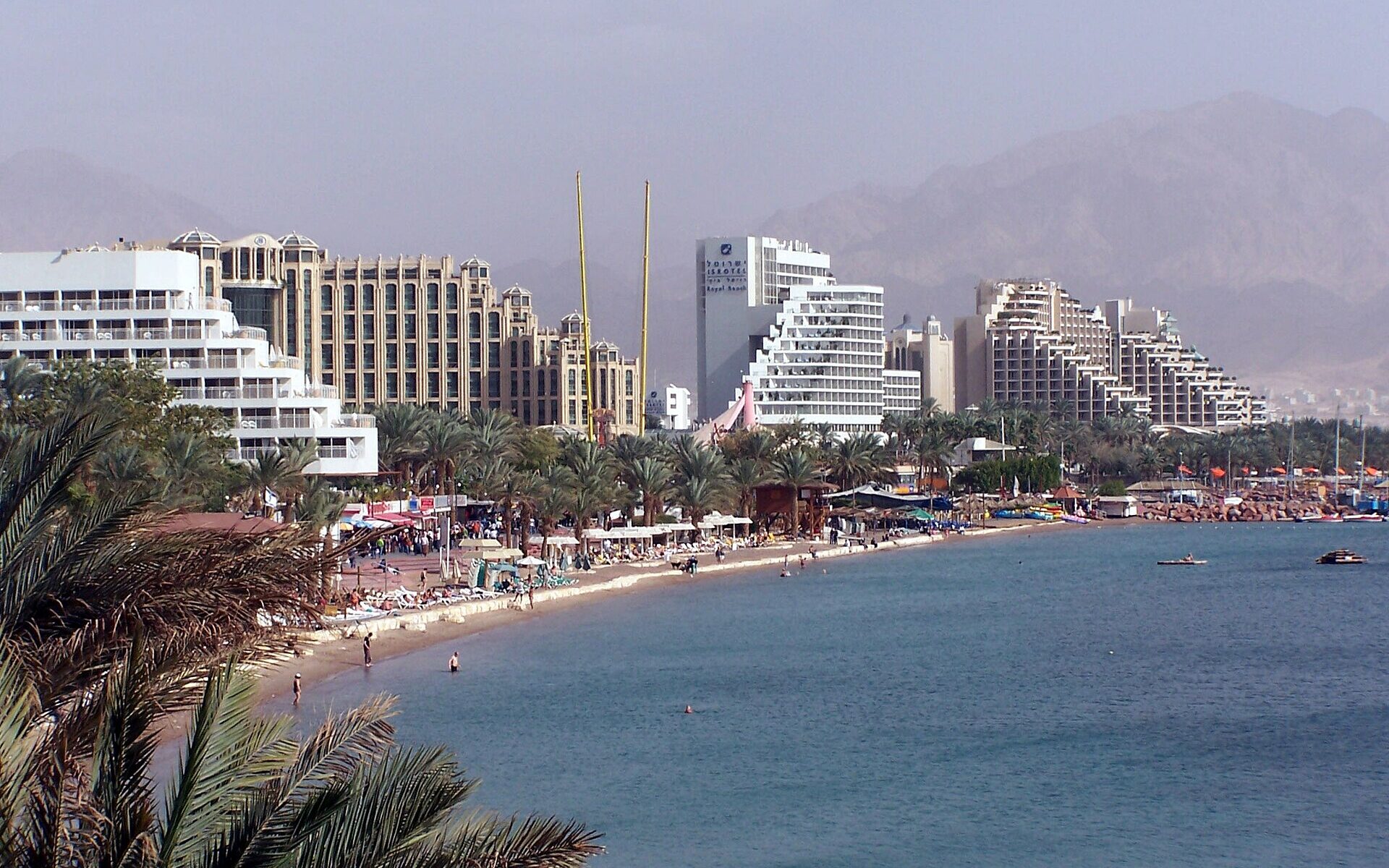
Eilat is a resort town of hotels, beaches and shopping centres, squeezed between Jordan and Egypt at the head of the Gulf of Aqaba. It is not a historic or beautiful place in itself, and it is very different from Jerusalem: secular, warm, loud and geared to Israeli holidaymakers. What it has is the Red Sea, with coral reefs close to shore, reliable winter sunshine and a desert backdrop of bare red mountains. If that appeals, it is well worth the journey. If you are looking for culture, it is a long way to go to find very little.
The reefs
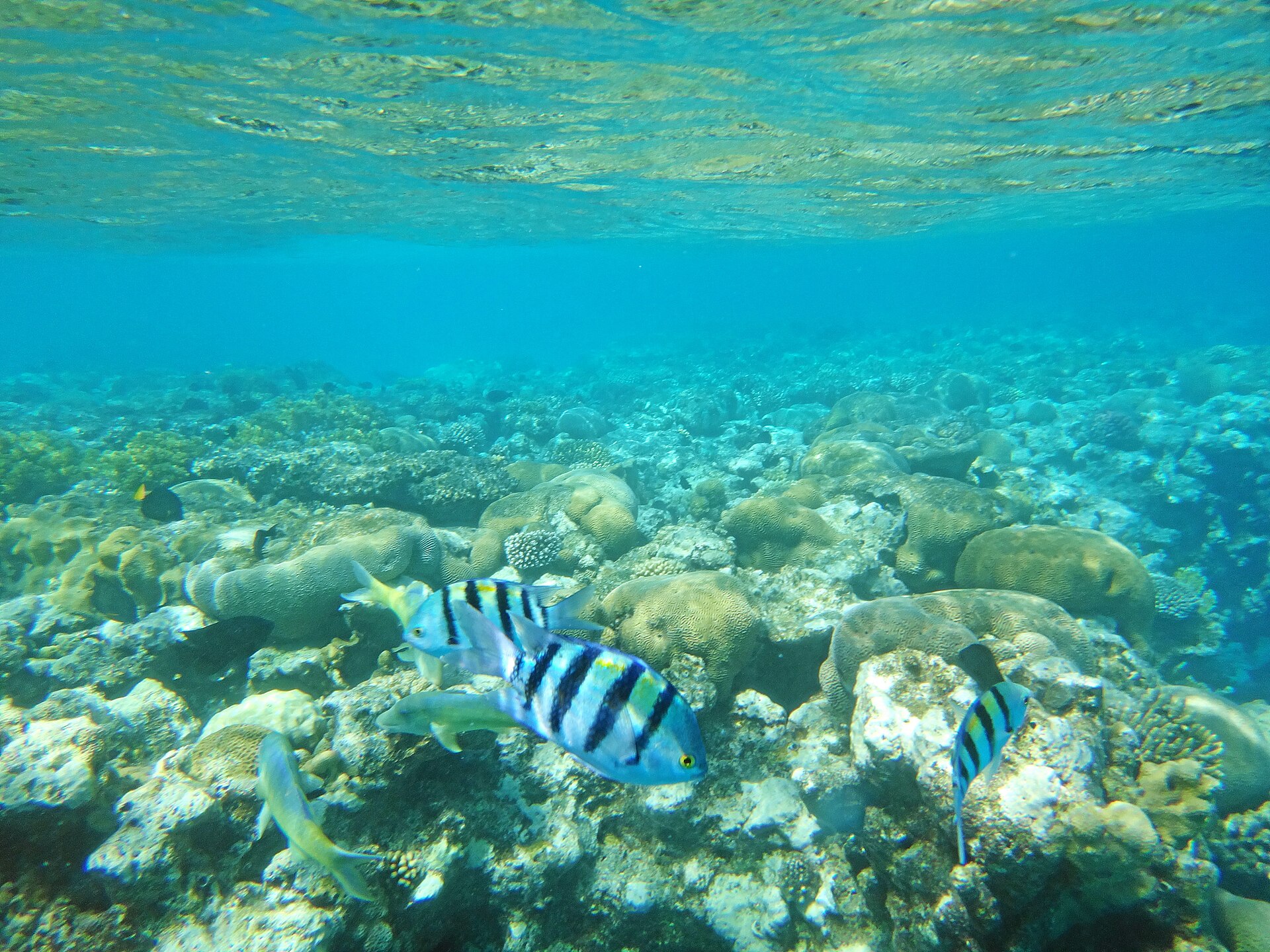
The coral reef at the southern end of town is the reason most people come. The Coral Beach Nature Reserve, run by the Israel Nature and Parks Authority, protects a stretch of shoreline with bridges out over the reef flat, so you can step straight off into deep water with a mask and snorkel. There is an entrance fee. Dive centres along the south coast offer everything from introductory dives to full courses, and the water stays warm enough to snorkel for most of the year.
Other things to do
- The Underwater Observatory Marine Park, on the south coast, with an observation chamber below the surface of the reef and aquariums. A good choice for families and non-swimmers.
- The Dolphin Reef, a beach where a pod of dolphins lives in a large netted area of open sea, with swimming and diving sessions.
- The Eilat Mountains, rising right behind the town, with marked trails such as the Red Canyon, a short walk through a narrow sandstone gorge. Start at dawn, carry far more water than you think you need, and check conditions before you go.
- Timna Park, north of the city, for desert landscapes, ancient copper mines and Solomon’s Pillars.
- Birdwatching. Eilat sits on one of the world’s great migration routes, and in spring and autumn millions of birds pass overhead between Africa and Eurasia.
- Shopping. Eilat is a free-trade zone, and most goods and services there are sold without Israel’s 18% VAT. That makes it popular with Israelis for electronics and clothes, although the savings are not always dramatic.
Eilat as the Gateway to Petra and the Sinai
For many visitors from Jerusalem, Eilat matters most because of what lies across its two borders.
Petra via the Yitzhak Rabin crossing
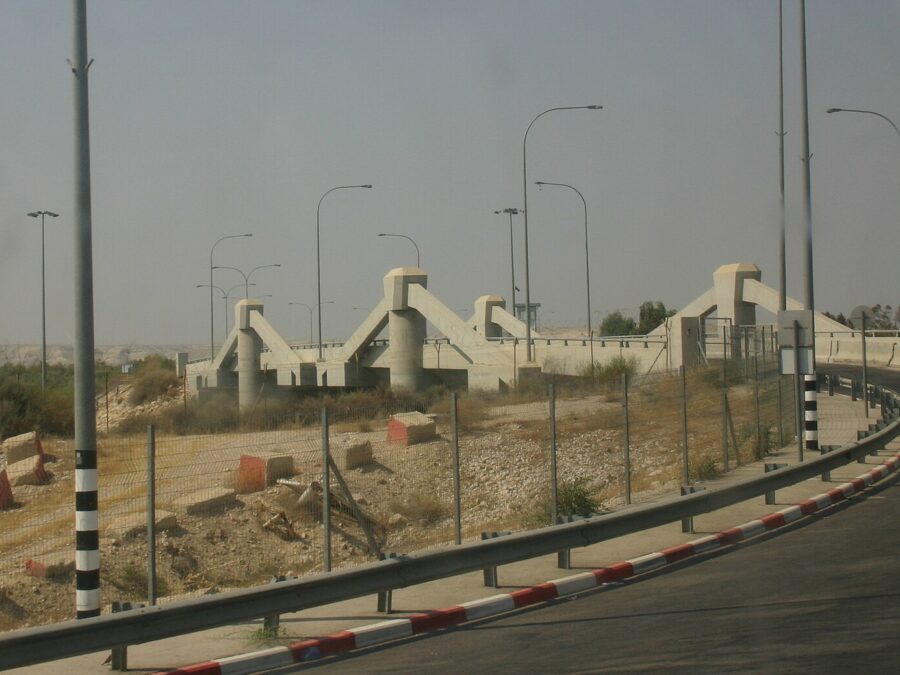
The Yitzhak Rabin / Wadi Araba crossing into Jordan is a short taxi ride north of Eilat. In October 2026 the Israel Airports Authority listed it as open Sunday to Thursday from 06:30 to 20:00, and Friday and Saturday from 08:00 to 20:00, but holiday hours vary, so check before you go. From the Jordanian side, Petra is about two hours’ drive and Aqaba is minutes away. The visa rules at this crossing come with conditions, and official sources disagree on the details, so confirm them before you travel.
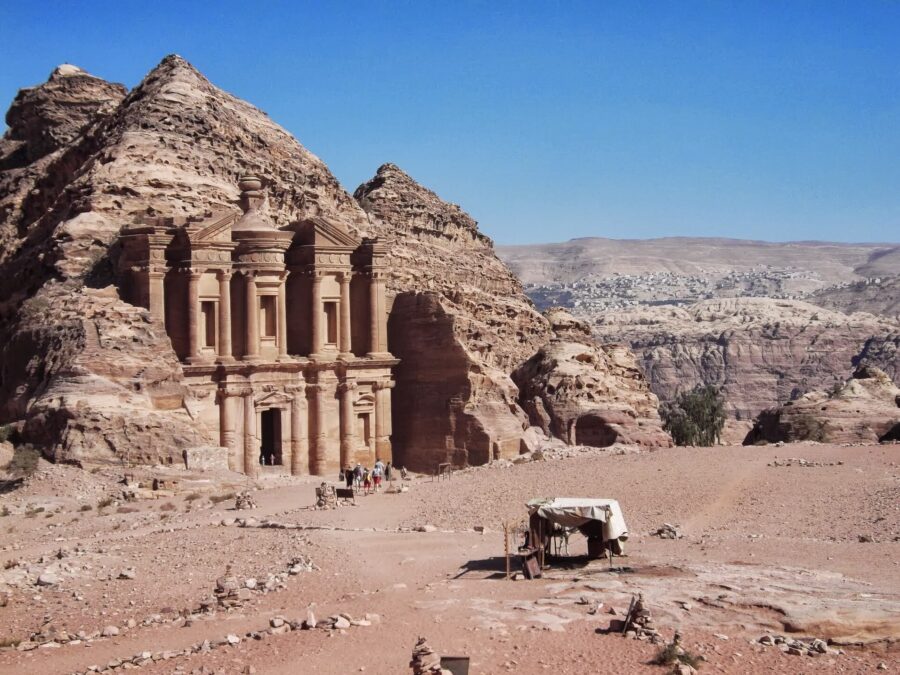
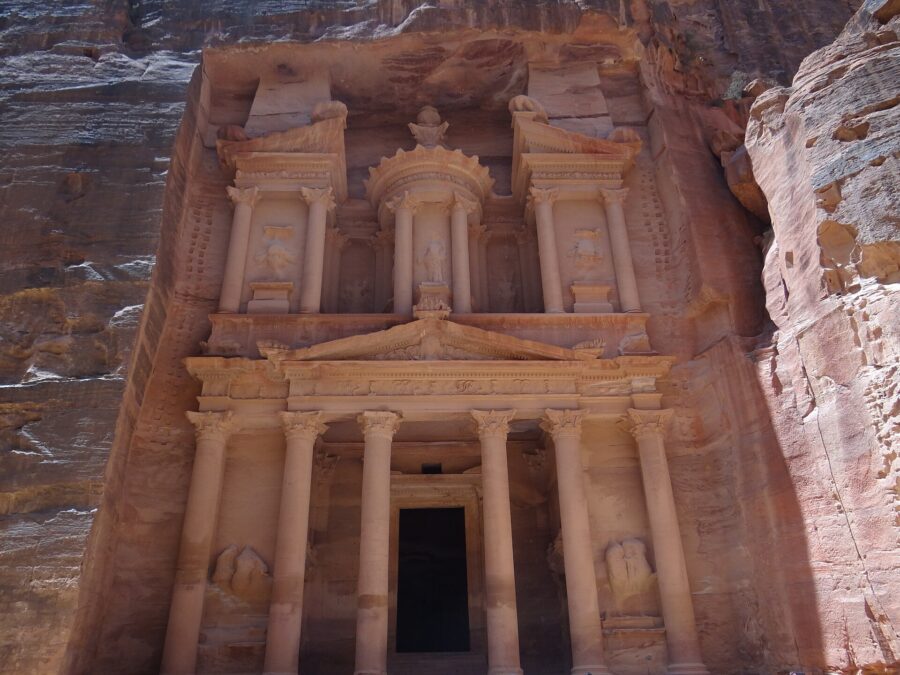
The usual independent plan is to take the bus to Eilat, sleep there, cross first thing in the morning and spend one or two nights in Wadi Musa beside Petra. Our full guide to Petra from Jerusalem compares this southern route with the crossing at Allenby, and explains the fees along the way.
The Sinai via Taba
The Taba crossing into Egypt lies at the southern edge of Eilat, a few minutes from the hotels. Beyond it is South Sinai, with Dahab, Nuweiba and St Catherine’s Monastery. Leaving Israel at Taba costs ₪120 per person in 2026, plus a ₪7 commission if you pay at the terminal counter rather than in advance. Official travel advice on the Sinai is restrictive and differs between governments, and the US Embassy in Cairo issued a security alert about Taba and Sinai in March 2026. Read your own government’s advice first. Our guide to trips from Jerusalem covers both borders in more detail.
When to Go
Eilat’s season is the opposite of Jerusalem’s. From late October to April it has warm, dry, sunny days when Jerusalem can be cold and wet, and that is when it is at its best for visitors. Summer is fiercely hot, with temperatures regularly above 40°C, although the sea is pleasant and Israeli families fill the hotels in July and August. Spring and autumn bring the bird migrations.
Prices and crowds rise sharply during the Jewish holidays, above all Passover and Sukkot, and on weekends. A midweek trip in November or February is the quietest and often the cheapest. For a comparison with conditions in Jerusalem, see our guides to the best time to visit Jerusalem and Jerusalem weather by month.
Sample Plans
Three days: Red Sea break
Take the morning bus down from Jerusalem, arriving in time for a late-afternoon swim. Spend a full day snorkelling at Coral Beach and visiting the Underwater Observatory, then fly back to Ben Gurion on the third afternoon and take the train up to Jerusalem.
Four days: Eilat and Petra
Bus to Eilat on day one. Cross into Jordan early on day two, spend the afternoon and all of day three in Petra with a night in Wadi Musa, then return to Eilat on the evening of day three or the morning of day four, and take the bus or fly north.
Five days: the southern loop by car
Drive down Route 90 with stops at Masada and Ein Bokek, spend two nights in Eilat, then drive back via Timna, the Ramon crater and a night in Mitzpe Ramon, returning to Jerusalem through Sde Boker and Beersheba. This is the best way to see the whole of the south, and it fits neatly into a two-week trip around Israel.
Is Eilat Worth the Trip from Jerusalem?
It depends entirely on what you want. For reefs, warm winter sun and a few lazy days by the sea, yes, and the Arava drive is a memorable journey in its own right. As a base for Petra or the Sinai, it is the obvious stepping stone. For history, food and atmosphere, no: you will have left all of that behind in Jerusalem, and five hours on a bus is a high price for a beach.
What does not work is the day trip. If you only have a single free day and want desert and water, the Dead Sea and Masada are far closer, and our guide to day trips from Jerusalem shows how to fit them in. Save Eilat for when you can give it two nights or more.
Final Word on Jerusalem to Eilat
Take the bus if you are on your own, drive if there are two or more of you and a spare day to enjoy the road, and save the plane for the journey home. Whatever you choose, book ahead, steer clear of Friday afternoons, and give Eilat at least two nights, or use it as the springboard it is for Petra. For the rest of your planning, our guide to what a trip to Jerusalem costs helps with the budget, our Israel visa requirements page covers entry and re-entry, and our Jerusalem travel tips fill in the rest.
Photo Credits
Eilat’s North Beach hotel strip on the Gulf of Aqaba: North Beach Eilat by Henrik Sendelbach, CC BY-SA 3.0, via Wikimedia Commons.
Ramon Airport terminal: Ramon Airport 0220 by Roman Toldy, CC BY-SA 4.0, via Wikimedia Commons.
Route 1 descending through the Judean Desert past the Sea Level sign: Judean Desert P1020013 by deror_avi, CC BY-SA 3.0, via Wikimedia Commons.
The reef at Coral Beach Nature Reserve: Eilat-coral-beach-reserve-b by Mboesch, CC BY-SA 4.0, via Wikimedia Commons.
Solomon’s Pillars in Timna Park: PikiWiki Israel 35739 Solomons pillars in Timna Park by Dr. Avishai Teicher, CC BY 2.5, via Wikimedia Commons.