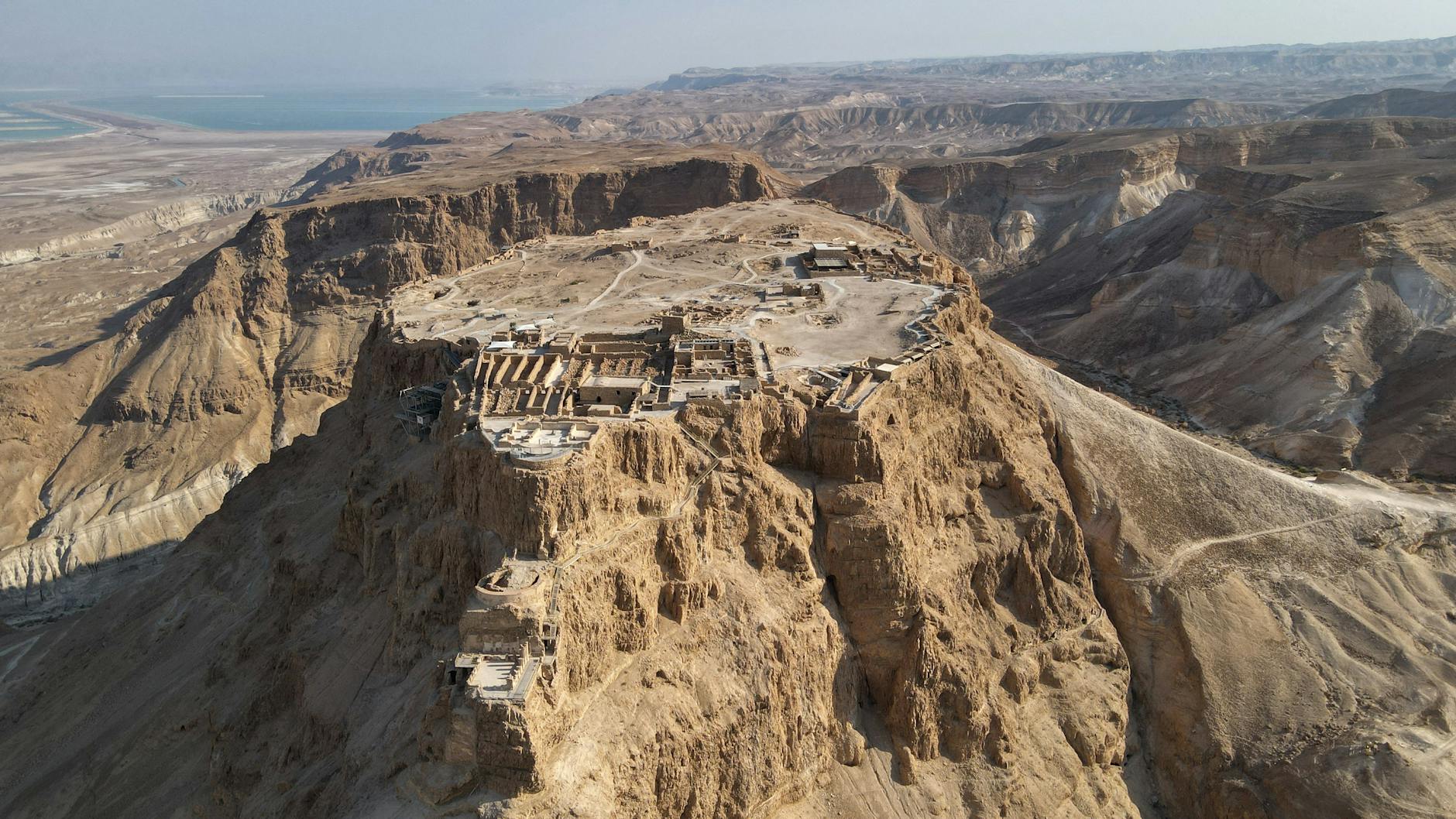
A Masada day trip from Jerusalem is one of the most dramatic excursions you can take in Israel. The fortress crowns a sheer-sided plateau above the Dead Sea, built up by Herod the Great around 30 BCE and best known, according to the first-century historian Josephus, as the place where a group of Jewish rebels made their last stand against the Roman army, ending in 73–74 CE. UNESCO inscribed the site as a World Heritage Site in 2001. Most people come either to ride the cable car to the top or to climb the Snake Path at first light and watch the sun rise over the desert and the Dead Sea far below.
This guide to a Masada day trip from Jerusalem covers how to get there, the choice between the sunrise hike and the cable car, what to see on the plateau, hours and fees in shekels, what to bring, and how to fold Masada into a longer day with the Dead Sea and Ein Gedi. Read it alongside our Dead Sea day trip guide and the wider Day Trips from Jerusalem guide.

Masada Day Trip at a Glance
| Distance from Jerusalem | About 100 km southeast (eastern entrance) |
| Drive time | 90–100 minutes via Highway 1 and Route 90 |
| Plateau elevation | Around 60 m above sea level, roughly 400 m above the desert floor below |
| Time on site | 2–3 hours minimum; longer with the sunrise hike |
| Guided tour | Roughly 350–550 ILS per person, usually with the Dead Sea and Ein Gedi |
| Best season | October–April; very hot in summer, so go early |
Why Visit Masada
Masada rewards visitors on several levels at once. The archaeology is genuinely impressive: Herod’s engineers carved palaces, a bathhouse, storerooms, and vast water cisterns out of a desert mountaintop, and much of it survives. The setting is unforgettable, with the pale rock of the plateau dropping away to the blue of the Dead Sea and the hills of Jordan beyond. And the site carries deep significance in Jewish history as a symbol of resistance, which is why it draws Israelis and visitors from around the world. Practically, it sits on the same Route 90 corridor as the Dead Sea beaches and Ein Gedi, so it slots neatly into a full and varied day in the Judean Desert.
How to Get to Masada from Jerusalem
Guided Tour
A guided tour is the simplest way to reach Masada, especially if you want the sunrise without doing your own pre-dawn driving. Sunrise tours leave Jerusalem very early, around 3:00 to 4:00, to get you onto the Snake Path before first light; standard tours depart later and use the cable car. Prices generally fall in the 350–550 ILS range per person and usually bundle Masada with the Dead Sea and Ein Gedi. Operators on this route include Abraham Tours, Tourist Israel, and the listings on GetYourGuide and Viator. Check whether the cable car and park entry are included or paid on the day.
Rental Car
Driving yourself is the most flexible option and lets you set your own sunrise alarm. From Jerusalem, take Highway 1 east toward the Dead Sea, then Route 90 south to the eastern Masada entrance, where the cable car and visitor centre are. A small rental costs roughly 150–300 ILS a day before fuel. Fill the tank in Jerusalem, carry plenty of water, and set off well before dawn if you are chasing the sunrise. The separate western (Arad) side has the easier Roman Ramp path but involves a longer drive around the mountain.
Public Bus
Egged buses on the Dead Sea corridor, principally line 486 (and line 444, which usually needs an advance reservation on the Egged website), stop at Masada on the way down Route 90 from Jerusalem’s Central Bus Station. The fare is roughly 19 ILS each way and the trip takes about 1.5 to 2 hours, but departures are limited, so check times on the Moovit app and plan your return. There is no service from Friday afternoon to Saturday evening because of Shabbat, which rules out the bus for a Saturday sunrise.
Getting to the Top: Cable Car, Snake Path, or Roman Ramp
Cable Car
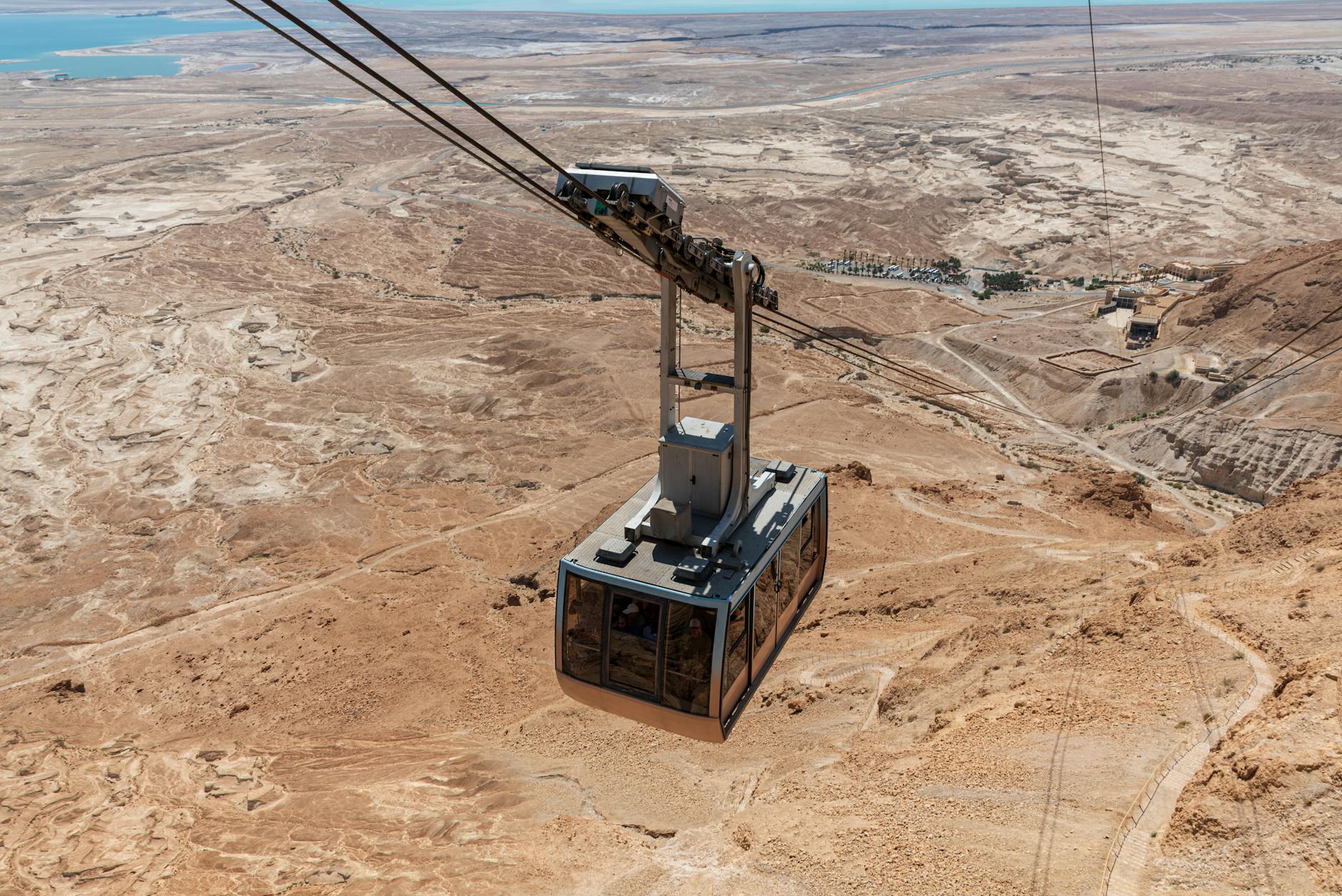
The cable car from the eastern visitor centre whisks you up in a few minutes and is the right choice for most visitors, anyone short on time, and those with limited mobility. A round-trip ticket runs about 54 ILS for adults and 32 ILS for children, with a one-way fare around 32 ILS. The cable car generally starts running at 8:00, which is after sunrise, so it is not an option for the dawn ascent.
Snake Path
The Snake Path is the classic Masada climb: a switchbacking trail on the eastern face that gains around 350 metres over roughly 45 to 60 minutes for most walkers. It opens about an hour before sunrise, and timing the climb so you reach the top as the sun comes up is one of the signature experiences in Israel. You need a reasonable level of fitness, sturdy shoes, a headlamp for the dark start, water, and a layer for the cool morning air. In summer the authorities often close the path by mid-morning once the heat builds, so the dawn window is the one to aim for. Many people hike up and take the cable car back down.
Roman Ramp Path
On the western side, reached via Arad, the Roman Ramp path follows the great earthen siege ramp the Roman army built. It is a much shorter and easier walk to the top, around 15 to 20 minutes, which makes it a good option in hot weather or for those who want the views without the long climb. The trade-off is the longer drive to reach that side, and it works best if you are approaching from the Arad direction rather than from the Dead Sea.
What to See on the Plateau
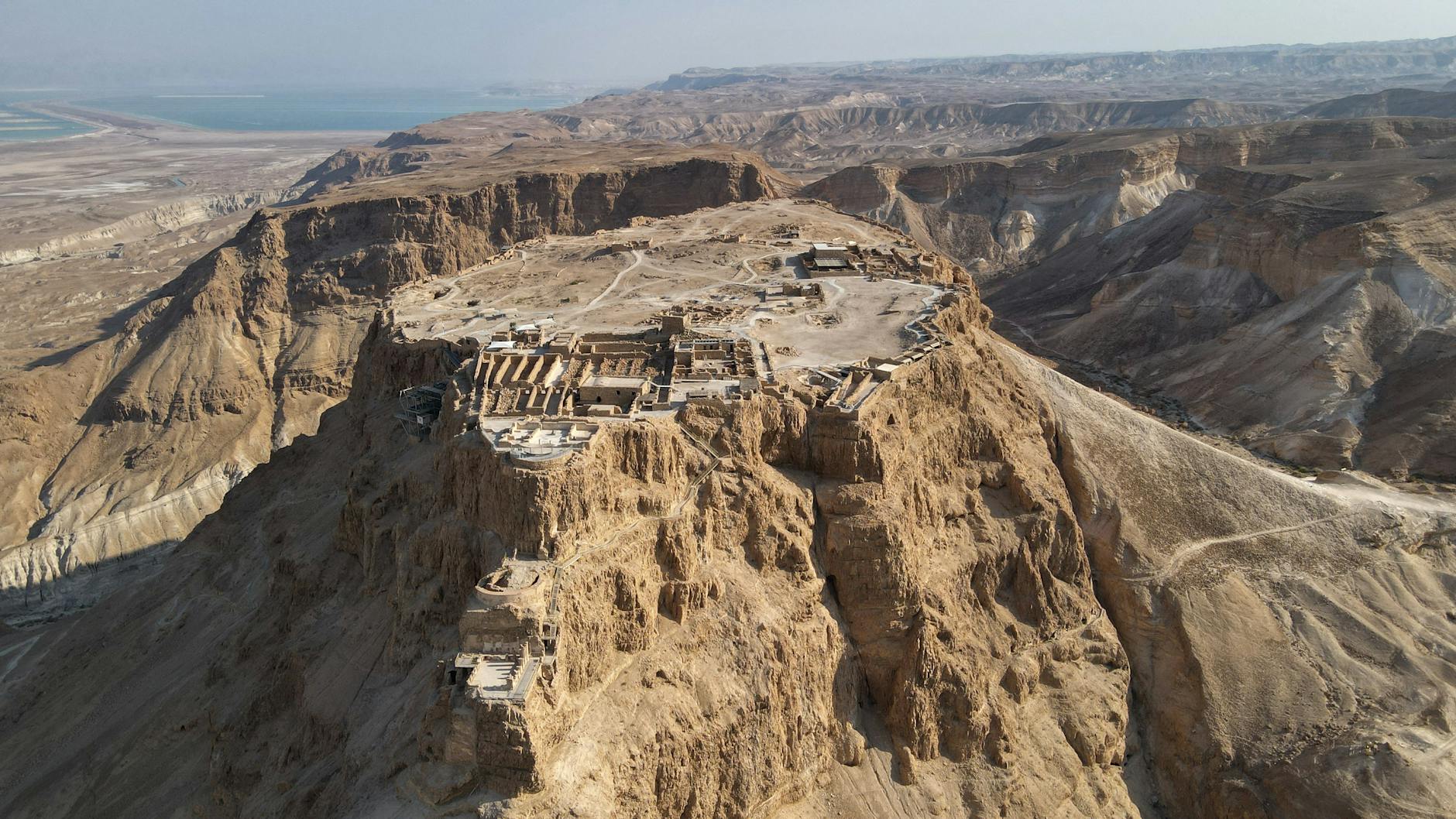
Give yourself at least a couple of hours to walk the plateau, following the marked paths between the main ruins.
- Herod’s Northern Palace — a striking three-tiered palace built into the cliff edge, with the lowest terrace cantilevered over the drop.
- Western Palace — the largest building on the site, used for administration and ceremony, with surviving mosaic floors.
- Roman-style bathhouse — complete with the under-floor heating system and decorative details.
- The synagogue — among the oldest known synagogue structures, set into the western wall.
- Storerooms and cisterns — long magazines for grain and oil, and the huge water cisterns that made life on a desert peak possible.
- The Roman siege ramp and camps — clearly visible below the western wall, a vivid reminder of how the fortress fell.
- Viewpoints — several platforms frame the Dead Sea and the desert in every direction.
A small museum and a film at the visitor centre add context, and a black line painted around the ruins marks where the original construction ends and modern reconstruction begins, so you can tell ancient from restored at a glance.
Hours, Tickets, and Passes
| Park entry | Around 37 ILS adult, 21 ILS child |
| Cable car (round trip) | Around 54 ILS adult, 32 ILS child; one-way roughly 32 ILS |
| Opening hours | Generally 8:00–17:00 (Sun–Thu); Fridays and holiday eves close earlier, around 14:00–16:00; shorter in winter |
| Snake Path | Opens about an hour before sunrise; often closed by mid-morning in summer |
| Israel Pass | Masada is included; a 3-site card is about 90 ILS, 6-site about 130 ILS, unlimited about 175 ILS (valid two weeks) |
Prices and hours shift over time and can vary by season, so confirm the current details on the Israel Nature and Parks Authority website before you travel. If Masada is one of several parks on your trip, the Israel Pass can pay for itself quickly.
What to Bring and Practical Tips
- Proper shoes — closed walking or hiking shoes for the trails and the uneven plateau.
- Water — at least 2 to 3 litres per person in summer; there is a refill point at the top but it is wise to carry your own.
- Sun protection — hat, sunglasses, and high-factor sunscreen; there is almost no shade on the plateau.
- A light layer — desert mornings can be cool, especially for the sunrise hike.
- Headlamp or torch — essential for a pre-dawn Snake Path climb.
- Snacks for the visitor centre — eating is meant to be done below rather than scattered around the ruins.
Avoid the middle of the day in summer, when the heat on the exposed rock is intense. Card payment is widely accepted at the site, but carrying some cash is sensible. If you are visiting with reduced mobility, the cable car is the accessible route up, and parts of the plateau have firm paths, though some sections remain uneven.
Combining Masada with the Dead Sea and Ein Gedi
The most popular plan is to climb Masada at sunrise, drive a short way north to Ein Gedi for a late-morning walk to a waterfall, then finish with an afternoon float in the Dead Sea. It makes for a long but hugely varied day. Our Ein Gedi from Jerusalem and Dead Sea day trip guides cover those stops in detail, and if you would rather have it all organised, our Dead Sea and Masada combined tour guide compares the main operators. For pacing this within a wider visit, see our Jerusalem itinerary guide, and check the Jerusalem travel tips for money and transport basics.
Best Time to Visit
The cooler months from October to April are ideal for Masada, with comfortable temperatures for both the hike and the time on top. Sunrise is the prime moment year-round, and in summer it is really the only sensible time, since the heat by late morning is severe and the Snake Path often closes. Sunrise timing shifts through the year, so check it the night before and work backwards to set your departure. As with the rest of the Dead Sea corridor, remember that public transport pauses for Shabbat from Friday afternoon to Saturday evening, so a car or tour is essential for those days.
If you want to climb the Snake Path for sunrise, a day trip from Jerusalem will not get you there in time. Spend the night at Ein Bokek or near Ein Gedi instead, climb in the dark, and float in the Dead Sea in the afternoon. Our guide to overnight trips from Jerusalem shows how the sunrise version fits into a longer loop through the Negev and down to the Red Sea.
Masada sits on Route 90, the main road south to the Red Sea, so it makes a natural first stop if you are driving on to Eilat rather than returning to Jerusalem. Our guide to the journey from Jerusalem to Eilat covers that drive, the alternative desert route through Mitzpe Ramon, and the bus and flight options.